Mar 30, 2026
How to Finance Ocean Conservation with Impact Investing for Maritime & Logistics Companies
ESG Strategy
In This Article
How maritime and logistics firms can use blue bonds, sustainability-linked loans and impact funds to finance ocean conservation.
How to Finance Ocean Conservation with Impact Investing for Maritime & Logistics Companies
Ocean conservation and business success can go hand in hand. Maritime and logistics companies are increasingly turning to impact investing to address ocean challenges like pollution, habitat loss, and emissions while maintaining profitability. Tools like blue bonds and sustainability-linked loans tie funding to measurable environmental goals, offering financial incentives for progress.
Key takeaways:
Sustainability-linked loans adjust interest rates based on emissions reductions and other goals.
Blue bonds fund specific ocean projects like green ports or zero-emission fleets.
Data-driven metrics help measure progress, from carbon reductions to biodiversity gains.
Partnerships with funds and consultancies ensure measurable results and attract co-investment.
Evaluating Your Operations for Ocean Conservation Opportunities
Finding High-Impact Areas in Your Business
To protect ocean health, focus on three critical operational areas: emissions, waste management, and supply chain practices. The International Maritime Organization has set an ambitious goal of reducing emissions by 40% by 2030 [1], making carbon reduction a key priority for businesses.
Fleet operations and vessel routing are areas ripe for optimization. For example, Nippon Yusen Kaisha (NYK), a prominent marine transport company, took significant strides in this direction. In May 2021, NYK joined the Ship Recycling Transparency Initiative after collaborating with The Ocean Foundation and Maersk. Earlier that year, the company released an ESG report outlining Science-Based Target certified goals, including reducing energy intensity by 30% by 2030 and 50% by 2050 [3]. NYK also committed to inspecting shipyards for compliance with the Hong Kong Convention and conducting formal inventories of hazardous materials [3]. Reflecting on these efforts, NYK’s President and CEO Hitoshi Nagasawa remarked:
"…if we cannot set out a clear road map for addressing environmental issues, the continuation of our business will become more challenging." [3]
Beyond fleet improvements, businesses can explore green port infrastructure and circular economy practices. Initiatives like plastic upcycling and enhanced waste management systems can play a vital role in preventing ocean degradation [2]. For guidance, the UNEP FI "Turning the Tide" toolkit provides actionable insights for identifying maritime activities to support, challenge, or avoid based on their sustainability credentials [1].
Using Data to Measure Ocean Impact
Once priority areas are identified, it’s essential to track progress with clear, measurable metrics. This not only demonstrates accountability to impact investors but also aligns efforts with the UN Sustainable Blue Finance Principles. Companies should measure advancements such as freight and passenger efficiency or the adoption of green port practices [2]. For those involved in seafood logistics, tracking the percentage of sustainably certified supply chains can help meet premium market demands [2].
A foundational metric is carbon emissions per unit of cargo moved, but comprehensive measurement should also include Blue Carbon sequestration and biodiversity gains in coastal regions and marine protected areas [2]. Monitoring watershed management and runoff in coastal ecosystems supports a Ridge-to-Reef approach, ensuring upstream activities don’t harm marine environments [2]. Materiality assessments can help businesses identify which metrics hold the most relevance - whether it’s greenhouse gas emissions, ship disposal methods, or hazardous material inventories [3]. By leveraging data, companies can transform ocean conservation from an abstract ideal into tangible, measurable outcomes that appeal to impact-focused investors.
Unlocking Capital for a Regenerative Blue Economy with Melissa Walsh
Financial Tools for Funding Ocean Conservation
Blue Bonds vs Sustainability-Linked Loans for Maritime Companies
With priority areas for ocean conservation clearly identified, businesses can now tap into specialized financial tools to support these efforts effectively.
Blue Bonds and Sustainability-Linked Loans
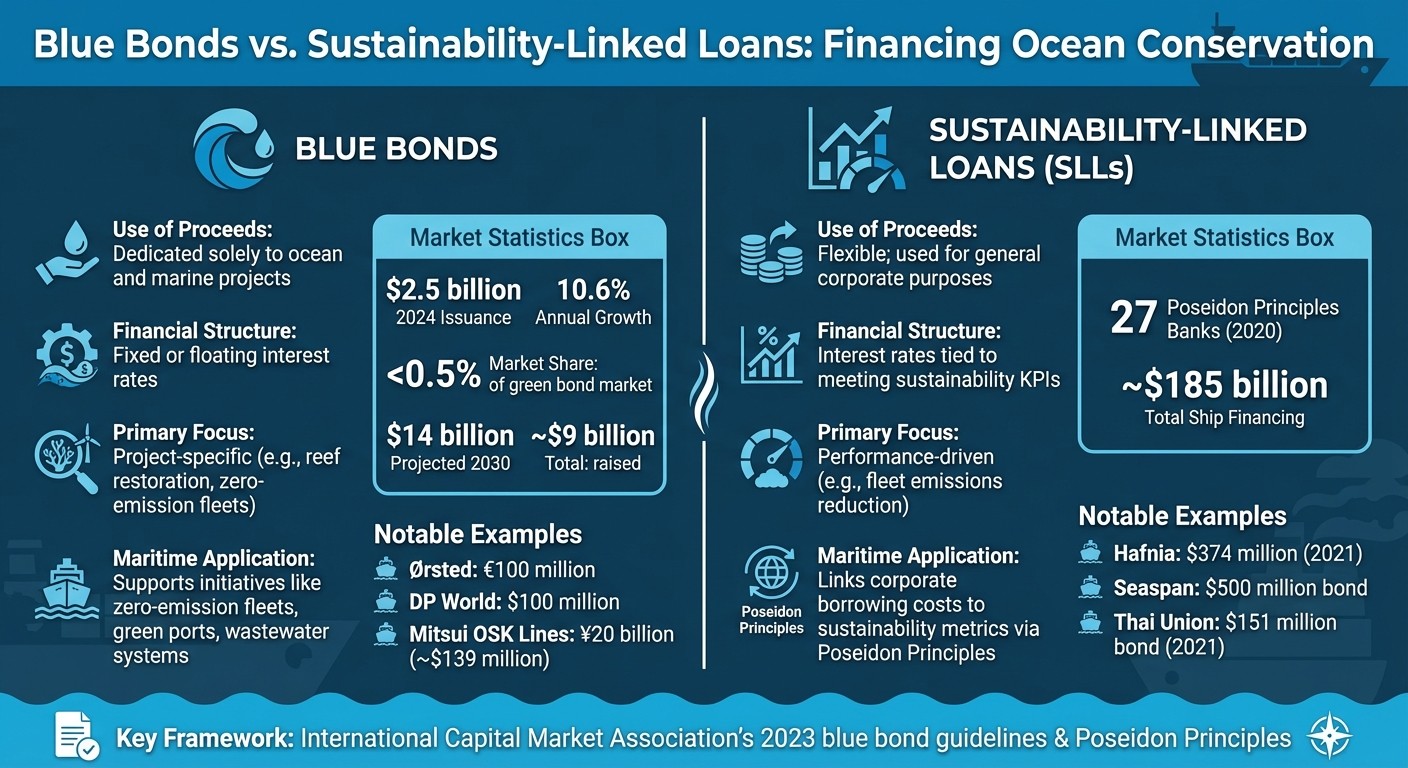
Blue bonds are a type of debt instrument designed to fund projects that enhance ocean health. Maritime companies often use them for initiatives like decarbonizing ports, upgrading wastewater systems, or investing in zero-emission fleets. In 2024, $2.5 billion worth of blue bonds were issued, reflecting a 10.6% annual growth. Despite this progress, blue bonds still account for less than 0.5% of the broader green bond market. Analysts suggest that if blue bonds follow the growth pattern of green bonds, annual issuance could hit $14 billion by 2030. So far, private-sector companies have raised roughly $9 billion through blue bonds, with financial institutions in Asia contributing over $3 billion to various projects. Notable examples include Ørsted (€100 million), DP World ($100 million), and Mitsui OSK Lines (¥20 billion or about $139 million) [4].
On the other hand, sustainability-linked loans (SLLs) are general-purpose loans where interest rates fluctuate based on meeting predefined sustainability goals. In the maritime industry, the Poseidon Principles provide a framework for assessing ship finance portfolios, using emissions-related key performance indicators (KPIs) to adjust interest rates annually. By late 2020, 27 banks adhering to the Poseidon Principles collectively represented around $185 billion in global ship financing. Some key examples include Hafnia, a Singaporean oil tanker operator, which secured a $374 million sustainability-linked loan in 2021, and Hong Kong-based Seaspan, which issued a $500 million bond tied to carbon intensity and other sustainability metrics, with Citi acting as the structuring agent. Additionally, Thai Union, a seafood company, issued a $151 million sustainability-linked bond in 2021, linking interest costs to specific fishing practice targets [5][4].
Feature | Blue Bonds | Sustainability-Linked Loans (SLLs) |
|---|---|---|
Use of Proceeds | Dedicated solely to ocean and marine projects | Flexible; used for general corporate purposes |
Financial Structure | Fixed or floating interest rates | Interest rates tied to meeting sustainability KPIs |
Primary Focus | Project-specific (e.g., reef restoration) | Performance-driven (e.g., fleet emissions reduction) |
Maritime Application | Supports initiatives like zero-emission fleets | Links corporate borrowing costs to sustainability metrics |
For companies interested in these tools, aligning with established frameworks such as the International Capital Market Association's 2023 blue bond guidelines is essential. Partnering with banks committed to the Poseidon Principles can also help secure favorable terms, as credible sustainability efforts often lead to lower interest rates [6].
While debt instruments support specific initiatives, venture capital is playing a vital role in driving innovation within the ocean technology space.
Venture Capital for Ocean Technology
While debt financing addresses targeted projects, venture capital is fueling innovation in "blue tech", a critical area for aligning maritime activities with conservation goals. The global ocean economy, valued at $1.5 trillion in 2010, is projected to double to $3.0 trillion by 2030, yet Sustainable Development Goal 14 - Life Below Water - receives minimal impact investment compared to other SDGs [8]. This funding gap presents a significant opportunity for maritime companies that can demonstrate both ecological benefits and financial returns.
Key areas attracting venture capital include marine biotechnology, offshore wind energy, sustainable aquaculture, and marine bioprospecting [8]. By 2025, more than half of new ship orders are expected to feature alternative fuel vessels, even though 90% of the current fleet still operates on conventional fuels [9]. This shift is driving substantial investment in alternative fuels and fleet modernization technologies.
To appeal to venture capital investors, maritime companies should prioritize strong ESG reporting and adopt advanced digital tools like maritime single windows or port community platforms, which provide real-time operational transparency [9]. Blended finance models - combining public, private, and philanthropic funding - can also help mitigate risks in ocean technology projects [8].
The economic potential of sustainable ocean solutions is immense. For every $1 invested, an estimated $5 in global benefits is generated, reinforcing the financial case for linking environmental health with profitability [7]. As UN Trade and Development Secretary-General Rebeca Grynspan aptly stated:
"The transitions ahead – to zero carbon, to digital systems, to new trade routes – must be just transitions. They must empower, not exclude" [9].
Working with Impact Funds and Consultancies
Partnering with the right organizations can significantly enhance the effectiveness of conservation investments. For maritime and logistics companies, aligning with impact funds and specialized consultancies ensures that ocean conservation goals are not just aspirational but deliver measurable results. These partnerships provide the tools, expertise, and frameworks necessary to transform sustainability commitments into tangible outcomes.
Creating Effective Partnerships
Strategic partnerships bring together three essential resources: capital, expertise, and capacity building. For example, impact funds like Outrigger Impact Blue Economy Solutions focus on Small Island Developing States, offering catalytic capital across six sectors. These include sustainable blue infrastructure aimed at advancing green solutions in freight, passenger shipping, and port operations to strengthen economic resilience [2]. By pooling projects, these funds achieve scale and attract additional private and public co-investments [2].
Consultancies, on the other hand, offer a different kind of support. They help companies shift their focus from simply tracking outputs - like published reports or launched campaigns - to measuring outcomes, such as ecosystem recovery and policy implementation [10]. This distinction is crucial, as 30–40% of Marine Protected Areas currently lack proper management and fail to deliver real ecological benefits [10]. A skilled consultancy can design measurement frameworks that ensure conservation progress is tracked from the very beginning.
Additionally, effective partnerships help businesses align with global frameworks like the Taskforce on Nature-related Financial Disclosures (TNFD) and the Kunming-Montreal Global Biodiversity Framework’s "30x30" targets, which aim to protect 30% of the ocean by 2030 [10]. Many partners also provide services such as investment screening and due diligence, evaluating how maritime activities impact ocean health [3]. These efforts bridge the gap between funding and actionable conservation outcomes.
How Council Fire Supports Ocean Conservation Goals
Council Fire stands out by turning maritime companies’ sustainability commitments into measurable, actionable strategies. Their process revolves around developing a Theory of Change, which connects specific business activities to long-term impacts, such as healthier marine ecosystems or policy advancements [10].
For instance, between February 2025 and February 2026, Council Fire restructured a $200 million ocean asset portfolio for a private environmental foundation. This effort involved interviewing 35 grantees and aligning their activities with global conservation targets. As a result, $28 million was redirected to high-impact projects, $45 million in co-funding was secured, and a $12 million blue carbon program was launched. This program generated verified carbon credits under Verra’s VM0033 methodology. Within just 18 months, these initiatives improved Marine Protected Area (MPA) management effectiveness at 8 of 12 priority sites [10].
One of Council Fire’s key strengths is their ability to create outcome-based dashboards that track conservation progress in real time [10]. As they explain:
"Designing the measurement framework concurrently with the strategy ensures that grants are structured to produce measurable evidence from the outset, rather than trying to retrofit evaluation after the fact" [10].
For maritime companies, this approach goes beyond achieving basic ESG compliance. Council Fire helps identify high-impact areas, such as blue carbon ecosystems - mangroves, seagrasses, and salt marshes - that can sequester carbon at rates 2–4 times higher than terrestrial forests per unit area [10]. By focusing efforts on priority regions, companies can achieve critical mass and avoid spreading resources too thinly across numerous geographies [10].
Tracking Impact and Financial Returns
To achieve both financial success and meaningful conservation outcomes, maritime and logistics companies must rely on robust measurement systems. These systems are crucial for distinguishing genuine impact-driven investments from those focused solely on profit. By tracking financial returns alongside environmental outcomes with equal precision, companies can ensure their efforts align with broader sustainability goals.
Using Impact Measurement Frameworks
The first step in effective measurement is tailoring frameworks to the specific sectors within the blue economy. For instance, Sustainable Blue Infrastructure - covering green ports and eco-friendly freight solutions - and Circular Economy initiatives like plastic upcycling and waste management each demand unique metrics [2]. A port operator might monitor gains in energy efficiency and reductions in emissions achieved through green technologies. Meanwhile, a shipping company could focus on quantifying the amount of plastic waste removed from the ocean.
The idea of achieving "nature-positive outcomes" should underpin all measurement efforts [2]. This means investments should actively contribute to ocean health by boosting biodiversity, strengthening ecosystem resilience, or enhancing blue carbon sequestration, rather than merely minimizing harm. A comprehensive measurement system should integrate these nature-positive goals with indicators like blue carbon and Ridge-to-Reef metrics [2].
A practical approach is appointing a Head of ESG & Impact to oversee both environmental and financial outcomes. Companies can also track the "multiplier effect" of their investments by measuring how much additional funding they attract for ocean projects [2]. These frameworks help ensure that financial gains are balanced with measurable conservation results.
Balancing Financial Returns with Conservation Results
Once metrics are in place, transparent reporting becomes essential to building trust with investors. Successful ocean-focused investments demonstrate measurable progress in both financial and environmental terms. While traditional financial metrics such as internal rate of return (IRR) and payback periods remain important, companies should also highlight how their investments scale smaller projects and attract further capital [2]. For example, renewable energy initiatives can track outputs like megawatt-hours generated from wind or tidal power while monitoring any impacts on marine biodiversity.
On the conservation side, specificity is key. Instead of vague claims about "supporting ocean health", companies should present clear data, such as biodiversity improvements, strengthened coastal resilience, or the extent of blue carbon sequestration achieved. Similarly, for circular economy projects, quantifying the volume of plastic waste prevented from entering the ocean provides actionable insights [2].
Regular updates that combine financial performance with conservation progress, supported by regulatory disclosures, can help investors verify impact claims. Third-party verification - such as certified carbon credits or independent marine biodiversity assessments - adds another layer of credibility [2]. This integrated strategy not only ensures accountability but also sets a replicable standard for sustainable maritime finance, turning ocean conservation investments into actionable, scalable models.
Learning from Successful Ocean Conservation Projects
Examples from the field highlight how maritime and logistics companies are shifting away from traditional grant-based conservation efforts. These projects demonstrate that ocean conservation can deliver measurable environmental benefits while also offering financial returns, turning impact investing into a practical approach for preserving marine ecosystems.
Case Study: Coral Vita's Restoration Funding Model
In June 2025, Coral Vita made history by securing $8 million in Series A funding, led by Builders Vision. This marked the first major institutional investment in a for-profit coral restoration venture [12]. Co-founders Sam Teicher and Gator Halpern developed a "restoration-as-a-service" business model, where governments and companies pay for coral restoration services instead of relying on charity-based funding.
Since its inception in 2019, Coral Vita has cultivated 100,000 corals spanning 52 species across locations like The Bahamas, Saudi Arabia, and the UAE [12]. Their innovative land-based farming technology speeds up coral growth by up to 50 times the natural rate. The company generates revenue through services like coastal protection, repairing damage from ship groundings, and forming eco-tourism partnerships.
"We are proving that the blue economy and ecological infrastructure is investable, profitable, and impactful, and that ecosystem restoration is everyone's responsibility."
Sam Teicher, Co-founder and Chief Reef Officer, Coral Vita [11]
For maritime companies involved in port expansions or coastal construction, Coral Vita offers coral relocation services. These services not only help maintain compliance with environmental regulations but also contribute to restoring ecosystems that underpin the $2.7 trillion in annual economic value generated by coral reefs [12].
Latin America provides another compelling example of how blended finance can support marine conservation on a large scale.
Blue Economy Programs in Latin America
The Arrecifes del Sureste sanctuary in the Dominican Republic showcases the effectiveness of blended finance in sustaining marine protection efforts. In February 2018, the Ministry of Environment entered into a 10-year renewable co-management agreement with two non-profit organizations to oversee nearly 8,000 km² of marine park, benefiting 15,000 households [13].
To support the sanctuary's management, the project secured an eight-year loan from the Sustainable Ocean Fund, managed by Althelia-Mirova. The loan funded essential resources like patrol vessels, monitoring equipment, and tourism infrastructure. Instead of relying on ongoing grants, the sanctuary achieves financial stability through user fees and regulated tourism revenue. This public-private partnership transforms the sanctuary from a "paper park" into an actively managed marine reserve with tangible economic benefits.
"We can't depend only on governments and grants to pay for marine conservation. We need a new source of financing that will allow for proper management – sustainable financing."
Nicolas Pascal, Founder and Director, Blue Finance [13]
Logistics companies operating in Latin America can adopt similar approaches by participating in marine spatial planning workshops that define protected zones while maintaining operational efficiency. Through co-management agreements that share costs with NGOs and governmental bodies, maritime firms can help achieve meaningful conservation results. Council Fire provides expertise in structuring these partnerships, ensuring that stakeholder collaboration leads to actionable strategies that align conservation goals with business interests.
Conclusion
This article has outlined practical ways to merge impact investing with ocean conservation, demonstrating how maritime and logistics companies can align environmental protection with financial success. By shifting the narrative from seeing conservation as an expense to recognizing it as an opportunity, businesses can tap into tools like sustainability-linked loans. These loans, as previously mentioned, reward environmental progress with better financing terms, creating a win-win scenario.
Nature-positive approaches extend far beyond emission reductions. Companies can back technologies that serve dual purposes. For example, Neoline's sail-powered vessels not only reduce carbon emissions by up to 80% but also enhance operational efficiency[1]. Similarly, adopting circular economy practices - such as planning for sustainable vessel recycling during the design phase - helps mitigate future environmental risks and regulatory challenges.
"The blue (ocean) economy offers many opportunities for private finance to lend and invest in a sustainable and nature-positive way."
UNEP Finance Initiative[1]
Collaborations play a pivotal role in achieving both conservation and operational goals. Partnering with specialized impact funds or consultancies allows companies to scale focused conservation efforts while making them financially feasible. These partnerships attract additional private capital and foster shared expertise and cost distribution. Council Fire, for instance, supports businesses in structuring such collaborations to align conservation objectives with operational needs.
FAQs
Which impact investing option fits us best: a blue bond or a sustainability-linked loan?
The right option hinges on your objectives and funding requirements. Blue bonds are tailored for ocean-related projects like marine conservation, with a clearly defined allocation of funds. On the other hand, Sustainability-linked loans (SLLs) offer greater flexibility, linking financing to the achievement of ESG goals across your operations. If ensuring transparency for ocean-focused efforts is your priority, a blue bond is the way to go. However, if you need adaptable funding to drive broader sustainability efforts, an SLL might be the better fit.
What KPIs should we use to prove real ocean impact (not just emissions cuts)?
Key performance indicators (KPIs) that reflect meaningful ocean impact focus on tangible results. These include healthier marine ecosystems, growth in marine protected areas, effective sustainable fisheries management, decreases in plastic pollution, and enhanced community livelihoods. Such metrics offer a broader perspective, extending beyond emissions reductions to capture both environmental and social advancements.
How can we avoid greenwashing and gain trusted third-party verification?
To maintain credibility and avoid accusations of greenwashing, it's essential to adopt transparent practices for measuring impact. Start by setting clear and measurable goals that align with your sustainability objectives. Use standardized metrics to ensure consistency and comparability, and commit to sharing regular progress updates.
In addition, consider seeking third-party verification from well-respected organizations. Independent assessments can validate your claims about environmental and social impacts, adding an extra layer of trustworthiness. These efforts not only demonstrate a genuine commitment to accountability but also help build investor confidence by showcasing rigorous and unbiased evaluations.
Related Blog Posts
Latest Articles
©2025
Narrative Change and Power Building: The Missing Half of Advocacy
Narrative change is the process of disrupting dominant narratives that normalize inequity and advancing new narratives from historically marginalized communities.

Funding Resilience Without Federal Grants
BRIC is unreliable and FEMA is shrinking. Here's how cities fund climate resilience with dedicated revenue, blended finance, and a coordinating authority.

The ESG Blind Spot: How AI Is Finding Risks in Companies Nobody Else Is Watching
Norway's sovereign wealth fund uses AI to screen 7,200 portfolio companies for forced labor and corruption within 24 hours. The real story is the emerging-market coverage gap that traditional ESG data vendors miss — and what it means for any company with a global supply chain.
Narrative Change and Power Building: The Missing Half of Advocacy
Narrative change is the process of disrupting dominant narratives that normalize inequity and advancing new narratives from historically marginalized communities.
Funding Resilience Without Federal Grants
BRIC is unreliable and FEMA is shrinking. Here's how cities fund climate resilience with dedicated revenue, blended finance, and a coordinating authority.
The ESG Blind Spot: How AI Is Finding Risks in Companies Nobody Else Is Watching
Norway's sovereign wealth fund uses AI to screen 7,200 portfolio companies for forced labor and corruption within 24 hours. The real story is the emerging-market coverage gap that traditional ESG data vendors miss — and what it means for any company with a global supply chain.
FAQ
01
What does it really mean to “redefine profit”?
02
What makes Council Fire different?
03
Who does Council Fire work with?
04
What does working with Council Fire actually look like?
05
How does Council Fire help organizations turn big goals into action?
06
How does Council Fire define and measure success?
Mar 30, 2026
How to Finance Ocean Conservation with Impact Investing for Maritime & Logistics Companies
ESG Strategy
In This Article
How maritime and logistics firms can use blue bonds, sustainability-linked loans and impact funds to finance ocean conservation.
How to Finance Ocean Conservation with Impact Investing for Maritime & Logistics Companies
Ocean conservation and business success can go hand in hand. Maritime and logistics companies are increasingly turning to impact investing to address ocean challenges like pollution, habitat loss, and emissions while maintaining profitability. Tools like blue bonds and sustainability-linked loans tie funding to measurable environmental goals, offering financial incentives for progress.
Key takeaways:
Sustainability-linked loans adjust interest rates based on emissions reductions and other goals.
Blue bonds fund specific ocean projects like green ports or zero-emission fleets.
Data-driven metrics help measure progress, from carbon reductions to biodiversity gains.
Partnerships with funds and consultancies ensure measurable results and attract co-investment.
Evaluating Your Operations for Ocean Conservation Opportunities
Finding High-Impact Areas in Your Business
To protect ocean health, focus on three critical operational areas: emissions, waste management, and supply chain practices. The International Maritime Organization has set an ambitious goal of reducing emissions by 40% by 2030 [1], making carbon reduction a key priority for businesses.
Fleet operations and vessel routing are areas ripe for optimization. For example, Nippon Yusen Kaisha (NYK), a prominent marine transport company, took significant strides in this direction. In May 2021, NYK joined the Ship Recycling Transparency Initiative after collaborating with The Ocean Foundation and Maersk. Earlier that year, the company released an ESG report outlining Science-Based Target certified goals, including reducing energy intensity by 30% by 2030 and 50% by 2050 [3]. NYK also committed to inspecting shipyards for compliance with the Hong Kong Convention and conducting formal inventories of hazardous materials [3]. Reflecting on these efforts, NYK’s President and CEO Hitoshi Nagasawa remarked:
"…if we cannot set out a clear road map for addressing environmental issues, the continuation of our business will become more challenging." [3]
Beyond fleet improvements, businesses can explore green port infrastructure and circular economy practices. Initiatives like plastic upcycling and enhanced waste management systems can play a vital role in preventing ocean degradation [2]. For guidance, the UNEP FI "Turning the Tide" toolkit provides actionable insights for identifying maritime activities to support, challenge, or avoid based on their sustainability credentials [1].
Using Data to Measure Ocean Impact
Once priority areas are identified, it’s essential to track progress with clear, measurable metrics. This not only demonstrates accountability to impact investors but also aligns efforts with the UN Sustainable Blue Finance Principles. Companies should measure advancements such as freight and passenger efficiency or the adoption of green port practices [2]. For those involved in seafood logistics, tracking the percentage of sustainably certified supply chains can help meet premium market demands [2].
A foundational metric is carbon emissions per unit of cargo moved, but comprehensive measurement should also include Blue Carbon sequestration and biodiversity gains in coastal regions and marine protected areas [2]. Monitoring watershed management and runoff in coastal ecosystems supports a Ridge-to-Reef approach, ensuring upstream activities don’t harm marine environments [2]. Materiality assessments can help businesses identify which metrics hold the most relevance - whether it’s greenhouse gas emissions, ship disposal methods, or hazardous material inventories [3]. By leveraging data, companies can transform ocean conservation from an abstract ideal into tangible, measurable outcomes that appeal to impact-focused investors.
Unlocking Capital for a Regenerative Blue Economy with Melissa Walsh
Financial Tools for Funding Ocean Conservation
Blue Bonds vs Sustainability-Linked Loans for Maritime Companies
With priority areas for ocean conservation clearly identified, businesses can now tap into specialized financial tools to support these efforts effectively.
Blue Bonds and Sustainability-Linked Loans
Blue bonds are a type of debt instrument designed to fund projects that enhance ocean health. Maritime companies often use them for initiatives like decarbonizing ports, upgrading wastewater systems, or investing in zero-emission fleets. In 2024, $2.5 billion worth of blue bonds were issued, reflecting a 10.6% annual growth. Despite this progress, blue bonds still account for less than 0.5% of the broader green bond market. Analysts suggest that if blue bonds follow the growth pattern of green bonds, annual issuance could hit $14 billion by 2030. So far, private-sector companies have raised roughly $9 billion through blue bonds, with financial institutions in Asia contributing over $3 billion to various projects. Notable examples include Ørsted (€100 million), DP World ($100 million), and Mitsui OSK Lines (¥20 billion or about $139 million) [4].
On the other hand, sustainability-linked loans (SLLs) are general-purpose loans where interest rates fluctuate based on meeting predefined sustainability goals. In the maritime industry, the Poseidon Principles provide a framework for assessing ship finance portfolios, using emissions-related key performance indicators (KPIs) to adjust interest rates annually. By late 2020, 27 banks adhering to the Poseidon Principles collectively represented around $185 billion in global ship financing. Some key examples include Hafnia, a Singaporean oil tanker operator, which secured a $374 million sustainability-linked loan in 2021, and Hong Kong-based Seaspan, which issued a $500 million bond tied to carbon intensity and other sustainability metrics, with Citi acting as the structuring agent. Additionally, Thai Union, a seafood company, issued a $151 million sustainability-linked bond in 2021, linking interest costs to specific fishing practice targets [5][4].
Feature | Blue Bonds | Sustainability-Linked Loans (SLLs) |
|---|---|---|
Use of Proceeds | Dedicated solely to ocean and marine projects | Flexible; used for general corporate purposes |
Financial Structure | Fixed or floating interest rates | Interest rates tied to meeting sustainability KPIs |
Primary Focus | Project-specific (e.g., reef restoration) | Performance-driven (e.g., fleet emissions reduction) |
Maritime Application | Supports initiatives like zero-emission fleets | Links corporate borrowing costs to sustainability metrics |
For companies interested in these tools, aligning with established frameworks such as the International Capital Market Association's 2023 blue bond guidelines is essential. Partnering with banks committed to the Poseidon Principles can also help secure favorable terms, as credible sustainability efforts often lead to lower interest rates [6].
While debt instruments support specific initiatives, venture capital is playing a vital role in driving innovation within the ocean technology space.
Venture Capital for Ocean Technology
While debt financing addresses targeted projects, venture capital is fueling innovation in "blue tech", a critical area for aligning maritime activities with conservation goals. The global ocean economy, valued at $1.5 trillion in 2010, is projected to double to $3.0 trillion by 2030, yet Sustainable Development Goal 14 - Life Below Water - receives minimal impact investment compared to other SDGs [8]. This funding gap presents a significant opportunity for maritime companies that can demonstrate both ecological benefits and financial returns.
Key areas attracting venture capital include marine biotechnology, offshore wind energy, sustainable aquaculture, and marine bioprospecting [8]. By 2025, more than half of new ship orders are expected to feature alternative fuel vessels, even though 90% of the current fleet still operates on conventional fuels [9]. This shift is driving substantial investment in alternative fuels and fleet modernization technologies.
To appeal to venture capital investors, maritime companies should prioritize strong ESG reporting and adopt advanced digital tools like maritime single windows or port community platforms, which provide real-time operational transparency [9]. Blended finance models - combining public, private, and philanthropic funding - can also help mitigate risks in ocean technology projects [8].
The economic potential of sustainable ocean solutions is immense. For every $1 invested, an estimated $5 in global benefits is generated, reinforcing the financial case for linking environmental health with profitability [7]. As UN Trade and Development Secretary-General Rebeca Grynspan aptly stated:
"The transitions ahead – to zero carbon, to digital systems, to new trade routes – must be just transitions. They must empower, not exclude" [9].
Working with Impact Funds and Consultancies
Partnering with the right organizations can significantly enhance the effectiveness of conservation investments. For maritime and logistics companies, aligning with impact funds and specialized consultancies ensures that ocean conservation goals are not just aspirational but deliver measurable results. These partnerships provide the tools, expertise, and frameworks necessary to transform sustainability commitments into tangible outcomes.
Creating Effective Partnerships
Strategic partnerships bring together three essential resources: capital, expertise, and capacity building. For example, impact funds like Outrigger Impact Blue Economy Solutions focus on Small Island Developing States, offering catalytic capital across six sectors. These include sustainable blue infrastructure aimed at advancing green solutions in freight, passenger shipping, and port operations to strengthen economic resilience [2]. By pooling projects, these funds achieve scale and attract additional private and public co-investments [2].
Consultancies, on the other hand, offer a different kind of support. They help companies shift their focus from simply tracking outputs - like published reports or launched campaigns - to measuring outcomes, such as ecosystem recovery and policy implementation [10]. This distinction is crucial, as 30–40% of Marine Protected Areas currently lack proper management and fail to deliver real ecological benefits [10]. A skilled consultancy can design measurement frameworks that ensure conservation progress is tracked from the very beginning.
Additionally, effective partnerships help businesses align with global frameworks like the Taskforce on Nature-related Financial Disclosures (TNFD) and the Kunming-Montreal Global Biodiversity Framework’s "30x30" targets, which aim to protect 30% of the ocean by 2030 [10]. Many partners also provide services such as investment screening and due diligence, evaluating how maritime activities impact ocean health [3]. These efforts bridge the gap between funding and actionable conservation outcomes.
How Council Fire Supports Ocean Conservation Goals
Council Fire stands out by turning maritime companies’ sustainability commitments into measurable, actionable strategies. Their process revolves around developing a Theory of Change, which connects specific business activities to long-term impacts, such as healthier marine ecosystems or policy advancements [10].
For instance, between February 2025 and February 2026, Council Fire restructured a $200 million ocean asset portfolio for a private environmental foundation. This effort involved interviewing 35 grantees and aligning their activities with global conservation targets. As a result, $28 million was redirected to high-impact projects, $45 million in co-funding was secured, and a $12 million blue carbon program was launched. This program generated verified carbon credits under Verra’s VM0033 methodology. Within just 18 months, these initiatives improved Marine Protected Area (MPA) management effectiveness at 8 of 12 priority sites [10].
One of Council Fire’s key strengths is their ability to create outcome-based dashboards that track conservation progress in real time [10]. As they explain:
"Designing the measurement framework concurrently with the strategy ensures that grants are structured to produce measurable evidence from the outset, rather than trying to retrofit evaluation after the fact" [10].
For maritime companies, this approach goes beyond achieving basic ESG compliance. Council Fire helps identify high-impact areas, such as blue carbon ecosystems - mangroves, seagrasses, and salt marshes - that can sequester carbon at rates 2–4 times higher than terrestrial forests per unit area [10]. By focusing efforts on priority regions, companies can achieve critical mass and avoid spreading resources too thinly across numerous geographies [10].
Tracking Impact and Financial Returns
To achieve both financial success and meaningful conservation outcomes, maritime and logistics companies must rely on robust measurement systems. These systems are crucial for distinguishing genuine impact-driven investments from those focused solely on profit. By tracking financial returns alongside environmental outcomes with equal precision, companies can ensure their efforts align with broader sustainability goals.
Using Impact Measurement Frameworks
The first step in effective measurement is tailoring frameworks to the specific sectors within the blue economy. For instance, Sustainable Blue Infrastructure - covering green ports and eco-friendly freight solutions - and Circular Economy initiatives like plastic upcycling and waste management each demand unique metrics [2]. A port operator might monitor gains in energy efficiency and reductions in emissions achieved through green technologies. Meanwhile, a shipping company could focus on quantifying the amount of plastic waste removed from the ocean.
The idea of achieving "nature-positive outcomes" should underpin all measurement efforts [2]. This means investments should actively contribute to ocean health by boosting biodiversity, strengthening ecosystem resilience, or enhancing blue carbon sequestration, rather than merely minimizing harm. A comprehensive measurement system should integrate these nature-positive goals with indicators like blue carbon and Ridge-to-Reef metrics [2].
A practical approach is appointing a Head of ESG & Impact to oversee both environmental and financial outcomes. Companies can also track the "multiplier effect" of their investments by measuring how much additional funding they attract for ocean projects [2]. These frameworks help ensure that financial gains are balanced with measurable conservation results.
Balancing Financial Returns with Conservation Results
Once metrics are in place, transparent reporting becomes essential to building trust with investors. Successful ocean-focused investments demonstrate measurable progress in both financial and environmental terms. While traditional financial metrics such as internal rate of return (IRR) and payback periods remain important, companies should also highlight how their investments scale smaller projects and attract further capital [2]. For example, renewable energy initiatives can track outputs like megawatt-hours generated from wind or tidal power while monitoring any impacts on marine biodiversity.
On the conservation side, specificity is key. Instead of vague claims about "supporting ocean health", companies should present clear data, such as biodiversity improvements, strengthened coastal resilience, or the extent of blue carbon sequestration achieved. Similarly, for circular economy projects, quantifying the volume of plastic waste prevented from entering the ocean provides actionable insights [2].
Regular updates that combine financial performance with conservation progress, supported by regulatory disclosures, can help investors verify impact claims. Third-party verification - such as certified carbon credits or independent marine biodiversity assessments - adds another layer of credibility [2]. This integrated strategy not only ensures accountability but also sets a replicable standard for sustainable maritime finance, turning ocean conservation investments into actionable, scalable models.
Learning from Successful Ocean Conservation Projects
Examples from the field highlight how maritime and logistics companies are shifting away from traditional grant-based conservation efforts. These projects demonstrate that ocean conservation can deliver measurable environmental benefits while also offering financial returns, turning impact investing into a practical approach for preserving marine ecosystems.
Case Study: Coral Vita's Restoration Funding Model
In June 2025, Coral Vita made history by securing $8 million in Series A funding, led by Builders Vision. This marked the first major institutional investment in a for-profit coral restoration venture [12]. Co-founders Sam Teicher and Gator Halpern developed a "restoration-as-a-service" business model, where governments and companies pay for coral restoration services instead of relying on charity-based funding.
Since its inception in 2019, Coral Vita has cultivated 100,000 corals spanning 52 species across locations like The Bahamas, Saudi Arabia, and the UAE [12]. Their innovative land-based farming technology speeds up coral growth by up to 50 times the natural rate. The company generates revenue through services like coastal protection, repairing damage from ship groundings, and forming eco-tourism partnerships.
"We are proving that the blue economy and ecological infrastructure is investable, profitable, and impactful, and that ecosystem restoration is everyone's responsibility."
Sam Teicher, Co-founder and Chief Reef Officer, Coral Vita [11]
For maritime companies involved in port expansions or coastal construction, Coral Vita offers coral relocation services. These services not only help maintain compliance with environmental regulations but also contribute to restoring ecosystems that underpin the $2.7 trillion in annual economic value generated by coral reefs [12].
Latin America provides another compelling example of how blended finance can support marine conservation on a large scale.
Blue Economy Programs in Latin America
The Arrecifes del Sureste sanctuary in the Dominican Republic showcases the effectiveness of blended finance in sustaining marine protection efforts. In February 2018, the Ministry of Environment entered into a 10-year renewable co-management agreement with two non-profit organizations to oversee nearly 8,000 km² of marine park, benefiting 15,000 households [13].
To support the sanctuary's management, the project secured an eight-year loan from the Sustainable Ocean Fund, managed by Althelia-Mirova. The loan funded essential resources like patrol vessels, monitoring equipment, and tourism infrastructure. Instead of relying on ongoing grants, the sanctuary achieves financial stability through user fees and regulated tourism revenue. This public-private partnership transforms the sanctuary from a "paper park" into an actively managed marine reserve with tangible economic benefits.
"We can't depend only on governments and grants to pay for marine conservation. We need a new source of financing that will allow for proper management – sustainable financing."
Nicolas Pascal, Founder and Director, Blue Finance [13]
Logistics companies operating in Latin America can adopt similar approaches by participating in marine spatial planning workshops that define protected zones while maintaining operational efficiency. Through co-management agreements that share costs with NGOs and governmental bodies, maritime firms can help achieve meaningful conservation results. Council Fire provides expertise in structuring these partnerships, ensuring that stakeholder collaboration leads to actionable strategies that align conservation goals with business interests.
Conclusion
This article has outlined practical ways to merge impact investing with ocean conservation, demonstrating how maritime and logistics companies can align environmental protection with financial success. By shifting the narrative from seeing conservation as an expense to recognizing it as an opportunity, businesses can tap into tools like sustainability-linked loans. These loans, as previously mentioned, reward environmental progress with better financing terms, creating a win-win scenario.
Nature-positive approaches extend far beyond emission reductions. Companies can back technologies that serve dual purposes. For example, Neoline's sail-powered vessels not only reduce carbon emissions by up to 80% but also enhance operational efficiency[1]. Similarly, adopting circular economy practices - such as planning for sustainable vessel recycling during the design phase - helps mitigate future environmental risks and regulatory challenges.
"The blue (ocean) economy offers many opportunities for private finance to lend and invest in a sustainable and nature-positive way."
UNEP Finance Initiative[1]
Collaborations play a pivotal role in achieving both conservation and operational goals. Partnering with specialized impact funds or consultancies allows companies to scale focused conservation efforts while making them financially feasible. These partnerships attract additional private capital and foster shared expertise and cost distribution. Council Fire, for instance, supports businesses in structuring such collaborations to align conservation objectives with operational needs.
FAQs
Which impact investing option fits us best: a blue bond or a sustainability-linked loan?
The right option hinges on your objectives and funding requirements. Blue bonds are tailored for ocean-related projects like marine conservation, with a clearly defined allocation of funds. On the other hand, Sustainability-linked loans (SLLs) offer greater flexibility, linking financing to the achievement of ESG goals across your operations. If ensuring transparency for ocean-focused efforts is your priority, a blue bond is the way to go. However, if you need adaptable funding to drive broader sustainability efforts, an SLL might be the better fit.
What KPIs should we use to prove real ocean impact (not just emissions cuts)?
Key performance indicators (KPIs) that reflect meaningful ocean impact focus on tangible results. These include healthier marine ecosystems, growth in marine protected areas, effective sustainable fisheries management, decreases in plastic pollution, and enhanced community livelihoods. Such metrics offer a broader perspective, extending beyond emissions reductions to capture both environmental and social advancements.
How can we avoid greenwashing and gain trusted third-party verification?
To maintain credibility and avoid accusations of greenwashing, it's essential to adopt transparent practices for measuring impact. Start by setting clear and measurable goals that align with your sustainability objectives. Use standardized metrics to ensure consistency and comparability, and commit to sharing regular progress updates.
In addition, consider seeking third-party verification from well-respected organizations. Independent assessments can validate your claims about environmental and social impacts, adding an extra layer of trustworthiness. These efforts not only demonstrate a genuine commitment to accountability but also help build investor confidence by showcasing rigorous and unbiased evaluations.
Related Blog Posts
Latest Articles
©2025
Narrative Change and Power Building: The Missing Half of Advocacy
Narrative change is the process of disrupting dominant narratives that normalize inequity and advancing new narratives from historically marginalized communities.
Funding Resilience Without Federal Grants
BRIC is unreliable and FEMA is shrinking. Here's how cities fund climate resilience with dedicated revenue, blended finance, and a coordinating authority.
The ESG Blind Spot: How AI Is Finding Risks in Companies Nobody Else Is Watching
Norway's sovereign wealth fund uses AI to screen 7,200 portfolio companies for forced labor and corruption within 24 hours. The real story is the emerging-market coverage gap that traditional ESG data vendors miss — and what it means for any company with a global supply chain.
FAQ
01
What does it really mean to “redefine profit”?
02
What makes Council Fire different?
03
Who does Council Fire work with?
04
What does working with Council Fire actually look like?
05
How does Council Fire help organizations turn big goals into action?
06
How does Council Fire define and measure success?
Mar 30, 2026
How to Finance Ocean Conservation with Impact Investing for Maritime & Logistics Companies
ESG Strategy
In This Article
How maritime and logistics firms can use blue bonds, sustainability-linked loans and impact funds to finance ocean conservation.
How to Finance Ocean Conservation with Impact Investing for Maritime & Logistics Companies
Ocean conservation and business success can go hand in hand. Maritime and logistics companies are increasingly turning to impact investing to address ocean challenges like pollution, habitat loss, and emissions while maintaining profitability. Tools like blue bonds and sustainability-linked loans tie funding to measurable environmental goals, offering financial incentives for progress.
Key takeaways:
Sustainability-linked loans adjust interest rates based on emissions reductions and other goals.
Blue bonds fund specific ocean projects like green ports or zero-emission fleets.
Data-driven metrics help measure progress, from carbon reductions to biodiversity gains.
Partnerships with funds and consultancies ensure measurable results and attract co-investment.
Evaluating Your Operations for Ocean Conservation Opportunities
Finding High-Impact Areas in Your Business
To protect ocean health, focus on three critical operational areas: emissions, waste management, and supply chain practices. The International Maritime Organization has set an ambitious goal of reducing emissions by 40% by 2030 [1], making carbon reduction a key priority for businesses.
Fleet operations and vessel routing are areas ripe for optimization. For example, Nippon Yusen Kaisha (NYK), a prominent marine transport company, took significant strides in this direction. In May 2021, NYK joined the Ship Recycling Transparency Initiative after collaborating with The Ocean Foundation and Maersk. Earlier that year, the company released an ESG report outlining Science-Based Target certified goals, including reducing energy intensity by 30% by 2030 and 50% by 2050 [3]. NYK also committed to inspecting shipyards for compliance with the Hong Kong Convention and conducting formal inventories of hazardous materials [3]. Reflecting on these efforts, NYK’s President and CEO Hitoshi Nagasawa remarked:
"…if we cannot set out a clear road map for addressing environmental issues, the continuation of our business will become more challenging." [3]
Beyond fleet improvements, businesses can explore green port infrastructure and circular economy practices. Initiatives like plastic upcycling and enhanced waste management systems can play a vital role in preventing ocean degradation [2]. For guidance, the UNEP FI "Turning the Tide" toolkit provides actionable insights for identifying maritime activities to support, challenge, or avoid based on their sustainability credentials [1].
Using Data to Measure Ocean Impact
Once priority areas are identified, it’s essential to track progress with clear, measurable metrics. This not only demonstrates accountability to impact investors but also aligns efforts with the UN Sustainable Blue Finance Principles. Companies should measure advancements such as freight and passenger efficiency or the adoption of green port practices [2]. For those involved in seafood logistics, tracking the percentage of sustainably certified supply chains can help meet premium market demands [2].
A foundational metric is carbon emissions per unit of cargo moved, but comprehensive measurement should also include Blue Carbon sequestration and biodiversity gains in coastal regions and marine protected areas [2]. Monitoring watershed management and runoff in coastal ecosystems supports a Ridge-to-Reef approach, ensuring upstream activities don’t harm marine environments [2]. Materiality assessments can help businesses identify which metrics hold the most relevance - whether it’s greenhouse gas emissions, ship disposal methods, or hazardous material inventories [3]. By leveraging data, companies can transform ocean conservation from an abstract ideal into tangible, measurable outcomes that appeal to impact-focused investors.
Unlocking Capital for a Regenerative Blue Economy with Melissa Walsh
Financial Tools for Funding Ocean Conservation
Blue Bonds vs Sustainability-Linked Loans for Maritime Companies
With priority areas for ocean conservation clearly identified, businesses can now tap into specialized financial tools to support these efforts effectively.
Blue Bonds and Sustainability-Linked Loans
Blue bonds are a type of debt instrument designed to fund projects that enhance ocean health. Maritime companies often use them for initiatives like decarbonizing ports, upgrading wastewater systems, or investing in zero-emission fleets. In 2024, $2.5 billion worth of blue bonds were issued, reflecting a 10.6% annual growth. Despite this progress, blue bonds still account for less than 0.5% of the broader green bond market. Analysts suggest that if blue bonds follow the growth pattern of green bonds, annual issuance could hit $14 billion by 2030. So far, private-sector companies have raised roughly $9 billion through blue bonds, with financial institutions in Asia contributing over $3 billion to various projects. Notable examples include Ørsted (€100 million), DP World ($100 million), and Mitsui OSK Lines (¥20 billion or about $139 million) [4].
On the other hand, sustainability-linked loans (SLLs) are general-purpose loans where interest rates fluctuate based on meeting predefined sustainability goals. In the maritime industry, the Poseidon Principles provide a framework for assessing ship finance portfolios, using emissions-related key performance indicators (KPIs) to adjust interest rates annually. By late 2020, 27 banks adhering to the Poseidon Principles collectively represented around $185 billion in global ship financing. Some key examples include Hafnia, a Singaporean oil tanker operator, which secured a $374 million sustainability-linked loan in 2021, and Hong Kong-based Seaspan, which issued a $500 million bond tied to carbon intensity and other sustainability metrics, with Citi acting as the structuring agent. Additionally, Thai Union, a seafood company, issued a $151 million sustainability-linked bond in 2021, linking interest costs to specific fishing practice targets [5][4].
Feature | Blue Bonds | Sustainability-Linked Loans (SLLs) |
|---|---|---|
Use of Proceeds | Dedicated solely to ocean and marine projects | Flexible; used for general corporate purposes |
Financial Structure | Fixed or floating interest rates | Interest rates tied to meeting sustainability KPIs |
Primary Focus | Project-specific (e.g., reef restoration) | Performance-driven (e.g., fleet emissions reduction) |
Maritime Application | Supports initiatives like zero-emission fleets | Links corporate borrowing costs to sustainability metrics |
For companies interested in these tools, aligning with established frameworks such as the International Capital Market Association's 2023 blue bond guidelines is essential. Partnering with banks committed to the Poseidon Principles can also help secure favorable terms, as credible sustainability efforts often lead to lower interest rates [6].
While debt instruments support specific initiatives, venture capital is playing a vital role in driving innovation within the ocean technology space.
Venture Capital for Ocean Technology
While debt financing addresses targeted projects, venture capital is fueling innovation in "blue tech", a critical area for aligning maritime activities with conservation goals. The global ocean economy, valued at $1.5 trillion in 2010, is projected to double to $3.0 trillion by 2030, yet Sustainable Development Goal 14 - Life Below Water - receives minimal impact investment compared to other SDGs [8]. This funding gap presents a significant opportunity for maritime companies that can demonstrate both ecological benefits and financial returns.
Key areas attracting venture capital include marine biotechnology, offshore wind energy, sustainable aquaculture, and marine bioprospecting [8]. By 2025, more than half of new ship orders are expected to feature alternative fuel vessels, even though 90% of the current fleet still operates on conventional fuels [9]. This shift is driving substantial investment in alternative fuels and fleet modernization technologies.
To appeal to venture capital investors, maritime companies should prioritize strong ESG reporting and adopt advanced digital tools like maritime single windows or port community platforms, which provide real-time operational transparency [9]. Blended finance models - combining public, private, and philanthropic funding - can also help mitigate risks in ocean technology projects [8].
The economic potential of sustainable ocean solutions is immense. For every $1 invested, an estimated $5 in global benefits is generated, reinforcing the financial case for linking environmental health with profitability [7]. As UN Trade and Development Secretary-General Rebeca Grynspan aptly stated:
"The transitions ahead – to zero carbon, to digital systems, to new trade routes – must be just transitions. They must empower, not exclude" [9].
Working with Impact Funds and Consultancies
Partnering with the right organizations can significantly enhance the effectiveness of conservation investments. For maritime and logistics companies, aligning with impact funds and specialized consultancies ensures that ocean conservation goals are not just aspirational but deliver measurable results. These partnerships provide the tools, expertise, and frameworks necessary to transform sustainability commitments into tangible outcomes.
Creating Effective Partnerships
Strategic partnerships bring together three essential resources: capital, expertise, and capacity building. For example, impact funds like Outrigger Impact Blue Economy Solutions focus on Small Island Developing States, offering catalytic capital across six sectors. These include sustainable blue infrastructure aimed at advancing green solutions in freight, passenger shipping, and port operations to strengthen economic resilience [2]. By pooling projects, these funds achieve scale and attract additional private and public co-investments [2].
Consultancies, on the other hand, offer a different kind of support. They help companies shift their focus from simply tracking outputs - like published reports or launched campaigns - to measuring outcomes, such as ecosystem recovery and policy implementation [10]. This distinction is crucial, as 30–40% of Marine Protected Areas currently lack proper management and fail to deliver real ecological benefits [10]. A skilled consultancy can design measurement frameworks that ensure conservation progress is tracked from the very beginning.
Additionally, effective partnerships help businesses align with global frameworks like the Taskforce on Nature-related Financial Disclosures (TNFD) and the Kunming-Montreal Global Biodiversity Framework’s "30x30" targets, which aim to protect 30% of the ocean by 2030 [10]. Many partners also provide services such as investment screening and due diligence, evaluating how maritime activities impact ocean health [3]. These efforts bridge the gap between funding and actionable conservation outcomes.
How Council Fire Supports Ocean Conservation Goals
Council Fire stands out by turning maritime companies’ sustainability commitments into measurable, actionable strategies. Their process revolves around developing a Theory of Change, which connects specific business activities to long-term impacts, such as healthier marine ecosystems or policy advancements [10].
For instance, between February 2025 and February 2026, Council Fire restructured a $200 million ocean asset portfolio for a private environmental foundation. This effort involved interviewing 35 grantees and aligning their activities with global conservation targets. As a result, $28 million was redirected to high-impact projects, $45 million in co-funding was secured, and a $12 million blue carbon program was launched. This program generated verified carbon credits under Verra’s VM0033 methodology. Within just 18 months, these initiatives improved Marine Protected Area (MPA) management effectiveness at 8 of 12 priority sites [10].
One of Council Fire’s key strengths is their ability to create outcome-based dashboards that track conservation progress in real time [10]. As they explain:
"Designing the measurement framework concurrently with the strategy ensures that grants are structured to produce measurable evidence from the outset, rather than trying to retrofit evaluation after the fact" [10].
For maritime companies, this approach goes beyond achieving basic ESG compliance. Council Fire helps identify high-impact areas, such as blue carbon ecosystems - mangroves, seagrasses, and salt marshes - that can sequester carbon at rates 2–4 times higher than terrestrial forests per unit area [10]. By focusing efforts on priority regions, companies can achieve critical mass and avoid spreading resources too thinly across numerous geographies [10].
Tracking Impact and Financial Returns
To achieve both financial success and meaningful conservation outcomes, maritime and logistics companies must rely on robust measurement systems. These systems are crucial for distinguishing genuine impact-driven investments from those focused solely on profit. By tracking financial returns alongside environmental outcomes with equal precision, companies can ensure their efforts align with broader sustainability goals.
Using Impact Measurement Frameworks
The first step in effective measurement is tailoring frameworks to the specific sectors within the blue economy. For instance, Sustainable Blue Infrastructure - covering green ports and eco-friendly freight solutions - and Circular Economy initiatives like plastic upcycling and waste management each demand unique metrics [2]. A port operator might monitor gains in energy efficiency and reductions in emissions achieved through green technologies. Meanwhile, a shipping company could focus on quantifying the amount of plastic waste removed from the ocean.
The idea of achieving "nature-positive outcomes" should underpin all measurement efforts [2]. This means investments should actively contribute to ocean health by boosting biodiversity, strengthening ecosystem resilience, or enhancing blue carbon sequestration, rather than merely minimizing harm. A comprehensive measurement system should integrate these nature-positive goals with indicators like blue carbon and Ridge-to-Reef metrics [2].
A practical approach is appointing a Head of ESG & Impact to oversee both environmental and financial outcomes. Companies can also track the "multiplier effect" of their investments by measuring how much additional funding they attract for ocean projects [2]. These frameworks help ensure that financial gains are balanced with measurable conservation results.
Balancing Financial Returns with Conservation Results
Once metrics are in place, transparent reporting becomes essential to building trust with investors. Successful ocean-focused investments demonstrate measurable progress in both financial and environmental terms. While traditional financial metrics such as internal rate of return (IRR) and payback periods remain important, companies should also highlight how their investments scale smaller projects and attract further capital [2]. For example, renewable energy initiatives can track outputs like megawatt-hours generated from wind or tidal power while monitoring any impacts on marine biodiversity.
On the conservation side, specificity is key. Instead of vague claims about "supporting ocean health", companies should present clear data, such as biodiversity improvements, strengthened coastal resilience, or the extent of blue carbon sequestration achieved. Similarly, for circular economy projects, quantifying the volume of plastic waste prevented from entering the ocean provides actionable insights [2].
Regular updates that combine financial performance with conservation progress, supported by regulatory disclosures, can help investors verify impact claims. Third-party verification - such as certified carbon credits or independent marine biodiversity assessments - adds another layer of credibility [2]. This integrated strategy not only ensures accountability but also sets a replicable standard for sustainable maritime finance, turning ocean conservation investments into actionable, scalable models.
Learning from Successful Ocean Conservation Projects
Examples from the field highlight how maritime and logistics companies are shifting away from traditional grant-based conservation efforts. These projects demonstrate that ocean conservation can deliver measurable environmental benefits while also offering financial returns, turning impact investing into a practical approach for preserving marine ecosystems.
Case Study: Coral Vita's Restoration Funding Model
In June 2025, Coral Vita made history by securing $8 million in Series A funding, led by Builders Vision. This marked the first major institutional investment in a for-profit coral restoration venture [12]. Co-founders Sam Teicher and Gator Halpern developed a "restoration-as-a-service" business model, where governments and companies pay for coral restoration services instead of relying on charity-based funding.
Since its inception in 2019, Coral Vita has cultivated 100,000 corals spanning 52 species across locations like The Bahamas, Saudi Arabia, and the UAE [12]. Their innovative land-based farming technology speeds up coral growth by up to 50 times the natural rate. The company generates revenue through services like coastal protection, repairing damage from ship groundings, and forming eco-tourism partnerships.
"We are proving that the blue economy and ecological infrastructure is investable, profitable, and impactful, and that ecosystem restoration is everyone's responsibility."
Sam Teicher, Co-founder and Chief Reef Officer, Coral Vita [11]
For maritime companies involved in port expansions or coastal construction, Coral Vita offers coral relocation services. These services not only help maintain compliance with environmental regulations but also contribute to restoring ecosystems that underpin the $2.7 trillion in annual economic value generated by coral reefs [12].
Latin America provides another compelling example of how blended finance can support marine conservation on a large scale.
Blue Economy Programs in Latin America
The Arrecifes del Sureste sanctuary in the Dominican Republic showcases the effectiveness of blended finance in sustaining marine protection efforts. In February 2018, the Ministry of Environment entered into a 10-year renewable co-management agreement with two non-profit organizations to oversee nearly 8,000 km² of marine park, benefiting 15,000 households [13].
To support the sanctuary's management, the project secured an eight-year loan from the Sustainable Ocean Fund, managed by Althelia-Mirova. The loan funded essential resources like patrol vessels, monitoring equipment, and tourism infrastructure. Instead of relying on ongoing grants, the sanctuary achieves financial stability through user fees and regulated tourism revenue. This public-private partnership transforms the sanctuary from a "paper park" into an actively managed marine reserve with tangible economic benefits.
"We can't depend only on governments and grants to pay for marine conservation. We need a new source of financing that will allow for proper management – sustainable financing."
Nicolas Pascal, Founder and Director, Blue Finance [13]
Logistics companies operating in Latin America can adopt similar approaches by participating in marine spatial planning workshops that define protected zones while maintaining operational efficiency. Through co-management agreements that share costs with NGOs and governmental bodies, maritime firms can help achieve meaningful conservation results. Council Fire provides expertise in structuring these partnerships, ensuring that stakeholder collaboration leads to actionable strategies that align conservation goals with business interests.
Conclusion
This article has outlined practical ways to merge impact investing with ocean conservation, demonstrating how maritime and logistics companies can align environmental protection with financial success. By shifting the narrative from seeing conservation as an expense to recognizing it as an opportunity, businesses can tap into tools like sustainability-linked loans. These loans, as previously mentioned, reward environmental progress with better financing terms, creating a win-win scenario.
Nature-positive approaches extend far beyond emission reductions. Companies can back technologies that serve dual purposes. For example, Neoline's sail-powered vessels not only reduce carbon emissions by up to 80% but also enhance operational efficiency[1]. Similarly, adopting circular economy practices - such as planning for sustainable vessel recycling during the design phase - helps mitigate future environmental risks and regulatory challenges.
"The blue (ocean) economy offers many opportunities for private finance to lend and invest in a sustainable and nature-positive way."
UNEP Finance Initiative[1]
Collaborations play a pivotal role in achieving both conservation and operational goals. Partnering with specialized impact funds or consultancies allows companies to scale focused conservation efforts while making them financially feasible. These partnerships attract additional private capital and foster shared expertise and cost distribution. Council Fire, for instance, supports businesses in structuring such collaborations to align conservation objectives with operational needs.
FAQs
Which impact investing option fits us best: a blue bond or a sustainability-linked loan?
The right option hinges on your objectives and funding requirements. Blue bonds are tailored for ocean-related projects like marine conservation, with a clearly defined allocation of funds. On the other hand, Sustainability-linked loans (SLLs) offer greater flexibility, linking financing to the achievement of ESG goals across your operations. If ensuring transparency for ocean-focused efforts is your priority, a blue bond is the way to go. However, if you need adaptable funding to drive broader sustainability efforts, an SLL might be the better fit.
What KPIs should we use to prove real ocean impact (not just emissions cuts)?
Key performance indicators (KPIs) that reflect meaningful ocean impact focus on tangible results. These include healthier marine ecosystems, growth in marine protected areas, effective sustainable fisheries management, decreases in plastic pollution, and enhanced community livelihoods. Such metrics offer a broader perspective, extending beyond emissions reductions to capture both environmental and social advancements.
How can we avoid greenwashing and gain trusted third-party verification?
To maintain credibility and avoid accusations of greenwashing, it's essential to adopt transparent practices for measuring impact. Start by setting clear and measurable goals that align with your sustainability objectives. Use standardized metrics to ensure consistency and comparability, and commit to sharing regular progress updates.
In addition, consider seeking third-party verification from well-respected organizations. Independent assessments can validate your claims about environmental and social impacts, adding an extra layer of trustworthiness. These efforts not only demonstrate a genuine commitment to accountability but also help build investor confidence by showcasing rigorous and unbiased evaluations.
Related Blog Posts
Latest Articles
©2025
Narrative Change and Power Building: The Missing Half of Advocacy
Narrative change is the process of disrupting dominant narratives that normalize inequity and advancing new narratives from historically marginalized communities.
Funding Resilience Without Federal Grants
BRIC is unreliable and FEMA is shrinking. Here's how cities fund climate resilience with dedicated revenue, blended finance, and a coordinating authority.
The ESG Blind Spot: How AI Is Finding Risks in Companies Nobody Else Is Watching
Norway's sovereign wealth fund uses AI to screen 7,200 portfolio companies for forced labor and corruption within 24 hours. The real story is the emerging-market coverage gap that traditional ESG data vendors miss — and what it means for any company with a global supply chain.
FAQ
What does it really mean to “redefine profit”?
What makes Council Fire different?
Who does Council Fire work with?
What does working with Council Fire actually look like?
How does Council Fire help organizations turn big goals into action?
How does Council Fire define and measure success?