
Sep 2, 2026
Guide to Ethical Consensus Building
Governance
In This Article
Practical framework for fair, documented group decisions: scope, stakeholder mapping, meeting rules, objections, and records.
Guide to Ethical Consensus Building
If people do not trust the decision process, the decision often fails in practice. I see ethical consensus building as a way to make high-stakes group decisions with clear scope, open dissent, conflict checks, set meeting rules, and written records that show how the group got to “yes” - or why it did not.
In plain terms, this guide says I should:
Use consensus only when trust and shared follow-through matter
Set scope, roles, rules, and success tests before the first meeting
Map who has power, who is affected, and who will do the work
Separate facts, values, and history before debating options
Run meetings with a set flow, time limits, and a visible concern log
Treat objections by level - from questions to blocks
Use a pre-set fallback path if full agreement does not happen
Write a final record with owners, dates, next steps, and open issues
A few points stand out. The guide calls for breaks every 60 to 90 minutes, a short 1–2 page decision charter before talks start, and budget or time tests such as keeping a plan under $500,000 or within 12 months. It also pushes a simple stakeholder rating system, like 1–5 for influence, interest, and impact, so the group can see who must be heard.
What I take from it is simple: good consensus is not about making everyone happy. It is about making the path visible, giving dissent a place in the record, and making sure the people most affected are not left at the edge of the room.
If I had to boil the whole article down to five actions, they would be:
Define the decision
Pick the right people
Name the conflict clearly
Run the meeting with discipline
Document the outcome in writing
That is the core of the article, and it is what makes a group decision easier to defend, explain, and carry out later.
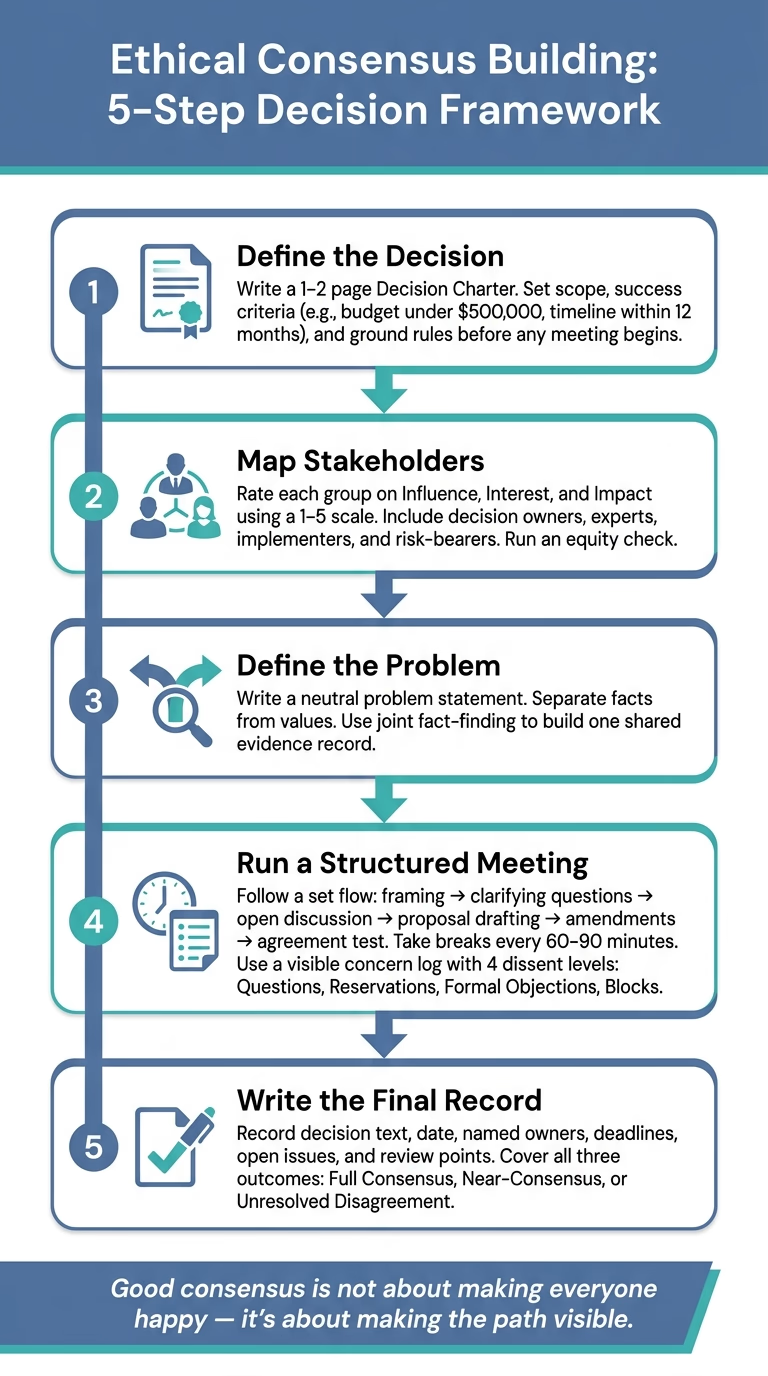
Ethical Consensus Building: 5-Step Decision Framework
Consensus Building in Business and Workplace Culture
Set Up the Process Before Discussion Begins
Build the process before anyone walks into the meeting. That way, people can spend their energy on the decision itself instead of arguing over procedure. It also makes the next question - who should be in the room - easier to defend and less likely to turn into a turf battle.
Define the Decision Scope, Purpose, and Ground Rules
Start with a short Decision Charter, usually one to two pages, and send it out before the meeting. It should say what decision is being made, why it matters, what sits inside the scope, what sits outside it, and how the group will judge success.
A single-sentence decision question gives the whole process a center of gravity. For example, a city transportation department might ask whether to expand bike lanes on street segments under city jurisdiction. Scope boundaries need to be plain from the start. If city-managed streets are in scope and state highways are out, say so clearly. That keeps the group from slipping back and reopening the frame halfway through the discussion.
Use clear criteria tied to fair treatment and feasibility. That might mean equitable treatment of affected communities, operational feasibility within 12 months, and a budget impact under $500,000. Process rules matter too. Spell out who takes part, how objections are raised, and how trade-offs will be recorded. Put those commitments in the charter so they guide the meeting instead of floating around as loose expectations.
Ground rules need the same level of care. Cover speaking order, time limits, confidentiality boundaries, and the method for raising objections. Structured turns help keep one loud voice from taking over. Many groups use categories such as concern, reservation, formal objection, and block. They also ask anyone who blocks a proposal to name the concern and suggest another path. Share a draft version of the rules ahead of time, then invite each participant to revise at least one item. That small move gives the group real ownership, not just passive buy-in.
Once the rules are in place, the next job is to identify the people who can shape, stop, or carry out the decision.
Decide Who Should Be in the Room
Map participants by influence, interest, and impact. Then sort them into decision owners, experts, implementers, and risk-bearers.
Role | Who They Are | What They Contribute |
|---|---|---|
Decision owner | Board, executive sponsor, or city council | Final accountability for acting on the consensus |
Subject-matter expert | Technical, legal, or financial specialists | Clarify constraints, options, and feasibility |
Implementer | Operations leads, project managers | Assess what is executable |
Risk-bearer | Frontline workers, affected residents, community groups | Surface lived-experience impacts and equity concerns |
An equity check matters here. Ask a blunt question: are groups that have often been left out actually included, and if so, in what role?
Send each participant a short role brief that covers authority, time commitment, and expected input. At the start of the session, the facilitator should restate those roles so everyone knows who is there to decide, who is there to inform, and who is there to carry the work forward.
Assign Roles and Meeting Logistics
At a minimum, assign a facilitator, a backup facilitator, a note-taker, and a timekeeper. Each role does a different job, and mixing them too loosely can create confusion fast.
The facilitator manages speaking order, protects the ground rules, and frames proposals, but should not be the main decision maker.
The backup facilitator steps in if the lead facilitator has a conflict of interest or needs to join the discussion in a direct way.
The note-taker records agreements, objections, and open questions in real time, ideally on a shared screen or flip chart so the group can check the record as it develops.
The timekeeper keeps the agenda moving and gives warnings before an item runs long.
Plan breaks every 60 to 90 minutes and share the schedule in advance. Give remote participants both video access and a phone line. Send agendas, briefing documents, and data summaries ahead of time in plain English, using standard date, time, currency, and number formats. In the room, a circle or U-shape works better than podium-style rows. It changes the feel right away; people face one another instead of performing at one another.
Include a work plan with milestones and target dates for issue scoping, information gathering, option development, draft consensus, and final agreement. Late materials, weak virtual access, and jargon-heavy documents tilt power toward the people with the most time, support, or insider knowledge.
With the process set, the next section can turn to stakeholder mapping and the sources of conflict.
Map Stakeholders and Review the Conflict Clearly
Once the process is in place, the next step is simple in theory and messy in practice: figure out who is affected and name the actual conflict. This is where the charter and ground rules stop being paperwork and start doing real work. They help the group see who needs to be in the room, who may be left out, and where the disagreement sits.
Rank Stakeholders by Influence, Interest, and Impact
Begin with a full list of people and groups that can shape the decision - or will live with its effects. That usually means internal teams, leadership, regulators, suppliers, community groups, frontline staff, and marginalized communities. After that, score each group across three dimensions: influence, interest, and impact. A plain 1–5 scale works well, and so do labels such as low, medium, and high.
Influence is about formal authority, control of key resources, or the power to stop the decision. Interest shows how much the outcome matters to that group. Impact looks at how strongly the decision will affect their work or daily lives.
The table below turns those ratings into a practical engagement plan.
Stakeholder Group | Influence | Interest | Impact | Engagement Approach |
|---|---|---|---|---|
Executive leadership / board | High | High | High | Collaborate: involve in co-design and key decisions |
Regulatory agency | High | Medium | Medium | Brief directly: targeted briefings and direct consultation |
Frontline workers | Medium | High | High | Co-create: test solutions with them before rollout |
Local community residents | Medium | Medium | High | Community forums, translated materials, open feedback channels |
Low influence does not mean low priority. A community group may have no budget authority and still carry the highest impact score if the decision affects community health or environmental quality. Good consensus work treats high-impact groups as core participants, not as an afterthought.[1][2]
Once the map is on paper, pressure-test it. Look at what each group wants, what they can live with, and what they could back in public.
Assess Motivations, Capacities, and Relationships
Before the group meets, sketch a short profile for each key stakeholder. Three questions usually get to the heart of it:
What do they want?
What limits what they can agree to?
How much capacity do they have to take part?
Those limits may come from legal duties, budget caps, or internal policy. Capacity problems are often more basic: time, language access, technical literacy, childcare, or transportation. In many cases, these practical barriers shape participation more than anyone admits at first.
History matters too. A stakeholder’s current position rarely stands alone. Past broken promises, top-down calls, or a pattern of exclusion can create doubt that no polished agenda will fix. It helps to map trust between key pairs and flag known fault lines - union-management tension, urban-rural strain, or community distrust of corporate promises. If the process is meant to be fair, it has to name that history and put guardrails in place, such as independent facilitation and clear records.
If major barriers exist, stop and deal with them first. Briefings, interpretation, or stipends may need to happen before any consensus session begins.
Define the Problem and Separate Facts from Values
A neutral problem statement sets the tone for an honest review of the conflict. It should describe what can be observed without assigning blame or hinting at the answer. Instead of saying, "leadership refuses to invest in safety", use: "Injury rates exceed industry averages, and current safety measures have not reduced incidents in two years." That small shift matters. It keeps the door open.
It also helps to sort concerns into three layers: ethical, technical, and operational. Political friction may shape the setting, but it should be named as context rather than treated as the problem itself.
When facts are disputed, use joint fact-finding. Agree on the questions first, choose sources together, and review the findings in the same room. That gives the group one shared record to work from and cuts down on rumor.[3]
With the dispute defined and the evidence shared, the group can move into agenda-driven discussion.
Run the Consensus Meeting and Handle Objections Ethically
Use the stakeholder map and conflict analysis to decide who speaks first, who drafts proposals, and who needs to sign off. Once the stakeholders are mapped and the conflict is defined, the meeting needs enough structure to keep things moving without shutting anyone out. A clear sequence helps the group stay fair and focused.
Follow a Clear Meeting Sequence from Agenda to Proposal
Start by restating the decision scope, the ground rules, and the decision method - whether the group is using full consensus or a defined near-consensus standard. Keep this opening short, usually 5 to 15 minutes. That small step matters more than people think. It cuts down on confusion when participants walk in with different ideas about how the call will be made.
From there, move through a set flow: issue framing and evidence review, clarifying questions only, open discussion, proposal drafting by a small group that includes dissenting input, structured amendments, and then a test for agreement. Each phase should be time-boxed and shown on a shared agenda. The goal is to bring objections out early, not save them for the last five minutes when everyone is tired and more likely to rush.
That also means using round-robin turns so no one speaks twice before everyone speaks once, naming the moment when the group slips from clarifying into debating, and inviting quieter people in directly. When tension jumps, a short silent pause or a brief written reflection can slow the room down just enough to prevent bad calls made in the heat of the moment.
The same ethics rules - transparency, dissent, and documentation - should guide every part of the meeting. These principles are central to our future leaders program, which focuses on building resilient, community-centered organizations.
Record Concerns, Unresolved Issues, and Blocked Items Openly
Classify dissent so the group can respond in the right way. Not every objection means the same thing, and treating all dissent as equal muddies the process. A simple four-level approach keeps the group grounded:
Questions ask for information. If no one can answer on the spot, log them with an owner and a due date.
Reservations show concern but also a willingness to move ahead. The facilitator should ask what might ease the concern and revise the proposal where possible.
Formal objections point to serious concerns about fairness, feasibility, or harm. These need changes before support is possible.
Blocking concerns should be kept for major ethical, legal, or mission-related risks, not personal preference. A valid block should be stated plainly: If we adopt this proposal, I believe [specific harm] will occur to [stakeholder or principle], because [reason].
Use a visible concern log with columns for type, summary, owner, response, and status. At the end of the session, the facilitator can read each entry aloud and ask whether the record reflects the concern fairly. That simple read-back helps avoid later arguments over whether someone’s objection was recorded the right way.
Use Escalation Paths and Written Decision Records
If the group can’t reach full agreement, move to the pre-set escalation path. There are four possible outcomes below.
When agreement fails, move in a documented order.
Outcome | Status | Ethical Handling | Record |
|---|---|---|---|
Full consensus | No blocks; all participants agree; reservations are minor | Confirm understanding and address minority concerns | Final proposal text, date in MM/DD/YYYY format, participants, unanimous consent status, any reservations and how they were addressed, implementation plan |
Near-consensus | No blocks; some stand-asides or reservations | Name stand-asides explicitly; confirm they are voluntary; add mitigating measures or review clauses | Who stood aside and why, any conditions or safeguards added, agreement that the decision proceeds, follow-up review date |
Unresolved disagreement | One or more blocks that cannot be resolved within the allotted time | Acknowledge the impasse; do not pressure blockers; revise, gather more information, or escalate | Blocked proposal, reasons for each block, attempts made to resolve, decision to defer or escalate, next steps, and responsible parties |
The final written record is not just admin work. It’s the part that makes the decision usable later, when people need to act on it, revisit it, or explain it. It should include the decision text, the date, named owners, deadlines, any remaining concerns with their status, and scheduled review points. Don’t end the session until every position is on the record and every next step has a clear owner.
Conclusion: Build Decisions People Can Trust and Act On
When the process is clear, the written record becomes the link between agreement and action. Ethical consensus building is not about unanimity. It’s about a process people can see, understand, and back. If the scope is set early, the right stakeholders are in the room, conflict gets an honest review, the meeting follows a fair structure, and both decisions and dissent are documented, people are far more likely to act on what comes next.
Clear consensus processes improve decision quality and civic engagement. That same idea matters even more in sustainability work, where legitimacy often decides whether anything gets carried out. Climate resilience, circular economy, and infrastructure choices don’t move far on good intent alone. They move when stakeholders trust the process. A short written record helps turn consensus into accountability.
Key Takeaways for Leaders and Facilitators
Leaders and facilitators are stewards of the process, not owners of the outcome. In practice, that means:
Define scope and ground rules before debate starts.
Map stakeholders before scheduling meetings.
Test facts jointly.
Protect dissent structurally.
Write it all down.
Trust is built less by unanimous agreement and more by making the path visible. People need to see how the decision was made, where their input went, and how dissent was handled. When leaders use these practices again and again - especially in high-stakes work like climate resilience and social equity - they help build a culture where people believe their voices matter and are more willing to follow through on what the group decided together.
FAQs
When should a group use consensus instead of another decision method?
Use consensus when success depends on stakeholder relationships, specialized knowledge, or shared resources. It works best when long-term ownership, accountability, and durable outcomes matter.
This approach is especially helpful for complex, contested issues that call for many points of view. Compared with voting, consensus can turn disagreement into better solutions and build broad, steady support for implementation.
What makes an objection serious enough to block a decision?
An objection becomes serious enough to stop a decision when it points to a basic problem that, if ignored, would weaken the integrity or staying power of the agreement.
In a consensus-based process, that kind of objection should pause the discussion. It gives the group space to hear the concern, understand what’s behind it, and weigh any changes that may be needed. Done well, objections don’t just slow things down for the sake of it. They bring underlying interests to the surface, sharpen the proposal, and help make sure no one is pushed into an outcome they oppose.
How can a facilitator keep the process fair when power is uneven?
Facilitators can keep the process even-handed by using structured participation so every voice is heard, not just the loudest or most influential in the room.
Start with stakeholder analysis to spot power gaps early. Then shape the process to ease pressure and make it easier for people to speak up. That can include:
Small-group discussions
Written input
Separate sessions for certain groups
Neutral facilitators should manage dominant speakers and make space for quieter voices. Just as important, they should document contributions and report back on how input was used. That follow-through helps build trust.
Related Blog Posts
Latest Articles
©2026

Narrative Change and Power Building: The Missing Half of Advocacy
Narrative change is the process of disrupting dominant narratives that normalize inequity and advancing new narratives from historically marginalized communities.

Funding Resilience Without Federal Grants
BRIC is unreliable and FEMA is shrinking. Here's how cities fund climate resilience with dedicated revenue, blended finance, and a coordinating authority.

The ESG Blind Spot: How AI Is Finding Risks in Companies Nobody Else Is Watching
Norway's sovereign wealth fund uses AI to screen 7,200 portfolio companies for forced labor and corruption within 24 hours. The real story is the emerging-market coverage gap that traditional ESG data vendors miss — and what it means for any company with a global supply chain.
Narrative Change and Power Building: The Missing Half of Advocacy
Narrative change is the process of disrupting dominant narratives that normalize inequity and advancing new narratives from historically marginalized communities.
Funding Resilience Without Federal Grants
BRIC is unreliable and FEMA is shrinking. Here's how cities fund climate resilience with dedicated revenue, blended finance, and a coordinating authority.
The ESG Blind Spot: How AI Is Finding Risks in Companies Nobody Else Is Watching
Norway's sovereign wealth fund uses AI to screen 7,200 portfolio companies for forced labor and corruption within 24 hours. The real story is the emerging-market coverage gap that traditional ESG data vendors miss — and what it means for any company with a global supply chain.
FAQ
01
What does it really mean to “redefine profit”?
02
What makes Council Fire different?
03
Who does Council Fire work with?
04
What does working with Council Fire actually look like?
05
How does Council Fire help organizations turn big goals into action?
06
How does Council Fire define and measure success?
07
How does technology fit into Council Fire’s work?
Sep 2, 2026
Guide to Ethical Consensus Building
Governance
In This Article
Practical framework for fair, documented group decisions: scope, stakeholder mapping, meeting rules, objections, and records.
Guide to Ethical Consensus Building
If people do not trust the decision process, the decision often fails in practice. I see ethical consensus building as a way to make high-stakes group decisions with clear scope, open dissent, conflict checks, set meeting rules, and written records that show how the group got to “yes” - or why it did not.
In plain terms, this guide says I should:
Use consensus only when trust and shared follow-through matter
Set scope, roles, rules, and success tests before the first meeting
Map who has power, who is affected, and who will do the work
Separate facts, values, and history before debating options
Run meetings with a set flow, time limits, and a visible concern log
Treat objections by level - from questions to blocks
Use a pre-set fallback path if full agreement does not happen
Write a final record with owners, dates, next steps, and open issues
A few points stand out. The guide calls for breaks every 60 to 90 minutes, a short 1–2 page decision charter before talks start, and budget or time tests such as keeping a plan under $500,000 or within 12 months. It also pushes a simple stakeholder rating system, like 1–5 for influence, interest, and impact, so the group can see who must be heard.
What I take from it is simple: good consensus is not about making everyone happy. It is about making the path visible, giving dissent a place in the record, and making sure the people most affected are not left at the edge of the room.
If I had to boil the whole article down to five actions, they would be:
Define the decision
Pick the right people
Name the conflict clearly
Run the meeting with discipline
Document the outcome in writing
That is the core of the article, and it is what makes a group decision easier to defend, explain, and carry out later.
Ethical Consensus Building: 5-Step Decision Framework
Consensus Building in Business and Workplace Culture
Set Up the Process Before Discussion Begins
Build the process before anyone walks into the meeting. That way, people can spend their energy on the decision itself instead of arguing over procedure. It also makes the next question - who should be in the room - easier to defend and less likely to turn into a turf battle.
Define the Decision Scope, Purpose, and Ground Rules
Start with a short Decision Charter, usually one to two pages, and send it out before the meeting. It should say what decision is being made, why it matters, what sits inside the scope, what sits outside it, and how the group will judge success.
A single-sentence decision question gives the whole process a center of gravity. For example, a city transportation department might ask whether to expand bike lanes on street segments under city jurisdiction. Scope boundaries need to be plain from the start. If city-managed streets are in scope and state highways are out, say so clearly. That keeps the group from slipping back and reopening the frame halfway through the discussion.
Use clear criteria tied to fair treatment and feasibility. That might mean equitable treatment of affected communities, operational feasibility within 12 months, and a budget impact under $500,000. Process rules matter too. Spell out who takes part, how objections are raised, and how trade-offs will be recorded. Put those commitments in the charter so they guide the meeting instead of floating around as loose expectations.
Ground rules need the same level of care. Cover speaking order, time limits, confidentiality boundaries, and the method for raising objections. Structured turns help keep one loud voice from taking over. Many groups use categories such as concern, reservation, formal objection, and block. They also ask anyone who blocks a proposal to name the concern and suggest another path. Share a draft version of the rules ahead of time, then invite each participant to revise at least one item. That small move gives the group real ownership, not just passive buy-in.
Once the rules are in place, the next job is to identify the people who can shape, stop, or carry out the decision.
Decide Who Should Be in the Room
Map participants by influence, interest, and impact. Then sort them into decision owners, experts, implementers, and risk-bearers.
Role | Who They Are | What They Contribute |
|---|---|---|
Decision owner | Board, executive sponsor, or city council | Final accountability for acting on the consensus |
Subject-matter expert | Technical, legal, or financial specialists | Clarify constraints, options, and feasibility |
Implementer | Operations leads, project managers | Assess what is executable |
Risk-bearer | Frontline workers, affected residents, community groups | Surface lived-experience impacts and equity concerns |
An equity check matters here. Ask a blunt question: are groups that have often been left out actually included, and if so, in what role?
Send each participant a short role brief that covers authority, time commitment, and expected input. At the start of the session, the facilitator should restate those roles so everyone knows who is there to decide, who is there to inform, and who is there to carry the work forward.
Assign Roles and Meeting Logistics
At a minimum, assign a facilitator, a backup facilitator, a note-taker, and a timekeeper. Each role does a different job, and mixing them too loosely can create confusion fast.
The facilitator manages speaking order, protects the ground rules, and frames proposals, but should not be the main decision maker.
The backup facilitator steps in if the lead facilitator has a conflict of interest or needs to join the discussion in a direct way.
The note-taker records agreements, objections, and open questions in real time, ideally on a shared screen or flip chart so the group can check the record as it develops.
The timekeeper keeps the agenda moving and gives warnings before an item runs long.
Plan breaks every 60 to 90 minutes and share the schedule in advance. Give remote participants both video access and a phone line. Send agendas, briefing documents, and data summaries ahead of time in plain English, using standard date, time, currency, and number formats. In the room, a circle or U-shape works better than podium-style rows. It changes the feel right away; people face one another instead of performing at one another.
Include a work plan with milestones and target dates for issue scoping, information gathering, option development, draft consensus, and final agreement. Late materials, weak virtual access, and jargon-heavy documents tilt power toward the people with the most time, support, or insider knowledge.
With the process set, the next section can turn to stakeholder mapping and the sources of conflict.
Map Stakeholders and Review the Conflict Clearly
Once the process is in place, the next step is simple in theory and messy in practice: figure out who is affected and name the actual conflict. This is where the charter and ground rules stop being paperwork and start doing real work. They help the group see who needs to be in the room, who may be left out, and where the disagreement sits.
Rank Stakeholders by Influence, Interest, and Impact
Begin with a full list of people and groups that can shape the decision - or will live with its effects. That usually means internal teams, leadership, regulators, suppliers, community groups, frontline staff, and marginalized communities. After that, score each group across three dimensions: influence, interest, and impact. A plain 1–5 scale works well, and so do labels such as low, medium, and high.
Influence is about formal authority, control of key resources, or the power to stop the decision. Interest shows how much the outcome matters to that group. Impact looks at how strongly the decision will affect their work or daily lives.
The table below turns those ratings into a practical engagement plan.
Stakeholder Group | Influence | Interest | Impact | Engagement Approach |
|---|---|---|---|---|
Executive leadership / board | High | High | High | Collaborate: involve in co-design and key decisions |
Regulatory agency | High | Medium | Medium | Brief directly: targeted briefings and direct consultation |
Frontline workers | Medium | High | High | Co-create: test solutions with them before rollout |
Local community residents | Medium | Medium | High | Community forums, translated materials, open feedback channels |
Low influence does not mean low priority. A community group may have no budget authority and still carry the highest impact score if the decision affects community health or environmental quality. Good consensus work treats high-impact groups as core participants, not as an afterthought.[1][2]
Once the map is on paper, pressure-test it. Look at what each group wants, what they can live with, and what they could back in public.
Assess Motivations, Capacities, and Relationships
Before the group meets, sketch a short profile for each key stakeholder. Three questions usually get to the heart of it:
What do they want?
What limits what they can agree to?
How much capacity do they have to take part?
Those limits may come from legal duties, budget caps, or internal policy. Capacity problems are often more basic: time, language access, technical literacy, childcare, or transportation. In many cases, these practical barriers shape participation more than anyone admits at first.
History matters too. A stakeholder’s current position rarely stands alone. Past broken promises, top-down calls, or a pattern of exclusion can create doubt that no polished agenda will fix. It helps to map trust between key pairs and flag known fault lines - union-management tension, urban-rural strain, or community distrust of corporate promises. If the process is meant to be fair, it has to name that history and put guardrails in place, such as independent facilitation and clear records.
If major barriers exist, stop and deal with them first. Briefings, interpretation, or stipends may need to happen before any consensus session begins.
Define the Problem and Separate Facts from Values
A neutral problem statement sets the tone for an honest review of the conflict. It should describe what can be observed without assigning blame or hinting at the answer. Instead of saying, "leadership refuses to invest in safety", use: "Injury rates exceed industry averages, and current safety measures have not reduced incidents in two years." That small shift matters. It keeps the door open.
It also helps to sort concerns into three layers: ethical, technical, and operational. Political friction may shape the setting, but it should be named as context rather than treated as the problem itself.
When facts are disputed, use joint fact-finding. Agree on the questions first, choose sources together, and review the findings in the same room. That gives the group one shared record to work from and cuts down on rumor.[3]
With the dispute defined and the evidence shared, the group can move into agenda-driven discussion.
Run the Consensus Meeting and Handle Objections Ethically
Use the stakeholder map and conflict analysis to decide who speaks first, who drafts proposals, and who needs to sign off. Once the stakeholders are mapped and the conflict is defined, the meeting needs enough structure to keep things moving without shutting anyone out. A clear sequence helps the group stay fair and focused.
Follow a Clear Meeting Sequence from Agenda to Proposal
Start by restating the decision scope, the ground rules, and the decision method - whether the group is using full consensus or a defined near-consensus standard. Keep this opening short, usually 5 to 15 minutes. That small step matters more than people think. It cuts down on confusion when participants walk in with different ideas about how the call will be made.
From there, move through a set flow: issue framing and evidence review, clarifying questions only, open discussion, proposal drafting by a small group that includes dissenting input, structured amendments, and then a test for agreement. Each phase should be time-boxed and shown on a shared agenda. The goal is to bring objections out early, not save them for the last five minutes when everyone is tired and more likely to rush.
That also means using round-robin turns so no one speaks twice before everyone speaks once, naming the moment when the group slips from clarifying into debating, and inviting quieter people in directly. When tension jumps, a short silent pause or a brief written reflection can slow the room down just enough to prevent bad calls made in the heat of the moment.
The same ethics rules - transparency, dissent, and documentation - should guide every part of the meeting. These principles are central to our future leaders program, which focuses on building resilient, community-centered organizations.
Record Concerns, Unresolved Issues, and Blocked Items Openly
Classify dissent so the group can respond in the right way. Not every objection means the same thing, and treating all dissent as equal muddies the process. A simple four-level approach keeps the group grounded:
Questions ask for information. If no one can answer on the spot, log them with an owner and a due date.
Reservations show concern but also a willingness to move ahead. The facilitator should ask what might ease the concern and revise the proposal where possible.
Formal objections point to serious concerns about fairness, feasibility, or harm. These need changes before support is possible.
Blocking concerns should be kept for major ethical, legal, or mission-related risks, not personal preference. A valid block should be stated plainly: If we adopt this proposal, I believe [specific harm] will occur to [stakeholder or principle], because [reason].
Use a visible concern log with columns for type, summary, owner, response, and status. At the end of the session, the facilitator can read each entry aloud and ask whether the record reflects the concern fairly. That simple read-back helps avoid later arguments over whether someone’s objection was recorded the right way.
Use Escalation Paths and Written Decision Records
If the group can’t reach full agreement, move to the pre-set escalation path. There are four possible outcomes below.
When agreement fails, move in a documented order.
Outcome | Status | Ethical Handling | Record |
|---|---|---|---|
Full consensus | No blocks; all participants agree; reservations are minor | Confirm understanding and address minority concerns | Final proposal text, date in MM/DD/YYYY format, participants, unanimous consent status, any reservations and how they were addressed, implementation plan |
Near-consensus | No blocks; some stand-asides or reservations | Name stand-asides explicitly; confirm they are voluntary; add mitigating measures or review clauses | Who stood aside and why, any conditions or safeguards added, agreement that the decision proceeds, follow-up review date |
Unresolved disagreement | One or more blocks that cannot be resolved within the allotted time | Acknowledge the impasse; do not pressure blockers; revise, gather more information, or escalate | Blocked proposal, reasons for each block, attempts made to resolve, decision to defer or escalate, next steps, and responsible parties |
The final written record is not just admin work. It’s the part that makes the decision usable later, when people need to act on it, revisit it, or explain it. It should include the decision text, the date, named owners, deadlines, any remaining concerns with their status, and scheduled review points. Don’t end the session until every position is on the record and every next step has a clear owner.
Conclusion: Build Decisions People Can Trust and Act On
When the process is clear, the written record becomes the link between agreement and action. Ethical consensus building is not about unanimity. It’s about a process people can see, understand, and back. If the scope is set early, the right stakeholders are in the room, conflict gets an honest review, the meeting follows a fair structure, and both decisions and dissent are documented, people are far more likely to act on what comes next.
Clear consensus processes improve decision quality and civic engagement. That same idea matters even more in sustainability work, where legitimacy often decides whether anything gets carried out. Climate resilience, circular economy, and infrastructure choices don’t move far on good intent alone. They move when stakeholders trust the process. A short written record helps turn consensus into accountability.
Key Takeaways for Leaders and Facilitators
Leaders and facilitators are stewards of the process, not owners of the outcome. In practice, that means:
Define scope and ground rules before debate starts.
Map stakeholders before scheduling meetings.
Test facts jointly.
Protect dissent structurally.
Write it all down.
Trust is built less by unanimous agreement and more by making the path visible. People need to see how the decision was made, where their input went, and how dissent was handled. When leaders use these practices again and again - especially in high-stakes work like climate resilience and social equity - they help build a culture where people believe their voices matter and are more willing to follow through on what the group decided together.
FAQs
When should a group use consensus instead of another decision method?
Use consensus when success depends on stakeholder relationships, specialized knowledge, or shared resources. It works best when long-term ownership, accountability, and durable outcomes matter.
This approach is especially helpful for complex, contested issues that call for many points of view. Compared with voting, consensus can turn disagreement into better solutions and build broad, steady support for implementation.
What makes an objection serious enough to block a decision?
An objection becomes serious enough to stop a decision when it points to a basic problem that, if ignored, would weaken the integrity or staying power of the agreement.
In a consensus-based process, that kind of objection should pause the discussion. It gives the group space to hear the concern, understand what’s behind it, and weigh any changes that may be needed. Done well, objections don’t just slow things down for the sake of it. They bring underlying interests to the surface, sharpen the proposal, and help make sure no one is pushed into an outcome they oppose.
How can a facilitator keep the process fair when power is uneven?
Facilitators can keep the process even-handed by using structured participation so every voice is heard, not just the loudest or most influential in the room.
Start with stakeholder analysis to spot power gaps early. Then shape the process to ease pressure and make it easier for people to speak up. That can include:
Small-group discussions
Written input
Separate sessions for certain groups
Neutral facilitators should manage dominant speakers and make space for quieter voices. Just as important, they should document contributions and report back on how input was used. That follow-through helps build trust.
Related Blog Posts
Latest Articles
©2026
Narrative Change and Power Building: The Missing Half of Advocacy
Narrative change is the process of disrupting dominant narratives that normalize inequity and advancing new narratives from historically marginalized communities.
Funding Resilience Without Federal Grants
BRIC is unreliable and FEMA is shrinking. Here's how cities fund climate resilience with dedicated revenue, blended finance, and a coordinating authority.
The ESG Blind Spot: How AI Is Finding Risks in Companies Nobody Else Is Watching
Norway's sovereign wealth fund uses AI to screen 7,200 portfolio companies for forced labor and corruption within 24 hours. The real story is the emerging-market coverage gap that traditional ESG data vendors miss — and what it means for any company with a global supply chain.
FAQ
01
What does it really mean to “redefine profit”?
02
What makes Council Fire different?
03
Who does Council Fire work with?
04
What does working with Council Fire actually look like?
05
How does Council Fire help organizations turn big goals into action?
06
How does Council Fire define and measure success?
07
How does technology fit into Council Fire’s work?
Sep 2, 2026
Guide to Ethical Consensus Building
Governance
In This Article
Practical framework for fair, documented group decisions: scope, stakeholder mapping, meeting rules, objections, and records.
Guide to Ethical Consensus Building
If people do not trust the decision process, the decision often fails in practice. I see ethical consensus building as a way to make high-stakes group decisions with clear scope, open dissent, conflict checks, set meeting rules, and written records that show how the group got to “yes” - or why it did not.
In plain terms, this guide says I should:
Use consensus only when trust and shared follow-through matter
Set scope, roles, rules, and success tests before the first meeting
Map who has power, who is affected, and who will do the work
Separate facts, values, and history before debating options
Run meetings with a set flow, time limits, and a visible concern log
Treat objections by level - from questions to blocks
Use a pre-set fallback path if full agreement does not happen
Write a final record with owners, dates, next steps, and open issues
A few points stand out. The guide calls for breaks every 60 to 90 minutes, a short 1–2 page decision charter before talks start, and budget or time tests such as keeping a plan under $500,000 or within 12 months. It also pushes a simple stakeholder rating system, like 1–5 for influence, interest, and impact, so the group can see who must be heard.
What I take from it is simple: good consensus is not about making everyone happy. It is about making the path visible, giving dissent a place in the record, and making sure the people most affected are not left at the edge of the room.
If I had to boil the whole article down to five actions, they would be:
Define the decision
Pick the right people
Name the conflict clearly
Run the meeting with discipline
Document the outcome in writing
That is the core of the article, and it is what makes a group decision easier to defend, explain, and carry out later.
Ethical Consensus Building: 5-Step Decision Framework
Consensus Building in Business and Workplace Culture
Set Up the Process Before Discussion Begins
Build the process before anyone walks into the meeting. That way, people can spend their energy on the decision itself instead of arguing over procedure. It also makes the next question - who should be in the room - easier to defend and less likely to turn into a turf battle.
Define the Decision Scope, Purpose, and Ground Rules
Start with a short Decision Charter, usually one to two pages, and send it out before the meeting. It should say what decision is being made, why it matters, what sits inside the scope, what sits outside it, and how the group will judge success.
A single-sentence decision question gives the whole process a center of gravity. For example, a city transportation department might ask whether to expand bike lanes on street segments under city jurisdiction. Scope boundaries need to be plain from the start. If city-managed streets are in scope and state highways are out, say so clearly. That keeps the group from slipping back and reopening the frame halfway through the discussion.
Use clear criteria tied to fair treatment and feasibility. That might mean equitable treatment of affected communities, operational feasibility within 12 months, and a budget impact under $500,000. Process rules matter too. Spell out who takes part, how objections are raised, and how trade-offs will be recorded. Put those commitments in the charter so they guide the meeting instead of floating around as loose expectations.
Ground rules need the same level of care. Cover speaking order, time limits, confidentiality boundaries, and the method for raising objections. Structured turns help keep one loud voice from taking over. Many groups use categories such as concern, reservation, formal objection, and block. They also ask anyone who blocks a proposal to name the concern and suggest another path. Share a draft version of the rules ahead of time, then invite each participant to revise at least one item. That small move gives the group real ownership, not just passive buy-in.
Once the rules are in place, the next job is to identify the people who can shape, stop, or carry out the decision.
Decide Who Should Be in the Room
Map participants by influence, interest, and impact. Then sort them into decision owners, experts, implementers, and risk-bearers.
Role | Who They Are | What They Contribute |
|---|---|---|
Decision owner | Board, executive sponsor, or city council | Final accountability for acting on the consensus |
Subject-matter expert | Technical, legal, or financial specialists | Clarify constraints, options, and feasibility |
Implementer | Operations leads, project managers | Assess what is executable |
Risk-bearer | Frontline workers, affected residents, community groups | Surface lived-experience impacts and equity concerns |
An equity check matters here. Ask a blunt question: are groups that have often been left out actually included, and if so, in what role?
Send each participant a short role brief that covers authority, time commitment, and expected input. At the start of the session, the facilitator should restate those roles so everyone knows who is there to decide, who is there to inform, and who is there to carry the work forward.
Assign Roles and Meeting Logistics
At a minimum, assign a facilitator, a backup facilitator, a note-taker, and a timekeeper. Each role does a different job, and mixing them too loosely can create confusion fast.
The facilitator manages speaking order, protects the ground rules, and frames proposals, but should not be the main decision maker.
The backup facilitator steps in if the lead facilitator has a conflict of interest or needs to join the discussion in a direct way.
The note-taker records agreements, objections, and open questions in real time, ideally on a shared screen or flip chart so the group can check the record as it develops.
The timekeeper keeps the agenda moving and gives warnings before an item runs long.
Plan breaks every 60 to 90 minutes and share the schedule in advance. Give remote participants both video access and a phone line. Send agendas, briefing documents, and data summaries ahead of time in plain English, using standard date, time, currency, and number formats. In the room, a circle or U-shape works better than podium-style rows. It changes the feel right away; people face one another instead of performing at one another.
Include a work plan with milestones and target dates for issue scoping, information gathering, option development, draft consensus, and final agreement. Late materials, weak virtual access, and jargon-heavy documents tilt power toward the people with the most time, support, or insider knowledge.
With the process set, the next section can turn to stakeholder mapping and the sources of conflict.
Map Stakeholders and Review the Conflict Clearly
Once the process is in place, the next step is simple in theory and messy in practice: figure out who is affected and name the actual conflict. This is where the charter and ground rules stop being paperwork and start doing real work. They help the group see who needs to be in the room, who may be left out, and where the disagreement sits.
Rank Stakeholders by Influence, Interest, and Impact
Begin with a full list of people and groups that can shape the decision - or will live with its effects. That usually means internal teams, leadership, regulators, suppliers, community groups, frontline staff, and marginalized communities. After that, score each group across three dimensions: influence, interest, and impact. A plain 1–5 scale works well, and so do labels such as low, medium, and high.
Influence is about formal authority, control of key resources, or the power to stop the decision. Interest shows how much the outcome matters to that group. Impact looks at how strongly the decision will affect their work or daily lives.
The table below turns those ratings into a practical engagement plan.
Stakeholder Group | Influence | Interest | Impact | Engagement Approach |
|---|---|---|---|---|
Executive leadership / board | High | High | High | Collaborate: involve in co-design and key decisions |
Regulatory agency | High | Medium | Medium | Brief directly: targeted briefings and direct consultation |
Frontline workers | Medium | High | High | Co-create: test solutions with them before rollout |
Local community residents | Medium | Medium | High | Community forums, translated materials, open feedback channels |
Low influence does not mean low priority. A community group may have no budget authority and still carry the highest impact score if the decision affects community health or environmental quality. Good consensus work treats high-impact groups as core participants, not as an afterthought.[1][2]
Once the map is on paper, pressure-test it. Look at what each group wants, what they can live with, and what they could back in public.
Assess Motivations, Capacities, and Relationships
Before the group meets, sketch a short profile for each key stakeholder. Three questions usually get to the heart of it:
What do they want?
What limits what they can agree to?
How much capacity do they have to take part?
Those limits may come from legal duties, budget caps, or internal policy. Capacity problems are often more basic: time, language access, technical literacy, childcare, or transportation. In many cases, these practical barriers shape participation more than anyone admits at first.
History matters too. A stakeholder’s current position rarely stands alone. Past broken promises, top-down calls, or a pattern of exclusion can create doubt that no polished agenda will fix. It helps to map trust between key pairs and flag known fault lines - union-management tension, urban-rural strain, or community distrust of corporate promises. If the process is meant to be fair, it has to name that history and put guardrails in place, such as independent facilitation and clear records.
If major barriers exist, stop and deal with them first. Briefings, interpretation, or stipends may need to happen before any consensus session begins.
Define the Problem and Separate Facts from Values
A neutral problem statement sets the tone for an honest review of the conflict. It should describe what can be observed without assigning blame or hinting at the answer. Instead of saying, "leadership refuses to invest in safety", use: "Injury rates exceed industry averages, and current safety measures have not reduced incidents in two years." That small shift matters. It keeps the door open.
It also helps to sort concerns into three layers: ethical, technical, and operational. Political friction may shape the setting, but it should be named as context rather than treated as the problem itself.
When facts are disputed, use joint fact-finding. Agree on the questions first, choose sources together, and review the findings in the same room. That gives the group one shared record to work from and cuts down on rumor.[3]
With the dispute defined and the evidence shared, the group can move into agenda-driven discussion.
Run the Consensus Meeting and Handle Objections Ethically
Use the stakeholder map and conflict analysis to decide who speaks first, who drafts proposals, and who needs to sign off. Once the stakeholders are mapped and the conflict is defined, the meeting needs enough structure to keep things moving without shutting anyone out. A clear sequence helps the group stay fair and focused.
Follow a Clear Meeting Sequence from Agenda to Proposal
Start by restating the decision scope, the ground rules, and the decision method - whether the group is using full consensus or a defined near-consensus standard. Keep this opening short, usually 5 to 15 minutes. That small step matters more than people think. It cuts down on confusion when participants walk in with different ideas about how the call will be made.
From there, move through a set flow: issue framing and evidence review, clarifying questions only, open discussion, proposal drafting by a small group that includes dissenting input, structured amendments, and then a test for agreement. Each phase should be time-boxed and shown on a shared agenda. The goal is to bring objections out early, not save them for the last five minutes when everyone is tired and more likely to rush.
That also means using round-robin turns so no one speaks twice before everyone speaks once, naming the moment when the group slips from clarifying into debating, and inviting quieter people in directly. When tension jumps, a short silent pause or a brief written reflection can slow the room down just enough to prevent bad calls made in the heat of the moment.
The same ethics rules - transparency, dissent, and documentation - should guide every part of the meeting. These principles are central to our future leaders program, which focuses on building resilient, community-centered organizations.
Record Concerns, Unresolved Issues, and Blocked Items Openly
Classify dissent so the group can respond in the right way. Not every objection means the same thing, and treating all dissent as equal muddies the process. A simple four-level approach keeps the group grounded:
Questions ask for information. If no one can answer on the spot, log them with an owner and a due date.
Reservations show concern but also a willingness to move ahead. The facilitator should ask what might ease the concern and revise the proposal where possible.
Formal objections point to serious concerns about fairness, feasibility, or harm. These need changes before support is possible.
Blocking concerns should be kept for major ethical, legal, or mission-related risks, not personal preference. A valid block should be stated plainly: If we adopt this proposal, I believe [specific harm] will occur to [stakeholder or principle], because [reason].
Use a visible concern log with columns for type, summary, owner, response, and status. At the end of the session, the facilitator can read each entry aloud and ask whether the record reflects the concern fairly. That simple read-back helps avoid later arguments over whether someone’s objection was recorded the right way.
Use Escalation Paths and Written Decision Records
If the group can’t reach full agreement, move to the pre-set escalation path. There are four possible outcomes below.
When agreement fails, move in a documented order.
Outcome | Status | Ethical Handling | Record |
|---|---|---|---|
Full consensus | No blocks; all participants agree; reservations are minor | Confirm understanding and address minority concerns | Final proposal text, date in MM/DD/YYYY format, participants, unanimous consent status, any reservations and how they were addressed, implementation plan |
Near-consensus | No blocks; some stand-asides or reservations | Name stand-asides explicitly; confirm they are voluntary; add mitigating measures or review clauses | Who stood aside and why, any conditions or safeguards added, agreement that the decision proceeds, follow-up review date |
Unresolved disagreement | One or more blocks that cannot be resolved within the allotted time | Acknowledge the impasse; do not pressure blockers; revise, gather more information, or escalate | Blocked proposal, reasons for each block, attempts made to resolve, decision to defer or escalate, next steps, and responsible parties |
The final written record is not just admin work. It’s the part that makes the decision usable later, when people need to act on it, revisit it, or explain it. It should include the decision text, the date, named owners, deadlines, any remaining concerns with their status, and scheduled review points. Don’t end the session until every position is on the record and every next step has a clear owner.
Conclusion: Build Decisions People Can Trust and Act On
When the process is clear, the written record becomes the link between agreement and action. Ethical consensus building is not about unanimity. It’s about a process people can see, understand, and back. If the scope is set early, the right stakeholders are in the room, conflict gets an honest review, the meeting follows a fair structure, and both decisions and dissent are documented, people are far more likely to act on what comes next.
Clear consensus processes improve decision quality and civic engagement. That same idea matters even more in sustainability work, where legitimacy often decides whether anything gets carried out. Climate resilience, circular economy, and infrastructure choices don’t move far on good intent alone. They move when stakeholders trust the process. A short written record helps turn consensus into accountability.
Key Takeaways for Leaders and Facilitators
Leaders and facilitators are stewards of the process, not owners of the outcome. In practice, that means:
Define scope and ground rules before debate starts.
Map stakeholders before scheduling meetings.
Test facts jointly.
Protect dissent structurally.
Write it all down.
Trust is built less by unanimous agreement and more by making the path visible. People need to see how the decision was made, where their input went, and how dissent was handled. When leaders use these practices again and again - especially in high-stakes work like climate resilience and social equity - they help build a culture where people believe their voices matter and are more willing to follow through on what the group decided together.
FAQs
When should a group use consensus instead of another decision method?
Use consensus when success depends on stakeholder relationships, specialized knowledge, or shared resources. It works best when long-term ownership, accountability, and durable outcomes matter.
This approach is especially helpful for complex, contested issues that call for many points of view. Compared with voting, consensus can turn disagreement into better solutions and build broad, steady support for implementation.
What makes an objection serious enough to block a decision?
An objection becomes serious enough to stop a decision when it points to a basic problem that, if ignored, would weaken the integrity or staying power of the agreement.
In a consensus-based process, that kind of objection should pause the discussion. It gives the group space to hear the concern, understand what’s behind it, and weigh any changes that may be needed. Done well, objections don’t just slow things down for the sake of it. They bring underlying interests to the surface, sharpen the proposal, and help make sure no one is pushed into an outcome they oppose.
How can a facilitator keep the process fair when power is uneven?
Facilitators can keep the process even-handed by using structured participation so every voice is heard, not just the loudest or most influential in the room.
Start with stakeholder analysis to spot power gaps early. Then shape the process to ease pressure and make it easier for people to speak up. That can include:
Small-group discussions
Written input
Separate sessions for certain groups
Neutral facilitators should manage dominant speakers and make space for quieter voices. Just as important, they should document contributions and report back on how input was used. That follow-through helps build trust.
Related Blog Posts
Latest Articles
©2026
Narrative Change and Power Building: The Missing Half of Advocacy
Narrative change is the process of disrupting dominant narratives that normalize inequity and advancing new narratives from historically marginalized communities.
Funding Resilience Without Federal Grants
BRIC is unreliable and FEMA is shrinking. Here's how cities fund climate resilience with dedicated revenue, blended finance, and a coordinating authority.
The ESG Blind Spot: How AI Is Finding Risks in Companies Nobody Else Is Watching
Norway's sovereign wealth fund uses AI to screen 7,200 portfolio companies for forced labor and corruption within 24 hours. The real story is the emerging-market coverage gap that traditional ESG data vendors miss — and what it means for any company with a global supply chain.
FAQ
What does it really mean to “redefine profit”?
What makes Council Fire different?
Who does Council Fire work with?
What does working with Council Fire actually look like?
How does Council Fire help organizations turn big goals into action?
How does Council Fire define and measure success?
How does technology fit into Council Fire’s work?