
May 5, 2026
How to Design a Stakeholder Engagement Strategy That Builds Trust for Universities & Research Institutions
Capacity Building
In This Article
Framework for mapping, prioritizing, and engaging university stakeholders to build trust, transparency, and lasting partnerships.
How to Design a Stakeholder Engagement Strategy That Builds Trust for Universities & Research Institutions
Universities and research institutions depend on strong relationships with stakeholders to advance their missions. However, challenges like communication barriers, power imbalances, and historical mistrust often hinder collaboration. To overcome these, institutions need a clear, actionable stakeholder engagement strategy that prioritizes trust, transparency, and shared goals.
Key Takeaways:
Identify and Map Stakeholders: Recognize internal (faculty, students, staff) and external (donors, community groups, regulators) stakeholders, then categorize them based on influence and interest.
Prioritize Engagement Efforts: Focus resources on stakeholders with the most influence or impact, using tools like influence-interest matrices.
Tailor Communication: Understand and respect stakeholder preferences, using clear, accessible language and offering flexible participation options.
Build Trust: Share information openly, acknowledge feedback, and involve stakeholders in decision-making processes.
Monitor and Improve: Regularly evaluate engagement efforts using metrics like participation diversity and stakeholder satisfaction, and refine strategies as needed.
By shifting from transactional interactions to collaborative partnerships, universities can align their research and education with meaningful outcomes while addressing community needs.
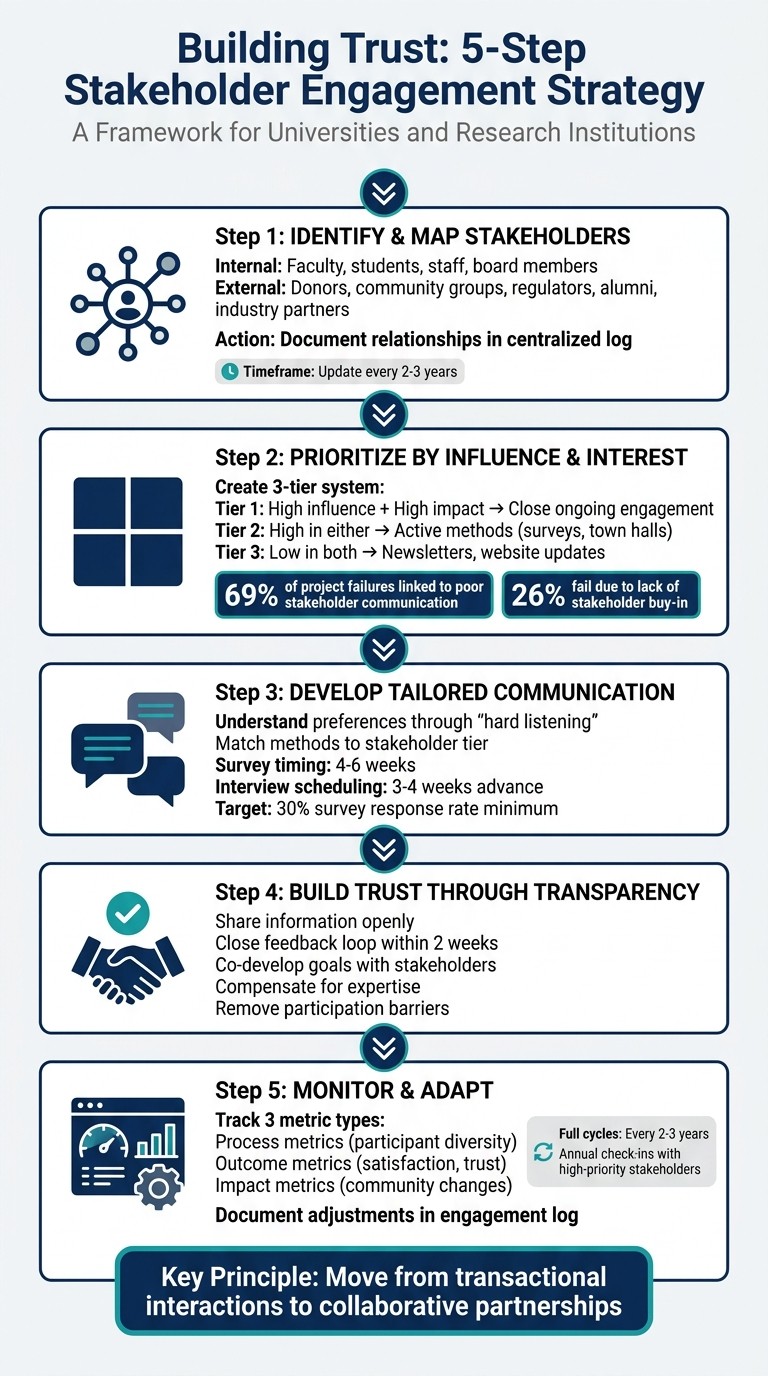
5-Step Stakeholder Engagement Strategy Framework for Universities
Identify and Map Your Stakeholders
How to Identify Your Stakeholders
Start by pinpointing the key stakeholders connected to your work. In the academic world, stakeholders include individuals or groups who have the authority to drive change, a vested interest in seeing progress, or the ability to influence decision-makers [6]. This definition is broad, encompassing not just allies but also critics, affected communities, and groups that could be negatively impacted by your activities or research [5].
Collaborate with leadership to map relationships across departments. Dive into internal databases or profiles to identify past collaborators and connections [6]. For institutions aiming to influence policy, tools like Scival can help locate policy influencers, while Hansard is useful for exploring relevant legislative discussions [6].
Benchmarking can also uncover overlooked stakeholders. Reviewing similar organizations' websites and annual reports can reveal common stakeholder groups you might not have considered [6]. As the University of Birmingham highlights, "One lower down contact can often open doors to those higher up, so a little bit of strategy can go a long way in getting your foot in the door" [6]. This strategic approach ensures you capture the broader network of influence surrounding your work.
Once you've identified stakeholders, the next step is organizing them for more targeted engagement efforts.
Categorizing Stakeholders: Internal vs. External
After identifying your stakeholders, group them into categories for better engagement planning. A basic yet effective distinction is internal versus external stakeholders. Internal stakeholders typically include your board of directors, executive leaders, faculty, students, staff, and unions [5]. External stakeholders cover a wider spectrum, such as donors, community organizations, regulatory agencies, industry partners, alumni, advocacy groups, NGOs, think tanks, professional networks, and other relevant entities [5][6].
This classification helps tailor communication strategies. Internal stakeholders often need detailed and regular updates about institutional changes, while external groups may benefit from less frequent but more targeted interactions. Be sure to include both supportive and critical stakeholders to avoid potential blind spots in your strategy [5].
This step naturally leads to documenting stakeholder interactions, which is essential for refining your engagement plan.
Document Stakeholder Relationships
Keep a centralized log of all stakeholder interactions, noting participants, dates, engagement methods, and outcomes [5]. This record promotes transparency and allows for ongoing strategy refinement. Additionally, it supports compliance with disclosure requirements like GRI 2-29 and ESRS 2 [5].
A straightforward worksheet or template can help organize each stakeholder's role, relationship to the institution, level of influence, and key interests or concerns. This documentation becomes a vital tool for prioritizing your engagement efforts. Plan to revisit and update your stakeholder map every 2–3 years as part of a broader engagement cycle [5]. Continuously update your log as new interactions occur.
Prioritize Stakeholders by Influence and Interest
How to Prioritize Stakeholders
Once stakeholders are mapped, evaluate them across four key areas: influence, impact, urgency, and dependency. Additionally, consider their proximity to the issue. For mission-driven organizations, such as universities, proximity often plays a significant role. Those closest to a research or educational challenge frequently possess the most practical knowledge, even if they lack formal authority. As Drew Giddings, Founder & Principal Consultant at Giddings Consulting Group, explains:
"The people closest to the problem often have the deepest understanding of what solutions will work. Their engagement should be prioritized regardless of their formal power" [7].
Once stakeholders are rated, the next step is to visually organize these priorities.
Create a Stakeholder Influence-Interest Matrix
To better manage stakeholder engagement, plot them on an influence-interest matrix divided into three tiers:
Tier 1: High influence and high impact. These stakeholders require close, ongoing engagement.
Tier 2: High in either influence or impact. Use active methods like surveys or town halls to engage them.
Tier 3: Low in both attributes. Communicate through newsletters or website updates.
Align these tiers with the IAP2 Spectrum of Participation, which ranges from Inform to Empower. This ensures your engagement evolves from simply sharing information to fostering shared decision-making. Conduct a gap analysis by comparing each stakeholder's "Current Engagement Level" with their "Desired Engagement Level." This step is crucial, as poor communication with stakeholders is linked to 69% of project failures, and 26% fail due to a lack of stakeholder buy-in [7].
Focus Resources on High-Priority Stakeholders
Prioritize resources for Tier 1 stakeholders, as they have the most influence or are most affected by your goals. For these stakeholders, dedicate high-touch activities such as one-on-one interviews or collaborative workshops. For Tier 2, scalable methods like town halls or webinars are effective. Tier 3 stakeholders can be kept informed through automated updates like newsletters or website posts.
It’s essential to tailor your engagement efforts to each group's specific needs without leaving anyone out. After each engagement activity, share a summary of the feedback you received and how it influenced your decisions within two weeks. As Council Fire Resources points out:
"Failing to close the loop is the fastest way to destroy engagement quality in future cycles. Stakeholders who feel ignored won't participate again" [5].
For Tier 1 community stakeholders, reduce barriers to participation by offering modest compensation, childcare, or translation services. Their lived experiences are a valuable form of expertise. When engaging sponsors, remember that only about two-thirds of projects (approximately 66%) have actively involved sponsors [7]. This makes it all the more important to prioritize their engagement.
Develop Tailored Communication and Engagement Plans
Understand Stakeholder Communication Preferences
Once stakeholders are prioritized, the next step is understanding how they prefer to communicate. Different groups - healthcare professionals, industry partners, journalists, K-12 educators, and policymakers - have distinct needs and levels of expertise [8]. Using Purdue University's "hard listening" approach, focus on active questioning to uncover these preferences before creating any materials [1].
A formal communication plan is essential. This plan should outline how often you’ll connect and which platforms you’ll use [1]. For example, some stakeholders might prefer digital tools and regular email updates, while others may value in-person meetings or specific formats for reports. From the outset, be upfront about your goals, resources, limitations, and expectations. As the Purdue University Office of Engagement emphasizes:
"It is critical to be honest and transparent with community partners about your interests, intentions, assets, constraints, and expected outcomes. Ask questions; listen hard; be flexible" [1].
By aligning communication with stakeholders' preferences, you strengthen trust - a key element of academic engagement. It's also crucial to recognize that expertise comes in many forms. A community advocate may not hold a PhD, but their lived experience offers valuable insights that should inform your approach.
Develop Reciprocal Engagement Methods
Effective communication is a two-way street. The Carnegie Foundation describes engagement as "the collaboration between institutions of higher education and their larger communities for the mutually beneficial exchange of knowledge and resources in a context of partnership and reciprocity" [1]. This means moving beyond simply delivering information to fostering collaboration and shared creation.
Engagement should feel like a conversation, not a lecture. For stakeholders with significant influence, use methods like one-on-one interviews, advisory panels, or co-design workshops. For larger audiences, tools like focus groups, roundtables, or town halls can be effective [5]. When addressing complex research topics, make the discussion relatable by tying it to local or personal contexts [9]. For topics that might spark debate, such as climate change or GMOs, begin by identifying shared values to establish common ground [9].
Being transparent about uncertainties and openly discussing research setbacks can foster trust and lead to better decisions [9]. Always close the loop by showing stakeholders how their feedback influenced your decisions. For surveys, aim for a response rate of at least 30% to ensure statistical relevance, and keep them under 15 minutes to encourage completion [5].
Plan Timing and Frequency of Engagement
Engagement thrives on careful planning and consistent effort [1]. To prevent partners from feeling overwhelmed, be clear about time commitments and expected outcomes upfront [1]. Transition from sporadic communication to a structured schedule of regular check-ins that keeps the collaboration moving forward without becoming burdensome.
For surveys, allocate 4–6 weeks, and allow 3–4 weeks to schedule interviews [5]. During implementation, schedule regular check-ins to address milestones and ensure alignment with partner expectations [1]. After major milestones, hold formal debriefing sessions to determine if communication frequency and methods are still effective. Match the intensity of your communication to the level of engagement required, whether it’s providing updates or co-creating solutions [1]. Stay flexible and adjust your approach as the partnership evolves [1].
These strategies lay the groundwork for meaningful collaboration and ensure that stakeholder engagement remains effective and ongoing.
Insight on Aligning Stakeholder Values for Successful Engagement in Higher Education
Build Trust Through Transparency and Collaboration
Fostering trust is a cornerstone of any successful collaboration. By combining open communication with active stakeholder involvement, organizations can create lasting partnerships that drive meaningful outcomes.
Share Information Openly
Trust thrives on transparency. Universities and organizations must clearly outline their goals, constraints, and decision-making processes from the outset. Honest communication sets the stage for productive relationships.
One of the most impactful practices for building trust is closing the feedback loop. Drew Giddings, Founder & Principal Consultant at Giddings Consulting Group, emphasizes that "Closing the loop... builds more trust than any other [practice]" [7]. This involves providing stakeholders with a summary of engagement activities - typically within two weeks - highlighting what was heard, what changes will be made, and what cannot change, along with the reasons why [7]. Avoiding token consultations where decisions are already made is equally crucial. As Giddings warns, "Engagement processes that replicate [histories of being studied and then ignored] do active harm" [7].
A great example of this approach comes from Chicago Public Schools. During its accountability redesign initiative, the district prioritized transparency by hosting monthly small-group discussions with parent advisory councils and organizing five town hall meetings. This allowed them to listen and build trust before proposing any changes [7]. Such openness paves the way for collaborative goal-setting.
Co-Develop Goals with Stakeholders
Effective engagement goes beyond asking for feedback - it involves stakeholders in shaping the agenda itself. This means working together to define research questions, set priorities, and make decisions.
The Stanford School of Medicine's "Engage for Equity PLUS" (E2 PLUS) initiative offers a powerful example. Between October 2021 and March 2022, the project, led by four faculty members and two community partners, conducted workshops and surveys involving 61 stakeholders. This process uncovered key institutional barriers, such as challenges with IRB policies and post-award procedures. In response, Stanford established three priority action areas: addressing IRB barriers, simplifying financial processes for community partners, and increasing community-engaged research training [4].
Recognizing and compensating stakeholders for their expertise is vital. Treating community knowledge with the same respect as academic credentials sends a strong message of value. Additionally, removing participation barriers - like offering childcare, transportation, meals, translation services, and flexible meeting options - ensures inclusivity and accessibility [7].
Invest in Long-Term Relationships
Building trust isn’t a one-and-done effort; it’s an ongoing relationship. Andy Phippen, Professor of IT Ethics at Bournemouth University, explains:
"Impact is not a one-off project outcome; it's a professional practice. ... Over time, you build an ecosystem of trust, relevance and shared purpose" [3].
Maintaining connections with stakeholders even when no active project is underway is essential. Regular updates, informal feedback sessions, and a consistent presence in the community help prevent "engagement fatigue" and ensure that research remains aligned with evolving needs [3][2].
Stanford’s institutional assessment revealed a striking gap: while 49% of respondents felt the institution supported community involvement in research only "slightly" or "not at all", 70% of researchers and staff expressed a willingness to adapt their methods based on community feedback [4]. Bridging this divide requires more than individual enthusiasm - it demands institutional support through dedicated budgets, streamlined administrative processes, and comprehensive training resources [4].
To sustain these efforts, organizations can document interactions in an "impact diary", tracking how stakeholder input shapes their work over time [3]. Establishing formal engagement protocols, including mutually agreed-upon principles and shared decision-making structures, further strengthens these partnerships [1]. Such long-term commitments create a foundation for successful implementation and continuous improvement in stakeholder engagement strategies.
Implement and Monitor Your Stakeholder Engagement Strategy
Turn Strategy into Action
Once your stakeholder engagement strategy is ready, the next step is implementation. This phase involves documenting key details like messages, communication channels, and contact schedules for each stakeholder group. Assigning specific team members to oversee these tasks ensures accountability and smooth execution [7]. In academic settings, this might include finalizing research contracts, securing Institutional Review Board (IRB) approvals, or completing syllabi and learning contracts for experiential learning programs [1].
High-stakes engagements, such as executive forums or community workshops, demand skilled facilitators to gather meaningful data and build trust [5]. To stay organized, maintain a stakeholder engagement log that records activities, participants, dates, methods, and outcomes. This log not only supports accountability but also simplifies external reporting [5][7]. It's worth noting that ineffective communication with stakeholders contributes to 69% of project failures, while 26% fail due to insufficient stakeholder buy-in [7].
As you proceed with your engagement activities, consistent monitoring is critical to ensure their success.
Monitor and Evaluate Your Engagement Efforts
Measure the effectiveness of your engagement efforts using three key metrics: process metrics (e.g., participant diversity), outcome metrics (e.g., levels of stakeholder satisfaction and trust), and impact metrics (e.g., measurable changes in community indicators) [7]. Aim for a survey response rate of at least 30% to gather meaningful insights [5].
Conduct full engagement cycles every two to three years, aligning them with materiality assessments, and schedule annual check-ins with high-priority stakeholders to address emerging concerns between major cycles [5]. Use consistent rating scales for surveys to enable comparisons over time, and systematically analyze qualitative feedback from interviews and focus groups to identify common themes [5]. Additionally, host formal debrief sessions with collaborators - including students and community members - to reflect on the partnership's effectiveness and celebrate achievements [1].
Use the findings from these evaluations to refine your approach and keep pace with stakeholder needs.
Adapt to Changing Stakeholder Needs
Adaptability is key to maintaining effective engagement. For instance, if response rates decline, consider attending community meetings or offering multiple participation options, such as online, in-person, or phone engagements [5]. For high-influence stakeholders, schedule interviews well in advance - ideally 3–4 weeks ahead - to ensure their involvement [5].
The Carnegie Foundation emphasizes the importance of mutual benefit in partnerships:
"Engagement is the collaboration between institutions of higher education and their larger communities for the mutually beneficial exchange of knowledge and resources in a context of partnership and reciprocity." [1]
Both sides must see clear advantages for the partnership to thrive. Document any adjustments you make in your engagement log, as this record will guide future strategies and external reporting [5].
Conclusion
To build trust through stakeholder engagement, a consistent commitment to transparency, clear priorities, and genuine collaboration is essential. This aligns closely with the strategic mapping and prioritization steps discussed earlier. Universities and research institutions that excel in this area treat stakeholders as valuable collaborators with critical insights, rather than as challenges to manage. Shifting from a hierarchical management style to a relationship-driven approach is what distinguishes meaningful engagement from superficial efforts [7].
Common challenges, such as poor communication and lack of stakeholder buy-in, often undermine engagement efforts. However, these issues can be mitigated. By systematically mapping stakeholders, setting clear priorities, and tailoring communication strategies, institutions can foster collaboration and avoid these pitfalls.
A key element of effective engagement is closing the feedback loop. It’s important to demonstrate to stakeholders how their input has influenced decisions or, when necessary, explain the limitations that prevented certain changes. This transparency strengthens trust and reinforces the value of their involvement.
Engagement exists on a spectrum - from simply providing information to fully involving stakeholders in decision-making. Adapting your approach to fit the context and specific needs of your stakeholders is critical. For high-priority partners, methods like co-design workshops or joint task forces may be appropriate. For others, regular updates or consultations might suffice.
Treat your engagement strategy as a living framework, refining it based on ongoing feedback and evolving circumstances. Institutions that make stakeholder engagement a core part of their mission not only enhance their research and educational outcomes but also create a lasting, positive impact within their communities. By embedding these practices into daily operations, universities can achieve both academic excellence and meaningful societal contributions.
FAQs
Who should lead stakeholder engagement on campus?
Stakeholder engagement on campus thrives under the guidance of individuals or teams well-versed in strategic planning, relationship management, and effective communication. Typically, this responsibility falls to senior administrators, specialized stakeholder engagement officers, or teams adept at navigating and aligning diverse perspectives. Leadership in this area should prioritize cultivating trust, encouraging collaboration, and ensuring that stakeholders remain aligned with the institution’s objectives by employing clear and structured processes.
How can we rebuild trust with communities that feel harmed or ignored?
Rebuilding trust hinges on creating authentic, two-way relationships grounded in transparency, mutual respect, and equitable benefits. It's essential to engage communities as equal collaborators in research, recognizing and valuing their expertise and contributions while steering clear of exploitative practices. Open, honest communication and ensuring that both sides gain meaningful advantages from the partnership are crucial steps toward mending trust and addressing historical wrongs.
What metrics prove stakeholder engagement is working?
Effective stakeholder engagement can be seen through metrics like higher project success rates, active participation, and better outcomes. When stakeholders are involved, they bring diverse perspectives, encourage collaboration, and build trust, all of which boost the effectiveness of strategies. Research highlights that projects with engaged stakeholders are much more likely to achieve success than those where engagement is limited.
Related Blog Posts
Latest Articles
©2025

Narrative Change and Power Building: The Missing Half of Advocacy
Narrative change is the process of disrupting dominant narratives that normalize inequity and advancing new narratives from historically marginalized communities.

Funding Resilience Without Federal Grants
BRIC is unreliable and FEMA is shrinking. Here's how cities fund climate resilience with dedicated revenue, blended finance, and a coordinating authority.

The ESG Blind Spot: How AI Is Finding Risks in Companies Nobody Else Is Watching
Norway's sovereign wealth fund uses AI to screen 7,200 portfolio companies for forced labor and corruption within 24 hours. The real story is the emerging-market coverage gap that traditional ESG data vendors miss — and what it means for any company with a global supply chain.
Narrative Change and Power Building: The Missing Half of Advocacy
Narrative change is the process of disrupting dominant narratives that normalize inequity and advancing new narratives from historically marginalized communities.
Funding Resilience Without Federal Grants
BRIC is unreliable and FEMA is shrinking. Here's how cities fund climate resilience with dedicated revenue, blended finance, and a coordinating authority.
The ESG Blind Spot: How AI Is Finding Risks in Companies Nobody Else Is Watching
Norway's sovereign wealth fund uses AI to screen 7,200 portfolio companies for forced labor and corruption within 24 hours. The real story is the emerging-market coverage gap that traditional ESG data vendors miss — and what it means for any company with a global supply chain.
FAQ
01
What does it really mean to “redefine profit”?
02
What makes Council Fire different?
03
Who does Council Fire work with?
04
What does working with Council Fire actually look like?
05
How does Council Fire help organizations turn big goals into action?
06
How does Council Fire define and measure success?
May 5, 2026
How to Design a Stakeholder Engagement Strategy That Builds Trust for Universities & Research Institutions
Capacity Building
In This Article
Framework for mapping, prioritizing, and engaging university stakeholders to build trust, transparency, and lasting partnerships.
How to Design a Stakeholder Engagement Strategy That Builds Trust for Universities & Research Institutions
Universities and research institutions depend on strong relationships with stakeholders to advance their missions. However, challenges like communication barriers, power imbalances, and historical mistrust often hinder collaboration. To overcome these, institutions need a clear, actionable stakeholder engagement strategy that prioritizes trust, transparency, and shared goals.
Key Takeaways:
Identify and Map Stakeholders: Recognize internal (faculty, students, staff) and external (donors, community groups, regulators) stakeholders, then categorize them based on influence and interest.
Prioritize Engagement Efforts: Focus resources on stakeholders with the most influence or impact, using tools like influence-interest matrices.
Tailor Communication: Understand and respect stakeholder preferences, using clear, accessible language and offering flexible participation options.
Build Trust: Share information openly, acknowledge feedback, and involve stakeholders in decision-making processes.
Monitor and Improve: Regularly evaluate engagement efforts using metrics like participation diversity and stakeholder satisfaction, and refine strategies as needed.
By shifting from transactional interactions to collaborative partnerships, universities can align their research and education with meaningful outcomes while addressing community needs.
5-Step Stakeholder Engagement Strategy Framework for Universities
Identify and Map Your Stakeholders
How to Identify Your Stakeholders
Start by pinpointing the key stakeholders connected to your work. In the academic world, stakeholders include individuals or groups who have the authority to drive change, a vested interest in seeing progress, or the ability to influence decision-makers [6]. This definition is broad, encompassing not just allies but also critics, affected communities, and groups that could be negatively impacted by your activities or research [5].
Collaborate with leadership to map relationships across departments. Dive into internal databases or profiles to identify past collaborators and connections [6]. For institutions aiming to influence policy, tools like Scival can help locate policy influencers, while Hansard is useful for exploring relevant legislative discussions [6].
Benchmarking can also uncover overlooked stakeholders. Reviewing similar organizations' websites and annual reports can reveal common stakeholder groups you might not have considered [6]. As the University of Birmingham highlights, "One lower down contact can often open doors to those higher up, so a little bit of strategy can go a long way in getting your foot in the door" [6]. This strategic approach ensures you capture the broader network of influence surrounding your work.
Once you've identified stakeholders, the next step is organizing them for more targeted engagement efforts.
Categorizing Stakeholders: Internal vs. External
After identifying your stakeholders, group them into categories for better engagement planning. A basic yet effective distinction is internal versus external stakeholders. Internal stakeholders typically include your board of directors, executive leaders, faculty, students, staff, and unions [5]. External stakeholders cover a wider spectrum, such as donors, community organizations, regulatory agencies, industry partners, alumni, advocacy groups, NGOs, think tanks, professional networks, and other relevant entities [5][6].
This classification helps tailor communication strategies. Internal stakeholders often need detailed and regular updates about institutional changes, while external groups may benefit from less frequent but more targeted interactions. Be sure to include both supportive and critical stakeholders to avoid potential blind spots in your strategy [5].
This step naturally leads to documenting stakeholder interactions, which is essential for refining your engagement plan.
Document Stakeholder Relationships
Keep a centralized log of all stakeholder interactions, noting participants, dates, engagement methods, and outcomes [5]. This record promotes transparency and allows for ongoing strategy refinement. Additionally, it supports compliance with disclosure requirements like GRI 2-29 and ESRS 2 [5].
A straightforward worksheet or template can help organize each stakeholder's role, relationship to the institution, level of influence, and key interests or concerns. This documentation becomes a vital tool for prioritizing your engagement efforts. Plan to revisit and update your stakeholder map every 2–3 years as part of a broader engagement cycle [5]. Continuously update your log as new interactions occur.
Prioritize Stakeholders by Influence and Interest
How to Prioritize Stakeholders
Once stakeholders are mapped, evaluate them across four key areas: influence, impact, urgency, and dependency. Additionally, consider their proximity to the issue. For mission-driven organizations, such as universities, proximity often plays a significant role. Those closest to a research or educational challenge frequently possess the most practical knowledge, even if they lack formal authority. As Drew Giddings, Founder & Principal Consultant at Giddings Consulting Group, explains:
"The people closest to the problem often have the deepest understanding of what solutions will work. Their engagement should be prioritized regardless of their formal power" [7].
Once stakeholders are rated, the next step is to visually organize these priorities.
Create a Stakeholder Influence-Interest Matrix
To better manage stakeholder engagement, plot them on an influence-interest matrix divided into three tiers:
Tier 1: High influence and high impact. These stakeholders require close, ongoing engagement.
Tier 2: High in either influence or impact. Use active methods like surveys or town halls to engage them.
Tier 3: Low in both attributes. Communicate through newsletters or website updates.
Align these tiers with the IAP2 Spectrum of Participation, which ranges from Inform to Empower. This ensures your engagement evolves from simply sharing information to fostering shared decision-making. Conduct a gap analysis by comparing each stakeholder's "Current Engagement Level" with their "Desired Engagement Level." This step is crucial, as poor communication with stakeholders is linked to 69% of project failures, and 26% fail due to a lack of stakeholder buy-in [7].
Focus Resources on High-Priority Stakeholders
Prioritize resources for Tier 1 stakeholders, as they have the most influence or are most affected by your goals. For these stakeholders, dedicate high-touch activities such as one-on-one interviews or collaborative workshops. For Tier 2, scalable methods like town halls or webinars are effective. Tier 3 stakeholders can be kept informed through automated updates like newsletters or website posts.
It’s essential to tailor your engagement efforts to each group's specific needs without leaving anyone out. After each engagement activity, share a summary of the feedback you received and how it influenced your decisions within two weeks. As Council Fire Resources points out:
"Failing to close the loop is the fastest way to destroy engagement quality in future cycles. Stakeholders who feel ignored won't participate again" [5].
For Tier 1 community stakeholders, reduce barriers to participation by offering modest compensation, childcare, or translation services. Their lived experiences are a valuable form of expertise. When engaging sponsors, remember that only about two-thirds of projects (approximately 66%) have actively involved sponsors [7]. This makes it all the more important to prioritize their engagement.
Develop Tailored Communication and Engagement Plans
Understand Stakeholder Communication Preferences
Once stakeholders are prioritized, the next step is understanding how they prefer to communicate. Different groups - healthcare professionals, industry partners, journalists, K-12 educators, and policymakers - have distinct needs and levels of expertise [8]. Using Purdue University's "hard listening" approach, focus on active questioning to uncover these preferences before creating any materials [1].
A formal communication plan is essential. This plan should outline how often you’ll connect and which platforms you’ll use [1]. For example, some stakeholders might prefer digital tools and regular email updates, while others may value in-person meetings or specific formats for reports. From the outset, be upfront about your goals, resources, limitations, and expectations. As the Purdue University Office of Engagement emphasizes:
"It is critical to be honest and transparent with community partners about your interests, intentions, assets, constraints, and expected outcomes. Ask questions; listen hard; be flexible" [1].
By aligning communication with stakeholders' preferences, you strengthen trust - a key element of academic engagement. It's also crucial to recognize that expertise comes in many forms. A community advocate may not hold a PhD, but their lived experience offers valuable insights that should inform your approach.
Develop Reciprocal Engagement Methods
Effective communication is a two-way street. The Carnegie Foundation describes engagement as "the collaboration between institutions of higher education and their larger communities for the mutually beneficial exchange of knowledge and resources in a context of partnership and reciprocity" [1]. This means moving beyond simply delivering information to fostering collaboration and shared creation.
Engagement should feel like a conversation, not a lecture. For stakeholders with significant influence, use methods like one-on-one interviews, advisory panels, or co-design workshops. For larger audiences, tools like focus groups, roundtables, or town halls can be effective [5]. When addressing complex research topics, make the discussion relatable by tying it to local or personal contexts [9]. For topics that might spark debate, such as climate change or GMOs, begin by identifying shared values to establish common ground [9].
Being transparent about uncertainties and openly discussing research setbacks can foster trust and lead to better decisions [9]. Always close the loop by showing stakeholders how their feedback influenced your decisions. For surveys, aim for a response rate of at least 30% to ensure statistical relevance, and keep them under 15 minutes to encourage completion [5].
Plan Timing and Frequency of Engagement
Engagement thrives on careful planning and consistent effort [1]. To prevent partners from feeling overwhelmed, be clear about time commitments and expected outcomes upfront [1]. Transition from sporadic communication to a structured schedule of regular check-ins that keeps the collaboration moving forward without becoming burdensome.
For surveys, allocate 4–6 weeks, and allow 3–4 weeks to schedule interviews [5]. During implementation, schedule regular check-ins to address milestones and ensure alignment with partner expectations [1]. After major milestones, hold formal debriefing sessions to determine if communication frequency and methods are still effective. Match the intensity of your communication to the level of engagement required, whether it’s providing updates or co-creating solutions [1]. Stay flexible and adjust your approach as the partnership evolves [1].
These strategies lay the groundwork for meaningful collaboration and ensure that stakeholder engagement remains effective and ongoing.
Insight on Aligning Stakeholder Values for Successful Engagement in Higher Education
Build Trust Through Transparency and Collaboration
Fostering trust is a cornerstone of any successful collaboration. By combining open communication with active stakeholder involvement, organizations can create lasting partnerships that drive meaningful outcomes.
Share Information Openly
Trust thrives on transparency. Universities and organizations must clearly outline their goals, constraints, and decision-making processes from the outset. Honest communication sets the stage for productive relationships.
One of the most impactful practices for building trust is closing the feedback loop. Drew Giddings, Founder & Principal Consultant at Giddings Consulting Group, emphasizes that "Closing the loop... builds more trust than any other [practice]" [7]. This involves providing stakeholders with a summary of engagement activities - typically within two weeks - highlighting what was heard, what changes will be made, and what cannot change, along with the reasons why [7]. Avoiding token consultations where decisions are already made is equally crucial. As Giddings warns, "Engagement processes that replicate [histories of being studied and then ignored] do active harm" [7].
A great example of this approach comes from Chicago Public Schools. During its accountability redesign initiative, the district prioritized transparency by hosting monthly small-group discussions with parent advisory councils and organizing five town hall meetings. This allowed them to listen and build trust before proposing any changes [7]. Such openness paves the way for collaborative goal-setting.
Co-Develop Goals with Stakeholders
Effective engagement goes beyond asking for feedback - it involves stakeholders in shaping the agenda itself. This means working together to define research questions, set priorities, and make decisions.
The Stanford School of Medicine's "Engage for Equity PLUS" (E2 PLUS) initiative offers a powerful example. Between October 2021 and March 2022, the project, led by four faculty members and two community partners, conducted workshops and surveys involving 61 stakeholders. This process uncovered key institutional barriers, such as challenges with IRB policies and post-award procedures. In response, Stanford established three priority action areas: addressing IRB barriers, simplifying financial processes for community partners, and increasing community-engaged research training [4].
Recognizing and compensating stakeholders for their expertise is vital. Treating community knowledge with the same respect as academic credentials sends a strong message of value. Additionally, removing participation barriers - like offering childcare, transportation, meals, translation services, and flexible meeting options - ensures inclusivity and accessibility [7].
Invest in Long-Term Relationships
Building trust isn’t a one-and-done effort; it’s an ongoing relationship. Andy Phippen, Professor of IT Ethics at Bournemouth University, explains:
"Impact is not a one-off project outcome; it's a professional practice. ... Over time, you build an ecosystem of trust, relevance and shared purpose" [3].
Maintaining connections with stakeholders even when no active project is underway is essential. Regular updates, informal feedback sessions, and a consistent presence in the community help prevent "engagement fatigue" and ensure that research remains aligned with evolving needs [3][2].
Stanford’s institutional assessment revealed a striking gap: while 49% of respondents felt the institution supported community involvement in research only "slightly" or "not at all", 70% of researchers and staff expressed a willingness to adapt their methods based on community feedback [4]. Bridging this divide requires more than individual enthusiasm - it demands institutional support through dedicated budgets, streamlined administrative processes, and comprehensive training resources [4].
To sustain these efforts, organizations can document interactions in an "impact diary", tracking how stakeholder input shapes their work over time [3]. Establishing formal engagement protocols, including mutually agreed-upon principles and shared decision-making structures, further strengthens these partnerships [1]. Such long-term commitments create a foundation for successful implementation and continuous improvement in stakeholder engagement strategies.
Implement and Monitor Your Stakeholder Engagement Strategy
Turn Strategy into Action
Once your stakeholder engagement strategy is ready, the next step is implementation. This phase involves documenting key details like messages, communication channels, and contact schedules for each stakeholder group. Assigning specific team members to oversee these tasks ensures accountability and smooth execution [7]. In academic settings, this might include finalizing research contracts, securing Institutional Review Board (IRB) approvals, or completing syllabi and learning contracts for experiential learning programs [1].
High-stakes engagements, such as executive forums or community workshops, demand skilled facilitators to gather meaningful data and build trust [5]. To stay organized, maintain a stakeholder engagement log that records activities, participants, dates, methods, and outcomes. This log not only supports accountability but also simplifies external reporting [5][7]. It's worth noting that ineffective communication with stakeholders contributes to 69% of project failures, while 26% fail due to insufficient stakeholder buy-in [7].
As you proceed with your engagement activities, consistent monitoring is critical to ensure their success.
Monitor and Evaluate Your Engagement Efforts
Measure the effectiveness of your engagement efforts using three key metrics: process metrics (e.g., participant diversity), outcome metrics (e.g., levels of stakeholder satisfaction and trust), and impact metrics (e.g., measurable changes in community indicators) [7]. Aim for a survey response rate of at least 30% to gather meaningful insights [5].
Conduct full engagement cycles every two to three years, aligning them with materiality assessments, and schedule annual check-ins with high-priority stakeholders to address emerging concerns between major cycles [5]. Use consistent rating scales for surveys to enable comparisons over time, and systematically analyze qualitative feedback from interviews and focus groups to identify common themes [5]. Additionally, host formal debrief sessions with collaborators - including students and community members - to reflect on the partnership's effectiveness and celebrate achievements [1].
Use the findings from these evaluations to refine your approach and keep pace with stakeholder needs.
Adapt to Changing Stakeholder Needs
Adaptability is key to maintaining effective engagement. For instance, if response rates decline, consider attending community meetings or offering multiple participation options, such as online, in-person, or phone engagements [5]. For high-influence stakeholders, schedule interviews well in advance - ideally 3–4 weeks ahead - to ensure their involvement [5].
The Carnegie Foundation emphasizes the importance of mutual benefit in partnerships:
"Engagement is the collaboration between institutions of higher education and their larger communities for the mutually beneficial exchange of knowledge and resources in a context of partnership and reciprocity." [1]
Both sides must see clear advantages for the partnership to thrive. Document any adjustments you make in your engagement log, as this record will guide future strategies and external reporting [5].
Conclusion
To build trust through stakeholder engagement, a consistent commitment to transparency, clear priorities, and genuine collaboration is essential. This aligns closely with the strategic mapping and prioritization steps discussed earlier. Universities and research institutions that excel in this area treat stakeholders as valuable collaborators with critical insights, rather than as challenges to manage. Shifting from a hierarchical management style to a relationship-driven approach is what distinguishes meaningful engagement from superficial efforts [7].
Common challenges, such as poor communication and lack of stakeholder buy-in, often undermine engagement efforts. However, these issues can be mitigated. By systematically mapping stakeholders, setting clear priorities, and tailoring communication strategies, institutions can foster collaboration and avoid these pitfalls.
A key element of effective engagement is closing the feedback loop. It’s important to demonstrate to stakeholders how their input has influenced decisions or, when necessary, explain the limitations that prevented certain changes. This transparency strengthens trust and reinforces the value of their involvement.
Engagement exists on a spectrum - from simply providing information to fully involving stakeholders in decision-making. Adapting your approach to fit the context and specific needs of your stakeholders is critical. For high-priority partners, methods like co-design workshops or joint task forces may be appropriate. For others, regular updates or consultations might suffice.
Treat your engagement strategy as a living framework, refining it based on ongoing feedback and evolving circumstances. Institutions that make stakeholder engagement a core part of their mission not only enhance their research and educational outcomes but also create a lasting, positive impact within their communities. By embedding these practices into daily operations, universities can achieve both academic excellence and meaningful societal contributions.
FAQs
Who should lead stakeholder engagement on campus?
Stakeholder engagement on campus thrives under the guidance of individuals or teams well-versed in strategic planning, relationship management, and effective communication. Typically, this responsibility falls to senior administrators, specialized stakeholder engagement officers, or teams adept at navigating and aligning diverse perspectives. Leadership in this area should prioritize cultivating trust, encouraging collaboration, and ensuring that stakeholders remain aligned with the institution’s objectives by employing clear and structured processes.
How can we rebuild trust with communities that feel harmed or ignored?
Rebuilding trust hinges on creating authentic, two-way relationships grounded in transparency, mutual respect, and equitable benefits. It's essential to engage communities as equal collaborators in research, recognizing and valuing their expertise and contributions while steering clear of exploitative practices. Open, honest communication and ensuring that both sides gain meaningful advantages from the partnership are crucial steps toward mending trust and addressing historical wrongs.
What metrics prove stakeholder engagement is working?
Effective stakeholder engagement can be seen through metrics like higher project success rates, active participation, and better outcomes. When stakeholders are involved, they bring diverse perspectives, encourage collaboration, and build trust, all of which boost the effectiveness of strategies. Research highlights that projects with engaged stakeholders are much more likely to achieve success than those where engagement is limited.
Related Blog Posts
Latest Articles
©2025
Narrative Change and Power Building: The Missing Half of Advocacy
Narrative change is the process of disrupting dominant narratives that normalize inequity and advancing new narratives from historically marginalized communities.
Funding Resilience Without Federal Grants
BRIC is unreliable and FEMA is shrinking. Here's how cities fund climate resilience with dedicated revenue, blended finance, and a coordinating authority.
The ESG Blind Spot: How AI Is Finding Risks in Companies Nobody Else Is Watching
Norway's sovereign wealth fund uses AI to screen 7,200 portfolio companies for forced labor and corruption within 24 hours. The real story is the emerging-market coverage gap that traditional ESG data vendors miss — and what it means for any company with a global supply chain.
FAQ
01
What does it really mean to “redefine profit”?
02
What makes Council Fire different?
03
Who does Council Fire work with?
04
What does working with Council Fire actually look like?
05
How does Council Fire help organizations turn big goals into action?
06
How does Council Fire define and measure success?
May 5, 2026
How to Design a Stakeholder Engagement Strategy That Builds Trust for Universities & Research Institutions
Capacity Building
In This Article
Framework for mapping, prioritizing, and engaging university stakeholders to build trust, transparency, and lasting partnerships.
How to Design a Stakeholder Engagement Strategy That Builds Trust for Universities & Research Institutions
Universities and research institutions depend on strong relationships with stakeholders to advance their missions. However, challenges like communication barriers, power imbalances, and historical mistrust often hinder collaboration. To overcome these, institutions need a clear, actionable stakeholder engagement strategy that prioritizes trust, transparency, and shared goals.
Key Takeaways:
Identify and Map Stakeholders: Recognize internal (faculty, students, staff) and external (donors, community groups, regulators) stakeholders, then categorize them based on influence and interest.
Prioritize Engagement Efforts: Focus resources on stakeholders with the most influence or impact, using tools like influence-interest matrices.
Tailor Communication: Understand and respect stakeholder preferences, using clear, accessible language and offering flexible participation options.
Build Trust: Share information openly, acknowledge feedback, and involve stakeholders in decision-making processes.
Monitor and Improve: Regularly evaluate engagement efforts using metrics like participation diversity and stakeholder satisfaction, and refine strategies as needed.
By shifting from transactional interactions to collaborative partnerships, universities can align their research and education with meaningful outcomes while addressing community needs.
5-Step Stakeholder Engagement Strategy Framework for Universities
Identify and Map Your Stakeholders
How to Identify Your Stakeholders
Start by pinpointing the key stakeholders connected to your work. In the academic world, stakeholders include individuals or groups who have the authority to drive change, a vested interest in seeing progress, or the ability to influence decision-makers [6]. This definition is broad, encompassing not just allies but also critics, affected communities, and groups that could be negatively impacted by your activities or research [5].
Collaborate with leadership to map relationships across departments. Dive into internal databases or profiles to identify past collaborators and connections [6]. For institutions aiming to influence policy, tools like Scival can help locate policy influencers, while Hansard is useful for exploring relevant legislative discussions [6].
Benchmarking can also uncover overlooked stakeholders. Reviewing similar organizations' websites and annual reports can reveal common stakeholder groups you might not have considered [6]. As the University of Birmingham highlights, "One lower down contact can often open doors to those higher up, so a little bit of strategy can go a long way in getting your foot in the door" [6]. This strategic approach ensures you capture the broader network of influence surrounding your work.
Once you've identified stakeholders, the next step is organizing them for more targeted engagement efforts.
Categorizing Stakeholders: Internal vs. External
After identifying your stakeholders, group them into categories for better engagement planning. A basic yet effective distinction is internal versus external stakeholders. Internal stakeholders typically include your board of directors, executive leaders, faculty, students, staff, and unions [5]. External stakeholders cover a wider spectrum, such as donors, community organizations, regulatory agencies, industry partners, alumni, advocacy groups, NGOs, think tanks, professional networks, and other relevant entities [5][6].
This classification helps tailor communication strategies. Internal stakeholders often need detailed and regular updates about institutional changes, while external groups may benefit from less frequent but more targeted interactions. Be sure to include both supportive and critical stakeholders to avoid potential blind spots in your strategy [5].
This step naturally leads to documenting stakeholder interactions, which is essential for refining your engagement plan.
Document Stakeholder Relationships
Keep a centralized log of all stakeholder interactions, noting participants, dates, engagement methods, and outcomes [5]. This record promotes transparency and allows for ongoing strategy refinement. Additionally, it supports compliance with disclosure requirements like GRI 2-29 and ESRS 2 [5].
A straightforward worksheet or template can help organize each stakeholder's role, relationship to the institution, level of influence, and key interests or concerns. This documentation becomes a vital tool for prioritizing your engagement efforts. Plan to revisit and update your stakeholder map every 2–3 years as part of a broader engagement cycle [5]. Continuously update your log as new interactions occur.
Prioritize Stakeholders by Influence and Interest
How to Prioritize Stakeholders
Once stakeholders are mapped, evaluate them across four key areas: influence, impact, urgency, and dependency. Additionally, consider their proximity to the issue. For mission-driven organizations, such as universities, proximity often plays a significant role. Those closest to a research or educational challenge frequently possess the most practical knowledge, even if they lack formal authority. As Drew Giddings, Founder & Principal Consultant at Giddings Consulting Group, explains:
"The people closest to the problem often have the deepest understanding of what solutions will work. Their engagement should be prioritized regardless of their formal power" [7].
Once stakeholders are rated, the next step is to visually organize these priorities.
Create a Stakeholder Influence-Interest Matrix
To better manage stakeholder engagement, plot them on an influence-interest matrix divided into three tiers:
Tier 1: High influence and high impact. These stakeholders require close, ongoing engagement.
Tier 2: High in either influence or impact. Use active methods like surveys or town halls to engage them.
Tier 3: Low in both attributes. Communicate through newsletters or website updates.
Align these tiers with the IAP2 Spectrum of Participation, which ranges from Inform to Empower. This ensures your engagement evolves from simply sharing information to fostering shared decision-making. Conduct a gap analysis by comparing each stakeholder's "Current Engagement Level" with their "Desired Engagement Level." This step is crucial, as poor communication with stakeholders is linked to 69% of project failures, and 26% fail due to a lack of stakeholder buy-in [7].
Focus Resources on High-Priority Stakeholders
Prioritize resources for Tier 1 stakeholders, as they have the most influence or are most affected by your goals. For these stakeholders, dedicate high-touch activities such as one-on-one interviews or collaborative workshops. For Tier 2, scalable methods like town halls or webinars are effective. Tier 3 stakeholders can be kept informed through automated updates like newsletters or website posts.
It’s essential to tailor your engagement efforts to each group's specific needs without leaving anyone out. After each engagement activity, share a summary of the feedback you received and how it influenced your decisions within two weeks. As Council Fire Resources points out:
"Failing to close the loop is the fastest way to destroy engagement quality in future cycles. Stakeholders who feel ignored won't participate again" [5].
For Tier 1 community stakeholders, reduce barriers to participation by offering modest compensation, childcare, or translation services. Their lived experiences are a valuable form of expertise. When engaging sponsors, remember that only about two-thirds of projects (approximately 66%) have actively involved sponsors [7]. This makes it all the more important to prioritize their engagement.
Develop Tailored Communication and Engagement Plans
Understand Stakeholder Communication Preferences
Once stakeholders are prioritized, the next step is understanding how they prefer to communicate. Different groups - healthcare professionals, industry partners, journalists, K-12 educators, and policymakers - have distinct needs and levels of expertise [8]. Using Purdue University's "hard listening" approach, focus on active questioning to uncover these preferences before creating any materials [1].
A formal communication plan is essential. This plan should outline how often you’ll connect and which platforms you’ll use [1]. For example, some stakeholders might prefer digital tools and regular email updates, while others may value in-person meetings or specific formats for reports. From the outset, be upfront about your goals, resources, limitations, and expectations. As the Purdue University Office of Engagement emphasizes:
"It is critical to be honest and transparent with community partners about your interests, intentions, assets, constraints, and expected outcomes. Ask questions; listen hard; be flexible" [1].
By aligning communication with stakeholders' preferences, you strengthen trust - a key element of academic engagement. It's also crucial to recognize that expertise comes in many forms. A community advocate may not hold a PhD, but their lived experience offers valuable insights that should inform your approach.
Develop Reciprocal Engagement Methods
Effective communication is a two-way street. The Carnegie Foundation describes engagement as "the collaboration between institutions of higher education and their larger communities for the mutually beneficial exchange of knowledge and resources in a context of partnership and reciprocity" [1]. This means moving beyond simply delivering information to fostering collaboration and shared creation.
Engagement should feel like a conversation, not a lecture. For stakeholders with significant influence, use methods like one-on-one interviews, advisory panels, or co-design workshops. For larger audiences, tools like focus groups, roundtables, or town halls can be effective [5]. When addressing complex research topics, make the discussion relatable by tying it to local or personal contexts [9]. For topics that might spark debate, such as climate change or GMOs, begin by identifying shared values to establish common ground [9].
Being transparent about uncertainties and openly discussing research setbacks can foster trust and lead to better decisions [9]. Always close the loop by showing stakeholders how their feedback influenced your decisions. For surveys, aim for a response rate of at least 30% to ensure statistical relevance, and keep them under 15 minutes to encourage completion [5].
Plan Timing and Frequency of Engagement
Engagement thrives on careful planning and consistent effort [1]. To prevent partners from feeling overwhelmed, be clear about time commitments and expected outcomes upfront [1]. Transition from sporadic communication to a structured schedule of regular check-ins that keeps the collaboration moving forward without becoming burdensome.
For surveys, allocate 4–6 weeks, and allow 3–4 weeks to schedule interviews [5]. During implementation, schedule regular check-ins to address milestones and ensure alignment with partner expectations [1]. After major milestones, hold formal debriefing sessions to determine if communication frequency and methods are still effective. Match the intensity of your communication to the level of engagement required, whether it’s providing updates or co-creating solutions [1]. Stay flexible and adjust your approach as the partnership evolves [1].
These strategies lay the groundwork for meaningful collaboration and ensure that stakeholder engagement remains effective and ongoing.
Insight on Aligning Stakeholder Values for Successful Engagement in Higher Education
Build Trust Through Transparency and Collaboration
Fostering trust is a cornerstone of any successful collaboration. By combining open communication with active stakeholder involvement, organizations can create lasting partnerships that drive meaningful outcomes.
Share Information Openly
Trust thrives on transparency. Universities and organizations must clearly outline their goals, constraints, and decision-making processes from the outset. Honest communication sets the stage for productive relationships.
One of the most impactful practices for building trust is closing the feedback loop. Drew Giddings, Founder & Principal Consultant at Giddings Consulting Group, emphasizes that "Closing the loop... builds more trust than any other [practice]" [7]. This involves providing stakeholders with a summary of engagement activities - typically within two weeks - highlighting what was heard, what changes will be made, and what cannot change, along with the reasons why [7]. Avoiding token consultations where decisions are already made is equally crucial. As Giddings warns, "Engagement processes that replicate [histories of being studied and then ignored] do active harm" [7].
A great example of this approach comes from Chicago Public Schools. During its accountability redesign initiative, the district prioritized transparency by hosting monthly small-group discussions with parent advisory councils and organizing five town hall meetings. This allowed them to listen and build trust before proposing any changes [7]. Such openness paves the way for collaborative goal-setting.
Co-Develop Goals with Stakeholders
Effective engagement goes beyond asking for feedback - it involves stakeholders in shaping the agenda itself. This means working together to define research questions, set priorities, and make decisions.
The Stanford School of Medicine's "Engage for Equity PLUS" (E2 PLUS) initiative offers a powerful example. Between October 2021 and March 2022, the project, led by four faculty members and two community partners, conducted workshops and surveys involving 61 stakeholders. This process uncovered key institutional barriers, such as challenges with IRB policies and post-award procedures. In response, Stanford established three priority action areas: addressing IRB barriers, simplifying financial processes for community partners, and increasing community-engaged research training [4].
Recognizing and compensating stakeholders for their expertise is vital. Treating community knowledge with the same respect as academic credentials sends a strong message of value. Additionally, removing participation barriers - like offering childcare, transportation, meals, translation services, and flexible meeting options - ensures inclusivity and accessibility [7].
Invest in Long-Term Relationships
Building trust isn’t a one-and-done effort; it’s an ongoing relationship. Andy Phippen, Professor of IT Ethics at Bournemouth University, explains:
"Impact is not a one-off project outcome; it's a professional practice. ... Over time, you build an ecosystem of trust, relevance and shared purpose" [3].
Maintaining connections with stakeholders even when no active project is underway is essential. Regular updates, informal feedback sessions, and a consistent presence in the community help prevent "engagement fatigue" and ensure that research remains aligned with evolving needs [3][2].
Stanford’s institutional assessment revealed a striking gap: while 49% of respondents felt the institution supported community involvement in research only "slightly" or "not at all", 70% of researchers and staff expressed a willingness to adapt their methods based on community feedback [4]. Bridging this divide requires more than individual enthusiasm - it demands institutional support through dedicated budgets, streamlined administrative processes, and comprehensive training resources [4].
To sustain these efforts, organizations can document interactions in an "impact diary", tracking how stakeholder input shapes their work over time [3]. Establishing formal engagement protocols, including mutually agreed-upon principles and shared decision-making structures, further strengthens these partnerships [1]. Such long-term commitments create a foundation for successful implementation and continuous improvement in stakeholder engagement strategies.
Implement and Monitor Your Stakeholder Engagement Strategy
Turn Strategy into Action
Once your stakeholder engagement strategy is ready, the next step is implementation. This phase involves documenting key details like messages, communication channels, and contact schedules for each stakeholder group. Assigning specific team members to oversee these tasks ensures accountability and smooth execution [7]. In academic settings, this might include finalizing research contracts, securing Institutional Review Board (IRB) approvals, or completing syllabi and learning contracts for experiential learning programs [1].
High-stakes engagements, such as executive forums or community workshops, demand skilled facilitators to gather meaningful data and build trust [5]. To stay organized, maintain a stakeholder engagement log that records activities, participants, dates, methods, and outcomes. This log not only supports accountability but also simplifies external reporting [5][7]. It's worth noting that ineffective communication with stakeholders contributes to 69% of project failures, while 26% fail due to insufficient stakeholder buy-in [7].
As you proceed with your engagement activities, consistent monitoring is critical to ensure their success.
Monitor and Evaluate Your Engagement Efforts
Measure the effectiveness of your engagement efforts using three key metrics: process metrics (e.g., participant diversity), outcome metrics (e.g., levels of stakeholder satisfaction and trust), and impact metrics (e.g., measurable changes in community indicators) [7]. Aim for a survey response rate of at least 30% to gather meaningful insights [5].
Conduct full engagement cycles every two to three years, aligning them with materiality assessments, and schedule annual check-ins with high-priority stakeholders to address emerging concerns between major cycles [5]. Use consistent rating scales for surveys to enable comparisons over time, and systematically analyze qualitative feedback from interviews and focus groups to identify common themes [5]. Additionally, host formal debrief sessions with collaborators - including students and community members - to reflect on the partnership's effectiveness and celebrate achievements [1].
Use the findings from these evaluations to refine your approach and keep pace with stakeholder needs.
Adapt to Changing Stakeholder Needs
Adaptability is key to maintaining effective engagement. For instance, if response rates decline, consider attending community meetings or offering multiple participation options, such as online, in-person, or phone engagements [5]. For high-influence stakeholders, schedule interviews well in advance - ideally 3–4 weeks ahead - to ensure their involvement [5].
The Carnegie Foundation emphasizes the importance of mutual benefit in partnerships:
"Engagement is the collaboration between institutions of higher education and their larger communities for the mutually beneficial exchange of knowledge and resources in a context of partnership and reciprocity." [1]
Both sides must see clear advantages for the partnership to thrive. Document any adjustments you make in your engagement log, as this record will guide future strategies and external reporting [5].
Conclusion
To build trust through stakeholder engagement, a consistent commitment to transparency, clear priorities, and genuine collaboration is essential. This aligns closely with the strategic mapping and prioritization steps discussed earlier. Universities and research institutions that excel in this area treat stakeholders as valuable collaborators with critical insights, rather than as challenges to manage. Shifting from a hierarchical management style to a relationship-driven approach is what distinguishes meaningful engagement from superficial efforts [7].
Common challenges, such as poor communication and lack of stakeholder buy-in, often undermine engagement efforts. However, these issues can be mitigated. By systematically mapping stakeholders, setting clear priorities, and tailoring communication strategies, institutions can foster collaboration and avoid these pitfalls.
A key element of effective engagement is closing the feedback loop. It’s important to demonstrate to stakeholders how their input has influenced decisions or, when necessary, explain the limitations that prevented certain changes. This transparency strengthens trust and reinforces the value of their involvement.
Engagement exists on a spectrum - from simply providing information to fully involving stakeholders in decision-making. Adapting your approach to fit the context and specific needs of your stakeholders is critical. For high-priority partners, methods like co-design workshops or joint task forces may be appropriate. For others, regular updates or consultations might suffice.
Treat your engagement strategy as a living framework, refining it based on ongoing feedback and evolving circumstances. Institutions that make stakeholder engagement a core part of their mission not only enhance their research and educational outcomes but also create a lasting, positive impact within their communities. By embedding these practices into daily operations, universities can achieve both academic excellence and meaningful societal contributions.
FAQs
Who should lead stakeholder engagement on campus?
Stakeholder engagement on campus thrives under the guidance of individuals or teams well-versed in strategic planning, relationship management, and effective communication. Typically, this responsibility falls to senior administrators, specialized stakeholder engagement officers, or teams adept at navigating and aligning diverse perspectives. Leadership in this area should prioritize cultivating trust, encouraging collaboration, and ensuring that stakeholders remain aligned with the institution’s objectives by employing clear and structured processes.
How can we rebuild trust with communities that feel harmed or ignored?
Rebuilding trust hinges on creating authentic, two-way relationships grounded in transparency, mutual respect, and equitable benefits. It's essential to engage communities as equal collaborators in research, recognizing and valuing their expertise and contributions while steering clear of exploitative practices. Open, honest communication and ensuring that both sides gain meaningful advantages from the partnership are crucial steps toward mending trust and addressing historical wrongs.
What metrics prove stakeholder engagement is working?
Effective stakeholder engagement can be seen through metrics like higher project success rates, active participation, and better outcomes. When stakeholders are involved, they bring diverse perspectives, encourage collaboration, and build trust, all of which boost the effectiveness of strategies. Research highlights that projects with engaged stakeholders are much more likely to achieve success than those where engagement is limited.
Related Blog Posts
Latest Articles
©2025
Narrative Change and Power Building: The Missing Half of Advocacy
Narrative change is the process of disrupting dominant narratives that normalize inequity and advancing new narratives from historically marginalized communities.
Funding Resilience Without Federal Grants
BRIC is unreliable and FEMA is shrinking. Here's how cities fund climate resilience with dedicated revenue, blended finance, and a coordinating authority.
The ESG Blind Spot: How AI Is Finding Risks in Companies Nobody Else Is Watching
Norway's sovereign wealth fund uses AI to screen 7,200 portfolio companies for forced labor and corruption within 24 hours. The real story is the emerging-market coverage gap that traditional ESG data vendors miss — and what it means for any company with a global supply chain.
FAQ
What does it really mean to “redefine profit”?
What makes Council Fire different?
Who does Council Fire work with?
What does working with Council Fire actually look like?
How does Council Fire help organizations turn big goals into action?
How does Council Fire define and measure success?