
May 4, 2026
How to Design a Stakeholder Engagement Strategy That Builds Trust for Corporations
ESG Strategy
In This Article
Stakeholder engagement must be strategic, two-way, and measurable to build corporate trust and meet CSRD/GRI requirements.
How to Design a Stakeholder Engagement Strategy That Builds Trust for Corporations
Stakeholder engagement is essential for businesses to build trust and meet regulatory requirements like CSRD and GRI Standards. A strong engagement strategy helps companies align with stakeholder expectations, reduce risks, and improve decision-making. Here's how you can design one:
Set Clear Goals: Define specific objectives, such as gathering feedback for compliance or identifying risks, to ensure focused and effective engagement.
Understand Stakeholders: Identify all impacted groups, including employees, communities, investors, and critics, and assess how your actions affect them.
Categorize Stakeholders: Use an influence-impact matrix to prioritize stakeholders into tiers, tailoring engagement methods for each group.
Create a Plan: Develop communication strategies suited to stakeholder needs, ensuring inclusivity and accessibility.
Build Relationships: Organize interactive events and maintain transparency by sharing feedback summaries and actions taken.
Measure and Adjust: Track engagement metrics, monitor feedback, and refine your approach regularly to improve outcomes.
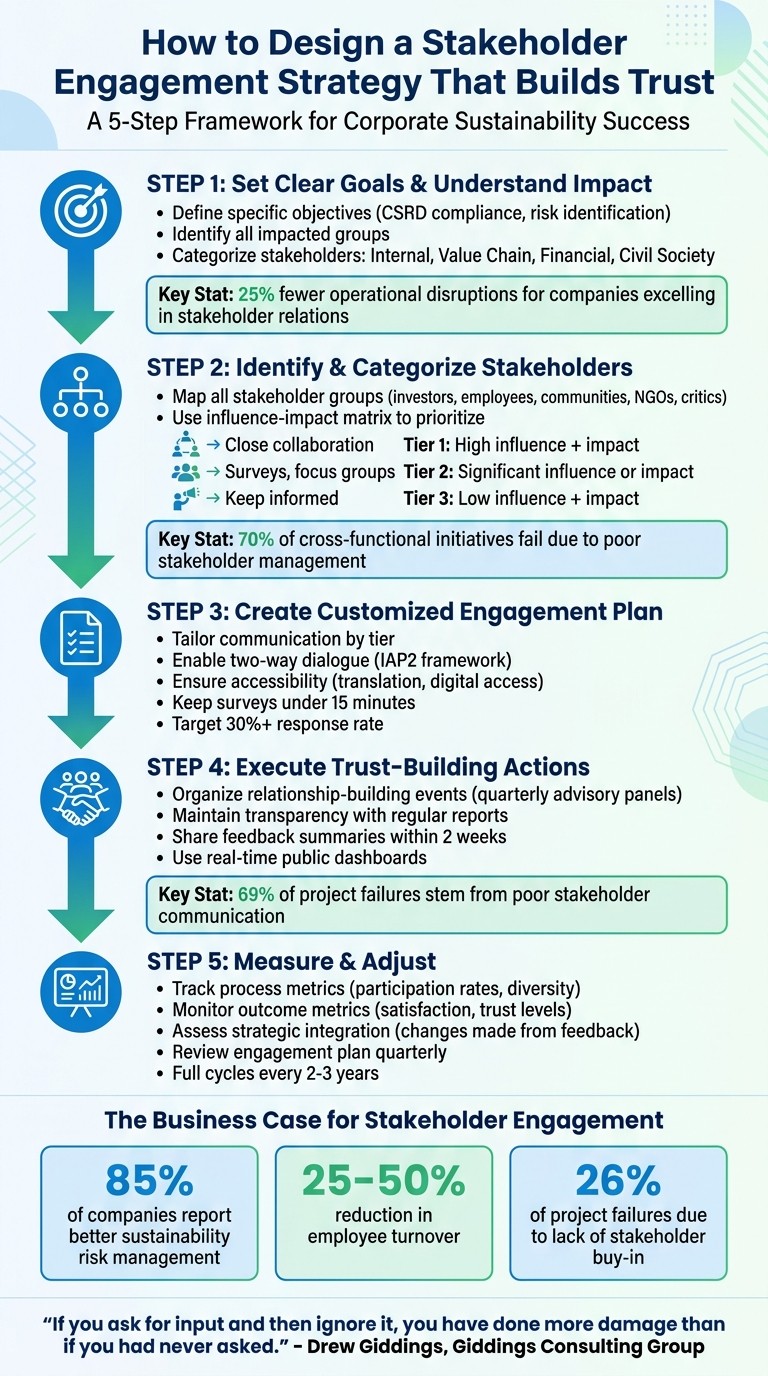
5-Step Stakeholder Engagement Strategy Framework for Building Corporate Trust
Step 1: Set Clear Goals and Understand Stakeholder Impact
Define Your Engagement Goals
When preparing to engage stakeholders, clarity is key. Vague objectives - like simply discussing sustainability - often lead to ineffective dialogue, wasted time, and diminished trust[1]. Instead, focus on specific, actionable goals. For example, you might aim to gather materiality insights for CSRD compliance, validate your sustainability strategy with frontline employees, identify potential risks highlighted by community members, or confirm reported impacts. These targeted objectives help transform stakeholder engagement into actionable insights[1][2].
Ensure your goals align with both regulatory expectations and established sustainability frameworks. By doing so, you can prioritize meaningful outcomes that directly influence what your organization reports and focuses on[1]. Once goals are defined, the next step is to evaluate their impact on all relevant stakeholder groups.
Assess How Your Actions Affect Stakeholders
Building trust through stakeholder engagement requires understanding not just your goals but also the people and groups your business affects. A thoughtful approach begins with identifying who your activities touch. Stakeholders can typically be grouped into four categories: Internal, Value Chain, Financial, and Civil Society[2]. After mapping these groups, consider how your business operations impact each one, including critics or those who may be negatively affected[1].
"Negotiation is, among other things, a process of exploration and discovery. And that discovery begins with rigorous analysis of all parties involved." - Michael Wheeler, Professor, Harvard Business School[4]
This thorough analysis often reveals gaps between internal perceptions and external realities. The benefits of addressing these gaps are clear: companies excelling in stakeholder relations report 25% fewer operational disruptions caused by social or environmental conflicts. This underscores the value of engaging stakeholders early and thoughtfully[3].
Step 2: Identify and Categorize Your Stakeholders
Map All Stakeholder Groups
Start by listing every group connected to or influenced by your business. Go beyond the usual suspects like investors and customers. Include internal stakeholders such as the board of directors, executive leadership, employees (including unions and works councils), and sustainability teams. Don't overlook external groups like suppliers, distributors, regulators, local communities, NGOs, industry peers, academic institutions, and media outlets.
Be sure to account for critics, affected communities, and others who may view your operations negatively. Ignoring these groups can lead to blind spots that erode trust and disrupt operations. For stakeholders you can’t directly engage - like workers deep in your supply chain - consider using intermediaries such as trade unions, NGOs, or academic experts to bridge the gap.
To streamline this process, categorize stakeholders by their relationship type. Common categories include:
Value Chain: Suppliers and customers
Financial: Investors and lenders
Community: Local residents
Civil Society: Advocacy and nonprofit groups
This thorough mapping creates the foundation for engagement strategies tailored to each group’s needs and expectations.
Group Stakeholders by Influence and Interest
Once you’ve identified your stakeholders, prioritize them using an influence–impact matrix. This tool evaluates each stakeholder’s power to affect your business (influence) and how much your operations affect them (impact). Stakeholders can then be organized into three tiers:
Tier 1: High influence and high impact. These stakeholders require close collaboration through regular dialogue, joint problem-solving, and advisory panels.
Tier 2: Stakeholders with significant influence or impact. Engage them through methods like surveys, focus groups, or roundtables.
Tier 3: Low influence and low impact. Keep this group informed through consistent communication and public updates.
Studies suggest that up to 70% of cross-functional initiatives fail due to poor stakeholder management, not flawed strategies [4].
Don’t limit your assessment to formal organizational charts. Influence mapping can help uncover individuals with informal power - such as long-tenured employees, technical experts, or respected community figures. These insights reveal not only who your stakeholders are but also what they care about and where their true influence lies. Properly identifying and categorizing stakeholders is critical for building the trust that underpins long-term business success.
Step 3: Create a Customized Engagement Plan
Develop Communication Plans for Each Group
Once stakeholders are grouped, tailor your communication strategies to fit the needs and preferences of each tier. For Tier 1 stakeholders - those with the most influence and impact - opt for direct and in-depth engagement methods like one-on-one interviews, advisory panels, and co-design workshops. Tier 2 stakeholders are best engaged through interactive formats such as focus groups, roundtables, and webinars. Meanwhile, Tier 3 stakeholders can stay informed through consistent updates via sustainability reports, email newsletters, and website announcements [1].
Craft messages that resonate with each group’s priorities. For instance, business leaders often care about pricing and operational efficiency, while frontline employees are more concerned with how changes will affect their daily tasks and expertise [4]. Maintain a stakeholder register that tracks each group’s engagement level - whether they are Leading, Supporting, Neutral, Resistant, or Unaware - and outlines the frequency of contact. This system ensures your team communicates consistently and avoids missing key updates [7].
When conducting surveys, keep them concise - under 15 minutes - to encourage participation, and aim for at least a 30% response rate to ensure the results are statistically meaningful [1]. Schedule executive interviews 3–4 weeks in advance, and allow 4–6 weeks for full survey deployment [1]. To make engagement inclusive, address potential accessibility challenges by offering language translation, ensuring digital access, and respecting cultural norms [1][2].
With these tailored plans in place, the next step is to focus on fostering meaningful dialogue.
Enable Two-Way Dialogue
True engagement thrives on open, two-way communication. The International Association for Public Participation (IAP2) framework offers four levels of engagement to guide your approach: Consult (gather feedback), Involve (consider stakeholders’ concerns), Collaborate (partner on decisions), and Empower (give stakeholders the final say) [5].
Building trust hinges on closing the feedback loop. Acknowledge the input you receive, explain how it shaped decisions, and be transparent about why certain suggestions couldn’t be implemented [1][5]. Share a summary of feedback and the resulting actions within two weeks to maintain momentum [5]. Engage stakeholders early - before decisions are finalized. Asking for feedback after the fact erodes trust and discourages future participation [5].
To remove barriers to participation, provide practical support such as childcare, transportation, meals, and translation services for in-person meetings. For those with tight schedules, offer asynchronous digital options to ensure everyone has the chance to contribute [5].
Step 4: Execute Trust-Building Actions
Organize Relationship-Building Events
Face-to-face interactions are key to building lasting trust. For your most critical stakeholders - those in Tier 1 - consider creating quarterly advisory panels where they actively participate in shaping solutions rather than passively reviewing finalized plans [1]. These gatherings should not be seen as isolated meetings but as part of an ongoing partnership, giving stakeholders a genuine voice in decisions that impact them.
Take the example of Chicago Public Schools during its accountability redesign initiative, which wrapped up in early 2026. The district held monthly to bimonthly small-group discussions with parent advisory councils, Local School Council members, and Community Action Councils. This was followed by five town hall meetings dedicated to hearing community concerns before rolling out any changes [5]. By meeting with community leaders individually before hosting larger forums, the district avoided the pitfall of treating engagement as a one-way flow of information.
Accessibility is crucial. Offer both in-person and virtual options, and provide support like childcare, transportation, meals, and translation services. Additionally, modest compensation for community members and NGO representatives can demonstrate that their time and input are truly valued, rather than being perceived as free consulting [1][5].
"If you ask for input and then ignore it, you have done more damage than if you had never asked." - Drew Giddings, Founder & Principal Consultant, Giddings Consulting Group [5]
These efforts lay the groundwork for stronger relationships, greater transparency, and ongoing improvement.
Maintain Transparency with Regular Reports
After fostering dialogue and engagement, the next step is to ensure consistent communication about outcomes. Stakeholders lose trust when their input seems to disappear into a void. Within two weeks of any engagement event, share a summary detailing the feedback received, planned actions, and reasons for any omissions [5]. For example, if budget constraints limit the scope of a project, explain these limitations and outline plans for phased implementation [5].
Static annual reports are no longer enough. Real-time public dashboards allow stakeholders to track environmental performance, sentiment trends, and project milestones as they happen [8]. Between major reporting periods, use short "pulse" surveys - designed to take less than 15 minutes - to gauge stakeholder sentiment and address emerging concerns early [1][2]. Keep a detailed engagement log that records all activities, participants, topics, and follow-up commitments. This not only supports transparency but also ensures compliance with regulations such as GRI 2-29 and ESRS 2 [1][2].
Consider the statistics: 69% of project failures stem from poor stakeholder communication, and 26% fail specifically due to a lack of stakeholder buy-in [5]. Honest, consistent reporting helps keep everyone informed, aligned, and invested in the process.
Step 5: Measure Results and Adjust Your Approach
Measure Engagement Performance
To improve stakeholder engagement, you need to measure it effectively. Focus on three key types of metrics:
Process metrics: These track participation rates, the diversity of stakeholders involved, and how many feedback loops are successfully closed.
Outcome metrics: These assess relationship quality by measuring stakeholder satisfaction, trust levels, and the frequency of repeat participation.
Strategic integration metrics: These highlight the impact of stakeholder input by tracking changes made to corporate programs or materiality assessments based on their feedback.
These metrics do more than just evaluate engagement - they help build trust and collaboration. Poor stakeholder management is a common cause of project failures, while companies that excel in this area experience fewer operational disruptions linked to social or environmental conflicts [3]. For surveys, aim for at least a 30% response rate to ensure the results are statistically meaningful [1].
"The strongest signal of success is simple: Do stakeholders come back? Repeat participation is a powerful indicator that feedback has been integrated in a meaningful way."
– Ally Heinrich, HBS Online [4]
It's also essential to monitor demographic participation to ensure all stakeholder groups are represented. Maintain a centralized engagement log to document activities, participants, dates, and outcomes. This practice supports continuous improvement and ensures compliance. For Tier 1 stakeholders - those with the highest influence and impact - prioritize metrics that reflect co-creation and ongoing dialogue rather than one-sided communication.
Use these insights to make timely adjustments to your strategy.
Refine Your Strategy Over Time
With performance metrics in hand, refine your approach to meet evolving stakeholder needs. A structured feedback cycle can help guide this process. For example, the Hawai'i State Public Charter School Commission improved stakeholder trust by using online surveys and follow-up meetings. They updated contract forms and clarified processes based on feedback, then re-engaged smaller groups to confirm the changes addressed initial concerns [9].
While full engagement cycles tied to materiality assessments typically occur every two to three years, monitoring stakeholder sentiment should be an ongoing effort. Review your engagement plan quarterly to adjust tactics as priorities shift. Use a four-stage process - solicit feedback, analyze trends, implement changes, and follow up with stakeholders [10]. Focus on areas where flexibility is possible, like timing or specific features, to avoid creating the impression of performative consultation on fixed decisions [11].
Documenting your engagement efforts is crucial. Keep detailed records of who was engaged, how they were engaged, and how their input influenced materiality determinations. This documentation is essential for meeting the requirements of CSRD and ESRS 1 and provides the evidence needed for third-party assurance [2].
10 Proven Techniques for Stakeholder Engagement
Conclusion
Crafting a meaningful stakeholder engagement strategy requires setting clear goals, understanding your stakeholders, tailoring your communication, acting transparently, and continuously improving your approach. Together, these steps lay the groundwork for building trust while aligning with your corporate sustainability goals.
The numbers are compelling - 85% of companies report better management of sustainability risks through stakeholder engagement, while organizations that actively involve employees see turnover rates drop by 25–50% [6]. These outcomes directly contribute to stronger operations and a sharper competitive edge.
One key takeaway is the importance of "closing the loop." When stakeholders see their input shaping decisions, their commitment to the process strengthens. Ignoring their feedback, however, risks alienating them. As Council Fire aptly puts it:
"Failing to close the loop is the fastest way to destroy engagement quality in future cycles. Stakeholders who feel ignored won't participate again" [1].
Moving forward, let these principles guide your efforts. Effective engagement shifts from a top-down approach to one that values relationships, expertise, and lived experiences. This perspective is increasingly vital, especially with frameworks like CSRD placing a strong emphasis on stakeholder input [1][2].
As your business and its surrounding communities evolve, so should your engagement strategy. Prioritize it as a cornerstone of your operations to strengthen trust, anticipate challenges, and develop sustainability initiatives that reflect the needs of those you serve.
FAQs
How do I pick which stakeholders matter most?
To determine key stakeholders, start by conducting a materiality assessment. This process examines the individuals and groups affected by your organization's actions, including employees, local communities, investors, and regulatory bodies. Once identified, prioritize these stakeholders based on their level of influence and the relevance of their concerns to your sustainability and ESG goals. Taking this approach allows for focused engagement, ensuring the most impactful voices are addressed while adhering to concepts like double materiality.
What should I do if stakeholder feedback conflicts?
When stakeholders have conflicting feedback, the key is to build trust through open and honest communication. Begin by actively engaging with all parties to understand their perspectives and priorities. Clearly outline what is achievable, setting expectations that are both realistic and fair. Encourage collaboration by creating opportunities for dialogue and cooperation, which can help ease tensions and find common ground. By listening carefully to concerns and addressing disagreements in a constructive manner, you can strengthen trust and work toward solutions that satisfy everyone involved.
How can I prove engagement is building trust?
Building trust through engagement involves demonstrating how stakeholder input directly shapes decisions and outcomes. When you highlight policies or actions influenced by their feedback, it reinforces the idea that their voices matter. Keeping communication channels open, addressing concerns transparently, and ensuring feedback loops are closed are also critical in fostering trust. Evidence such as growing participation, improved perceptions, and stronger relationships further underscores the connection between engagement and trust.
Related Blog Posts
Latest Articles
©2025

Narrative Change and Power Building: The Missing Half of Advocacy
Narrative change is the process of disrupting dominant narratives that normalize inequity and advancing new narratives from historically marginalized communities.

Funding Resilience Without Federal Grants
BRIC is unreliable and FEMA is shrinking. Here's how cities fund climate resilience with dedicated revenue, blended finance, and a coordinating authority.

The ESG Blind Spot: How AI Is Finding Risks in Companies Nobody Else Is Watching
Norway's sovereign wealth fund uses AI to screen 7,200 portfolio companies for forced labor and corruption within 24 hours. The real story is the emerging-market coverage gap that traditional ESG data vendors miss — and what it means for any company with a global supply chain.
Narrative Change and Power Building: The Missing Half of Advocacy
Narrative change is the process of disrupting dominant narratives that normalize inequity and advancing new narratives from historically marginalized communities.
Funding Resilience Without Federal Grants
BRIC is unreliable and FEMA is shrinking. Here's how cities fund climate resilience with dedicated revenue, blended finance, and a coordinating authority.
The ESG Blind Spot: How AI Is Finding Risks in Companies Nobody Else Is Watching
Norway's sovereign wealth fund uses AI to screen 7,200 portfolio companies for forced labor and corruption within 24 hours. The real story is the emerging-market coverage gap that traditional ESG data vendors miss — and what it means for any company with a global supply chain.
FAQ
01
What does it really mean to “redefine profit”?
02
What makes Council Fire different?
03
Who does Council Fire work with?
04
What does working with Council Fire actually look like?
05
How does Council Fire help organizations turn big goals into action?
06
How does Council Fire define and measure success?
May 4, 2026
How to Design a Stakeholder Engagement Strategy That Builds Trust for Corporations
ESG Strategy
In This Article
Stakeholder engagement must be strategic, two-way, and measurable to build corporate trust and meet CSRD/GRI requirements.
How to Design a Stakeholder Engagement Strategy That Builds Trust for Corporations
Stakeholder engagement is essential for businesses to build trust and meet regulatory requirements like CSRD and GRI Standards. A strong engagement strategy helps companies align with stakeholder expectations, reduce risks, and improve decision-making. Here's how you can design one:
Set Clear Goals: Define specific objectives, such as gathering feedback for compliance or identifying risks, to ensure focused and effective engagement.
Understand Stakeholders: Identify all impacted groups, including employees, communities, investors, and critics, and assess how your actions affect them.
Categorize Stakeholders: Use an influence-impact matrix to prioritize stakeholders into tiers, tailoring engagement methods for each group.
Create a Plan: Develop communication strategies suited to stakeholder needs, ensuring inclusivity and accessibility.
Build Relationships: Organize interactive events and maintain transparency by sharing feedback summaries and actions taken.
Measure and Adjust: Track engagement metrics, monitor feedback, and refine your approach regularly to improve outcomes.
5-Step Stakeholder Engagement Strategy Framework for Building Corporate Trust
Step 1: Set Clear Goals and Understand Stakeholder Impact
Define Your Engagement Goals
When preparing to engage stakeholders, clarity is key. Vague objectives - like simply discussing sustainability - often lead to ineffective dialogue, wasted time, and diminished trust[1]. Instead, focus on specific, actionable goals. For example, you might aim to gather materiality insights for CSRD compliance, validate your sustainability strategy with frontline employees, identify potential risks highlighted by community members, or confirm reported impacts. These targeted objectives help transform stakeholder engagement into actionable insights[1][2].
Ensure your goals align with both regulatory expectations and established sustainability frameworks. By doing so, you can prioritize meaningful outcomes that directly influence what your organization reports and focuses on[1]. Once goals are defined, the next step is to evaluate their impact on all relevant stakeholder groups.
Assess How Your Actions Affect Stakeholders
Building trust through stakeholder engagement requires understanding not just your goals but also the people and groups your business affects. A thoughtful approach begins with identifying who your activities touch. Stakeholders can typically be grouped into four categories: Internal, Value Chain, Financial, and Civil Society[2]. After mapping these groups, consider how your business operations impact each one, including critics or those who may be negatively affected[1].
"Negotiation is, among other things, a process of exploration and discovery. And that discovery begins with rigorous analysis of all parties involved." - Michael Wheeler, Professor, Harvard Business School[4]
This thorough analysis often reveals gaps between internal perceptions and external realities. The benefits of addressing these gaps are clear: companies excelling in stakeholder relations report 25% fewer operational disruptions caused by social or environmental conflicts. This underscores the value of engaging stakeholders early and thoughtfully[3].
Step 2: Identify and Categorize Your Stakeholders
Map All Stakeholder Groups
Start by listing every group connected to or influenced by your business. Go beyond the usual suspects like investors and customers. Include internal stakeholders such as the board of directors, executive leadership, employees (including unions and works councils), and sustainability teams. Don't overlook external groups like suppliers, distributors, regulators, local communities, NGOs, industry peers, academic institutions, and media outlets.
Be sure to account for critics, affected communities, and others who may view your operations negatively. Ignoring these groups can lead to blind spots that erode trust and disrupt operations. For stakeholders you can’t directly engage - like workers deep in your supply chain - consider using intermediaries such as trade unions, NGOs, or academic experts to bridge the gap.
To streamline this process, categorize stakeholders by their relationship type. Common categories include:
Value Chain: Suppliers and customers
Financial: Investors and lenders
Community: Local residents
Civil Society: Advocacy and nonprofit groups
This thorough mapping creates the foundation for engagement strategies tailored to each group’s needs and expectations.
Group Stakeholders by Influence and Interest
Once you’ve identified your stakeholders, prioritize them using an influence–impact matrix. This tool evaluates each stakeholder’s power to affect your business (influence) and how much your operations affect them (impact). Stakeholders can then be organized into three tiers:
Tier 1: High influence and high impact. These stakeholders require close collaboration through regular dialogue, joint problem-solving, and advisory panels.
Tier 2: Stakeholders with significant influence or impact. Engage them through methods like surveys, focus groups, or roundtables.
Tier 3: Low influence and low impact. Keep this group informed through consistent communication and public updates.
Studies suggest that up to 70% of cross-functional initiatives fail due to poor stakeholder management, not flawed strategies [4].
Don’t limit your assessment to formal organizational charts. Influence mapping can help uncover individuals with informal power - such as long-tenured employees, technical experts, or respected community figures. These insights reveal not only who your stakeholders are but also what they care about and where their true influence lies. Properly identifying and categorizing stakeholders is critical for building the trust that underpins long-term business success.
Step 3: Create a Customized Engagement Plan
Develop Communication Plans for Each Group
Once stakeholders are grouped, tailor your communication strategies to fit the needs and preferences of each tier. For Tier 1 stakeholders - those with the most influence and impact - opt for direct and in-depth engagement methods like one-on-one interviews, advisory panels, and co-design workshops. Tier 2 stakeholders are best engaged through interactive formats such as focus groups, roundtables, and webinars. Meanwhile, Tier 3 stakeholders can stay informed through consistent updates via sustainability reports, email newsletters, and website announcements [1].
Craft messages that resonate with each group’s priorities. For instance, business leaders often care about pricing and operational efficiency, while frontline employees are more concerned with how changes will affect their daily tasks and expertise [4]. Maintain a stakeholder register that tracks each group’s engagement level - whether they are Leading, Supporting, Neutral, Resistant, or Unaware - and outlines the frequency of contact. This system ensures your team communicates consistently and avoids missing key updates [7].
When conducting surveys, keep them concise - under 15 minutes - to encourage participation, and aim for at least a 30% response rate to ensure the results are statistically meaningful [1]. Schedule executive interviews 3–4 weeks in advance, and allow 4–6 weeks for full survey deployment [1]. To make engagement inclusive, address potential accessibility challenges by offering language translation, ensuring digital access, and respecting cultural norms [1][2].
With these tailored plans in place, the next step is to focus on fostering meaningful dialogue.
Enable Two-Way Dialogue
True engagement thrives on open, two-way communication. The International Association for Public Participation (IAP2) framework offers four levels of engagement to guide your approach: Consult (gather feedback), Involve (consider stakeholders’ concerns), Collaborate (partner on decisions), and Empower (give stakeholders the final say) [5].
Building trust hinges on closing the feedback loop. Acknowledge the input you receive, explain how it shaped decisions, and be transparent about why certain suggestions couldn’t be implemented [1][5]. Share a summary of feedback and the resulting actions within two weeks to maintain momentum [5]. Engage stakeholders early - before decisions are finalized. Asking for feedback after the fact erodes trust and discourages future participation [5].
To remove barriers to participation, provide practical support such as childcare, transportation, meals, and translation services for in-person meetings. For those with tight schedules, offer asynchronous digital options to ensure everyone has the chance to contribute [5].
Step 4: Execute Trust-Building Actions
Organize Relationship-Building Events
Face-to-face interactions are key to building lasting trust. For your most critical stakeholders - those in Tier 1 - consider creating quarterly advisory panels where they actively participate in shaping solutions rather than passively reviewing finalized plans [1]. These gatherings should not be seen as isolated meetings but as part of an ongoing partnership, giving stakeholders a genuine voice in decisions that impact them.
Take the example of Chicago Public Schools during its accountability redesign initiative, which wrapped up in early 2026. The district held monthly to bimonthly small-group discussions with parent advisory councils, Local School Council members, and Community Action Councils. This was followed by five town hall meetings dedicated to hearing community concerns before rolling out any changes [5]. By meeting with community leaders individually before hosting larger forums, the district avoided the pitfall of treating engagement as a one-way flow of information.
Accessibility is crucial. Offer both in-person and virtual options, and provide support like childcare, transportation, meals, and translation services. Additionally, modest compensation for community members and NGO representatives can demonstrate that their time and input are truly valued, rather than being perceived as free consulting [1][5].
"If you ask for input and then ignore it, you have done more damage than if you had never asked." - Drew Giddings, Founder & Principal Consultant, Giddings Consulting Group [5]
These efforts lay the groundwork for stronger relationships, greater transparency, and ongoing improvement.
Maintain Transparency with Regular Reports
After fostering dialogue and engagement, the next step is to ensure consistent communication about outcomes. Stakeholders lose trust when their input seems to disappear into a void. Within two weeks of any engagement event, share a summary detailing the feedback received, planned actions, and reasons for any omissions [5]. For example, if budget constraints limit the scope of a project, explain these limitations and outline plans for phased implementation [5].
Static annual reports are no longer enough. Real-time public dashboards allow stakeholders to track environmental performance, sentiment trends, and project milestones as they happen [8]. Between major reporting periods, use short "pulse" surveys - designed to take less than 15 minutes - to gauge stakeholder sentiment and address emerging concerns early [1][2]. Keep a detailed engagement log that records all activities, participants, topics, and follow-up commitments. This not only supports transparency but also ensures compliance with regulations such as GRI 2-29 and ESRS 2 [1][2].
Consider the statistics: 69% of project failures stem from poor stakeholder communication, and 26% fail specifically due to a lack of stakeholder buy-in [5]. Honest, consistent reporting helps keep everyone informed, aligned, and invested in the process.
Step 5: Measure Results and Adjust Your Approach
Measure Engagement Performance
To improve stakeholder engagement, you need to measure it effectively. Focus on three key types of metrics:
Process metrics: These track participation rates, the diversity of stakeholders involved, and how many feedback loops are successfully closed.
Outcome metrics: These assess relationship quality by measuring stakeholder satisfaction, trust levels, and the frequency of repeat participation.
Strategic integration metrics: These highlight the impact of stakeholder input by tracking changes made to corporate programs or materiality assessments based on their feedback.
These metrics do more than just evaluate engagement - they help build trust and collaboration. Poor stakeholder management is a common cause of project failures, while companies that excel in this area experience fewer operational disruptions linked to social or environmental conflicts [3]. For surveys, aim for at least a 30% response rate to ensure the results are statistically meaningful [1].
"The strongest signal of success is simple: Do stakeholders come back? Repeat participation is a powerful indicator that feedback has been integrated in a meaningful way."
– Ally Heinrich, HBS Online [4]
It's also essential to monitor demographic participation to ensure all stakeholder groups are represented. Maintain a centralized engagement log to document activities, participants, dates, and outcomes. This practice supports continuous improvement and ensures compliance. For Tier 1 stakeholders - those with the highest influence and impact - prioritize metrics that reflect co-creation and ongoing dialogue rather than one-sided communication.
Use these insights to make timely adjustments to your strategy.
Refine Your Strategy Over Time
With performance metrics in hand, refine your approach to meet evolving stakeholder needs. A structured feedback cycle can help guide this process. For example, the Hawai'i State Public Charter School Commission improved stakeholder trust by using online surveys and follow-up meetings. They updated contract forms and clarified processes based on feedback, then re-engaged smaller groups to confirm the changes addressed initial concerns [9].
While full engagement cycles tied to materiality assessments typically occur every two to three years, monitoring stakeholder sentiment should be an ongoing effort. Review your engagement plan quarterly to adjust tactics as priorities shift. Use a four-stage process - solicit feedback, analyze trends, implement changes, and follow up with stakeholders [10]. Focus on areas where flexibility is possible, like timing or specific features, to avoid creating the impression of performative consultation on fixed decisions [11].
Documenting your engagement efforts is crucial. Keep detailed records of who was engaged, how they were engaged, and how their input influenced materiality determinations. This documentation is essential for meeting the requirements of CSRD and ESRS 1 and provides the evidence needed for third-party assurance [2].
10 Proven Techniques for Stakeholder Engagement
Conclusion
Crafting a meaningful stakeholder engagement strategy requires setting clear goals, understanding your stakeholders, tailoring your communication, acting transparently, and continuously improving your approach. Together, these steps lay the groundwork for building trust while aligning with your corporate sustainability goals.
The numbers are compelling - 85% of companies report better management of sustainability risks through stakeholder engagement, while organizations that actively involve employees see turnover rates drop by 25–50% [6]. These outcomes directly contribute to stronger operations and a sharper competitive edge.
One key takeaway is the importance of "closing the loop." When stakeholders see their input shaping decisions, their commitment to the process strengthens. Ignoring their feedback, however, risks alienating them. As Council Fire aptly puts it:
"Failing to close the loop is the fastest way to destroy engagement quality in future cycles. Stakeholders who feel ignored won't participate again" [1].
Moving forward, let these principles guide your efforts. Effective engagement shifts from a top-down approach to one that values relationships, expertise, and lived experiences. This perspective is increasingly vital, especially with frameworks like CSRD placing a strong emphasis on stakeholder input [1][2].
As your business and its surrounding communities evolve, so should your engagement strategy. Prioritize it as a cornerstone of your operations to strengthen trust, anticipate challenges, and develop sustainability initiatives that reflect the needs of those you serve.
FAQs
How do I pick which stakeholders matter most?
To determine key stakeholders, start by conducting a materiality assessment. This process examines the individuals and groups affected by your organization's actions, including employees, local communities, investors, and regulatory bodies. Once identified, prioritize these stakeholders based on their level of influence and the relevance of their concerns to your sustainability and ESG goals. Taking this approach allows for focused engagement, ensuring the most impactful voices are addressed while adhering to concepts like double materiality.
What should I do if stakeholder feedback conflicts?
When stakeholders have conflicting feedback, the key is to build trust through open and honest communication. Begin by actively engaging with all parties to understand their perspectives and priorities. Clearly outline what is achievable, setting expectations that are both realistic and fair. Encourage collaboration by creating opportunities for dialogue and cooperation, which can help ease tensions and find common ground. By listening carefully to concerns and addressing disagreements in a constructive manner, you can strengthen trust and work toward solutions that satisfy everyone involved.
How can I prove engagement is building trust?
Building trust through engagement involves demonstrating how stakeholder input directly shapes decisions and outcomes. When you highlight policies or actions influenced by their feedback, it reinforces the idea that their voices matter. Keeping communication channels open, addressing concerns transparently, and ensuring feedback loops are closed are also critical in fostering trust. Evidence such as growing participation, improved perceptions, and stronger relationships further underscores the connection between engagement and trust.
Related Blog Posts
Latest Articles
©2025
Narrative Change and Power Building: The Missing Half of Advocacy
Narrative change is the process of disrupting dominant narratives that normalize inequity and advancing new narratives from historically marginalized communities.
Funding Resilience Without Federal Grants
BRIC is unreliable and FEMA is shrinking. Here's how cities fund climate resilience with dedicated revenue, blended finance, and a coordinating authority.
The ESG Blind Spot: How AI Is Finding Risks in Companies Nobody Else Is Watching
Norway's sovereign wealth fund uses AI to screen 7,200 portfolio companies for forced labor and corruption within 24 hours. The real story is the emerging-market coverage gap that traditional ESG data vendors miss — and what it means for any company with a global supply chain.
FAQ
01
What does it really mean to “redefine profit”?
02
What makes Council Fire different?
03
Who does Council Fire work with?
04
What does working with Council Fire actually look like?
05
How does Council Fire help organizations turn big goals into action?
06
How does Council Fire define and measure success?
May 4, 2026
How to Design a Stakeholder Engagement Strategy That Builds Trust for Corporations
ESG Strategy
In This Article
Stakeholder engagement must be strategic, two-way, and measurable to build corporate trust and meet CSRD/GRI requirements.
How to Design a Stakeholder Engagement Strategy That Builds Trust for Corporations
Stakeholder engagement is essential for businesses to build trust and meet regulatory requirements like CSRD and GRI Standards. A strong engagement strategy helps companies align with stakeholder expectations, reduce risks, and improve decision-making. Here's how you can design one:
Set Clear Goals: Define specific objectives, such as gathering feedback for compliance or identifying risks, to ensure focused and effective engagement.
Understand Stakeholders: Identify all impacted groups, including employees, communities, investors, and critics, and assess how your actions affect them.
Categorize Stakeholders: Use an influence-impact matrix to prioritize stakeholders into tiers, tailoring engagement methods for each group.
Create a Plan: Develop communication strategies suited to stakeholder needs, ensuring inclusivity and accessibility.
Build Relationships: Organize interactive events and maintain transparency by sharing feedback summaries and actions taken.
Measure and Adjust: Track engagement metrics, monitor feedback, and refine your approach regularly to improve outcomes.
5-Step Stakeholder Engagement Strategy Framework for Building Corporate Trust
Step 1: Set Clear Goals and Understand Stakeholder Impact
Define Your Engagement Goals
When preparing to engage stakeholders, clarity is key. Vague objectives - like simply discussing sustainability - often lead to ineffective dialogue, wasted time, and diminished trust[1]. Instead, focus on specific, actionable goals. For example, you might aim to gather materiality insights for CSRD compliance, validate your sustainability strategy with frontline employees, identify potential risks highlighted by community members, or confirm reported impacts. These targeted objectives help transform stakeholder engagement into actionable insights[1][2].
Ensure your goals align with both regulatory expectations and established sustainability frameworks. By doing so, you can prioritize meaningful outcomes that directly influence what your organization reports and focuses on[1]. Once goals are defined, the next step is to evaluate their impact on all relevant stakeholder groups.
Assess How Your Actions Affect Stakeholders
Building trust through stakeholder engagement requires understanding not just your goals but also the people and groups your business affects. A thoughtful approach begins with identifying who your activities touch. Stakeholders can typically be grouped into four categories: Internal, Value Chain, Financial, and Civil Society[2]. After mapping these groups, consider how your business operations impact each one, including critics or those who may be negatively affected[1].
"Negotiation is, among other things, a process of exploration and discovery. And that discovery begins with rigorous analysis of all parties involved." - Michael Wheeler, Professor, Harvard Business School[4]
This thorough analysis often reveals gaps between internal perceptions and external realities. The benefits of addressing these gaps are clear: companies excelling in stakeholder relations report 25% fewer operational disruptions caused by social or environmental conflicts. This underscores the value of engaging stakeholders early and thoughtfully[3].
Step 2: Identify and Categorize Your Stakeholders
Map All Stakeholder Groups
Start by listing every group connected to or influenced by your business. Go beyond the usual suspects like investors and customers. Include internal stakeholders such as the board of directors, executive leadership, employees (including unions and works councils), and sustainability teams. Don't overlook external groups like suppliers, distributors, regulators, local communities, NGOs, industry peers, academic institutions, and media outlets.
Be sure to account for critics, affected communities, and others who may view your operations negatively. Ignoring these groups can lead to blind spots that erode trust and disrupt operations. For stakeholders you can’t directly engage - like workers deep in your supply chain - consider using intermediaries such as trade unions, NGOs, or academic experts to bridge the gap.
To streamline this process, categorize stakeholders by their relationship type. Common categories include:
Value Chain: Suppliers and customers
Financial: Investors and lenders
Community: Local residents
Civil Society: Advocacy and nonprofit groups
This thorough mapping creates the foundation for engagement strategies tailored to each group’s needs and expectations.
Group Stakeholders by Influence and Interest
Once you’ve identified your stakeholders, prioritize them using an influence–impact matrix. This tool evaluates each stakeholder’s power to affect your business (influence) and how much your operations affect them (impact). Stakeholders can then be organized into three tiers:
Tier 1: High influence and high impact. These stakeholders require close collaboration through regular dialogue, joint problem-solving, and advisory panels.
Tier 2: Stakeholders with significant influence or impact. Engage them through methods like surveys, focus groups, or roundtables.
Tier 3: Low influence and low impact. Keep this group informed through consistent communication and public updates.
Studies suggest that up to 70% of cross-functional initiatives fail due to poor stakeholder management, not flawed strategies [4].
Don’t limit your assessment to formal organizational charts. Influence mapping can help uncover individuals with informal power - such as long-tenured employees, technical experts, or respected community figures. These insights reveal not only who your stakeholders are but also what they care about and where their true influence lies. Properly identifying and categorizing stakeholders is critical for building the trust that underpins long-term business success.
Step 3: Create a Customized Engagement Plan
Develop Communication Plans for Each Group
Once stakeholders are grouped, tailor your communication strategies to fit the needs and preferences of each tier. For Tier 1 stakeholders - those with the most influence and impact - opt for direct and in-depth engagement methods like one-on-one interviews, advisory panels, and co-design workshops. Tier 2 stakeholders are best engaged through interactive formats such as focus groups, roundtables, and webinars. Meanwhile, Tier 3 stakeholders can stay informed through consistent updates via sustainability reports, email newsletters, and website announcements [1].
Craft messages that resonate with each group’s priorities. For instance, business leaders often care about pricing and operational efficiency, while frontline employees are more concerned with how changes will affect their daily tasks and expertise [4]. Maintain a stakeholder register that tracks each group’s engagement level - whether they are Leading, Supporting, Neutral, Resistant, or Unaware - and outlines the frequency of contact. This system ensures your team communicates consistently and avoids missing key updates [7].
When conducting surveys, keep them concise - under 15 minutes - to encourage participation, and aim for at least a 30% response rate to ensure the results are statistically meaningful [1]. Schedule executive interviews 3–4 weeks in advance, and allow 4–6 weeks for full survey deployment [1]. To make engagement inclusive, address potential accessibility challenges by offering language translation, ensuring digital access, and respecting cultural norms [1][2].
With these tailored plans in place, the next step is to focus on fostering meaningful dialogue.
Enable Two-Way Dialogue
True engagement thrives on open, two-way communication. The International Association for Public Participation (IAP2) framework offers four levels of engagement to guide your approach: Consult (gather feedback), Involve (consider stakeholders’ concerns), Collaborate (partner on decisions), and Empower (give stakeholders the final say) [5].
Building trust hinges on closing the feedback loop. Acknowledge the input you receive, explain how it shaped decisions, and be transparent about why certain suggestions couldn’t be implemented [1][5]. Share a summary of feedback and the resulting actions within two weeks to maintain momentum [5]. Engage stakeholders early - before decisions are finalized. Asking for feedback after the fact erodes trust and discourages future participation [5].
To remove barriers to participation, provide practical support such as childcare, transportation, meals, and translation services for in-person meetings. For those with tight schedules, offer asynchronous digital options to ensure everyone has the chance to contribute [5].
Step 4: Execute Trust-Building Actions
Organize Relationship-Building Events
Face-to-face interactions are key to building lasting trust. For your most critical stakeholders - those in Tier 1 - consider creating quarterly advisory panels where they actively participate in shaping solutions rather than passively reviewing finalized plans [1]. These gatherings should not be seen as isolated meetings but as part of an ongoing partnership, giving stakeholders a genuine voice in decisions that impact them.
Take the example of Chicago Public Schools during its accountability redesign initiative, which wrapped up in early 2026. The district held monthly to bimonthly small-group discussions with parent advisory councils, Local School Council members, and Community Action Councils. This was followed by five town hall meetings dedicated to hearing community concerns before rolling out any changes [5]. By meeting with community leaders individually before hosting larger forums, the district avoided the pitfall of treating engagement as a one-way flow of information.
Accessibility is crucial. Offer both in-person and virtual options, and provide support like childcare, transportation, meals, and translation services. Additionally, modest compensation for community members and NGO representatives can demonstrate that their time and input are truly valued, rather than being perceived as free consulting [1][5].
"If you ask for input and then ignore it, you have done more damage than if you had never asked." - Drew Giddings, Founder & Principal Consultant, Giddings Consulting Group [5]
These efforts lay the groundwork for stronger relationships, greater transparency, and ongoing improvement.
Maintain Transparency with Regular Reports
After fostering dialogue and engagement, the next step is to ensure consistent communication about outcomes. Stakeholders lose trust when their input seems to disappear into a void. Within two weeks of any engagement event, share a summary detailing the feedback received, planned actions, and reasons for any omissions [5]. For example, if budget constraints limit the scope of a project, explain these limitations and outline plans for phased implementation [5].
Static annual reports are no longer enough. Real-time public dashboards allow stakeholders to track environmental performance, sentiment trends, and project milestones as they happen [8]. Between major reporting periods, use short "pulse" surveys - designed to take less than 15 minutes - to gauge stakeholder sentiment and address emerging concerns early [1][2]. Keep a detailed engagement log that records all activities, participants, topics, and follow-up commitments. This not only supports transparency but also ensures compliance with regulations such as GRI 2-29 and ESRS 2 [1][2].
Consider the statistics: 69% of project failures stem from poor stakeholder communication, and 26% fail specifically due to a lack of stakeholder buy-in [5]. Honest, consistent reporting helps keep everyone informed, aligned, and invested in the process.
Step 5: Measure Results and Adjust Your Approach
Measure Engagement Performance
To improve stakeholder engagement, you need to measure it effectively. Focus on three key types of metrics:
Process metrics: These track participation rates, the diversity of stakeholders involved, and how many feedback loops are successfully closed.
Outcome metrics: These assess relationship quality by measuring stakeholder satisfaction, trust levels, and the frequency of repeat participation.
Strategic integration metrics: These highlight the impact of stakeholder input by tracking changes made to corporate programs or materiality assessments based on their feedback.
These metrics do more than just evaluate engagement - they help build trust and collaboration. Poor stakeholder management is a common cause of project failures, while companies that excel in this area experience fewer operational disruptions linked to social or environmental conflicts [3]. For surveys, aim for at least a 30% response rate to ensure the results are statistically meaningful [1].
"The strongest signal of success is simple: Do stakeholders come back? Repeat participation is a powerful indicator that feedback has been integrated in a meaningful way."
– Ally Heinrich, HBS Online [4]
It's also essential to monitor demographic participation to ensure all stakeholder groups are represented. Maintain a centralized engagement log to document activities, participants, dates, and outcomes. This practice supports continuous improvement and ensures compliance. For Tier 1 stakeholders - those with the highest influence and impact - prioritize metrics that reflect co-creation and ongoing dialogue rather than one-sided communication.
Use these insights to make timely adjustments to your strategy.
Refine Your Strategy Over Time
With performance metrics in hand, refine your approach to meet evolving stakeholder needs. A structured feedback cycle can help guide this process. For example, the Hawai'i State Public Charter School Commission improved stakeholder trust by using online surveys and follow-up meetings. They updated contract forms and clarified processes based on feedback, then re-engaged smaller groups to confirm the changes addressed initial concerns [9].
While full engagement cycles tied to materiality assessments typically occur every two to three years, monitoring stakeholder sentiment should be an ongoing effort. Review your engagement plan quarterly to adjust tactics as priorities shift. Use a four-stage process - solicit feedback, analyze trends, implement changes, and follow up with stakeholders [10]. Focus on areas where flexibility is possible, like timing or specific features, to avoid creating the impression of performative consultation on fixed decisions [11].
Documenting your engagement efforts is crucial. Keep detailed records of who was engaged, how they were engaged, and how their input influenced materiality determinations. This documentation is essential for meeting the requirements of CSRD and ESRS 1 and provides the evidence needed for third-party assurance [2].
10 Proven Techniques for Stakeholder Engagement
Conclusion
Crafting a meaningful stakeholder engagement strategy requires setting clear goals, understanding your stakeholders, tailoring your communication, acting transparently, and continuously improving your approach. Together, these steps lay the groundwork for building trust while aligning with your corporate sustainability goals.
The numbers are compelling - 85% of companies report better management of sustainability risks through stakeholder engagement, while organizations that actively involve employees see turnover rates drop by 25–50% [6]. These outcomes directly contribute to stronger operations and a sharper competitive edge.
One key takeaway is the importance of "closing the loop." When stakeholders see their input shaping decisions, their commitment to the process strengthens. Ignoring their feedback, however, risks alienating them. As Council Fire aptly puts it:
"Failing to close the loop is the fastest way to destroy engagement quality in future cycles. Stakeholders who feel ignored won't participate again" [1].
Moving forward, let these principles guide your efforts. Effective engagement shifts from a top-down approach to one that values relationships, expertise, and lived experiences. This perspective is increasingly vital, especially with frameworks like CSRD placing a strong emphasis on stakeholder input [1][2].
As your business and its surrounding communities evolve, so should your engagement strategy. Prioritize it as a cornerstone of your operations to strengthen trust, anticipate challenges, and develop sustainability initiatives that reflect the needs of those you serve.
FAQs
How do I pick which stakeholders matter most?
To determine key stakeholders, start by conducting a materiality assessment. This process examines the individuals and groups affected by your organization's actions, including employees, local communities, investors, and regulatory bodies. Once identified, prioritize these stakeholders based on their level of influence and the relevance of their concerns to your sustainability and ESG goals. Taking this approach allows for focused engagement, ensuring the most impactful voices are addressed while adhering to concepts like double materiality.
What should I do if stakeholder feedback conflicts?
When stakeholders have conflicting feedback, the key is to build trust through open and honest communication. Begin by actively engaging with all parties to understand their perspectives and priorities. Clearly outline what is achievable, setting expectations that are both realistic and fair. Encourage collaboration by creating opportunities for dialogue and cooperation, which can help ease tensions and find common ground. By listening carefully to concerns and addressing disagreements in a constructive manner, you can strengthen trust and work toward solutions that satisfy everyone involved.
How can I prove engagement is building trust?
Building trust through engagement involves demonstrating how stakeholder input directly shapes decisions and outcomes. When you highlight policies or actions influenced by their feedback, it reinforces the idea that their voices matter. Keeping communication channels open, addressing concerns transparently, and ensuring feedback loops are closed are also critical in fostering trust. Evidence such as growing participation, improved perceptions, and stronger relationships further underscores the connection between engagement and trust.
Related Blog Posts
Latest Articles
©2025
Narrative Change and Power Building: The Missing Half of Advocacy
Narrative change is the process of disrupting dominant narratives that normalize inequity and advancing new narratives from historically marginalized communities.
Funding Resilience Without Federal Grants
BRIC is unreliable and FEMA is shrinking. Here's how cities fund climate resilience with dedicated revenue, blended finance, and a coordinating authority.
The ESG Blind Spot: How AI Is Finding Risks in Companies Nobody Else Is Watching
Norway's sovereign wealth fund uses AI to screen 7,200 portfolio companies for forced labor and corruption within 24 hours. The real story is the emerging-market coverage gap that traditional ESG data vendors miss — and what it means for any company with a global supply chain.
FAQ
What does it really mean to “redefine profit”?
What makes Council Fire different?
Who does Council Fire work with?
What does working with Council Fire actually look like?
How does Council Fire help organizations turn big goals into action?
How does Council Fire define and measure success?