
May 5, 2026
How to Design a Stakeholder Engagement Strategy That Builds Trust for NGOs & Nonprofits
Capacity Building
In This Article
Meaningful stakeholder engagement rooted in proximity and transparency builds the trust NGOs need to thrive.
How to Design a Stakeholder Engagement Strategy That Builds Trust for NGOs & Nonprofits
Building trust is essential for any nonprofit or NGO to succeed. Without trust, donors hesitate, volunteers lose interest, and communities disengage. Here's a quick guide to creating a stakeholder engagement strategy that strengthens relationships and ensures long-term support:
Identify Key Stakeholders: Include everyone impacted by your work - donors, beneficiaries, staff, board members, and community partners. Prioritize them based on their influence, impact, urgency, dependency, and proximity to the issue.
Use Stakeholder Mapping Tools: Tools like the Power-Interest Grid or Salience Model help categorize stakeholders and focus your efforts where they matter most.
Set Clear Goals: Define actionable, measurable objectives for each stakeholder group, such as improving donor retention rates or gathering specific feedback from beneficiaries.
Tailor Communication: Customize your messaging and methods for each group. High-influence stakeholders may need one-on-one meetings, while others can be engaged through newsletters or surveys.
Ensure Accessibility: Offer materials in various languages, provide both in-person and online options, and accommodate diverse needs to encourage participation.
Monitor and Adjust: Track progress using metrics like participation rates, satisfaction levels, and program outcomes. Regularly review and refine your strategy based on stakeholder feedback.
Key takeaway: Stakeholder engagement isn’t just about processes - it’s about relationships. By prioritizing transparency, listening actively, and following through on commitments, nonprofits can build trust that supports their mission and creates lasting change.
How to do Stakeholder engagement within your strategic planning- Webinar
Identifying and Prioritizing Your Stakeholders
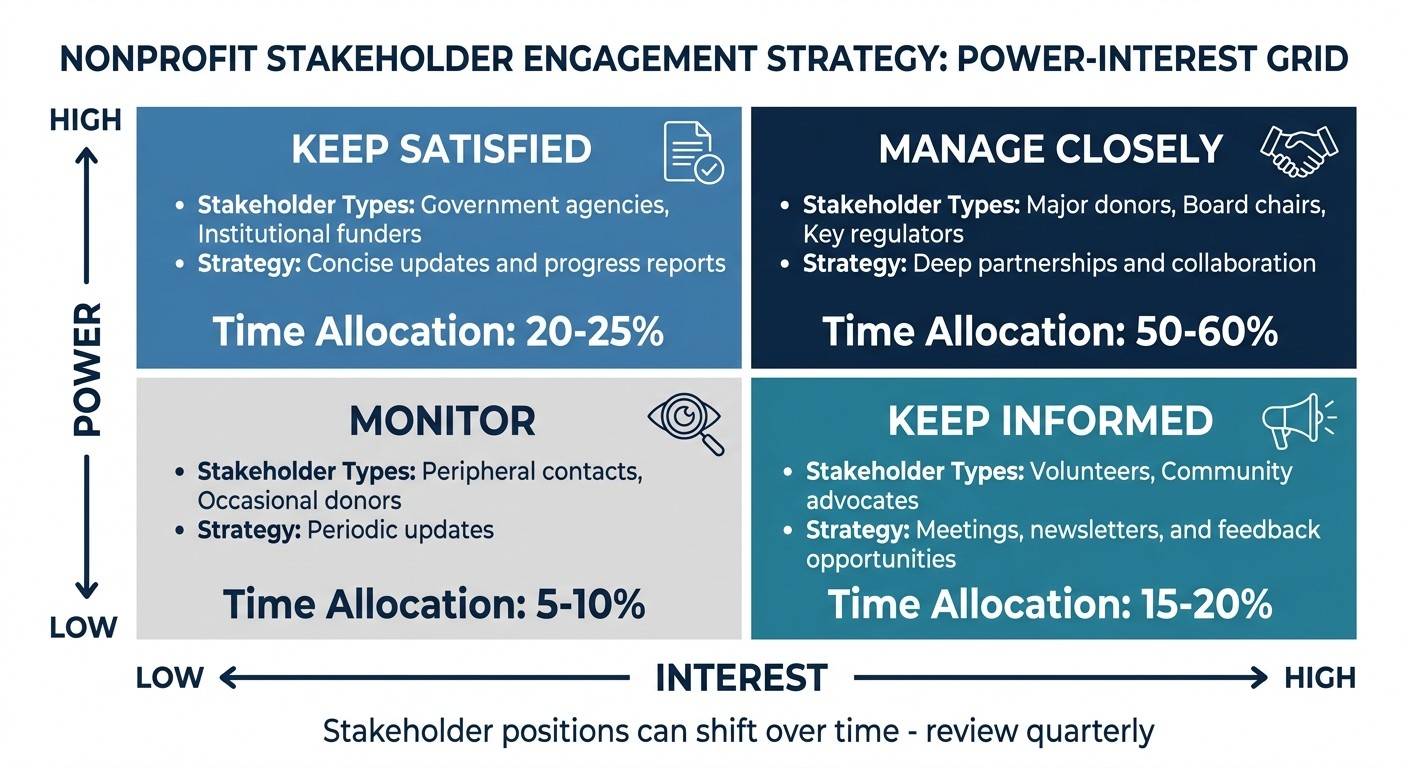
Stakeholder Engagement Quadrants: Power-Interest Grid Strategy for Nonprofits
Start by identifying the people and groups that are essential to your mission. Think broadly - include anyone influenced by your work or who holds sway over resources, decisions, or expertise. For most nonprofits and NGOs, this list often includes internal stakeholders like your board of directors, leadership, staff, and volunteers, alongside external ones such as donors, beneficiaries, government agencies, local communities, media, and partner organizations.
To prioritize these stakeholders, consider four key criteria: Influence (their ability to shape your strategy), Impact (how much your work affects them), Urgency (how time-sensitive their needs are), and Dependency (how much they rely on your organization). For mission-focused organizations, add a fifth factor: proximity to the issue.
"The people closest to the problem often have the deepest understanding of what solutions will work. Their engagement should be prioritized regardless of their formal power." - Drew Giddings, Founder & Principal Consultant, Giddings Consulting Group [3]
This "proximity principle" is vital. Beneficiaries - those you serve - may lack formal power but often bring essential insights from firsthand experience. Prioritizing their input can help shape effective and meaningful solutions.
Using Stakeholder Mapping Tools
Stakeholder mapping tools can help you visualize and organize your stakeholders. One simple yet effective tool is the Power-Interest Grid, a 2x2 matrix that categorizes stakeholders based on their influence and their level of concern for your outcomes. This helps you identify where to focus your energy and resources.
For a deeper analysis, the Salience Model categorizes stakeholders by Power, Urgency, and Legitimacy. This approach is particularly useful for highlighting stakeholders with legitimate concerns but limited formal influence. For example, in March 2026, a nonprofit focused on employment for people with disabilities used the Salience Model to reassess its stakeholders. Recognizing the high legitimacy of its service users, the organization restructured its board to include them in decision-making.
Another tool, the Rainbow Diagram, uses concentric circles to visually prioritize stakeholders by their engagement levels. In the same year, an education nonprofit working with children with learning difficulties placed the children themselves at the center of their Rainbow Diagram, ensuring that their needs remained the primary focus.
Stakeholder maps should be updated regularly - every three to six months or at the start of a new project phase. Once mapped, segmenting stakeholders by their strategic importance will help refine your engagement strategies.
Segmenting Stakeholders by Quadrants
The Power-Interest Grid divides stakeholders into four groups, each requiring a tailored approach:
High Power/High Interest (Manage Closely): These are your key players - major donors, board chairs, or influential community leaders. For example, a community development nonprofit built trust with its neighborhood association chair through dedicated engagement. Focus most of your efforts on building strong partnerships with this group through regular meetings and collaborative decision-making.
High Power/Low Interest (Keep Satisfied): This group includes regulators, institutional funders, or executives with significant influence but limited time. Keep them engaged with concise updates and progress reports that respect their schedules.
Low Power/High Interest (Keep Informed): Volunteers, community advocates, and grassroots supporters fall into this category. They care deeply about your mission even if they lack formal authority. Engage them through newsletters, community meetings, and opportunities for feedback - they often evolve into your most passionate supporters.
Low Power/Low Interest (Monitor): These are peripheral contacts, occasional donors, or distant partners. Minimal effort is needed here - periodic updates via newsletters or annual reports are usually enough. However, stay alert; their importance could grow over time.
Quadrant | Stakeholder Type | Strategy | Time Allocation |
|---|---|---|---|
High Power/High Interest | Major donors, board chairs, key regulators | Deep partnerships and collaboration | 50–60% |
High Power/Low Interest | Government agencies, institutional funders | Concise updates and progress reports | 20–25% |
Low Power/High Interest | Volunteers, community advocates | Meetings, newsletters, and feedback opportunities | 15–20% |
Low Power/Low Interest | Peripheral contacts, occasional donors | Periodic updates | 5–10% |
Stakeholders can shift between quadrants over time. For instance, a modest donor today might become a major supporter tomorrow, or a community member with little influence now might grow into a key leader. Treat your stakeholder map as a dynamic tool that evolves with your relationships, helping to build trust and foster long-term collaboration.
Setting Clear Objectives and Tailoring Communication
Once you've mapped out your stakeholders, the next step is defining specific, mission-aligned objectives for each group. These objectives should be both clear and time-bound. For instance, instead of a vague goal like "improve communication with beneficiaries", aim for something actionable, like "host listening sessions with frontline staff within 60 days to identify operational challenges." This level of detail turns engagement into a purposeful strategy rather than a routine task.
Having precise, measurable objectives is key to avoiding communication breakdowns. To guide your efforts, consider using the IAP2 Spectrum to determine the level of engagement needed for each stakeholder group. Are you simply informing them through newsletters? Consulting them via surveys? Collaborating with them in co-design sessions? Or empowering them to make final decisions, as in participatory budgeting? Aligning your methods with your goals ensures that expectations are clear and resources are used effectively.
Defining Measurable Engagement Goals
To make your engagement efforts impactful, your goals must be measurable. Start by identifying Key Impact Indicators (KIIs) that directly track progress toward desired outcomes. For example, with funders, you might aim to "increase donor retention from 65% to 75% within 12 months by providing quarterly impact reports." For beneficiaries, a goal could be "gather feedback from at least 200 community members by June 30, 2026, to inform program redesign."
It’s also crucial to monitor who is participating in your engagement efforts. Tracking demographics ensures your outreach is equitable and reflects the diversity of the communities you serve.
Tailor your objectives to the needs of each stakeholder group. Funders often value transparent progress reports and clear fund allocation. Beneficiaries expect responsiveness and open communication. Volunteers need straightforward instructions, while board members look for data-driven updates. Always close the loop - get back to stakeholders within two weeks of any engagement activity to share what you learned, what actions are being taken, and why certain suggestions may not be feasible [3]. With these goals in place, you can now focus on crafting communication plans that resonate with each group.
Developing Customized Communication Plans
Your communication approach should match the influence and needs of each stakeholder group. For high-influence groups, like major donors, board members, or key regulators, prioritize one-on-one meetings, advisory panels, and site visits. Medium-influence stakeholders, such as community leaders or program partners, may benefit from online surveys, focus groups, or roundtable discussions. For lower-influence groups, use newsletters, website updates, or social media posts to keep them informed.
Accessibility is vital. Provide materials in multiple languages and formats, and schedule meetings at times that accommodate your audience. Transparency also plays a critical role in building trust. Regularly share updates on finances, project impact, and challenges. Drew Giddings offers this advice:
"If a decision has already been made, do not pretend to consult. If funding limits what is possible, say so" [3].
Being upfront about limitations reinforces credibility. Avoid using jargon, maintain consistent branding across all channels, and document every promise you make. These small but meaningful actions - like professionalism and consistent follow-through - play a big role in earning trust over time.
Building Participation and Engagement Activities
Creating spaces where stakeholders can actively contribute to your work is essential. Activities like workshops, feedback sessions, and grievance mechanisms give stakeholders a meaningful voice and foster a sense of collaboration. These efforts build trust by involving stakeholders as true partners in decision-making. For those with the most influence, consider co-design workshops where they can work directly with your team to develop solutions. When addressing sensitive topics like safeguarding or human rights, adopt a trauma-informed approach to ensure participants feel safe. If power imbalances or conflicts arise, a neutral facilitator can help ensure that everyone’s perspective is heard.
"Working with AccountAbility has provided a focus around which to build our improvement." - Gary Stokes, National Grid's Stakeholder Engagement Manager
Gary Stokes, Stakeholder Engagement Manager at National Grid, used AccountAbility's "Healthcheck" service in 2021 to benchmark their engagement practices against the AA1000SES standard. These annual evaluations revealed gaps in their electricity transmission engagement strategies. By addressing these gaps with targeted actions, the organization achieved a 100% improvement in year-over-year performance. [5]
Designing Accessible Engagement Activities
Accessibility plays a key role in determining who can participate - and who might be excluded. To lower barriers, offer both in-person and online options, which can reduce travel costs and logistical challenges. Hybrid models, in particular, can accommodate participants with diverse needs, including neurodiverse individuals, those with limited access to technology, and people with physical disabilities. When scheduling, take into account factors like time zones, childcare responsibilities, and nontraditional work hours. This is especially important given that research shows women are half as likely as men to be aware of or participate in community development meetings. [6]
To make engagement inclusive, provide materials in local languages and adapt your communication style to suit specific audiences. For example, use age-appropriate language when working with children. In communities with varying literacy levels, visual aids and physical tools like problem trees, network diagrams, or even everyday objects like stones can help illustrate concepts and relationships. Protect participants by setting clear ground rules, establishing codes of conduct, and offering anonymous feedback channels, such as physical drop boxes or secure digital platforms. Before rolling out engagement tools, pre-test them with a small group to ensure they are clear and relevant.
Creating a Stakeholder Engagement Timeline
Once activities are designed, map out an engagement timeline that keeps trust intact over the long term. This timeline should align with both the phases of your project and key organizational milestones. Research suggests that initial engagement efforts typically take three to six months to complete, while full engagement cycles occur every two to three years. [1] For high-influence stakeholders, annual check-ins are particularly effective. [1] Plan for surveys to run over four to six weeks, and schedule executive interviews three to four weeks in advance. [1]
Begin with a "landscape mapping" phase to understand stakeholder motivations before the first meeting. After the engagement process, include a "closing the loop" phase to demonstrate how stakeholder input influenced decisions.
"Failing to close the loop is the fastest way to destroy engagement quality in future cycles. Stakeholders who feel ignored won't participate again." - Council Fire [1]
Account for the "groan zone" - a challenging middle phase in participatory decision-making where ideas may become complicated, and conflicts can arise. Rushing through this phase can lead to poorly thought-out decisions. [6] Additionally, build in time for an information-sharing buffer before decision-making sessions. This step helps address information gaps and gives participants the chance to review technical data thoroughly.
A well-structured timeline not only keeps activities organized but also shows your commitment to long-term stakeholder relationships. One clear measure of success is whether stakeholders choose to return for future sessions, indicating that their feedback was valued and acted upon. [4]
Monitoring, Evaluating, and Adapting Your Strategy
Once your engagement efforts are in motion, tracking their progress becomes a must. Without clear measurement, it’s impossible to tell whether your initiatives are building trust or missing the mark. This makes ongoing monitoring and adaptability essential for achieving long-term success.
Establishing Metrics to Measure Success
Measuring success involves focusing on three key categories. Process metrics track the basics, such as how many stakeholders participated, whether key demographic groups were included, and how often feedback loops were completed. Outcome metrics look at immediate results, like stakeholder satisfaction, trust levels, or specific program changes made based on feedback. Impact metrics assess long-term achievements, such as improved service use, changes in community-level indicators, or strengthened strategic partnerships.
To get a complete picture, combine numbers with stories. Quantitative data, like survey scores, works best when paired with qualitative feedback like testimonials. For surveys, aim for at least a 30% response rate to ensure the results carry weight[1]. Pre-test your surveys to catch any confusing questions before they’re distributed.
Dig deeper into participation data by breaking it down demographically. This can help you spot underrepresented groups and address potential barriers. For instance, if certain stakeholders stop engaging, it’s a clear signal that something is amiss. A stakeholder engagement log is another valuable tool - it keeps a record of activities, participants, dates, methods, and outcomes. This log not only ensures transparency but also helps during staff transitions and supports compliance with reporting standards like GRI or CSRD[3].
"83% of participants... reported feeling that they must trust a nonprofit before offering their support." - Edelman Data & Intelligence[2]
With these metrics in place, you’ll have the insights needed to refine your approach over time.
Adapting Your Strategy Based on Stakeholder Input
Using the insights gained from your metrics, adapting your strategy becomes the next critical step. Closing the feedback loop is essential. Stakeholders need to know their voices were heard, what decisions were made, and why certain suggestions couldn’t be implemented. To show responsiveness, share a summary of your findings with participants within two weeks of any engagement activity[3].
Regular reviews of your engagement plan are equally important. Conduct quarterly check-ins to ensure your strategy reflects current realities[3]. For Tier 1 stakeholders - those with the most influence and impact - schedule annual meetings to uncover emerging issues between broader engagement cycles[1]. If traditional methods like town halls lose their effectiveness, consider switching to tools stakeholders actually use, such as mobile surveys or asynchronous workshops.
Transparency is key when constraints arise. For example, if funding or regulations limit your options, don’t pretend to consult stakeholders on decisions that are already set. Instead, focus on areas where their input can genuinely shape outcomes, and be upfront about the challenges you’re facing[3]. When priorities conflict, use clear criteria, such as the severity and likelihood of impacts, to explain your decisions[1].
One reliable indicator of success is whether stakeholders continue to engage in future sessions. Their return signals that their feedback is valued and acted upon. Remember, adapting your strategy isn’t a sign of failure - it’s evidence that you’re listening and committed to improvement.
Conclusion
Building trust through stakeholder engagement is an ongoing effort that influences every aspect of your nonprofit's work. The statistics are clear: 83% of people need to trust a nonprofit before offering their support [2], and 69% of project failures are linked to poor stakeholder communication [3]. These figures highlight the critical role trust plays in achieving your mission.
Start by identifying stakeholders based on their connection to key issues rather than focusing solely on institutional power. Set clear objectives that align the level of engagement with each group's needs - progressing from simply sharing information to fostering genuine collaboration where it makes sense. Create opportunities that remove barriers to participation and show how stakeholder input directly impacts decisions. This thoughtful approach creates space for ongoing improvement in your engagement strategies.
Effective engagement requires treating strategy as a dynamic tool. Regular quarterly reviews, along with annual check-ins for your most critical stakeholders, ensure that your methods remain relevant as conditions evolve [3]. When stakeholders continue to participate in future sessions, it’s a strong sign their voices are being heard and valued.
At its core, meaningful engagement is about relationships, not just processes. It’s an opportunity to explore and learn together - not just a task to mark off a checklist [4]. By being transparent about limitations, consistently following through on commitments, and sharing power authentically, you can build trust that endures through leadership changes, funding challenges, and organizational shifts. These practices, grounded in openness and true partnership, form the bedrock for creating lasting change in the communities you serve.
FAQs
How do I decide who matters most?
To shape an effective stakeholder engagement strategy, start by identifying and prioritizing stakeholders based on three key factors: their influence, their connection to your mission, and the extent to which your activities affect them. Pay close attention to those who are most impacted, hold significant influence, or have a strong alignment with your objectives. Focusing on these groups allows you to create meaningful interactions, foster trust, and align their support with your organization's goals.
What should I measure to prove trust is growing?
To gauge growing trust, evaluate stakeholder feedback on areas like confidence in your organization, the quality and frequency of communication, and their involvement in decision-making processes. Monitor shifts in feedback trends, participation levels, and the depth of engagement, such as active contributions during consultations. Regular, open communication, combined with findings from surveys or interviews, can provide a clearer picture of trust levels. Balancing numerical data with personal insights ensures a well-rounded understanding of progress.
How do we handle conflicting stakeholder demands?
Managing conflicting stakeholder demands calls for a thoughtful and open approach. Start by identifying and understanding each stakeholder’s priorities, ensuring their perspectives are genuinely considered in the decision-making process. Actively involving them not only validates their concerns but also strengthens relationships. To build trust, it’s crucial to close the feedback loop - clearly demonstrate how their input has influenced decisions.
Additionally, equity-focused practices can help address power imbalances. For instance, compensating participants for their time and efforts and removing obstacles to participation can create a more level playing field. These steps can transform conflicts into opportunities for meaningful collaboration and shared understanding. By fostering an environment where all voices are valued, you encourage solutions that benefit everyone involved.
Related Blog Posts
Latest Articles
©2025

Narrative Change and Power Building: The Missing Half of Advocacy
Narrative change is the process of disrupting dominant narratives that normalize inequity and advancing new narratives from historically marginalized communities.

Funding Resilience Without Federal Grants
BRIC is unreliable and FEMA is shrinking. Here's how cities fund climate resilience with dedicated revenue, blended finance, and a coordinating authority.

The ESG Blind Spot: How AI Is Finding Risks in Companies Nobody Else Is Watching
Norway's sovereign wealth fund uses AI to screen 7,200 portfolio companies for forced labor and corruption within 24 hours. The real story is the emerging-market coverage gap that traditional ESG data vendors miss — and what it means for any company with a global supply chain.
Narrative Change and Power Building: The Missing Half of Advocacy
Narrative change is the process of disrupting dominant narratives that normalize inequity and advancing new narratives from historically marginalized communities.
Funding Resilience Without Federal Grants
BRIC is unreliable and FEMA is shrinking. Here's how cities fund climate resilience with dedicated revenue, blended finance, and a coordinating authority.
The ESG Blind Spot: How AI Is Finding Risks in Companies Nobody Else Is Watching
Norway's sovereign wealth fund uses AI to screen 7,200 portfolio companies for forced labor and corruption within 24 hours. The real story is the emerging-market coverage gap that traditional ESG data vendors miss — and what it means for any company with a global supply chain.
FAQ
01
What does it really mean to “redefine profit”?
02
What makes Council Fire different?
03
Who does Council Fire work with?
04
What does working with Council Fire actually look like?
05
How does Council Fire help organizations turn big goals into action?
06
How does Council Fire define and measure success?
May 5, 2026
How to Design a Stakeholder Engagement Strategy That Builds Trust for NGOs & Nonprofits
Capacity Building
In This Article
Meaningful stakeholder engagement rooted in proximity and transparency builds the trust NGOs need to thrive.
How to Design a Stakeholder Engagement Strategy That Builds Trust for NGOs & Nonprofits
Building trust is essential for any nonprofit or NGO to succeed. Without trust, donors hesitate, volunteers lose interest, and communities disengage. Here's a quick guide to creating a stakeholder engagement strategy that strengthens relationships and ensures long-term support:
Identify Key Stakeholders: Include everyone impacted by your work - donors, beneficiaries, staff, board members, and community partners. Prioritize them based on their influence, impact, urgency, dependency, and proximity to the issue.
Use Stakeholder Mapping Tools: Tools like the Power-Interest Grid or Salience Model help categorize stakeholders and focus your efforts where they matter most.
Set Clear Goals: Define actionable, measurable objectives for each stakeholder group, such as improving donor retention rates or gathering specific feedback from beneficiaries.
Tailor Communication: Customize your messaging and methods for each group. High-influence stakeholders may need one-on-one meetings, while others can be engaged through newsletters or surveys.
Ensure Accessibility: Offer materials in various languages, provide both in-person and online options, and accommodate diverse needs to encourage participation.
Monitor and Adjust: Track progress using metrics like participation rates, satisfaction levels, and program outcomes. Regularly review and refine your strategy based on stakeholder feedback.
Key takeaway: Stakeholder engagement isn’t just about processes - it’s about relationships. By prioritizing transparency, listening actively, and following through on commitments, nonprofits can build trust that supports their mission and creates lasting change.
How to do Stakeholder engagement within your strategic planning- Webinar
Identifying and Prioritizing Your Stakeholders
Stakeholder Engagement Quadrants: Power-Interest Grid Strategy for Nonprofits
Start by identifying the people and groups that are essential to your mission. Think broadly - include anyone influenced by your work or who holds sway over resources, decisions, or expertise. For most nonprofits and NGOs, this list often includes internal stakeholders like your board of directors, leadership, staff, and volunteers, alongside external ones such as donors, beneficiaries, government agencies, local communities, media, and partner organizations.
To prioritize these stakeholders, consider four key criteria: Influence (their ability to shape your strategy), Impact (how much your work affects them), Urgency (how time-sensitive their needs are), and Dependency (how much they rely on your organization). For mission-focused organizations, add a fifth factor: proximity to the issue.
"The people closest to the problem often have the deepest understanding of what solutions will work. Their engagement should be prioritized regardless of their formal power." - Drew Giddings, Founder & Principal Consultant, Giddings Consulting Group [3]
This "proximity principle" is vital. Beneficiaries - those you serve - may lack formal power but often bring essential insights from firsthand experience. Prioritizing their input can help shape effective and meaningful solutions.
Using Stakeholder Mapping Tools
Stakeholder mapping tools can help you visualize and organize your stakeholders. One simple yet effective tool is the Power-Interest Grid, a 2x2 matrix that categorizes stakeholders based on their influence and their level of concern for your outcomes. This helps you identify where to focus your energy and resources.
For a deeper analysis, the Salience Model categorizes stakeholders by Power, Urgency, and Legitimacy. This approach is particularly useful for highlighting stakeholders with legitimate concerns but limited formal influence. For example, in March 2026, a nonprofit focused on employment for people with disabilities used the Salience Model to reassess its stakeholders. Recognizing the high legitimacy of its service users, the organization restructured its board to include them in decision-making.
Another tool, the Rainbow Diagram, uses concentric circles to visually prioritize stakeholders by their engagement levels. In the same year, an education nonprofit working with children with learning difficulties placed the children themselves at the center of their Rainbow Diagram, ensuring that their needs remained the primary focus.
Stakeholder maps should be updated regularly - every three to six months or at the start of a new project phase. Once mapped, segmenting stakeholders by their strategic importance will help refine your engagement strategies.
Segmenting Stakeholders by Quadrants
The Power-Interest Grid divides stakeholders into four groups, each requiring a tailored approach:
High Power/High Interest (Manage Closely): These are your key players - major donors, board chairs, or influential community leaders. For example, a community development nonprofit built trust with its neighborhood association chair through dedicated engagement. Focus most of your efforts on building strong partnerships with this group through regular meetings and collaborative decision-making.
High Power/Low Interest (Keep Satisfied): This group includes regulators, institutional funders, or executives with significant influence but limited time. Keep them engaged with concise updates and progress reports that respect their schedules.
Low Power/High Interest (Keep Informed): Volunteers, community advocates, and grassroots supporters fall into this category. They care deeply about your mission even if they lack formal authority. Engage them through newsletters, community meetings, and opportunities for feedback - they often evolve into your most passionate supporters.
Low Power/Low Interest (Monitor): These are peripheral contacts, occasional donors, or distant partners. Minimal effort is needed here - periodic updates via newsletters or annual reports are usually enough. However, stay alert; their importance could grow over time.
Quadrant | Stakeholder Type | Strategy | Time Allocation |
|---|---|---|---|
High Power/High Interest | Major donors, board chairs, key regulators | Deep partnerships and collaboration | 50–60% |
High Power/Low Interest | Government agencies, institutional funders | Concise updates and progress reports | 20–25% |
Low Power/High Interest | Volunteers, community advocates | Meetings, newsletters, and feedback opportunities | 15–20% |
Low Power/Low Interest | Peripheral contacts, occasional donors | Periodic updates | 5–10% |
Stakeholders can shift between quadrants over time. For instance, a modest donor today might become a major supporter tomorrow, or a community member with little influence now might grow into a key leader. Treat your stakeholder map as a dynamic tool that evolves with your relationships, helping to build trust and foster long-term collaboration.
Setting Clear Objectives and Tailoring Communication
Once you've mapped out your stakeholders, the next step is defining specific, mission-aligned objectives for each group. These objectives should be both clear and time-bound. For instance, instead of a vague goal like "improve communication with beneficiaries", aim for something actionable, like "host listening sessions with frontline staff within 60 days to identify operational challenges." This level of detail turns engagement into a purposeful strategy rather than a routine task.
Having precise, measurable objectives is key to avoiding communication breakdowns. To guide your efforts, consider using the IAP2 Spectrum to determine the level of engagement needed for each stakeholder group. Are you simply informing them through newsletters? Consulting them via surveys? Collaborating with them in co-design sessions? Or empowering them to make final decisions, as in participatory budgeting? Aligning your methods with your goals ensures that expectations are clear and resources are used effectively.
Defining Measurable Engagement Goals
To make your engagement efforts impactful, your goals must be measurable. Start by identifying Key Impact Indicators (KIIs) that directly track progress toward desired outcomes. For example, with funders, you might aim to "increase donor retention from 65% to 75% within 12 months by providing quarterly impact reports." For beneficiaries, a goal could be "gather feedback from at least 200 community members by June 30, 2026, to inform program redesign."
It’s also crucial to monitor who is participating in your engagement efforts. Tracking demographics ensures your outreach is equitable and reflects the diversity of the communities you serve.
Tailor your objectives to the needs of each stakeholder group. Funders often value transparent progress reports and clear fund allocation. Beneficiaries expect responsiveness and open communication. Volunteers need straightforward instructions, while board members look for data-driven updates. Always close the loop - get back to stakeholders within two weeks of any engagement activity to share what you learned, what actions are being taken, and why certain suggestions may not be feasible [3]. With these goals in place, you can now focus on crafting communication plans that resonate with each group.
Developing Customized Communication Plans
Your communication approach should match the influence and needs of each stakeholder group. For high-influence groups, like major donors, board members, or key regulators, prioritize one-on-one meetings, advisory panels, and site visits. Medium-influence stakeholders, such as community leaders or program partners, may benefit from online surveys, focus groups, or roundtable discussions. For lower-influence groups, use newsletters, website updates, or social media posts to keep them informed.
Accessibility is vital. Provide materials in multiple languages and formats, and schedule meetings at times that accommodate your audience. Transparency also plays a critical role in building trust. Regularly share updates on finances, project impact, and challenges. Drew Giddings offers this advice:
"If a decision has already been made, do not pretend to consult. If funding limits what is possible, say so" [3].
Being upfront about limitations reinforces credibility. Avoid using jargon, maintain consistent branding across all channels, and document every promise you make. These small but meaningful actions - like professionalism and consistent follow-through - play a big role in earning trust over time.
Building Participation and Engagement Activities
Creating spaces where stakeholders can actively contribute to your work is essential. Activities like workshops, feedback sessions, and grievance mechanisms give stakeholders a meaningful voice and foster a sense of collaboration. These efforts build trust by involving stakeholders as true partners in decision-making. For those with the most influence, consider co-design workshops where they can work directly with your team to develop solutions. When addressing sensitive topics like safeguarding or human rights, adopt a trauma-informed approach to ensure participants feel safe. If power imbalances or conflicts arise, a neutral facilitator can help ensure that everyone’s perspective is heard.
"Working with AccountAbility has provided a focus around which to build our improvement." - Gary Stokes, National Grid's Stakeholder Engagement Manager
Gary Stokes, Stakeholder Engagement Manager at National Grid, used AccountAbility's "Healthcheck" service in 2021 to benchmark their engagement practices against the AA1000SES standard. These annual evaluations revealed gaps in their electricity transmission engagement strategies. By addressing these gaps with targeted actions, the organization achieved a 100% improvement in year-over-year performance. [5]
Designing Accessible Engagement Activities
Accessibility plays a key role in determining who can participate - and who might be excluded. To lower barriers, offer both in-person and online options, which can reduce travel costs and logistical challenges. Hybrid models, in particular, can accommodate participants with diverse needs, including neurodiverse individuals, those with limited access to technology, and people with physical disabilities. When scheduling, take into account factors like time zones, childcare responsibilities, and nontraditional work hours. This is especially important given that research shows women are half as likely as men to be aware of or participate in community development meetings. [6]
To make engagement inclusive, provide materials in local languages and adapt your communication style to suit specific audiences. For example, use age-appropriate language when working with children. In communities with varying literacy levels, visual aids and physical tools like problem trees, network diagrams, or even everyday objects like stones can help illustrate concepts and relationships. Protect participants by setting clear ground rules, establishing codes of conduct, and offering anonymous feedback channels, such as physical drop boxes or secure digital platforms. Before rolling out engagement tools, pre-test them with a small group to ensure they are clear and relevant.
Creating a Stakeholder Engagement Timeline
Once activities are designed, map out an engagement timeline that keeps trust intact over the long term. This timeline should align with both the phases of your project and key organizational milestones. Research suggests that initial engagement efforts typically take three to six months to complete, while full engagement cycles occur every two to three years. [1] For high-influence stakeholders, annual check-ins are particularly effective. [1] Plan for surveys to run over four to six weeks, and schedule executive interviews three to four weeks in advance. [1]
Begin with a "landscape mapping" phase to understand stakeholder motivations before the first meeting. After the engagement process, include a "closing the loop" phase to demonstrate how stakeholder input influenced decisions.
"Failing to close the loop is the fastest way to destroy engagement quality in future cycles. Stakeholders who feel ignored won't participate again." - Council Fire [1]
Account for the "groan zone" - a challenging middle phase in participatory decision-making where ideas may become complicated, and conflicts can arise. Rushing through this phase can lead to poorly thought-out decisions. [6] Additionally, build in time for an information-sharing buffer before decision-making sessions. This step helps address information gaps and gives participants the chance to review technical data thoroughly.
A well-structured timeline not only keeps activities organized but also shows your commitment to long-term stakeholder relationships. One clear measure of success is whether stakeholders choose to return for future sessions, indicating that their feedback was valued and acted upon. [4]
Monitoring, Evaluating, and Adapting Your Strategy
Once your engagement efforts are in motion, tracking their progress becomes a must. Without clear measurement, it’s impossible to tell whether your initiatives are building trust or missing the mark. This makes ongoing monitoring and adaptability essential for achieving long-term success.
Establishing Metrics to Measure Success
Measuring success involves focusing on three key categories. Process metrics track the basics, such as how many stakeholders participated, whether key demographic groups were included, and how often feedback loops were completed. Outcome metrics look at immediate results, like stakeholder satisfaction, trust levels, or specific program changes made based on feedback. Impact metrics assess long-term achievements, such as improved service use, changes in community-level indicators, or strengthened strategic partnerships.
To get a complete picture, combine numbers with stories. Quantitative data, like survey scores, works best when paired with qualitative feedback like testimonials. For surveys, aim for at least a 30% response rate to ensure the results carry weight[1]. Pre-test your surveys to catch any confusing questions before they’re distributed.
Dig deeper into participation data by breaking it down demographically. This can help you spot underrepresented groups and address potential barriers. For instance, if certain stakeholders stop engaging, it’s a clear signal that something is amiss. A stakeholder engagement log is another valuable tool - it keeps a record of activities, participants, dates, methods, and outcomes. This log not only ensures transparency but also helps during staff transitions and supports compliance with reporting standards like GRI or CSRD[3].
"83% of participants... reported feeling that they must trust a nonprofit before offering their support." - Edelman Data & Intelligence[2]
With these metrics in place, you’ll have the insights needed to refine your approach over time.
Adapting Your Strategy Based on Stakeholder Input
Using the insights gained from your metrics, adapting your strategy becomes the next critical step. Closing the feedback loop is essential. Stakeholders need to know their voices were heard, what decisions were made, and why certain suggestions couldn’t be implemented. To show responsiveness, share a summary of your findings with participants within two weeks of any engagement activity[3].
Regular reviews of your engagement plan are equally important. Conduct quarterly check-ins to ensure your strategy reflects current realities[3]. For Tier 1 stakeholders - those with the most influence and impact - schedule annual meetings to uncover emerging issues between broader engagement cycles[1]. If traditional methods like town halls lose their effectiveness, consider switching to tools stakeholders actually use, such as mobile surveys or asynchronous workshops.
Transparency is key when constraints arise. For example, if funding or regulations limit your options, don’t pretend to consult stakeholders on decisions that are already set. Instead, focus on areas where their input can genuinely shape outcomes, and be upfront about the challenges you’re facing[3]. When priorities conflict, use clear criteria, such as the severity and likelihood of impacts, to explain your decisions[1].
One reliable indicator of success is whether stakeholders continue to engage in future sessions. Their return signals that their feedback is valued and acted upon. Remember, adapting your strategy isn’t a sign of failure - it’s evidence that you’re listening and committed to improvement.
Conclusion
Building trust through stakeholder engagement is an ongoing effort that influences every aspect of your nonprofit's work. The statistics are clear: 83% of people need to trust a nonprofit before offering their support [2], and 69% of project failures are linked to poor stakeholder communication [3]. These figures highlight the critical role trust plays in achieving your mission.
Start by identifying stakeholders based on their connection to key issues rather than focusing solely on institutional power. Set clear objectives that align the level of engagement with each group's needs - progressing from simply sharing information to fostering genuine collaboration where it makes sense. Create opportunities that remove barriers to participation and show how stakeholder input directly impacts decisions. This thoughtful approach creates space for ongoing improvement in your engagement strategies.
Effective engagement requires treating strategy as a dynamic tool. Regular quarterly reviews, along with annual check-ins for your most critical stakeholders, ensure that your methods remain relevant as conditions evolve [3]. When stakeholders continue to participate in future sessions, it’s a strong sign their voices are being heard and valued.
At its core, meaningful engagement is about relationships, not just processes. It’s an opportunity to explore and learn together - not just a task to mark off a checklist [4]. By being transparent about limitations, consistently following through on commitments, and sharing power authentically, you can build trust that endures through leadership changes, funding challenges, and organizational shifts. These practices, grounded in openness and true partnership, form the bedrock for creating lasting change in the communities you serve.
FAQs
How do I decide who matters most?
To shape an effective stakeholder engagement strategy, start by identifying and prioritizing stakeholders based on three key factors: their influence, their connection to your mission, and the extent to which your activities affect them. Pay close attention to those who are most impacted, hold significant influence, or have a strong alignment with your objectives. Focusing on these groups allows you to create meaningful interactions, foster trust, and align their support with your organization's goals.
What should I measure to prove trust is growing?
To gauge growing trust, evaluate stakeholder feedback on areas like confidence in your organization, the quality and frequency of communication, and their involvement in decision-making processes. Monitor shifts in feedback trends, participation levels, and the depth of engagement, such as active contributions during consultations. Regular, open communication, combined with findings from surveys or interviews, can provide a clearer picture of trust levels. Balancing numerical data with personal insights ensures a well-rounded understanding of progress.
How do we handle conflicting stakeholder demands?
Managing conflicting stakeholder demands calls for a thoughtful and open approach. Start by identifying and understanding each stakeholder’s priorities, ensuring their perspectives are genuinely considered in the decision-making process. Actively involving them not only validates their concerns but also strengthens relationships. To build trust, it’s crucial to close the feedback loop - clearly demonstrate how their input has influenced decisions.
Additionally, equity-focused practices can help address power imbalances. For instance, compensating participants for their time and efforts and removing obstacles to participation can create a more level playing field. These steps can transform conflicts into opportunities for meaningful collaboration and shared understanding. By fostering an environment where all voices are valued, you encourage solutions that benefit everyone involved.
Related Blog Posts
Latest Articles
©2025
Narrative Change and Power Building: The Missing Half of Advocacy
Narrative change is the process of disrupting dominant narratives that normalize inequity and advancing new narratives from historically marginalized communities.
Funding Resilience Without Federal Grants
BRIC is unreliable and FEMA is shrinking. Here's how cities fund climate resilience with dedicated revenue, blended finance, and a coordinating authority.
The ESG Blind Spot: How AI Is Finding Risks in Companies Nobody Else Is Watching
Norway's sovereign wealth fund uses AI to screen 7,200 portfolio companies for forced labor and corruption within 24 hours. The real story is the emerging-market coverage gap that traditional ESG data vendors miss — and what it means for any company with a global supply chain.
FAQ
01
What does it really mean to “redefine profit”?
02
What makes Council Fire different?
03
Who does Council Fire work with?
04
What does working with Council Fire actually look like?
05
How does Council Fire help organizations turn big goals into action?
06
How does Council Fire define and measure success?
May 5, 2026
How to Design a Stakeholder Engagement Strategy That Builds Trust for NGOs & Nonprofits
Capacity Building
In This Article
Meaningful stakeholder engagement rooted in proximity and transparency builds the trust NGOs need to thrive.
How to Design a Stakeholder Engagement Strategy That Builds Trust for NGOs & Nonprofits
Building trust is essential for any nonprofit or NGO to succeed. Without trust, donors hesitate, volunteers lose interest, and communities disengage. Here's a quick guide to creating a stakeholder engagement strategy that strengthens relationships and ensures long-term support:
Identify Key Stakeholders: Include everyone impacted by your work - donors, beneficiaries, staff, board members, and community partners. Prioritize them based on their influence, impact, urgency, dependency, and proximity to the issue.
Use Stakeholder Mapping Tools: Tools like the Power-Interest Grid or Salience Model help categorize stakeholders and focus your efforts where they matter most.
Set Clear Goals: Define actionable, measurable objectives for each stakeholder group, such as improving donor retention rates or gathering specific feedback from beneficiaries.
Tailor Communication: Customize your messaging and methods for each group. High-influence stakeholders may need one-on-one meetings, while others can be engaged through newsletters or surveys.
Ensure Accessibility: Offer materials in various languages, provide both in-person and online options, and accommodate diverse needs to encourage participation.
Monitor and Adjust: Track progress using metrics like participation rates, satisfaction levels, and program outcomes. Regularly review and refine your strategy based on stakeholder feedback.
Key takeaway: Stakeholder engagement isn’t just about processes - it’s about relationships. By prioritizing transparency, listening actively, and following through on commitments, nonprofits can build trust that supports their mission and creates lasting change.
How to do Stakeholder engagement within your strategic planning- Webinar
Identifying and Prioritizing Your Stakeholders
Stakeholder Engagement Quadrants: Power-Interest Grid Strategy for Nonprofits
Start by identifying the people and groups that are essential to your mission. Think broadly - include anyone influenced by your work or who holds sway over resources, decisions, or expertise. For most nonprofits and NGOs, this list often includes internal stakeholders like your board of directors, leadership, staff, and volunteers, alongside external ones such as donors, beneficiaries, government agencies, local communities, media, and partner organizations.
To prioritize these stakeholders, consider four key criteria: Influence (their ability to shape your strategy), Impact (how much your work affects them), Urgency (how time-sensitive their needs are), and Dependency (how much they rely on your organization). For mission-focused organizations, add a fifth factor: proximity to the issue.
"The people closest to the problem often have the deepest understanding of what solutions will work. Their engagement should be prioritized regardless of their formal power." - Drew Giddings, Founder & Principal Consultant, Giddings Consulting Group [3]
This "proximity principle" is vital. Beneficiaries - those you serve - may lack formal power but often bring essential insights from firsthand experience. Prioritizing their input can help shape effective and meaningful solutions.
Using Stakeholder Mapping Tools
Stakeholder mapping tools can help you visualize and organize your stakeholders. One simple yet effective tool is the Power-Interest Grid, a 2x2 matrix that categorizes stakeholders based on their influence and their level of concern for your outcomes. This helps you identify where to focus your energy and resources.
For a deeper analysis, the Salience Model categorizes stakeholders by Power, Urgency, and Legitimacy. This approach is particularly useful for highlighting stakeholders with legitimate concerns but limited formal influence. For example, in March 2026, a nonprofit focused on employment for people with disabilities used the Salience Model to reassess its stakeholders. Recognizing the high legitimacy of its service users, the organization restructured its board to include them in decision-making.
Another tool, the Rainbow Diagram, uses concentric circles to visually prioritize stakeholders by their engagement levels. In the same year, an education nonprofit working with children with learning difficulties placed the children themselves at the center of their Rainbow Diagram, ensuring that their needs remained the primary focus.
Stakeholder maps should be updated regularly - every three to six months or at the start of a new project phase. Once mapped, segmenting stakeholders by their strategic importance will help refine your engagement strategies.
Segmenting Stakeholders by Quadrants
The Power-Interest Grid divides stakeholders into four groups, each requiring a tailored approach:
High Power/High Interest (Manage Closely): These are your key players - major donors, board chairs, or influential community leaders. For example, a community development nonprofit built trust with its neighborhood association chair through dedicated engagement. Focus most of your efforts on building strong partnerships with this group through regular meetings and collaborative decision-making.
High Power/Low Interest (Keep Satisfied): This group includes regulators, institutional funders, or executives with significant influence but limited time. Keep them engaged with concise updates and progress reports that respect their schedules.
Low Power/High Interest (Keep Informed): Volunteers, community advocates, and grassroots supporters fall into this category. They care deeply about your mission even if they lack formal authority. Engage them through newsletters, community meetings, and opportunities for feedback - they often evolve into your most passionate supporters.
Low Power/Low Interest (Monitor): These are peripheral contacts, occasional donors, or distant partners. Minimal effort is needed here - periodic updates via newsletters or annual reports are usually enough. However, stay alert; their importance could grow over time.
Quadrant | Stakeholder Type | Strategy | Time Allocation |
|---|---|---|---|
High Power/High Interest | Major donors, board chairs, key regulators | Deep partnerships and collaboration | 50–60% |
High Power/Low Interest | Government agencies, institutional funders | Concise updates and progress reports | 20–25% |
Low Power/High Interest | Volunteers, community advocates | Meetings, newsletters, and feedback opportunities | 15–20% |
Low Power/Low Interest | Peripheral contacts, occasional donors | Periodic updates | 5–10% |
Stakeholders can shift between quadrants over time. For instance, a modest donor today might become a major supporter tomorrow, or a community member with little influence now might grow into a key leader. Treat your stakeholder map as a dynamic tool that evolves with your relationships, helping to build trust and foster long-term collaboration.
Setting Clear Objectives and Tailoring Communication
Once you've mapped out your stakeholders, the next step is defining specific, mission-aligned objectives for each group. These objectives should be both clear and time-bound. For instance, instead of a vague goal like "improve communication with beneficiaries", aim for something actionable, like "host listening sessions with frontline staff within 60 days to identify operational challenges." This level of detail turns engagement into a purposeful strategy rather than a routine task.
Having precise, measurable objectives is key to avoiding communication breakdowns. To guide your efforts, consider using the IAP2 Spectrum to determine the level of engagement needed for each stakeholder group. Are you simply informing them through newsletters? Consulting them via surveys? Collaborating with them in co-design sessions? Or empowering them to make final decisions, as in participatory budgeting? Aligning your methods with your goals ensures that expectations are clear and resources are used effectively.
Defining Measurable Engagement Goals
To make your engagement efforts impactful, your goals must be measurable. Start by identifying Key Impact Indicators (KIIs) that directly track progress toward desired outcomes. For example, with funders, you might aim to "increase donor retention from 65% to 75% within 12 months by providing quarterly impact reports." For beneficiaries, a goal could be "gather feedback from at least 200 community members by June 30, 2026, to inform program redesign."
It’s also crucial to monitor who is participating in your engagement efforts. Tracking demographics ensures your outreach is equitable and reflects the diversity of the communities you serve.
Tailor your objectives to the needs of each stakeholder group. Funders often value transparent progress reports and clear fund allocation. Beneficiaries expect responsiveness and open communication. Volunteers need straightforward instructions, while board members look for data-driven updates. Always close the loop - get back to stakeholders within two weeks of any engagement activity to share what you learned, what actions are being taken, and why certain suggestions may not be feasible [3]. With these goals in place, you can now focus on crafting communication plans that resonate with each group.
Developing Customized Communication Plans
Your communication approach should match the influence and needs of each stakeholder group. For high-influence groups, like major donors, board members, or key regulators, prioritize one-on-one meetings, advisory panels, and site visits. Medium-influence stakeholders, such as community leaders or program partners, may benefit from online surveys, focus groups, or roundtable discussions. For lower-influence groups, use newsletters, website updates, or social media posts to keep them informed.
Accessibility is vital. Provide materials in multiple languages and formats, and schedule meetings at times that accommodate your audience. Transparency also plays a critical role in building trust. Regularly share updates on finances, project impact, and challenges. Drew Giddings offers this advice:
"If a decision has already been made, do not pretend to consult. If funding limits what is possible, say so" [3].
Being upfront about limitations reinforces credibility. Avoid using jargon, maintain consistent branding across all channels, and document every promise you make. These small but meaningful actions - like professionalism and consistent follow-through - play a big role in earning trust over time.
Building Participation and Engagement Activities
Creating spaces where stakeholders can actively contribute to your work is essential. Activities like workshops, feedback sessions, and grievance mechanisms give stakeholders a meaningful voice and foster a sense of collaboration. These efforts build trust by involving stakeholders as true partners in decision-making. For those with the most influence, consider co-design workshops where they can work directly with your team to develop solutions. When addressing sensitive topics like safeguarding or human rights, adopt a trauma-informed approach to ensure participants feel safe. If power imbalances or conflicts arise, a neutral facilitator can help ensure that everyone’s perspective is heard.
"Working with AccountAbility has provided a focus around which to build our improvement." - Gary Stokes, National Grid's Stakeholder Engagement Manager
Gary Stokes, Stakeholder Engagement Manager at National Grid, used AccountAbility's "Healthcheck" service in 2021 to benchmark their engagement practices against the AA1000SES standard. These annual evaluations revealed gaps in their electricity transmission engagement strategies. By addressing these gaps with targeted actions, the organization achieved a 100% improvement in year-over-year performance. [5]
Designing Accessible Engagement Activities
Accessibility plays a key role in determining who can participate - and who might be excluded. To lower barriers, offer both in-person and online options, which can reduce travel costs and logistical challenges. Hybrid models, in particular, can accommodate participants with diverse needs, including neurodiverse individuals, those with limited access to technology, and people with physical disabilities. When scheduling, take into account factors like time zones, childcare responsibilities, and nontraditional work hours. This is especially important given that research shows women are half as likely as men to be aware of or participate in community development meetings. [6]
To make engagement inclusive, provide materials in local languages and adapt your communication style to suit specific audiences. For example, use age-appropriate language when working with children. In communities with varying literacy levels, visual aids and physical tools like problem trees, network diagrams, or even everyday objects like stones can help illustrate concepts and relationships. Protect participants by setting clear ground rules, establishing codes of conduct, and offering anonymous feedback channels, such as physical drop boxes or secure digital platforms. Before rolling out engagement tools, pre-test them with a small group to ensure they are clear and relevant.
Creating a Stakeholder Engagement Timeline
Once activities are designed, map out an engagement timeline that keeps trust intact over the long term. This timeline should align with both the phases of your project and key organizational milestones. Research suggests that initial engagement efforts typically take three to six months to complete, while full engagement cycles occur every two to three years. [1] For high-influence stakeholders, annual check-ins are particularly effective. [1] Plan for surveys to run over four to six weeks, and schedule executive interviews three to four weeks in advance. [1]
Begin with a "landscape mapping" phase to understand stakeholder motivations before the first meeting. After the engagement process, include a "closing the loop" phase to demonstrate how stakeholder input influenced decisions.
"Failing to close the loop is the fastest way to destroy engagement quality in future cycles. Stakeholders who feel ignored won't participate again." - Council Fire [1]
Account for the "groan zone" - a challenging middle phase in participatory decision-making where ideas may become complicated, and conflicts can arise. Rushing through this phase can lead to poorly thought-out decisions. [6] Additionally, build in time for an information-sharing buffer before decision-making sessions. This step helps address information gaps and gives participants the chance to review technical data thoroughly.
A well-structured timeline not only keeps activities organized but also shows your commitment to long-term stakeholder relationships. One clear measure of success is whether stakeholders choose to return for future sessions, indicating that their feedback was valued and acted upon. [4]
Monitoring, Evaluating, and Adapting Your Strategy
Once your engagement efforts are in motion, tracking their progress becomes a must. Without clear measurement, it’s impossible to tell whether your initiatives are building trust or missing the mark. This makes ongoing monitoring and adaptability essential for achieving long-term success.
Establishing Metrics to Measure Success
Measuring success involves focusing on three key categories. Process metrics track the basics, such as how many stakeholders participated, whether key demographic groups were included, and how often feedback loops were completed. Outcome metrics look at immediate results, like stakeholder satisfaction, trust levels, or specific program changes made based on feedback. Impact metrics assess long-term achievements, such as improved service use, changes in community-level indicators, or strengthened strategic partnerships.
To get a complete picture, combine numbers with stories. Quantitative data, like survey scores, works best when paired with qualitative feedback like testimonials. For surveys, aim for at least a 30% response rate to ensure the results carry weight[1]. Pre-test your surveys to catch any confusing questions before they’re distributed.
Dig deeper into participation data by breaking it down demographically. This can help you spot underrepresented groups and address potential barriers. For instance, if certain stakeholders stop engaging, it’s a clear signal that something is amiss. A stakeholder engagement log is another valuable tool - it keeps a record of activities, participants, dates, methods, and outcomes. This log not only ensures transparency but also helps during staff transitions and supports compliance with reporting standards like GRI or CSRD[3].
"83% of participants... reported feeling that they must trust a nonprofit before offering their support." - Edelman Data & Intelligence[2]
With these metrics in place, you’ll have the insights needed to refine your approach over time.
Adapting Your Strategy Based on Stakeholder Input
Using the insights gained from your metrics, adapting your strategy becomes the next critical step. Closing the feedback loop is essential. Stakeholders need to know their voices were heard, what decisions were made, and why certain suggestions couldn’t be implemented. To show responsiveness, share a summary of your findings with participants within two weeks of any engagement activity[3].
Regular reviews of your engagement plan are equally important. Conduct quarterly check-ins to ensure your strategy reflects current realities[3]. For Tier 1 stakeholders - those with the most influence and impact - schedule annual meetings to uncover emerging issues between broader engagement cycles[1]. If traditional methods like town halls lose their effectiveness, consider switching to tools stakeholders actually use, such as mobile surveys or asynchronous workshops.
Transparency is key when constraints arise. For example, if funding or regulations limit your options, don’t pretend to consult stakeholders on decisions that are already set. Instead, focus on areas where their input can genuinely shape outcomes, and be upfront about the challenges you’re facing[3]. When priorities conflict, use clear criteria, such as the severity and likelihood of impacts, to explain your decisions[1].
One reliable indicator of success is whether stakeholders continue to engage in future sessions. Their return signals that their feedback is valued and acted upon. Remember, adapting your strategy isn’t a sign of failure - it’s evidence that you’re listening and committed to improvement.
Conclusion
Building trust through stakeholder engagement is an ongoing effort that influences every aspect of your nonprofit's work. The statistics are clear: 83% of people need to trust a nonprofit before offering their support [2], and 69% of project failures are linked to poor stakeholder communication [3]. These figures highlight the critical role trust plays in achieving your mission.
Start by identifying stakeholders based on their connection to key issues rather than focusing solely on institutional power. Set clear objectives that align the level of engagement with each group's needs - progressing from simply sharing information to fostering genuine collaboration where it makes sense. Create opportunities that remove barriers to participation and show how stakeholder input directly impacts decisions. This thoughtful approach creates space for ongoing improvement in your engagement strategies.
Effective engagement requires treating strategy as a dynamic tool. Regular quarterly reviews, along with annual check-ins for your most critical stakeholders, ensure that your methods remain relevant as conditions evolve [3]. When stakeholders continue to participate in future sessions, it’s a strong sign their voices are being heard and valued.
At its core, meaningful engagement is about relationships, not just processes. It’s an opportunity to explore and learn together - not just a task to mark off a checklist [4]. By being transparent about limitations, consistently following through on commitments, and sharing power authentically, you can build trust that endures through leadership changes, funding challenges, and organizational shifts. These practices, grounded in openness and true partnership, form the bedrock for creating lasting change in the communities you serve.
FAQs
How do I decide who matters most?
To shape an effective stakeholder engagement strategy, start by identifying and prioritizing stakeholders based on three key factors: their influence, their connection to your mission, and the extent to which your activities affect them. Pay close attention to those who are most impacted, hold significant influence, or have a strong alignment with your objectives. Focusing on these groups allows you to create meaningful interactions, foster trust, and align their support with your organization's goals.
What should I measure to prove trust is growing?
To gauge growing trust, evaluate stakeholder feedback on areas like confidence in your organization, the quality and frequency of communication, and their involvement in decision-making processes. Monitor shifts in feedback trends, participation levels, and the depth of engagement, such as active contributions during consultations. Regular, open communication, combined with findings from surveys or interviews, can provide a clearer picture of trust levels. Balancing numerical data with personal insights ensures a well-rounded understanding of progress.
How do we handle conflicting stakeholder demands?
Managing conflicting stakeholder demands calls for a thoughtful and open approach. Start by identifying and understanding each stakeholder’s priorities, ensuring their perspectives are genuinely considered in the decision-making process. Actively involving them not only validates their concerns but also strengthens relationships. To build trust, it’s crucial to close the feedback loop - clearly demonstrate how their input has influenced decisions.
Additionally, equity-focused practices can help address power imbalances. For instance, compensating participants for their time and efforts and removing obstacles to participation can create a more level playing field. These steps can transform conflicts into opportunities for meaningful collaboration and shared understanding. By fostering an environment where all voices are valued, you encourage solutions that benefit everyone involved.
Related Blog Posts
Latest Articles
©2025
Narrative Change and Power Building: The Missing Half of Advocacy
Narrative change is the process of disrupting dominant narratives that normalize inequity and advancing new narratives from historically marginalized communities.
Funding Resilience Without Federal Grants
BRIC is unreliable and FEMA is shrinking. Here's how cities fund climate resilience with dedicated revenue, blended finance, and a coordinating authority.
The ESG Blind Spot: How AI Is Finding Risks in Companies Nobody Else Is Watching
Norway's sovereign wealth fund uses AI to screen 7,200 portfolio companies for forced labor and corruption within 24 hours. The real story is the emerging-market coverage gap that traditional ESG data vendors miss — and what it means for any company with a global supply chain.
FAQ
What does it really mean to “redefine profit”?
What makes Council Fire different?
Who does Council Fire work with?
What does working with Council Fire actually look like?
How does Council Fire help organizations turn big goals into action?
How does Council Fire define and measure success?