
May 4, 2026
How to Design a Stakeholder Engagement Strategy That Builds Trust for Municipalities & Government Agencies
Capacity Building
In This Article
Practical steps for municipalities to map stakeholders, tailor outreach, close feedback loops, and measure engagement to build public trust.
How to Design a Stakeholder Engagement Strategy That Builds Trust for Municipalities & Government Agencies
Building trust with stakeholders is essential for municipalities and government agencies to ensure project success and community support. Here’s how to create an effective stakeholder engagement strategy:
Understand Stakeholders: Identify and map all stakeholder groups, including residents, businesses, NGOs, regulators, and skeptics. Use tools like demographic data and Social Vulnerability Indices to prioritize vulnerable populations.
Engagement Tiers: Use an influence-interest grid to categorize stakeholders into three tiers (high influence/high impact, etc.) and tailor engagement methods accordingly.
Tailored Strategies: Customize outreach based on stakeholder needs. For example, small group discussions may work better than large town halls for certain groups.
Feedback Loop: Always close the loop by summarizing stakeholder input and explaining how it influenced decisions to maintain transparency and trust.
Governance and Monitoring: Establish clear governance structures, track participation metrics, and continuously evaluate engagement efforts.
Key Stats:
69% of project failures are due to poor communication with stakeholders.
Projects with actively engaged stakeholders are far more likely to succeed.
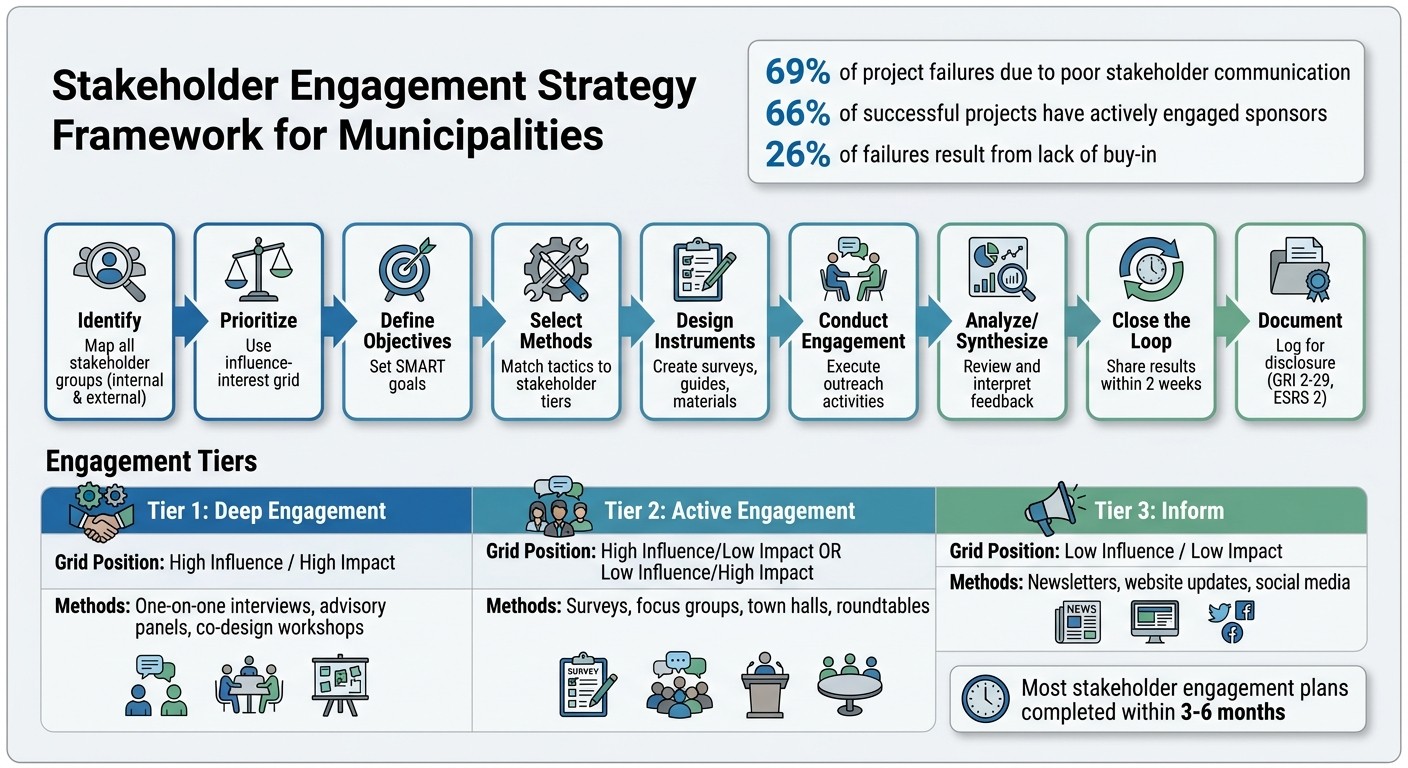
9-Step Stakeholder Engagement Strategy Framework for Municipalities
10 Proven Techniques for Stakeholder Engagement
How to Identify and Map Your Stakeholders
Start with a situation analysis that clearly defines the issue, decision, and the level of public influence involved [6]. This step helps determine whether stakeholders should be informed, consulted, involved, or empowered during the project lifecycle. Begin by mapping out both internal stakeholders - such as leadership, employees, and unions - and external stakeholders, including residents, businesses, regulators, NGOs, and media [1]. Don’t overlook critics or skeptics, as their perspectives can offer valuable insights. For communities that are harder to reach, use a network analysis to identify trusted community leaders, such as those from nonprofits, faith-based groups, or schools [2].
Leverage data-driven tools like demographic data, environmental justice metrics, and Social Vulnerability Indices to identify vulnerable populations. Pay special attention to communities historically impacted by practices like redlining or disinvestment [2].
"The people closest to the problem often have the deepest understanding of what solutions will work. Their engagement should be prioritized regardless of their formal power."
Drew Giddings, Founder & Principal Consultant, Giddings Consulting Group [3]
Most initial stakeholder engagement plans are completed within 3 to 6 months [1]. During this time, aim to meet stakeholders where they already gather, such as community meetings, rather than relying solely on formal town halls. If tensions exist between stakeholder groups, address those conflicts separately before organizing broader public discussions [6].
Common Stakeholder Groups in Municipal Projects
Municipal projects often involve a wide range of stakeholders, each with unique perspectives and roles. Residents form the largest group, but it’s critical to break this category down further. Consider vulnerable populations, such as low-income families, seniors, people with disabilities, and communities of color, who may face disproportionate impacts from policy decisions [2]. Community organizations - like nonprofits, advocacy groups, and neighborhood associations - are essential intermediaries. They bring deep local knowledge and amplify voices that might otherwise be overlooked.
Local businesses, regulatory bodies, and media outlets also play pivotal roles. Businesses often have a vested interest in economic development, while media can influence public perception. Developing audience personas can help tailor outreach strategies to meet the specific needs and communication styles of these diverse groups [5]. Once stakeholders are mapped, use an influence-interest grid to prioritize and refine engagement strategies.
How to Use Influence-Interest Grids
An influence-interest grid is a powerful tool for organizing stakeholders based on their level of influence and the degree to which they are impacted by a project. This 2x2 framework helps focus engagement efforts where they matter most:
Tier 1 (High Influence, High Impact): These stakeholders require in-depth engagement methods, such as one-on-one interviews, advisory panels, or co-design workshops.
Tier 2 (High Influence/Low Impact or Low Influence/High Impact): Engage these stakeholders actively through tools like surveys, focus groups, town halls, or roundtable discussions.
Tier 3 (Low Influence, Low Impact): Keep these stakeholders informed with newsletters, website updates, or public reports [1].
Engagement Tier | Grid Position | Engagement Goal | Typical Methods |
|---|---|---|---|
Tier 1: Deep Engagement | High Influence / High Impact | Partner & Co-create | One-on-one interviews, advisory panels, co-design workshops |
Tier 2: Active Engagement | High Influence / Low Impact OR Low Influence / High Impact | Consult & Involve | Online surveys, focus groups, town halls, roundtables |
Tier 3: Inform | Low Influence / Low Impact | Acknowledge & Monitor | Newsletters, website updates, annual reports, social media |
For municipal initiatives, consider adding a third dimension: proximity to the issue. Stakeholders most affected by a project often provide critical insights, even if they lack formal authority [3]. Conduct a gap analysis to compare current engagement levels with desired outcomes, and align your approach with the IAP2 Spectrum, ranging from “Inform” to “Empower” [3].
Research shows that 66% of projects involve actively engaged sponsors, while 69% of project failures stem from poor stakeholder communication. This highlights the importance of thorough mapping and prioritization [3]. By taking a structured approach, you not only ensure effective engagement but also establish a foundation for long-term trust and collaboration throughout the project lifecycle.
How to Design Engagement Strategies for Different Stakeholder Groups
When developing engagement strategies, it’s essential to address the unique needs of each stakeholder group. Building effective relationships requires more than formal hearings - it’s about fostering genuine connections. The U.S. EPA underscores this point:
"You cannot effectively participate with people you do not know. Formal public hearings where agency staff never actually meet or interact with the public often fail because there are simply no relationships upon which to base communication" [7].
Start by conducting one-on-one interviews to identify what matters most to each group. For example, residents may prioritize property values, while local businesses focus on job creation and economic opportunities. Community organizations often advocate for vulnerable populations, raising concerns about issues like historical inequities such as redlining or disinvestment [2]. Tailor your materials and meeting formats to reflect the diverse languages and preferences of your community.
Small, interactive sessions often yield better results than large town halls. These intimate settings encourage open dialogue, helping stakeholders understand differing perspectives. Tactics like tactical urbanism - temporary pop-ups that preview long-term plans - can provide immediate, hands-on feedback to shape your project [2].
The Colorado Division of Local Government highlights the importance of trusted local leaders:
"Trusted community leaders from nonprofits, faith groups, schools, and industry can have a profound impact on whether community groups feel comfortable and motivated to participate" [2].
By partnering with these leaders, you can connect with groups that might otherwise avoid traditional government processes. Equip them with discussion guides and presentations so they can effectively engage their communities.
Before launching any engagement initiative, ensure decision-makers are committed to integrating public input. As the U.S. EPA warns:
"If there is little or no room for public influence over the decision, then public participation is not a reasonable option for your project" [7].
If decisions are already finalized, opt for public relations instead of engagement to maintain trust. Tailor your strategies to fit the specific phase of your project for better results.
Matching Engagement Activities to Project Phases
Aligning engagement tactics with the different stages of a project helps maintain communication and trust over time:
Planning phase: Use focus groups and one-on-one meetings with community navigators to identify concerns early, preventing conflicts later.
Drafting phase: Share proposals through public forums, polling, and workshops to gather broad input. Activities like mapping exercises can help build consensus on design elements.
Implementation phase: Provide consistent updates through websites, social media, flyers, and email newsletters to keep stakeholders informed.
Evaluation phase: Use tools like user panels and surveys to assess what worked and invite feedback on how public input shaped the final outcome [8].
Project Phase | Recommended Engagement Activities |
|---|---|
Planning | Focus groups, one-on-one meetings, stakeholder interviews |
Drafting | Public forums, workshops, polling, surveys, mapping exercises |
Implementation | Updates via social media, websites, flyers, email newsletters |
Evaluation | User panels, surveys, feedback sessions ("closing the loop") |
Set specific goals for each phase. For instance, instead of saying "engage more residents", aim for measurable outcomes like "increase town hall attendance by 20% within six months" [5]. This approach ensures accountability and helps track progress.
Tools for Transparent and Participatory Communication
Choosing the right tools depends on your objectives. To inform stakeholders, use channels like social media, brochures, press releases, or even photo contests. For gathering input, rely on surveys (digital and print), focus groups, charrettes, or door-to-door outreach. To build consensus, organize workshops, mapping exercises, or small-group discussions [8].
For each engagement level, make a clear promise to the public about their role in the process. For instance:
At the consultation level, commit to informing stakeholders and considering their feedback.
At the collaboration level, integrate their input into planning.
At the co-creation level, involve them directly in decision-making.
Ensure digital tools are mobile-friendly and accessible. Use social media analytics to track popular topics and refine your messaging. Combine these insights with traditional methods like open houses to maintain a personal connection. The Colorado Division of Local Government advises:
"Engagement should be transparent (clear about purpose and use), authentic (using the input requested), and appropriate (engage in a way that gets to results)" [8].
Test your strategies on a small scale before a full rollout. Pilot programs allow you to gather real feedback and fine-tune your approach, reducing the risk of missteps. Additionally, conduct a historical loss assessment to evaluate whether your project addresses or exacerbates past inequities [2].
How to Build Long-Term Trust Through Governance and Monitoring
Building trust goes beyond hosting public meetings; it requires clear governance structures and consistent monitoring to show stakeholders that their input matters over time. Without these systems, even well-intentioned engagement efforts can lose momentum. Drew Giddings, Founder & Principal Consultant at Giddings Consulting Group, highlights the importance of follow-through:
"Closing the loop is the single most important - and most frequently neglected - practice. Organizations that close the loop build trust. Organizations that do not train their stakeholders to stop showing up" [3].
When governance is weak or tracking is insufficient, trust erodes. Municipalities that embrace structured accountability not only achieve better outcomes but also foster stronger relationships with their communities. Consistent feedback and robust governance frameworks are key to turning engagement into lasting trust.
Setting Up Governance Structures for Stakeholder Collaboration
Governance works best when it operates on two levels: community-wide structures for ongoing strategic guidance and project-specific structures for targeted initiatives. On a broader scale, municipalities can establish standing advisory councils that meet quarterly to address overarching priorities. These councils provide influential stakeholders with a reliable platform for meaningful engagement [1].
For individual projects, consider forming joint working groups or co-design sessions that bring together residents, municipal staff, and experts. A good example of this approach is the National Institutes of Health's Community-Led Health Equity Structural Interventions (CHESI) initiative. In this model, community organizations take the lead in planning, implementation, and evaluation, while research institutions provide technical support rather than making decisions [3]. This setup rebalances power dynamics, ensuring that those most affected by an issue have a direct role in shaping solutions.
To make governance effective, secure leadership support early, define departmental responsibilities, and hold regular internal check-ins [4][5]. Without strong internal coordination, even the best external engagement efforts may falter.
Accountability is crucial. Maintain a stakeholder engagement log that tracks participants, methods, dates, and outcomes. This not only ensures transparency but also helps meet disclosure standards like GRI 2-29 or ESRS 2 [1].
One of the most critical steps is to close the feedback loop within two weeks of any engagement activity [3]. Share summaries with participants that outline what you heard, how their input influenced decisions, and why certain suggestions couldn’t be implemented. This level of transparency turns occasional participants into long-term collaborators:
"Failing to close the loop is the fastest way to destroy engagement quality in future cycles. Stakeholders who feel ignored won't participate again" [1].
How to Track and Measure Engagement Success
Once governance structures are in place, tracking systems ensure that stakeholder input continues to shape municipal projects effectively.
Start by setting specific, measurable goals. Avoid vague aims like "improve community relations" and instead opt for SMART objectives, such as "Increase town hall attendance by 20% within six months" [5]. Clear goals make it easier to measure success and refine strategies as needed.
Focus on tracking three types of metrics:
Metric Category | What to Track |
|---|---|
Process Metrics | Participation rates, demographic diversity, feedback loops completed |
Outcome Metrics | Program changes based on input, satisfaction scores, trust levels |
Impact Metrics | Community indicators, organizational capacity, partnership strength |
Disaggregating participation data by demographics is essential for identifying gaps. For instance, if youth or shift workers are underrepresented in your engagement efforts, adjust your outreach strategies. Use a mix of tools like digital surveys, in-person listening sessions, and mobile service vans to reach people with limited mobility or unconventional schedules [9].
For underrepresented or vulnerable groups, offer compensation for their time and expertise, just as you would for professional consultants [1][3]. This approach acknowledges the costs of participation and shows respect for community knowledge.
To ensure lessons aren’t lost, create an engagement playbook that documents insights from each project [5]. This living resource can standardize best practices across departments and help new staff build on past successes. Update it regularly based on what your metrics reveal about effective strategies.
Monitoring should be an ongoing process. Establish a continuous evaluation cycle, where feedback from user panels and surveys directly informs the next phase of projects [8]. This approach shifts engagement from isolated efforts to sustained relationships, strengthening your municipality’s ability to serve all residents over time.
How Council Fire Helps Municipalities Implement Stakeholder Engagement Strategies
Council Fire collaborates with municipalities to create stakeholder engagement strategies that bring community voices into the decision-making process. By moving beyond surface-level engagement, their approach focuses on achieving measurable results while building lasting trust with stakeholders.
Council Fire's Planning and Communication Services
Council Fire follows a detailed 9-step roadmap - Identify, Prioritize, Define Objectives, Select Methods, Design Instruments, Conduct Engagement, Analyze/Synthesize, Close the Loop, and Document for Disclosure [1] - to ensure their processes are transparent and aligned with global standards like GRI 2-29 and ESRS [1][10]. This structured approach helps municipalities deliver tangible outcomes and maintain public trust.
The process begins with stakeholder mapping, which includes not only supporters but also critics to ensure all perspectives are considered [1]. Stakeholders are then ranked using an Influence-Impact Matrix, which organizes them into three tiers based on their ability to influence decisions and how much they are affected by municipal actions [1].
Tier 1 stakeholders (high influence, high impact): Engaged through in-depth methods like interviews, advisory panels, and co-design workshops.
Tier 2 stakeholders: Involved through surveys, focus groups, and town halls.
Tier 3 stakeholders: Kept informed via newsletters and public reports [1].
To maintain trust, Council Fire emphasizes timely feedback, ensuring that stakeholder contributions lead to meaningful partnerships over time [1][10]. They also establish engagement logs to track key details such as meeting dates, participants, discussion topics, and follow-up actions, reinforcing accountability [10].
Municipal Project Examples
Council Fire's structured methods have led to impactful results. For instance, in February 2026, they facilitated a coalition of 35 organizations that secured $280 million for a Regional Climate Compact [1][10]. Their role included crafting the engagement plan and coordinating efforts among municipal leaders, NGOs, community groups, and private companies to develop a unified climate strategy.
This approach has also supported broader sustainability achievements, such as an $8 billion REIT earning GRESB 5-star status [1]. This recognition highlights robust stakeholder engagement and transparent sustainability reporting, both of which are central to Council Fire's methodology.
Conclusion
Build trust by forming meaningful partnerships with the community, rather than treating engagement as a formality. Start by identifying and prioritizing all stakeholder groups - including skeptics - based on their influence, proximity to the issues, and potential impact. Establish clear goals, select appropriate engagement methods (like the IAP2 Spectrum), and address barriers by offering accessible meeting times, translation services, and fair compensation.
The most important step for maintaining trust is ensuring a complete feedback loop. Drew Giddings, Founder & Principal Consultant at Giddings Consulting Group, underscores this point:
"Closing the loop... this single practice builds more trust than any other" [3].
Stakeholders need to understand how their input influenced decisions - or why certain suggestions weren't adopted - to maintain transparency. This process strengthens trust and directly contributes to project success, as reflected in measurable outcomes.
Consider this: 69% of project failures are attributed to poor stakeholder communication, and 26% result from a lack of buy-in [3]. These numbers clearly illustrate the critical role of effective engagement strategies in achieving successful outcomes.
Council Fire brings decades of expertise to help municipalities adopt these strategies with a focus on building relationships. Whether it’s launching a climate initiative, reimagining public services, or managing infrastructure projects, engaging stakeholders effectively isn’t just a step in the process - it’s the cornerstone of achieving community-backed results.
FAQs
How do we decide how much public influence is realistic for this project?
To gauge a practical level of public involvement, start by examining the project's context, scope, and the capabilities of stakeholders. Use the IAP2 Spectrum of Public Participation, which includes levels like Inform, Consult, Involve, Collaborate, and Empower, as a guide to align engagement efforts with both stakeholder expectations and the complexity of the project. Assess the capacity for participation early on, adjust your approach as needed, and strive for interactions that are genuine and impactful. This helps avoid superficial efforts while balancing the interests of the community and the organization.
How can we engage hard-to-reach residents without relying on town halls?
Municipalities looking to connect with residents who are often harder to reach can adopt a variety of strategies to bridge the gap. These include using both digital and print surveys, leveraging social media platforms, and employing door-to-door outreach to meet people where they are. Collaborating with trusted community navigators - individuals or organizations already embedded in the community - can also make a significant difference.
Efforts that focus on proximity, like hosting neighborhood-specific events or sending out targeted communications, further enhance engagement by addressing local concerns directly. Above all, fostering trust is key. This can be achieved through consistent, culturally aware, and accessible communication practices that ensure every resident feels heard and valued throughout the process.
What’s the fastest way to show people their input actually mattered?
The fastest way to let people know their input made a difference is by closing the feedback loop - showing how their contributions shaped decisions or actions. This helps build trust and emphasizes the importance of their participation. To achieve this, share updates, explain how feedback was incorporated, and acknowledge contributions publicly. These steps ensure stakeholders can clearly see the impact of their involvement.
Related Blog Posts
Latest Articles
©2025

Narrative Change and Power Building: The Missing Half of Advocacy
Narrative change is the process of disrupting dominant narratives that normalize inequity and advancing new narratives from historically marginalized communities.

Funding Resilience Without Federal Grants
BRIC is unreliable and FEMA is shrinking. Here's how cities fund climate resilience with dedicated revenue, blended finance, and a coordinating authority.

The ESG Blind Spot: How AI Is Finding Risks in Companies Nobody Else Is Watching
Norway's sovereign wealth fund uses AI to screen 7,200 portfolio companies for forced labor and corruption within 24 hours. The real story is the emerging-market coverage gap that traditional ESG data vendors miss — and what it means for any company with a global supply chain.
Narrative Change and Power Building: The Missing Half of Advocacy
Narrative change is the process of disrupting dominant narratives that normalize inequity and advancing new narratives from historically marginalized communities.
Funding Resilience Without Federal Grants
BRIC is unreliable and FEMA is shrinking. Here's how cities fund climate resilience with dedicated revenue, blended finance, and a coordinating authority.
The ESG Blind Spot: How AI Is Finding Risks in Companies Nobody Else Is Watching
Norway's sovereign wealth fund uses AI to screen 7,200 portfolio companies for forced labor and corruption within 24 hours. The real story is the emerging-market coverage gap that traditional ESG data vendors miss — and what it means for any company with a global supply chain.
FAQ
01
What does it really mean to “redefine profit”?
02
What makes Council Fire different?
03
Who does Council Fire work with?
04
What does working with Council Fire actually look like?
05
How does Council Fire help organizations turn big goals into action?
06
How does Council Fire define and measure success?
May 4, 2026
How to Design a Stakeholder Engagement Strategy That Builds Trust for Municipalities & Government Agencies
Capacity Building
In This Article
Practical steps for municipalities to map stakeholders, tailor outreach, close feedback loops, and measure engagement to build public trust.
How to Design a Stakeholder Engagement Strategy That Builds Trust for Municipalities & Government Agencies
Building trust with stakeholders is essential for municipalities and government agencies to ensure project success and community support. Here’s how to create an effective stakeholder engagement strategy:
Understand Stakeholders: Identify and map all stakeholder groups, including residents, businesses, NGOs, regulators, and skeptics. Use tools like demographic data and Social Vulnerability Indices to prioritize vulnerable populations.
Engagement Tiers: Use an influence-interest grid to categorize stakeholders into three tiers (high influence/high impact, etc.) and tailor engagement methods accordingly.
Tailored Strategies: Customize outreach based on stakeholder needs. For example, small group discussions may work better than large town halls for certain groups.
Feedback Loop: Always close the loop by summarizing stakeholder input and explaining how it influenced decisions to maintain transparency and trust.
Governance and Monitoring: Establish clear governance structures, track participation metrics, and continuously evaluate engagement efforts.
Key Stats:
69% of project failures are due to poor communication with stakeholders.
Projects with actively engaged stakeholders are far more likely to succeed.
9-Step Stakeholder Engagement Strategy Framework for Municipalities
10 Proven Techniques for Stakeholder Engagement
How to Identify and Map Your Stakeholders
Start with a situation analysis that clearly defines the issue, decision, and the level of public influence involved [6]. This step helps determine whether stakeholders should be informed, consulted, involved, or empowered during the project lifecycle. Begin by mapping out both internal stakeholders - such as leadership, employees, and unions - and external stakeholders, including residents, businesses, regulators, NGOs, and media [1]. Don’t overlook critics or skeptics, as their perspectives can offer valuable insights. For communities that are harder to reach, use a network analysis to identify trusted community leaders, such as those from nonprofits, faith-based groups, or schools [2].
Leverage data-driven tools like demographic data, environmental justice metrics, and Social Vulnerability Indices to identify vulnerable populations. Pay special attention to communities historically impacted by practices like redlining or disinvestment [2].
"The people closest to the problem often have the deepest understanding of what solutions will work. Their engagement should be prioritized regardless of their formal power."
Drew Giddings, Founder & Principal Consultant, Giddings Consulting Group [3]
Most initial stakeholder engagement plans are completed within 3 to 6 months [1]. During this time, aim to meet stakeholders where they already gather, such as community meetings, rather than relying solely on formal town halls. If tensions exist between stakeholder groups, address those conflicts separately before organizing broader public discussions [6].
Common Stakeholder Groups in Municipal Projects
Municipal projects often involve a wide range of stakeholders, each with unique perspectives and roles. Residents form the largest group, but it’s critical to break this category down further. Consider vulnerable populations, such as low-income families, seniors, people with disabilities, and communities of color, who may face disproportionate impacts from policy decisions [2]. Community organizations - like nonprofits, advocacy groups, and neighborhood associations - are essential intermediaries. They bring deep local knowledge and amplify voices that might otherwise be overlooked.
Local businesses, regulatory bodies, and media outlets also play pivotal roles. Businesses often have a vested interest in economic development, while media can influence public perception. Developing audience personas can help tailor outreach strategies to meet the specific needs and communication styles of these diverse groups [5]. Once stakeholders are mapped, use an influence-interest grid to prioritize and refine engagement strategies.
How to Use Influence-Interest Grids
An influence-interest grid is a powerful tool for organizing stakeholders based on their level of influence and the degree to which they are impacted by a project. This 2x2 framework helps focus engagement efforts where they matter most:
Tier 1 (High Influence, High Impact): These stakeholders require in-depth engagement methods, such as one-on-one interviews, advisory panels, or co-design workshops.
Tier 2 (High Influence/Low Impact or Low Influence/High Impact): Engage these stakeholders actively through tools like surveys, focus groups, town halls, or roundtable discussions.
Tier 3 (Low Influence, Low Impact): Keep these stakeholders informed with newsletters, website updates, or public reports [1].
Engagement Tier | Grid Position | Engagement Goal | Typical Methods |
|---|---|---|---|
Tier 1: Deep Engagement | High Influence / High Impact | Partner & Co-create | One-on-one interviews, advisory panels, co-design workshops |
Tier 2: Active Engagement | High Influence / Low Impact OR Low Influence / High Impact | Consult & Involve | Online surveys, focus groups, town halls, roundtables |
Tier 3: Inform | Low Influence / Low Impact | Acknowledge & Monitor | Newsletters, website updates, annual reports, social media |
For municipal initiatives, consider adding a third dimension: proximity to the issue. Stakeholders most affected by a project often provide critical insights, even if they lack formal authority [3]. Conduct a gap analysis to compare current engagement levels with desired outcomes, and align your approach with the IAP2 Spectrum, ranging from “Inform” to “Empower” [3].
Research shows that 66% of projects involve actively engaged sponsors, while 69% of project failures stem from poor stakeholder communication. This highlights the importance of thorough mapping and prioritization [3]. By taking a structured approach, you not only ensure effective engagement but also establish a foundation for long-term trust and collaboration throughout the project lifecycle.
How to Design Engagement Strategies for Different Stakeholder Groups
When developing engagement strategies, it’s essential to address the unique needs of each stakeholder group. Building effective relationships requires more than formal hearings - it’s about fostering genuine connections. The U.S. EPA underscores this point:
"You cannot effectively participate with people you do not know. Formal public hearings where agency staff never actually meet or interact with the public often fail because there are simply no relationships upon which to base communication" [7].
Start by conducting one-on-one interviews to identify what matters most to each group. For example, residents may prioritize property values, while local businesses focus on job creation and economic opportunities. Community organizations often advocate for vulnerable populations, raising concerns about issues like historical inequities such as redlining or disinvestment [2]. Tailor your materials and meeting formats to reflect the diverse languages and preferences of your community.
Small, interactive sessions often yield better results than large town halls. These intimate settings encourage open dialogue, helping stakeholders understand differing perspectives. Tactics like tactical urbanism - temporary pop-ups that preview long-term plans - can provide immediate, hands-on feedback to shape your project [2].
The Colorado Division of Local Government highlights the importance of trusted local leaders:
"Trusted community leaders from nonprofits, faith groups, schools, and industry can have a profound impact on whether community groups feel comfortable and motivated to participate" [2].
By partnering with these leaders, you can connect with groups that might otherwise avoid traditional government processes. Equip them with discussion guides and presentations so they can effectively engage their communities.
Before launching any engagement initiative, ensure decision-makers are committed to integrating public input. As the U.S. EPA warns:
"If there is little or no room for public influence over the decision, then public participation is not a reasonable option for your project" [7].
If decisions are already finalized, opt for public relations instead of engagement to maintain trust. Tailor your strategies to fit the specific phase of your project for better results.
Matching Engagement Activities to Project Phases
Aligning engagement tactics with the different stages of a project helps maintain communication and trust over time:
Planning phase: Use focus groups and one-on-one meetings with community navigators to identify concerns early, preventing conflicts later.
Drafting phase: Share proposals through public forums, polling, and workshops to gather broad input. Activities like mapping exercises can help build consensus on design elements.
Implementation phase: Provide consistent updates through websites, social media, flyers, and email newsletters to keep stakeholders informed.
Evaluation phase: Use tools like user panels and surveys to assess what worked and invite feedback on how public input shaped the final outcome [8].
Project Phase | Recommended Engagement Activities |
|---|---|
Planning | Focus groups, one-on-one meetings, stakeholder interviews |
Drafting | Public forums, workshops, polling, surveys, mapping exercises |
Implementation | Updates via social media, websites, flyers, email newsletters |
Evaluation | User panels, surveys, feedback sessions ("closing the loop") |
Set specific goals for each phase. For instance, instead of saying "engage more residents", aim for measurable outcomes like "increase town hall attendance by 20% within six months" [5]. This approach ensures accountability and helps track progress.
Tools for Transparent and Participatory Communication
Choosing the right tools depends on your objectives. To inform stakeholders, use channels like social media, brochures, press releases, or even photo contests. For gathering input, rely on surveys (digital and print), focus groups, charrettes, or door-to-door outreach. To build consensus, organize workshops, mapping exercises, or small-group discussions [8].
For each engagement level, make a clear promise to the public about their role in the process. For instance:
At the consultation level, commit to informing stakeholders and considering their feedback.
At the collaboration level, integrate their input into planning.
At the co-creation level, involve them directly in decision-making.
Ensure digital tools are mobile-friendly and accessible. Use social media analytics to track popular topics and refine your messaging. Combine these insights with traditional methods like open houses to maintain a personal connection. The Colorado Division of Local Government advises:
"Engagement should be transparent (clear about purpose and use), authentic (using the input requested), and appropriate (engage in a way that gets to results)" [8].
Test your strategies on a small scale before a full rollout. Pilot programs allow you to gather real feedback and fine-tune your approach, reducing the risk of missteps. Additionally, conduct a historical loss assessment to evaluate whether your project addresses or exacerbates past inequities [2].
How to Build Long-Term Trust Through Governance and Monitoring
Building trust goes beyond hosting public meetings; it requires clear governance structures and consistent monitoring to show stakeholders that their input matters over time. Without these systems, even well-intentioned engagement efforts can lose momentum. Drew Giddings, Founder & Principal Consultant at Giddings Consulting Group, highlights the importance of follow-through:
"Closing the loop is the single most important - and most frequently neglected - practice. Organizations that close the loop build trust. Organizations that do not train their stakeholders to stop showing up" [3].
When governance is weak or tracking is insufficient, trust erodes. Municipalities that embrace structured accountability not only achieve better outcomes but also foster stronger relationships with their communities. Consistent feedback and robust governance frameworks are key to turning engagement into lasting trust.
Setting Up Governance Structures for Stakeholder Collaboration
Governance works best when it operates on two levels: community-wide structures for ongoing strategic guidance and project-specific structures for targeted initiatives. On a broader scale, municipalities can establish standing advisory councils that meet quarterly to address overarching priorities. These councils provide influential stakeholders with a reliable platform for meaningful engagement [1].
For individual projects, consider forming joint working groups or co-design sessions that bring together residents, municipal staff, and experts. A good example of this approach is the National Institutes of Health's Community-Led Health Equity Structural Interventions (CHESI) initiative. In this model, community organizations take the lead in planning, implementation, and evaluation, while research institutions provide technical support rather than making decisions [3]. This setup rebalances power dynamics, ensuring that those most affected by an issue have a direct role in shaping solutions.
To make governance effective, secure leadership support early, define departmental responsibilities, and hold regular internal check-ins [4][5]. Without strong internal coordination, even the best external engagement efforts may falter.
Accountability is crucial. Maintain a stakeholder engagement log that tracks participants, methods, dates, and outcomes. This not only ensures transparency but also helps meet disclosure standards like GRI 2-29 or ESRS 2 [1].
One of the most critical steps is to close the feedback loop within two weeks of any engagement activity [3]. Share summaries with participants that outline what you heard, how their input influenced decisions, and why certain suggestions couldn’t be implemented. This level of transparency turns occasional participants into long-term collaborators:
"Failing to close the loop is the fastest way to destroy engagement quality in future cycles. Stakeholders who feel ignored won't participate again" [1].
How to Track and Measure Engagement Success
Once governance structures are in place, tracking systems ensure that stakeholder input continues to shape municipal projects effectively.
Start by setting specific, measurable goals. Avoid vague aims like "improve community relations" and instead opt for SMART objectives, such as "Increase town hall attendance by 20% within six months" [5]. Clear goals make it easier to measure success and refine strategies as needed.
Focus on tracking three types of metrics:
Metric Category | What to Track |
|---|---|
Process Metrics | Participation rates, demographic diversity, feedback loops completed |
Outcome Metrics | Program changes based on input, satisfaction scores, trust levels |
Impact Metrics | Community indicators, organizational capacity, partnership strength |
Disaggregating participation data by demographics is essential for identifying gaps. For instance, if youth or shift workers are underrepresented in your engagement efforts, adjust your outreach strategies. Use a mix of tools like digital surveys, in-person listening sessions, and mobile service vans to reach people with limited mobility or unconventional schedules [9].
For underrepresented or vulnerable groups, offer compensation for their time and expertise, just as you would for professional consultants [1][3]. This approach acknowledges the costs of participation and shows respect for community knowledge.
To ensure lessons aren’t lost, create an engagement playbook that documents insights from each project [5]. This living resource can standardize best practices across departments and help new staff build on past successes. Update it regularly based on what your metrics reveal about effective strategies.
Monitoring should be an ongoing process. Establish a continuous evaluation cycle, where feedback from user panels and surveys directly informs the next phase of projects [8]. This approach shifts engagement from isolated efforts to sustained relationships, strengthening your municipality’s ability to serve all residents over time.
How Council Fire Helps Municipalities Implement Stakeholder Engagement Strategies
Council Fire collaborates with municipalities to create stakeholder engagement strategies that bring community voices into the decision-making process. By moving beyond surface-level engagement, their approach focuses on achieving measurable results while building lasting trust with stakeholders.
Council Fire's Planning and Communication Services
Council Fire follows a detailed 9-step roadmap - Identify, Prioritize, Define Objectives, Select Methods, Design Instruments, Conduct Engagement, Analyze/Synthesize, Close the Loop, and Document for Disclosure [1] - to ensure their processes are transparent and aligned with global standards like GRI 2-29 and ESRS [1][10]. This structured approach helps municipalities deliver tangible outcomes and maintain public trust.
The process begins with stakeholder mapping, which includes not only supporters but also critics to ensure all perspectives are considered [1]. Stakeholders are then ranked using an Influence-Impact Matrix, which organizes them into three tiers based on their ability to influence decisions and how much they are affected by municipal actions [1].
Tier 1 stakeholders (high influence, high impact): Engaged through in-depth methods like interviews, advisory panels, and co-design workshops.
Tier 2 stakeholders: Involved through surveys, focus groups, and town halls.
Tier 3 stakeholders: Kept informed via newsletters and public reports [1].
To maintain trust, Council Fire emphasizes timely feedback, ensuring that stakeholder contributions lead to meaningful partnerships over time [1][10]. They also establish engagement logs to track key details such as meeting dates, participants, discussion topics, and follow-up actions, reinforcing accountability [10].
Municipal Project Examples
Council Fire's structured methods have led to impactful results. For instance, in February 2026, they facilitated a coalition of 35 organizations that secured $280 million for a Regional Climate Compact [1][10]. Their role included crafting the engagement plan and coordinating efforts among municipal leaders, NGOs, community groups, and private companies to develop a unified climate strategy.
This approach has also supported broader sustainability achievements, such as an $8 billion REIT earning GRESB 5-star status [1]. This recognition highlights robust stakeholder engagement and transparent sustainability reporting, both of which are central to Council Fire's methodology.
Conclusion
Build trust by forming meaningful partnerships with the community, rather than treating engagement as a formality. Start by identifying and prioritizing all stakeholder groups - including skeptics - based on their influence, proximity to the issues, and potential impact. Establish clear goals, select appropriate engagement methods (like the IAP2 Spectrum), and address barriers by offering accessible meeting times, translation services, and fair compensation.
The most important step for maintaining trust is ensuring a complete feedback loop. Drew Giddings, Founder & Principal Consultant at Giddings Consulting Group, underscores this point:
"Closing the loop... this single practice builds more trust than any other" [3].
Stakeholders need to understand how their input influenced decisions - or why certain suggestions weren't adopted - to maintain transparency. This process strengthens trust and directly contributes to project success, as reflected in measurable outcomes.
Consider this: 69% of project failures are attributed to poor stakeholder communication, and 26% result from a lack of buy-in [3]. These numbers clearly illustrate the critical role of effective engagement strategies in achieving successful outcomes.
Council Fire brings decades of expertise to help municipalities adopt these strategies with a focus on building relationships. Whether it’s launching a climate initiative, reimagining public services, or managing infrastructure projects, engaging stakeholders effectively isn’t just a step in the process - it’s the cornerstone of achieving community-backed results.
FAQs
How do we decide how much public influence is realistic for this project?
To gauge a practical level of public involvement, start by examining the project's context, scope, and the capabilities of stakeholders. Use the IAP2 Spectrum of Public Participation, which includes levels like Inform, Consult, Involve, Collaborate, and Empower, as a guide to align engagement efforts with both stakeholder expectations and the complexity of the project. Assess the capacity for participation early on, adjust your approach as needed, and strive for interactions that are genuine and impactful. This helps avoid superficial efforts while balancing the interests of the community and the organization.
How can we engage hard-to-reach residents without relying on town halls?
Municipalities looking to connect with residents who are often harder to reach can adopt a variety of strategies to bridge the gap. These include using both digital and print surveys, leveraging social media platforms, and employing door-to-door outreach to meet people where they are. Collaborating with trusted community navigators - individuals or organizations already embedded in the community - can also make a significant difference.
Efforts that focus on proximity, like hosting neighborhood-specific events or sending out targeted communications, further enhance engagement by addressing local concerns directly. Above all, fostering trust is key. This can be achieved through consistent, culturally aware, and accessible communication practices that ensure every resident feels heard and valued throughout the process.
What’s the fastest way to show people their input actually mattered?
The fastest way to let people know their input made a difference is by closing the feedback loop - showing how their contributions shaped decisions or actions. This helps build trust and emphasizes the importance of their participation. To achieve this, share updates, explain how feedback was incorporated, and acknowledge contributions publicly. These steps ensure stakeholders can clearly see the impact of their involvement.
Related Blog Posts
Latest Articles
©2025
Narrative Change and Power Building: The Missing Half of Advocacy
Narrative change is the process of disrupting dominant narratives that normalize inequity and advancing new narratives from historically marginalized communities.
Funding Resilience Without Federal Grants
BRIC is unreliable and FEMA is shrinking. Here's how cities fund climate resilience with dedicated revenue, blended finance, and a coordinating authority.
The ESG Blind Spot: How AI Is Finding Risks in Companies Nobody Else Is Watching
Norway's sovereign wealth fund uses AI to screen 7,200 portfolio companies for forced labor and corruption within 24 hours. The real story is the emerging-market coverage gap that traditional ESG data vendors miss — and what it means for any company with a global supply chain.
FAQ
01
What does it really mean to “redefine profit”?
02
What makes Council Fire different?
03
Who does Council Fire work with?
04
What does working with Council Fire actually look like?
05
How does Council Fire help organizations turn big goals into action?
06
How does Council Fire define and measure success?
May 4, 2026
How to Design a Stakeholder Engagement Strategy That Builds Trust for Municipalities & Government Agencies
Capacity Building
In This Article
Practical steps for municipalities to map stakeholders, tailor outreach, close feedback loops, and measure engagement to build public trust.
How to Design a Stakeholder Engagement Strategy That Builds Trust for Municipalities & Government Agencies
Building trust with stakeholders is essential for municipalities and government agencies to ensure project success and community support. Here’s how to create an effective stakeholder engagement strategy:
Understand Stakeholders: Identify and map all stakeholder groups, including residents, businesses, NGOs, regulators, and skeptics. Use tools like demographic data and Social Vulnerability Indices to prioritize vulnerable populations.
Engagement Tiers: Use an influence-interest grid to categorize stakeholders into three tiers (high influence/high impact, etc.) and tailor engagement methods accordingly.
Tailored Strategies: Customize outreach based on stakeholder needs. For example, small group discussions may work better than large town halls for certain groups.
Feedback Loop: Always close the loop by summarizing stakeholder input and explaining how it influenced decisions to maintain transparency and trust.
Governance and Monitoring: Establish clear governance structures, track participation metrics, and continuously evaluate engagement efforts.
Key Stats:
69% of project failures are due to poor communication with stakeholders.
Projects with actively engaged stakeholders are far more likely to succeed.
9-Step Stakeholder Engagement Strategy Framework for Municipalities
10 Proven Techniques for Stakeholder Engagement
How to Identify and Map Your Stakeholders
Start with a situation analysis that clearly defines the issue, decision, and the level of public influence involved [6]. This step helps determine whether stakeholders should be informed, consulted, involved, or empowered during the project lifecycle. Begin by mapping out both internal stakeholders - such as leadership, employees, and unions - and external stakeholders, including residents, businesses, regulators, NGOs, and media [1]. Don’t overlook critics or skeptics, as their perspectives can offer valuable insights. For communities that are harder to reach, use a network analysis to identify trusted community leaders, such as those from nonprofits, faith-based groups, or schools [2].
Leverage data-driven tools like demographic data, environmental justice metrics, and Social Vulnerability Indices to identify vulnerable populations. Pay special attention to communities historically impacted by practices like redlining or disinvestment [2].
"The people closest to the problem often have the deepest understanding of what solutions will work. Their engagement should be prioritized regardless of their formal power."
Drew Giddings, Founder & Principal Consultant, Giddings Consulting Group [3]
Most initial stakeholder engagement plans are completed within 3 to 6 months [1]. During this time, aim to meet stakeholders where they already gather, such as community meetings, rather than relying solely on formal town halls. If tensions exist between stakeholder groups, address those conflicts separately before organizing broader public discussions [6].
Common Stakeholder Groups in Municipal Projects
Municipal projects often involve a wide range of stakeholders, each with unique perspectives and roles. Residents form the largest group, but it’s critical to break this category down further. Consider vulnerable populations, such as low-income families, seniors, people with disabilities, and communities of color, who may face disproportionate impacts from policy decisions [2]. Community organizations - like nonprofits, advocacy groups, and neighborhood associations - are essential intermediaries. They bring deep local knowledge and amplify voices that might otherwise be overlooked.
Local businesses, regulatory bodies, and media outlets also play pivotal roles. Businesses often have a vested interest in economic development, while media can influence public perception. Developing audience personas can help tailor outreach strategies to meet the specific needs and communication styles of these diverse groups [5]. Once stakeholders are mapped, use an influence-interest grid to prioritize and refine engagement strategies.
How to Use Influence-Interest Grids
An influence-interest grid is a powerful tool for organizing stakeholders based on their level of influence and the degree to which they are impacted by a project. This 2x2 framework helps focus engagement efforts where they matter most:
Tier 1 (High Influence, High Impact): These stakeholders require in-depth engagement methods, such as one-on-one interviews, advisory panels, or co-design workshops.
Tier 2 (High Influence/Low Impact or Low Influence/High Impact): Engage these stakeholders actively through tools like surveys, focus groups, town halls, or roundtable discussions.
Tier 3 (Low Influence, Low Impact): Keep these stakeholders informed with newsletters, website updates, or public reports [1].
Engagement Tier | Grid Position | Engagement Goal | Typical Methods |
|---|---|---|---|
Tier 1: Deep Engagement | High Influence / High Impact | Partner & Co-create | One-on-one interviews, advisory panels, co-design workshops |
Tier 2: Active Engagement | High Influence / Low Impact OR Low Influence / High Impact | Consult & Involve | Online surveys, focus groups, town halls, roundtables |
Tier 3: Inform | Low Influence / Low Impact | Acknowledge & Monitor | Newsletters, website updates, annual reports, social media |
For municipal initiatives, consider adding a third dimension: proximity to the issue. Stakeholders most affected by a project often provide critical insights, even if they lack formal authority [3]. Conduct a gap analysis to compare current engagement levels with desired outcomes, and align your approach with the IAP2 Spectrum, ranging from “Inform” to “Empower” [3].
Research shows that 66% of projects involve actively engaged sponsors, while 69% of project failures stem from poor stakeholder communication. This highlights the importance of thorough mapping and prioritization [3]. By taking a structured approach, you not only ensure effective engagement but also establish a foundation for long-term trust and collaboration throughout the project lifecycle.
How to Design Engagement Strategies for Different Stakeholder Groups
When developing engagement strategies, it’s essential to address the unique needs of each stakeholder group. Building effective relationships requires more than formal hearings - it’s about fostering genuine connections. The U.S. EPA underscores this point:
"You cannot effectively participate with people you do not know. Formal public hearings where agency staff never actually meet or interact with the public often fail because there are simply no relationships upon which to base communication" [7].
Start by conducting one-on-one interviews to identify what matters most to each group. For example, residents may prioritize property values, while local businesses focus on job creation and economic opportunities. Community organizations often advocate for vulnerable populations, raising concerns about issues like historical inequities such as redlining or disinvestment [2]. Tailor your materials and meeting formats to reflect the diverse languages and preferences of your community.
Small, interactive sessions often yield better results than large town halls. These intimate settings encourage open dialogue, helping stakeholders understand differing perspectives. Tactics like tactical urbanism - temporary pop-ups that preview long-term plans - can provide immediate, hands-on feedback to shape your project [2].
The Colorado Division of Local Government highlights the importance of trusted local leaders:
"Trusted community leaders from nonprofits, faith groups, schools, and industry can have a profound impact on whether community groups feel comfortable and motivated to participate" [2].
By partnering with these leaders, you can connect with groups that might otherwise avoid traditional government processes. Equip them with discussion guides and presentations so they can effectively engage their communities.
Before launching any engagement initiative, ensure decision-makers are committed to integrating public input. As the U.S. EPA warns:
"If there is little or no room for public influence over the decision, then public participation is not a reasonable option for your project" [7].
If decisions are already finalized, opt for public relations instead of engagement to maintain trust. Tailor your strategies to fit the specific phase of your project for better results.
Matching Engagement Activities to Project Phases
Aligning engagement tactics with the different stages of a project helps maintain communication and trust over time:
Planning phase: Use focus groups and one-on-one meetings with community navigators to identify concerns early, preventing conflicts later.
Drafting phase: Share proposals through public forums, polling, and workshops to gather broad input. Activities like mapping exercises can help build consensus on design elements.
Implementation phase: Provide consistent updates through websites, social media, flyers, and email newsletters to keep stakeholders informed.
Evaluation phase: Use tools like user panels and surveys to assess what worked and invite feedback on how public input shaped the final outcome [8].
Project Phase | Recommended Engagement Activities |
|---|---|
Planning | Focus groups, one-on-one meetings, stakeholder interviews |
Drafting | Public forums, workshops, polling, surveys, mapping exercises |
Implementation | Updates via social media, websites, flyers, email newsletters |
Evaluation | User panels, surveys, feedback sessions ("closing the loop") |
Set specific goals for each phase. For instance, instead of saying "engage more residents", aim for measurable outcomes like "increase town hall attendance by 20% within six months" [5]. This approach ensures accountability and helps track progress.
Tools for Transparent and Participatory Communication
Choosing the right tools depends on your objectives. To inform stakeholders, use channels like social media, brochures, press releases, or even photo contests. For gathering input, rely on surveys (digital and print), focus groups, charrettes, or door-to-door outreach. To build consensus, organize workshops, mapping exercises, or small-group discussions [8].
For each engagement level, make a clear promise to the public about their role in the process. For instance:
At the consultation level, commit to informing stakeholders and considering their feedback.
At the collaboration level, integrate their input into planning.
At the co-creation level, involve them directly in decision-making.
Ensure digital tools are mobile-friendly and accessible. Use social media analytics to track popular topics and refine your messaging. Combine these insights with traditional methods like open houses to maintain a personal connection. The Colorado Division of Local Government advises:
"Engagement should be transparent (clear about purpose and use), authentic (using the input requested), and appropriate (engage in a way that gets to results)" [8].
Test your strategies on a small scale before a full rollout. Pilot programs allow you to gather real feedback and fine-tune your approach, reducing the risk of missteps. Additionally, conduct a historical loss assessment to evaluate whether your project addresses or exacerbates past inequities [2].
How to Build Long-Term Trust Through Governance and Monitoring
Building trust goes beyond hosting public meetings; it requires clear governance structures and consistent monitoring to show stakeholders that their input matters over time. Without these systems, even well-intentioned engagement efforts can lose momentum. Drew Giddings, Founder & Principal Consultant at Giddings Consulting Group, highlights the importance of follow-through:
"Closing the loop is the single most important - and most frequently neglected - practice. Organizations that close the loop build trust. Organizations that do not train their stakeholders to stop showing up" [3].
When governance is weak or tracking is insufficient, trust erodes. Municipalities that embrace structured accountability not only achieve better outcomes but also foster stronger relationships with their communities. Consistent feedback and robust governance frameworks are key to turning engagement into lasting trust.
Setting Up Governance Structures for Stakeholder Collaboration
Governance works best when it operates on two levels: community-wide structures for ongoing strategic guidance and project-specific structures for targeted initiatives. On a broader scale, municipalities can establish standing advisory councils that meet quarterly to address overarching priorities. These councils provide influential stakeholders with a reliable platform for meaningful engagement [1].
For individual projects, consider forming joint working groups or co-design sessions that bring together residents, municipal staff, and experts. A good example of this approach is the National Institutes of Health's Community-Led Health Equity Structural Interventions (CHESI) initiative. In this model, community organizations take the lead in planning, implementation, and evaluation, while research institutions provide technical support rather than making decisions [3]. This setup rebalances power dynamics, ensuring that those most affected by an issue have a direct role in shaping solutions.
To make governance effective, secure leadership support early, define departmental responsibilities, and hold regular internal check-ins [4][5]. Without strong internal coordination, even the best external engagement efforts may falter.
Accountability is crucial. Maintain a stakeholder engagement log that tracks participants, methods, dates, and outcomes. This not only ensures transparency but also helps meet disclosure standards like GRI 2-29 or ESRS 2 [1].
One of the most critical steps is to close the feedback loop within two weeks of any engagement activity [3]. Share summaries with participants that outline what you heard, how their input influenced decisions, and why certain suggestions couldn’t be implemented. This level of transparency turns occasional participants into long-term collaborators:
"Failing to close the loop is the fastest way to destroy engagement quality in future cycles. Stakeholders who feel ignored won't participate again" [1].
How to Track and Measure Engagement Success
Once governance structures are in place, tracking systems ensure that stakeholder input continues to shape municipal projects effectively.
Start by setting specific, measurable goals. Avoid vague aims like "improve community relations" and instead opt for SMART objectives, such as "Increase town hall attendance by 20% within six months" [5]. Clear goals make it easier to measure success and refine strategies as needed.
Focus on tracking three types of metrics:
Metric Category | What to Track |
|---|---|
Process Metrics | Participation rates, demographic diversity, feedback loops completed |
Outcome Metrics | Program changes based on input, satisfaction scores, trust levels |
Impact Metrics | Community indicators, organizational capacity, partnership strength |
Disaggregating participation data by demographics is essential for identifying gaps. For instance, if youth or shift workers are underrepresented in your engagement efforts, adjust your outreach strategies. Use a mix of tools like digital surveys, in-person listening sessions, and mobile service vans to reach people with limited mobility or unconventional schedules [9].
For underrepresented or vulnerable groups, offer compensation for their time and expertise, just as you would for professional consultants [1][3]. This approach acknowledges the costs of participation and shows respect for community knowledge.
To ensure lessons aren’t lost, create an engagement playbook that documents insights from each project [5]. This living resource can standardize best practices across departments and help new staff build on past successes. Update it regularly based on what your metrics reveal about effective strategies.
Monitoring should be an ongoing process. Establish a continuous evaluation cycle, where feedback from user panels and surveys directly informs the next phase of projects [8]. This approach shifts engagement from isolated efforts to sustained relationships, strengthening your municipality’s ability to serve all residents over time.
How Council Fire Helps Municipalities Implement Stakeholder Engagement Strategies
Council Fire collaborates with municipalities to create stakeholder engagement strategies that bring community voices into the decision-making process. By moving beyond surface-level engagement, their approach focuses on achieving measurable results while building lasting trust with stakeholders.
Council Fire's Planning and Communication Services
Council Fire follows a detailed 9-step roadmap - Identify, Prioritize, Define Objectives, Select Methods, Design Instruments, Conduct Engagement, Analyze/Synthesize, Close the Loop, and Document for Disclosure [1] - to ensure their processes are transparent and aligned with global standards like GRI 2-29 and ESRS [1][10]. This structured approach helps municipalities deliver tangible outcomes and maintain public trust.
The process begins with stakeholder mapping, which includes not only supporters but also critics to ensure all perspectives are considered [1]. Stakeholders are then ranked using an Influence-Impact Matrix, which organizes them into three tiers based on their ability to influence decisions and how much they are affected by municipal actions [1].
Tier 1 stakeholders (high influence, high impact): Engaged through in-depth methods like interviews, advisory panels, and co-design workshops.
Tier 2 stakeholders: Involved through surveys, focus groups, and town halls.
Tier 3 stakeholders: Kept informed via newsletters and public reports [1].
To maintain trust, Council Fire emphasizes timely feedback, ensuring that stakeholder contributions lead to meaningful partnerships over time [1][10]. They also establish engagement logs to track key details such as meeting dates, participants, discussion topics, and follow-up actions, reinforcing accountability [10].
Municipal Project Examples
Council Fire's structured methods have led to impactful results. For instance, in February 2026, they facilitated a coalition of 35 organizations that secured $280 million for a Regional Climate Compact [1][10]. Their role included crafting the engagement plan and coordinating efforts among municipal leaders, NGOs, community groups, and private companies to develop a unified climate strategy.
This approach has also supported broader sustainability achievements, such as an $8 billion REIT earning GRESB 5-star status [1]. This recognition highlights robust stakeholder engagement and transparent sustainability reporting, both of which are central to Council Fire's methodology.
Conclusion
Build trust by forming meaningful partnerships with the community, rather than treating engagement as a formality. Start by identifying and prioritizing all stakeholder groups - including skeptics - based on their influence, proximity to the issues, and potential impact. Establish clear goals, select appropriate engagement methods (like the IAP2 Spectrum), and address barriers by offering accessible meeting times, translation services, and fair compensation.
The most important step for maintaining trust is ensuring a complete feedback loop. Drew Giddings, Founder & Principal Consultant at Giddings Consulting Group, underscores this point:
"Closing the loop... this single practice builds more trust than any other" [3].
Stakeholders need to understand how their input influenced decisions - or why certain suggestions weren't adopted - to maintain transparency. This process strengthens trust and directly contributes to project success, as reflected in measurable outcomes.
Consider this: 69% of project failures are attributed to poor stakeholder communication, and 26% result from a lack of buy-in [3]. These numbers clearly illustrate the critical role of effective engagement strategies in achieving successful outcomes.
Council Fire brings decades of expertise to help municipalities adopt these strategies with a focus on building relationships. Whether it’s launching a climate initiative, reimagining public services, or managing infrastructure projects, engaging stakeholders effectively isn’t just a step in the process - it’s the cornerstone of achieving community-backed results.
FAQs
How do we decide how much public influence is realistic for this project?
To gauge a practical level of public involvement, start by examining the project's context, scope, and the capabilities of stakeholders. Use the IAP2 Spectrum of Public Participation, which includes levels like Inform, Consult, Involve, Collaborate, and Empower, as a guide to align engagement efforts with both stakeholder expectations and the complexity of the project. Assess the capacity for participation early on, adjust your approach as needed, and strive for interactions that are genuine and impactful. This helps avoid superficial efforts while balancing the interests of the community and the organization.
How can we engage hard-to-reach residents without relying on town halls?
Municipalities looking to connect with residents who are often harder to reach can adopt a variety of strategies to bridge the gap. These include using both digital and print surveys, leveraging social media platforms, and employing door-to-door outreach to meet people where they are. Collaborating with trusted community navigators - individuals or organizations already embedded in the community - can also make a significant difference.
Efforts that focus on proximity, like hosting neighborhood-specific events or sending out targeted communications, further enhance engagement by addressing local concerns directly. Above all, fostering trust is key. This can be achieved through consistent, culturally aware, and accessible communication practices that ensure every resident feels heard and valued throughout the process.
What’s the fastest way to show people their input actually mattered?
The fastest way to let people know their input made a difference is by closing the feedback loop - showing how their contributions shaped decisions or actions. This helps build trust and emphasizes the importance of their participation. To achieve this, share updates, explain how feedback was incorporated, and acknowledge contributions publicly. These steps ensure stakeholders can clearly see the impact of their involvement.
Related Blog Posts
Latest Articles
©2025
Narrative Change and Power Building: The Missing Half of Advocacy
Narrative change is the process of disrupting dominant narratives that normalize inequity and advancing new narratives from historically marginalized communities.
Funding Resilience Without Federal Grants
BRIC is unreliable and FEMA is shrinking. Here's how cities fund climate resilience with dedicated revenue, blended finance, and a coordinating authority.
The ESG Blind Spot: How AI Is Finding Risks in Companies Nobody Else Is Watching
Norway's sovereign wealth fund uses AI to screen 7,200 portfolio companies for forced labor and corruption within 24 hours. The real story is the emerging-market coverage gap that traditional ESG data vendors miss — and what it means for any company with a global supply chain.
FAQ
What does it really mean to “redefine profit”?
What makes Council Fire different?
Who does Council Fire work with?
What does working with Council Fire actually look like?
How does Council Fire help organizations turn big goals into action?
How does Council Fire define and measure success?