
Apr 6, 2026
How to Mobilize Community Stakeholders Around Sustainability Goals for Corporations
Sustainability Strategy
In This Article
Practical steps to map, engage, and partner with community stakeholders to meet sustainability goals and reduce project risks.
How to Mobilize Community Stakeholders Around Sustainability Goals for Corporations
Engaging community stakeholders is key to achieving corporate sustainability goals. Without their involvement, companies face risks like project delays, higher costs, and reputational damage. Here’s how to turn community members into active collaborators:
Identify Stakeholders: Map groups impacted by or influencing your operations, including employees, residents, NGOs, and regulators.
Understand Priorities: Use surveys and interviews to learn what matters most to stakeholders. Focus on shared concerns and risks.
Create an Engagement Plan: Set clear goals, timelines, and outreach methods like town halls, advisory panels, and newsletters.
Build Trust: Maintain transparency by showing how stakeholder feedback shapes decisions. Regular updates and open communication are critical.
Form Partnerships: Collaborate with local organizations and co-create initiatives to align corporate goals with community needs.
This approach not only reduces risks but also builds stronger relationships and ensures long-term success. Companies prioritizing stakeholder engagement report fewer disruptions, faster project growth, and improved financial performance.
Identifying and Understanding Key Community Stakeholders
Mapping Stakeholders
Engaging the right people in your community starts with knowing who they are. Mapping your stakeholders involves identifying all groups that either influence or are influenced by your operations. These typically fall into four categories:
Internal stakeholders: Employees and board members
Value chain partners: Suppliers and customers
Financial stakeholders: Investors and lenders
Community stakeholders: Local residents, NGOs, regulators, and Indigenous peoples [1][2]
It's essential to include not just supporters but also critics, marginalized groups, and those negatively affected by your actions. Research highlights that 70% of cross-functional initiatives fail due to poor stakeholder management, not flawed strategies [6]. Tools such as social impact assessments, demographic studies, and power-interest matrices can help uncover less visible but equally important stakeholders [3][6].
Once identified, stakeholders should be prioritized based on four key criteria:
Influence: Their ability to shape your strategy
Impact: How your operations affect them
Urgency: Time-sensitive issues they face
Dependency: How much they rely on your organization [1]
A 2x2 matrix categorizing stakeholders by Influence and Impact can guide your engagement approach. For example:
Tier 1 stakeholders (high influence, high impact): Engage deeply through one-on-one interviews and advisory panels.
Tier 2 stakeholders: Consult actively via surveys and focus groups.
Tier 3 stakeholders: Keep informed with updates through newsletters and reports [1].
After mapping, take the time to understand their priorities to craft meaningful engagement strategies.
Assessing Stakeholder Priorities
Once stakeholders are mapped, the next step is understanding what matters most to them. As Michael Wheeler, Professor at Harvard Business School, puts it:
"Negotiation is, among other things, a process of exploration and discovery. And that discovery begins with rigorous analysis of all parties involved" [6].
This means digging into each stakeholder group's values, acceptable trade-offs, and areas where leverage exists [6]. Structured interviews and surveys are valuable tools here. For interviews, use guides that explore critical sustainability topics and potential risks over the next five years [1]. Surveys should aim for a 30% response rate, with completion times kept under 15 minutes to maintain interest [1].
To make sense of the feedback, apply qualitative coding to identify common themes, alignments, and areas of disagreement [1][2]. Focus on groups most directly impacted by your operations rather than distant associations [2]. Before rolling out surveys or interviews widely, test them with a small sample to ensure they’re effective. Finally, close the loop by showing stakeholders how their input shaped your sustainability strategy [1][2].
Stakeholder Engagement 5 Tips Every Sustainability Leader Must Know
Creating a Stakeholder Engagement Plan
Understanding your stakeholders and what matters most to them is just the beginning. The next step is crafting a structured plan that transforms these insights into meaningful action. A well-thought-out engagement plan connects your sustainability goals with community priorities, ensuring both parties benefit from the collaboration. Below, we’ll explore how to set clear goals, choose the right outreach methods, and leverage Council Fire's expertise to create an effective and actionable plan.
Setting Engagement Goals and Timelines
Start by defining clear, actionable objectives - steer away from vague aspirations like "communicating with stakeholders." Instead, focus on goals such as gathering input for a materiality assessment, aligning your sustainability strategy with community concerns, or identifying potential risks before they escalate [1][2]. For instance, research shows that extractive industry projects without strong community support often face cost overruns averaging 29% [3].
A 12-month engagement cycle can help keep efforts organized and focused:
Months 1–2: Stakeholder mapping and planning.
Months 3–5: Active engagement, such as surveys or workshops.
Months 6–7: Analyzing findings and integrating them into your materiality assessment.
Months 8–9: Updating strategies and closing the loop with stakeholders.
Months 10–12: Ongoing monitoring and adjustments.
If you’re deploying surveys, allow 4–6 weeks for design and analysis, and schedule executive interviews 3–4 weeks in advance to accommodate busy schedules [1]. Many organizations complete initial engagement efforts in 3–6 months, but more comprehensive cycles tied to materiality assessments should recur every 2–3 years. For high-priority stakeholders, annual check-ins are recommended [1].
Selecting Outreach Methods
The outreach methods you choose should align with the importance and influence of your stakeholders. For Tier 1 stakeholders - those with the highest influence and impact - consider deeper engagement through one-on-one interviews, advisory panels, co-design workshops, or site visits. Tier 2 stakeholders can be reached through online surveys, focus groups, roundtable discussions, or town halls, while Tier 3 stakeholders may only require updates via sustainability reports, newsletters, or digital channels like social media [1].
Community stakeholders often benefit from town halls and participatory workshops, which foster meaningful dialogue. Local advisory panels can provide ongoing input. In cases where direct access is difficult, such as with workers in global supply chains, partnering with trusted intermediaries like NGOs or trade unions can help [2][7]. Data shows that companies excelling in stakeholder relations experience 25% fewer operational disruptions caused by social or environmental conflicts compared to those lagging in this area [7].
Accessibility is another critical factor. Provide materials in multiple languages and formats - whether in-person, over the phone, or online - to reach diverse and marginalized groups [1][2]. Keep surveys short (under 15 minutes) to encourage completion and aim for a response rate of 30% or higher for statistical relevance [1]. Combining quantitative methods, like surveys, with qualitative approaches, like focus groups, can uncover deeper insights. Make sure to incorporate feedback loops to share outcomes with stakeholders, as failing to report back can erode trust. Finally, maintain a centralized engagement log to track dates, participants, topics, and outcomes. This documentation supports regulatory requirements such as GRI 2-29 and CSRD compliance [1][2].
Using Council Fire's Consulting Services
For organizations looking to take their engagement plans to the next level, Council Fire offers expert consulting services that blend strategic planning with measurable outcomes. Their team specializes in designing engagement programs that integrate stakeholder perspectives into double materiality assessments while ensuring compliance with frameworks like CSRD and GRI [2].
Council Fire's services include facilitating co-design workshops, analyzing survey data, and creating structured plans that deliver real results - not just surface-level reporting. Their approach ties stakeholder input to broader sustainability goals, helping organizations build trust and form lasting partnerships. With their support, companies can not only meet compliance standards but also create meaningful, long-term value for all stakeholders involved.
Building Trust Through Clear Communication
Building trust hinges on clear and meaningful communication that aligns your sustainability strategy with community priorities. Trust isn’t built through formal reports alone - it’s earned by showing stakeholders that their voices genuinely shape your decisions. The key to successful engagement often lies in closing the loop - demonstrating how stakeholder input directly influenced your strategy and materiality assessment [1][2]. Without this, engagement risks becoming an extractive process that damages trust rather than strengthening it.
"Failing to close the loop is the fastest way to destroy engagement quality in future cycles. Stakeholders who feel ignored won't participate again." - Council Fire Resources [1]
When stakeholders don’t see how their input matters or can’t grasp your sustainability vision, they disengage. Companies that prioritize transparency see stakeholder trust improve by 30% [4]. By clearly articulating your goals and progress, you pave the way for stronger partnerships and collaboration.
Sharing a Clear Vision
For sustainability goals to resonate, they must be communicated in ways that align with the priorities of different groups. Investors often prefer data-backed reports with financial insights, while local communities respond better to storytelling and visuals that illustrate tangible outcomes [5].
Building genuine connections requires emotional intelligence. Instead of presenting a rigid agenda, ask questions like, "What would a successful partnership look like for you?" This approach uncovers shared priorities and fosters collaboration. For example, Unilever’s integration of community feedback into product development and sourcing decisions led to its "Sustainable Living" brands growing 69% faster than other parts of its portfolio over a decade ending around 2020 [3].
Clarity and specificity are crucial. Avoid vague statements like, "We want to reduce our environmental footprint." Instead, share measurable goals: "We aim to cut carbon emissions by 15% by December 2027, and here’s how your input will help us achieve that." Adding visual elements like charts, infographics, and timelines improves understanding by 80% [4]. Providing these materials in multiple languages and formats can further boost participation by up to 50% [4].
Providing Regular Updates
Consistency in communication builds trust. Stakeholders left "in the dark" often lose interest and disengage. Establish a structured update schedule - quarterly updates often work well - and stick to it [4]. Organizations that maintain ongoing dialogue report a 23% improvement in project performance [4].
A hybrid communication approach works best. Combine digital tools like newsletters and online portals with in-person interactions like town halls and workshops. This blend can increase engagement rates by 30% [4]. Track the effectiveness of your updates by monitoring email open rates and website traffic, and adjust your methods based on what resonates most with your audience [4].
Transparency is about more than just celebrating successes. Share setbacks too, along with your plans to address them. For instance, Anglo American’s "Social Way 3.0" framework requires its operations to co-create community development plans with local stakeholders, monitored through independently verified KPIs [3]. This level of openness helps transform communities into active partners rather than passive observers.
Sustained transparency empowers stakeholders to play an active role in shaping outcomes, fostering a sense of shared purpose.
Encouraging Stakeholder Ownership
People are more committed to initiatives they’ve helped shape. Transition stakeholders from passive recipients of information to active participants in decision-making. This shift fosters emotional connections and long-term commitment [6].
Early involvement is essential. Engage stakeholders before major decisions are finalized. When their input visibly shapes outcomes, they feel a sense of ownership. On the other hand, engagement that feels like a checkbox exercise - conducted after decisions are already made - can erode trust [2].
Be upfront about which suggestions can and cannot be implemented. Explain why certain ideas were adopted and why others weren’t. This honesty shows respect for stakeholder input, even when not every recommendation is actionable. A striking example is the "Tira o Pé da Minha Serra" campaign in Minas Gerais, Brazil, where local residents and environmentalists mobilized through petitions and a manifesto. Their efforts led to the temporary suspension of a mining license that threatened the Atlantic Forest in May 2022 [7].
Establish accessible channels for ongoing input, like surveys, suggestion boxes, and digital forums. Aim for at least 60% of participants to feel their contributions are valued [4]. For communities significantly impacted by operations, consider applying Free, Prior, and Informed Consent (FPIC) principles - not just for Indigenous groups but for any affected community [3]. In February 2026, a coalition of 35 organizations formed a regional climate compact, unlocking $280 million in coordinated investment, showcasing the power of shared ownership [1].
It’s worth noting that 85% of companies report that stakeholder engagement helps them better identify and manage sustainability risks [5]. The key is making stakeholders feel like partners in tackling these challenges, not mere subjects of them.
Forming Partnerships for Maximum Impact
Establishing partnerships built on trust and transparent communication fosters deeper collaboration and measurable progress in sustainability efforts. These alliances create shared value by aligning priorities and crafting solutions together [3]. Beyond ethical considerations, this approach also makes financial sense - projects that lack community backing often face average cost overruns of 29% [3].
Partnering with Local Organizations
The first step is to identify local nonprofits, advocacy groups, and community-based organizations that align with your sustainability goals. These groups bring invaluable local knowledge, enhancing your engagement strategies [3].
When approaching potential partners, communicate your objectives clearly and be upfront about what you’re asking of them. To connect with harder-to-reach communities, consider working through trusted intermediaries like established NGOs or trade unions [1][2].
"Community engagement flips this dynamic, positioning communities as partners who co-define priorities and co-design solutions." - Council Fire [3]
It’s also essential to fairly compensate community partners for their time and resources. This practice not only shows respect but also lays the groundwork for lasting, meaningful relationships rather than one-off, transactional interactions [1].
Co-Creating Initiatives with Stakeholders
True co-creation involves engaging community stakeholders before decisions are finalized. This ensures their input shapes project outcomes from the start [2]. For instance, Anglo American’s "Social Way 3.0" framework requires all operations to develop community development plans collaboratively with local stakeholders, with progress tracked through independently verified KPIs [3]. This method fosters accountability and shared ownership while tackling challenges such as climate resilience, workforce development, and sustainable supply chains.
Unilever offers another compelling example. Its "Sustainable Living" brands incorporated community feedback directly into product development and sourcing strategies. Over a decade, these brands grew 69% faster than the rest of the company’s portfolio [3]. Similarly, in February 2026, a coalition of 35 organizations formed a regional climate compact through collaborative planning, unlocking $280 million in coordinated investment [1][2].
To ensure inclusive engagement, account for language barriers, limited digital access, and cultural differences [2]. Employ skilled, external facilitators to encourage open dialogue and maintain thorough documentation [1][2]. For projects impacting Indigenous communities or those facing significant operational effects, adhering to FPIC (Free, Prior, and Informed Consent) principles is crucial [3].
Once co-created initiatives are underway, the next step is to measure their impact effectively.
Using Council Fire's Impact Analysis
Council Fire’s impact analysis tools help organizations quantify the results of community partnerships using Social Return on Investment (SROI) methodologies [3]. These tools convert qualitative feedback into measurable data, meeting both community expectations and the demands of investors. This is especially important as financial institutions like BlackRock and MSCI increasingly factor community relations into ESG evaluations [3].
The analysis integrates findings into a double materiality matrix, focusing on tangible business outcomes rather than superficial metrics [3]. It also generates centralized logs and documentation needed for compliance with frameworks like CSRD and GRI, ensuring the partnership’s impact is auditable [3].
"Social license to operate is not a bureaucratic formality - it is a material risk factor that investors increasingly price into valuations." - Council Fire [3]
Council Fire combines sentiment analysis with long-term well-being surveys to build a robust evidence base for partnership success [3]. This allows companies to demonstrate to both community stakeholders and investors that these partnerships are not mere public relations efforts. Instead, they are strategic assets that minimize risks, open up new opportunities, and deliver measurable sustainability results aligned with corporate objectives.
Implementing Tactics and Monitoring Progress
Building strong partnerships is just the beginning - success depends on how well you execute engagement strategies and monitor their outcomes. The key is tailoring your approach to match the influence and impact of each stakeholder. For example, high-influence groups like local government officials or major community organizations demand more intensive efforts, such as co-design workshops, advisory panels, or one-on-one interviews. On the other hand, lower-influence groups can stay updated through newsletters, social media, or sustainability reports [1].
Executing Engagement Tactics
Execution begins with thoughtful planning and accessible methods. Schedule surveys and executive interviews well ahead of time to ensure participation [1]. Keep online surveys concise - under 15 minutes - and aim for at least a 30% response rate [1]. For community forums and workshops, enlist trained facilitators, as poor facilitation often leads to subpar results [1].
Be mindful of barriers that could limit participation. Offer materials in multiple languages, provide both digital and in-person options, and respect cultural norms that may influence communication styles [2]. If direct engagement with stakeholders in your supply chain is challenging, collaborate with credible intermediaries like NGOs, trade unions, or academic experts [2]. Establish grievance mechanisms to enable ongoing, two-way communication [3].
Once these tactics are implemented, the focus shifts to assessing their effectiveness.
Tracking and Measuring Impact
Monitoring progress requires tracking three key dimensions:
Process metrics: Examples include the number of meetings or workshops conducted.
Outcome metrics: These measure tangible changes, such as improvements in community health or economic conditions.
Systemic metrics: This evaluates how stakeholder feedback has influenced corporate strategies [3].
Keep detailed records of participants, dates, methods, and outcomes. This documentation is critical for meeting reporting standards like CSRD and GRI [1][2].
Transparency is equally important. Share results with stakeholders, highlighting how their input shaped decisions. As Council Fire emphasizes:
"Failing to close the loop is the fastest way to destroy engagement quality in future cycles. Stakeholders who feel ignored won't participate again" [1].
Analyze qualitative feedback systematically to identify recurring themes or areas of disagreement [1][2]. Use sentiment analysis and long-term well-being surveys to track your social license to operate, helping you address potential risks before they escalate [3].
These insights should feed into a broader strategy rooted in systems thinking.
Using Systems Thinking for Long-Term Success
Council Fire advocates for a systems-thinking approach to ensure sustainability goals are achievable by addressing how stakeholder needs are interconnected [1]. Incorporate community feedback into broader strategies, such as environmental assessments, workforce development, and procurement planning [3]. This creates a continuous feedback loop where stakeholder priorities directly influence corporate decisions.
While full engagement cycles tied to materiality assessments typically occur every 2–3 years, annual check-ins with key stakeholders can help maintain relationships and identify emerging concerns early [1]. This ongoing dialogue transforms stakeholder engagement from a routine task into a strategic advantage, helping to minimize risks, uncover opportunities, and deliver tangible results that align with both community priorities and business objectives.
Achieving Measurable Sustainability Outcomes
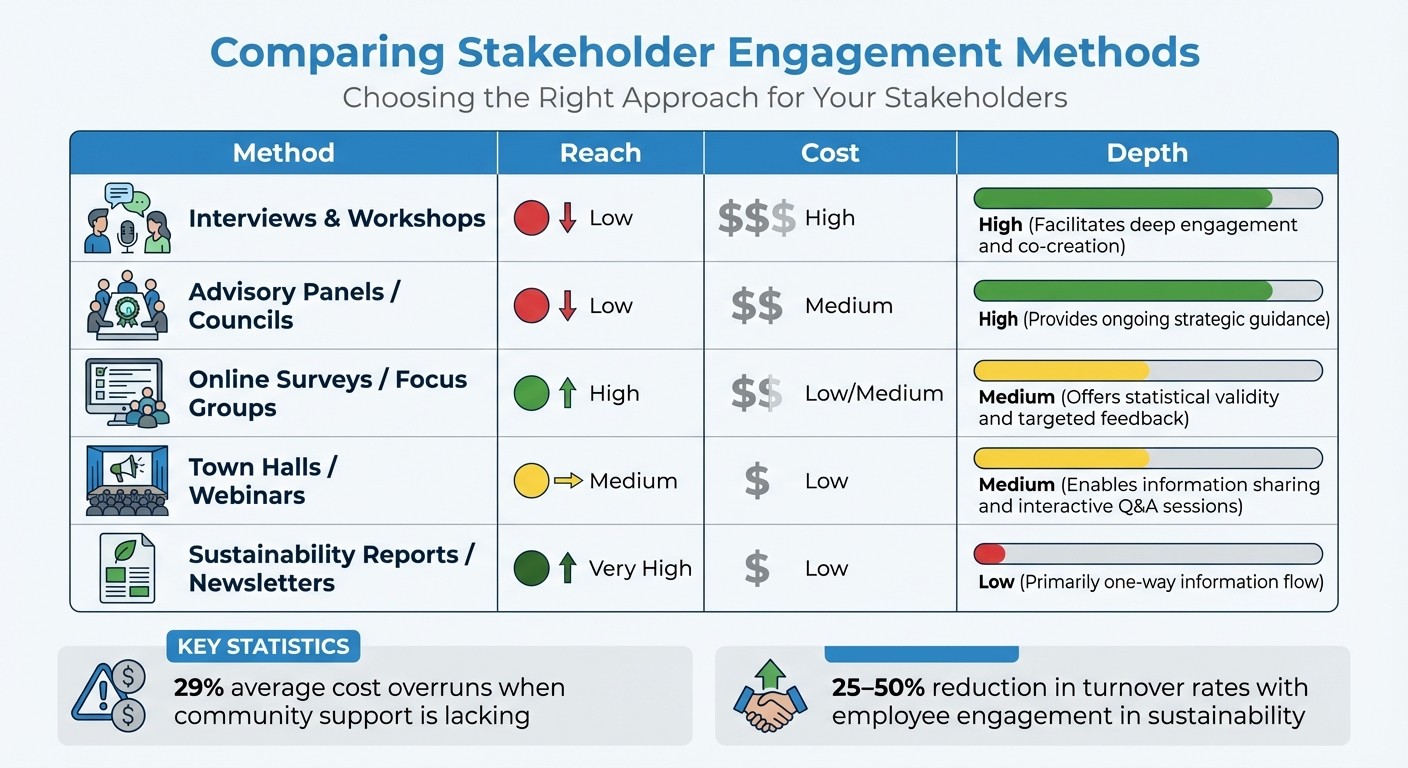
Stakeholder Engagement Methods Comparison: Reach, Cost, and Depth Analysis
When companies effectively engage their stakeholders, the benefits ripple far beyond regulatory compliance. Engagement can drive measurable improvements across environmental, social, and economic dimensions, from advancing decarbonization efforts to bolstering community resilience. Selecting the right engagement methods and tracking their impact at multiple levels are key to achieving these outcomes. This builds on the earlier discussion of tactical execution and monitoring frameworks.
Comparing Engagement Methods
Different engagement methods vary in terms of their reach, cost, and depth. The choice of approach depends on the specific stakeholder group and the intended outcomes. High-influence stakeholders often require more intensive and collaborative methods, while broader audiences can be effectively engaged through lower-cost channels.
Method | Reach | Cost | Depth |
|---|---|---|---|
Interviews & Workshops | Low | High | High (Facilitates deep engagement and co-creation) |
Advisory Panels / Councils | Low | Medium | High (Provides ongoing strategic guidance) |
Online Surveys / Focus Groups | High | Low/Medium | Medium (Offers statistical validity and targeted feedback) |
Town Halls / Webinars | Medium | Low | Medium (Enables information sharing and interactive Q&A sessions) |
Sustainability Reports / Newsletters | Very High | Low | Low (Primarily one-way information flow) |
Tailoring these methods to specific objectives is critical. For instance, failing to secure community support can lead to average cost overruns of 29% [3]. On the other hand, organizations that actively involve employees in sustainability initiatives report a 25–50% reduction in turnover rates [5].
However, selecting the right engagement method is only part of the equation. Measuring the impact of these efforts is equally important to achieve broader, system-wide change.
Delivering System-Level Results
Stakeholder engagement generates value across an organization, but understanding that value requires a layered approach to measurement. This involves tracking:
Process Metrics: Metrics like participant diversity and engagement frequency help assess the inclusivity and consistency of efforts.
Outcome Metrics: These measure tangible changes, such as shifts in community well-being or sentiment.
Systemic Metrics: Broader indicators, such as how stakeholder input influences capital allocation or strategic decision-making.
This multi-tiered approach highlights how stakeholder engagement can shape not just individual projects but also the organization's overarching strategic direction.
Data underscores the importance of this work: 85% of companies view stakeholder engagement as essential for identifying and managing sustainability risks [5]. As Council Fire Resources explains:
"Social license to operate is not a bureaucratic formality - it is a material risk factor that investors increasingly price into valuations" [3].
This perspective is echoed by major investors like BlackRock, which has explicitly cited community impact as a factor in proxy voting decisions starting in 2025 [3]. These trends demonstrate how stakeholder engagement is becoming a critical driver of both organizational success and long-term sustainability.
Conclusion
Engaging community stakeholders isn't just about meeting requirements - it's a key driver of operational success and long-term growth. Forward-thinking companies go beyond compliance, forming genuine partnerships that involve communities as active participants in shaping business strategies.
This shift depends on three core practices: mapping stakeholders effectively, maintaining open and transparent communication that values input, and creating shared value that extends beyond traditional top-down philanthropy.
The importance of this approach is underscored by major investors like BlackRock, who now consider community impact in their proxy voting decisions. This evolution has elevated stakeholder engagement from a secondary sustainability concern to a central business priority [3]. To meet these expectations, companies need robust systems for engagement - a need that Council Fire addresses by integrating stakeholder insights into double materiality assessments, designing processes that meet assurance standards, and delivering impact analyses that turn stakeholder feedback into actionable, measurable outcomes [2][3].
To take the first steps, begin by identifying key stakeholders, fostering early and consistent communication, and embedding engagement into your operations rather than confining it to sustainability teams. With these strategies, businesses can move from isolated efforts to a comprehensive, community-driven approach. This method not only helps avoid delays and spot emerging risks but also uncovers collaborative opportunities that go beyond what traditional research methods can achieve [2].
FAQs
Where do I start if I don’t know who all the key stakeholders are?
To craft an effective stakeholder engagement plan, begin by mapping out all groups tied to your organization’s activities. Break these stakeholders into two main categories: internal stakeholders, such as employees and leadership, and external stakeholders, which might include local communities, regulatory bodies, and NGOs. Conduct thorough research to ensure no relevant party is overlooked, even those that may not be immediately apparent. This comprehensive approach will help align stakeholder relationships with your broader sustainability objectives.
How can we prove stakeholder engagement is reducing risk and cost?
Stakeholder engagement plays a crucial role in minimizing risks and cutting costs by addressing sustainability-related challenges proactively. Building strong relationships with stakeholders helps avoid issues like expensive project delays, legal disputes, or harm to an organization's reputation. Moreover, adhering to regulatory frameworks such as the SEC's climate disclosure rules offers tangible proof of meaningful collaboration. This alignment not only demonstrates how stakeholder feedback contributes to managing risks but also highlights its impact on reducing overall expenses.
How do we handle conflict when stakeholders disagree on priorities?
Resolving conflicts when stakeholders have differing priorities calls for a thoughtful and structured approach. Start by fostering open communication and practicing active listening to ensure all voices are heard. Identifying shared values can help create common ground and align goals more effectively.
A step-by-step method can guide the process:
Awareness: Recognize the conflict and bring it to light.
Assessment: Understand the root causes and perspectives involved.
Acknowledgment: Validate all viewpoints to build mutual respect.
Action: Collaboratively develop solutions that address the key concerns.
Analysis: Review the outcomes to ensure fairness and progress.
Throughout this process, building trust and maintaining transparency are crucial. These efforts can transform disagreements into opportunities for collaboration, paving the way for deeper understanding and stronger partnerships.
Related Blog Posts
Latest Articles
©2025

Narrative Change and Power Building: The Missing Half of Advocacy
Narrative change is the process of disrupting dominant narratives that normalize inequity and advancing new narratives from historically marginalized communities.

Funding Resilience Without Federal Grants
BRIC is unreliable and FEMA is shrinking. Here's how cities fund climate resilience with dedicated revenue, blended finance, and a coordinating authority.

The ESG Blind Spot: How AI Is Finding Risks in Companies Nobody Else Is Watching
Norway's sovereign wealth fund uses AI to screen 7,200 portfolio companies for forced labor and corruption within 24 hours. The real story is the emerging-market coverage gap that traditional ESG data vendors miss — and what it means for any company with a global supply chain.
Narrative Change and Power Building: The Missing Half of Advocacy
Narrative change is the process of disrupting dominant narratives that normalize inequity and advancing new narratives from historically marginalized communities.
Funding Resilience Without Federal Grants
BRIC is unreliable and FEMA is shrinking. Here's how cities fund climate resilience with dedicated revenue, blended finance, and a coordinating authority.
The ESG Blind Spot: How AI Is Finding Risks in Companies Nobody Else Is Watching
Norway's sovereign wealth fund uses AI to screen 7,200 portfolio companies for forced labor and corruption within 24 hours. The real story is the emerging-market coverage gap that traditional ESG data vendors miss — and what it means for any company with a global supply chain.
FAQ
01
What does it really mean to “redefine profit”?
02
What makes Council Fire different?
03
Who does Council Fire work with?
04
What does working with Council Fire actually look like?
05
How does Council Fire help organizations turn big goals into action?
06
How does Council Fire define and measure success?
Apr 6, 2026
How to Mobilize Community Stakeholders Around Sustainability Goals for Corporations
Sustainability Strategy
In This Article
Practical steps to map, engage, and partner with community stakeholders to meet sustainability goals and reduce project risks.
How to Mobilize Community Stakeholders Around Sustainability Goals for Corporations
Engaging community stakeholders is key to achieving corporate sustainability goals. Without their involvement, companies face risks like project delays, higher costs, and reputational damage. Here’s how to turn community members into active collaborators:
Identify Stakeholders: Map groups impacted by or influencing your operations, including employees, residents, NGOs, and regulators.
Understand Priorities: Use surveys and interviews to learn what matters most to stakeholders. Focus on shared concerns and risks.
Create an Engagement Plan: Set clear goals, timelines, and outreach methods like town halls, advisory panels, and newsletters.
Build Trust: Maintain transparency by showing how stakeholder feedback shapes decisions. Regular updates and open communication are critical.
Form Partnerships: Collaborate with local organizations and co-create initiatives to align corporate goals with community needs.
This approach not only reduces risks but also builds stronger relationships and ensures long-term success. Companies prioritizing stakeholder engagement report fewer disruptions, faster project growth, and improved financial performance.
Identifying and Understanding Key Community Stakeholders
Mapping Stakeholders
Engaging the right people in your community starts with knowing who they are. Mapping your stakeholders involves identifying all groups that either influence or are influenced by your operations. These typically fall into four categories:
Internal stakeholders: Employees and board members
Value chain partners: Suppliers and customers
Financial stakeholders: Investors and lenders
Community stakeholders: Local residents, NGOs, regulators, and Indigenous peoples [1][2]
It's essential to include not just supporters but also critics, marginalized groups, and those negatively affected by your actions. Research highlights that 70% of cross-functional initiatives fail due to poor stakeholder management, not flawed strategies [6]. Tools such as social impact assessments, demographic studies, and power-interest matrices can help uncover less visible but equally important stakeholders [3][6].
Once identified, stakeholders should be prioritized based on four key criteria:
Influence: Their ability to shape your strategy
Impact: How your operations affect them
Urgency: Time-sensitive issues they face
Dependency: How much they rely on your organization [1]
A 2x2 matrix categorizing stakeholders by Influence and Impact can guide your engagement approach. For example:
Tier 1 stakeholders (high influence, high impact): Engage deeply through one-on-one interviews and advisory panels.
Tier 2 stakeholders: Consult actively via surveys and focus groups.
Tier 3 stakeholders: Keep informed with updates through newsletters and reports [1].
After mapping, take the time to understand their priorities to craft meaningful engagement strategies.
Assessing Stakeholder Priorities
Once stakeholders are mapped, the next step is understanding what matters most to them. As Michael Wheeler, Professor at Harvard Business School, puts it:
"Negotiation is, among other things, a process of exploration and discovery. And that discovery begins with rigorous analysis of all parties involved" [6].
This means digging into each stakeholder group's values, acceptable trade-offs, and areas where leverage exists [6]. Structured interviews and surveys are valuable tools here. For interviews, use guides that explore critical sustainability topics and potential risks over the next five years [1]. Surveys should aim for a 30% response rate, with completion times kept under 15 minutes to maintain interest [1].
To make sense of the feedback, apply qualitative coding to identify common themes, alignments, and areas of disagreement [1][2]. Focus on groups most directly impacted by your operations rather than distant associations [2]. Before rolling out surveys or interviews widely, test them with a small sample to ensure they’re effective. Finally, close the loop by showing stakeholders how their input shaped your sustainability strategy [1][2].
Stakeholder Engagement 5 Tips Every Sustainability Leader Must Know
Creating a Stakeholder Engagement Plan
Understanding your stakeholders and what matters most to them is just the beginning. The next step is crafting a structured plan that transforms these insights into meaningful action. A well-thought-out engagement plan connects your sustainability goals with community priorities, ensuring both parties benefit from the collaboration. Below, we’ll explore how to set clear goals, choose the right outreach methods, and leverage Council Fire's expertise to create an effective and actionable plan.
Setting Engagement Goals and Timelines
Start by defining clear, actionable objectives - steer away from vague aspirations like "communicating with stakeholders." Instead, focus on goals such as gathering input for a materiality assessment, aligning your sustainability strategy with community concerns, or identifying potential risks before they escalate [1][2]. For instance, research shows that extractive industry projects without strong community support often face cost overruns averaging 29% [3].
A 12-month engagement cycle can help keep efforts organized and focused:
Months 1–2: Stakeholder mapping and planning.
Months 3–5: Active engagement, such as surveys or workshops.
Months 6–7: Analyzing findings and integrating them into your materiality assessment.
Months 8–9: Updating strategies and closing the loop with stakeholders.
Months 10–12: Ongoing monitoring and adjustments.
If you’re deploying surveys, allow 4–6 weeks for design and analysis, and schedule executive interviews 3–4 weeks in advance to accommodate busy schedules [1]. Many organizations complete initial engagement efforts in 3–6 months, but more comprehensive cycles tied to materiality assessments should recur every 2–3 years. For high-priority stakeholders, annual check-ins are recommended [1].
Selecting Outreach Methods
The outreach methods you choose should align with the importance and influence of your stakeholders. For Tier 1 stakeholders - those with the highest influence and impact - consider deeper engagement through one-on-one interviews, advisory panels, co-design workshops, or site visits. Tier 2 stakeholders can be reached through online surveys, focus groups, roundtable discussions, or town halls, while Tier 3 stakeholders may only require updates via sustainability reports, newsletters, or digital channels like social media [1].
Community stakeholders often benefit from town halls and participatory workshops, which foster meaningful dialogue. Local advisory panels can provide ongoing input. In cases where direct access is difficult, such as with workers in global supply chains, partnering with trusted intermediaries like NGOs or trade unions can help [2][7]. Data shows that companies excelling in stakeholder relations experience 25% fewer operational disruptions caused by social or environmental conflicts compared to those lagging in this area [7].
Accessibility is another critical factor. Provide materials in multiple languages and formats - whether in-person, over the phone, or online - to reach diverse and marginalized groups [1][2]. Keep surveys short (under 15 minutes) to encourage completion and aim for a response rate of 30% or higher for statistical relevance [1]. Combining quantitative methods, like surveys, with qualitative approaches, like focus groups, can uncover deeper insights. Make sure to incorporate feedback loops to share outcomes with stakeholders, as failing to report back can erode trust. Finally, maintain a centralized engagement log to track dates, participants, topics, and outcomes. This documentation supports regulatory requirements such as GRI 2-29 and CSRD compliance [1][2].
Using Council Fire's Consulting Services
For organizations looking to take their engagement plans to the next level, Council Fire offers expert consulting services that blend strategic planning with measurable outcomes. Their team specializes in designing engagement programs that integrate stakeholder perspectives into double materiality assessments while ensuring compliance with frameworks like CSRD and GRI [2].
Council Fire's services include facilitating co-design workshops, analyzing survey data, and creating structured plans that deliver real results - not just surface-level reporting. Their approach ties stakeholder input to broader sustainability goals, helping organizations build trust and form lasting partnerships. With their support, companies can not only meet compliance standards but also create meaningful, long-term value for all stakeholders involved.
Building Trust Through Clear Communication
Building trust hinges on clear and meaningful communication that aligns your sustainability strategy with community priorities. Trust isn’t built through formal reports alone - it’s earned by showing stakeholders that their voices genuinely shape your decisions. The key to successful engagement often lies in closing the loop - demonstrating how stakeholder input directly influenced your strategy and materiality assessment [1][2]. Without this, engagement risks becoming an extractive process that damages trust rather than strengthening it.
"Failing to close the loop is the fastest way to destroy engagement quality in future cycles. Stakeholders who feel ignored won't participate again." - Council Fire Resources [1]
When stakeholders don’t see how their input matters or can’t grasp your sustainability vision, they disengage. Companies that prioritize transparency see stakeholder trust improve by 30% [4]. By clearly articulating your goals and progress, you pave the way for stronger partnerships and collaboration.
Sharing a Clear Vision
For sustainability goals to resonate, they must be communicated in ways that align with the priorities of different groups. Investors often prefer data-backed reports with financial insights, while local communities respond better to storytelling and visuals that illustrate tangible outcomes [5].
Building genuine connections requires emotional intelligence. Instead of presenting a rigid agenda, ask questions like, "What would a successful partnership look like for you?" This approach uncovers shared priorities and fosters collaboration. For example, Unilever’s integration of community feedback into product development and sourcing decisions led to its "Sustainable Living" brands growing 69% faster than other parts of its portfolio over a decade ending around 2020 [3].
Clarity and specificity are crucial. Avoid vague statements like, "We want to reduce our environmental footprint." Instead, share measurable goals: "We aim to cut carbon emissions by 15% by December 2027, and here’s how your input will help us achieve that." Adding visual elements like charts, infographics, and timelines improves understanding by 80% [4]. Providing these materials in multiple languages and formats can further boost participation by up to 50% [4].
Providing Regular Updates
Consistency in communication builds trust. Stakeholders left "in the dark" often lose interest and disengage. Establish a structured update schedule - quarterly updates often work well - and stick to it [4]. Organizations that maintain ongoing dialogue report a 23% improvement in project performance [4].
A hybrid communication approach works best. Combine digital tools like newsletters and online portals with in-person interactions like town halls and workshops. This blend can increase engagement rates by 30% [4]. Track the effectiveness of your updates by monitoring email open rates and website traffic, and adjust your methods based on what resonates most with your audience [4].
Transparency is about more than just celebrating successes. Share setbacks too, along with your plans to address them. For instance, Anglo American’s "Social Way 3.0" framework requires its operations to co-create community development plans with local stakeholders, monitored through independently verified KPIs [3]. This level of openness helps transform communities into active partners rather than passive observers.
Sustained transparency empowers stakeholders to play an active role in shaping outcomes, fostering a sense of shared purpose.
Encouraging Stakeholder Ownership
People are more committed to initiatives they’ve helped shape. Transition stakeholders from passive recipients of information to active participants in decision-making. This shift fosters emotional connections and long-term commitment [6].
Early involvement is essential. Engage stakeholders before major decisions are finalized. When their input visibly shapes outcomes, they feel a sense of ownership. On the other hand, engagement that feels like a checkbox exercise - conducted after decisions are already made - can erode trust [2].
Be upfront about which suggestions can and cannot be implemented. Explain why certain ideas were adopted and why others weren’t. This honesty shows respect for stakeholder input, even when not every recommendation is actionable. A striking example is the "Tira o Pé da Minha Serra" campaign in Minas Gerais, Brazil, where local residents and environmentalists mobilized through petitions and a manifesto. Their efforts led to the temporary suspension of a mining license that threatened the Atlantic Forest in May 2022 [7].
Establish accessible channels for ongoing input, like surveys, suggestion boxes, and digital forums. Aim for at least 60% of participants to feel their contributions are valued [4]. For communities significantly impacted by operations, consider applying Free, Prior, and Informed Consent (FPIC) principles - not just for Indigenous groups but for any affected community [3]. In February 2026, a coalition of 35 organizations formed a regional climate compact, unlocking $280 million in coordinated investment, showcasing the power of shared ownership [1].
It’s worth noting that 85% of companies report that stakeholder engagement helps them better identify and manage sustainability risks [5]. The key is making stakeholders feel like partners in tackling these challenges, not mere subjects of them.
Forming Partnerships for Maximum Impact
Establishing partnerships built on trust and transparent communication fosters deeper collaboration and measurable progress in sustainability efforts. These alliances create shared value by aligning priorities and crafting solutions together [3]. Beyond ethical considerations, this approach also makes financial sense - projects that lack community backing often face average cost overruns of 29% [3].
Partnering with Local Organizations
The first step is to identify local nonprofits, advocacy groups, and community-based organizations that align with your sustainability goals. These groups bring invaluable local knowledge, enhancing your engagement strategies [3].
When approaching potential partners, communicate your objectives clearly and be upfront about what you’re asking of them. To connect with harder-to-reach communities, consider working through trusted intermediaries like established NGOs or trade unions [1][2].
"Community engagement flips this dynamic, positioning communities as partners who co-define priorities and co-design solutions." - Council Fire [3]
It’s also essential to fairly compensate community partners for their time and resources. This practice not only shows respect but also lays the groundwork for lasting, meaningful relationships rather than one-off, transactional interactions [1].
Co-Creating Initiatives with Stakeholders
True co-creation involves engaging community stakeholders before decisions are finalized. This ensures their input shapes project outcomes from the start [2]. For instance, Anglo American’s "Social Way 3.0" framework requires all operations to develop community development plans collaboratively with local stakeholders, with progress tracked through independently verified KPIs [3]. This method fosters accountability and shared ownership while tackling challenges such as climate resilience, workforce development, and sustainable supply chains.
Unilever offers another compelling example. Its "Sustainable Living" brands incorporated community feedback directly into product development and sourcing strategies. Over a decade, these brands grew 69% faster than the rest of the company’s portfolio [3]. Similarly, in February 2026, a coalition of 35 organizations formed a regional climate compact through collaborative planning, unlocking $280 million in coordinated investment [1][2].
To ensure inclusive engagement, account for language barriers, limited digital access, and cultural differences [2]. Employ skilled, external facilitators to encourage open dialogue and maintain thorough documentation [1][2]. For projects impacting Indigenous communities or those facing significant operational effects, adhering to FPIC (Free, Prior, and Informed Consent) principles is crucial [3].
Once co-created initiatives are underway, the next step is to measure their impact effectively.
Using Council Fire's Impact Analysis
Council Fire’s impact analysis tools help organizations quantify the results of community partnerships using Social Return on Investment (SROI) methodologies [3]. These tools convert qualitative feedback into measurable data, meeting both community expectations and the demands of investors. This is especially important as financial institutions like BlackRock and MSCI increasingly factor community relations into ESG evaluations [3].
The analysis integrates findings into a double materiality matrix, focusing on tangible business outcomes rather than superficial metrics [3]. It also generates centralized logs and documentation needed for compliance with frameworks like CSRD and GRI, ensuring the partnership’s impact is auditable [3].
"Social license to operate is not a bureaucratic formality - it is a material risk factor that investors increasingly price into valuations." - Council Fire [3]
Council Fire combines sentiment analysis with long-term well-being surveys to build a robust evidence base for partnership success [3]. This allows companies to demonstrate to both community stakeholders and investors that these partnerships are not mere public relations efforts. Instead, they are strategic assets that minimize risks, open up new opportunities, and deliver measurable sustainability results aligned with corporate objectives.
Implementing Tactics and Monitoring Progress
Building strong partnerships is just the beginning - success depends on how well you execute engagement strategies and monitor their outcomes. The key is tailoring your approach to match the influence and impact of each stakeholder. For example, high-influence groups like local government officials or major community organizations demand more intensive efforts, such as co-design workshops, advisory panels, or one-on-one interviews. On the other hand, lower-influence groups can stay updated through newsletters, social media, or sustainability reports [1].
Executing Engagement Tactics
Execution begins with thoughtful planning and accessible methods. Schedule surveys and executive interviews well ahead of time to ensure participation [1]. Keep online surveys concise - under 15 minutes - and aim for at least a 30% response rate [1]. For community forums and workshops, enlist trained facilitators, as poor facilitation often leads to subpar results [1].
Be mindful of barriers that could limit participation. Offer materials in multiple languages, provide both digital and in-person options, and respect cultural norms that may influence communication styles [2]. If direct engagement with stakeholders in your supply chain is challenging, collaborate with credible intermediaries like NGOs, trade unions, or academic experts [2]. Establish grievance mechanisms to enable ongoing, two-way communication [3].
Once these tactics are implemented, the focus shifts to assessing their effectiveness.
Tracking and Measuring Impact
Monitoring progress requires tracking three key dimensions:
Process metrics: Examples include the number of meetings or workshops conducted.
Outcome metrics: These measure tangible changes, such as improvements in community health or economic conditions.
Systemic metrics: This evaluates how stakeholder feedback has influenced corporate strategies [3].
Keep detailed records of participants, dates, methods, and outcomes. This documentation is critical for meeting reporting standards like CSRD and GRI [1][2].
Transparency is equally important. Share results with stakeholders, highlighting how their input shaped decisions. As Council Fire emphasizes:
"Failing to close the loop is the fastest way to destroy engagement quality in future cycles. Stakeholders who feel ignored won't participate again" [1].
Analyze qualitative feedback systematically to identify recurring themes or areas of disagreement [1][2]. Use sentiment analysis and long-term well-being surveys to track your social license to operate, helping you address potential risks before they escalate [3].
These insights should feed into a broader strategy rooted in systems thinking.
Using Systems Thinking for Long-Term Success
Council Fire advocates for a systems-thinking approach to ensure sustainability goals are achievable by addressing how stakeholder needs are interconnected [1]. Incorporate community feedback into broader strategies, such as environmental assessments, workforce development, and procurement planning [3]. This creates a continuous feedback loop where stakeholder priorities directly influence corporate decisions.
While full engagement cycles tied to materiality assessments typically occur every 2–3 years, annual check-ins with key stakeholders can help maintain relationships and identify emerging concerns early [1]. This ongoing dialogue transforms stakeholder engagement from a routine task into a strategic advantage, helping to minimize risks, uncover opportunities, and deliver tangible results that align with both community priorities and business objectives.
Achieving Measurable Sustainability Outcomes
Stakeholder Engagement Methods Comparison: Reach, Cost, and Depth Analysis
When companies effectively engage their stakeholders, the benefits ripple far beyond regulatory compliance. Engagement can drive measurable improvements across environmental, social, and economic dimensions, from advancing decarbonization efforts to bolstering community resilience. Selecting the right engagement methods and tracking their impact at multiple levels are key to achieving these outcomes. This builds on the earlier discussion of tactical execution and monitoring frameworks.
Comparing Engagement Methods
Different engagement methods vary in terms of their reach, cost, and depth. The choice of approach depends on the specific stakeholder group and the intended outcomes. High-influence stakeholders often require more intensive and collaborative methods, while broader audiences can be effectively engaged through lower-cost channels.
Method | Reach | Cost | Depth |
|---|---|---|---|
Interviews & Workshops | Low | High | High (Facilitates deep engagement and co-creation) |
Advisory Panels / Councils | Low | Medium | High (Provides ongoing strategic guidance) |
Online Surveys / Focus Groups | High | Low/Medium | Medium (Offers statistical validity and targeted feedback) |
Town Halls / Webinars | Medium | Low | Medium (Enables information sharing and interactive Q&A sessions) |
Sustainability Reports / Newsletters | Very High | Low | Low (Primarily one-way information flow) |
Tailoring these methods to specific objectives is critical. For instance, failing to secure community support can lead to average cost overruns of 29% [3]. On the other hand, organizations that actively involve employees in sustainability initiatives report a 25–50% reduction in turnover rates [5].
However, selecting the right engagement method is only part of the equation. Measuring the impact of these efforts is equally important to achieve broader, system-wide change.
Delivering System-Level Results
Stakeholder engagement generates value across an organization, but understanding that value requires a layered approach to measurement. This involves tracking:
Process Metrics: Metrics like participant diversity and engagement frequency help assess the inclusivity and consistency of efforts.
Outcome Metrics: These measure tangible changes, such as shifts in community well-being or sentiment.
Systemic Metrics: Broader indicators, such as how stakeholder input influences capital allocation or strategic decision-making.
This multi-tiered approach highlights how stakeholder engagement can shape not just individual projects but also the organization's overarching strategic direction.
Data underscores the importance of this work: 85% of companies view stakeholder engagement as essential for identifying and managing sustainability risks [5]. As Council Fire Resources explains:
"Social license to operate is not a bureaucratic formality - it is a material risk factor that investors increasingly price into valuations" [3].
This perspective is echoed by major investors like BlackRock, which has explicitly cited community impact as a factor in proxy voting decisions starting in 2025 [3]. These trends demonstrate how stakeholder engagement is becoming a critical driver of both organizational success and long-term sustainability.
Conclusion
Engaging community stakeholders isn't just about meeting requirements - it's a key driver of operational success and long-term growth. Forward-thinking companies go beyond compliance, forming genuine partnerships that involve communities as active participants in shaping business strategies.
This shift depends on three core practices: mapping stakeholders effectively, maintaining open and transparent communication that values input, and creating shared value that extends beyond traditional top-down philanthropy.
The importance of this approach is underscored by major investors like BlackRock, who now consider community impact in their proxy voting decisions. This evolution has elevated stakeholder engagement from a secondary sustainability concern to a central business priority [3]. To meet these expectations, companies need robust systems for engagement - a need that Council Fire addresses by integrating stakeholder insights into double materiality assessments, designing processes that meet assurance standards, and delivering impact analyses that turn stakeholder feedback into actionable, measurable outcomes [2][3].
To take the first steps, begin by identifying key stakeholders, fostering early and consistent communication, and embedding engagement into your operations rather than confining it to sustainability teams. With these strategies, businesses can move from isolated efforts to a comprehensive, community-driven approach. This method not only helps avoid delays and spot emerging risks but also uncovers collaborative opportunities that go beyond what traditional research methods can achieve [2].
FAQs
Where do I start if I don’t know who all the key stakeholders are?
To craft an effective stakeholder engagement plan, begin by mapping out all groups tied to your organization’s activities. Break these stakeholders into two main categories: internal stakeholders, such as employees and leadership, and external stakeholders, which might include local communities, regulatory bodies, and NGOs. Conduct thorough research to ensure no relevant party is overlooked, even those that may not be immediately apparent. This comprehensive approach will help align stakeholder relationships with your broader sustainability objectives.
How can we prove stakeholder engagement is reducing risk and cost?
Stakeholder engagement plays a crucial role in minimizing risks and cutting costs by addressing sustainability-related challenges proactively. Building strong relationships with stakeholders helps avoid issues like expensive project delays, legal disputes, or harm to an organization's reputation. Moreover, adhering to regulatory frameworks such as the SEC's climate disclosure rules offers tangible proof of meaningful collaboration. This alignment not only demonstrates how stakeholder feedback contributes to managing risks but also highlights its impact on reducing overall expenses.
How do we handle conflict when stakeholders disagree on priorities?
Resolving conflicts when stakeholders have differing priorities calls for a thoughtful and structured approach. Start by fostering open communication and practicing active listening to ensure all voices are heard. Identifying shared values can help create common ground and align goals more effectively.
A step-by-step method can guide the process:
Awareness: Recognize the conflict and bring it to light.
Assessment: Understand the root causes and perspectives involved.
Acknowledgment: Validate all viewpoints to build mutual respect.
Action: Collaboratively develop solutions that address the key concerns.
Analysis: Review the outcomes to ensure fairness and progress.
Throughout this process, building trust and maintaining transparency are crucial. These efforts can transform disagreements into opportunities for collaboration, paving the way for deeper understanding and stronger partnerships.
Related Blog Posts
Latest Articles
©2025
Narrative Change and Power Building: The Missing Half of Advocacy
Narrative change is the process of disrupting dominant narratives that normalize inequity and advancing new narratives from historically marginalized communities.
Funding Resilience Without Federal Grants
BRIC is unreliable and FEMA is shrinking. Here's how cities fund climate resilience with dedicated revenue, blended finance, and a coordinating authority.
The ESG Blind Spot: How AI Is Finding Risks in Companies Nobody Else Is Watching
Norway's sovereign wealth fund uses AI to screen 7,200 portfolio companies for forced labor and corruption within 24 hours. The real story is the emerging-market coverage gap that traditional ESG data vendors miss — and what it means for any company with a global supply chain.
FAQ
01
What does it really mean to “redefine profit”?
02
What makes Council Fire different?
03
Who does Council Fire work with?
04
What does working with Council Fire actually look like?
05
How does Council Fire help organizations turn big goals into action?
06
How does Council Fire define and measure success?
Apr 6, 2026
How to Mobilize Community Stakeholders Around Sustainability Goals for Corporations
Sustainability Strategy
In This Article
Practical steps to map, engage, and partner with community stakeholders to meet sustainability goals and reduce project risks.
How to Mobilize Community Stakeholders Around Sustainability Goals for Corporations
Engaging community stakeholders is key to achieving corporate sustainability goals. Without their involvement, companies face risks like project delays, higher costs, and reputational damage. Here’s how to turn community members into active collaborators:
Identify Stakeholders: Map groups impacted by or influencing your operations, including employees, residents, NGOs, and regulators.
Understand Priorities: Use surveys and interviews to learn what matters most to stakeholders. Focus on shared concerns and risks.
Create an Engagement Plan: Set clear goals, timelines, and outreach methods like town halls, advisory panels, and newsletters.
Build Trust: Maintain transparency by showing how stakeholder feedback shapes decisions. Regular updates and open communication are critical.
Form Partnerships: Collaborate with local organizations and co-create initiatives to align corporate goals with community needs.
This approach not only reduces risks but also builds stronger relationships and ensures long-term success. Companies prioritizing stakeholder engagement report fewer disruptions, faster project growth, and improved financial performance.
Identifying and Understanding Key Community Stakeholders
Mapping Stakeholders
Engaging the right people in your community starts with knowing who they are. Mapping your stakeholders involves identifying all groups that either influence or are influenced by your operations. These typically fall into four categories:
Internal stakeholders: Employees and board members
Value chain partners: Suppliers and customers
Financial stakeholders: Investors and lenders
Community stakeholders: Local residents, NGOs, regulators, and Indigenous peoples [1][2]
It's essential to include not just supporters but also critics, marginalized groups, and those negatively affected by your actions. Research highlights that 70% of cross-functional initiatives fail due to poor stakeholder management, not flawed strategies [6]. Tools such as social impact assessments, demographic studies, and power-interest matrices can help uncover less visible but equally important stakeholders [3][6].
Once identified, stakeholders should be prioritized based on four key criteria:
Influence: Their ability to shape your strategy
Impact: How your operations affect them
Urgency: Time-sensitive issues they face
Dependency: How much they rely on your organization [1]
A 2x2 matrix categorizing stakeholders by Influence and Impact can guide your engagement approach. For example:
Tier 1 stakeholders (high influence, high impact): Engage deeply through one-on-one interviews and advisory panels.
Tier 2 stakeholders: Consult actively via surveys and focus groups.
Tier 3 stakeholders: Keep informed with updates through newsletters and reports [1].
After mapping, take the time to understand their priorities to craft meaningful engagement strategies.
Assessing Stakeholder Priorities
Once stakeholders are mapped, the next step is understanding what matters most to them. As Michael Wheeler, Professor at Harvard Business School, puts it:
"Negotiation is, among other things, a process of exploration and discovery. And that discovery begins with rigorous analysis of all parties involved" [6].
This means digging into each stakeholder group's values, acceptable trade-offs, and areas where leverage exists [6]. Structured interviews and surveys are valuable tools here. For interviews, use guides that explore critical sustainability topics and potential risks over the next five years [1]. Surveys should aim for a 30% response rate, with completion times kept under 15 minutes to maintain interest [1].
To make sense of the feedback, apply qualitative coding to identify common themes, alignments, and areas of disagreement [1][2]. Focus on groups most directly impacted by your operations rather than distant associations [2]. Before rolling out surveys or interviews widely, test them with a small sample to ensure they’re effective. Finally, close the loop by showing stakeholders how their input shaped your sustainability strategy [1][2].
Stakeholder Engagement 5 Tips Every Sustainability Leader Must Know
Creating a Stakeholder Engagement Plan
Understanding your stakeholders and what matters most to them is just the beginning. The next step is crafting a structured plan that transforms these insights into meaningful action. A well-thought-out engagement plan connects your sustainability goals with community priorities, ensuring both parties benefit from the collaboration. Below, we’ll explore how to set clear goals, choose the right outreach methods, and leverage Council Fire's expertise to create an effective and actionable plan.
Setting Engagement Goals and Timelines
Start by defining clear, actionable objectives - steer away from vague aspirations like "communicating with stakeholders." Instead, focus on goals such as gathering input for a materiality assessment, aligning your sustainability strategy with community concerns, or identifying potential risks before they escalate [1][2]. For instance, research shows that extractive industry projects without strong community support often face cost overruns averaging 29% [3].
A 12-month engagement cycle can help keep efforts organized and focused:
Months 1–2: Stakeholder mapping and planning.
Months 3–5: Active engagement, such as surveys or workshops.
Months 6–7: Analyzing findings and integrating them into your materiality assessment.
Months 8–9: Updating strategies and closing the loop with stakeholders.
Months 10–12: Ongoing monitoring and adjustments.
If you’re deploying surveys, allow 4–6 weeks for design and analysis, and schedule executive interviews 3–4 weeks in advance to accommodate busy schedules [1]. Many organizations complete initial engagement efforts in 3–6 months, but more comprehensive cycles tied to materiality assessments should recur every 2–3 years. For high-priority stakeholders, annual check-ins are recommended [1].
Selecting Outreach Methods
The outreach methods you choose should align with the importance and influence of your stakeholders. For Tier 1 stakeholders - those with the highest influence and impact - consider deeper engagement through one-on-one interviews, advisory panels, co-design workshops, or site visits. Tier 2 stakeholders can be reached through online surveys, focus groups, roundtable discussions, or town halls, while Tier 3 stakeholders may only require updates via sustainability reports, newsletters, or digital channels like social media [1].
Community stakeholders often benefit from town halls and participatory workshops, which foster meaningful dialogue. Local advisory panels can provide ongoing input. In cases where direct access is difficult, such as with workers in global supply chains, partnering with trusted intermediaries like NGOs or trade unions can help [2][7]. Data shows that companies excelling in stakeholder relations experience 25% fewer operational disruptions caused by social or environmental conflicts compared to those lagging in this area [7].
Accessibility is another critical factor. Provide materials in multiple languages and formats - whether in-person, over the phone, or online - to reach diverse and marginalized groups [1][2]. Keep surveys short (under 15 minutes) to encourage completion and aim for a response rate of 30% or higher for statistical relevance [1]. Combining quantitative methods, like surveys, with qualitative approaches, like focus groups, can uncover deeper insights. Make sure to incorporate feedback loops to share outcomes with stakeholders, as failing to report back can erode trust. Finally, maintain a centralized engagement log to track dates, participants, topics, and outcomes. This documentation supports regulatory requirements such as GRI 2-29 and CSRD compliance [1][2].
Using Council Fire's Consulting Services
For organizations looking to take their engagement plans to the next level, Council Fire offers expert consulting services that blend strategic planning with measurable outcomes. Their team specializes in designing engagement programs that integrate stakeholder perspectives into double materiality assessments while ensuring compliance with frameworks like CSRD and GRI [2].
Council Fire's services include facilitating co-design workshops, analyzing survey data, and creating structured plans that deliver real results - not just surface-level reporting. Their approach ties stakeholder input to broader sustainability goals, helping organizations build trust and form lasting partnerships. With their support, companies can not only meet compliance standards but also create meaningful, long-term value for all stakeholders involved.
Building Trust Through Clear Communication
Building trust hinges on clear and meaningful communication that aligns your sustainability strategy with community priorities. Trust isn’t built through formal reports alone - it’s earned by showing stakeholders that their voices genuinely shape your decisions. The key to successful engagement often lies in closing the loop - demonstrating how stakeholder input directly influenced your strategy and materiality assessment [1][2]. Without this, engagement risks becoming an extractive process that damages trust rather than strengthening it.
"Failing to close the loop is the fastest way to destroy engagement quality in future cycles. Stakeholders who feel ignored won't participate again." - Council Fire Resources [1]
When stakeholders don’t see how their input matters or can’t grasp your sustainability vision, they disengage. Companies that prioritize transparency see stakeholder trust improve by 30% [4]. By clearly articulating your goals and progress, you pave the way for stronger partnerships and collaboration.
Sharing a Clear Vision
For sustainability goals to resonate, they must be communicated in ways that align with the priorities of different groups. Investors often prefer data-backed reports with financial insights, while local communities respond better to storytelling and visuals that illustrate tangible outcomes [5].
Building genuine connections requires emotional intelligence. Instead of presenting a rigid agenda, ask questions like, "What would a successful partnership look like for you?" This approach uncovers shared priorities and fosters collaboration. For example, Unilever’s integration of community feedback into product development and sourcing decisions led to its "Sustainable Living" brands growing 69% faster than other parts of its portfolio over a decade ending around 2020 [3].
Clarity and specificity are crucial. Avoid vague statements like, "We want to reduce our environmental footprint." Instead, share measurable goals: "We aim to cut carbon emissions by 15% by December 2027, and here’s how your input will help us achieve that." Adding visual elements like charts, infographics, and timelines improves understanding by 80% [4]. Providing these materials in multiple languages and formats can further boost participation by up to 50% [4].
Providing Regular Updates
Consistency in communication builds trust. Stakeholders left "in the dark" often lose interest and disengage. Establish a structured update schedule - quarterly updates often work well - and stick to it [4]. Organizations that maintain ongoing dialogue report a 23% improvement in project performance [4].
A hybrid communication approach works best. Combine digital tools like newsletters and online portals with in-person interactions like town halls and workshops. This blend can increase engagement rates by 30% [4]. Track the effectiveness of your updates by monitoring email open rates and website traffic, and adjust your methods based on what resonates most with your audience [4].
Transparency is about more than just celebrating successes. Share setbacks too, along with your plans to address them. For instance, Anglo American’s "Social Way 3.0" framework requires its operations to co-create community development plans with local stakeholders, monitored through independently verified KPIs [3]. This level of openness helps transform communities into active partners rather than passive observers.
Sustained transparency empowers stakeholders to play an active role in shaping outcomes, fostering a sense of shared purpose.
Encouraging Stakeholder Ownership
People are more committed to initiatives they’ve helped shape. Transition stakeholders from passive recipients of information to active participants in decision-making. This shift fosters emotional connections and long-term commitment [6].
Early involvement is essential. Engage stakeholders before major decisions are finalized. When their input visibly shapes outcomes, they feel a sense of ownership. On the other hand, engagement that feels like a checkbox exercise - conducted after decisions are already made - can erode trust [2].
Be upfront about which suggestions can and cannot be implemented. Explain why certain ideas were adopted and why others weren’t. This honesty shows respect for stakeholder input, even when not every recommendation is actionable. A striking example is the "Tira o Pé da Minha Serra" campaign in Minas Gerais, Brazil, where local residents and environmentalists mobilized through petitions and a manifesto. Their efforts led to the temporary suspension of a mining license that threatened the Atlantic Forest in May 2022 [7].
Establish accessible channels for ongoing input, like surveys, suggestion boxes, and digital forums. Aim for at least 60% of participants to feel their contributions are valued [4]. For communities significantly impacted by operations, consider applying Free, Prior, and Informed Consent (FPIC) principles - not just for Indigenous groups but for any affected community [3]. In February 2026, a coalition of 35 organizations formed a regional climate compact, unlocking $280 million in coordinated investment, showcasing the power of shared ownership [1].
It’s worth noting that 85% of companies report that stakeholder engagement helps them better identify and manage sustainability risks [5]. The key is making stakeholders feel like partners in tackling these challenges, not mere subjects of them.
Forming Partnerships for Maximum Impact
Establishing partnerships built on trust and transparent communication fosters deeper collaboration and measurable progress in sustainability efforts. These alliances create shared value by aligning priorities and crafting solutions together [3]. Beyond ethical considerations, this approach also makes financial sense - projects that lack community backing often face average cost overruns of 29% [3].
Partnering with Local Organizations
The first step is to identify local nonprofits, advocacy groups, and community-based organizations that align with your sustainability goals. These groups bring invaluable local knowledge, enhancing your engagement strategies [3].
When approaching potential partners, communicate your objectives clearly and be upfront about what you’re asking of them. To connect with harder-to-reach communities, consider working through trusted intermediaries like established NGOs or trade unions [1][2].
"Community engagement flips this dynamic, positioning communities as partners who co-define priorities and co-design solutions." - Council Fire [3]
It’s also essential to fairly compensate community partners for their time and resources. This practice not only shows respect but also lays the groundwork for lasting, meaningful relationships rather than one-off, transactional interactions [1].
Co-Creating Initiatives with Stakeholders
True co-creation involves engaging community stakeholders before decisions are finalized. This ensures their input shapes project outcomes from the start [2]. For instance, Anglo American’s "Social Way 3.0" framework requires all operations to develop community development plans collaboratively with local stakeholders, with progress tracked through independently verified KPIs [3]. This method fosters accountability and shared ownership while tackling challenges such as climate resilience, workforce development, and sustainable supply chains.
Unilever offers another compelling example. Its "Sustainable Living" brands incorporated community feedback directly into product development and sourcing strategies. Over a decade, these brands grew 69% faster than the rest of the company’s portfolio [3]. Similarly, in February 2026, a coalition of 35 organizations formed a regional climate compact through collaborative planning, unlocking $280 million in coordinated investment [1][2].
To ensure inclusive engagement, account for language barriers, limited digital access, and cultural differences [2]. Employ skilled, external facilitators to encourage open dialogue and maintain thorough documentation [1][2]. For projects impacting Indigenous communities or those facing significant operational effects, adhering to FPIC (Free, Prior, and Informed Consent) principles is crucial [3].
Once co-created initiatives are underway, the next step is to measure their impact effectively.
Using Council Fire's Impact Analysis
Council Fire’s impact analysis tools help organizations quantify the results of community partnerships using Social Return on Investment (SROI) methodologies [3]. These tools convert qualitative feedback into measurable data, meeting both community expectations and the demands of investors. This is especially important as financial institutions like BlackRock and MSCI increasingly factor community relations into ESG evaluations [3].
The analysis integrates findings into a double materiality matrix, focusing on tangible business outcomes rather than superficial metrics [3]. It also generates centralized logs and documentation needed for compliance with frameworks like CSRD and GRI, ensuring the partnership’s impact is auditable [3].
"Social license to operate is not a bureaucratic formality - it is a material risk factor that investors increasingly price into valuations." - Council Fire [3]
Council Fire combines sentiment analysis with long-term well-being surveys to build a robust evidence base for partnership success [3]. This allows companies to demonstrate to both community stakeholders and investors that these partnerships are not mere public relations efforts. Instead, they are strategic assets that minimize risks, open up new opportunities, and deliver measurable sustainability results aligned with corporate objectives.
Implementing Tactics and Monitoring Progress
Building strong partnerships is just the beginning - success depends on how well you execute engagement strategies and monitor their outcomes. The key is tailoring your approach to match the influence and impact of each stakeholder. For example, high-influence groups like local government officials or major community organizations demand more intensive efforts, such as co-design workshops, advisory panels, or one-on-one interviews. On the other hand, lower-influence groups can stay updated through newsletters, social media, or sustainability reports [1].
Executing Engagement Tactics
Execution begins with thoughtful planning and accessible methods. Schedule surveys and executive interviews well ahead of time to ensure participation [1]. Keep online surveys concise - under 15 minutes - and aim for at least a 30% response rate [1]. For community forums and workshops, enlist trained facilitators, as poor facilitation often leads to subpar results [1].
Be mindful of barriers that could limit participation. Offer materials in multiple languages, provide both digital and in-person options, and respect cultural norms that may influence communication styles [2]. If direct engagement with stakeholders in your supply chain is challenging, collaborate with credible intermediaries like NGOs, trade unions, or academic experts [2]. Establish grievance mechanisms to enable ongoing, two-way communication [3].
Once these tactics are implemented, the focus shifts to assessing their effectiveness.
Tracking and Measuring Impact
Monitoring progress requires tracking three key dimensions:
Process metrics: Examples include the number of meetings or workshops conducted.
Outcome metrics: These measure tangible changes, such as improvements in community health or economic conditions.
Systemic metrics: This evaluates how stakeholder feedback has influenced corporate strategies [3].
Keep detailed records of participants, dates, methods, and outcomes. This documentation is critical for meeting reporting standards like CSRD and GRI [1][2].
Transparency is equally important. Share results with stakeholders, highlighting how their input shaped decisions. As Council Fire emphasizes:
"Failing to close the loop is the fastest way to destroy engagement quality in future cycles. Stakeholders who feel ignored won't participate again" [1].
Analyze qualitative feedback systematically to identify recurring themes or areas of disagreement [1][2]. Use sentiment analysis and long-term well-being surveys to track your social license to operate, helping you address potential risks before they escalate [3].
These insights should feed into a broader strategy rooted in systems thinking.
Using Systems Thinking for Long-Term Success
Council Fire advocates for a systems-thinking approach to ensure sustainability goals are achievable by addressing how stakeholder needs are interconnected [1]. Incorporate community feedback into broader strategies, such as environmental assessments, workforce development, and procurement planning [3]. This creates a continuous feedback loop where stakeholder priorities directly influence corporate decisions.
While full engagement cycles tied to materiality assessments typically occur every 2–3 years, annual check-ins with key stakeholders can help maintain relationships and identify emerging concerns early [1]. This ongoing dialogue transforms stakeholder engagement from a routine task into a strategic advantage, helping to minimize risks, uncover opportunities, and deliver tangible results that align with both community priorities and business objectives.
Achieving Measurable Sustainability Outcomes
Stakeholder Engagement Methods Comparison: Reach, Cost, and Depth Analysis
When companies effectively engage their stakeholders, the benefits ripple far beyond regulatory compliance. Engagement can drive measurable improvements across environmental, social, and economic dimensions, from advancing decarbonization efforts to bolstering community resilience. Selecting the right engagement methods and tracking their impact at multiple levels are key to achieving these outcomes. This builds on the earlier discussion of tactical execution and monitoring frameworks.
Comparing Engagement Methods
Different engagement methods vary in terms of their reach, cost, and depth. The choice of approach depends on the specific stakeholder group and the intended outcomes. High-influence stakeholders often require more intensive and collaborative methods, while broader audiences can be effectively engaged through lower-cost channels.
Method | Reach | Cost | Depth |
|---|---|---|---|
Interviews & Workshops | Low | High | High (Facilitates deep engagement and co-creation) |
Advisory Panels / Councils | Low | Medium | High (Provides ongoing strategic guidance) |
Online Surveys / Focus Groups | High | Low/Medium | Medium (Offers statistical validity and targeted feedback) |
Town Halls / Webinars | Medium | Low | Medium (Enables information sharing and interactive Q&A sessions) |
Sustainability Reports / Newsletters | Very High | Low | Low (Primarily one-way information flow) |
Tailoring these methods to specific objectives is critical. For instance, failing to secure community support can lead to average cost overruns of 29% [3]. On the other hand, organizations that actively involve employees in sustainability initiatives report a 25–50% reduction in turnover rates [5].
However, selecting the right engagement method is only part of the equation. Measuring the impact of these efforts is equally important to achieve broader, system-wide change.
Delivering System-Level Results
Stakeholder engagement generates value across an organization, but understanding that value requires a layered approach to measurement. This involves tracking:
Process Metrics: Metrics like participant diversity and engagement frequency help assess the inclusivity and consistency of efforts.
Outcome Metrics: These measure tangible changes, such as shifts in community well-being or sentiment.
Systemic Metrics: Broader indicators, such as how stakeholder input influences capital allocation or strategic decision-making.
This multi-tiered approach highlights how stakeholder engagement can shape not just individual projects but also the organization's overarching strategic direction.
Data underscores the importance of this work: 85% of companies view stakeholder engagement as essential for identifying and managing sustainability risks [5]. As Council Fire Resources explains:
"Social license to operate is not a bureaucratic formality - it is a material risk factor that investors increasingly price into valuations" [3].
This perspective is echoed by major investors like BlackRock, which has explicitly cited community impact as a factor in proxy voting decisions starting in 2025 [3]. These trends demonstrate how stakeholder engagement is becoming a critical driver of both organizational success and long-term sustainability.
Conclusion
Engaging community stakeholders isn't just about meeting requirements - it's a key driver of operational success and long-term growth. Forward-thinking companies go beyond compliance, forming genuine partnerships that involve communities as active participants in shaping business strategies.
This shift depends on three core practices: mapping stakeholders effectively, maintaining open and transparent communication that values input, and creating shared value that extends beyond traditional top-down philanthropy.
The importance of this approach is underscored by major investors like BlackRock, who now consider community impact in their proxy voting decisions. This evolution has elevated stakeholder engagement from a secondary sustainability concern to a central business priority [3]. To meet these expectations, companies need robust systems for engagement - a need that Council Fire addresses by integrating stakeholder insights into double materiality assessments, designing processes that meet assurance standards, and delivering impact analyses that turn stakeholder feedback into actionable, measurable outcomes [2][3].
To take the first steps, begin by identifying key stakeholders, fostering early and consistent communication, and embedding engagement into your operations rather than confining it to sustainability teams. With these strategies, businesses can move from isolated efforts to a comprehensive, community-driven approach. This method not only helps avoid delays and spot emerging risks but also uncovers collaborative opportunities that go beyond what traditional research methods can achieve [2].
FAQs
Where do I start if I don’t know who all the key stakeholders are?
To craft an effective stakeholder engagement plan, begin by mapping out all groups tied to your organization’s activities. Break these stakeholders into two main categories: internal stakeholders, such as employees and leadership, and external stakeholders, which might include local communities, regulatory bodies, and NGOs. Conduct thorough research to ensure no relevant party is overlooked, even those that may not be immediately apparent. This comprehensive approach will help align stakeholder relationships with your broader sustainability objectives.
How can we prove stakeholder engagement is reducing risk and cost?
Stakeholder engagement plays a crucial role in minimizing risks and cutting costs by addressing sustainability-related challenges proactively. Building strong relationships with stakeholders helps avoid issues like expensive project delays, legal disputes, or harm to an organization's reputation. Moreover, adhering to regulatory frameworks such as the SEC's climate disclosure rules offers tangible proof of meaningful collaboration. This alignment not only demonstrates how stakeholder feedback contributes to managing risks but also highlights its impact on reducing overall expenses.
How do we handle conflict when stakeholders disagree on priorities?
Resolving conflicts when stakeholders have differing priorities calls for a thoughtful and structured approach. Start by fostering open communication and practicing active listening to ensure all voices are heard. Identifying shared values can help create common ground and align goals more effectively.
A step-by-step method can guide the process:
Awareness: Recognize the conflict and bring it to light.
Assessment: Understand the root causes and perspectives involved.
Acknowledgment: Validate all viewpoints to build mutual respect.
Action: Collaboratively develop solutions that address the key concerns.
Analysis: Review the outcomes to ensure fairness and progress.
Throughout this process, building trust and maintaining transparency are crucial. These efforts can transform disagreements into opportunities for collaboration, paving the way for deeper understanding and stronger partnerships.
Related Blog Posts
Latest Articles
©2025
Narrative Change and Power Building: The Missing Half of Advocacy
Narrative change is the process of disrupting dominant narratives that normalize inequity and advancing new narratives from historically marginalized communities.
Funding Resilience Without Federal Grants
BRIC is unreliable and FEMA is shrinking. Here's how cities fund climate resilience with dedicated revenue, blended finance, and a coordinating authority.
The ESG Blind Spot: How AI Is Finding Risks in Companies Nobody Else Is Watching
Norway's sovereign wealth fund uses AI to screen 7,200 portfolio companies for forced labor and corruption within 24 hours. The real story is the emerging-market coverage gap that traditional ESG data vendors miss — and what it means for any company with a global supply chain.
FAQ
What does it really mean to “redefine profit”?
What makes Council Fire different?
Who does Council Fire work with?
What does working with Council Fire actually look like?
How does Council Fire help organizations turn big goals into action?
How does Council Fire define and measure success?