
May 6, 2026
How to Design a Stakeholder Engagement Strategy That Builds Trust for Foundations & Philanthropic Organizations
Capacity Building
In This Article
Six practical steps for foundations to build trust through transparent, inclusive stakeholder engagement and measurable feedback.
How to Design a Stakeholder Engagement Strategy That Builds Trust for Foundations & Philanthropic Organizations
Building trust through stakeholder engagement requires clear goals, inclusive practices, and actionable steps. Foundations often fail to involve communities meaningfully, leading to skepticism and poor outcomes. This guide outlines how to create a strategy that prioritizes transparency, collaboration, and accountability.
Start with Clear Goals: Define specific objectives like forming advisory boards or addressing community priorities. Use measurable metrics to track progress.
Prioritize Stakeholders: Identify key groups, including those most affected by your work. Use tools like stakeholder mapping to ensure no voices are overlooked.
Understand Needs: Engage stakeholders through surveys, interviews, and workshops. Address barriers like language or accessibility, and fairly compensate participants.
Develop a Plan: Tailor communication methods to each group, ranging from newsletters to participatory budgeting. Close the feedback loop by sharing how input shaped decisions.
Act with Consistency: Build relationships through early, personal engagement. Show respect for community expertise and remove logistical barriers.
Evaluate and Improve: Use metrics to monitor participation, satisfaction, and long-term impact. Regularly update strategies based on feedback.
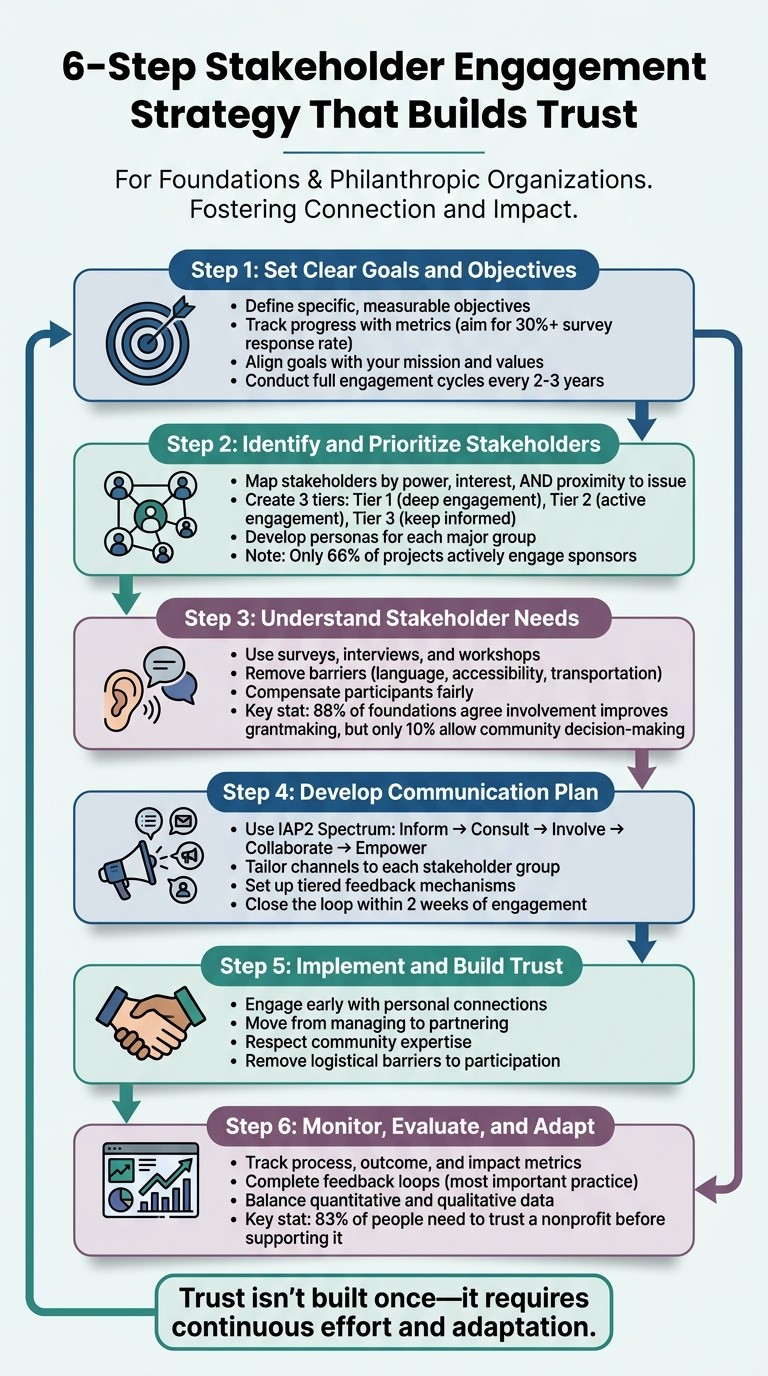
6-Step Stakeholder Engagement Strategy for Foundations
Stakeholder Engagement & Strategy Design for Nonprofits with Jessica Whatley
Step 1: Set Clear Goals and Objectives
Effective engagement begins with well-defined, actionable objectives that foster trust. Broad, vague goals like "gathering community input" often lack direction and measurable outcomes. Instead, focus on specific, targeted objectives such as "identifying investor ESG data priorities for the next reporting cycle" [7] or "forming a Community Advisory Board of 12 residents by Q3 to co-develop program criteria" [4].
Clear objectives not only promote accountability but also make it easier to track progress. For instance, when the Council on Foundations unveiled its 20-year strategic plan in 2021, it set precise goals for 2040, such as ensuring philanthropy leaders reflect the diversity of their communities and normalizing power-sharing practices. The plan's first phase concluded in 2025, with lessons being incorporated to refine strategies for the next phase [1].
Define Success Metrics
To measure stakeholder engagement effectively, use a mix of quantitative and qualitative metrics. For surveys, aim for at least a 30% response rate to ensure meaningful data [7]. Keep surveys concise - under 15 minutes - to encourage completion, and use consistent rating scales (e.g., 1–5 or 1–10) to enable year-over-year comparisons [7].
Equally important is qualitative feedback. Organize interview and focus group responses to identify recurring themes and potential risks [7]. Track whether stakeholder input has influenced your final strategy - this "closing the loop" process is essential for maintaining trust. As Council Fire Resources emphasizes:
"Failing to close the loop is the fastest way to destroy engagement quality in future cycles. Stakeholders who feel ignored won't participate again" [7].
Full engagement cycles tied to materiality assessments should occur every 2–3 years, with annual check-ins for high-priority stakeholders [7]. This approach balances the need for fresh insights with the time required to build meaningful relationships. With clear, measurable objectives in place, the next step is determining which stakeholders are most essential to your mission.
Align Goals with Your Mission
Your engagement strategy should align closely with your foundation's core values and purpose. This alignment builds trust over the long term. For example, the Walter & Elise Haas Sr. Fund identified four guiding values - family, possibility, shared responsibility, and belonging - which shaped their efforts. Under the leadership of Executive Director Jamie Allison and Board Member Jennifer Haas, they launched the Endeavor Fund, committing $3.5 million annually to seven nonprofits over seven years ($24.5 million total) to address the racial and gender wealth gap [2].
This alignment ensures that engagement goes beyond collecting feedback; it becomes a tool for building social capital and fostering lasting partnerships [3]. As the Council on Foundations explains:
"Trust in philanthropy starts inside organizations. When foundations are clear in their purpose, thoughtful about their practices, and strong in their leadership, they build durable, long-term trust" [1].
When your goals reflect your mission, every interaction becomes an opportunity to showcase your values and strengthen relationships with stakeholders.
Step 2: Identify and Prioritize Stakeholders
After setting clear goals, the next move involves identifying and prioritizing your stakeholders. Start by listing all groups affected by your work as well as those who hold decision-making power. This includes internal stakeholders such as board members, staff, and volunteers, alongside external ones like donors, beneficiaries, government agencies, partner organizations, and media. Be sure to include not just supporters but also critics and those who might be negatively impacted - this helps you avoid blind spots.
It's worth noting that only 66% of projects actively engage sponsors [4]. This highlights the importance of systematic stakeholder identification. Overlooking key voices early on can derail even the best-intentioned initiatives.
Use Stakeholder Mapping Techniques
A common tool for stakeholder analysis is the power-interest grid, which maps stakeholders based on their level of influence and interest. However, this corporate approach often misses a vital factor in philanthropic efforts: proximity to the issue. Drew Giddings, Founder & Principal Consultant at Giddings Consulting Group, emphasizes:
"The people closest to the problem often have the deepest understanding of what solutions will work. Their engagement should be prioritized regardless of their formal power" [4].
By adopting this equity-focused perspective, you ensure that beneficiaries and community members - who may lack formal authority but bring valuable lived experience - are appropriately prioritized. Use this three-dimensional approach to categorize stakeholders into tiers:
Tier 1: High influence and high impact. These stakeholders need deep engagement, such as one-on-one interviews or co-design workshops.
Tier 2: High influence/low impact or low influence/high impact. Engage them actively through focus groups or surveys.
Tier 3: Lower influence and impact. Keep them informed through newsletters or annual reports.
Once you've mapped and prioritized your stakeholders, the next step is to create detailed personas to refine your engagement strategy.
Create Stakeholder Personas
Developing personas for each major stakeholder group helps tailor your engagement efforts. These profiles should highlight specific trust drivers - what each group needs to feel confident in your organization. For example, institutional funders might value detailed progress reports and financial transparency, while individual donors are often moved by emotional stories and personal testimonials. This is critical since 83% of people say they need to trust a nonprofit before offering their support [8].
To build these personas, rely on primary research like surveys and interviews. Identify what drives trust and determine logistical preferences - such as in-person meetings for community elders or digital communication for younger stakeholders. Monitor participation across different demographics, and if you notice underrepresentation, adjust your approach to remove barriers. Lastly, make it clear how stakeholder input has influenced your decisions, reinforcing transparency and trust.
Step 3: Understand Stakeholder Needs and Expectations
Once you've mapped stakeholders and developed personas, the next step is diving into their specific needs. This isn’t just about gathering data - it’s about fostering meaningful relationships that uncover what truly drives, concerns, and impacts the people you aim to serve.
Ineffective communication with stakeholders is a key factor in project failures [4]. Despite 88% of large foundations agreeing that stakeholder involvement improves grantmaking, only 10% actually allow community members to have a say in fund allocation [6]. This disparity highlights a major issue: while input is often solicited, it rarely translates into shared decision-making or action.
To bridge this gap, align your methods of gathering insights with your engagement goals. The IAP2 Spectrum offers a helpful guide: for informative purposes, newsletters might suffice, but deeper collaboration or empowerment calls for more interactive approaches like co-design workshops or participatory budgeting. A great example of this is the William Penn Foundation’s preparation for its 10-year strategy revision in early 2024. They engaged over 1,000 points of contact, including direct conversations with 200 individuals, surveys from 400 grantee organizations, and interviews with 116 stakeholders - spanning nonprofit leaders, advocates, researchers, families, and frontline staff. This effort surfaced key regional priorities, such as health, housing, and climate resilience [9]. Similarly, Chicago Public Schools demonstrated inclusivity by hosting monthly small-group discussions with parent advisory councils before conducting five town hall meetings during their 2025-2026 accountability redesign [4].
Addressing power imbalances is crucial. Remove barriers like lack of childcare, transportation, or language support, and compensate community members for their time and expertise. Treat them as the professionals they are. Drew Giddings, Founder & Principal Consultant at Giddings Consulting Group, emphasizes this point:
"If you ask for input and then ignore it, you have done more damage than if you had never asked" [4].
Equally important is closing the feedback loop. Show stakeholders how their input influenced decisions, and be transparent about why certain suggestions weren’t implemented. This practice fosters trust far more effectively than any written mission statement. Without it, you risk creating a sense of being "studied and ignored", which can severely harm future engagement efforts [4].
Step 4: Develop a Communication and Engagement Plan
Once you've identified the needs of your stakeholders, it's time to craft a communication plan that aligns with their expectations and fosters trust.
Determine Engagement Levels
The IAP2 Spectrum of Public Participation offers a useful guide for aligning your communication strategies with your engagement goals. Each level represents a different degree of interaction:
Inform: Share objective updates through newsletters, annual reports, or dashboards.
Consult: Seek feedback using tools like surveys, focus groups, or listening sessions.
Involve: Actively consider stakeholder concerns through advisory committees or workshops.
Collaborate: Partner with stakeholders via co-design sessions or joint task forces.
Empower: Allow stakeholders to make final decisions through processes like participatory budgeting or resident-led boards.
A real-world example of the "Empower" level is the National Institutes of Health's Community-Led Health Equity Structural Interventions (CHESI) initiative. In this model, community organizations take the lead in planning, implementing, and assessing health programs, while research institutions provide technical support only [4].
Once you've identified the appropriate engagement level, the next step is selecting communication channels that align with these strategies.
Select the Right Communication Channels
Different stakeholder groups require tailored communication methods to ensure effective engagement:
Funders: They prioritize transparency and measurable results, so progress reports and briefings are ideal.
Beneficiaries: They value responsiveness and inclusion, making feedback sessions and advisory boards essential.
Frontline staff: They need clear guidance and a safe space to express concerns, which can be facilitated through anonymous surveys and internal working groups [4][8].
By using channels that resonate with each group, you demonstrate respect for their preferences and build stronger connections.
Set Up Feedback Mechanisms
Gathering input is just the first step - closing the feedback loop is what truly builds trust. Within two weeks of any engagement activity, share a summary with participants that outlines what feedback was received, what changes were made as a result, and what couldn't be changed (with an explanation) [4]. This transparent process encourages ongoing collaboration and trust.
Implement tiered feedback systems to address varying levels of influence. High-impact stakeholders might engage through one-on-one interviews or advisory panels, while mid-tier groups can participate in surveys or roundtables. Broader audiences can stay informed through newsletters and public reports [7].
A great example is the Fund for Shared Insight's $2 million Participatory Climate Initiative. This effort used a "Design Team" and a "Grantmaking Group", both comprised of community members and funders, to guide decision-making. The initiative ultimately provided funding to 35 organizations across the Southeastern U.S., Alaska, and Hawai'i, showcasing how participatory practices can shift power dynamics and cultivate trust [5].
Step 5: Implement and Build Trust Through Action
Once you've laid out a solid communication plan, the next step is to bring it to life through meaningful actions. Trust isn't built on plans alone - it's earned through consistent, intentional execution. The organizations that succeed in fostering trust understand that engagement isn't just a task to check off a list; it's an ongoing commitment to building genuine relationships.
Engage Early and Build Relationships
Start by focusing on personal connections rather than jumping straight into formal surveys or workshops. For example, before hosting larger feedback sessions, prioritize one-on-one meetings with key community leaders. These initial conversations create a strong foundation for collaboration. A great example of this approach comes from Chicago Public Schools in 2024. During their accountability redesign initiative, they held monthly or bimonthly small-group discussions with parent advisory councils and Local School Council members. These meetings were followed by five town halls designed to address community concerns and build trust before introducing any formal proposals [4].
The goal is to move from managing stakeholders to partnering with them. As Jamie Allison and Jennifer C. Haas from the Walter & Elise Haas Sr. Fund explain:
"Our work today requires us to be active, engaged partners, and our relationships are rooted in trust, not control" [2].
This partnership mindset also means recognizing and valuing community expertise. Treat local knowledge with the same respect you'd offer professional consultants, including compensating participants fairly for their time and insights [4].
To ensure everyone can participate, remove logistical barriers. Offer childcare, transportation, meals, and translation services as needed. Provide multiple ways to engage - through in-person meetings, virtual sessions, or even asynchronous options for those with scheduling conflicts. Keep an eye on who is participating, and if certain groups are underrepresented, adjust your outreach strategy promptly [4].
By focusing on early, relationship-driven engagement, you set the stage for trust-building initiatives that are both effective and inclusive.
Use Tailored Trust-Building Activities
Transparency in operations is a powerful way to build trust. In 2024, the Walter & Elise Haas Sr. Fund demonstrated this through their "Endeavor Fund", which allocated $3.5 million to each of seven nonprofits led by people of color over seven years, totaling $24.5 million. What stood out was how they reduced administrative burdens for grantees. The foundation's director of administration conducted the necessary financial assessments, allowing grantees to use those reports for their own internal needs. This approach showed respect for grantees' time while supporting their missions [2].
Creating spaces for honest feedback is equally important. Foundation staff can lead by example by openly discussing their own missteps or where their assumptions fell short. Replace vague internal "expectations" with clear, co-created "Agreements" that outline roles, responsibilities, and decision-making processes. This clarity fosters mutual understanding and strengthens the partnership [3].
Step 6: Monitor, Evaluate, and Adapt the Strategy
Once trust-building actions are in motion, the next step is to ensure your strategy stays effective through careful monitoring and evaluation. Trust isn’t something you achieve once and then move on - it requires continuous effort, follow-through, and adaptability. The difference between a strategy that strengthens relationships and one that fosters skepticism often lies in your ability to track progress and make adjustments based on what you learn. Regular monitoring helps catch potential issues early, preventing setbacks in trust-building efforts [4]. These practices reinforce earlier actions by promoting accountability and ensuring consistent improvement.
Set Clear Metrics
To measure engagement effectively, focus on three types of metrics:
Process metrics: These assess the mechanics of your engagement efforts, such as the diversity of stakeholder participation, the completion of feedback loops, and overall inclusivity.
Outcome metrics: These capture immediate results, like stakeholder satisfaction levels, the number of program changes influenced by feedback, and benchmarks for trust levels.
Impact metrics: These evaluate long-term effects, such as shifts in community indicators and the durability of partnerships over time [4].
Your metrics should align with your strategy. For example, measure how far your message reaches and its clarity when informing stakeholders, while tracking changes in decision-making authority when empowering them [4]. Keep in mind that 83% of individuals say they need to trust a nonprofit before they’ll offer support [8]. This makes tracking trust indicators a critical part of sustaining your organization.
Use Stakeholder Feedback
One of the most vital metrics for trust-building is your feedback loop completion rate. Drew Giddings, Founder & Principal Consultant at Giddings Consulting Group, emphasizes the importance of this practice:
"Closing the loop is the single most important - and most frequently neglected - practice. Organizations that close the loop build trust. Organizations that do not train their stakeholders to stop showing up" [4].
But what does closing the loop entail? The Ford Foundation provides a clear example. In June 2025, they published results from their biennial Grantee Perception Survey, conducted in partnership with the Center for Effective Philanthropy. Acting on earlier feedback, leaders like Bess Rothenberg and Martín Abregu had implemented the Building Institutions and Networks (BUILD) initiative, offering multiyear general operating support. The 2025 survey revealed that these changes led to the foundation receiving its highest-ever ratings for impact on grantees' fields and organizations [10].
To build trust, balance quantitative data - such as survey scores and participation rates - with qualitative insights from personal stories and testimonials. Track demographic participation to uncover underrepresented groups and adjust outreach efforts as needed. Share a feedback summary with stakeholders within two weeks, highlighting key findings and actions taken [4]. Finally, document all commitments and maintain detailed records to ensure accountability, even during staff transitions.
Conclusion
Engaging stakeholders effectively requires more than just a checklist - it demands an ongoing commitment to building relationships, fostering transparency, and sharing power. The six steps in this guide offer a direction, but the real transformation happens when organizations stop viewing stakeholders as variables to manage and start seeing them as genuine partners who bring valuable expertise to the table.
This approach isn’t just theoretical; it directly influences the success of projects. When stakes are high, precision matters: poor communication with stakeholders can derail initiatives, while prioritizing collaboration and feedback can lead to meaningful, lasting results.
Building internal trust is a critical starting point. As the Council on Foundations highlights, having a clear purpose and strong leadership establishes lasting credibility [1]. This internal alignment lays the groundwork for external trust. When policies, ethical practices, and leadership diversity reflect the communities you serve, stakeholders see authenticity in action. For philanthropic organizations, bridging the gap between internal values and external actions is essential for addressing power imbalances and cultivating true partnerships with communities.
While 88% of large foundations agree that stakeholder involvement enhances grantmaking, only 10% currently empower communities to make decisions [6]. This disparity is both a challenge and an opportunity. Foundations that adopt participatory budgeting, resident-led boards, and shared decision-making are paving the way for the future of philanthropy.
FAQs
How do we know which stakeholders to engage first?
To figure out which stakeholders to engage first, begin by mapping them out and ranking them according to their interest and influence. Pay particular attention to those who have both high influence and a strong interest, especially if they are closely tied to your goals or play a role in decision-making. Grouping stakeholders into categories - such as champions, neutrals, or detractors - can help you pinpoint the most critical players and ensure your engagement efforts build trust and make a meaningful impact right from the beginning.
What does “closing the feedback loop” look like in practice?
"Closing the feedback loop" refers to the practice of sharing feedback results with stakeholders and explaining how their input influenced decisions or actions. For instance, funders could express gratitude to grantees for their feedback, present survey results, and organize discussions to examine the findings together. This approach relies on clear communication, recognizing stakeholders' contributions, and showing concrete actions taken in response to their input. By doing so, it fosters trust and reinforces accountability.
How can we share decision-making power without losing accountability?
Sharing decision-making power while ensuring accountability involves creating open and inclusive systems. Using participatory methods, such as participatory grantmaking, allows stakeholders to have a voice in decisions. At the same time, it's important to establish clear structures for accountability. Strengthen relational accountability by demonstrating how stakeholder feedback influences outcomes. To build trust and transparency, set clear objectives, maintain regular communication, and consistently honor commitments. These practices help balance shared decision-making with the need for organizational responsibility.
Related Blog Posts
Latest Articles
©2025

Narrative Change and Power Building: The Missing Half of Advocacy
Narrative change is the process of disrupting dominant narratives that normalize inequity and advancing new narratives from historically marginalized communities.

Funding Resilience Without Federal Grants
BRIC is unreliable and FEMA is shrinking. Here's how cities fund climate resilience with dedicated revenue, blended finance, and a coordinating authority.

The ESG Blind Spot: How AI Is Finding Risks in Companies Nobody Else Is Watching
Norway's sovereign wealth fund uses AI to screen 7,200 portfolio companies for forced labor and corruption within 24 hours. The real story is the emerging-market coverage gap that traditional ESG data vendors miss — and what it means for any company with a global supply chain.
Narrative Change and Power Building: The Missing Half of Advocacy
Narrative change is the process of disrupting dominant narratives that normalize inequity and advancing new narratives from historically marginalized communities.
Funding Resilience Without Federal Grants
BRIC is unreliable and FEMA is shrinking. Here's how cities fund climate resilience with dedicated revenue, blended finance, and a coordinating authority.
The ESG Blind Spot: How AI Is Finding Risks in Companies Nobody Else Is Watching
Norway's sovereign wealth fund uses AI to screen 7,200 portfolio companies for forced labor and corruption within 24 hours. The real story is the emerging-market coverage gap that traditional ESG data vendors miss — and what it means for any company with a global supply chain.
FAQ
01
What does it really mean to “redefine profit”?
02
What makes Council Fire different?
03
Who does Council Fire work with?
04
What does working with Council Fire actually look like?
05
How does Council Fire help organizations turn big goals into action?
06
How does Council Fire define and measure success?
May 6, 2026
How to Design a Stakeholder Engagement Strategy That Builds Trust for Foundations & Philanthropic Organizations
Capacity Building
In This Article
Six practical steps for foundations to build trust through transparent, inclusive stakeholder engagement and measurable feedback.
How to Design a Stakeholder Engagement Strategy That Builds Trust for Foundations & Philanthropic Organizations
Building trust through stakeholder engagement requires clear goals, inclusive practices, and actionable steps. Foundations often fail to involve communities meaningfully, leading to skepticism and poor outcomes. This guide outlines how to create a strategy that prioritizes transparency, collaboration, and accountability.
Start with Clear Goals: Define specific objectives like forming advisory boards or addressing community priorities. Use measurable metrics to track progress.
Prioritize Stakeholders: Identify key groups, including those most affected by your work. Use tools like stakeholder mapping to ensure no voices are overlooked.
Understand Needs: Engage stakeholders through surveys, interviews, and workshops. Address barriers like language or accessibility, and fairly compensate participants.
Develop a Plan: Tailor communication methods to each group, ranging from newsletters to participatory budgeting. Close the feedback loop by sharing how input shaped decisions.
Act with Consistency: Build relationships through early, personal engagement. Show respect for community expertise and remove logistical barriers.
Evaluate and Improve: Use metrics to monitor participation, satisfaction, and long-term impact. Regularly update strategies based on feedback.
6-Step Stakeholder Engagement Strategy for Foundations
Stakeholder Engagement & Strategy Design for Nonprofits with Jessica Whatley
Step 1: Set Clear Goals and Objectives
Effective engagement begins with well-defined, actionable objectives that foster trust. Broad, vague goals like "gathering community input" often lack direction and measurable outcomes. Instead, focus on specific, targeted objectives such as "identifying investor ESG data priorities for the next reporting cycle" [7] or "forming a Community Advisory Board of 12 residents by Q3 to co-develop program criteria" [4].
Clear objectives not only promote accountability but also make it easier to track progress. For instance, when the Council on Foundations unveiled its 20-year strategic plan in 2021, it set precise goals for 2040, such as ensuring philanthropy leaders reflect the diversity of their communities and normalizing power-sharing practices. The plan's first phase concluded in 2025, with lessons being incorporated to refine strategies for the next phase [1].
Define Success Metrics
To measure stakeholder engagement effectively, use a mix of quantitative and qualitative metrics. For surveys, aim for at least a 30% response rate to ensure meaningful data [7]. Keep surveys concise - under 15 minutes - to encourage completion, and use consistent rating scales (e.g., 1–5 or 1–10) to enable year-over-year comparisons [7].
Equally important is qualitative feedback. Organize interview and focus group responses to identify recurring themes and potential risks [7]. Track whether stakeholder input has influenced your final strategy - this "closing the loop" process is essential for maintaining trust. As Council Fire Resources emphasizes:
"Failing to close the loop is the fastest way to destroy engagement quality in future cycles. Stakeholders who feel ignored won't participate again" [7].
Full engagement cycles tied to materiality assessments should occur every 2–3 years, with annual check-ins for high-priority stakeholders [7]. This approach balances the need for fresh insights with the time required to build meaningful relationships. With clear, measurable objectives in place, the next step is determining which stakeholders are most essential to your mission.
Align Goals with Your Mission
Your engagement strategy should align closely with your foundation's core values and purpose. This alignment builds trust over the long term. For example, the Walter & Elise Haas Sr. Fund identified four guiding values - family, possibility, shared responsibility, and belonging - which shaped their efforts. Under the leadership of Executive Director Jamie Allison and Board Member Jennifer Haas, they launched the Endeavor Fund, committing $3.5 million annually to seven nonprofits over seven years ($24.5 million total) to address the racial and gender wealth gap [2].
This alignment ensures that engagement goes beyond collecting feedback; it becomes a tool for building social capital and fostering lasting partnerships [3]. As the Council on Foundations explains:
"Trust in philanthropy starts inside organizations. When foundations are clear in their purpose, thoughtful about their practices, and strong in their leadership, they build durable, long-term trust" [1].
When your goals reflect your mission, every interaction becomes an opportunity to showcase your values and strengthen relationships with stakeholders.
Step 2: Identify and Prioritize Stakeholders
After setting clear goals, the next move involves identifying and prioritizing your stakeholders. Start by listing all groups affected by your work as well as those who hold decision-making power. This includes internal stakeholders such as board members, staff, and volunteers, alongside external ones like donors, beneficiaries, government agencies, partner organizations, and media. Be sure to include not just supporters but also critics and those who might be negatively impacted - this helps you avoid blind spots.
It's worth noting that only 66% of projects actively engage sponsors [4]. This highlights the importance of systematic stakeholder identification. Overlooking key voices early on can derail even the best-intentioned initiatives.
Use Stakeholder Mapping Techniques
A common tool for stakeholder analysis is the power-interest grid, which maps stakeholders based on their level of influence and interest. However, this corporate approach often misses a vital factor in philanthropic efforts: proximity to the issue. Drew Giddings, Founder & Principal Consultant at Giddings Consulting Group, emphasizes:
"The people closest to the problem often have the deepest understanding of what solutions will work. Their engagement should be prioritized regardless of their formal power" [4].
By adopting this equity-focused perspective, you ensure that beneficiaries and community members - who may lack formal authority but bring valuable lived experience - are appropriately prioritized. Use this three-dimensional approach to categorize stakeholders into tiers:
Tier 1: High influence and high impact. These stakeholders need deep engagement, such as one-on-one interviews or co-design workshops.
Tier 2: High influence/low impact or low influence/high impact. Engage them actively through focus groups or surveys.
Tier 3: Lower influence and impact. Keep them informed through newsletters or annual reports.
Once you've mapped and prioritized your stakeholders, the next step is to create detailed personas to refine your engagement strategy.
Create Stakeholder Personas
Developing personas for each major stakeholder group helps tailor your engagement efforts. These profiles should highlight specific trust drivers - what each group needs to feel confident in your organization. For example, institutional funders might value detailed progress reports and financial transparency, while individual donors are often moved by emotional stories and personal testimonials. This is critical since 83% of people say they need to trust a nonprofit before offering their support [8].
To build these personas, rely on primary research like surveys and interviews. Identify what drives trust and determine logistical preferences - such as in-person meetings for community elders or digital communication for younger stakeholders. Monitor participation across different demographics, and if you notice underrepresentation, adjust your approach to remove barriers. Lastly, make it clear how stakeholder input has influenced your decisions, reinforcing transparency and trust.
Step 3: Understand Stakeholder Needs and Expectations
Once you've mapped stakeholders and developed personas, the next step is diving into their specific needs. This isn’t just about gathering data - it’s about fostering meaningful relationships that uncover what truly drives, concerns, and impacts the people you aim to serve.
Ineffective communication with stakeholders is a key factor in project failures [4]. Despite 88% of large foundations agreeing that stakeholder involvement improves grantmaking, only 10% actually allow community members to have a say in fund allocation [6]. This disparity highlights a major issue: while input is often solicited, it rarely translates into shared decision-making or action.
To bridge this gap, align your methods of gathering insights with your engagement goals. The IAP2 Spectrum offers a helpful guide: for informative purposes, newsletters might suffice, but deeper collaboration or empowerment calls for more interactive approaches like co-design workshops or participatory budgeting. A great example of this is the William Penn Foundation’s preparation for its 10-year strategy revision in early 2024. They engaged over 1,000 points of contact, including direct conversations with 200 individuals, surveys from 400 grantee organizations, and interviews with 116 stakeholders - spanning nonprofit leaders, advocates, researchers, families, and frontline staff. This effort surfaced key regional priorities, such as health, housing, and climate resilience [9]. Similarly, Chicago Public Schools demonstrated inclusivity by hosting monthly small-group discussions with parent advisory councils before conducting five town hall meetings during their 2025-2026 accountability redesign [4].
Addressing power imbalances is crucial. Remove barriers like lack of childcare, transportation, or language support, and compensate community members for their time and expertise. Treat them as the professionals they are. Drew Giddings, Founder & Principal Consultant at Giddings Consulting Group, emphasizes this point:
"If you ask for input and then ignore it, you have done more damage than if you had never asked" [4].
Equally important is closing the feedback loop. Show stakeholders how their input influenced decisions, and be transparent about why certain suggestions weren’t implemented. This practice fosters trust far more effectively than any written mission statement. Without it, you risk creating a sense of being "studied and ignored", which can severely harm future engagement efforts [4].
Step 4: Develop a Communication and Engagement Plan
Once you've identified the needs of your stakeholders, it's time to craft a communication plan that aligns with their expectations and fosters trust.
Determine Engagement Levels
The IAP2 Spectrum of Public Participation offers a useful guide for aligning your communication strategies with your engagement goals. Each level represents a different degree of interaction:
Inform: Share objective updates through newsletters, annual reports, or dashboards.
Consult: Seek feedback using tools like surveys, focus groups, or listening sessions.
Involve: Actively consider stakeholder concerns through advisory committees or workshops.
Collaborate: Partner with stakeholders via co-design sessions or joint task forces.
Empower: Allow stakeholders to make final decisions through processes like participatory budgeting or resident-led boards.
A real-world example of the "Empower" level is the National Institutes of Health's Community-Led Health Equity Structural Interventions (CHESI) initiative. In this model, community organizations take the lead in planning, implementing, and assessing health programs, while research institutions provide technical support only [4].
Once you've identified the appropriate engagement level, the next step is selecting communication channels that align with these strategies.
Select the Right Communication Channels
Different stakeholder groups require tailored communication methods to ensure effective engagement:
Funders: They prioritize transparency and measurable results, so progress reports and briefings are ideal.
Beneficiaries: They value responsiveness and inclusion, making feedback sessions and advisory boards essential.
Frontline staff: They need clear guidance and a safe space to express concerns, which can be facilitated through anonymous surveys and internal working groups [4][8].
By using channels that resonate with each group, you demonstrate respect for their preferences and build stronger connections.
Set Up Feedback Mechanisms
Gathering input is just the first step - closing the feedback loop is what truly builds trust. Within two weeks of any engagement activity, share a summary with participants that outlines what feedback was received, what changes were made as a result, and what couldn't be changed (with an explanation) [4]. This transparent process encourages ongoing collaboration and trust.
Implement tiered feedback systems to address varying levels of influence. High-impact stakeholders might engage through one-on-one interviews or advisory panels, while mid-tier groups can participate in surveys or roundtables. Broader audiences can stay informed through newsletters and public reports [7].
A great example is the Fund for Shared Insight's $2 million Participatory Climate Initiative. This effort used a "Design Team" and a "Grantmaking Group", both comprised of community members and funders, to guide decision-making. The initiative ultimately provided funding to 35 organizations across the Southeastern U.S., Alaska, and Hawai'i, showcasing how participatory practices can shift power dynamics and cultivate trust [5].
Step 5: Implement and Build Trust Through Action
Once you've laid out a solid communication plan, the next step is to bring it to life through meaningful actions. Trust isn't built on plans alone - it's earned through consistent, intentional execution. The organizations that succeed in fostering trust understand that engagement isn't just a task to check off a list; it's an ongoing commitment to building genuine relationships.
Engage Early and Build Relationships
Start by focusing on personal connections rather than jumping straight into formal surveys or workshops. For example, before hosting larger feedback sessions, prioritize one-on-one meetings with key community leaders. These initial conversations create a strong foundation for collaboration. A great example of this approach comes from Chicago Public Schools in 2024. During their accountability redesign initiative, they held monthly or bimonthly small-group discussions with parent advisory councils and Local School Council members. These meetings were followed by five town halls designed to address community concerns and build trust before introducing any formal proposals [4].
The goal is to move from managing stakeholders to partnering with them. As Jamie Allison and Jennifer C. Haas from the Walter & Elise Haas Sr. Fund explain:
"Our work today requires us to be active, engaged partners, and our relationships are rooted in trust, not control" [2].
This partnership mindset also means recognizing and valuing community expertise. Treat local knowledge with the same respect you'd offer professional consultants, including compensating participants fairly for their time and insights [4].
To ensure everyone can participate, remove logistical barriers. Offer childcare, transportation, meals, and translation services as needed. Provide multiple ways to engage - through in-person meetings, virtual sessions, or even asynchronous options for those with scheduling conflicts. Keep an eye on who is participating, and if certain groups are underrepresented, adjust your outreach strategy promptly [4].
By focusing on early, relationship-driven engagement, you set the stage for trust-building initiatives that are both effective and inclusive.
Use Tailored Trust-Building Activities
Transparency in operations is a powerful way to build trust. In 2024, the Walter & Elise Haas Sr. Fund demonstrated this through their "Endeavor Fund", which allocated $3.5 million to each of seven nonprofits led by people of color over seven years, totaling $24.5 million. What stood out was how they reduced administrative burdens for grantees. The foundation's director of administration conducted the necessary financial assessments, allowing grantees to use those reports for their own internal needs. This approach showed respect for grantees' time while supporting their missions [2].
Creating spaces for honest feedback is equally important. Foundation staff can lead by example by openly discussing their own missteps or where their assumptions fell short. Replace vague internal "expectations" with clear, co-created "Agreements" that outline roles, responsibilities, and decision-making processes. This clarity fosters mutual understanding and strengthens the partnership [3].
Step 6: Monitor, Evaluate, and Adapt the Strategy
Once trust-building actions are in motion, the next step is to ensure your strategy stays effective through careful monitoring and evaluation. Trust isn’t something you achieve once and then move on - it requires continuous effort, follow-through, and adaptability. The difference between a strategy that strengthens relationships and one that fosters skepticism often lies in your ability to track progress and make adjustments based on what you learn. Regular monitoring helps catch potential issues early, preventing setbacks in trust-building efforts [4]. These practices reinforce earlier actions by promoting accountability and ensuring consistent improvement.
Set Clear Metrics
To measure engagement effectively, focus on three types of metrics:
Process metrics: These assess the mechanics of your engagement efforts, such as the diversity of stakeholder participation, the completion of feedback loops, and overall inclusivity.
Outcome metrics: These capture immediate results, like stakeholder satisfaction levels, the number of program changes influenced by feedback, and benchmarks for trust levels.
Impact metrics: These evaluate long-term effects, such as shifts in community indicators and the durability of partnerships over time [4].
Your metrics should align with your strategy. For example, measure how far your message reaches and its clarity when informing stakeholders, while tracking changes in decision-making authority when empowering them [4]. Keep in mind that 83% of individuals say they need to trust a nonprofit before they’ll offer support [8]. This makes tracking trust indicators a critical part of sustaining your organization.
Use Stakeholder Feedback
One of the most vital metrics for trust-building is your feedback loop completion rate. Drew Giddings, Founder & Principal Consultant at Giddings Consulting Group, emphasizes the importance of this practice:
"Closing the loop is the single most important - and most frequently neglected - practice. Organizations that close the loop build trust. Organizations that do not train their stakeholders to stop showing up" [4].
But what does closing the loop entail? The Ford Foundation provides a clear example. In June 2025, they published results from their biennial Grantee Perception Survey, conducted in partnership with the Center for Effective Philanthropy. Acting on earlier feedback, leaders like Bess Rothenberg and Martín Abregu had implemented the Building Institutions and Networks (BUILD) initiative, offering multiyear general operating support. The 2025 survey revealed that these changes led to the foundation receiving its highest-ever ratings for impact on grantees' fields and organizations [10].
To build trust, balance quantitative data - such as survey scores and participation rates - with qualitative insights from personal stories and testimonials. Track demographic participation to uncover underrepresented groups and adjust outreach efforts as needed. Share a feedback summary with stakeholders within two weeks, highlighting key findings and actions taken [4]. Finally, document all commitments and maintain detailed records to ensure accountability, even during staff transitions.
Conclusion
Engaging stakeholders effectively requires more than just a checklist - it demands an ongoing commitment to building relationships, fostering transparency, and sharing power. The six steps in this guide offer a direction, but the real transformation happens when organizations stop viewing stakeholders as variables to manage and start seeing them as genuine partners who bring valuable expertise to the table.
This approach isn’t just theoretical; it directly influences the success of projects. When stakes are high, precision matters: poor communication with stakeholders can derail initiatives, while prioritizing collaboration and feedback can lead to meaningful, lasting results.
Building internal trust is a critical starting point. As the Council on Foundations highlights, having a clear purpose and strong leadership establishes lasting credibility [1]. This internal alignment lays the groundwork for external trust. When policies, ethical practices, and leadership diversity reflect the communities you serve, stakeholders see authenticity in action. For philanthropic organizations, bridging the gap between internal values and external actions is essential for addressing power imbalances and cultivating true partnerships with communities.
While 88% of large foundations agree that stakeholder involvement enhances grantmaking, only 10% currently empower communities to make decisions [6]. This disparity is both a challenge and an opportunity. Foundations that adopt participatory budgeting, resident-led boards, and shared decision-making are paving the way for the future of philanthropy.
FAQs
How do we know which stakeholders to engage first?
To figure out which stakeholders to engage first, begin by mapping them out and ranking them according to their interest and influence. Pay particular attention to those who have both high influence and a strong interest, especially if they are closely tied to your goals or play a role in decision-making. Grouping stakeholders into categories - such as champions, neutrals, or detractors - can help you pinpoint the most critical players and ensure your engagement efforts build trust and make a meaningful impact right from the beginning.
What does “closing the feedback loop” look like in practice?
"Closing the feedback loop" refers to the practice of sharing feedback results with stakeholders and explaining how their input influenced decisions or actions. For instance, funders could express gratitude to grantees for their feedback, present survey results, and organize discussions to examine the findings together. This approach relies on clear communication, recognizing stakeholders' contributions, and showing concrete actions taken in response to their input. By doing so, it fosters trust and reinforces accountability.
How can we share decision-making power without losing accountability?
Sharing decision-making power while ensuring accountability involves creating open and inclusive systems. Using participatory methods, such as participatory grantmaking, allows stakeholders to have a voice in decisions. At the same time, it's important to establish clear structures for accountability. Strengthen relational accountability by demonstrating how stakeholder feedback influences outcomes. To build trust and transparency, set clear objectives, maintain regular communication, and consistently honor commitments. These practices help balance shared decision-making with the need for organizational responsibility.
Related Blog Posts
Latest Articles
©2025
Narrative Change and Power Building: The Missing Half of Advocacy
Narrative change is the process of disrupting dominant narratives that normalize inequity and advancing new narratives from historically marginalized communities.
Funding Resilience Without Federal Grants
BRIC is unreliable and FEMA is shrinking. Here's how cities fund climate resilience with dedicated revenue, blended finance, and a coordinating authority.
The ESG Blind Spot: How AI Is Finding Risks in Companies Nobody Else Is Watching
Norway's sovereign wealth fund uses AI to screen 7,200 portfolio companies for forced labor and corruption within 24 hours. The real story is the emerging-market coverage gap that traditional ESG data vendors miss — and what it means for any company with a global supply chain.
FAQ
01
What does it really mean to “redefine profit”?
02
What makes Council Fire different?
03
Who does Council Fire work with?
04
What does working with Council Fire actually look like?
05
How does Council Fire help organizations turn big goals into action?
06
How does Council Fire define and measure success?
May 6, 2026
How to Design a Stakeholder Engagement Strategy That Builds Trust for Foundations & Philanthropic Organizations
Capacity Building
In This Article
Six practical steps for foundations to build trust through transparent, inclusive stakeholder engagement and measurable feedback.
How to Design a Stakeholder Engagement Strategy That Builds Trust for Foundations & Philanthropic Organizations
Building trust through stakeholder engagement requires clear goals, inclusive practices, and actionable steps. Foundations often fail to involve communities meaningfully, leading to skepticism and poor outcomes. This guide outlines how to create a strategy that prioritizes transparency, collaboration, and accountability.
Start with Clear Goals: Define specific objectives like forming advisory boards or addressing community priorities. Use measurable metrics to track progress.
Prioritize Stakeholders: Identify key groups, including those most affected by your work. Use tools like stakeholder mapping to ensure no voices are overlooked.
Understand Needs: Engage stakeholders through surveys, interviews, and workshops. Address barriers like language or accessibility, and fairly compensate participants.
Develop a Plan: Tailor communication methods to each group, ranging from newsletters to participatory budgeting. Close the feedback loop by sharing how input shaped decisions.
Act with Consistency: Build relationships through early, personal engagement. Show respect for community expertise and remove logistical barriers.
Evaluate and Improve: Use metrics to monitor participation, satisfaction, and long-term impact. Regularly update strategies based on feedback.
6-Step Stakeholder Engagement Strategy for Foundations
Stakeholder Engagement & Strategy Design for Nonprofits with Jessica Whatley
Step 1: Set Clear Goals and Objectives
Effective engagement begins with well-defined, actionable objectives that foster trust. Broad, vague goals like "gathering community input" often lack direction and measurable outcomes. Instead, focus on specific, targeted objectives such as "identifying investor ESG data priorities for the next reporting cycle" [7] or "forming a Community Advisory Board of 12 residents by Q3 to co-develop program criteria" [4].
Clear objectives not only promote accountability but also make it easier to track progress. For instance, when the Council on Foundations unveiled its 20-year strategic plan in 2021, it set precise goals for 2040, such as ensuring philanthropy leaders reflect the diversity of their communities and normalizing power-sharing practices. The plan's first phase concluded in 2025, with lessons being incorporated to refine strategies for the next phase [1].
Define Success Metrics
To measure stakeholder engagement effectively, use a mix of quantitative and qualitative metrics. For surveys, aim for at least a 30% response rate to ensure meaningful data [7]. Keep surveys concise - under 15 minutes - to encourage completion, and use consistent rating scales (e.g., 1–5 or 1–10) to enable year-over-year comparisons [7].
Equally important is qualitative feedback. Organize interview and focus group responses to identify recurring themes and potential risks [7]. Track whether stakeholder input has influenced your final strategy - this "closing the loop" process is essential for maintaining trust. As Council Fire Resources emphasizes:
"Failing to close the loop is the fastest way to destroy engagement quality in future cycles. Stakeholders who feel ignored won't participate again" [7].
Full engagement cycles tied to materiality assessments should occur every 2–3 years, with annual check-ins for high-priority stakeholders [7]. This approach balances the need for fresh insights with the time required to build meaningful relationships. With clear, measurable objectives in place, the next step is determining which stakeholders are most essential to your mission.
Align Goals with Your Mission
Your engagement strategy should align closely with your foundation's core values and purpose. This alignment builds trust over the long term. For example, the Walter & Elise Haas Sr. Fund identified four guiding values - family, possibility, shared responsibility, and belonging - which shaped their efforts. Under the leadership of Executive Director Jamie Allison and Board Member Jennifer Haas, they launched the Endeavor Fund, committing $3.5 million annually to seven nonprofits over seven years ($24.5 million total) to address the racial and gender wealth gap [2].
This alignment ensures that engagement goes beyond collecting feedback; it becomes a tool for building social capital and fostering lasting partnerships [3]. As the Council on Foundations explains:
"Trust in philanthropy starts inside organizations. When foundations are clear in their purpose, thoughtful about their practices, and strong in their leadership, they build durable, long-term trust" [1].
When your goals reflect your mission, every interaction becomes an opportunity to showcase your values and strengthen relationships with stakeholders.
Step 2: Identify and Prioritize Stakeholders
After setting clear goals, the next move involves identifying and prioritizing your stakeholders. Start by listing all groups affected by your work as well as those who hold decision-making power. This includes internal stakeholders such as board members, staff, and volunteers, alongside external ones like donors, beneficiaries, government agencies, partner organizations, and media. Be sure to include not just supporters but also critics and those who might be negatively impacted - this helps you avoid blind spots.
It's worth noting that only 66% of projects actively engage sponsors [4]. This highlights the importance of systematic stakeholder identification. Overlooking key voices early on can derail even the best-intentioned initiatives.
Use Stakeholder Mapping Techniques
A common tool for stakeholder analysis is the power-interest grid, which maps stakeholders based on their level of influence and interest. However, this corporate approach often misses a vital factor in philanthropic efforts: proximity to the issue. Drew Giddings, Founder & Principal Consultant at Giddings Consulting Group, emphasizes:
"The people closest to the problem often have the deepest understanding of what solutions will work. Their engagement should be prioritized regardless of their formal power" [4].
By adopting this equity-focused perspective, you ensure that beneficiaries and community members - who may lack formal authority but bring valuable lived experience - are appropriately prioritized. Use this three-dimensional approach to categorize stakeholders into tiers:
Tier 1: High influence and high impact. These stakeholders need deep engagement, such as one-on-one interviews or co-design workshops.
Tier 2: High influence/low impact or low influence/high impact. Engage them actively through focus groups or surveys.
Tier 3: Lower influence and impact. Keep them informed through newsletters or annual reports.
Once you've mapped and prioritized your stakeholders, the next step is to create detailed personas to refine your engagement strategy.
Create Stakeholder Personas
Developing personas for each major stakeholder group helps tailor your engagement efforts. These profiles should highlight specific trust drivers - what each group needs to feel confident in your organization. For example, institutional funders might value detailed progress reports and financial transparency, while individual donors are often moved by emotional stories and personal testimonials. This is critical since 83% of people say they need to trust a nonprofit before offering their support [8].
To build these personas, rely on primary research like surveys and interviews. Identify what drives trust and determine logistical preferences - such as in-person meetings for community elders or digital communication for younger stakeholders. Monitor participation across different demographics, and if you notice underrepresentation, adjust your approach to remove barriers. Lastly, make it clear how stakeholder input has influenced your decisions, reinforcing transparency and trust.
Step 3: Understand Stakeholder Needs and Expectations
Once you've mapped stakeholders and developed personas, the next step is diving into their specific needs. This isn’t just about gathering data - it’s about fostering meaningful relationships that uncover what truly drives, concerns, and impacts the people you aim to serve.
Ineffective communication with stakeholders is a key factor in project failures [4]. Despite 88% of large foundations agreeing that stakeholder involvement improves grantmaking, only 10% actually allow community members to have a say in fund allocation [6]. This disparity highlights a major issue: while input is often solicited, it rarely translates into shared decision-making or action.
To bridge this gap, align your methods of gathering insights with your engagement goals. The IAP2 Spectrum offers a helpful guide: for informative purposes, newsletters might suffice, but deeper collaboration or empowerment calls for more interactive approaches like co-design workshops or participatory budgeting. A great example of this is the William Penn Foundation’s preparation for its 10-year strategy revision in early 2024. They engaged over 1,000 points of contact, including direct conversations with 200 individuals, surveys from 400 grantee organizations, and interviews with 116 stakeholders - spanning nonprofit leaders, advocates, researchers, families, and frontline staff. This effort surfaced key regional priorities, such as health, housing, and climate resilience [9]. Similarly, Chicago Public Schools demonstrated inclusivity by hosting monthly small-group discussions with parent advisory councils before conducting five town hall meetings during their 2025-2026 accountability redesign [4].
Addressing power imbalances is crucial. Remove barriers like lack of childcare, transportation, or language support, and compensate community members for their time and expertise. Treat them as the professionals they are. Drew Giddings, Founder & Principal Consultant at Giddings Consulting Group, emphasizes this point:
"If you ask for input and then ignore it, you have done more damage than if you had never asked" [4].
Equally important is closing the feedback loop. Show stakeholders how their input influenced decisions, and be transparent about why certain suggestions weren’t implemented. This practice fosters trust far more effectively than any written mission statement. Without it, you risk creating a sense of being "studied and ignored", which can severely harm future engagement efforts [4].
Step 4: Develop a Communication and Engagement Plan
Once you've identified the needs of your stakeholders, it's time to craft a communication plan that aligns with their expectations and fosters trust.
Determine Engagement Levels
The IAP2 Spectrum of Public Participation offers a useful guide for aligning your communication strategies with your engagement goals. Each level represents a different degree of interaction:
Inform: Share objective updates through newsletters, annual reports, or dashboards.
Consult: Seek feedback using tools like surveys, focus groups, or listening sessions.
Involve: Actively consider stakeholder concerns through advisory committees or workshops.
Collaborate: Partner with stakeholders via co-design sessions or joint task forces.
Empower: Allow stakeholders to make final decisions through processes like participatory budgeting or resident-led boards.
A real-world example of the "Empower" level is the National Institutes of Health's Community-Led Health Equity Structural Interventions (CHESI) initiative. In this model, community organizations take the lead in planning, implementing, and assessing health programs, while research institutions provide technical support only [4].
Once you've identified the appropriate engagement level, the next step is selecting communication channels that align with these strategies.
Select the Right Communication Channels
Different stakeholder groups require tailored communication methods to ensure effective engagement:
Funders: They prioritize transparency and measurable results, so progress reports and briefings are ideal.
Beneficiaries: They value responsiveness and inclusion, making feedback sessions and advisory boards essential.
Frontline staff: They need clear guidance and a safe space to express concerns, which can be facilitated through anonymous surveys and internal working groups [4][8].
By using channels that resonate with each group, you demonstrate respect for their preferences and build stronger connections.
Set Up Feedback Mechanisms
Gathering input is just the first step - closing the feedback loop is what truly builds trust. Within two weeks of any engagement activity, share a summary with participants that outlines what feedback was received, what changes were made as a result, and what couldn't be changed (with an explanation) [4]. This transparent process encourages ongoing collaboration and trust.
Implement tiered feedback systems to address varying levels of influence. High-impact stakeholders might engage through one-on-one interviews or advisory panels, while mid-tier groups can participate in surveys or roundtables. Broader audiences can stay informed through newsletters and public reports [7].
A great example is the Fund for Shared Insight's $2 million Participatory Climate Initiative. This effort used a "Design Team" and a "Grantmaking Group", both comprised of community members and funders, to guide decision-making. The initiative ultimately provided funding to 35 organizations across the Southeastern U.S., Alaska, and Hawai'i, showcasing how participatory practices can shift power dynamics and cultivate trust [5].
Step 5: Implement and Build Trust Through Action
Once you've laid out a solid communication plan, the next step is to bring it to life through meaningful actions. Trust isn't built on plans alone - it's earned through consistent, intentional execution. The organizations that succeed in fostering trust understand that engagement isn't just a task to check off a list; it's an ongoing commitment to building genuine relationships.
Engage Early and Build Relationships
Start by focusing on personal connections rather than jumping straight into formal surveys or workshops. For example, before hosting larger feedback sessions, prioritize one-on-one meetings with key community leaders. These initial conversations create a strong foundation for collaboration. A great example of this approach comes from Chicago Public Schools in 2024. During their accountability redesign initiative, they held monthly or bimonthly small-group discussions with parent advisory councils and Local School Council members. These meetings were followed by five town halls designed to address community concerns and build trust before introducing any formal proposals [4].
The goal is to move from managing stakeholders to partnering with them. As Jamie Allison and Jennifer C. Haas from the Walter & Elise Haas Sr. Fund explain:
"Our work today requires us to be active, engaged partners, and our relationships are rooted in trust, not control" [2].
This partnership mindset also means recognizing and valuing community expertise. Treat local knowledge with the same respect you'd offer professional consultants, including compensating participants fairly for their time and insights [4].
To ensure everyone can participate, remove logistical barriers. Offer childcare, transportation, meals, and translation services as needed. Provide multiple ways to engage - through in-person meetings, virtual sessions, or even asynchronous options for those with scheduling conflicts. Keep an eye on who is participating, and if certain groups are underrepresented, adjust your outreach strategy promptly [4].
By focusing on early, relationship-driven engagement, you set the stage for trust-building initiatives that are both effective and inclusive.
Use Tailored Trust-Building Activities
Transparency in operations is a powerful way to build trust. In 2024, the Walter & Elise Haas Sr. Fund demonstrated this through their "Endeavor Fund", which allocated $3.5 million to each of seven nonprofits led by people of color over seven years, totaling $24.5 million. What stood out was how they reduced administrative burdens for grantees. The foundation's director of administration conducted the necessary financial assessments, allowing grantees to use those reports for their own internal needs. This approach showed respect for grantees' time while supporting their missions [2].
Creating spaces for honest feedback is equally important. Foundation staff can lead by example by openly discussing their own missteps or where their assumptions fell short. Replace vague internal "expectations" with clear, co-created "Agreements" that outline roles, responsibilities, and decision-making processes. This clarity fosters mutual understanding and strengthens the partnership [3].
Step 6: Monitor, Evaluate, and Adapt the Strategy
Once trust-building actions are in motion, the next step is to ensure your strategy stays effective through careful monitoring and evaluation. Trust isn’t something you achieve once and then move on - it requires continuous effort, follow-through, and adaptability. The difference between a strategy that strengthens relationships and one that fosters skepticism often lies in your ability to track progress and make adjustments based on what you learn. Regular monitoring helps catch potential issues early, preventing setbacks in trust-building efforts [4]. These practices reinforce earlier actions by promoting accountability and ensuring consistent improvement.
Set Clear Metrics
To measure engagement effectively, focus on three types of metrics:
Process metrics: These assess the mechanics of your engagement efforts, such as the diversity of stakeholder participation, the completion of feedback loops, and overall inclusivity.
Outcome metrics: These capture immediate results, like stakeholder satisfaction levels, the number of program changes influenced by feedback, and benchmarks for trust levels.
Impact metrics: These evaluate long-term effects, such as shifts in community indicators and the durability of partnerships over time [4].
Your metrics should align with your strategy. For example, measure how far your message reaches and its clarity when informing stakeholders, while tracking changes in decision-making authority when empowering them [4]. Keep in mind that 83% of individuals say they need to trust a nonprofit before they’ll offer support [8]. This makes tracking trust indicators a critical part of sustaining your organization.
Use Stakeholder Feedback
One of the most vital metrics for trust-building is your feedback loop completion rate. Drew Giddings, Founder & Principal Consultant at Giddings Consulting Group, emphasizes the importance of this practice:
"Closing the loop is the single most important - and most frequently neglected - practice. Organizations that close the loop build trust. Organizations that do not train their stakeholders to stop showing up" [4].
But what does closing the loop entail? The Ford Foundation provides a clear example. In June 2025, they published results from their biennial Grantee Perception Survey, conducted in partnership with the Center for Effective Philanthropy. Acting on earlier feedback, leaders like Bess Rothenberg and Martín Abregu had implemented the Building Institutions and Networks (BUILD) initiative, offering multiyear general operating support. The 2025 survey revealed that these changes led to the foundation receiving its highest-ever ratings for impact on grantees' fields and organizations [10].
To build trust, balance quantitative data - such as survey scores and participation rates - with qualitative insights from personal stories and testimonials. Track demographic participation to uncover underrepresented groups and adjust outreach efforts as needed. Share a feedback summary with stakeholders within two weeks, highlighting key findings and actions taken [4]. Finally, document all commitments and maintain detailed records to ensure accountability, even during staff transitions.
Conclusion
Engaging stakeholders effectively requires more than just a checklist - it demands an ongoing commitment to building relationships, fostering transparency, and sharing power. The six steps in this guide offer a direction, but the real transformation happens when organizations stop viewing stakeholders as variables to manage and start seeing them as genuine partners who bring valuable expertise to the table.
This approach isn’t just theoretical; it directly influences the success of projects. When stakes are high, precision matters: poor communication with stakeholders can derail initiatives, while prioritizing collaboration and feedback can lead to meaningful, lasting results.
Building internal trust is a critical starting point. As the Council on Foundations highlights, having a clear purpose and strong leadership establishes lasting credibility [1]. This internal alignment lays the groundwork for external trust. When policies, ethical practices, and leadership diversity reflect the communities you serve, stakeholders see authenticity in action. For philanthropic organizations, bridging the gap between internal values and external actions is essential for addressing power imbalances and cultivating true partnerships with communities.
While 88% of large foundations agree that stakeholder involvement enhances grantmaking, only 10% currently empower communities to make decisions [6]. This disparity is both a challenge and an opportunity. Foundations that adopt participatory budgeting, resident-led boards, and shared decision-making are paving the way for the future of philanthropy.
FAQs
How do we know which stakeholders to engage first?
To figure out which stakeholders to engage first, begin by mapping them out and ranking them according to their interest and influence. Pay particular attention to those who have both high influence and a strong interest, especially if they are closely tied to your goals or play a role in decision-making. Grouping stakeholders into categories - such as champions, neutrals, or detractors - can help you pinpoint the most critical players and ensure your engagement efforts build trust and make a meaningful impact right from the beginning.
What does “closing the feedback loop” look like in practice?
"Closing the feedback loop" refers to the practice of sharing feedback results with stakeholders and explaining how their input influenced decisions or actions. For instance, funders could express gratitude to grantees for their feedback, present survey results, and organize discussions to examine the findings together. This approach relies on clear communication, recognizing stakeholders' contributions, and showing concrete actions taken in response to their input. By doing so, it fosters trust and reinforces accountability.
How can we share decision-making power without losing accountability?
Sharing decision-making power while ensuring accountability involves creating open and inclusive systems. Using participatory methods, such as participatory grantmaking, allows stakeholders to have a voice in decisions. At the same time, it's important to establish clear structures for accountability. Strengthen relational accountability by demonstrating how stakeholder feedback influences outcomes. To build trust and transparency, set clear objectives, maintain regular communication, and consistently honor commitments. These practices help balance shared decision-making with the need for organizational responsibility.
Related Blog Posts
Latest Articles
©2025
Narrative Change and Power Building: The Missing Half of Advocacy
Narrative change is the process of disrupting dominant narratives that normalize inequity and advancing new narratives from historically marginalized communities.
Funding Resilience Without Federal Grants
BRIC is unreliable and FEMA is shrinking. Here's how cities fund climate resilience with dedicated revenue, blended finance, and a coordinating authority.
The ESG Blind Spot: How AI Is Finding Risks in Companies Nobody Else Is Watching
Norway's sovereign wealth fund uses AI to screen 7,200 portfolio companies for forced labor and corruption within 24 hours. The real story is the emerging-market coverage gap that traditional ESG data vendors miss — and what it means for any company with a global supply chain.
FAQ
What does it really mean to “redefine profit”?
What makes Council Fire different?
Who does Council Fire work with?
What does working with Council Fire actually look like?
How does Council Fire help organizations turn big goals into action?
How does Council Fire define and measure success?