
Mar 3, 2026
Compliance Checklist for Circular Supply Chains
ESG Strategy
In This Article
A practical 5-step checklist to meet REACH, RoHS, ESPR and EPR requirements: sourcing, ecodesign, traceability, take-back programs, and reporting.
Compliance Checklist for Circular Supply Chains
Circular supply chains transform the "take-make-dispose" model by focusing on reuse, repair, refurbishment, and recycling. With stricter regulations like the EU's Ecodesign for Sustainable Products Regulation (ESPR) and U.S. state-level Extended Producer Responsibility (EPR) laws, compliance is now a business necessity. Noncompliance risks include daily fines of up to $50,000 and restricted market access. Beyond avoiding penalties, circular systems reduce carbon emissions, cut waste, and improve resource efficiency.
Key Areas to Address:
Material Sourcing: Ensure compliance with REACH and RoHS by verifying supplier certifications, tracking hazardous substances with digital tools, and reporting to databases like SCIP.
Product Design: Align with reparability and recyclability standards under ESPR. Use Digital Product Passports (DPPs) to centralize data on material composition and lifecycle.
Manufacturing: Minimize waste, document processes, and ensure traceability through digital systems. Validate packaging for compliance with EPR laws.
End-of-Life Management: Establish take-back programs and track recycling rates to meet EPR mandates. Obtain certifications like GRS or RCS for recycled materials.
Documentation and Reporting: Maintain thorough records, conduct audits, and track metrics like recycled content and landfill diversion rates to demonstrate compliance.
By preparing now, businesses can not only meet regulatory requirements but also reduce costs, increase efficiency, and appeal to eco-conscious consumers.
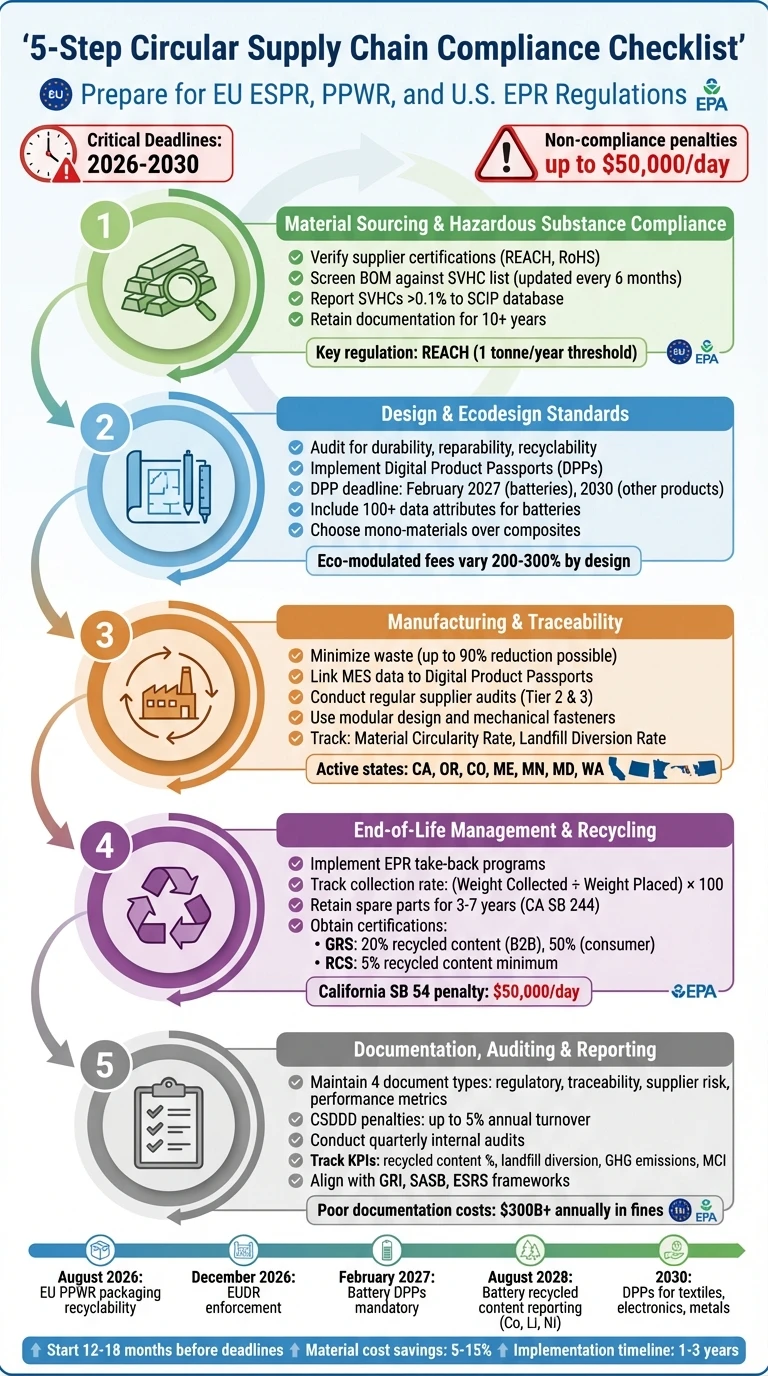
5-Step Circular Supply Chain Compliance Checklist for 2026
Building sustainable supply chains | Circular supply chains
Checklist 1: Material Sourcing and Hazardous Substance Compliance
Material sourcing plays a crucial role in meeting circular compliance standards. Regulations such as REACH (Registration, Evaluation, Authorization, and Restriction of Chemicals) and RoHS (Restriction of Hazardous Substances) enforce strict controls on the substances entering your supply chain. For example, REACH mandates registration for substances manufactured or imported into the EU in quantities of 1 tonne or more per year, with documentation required to be retained for at least 10 years after the product’s market entry [3]. Non-compliance can result in fines, product recalls, or even restricted market access.
Verify Supplier Certifications
Start by mapping supply chain roles - manufacturer, importer, or downstream user - to clarify obligations under REACH [3]. Request standardized documentation from every supplier, such as Safety Data Sheets (SDS), CAS numbers, composition data, and formal supplier declarations [3][4]. Using established formats like IPC-1752A or IEC 62474 ensures supplier declarations are machine-readable and consistent [3].
To confirm the authenticity of supplier certifications, conduct accredited lab testing [4]. Annual supplier audits and compliance scorecards can help maintain oversight [3][4]. Additionally, include precise quality standards and liability/indemnification clauses in contracts to safeguard against third-party claims due to supplier non-compliance [4].
Once suppliers are certified, extend your oversight deeper into the supply chain to reduce risks.
Conduct Due Diligence on Material Origins
Expand your due diligence to include Tier 2 and Tier 3 suppliers, identifying any data gaps or geographic risks [5][6]. Regularly screen your Bill of Materials (BOM) against the REACH Candidate List of Substances of Very High Concern (SVHC), which is updated every six months [3]. If any SVHCs are present in an article at concentrations exceeding 0.1% weight by weight, you are required to report this data to the EU's SCIP database under the Waste Framework Directive [3].
Investigate subcontractor relationships within your primary supplier’s network to ensure compliance with hazardous substance restrictions throughout the entire sub-tier supply chain [4]. Retain samples from every batch received to address potential quality disputes or compliance issues in the future [4].
Implement Digital Tracking Systems
Beyond physical audits, digital systems can streamline compliance tracking and provide real-time updates. Digital Product Passports (DPPs) are becoming essential under the EU's Ecodesign for Sustainable Products Regulation, requiring centralized data on material composition, SVHCs, and hazardous substances [9]. Starting in August 2028, economic operators in the EU must also report the recycled content of cobalt, lithium, and nickel in batteries [8]. Use identifiers like GTIN or GS1 Digital Links to connect physical products to their DPPs [9].
Leverage platforms that create digital twins, linking materials to compliance data at every stage of production [8]. AI-powered tools can extract compliance data from supplier documents and emails, minimizing manual data entry and improving accuracy for REACH and RoHS reporting [7][9]. Automated SVHC alerts can ensure BOMs remain compliant with the latest regulations [3].
"We chose Circularise because of their expertise and innovative platform, which is empowering us and our customers to achieve quick successes, meet regulatory demands, and maintain control of our data." - Gerke Spaling, New Business Development Manager, Teijin Brightlands Innovation Center [7]
Checklist 2: Design and Ecodesign Standards
Building on strong material sourcing and tracking protocols, thoughtful design practices are key to ensuring compliance while enhancing product lifecycle efficiency. Just as with sourcing, making deliberate design decisions early on is crucial to navigate the complexities of evolving regulations.
Product design has a direct impact on future compliance. For instance, the EU's Ecodesign for Sustainable Products Regulation (ESPR), which came into force in July 2024, mandates durability, reparability, and recyclability standards across a wide range of product categories [11][12]. Incorporating circular design principles not only helps meet these requirements but can also reduce redesign expenses and lower eco-modulated fees - regulatory costs that can vary by as much as 200–300% depending on the recyclability of a product’s design [1].
Assess Product Design for Circularity
Evaluating your product's design for circularity is essential. Start by auditing its durability, reparability, and recyclability. For example, standardizing fasteners can make disassembly and repairs much simpler [1]. Providing clear disassembly guides and ensuring spare parts are available throughout the product’s lifecycle can significantly improve repairability scores [9][10].
Additionally, ensure the Bill of Materials (BOM) includes detailed information about all materials and additives. This supports seamless integration with Digital Product Passports (DPPs) [10][1]. Under REACH regulations, over 240 Substances of Very High Concern (SVHCs) must be declared if they are present above a 0.1% concentration [10]. By eliminating these substances early in the design process, you can help ensure that materials can safely re-enter production cycles without contaminating recycled feedstock [9][10].
Ensure Compliance with Digital Product Passports
Digital Product Passports are now mandatory for categories such as batteries, textiles, electronics, and metals, with implementation deadlines spanning from February 2027 to 2030 depending on the product type [11][12]. For example, DPPs for batteries must include over 100 data attributes, such as material origin for conflict minerals and state-of-health metrics [11]. A comprehensive DPP should feature:
Unique product identification
Complete material composition
Verified carbon footprint data
Repairability and recyclability scores
Supply chain traceability
To meet EU interoperability standards, consider adopting GS1 Digital Links to connect physical products to their digital twins [10]. The cost of registering a GS1 company prefix varies between $100 and $2,000 annually, depending on the size of your company [10]. Additionally, link your DPP platform with existing systems, such as Product Lifecycle Management (PLM) for BOM data, Enterprise Resource Planning (ERP) for supplier information, and Manufacturing Execution Systems (MES) for real-time production metrics [11][10]. DPP data must be retained for at least 10 years after the product is placed on the market [9], extending the benefits of earlier tracking efforts into the design phase.
Review Material Choices for End-of-Life Recycling
Material selection plays a critical role in meeting recycling and circularity requirements. Opt for mono-materials over mixed composites, as regulatory frameworks increasingly discourage complex combinations that hinder recycling [1]. Verify recycled content using chain-of-custody certifications like GRS or RCS [10]. Utilize your DPP to document material composition and provide clear disassembly instructions, helping recyclers recover valuable materials efficiently at the product's end-of-life stage [10].
Checklist 3: Manufacturing and Traceability Protocols
Once your design aligns with circular principles, the next step is ensuring your manufacturing processes uphold these standards. Production plays a pivotal role in recovering materials and meeting regulatory requirements, especially as Extended Producer Responsibility (EPR) laws expand in states like California, Oregon, Colorado, Maine, Minnesota, Maryland, and Washington.
Minimize Waste and Emissions
Reducing waste during manufacturing is essential for meeting compliance and sustainability goals. Techniques like modular design and AI-driven predictive maintenance can significantly cut waste - by up to 90% - while extending equipment lifespan by as much as 25%.
Another effective approach is participating in industrial symbiosis networks, where one company’s by-products serve as raw materials for another. Conducting Life Cycle Assessments (LCAs) can help identify areas where waste and emissions are most impactful, enabling more focused improvements. Additionally, using mono-materials simplifies recycling efforts and enhances material recovery rates.
Maintain Transparency in Manufacturing Processes
Once waste is minimized, transparency becomes critical to ensure traceability throughout the manufacturing process. Document every stage of production and link Manufacturing Execution System (MES) data to Digital Product Passports, enabling real-time access to material origins, production timelines, and process details across the product’s lifecycle.
Regular audits of primary, secondary, and tertiary suppliers are essential to confirm that materials meet non-toxic and recycled content standards. Standardizing components can simplify repairs and recovery efforts, while replacing permanent adhesives with mechanical fasteners allows for easier disassembly and material recovery at the product’s end-of-life. Key metrics like Material Circularity Rate and Landfill Diversion Rate can help demonstrate progress and compliance.
Validate Packaging for Recycling Instructions
With the growing complexity of state-level EPR laws, packaging compliance has become a critical aspect of manufacturing. Determine applicable EPR regulations based on revenue or production volume and join a recognized Producer Responsibility Organization (PRO) to streamline fee management and reporting requirements.
Smart packaging solutions, such as QR codes or embedded electronics, can be integrated into compostable materials to provide consumers with detailed recycling instructions and traceability information. Packaging labels should clearly state material composition and disposal methods, ensuring they align with your Digital Product Passport records for seamless traceability.
Checklist 4: End-of-Life Management and Recycling
The final phase of circular supply chains focuses on managing products at the end of their lifecycle, ensuring compliance with stringent recycling regulations. In California, for example, non-compliance with plastic packaging recycling mandates under SB 54 can result in penalties as steep as $50,000 per day [13]. To navigate this, businesses need to establish effective take-back systems that align with evolving regulatory and recovery requirements.
Implement Take-Back and EPR Programs
A strong monitoring system is critical for meeting Extended Producer Responsibility (EPR) obligations. This system should track three essential data points: units sold, drop-off locations, and material weight by category [13]. Such a framework not only supports regulatory compliance but also reduces the risk of penalties under laws like SB 54.
Emerging laws, such as California's SB 244, are integrating right-to-repair requirements with EPR mandates. These laws require manufacturers to retain spare parts and repair documentation for 3–7 years [14]. To comply, ensure repair manuals and material passports are accessible for both consumer repairs and material recovery [14]. Additionally, choose processing partners with valid permits to avoid liability and ensure high-quality recycled output [13].
When deciding how to manage monitoring systems, companies can either build in-house solutions or partner with specialized service providers. Internal systems, while offering customization, can cost upwards of $500,000. On the other hand, service providers can implement systems within 3–6 months and bring built-in regulatory expertise [13].
Monitor Recycling and Recovery Rates
Effective tracking requires real-time data collection across the product lifecycle. A key metric for EPR compliance is the Collection Rate, calculated as:
(Total Weight Collected ÷ Total Weight Placed on Market) × 100 [13].
To ensure accuracy, implement real-time validation rules that flag missing or inconsistent data before it enters your reporting system. This proactive approach helps avoid costly compliance errors [13].
Develop a phased implementation plan for monitoring systems:
Months 1–3: Set up data architecture.
Months 4–6: Deploy core monitoring systems.
Months 7–12: Scale with advanced analytics [13].
Automate reporting to keep up with changing requirements across jurisdictions, particularly as global regulations like the EU's Packaging and Packaging Waste Regulation (effective February 11, 2025) continue to evolve [13]. Once recycling performance is effectively tracked, validate your efforts with recognized certifications.
Obtain Certifications for Recycled Materials
Certifications provide credibility for recycled content claims and ensure compliance. For example, the Global Recycled Standard (GRS) requires at least 20% recycled content for B2B certification and 50% for consumer-facing labels. It also evaluates social and environmental practices throughout the supply chain. Alternatively, the Recycled Claim Standard (RCS) requires a minimum of 5% recycled content and offers a simpler verification process [15].
Certification | Focus Areas | Minimum Recycled Content | Audit Depth |
|---|---|---|---|
RCS | Recycled Content & Chain of Custody | 5% | Lower |
GRS | Content, Social, Environmental, Chemicals | 20% (B2B) / 50% (Label) | Higher |
Chemical Safety, Environmental Performance | N/A | Higher | |
Material Health, Circularity, Social Fairness | N/A | Highest |
To streamline certification, apply GRS or RCS for material recovery, bluesign for manufacturing processes, and Cradle to Cradle for end-of-life design [15]. Keep in mind that every supplier in the chain - including waste collectors and processors - must be certified. A single uncertified supplier can invalidate the certification of your final product [15].
The data collected during certification audits can also feed into Digital Product Passports, which are becoming mandatory under new EU regulations [15].
Checklist 5: Documentation, Auditing, and Reporting
Once manufacturing, traceability, and recycling protocols are in place, the final pieces of the compliance puzzle are thorough documentation, regular audits, and transparent performance reporting. These steps ensure accountability and provide the evidence needed to prove compliance. Poor document management alone costs organizations over $300 billion annually in fines [16]. Under the Corporate Sustainability Due Diligence Directive (CSDDD), penalties for non-compliance can reach up to 5% of a company’s annual turnover [6]. Beyond avoiding such penalties, maintaining clear and accessible documentation supports faster audit responses and demonstrates adherence to regulations across different regions.
Prepare Compliance Documentation
A strong documentation system should address four main areas:
Regulatory documents: Includes Declarations of Conformity, technical files, and customs paperwork.
Traceability records: Covers Digital Product Passports, material flow maps, and blockchain records.
Supplier risk assessments: Encompasses questionnaires, certifications, and audit reports.
Performance metrics: Involves lifecycle assessments, ESG reports, and circularity indicators [16].
To manage these effectively, implement strict version control using standardized naming conventions (e.g., [DocumentType]_[ProductID]v[Major.Minor][Status]_[Date]). Store files in open standard formats like PDF/A for long-term accessibility. Ensure secure storage - whether cloud-based or hybrid - with role-based access controls and detailed user activity logging. Tagging documents with regulatory references, approval statuses, and retention periods can streamline automated reporting and simplify audits. Once the documentation system is established, it’s crucial to validate its accuracy through regular audits.
Conduct Regular Audits
Proactively testing your documentation system can help you avoid unexpected issues during official audits. Mock audits are an effective way to identify gaps or delays in retrieving evidence. Creating traceability maps that link documents, processes, and regulations can further simplify the audit process. Schedule internal audits quarterly and conduct supplier risk assessments annually to maintain consistent oversight of your circular supply chain.
Report Performance Metrics
Invest in compliance dashboards that automatically flag missing certifications and overdue approvals. Tracking key performance indicators (KPIs) ensures ongoing compliance and highlights areas for improvement. Examples of important metrics include:
Metric Category | Key Performance Indicators (KPIs) | Regulatory/Framework Alignment |
|---|---|---|
Materials | % Recycled content; Material Circularity Indicator (MCI); Resource productivity | CTI, SASB, ESRS |
Waste | Landfill diversion rate; Waste reduction vs. targets; Recovery efficiency | GRI, EPA WARM Model |
Lifecycle | Product lifespan; Repair/Refurbishment volume; Recyclability rate | EU Ecodesign Regulation |
Emissions | Scope 1, 2, and 3 GHG emissions; Carbon footprint per unit | CSRD, SEC, CA SB 253 |
Financial | Revenue from secondary markets; Cost savings from reuse; Return fraud rate | ESG Financial Disclosures |
Align your reporting with established frameworks like GRI, SASB, and emerging EU standards to meet the expectations of various stakeholders [2]. By consistently tracking and reporting these metrics, organizations can demonstrate their commitment to circular compliance while identifying opportunities for improvement.
Partnering with Council Fire for Circular Compliance

Turning plans into action is where the real work begins, and having expert guidance can make all the difference. Council Fire provides a structured approach to help companies implement compliance measures effectively, particularly as Extended Producer Responsibility (EPR) programs expand across seven U.S. states - including Maine, Maryland, and Washington - through 2026 [17][19]. This is especially crucial as circular compliance requires careful planning, collaboration across industries, and detailed data analysis.
Council Fire begins with supply chain assessments, pinpointing waste streams, material flows, and areas where circularity efforts can bring the most value. They help organizations prepare well in advance - 12 to 18 months before regulatory deadlines like February 2027 - by building data systems that meet traceability requirements and avoid costly penalties [19]. This includes improving visibility across supplier networks and aligning operational activities with compliance goals [18][19].
A key part of their process is stakeholder engagement, where Council Fire’s collaborative approach shines. They work with both upstream and downstream partners to create traceability systems that track critical information like HS codes, certificates of origin, and emissions data. For companies subject to Corporate Sustainability Reporting Directive (CSRD) requirements - those with 250+ employees, €50 million in turnover, or €25 million in assets - Council Fire supports the creation of cross-functional teams and governance structures to manage compliance effectively [22].
Their impact analysis focuses on meeting mandates such as Digital Product Passports (DPP) and the EU Ecodesign for Sustainable Products Regulation (ESPR). Council Fire evaluates product lifecycles, from sourcing materials like cobalt and lithium to ensuring recyclability and end-of-life outcomes that align with 2026 regulations [18][19]. They also assist in securing certifications for recycled materials by analyzing recycled content, product durability, and value retention under CSRD guidelines [18][20].
Conclusion
The clock is ticking for organizations to prepare for 2026 compliance with circular supply chain regulations. Key mandates, like the EU PPWR's requirement for mandatory packaging recyclability starting August 12, 2026, the EUDR's deforestation due diligence enforcement on December 30, 2026, and the growing reach of U.S. packaging EPR programs in states like Maine, Maryland, and Washington, call for immediate action [17][20]. Companies that invest now in strengthening supply chain data, embedding circular design principles, and initiating take-back programs will not only avoid penalties but also uncover opportunities for cost savings and efficiency. For example, material flow analysis alone can lead to 5–15% reductions in material costs through improved efficiency [23].
Beyond compliance, these measures open doors for innovation and differentiation in the market. Tools like Digital Product Passports, set to become standard in 2026, will enable companies to verify recycled content, track material origins, and monitor recovery rates - meeting rising consumer expectations for transparency while reducing the risk of greenwashing [17]. Though redesigning products for circularity may take 1–3 years, it enhances comparability and builds trust by aligning with sustainability standards [23].
Once the foundational compliance steps are in place, the next phase involves integrating transparent data management systems. This includes implementing robust data governance and aligning circular design with supplier and logistics collaboration. Digital tracking systems for HS codes, certificates of origin, and emissions data will be essential to meet the traceability requirements of regulations like CSRD and ESPR [17][20]. Partnering with experts in systems thinking, such as Council Fire, can help organizations turn these mandates into actionable, measurable outcomes.
The path forward is clear: start with a thorough supply chain assessment to identify waste streams and target high-impact areas for improvement. Regular audits, early supplier engagement, and alignment of KPIs with ESG frameworks are critical steps [20][21]. As 2026 approaches, the focus shifts from planning to execution. Organizations that act now will not only meet regulatory demands but also transform these challenges into a competitive edge.
FAQs
What should we do first to prepare for 2026 circular compliance?
To navigate the regulatory landscape for circular supply chains, begin by examining laws and standards such as Extended Producer Responsibility (EPR). This involves reviewing your operations to identify any gaps or risks that could hinder compliance. Once you've assessed your current practices, shift your attention to designing products with reuse in mind, implementing reverse logistics systems, and improving resource efficiency.
Planning ahead is crucial. By integrating technologies like blockchain or IoT, you can boost transparency across your supply chain. These tools not only streamline operations but also position your business to meet compliance requirements set for 2026 more effectively.
Do we need a Digital Product Passport for our products?
Whether or not you need a Digital Product Passport (DPP) largely depends on your regulatory landscape and your organization’s sustainability objectives. In the European Union, DPPs are required under regulations like the Ecodesign for Sustainable Products Regulation (ESPR). In contrast, the United States does not currently have a federal mandate for DPPs. However, state-level laws, such as California’s SB 54, are pushing for greater transparency and improved recycling efforts. In this context, DPPs can serve as a practical tool to meet compliance needs while promoting more sustainable supply chain practices.
How can we prove recycled content and recycling rates?
To demonstrate recycled content and recycling rates effectively, organizations should focus on accurate tracking and thorough documentation. Leveraging tools like blockchain can provide transparent material tracking, ensuring every step is accounted for. Setting clear metrics - such as the percentage of materials that are recycled or reused - creates measurable goals. Additionally, third-party certifications and audits play a key role in validating these claims, helping to ensure compliance with standards. Consistent data collection, verification, and reporting are crucial to building credibility and meeting the expectations of both regulators and consumers.
Related Blog Posts
Latest Articles
©2026

Narrative Change and Power Building: The Missing Half of Advocacy
Narrative change is the process of disrupting dominant narratives that normalize inequity and advancing new narratives from historically marginalized communities.

Funding Resilience Without Federal Grants
BRIC is unreliable and FEMA is shrinking. Here's how cities fund climate resilience with dedicated revenue, blended finance, and a coordinating authority.

The ESG Blind Spot: How AI Is Finding Risks in Companies Nobody Else Is Watching
Norway's sovereign wealth fund uses AI to screen 7,200 portfolio companies for forced labor and corruption within 24 hours. The real story is the emerging-market coverage gap that traditional ESG data vendors miss — and what it means for any company with a global supply chain.
Narrative Change and Power Building: The Missing Half of Advocacy
Narrative change is the process of disrupting dominant narratives that normalize inequity and advancing new narratives from historically marginalized communities.
Funding Resilience Without Federal Grants
BRIC is unreliable and FEMA is shrinking. Here's how cities fund climate resilience with dedicated revenue, blended finance, and a coordinating authority.
The ESG Blind Spot: How AI Is Finding Risks in Companies Nobody Else Is Watching
Norway's sovereign wealth fund uses AI to screen 7,200 portfolio companies for forced labor and corruption within 24 hours. The real story is the emerging-market coverage gap that traditional ESG data vendors miss — and what it means for any company with a global supply chain.
FAQ
01
What does it really mean to “redefine profit”?
02
What makes Council Fire different?
03
Who does Council Fire work with?
04
What does working with Council Fire actually look like?
05
How does Council Fire help organizations turn big goals into action?
06
How does Council Fire define and measure success?
07
How does technology fit into Council Fire’s work?
Mar 3, 2026
Compliance Checklist for Circular Supply Chains
ESG Strategy
In This Article
A practical 5-step checklist to meet REACH, RoHS, ESPR and EPR requirements: sourcing, ecodesign, traceability, take-back programs, and reporting.
Compliance Checklist for Circular Supply Chains
Circular supply chains transform the "take-make-dispose" model by focusing on reuse, repair, refurbishment, and recycling. With stricter regulations like the EU's Ecodesign for Sustainable Products Regulation (ESPR) and U.S. state-level Extended Producer Responsibility (EPR) laws, compliance is now a business necessity. Noncompliance risks include daily fines of up to $50,000 and restricted market access. Beyond avoiding penalties, circular systems reduce carbon emissions, cut waste, and improve resource efficiency.
Key Areas to Address:
Material Sourcing: Ensure compliance with REACH and RoHS by verifying supplier certifications, tracking hazardous substances with digital tools, and reporting to databases like SCIP.
Product Design: Align with reparability and recyclability standards under ESPR. Use Digital Product Passports (DPPs) to centralize data on material composition and lifecycle.
Manufacturing: Minimize waste, document processes, and ensure traceability through digital systems. Validate packaging for compliance with EPR laws.
End-of-Life Management: Establish take-back programs and track recycling rates to meet EPR mandates. Obtain certifications like GRS or RCS for recycled materials.
Documentation and Reporting: Maintain thorough records, conduct audits, and track metrics like recycled content and landfill diversion rates to demonstrate compliance.
By preparing now, businesses can not only meet regulatory requirements but also reduce costs, increase efficiency, and appeal to eco-conscious consumers.
5-Step Circular Supply Chain Compliance Checklist for 2026
Building sustainable supply chains | Circular supply chains
Checklist 1: Material Sourcing and Hazardous Substance Compliance
Material sourcing plays a crucial role in meeting circular compliance standards. Regulations such as REACH (Registration, Evaluation, Authorization, and Restriction of Chemicals) and RoHS (Restriction of Hazardous Substances) enforce strict controls on the substances entering your supply chain. For example, REACH mandates registration for substances manufactured or imported into the EU in quantities of 1 tonne or more per year, with documentation required to be retained for at least 10 years after the product’s market entry [3]. Non-compliance can result in fines, product recalls, or even restricted market access.
Verify Supplier Certifications
Start by mapping supply chain roles - manufacturer, importer, or downstream user - to clarify obligations under REACH [3]. Request standardized documentation from every supplier, such as Safety Data Sheets (SDS), CAS numbers, composition data, and formal supplier declarations [3][4]. Using established formats like IPC-1752A or IEC 62474 ensures supplier declarations are machine-readable and consistent [3].
To confirm the authenticity of supplier certifications, conduct accredited lab testing [4]. Annual supplier audits and compliance scorecards can help maintain oversight [3][4]. Additionally, include precise quality standards and liability/indemnification clauses in contracts to safeguard against third-party claims due to supplier non-compliance [4].
Once suppliers are certified, extend your oversight deeper into the supply chain to reduce risks.
Conduct Due Diligence on Material Origins
Expand your due diligence to include Tier 2 and Tier 3 suppliers, identifying any data gaps or geographic risks [5][6]. Regularly screen your Bill of Materials (BOM) against the REACH Candidate List of Substances of Very High Concern (SVHC), which is updated every six months [3]. If any SVHCs are present in an article at concentrations exceeding 0.1% weight by weight, you are required to report this data to the EU's SCIP database under the Waste Framework Directive [3].
Investigate subcontractor relationships within your primary supplier’s network to ensure compliance with hazardous substance restrictions throughout the entire sub-tier supply chain [4]. Retain samples from every batch received to address potential quality disputes or compliance issues in the future [4].
Implement Digital Tracking Systems
Beyond physical audits, digital systems can streamline compliance tracking and provide real-time updates. Digital Product Passports (DPPs) are becoming essential under the EU's Ecodesign for Sustainable Products Regulation, requiring centralized data on material composition, SVHCs, and hazardous substances [9]. Starting in August 2028, economic operators in the EU must also report the recycled content of cobalt, lithium, and nickel in batteries [8]. Use identifiers like GTIN or GS1 Digital Links to connect physical products to their DPPs [9].
Leverage platforms that create digital twins, linking materials to compliance data at every stage of production [8]. AI-powered tools can extract compliance data from supplier documents and emails, minimizing manual data entry and improving accuracy for REACH and RoHS reporting [7][9]. Automated SVHC alerts can ensure BOMs remain compliant with the latest regulations [3].
"We chose Circularise because of their expertise and innovative platform, which is empowering us and our customers to achieve quick successes, meet regulatory demands, and maintain control of our data." - Gerke Spaling, New Business Development Manager, Teijin Brightlands Innovation Center [7]
Checklist 2: Design and Ecodesign Standards
Building on strong material sourcing and tracking protocols, thoughtful design practices are key to ensuring compliance while enhancing product lifecycle efficiency. Just as with sourcing, making deliberate design decisions early on is crucial to navigate the complexities of evolving regulations.
Product design has a direct impact on future compliance. For instance, the EU's Ecodesign for Sustainable Products Regulation (ESPR), which came into force in July 2024, mandates durability, reparability, and recyclability standards across a wide range of product categories [11][12]. Incorporating circular design principles not only helps meet these requirements but can also reduce redesign expenses and lower eco-modulated fees - regulatory costs that can vary by as much as 200–300% depending on the recyclability of a product’s design [1].
Assess Product Design for Circularity
Evaluating your product's design for circularity is essential. Start by auditing its durability, reparability, and recyclability. For example, standardizing fasteners can make disassembly and repairs much simpler [1]. Providing clear disassembly guides and ensuring spare parts are available throughout the product’s lifecycle can significantly improve repairability scores [9][10].
Additionally, ensure the Bill of Materials (BOM) includes detailed information about all materials and additives. This supports seamless integration with Digital Product Passports (DPPs) [10][1]. Under REACH regulations, over 240 Substances of Very High Concern (SVHCs) must be declared if they are present above a 0.1% concentration [10]. By eliminating these substances early in the design process, you can help ensure that materials can safely re-enter production cycles without contaminating recycled feedstock [9][10].
Ensure Compliance with Digital Product Passports
Digital Product Passports are now mandatory for categories such as batteries, textiles, electronics, and metals, with implementation deadlines spanning from February 2027 to 2030 depending on the product type [11][12]. For example, DPPs for batteries must include over 100 data attributes, such as material origin for conflict minerals and state-of-health metrics [11]. A comprehensive DPP should feature:
Unique product identification
Complete material composition
Verified carbon footprint data
Repairability and recyclability scores
Supply chain traceability
To meet EU interoperability standards, consider adopting GS1 Digital Links to connect physical products to their digital twins [10]. The cost of registering a GS1 company prefix varies between $100 and $2,000 annually, depending on the size of your company [10]. Additionally, link your DPP platform with existing systems, such as Product Lifecycle Management (PLM) for BOM data, Enterprise Resource Planning (ERP) for supplier information, and Manufacturing Execution Systems (MES) for real-time production metrics [11][10]. DPP data must be retained for at least 10 years after the product is placed on the market [9], extending the benefits of earlier tracking efforts into the design phase.
Review Material Choices for End-of-Life Recycling
Material selection plays a critical role in meeting recycling and circularity requirements. Opt for mono-materials over mixed composites, as regulatory frameworks increasingly discourage complex combinations that hinder recycling [1]. Verify recycled content using chain-of-custody certifications like GRS or RCS [10]. Utilize your DPP to document material composition and provide clear disassembly instructions, helping recyclers recover valuable materials efficiently at the product's end-of-life stage [10].
Checklist 3: Manufacturing and Traceability Protocols
Once your design aligns with circular principles, the next step is ensuring your manufacturing processes uphold these standards. Production plays a pivotal role in recovering materials and meeting regulatory requirements, especially as Extended Producer Responsibility (EPR) laws expand in states like California, Oregon, Colorado, Maine, Minnesota, Maryland, and Washington.
Minimize Waste and Emissions
Reducing waste during manufacturing is essential for meeting compliance and sustainability goals. Techniques like modular design and AI-driven predictive maintenance can significantly cut waste - by up to 90% - while extending equipment lifespan by as much as 25%.
Another effective approach is participating in industrial symbiosis networks, where one company’s by-products serve as raw materials for another. Conducting Life Cycle Assessments (LCAs) can help identify areas where waste and emissions are most impactful, enabling more focused improvements. Additionally, using mono-materials simplifies recycling efforts and enhances material recovery rates.
Maintain Transparency in Manufacturing Processes
Once waste is minimized, transparency becomes critical to ensure traceability throughout the manufacturing process. Document every stage of production and link Manufacturing Execution System (MES) data to Digital Product Passports, enabling real-time access to material origins, production timelines, and process details across the product’s lifecycle.
Regular audits of primary, secondary, and tertiary suppliers are essential to confirm that materials meet non-toxic and recycled content standards. Standardizing components can simplify repairs and recovery efforts, while replacing permanent adhesives with mechanical fasteners allows for easier disassembly and material recovery at the product’s end-of-life. Key metrics like Material Circularity Rate and Landfill Diversion Rate can help demonstrate progress and compliance.
Validate Packaging for Recycling Instructions
With the growing complexity of state-level EPR laws, packaging compliance has become a critical aspect of manufacturing. Determine applicable EPR regulations based on revenue or production volume and join a recognized Producer Responsibility Organization (PRO) to streamline fee management and reporting requirements.
Smart packaging solutions, such as QR codes or embedded electronics, can be integrated into compostable materials to provide consumers with detailed recycling instructions and traceability information. Packaging labels should clearly state material composition and disposal methods, ensuring they align with your Digital Product Passport records for seamless traceability.
Checklist 4: End-of-Life Management and Recycling
The final phase of circular supply chains focuses on managing products at the end of their lifecycle, ensuring compliance with stringent recycling regulations. In California, for example, non-compliance with plastic packaging recycling mandates under SB 54 can result in penalties as steep as $50,000 per day [13]. To navigate this, businesses need to establish effective take-back systems that align with evolving regulatory and recovery requirements.
Implement Take-Back and EPR Programs
A strong monitoring system is critical for meeting Extended Producer Responsibility (EPR) obligations. This system should track three essential data points: units sold, drop-off locations, and material weight by category [13]. Such a framework not only supports regulatory compliance but also reduces the risk of penalties under laws like SB 54.
Emerging laws, such as California's SB 244, are integrating right-to-repair requirements with EPR mandates. These laws require manufacturers to retain spare parts and repair documentation for 3–7 years [14]. To comply, ensure repair manuals and material passports are accessible for both consumer repairs and material recovery [14]. Additionally, choose processing partners with valid permits to avoid liability and ensure high-quality recycled output [13].
When deciding how to manage monitoring systems, companies can either build in-house solutions or partner with specialized service providers. Internal systems, while offering customization, can cost upwards of $500,000. On the other hand, service providers can implement systems within 3–6 months and bring built-in regulatory expertise [13].
Monitor Recycling and Recovery Rates
Effective tracking requires real-time data collection across the product lifecycle. A key metric for EPR compliance is the Collection Rate, calculated as:
(Total Weight Collected ÷ Total Weight Placed on Market) × 100 [13].
To ensure accuracy, implement real-time validation rules that flag missing or inconsistent data before it enters your reporting system. This proactive approach helps avoid costly compliance errors [13].
Develop a phased implementation plan for monitoring systems:
Months 1–3: Set up data architecture.
Months 4–6: Deploy core monitoring systems.
Months 7–12: Scale with advanced analytics [13].
Automate reporting to keep up with changing requirements across jurisdictions, particularly as global regulations like the EU's Packaging and Packaging Waste Regulation (effective February 11, 2025) continue to evolve [13]. Once recycling performance is effectively tracked, validate your efforts with recognized certifications.
Obtain Certifications for Recycled Materials
Certifications provide credibility for recycled content claims and ensure compliance. For example, the Global Recycled Standard (GRS) requires at least 20% recycled content for B2B certification and 50% for consumer-facing labels. It also evaluates social and environmental practices throughout the supply chain. Alternatively, the Recycled Claim Standard (RCS) requires a minimum of 5% recycled content and offers a simpler verification process [15].
Certification | Focus Areas | Minimum Recycled Content | Audit Depth |
|---|---|---|---|
RCS | Recycled Content & Chain of Custody | 5% | Lower |
GRS | Content, Social, Environmental, Chemicals | 20% (B2B) / 50% (Label) | Higher |
Chemical Safety, Environmental Performance | N/A | Higher | |
Material Health, Circularity, Social Fairness | N/A | Highest |
To streamline certification, apply GRS or RCS for material recovery, bluesign for manufacturing processes, and Cradle to Cradle for end-of-life design [15]. Keep in mind that every supplier in the chain - including waste collectors and processors - must be certified. A single uncertified supplier can invalidate the certification of your final product [15].
The data collected during certification audits can also feed into Digital Product Passports, which are becoming mandatory under new EU regulations [15].
Checklist 5: Documentation, Auditing, and Reporting
Once manufacturing, traceability, and recycling protocols are in place, the final pieces of the compliance puzzle are thorough documentation, regular audits, and transparent performance reporting. These steps ensure accountability and provide the evidence needed to prove compliance. Poor document management alone costs organizations over $300 billion annually in fines [16]. Under the Corporate Sustainability Due Diligence Directive (CSDDD), penalties for non-compliance can reach up to 5% of a company’s annual turnover [6]. Beyond avoiding such penalties, maintaining clear and accessible documentation supports faster audit responses and demonstrates adherence to regulations across different regions.
Prepare Compliance Documentation
A strong documentation system should address four main areas:
Regulatory documents: Includes Declarations of Conformity, technical files, and customs paperwork.
Traceability records: Covers Digital Product Passports, material flow maps, and blockchain records.
Supplier risk assessments: Encompasses questionnaires, certifications, and audit reports.
Performance metrics: Involves lifecycle assessments, ESG reports, and circularity indicators [16].
To manage these effectively, implement strict version control using standardized naming conventions (e.g., [DocumentType]_[ProductID]v[Major.Minor][Status]_[Date]). Store files in open standard formats like PDF/A for long-term accessibility. Ensure secure storage - whether cloud-based or hybrid - with role-based access controls and detailed user activity logging. Tagging documents with regulatory references, approval statuses, and retention periods can streamline automated reporting and simplify audits. Once the documentation system is established, it’s crucial to validate its accuracy through regular audits.
Conduct Regular Audits
Proactively testing your documentation system can help you avoid unexpected issues during official audits. Mock audits are an effective way to identify gaps or delays in retrieving evidence. Creating traceability maps that link documents, processes, and regulations can further simplify the audit process. Schedule internal audits quarterly and conduct supplier risk assessments annually to maintain consistent oversight of your circular supply chain.
Report Performance Metrics
Invest in compliance dashboards that automatically flag missing certifications and overdue approvals. Tracking key performance indicators (KPIs) ensures ongoing compliance and highlights areas for improvement. Examples of important metrics include:
Metric Category | Key Performance Indicators (KPIs) | Regulatory/Framework Alignment |
|---|---|---|
Materials | % Recycled content; Material Circularity Indicator (MCI); Resource productivity | CTI, SASB, ESRS |
Waste | Landfill diversion rate; Waste reduction vs. targets; Recovery efficiency | GRI, EPA WARM Model |
Lifecycle | Product lifespan; Repair/Refurbishment volume; Recyclability rate | EU Ecodesign Regulation |
Emissions | Scope 1, 2, and 3 GHG emissions; Carbon footprint per unit | CSRD, SEC, CA SB 253 |
Financial | Revenue from secondary markets; Cost savings from reuse; Return fraud rate | ESG Financial Disclosures |
Align your reporting with established frameworks like GRI, SASB, and emerging EU standards to meet the expectations of various stakeholders [2]. By consistently tracking and reporting these metrics, organizations can demonstrate their commitment to circular compliance while identifying opportunities for improvement.
Partnering with Council Fire for Circular Compliance
Turning plans into action is where the real work begins, and having expert guidance can make all the difference. Council Fire provides a structured approach to help companies implement compliance measures effectively, particularly as Extended Producer Responsibility (EPR) programs expand across seven U.S. states - including Maine, Maryland, and Washington - through 2026 [17][19]. This is especially crucial as circular compliance requires careful planning, collaboration across industries, and detailed data analysis.
Council Fire begins with supply chain assessments, pinpointing waste streams, material flows, and areas where circularity efforts can bring the most value. They help organizations prepare well in advance - 12 to 18 months before regulatory deadlines like February 2027 - by building data systems that meet traceability requirements and avoid costly penalties [19]. This includes improving visibility across supplier networks and aligning operational activities with compliance goals [18][19].
A key part of their process is stakeholder engagement, where Council Fire’s collaborative approach shines. They work with both upstream and downstream partners to create traceability systems that track critical information like HS codes, certificates of origin, and emissions data. For companies subject to Corporate Sustainability Reporting Directive (CSRD) requirements - those with 250+ employees, €50 million in turnover, or €25 million in assets - Council Fire supports the creation of cross-functional teams and governance structures to manage compliance effectively [22].
Their impact analysis focuses on meeting mandates such as Digital Product Passports (DPP) and the EU Ecodesign for Sustainable Products Regulation (ESPR). Council Fire evaluates product lifecycles, from sourcing materials like cobalt and lithium to ensuring recyclability and end-of-life outcomes that align with 2026 regulations [18][19]. They also assist in securing certifications for recycled materials by analyzing recycled content, product durability, and value retention under CSRD guidelines [18][20].
Conclusion
The clock is ticking for organizations to prepare for 2026 compliance with circular supply chain regulations. Key mandates, like the EU PPWR's requirement for mandatory packaging recyclability starting August 12, 2026, the EUDR's deforestation due diligence enforcement on December 30, 2026, and the growing reach of U.S. packaging EPR programs in states like Maine, Maryland, and Washington, call for immediate action [17][20]. Companies that invest now in strengthening supply chain data, embedding circular design principles, and initiating take-back programs will not only avoid penalties but also uncover opportunities for cost savings and efficiency. For example, material flow analysis alone can lead to 5–15% reductions in material costs through improved efficiency [23].
Beyond compliance, these measures open doors for innovation and differentiation in the market. Tools like Digital Product Passports, set to become standard in 2026, will enable companies to verify recycled content, track material origins, and monitor recovery rates - meeting rising consumer expectations for transparency while reducing the risk of greenwashing [17]. Though redesigning products for circularity may take 1–3 years, it enhances comparability and builds trust by aligning with sustainability standards [23].
Once the foundational compliance steps are in place, the next phase involves integrating transparent data management systems. This includes implementing robust data governance and aligning circular design with supplier and logistics collaboration. Digital tracking systems for HS codes, certificates of origin, and emissions data will be essential to meet the traceability requirements of regulations like CSRD and ESPR [17][20]. Partnering with experts in systems thinking, such as Council Fire, can help organizations turn these mandates into actionable, measurable outcomes.
The path forward is clear: start with a thorough supply chain assessment to identify waste streams and target high-impact areas for improvement. Regular audits, early supplier engagement, and alignment of KPIs with ESG frameworks are critical steps [20][21]. As 2026 approaches, the focus shifts from planning to execution. Organizations that act now will not only meet regulatory demands but also transform these challenges into a competitive edge.
FAQs
What should we do first to prepare for 2026 circular compliance?
To navigate the regulatory landscape for circular supply chains, begin by examining laws and standards such as Extended Producer Responsibility (EPR). This involves reviewing your operations to identify any gaps or risks that could hinder compliance. Once you've assessed your current practices, shift your attention to designing products with reuse in mind, implementing reverse logistics systems, and improving resource efficiency.
Planning ahead is crucial. By integrating technologies like blockchain or IoT, you can boost transparency across your supply chain. These tools not only streamline operations but also position your business to meet compliance requirements set for 2026 more effectively.
Do we need a Digital Product Passport for our products?
Whether or not you need a Digital Product Passport (DPP) largely depends on your regulatory landscape and your organization’s sustainability objectives. In the European Union, DPPs are required under regulations like the Ecodesign for Sustainable Products Regulation (ESPR). In contrast, the United States does not currently have a federal mandate for DPPs. However, state-level laws, such as California’s SB 54, are pushing for greater transparency and improved recycling efforts. In this context, DPPs can serve as a practical tool to meet compliance needs while promoting more sustainable supply chain practices.
How can we prove recycled content and recycling rates?
To demonstrate recycled content and recycling rates effectively, organizations should focus on accurate tracking and thorough documentation. Leveraging tools like blockchain can provide transparent material tracking, ensuring every step is accounted for. Setting clear metrics - such as the percentage of materials that are recycled or reused - creates measurable goals. Additionally, third-party certifications and audits play a key role in validating these claims, helping to ensure compliance with standards. Consistent data collection, verification, and reporting are crucial to building credibility and meeting the expectations of both regulators and consumers.
Related Blog Posts
Latest Articles
©2026
Narrative Change and Power Building: The Missing Half of Advocacy
Narrative change is the process of disrupting dominant narratives that normalize inequity and advancing new narratives from historically marginalized communities.
Funding Resilience Without Federal Grants
BRIC is unreliable and FEMA is shrinking. Here's how cities fund climate resilience with dedicated revenue, blended finance, and a coordinating authority.
The ESG Blind Spot: How AI Is Finding Risks in Companies Nobody Else Is Watching
Norway's sovereign wealth fund uses AI to screen 7,200 portfolio companies for forced labor and corruption within 24 hours. The real story is the emerging-market coverage gap that traditional ESG data vendors miss — and what it means for any company with a global supply chain.
FAQ
01
What does it really mean to “redefine profit”?
02
What makes Council Fire different?
03
Who does Council Fire work with?
04
What does working with Council Fire actually look like?
05
How does Council Fire help organizations turn big goals into action?
06
How does Council Fire define and measure success?
07
How does technology fit into Council Fire’s work?
Mar 3, 2026
Compliance Checklist for Circular Supply Chains
ESG Strategy
In This Article
A practical 5-step checklist to meet REACH, RoHS, ESPR and EPR requirements: sourcing, ecodesign, traceability, take-back programs, and reporting.
Compliance Checklist for Circular Supply Chains
Circular supply chains transform the "take-make-dispose" model by focusing on reuse, repair, refurbishment, and recycling. With stricter regulations like the EU's Ecodesign for Sustainable Products Regulation (ESPR) and U.S. state-level Extended Producer Responsibility (EPR) laws, compliance is now a business necessity. Noncompliance risks include daily fines of up to $50,000 and restricted market access. Beyond avoiding penalties, circular systems reduce carbon emissions, cut waste, and improve resource efficiency.
Key Areas to Address:
Material Sourcing: Ensure compliance with REACH and RoHS by verifying supplier certifications, tracking hazardous substances with digital tools, and reporting to databases like SCIP.
Product Design: Align with reparability and recyclability standards under ESPR. Use Digital Product Passports (DPPs) to centralize data on material composition and lifecycle.
Manufacturing: Minimize waste, document processes, and ensure traceability through digital systems. Validate packaging for compliance with EPR laws.
End-of-Life Management: Establish take-back programs and track recycling rates to meet EPR mandates. Obtain certifications like GRS or RCS for recycled materials.
Documentation and Reporting: Maintain thorough records, conduct audits, and track metrics like recycled content and landfill diversion rates to demonstrate compliance.
By preparing now, businesses can not only meet regulatory requirements but also reduce costs, increase efficiency, and appeal to eco-conscious consumers.
5-Step Circular Supply Chain Compliance Checklist for 2026
Building sustainable supply chains | Circular supply chains
Checklist 1: Material Sourcing and Hazardous Substance Compliance
Material sourcing plays a crucial role in meeting circular compliance standards. Regulations such as REACH (Registration, Evaluation, Authorization, and Restriction of Chemicals) and RoHS (Restriction of Hazardous Substances) enforce strict controls on the substances entering your supply chain. For example, REACH mandates registration for substances manufactured or imported into the EU in quantities of 1 tonne or more per year, with documentation required to be retained for at least 10 years after the product’s market entry [3]. Non-compliance can result in fines, product recalls, or even restricted market access.
Verify Supplier Certifications
Start by mapping supply chain roles - manufacturer, importer, or downstream user - to clarify obligations under REACH [3]. Request standardized documentation from every supplier, such as Safety Data Sheets (SDS), CAS numbers, composition data, and formal supplier declarations [3][4]. Using established formats like IPC-1752A or IEC 62474 ensures supplier declarations are machine-readable and consistent [3].
To confirm the authenticity of supplier certifications, conduct accredited lab testing [4]. Annual supplier audits and compliance scorecards can help maintain oversight [3][4]. Additionally, include precise quality standards and liability/indemnification clauses in contracts to safeguard against third-party claims due to supplier non-compliance [4].
Once suppliers are certified, extend your oversight deeper into the supply chain to reduce risks.
Conduct Due Diligence on Material Origins
Expand your due diligence to include Tier 2 and Tier 3 suppliers, identifying any data gaps or geographic risks [5][6]. Regularly screen your Bill of Materials (BOM) against the REACH Candidate List of Substances of Very High Concern (SVHC), which is updated every six months [3]. If any SVHCs are present in an article at concentrations exceeding 0.1% weight by weight, you are required to report this data to the EU's SCIP database under the Waste Framework Directive [3].
Investigate subcontractor relationships within your primary supplier’s network to ensure compliance with hazardous substance restrictions throughout the entire sub-tier supply chain [4]. Retain samples from every batch received to address potential quality disputes or compliance issues in the future [4].
Implement Digital Tracking Systems
Beyond physical audits, digital systems can streamline compliance tracking and provide real-time updates. Digital Product Passports (DPPs) are becoming essential under the EU's Ecodesign for Sustainable Products Regulation, requiring centralized data on material composition, SVHCs, and hazardous substances [9]. Starting in August 2028, economic operators in the EU must also report the recycled content of cobalt, lithium, and nickel in batteries [8]. Use identifiers like GTIN or GS1 Digital Links to connect physical products to their DPPs [9].
Leverage platforms that create digital twins, linking materials to compliance data at every stage of production [8]. AI-powered tools can extract compliance data from supplier documents and emails, minimizing manual data entry and improving accuracy for REACH and RoHS reporting [7][9]. Automated SVHC alerts can ensure BOMs remain compliant with the latest regulations [3].
"We chose Circularise because of their expertise and innovative platform, which is empowering us and our customers to achieve quick successes, meet regulatory demands, and maintain control of our data." - Gerke Spaling, New Business Development Manager, Teijin Brightlands Innovation Center [7]
Checklist 2: Design and Ecodesign Standards
Building on strong material sourcing and tracking protocols, thoughtful design practices are key to ensuring compliance while enhancing product lifecycle efficiency. Just as with sourcing, making deliberate design decisions early on is crucial to navigate the complexities of evolving regulations.
Product design has a direct impact on future compliance. For instance, the EU's Ecodesign for Sustainable Products Regulation (ESPR), which came into force in July 2024, mandates durability, reparability, and recyclability standards across a wide range of product categories [11][12]. Incorporating circular design principles not only helps meet these requirements but can also reduce redesign expenses and lower eco-modulated fees - regulatory costs that can vary by as much as 200–300% depending on the recyclability of a product’s design [1].
Assess Product Design for Circularity
Evaluating your product's design for circularity is essential. Start by auditing its durability, reparability, and recyclability. For example, standardizing fasteners can make disassembly and repairs much simpler [1]. Providing clear disassembly guides and ensuring spare parts are available throughout the product’s lifecycle can significantly improve repairability scores [9][10].
Additionally, ensure the Bill of Materials (BOM) includes detailed information about all materials and additives. This supports seamless integration with Digital Product Passports (DPPs) [10][1]. Under REACH regulations, over 240 Substances of Very High Concern (SVHCs) must be declared if they are present above a 0.1% concentration [10]. By eliminating these substances early in the design process, you can help ensure that materials can safely re-enter production cycles without contaminating recycled feedstock [9][10].
Ensure Compliance with Digital Product Passports
Digital Product Passports are now mandatory for categories such as batteries, textiles, electronics, and metals, with implementation deadlines spanning from February 2027 to 2030 depending on the product type [11][12]. For example, DPPs for batteries must include over 100 data attributes, such as material origin for conflict minerals and state-of-health metrics [11]. A comprehensive DPP should feature:
Unique product identification
Complete material composition
Verified carbon footprint data
Repairability and recyclability scores
Supply chain traceability
To meet EU interoperability standards, consider adopting GS1 Digital Links to connect physical products to their digital twins [10]. The cost of registering a GS1 company prefix varies between $100 and $2,000 annually, depending on the size of your company [10]. Additionally, link your DPP platform with existing systems, such as Product Lifecycle Management (PLM) for BOM data, Enterprise Resource Planning (ERP) for supplier information, and Manufacturing Execution Systems (MES) for real-time production metrics [11][10]. DPP data must be retained for at least 10 years after the product is placed on the market [9], extending the benefits of earlier tracking efforts into the design phase.
Review Material Choices for End-of-Life Recycling
Material selection plays a critical role in meeting recycling and circularity requirements. Opt for mono-materials over mixed composites, as regulatory frameworks increasingly discourage complex combinations that hinder recycling [1]. Verify recycled content using chain-of-custody certifications like GRS or RCS [10]. Utilize your DPP to document material composition and provide clear disassembly instructions, helping recyclers recover valuable materials efficiently at the product's end-of-life stage [10].
Checklist 3: Manufacturing and Traceability Protocols
Once your design aligns with circular principles, the next step is ensuring your manufacturing processes uphold these standards. Production plays a pivotal role in recovering materials and meeting regulatory requirements, especially as Extended Producer Responsibility (EPR) laws expand in states like California, Oregon, Colorado, Maine, Minnesota, Maryland, and Washington.
Minimize Waste and Emissions
Reducing waste during manufacturing is essential for meeting compliance and sustainability goals. Techniques like modular design and AI-driven predictive maintenance can significantly cut waste - by up to 90% - while extending equipment lifespan by as much as 25%.
Another effective approach is participating in industrial symbiosis networks, where one company’s by-products serve as raw materials for another. Conducting Life Cycle Assessments (LCAs) can help identify areas where waste and emissions are most impactful, enabling more focused improvements. Additionally, using mono-materials simplifies recycling efforts and enhances material recovery rates.
Maintain Transparency in Manufacturing Processes
Once waste is minimized, transparency becomes critical to ensure traceability throughout the manufacturing process. Document every stage of production and link Manufacturing Execution System (MES) data to Digital Product Passports, enabling real-time access to material origins, production timelines, and process details across the product’s lifecycle.
Regular audits of primary, secondary, and tertiary suppliers are essential to confirm that materials meet non-toxic and recycled content standards. Standardizing components can simplify repairs and recovery efforts, while replacing permanent adhesives with mechanical fasteners allows for easier disassembly and material recovery at the product’s end-of-life. Key metrics like Material Circularity Rate and Landfill Diversion Rate can help demonstrate progress and compliance.
Validate Packaging for Recycling Instructions
With the growing complexity of state-level EPR laws, packaging compliance has become a critical aspect of manufacturing. Determine applicable EPR regulations based on revenue or production volume and join a recognized Producer Responsibility Organization (PRO) to streamline fee management and reporting requirements.
Smart packaging solutions, such as QR codes or embedded electronics, can be integrated into compostable materials to provide consumers with detailed recycling instructions and traceability information. Packaging labels should clearly state material composition and disposal methods, ensuring they align with your Digital Product Passport records for seamless traceability.
Checklist 4: End-of-Life Management and Recycling
The final phase of circular supply chains focuses on managing products at the end of their lifecycle, ensuring compliance with stringent recycling regulations. In California, for example, non-compliance with plastic packaging recycling mandates under SB 54 can result in penalties as steep as $50,000 per day [13]. To navigate this, businesses need to establish effective take-back systems that align with evolving regulatory and recovery requirements.
Implement Take-Back and EPR Programs
A strong monitoring system is critical for meeting Extended Producer Responsibility (EPR) obligations. This system should track three essential data points: units sold, drop-off locations, and material weight by category [13]. Such a framework not only supports regulatory compliance but also reduces the risk of penalties under laws like SB 54.
Emerging laws, such as California's SB 244, are integrating right-to-repair requirements with EPR mandates. These laws require manufacturers to retain spare parts and repair documentation for 3–7 years [14]. To comply, ensure repair manuals and material passports are accessible for both consumer repairs and material recovery [14]. Additionally, choose processing partners with valid permits to avoid liability and ensure high-quality recycled output [13].
When deciding how to manage monitoring systems, companies can either build in-house solutions or partner with specialized service providers. Internal systems, while offering customization, can cost upwards of $500,000. On the other hand, service providers can implement systems within 3–6 months and bring built-in regulatory expertise [13].
Monitor Recycling and Recovery Rates
Effective tracking requires real-time data collection across the product lifecycle. A key metric for EPR compliance is the Collection Rate, calculated as:
(Total Weight Collected ÷ Total Weight Placed on Market) × 100 [13].
To ensure accuracy, implement real-time validation rules that flag missing or inconsistent data before it enters your reporting system. This proactive approach helps avoid costly compliance errors [13].
Develop a phased implementation plan for monitoring systems:
Months 1–3: Set up data architecture.
Months 4–6: Deploy core monitoring systems.
Months 7–12: Scale with advanced analytics [13].
Automate reporting to keep up with changing requirements across jurisdictions, particularly as global regulations like the EU's Packaging and Packaging Waste Regulation (effective February 11, 2025) continue to evolve [13]. Once recycling performance is effectively tracked, validate your efforts with recognized certifications.
Obtain Certifications for Recycled Materials
Certifications provide credibility for recycled content claims and ensure compliance. For example, the Global Recycled Standard (GRS) requires at least 20% recycled content for B2B certification and 50% for consumer-facing labels. It also evaluates social and environmental practices throughout the supply chain. Alternatively, the Recycled Claim Standard (RCS) requires a minimum of 5% recycled content and offers a simpler verification process [15].
Certification | Focus Areas | Minimum Recycled Content | Audit Depth |
|---|---|---|---|
RCS | Recycled Content & Chain of Custody | 5% | Lower |
GRS | Content, Social, Environmental, Chemicals | 20% (B2B) / 50% (Label) | Higher |
Chemical Safety, Environmental Performance | N/A | Higher | |
Material Health, Circularity, Social Fairness | N/A | Highest |
To streamline certification, apply GRS or RCS for material recovery, bluesign for manufacturing processes, and Cradle to Cradle for end-of-life design [15]. Keep in mind that every supplier in the chain - including waste collectors and processors - must be certified. A single uncertified supplier can invalidate the certification of your final product [15].
The data collected during certification audits can also feed into Digital Product Passports, which are becoming mandatory under new EU regulations [15].
Checklist 5: Documentation, Auditing, and Reporting
Once manufacturing, traceability, and recycling protocols are in place, the final pieces of the compliance puzzle are thorough documentation, regular audits, and transparent performance reporting. These steps ensure accountability and provide the evidence needed to prove compliance. Poor document management alone costs organizations over $300 billion annually in fines [16]. Under the Corporate Sustainability Due Diligence Directive (CSDDD), penalties for non-compliance can reach up to 5% of a company’s annual turnover [6]. Beyond avoiding such penalties, maintaining clear and accessible documentation supports faster audit responses and demonstrates adherence to regulations across different regions.
Prepare Compliance Documentation
A strong documentation system should address four main areas:
Regulatory documents: Includes Declarations of Conformity, technical files, and customs paperwork.
Traceability records: Covers Digital Product Passports, material flow maps, and blockchain records.
Supplier risk assessments: Encompasses questionnaires, certifications, and audit reports.
Performance metrics: Involves lifecycle assessments, ESG reports, and circularity indicators [16].
To manage these effectively, implement strict version control using standardized naming conventions (e.g., [DocumentType]_[ProductID]v[Major.Minor][Status]_[Date]). Store files in open standard formats like PDF/A for long-term accessibility. Ensure secure storage - whether cloud-based or hybrid - with role-based access controls and detailed user activity logging. Tagging documents with regulatory references, approval statuses, and retention periods can streamline automated reporting and simplify audits. Once the documentation system is established, it’s crucial to validate its accuracy through regular audits.
Conduct Regular Audits
Proactively testing your documentation system can help you avoid unexpected issues during official audits. Mock audits are an effective way to identify gaps or delays in retrieving evidence. Creating traceability maps that link documents, processes, and regulations can further simplify the audit process. Schedule internal audits quarterly and conduct supplier risk assessments annually to maintain consistent oversight of your circular supply chain.
Report Performance Metrics
Invest in compliance dashboards that automatically flag missing certifications and overdue approvals. Tracking key performance indicators (KPIs) ensures ongoing compliance and highlights areas for improvement. Examples of important metrics include:
Metric Category | Key Performance Indicators (KPIs) | Regulatory/Framework Alignment |
|---|---|---|
Materials | % Recycled content; Material Circularity Indicator (MCI); Resource productivity | CTI, SASB, ESRS |
Waste | Landfill diversion rate; Waste reduction vs. targets; Recovery efficiency | GRI, EPA WARM Model |
Lifecycle | Product lifespan; Repair/Refurbishment volume; Recyclability rate | EU Ecodesign Regulation |
Emissions | Scope 1, 2, and 3 GHG emissions; Carbon footprint per unit | CSRD, SEC, CA SB 253 |
Financial | Revenue from secondary markets; Cost savings from reuse; Return fraud rate | ESG Financial Disclosures |
Align your reporting with established frameworks like GRI, SASB, and emerging EU standards to meet the expectations of various stakeholders [2]. By consistently tracking and reporting these metrics, organizations can demonstrate their commitment to circular compliance while identifying opportunities for improvement.
Partnering with Council Fire for Circular Compliance
Turning plans into action is where the real work begins, and having expert guidance can make all the difference. Council Fire provides a structured approach to help companies implement compliance measures effectively, particularly as Extended Producer Responsibility (EPR) programs expand across seven U.S. states - including Maine, Maryland, and Washington - through 2026 [17][19]. This is especially crucial as circular compliance requires careful planning, collaboration across industries, and detailed data analysis.
Council Fire begins with supply chain assessments, pinpointing waste streams, material flows, and areas where circularity efforts can bring the most value. They help organizations prepare well in advance - 12 to 18 months before regulatory deadlines like February 2027 - by building data systems that meet traceability requirements and avoid costly penalties [19]. This includes improving visibility across supplier networks and aligning operational activities with compliance goals [18][19].
A key part of their process is stakeholder engagement, where Council Fire’s collaborative approach shines. They work with both upstream and downstream partners to create traceability systems that track critical information like HS codes, certificates of origin, and emissions data. For companies subject to Corporate Sustainability Reporting Directive (CSRD) requirements - those with 250+ employees, €50 million in turnover, or €25 million in assets - Council Fire supports the creation of cross-functional teams and governance structures to manage compliance effectively [22].
Their impact analysis focuses on meeting mandates such as Digital Product Passports (DPP) and the EU Ecodesign for Sustainable Products Regulation (ESPR). Council Fire evaluates product lifecycles, from sourcing materials like cobalt and lithium to ensuring recyclability and end-of-life outcomes that align with 2026 regulations [18][19]. They also assist in securing certifications for recycled materials by analyzing recycled content, product durability, and value retention under CSRD guidelines [18][20].
Conclusion
The clock is ticking for organizations to prepare for 2026 compliance with circular supply chain regulations. Key mandates, like the EU PPWR's requirement for mandatory packaging recyclability starting August 12, 2026, the EUDR's deforestation due diligence enforcement on December 30, 2026, and the growing reach of U.S. packaging EPR programs in states like Maine, Maryland, and Washington, call for immediate action [17][20]. Companies that invest now in strengthening supply chain data, embedding circular design principles, and initiating take-back programs will not only avoid penalties but also uncover opportunities for cost savings and efficiency. For example, material flow analysis alone can lead to 5–15% reductions in material costs through improved efficiency [23].
Beyond compliance, these measures open doors for innovation and differentiation in the market. Tools like Digital Product Passports, set to become standard in 2026, will enable companies to verify recycled content, track material origins, and monitor recovery rates - meeting rising consumer expectations for transparency while reducing the risk of greenwashing [17]. Though redesigning products for circularity may take 1–3 years, it enhances comparability and builds trust by aligning with sustainability standards [23].
Once the foundational compliance steps are in place, the next phase involves integrating transparent data management systems. This includes implementing robust data governance and aligning circular design with supplier and logistics collaboration. Digital tracking systems for HS codes, certificates of origin, and emissions data will be essential to meet the traceability requirements of regulations like CSRD and ESPR [17][20]. Partnering with experts in systems thinking, such as Council Fire, can help organizations turn these mandates into actionable, measurable outcomes.
The path forward is clear: start with a thorough supply chain assessment to identify waste streams and target high-impact areas for improvement. Regular audits, early supplier engagement, and alignment of KPIs with ESG frameworks are critical steps [20][21]. As 2026 approaches, the focus shifts from planning to execution. Organizations that act now will not only meet regulatory demands but also transform these challenges into a competitive edge.
FAQs
What should we do first to prepare for 2026 circular compliance?
To navigate the regulatory landscape for circular supply chains, begin by examining laws and standards such as Extended Producer Responsibility (EPR). This involves reviewing your operations to identify any gaps or risks that could hinder compliance. Once you've assessed your current practices, shift your attention to designing products with reuse in mind, implementing reverse logistics systems, and improving resource efficiency.
Planning ahead is crucial. By integrating technologies like blockchain or IoT, you can boost transparency across your supply chain. These tools not only streamline operations but also position your business to meet compliance requirements set for 2026 more effectively.
Do we need a Digital Product Passport for our products?
Whether or not you need a Digital Product Passport (DPP) largely depends on your regulatory landscape and your organization’s sustainability objectives. In the European Union, DPPs are required under regulations like the Ecodesign for Sustainable Products Regulation (ESPR). In contrast, the United States does not currently have a federal mandate for DPPs. However, state-level laws, such as California’s SB 54, are pushing for greater transparency and improved recycling efforts. In this context, DPPs can serve as a practical tool to meet compliance needs while promoting more sustainable supply chain practices.
How can we prove recycled content and recycling rates?
To demonstrate recycled content and recycling rates effectively, organizations should focus on accurate tracking and thorough documentation. Leveraging tools like blockchain can provide transparent material tracking, ensuring every step is accounted for. Setting clear metrics - such as the percentage of materials that are recycled or reused - creates measurable goals. Additionally, third-party certifications and audits play a key role in validating these claims, helping to ensure compliance with standards. Consistent data collection, verification, and reporting are crucial to building credibility and meeting the expectations of both regulators and consumers.
Related Blog Posts
Latest Articles
©2026
Narrative Change and Power Building: The Missing Half of Advocacy
Narrative change is the process of disrupting dominant narratives that normalize inequity and advancing new narratives from historically marginalized communities.
Funding Resilience Without Federal Grants
BRIC is unreliable and FEMA is shrinking. Here's how cities fund climate resilience with dedicated revenue, blended finance, and a coordinating authority.
The ESG Blind Spot: How AI Is Finding Risks in Companies Nobody Else Is Watching
Norway's sovereign wealth fund uses AI to screen 7,200 portfolio companies for forced labor and corruption within 24 hours. The real story is the emerging-market coverage gap that traditional ESG data vendors miss — and what it means for any company with a global supply chain.
FAQ
What does it really mean to “redefine profit”?
What makes Council Fire different?
Who does Council Fire work with?
What does working with Council Fire actually look like?
How does Council Fire help organizations turn big goals into action?
How does Council Fire define and measure success?
How does technology fit into Council Fire’s work?