
Jun 2, 2026
A Quiet Hurricane Forecast Is Not a Resilience Plan
Climate Resilience

George Chmael II
Founder & CEO
In This Article
NOAA expects a below-normal 2026 Atlantic hurricane season. That lowers basin-wide odds, but it does not reduce the need for practical resilience checks across infrastructure, operations, suppliers, insurance, and community coordination.
A Quiet Hurricane Forecast Is Not a Resilience Plan
Executive Summary
NOAA's May 2026 Atlantic hurricane outlook points to a below-normal season: 8 to 14 named storms, 3 to 6 hurricanes, and 1 to 3 major hurricanes. That is useful information. It is not permission for local governments, utilities, ports, hospitals, developers, or coastal employers to slow down resilience work.
The practical lesson is simple. Seasonal forecasts estimate basin-wide storm activity. They do not tell you whether one storm will stall over your county, push water into your substation, close a bridge your workforce depends on, or expose a gap in your emergency communications plan. A lower-count year can still produce a high-loss event.
Leaders should use the forecast window to check the fundamentals: asset exposure, continuity plans, flood assumptions, backup power, supplier dependencies, insurance terms, community coordination, and decision rights. Resilience is built before the warning cone appears.

What did NOAA actually say?
On May 21, 2026, NOAA predicted a 55% chance of a below-normal Atlantic hurricane season, a 35% chance of a near-normal season, and a 10% chance of an above-normal season. The season runs from June 1 through November 30.
The numbers matter, but they need context. NOAA is talking about total activity across the Atlantic basin. A city manager, plant operator, port authority, or chief risk officer has a different question: What happens if a storm tracks into our operating footprint?
That difference is where many resilience plans fail. They treat a seasonal outlook as a risk forecast for a specific place. It is not. A basin forecast can be quiet while a single landfall produces major disruption. It can also miss the compounding effects that turn a manageable event into a business interruption: saturated soils before the storm, clogged drainage, backup generators placed below flood level, limited staff availability, weak vendor contracts, and public communication channels that have not been tested.
Why can a below-normal season still hurt?
Hurricane risk is not evenly distributed. Damage depends on where storms form, how fast they intensify, where they make landfall, how slowly they move, and what they hit when they arrive. For many communities and businesses, rainfall and surge are more important than the category number people remember from a headline.
The National Hurricane Center has spent years warning that storm hazards extend outside the center line of the forecast cone. That should sound familiar to anyone responsible for infrastructure or operations. The highest-risk asset may be the access road, pump station, substation, data closet, fueling contract, or employee housing cluster that quietly supports the whole system.
A lower-activity season can also create a behavioral risk. People postpone maintenance. Budget owners shift funds. Boards hear "below normal" and ask whether resilience spending can wait. That is a bad read. The forecast should lower panic, not discipline.
What should local governments check now?
Local governments should treat early June as the last clean window before storm decisions get compressed. The goal is not a thick plan on a shelf. It is a set of clear choices that can be made fast under pressure.
Confirm which roads, culverts, pump stations, shelters, public works yards, and emergency facilities are exposed to surge, riverine flooding, or repeated nuisance flooding.
Check whether critical staff have backup roles, current contact lists, and authority to act when senior leaders are unreachable.
Review mutual aid agreements and vendor contracts for debris removal, temporary power, water, fuel, communications, and emergency repairs.
Make sure public messages are written in plain language and can reach residents through more than one channel.
Identify neighborhoods where evacuation, medical needs, language access, transportation gaps, or housing insecurity could turn a storm into a longer recovery problem.
The equity piece is not optional. Communities with limited transportation, aging housing, lower insurance coverage, or fewer cash reserves are often hit twice: first by the event, then by the recovery process. A resilience plan that only protects public assets is incomplete.
What should companies check now?
Companies should stop treating hurricanes as a facilities issue. Severe weather now touches finance, procurement, workforce planning, insurance, customer commitments, and reputation. The operational question is not only "Can our building withstand the storm?" It is "Can the business keep its promises if the region is disrupted?"
Start with the assets and processes that create revenue, protect people, or carry regulatory obligations. Then test the dependencies around them. A warehouse may be above the floodplain, but its inbound freight route may not be. A manufacturing line may have backup power, while the compressed air system or wastewater permit creates the true constraint.
For business leaders, the 2026 hurricane outlook is a prompt to ask sharper questions:
Which locations depend on one road, one substation, one water supply, one carrier, or one supplier?
Which customer commitments would be missed after three days of outage, seven days of outage, or two weeks of regional disruption?
Do insurance terms, deductibles, exclusions, and documentation requirements match how losses would actually occur?
Do employees know what the company will do about pay, leave, relocation, and safety before a storm hits?
Can executives make fast spending decisions when the best option is prevention, not cleanup?
Why does water deserve special attention?
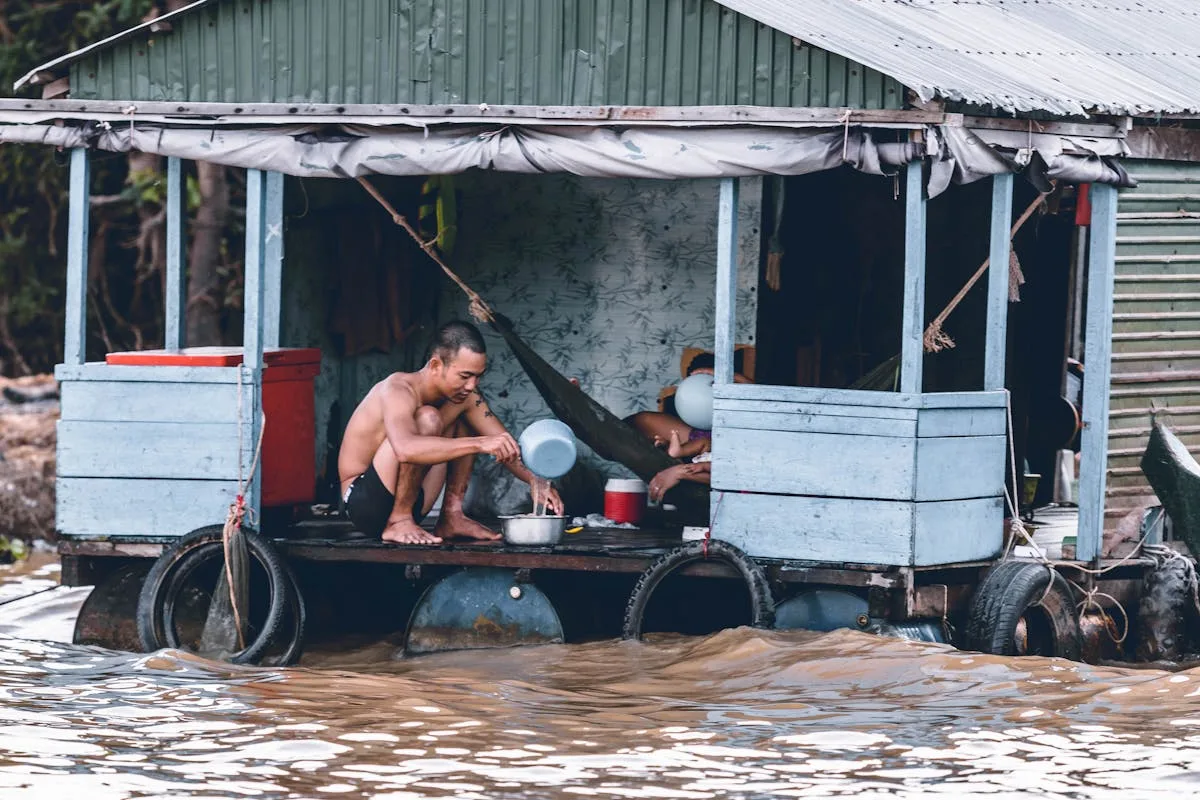
Storm risk often shows up as water risk. Too much water in the wrong place can close roads, contaminate systems, overwhelm pumps, damage electrical equipment, and expose design assumptions that were reasonable a decade ago but no longer fit current conditions.
Council Fire has written before that water is where climate risk gets real. That point applies directly to hurricane preparation. The most useful planning exercise is not a generic hurricane checklist. It is a water pathway map: where water enters, where it pools, what it touches, what fails first, and who is affected downstream.
For a municipality, that may mean drainage choke points, lift stations, road underpasses, emergency shelters, and neighborhoods with limited ability to evacuate. For a company, it may mean loading docks, electrical rooms, chemical storage, stormwater permits, refrigerated inventory, or employee access routes.
What does a better resilience review look like?
A good review is short, specific, and tied to decisions. It should not begin with a debate about climate ideology. It should begin with exposure, thresholds, and consequences.
Use four questions:
What must keep working during and after a severe storm?
What conditions would make that impossible?
Who has the authority and budget to reduce that risk before the event?
How will we know, by the end of June, whether the most important fixes happened?
Those questions turn climate resilience into management work. They also make gaps harder to hide. If the answer is "we are waiting for a grant" or "that sits with another department," then the organization has found a governance issue, not just a technical issue.
The same logic applies to climate data. Better information helps, but only if it changes decisions. Council Fire's piece on why climate data strategy cannot wait for Washington makes the same point for organizations facing policy uncertainty. Waiting for perfect federal direction is not a strategy. Using available data to make better local choices is.
How should leaders talk about a quieter forecast?
The right message is balanced: less alarm, more discipline. A below-normal outlook should help teams focus. It should not soften accountability.
Leaders can say this plainly: "The seasonal forecast is lower than recent years, but our job is to be ready for the storm that reaches us. We will use June to close known gaps, test decision processes, and protect the people and assets that matter most."
That kind of message works because it separates probability from responsibility. People do not need inflated claims to take risk seriously. They need clear expectations, trusted channels, and visible preparation.

What should be done before July?
A practical 30-day sprint can reduce meaningful risk. It should close the gaps most likely to turn a storm into a long disruption.
Update the critical asset list and rank assets by consequence, not replacement cost.
Walk the top five sites with facilities, operations, safety, finance, and community-facing staff together.
Test backup power, communications, remote access, fuel, pumps, and manual workarounds.
Review insurance documentation needs before losses occur.
Set decision thresholds for closure, evacuation support, temporary relocation, mutual aid, emergency purchasing, and customer communication.
Create a short after-action template now, so lessons are captured while facts are fresh.
For regional systems, one more step matters: convene the people who normally plan separately. Public agencies, utilities, anchor employers, ports, hospitals, schools, and community organizations often share the same risks but manage them through disconnected plans.
The bottom line
NOAA's 2026 outlook may be less severe than recent hurricane seasons. Good. Use that breathing room well.
The organizations that perform best after storms are rarely the ones with the longest documents. They are the ones that know what matters, understand where failure starts, make decisions before pressure peaks, and coordinate with the people who will live with the consequences.
A quiet forecast is not a resilience plan. It is a chance to finish one.
Related Resources
Climate Resilience & Adaptation: A Strategic Framework for Organizations explains how to connect climate risk to governance, operations, and investment decisions.
Water Is Where Climate Risk Gets Real looks at why water exposure deserves a central place in climate planning.
Block by Block: How Cities Are Putting Climate Resilience in the Hands of Neighborhoods shows why local capacity and neighborhood trust matter during recovery.
Your Climate Data Strategy Can't Wait for Washington offers a practical view of climate decisions when policy direction is unstable.
FAQ
Does a below-normal hurricane season mean coastal organizations can delay resilience work?
No. A seasonal outlook estimates total basin activity. It does not predict whether one damaging storm will hit a specific community, facility, port, or supply chain. Resilience work should be based on local exposure and consequences.
What is the most common mistake leaders make with hurricane forecasts?
They confuse probability with readiness. A lower probability year can still produce a severe local event. The right response is to use the forecast to prioritize work, not postpone it.
What should businesses review first?
Start with the locations, suppliers, routes, systems, and people that are essential to meeting customer, safety, and regulatory obligations. Then test what happens if power, water, access, staffing, or communications fail for several days.
How should local governments make hurricane planning more useful?
Focus on decision rights, vulnerable neighborhoods, critical assets, mutual aid, vendor readiness, and public communication. The best plans make it clear who acts, when they act, and what resources they can use.
Where should leaders look for authoritative hurricane information?
Use NOAA and the National Hurricane Center for forecasts, outlooks, advisories, and hazard information. Pair those sources with local emergency management guidance and site-specific risk assessments.

Latest Articles
©2025
FAQ
01
What does it really mean to “redefine profit”?
02
What makes Council Fire different?
03
Who does Council Fire you work with?
04
What does working with Council Fire actually look like?
05
How does Council Fire help organizations turn big goals into action?
06
How does Council Fire define and measure success?


Jun 2, 2026
A Quiet Hurricane Forecast Is Not a Resilience Plan
Climate Resilience

George Chmael II
Founder & CEO
In This Article
NOAA expects a below-normal 2026 Atlantic hurricane season. That lowers basin-wide odds, but it does not reduce the need for practical resilience checks across infrastructure, operations, suppliers, insurance, and community coordination.
A Quiet Hurricane Forecast Is Not a Resilience Plan
Executive Summary
NOAA's May 2026 Atlantic hurricane outlook points to a below-normal season: 8 to 14 named storms, 3 to 6 hurricanes, and 1 to 3 major hurricanes. That is useful information. It is not permission for local governments, utilities, ports, hospitals, developers, or coastal employers to slow down resilience work.
The practical lesson is simple. Seasonal forecasts estimate basin-wide storm activity. They do not tell you whether one storm will stall over your county, push water into your substation, close a bridge your workforce depends on, or expose a gap in your emergency communications plan. A lower-count year can still produce a high-loss event.
Leaders should use the forecast window to check the fundamentals: asset exposure, continuity plans, flood assumptions, backup power, supplier dependencies, insurance terms, community coordination, and decision rights. Resilience is built before the warning cone appears.

What did NOAA actually say?
On May 21, 2026, NOAA predicted a 55% chance of a below-normal Atlantic hurricane season, a 35% chance of a near-normal season, and a 10% chance of an above-normal season. The season runs from June 1 through November 30.
The numbers matter, but they need context. NOAA is talking about total activity across the Atlantic basin. A city manager, plant operator, port authority, or chief risk officer has a different question: What happens if a storm tracks into our operating footprint?
That difference is where many resilience plans fail. They treat a seasonal outlook as a risk forecast for a specific place. It is not. A basin forecast can be quiet while a single landfall produces major disruption. It can also miss the compounding effects that turn a manageable event into a business interruption: saturated soils before the storm, clogged drainage, backup generators placed below flood level, limited staff availability, weak vendor contracts, and public communication channels that have not been tested.
Why can a below-normal season still hurt?
Hurricane risk is not evenly distributed. Damage depends on where storms form, how fast they intensify, where they make landfall, how slowly they move, and what they hit when they arrive. For many communities and businesses, rainfall and surge are more important than the category number people remember from a headline.
The National Hurricane Center has spent years warning that storm hazards extend outside the center line of the forecast cone. That should sound familiar to anyone responsible for infrastructure or operations. The highest-risk asset may be the access road, pump station, substation, data closet, fueling contract, or employee housing cluster that quietly supports the whole system.
A lower-activity season can also create a behavioral risk. People postpone maintenance. Budget owners shift funds. Boards hear "below normal" and ask whether resilience spending can wait. That is a bad read. The forecast should lower panic, not discipline.
What should local governments check now?
Local governments should treat early June as the last clean window before storm decisions get compressed. The goal is not a thick plan on a shelf. It is a set of clear choices that can be made fast under pressure.
Confirm which roads, culverts, pump stations, shelters, public works yards, and emergency facilities are exposed to surge, riverine flooding, or repeated nuisance flooding.
Check whether critical staff have backup roles, current contact lists, and authority to act when senior leaders are unreachable.
Review mutual aid agreements and vendor contracts for debris removal, temporary power, water, fuel, communications, and emergency repairs.
Make sure public messages are written in plain language and can reach residents through more than one channel.
Identify neighborhoods where evacuation, medical needs, language access, transportation gaps, or housing insecurity could turn a storm into a longer recovery problem.
The equity piece is not optional. Communities with limited transportation, aging housing, lower insurance coverage, or fewer cash reserves are often hit twice: first by the event, then by the recovery process. A resilience plan that only protects public assets is incomplete.
What should companies check now?
Companies should stop treating hurricanes as a facilities issue. Severe weather now touches finance, procurement, workforce planning, insurance, customer commitments, and reputation. The operational question is not only "Can our building withstand the storm?" It is "Can the business keep its promises if the region is disrupted?"
Start with the assets and processes that create revenue, protect people, or carry regulatory obligations. Then test the dependencies around them. A warehouse may be above the floodplain, but its inbound freight route may not be. A manufacturing line may have backup power, while the compressed air system or wastewater permit creates the true constraint.
For business leaders, the 2026 hurricane outlook is a prompt to ask sharper questions:
Which locations depend on one road, one substation, one water supply, one carrier, or one supplier?
Which customer commitments would be missed after three days of outage, seven days of outage, or two weeks of regional disruption?
Do insurance terms, deductibles, exclusions, and documentation requirements match how losses would actually occur?
Do employees know what the company will do about pay, leave, relocation, and safety before a storm hits?
Can executives make fast spending decisions when the best option is prevention, not cleanup?

Why does water deserve special attention?
Storm risk often shows up as water risk. Too much water in the wrong place can close roads, contaminate systems, overwhelm pumps, damage electrical equipment, and expose design assumptions that were reasonable a decade ago but no longer fit current conditions.
Council Fire has written before that water is where climate risk gets real. That point applies directly to hurricane preparation. The most useful planning exercise is not a generic hurricane checklist. It is a water pathway map: where water enters, where it pools, what it touches, what fails first, and who is affected downstream.
For a municipality, that may mean drainage choke points, lift stations, road underpasses, emergency shelters, and neighborhoods with limited ability to evacuate. For a company, it may mean loading docks, electrical rooms, chemical storage, stormwater permits, refrigerated inventory, or employee access routes.
What does a better resilience review look like?
A good review is short, specific, and tied to decisions. It should not begin with a debate about climate ideology. It should begin with exposure, thresholds, and consequences.
Use four questions:
What must keep working during and after a severe storm?
What conditions would make that impossible?
Who has the authority and budget to reduce that risk before the event?
How will we know, by the end of June, whether the most important fixes happened?
Those questions turn climate resilience into management work. They also make gaps harder to hide. If the answer is "we are waiting for a grant" or "that sits with another department," then the organization has found a governance issue, not just a technical issue.
The same logic applies to climate data. Better information helps, but only if it changes decisions. Council Fire's piece on why climate data strategy cannot wait for Washington makes the same point for organizations facing policy uncertainty. Waiting for perfect federal direction is not a strategy. Using available data to make better local choices is.
How should leaders talk about a quieter forecast?
The right message is balanced: less alarm, more discipline. A below-normal outlook should help teams focus. It should not soften accountability.
Leaders can say this plainly: "The seasonal forecast is lower than recent years, but our job is to be ready for the storm that reaches us. We will use June to close known gaps, test decision processes, and protect the people and assets that matter most."
That kind of message works because it separates probability from responsibility. People do not need inflated claims to take risk seriously. They need clear expectations, trusted channels, and visible preparation.

What should be done before July?
A practical 30-day sprint can reduce meaningful risk. It should close the gaps most likely to turn a storm into a long disruption.
Update the critical asset list and rank assets by consequence, not replacement cost.
Walk the top five sites with facilities, operations, safety, finance, and community-facing staff together.
Test backup power, communications, remote access, fuel, pumps, and manual workarounds.
Review insurance documentation needs before losses occur.
Set decision thresholds for closure, evacuation support, temporary relocation, mutual aid, emergency purchasing, and customer communication.
Create a short after-action template now, so lessons are captured while facts are fresh.
For regional systems, one more step matters: convene the people who normally plan separately. Public agencies, utilities, anchor employers, ports, hospitals, schools, and community organizations often share the same risks but manage them through disconnected plans.
The bottom line
NOAA's 2026 outlook may be less severe than recent hurricane seasons. Good. Use that breathing room well.
The organizations that perform best after storms are rarely the ones with the longest documents. They are the ones that know what matters, understand where failure starts, make decisions before pressure peaks, and coordinate with the people who will live with the consequences.
A quiet forecast is not a resilience plan. It is a chance to finish one.
Related Resources
Climate Resilience & Adaptation: A Strategic Framework for Organizations explains how to connect climate risk to governance, operations, and investment decisions.
Water Is Where Climate Risk Gets Real looks at why water exposure deserves a central place in climate planning.
Block by Block: How Cities Are Putting Climate Resilience in the Hands of Neighborhoods shows why local capacity and neighborhood trust matter during recovery.
Your Climate Data Strategy Can't Wait for Washington offers a practical view of climate decisions when policy direction is unstable.
FAQ
Does a below-normal hurricane season mean coastal organizations can delay resilience work?
No. A seasonal outlook estimates total basin activity. It does not predict whether one damaging storm will hit a specific community, facility, port, or supply chain. Resilience work should be based on local exposure and consequences.
What is the most common mistake leaders make with hurricane forecasts?
They confuse probability with readiness. A lower probability year can still produce a severe local event. The right response is to use the forecast to prioritize work, not postpone it.
What should businesses review first?
Start with the locations, suppliers, routes, systems, and people that are essential to meeting customer, safety, and regulatory obligations. Then test what happens if power, water, access, staffing, or communications fail for several days.
How should local governments make hurricane planning more useful?
Focus on decision rights, vulnerable neighborhoods, critical assets, mutual aid, vendor readiness, and public communication. The best plans make it clear who acts, when they act, and what resources they can use.
Where should leaders look for authoritative hurricane information?
Use NOAA and the National Hurricane Center for forecasts, outlooks, advisories, and hazard information. Pair those sources with local emergency management guidance and site-specific risk assessments.

FAQ
01
What does it really mean to “redefine profit”?
02
What makes Council Fire different?
03
Who does Council Fire you work with?
04
What does working with Council Fire actually look like?
05
How does Council Fire help organizations turn big goals into action?
06
How does Council Fire define and measure success?


Jun 2, 2026
A Quiet Hurricane Forecast Is Not a Resilience Plan
Climate Resilience

George Chmael II
Founder & CEO
In This Article
NOAA expects a below-normal 2026 Atlantic hurricane season. That lowers basin-wide odds, but it does not reduce the need for practical resilience checks across infrastructure, operations, suppliers, insurance, and community coordination.
A Quiet Hurricane Forecast Is Not a Resilience Plan
Executive Summary
NOAA's May 2026 Atlantic hurricane outlook points to a below-normal season: 8 to 14 named storms, 3 to 6 hurricanes, and 1 to 3 major hurricanes. That is useful information. It is not permission for local governments, utilities, ports, hospitals, developers, or coastal employers to slow down resilience work.
The practical lesson is simple. Seasonal forecasts estimate basin-wide storm activity. They do not tell you whether one storm will stall over your county, push water into your substation, close a bridge your workforce depends on, or expose a gap in your emergency communications plan. A lower-count year can still produce a high-loss event.
Leaders should use the forecast window to check the fundamentals: asset exposure, continuity plans, flood assumptions, backup power, supplier dependencies, insurance terms, community coordination, and decision rights. Resilience is built before the warning cone appears.

What did NOAA actually say?
On May 21, 2026, NOAA predicted a 55% chance of a below-normal Atlantic hurricane season, a 35% chance of a near-normal season, and a 10% chance of an above-normal season. The season runs from June 1 through November 30.
The numbers matter, but they need context. NOAA is talking about total activity across the Atlantic basin. A city manager, plant operator, port authority, or chief risk officer has a different question: What happens if a storm tracks into our operating footprint?
That difference is where many resilience plans fail. They treat a seasonal outlook as a risk forecast for a specific place. It is not. A basin forecast can be quiet while a single landfall produces major disruption. It can also miss the compounding effects that turn a manageable event into a business interruption: saturated soils before the storm, clogged drainage, backup generators placed below flood level, limited staff availability, weak vendor contracts, and public communication channels that have not been tested.
Why can a below-normal season still hurt?
Hurricane risk is not evenly distributed. Damage depends on where storms form, how fast they intensify, where they make landfall, how slowly they move, and what they hit when they arrive. For many communities and businesses, rainfall and surge are more important than the category number people remember from a headline.
The National Hurricane Center has spent years warning that storm hazards extend outside the center line of the forecast cone. That should sound familiar to anyone responsible for infrastructure or operations. The highest-risk asset may be the access road, pump station, substation, data closet, fueling contract, or employee housing cluster that quietly supports the whole system.
A lower-activity season can also create a behavioral risk. People postpone maintenance. Budget owners shift funds. Boards hear "below normal" and ask whether resilience spending can wait. That is a bad read. The forecast should lower panic, not discipline.
What should local governments check now?
Local governments should treat early June as the last clean window before storm decisions get compressed. The goal is not a thick plan on a shelf. It is a set of clear choices that can be made fast under pressure.
Confirm which roads, culverts, pump stations, shelters, public works yards, and emergency facilities are exposed to surge, riverine flooding, or repeated nuisance flooding.
Check whether critical staff have backup roles, current contact lists, and authority to act when senior leaders are unreachable.
Review mutual aid agreements and vendor contracts for debris removal, temporary power, water, fuel, communications, and emergency repairs.
Make sure public messages are written in plain language and can reach residents through more than one channel.
Identify neighborhoods where evacuation, medical needs, language access, transportation gaps, or housing insecurity could turn a storm into a longer recovery problem.
The equity piece is not optional. Communities with limited transportation, aging housing, lower insurance coverage, or fewer cash reserves are often hit twice: first by the event, then by the recovery process. A resilience plan that only protects public assets is incomplete.
What should companies check now?
Companies should stop treating hurricanes as a facilities issue. Severe weather now touches finance, procurement, workforce planning, insurance, customer commitments, and reputation. The operational question is not only "Can our building withstand the storm?" It is "Can the business keep its promises if the region is disrupted?"
Start with the assets and processes that create revenue, protect people, or carry regulatory obligations. Then test the dependencies around them. A warehouse may be above the floodplain, but its inbound freight route may not be. A manufacturing line may have backup power, while the compressed air system or wastewater permit creates the true constraint.
For business leaders, the 2026 hurricane outlook is a prompt to ask sharper questions:
Which locations depend on one road, one substation, one water supply, one carrier, or one supplier?
Which customer commitments would be missed after three days of outage, seven days of outage, or two weeks of regional disruption?
Do insurance terms, deductibles, exclusions, and documentation requirements match how losses would actually occur?
Do employees know what the company will do about pay, leave, relocation, and safety before a storm hits?
Can executives make fast spending decisions when the best option is prevention, not cleanup?

Why does water deserve special attention?
Storm risk often shows up as water risk. Too much water in the wrong place can close roads, contaminate systems, overwhelm pumps, damage electrical equipment, and expose design assumptions that were reasonable a decade ago but no longer fit current conditions.
Council Fire has written before that water is where climate risk gets real. That point applies directly to hurricane preparation. The most useful planning exercise is not a generic hurricane checklist. It is a water pathway map: where water enters, where it pools, what it touches, what fails first, and who is affected downstream.
For a municipality, that may mean drainage choke points, lift stations, road underpasses, emergency shelters, and neighborhoods with limited ability to evacuate. For a company, it may mean loading docks, electrical rooms, chemical storage, stormwater permits, refrigerated inventory, or employee access routes.
What does a better resilience review look like?
A good review is short, specific, and tied to decisions. It should not begin with a debate about climate ideology. It should begin with exposure, thresholds, and consequences.
Use four questions:
What must keep working during and after a severe storm?
What conditions would make that impossible?
Who has the authority and budget to reduce that risk before the event?
How will we know, by the end of June, whether the most important fixes happened?
Those questions turn climate resilience into management work. They also make gaps harder to hide. If the answer is "we are waiting for a grant" or "that sits with another department," then the organization has found a governance issue, not just a technical issue.
The same logic applies to climate data. Better information helps, but only if it changes decisions. Council Fire's piece on why climate data strategy cannot wait for Washington makes the same point for organizations facing policy uncertainty. Waiting for perfect federal direction is not a strategy. Using available data to make better local choices is.
How should leaders talk about a quieter forecast?
The right message is balanced: less alarm, more discipline. A below-normal outlook should help teams focus. It should not soften accountability.
Leaders can say this plainly: "The seasonal forecast is lower than recent years, but our job is to be ready for the storm that reaches us. We will use June to close known gaps, test decision processes, and protect the people and assets that matter most."
That kind of message works because it separates probability from responsibility. People do not need inflated claims to take risk seriously. They need clear expectations, trusted channels, and visible preparation.

What should be done before July?
A practical 30-day sprint can reduce meaningful risk. It should close the gaps most likely to turn a storm into a long disruption.
Update the critical asset list and rank assets by consequence, not replacement cost.
Walk the top five sites with facilities, operations, safety, finance, and community-facing staff together.
Test backup power, communications, remote access, fuel, pumps, and manual workarounds.
Review insurance documentation needs before losses occur.
Set decision thresholds for closure, evacuation support, temporary relocation, mutual aid, emergency purchasing, and customer communication.
Create a short after-action template now, so lessons are captured while facts are fresh.
For regional systems, one more step matters: convene the people who normally plan separately. Public agencies, utilities, anchor employers, ports, hospitals, schools, and community organizations often share the same risks but manage them through disconnected plans.
The bottom line
NOAA's 2026 outlook may be less severe than recent hurricane seasons. Good. Use that breathing room well.
The organizations that perform best after storms are rarely the ones with the longest documents. They are the ones that know what matters, understand where failure starts, make decisions before pressure peaks, and coordinate with the people who will live with the consequences.
A quiet forecast is not a resilience plan. It is a chance to finish one.
Related Resources
Climate Resilience & Adaptation: A Strategic Framework for Organizations explains how to connect climate risk to governance, operations, and investment decisions.
Water Is Where Climate Risk Gets Real looks at why water exposure deserves a central place in climate planning.
Block by Block: How Cities Are Putting Climate Resilience in the Hands of Neighborhoods shows why local capacity and neighborhood trust matter during recovery.
Your Climate Data Strategy Can't Wait for Washington offers a practical view of climate decisions when policy direction is unstable.
FAQ
Does a below-normal hurricane season mean coastal organizations can delay resilience work?
No. A seasonal outlook estimates total basin activity. It does not predict whether one damaging storm will hit a specific community, facility, port, or supply chain. Resilience work should be based on local exposure and consequences.
What is the most common mistake leaders make with hurricane forecasts?
They confuse probability with readiness. A lower probability year can still produce a severe local event. The right response is to use the forecast to prioritize work, not postpone it.
What should businesses review first?
Start with the locations, suppliers, routes, systems, and people that are essential to meeting customer, safety, and regulatory obligations. Then test what happens if power, water, access, staffing, or communications fail for several days.
How should local governments make hurricane planning more useful?
Focus on decision rights, vulnerable neighborhoods, critical assets, mutual aid, vendor readiness, and public communication. The best plans make it clear who acts, when they act, and what resources they can use.
Where should leaders look for authoritative hurricane information?
Use NOAA and the National Hurricane Center for forecasts, outlooks, advisories, and hazard information. Pair those sources with local emergency management guidance and site-specific risk assessments.

FAQ
What does it really mean to “redefine profit”?
What makes Council Fire different?
Who does Council Fire you work with?
What does working with Council Fire actually look like?
How does Council Fire help organizations turn big goals into action?
How does Council Fire define and measure success?