
May 5, 2026
How to Build a Blended Finance Model for Sustainability Initiatives for NGOs & Nonprofits
Sustainability Strategy
In This Article
Guide for NGOs to build blended finance: evaluate risks, secure catalytic capital, structure instruments, and measure impact.
How to Build a Blended Finance Model for Sustainability Initiatives for NGOs & Nonprofits
Blended finance combines public, philanthropic, and private funding to support high-risk sustainability projects that would otherwise struggle to attract investment. By using concessional capital - like grants or below-market loans - to absorb risks, NGOs and nonprofits can mobilize private investments, diversify funding sources, and reduce dependency on single donors. This approach has already mobilized billions for global development, with each concessional dollar unlocking up to $4 in private capital.
Key Steps to Build a Blended Finance Model:
Evaluate Risks: Identify financial, operational, and external risks, such as currency volatility or political instability, and determine if concessional support is needed.
Secure Catalytic Capital: Combine public, philanthropic, and private funding to lower perceived risks and attract larger investments.
Design Financing Instruments: Use tools like first-loss tranches, guarantees, and insurance to adjust risk-return profiles and appeal to investors.
Set KPIs and Track Impact: Define measurable outcomes, align with global benchmarks, and use real-time systems for transparent reporting.
Blended finance not only addresses funding gaps but also creates opportunities for NGOs to scale their impact while delivering measurable financial and social returns. Examples like Sicredi's solar energy initiative and the Women's Livelihood Bond show how effective structuring and partnerships can drive successful outcomes.
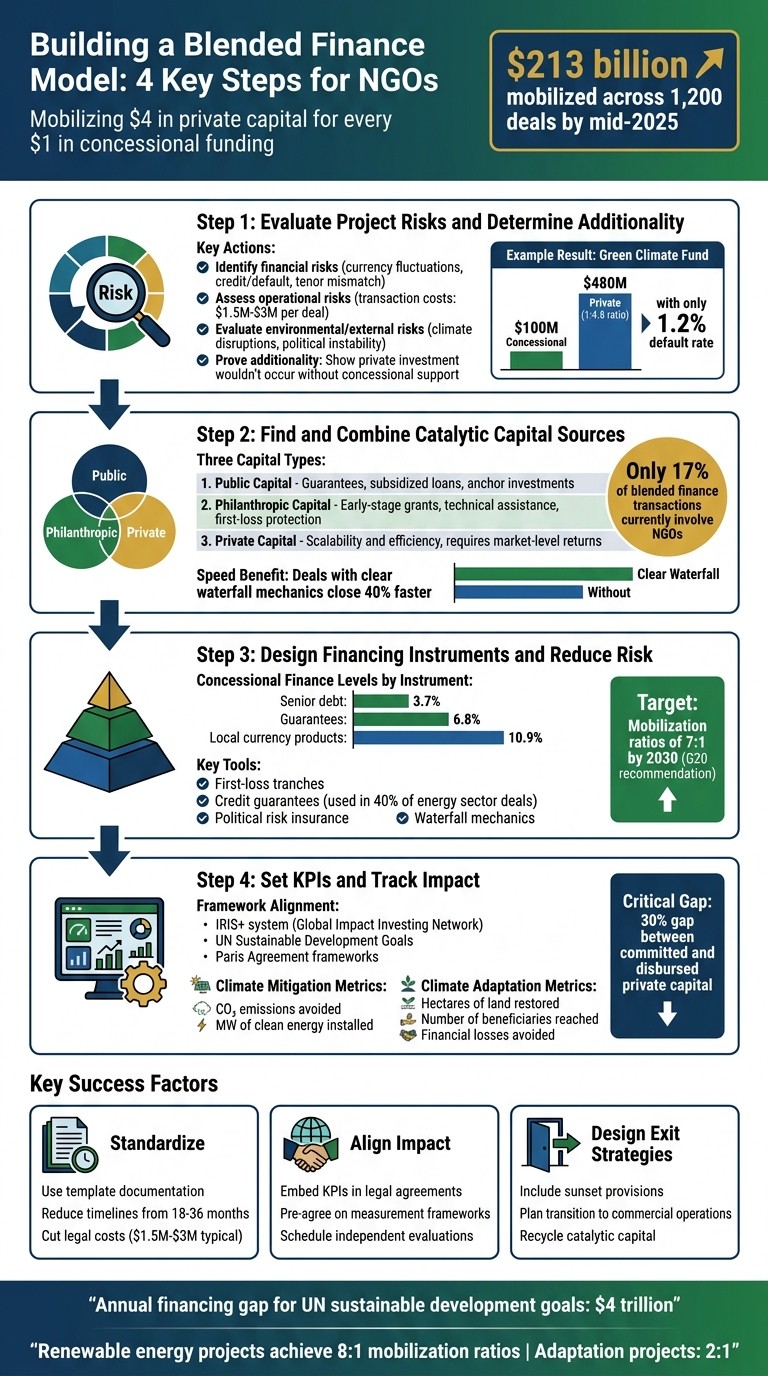
4-Step Framework for Building a Blended Finance Model for NGOs
Follow-Up Webinar: Blended and Innovative Finance for NGOs
Step 1: Evaluate Project Risks and Determine Additionality
Before approaching investors, it's crucial to assess the risks tied to your project and determine whether concessional support is necessary.
Categorizing Different Types of Risk
Financial risks often pose the greatest challenges. For instance, currency and exchange rate fluctuations can create significant issues when your project generates revenue in local currency, but investors expect returns in U.S. dollars or euros [4]. Credit and default risks - where a project might fail to meet its financial obligations - are another major hurdle. To address this, blended financing models often include "first-loss" tranches to absorb initial losses, protecting commercial investors [4][5]. Additionally, tenor mismatch arises when long-term financing needs outpace the availability of commercial terms [6].
Operational risks include high transaction costs, with deal structuring expenses typically ranging from $1.5 million to $3 million for legal and due diligence work [4]. Ensuring strong governance and demonstrating technical expertise in handling complex financial instruments are essential. Another challenge is pipeline risk, where turning a sustainability concept into a "bankable" project that meets investor standards can be difficult [6].
Environmental and external risks encompass factors like climate-related disruptions (e.g., extreme weather), political instability in the project's region, and concerns about greenwashing if sustainability goals are not met [5][6]. For example, the Green Climate Fund in 2021 approved a $100 million equity investment with MUFG Green Guarantee Company to provide local-currency credit guarantees in Sub-Saharan Africa. By absorbing 20% of first-loss risk, this initiative unlocked $480 million in private lending for 14 solar and wind projects across Kenya, Nigeria, and Senegal. The facility achieved a mobilization ratio of 1:4.8 and maintained a low default rate of 1.2% by the end of 2025 [4].
Understanding these risks highlights the importance of concessional support and sets the foundation for explaining additionality.
Defining Additionality
Additionality involves showing that private investment would not occur without concessional support. As described in the Sustainability Atlas:
"Additionality is the principle that concessional capital should only be deployed where commercial capital would not flow on its own" [1].
Failing to establish this could result in wasting limited public funds on projects that would have proceeded without assistance.
To demonstrate additionality, identify the specific market failures - such as political risk, unfamiliar technology, currency instability, or revenue unpredictability - that deter private investors [1]. Then, show that the concessional element is the smallest amount required to attract private capital. The DFI Working Group on Blended Concessional Finance introduced updated guidelines in 2025, requiring deal-specific evidence of these market failures [1]. A notable example is GEEREF, managed by the European Investment Bank. Using a €112 million first-loss tranche from the European Commission and Germany's KfW, it attracted €210 million in private investment. By 2025, this structure supported over 130 clean-energy projects across Sub-Saharan Africa, South Asia, and Latin America, leading to more than 2.2 GW of installed renewable energy capacity [1].
Step 2: Find and Combine Catalytic Capital Sources
After evaluating risks and ensuring additionality, the next step is to secure the right mix of funding. Catalytic capital plays a crucial role here - it’s the initial funding that absorbs risk, making it easier for larger, commercial investors to join in. By mid-2025, blended finance had facilitated $213 billion across 1,200 deals, achieving a mobilization ratio of $4 in private capital for every $1 in concessional funding [1]. This highlights how a well-thought-out funding strategy can unlock substantial investments for sustainability projects. Now, it's time to explore funding sources that align with your project's specific risks and stage of development.
Finding Relevant Funding Sources
For NGOs working on sustainable development projects, aligning funding sources with project risks is essential. A balanced funding mix often includes three types of capital, each serving a distinct purpose. These include:
Public capital: Provides guarantees, subsidized loans, and anchor investments to lower perceived risks [8].
Philanthropic capital: Used for early-stage grants, technical assistance, or first-loss protection [8].
Private capital: Offers scalability and efficiency but requires market-level returns [8].
The key is to match the right type of funding to your project’s stage and risk level. For instance, in March 2026, Good Return secured an expansion grant for its Impact Investment Fund II, a $6.9 million evergreen blended finance facility. This initiative supports about 5,000 micro, small, and medium enterprises (MSMEs) in the Asia-Pacific region, with a focus on 70% women-led businesses, over a 10-year period [7]. Similarly, Save the Children Global Ventures obtained a proof-of-concept grant to design the Asia Healthcare Fund, a $30 million to $50 million finance vehicle aimed at improving healthcare for 5 million children and training 100,000 women health workers in Southeast Asia and the Pacific [7].
When searching for funding, it’s important to document the specific barriers preventing private investment, such as currency risks, country risk perceptions, or revenue uncertainties [1]. This information is vital when approaching Development Finance Institutions (DFIs) or philanthropic funders. Currently, only 17% of blended finance transactions involve NGOs in their development or implementation [7], signaling a significant opportunity for growth. Identifying the right funding sources is a critical step toward building strong partnerships with stakeholders.
Building Relationships with Stakeholders
Securing catalytic capital involves bridging the gap between philanthropic donors prioritizing social impact and commercial investors focused on financial returns. NGOs play a key role in aligning these perspectives. Start by involving stakeholders early in the project design phase - deals with clear waterfall mechanics and pre-agreed impact measurement frameworks close 40% faster than those without [1].
Streamlining your documentation is equally important. By using standardized templates for term sheets and waterfall mechanics, you can reduce legal and due diligence costs, which often range from $1.5 million to $3 million, making smaller deals less viable [4]. Platforms like Convergence or the International Finance Corporation (IFC) offer resources to simplify these processes. For instance, the IFC's Managed Co-lending Portfolio Program reduced the time from mandate to first disbursement to 6.5 months, compared to the usual 12 to 18 months for custom structures [4].
Highlight your technical expertise and community connections. Joan Larrea, CEO of Convergence, emphasizes:
"NGOs and their expertise are critical to the market's evolution, given their proximity to communities and their specialized knowledge" [7].
When engaging commercial investors, focus on your ability to manage impact measurement and deliver on-the-ground implementation. For philanthropic funders, stress how their contributions can unlock larger private capital flows - mobilization ratios vary by sector, with renewable energy projects often achieving 8:1 or higher, while adaptation projects typically mobilize less than 2:1 [1].
Additionally, consider involving local institutional investors, such as domestic pension funds, alongside international capital. This strategy reduces currency hedging costs while fostering long-term market stability [1]. With an annual financing gap of around $4 trillion for UN sustainable development goals and global ESG funds allocating only 6% of their portfolios to emerging markets [8], the need and opportunity for NGOs to channel new investments are immense. Building strong stakeholder relationships not only simplifies capital structuring but also amplifies the impact of your sustainability initiatives.
Step 3: Design Financing Instruments and Reduce Risk
Once catalytic capital is secured (as outlined in Step 2), the next step is structuring financing instruments that attract commercial investors to your blended finance model. The key is to use concessional capital strategically to adjust the risk-return profile of your project, making it appealing to private investors. This requires applying only the minimum concessional support necessary to unlock private capital while avoiding market distortion [1][9].
An effective strategy is to layer your capital stack. This involves arranging funding so that risk flows downward to risk-tolerant catalytic capital (e.g., first-loss or junior tranches), while returns flow upward to commercial investors in senior tranches [1]. To determine the right instruments, first identify why private capital isn't flowing - whether due to currency volatility, unfamiliar technology, or perceived country risk. This analysis shapes the selection of financing tools.
Using Concessional Finance
Concessional finance is designed to absorb specific risks that prevent projects from being viable on purely commercial terms. The principle here is to apply precise concession levels, using only what’s necessary to attract private participation [9][1]. Historical data from the International Finance Corporation (IFC) for fiscal years 2010 to 2025 shows that concessional levels vary by instrument type: senior debt typically requires 3.7% of total project cost, guarantees need 6.8%, and local currency products require 10.9% on average [9].
A compelling example is the Green Climate Fund’s $100 million equity stake in the Green Guarantee Company (GGC). By absorbing 20% first-loss risk, this support enabled GGC to issue $480 million in local-currency credit guarantees by 2025. This backed 14 solar and wind projects with a combined capacity of 620 MW in Kenya, Nigeria, and Senegal. The mobilization ratio reached 1:4.8, with a default rate of just 1.2% [4]. This demonstrates how a well-structured first-loss position can unlock substantial private investment while maintaining performance.
Another example is Amundi Planet Emerging Green One (EGO), a $2 billion green-bond fund launched by Amundi and the IFC. The fund included a $125 million first-loss tranche from the IFC, which attracted institutional investors like pension funds and insurance companies. This structure supports climate-aligned loans through banks in countries such as Indonesia and Turkey [1]. As the IFC notes:
"IFC's blended finance practice uses concessional resources effectively, efficiently, and transparently to deliver on impact" [9].
When structuring concessional finance, it’s critical to define waterfall mechanics - how cash flows are distributed among tranches. Deals with pre-agreed waterfall structures and impact-measurement frameworks close 40% faster than those negotiated on an ad hoc basis [1]. Additionally, include sunset provisions or performance triggers that enable the project to transition to fully commercial operations once viability is proven. This allows catalytic capital to be recycled into new projects [1].
While concessional finance addresses targeted risks, guarantees and insurance can cover broader or external risks. These tools are essential for further mitigating residual risks.
Adding Guarantees and Insurance
Guarantees and insurance mechanisms are vital for addressing risks related to political instability, currency fluctuations, or credit concerns. Credit guarantees are particularly effective in infrastructure and renewable energy projects, with about 40% of blended finance deals in the energy sector relying on development guarantees [10]. Commercial banks are especially responsive to these instruments, making up 50% of private sector participants in guarantee-backed deals [10].
The Rewa Solar Power Project in India showcases the impact of these tools. The World Bank provided a $648 million loan with guarantees to cover debt service for a 750 MW solar project in Madhya Pradesh. This assurance addressed concerns about revenue certainty and regulatory risk, attracting significant private investment to create one of the world’s largest single-site solar plants [10].
Political risk insurance from organizations like the Multilateral Investment Guarantee Agency (MIGA) offers protection against risks such as currency inconvertibility, expropriation, regulatory changes, or contract breaches [1]. These instruments are especially crucial in emerging markets, where perceived risks often outweigh actual project risks. By addressing these barriers, projects can attract domestic institutional investors - like local pension funds - alongside international capital, reducing currency hedging costs and fostering long-term local market growth [1].
To streamline the process, use standardized documentation, such as template term sheets from platforms like Convergence or the IFC. This reduces legal and due diligence costs, cutting the structuring timeline from the typical 18 to 36 months [1][4].
The G20 Independent Expert Group has set ambitious targets, recommending that Multilateral Development Banks aim for mobilization ratios of 7:1 by 2030 [1]. With the right blend of concessional finance and guarantees, your NGO can structure deals that not only meet these goals but also deliver measurable environmental and social benefits while ensuring financial sustainability.
Step 4: Set KPIs and Track Impact
Establishing clear metrics is essential to showcase your project's success. Without measurable results, you risk losing investor trust and failing to demonstrate that concessional capital is achieving its intended purpose. Select KPIs that align with both your sustainability objectives and stakeholder priorities, and monitor them consistently throughout the project lifecycle.
Choosing the Right KPIs
To ensure credibility, start by adopting standardized frameworks. The IRIS+ system from the Global Impact Investing Network and the Operating Principles for Impact Management are widely recognized by institutional investors [1]. Aligning your KPIs with global benchmarks such as the UN Sustainable Development Goals (SDGs) or the Paris Agreement frameworks can further demonstrate alignment with international priorities [4][10].
Tailor your KPIs to suit the specific goals of your project. For climate mitigation, consider metrics like the amount of CO₂ emissions avoided or the number of megawatts (MW) of clean energy installed. For climate adaptation, focus on outcomes such as hectares of land restored, the number of beneficiaries reached, or financial losses avoided [1][4]. As an example, Climate Investor One allocated $850 million across 18 projects in Uganda, Vietnam, and Indonesia by 2025, achieving 1.2 GW of clean energy capacity and preventing an estimated 2.8 million tonnes of CO₂ emissions annually [4].
To solidify accountability, embed impact covenants and pre-agreed KPIs into legal agreements. This ensures that impact measurement becomes a contractual obligation rather than a voluntary practice. Define baselines, reporting schedules, and verification methods upfront to avoid future disputes. Reliable metrics not only confirm the effective use of concessional capital but also demonstrate how it is unlocking private investments in line with your strategic goals.
Additionally, document the rationale for deploying concessional capital and conduct counterfactual analyses to prove additionality - showing that the impact would not have occurred without your intervention [1][4].
Once KPIs are in place, the next priority is to set up reliable data collection and reporting systems.
Collecting Data and Reporting Results
Effective impact tracking validates your financing strategy and reinforces investor confidence. Digital MRV (Monitoring, Reporting, and Verification) tools are particularly useful, as they enable near-real-time tracking of outcomes. These systems can automatically verify results, such as clean energy installations or land restoration efforts, enhancing transparency and supporting results-based payment models [1].
Focus on tracking actual disbursements rather than commitments. With a 30% gap often observed between committed and disbursed private capital in climate blended finance, measuring impact based on deployed funds ensures accuracy and avoids overstating results [4]. To strengthen accountability, schedule independent impact evaluations at both the midpoint and completion of your project.
Tailor your reporting to meet the needs of different audiences. For executives, provide high-level dashboards that highlight mobilization ratios and overall financial performance. For program managers, offer detailed metrics such as the number of beneficiaries served or specific environmental outcomes. Centralize all data in dedicated systems that automate calculations, ensuring real-time accuracy and consistent reporting - whether monthly, quarterly, or annually [11][12].
"Agree on KPIs, baselines and reporting cadence before financial close. Embed impact covenants into legal agreements so that measurement is contractual, not voluntary."
– Sustainability Atlas [1]
In adaptation-focused projects, where mobilization ratios are typically lower - averaging 1:1.8 compared to 1:4 to 1:6 for clean energy initiatives - rigorous impact tracking becomes even more vital. Demonstrating value in these sectors, where financing is inherently more challenging, requires a strong commitment to detailed and transparent measurement [4].
Case Studies of Blended Finance in Action
The following examples showcase how blended finance strategies can create impactful partnerships and results, particularly in advancing sustainability goals.
Case Study: Sicredi Blended Finance for Solar Energy
This initiative demonstrates how strategic alliances and innovative funding structures can generate substantial resources for renewable energy advancements.
Banco Cooperativo Sicredi S.A., Brazil's largest credit cooperative system, reimagined its renewable energy financing approach by collaborating with international development finance institutions. Between 2020 and 2025, Sicredi secured R$9.6 billion (approximately $1.9 billion USD) in international funding, benefiting 175,000 associates [15].
In February 2020, IDB Invest extended a $110 million loan to expand small-scale solar energy in Brazil. Of this, $10 million came from the Canadian Climate Fund for the Private Sector of the Americas (C2F), specifically targeting cooperatives with limited solar energy market penetration and addressing financing challenges for micro-businesses. This funding enabled Sicredi to reach remote rural areas, many of which are underserved, with Sicredi being the only financial institution in 202 municipalities [16].
"The blended financing from the C2F resources will allow Sicredi to increase its credit to cooperatives that have a smaller penetration in the solar market." – IDB Invest [16]
To enhance its standing with international investors, Sicredi issued its first $100 million Green Tier 2 Bond in January 2022, with IDB Invest as the sole investor. It also adopted a Sustainable Finance Framework, aligned with the International Capital Market Association (ICMA) Green Bond Principles, earning a "Dark Green" rating from Cicero, a leading consultancy [13]. Later, in November 2022, the European Investment Bank (EIB) approved a €200 million framework loan to back solar photovoltaic projects for SMEs and households. The EIB financed only 50% of each project, encouraging private sector participation and diversifying Sicredi’s funding sources [14].
"By financing only up to 50% of the underlying projects, the EIB's participation will help crowd in private sector capital, helping to diversify the counterpart's funding mix." – European Investment Bank [14]
By October 2025, these efforts had reduced carbon emissions by over 125,000 tons of CO₂ equivalent and funded more than 50,000 women entrepreneurs [15]. The success was rooted in a combination of technical assistance from development finance institutions (DFIs), innovative financing tools like subordinated debt to meet regulatory needs, and leveraging local cooperative networks to reach underserved communities. This approach underscores the importance of blending technical expertise, creative financial instruments, and grassroots networks to attract diverse sources of capital.
Case Study: Women's Livelihood Bond
Blended finance can also address pressing social issues in underserved regions. The Women's Livelihood Bond (WLB) highlights how this approach can combine social and environmental goals effectively. This model uses a layered capital structure to cater to varying investor risk preferences [4]. Development finance institutions and government agencies, including USAID and Sida, provide partial credit guarantees to cover a portion of the principal, thereby attracting private capital for projects that enhance economic opportunities for women in developing nations.
Projects aimed at low-income women entrepreneurs often face funding challenges due to perceived risks and lower returns. By positioning concessional capital in the first-loss tranche and incorporating credit enhancements, the WLB attracts institutional investors seeking both financial returns and measurable social impact. This case illustrates how customized financial structures can mitigate perceived risks while delivering tangible benefits for both investors and communities.
Common Obstacles and How to Address Them
Building blended finance models presents several hurdles for NGOs, but understanding these challenges and employing effective strategies can mean the difference between success and failure.
Deal complexity and long timelines are among the most significant barriers. These transactions involve numerous stakeholders, each with distinct mandates, approval processes, and reporting requirements. Structuring such deals often takes 18 to 36 months, with legal and due diligence costs ranging from $1.5 million to $3 million [4]. While commercial investors often demand quick decisions, governmental approvals can be notoriously slow [18]. To tackle this, targeted strategies are essential to attract private capital.
"Deals with clear waterfall mechanics and pre-agreed impact-measurement frameworks close 40 percent faster than those where terms are negotiated ad hoc." – Climate Policy Initiative [1]
Another common issue is pipeline scarcity. Many NGOs struggle to create bankable projects due to missing feasibility studies, permits, and offtake agreements. Without these elements, projects often fail to attract commercial capital, further exacerbated by inflated risk perceptions [1][17]. Additionally, currency mismatches complicate matters when projects generate revenue in local currencies, but investors want returns in U.S. dollars or euros [4].
The table below outlines some of the major challenges and practical strategies to overcome them:
Challenge | Description | Mitigation Strategy |
|---|---|---|
High Perceived Risk | Investors are wary of country risk, currency volatility, or unproven technologies [1]. | Offer first-loss tranches, subordinated debt, or guarantees from organizations like MIGA [1]. |
Pipeline Scarcity | Projects often lack key elements like permits, feasibility studies, or offtake agreements [1]. | Use technical-assistance grants and project-preparation facilities to achieve bankability [1]. |
Complexity/Long Timelines | Multi-stakeholder negotiations can drag on for 18-36 months [1]. | Use standardized templates to streamline these negotiations [1]. |
Illiquidity/Exit Risk | Weak exit options in emerging markets deter institutional investors [17]. | Develop refinancing funds or sunset clauses to transition projects to commercial operations [1]. |
Data Opacity | Limited access to reliable data on past performance [17]. | Leverage digital MRV tools for real-time verification and transparent reporting [1]. |
To address these challenges effectively, NGOs must focus on right-sizing concessions, ensuring that only the minimum amount of concessional capital is used to attract private investment [1]. A 2025 evaluation revealed that 28% of projects in a major climate fund lacked clear justification for concessionality, underscoring the need for better documentation [4]. By prioritizing early project preparation, standardizing legal frameworks, and embedding impact covenants in agreements, NGOs can significantly reduce timelines and costs while boosting investor confidence. Tackling these obstacles is key to creating efficient and scalable blended finance models.
Working with Council Fire for Implementation
Council Fire provides the expertise needed to bring blended finance models from concept to reality, ensuring that sustainability goals are effectively achieved.
Council Fire's Consulting Approach
Council Fire uses a systems-thinking methodology to transform sustainability objectives into actionable blended finance models tailored for NGOs and nonprofits. By combining public, private, and philanthropic capital, they address market gaps and make commercial investments accessible where they might otherwise be unattainable [2].
Their process begins with a rigorous stress test of financial models and capital structures before project launch. This ensures the assumptions underpinning a project are sound, minimizing the risk of costly errors [7]. Beyond this, Council Fire helps establish governance frameworks critical for shifting from traditional grant-based funding to investment-focused strategies [7].
Another key focus is creating a pipeline of projects that are ready for investment [7]. To do this, Council Fire incorporates principles like the DFI Enhanced Blended Concessional Finance Principles. These principles ensure that concessional funding is applied effectively, prioritizing economic logic, encouraging private sector involvement, and strengthening rather than distorting markets [9][19]. This methodical approach builds a strong foundation for tackling capacity challenges and aligning diverse stakeholder priorities.
Advantages of Expert Support
Council Fire’s expertise extends beyond consulting, addressing the resource and capacity gaps that often hinder NGOs in structuring complex, multi-stakeholder financial arrangements [2]. Between 2012 and 2018, only $205 billion in private finance was mobilized globally for sustainable development, with a mere 6% reaching the least developed countries [2]. This highlights the difficulty of attracting private capital without targeted strategies to improve risk and return profiles.
Specialized guidance is particularly vital in sectors where measurable outcomes take time to emerge. For instance, social sectors like education receive only 1% to 5% of blended finance investments due to delayed impact realization [2]. Council Fire tackles this challenge by using tools such as the Anticipated Impact Measurement and Monitoring (AIMM) System, which provides detailed tracking of project outcomes [9].
Conclusion
Unlocking sustainable finance, as explored through risk evaluation, capital structuring, instrument design, and KPI tracking, hinges on addressing market inefficiencies, deploying minimal concessional capital, and structuring investments to attract private funding. This four-step framework is essential to bridging the $2.4 trillion annual climate financing gap [1][4].
Blended finance has consistently demonstrated its effectiveness, mobilizing significant private capital through global initiatives [1]. These outcomes highlight how strategic use of public and philanthropic funds can attract private investments into sectors previously deemed unviable.
Achieving success in this space requires three key actions: simplifying and standardizing documentation to shorten structuring timelines [1][4], aligning impact KPIs before financial close [1], and designing clear exit strategies for transitioning to commercial funding [1]. By following these principles, organizations can develop scalable models that strengthen financial markets.
The pressing challenges of today - ranging from climate adaptation to expanding clean energy access - demand innovative financing solutions beyond traditional grants. For NGOs and nonprofits, blended finance provides a practical pathway to scale their impact by leveraging diverse funding sources [3]. With the right expertise, sustainability goals can be transformed into viable, bankable projects that deliver measurable results.
The strategies, tools, and case studies discussed here, such as Sicredi's solar energy initiative and the Women's Livelihood Bond, offer a roadmap for action. By starting with detailed market analysis, involving stakeholders from the outset, and focusing on additionality, organizations can ensure that every dollar of concessional capital achieves the greatest possible impact for sustainable development.
FAQs
How do I prove additionality to funders?
To establish additionality in a blended finance model, it's crucial to demonstrate that the project would not materialize without the involvement of blended finance. This involves showcasing how concessional or catalytic capital helps overcome risks or market barriers that discourage private investors.
Make your case by providing clear evidence of how public or philanthropic funding has attracted private investment. Detail how this support mitigates risks or creates conditions necessary for the project's success. This approach highlights the role funders play in unlocking financing that would otherwise remain out of reach.
What’s the simplest blended finance structure to start with?
Blended finance often begins with a straightforward structure: leveraging public or philanthropic funds to lower risks and entice private sector investment. A common method involves a tiered funding mechanism, where public or philanthropic capital enhances a project's financial appeal, improving its "bankability" for private investors. For those exploring blended finance for the first time, starting with a simple, uncluttered approach is the best way forward.
How do I handle local-currency risk for investors?
To address local-currency risk in blended finance models, it's essential to employ strategies that minimize exposure to exchange rate fluctuations. Tools like currency hedging or structuring deals to align with local currency cash flows can be effective. Specific techniques include using forward contracts or options to lock in favorable exchange rates. Additionally, incorporating concessional capital from public or philanthropic sources can play a pivotal role in reducing risks, ultimately making these investments more attractive to private sector participants.
Related Blog Posts
Latest Articles
©2025

Narrative Change and Power Building: The Missing Half of Advocacy
Narrative change is the process of disrupting dominant narratives that normalize inequity and advancing new narratives from historically marginalized communities.

Funding Resilience Without Federal Grants
BRIC is unreliable and FEMA is shrinking. Here's how cities fund climate resilience with dedicated revenue, blended finance, and a coordinating authority.

The ESG Blind Spot: How AI Is Finding Risks in Companies Nobody Else Is Watching
Norway's sovereign wealth fund uses AI to screen 7,200 portfolio companies for forced labor and corruption within 24 hours. The real story is the emerging-market coverage gap that traditional ESG data vendors miss — and what it means for any company with a global supply chain.
Narrative Change and Power Building: The Missing Half of Advocacy
Narrative change is the process of disrupting dominant narratives that normalize inequity and advancing new narratives from historically marginalized communities.
Funding Resilience Without Federal Grants
BRIC is unreliable and FEMA is shrinking. Here's how cities fund climate resilience with dedicated revenue, blended finance, and a coordinating authority.
The ESG Blind Spot: How AI Is Finding Risks in Companies Nobody Else Is Watching
Norway's sovereign wealth fund uses AI to screen 7,200 portfolio companies for forced labor and corruption within 24 hours. The real story is the emerging-market coverage gap that traditional ESG data vendors miss — and what it means for any company with a global supply chain.
FAQ
01
What does it really mean to “redefine profit”?
02
What makes Council Fire different?
03
Who does Council Fire work with?
04
What does working with Council Fire actually look like?
05
How does Council Fire help organizations turn big goals into action?
06
How does Council Fire define and measure success?
May 5, 2026
How to Build a Blended Finance Model for Sustainability Initiatives for NGOs & Nonprofits
Sustainability Strategy
In This Article
Guide for NGOs to build blended finance: evaluate risks, secure catalytic capital, structure instruments, and measure impact.
How to Build a Blended Finance Model for Sustainability Initiatives for NGOs & Nonprofits
Blended finance combines public, philanthropic, and private funding to support high-risk sustainability projects that would otherwise struggle to attract investment. By using concessional capital - like grants or below-market loans - to absorb risks, NGOs and nonprofits can mobilize private investments, diversify funding sources, and reduce dependency on single donors. This approach has already mobilized billions for global development, with each concessional dollar unlocking up to $4 in private capital.
Key Steps to Build a Blended Finance Model:
Evaluate Risks: Identify financial, operational, and external risks, such as currency volatility or political instability, and determine if concessional support is needed.
Secure Catalytic Capital: Combine public, philanthropic, and private funding to lower perceived risks and attract larger investments.
Design Financing Instruments: Use tools like first-loss tranches, guarantees, and insurance to adjust risk-return profiles and appeal to investors.
Set KPIs and Track Impact: Define measurable outcomes, align with global benchmarks, and use real-time systems for transparent reporting.
Blended finance not only addresses funding gaps but also creates opportunities for NGOs to scale their impact while delivering measurable financial and social returns. Examples like Sicredi's solar energy initiative and the Women's Livelihood Bond show how effective structuring and partnerships can drive successful outcomes.
4-Step Framework for Building a Blended Finance Model for NGOs
Follow-Up Webinar: Blended and Innovative Finance for NGOs
Step 1: Evaluate Project Risks and Determine Additionality
Before approaching investors, it's crucial to assess the risks tied to your project and determine whether concessional support is necessary.
Categorizing Different Types of Risk
Financial risks often pose the greatest challenges. For instance, currency and exchange rate fluctuations can create significant issues when your project generates revenue in local currency, but investors expect returns in U.S. dollars or euros [4]. Credit and default risks - where a project might fail to meet its financial obligations - are another major hurdle. To address this, blended financing models often include "first-loss" tranches to absorb initial losses, protecting commercial investors [4][5]. Additionally, tenor mismatch arises when long-term financing needs outpace the availability of commercial terms [6].
Operational risks include high transaction costs, with deal structuring expenses typically ranging from $1.5 million to $3 million for legal and due diligence work [4]. Ensuring strong governance and demonstrating technical expertise in handling complex financial instruments are essential. Another challenge is pipeline risk, where turning a sustainability concept into a "bankable" project that meets investor standards can be difficult [6].
Environmental and external risks encompass factors like climate-related disruptions (e.g., extreme weather), political instability in the project's region, and concerns about greenwashing if sustainability goals are not met [5][6]. For example, the Green Climate Fund in 2021 approved a $100 million equity investment with MUFG Green Guarantee Company to provide local-currency credit guarantees in Sub-Saharan Africa. By absorbing 20% of first-loss risk, this initiative unlocked $480 million in private lending for 14 solar and wind projects across Kenya, Nigeria, and Senegal. The facility achieved a mobilization ratio of 1:4.8 and maintained a low default rate of 1.2% by the end of 2025 [4].
Understanding these risks highlights the importance of concessional support and sets the foundation for explaining additionality.
Defining Additionality
Additionality involves showing that private investment would not occur without concessional support. As described in the Sustainability Atlas:
"Additionality is the principle that concessional capital should only be deployed where commercial capital would not flow on its own" [1].
Failing to establish this could result in wasting limited public funds on projects that would have proceeded without assistance.
To demonstrate additionality, identify the specific market failures - such as political risk, unfamiliar technology, currency instability, or revenue unpredictability - that deter private investors [1]. Then, show that the concessional element is the smallest amount required to attract private capital. The DFI Working Group on Blended Concessional Finance introduced updated guidelines in 2025, requiring deal-specific evidence of these market failures [1]. A notable example is GEEREF, managed by the European Investment Bank. Using a €112 million first-loss tranche from the European Commission and Germany's KfW, it attracted €210 million in private investment. By 2025, this structure supported over 130 clean-energy projects across Sub-Saharan Africa, South Asia, and Latin America, leading to more than 2.2 GW of installed renewable energy capacity [1].
Step 2: Find and Combine Catalytic Capital Sources
After evaluating risks and ensuring additionality, the next step is to secure the right mix of funding. Catalytic capital plays a crucial role here - it’s the initial funding that absorbs risk, making it easier for larger, commercial investors to join in. By mid-2025, blended finance had facilitated $213 billion across 1,200 deals, achieving a mobilization ratio of $4 in private capital for every $1 in concessional funding [1]. This highlights how a well-thought-out funding strategy can unlock substantial investments for sustainability projects. Now, it's time to explore funding sources that align with your project's specific risks and stage of development.
Finding Relevant Funding Sources
For NGOs working on sustainable development projects, aligning funding sources with project risks is essential. A balanced funding mix often includes three types of capital, each serving a distinct purpose. These include:
Public capital: Provides guarantees, subsidized loans, and anchor investments to lower perceived risks [8].
Philanthropic capital: Used for early-stage grants, technical assistance, or first-loss protection [8].
Private capital: Offers scalability and efficiency but requires market-level returns [8].
The key is to match the right type of funding to your project’s stage and risk level. For instance, in March 2026, Good Return secured an expansion grant for its Impact Investment Fund II, a $6.9 million evergreen blended finance facility. This initiative supports about 5,000 micro, small, and medium enterprises (MSMEs) in the Asia-Pacific region, with a focus on 70% women-led businesses, over a 10-year period [7]. Similarly, Save the Children Global Ventures obtained a proof-of-concept grant to design the Asia Healthcare Fund, a $30 million to $50 million finance vehicle aimed at improving healthcare for 5 million children and training 100,000 women health workers in Southeast Asia and the Pacific [7].
When searching for funding, it’s important to document the specific barriers preventing private investment, such as currency risks, country risk perceptions, or revenue uncertainties [1]. This information is vital when approaching Development Finance Institutions (DFIs) or philanthropic funders. Currently, only 17% of blended finance transactions involve NGOs in their development or implementation [7], signaling a significant opportunity for growth. Identifying the right funding sources is a critical step toward building strong partnerships with stakeholders.
Building Relationships with Stakeholders
Securing catalytic capital involves bridging the gap between philanthropic donors prioritizing social impact and commercial investors focused on financial returns. NGOs play a key role in aligning these perspectives. Start by involving stakeholders early in the project design phase - deals with clear waterfall mechanics and pre-agreed impact measurement frameworks close 40% faster than those without [1].
Streamlining your documentation is equally important. By using standardized templates for term sheets and waterfall mechanics, you can reduce legal and due diligence costs, which often range from $1.5 million to $3 million, making smaller deals less viable [4]. Platforms like Convergence or the International Finance Corporation (IFC) offer resources to simplify these processes. For instance, the IFC's Managed Co-lending Portfolio Program reduced the time from mandate to first disbursement to 6.5 months, compared to the usual 12 to 18 months for custom structures [4].
Highlight your technical expertise and community connections. Joan Larrea, CEO of Convergence, emphasizes:
"NGOs and their expertise are critical to the market's evolution, given their proximity to communities and their specialized knowledge" [7].
When engaging commercial investors, focus on your ability to manage impact measurement and deliver on-the-ground implementation. For philanthropic funders, stress how their contributions can unlock larger private capital flows - mobilization ratios vary by sector, with renewable energy projects often achieving 8:1 or higher, while adaptation projects typically mobilize less than 2:1 [1].
Additionally, consider involving local institutional investors, such as domestic pension funds, alongside international capital. This strategy reduces currency hedging costs while fostering long-term market stability [1]. With an annual financing gap of around $4 trillion for UN sustainable development goals and global ESG funds allocating only 6% of their portfolios to emerging markets [8], the need and opportunity for NGOs to channel new investments are immense. Building strong stakeholder relationships not only simplifies capital structuring but also amplifies the impact of your sustainability initiatives.
Step 3: Design Financing Instruments and Reduce Risk
Once catalytic capital is secured (as outlined in Step 2), the next step is structuring financing instruments that attract commercial investors to your blended finance model. The key is to use concessional capital strategically to adjust the risk-return profile of your project, making it appealing to private investors. This requires applying only the minimum concessional support necessary to unlock private capital while avoiding market distortion [1][9].
An effective strategy is to layer your capital stack. This involves arranging funding so that risk flows downward to risk-tolerant catalytic capital (e.g., first-loss or junior tranches), while returns flow upward to commercial investors in senior tranches [1]. To determine the right instruments, first identify why private capital isn't flowing - whether due to currency volatility, unfamiliar technology, or perceived country risk. This analysis shapes the selection of financing tools.
Using Concessional Finance
Concessional finance is designed to absorb specific risks that prevent projects from being viable on purely commercial terms. The principle here is to apply precise concession levels, using only what’s necessary to attract private participation [9][1]. Historical data from the International Finance Corporation (IFC) for fiscal years 2010 to 2025 shows that concessional levels vary by instrument type: senior debt typically requires 3.7% of total project cost, guarantees need 6.8%, and local currency products require 10.9% on average [9].
A compelling example is the Green Climate Fund’s $100 million equity stake in the Green Guarantee Company (GGC). By absorbing 20% first-loss risk, this support enabled GGC to issue $480 million in local-currency credit guarantees by 2025. This backed 14 solar and wind projects with a combined capacity of 620 MW in Kenya, Nigeria, and Senegal. The mobilization ratio reached 1:4.8, with a default rate of just 1.2% [4]. This demonstrates how a well-structured first-loss position can unlock substantial private investment while maintaining performance.
Another example is Amundi Planet Emerging Green One (EGO), a $2 billion green-bond fund launched by Amundi and the IFC. The fund included a $125 million first-loss tranche from the IFC, which attracted institutional investors like pension funds and insurance companies. This structure supports climate-aligned loans through banks in countries such as Indonesia and Turkey [1]. As the IFC notes:
"IFC's blended finance practice uses concessional resources effectively, efficiently, and transparently to deliver on impact" [9].
When structuring concessional finance, it’s critical to define waterfall mechanics - how cash flows are distributed among tranches. Deals with pre-agreed waterfall structures and impact-measurement frameworks close 40% faster than those negotiated on an ad hoc basis [1]. Additionally, include sunset provisions or performance triggers that enable the project to transition to fully commercial operations once viability is proven. This allows catalytic capital to be recycled into new projects [1].
While concessional finance addresses targeted risks, guarantees and insurance can cover broader or external risks. These tools are essential for further mitigating residual risks.
Adding Guarantees and Insurance
Guarantees and insurance mechanisms are vital for addressing risks related to political instability, currency fluctuations, or credit concerns. Credit guarantees are particularly effective in infrastructure and renewable energy projects, with about 40% of blended finance deals in the energy sector relying on development guarantees [10]. Commercial banks are especially responsive to these instruments, making up 50% of private sector participants in guarantee-backed deals [10].
The Rewa Solar Power Project in India showcases the impact of these tools. The World Bank provided a $648 million loan with guarantees to cover debt service for a 750 MW solar project in Madhya Pradesh. This assurance addressed concerns about revenue certainty and regulatory risk, attracting significant private investment to create one of the world’s largest single-site solar plants [10].
Political risk insurance from organizations like the Multilateral Investment Guarantee Agency (MIGA) offers protection against risks such as currency inconvertibility, expropriation, regulatory changes, or contract breaches [1]. These instruments are especially crucial in emerging markets, where perceived risks often outweigh actual project risks. By addressing these barriers, projects can attract domestic institutional investors - like local pension funds - alongside international capital, reducing currency hedging costs and fostering long-term local market growth [1].
To streamline the process, use standardized documentation, such as template term sheets from platforms like Convergence or the IFC. This reduces legal and due diligence costs, cutting the structuring timeline from the typical 18 to 36 months [1][4].
The G20 Independent Expert Group has set ambitious targets, recommending that Multilateral Development Banks aim for mobilization ratios of 7:1 by 2030 [1]. With the right blend of concessional finance and guarantees, your NGO can structure deals that not only meet these goals but also deliver measurable environmental and social benefits while ensuring financial sustainability.
Step 4: Set KPIs and Track Impact
Establishing clear metrics is essential to showcase your project's success. Without measurable results, you risk losing investor trust and failing to demonstrate that concessional capital is achieving its intended purpose. Select KPIs that align with both your sustainability objectives and stakeholder priorities, and monitor them consistently throughout the project lifecycle.
Choosing the Right KPIs
To ensure credibility, start by adopting standardized frameworks. The IRIS+ system from the Global Impact Investing Network and the Operating Principles for Impact Management are widely recognized by institutional investors [1]. Aligning your KPIs with global benchmarks such as the UN Sustainable Development Goals (SDGs) or the Paris Agreement frameworks can further demonstrate alignment with international priorities [4][10].
Tailor your KPIs to suit the specific goals of your project. For climate mitigation, consider metrics like the amount of CO₂ emissions avoided or the number of megawatts (MW) of clean energy installed. For climate adaptation, focus on outcomes such as hectares of land restored, the number of beneficiaries reached, or financial losses avoided [1][4]. As an example, Climate Investor One allocated $850 million across 18 projects in Uganda, Vietnam, and Indonesia by 2025, achieving 1.2 GW of clean energy capacity and preventing an estimated 2.8 million tonnes of CO₂ emissions annually [4].
To solidify accountability, embed impact covenants and pre-agreed KPIs into legal agreements. This ensures that impact measurement becomes a contractual obligation rather than a voluntary practice. Define baselines, reporting schedules, and verification methods upfront to avoid future disputes. Reliable metrics not only confirm the effective use of concessional capital but also demonstrate how it is unlocking private investments in line with your strategic goals.
Additionally, document the rationale for deploying concessional capital and conduct counterfactual analyses to prove additionality - showing that the impact would not have occurred without your intervention [1][4].
Once KPIs are in place, the next priority is to set up reliable data collection and reporting systems.
Collecting Data and Reporting Results
Effective impact tracking validates your financing strategy and reinforces investor confidence. Digital MRV (Monitoring, Reporting, and Verification) tools are particularly useful, as they enable near-real-time tracking of outcomes. These systems can automatically verify results, such as clean energy installations or land restoration efforts, enhancing transparency and supporting results-based payment models [1].
Focus on tracking actual disbursements rather than commitments. With a 30% gap often observed between committed and disbursed private capital in climate blended finance, measuring impact based on deployed funds ensures accuracy and avoids overstating results [4]. To strengthen accountability, schedule independent impact evaluations at both the midpoint and completion of your project.
Tailor your reporting to meet the needs of different audiences. For executives, provide high-level dashboards that highlight mobilization ratios and overall financial performance. For program managers, offer detailed metrics such as the number of beneficiaries served or specific environmental outcomes. Centralize all data in dedicated systems that automate calculations, ensuring real-time accuracy and consistent reporting - whether monthly, quarterly, or annually [11][12].
"Agree on KPIs, baselines and reporting cadence before financial close. Embed impact covenants into legal agreements so that measurement is contractual, not voluntary."
– Sustainability Atlas [1]
In adaptation-focused projects, where mobilization ratios are typically lower - averaging 1:1.8 compared to 1:4 to 1:6 for clean energy initiatives - rigorous impact tracking becomes even more vital. Demonstrating value in these sectors, where financing is inherently more challenging, requires a strong commitment to detailed and transparent measurement [4].
Case Studies of Blended Finance in Action
The following examples showcase how blended finance strategies can create impactful partnerships and results, particularly in advancing sustainability goals.
Case Study: Sicredi Blended Finance for Solar Energy
This initiative demonstrates how strategic alliances and innovative funding structures can generate substantial resources for renewable energy advancements.
Banco Cooperativo Sicredi S.A., Brazil's largest credit cooperative system, reimagined its renewable energy financing approach by collaborating with international development finance institutions. Between 2020 and 2025, Sicredi secured R$9.6 billion (approximately $1.9 billion USD) in international funding, benefiting 175,000 associates [15].
In February 2020, IDB Invest extended a $110 million loan to expand small-scale solar energy in Brazil. Of this, $10 million came from the Canadian Climate Fund for the Private Sector of the Americas (C2F), specifically targeting cooperatives with limited solar energy market penetration and addressing financing challenges for micro-businesses. This funding enabled Sicredi to reach remote rural areas, many of which are underserved, with Sicredi being the only financial institution in 202 municipalities [16].
"The blended financing from the C2F resources will allow Sicredi to increase its credit to cooperatives that have a smaller penetration in the solar market." – IDB Invest [16]
To enhance its standing with international investors, Sicredi issued its first $100 million Green Tier 2 Bond in January 2022, with IDB Invest as the sole investor. It also adopted a Sustainable Finance Framework, aligned with the International Capital Market Association (ICMA) Green Bond Principles, earning a "Dark Green" rating from Cicero, a leading consultancy [13]. Later, in November 2022, the European Investment Bank (EIB) approved a €200 million framework loan to back solar photovoltaic projects for SMEs and households. The EIB financed only 50% of each project, encouraging private sector participation and diversifying Sicredi’s funding sources [14].
"By financing only up to 50% of the underlying projects, the EIB's participation will help crowd in private sector capital, helping to diversify the counterpart's funding mix." – European Investment Bank [14]
By October 2025, these efforts had reduced carbon emissions by over 125,000 tons of CO₂ equivalent and funded more than 50,000 women entrepreneurs [15]. The success was rooted in a combination of technical assistance from development finance institutions (DFIs), innovative financing tools like subordinated debt to meet regulatory needs, and leveraging local cooperative networks to reach underserved communities. This approach underscores the importance of blending technical expertise, creative financial instruments, and grassroots networks to attract diverse sources of capital.
Case Study: Women's Livelihood Bond
Blended finance can also address pressing social issues in underserved regions. The Women's Livelihood Bond (WLB) highlights how this approach can combine social and environmental goals effectively. This model uses a layered capital structure to cater to varying investor risk preferences [4]. Development finance institutions and government agencies, including USAID and Sida, provide partial credit guarantees to cover a portion of the principal, thereby attracting private capital for projects that enhance economic opportunities for women in developing nations.
Projects aimed at low-income women entrepreneurs often face funding challenges due to perceived risks and lower returns. By positioning concessional capital in the first-loss tranche and incorporating credit enhancements, the WLB attracts institutional investors seeking both financial returns and measurable social impact. This case illustrates how customized financial structures can mitigate perceived risks while delivering tangible benefits for both investors and communities.
Common Obstacles and How to Address Them
Building blended finance models presents several hurdles for NGOs, but understanding these challenges and employing effective strategies can mean the difference between success and failure.
Deal complexity and long timelines are among the most significant barriers. These transactions involve numerous stakeholders, each with distinct mandates, approval processes, and reporting requirements. Structuring such deals often takes 18 to 36 months, with legal and due diligence costs ranging from $1.5 million to $3 million [4]. While commercial investors often demand quick decisions, governmental approvals can be notoriously slow [18]. To tackle this, targeted strategies are essential to attract private capital.
"Deals with clear waterfall mechanics and pre-agreed impact-measurement frameworks close 40 percent faster than those where terms are negotiated ad hoc." – Climate Policy Initiative [1]
Another common issue is pipeline scarcity. Many NGOs struggle to create bankable projects due to missing feasibility studies, permits, and offtake agreements. Without these elements, projects often fail to attract commercial capital, further exacerbated by inflated risk perceptions [1][17]. Additionally, currency mismatches complicate matters when projects generate revenue in local currencies, but investors want returns in U.S. dollars or euros [4].
The table below outlines some of the major challenges and practical strategies to overcome them:
Challenge | Description | Mitigation Strategy |
|---|---|---|
High Perceived Risk | Investors are wary of country risk, currency volatility, or unproven technologies [1]. | Offer first-loss tranches, subordinated debt, or guarantees from organizations like MIGA [1]. |
Pipeline Scarcity | Projects often lack key elements like permits, feasibility studies, or offtake agreements [1]. | Use technical-assistance grants and project-preparation facilities to achieve bankability [1]. |
Complexity/Long Timelines | Multi-stakeholder negotiations can drag on for 18-36 months [1]. | Use standardized templates to streamline these negotiations [1]. |
Illiquidity/Exit Risk | Weak exit options in emerging markets deter institutional investors [17]. | Develop refinancing funds or sunset clauses to transition projects to commercial operations [1]. |
Data Opacity | Limited access to reliable data on past performance [17]. | Leverage digital MRV tools for real-time verification and transparent reporting [1]. |
To address these challenges effectively, NGOs must focus on right-sizing concessions, ensuring that only the minimum amount of concessional capital is used to attract private investment [1]. A 2025 evaluation revealed that 28% of projects in a major climate fund lacked clear justification for concessionality, underscoring the need for better documentation [4]. By prioritizing early project preparation, standardizing legal frameworks, and embedding impact covenants in agreements, NGOs can significantly reduce timelines and costs while boosting investor confidence. Tackling these obstacles is key to creating efficient and scalable blended finance models.
Working with Council Fire for Implementation
Council Fire provides the expertise needed to bring blended finance models from concept to reality, ensuring that sustainability goals are effectively achieved.
Council Fire's Consulting Approach
Council Fire uses a systems-thinking methodology to transform sustainability objectives into actionable blended finance models tailored for NGOs and nonprofits. By combining public, private, and philanthropic capital, they address market gaps and make commercial investments accessible where they might otherwise be unattainable [2].
Their process begins with a rigorous stress test of financial models and capital structures before project launch. This ensures the assumptions underpinning a project are sound, minimizing the risk of costly errors [7]. Beyond this, Council Fire helps establish governance frameworks critical for shifting from traditional grant-based funding to investment-focused strategies [7].
Another key focus is creating a pipeline of projects that are ready for investment [7]. To do this, Council Fire incorporates principles like the DFI Enhanced Blended Concessional Finance Principles. These principles ensure that concessional funding is applied effectively, prioritizing economic logic, encouraging private sector involvement, and strengthening rather than distorting markets [9][19]. This methodical approach builds a strong foundation for tackling capacity challenges and aligning diverse stakeholder priorities.
Advantages of Expert Support
Council Fire’s expertise extends beyond consulting, addressing the resource and capacity gaps that often hinder NGOs in structuring complex, multi-stakeholder financial arrangements [2]. Between 2012 and 2018, only $205 billion in private finance was mobilized globally for sustainable development, with a mere 6% reaching the least developed countries [2]. This highlights the difficulty of attracting private capital without targeted strategies to improve risk and return profiles.
Specialized guidance is particularly vital in sectors where measurable outcomes take time to emerge. For instance, social sectors like education receive only 1% to 5% of blended finance investments due to delayed impact realization [2]. Council Fire tackles this challenge by using tools such as the Anticipated Impact Measurement and Monitoring (AIMM) System, which provides detailed tracking of project outcomes [9].
Conclusion
Unlocking sustainable finance, as explored through risk evaluation, capital structuring, instrument design, and KPI tracking, hinges on addressing market inefficiencies, deploying minimal concessional capital, and structuring investments to attract private funding. This four-step framework is essential to bridging the $2.4 trillion annual climate financing gap [1][4].
Blended finance has consistently demonstrated its effectiveness, mobilizing significant private capital through global initiatives [1]. These outcomes highlight how strategic use of public and philanthropic funds can attract private investments into sectors previously deemed unviable.
Achieving success in this space requires three key actions: simplifying and standardizing documentation to shorten structuring timelines [1][4], aligning impact KPIs before financial close [1], and designing clear exit strategies for transitioning to commercial funding [1]. By following these principles, organizations can develop scalable models that strengthen financial markets.
The pressing challenges of today - ranging from climate adaptation to expanding clean energy access - demand innovative financing solutions beyond traditional grants. For NGOs and nonprofits, blended finance provides a practical pathway to scale their impact by leveraging diverse funding sources [3]. With the right expertise, sustainability goals can be transformed into viable, bankable projects that deliver measurable results.
The strategies, tools, and case studies discussed here, such as Sicredi's solar energy initiative and the Women's Livelihood Bond, offer a roadmap for action. By starting with detailed market analysis, involving stakeholders from the outset, and focusing on additionality, organizations can ensure that every dollar of concessional capital achieves the greatest possible impact for sustainable development.
FAQs
How do I prove additionality to funders?
To establish additionality in a blended finance model, it's crucial to demonstrate that the project would not materialize without the involvement of blended finance. This involves showcasing how concessional or catalytic capital helps overcome risks or market barriers that discourage private investors.
Make your case by providing clear evidence of how public or philanthropic funding has attracted private investment. Detail how this support mitigates risks or creates conditions necessary for the project's success. This approach highlights the role funders play in unlocking financing that would otherwise remain out of reach.
What’s the simplest blended finance structure to start with?
Blended finance often begins with a straightforward structure: leveraging public or philanthropic funds to lower risks and entice private sector investment. A common method involves a tiered funding mechanism, where public or philanthropic capital enhances a project's financial appeal, improving its "bankability" for private investors. For those exploring blended finance for the first time, starting with a simple, uncluttered approach is the best way forward.
How do I handle local-currency risk for investors?
To address local-currency risk in blended finance models, it's essential to employ strategies that minimize exposure to exchange rate fluctuations. Tools like currency hedging or structuring deals to align with local currency cash flows can be effective. Specific techniques include using forward contracts or options to lock in favorable exchange rates. Additionally, incorporating concessional capital from public or philanthropic sources can play a pivotal role in reducing risks, ultimately making these investments more attractive to private sector participants.
Related Blog Posts
Latest Articles
©2025
Narrative Change and Power Building: The Missing Half of Advocacy
Narrative change is the process of disrupting dominant narratives that normalize inequity and advancing new narratives from historically marginalized communities.
Funding Resilience Without Federal Grants
BRIC is unreliable and FEMA is shrinking. Here's how cities fund climate resilience with dedicated revenue, blended finance, and a coordinating authority.
The ESG Blind Spot: How AI Is Finding Risks in Companies Nobody Else Is Watching
Norway's sovereign wealth fund uses AI to screen 7,200 portfolio companies for forced labor and corruption within 24 hours. The real story is the emerging-market coverage gap that traditional ESG data vendors miss — and what it means for any company with a global supply chain.
FAQ
01
What does it really mean to “redefine profit”?
02
What makes Council Fire different?
03
Who does Council Fire work with?
04
What does working with Council Fire actually look like?
05
How does Council Fire help organizations turn big goals into action?
06
How does Council Fire define and measure success?
May 5, 2026
How to Build a Blended Finance Model for Sustainability Initiatives for NGOs & Nonprofits
Sustainability Strategy
In This Article
Guide for NGOs to build blended finance: evaluate risks, secure catalytic capital, structure instruments, and measure impact.
How to Build a Blended Finance Model for Sustainability Initiatives for NGOs & Nonprofits
Blended finance combines public, philanthropic, and private funding to support high-risk sustainability projects that would otherwise struggle to attract investment. By using concessional capital - like grants or below-market loans - to absorb risks, NGOs and nonprofits can mobilize private investments, diversify funding sources, and reduce dependency on single donors. This approach has already mobilized billions for global development, with each concessional dollar unlocking up to $4 in private capital.
Key Steps to Build a Blended Finance Model:
Evaluate Risks: Identify financial, operational, and external risks, such as currency volatility or political instability, and determine if concessional support is needed.
Secure Catalytic Capital: Combine public, philanthropic, and private funding to lower perceived risks and attract larger investments.
Design Financing Instruments: Use tools like first-loss tranches, guarantees, and insurance to adjust risk-return profiles and appeal to investors.
Set KPIs and Track Impact: Define measurable outcomes, align with global benchmarks, and use real-time systems for transparent reporting.
Blended finance not only addresses funding gaps but also creates opportunities for NGOs to scale their impact while delivering measurable financial and social returns. Examples like Sicredi's solar energy initiative and the Women's Livelihood Bond show how effective structuring and partnerships can drive successful outcomes.
4-Step Framework for Building a Blended Finance Model for NGOs
Follow-Up Webinar: Blended and Innovative Finance for NGOs
Step 1: Evaluate Project Risks and Determine Additionality
Before approaching investors, it's crucial to assess the risks tied to your project and determine whether concessional support is necessary.
Categorizing Different Types of Risk
Financial risks often pose the greatest challenges. For instance, currency and exchange rate fluctuations can create significant issues when your project generates revenue in local currency, but investors expect returns in U.S. dollars or euros [4]. Credit and default risks - where a project might fail to meet its financial obligations - are another major hurdle. To address this, blended financing models often include "first-loss" tranches to absorb initial losses, protecting commercial investors [4][5]. Additionally, tenor mismatch arises when long-term financing needs outpace the availability of commercial terms [6].
Operational risks include high transaction costs, with deal structuring expenses typically ranging from $1.5 million to $3 million for legal and due diligence work [4]. Ensuring strong governance and demonstrating technical expertise in handling complex financial instruments are essential. Another challenge is pipeline risk, where turning a sustainability concept into a "bankable" project that meets investor standards can be difficult [6].
Environmental and external risks encompass factors like climate-related disruptions (e.g., extreme weather), political instability in the project's region, and concerns about greenwashing if sustainability goals are not met [5][6]. For example, the Green Climate Fund in 2021 approved a $100 million equity investment with MUFG Green Guarantee Company to provide local-currency credit guarantees in Sub-Saharan Africa. By absorbing 20% of first-loss risk, this initiative unlocked $480 million in private lending for 14 solar and wind projects across Kenya, Nigeria, and Senegal. The facility achieved a mobilization ratio of 1:4.8 and maintained a low default rate of 1.2% by the end of 2025 [4].
Understanding these risks highlights the importance of concessional support and sets the foundation for explaining additionality.
Defining Additionality
Additionality involves showing that private investment would not occur without concessional support. As described in the Sustainability Atlas:
"Additionality is the principle that concessional capital should only be deployed where commercial capital would not flow on its own" [1].
Failing to establish this could result in wasting limited public funds on projects that would have proceeded without assistance.
To demonstrate additionality, identify the specific market failures - such as political risk, unfamiliar technology, currency instability, or revenue unpredictability - that deter private investors [1]. Then, show that the concessional element is the smallest amount required to attract private capital. The DFI Working Group on Blended Concessional Finance introduced updated guidelines in 2025, requiring deal-specific evidence of these market failures [1]. A notable example is GEEREF, managed by the European Investment Bank. Using a €112 million first-loss tranche from the European Commission and Germany's KfW, it attracted €210 million in private investment. By 2025, this structure supported over 130 clean-energy projects across Sub-Saharan Africa, South Asia, and Latin America, leading to more than 2.2 GW of installed renewable energy capacity [1].
Step 2: Find and Combine Catalytic Capital Sources
After evaluating risks and ensuring additionality, the next step is to secure the right mix of funding. Catalytic capital plays a crucial role here - it’s the initial funding that absorbs risk, making it easier for larger, commercial investors to join in. By mid-2025, blended finance had facilitated $213 billion across 1,200 deals, achieving a mobilization ratio of $4 in private capital for every $1 in concessional funding [1]. This highlights how a well-thought-out funding strategy can unlock substantial investments for sustainability projects. Now, it's time to explore funding sources that align with your project's specific risks and stage of development.
Finding Relevant Funding Sources
For NGOs working on sustainable development projects, aligning funding sources with project risks is essential. A balanced funding mix often includes three types of capital, each serving a distinct purpose. These include:
Public capital: Provides guarantees, subsidized loans, and anchor investments to lower perceived risks [8].
Philanthropic capital: Used for early-stage grants, technical assistance, or first-loss protection [8].
Private capital: Offers scalability and efficiency but requires market-level returns [8].
The key is to match the right type of funding to your project’s stage and risk level. For instance, in March 2026, Good Return secured an expansion grant for its Impact Investment Fund II, a $6.9 million evergreen blended finance facility. This initiative supports about 5,000 micro, small, and medium enterprises (MSMEs) in the Asia-Pacific region, with a focus on 70% women-led businesses, over a 10-year period [7]. Similarly, Save the Children Global Ventures obtained a proof-of-concept grant to design the Asia Healthcare Fund, a $30 million to $50 million finance vehicle aimed at improving healthcare for 5 million children and training 100,000 women health workers in Southeast Asia and the Pacific [7].
When searching for funding, it’s important to document the specific barriers preventing private investment, such as currency risks, country risk perceptions, or revenue uncertainties [1]. This information is vital when approaching Development Finance Institutions (DFIs) or philanthropic funders. Currently, only 17% of blended finance transactions involve NGOs in their development or implementation [7], signaling a significant opportunity for growth. Identifying the right funding sources is a critical step toward building strong partnerships with stakeholders.
Building Relationships with Stakeholders
Securing catalytic capital involves bridging the gap between philanthropic donors prioritizing social impact and commercial investors focused on financial returns. NGOs play a key role in aligning these perspectives. Start by involving stakeholders early in the project design phase - deals with clear waterfall mechanics and pre-agreed impact measurement frameworks close 40% faster than those without [1].
Streamlining your documentation is equally important. By using standardized templates for term sheets and waterfall mechanics, you can reduce legal and due diligence costs, which often range from $1.5 million to $3 million, making smaller deals less viable [4]. Platforms like Convergence or the International Finance Corporation (IFC) offer resources to simplify these processes. For instance, the IFC's Managed Co-lending Portfolio Program reduced the time from mandate to first disbursement to 6.5 months, compared to the usual 12 to 18 months for custom structures [4].
Highlight your technical expertise and community connections. Joan Larrea, CEO of Convergence, emphasizes:
"NGOs and their expertise are critical to the market's evolution, given their proximity to communities and their specialized knowledge" [7].
When engaging commercial investors, focus on your ability to manage impact measurement and deliver on-the-ground implementation. For philanthropic funders, stress how their contributions can unlock larger private capital flows - mobilization ratios vary by sector, with renewable energy projects often achieving 8:1 or higher, while adaptation projects typically mobilize less than 2:1 [1].
Additionally, consider involving local institutional investors, such as domestic pension funds, alongside international capital. This strategy reduces currency hedging costs while fostering long-term market stability [1]. With an annual financing gap of around $4 trillion for UN sustainable development goals and global ESG funds allocating only 6% of their portfolios to emerging markets [8], the need and opportunity for NGOs to channel new investments are immense. Building strong stakeholder relationships not only simplifies capital structuring but also amplifies the impact of your sustainability initiatives.
Step 3: Design Financing Instruments and Reduce Risk
Once catalytic capital is secured (as outlined in Step 2), the next step is structuring financing instruments that attract commercial investors to your blended finance model. The key is to use concessional capital strategically to adjust the risk-return profile of your project, making it appealing to private investors. This requires applying only the minimum concessional support necessary to unlock private capital while avoiding market distortion [1][9].
An effective strategy is to layer your capital stack. This involves arranging funding so that risk flows downward to risk-tolerant catalytic capital (e.g., first-loss or junior tranches), while returns flow upward to commercial investors in senior tranches [1]. To determine the right instruments, first identify why private capital isn't flowing - whether due to currency volatility, unfamiliar technology, or perceived country risk. This analysis shapes the selection of financing tools.
Using Concessional Finance
Concessional finance is designed to absorb specific risks that prevent projects from being viable on purely commercial terms. The principle here is to apply precise concession levels, using only what’s necessary to attract private participation [9][1]. Historical data from the International Finance Corporation (IFC) for fiscal years 2010 to 2025 shows that concessional levels vary by instrument type: senior debt typically requires 3.7% of total project cost, guarantees need 6.8%, and local currency products require 10.9% on average [9].
A compelling example is the Green Climate Fund’s $100 million equity stake in the Green Guarantee Company (GGC). By absorbing 20% first-loss risk, this support enabled GGC to issue $480 million in local-currency credit guarantees by 2025. This backed 14 solar and wind projects with a combined capacity of 620 MW in Kenya, Nigeria, and Senegal. The mobilization ratio reached 1:4.8, with a default rate of just 1.2% [4]. This demonstrates how a well-structured first-loss position can unlock substantial private investment while maintaining performance.
Another example is Amundi Planet Emerging Green One (EGO), a $2 billion green-bond fund launched by Amundi and the IFC. The fund included a $125 million first-loss tranche from the IFC, which attracted institutional investors like pension funds and insurance companies. This structure supports climate-aligned loans through banks in countries such as Indonesia and Turkey [1]. As the IFC notes:
"IFC's blended finance practice uses concessional resources effectively, efficiently, and transparently to deliver on impact" [9].
When structuring concessional finance, it’s critical to define waterfall mechanics - how cash flows are distributed among tranches. Deals with pre-agreed waterfall structures and impact-measurement frameworks close 40% faster than those negotiated on an ad hoc basis [1]. Additionally, include sunset provisions or performance triggers that enable the project to transition to fully commercial operations once viability is proven. This allows catalytic capital to be recycled into new projects [1].
While concessional finance addresses targeted risks, guarantees and insurance can cover broader or external risks. These tools are essential for further mitigating residual risks.
Adding Guarantees and Insurance
Guarantees and insurance mechanisms are vital for addressing risks related to political instability, currency fluctuations, or credit concerns. Credit guarantees are particularly effective in infrastructure and renewable energy projects, with about 40% of blended finance deals in the energy sector relying on development guarantees [10]. Commercial banks are especially responsive to these instruments, making up 50% of private sector participants in guarantee-backed deals [10].
The Rewa Solar Power Project in India showcases the impact of these tools. The World Bank provided a $648 million loan with guarantees to cover debt service for a 750 MW solar project in Madhya Pradesh. This assurance addressed concerns about revenue certainty and regulatory risk, attracting significant private investment to create one of the world’s largest single-site solar plants [10].
Political risk insurance from organizations like the Multilateral Investment Guarantee Agency (MIGA) offers protection against risks such as currency inconvertibility, expropriation, regulatory changes, or contract breaches [1]. These instruments are especially crucial in emerging markets, where perceived risks often outweigh actual project risks. By addressing these barriers, projects can attract domestic institutional investors - like local pension funds - alongside international capital, reducing currency hedging costs and fostering long-term local market growth [1].
To streamline the process, use standardized documentation, such as template term sheets from platforms like Convergence or the IFC. This reduces legal and due diligence costs, cutting the structuring timeline from the typical 18 to 36 months [1][4].
The G20 Independent Expert Group has set ambitious targets, recommending that Multilateral Development Banks aim for mobilization ratios of 7:1 by 2030 [1]. With the right blend of concessional finance and guarantees, your NGO can structure deals that not only meet these goals but also deliver measurable environmental and social benefits while ensuring financial sustainability.
Step 4: Set KPIs and Track Impact
Establishing clear metrics is essential to showcase your project's success. Without measurable results, you risk losing investor trust and failing to demonstrate that concessional capital is achieving its intended purpose. Select KPIs that align with both your sustainability objectives and stakeholder priorities, and monitor them consistently throughout the project lifecycle.
Choosing the Right KPIs
To ensure credibility, start by adopting standardized frameworks. The IRIS+ system from the Global Impact Investing Network and the Operating Principles for Impact Management are widely recognized by institutional investors [1]. Aligning your KPIs with global benchmarks such as the UN Sustainable Development Goals (SDGs) or the Paris Agreement frameworks can further demonstrate alignment with international priorities [4][10].
Tailor your KPIs to suit the specific goals of your project. For climate mitigation, consider metrics like the amount of CO₂ emissions avoided or the number of megawatts (MW) of clean energy installed. For climate adaptation, focus on outcomes such as hectares of land restored, the number of beneficiaries reached, or financial losses avoided [1][4]. As an example, Climate Investor One allocated $850 million across 18 projects in Uganda, Vietnam, and Indonesia by 2025, achieving 1.2 GW of clean energy capacity and preventing an estimated 2.8 million tonnes of CO₂ emissions annually [4].
To solidify accountability, embed impact covenants and pre-agreed KPIs into legal agreements. This ensures that impact measurement becomes a contractual obligation rather than a voluntary practice. Define baselines, reporting schedules, and verification methods upfront to avoid future disputes. Reliable metrics not only confirm the effective use of concessional capital but also demonstrate how it is unlocking private investments in line with your strategic goals.
Additionally, document the rationale for deploying concessional capital and conduct counterfactual analyses to prove additionality - showing that the impact would not have occurred without your intervention [1][4].
Once KPIs are in place, the next priority is to set up reliable data collection and reporting systems.
Collecting Data and Reporting Results
Effective impact tracking validates your financing strategy and reinforces investor confidence. Digital MRV (Monitoring, Reporting, and Verification) tools are particularly useful, as they enable near-real-time tracking of outcomes. These systems can automatically verify results, such as clean energy installations or land restoration efforts, enhancing transparency and supporting results-based payment models [1].
Focus on tracking actual disbursements rather than commitments. With a 30% gap often observed between committed and disbursed private capital in climate blended finance, measuring impact based on deployed funds ensures accuracy and avoids overstating results [4]. To strengthen accountability, schedule independent impact evaluations at both the midpoint and completion of your project.
Tailor your reporting to meet the needs of different audiences. For executives, provide high-level dashboards that highlight mobilization ratios and overall financial performance. For program managers, offer detailed metrics such as the number of beneficiaries served or specific environmental outcomes. Centralize all data in dedicated systems that automate calculations, ensuring real-time accuracy and consistent reporting - whether monthly, quarterly, or annually [11][12].
"Agree on KPIs, baselines and reporting cadence before financial close. Embed impact covenants into legal agreements so that measurement is contractual, not voluntary."
– Sustainability Atlas [1]
In adaptation-focused projects, where mobilization ratios are typically lower - averaging 1:1.8 compared to 1:4 to 1:6 for clean energy initiatives - rigorous impact tracking becomes even more vital. Demonstrating value in these sectors, where financing is inherently more challenging, requires a strong commitment to detailed and transparent measurement [4].
Case Studies of Blended Finance in Action
The following examples showcase how blended finance strategies can create impactful partnerships and results, particularly in advancing sustainability goals.
Case Study: Sicredi Blended Finance for Solar Energy
This initiative demonstrates how strategic alliances and innovative funding structures can generate substantial resources for renewable energy advancements.
Banco Cooperativo Sicredi S.A., Brazil's largest credit cooperative system, reimagined its renewable energy financing approach by collaborating with international development finance institutions. Between 2020 and 2025, Sicredi secured R$9.6 billion (approximately $1.9 billion USD) in international funding, benefiting 175,000 associates [15].
In February 2020, IDB Invest extended a $110 million loan to expand small-scale solar energy in Brazil. Of this, $10 million came from the Canadian Climate Fund for the Private Sector of the Americas (C2F), specifically targeting cooperatives with limited solar energy market penetration and addressing financing challenges for micro-businesses. This funding enabled Sicredi to reach remote rural areas, many of which are underserved, with Sicredi being the only financial institution in 202 municipalities [16].
"The blended financing from the C2F resources will allow Sicredi to increase its credit to cooperatives that have a smaller penetration in the solar market." – IDB Invest [16]
To enhance its standing with international investors, Sicredi issued its first $100 million Green Tier 2 Bond in January 2022, with IDB Invest as the sole investor. It also adopted a Sustainable Finance Framework, aligned with the International Capital Market Association (ICMA) Green Bond Principles, earning a "Dark Green" rating from Cicero, a leading consultancy [13]. Later, in November 2022, the European Investment Bank (EIB) approved a €200 million framework loan to back solar photovoltaic projects for SMEs and households. The EIB financed only 50% of each project, encouraging private sector participation and diversifying Sicredi’s funding sources [14].
"By financing only up to 50% of the underlying projects, the EIB's participation will help crowd in private sector capital, helping to diversify the counterpart's funding mix." – European Investment Bank [14]
By October 2025, these efforts had reduced carbon emissions by over 125,000 tons of CO₂ equivalent and funded more than 50,000 women entrepreneurs [15]. The success was rooted in a combination of technical assistance from development finance institutions (DFIs), innovative financing tools like subordinated debt to meet regulatory needs, and leveraging local cooperative networks to reach underserved communities. This approach underscores the importance of blending technical expertise, creative financial instruments, and grassroots networks to attract diverse sources of capital.
Case Study: Women's Livelihood Bond
Blended finance can also address pressing social issues in underserved regions. The Women's Livelihood Bond (WLB) highlights how this approach can combine social and environmental goals effectively. This model uses a layered capital structure to cater to varying investor risk preferences [4]. Development finance institutions and government agencies, including USAID and Sida, provide partial credit guarantees to cover a portion of the principal, thereby attracting private capital for projects that enhance economic opportunities for women in developing nations.
Projects aimed at low-income women entrepreneurs often face funding challenges due to perceived risks and lower returns. By positioning concessional capital in the first-loss tranche and incorporating credit enhancements, the WLB attracts institutional investors seeking both financial returns and measurable social impact. This case illustrates how customized financial structures can mitigate perceived risks while delivering tangible benefits for both investors and communities.
Common Obstacles and How to Address Them
Building blended finance models presents several hurdles for NGOs, but understanding these challenges and employing effective strategies can mean the difference between success and failure.
Deal complexity and long timelines are among the most significant barriers. These transactions involve numerous stakeholders, each with distinct mandates, approval processes, and reporting requirements. Structuring such deals often takes 18 to 36 months, with legal and due diligence costs ranging from $1.5 million to $3 million [4]. While commercial investors often demand quick decisions, governmental approvals can be notoriously slow [18]. To tackle this, targeted strategies are essential to attract private capital.
"Deals with clear waterfall mechanics and pre-agreed impact-measurement frameworks close 40 percent faster than those where terms are negotiated ad hoc." – Climate Policy Initiative [1]
Another common issue is pipeline scarcity. Many NGOs struggle to create bankable projects due to missing feasibility studies, permits, and offtake agreements. Without these elements, projects often fail to attract commercial capital, further exacerbated by inflated risk perceptions [1][17]. Additionally, currency mismatches complicate matters when projects generate revenue in local currencies, but investors want returns in U.S. dollars or euros [4].
The table below outlines some of the major challenges and practical strategies to overcome them:
Challenge | Description | Mitigation Strategy |
|---|---|---|
High Perceived Risk | Investors are wary of country risk, currency volatility, or unproven technologies [1]. | Offer first-loss tranches, subordinated debt, or guarantees from organizations like MIGA [1]. |
Pipeline Scarcity | Projects often lack key elements like permits, feasibility studies, or offtake agreements [1]. | Use technical-assistance grants and project-preparation facilities to achieve bankability [1]. |
Complexity/Long Timelines | Multi-stakeholder negotiations can drag on for 18-36 months [1]. | Use standardized templates to streamline these negotiations [1]. |
Illiquidity/Exit Risk | Weak exit options in emerging markets deter institutional investors [17]. | Develop refinancing funds or sunset clauses to transition projects to commercial operations [1]. |
Data Opacity | Limited access to reliable data on past performance [17]. | Leverage digital MRV tools for real-time verification and transparent reporting [1]. |
To address these challenges effectively, NGOs must focus on right-sizing concessions, ensuring that only the minimum amount of concessional capital is used to attract private investment [1]. A 2025 evaluation revealed that 28% of projects in a major climate fund lacked clear justification for concessionality, underscoring the need for better documentation [4]. By prioritizing early project preparation, standardizing legal frameworks, and embedding impact covenants in agreements, NGOs can significantly reduce timelines and costs while boosting investor confidence. Tackling these obstacles is key to creating efficient and scalable blended finance models.
Working with Council Fire for Implementation
Council Fire provides the expertise needed to bring blended finance models from concept to reality, ensuring that sustainability goals are effectively achieved.
Council Fire's Consulting Approach
Council Fire uses a systems-thinking methodology to transform sustainability objectives into actionable blended finance models tailored for NGOs and nonprofits. By combining public, private, and philanthropic capital, they address market gaps and make commercial investments accessible where they might otherwise be unattainable [2].
Their process begins with a rigorous stress test of financial models and capital structures before project launch. This ensures the assumptions underpinning a project are sound, minimizing the risk of costly errors [7]. Beyond this, Council Fire helps establish governance frameworks critical for shifting from traditional grant-based funding to investment-focused strategies [7].
Another key focus is creating a pipeline of projects that are ready for investment [7]. To do this, Council Fire incorporates principles like the DFI Enhanced Blended Concessional Finance Principles. These principles ensure that concessional funding is applied effectively, prioritizing economic logic, encouraging private sector involvement, and strengthening rather than distorting markets [9][19]. This methodical approach builds a strong foundation for tackling capacity challenges and aligning diverse stakeholder priorities.
Advantages of Expert Support
Council Fire’s expertise extends beyond consulting, addressing the resource and capacity gaps that often hinder NGOs in structuring complex, multi-stakeholder financial arrangements [2]. Between 2012 and 2018, only $205 billion in private finance was mobilized globally for sustainable development, with a mere 6% reaching the least developed countries [2]. This highlights the difficulty of attracting private capital without targeted strategies to improve risk and return profiles.
Specialized guidance is particularly vital in sectors where measurable outcomes take time to emerge. For instance, social sectors like education receive only 1% to 5% of blended finance investments due to delayed impact realization [2]. Council Fire tackles this challenge by using tools such as the Anticipated Impact Measurement and Monitoring (AIMM) System, which provides detailed tracking of project outcomes [9].
Conclusion
Unlocking sustainable finance, as explored through risk evaluation, capital structuring, instrument design, and KPI tracking, hinges on addressing market inefficiencies, deploying minimal concessional capital, and structuring investments to attract private funding. This four-step framework is essential to bridging the $2.4 trillion annual climate financing gap [1][4].
Blended finance has consistently demonstrated its effectiveness, mobilizing significant private capital through global initiatives [1]. These outcomes highlight how strategic use of public and philanthropic funds can attract private investments into sectors previously deemed unviable.
Achieving success in this space requires three key actions: simplifying and standardizing documentation to shorten structuring timelines [1][4], aligning impact KPIs before financial close [1], and designing clear exit strategies for transitioning to commercial funding [1]. By following these principles, organizations can develop scalable models that strengthen financial markets.
The pressing challenges of today - ranging from climate adaptation to expanding clean energy access - demand innovative financing solutions beyond traditional grants. For NGOs and nonprofits, blended finance provides a practical pathway to scale their impact by leveraging diverse funding sources [3]. With the right expertise, sustainability goals can be transformed into viable, bankable projects that deliver measurable results.
The strategies, tools, and case studies discussed here, such as Sicredi's solar energy initiative and the Women's Livelihood Bond, offer a roadmap for action. By starting with detailed market analysis, involving stakeholders from the outset, and focusing on additionality, organizations can ensure that every dollar of concessional capital achieves the greatest possible impact for sustainable development.
FAQs
How do I prove additionality to funders?
To establish additionality in a blended finance model, it's crucial to demonstrate that the project would not materialize without the involvement of blended finance. This involves showcasing how concessional or catalytic capital helps overcome risks or market barriers that discourage private investors.
Make your case by providing clear evidence of how public or philanthropic funding has attracted private investment. Detail how this support mitigates risks or creates conditions necessary for the project's success. This approach highlights the role funders play in unlocking financing that would otherwise remain out of reach.
What’s the simplest blended finance structure to start with?
Blended finance often begins with a straightforward structure: leveraging public or philanthropic funds to lower risks and entice private sector investment. A common method involves a tiered funding mechanism, where public or philanthropic capital enhances a project's financial appeal, improving its "bankability" for private investors. For those exploring blended finance for the first time, starting with a simple, uncluttered approach is the best way forward.
How do I handle local-currency risk for investors?
To address local-currency risk in blended finance models, it's essential to employ strategies that minimize exposure to exchange rate fluctuations. Tools like currency hedging or structuring deals to align with local currency cash flows can be effective. Specific techniques include using forward contracts or options to lock in favorable exchange rates. Additionally, incorporating concessional capital from public or philanthropic sources can play a pivotal role in reducing risks, ultimately making these investments more attractive to private sector participants.
Related Blog Posts
Latest Articles
©2025
Narrative Change and Power Building: The Missing Half of Advocacy
Narrative change is the process of disrupting dominant narratives that normalize inequity and advancing new narratives from historically marginalized communities.
Funding Resilience Without Federal Grants
BRIC is unreliable and FEMA is shrinking. Here's how cities fund climate resilience with dedicated revenue, blended finance, and a coordinating authority.
The ESG Blind Spot: How AI Is Finding Risks in Companies Nobody Else Is Watching
Norway's sovereign wealth fund uses AI to screen 7,200 portfolio companies for forced labor and corruption within 24 hours. The real story is the emerging-market coverage gap that traditional ESG data vendors miss — and what it means for any company with a global supply chain.
FAQ
What does it really mean to “redefine profit”?
What makes Council Fire different?
Who does Council Fire work with?
What does working with Council Fire actually look like?
How does Council Fire help organizations turn big goals into action?
How does Council Fire define and measure success?