
Jun 4, 2026
How to Align Local Policy with State and Federal Climate Goals for Foundations & Philanthropic Organizations
Sustainability Strategy
In This Article
Foundations can unlock federal funds and reduce emissions by aligning local policies with state and federal climate goals.
How to Align Local Policy with State and Federal Climate Goals for Foundations & Philanthropic Organizations
The key to impactful climate action lies in aligning local policies with state and federal goals. Foundations and philanthropic organizations play a critical role as connectors, funders, and strategists in this process. By bridging gaps between government levels, they can unlock significant funding, drive emissions reductions, and promote equity.
Key Takeaways:
Federal Climate Goals: The U.S. aims for a 50–52% emissions reduction by 2030 compared to 2005 levels, supported by major funding through the Inflation Reduction Act (IRA) and the Infrastructure Investment and Jobs Act (IIJA).
State and Local Roles: States implement renewable energy standards and transportation policies, while local governments focus on zoning, building codes, and land use.
Philanthropy's Role: Foundations provide flexible funding, convene stakeholders, and support innovative strategies, especially in the absence of strong federal regulations.
Benefits of Alignment: Coordinated efforts help communities access federal funds, reduce emissions, and ensure fair outcomes for vulnerable populations.
Action Steps for Foundations:
Set Clear Goals: Define measurable targets for emissions reductions, resilience, and equity.
Identify Policy Gaps: Conduct analyses to align local efforts with state and federal frameworks.
Focus on High-Impact Areas: Prioritize initiatives with measurable outcomes and equity considerations.
Leverage Funding: Combine philanthropic contributions with public grants to maximize impact.
Engage Stakeholders: Build coalitions with local leaders, state agencies, and community groups.
Track Progress: Use tools like emissions inventories and policy dashboards to measure and refine strategies.
Aligning policies at all levels is not just about reducing emissions - it’s about creating long-term, equitable solutions for communities affected by climate change.
Understanding Multi-Level Climate Policy Frameworks
In the United States, climate policy operates on multiple levels - federal, state, and local - each with its own tools, authority, and focus. For organizations looking to make an impact, grasping how these layers interact is essential. Let’s look at how federal priorities shape the foundation for action at state and local levels.
Federal Climate Goals and Priorities
At the federal level, broad goals are set, and significant funding is allocated to drive national efforts. Key pieces of legislation, such as the Inflation Reduction Act (IRA) and the Infrastructure Investment and Jobs Act (IIJA), have funneled substantial resources to states and municipalities.
However, the regulatory landscape has shifted. In February 2026, the Environmental Protection Agency (EPA) repealed the 2009 Endangerment Finding, which had been the legal basis for federal greenhouse gas regulations [5].
"The repeal of the Endangerment Finding shifts the regulatory landscape, placing more responsibility on states to lead in climate action." - Dylan McDowell, CEO, National Caucus of Environmental Legislators [5]
This change means that state and local governments now bear more responsibility for climate action. It underscores the importance of philanthropy in supporting these efforts, as federal regulatory pressure can no longer be relied upon to drive progress.
State Climate Targets and Policy Tools
States act as a crucial link between federal directives and local implementation. Many states are stepping up with ambitious climate policies, leveraging federal funding and driving local innovation. As of 2024, 38 states and the District of Columbia have adopted Renewable Portfolio or Clean Energy Standards [4]. For instance, California has committed to achieving 100% clean electricity by 2045, inspiring states like Minnesota to pursue similar goals [1].
States also hold significant influence over sectors like transportation and electricity grids. Policies such as clean car standards or grid decarbonization targets not only set a clear direction but also empower local governments to align their initiatives with state frameworks. This creates opportunities for targeted support to amplify these efforts.
Local Policy Levers and Constraints
Local governments play a pivotal role in implementing climate policies, addressing areas like zoning, land use, building codes, and transportation planning. For example, a city that updates its building energy codes or promotes transit-oriented development can significantly advance state and federal climate objectives.
Yet, local action is often limited by state preemption laws, which can prevent municipalities from enacting policies that go beyond state standards. Understanding these legal constraints is vital before launching local projects.
"Local governments continue to lead on climate action... Yet these efforts often unfold within complex state legal frameworks." - ICLEI USA [7]
Research from the University of Maryland highlights the potential of subnational actors - states and local governments combined - to reduce emissions by 54–62% relative to 2005 levels by 2035, even without federal leadership [6]. For this potential to be realized, local governments need both the resources and the legal freedom to act. Strategic philanthropic efforts can play a critical role in bridging these gaps and enabling meaningful progress.
Building a Climate Policy Alignment Strategy for Foundations
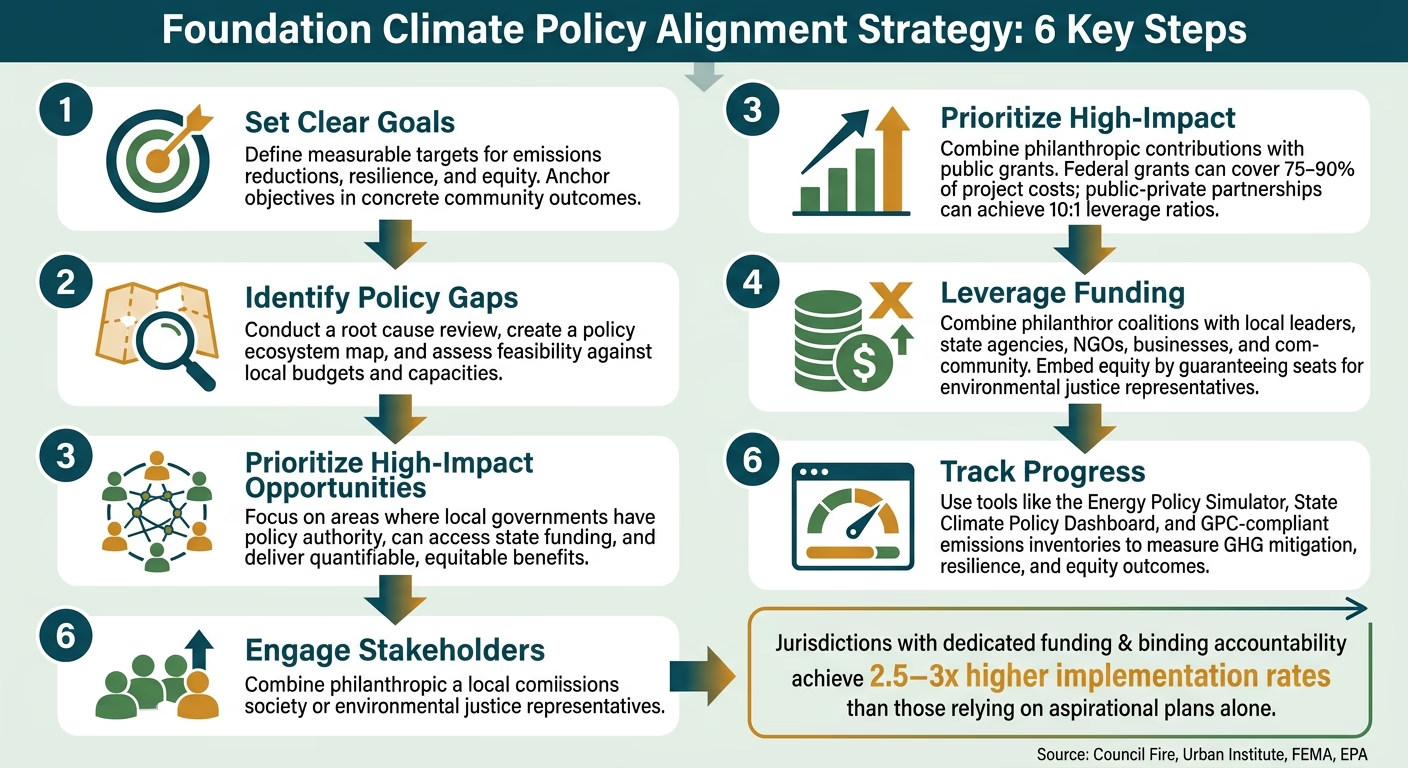
How Foundations Align Local Climate Policy with State & Federal Goals
To move from understanding climate policies at various levels to taking impactful action, foundations need a clear, results-driven strategy. By leveraging the multi-level policy frameworks previously discussed, these steps can help translate knowledge into tangible outcomes.
Defining Alignment Objectives
Effective alignment starts with well-defined goals rather than broad statements like "supporting climate action." Foundations should establish measurable targets for reducing emissions, enhancing resilience, and promoting equity. For instance, the Kresge Foundation's approach emphasizes focusing on specific community outcomes, offering a practical model to follow [9]. By anchoring objectives in concrete results, such as emissions reductions or improvements in community resilience, foundations can create a roadmap for meaningful progress.
Early collaboration is key to sustaining these efforts. Engaging local organizations embedded in vulnerable communities allows for co-creating strategies that reflect on-the-ground realities. This coalition-building approach ensures that the solutions are not only impactful but also tailored to local needs.
Conducting a Policy Gap Analysis
Once objectives are set, the next step is to identify gaps between local initiatives and broader state or federal frameworks. A thorough gap analysis prevents duplicating efforts or inadvertently working at cross-purposes with existing programs.
The Urban Institute and the National League of Cities introduced the Policy and Systems Change Compass in 2024, a 10-step process that has guided cities like Dearborn, Michigan; Kansas City, Missouri; and Mount Vernon, New York, in advancing both health equity and climate resilience [10]. Sarah Weller-Pegna, MPH, from the National League of Cities, explains:
"The Compass process supports municipal teams in identifying and implementing strategic, evidence-based policy solutions to complex problems." [10]
To ensure a comprehensive analysis, include a root cause review, create a policy ecosystem map, and conduct a feasibility assessment that considers local budgets and capacities. This structured approach allows foundations to pinpoint opportunities that align with their goals and deliver widespread, equitable benefits.
Prioritizing High-Impact Opportunities
With finite resources, it’s essential to focus on opportunities that promise measurable and lasting impact. High-priority gaps often align with areas where local governments have significant policy authority, can tap into state funding, and deliver benefits that are both quantifiable and equitable.
As Sarah Weller-Pegna notes:
"The implications of not identifying and implementing effective climate resilience policies are immense, especially as climate change can hurt residents' mental and physical health and well-being." [10]
Nature-based solutions and green infrastructure are particularly appealing because they enhance climate resilience while also improving public health and advancing equity. When deciding where to concentrate efforts, foundations should evaluate the potential for emissions reductions, improvements in community health, and the likelihood of creating durable policy changes. This targeted approach ensures that resources are used effectively to maximize impact.
Funding and Partnership Models for Climate Policy Alignment
Once impactful opportunities are pinpointed, the next hurdle is securing funding and forming partnerships. Foundations can amplify their influence by utilizing mission-driven investments and pooling resources.
Philanthropic Funding Approaches
Mission-related investments (MRIs) enable foundations to allocate their endowments toward climate-focused projects, achieving both financial returns and tangible results. Pooled funds, where multiple funders join forces around a common objective, are particularly effective for addressing large-scale policy challenges that exceed the capacity of any single foundation.
For instance, in February 2026, a community foundation funded a coalition that conducted 65 stakeholder interviews and established four working groups. This effort culminated in a clean energy procurement initiative priced 18% below retail, delivering annual savings of $12 million [3]. Such outcomes often depend on coordinated, multi-funder collaboration.
Equity considerations are also vital in distributing funds. Simplifying grant processes, offering multi-year unrestricted grants, and prioritizing frontline and BIPOC-led organizations help lower barriers and foster the trust needed for lasting policy transformation.
Blending philanthropic funding with public resources can significantly amplify the impact of climate initiatives.
Accessing Public Funding Opportunities
Philanthropic contributions often achieve greater results when combined with public funding. Federal grants, for example, can cover 75% to 90% of project costs [3], meaning even a modest philanthropic investment can unlock substantial government support. The U.S. Environmental Protection Agency highlights that public-private partnerships can achieve funding leverage ratios of 10:1, where $1 of public funding attracts $10 of private investment [11].
A real-world example from February 2026 illustrates this potential: a coastal county established a resilience authority that secured $340 million in infrastructure funding by integrating authority bonds, FEMA BRIC grants, and state resilience funds. Additionally, a resilience fee generated $14 million in recurring annual revenue [3]. Foundations can be instrumental in such projects by providing matching funds, covering pre-development expenses, or financing technical assistance to navigate complex federal applications.
"By directing more than $50 million to locally led solutions, we are shifting power and resources directly to communities facing extreme heat and other climate shocks." - Jess Ayers, CEO, Quadrature Climate Foundation [2]
Community foundations are increasingly taking on an intermediary role, managing federal block grant funds at the local level and serving as hubs for regional resilience initiatives. This trend is expected to grow as FEMA adopts more block grant structures [2].
Working with Experts and Stakeholders
Beyond funding models, engaging expert partners is essential for effective implementation. Multi-stakeholder coalitions can significantly enhance the impact of individual funders. For example, in February 2026, a coalition of 35 organizations - including government bodies, businesses, NGOs, and academic institutions - formed a regional climate compact. This collaboration aligned competing agendas and unlocked $280 million in coordinated investment [3]. The coalition’s success stemmed from involving the right stakeholders early and establishing shared accountability frameworks.
Technical consultants play a vital role in helping foundations design strategies that align across various government levels. Their expertise spans stakeholder mapping, policy gap analysis, and structuring funding partnerships that address both local needs and broader climate objectives. By leveraging seasoned guidance, foundations can minimize misaligned investments and accelerate the transition from planning to action.
"Community foundations exist to play the long game in communities by building on strong established relationships and living with deep commitment to improving community well-being, resilience and change." - Kristin Tracz, Director of the Community Foundation Climate Collaborative [2]
Sustaining Alignment Through Stakeholder Engagement and Governance
Maintaining alignment over time can be tough, especially when political priorities shift, budgets tighten, and new stakeholders enter the picture. Success requires deliberate governance structures and a genuine commitment to inclusive decision-making.
Creating Multi-Level Governance Structures
Effective climate initiatives don’t rely on goodwill alone - they depend on formal structures that ensure accountability and shared authority. Foundations can play a key role in establishing these frameworks, from regional climate compacts to independent resilience authorities.
Take the example of a regional climate compact launched in February 2026. A community foundation brought together 35 organizations across three counties and 28 municipalities. With Council Fire facilitating, the process began with detailed stakeholder mapping. By prioritizing "pragmatic leaders" - those who balance ambition with practical solutions - the compact bridged gaps between aggressive advocates and cautious municipal officials. The results were impressive: a 50% emissions reduction target by 2030, $280 million in coordinated investments, and $48 million secured in FEMA and DOE grants [3].
Here’s a quick look at three governance models that have proven effective:
Governance Model | Key Feature | Primary Benefit |
|---|---|---|
Regional Climate Compact | Multi-sector voluntary agreement | Aligns diverse agendas; aggregates procurement demand [3] |
Resilience Authority | Independent public entity with taxing power | Offers stable funding; manages multi-jurisdictional infrastructure [11] |
Regional Adaptation Collaborative | Peer-to-peer network | Shares best practices; streamlines state and regional assistance [12] |
"Regional problems need regional governance. Municipal-level resilience planning in a shared watershed is inherently incomplete." - Council Fire [11]
While formal structures are essential, embedding equity into governance ensures long-term alignment.
Centering Equity and Community Leadership
Governance that excludes frontline communities often perpetuates the inequities it aims to fix. The difference between meaningful inclusion and tokenism lies in how communities are involved - not just whether they’re invited to participate.
In the February 2026 climate compact, equity was embedded into the governance structure itself. The compact’s bylaws guaranteed seats for environmental justice representatives, and working groups were tasked with ensuring equitable access. This wasn’t just a symbolic gesture - it was a structural commitment [3]. Foundations can support this approach by funding community-based organizations, covering expenses like staff time, translation, and capacity-building. This ensures under-resourced groups can participate effectively without financial strain.
By strengthening equity, governance structures become more resilient. Adaptive practices then help these structures evolve and remain effective.
Using Adaptive Governance Practices
Even the best governance structures need regular adjustments to stay effective. As of January 2026, fewer than 23% of over 750 U.S. cities, counties, and tribal nations with climate plans were on track to meet their emissions targets [13]. The gap between planning and implementation is significant, and without mechanisms to course-correct, it only grows wider.
Two strategies stand out for improving implementation rates. In Denver, for instance, an ordinance mandates an automatic $15 million annual allocation if interim targets are missed for two consecutive years. This approach helped the city achieve a 24% emissions reduction below 2005 levels by 2025 [13]. Another effective practice is transparent peer accountability. The February 2026 climate compact tracked each member’s progress with annual public reports. While not legally binding, the social and professional pressure motivated members to exceed their original target, achieving a 52% aggregate emissions reduction commitment [3].
"Start with trust, not targets. The one-on-one interviews and small-group conversations that preceded the formal coalition were the most important phase." - Council Fire [3]
Jurisdictions with dedicated funding and binding accountability achieve 2.5 to 3 times higher implementation rates than those relying solely on aspirational plans [13]. Foundations can further boost progress by investing in GPC-compliant emissions inventories, which provide the consistent data needed for adaptive policy updates.
Measuring Impact and Refining Strategies
While strong governance and active stakeholder engagement lay the groundwork for effective climate action, consistent measurement is what ensures those efforts lead to real results. By building on governance frameworks, regular tracking ensures that policy alignment moves beyond theory to deliver measurable climate outcomes. The challenge for foundations lies in determining what to measure and using that data to refine strategies over time.
Key Indicators for Climate Policy Alignment
Greenhouse gas (GHG) emissions data is crucial but represents just one piece of the puzzle. Comprehensive measurement spans three key areas: GHG mitigation, climate resilience, and social equity [14][8]. Each of these domains sheds light on a different aspect of climate policy alignment.
For mitigation, sector-specific indicators are critical. In the electricity sector, monitor the share of zero-carbon energy generation. For buildings, focus on electrification and energy efficiency. In transportation, track electric vehicle (EV) adoption and transit system expansions. Agriculture requires attention to carbon sequestration and methane reduction [15][16]. These metrics are directly tied to the policy levers foundations aim to influence.
Equity indicators are equally important. Climate vulnerability isn't just about physical exposure to risks like hurricanes or heat waves; socioeconomic factors such as poverty rates, housing instability, and access to climate funding must also be considered. For example, in 2023, 78% of federal Building Resilient Infrastructure and Communities (BRIC) funding was allocated to East and West Coast states, often bypassing the most vulnerable communities [8]. This kind of disparity highlights the data gaps foundations can work to address.
"Resilience policies are most effective when they target exposure and vulnerability together." - Brookings [8]
Tracking policy implementation itself is another critical area. This includes monitoring whether climate ordinances have passed, whether jurisdictions have appointed Chief Resilience Officers (CROs), and whether Comprehensive Climate Action Plans (CCAPs) are being developed and updated [8][17]. By 2023, 33 U.S. states had initiated formal resilience planning since 2008, and 13 had appointed CROs [8]. These benchmarks provide a clear way for foundations to assess progress in their focus areas. Aligning these quantitative metrics with equity goals creates a holistic framework for impactful action.
With clear indicators in place, effective tools are essential for tracking and reporting progress.
Tools for Monitoring and Reporting
Fortunately, a growing range of standardized tools makes tracking climate metrics more accessible. Below is a selection of tools tailored to specific sectors and purposes:
Tool | Primary Use | Sector Focus |
|---|---|---|
Energy Policy Simulator (EPS) | Models cross-sector policy impacts | Power, Buildings, Industry, Transport [15] |
PATHWAYS | Analyzes deep decarbonization scenarios | Energy, Agriculture, Buildings [15] |
Quantifies avoided emissions from renewables | Electricity [15] | |
Estimates carbon sequestration | Agriculture, Natural Lands [18] | |
State Climate Policy Dashboard | Tracks legislative and regulatory progress | Governance, Cross-sector [19] |
The State Climate Policy Dashboard is particularly helpful for foundations conducting gap analyses. It allows comparisons of local progress against model states, helping identify missing policy opportunities [17]. Additionally, the EPA’s Quantified Climate Action Measures Directory offers a catalog of state and local climate initiatives, providing further insights [14][15].
Once data is gathered using these tools, the next step is turning insights into actionable strategies.
Applying Lessons Learned
Data collection is only the beginning - its real value lies in driving continuous improvement. Effective foundations treat data as part of an ongoing feedback loop rather than a static report at the end of a grant cycle. When interim targets are missed, the focus should shift to understanding why and using those insights to guide future actions.
Both process metrics (e.g., projects completed, residents engaged, funds invested) and outcome metrics (e.g., reduced flood claims, fewer heat-related deaths, shorter power outages, improved insurance ratios) must be evaluated [20]. While process metrics track activity, outcome metrics ultimately justify continued investment.
FEMA estimates that every $1 spent on hazard mitigation saves $6 in disaster recovery costs [20]. Yet, between 2010 and 2018, 88% of FEMA resilience grants were issued only after disasters occurred [8]. Foundations that prioritize pre-disaster mitigation and track its outcomes are addressing a critical gap. Sharing these results through annual reports, peer networks, or policy briefs not only builds accountability but also encourages broader adoption of proactive strategies.
Conclusion: Driving Systemic Change Through Policy Alignment
Aligning local policies with state and federal climate objectives requires a steadfast commitment to clear goals, dependable data, and collaborative partnerships. These elements form the backbone of the strategies discussed and highlight the long-term vision necessary for meaningful climate action.
A prime example of this approach's success is a coalition that secured $280 million in coordinated climate investments. Achieving such outcomes isn't the result of isolated efforts but rather the product of intentional, well-structured collaboration [3].
By building on the frameworks and funding models already outlined, integrating community leadership into governance from the beginning ensures that sustainability efforts go beyond checking procedural boxes. Practical actions - like pairing infrastructure projects with affordable housing safeguards, compensating residents for their expertise, and tracking both procedural and outcome equity metrics - help ensure that climate initiatives do not unintentionally harm the very communities they aim to support.
Reliable data remains at the core of informed decision-making. Tools such as the Policy and Systems Change Compass and the Sustainable Development Goals (SDGs) framework provide a structured method for identifying gaps, setting priorities, and measuring progress. As Anthony F. Pipa, Senior Fellow at the Brookings Institution, aptly stated:
"The complexity of taking on multiple SDG challenges at once and dealing with their interdependencies demands a broader, 'whole-of-society' approach that involves not just governments but also business, philanthropy, academia, and civil society." [21]
These insights underscore the importance of a united and comprehensive approach to tackling climate challenges.
FAQs
Where should our foundation start to align local climate policy with state and federal goals?
To make meaningful progress, begin by forming strategic partnerships across sectors. Engage in conversations with local leaders - such as government officials, business executives, and community organizers - to uncover shared goals and priorities. Building trust is key; once that foundation is in place, establish working groups to define clear, measurable targets for the region.
Streamline funding processes to ensure accessibility, and focus on equity by prioritizing support for frontline communities. To address capacity issues, tap into federal resources like Direct Pay or enlist state-level grant navigators to provide guidance and support. These steps can help create a collaborative and results-driven approach.
How can philanthropy use small grants to unlock large federal funding?
Philanthropy plays a powerful role in boosting the reach of federal climate grants by stepping in to provide the matching funds often required. These grants typically ask recipients to cover 20% or more of project costs, a hurdle that can leave under-resourced communities at a disadvantage. A striking example of this is how a $1.5 million philanthropic grant allowed tribal communities to unlock over $50 million in federal funding - a transformative impact.
Beyond just matching funds, foundations can address other critical gaps. They can support pre-development activities, which are essential for getting projects off the ground. They also have the ability to provide flexible capital, adapting to the unique needs of various initiatives. Additionally, they can advocate for state-level matching funds, further amplifying the resources available to communities in need.
What can we do when state preemption blocks local climate policies?
When state laws restrict local climate initiatives, municipalities still have paths to navigate. Begin with a legal review to evaluate your home rule authority and identify whether state preemption affects your plans. If the state laws seem excessively restrictive, consider pursuing litigation to challenge their scope. Another approach is to implement integrated policies that tie climate goals to economic growth or equity improvements, creating room for action within state guidelines. Additionally, state-specific legal toolkits can serve as valuable resources, offering tailored guidance for navigating these challenges.
Related Blog Posts
Latest Articles
©2026

Narrative Change and Power Building: The Missing Half of Advocacy
Narrative change is the process of disrupting dominant narratives that normalize inequity and advancing new narratives from historically marginalized communities.

Funding Resilience Without Federal Grants
BRIC is unreliable and FEMA is shrinking. Here's how cities fund climate resilience with dedicated revenue, blended finance, and a coordinating authority.

The ESG Blind Spot: How AI Is Finding Risks in Companies Nobody Else Is Watching
Norway's sovereign wealth fund uses AI to screen 7,200 portfolio companies for forced labor and corruption within 24 hours. The real story is the emerging-market coverage gap that traditional ESG data vendors miss — and what it means for any company with a global supply chain.
Narrative Change and Power Building: The Missing Half of Advocacy
Narrative change is the process of disrupting dominant narratives that normalize inequity and advancing new narratives from historically marginalized communities.
Funding Resilience Without Federal Grants
BRIC is unreliable and FEMA is shrinking. Here's how cities fund climate resilience with dedicated revenue, blended finance, and a coordinating authority.
The ESG Blind Spot: How AI Is Finding Risks in Companies Nobody Else Is Watching
Norway's sovereign wealth fund uses AI to screen 7,200 portfolio companies for forced labor and corruption within 24 hours. The real story is the emerging-market coverage gap that traditional ESG data vendors miss — and what it means for any company with a global supply chain.
FAQ
01
What does it really mean to “redefine profit”?
02
What makes Council Fire different?
03
Who does Council Fire work with?
04
What does working with Council Fire actually look like?
05
How does Council Fire help organizations turn big goals into action?
06
How does Council Fire define and measure success?
07
How does technology fit into Council Fire’s work?
Jun 4, 2026
How to Align Local Policy with State and Federal Climate Goals for Foundations & Philanthropic Organizations
Sustainability Strategy
In This Article
Foundations can unlock federal funds and reduce emissions by aligning local policies with state and federal climate goals.
How to Align Local Policy with State and Federal Climate Goals for Foundations & Philanthropic Organizations
The key to impactful climate action lies in aligning local policies with state and federal goals. Foundations and philanthropic organizations play a critical role as connectors, funders, and strategists in this process. By bridging gaps between government levels, they can unlock significant funding, drive emissions reductions, and promote equity.
Key Takeaways:
Federal Climate Goals: The U.S. aims for a 50–52% emissions reduction by 2030 compared to 2005 levels, supported by major funding through the Inflation Reduction Act (IRA) and the Infrastructure Investment and Jobs Act (IIJA).
State and Local Roles: States implement renewable energy standards and transportation policies, while local governments focus on zoning, building codes, and land use.
Philanthropy's Role: Foundations provide flexible funding, convene stakeholders, and support innovative strategies, especially in the absence of strong federal regulations.
Benefits of Alignment: Coordinated efforts help communities access federal funds, reduce emissions, and ensure fair outcomes for vulnerable populations.
Action Steps for Foundations:
Set Clear Goals: Define measurable targets for emissions reductions, resilience, and equity.
Identify Policy Gaps: Conduct analyses to align local efforts with state and federal frameworks.
Focus on High-Impact Areas: Prioritize initiatives with measurable outcomes and equity considerations.
Leverage Funding: Combine philanthropic contributions with public grants to maximize impact.
Engage Stakeholders: Build coalitions with local leaders, state agencies, and community groups.
Track Progress: Use tools like emissions inventories and policy dashboards to measure and refine strategies.
Aligning policies at all levels is not just about reducing emissions - it’s about creating long-term, equitable solutions for communities affected by climate change.
Understanding Multi-Level Climate Policy Frameworks
In the United States, climate policy operates on multiple levels - federal, state, and local - each with its own tools, authority, and focus. For organizations looking to make an impact, grasping how these layers interact is essential. Let’s look at how federal priorities shape the foundation for action at state and local levels.
Federal Climate Goals and Priorities
At the federal level, broad goals are set, and significant funding is allocated to drive national efforts. Key pieces of legislation, such as the Inflation Reduction Act (IRA) and the Infrastructure Investment and Jobs Act (IIJA), have funneled substantial resources to states and municipalities.
However, the regulatory landscape has shifted. In February 2026, the Environmental Protection Agency (EPA) repealed the 2009 Endangerment Finding, which had been the legal basis for federal greenhouse gas regulations [5].
"The repeal of the Endangerment Finding shifts the regulatory landscape, placing more responsibility on states to lead in climate action." - Dylan McDowell, CEO, National Caucus of Environmental Legislators [5]
This change means that state and local governments now bear more responsibility for climate action. It underscores the importance of philanthropy in supporting these efforts, as federal regulatory pressure can no longer be relied upon to drive progress.
State Climate Targets and Policy Tools
States act as a crucial link between federal directives and local implementation. Many states are stepping up with ambitious climate policies, leveraging federal funding and driving local innovation. As of 2024, 38 states and the District of Columbia have adopted Renewable Portfolio or Clean Energy Standards [4]. For instance, California has committed to achieving 100% clean electricity by 2045, inspiring states like Minnesota to pursue similar goals [1].
States also hold significant influence over sectors like transportation and electricity grids. Policies such as clean car standards or grid decarbonization targets not only set a clear direction but also empower local governments to align their initiatives with state frameworks. This creates opportunities for targeted support to amplify these efforts.
Local Policy Levers and Constraints
Local governments play a pivotal role in implementing climate policies, addressing areas like zoning, land use, building codes, and transportation planning. For example, a city that updates its building energy codes or promotes transit-oriented development can significantly advance state and federal climate objectives.
Yet, local action is often limited by state preemption laws, which can prevent municipalities from enacting policies that go beyond state standards. Understanding these legal constraints is vital before launching local projects.
"Local governments continue to lead on climate action... Yet these efforts often unfold within complex state legal frameworks." - ICLEI USA [7]
Research from the University of Maryland highlights the potential of subnational actors - states and local governments combined - to reduce emissions by 54–62% relative to 2005 levels by 2035, even without federal leadership [6]. For this potential to be realized, local governments need both the resources and the legal freedom to act. Strategic philanthropic efforts can play a critical role in bridging these gaps and enabling meaningful progress.
Building a Climate Policy Alignment Strategy for Foundations
How Foundations Align Local Climate Policy with State & Federal Goals
To move from understanding climate policies at various levels to taking impactful action, foundations need a clear, results-driven strategy. By leveraging the multi-level policy frameworks previously discussed, these steps can help translate knowledge into tangible outcomes.
Defining Alignment Objectives
Effective alignment starts with well-defined goals rather than broad statements like "supporting climate action." Foundations should establish measurable targets for reducing emissions, enhancing resilience, and promoting equity. For instance, the Kresge Foundation's approach emphasizes focusing on specific community outcomes, offering a practical model to follow [9]. By anchoring objectives in concrete results, such as emissions reductions or improvements in community resilience, foundations can create a roadmap for meaningful progress.
Early collaboration is key to sustaining these efforts. Engaging local organizations embedded in vulnerable communities allows for co-creating strategies that reflect on-the-ground realities. This coalition-building approach ensures that the solutions are not only impactful but also tailored to local needs.
Conducting a Policy Gap Analysis
Once objectives are set, the next step is to identify gaps between local initiatives and broader state or federal frameworks. A thorough gap analysis prevents duplicating efforts or inadvertently working at cross-purposes with existing programs.
The Urban Institute and the National League of Cities introduced the Policy and Systems Change Compass in 2024, a 10-step process that has guided cities like Dearborn, Michigan; Kansas City, Missouri; and Mount Vernon, New York, in advancing both health equity and climate resilience [10]. Sarah Weller-Pegna, MPH, from the National League of Cities, explains:
"The Compass process supports municipal teams in identifying and implementing strategic, evidence-based policy solutions to complex problems." [10]
To ensure a comprehensive analysis, include a root cause review, create a policy ecosystem map, and conduct a feasibility assessment that considers local budgets and capacities. This structured approach allows foundations to pinpoint opportunities that align with their goals and deliver widespread, equitable benefits.
Prioritizing High-Impact Opportunities
With finite resources, it’s essential to focus on opportunities that promise measurable and lasting impact. High-priority gaps often align with areas where local governments have significant policy authority, can tap into state funding, and deliver benefits that are both quantifiable and equitable.
As Sarah Weller-Pegna notes:
"The implications of not identifying and implementing effective climate resilience policies are immense, especially as climate change can hurt residents' mental and physical health and well-being." [10]
Nature-based solutions and green infrastructure are particularly appealing because they enhance climate resilience while also improving public health and advancing equity. When deciding where to concentrate efforts, foundations should evaluate the potential for emissions reductions, improvements in community health, and the likelihood of creating durable policy changes. This targeted approach ensures that resources are used effectively to maximize impact.
Funding and Partnership Models for Climate Policy Alignment
Once impactful opportunities are pinpointed, the next hurdle is securing funding and forming partnerships. Foundations can amplify their influence by utilizing mission-driven investments and pooling resources.
Philanthropic Funding Approaches
Mission-related investments (MRIs) enable foundations to allocate their endowments toward climate-focused projects, achieving both financial returns and tangible results. Pooled funds, where multiple funders join forces around a common objective, are particularly effective for addressing large-scale policy challenges that exceed the capacity of any single foundation.
For instance, in February 2026, a community foundation funded a coalition that conducted 65 stakeholder interviews and established four working groups. This effort culminated in a clean energy procurement initiative priced 18% below retail, delivering annual savings of $12 million [3]. Such outcomes often depend on coordinated, multi-funder collaboration.
Equity considerations are also vital in distributing funds. Simplifying grant processes, offering multi-year unrestricted grants, and prioritizing frontline and BIPOC-led organizations help lower barriers and foster the trust needed for lasting policy transformation.
Blending philanthropic funding with public resources can significantly amplify the impact of climate initiatives.
Accessing Public Funding Opportunities
Philanthropic contributions often achieve greater results when combined with public funding. Federal grants, for example, can cover 75% to 90% of project costs [3], meaning even a modest philanthropic investment can unlock substantial government support. The U.S. Environmental Protection Agency highlights that public-private partnerships can achieve funding leverage ratios of 10:1, where $1 of public funding attracts $10 of private investment [11].
A real-world example from February 2026 illustrates this potential: a coastal county established a resilience authority that secured $340 million in infrastructure funding by integrating authority bonds, FEMA BRIC grants, and state resilience funds. Additionally, a resilience fee generated $14 million in recurring annual revenue [3]. Foundations can be instrumental in such projects by providing matching funds, covering pre-development expenses, or financing technical assistance to navigate complex federal applications.
"By directing more than $50 million to locally led solutions, we are shifting power and resources directly to communities facing extreme heat and other climate shocks." - Jess Ayers, CEO, Quadrature Climate Foundation [2]
Community foundations are increasingly taking on an intermediary role, managing federal block grant funds at the local level and serving as hubs for regional resilience initiatives. This trend is expected to grow as FEMA adopts more block grant structures [2].
Working with Experts and Stakeholders
Beyond funding models, engaging expert partners is essential for effective implementation. Multi-stakeholder coalitions can significantly enhance the impact of individual funders. For example, in February 2026, a coalition of 35 organizations - including government bodies, businesses, NGOs, and academic institutions - formed a regional climate compact. This collaboration aligned competing agendas and unlocked $280 million in coordinated investment [3]. The coalition’s success stemmed from involving the right stakeholders early and establishing shared accountability frameworks.
Technical consultants play a vital role in helping foundations design strategies that align across various government levels. Their expertise spans stakeholder mapping, policy gap analysis, and structuring funding partnerships that address both local needs and broader climate objectives. By leveraging seasoned guidance, foundations can minimize misaligned investments and accelerate the transition from planning to action.
"Community foundations exist to play the long game in communities by building on strong established relationships and living with deep commitment to improving community well-being, resilience and change." - Kristin Tracz, Director of the Community Foundation Climate Collaborative [2]
Sustaining Alignment Through Stakeholder Engagement and Governance
Maintaining alignment over time can be tough, especially when political priorities shift, budgets tighten, and new stakeholders enter the picture. Success requires deliberate governance structures and a genuine commitment to inclusive decision-making.
Creating Multi-Level Governance Structures
Effective climate initiatives don’t rely on goodwill alone - they depend on formal structures that ensure accountability and shared authority. Foundations can play a key role in establishing these frameworks, from regional climate compacts to independent resilience authorities.
Take the example of a regional climate compact launched in February 2026. A community foundation brought together 35 organizations across three counties and 28 municipalities. With Council Fire facilitating, the process began with detailed stakeholder mapping. By prioritizing "pragmatic leaders" - those who balance ambition with practical solutions - the compact bridged gaps between aggressive advocates and cautious municipal officials. The results were impressive: a 50% emissions reduction target by 2030, $280 million in coordinated investments, and $48 million secured in FEMA and DOE grants [3].
Here’s a quick look at three governance models that have proven effective:
Governance Model | Key Feature | Primary Benefit |
|---|---|---|
Regional Climate Compact | Multi-sector voluntary agreement | Aligns diverse agendas; aggregates procurement demand [3] |
Resilience Authority | Independent public entity with taxing power | Offers stable funding; manages multi-jurisdictional infrastructure [11] |
Regional Adaptation Collaborative | Peer-to-peer network | Shares best practices; streamlines state and regional assistance [12] |
"Regional problems need regional governance. Municipal-level resilience planning in a shared watershed is inherently incomplete." - Council Fire [11]
While formal structures are essential, embedding equity into governance ensures long-term alignment.
Centering Equity and Community Leadership
Governance that excludes frontline communities often perpetuates the inequities it aims to fix. The difference between meaningful inclusion and tokenism lies in how communities are involved - not just whether they’re invited to participate.
In the February 2026 climate compact, equity was embedded into the governance structure itself. The compact’s bylaws guaranteed seats for environmental justice representatives, and working groups were tasked with ensuring equitable access. This wasn’t just a symbolic gesture - it was a structural commitment [3]. Foundations can support this approach by funding community-based organizations, covering expenses like staff time, translation, and capacity-building. This ensures under-resourced groups can participate effectively without financial strain.
By strengthening equity, governance structures become more resilient. Adaptive practices then help these structures evolve and remain effective.
Using Adaptive Governance Practices
Even the best governance structures need regular adjustments to stay effective. As of January 2026, fewer than 23% of over 750 U.S. cities, counties, and tribal nations with climate plans were on track to meet their emissions targets [13]. The gap between planning and implementation is significant, and without mechanisms to course-correct, it only grows wider.
Two strategies stand out for improving implementation rates. In Denver, for instance, an ordinance mandates an automatic $15 million annual allocation if interim targets are missed for two consecutive years. This approach helped the city achieve a 24% emissions reduction below 2005 levels by 2025 [13]. Another effective practice is transparent peer accountability. The February 2026 climate compact tracked each member’s progress with annual public reports. While not legally binding, the social and professional pressure motivated members to exceed their original target, achieving a 52% aggregate emissions reduction commitment [3].
"Start with trust, not targets. The one-on-one interviews and small-group conversations that preceded the formal coalition were the most important phase." - Council Fire [3]
Jurisdictions with dedicated funding and binding accountability achieve 2.5 to 3 times higher implementation rates than those relying solely on aspirational plans [13]. Foundations can further boost progress by investing in GPC-compliant emissions inventories, which provide the consistent data needed for adaptive policy updates.
Measuring Impact and Refining Strategies
While strong governance and active stakeholder engagement lay the groundwork for effective climate action, consistent measurement is what ensures those efforts lead to real results. By building on governance frameworks, regular tracking ensures that policy alignment moves beyond theory to deliver measurable climate outcomes. The challenge for foundations lies in determining what to measure and using that data to refine strategies over time.
Key Indicators for Climate Policy Alignment
Greenhouse gas (GHG) emissions data is crucial but represents just one piece of the puzzle. Comprehensive measurement spans three key areas: GHG mitigation, climate resilience, and social equity [14][8]. Each of these domains sheds light on a different aspect of climate policy alignment.
For mitigation, sector-specific indicators are critical. In the electricity sector, monitor the share of zero-carbon energy generation. For buildings, focus on electrification and energy efficiency. In transportation, track electric vehicle (EV) adoption and transit system expansions. Agriculture requires attention to carbon sequestration and methane reduction [15][16]. These metrics are directly tied to the policy levers foundations aim to influence.
Equity indicators are equally important. Climate vulnerability isn't just about physical exposure to risks like hurricanes or heat waves; socioeconomic factors such as poverty rates, housing instability, and access to climate funding must also be considered. For example, in 2023, 78% of federal Building Resilient Infrastructure and Communities (BRIC) funding was allocated to East and West Coast states, often bypassing the most vulnerable communities [8]. This kind of disparity highlights the data gaps foundations can work to address.
"Resilience policies are most effective when they target exposure and vulnerability together." - Brookings [8]
Tracking policy implementation itself is another critical area. This includes monitoring whether climate ordinances have passed, whether jurisdictions have appointed Chief Resilience Officers (CROs), and whether Comprehensive Climate Action Plans (CCAPs) are being developed and updated [8][17]. By 2023, 33 U.S. states had initiated formal resilience planning since 2008, and 13 had appointed CROs [8]. These benchmarks provide a clear way for foundations to assess progress in their focus areas. Aligning these quantitative metrics with equity goals creates a holistic framework for impactful action.
With clear indicators in place, effective tools are essential for tracking and reporting progress.
Tools for Monitoring and Reporting
Fortunately, a growing range of standardized tools makes tracking climate metrics more accessible. Below is a selection of tools tailored to specific sectors and purposes:
Tool | Primary Use | Sector Focus |
|---|---|---|
Energy Policy Simulator (EPS) | Models cross-sector policy impacts | Power, Buildings, Industry, Transport [15] |
PATHWAYS | Analyzes deep decarbonization scenarios | Energy, Agriculture, Buildings [15] |
Quantifies avoided emissions from renewables | Electricity [15] | |
Estimates carbon sequestration | Agriculture, Natural Lands [18] | |
State Climate Policy Dashboard | Tracks legislative and regulatory progress | Governance, Cross-sector [19] |
The State Climate Policy Dashboard is particularly helpful for foundations conducting gap analyses. It allows comparisons of local progress against model states, helping identify missing policy opportunities [17]. Additionally, the EPA’s Quantified Climate Action Measures Directory offers a catalog of state and local climate initiatives, providing further insights [14][15].
Once data is gathered using these tools, the next step is turning insights into actionable strategies.
Applying Lessons Learned
Data collection is only the beginning - its real value lies in driving continuous improvement. Effective foundations treat data as part of an ongoing feedback loop rather than a static report at the end of a grant cycle. When interim targets are missed, the focus should shift to understanding why and using those insights to guide future actions.
Both process metrics (e.g., projects completed, residents engaged, funds invested) and outcome metrics (e.g., reduced flood claims, fewer heat-related deaths, shorter power outages, improved insurance ratios) must be evaluated [20]. While process metrics track activity, outcome metrics ultimately justify continued investment.
FEMA estimates that every $1 spent on hazard mitigation saves $6 in disaster recovery costs [20]. Yet, between 2010 and 2018, 88% of FEMA resilience grants were issued only after disasters occurred [8]. Foundations that prioritize pre-disaster mitigation and track its outcomes are addressing a critical gap. Sharing these results through annual reports, peer networks, or policy briefs not only builds accountability but also encourages broader adoption of proactive strategies.
Conclusion: Driving Systemic Change Through Policy Alignment
Aligning local policies with state and federal climate objectives requires a steadfast commitment to clear goals, dependable data, and collaborative partnerships. These elements form the backbone of the strategies discussed and highlight the long-term vision necessary for meaningful climate action.
A prime example of this approach's success is a coalition that secured $280 million in coordinated climate investments. Achieving such outcomes isn't the result of isolated efforts but rather the product of intentional, well-structured collaboration [3].
By building on the frameworks and funding models already outlined, integrating community leadership into governance from the beginning ensures that sustainability efforts go beyond checking procedural boxes. Practical actions - like pairing infrastructure projects with affordable housing safeguards, compensating residents for their expertise, and tracking both procedural and outcome equity metrics - help ensure that climate initiatives do not unintentionally harm the very communities they aim to support.
Reliable data remains at the core of informed decision-making. Tools such as the Policy and Systems Change Compass and the Sustainable Development Goals (SDGs) framework provide a structured method for identifying gaps, setting priorities, and measuring progress. As Anthony F. Pipa, Senior Fellow at the Brookings Institution, aptly stated:
"The complexity of taking on multiple SDG challenges at once and dealing with their interdependencies demands a broader, 'whole-of-society' approach that involves not just governments but also business, philanthropy, academia, and civil society." [21]
These insights underscore the importance of a united and comprehensive approach to tackling climate challenges.
FAQs
Where should our foundation start to align local climate policy with state and federal goals?
To make meaningful progress, begin by forming strategic partnerships across sectors. Engage in conversations with local leaders - such as government officials, business executives, and community organizers - to uncover shared goals and priorities. Building trust is key; once that foundation is in place, establish working groups to define clear, measurable targets for the region.
Streamline funding processes to ensure accessibility, and focus on equity by prioritizing support for frontline communities. To address capacity issues, tap into federal resources like Direct Pay or enlist state-level grant navigators to provide guidance and support. These steps can help create a collaborative and results-driven approach.
How can philanthropy use small grants to unlock large federal funding?
Philanthropy plays a powerful role in boosting the reach of federal climate grants by stepping in to provide the matching funds often required. These grants typically ask recipients to cover 20% or more of project costs, a hurdle that can leave under-resourced communities at a disadvantage. A striking example of this is how a $1.5 million philanthropic grant allowed tribal communities to unlock over $50 million in federal funding - a transformative impact.
Beyond just matching funds, foundations can address other critical gaps. They can support pre-development activities, which are essential for getting projects off the ground. They also have the ability to provide flexible capital, adapting to the unique needs of various initiatives. Additionally, they can advocate for state-level matching funds, further amplifying the resources available to communities in need.
What can we do when state preemption blocks local climate policies?
When state laws restrict local climate initiatives, municipalities still have paths to navigate. Begin with a legal review to evaluate your home rule authority and identify whether state preemption affects your plans. If the state laws seem excessively restrictive, consider pursuing litigation to challenge their scope. Another approach is to implement integrated policies that tie climate goals to economic growth or equity improvements, creating room for action within state guidelines. Additionally, state-specific legal toolkits can serve as valuable resources, offering tailored guidance for navigating these challenges.
Related Blog Posts
Latest Articles
©2026
Narrative Change and Power Building: The Missing Half of Advocacy
Narrative change is the process of disrupting dominant narratives that normalize inequity and advancing new narratives from historically marginalized communities.
Funding Resilience Without Federal Grants
BRIC is unreliable and FEMA is shrinking. Here's how cities fund climate resilience with dedicated revenue, blended finance, and a coordinating authority.
The ESG Blind Spot: How AI Is Finding Risks in Companies Nobody Else Is Watching
Norway's sovereign wealth fund uses AI to screen 7,200 portfolio companies for forced labor and corruption within 24 hours. The real story is the emerging-market coverage gap that traditional ESG data vendors miss — and what it means for any company with a global supply chain.
FAQ
01
What does it really mean to “redefine profit”?
02
What makes Council Fire different?
03
Who does Council Fire work with?
04
What does working with Council Fire actually look like?
05
How does Council Fire help organizations turn big goals into action?
06
How does Council Fire define and measure success?
07
How does technology fit into Council Fire’s work?
Jun 4, 2026
How to Align Local Policy with State and Federal Climate Goals for Foundations & Philanthropic Organizations
Sustainability Strategy
In This Article
Foundations can unlock federal funds and reduce emissions by aligning local policies with state and federal climate goals.
How to Align Local Policy with State and Federal Climate Goals for Foundations & Philanthropic Organizations
The key to impactful climate action lies in aligning local policies with state and federal goals. Foundations and philanthropic organizations play a critical role as connectors, funders, and strategists in this process. By bridging gaps between government levels, they can unlock significant funding, drive emissions reductions, and promote equity.
Key Takeaways:
Federal Climate Goals: The U.S. aims for a 50–52% emissions reduction by 2030 compared to 2005 levels, supported by major funding through the Inflation Reduction Act (IRA) and the Infrastructure Investment and Jobs Act (IIJA).
State and Local Roles: States implement renewable energy standards and transportation policies, while local governments focus on zoning, building codes, and land use.
Philanthropy's Role: Foundations provide flexible funding, convene stakeholders, and support innovative strategies, especially in the absence of strong federal regulations.
Benefits of Alignment: Coordinated efforts help communities access federal funds, reduce emissions, and ensure fair outcomes for vulnerable populations.
Action Steps for Foundations:
Set Clear Goals: Define measurable targets for emissions reductions, resilience, and equity.
Identify Policy Gaps: Conduct analyses to align local efforts with state and federal frameworks.
Focus on High-Impact Areas: Prioritize initiatives with measurable outcomes and equity considerations.
Leverage Funding: Combine philanthropic contributions with public grants to maximize impact.
Engage Stakeholders: Build coalitions with local leaders, state agencies, and community groups.
Track Progress: Use tools like emissions inventories and policy dashboards to measure and refine strategies.
Aligning policies at all levels is not just about reducing emissions - it’s about creating long-term, equitable solutions for communities affected by climate change.
Understanding Multi-Level Climate Policy Frameworks
In the United States, climate policy operates on multiple levels - federal, state, and local - each with its own tools, authority, and focus. For organizations looking to make an impact, grasping how these layers interact is essential. Let’s look at how federal priorities shape the foundation for action at state and local levels.
Federal Climate Goals and Priorities
At the federal level, broad goals are set, and significant funding is allocated to drive national efforts. Key pieces of legislation, such as the Inflation Reduction Act (IRA) and the Infrastructure Investment and Jobs Act (IIJA), have funneled substantial resources to states and municipalities.
However, the regulatory landscape has shifted. In February 2026, the Environmental Protection Agency (EPA) repealed the 2009 Endangerment Finding, which had been the legal basis for federal greenhouse gas regulations [5].
"The repeal of the Endangerment Finding shifts the regulatory landscape, placing more responsibility on states to lead in climate action." - Dylan McDowell, CEO, National Caucus of Environmental Legislators [5]
This change means that state and local governments now bear more responsibility for climate action. It underscores the importance of philanthropy in supporting these efforts, as federal regulatory pressure can no longer be relied upon to drive progress.
State Climate Targets and Policy Tools
States act as a crucial link between federal directives and local implementation. Many states are stepping up with ambitious climate policies, leveraging federal funding and driving local innovation. As of 2024, 38 states and the District of Columbia have adopted Renewable Portfolio or Clean Energy Standards [4]. For instance, California has committed to achieving 100% clean electricity by 2045, inspiring states like Minnesota to pursue similar goals [1].
States also hold significant influence over sectors like transportation and electricity grids. Policies such as clean car standards or grid decarbonization targets not only set a clear direction but also empower local governments to align their initiatives with state frameworks. This creates opportunities for targeted support to amplify these efforts.
Local Policy Levers and Constraints
Local governments play a pivotal role in implementing climate policies, addressing areas like zoning, land use, building codes, and transportation planning. For example, a city that updates its building energy codes or promotes transit-oriented development can significantly advance state and federal climate objectives.
Yet, local action is often limited by state preemption laws, which can prevent municipalities from enacting policies that go beyond state standards. Understanding these legal constraints is vital before launching local projects.
"Local governments continue to lead on climate action... Yet these efforts often unfold within complex state legal frameworks." - ICLEI USA [7]
Research from the University of Maryland highlights the potential of subnational actors - states and local governments combined - to reduce emissions by 54–62% relative to 2005 levels by 2035, even without federal leadership [6]. For this potential to be realized, local governments need both the resources and the legal freedom to act. Strategic philanthropic efforts can play a critical role in bridging these gaps and enabling meaningful progress.
Building a Climate Policy Alignment Strategy for Foundations
How Foundations Align Local Climate Policy with State & Federal Goals
To move from understanding climate policies at various levels to taking impactful action, foundations need a clear, results-driven strategy. By leveraging the multi-level policy frameworks previously discussed, these steps can help translate knowledge into tangible outcomes.
Defining Alignment Objectives
Effective alignment starts with well-defined goals rather than broad statements like "supporting climate action." Foundations should establish measurable targets for reducing emissions, enhancing resilience, and promoting equity. For instance, the Kresge Foundation's approach emphasizes focusing on specific community outcomes, offering a practical model to follow [9]. By anchoring objectives in concrete results, such as emissions reductions or improvements in community resilience, foundations can create a roadmap for meaningful progress.
Early collaboration is key to sustaining these efforts. Engaging local organizations embedded in vulnerable communities allows for co-creating strategies that reflect on-the-ground realities. This coalition-building approach ensures that the solutions are not only impactful but also tailored to local needs.
Conducting a Policy Gap Analysis
Once objectives are set, the next step is to identify gaps between local initiatives and broader state or federal frameworks. A thorough gap analysis prevents duplicating efforts or inadvertently working at cross-purposes with existing programs.
The Urban Institute and the National League of Cities introduced the Policy and Systems Change Compass in 2024, a 10-step process that has guided cities like Dearborn, Michigan; Kansas City, Missouri; and Mount Vernon, New York, in advancing both health equity and climate resilience [10]. Sarah Weller-Pegna, MPH, from the National League of Cities, explains:
"The Compass process supports municipal teams in identifying and implementing strategic, evidence-based policy solutions to complex problems." [10]
To ensure a comprehensive analysis, include a root cause review, create a policy ecosystem map, and conduct a feasibility assessment that considers local budgets and capacities. This structured approach allows foundations to pinpoint opportunities that align with their goals and deliver widespread, equitable benefits.
Prioritizing High-Impact Opportunities
With finite resources, it’s essential to focus on opportunities that promise measurable and lasting impact. High-priority gaps often align with areas where local governments have significant policy authority, can tap into state funding, and deliver benefits that are both quantifiable and equitable.
As Sarah Weller-Pegna notes:
"The implications of not identifying and implementing effective climate resilience policies are immense, especially as climate change can hurt residents' mental and physical health and well-being." [10]
Nature-based solutions and green infrastructure are particularly appealing because they enhance climate resilience while also improving public health and advancing equity. When deciding where to concentrate efforts, foundations should evaluate the potential for emissions reductions, improvements in community health, and the likelihood of creating durable policy changes. This targeted approach ensures that resources are used effectively to maximize impact.
Funding and Partnership Models for Climate Policy Alignment
Once impactful opportunities are pinpointed, the next hurdle is securing funding and forming partnerships. Foundations can amplify their influence by utilizing mission-driven investments and pooling resources.
Philanthropic Funding Approaches
Mission-related investments (MRIs) enable foundations to allocate their endowments toward climate-focused projects, achieving both financial returns and tangible results. Pooled funds, where multiple funders join forces around a common objective, are particularly effective for addressing large-scale policy challenges that exceed the capacity of any single foundation.
For instance, in February 2026, a community foundation funded a coalition that conducted 65 stakeholder interviews and established four working groups. This effort culminated in a clean energy procurement initiative priced 18% below retail, delivering annual savings of $12 million [3]. Such outcomes often depend on coordinated, multi-funder collaboration.
Equity considerations are also vital in distributing funds. Simplifying grant processes, offering multi-year unrestricted grants, and prioritizing frontline and BIPOC-led organizations help lower barriers and foster the trust needed for lasting policy transformation.
Blending philanthropic funding with public resources can significantly amplify the impact of climate initiatives.
Accessing Public Funding Opportunities
Philanthropic contributions often achieve greater results when combined with public funding. Federal grants, for example, can cover 75% to 90% of project costs [3], meaning even a modest philanthropic investment can unlock substantial government support. The U.S. Environmental Protection Agency highlights that public-private partnerships can achieve funding leverage ratios of 10:1, where $1 of public funding attracts $10 of private investment [11].
A real-world example from February 2026 illustrates this potential: a coastal county established a resilience authority that secured $340 million in infrastructure funding by integrating authority bonds, FEMA BRIC grants, and state resilience funds. Additionally, a resilience fee generated $14 million in recurring annual revenue [3]. Foundations can be instrumental in such projects by providing matching funds, covering pre-development expenses, or financing technical assistance to navigate complex federal applications.
"By directing more than $50 million to locally led solutions, we are shifting power and resources directly to communities facing extreme heat and other climate shocks." - Jess Ayers, CEO, Quadrature Climate Foundation [2]
Community foundations are increasingly taking on an intermediary role, managing federal block grant funds at the local level and serving as hubs for regional resilience initiatives. This trend is expected to grow as FEMA adopts more block grant structures [2].
Working with Experts and Stakeholders
Beyond funding models, engaging expert partners is essential for effective implementation. Multi-stakeholder coalitions can significantly enhance the impact of individual funders. For example, in February 2026, a coalition of 35 organizations - including government bodies, businesses, NGOs, and academic institutions - formed a regional climate compact. This collaboration aligned competing agendas and unlocked $280 million in coordinated investment [3]. The coalition’s success stemmed from involving the right stakeholders early and establishing shared accountability frameworks.
Technical consultants play a vital role in helping foundations design strategies that align across various government levels. Their expertise spans stakeholder mapping, policy gap analysis, and structuring funding partnerships that address both local needs and broader climate objectives. By leveraging seasoned guidance, foundations can minimize misaligned investments and accelerate the transition from planning to action.
"Community foundations exist to play the long game in communities by building on strong established relationships and living with deep commitment to improving community well-being, resilience and change." - Kristin Tracz, Director of the Community Foundation Climate Collaborative [2]
Sustaining Alignment Through Stakeholder Engagement and Governance
Maintaining alignment over time can be tough, especially when political priorities shift, budgets tighten, and new stakeholders enter the picture. Success requires deliberate governance structures and a genuine commitment to inclusive decision-making.
Creating Multi-Level Governance Structures
Effective climate initiatives don’t rely on goodwill alone - they depend on formal structures that ensure accountability and shared authority. Foundations can play a key role in establishing these frameworks, from regional climate compacts to independent resilience authorities.
Take the example of a regional climate compact launched in February 2026. A community foundation brought together 35 organizations across three counties and 28 municipalities. With Council Fire facilitating, the process began with detailed stakeholder mapping. By prioritizing "pragmatic leaders" - those who balance ambition with practical solutions - the compact bridged gaps between aggressive advocates and cautious municipal officials. The results were impressive: a 50% emissions reduction target by 2030, $280 million in coordinated investments, and $48 million secured in FEMA and DOE grants [3].
Here’s a quick look at three governance models that have proven effective:
Governance Model | Key Feature | Primary Benefit |
|---|---|---|
Regional Climate Compact | Multi-sector voluntary agreement | Aligns diverse agendas; aggregates procurement demand [3] |
Resilience Authority | Independent public entity with taxing power | Offers stable funding; manages multi-jurisdictional infrastructure [11] |
Regional Adaptation Collaborative | Peer-to-peer network | Shares best practices; streamlines state and regional assistance [12] |
"Regional problems need regional governance. Municipal-level resilience planning in a shared watershed is inherently incomplete." - Council Fire [11]
While formal structures are essential, embedding equity into governance ensures long-term alignment.
Centering Equity and Community Leadership
Governance that excludes frontline communities often perpetuates the inequities it aims to fix. The difference between meaningful inclusion and tokenism lies in how communities are involved - not just whether they’re invited to participate.
In the February 2026 climate compact, equity was embedded into the governance structure itself. The compact’s bylaws guaranteed seats for environmental justice representatives, and working groups were tasked with ensuring equitable access. This wasn’t just a symbolic gesture - it was a structural commitment [3]. Foundations can support this approach by funding community-based organizations, covering expenses like staff time, translation, and capacity-building. This ensures under-resourced groups can participate effectively without financial strain.
By strengthening equity, governance structures become more resilient. Adaptive practices then help these structures evolve and remain effective.
Using Adaptive Governance Practices
Even the best governance structures need regular adjustments to stay effective. As of January 2026, fewer than 23% of over 750 U.S. cities, counties, and tribal nations with climate plans were on track to meet their emissions targets [13]. The gap between planning and implementation is significant, and without mechanisms to course-correct, it only grows wider.
Two strategies stand out for improving implementation rates. In Denver, for instance, an ordinance mandates an automatic $15 million annual allocation if interim targets are missed for two consecutive years. This approach helped the city achieve a 24% emissions reduction below 2005 levels by 2025 [13]. Another effective practice is transparent peer accountability. The February 2026 climate compact tracked each member’s progress with annual public reports. While not legally binding, the social and professional pressure motivated members to exceed their original target, achieving a 52% aggregate emissions reduction commitment [3].
"Start with trust, not targets. The one-on-one interviews and small-group conversations that preceded the formal coalition were the most important phase." - Council Fire [3]
Jurisdictions with dedicated funding and binding accountability achieve 2.5 to 3 times higher implementation rates than those relying solely on aspirational plans [13]. Foundations can further boost progress by investing in GPC-compliant emissions inventories, which provide the consistent data needed for adaptive policy updates.
Measuring Impact and Refining Strategies
While strong governance and active stakeholder engagement lay the groundwork for effective climate action, consistent measurement is what ensures those efforts lead to real results. By building on governance frameworks, regular tracking ensures that policy alignment moves beyond theory to deliver measurable climate outcomes. The challenge for foundations lies in determining what to measure and using that data to refine strategies over time.
Key Indicators for Climate Policy Alignment
Greenhouse gas (GHG) emissions data is crucial but represents just one piece of the puzzle. Comprehensive measurement spans three key areas: GHG mitigation, climate resilience, and social equity [14][8]. Each of these domains sheds light on a different aspect of climate policy alignment.
For mitigation, sector-specific indicators are critical. In the electricity sector, monitor the share of zero-carbon energy generation. For buildings, focus on electrification and energy efficiency. In transportation, track electric vehicle (EV) adoption and transit system expansions. Agriculture requires attention to carbon sequestration and methane reduction [15][16]. These metrics are directly tied to the policy levers foundations aim to influence.
Equity indicators are equally important. Climate vulnerability isn't just about physical exposure to risks like hurricanes or heat waves; socioeconomic factors such as poverty rates, housing instability, and access to climate funding must also be considered. For example, in 2023, 78% of federal Building Resilient Infrastructure and Communities (BRIC) funding was allocated to East and West Coast states, often bypassing the most vulnerable communities [8]. This kind of disparity highlights the data gaps foundations can work to address.
"Resilience policies are most effective when they target exposure and vulnerability together." - Brookings [8]
Tracking policy implementation itself is another critical area. This includes monitoring whether climate ordinances have passed, whether jurisdictions have appointed Chief Resilience Officers (CROs), and whether Comprehensive Climate Action Plans (CCAPs) are being developed and updated [8][17]. By 2023, 33 U.S. states had initiated formal resilience planning since 2008, and 13 had appointed CROs [8]. These benchmarks provide a clear way for foundations to assess progress in their focus areas. Aligning these quantitative metrics with equity goals creates a holistic framework for impactful action.
With clear indicators in place, effective tools are essential for tracking and reporting progress.
Tools for Monitoring and Reporting
Fortunately, a growing range of standardized tools makes tracking climate metrics more accessible. Below is a selection of tools tailored to specific sectors and purposes:
Tool | Primary Use | Sector Focus |
|---|---|---|
Energy Policy Simulator (EPS) | Models cross-sector policy impacts | Power, Buildings, Industry, Transport [15] |
PATHWAYS | Analyzes deep decarbonization scenarios | Energy, Agriculture, Buildings [15] |
Quantifies avoided emissions from renewables | Electricity [15] | |
Estimates carbon sequestration | Agriculture, Natural Lands [18] | |
State Climate Policy Dashboard | Tracks legislative and regulatory progress | Governance, Cross-sector [19] |
The State Climate Policy Dashboard is particularly helpful for foundations conducting gap analyses. It allows comparisons of local progress against model states, helping identify missing policy opportunities [17]. Additionally, the EPA’s Quantified Climate Action Measures Directory offers a catalog of state and local climate initiatives, providing further insights [14][15].
Once data is gathered using these tools, the next step is turning insights into actionable strategies.
Applying Lessons Learned
Data collection is only the beginning - its real value lies in driving continuous improvement. Effective foundations treat data as part of an ongoing feedback loop rather than a static report at the end of a grant cycle. When interim targets are missed, the focus should shift to understanding why and using those insights to guide future actions.
Both process metrics (e.g., projects completed, residents engaged, funds invested) and outcome metrics (e.g., reduced flood claims, fewer heat-related deaths, shorter power outages, improved insurance ratios) must be evaluated [20]. While process metrics track activity, outcome metrics ultimately justify continued investment.
FEMA estimates that every $1 spent on hazard mitigation saves $6 in disaster recovery costs [20]. Yet, between 2010 and 2018, 88% of FEMA resilience grants were issued only after disasters occurred [8]. Foundations that prioritize pre-disaster mitigation and track its outcomes are addressing a critical gap. Sharing these results through annual reports, peer networks, or policy briefs not only builds accountability but also encourages broader adoption of proactive strategies.
Conclusion: Driving Systemic Change Through Policy Alignment
Aligning local policies with state and federal climate objectives requires a steadfast commitment to clear goals, dependable data, and collaborative partnerships. These elements form the backbone of the strategies discussed and highlight the long-term vision necessary for meaningful climate action.
A prime example of this approach's success is a coalition that secured $280 million in coordinated climate investments. Achieving such outcomes isn't the result of isolated efforts but rather the product of intentional, well-structured collaboration [3].
By building on the frameworks and funding models already outlined, integrating community leadership into governance from the beginning ensures that sustainability efforts go beyond checking procedural boxes. Practical actions - like pairing infrastructure projects with affordable housing safeguards, compensating residents for their expertise, and tracking both procedural and outcome equity metrics - help ensure that climate initiatives do not unintentionally harm the very communities they aim to support.
Reliable data remains at the core of informed decision-making. Tools such as the Policy and Systems Change Compass and the Sustainable Development Goals (SDGs) framework provide a structured method for identifying gaps, setting priorities, and measuring progress. As Anthony F. Pipa, Senior Fellow at the Brookings Institution, aptly stated:
"The complexity of taking on multiple SDG challenges at once and dealing with their interdependencies demands a broader, 'whole-of-society' approach that involves not just governments but also business, philanthropy, academia, and civil society." [21]
These insights underscore the importance of a united and comprehensive approach to tackling climate challenges.
FAQs
Where should our foundation start to align local climate policy with state and federal goals?
To make meaningful progress, begin by forming strategic partnerships across sectors. Engage in conversations with local leaders - such as government officials, business executives, and community organizers - to uncover shared goals and priorities. Building trust is key; once that foundation is in place, establish working groups to define clear, measurable targets for the region.
Streamline funding processes to ensure accessibility, and focus on equity by prioritizing support for frontline communities. To address capacity issues, tap into federal resources like Direct Pay or enlist state-level grant navigators to provide guidance and support. These steps can help create a collaborative and results-driven approach.
How can philanthropy use small grants to unlock large federal funding?
Philanthropy plays a powerful role in boosting the reach of federal climate grants by stepping in to provide the matching funds often required. These grants typically ask recipients to cover 20% or more of project costs, a hurdle that can leave under-resourced communities at a disadvantage. A striking example of this is how a $1.5 million philanthropic grant allowed tribal communities to unlock over $50 million in federal funding - a transformative impact.
Beyond just matching funds, foundations can address other critical gaps. They can support pre-development activities, which are essential for getting projects off the ground. They also have the ability to provide flexible capital, adapting to the unique needs of various initiatives. Additionally, they can advocate for state-level matching funds, further amplifying the resources available to communities in need.
What can we do when state preemption blocks local climate policies?
When state laws restrict local climate initiatives, municipalities still have paths to navigate. Begin with a legal review to evaluate your home rule authority and identify whether state preemption affects your plans. If the state laws seem excessively restrictive, consider pursuing litigation to challenge their scope. Another approach is to implement integrated policies that tie climate goals to economic growth or equity improvements, creating room for action within state guidelines. Additionally, state-specific legal toolkits can serve as valuable resources, offering tailored guidance for navigating these challenges.
Related Blog Posts
Latest Articles
©2026
Narrative Change and Power Building: The Missing Half of Advocacy
Narrative change is the process of disrupting dominant narratives that normalize inequity and advancing new narratives from historically marginalized communities.
Funding Resilience Without Federal Grants
BRIC is unreliable and FEMA is shrinking. Here's how cities fund climate resilience with dedicated revenue, blended finance, and a coordinating authority.
The ESG Blind Spot: How AI Is Finding Risks in Companies Nobody Else Is Watching
Norway's sovereign wealth fund uses AI to screen 7,200 portfolio companies for forced labor and corruption within 24 hours. The real story is the emerging-market coverage gap that traditional ESG data vendors miss — and what it means for any company with a global supply chain.
FAQ
What does it really mean to “redefine profit”?
What makes Council Fire different?
Who does Council Fire work with?
What does working with Council Fire actually look like?
How does Council Fire help organizations turn big goals into action?
How does Council Fire define and measure success?
How does technology fit into Council Fire’s work?