
Dec 27, 2025
Values vs. Beliefs: Impact on Sustainability
Sustainability Strategy
In This Article
How enduring values and flexible beliefs combine to shape norms and actions that drive effective sustainability in individuals and organizations.
Values vs. Beliefs: Impact on Sustainability
Values and beliefs play distinct yet interconnected roles in shaping decisions about sustainability. Here's the key takeaway:
Values are long-lasting principles that guide what we prioritize, like fairness or protecting nature. They are stable and rooted in culture or upbringing.
Beliefs are flexible and tied to specific issues, shaping how we interpret problems and solutions, such as believing renewable energy reduces emissions.
Together, they influence sustainability efforts by forming a sequence: values shape beliefs, which then activate personal norms, leading to actions. For instance, someone with altruistic values may believe they have a responsibility to reduce waste, which then drives recycling behavior.
Key Differences Between Values and Beliefs:
Stability: Values are steady; beliefs change with new knowledge.
Scope: Values are broad; beliefs focus on specific issues.
Function: Values define "why" we care; beliefs guide "how" we act.
Understanding this relationship helps individuals and organizations align their principles with effective actions, ensuring impactful sustainability initiatives.
Understanding Beliefs, Values and Behaviour with Craig Shealy
What Are Values in Sustainability?
Values are the deeply rooted emotional principles that shape how we perceive and interact with the natural world. Unlike fleeting preferences, values are enduring, formed during childhood through socialization, and remain largely unchanged throughout life [4]. Natalie A. Jones, a researcher at the University of Queensland, highlights this idea:
"Values represent the deeply held, emotional aspects of people's cognition... [they] are the most stable form of human cognition" [4].
This inherent stability makes values a cornerstone of sustainability efforts, providing a firm foundation for understanding their role in shaping environmental practices.
In the realm of sustainability, values act as key anchors within what researchers call the "cognitive hierarchy." At the top of this hierarchy lie attitudes and behaviors, which are numerous and more fluid, while at its base are values - few in number and resistant to change [4]. These deeply ingrained principles are not just personal preferences; they are woven into societal norms and traditions, often persisting across generations [5].
Core Characteristics of Values
To understand how values influence sustainability decisions, it helps to examine their key traits.
Psychologists have identified 10 universal value types, some of which align closely with sustainability principles, such as stewardship, collectivism, and reciprocity [1][4]. Values can be categorized into three distinct types:
Held values are abstract ideals, like freedom or beauty, that transcend specific situations.
Assigned values reflect the importance we place on particular objects or places, such as valuing a forest for its biodiversity.
Relational values emphasize the importance of our connection to nature, focusing on ideas like harmony and reciprocity [4].
The distinction between these categories matters. While held values remain constant across different contexts, assigned values can shift based on immediate circumstances or needs.
How Values Drive Sustainability Actions
Values act as "deep leverage points" for driving meaningful change [1]. A review of 460 future scenarios found that sustainable futures consistently depend on a balance of plural values - intrinsic, instrumental, and relational. In contrast, dystopian futures are often shaped by narrow, individualistic, and materialistic values [1][7]. Research shows that 73% of sustainability studies emphasize inter-human values like care, equity, unity, and democracy as essential for fostering environmental change [1].
These principles often translate directly into actions. For example, someone who prioritizes universalism - values centered on understanding and protecting all people and nature - might support renewable energy projects, even if they come with higher initial costs. Similarly, individuals with strong benevolence values, which focus on the well-being of close others, are more likely to advocate for waste reduction initiatives that improve community health. These decisions aren’t calculated trade-offs but rather natural expressions of deeply held beliefs [6].
Next, we’ll delve into how beliefs, while distinct from values, interact with them to influence sustainability behaviors.
What Are Beliefs in Sustainability?
While values provide the emotional backdrop for how we see the world, beliefs take those enduring values and turn them into specific understandings about sustainability challenges. In essence, beliefs act as the bridge between broad principles and practical concerns. Unlike the steady nature of values, beliefs are more flexible, evolving as we gain new knowledge and experiences [4]. They shape what we consider true about various sustainability issues - whether it's the human role in climate change, the fragility of certain ecosystems, or the potential effectiveness of particular policies.
Beliefs occupy a middle ground in the cognitive hierarchy, sitting between deeply rooted values and the everyday actions people take. As Shalom Schwartz puts it:
"A value [is a] belief pertaining to desirable end states or modes of conduct that transcends specific situations, guides selection or evaluation of behaviour, people, and events" [4].
Beliefs, however, are influenced by diverse knowledge systems - whether academic, Indigenous, or local - and by the worldviews that shape how we interpret reality [1]. Let’s explore the defining traits of beliefs within the sustainability context.
Core Characteristics of Beliefs
Beliefs are specific to particular issues and are more adaptable than values, often shifting in response to new information or personal experiences. For example, someone might generally appreciate nature but only develop a belief in protecting wetlands after learning about their role in flood prevention and maintaining water quality.
In sustainability science, beliefs often tie into an "awareness of consequences" - an understanding that certain actions lead to specific environmental outcomes [4].
How Beliefs Drive Sustainability Actions
Clear and well-defined beliefs are powerful drivers of policies and behaviors. For instance, someone who believes human activity is a key factor in climate change or that a nearby river is essential for water security is more likely to support measures like reducing emissions or protecting that river. General ideas, such as "the environment is important", rarely inspire action. Instead, actionable beliefs that link specific behaviors to tangible benefits are what lead to measurable progress in sustainability [4].
Values vs. Beliefs: Key Differences
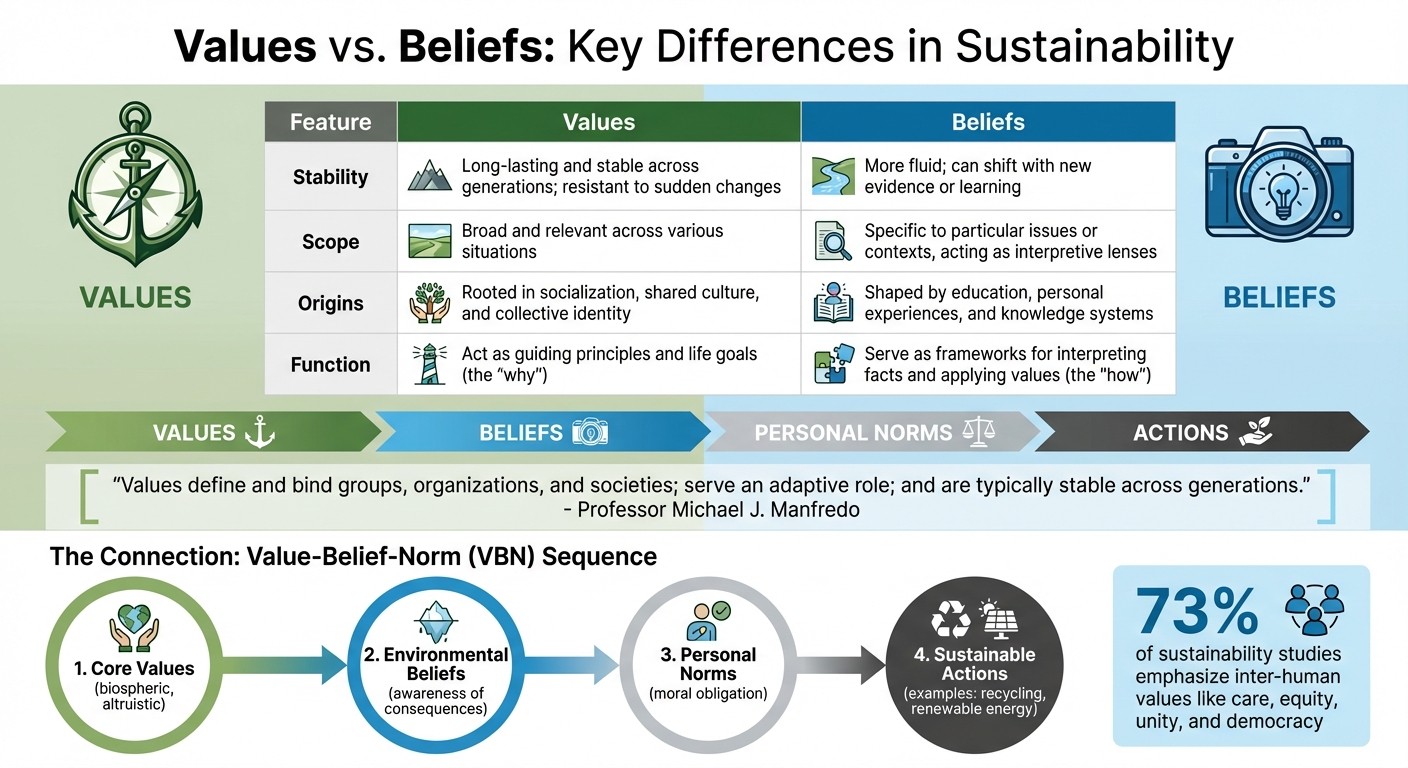
Values vs Beliefs in Sustainability: Key Differences and Impact
Expanding on the earlier discussion of values and beliefs, this section simplifies their distinctions into practical insights. Think of values as your guiding compass - broad, enduring principles that remain constant over time. Beliefs, on the other hand, are like adaptable lenses, shifting as new information or experiences come into play.
This difference is important because values represent the deeper motivation - the "why" behind actions like sustainable business practices. Beliefs, however, influence the "how", shaping the way those values are applied to specific challenges or decisions.
Professor Michael J. Manfredo offers a compelling perspective:
"Values define and bind groups, organizations, and societies; serve an adaptive role; and are typically stable across generations."
Unlike values, beliefs are more flexible. They can evolve through education, exposure to new ideas, or personal experiences, making them more dynamic than the enduring nature of values. The nuances of this contrast are captured in the table below.
Comparison Table: Values vs. Beliefs
| <strong>Feature</strong> | <strong>Values</strong> | <strong>Beliefs</strong> |
| --- | --- | --- |
| <strong>Stability</strong> | Long-lasting and stable across generations; resistant to sudden changes. | More fluid; can shift with new evidence or learning. |
| <strong>Scope</strong> | Broad and relevant across various situations. | Specific to particular issues or contexts, acting as interpretive lenses. |
| <strong>Origins</strong> | Rooted in socialization, shared culture, and collective identity. | Shaped by education, personal experiences, and knowledge systems. |
| <strong>Function</strong> | Act as guiding principles and life goals (the "why"). | Serve as frameworks for interpreting facts and applying values (the "how"). |
| <strong>Feature</strong> | <strong>Values</strong> | <strong>Beliefs</strong> |
| --- | --- | --- |
| <strong>Stability</strong> | Long-lasting and stable across generations; resistant to sudden changes. | More fluid; can shift with new evidence or learning. |
| <strong>Scope</strong> | Broad and relevant across various situations. | Specific to particular issues or contexts, acting as interpretive lenses. |
| <strong>Origins</strong> | Rooted in socialization, shared culture, and collective identity. | Shaped by education, personal experiences, and knowledge systems. |
| <strong>Function</strong> | Act as guiding principles and life goals (the "why"). | Serve as frameworks for interpreting facts and applying values (the "how"). |How Values Shape Sustainability Choices
Building on the idea that values influence sustainability actions, it’s important to understand how they guide decision-making through norm activation. The Value-Belief-Norm (VBN) theory suggests that core values shape beliefs about environmental impacts, which in turn trigger personal norms [9][10].
For instance, individuals with altruistic and biospheric values tend to support efforts such as fair trade, environmental justice, reducing carbon footprints, and adopting clean energy. These choices reflect a deep commitment to the collective good and a focus on long-term well-being.
Self-transcendent values, which emphasize collective benefits over personal gain, are consistently linked to pro-environmental behaviors. A 2023 study of 292 millennials and Gen Z consumers highlighted this connection, showing that altruistic and biospheric values strengthen green trust and personal norms, unlike egoistic values [11].
Values and Norm Activation
Norm activation bridges internal values with a sense of moral responsibility, making sustainable actions feel like the "right" thing to do - even when they require extra effort or sacrifice.
As Professor Linda Steg from the University of Groningen explains:
"People are more likely to be intrinsically motivated to act proenvironmentally over and again when they strongly endorse biospheric values." [10]
This intrinsic motivation fosters a rewarding "warm glow", embedding sustainability into an individual’s sense of identity. This internal drive often leads to consistent choices, from adopting renewable energy to participating in conservation efforts.
Next, we’ll look at how beliefs work alongside these value-driven norms to encourage sustainable behavior.
How Beliefs Drive Sustainability Behaviors
While values serve as a moral guide, beliefs act as the crucial link that turns abstract principles into practical actions. As sustainability researchers Othmane Aride and Maria-del-Mar Pàmies-Pallisé describe, beliefs are "ideas that define how phenomena interconnect" [12]. In simpler terms, beliefs translate broad values - like the desire to protect the environment - into actionable judgments, such as understanding that "recycling this plastic reduces ocean pollution" [12]. This clarity in belief is what enables certainty to play a pivotal role in driving behavior.
When people are highly certain that their actions will lead to meaningful sustainability outcomes, they are far more likely to act [12]. This explains why personal beliefs and evaluations about sustainability often have a stronger influence on behavior than external forces, such as environmental regulations or workplace policies [13].
A compelling example of belief-driven action can be seen in the California Condor recovery effort from the 1980s. Conservationists, guided by a scientific belief that lead poisoning was a major threat to the species, initiated captive breeding programs and advocated for restrictions on lead bullets. Their unwavering belief in the connection between lead exposure and condor deaths fueled decades of effort, leading to remarkable progress. By 2021, the wild condor population had grown from fewer than 30 birds in the 1980s to over 500 [14]. This example underscores how deeply held beliefs can inspire consistent, impactful action over time.
Strength and Specificity of Beliefs
Beliefs that are both strong and specific have the greatest power to inspire action. General awareness often falls short unless it connects to concrete, local impacts. For instance, a belief like "rising temperatures are threatening my community's water supply" provides a clear and immediate reason to take action, such as pushing for local policy changes [14].
In Hawaii, the conservation of the 'Alalā, or Hawaiian crow, offers a striking example of this principle. Many local communities regard the 'Alalā as a "spiritual guardian" (aumakua), a belief deeply rooted in their cultural identity. This cultural connection has driven widespread community support for efforts like captive breeding and habitat restoration. The specificity of this belief - focused on a particular species and tied to cultural significance - makes conservation efforts feel urgent and personally meaningful [14]. These examples illustrate how strong, specific beliefs can consistently motivate sustainability practices, reinforcing the dynamic relationship between values and beliefs discussed throughout this article.
How Values and Beliefs Work Together
Values shape the way we see the world, influencing the beliefs that guide our actions toward sustainability [1]. For example, someone with biospheric values is more likely to believe they have a personal responsibility to reduce waste or support conservation efforts [1].
This layered process becomes a powerful force for systemic change [1]. A review of 460 future scenarios revealed that sustainable outcomes are often linked to balanced, pluralistic sets of values - encompassing cultural, societal, and environmental priorities - rather than narrow, materialistic goals [1]. Notably, 73% of scientific studies on sustainability transformations highlight the importance of inter-human values like care, equity, and democracy. These values create the social conditions necessary for reshaping how society interacts with nature [1]. This relationship forms the foundation of the Value-Belief-Norm (VBN) theory.
The Value-Belief-Norm Sequence
The VBN theory [9][12] explains how abstract values translate into concrete actions. It suggests that values influence beliefs, which then activate personal norms - a sense of moral obligation - leading to pro-environmental behaviors [9][12]. The process begins with enduring values, such as biospheric or altruistic concerns, which shape beliefs about environmental consequences and personal responsibility [9][12].
"Values shape our beliefs about the consequences of environmental problems and our sense of responsibility to address them. These beliefs, in turn, activate a personal norm or a moral obligation to act." - Sustainability Directory [9]
A 2023 study using PLS-SEM analysis demonstrated that biospheric and altruistic values build green trust and personal norms, increasing the likelihood of green purchasing decisions [11].
However, values alone are often too abstract to directly influence specific actions. The cognitive hierarchy model highlights that beliefs and attitudes act as intermediate layers, translating broad, stable values into specific behavioral intentions [4]. Without activating specific beliefs and norms, the connection between values and behavior remains weak [4].
Regional and Cultural Considerations
The value-belief framework is also shaped by regional and cultural contexts. In the United States, sustainability efforts are often influenced by polycentric governance, where regional values like equity and social justice shape climate risk governance and policy outcomes [15]. Different regions emphasize distinct aspects of the value-belief connection, reflecting their unique cultural philosophies.
For instance, in the Andes, the concept of buen vivir (good living) emphasizes collective well-being and harmony with nature, shaping values and beliefs around community and environmental health [1]. In Africa, the philosophy of Ubuntu - focusing on interconnectedness and humanity toward others - creates a value-belief framework rooted in collective responsibility [1]. Japan's Satoyama philosophy highlights living in harmony with traditional landscapes, while India's Gandhian economy of permanence promotes self-restraint in resource use [1].
These examples illustrate how values aligned with sustainability are most effective when they integrate both inter-human values (like equity, care, and justice) and society-nature values (such as stewardship, empathy, and reciprocity) [1]. Research across 33 nations has also shown that "tight" versus "loose" cultures - referring to the rigidity of social norms and tolerance for deviation - affect how strongly personal values guide behavior [3]. Recognizing these cultural differences is key to designing sustainability programs that resonate locally and effectively activate the value-belief-norm sequence.
Applying Values and Beliefs to Sustainability Programs
Integrating Values and Beliefs into Change Management
For sustainability programs to succeed, they must go beyond surface-level initiatives and align deeply with an organization's core objectives. A great example of this is Novata's approach in January 2025, when Chief People Officer Sarb Thandi made sustainability an integral part of recruitment and employee development. By requiring recruitment partners to demonstrate their own commitment to Diversity, Equity, Inclusion, and Belonging (DEIB), Novata ensured that sustainability became embedded in the company culture right from the hiring process. Thandi captured this sentiment perfectly, stating:
"Sustainability isn't just a company goal. It's something that everyone can be part of in their own way" [18].
To turn vision into action, effective programs rely on SMART goals. For instance, setting a clear target like "reducing carbon emissions by 20% within three years through renewable energy adoption" provides a practical roadmap for achieving sustainability objectives [17].
Tailoring these programs to reflect local social norms and values is equally important. Research indicates that cultural values account for up to 26% of the differences in achieving Sustainable Development Goals [19]. By aligning SMART goals with local cultural traits, organizations can activate the value-belief-norm pathway, making their sustainability efforts more impactful and relevant.
This alignment of values and beliefs with actionable strategies sets the foundation for meaningful transformation, as demonstrated by Council Fire's approach.
How Council Fire Drives Change
Council Fire offers a compelling example of how strategic alignment can translate ambitious sustainability goals into tangible progress. Their approach blends technical expertise with stakeholder-focused planning and systems thinking, helping organizations move beyond mere ESG compliance to achieve measurable results. This method delivers long-term value across critical areas such as natural resource management, energy and water systems, transportation, and community development.
One key aspect of their strategy is the development of data-driven frameworks that balance strategic direction with scalability and stakeholder input. For instance, in June 2025, Baker Hughes, an energy technology company, launched a centralized sustainability reporting platform under the leadership of Corporate Sustainability Manager Irina Markina. This platform provided detailed dashboards to monitor progress toward the company’s 2030 goal of cutting emissions by 50%. By improving data accuracy and aligning with regulatory requirements, the initiative also streamlined stakeholder communication. In fact, organizations using similar platforms have reported a reduction in audit time from 200 to 120 hours within the first year [16].
Council Fire emphasizes that sustainability must shift from "what we say" to "what we do" in everyday operations [20]. This involves fostering a workplace culture where employees feel safe to voice concerns and contribute ideas, creating the motivation needed for lasting behavioral change. By addressing both the technical and human elements of transformation, Council Fire helps organizations build climate resilience, advance circular economies, and establish regenerative infrastructure that drives measurable progress.
Conclusion
Grasping how values and beliefs interact is key to driving meaningful sustainability efforts. Values act as your compass, defining what truly matters - be it stewardship, equity, or a deep respect for nature. Beliefs, on the other hand, shape how you perceive environmental challenges and your role in addressing them. When these two elements align, they activate personal norms, paving the way for impactful sustainable actions [8].
The connection between values and sustainability is backed by research. A review of 149 academic studies on sustainability transformations revealed that 73% explicitly emphasized shared human values such as care, unity, equity, and democracy [1]. Organizations that weave these values into their policies and everyday practices create the foundation for meaningful change.
Anne-Marie Bonneau, known as the Zero-waste Chef, perfectly captures the spirit of collective action with her words:
"We don't need a handful of people doing zero waste perfectly. We need millions of people doing it imperfectly" [2].
This highlights the importance of widespread participation in creating a sustainable future. Start by reflecting on your core values and considering how your beliefs influence daily choices. Are they aligned with the future you aim to build?
For organizations ready to take action, Council Fire offers a strategy that bridges vision with execution. By blending technical expertise, stakeholder-focused planning, and systems thinking, they help transform ambitious sustainability goals into measurable outcomes. Whether it's natural resource management, energy infrastructure, or community development, their approach moves beyond compliance. It’s about building climate resilience and creating regenerative systems that deliver lasting environmental, social, and economic benefits.
FAQs
What role do values and beliefs play in driving sustainability efforts?
Values and beliefs play a central role in driving sustainable actions. Values are the core principles we hold dear, such as caring for the environment or striving for social fairness, which influence what individuals and communities prioritize. Beliefs, meanwhile, are our perceptions or assumptions about how things function in the world - for instance, believing that renewable energy is feasible or that climate change requires urgent attention.
When values align with sustainability objectives, they fuel a sense of responsibility to safeguard the planet and promote justice. Beliefs then act as a bridge, turning these values into action by reinforcing the idea that everyday sustainable choices - like conserving water, cutting down on waste, or opting for clean energy - can lead to meaningful change. However, a disconnect between values and beliefs, such as valuing the environment but doubting the impact of individual efforts, can slow progress.
Encouraging sustainability requires more than promoting shared values. It involves nurturing empowering beliefs that link those values to practical, impactful actions.
What is the Value-Belief-Norm theory, and how does it influence sustainability efforts?
The Value-Belief-Norm (VBN) theory sheds light on how personal values influence environmental beliefs, ultimately creating a sense of moral obligation - referred to as personal norms - that drives environmentally conscious behavior. For instance, values such as caring for future generations or preserving nature often lead to beliefs about the urgency of addressing environmental issues. These beliefs, in turn, inspire actions like reducing energy consumption or supporting environmentally friendly initiatives.
When applied to sustainability, the VBN theory helps organizations uncover what motivates individuals or groups to adopt sustainable behaviors. By identifying and aligning with the values held by their audience, organizations can inspire meaningful change. For example, Council Fire, a consultancy, uses this framework to help clients bridge their core values with actionable environmental objectives. This approach encourages long-term shifts in behavior and supports sustainable decision-making across sectors like businesses, governments, and nonprofits.
How can organizations align their values and beliefs with sustainability efforts?
Organizations looking to align their values with sustainability efforts must begin by identifying the principles that guide their decisions. This involves recognizing core values such as fairness, environmental care, and community well-being, as well as examining the beliefs that influence how these values are applied. By mapping these elements, organizations can uncover potential conflicts or unspoken assumptions, creating a solid foundation for sustainable practices.
Once these guiding principles are clearly defined, they should be translated into specific, actionable goals. This might involve embedding values into performance metrics, budgeting, or reporting systems, ensuring sustainability becomes an integral part of both strategic planning and daily operations. Open discussions with stakeholders about shared values can also strengthen collaboration and build trust.
Maintaining this alignment requires regular reflection and adjustments to adapt to changing circumstances. Council Fire supports organizations in this journey by offering strategic guidance, encouraging stakeholder engagement, and integrating value-driven principles into governance and decision-making. This approach ensures financial success, environmental responsibility, and social impact are seamlessly interconnected.
Related Blog Posts
Latest Articles
©2025



FAQ
01
What does it really mean to “redefine profit”?
02
What makes Council Fire different?
03
Who does Council Fire you work with?
04
What does working with Council Fire actually look like?
05
How does Council Fire help organizations turn big goals into action?
06
How does Council Fire define and measure success?
Dec 27, 2025
Values vs. Beliefs: Impact on Sustainability
Sustainability Strategy
In This Article
How enduring values and flexible beliefs combine to shape norms and actions that drive effective sustainability in individuals and organizations.
Values vs. Beliefs: Impact on Sustainability
Values and beliefs play distinct yet interconnected roles in shaping decisions about sustainability. Here's the key takeaway:
Values are long-lasting principles that guide what we prioritize, like fairness or protecting nature. They are stable and rooted in culture or upbringing.
Beliefs are flexible and tied to specific issues, shaping how we interpret problems and solutions, such as believing renewable energy reduces emissions.
Together, they influence sustainability efforts by forming a sequence: values shape beliefs, which then activate personal norms, leading to actions. For instance, someone with altruistic values may believe they have a responsibility to reduce waste, which then drives recycling behavior.
Key Differences Between Values and Beliefs:
Stability: Values are steady; beliefs change with new knowledge.
Scope: Values are broad; beliefs focus on specific issues.
Function: Values define "why" we care; beliefs guide "how" we act.
Understanding this relationship helps individuals and organizations align their principles with effective actions, ensuring impactful sustainability initiatives.
Understanding Beliefs, Values and Behaviour with Craig Shealy
What Are Values in Sustainability?
Values are the deeply rooted emotional principles that shape how we perceive and interact with the natural world. Unlike fleeting preferences, values are enduring, formed during childhood through socialization, and remain largely unchanged throughout life [4]. Natalie A. Jones, a researcher at the University of Queensland, highlights this idea:
"Values represent the deeply held, emotional aspects of people's cognition... [they] are the most stable form of human cognition" [4].
This inherent stability makes values a cornerstone of sustainability efforts, providing a firm foundation for understanding their role in shaping environmental practices.
In the realm of sustainability, values act as key anchors within what researchers call the "cognitive hierarchy." At the top of this hierarchy lie attitudes and behaviors, which are numerous and more fluid, while at its base are values - few in number and resistant to change [4]. These deeply ingrained principles are not just personal preferences; they are woven into societal norms and traditions, often persisting across generations [5].
Core Characteristics of Values
To understand how values influence sustainability decisions, it helps to examine their key traits.
Psychologists have identified 10 universal value types, some of which align closely with sustainability principles, such as stewardship, collectivism, and reciprocity [1][4]. Values can be categorized into three distinct types:
Held values are abstract ideals, like freedom or beauty, that transcend specific situations.
Assigned values reflect the importance we place on particular objects or places, such as valuing a forest for its biodiversity.
Relational values emphasize the importance of our connection to nature, focusing on ideas like harmony and reciprocity [4].
The distinction between these categories matters. While held values remain constant across different contexts, assigned values can shift based on immediate circumstances or needs.
How Values Drive Sustainability Actions
Values act as "deep leverage points" for driving meaningful change [1]. A review of 460 future scenarios found that sustainable futures consistently depend on a balance of plural values - intrinsic, instrumental, and relational. In contrast, dystopian futures are often shaped by narrow, individualistic, and materialistic values [1][7]. Research shows that 73% of sustainability studies emphasize inter-human values like care, equity, unity, and democracy as essential for fostering environmental change [1].
These principles often translate directly into actions. For example, someone who prioritizes universalism - values centered on understanding and protecting all people and nature - might support renewable energy projects, even if they come with higher initial costs. Similarly, individuals with strong benevolence values, which focus on the well-being of close others, are more likely to advocate for waste reduction initiatives that improve community health. These decisions aren’t calculated trade-offs but rather natural expressions of deeply held beliefs [6].
Next, we’ll delve into how beliefs, while distinct from values, interact with them to influence sustainability behaviors.
What Are Beliefs in Sustainability?
While values provide the emotional backdrop for how we see the world, beliefs take those enduring values and turn them into specific understandings about sustainability challenges. In essence, beliefs act as the bridge between broad principles and practical concerns. Unlike the steady nature of values, beliefs are more flexible, evolving as we gain new knowledge and experiences [4]. They shape what we consider true about various sustainability issues - whether it's the human role in climate change, the fragility of certain ecosystems, or the potential effectiveness of particular policies.
Beliefs occupy a middle ground in the cognitive hierarchy, sitting between deeply rooted values and the everyday actions people take. As Shalom Schwartz puts it:
"A value [is a] belief pertaining to desirable end states or modes of conduct that transcends specific situations, guides selection or evaluation of behaviour, people, and events" [4].
Beliefs, however, are influenced by diverse knowledge systems - whether academic, Indigenous, or local - and by the worldviews that shape how we interpret reality [1]. Let’s explore the defining traits of beliefs within the sustainability context.
Core Characteristics of Beliefs
Beliefs are specific to particular issues and are more adaptable than values, often shifting in response to new information or personal experiences. For example, someone might generally appreciate nature but only develop a belief in protecting wetlands after learning about their role in flood prevention and maintaining water quality.
In sustainability science, beliefs often tie into an "awareness of consequences" - an understanding that certain actions lead to specific environmental outcomes [4].
How Beliefs Drive Sustainability Actions
Clear and well-defined beliefs are powerful drivers of policies and behaviors. For instance, someone who believes human activity is a key factor in climate change or that a nearby river is essential for water security is more likely to support measures like reducing emissions or protecting that river. General ideas, such as "the environment is important", rarely inspire action. Instead, actionable beliefs that link specific behaviors to tangible benefits are what lead to measurable progress in sustainability [4].
Values vs. Beliefs: Key Differences
Values vs Beliefs in Sustainability: Key Differences and Impact
Expanding on the earlier discussion of values and beliefs, this section simplifies their distinctions into practical insights. Think of values as your guiding compass - broad, enduring principles that remain constant over time. Beliefs, on the other hand, are like adaptable lenses, shifting as new information or experiences come into play.
This difference is important because values represent the deeper motivation - the "why" behind actions like sustainable business practices. Beliefs, however, influence the "how", shaping the way those values are applied to specific challenges or decisions.
Professor Michael J. Manfredo offers a compelling perspective:
"Values define and bind groups, organizations, and societies; serve an adaptive role; and are typically stable across generations."
Unlike values, beliefs are more flexible. They can evolve through education, exposure to new ideas, or personal experiences, making them more dynamic than the enduring nature of values. The nuances of this contrast are captured in the table below.
Comparison Table: Values vs. Beliefs
| <strong>Feature</strong> | <strong>Values</strong> | <strong>Beliefs</strong> |
| --- | --- | --- |
| <strong>Stability</strong> | Long-lasting and stable across generations; resistant to sudden changes. | More fluid; can shift with new evidence or learning. |
| <strong>Scope</strong> | Broad and relevant across various situations. | Specific to particular issues or contexts, acting as interpretive lenses. |
| <strong>Origins</strong> | Rooted in socialization, shared culture, and collective identity. | Shaped by education, personal experiences, and knowledge systems. |
| <strong>Function</strong> | Act as guiding principles and life goals (the "why"). | Serve as frameworks for interpreting facts and applying values (the "how"). |
How Values Shape Sustainability Choices
Building on the idea that values influence sustainability actions, it’s important to understand how they guide decision-making through norm activation. The Value-Belief-Norm (VBN) theory suggests that core values shape beliefs about environmental impacts, which in turn trigger personal norms [9][10].
For instance, individuals with altruistic and biospheric values tend to support efforts such as fair trade, environmental justice, reducing carbon footprints, and adopting clean energy. These choices reflect a deep commitment to the collective good and a focus on long-term well-being.
Self-transcendent values, which emphasize collective benefits over personal gain, are consistently linked to pro-environmental behaviors. A 2023 study of 292 millennials and Gen Z consumers highlighted this connection, showing that altruistic and biospheric values strengthen green trust and personal norms, unlike egoistic values [11].
Values and Norm Activation
Norm activation bridges internal values with a sense of moral responsibility, making sustainable actions feel like the "right" thing to do - even when they require extra effort or sacrifice.
As Professor Linda Steg from the University of Groningen explains:
"People are more likely to be intrinsically motivated to act proenvironmentally over and again when they strongly endorse biospheric values." [10]
This intrinsic motivation fosters a rewarding "warm glow", embedding sustainability into an individual’s sense of identity. This internal drive often leads to consistent choices, from adopting renewable energy to participating in conservation efforts.
Next, we’ll look at how beliefs work alongside these value-driven norms to encourage sustainable behavior.
How Beliefs Drive Sustainability Behaviors
While values serve as a moral guide, beliefs act as the crucial link that turns abstract principles into practical actions. As sustainability researchers Othmane Aride and Maria-del-Mar Pàmies-Pallisé describe, beliefs are "ideas that define how phenomena interconnect" [12]. In simpler terms, beliefs translate broad values - like the desire to protect the environment - into actionable judgments, such as understanding that "recycling this plastic reduces ocean pollution" [12]. This clarity in belief is what enables certainty to play a pivotal role in driving behavior.
When people are highly certain that their actions will lead to meaningful sustainability outcomes, they are far more likely to act [12]. This explains why personal beliefs and evaluations about sustainability often have a stronger influence on behavior than external forces, such as environmental regulations or workplace policies [13].
A compelling example of belief-driven action can be seen in the California Condor recovery effort from the 1980s. Conservationists, guided by a scientific belief that lead poisoning was a major threat to the species, initiated captive breeding programs and advocated for restrictions on lead bullets. Their unwavering belief in the connection between lead exposure and condor deaths fueled decades of effort, leading to remarkable progress. By 2021, the wild condor population had grown from fewer than 30 birds in the 1980s to over 500 [14]. This example underscores how deeply held beliefs can inspire consistent, impactful action over time.
Strength and Specificity of Beliefs
Beliefs that are both strong and specific have the greatest power to inspire action. General awareness often falls short unless it connects to concrete, local impacts. For instance, a belief like "rising temperatures are threatening my community's water supply" provides a clear and immediate reason to take action, such as pushing for local policy changes [14].
In Hawaii, the conservation of the 'Alalā, or Hawaiian crow, offers a striking example of this principle. Many local communities regard the 'Alalā as a "spiritual guardian" (aumakua), a belief deeply rooted in their cultural identity. This cultural connection has driven widespread community support for efforts like captive breeding and habitat restoration. The specificity of this belief - focused on a particular species and tied to cultural significance - makes conservation efforts feel urgent and personally meaningful [14]. These examples illustrate how strong, specific beliefs can consistently motivate sustainability practices, reinforcing the dynamic relationship between values and beliefs discussed throughout this article.
How Values and Beliefs Work Together
Values shape the way we see the world, influencing the beliefs that guide our actions toward sustainability [1]. For example, someone with biospheric values is more likely to believe they have a personal responsibility to reduce waste or support conservation efforts [1].
This layered process becomes a powerful force for systemic change [1]. A review of 460 future scenarios revealed that sustainable outcomes are often linked to balanced, pluralistic sets of values - encompassing cultural, societal, and environmental priorities - rather than narrow, materialistic goals [1]. Notably, 73% of scientific studies on sustainability transformations highlight the importance of inter-human values like care, equity, and democracy. These values create the social conditions necessary for reshaping how society interacts with nature [1]. This relationship forms the foundation of the Value-Belief-Norm (VBN) theory.
The Value-Belief-Norm Sequence
The VBN theory [9][12] explains how abstract values translate into concrete actions. It suggests that values influence beliefs, which then activate personal norms - a sense of moral obligation - leading to pro-environmental behaviors [9][12]. The process begins with enduring values, such as biospheric or altruistic concerns, which shape beliefs about environmental consequences and personal responsibility [9][12].
"Values shape our beliefs about the consequences of environmental problems and our sense of responsibility to address them. These beliefs, in turn, activate a personal norm or a moral obligation to act." - Sustainability Directory [9]
A 2023 study using PLS-SEM analysis demonstrated that biospheric and altruistic values build green trust and personal norms, increasing the likelihood of green purchasing decisions [11].
However, values alone are often too abstract to directly influence specific actions. The cognitive hierarchy model highlights that beliefs and attitudes act as intermediate layers, translating broad, stable values into specific behavioral intentions [4]. Without activating specific beliefs and norms, the connection between values and behavior remains weak [4].
Regional and Cultural Considerations
The value-belief framework is also shaped by regional and cultural contexts. In the United States, sustainability efforts are often influenced by polycentric governance, where regional values like equity and social justice shape climate risk governance and policy outcomes [15]. Different regions emphasize distinct aspects of the value-belief connection, reflecting their unique cultural philosophies.
For instance, in the Andes, the concept of buen vivir (good living) emphasizes collective well-being and harmony with nature, shaping values and beliefs around community and environmental health [1]. In Africa, the philosophy of Ubuntu - focusing on interconnectedness and humanity toward others - creates a value-belief framework rooted in collective responsibility [1]. Japan's Satoyama philosophy highlights living in harmony with traditional landscapes, while India's Gandhian economy of permanence promotes self-restraint in resource use [1].
These examples illustrate how values aligned with sustainability are most effective when they integrate both inter-human values (like equity, care, and justice) and society-nature values (such as stewardship, empathy, and reciprocity) [1]. Research across 33 nations has also shown that "tight" versus "loose" cultures - referring to the rigidity of social norms and tolerance for deviation - affect how strongly personal values guide behavior [3]. Recognizing these cultural differences is key to designing sustainability programs that resonate locally and effectively activate the value-belief-norm sequence.
Applying Values and Beliefs to Sustainability Programs
Integrating Values and Beliefs into Change Management
For sustainability programs to succeed, they must go beyond surface-level initiatives and align deeply with an organization's core objectives. A great example of this is Novata's approach in January 2025, when Chief People Officer Sarb Thandi made sustainability an integral part of recruitment and employee development. By requiring recruitment partners to demonstrate their own commitment to Diversity, Equity, Inclusion, and Belonging (DEIB), Novata ensured that sustainability became embedded in the company culture right from the hiring process. Thandi captured this sentiment perfectly, stating:
"Sustainability isn't just a company goal. It's something that everyone can be part of in their own way" [18].
To turn vision into action, effective programs rely on SMART goals. For instance, setting a clear target like "reducing carbon emissions by 20% within three years through renewable energy adoption" provides a practical roadmap for achieving sustainability objectives [17].
Tailoring these programs to reflect local social norms and values is equally important. Research indicates that cultural values account for up to 26% of the differences in achieving Sustainable Development Goals [19]. By aligning SMART goals with local cultural traits, organizations can activate the value-belief-norm pathway, making their sustainability efforts more impactful and relevant.
This alignment of values and beliefs with actionable strategies sets the foundation for meaningful transformation, as demonstrated by Council Fire's approach.
How Council Fire Drives Change
Council Fire offers a compelling example of how strategic alignment can translate ambitious sustainability goals into tangible progress. Their approach blends technical expertise with stakeholder-focused planning and systems thinking, helping organizations move beyond mere ESG compliance to achieve measurable results. This method delivers long-term value across critical areas such as natural resource management, energy and water systems, transportation, and community development.
One key aspect of their strategy is the development of data-driven frameworks that balance strategic direction with scalability and stakeholder input. For instance, in June 2025, Baker Hughes, an energy technology company, launched a centralized sustainability reporting platform under the leadership of Corporate Sustainability Manager Irina Markina. This platform provided detailed dashboards to monitor progress toward the company’s 2030 goal of cutting emissions by 50%. By improving data accuracy and aligning with regulatory requirements, the initiative also streamlined stakeholder communication. In fact, organizations using similar platforms have reported a reduction in audit time from 200 to 120 hours within the first year [16].
Council Fire emphasizes that sustainability must shift from "what we say" to "what we do" in everyday operations [20]. This involves fostering a workplace culture where employees feel safe to voice concerns and contribute ideas, creating the motivation needed for lasting behavioral change. By addressing both the technical and human elements of transformation, Council Fire helps organizations build climate resilience, advance circular economies, and establish regenerative infrastructure that drives measurable progress.
Conclusion
Grasping how values and beliefs interact is key to driving meaningful sustainability efforts. Values act as your compass, defining what truly matters - be it stewardship, equity, or a deep respect for nature. Beliefs, on the other hand, shape how you perceive environmental challenges and your role in addressing them. When these two elements align, they activate personal norms, paving the way for impactful sustainable actions [8].
The connection between values and sustainability is backed by research. A review of 149 academic studies on sustainability transformations revealed that 73% explicitly emphasized shared human values such as care, unity, equity, and democracy [1]. Organizations that weave these values into their policies and everyday practices create the foundation for meaningful change.
Anne-Marie Bonneau, known as the Zero-waste Chef, perfectly captures the spirit of collective action with her words:
"We don't need a handful of people doing zero waste perfectly. We need millions of people doing it imperfectly" [2].
This highlights the importance of widespread participation in creating a sustainable future. Start by reflecting on your core values and considering how your beliefs influence daily choices. Are they aligned with the future you aim to build?
For organizations ready to take action, Council Fire offers a strategy that bridges vision with execution. By blending technical expertise, stakeholder-focused planning, and systems thinking, they help transform ambitious sustainability goals into measurable outcomes. Whether it's natural resource management, energy infrastructure, or community development, their approach moves beyond compliance. It’s about building climate resilience and creating regenerative systems that deliver lasting environmental, social, and economic benefits.
FAQs
What role do values and beliefs play in driving sustainability efforts?
Values and beliefs play a central role in driving sustainable actions. Values are the core principles we hold dear, such as caring for the environment or striving for social fairness, which influence what individuals and communities prioritize. Beliefs, meanwhile, are our perceptions or assumptions about how things function in the world - for instance, believing that renewable energy is feasible or that climate change requires urgent attention.
When values align with sustainability objectives, they fuel a sense of responsibility to safeguard the planet and promote justice. Beliefs then act as a bridge, turning these values into action by reinforcing the idea that everyday sustainable choices - like conserving water, cutting down on waste, or opting for clean energy - can lead to meaningful change. However, a disconnect between values and beliefs, such as valuing the environment but doubting the impact of individual efforts, can slow progress.
Encouraging sustainability requires more than promoting shared values. It involves nurturing empowering beliefs that link those values to practical, impactful actions.
What is the Value-Belief-Norm theory, and how does it influence sustainability efforts?
The Value-Belief-Norm (VBN) theory sheds light on how personal values influence environmental beliefs, ultimately creating a sense of moral obligation - referred to as personal norms - that drives environmentally conscious behavior. For instance, values such as caring for future generations or preserving nature often lead to beliefs about the urgency of addressing environmental issues. These beliefs, in turn, inspire actions like reducing energy consumption or supporting environmentally friendly initiatives.
When applied to sustainability, the VBN theory helps organizations uncover what motivates individuals or groups to adopt sustainable behaviors. By identifying and aligning with the values held by their audience, organizations can inspire meaningful change. For example, Council Fire, a consultancy, uses this framework to help clients bridge their core values with actionable environmental objectives. This approach encourages long-term shifts in behavior and supports sustainable decision-making across sectors like businesses, governments, and nonprofits.
How can organizations align their values and beliefs with sustainability efforts?
Organizations looking to align their values with sustainability efforts must begin by identifying the principles that guide their decisions. This involves recognizing core values such as fairness, environmental care, and community well-being, as well as examining the beliefs that influence how these values are applied. By mapping these elements, organizations can uncover potential conflicts or unspoken assumptions, creating a solid foundation for sustainable practices.
Once these guiding principles are clearly defined, they should be translated into specific, actionable goals. This might involve embedding values into performance metrics, budgeting, or reporting systems, ensuring sustainability becomes an integral part of both strategic planning and daily operations. Open discussions with stakeholders about shared values can also strengthen collaboration and build trust.
Maintaining this alignment requires regular reflection and adjustments to adapt to changing circumstances. Council Fire supports organizations in this journey by offering strategic guidance, encouraging stakeholder engagement, and integrating value-driven principles into governance and decision-making. This approach ensures financial success, environmental responsibility, and social impact are seamlessly interconnected.
Related Blog Posts
FAQ
01
What does it really mean to “redefine profit”?
02
What makes Council Fire different?
03
Who does Council Fire you work with?
04
What does working with Council Fire actually look like?
05
How does Council Fire help organizations turn big goals into action?
06
How does Council Fire define and measure success?
Dec 27, 2025
Values vs. Beliefs: Impact on Sustainability
Sustainability Strategy
In This Article
How enduring values and flexible beliefs combine to shape norms and actions that drive effective sustainability in individuals and organizations.
Values vs. Beliefs: Impact on Sustainability
Values and beliefs play distinct yet interconnected roles in shaping decisions about sustainability. Here's the key takeaway:
Values are long-lasting principles that guide what we prioritize, like fairness or protecting nature. They are stable and rooted in culture or upbringing.
Beliefs are flexible and tied to specific issues, shaping how we interpret problems and solutions, such as believing renewable energy reduces emissions.
Together, they influence sustainability efforts by forming a sequence: values shape beliefs, which then activate personal norms, leading to actions. For instance, someone with altruistic values may believe they have a responsibility to reduce waste, which then drives recycling behavior.
Key Differences Between Values and Beliefs:
Stability: Values are steady; beliefs change with new knowledge.
Scope: Values are broad; beliefs focus on specific issues.
Function: Values define "why" we care; beliefs guide "how" we act.
Understanding this relationship helps individuals and organizations align their principles with effective actions, ensuring impactful sustainability initiatives.
Understanding Beliefs, Values and Behaviour with Craig Shealy
What Are Values in Sustainability?
Values are the deeply rooted emotional principles that shape how we perceive and interact with the natural world. Unlike fleeting preferences, values are enduring, formed during childhood through socialization, and remain largely unchanged throughout life [4]. Natalie A. Jones, a researcher at the University of Queensland, highlights this idea:
"Values represent the deeply held, emotional aspects of people's cognition... [they] are the most stable form of human cognition" [4].
This inherent stability makes values a cornerstone of sustainability efforts, providing a firm foundation for understanding their role in shaping environmental practices.
In the realm of sustainability, values act as key anchors within what researchers call the "cognitive hierarchy." At the top of this hierarchy lie attitudes and behaviors, which are numerous and more fluid, while at its base are values - few in number and resistant to change [4]. These deeply ingrained principles are not just personal preferences; they are woven into societal norms and traditions, often persisting across generations [5].
Core Characteristics of Values
To understand how values influence sustainability decisions, it helps to examine their key traits.
Psychologists have identified 10 universal value types, some of which align closely with sustainability principles, such as stewardship, collectivism, and reciprocity [1][4]. Values can be categorized into three distinct types:
Held values are abstract ideals, like freedom or beauty, that transcend specific situations.
Assigned values reflect the importance we place on particular objects or places, such as valuing a forest for its biodiversity.
Relational values emphasize the importance of our connection to nature, focusing on ideas like harmony and reciprocity [4].
The distinction between these categories matters. While held values remain constant across different contexts, assigned values can shift based on immediate circumstances or needs.
How Values Drive Sustainability Actions
Values act as "deep leverage points" for driving meaningful change [1]. A review of 460 future scenarios found that sustainable futures consistently depend on a balance of plural values - intrinsic, instrumental, and relational. In contrast, dystopian futures are often shaped by narrow, individualistic, and materialistic values [1][7]. Research shows that 73% of sustainability studies emphasize inter-human values like care, equity, unity, and democracy as essential for fostering environmental change [1].
These principles often translate directly into actions. For example, someone who prioritizes universalism - values centered on understanding and protecting all people and nature - might support renewable energy projects, even if they come with higher initial costs. Similarly, individuals with strong benevolence values, which focus on the well-being of close others, are more likely to advocate for waste reduction initiatives that improve community health. These decisions aren’t calculated trade-offs but rather natural expressions of deeply held beliefs [6].
Next, we’ll delve into how beliefs, while distinct from values, interact with them to influence sustainability behaviors.
What Are Beliefs in Sustainability?
While values provide the emotional backdrop for how we see the world, beliefs take those enduring values and turn them into specific understandings about sustainability challenges. In essence, beliefs act as the bridge between broad principles and practical concerns. Unlike the steady nature of values, beliefs are more flexible, evolving as we gain new knowledge and experiences [4]. They shape what we consider true about various sustainability issues - whether it's the human role in climate change, the fragility of certain ecosystems, or the potential effectiveness of particular policies.
Beliefs occupy a middle ground in the cognitive hierarchy, sitting between deeply rooted values and the everyday actions people take. As Shalom Schwartz puts it:
"A value [is a] belief pertaining to desirable end states or modes of conduct that transcends specific situations, guides selection or evaluation of behaviour, people, and events" [4].
Beliefs, however, are influenced by diverse knowledge systems - whether academic, Indigenous, or local - and by the worldviews that shape how we interpret reality [1]. Let’s explore the defining traits of beliefs within the sustainability context.
Core Characteristics of Beliefs
Beliefs are specific to particular issues and are more adaptable than values, often shifting in response to new information or personal experiences. For example, someone might generally appreciate nature but only develop a belief in protecting wetlands after learning about their role in flood prevention and maintaining water quality.
In sustainability science, beliefs often tie into an "awareness of consequences" - an understanding that certain actions lead to specific environmental outcomes [4].
How Beliefs Drive Sustainability Actions
Clear and well-defined beliefs are powerful drivers of policies and behaviors. For instance, someone who believes human activity is a key factor in climate change or that a nearby river is essential for water security is more likely to support measures like reducing emissions or protecting that river. General ideas, such as "the environment is important", rarely inspire action. Instead, actionable beliefs that link specific behaviors to tangible benefits are what lead to measurable progress in sustainability [4].
Values vs. Beliefs: Key Differences
Values vs Beliefs in Sustainability: Key Differences and Impact
Expanding on the earlier discussion of values and beliefs, this section simplifies their distinctions into practical insights. Think of values as your guiding compass - broad, enduring principles that remain constant over time. Beliefs, on the other hand, are like adaptable lenses, shifting as new information or experiences come into play.
This difference is important because values represent the deeper motivation - the "why" behind actions like sustainable business practices. Beliefs, however, influence the "how", shaping the way those values are applied to specific challenges or decisions.
Professor Michael J. Manfredo offers a compelling perspective:
"Values define and bind groups, organizations, and societies; serve an adaptive role; and are typically stable across generations."
Unlike values, beliefs are more flexible. They can evolve through education, exposure to new ideas, or personal experiences, making them more dynamic than the enduring nature of values. The nuances of this contrast are captured in the table below.
Comparison Table: Values vs. Beliefs
| <strong>Feature</strong> | <strong>Values</strong> | <strong>Beliefs</strong> |
| --- | --- | --- |
| <strong>Stability</strong> | Long-lasting and stable across generations; resistant to sudden changes. | More fluid; can shift with new evidence or learning. |
| <strong>Scope</strong> | Broad and relevant across various situations. | Specific to particular issues or contexts, acting as interpretive lenses. |
| <strong>Origins</strong> | Rooted in socialization, shared culture, and collective identity. | Shaped by education, personal experiences, and knowledge systems. |
| <strong>Function</strong> | Act as guiding principles and life goals (the "why"). | Serve as frameworks for interpreting facts and applying values (the "how"). |
How Values Shape Sustainability Choices
Building on the idea that values influence sustainability actions, it’s important to understand how they guide decision-making through norm activation. The Value-Belief-Norm (VBN) theory suggests that core values shape beliefs about environmental impacts, which in turn trigger personal norms [9][10].
For instance, individuals with altruistic and biospheric values tend to support efforts such as fair trade, environmental justice, reducing carbon footprints, and adopting clean energy. These choices reflect a deep commitment to the collective good and a focus on long-term well-being.
Self-transcendent values, which emphasize collective benefits over personal gain, are consistently linked to pro-environmental behaviors. A 2023 study of 292 millennials and Gen Z consumers highlighted this connection, showing that altruistic and biospheric values strengthen green trust and personal norms, unlike egoistic values [11].
Values and Norm Activation
Norm activation bridges internal values with a sense of moral responsibility, making sustainable actions feel like the "right" thing to do - even when they require extra effort or sacrifice.
As Professor Linda Steg from the University of Groningen explains:
"People are more likely to be intrinsically motivated to act proenvironmentally over and again when they strongly endorse biospheric values." [10]
This intrinsic motivation fosters a rewarding "warm glow", embedding sustainability into an individual’s sense of identity. This internal drive often leads to consistent choices, from adopting renewable energy to participating in conservation efforts.
Next, we’ll look at how beliefs work alongside these value-driven norms to encourage sustainable behavior.
How Beliefs Drive Sustainability Behaviors
While values serve as a moral guide, beliefs act as the crucial link that turns abstract principles into practical actions. As sustainability researchers Othmane Aride and Maria-del-Mar Pàmies-Pallisé describe, beliefs are "ideas that define how phenomena interconnect" [12]. In simpler terms, beliefs translate broad values - like the desire to protect the environment - into actionable judgments, such as understanding that "recycling this plastic reduces ocean pollution" [12]. This clarity in belief is what enables certainty to play a pivotal role in driving behavior.
When people are highly certain that their actions will lead to meaningful sustainability outcomes, they are far more likely to act [12]. This explains why personal beliefs and evaluations about sustainability often have a stronger influence on behavior than external forces, such as environmental regulations or workplace policies [13].
A compelling example of belief-driven action can be seen in the California Condor recovery effort from the 1980s. Conservationists, guided by a scientific belief that lead poisoning was a major threat to the species, initiated captive breeding programs and advocated for restrictions on lead bullets. Their unwavering belief in the connection between lead exposure and condor deaths fueled decades of effort, leading to remarkable progress. By 2021, the wild condor population had grown from fewer than 30 birds in the 1980s to over 500 [14]. This example underscores how deeply held beliefs can inspire consistent, impactful action over time.
Strength and Specificity of Beliefs
Beliefs that are both strong and specific have the greatest power to inspire action. General awareness often falls short unless it connects to concrete, local impacts. For instance, a belief like "rising temperatures are threatening my community's water supply" provides a clear and immediate reason to take action, such as pushing for local policy changes [14].
In Hawaii, the conservation of the 'Alalā, or Hawaiian crow, offers a striking example of this principle. Many local communities regard the 'Alalā as a "spiritual guardian" (aumakua), a belief deeply rooted in their cultural identity. This cultural connection has driven widespread community support for efforts like captive breeding and habitat restoration. The specificity of this belief - focused on a particular species and tied to cultural significance - makes conservation efforts feel urgent and personally meaningful [14]. These examples illustrate how strong, specific beliefs can consistently motivate sustainability practices, reinforcing the dynamic relationship between values and beliefs discussed throughout this article.
How Values and Beliefs Work Together
Values shape the way we see the world, influencing the beliefs that guide our actions toward sustainability [1]. For example, someone with biospheric values is more likely to believe they have a personal responsibility to reduce waste or support conservation efforts [1].
This layered process becomes a powerful force for systemic change [1]. A review of 460 future scenarios revealed that sustainable outcomes are often linked to balanced, pluralistic sets of values - encompassing cultural, societal, and environmental priorities - rather than narrow, materialistic goals [1]. Notably, 73% of scientific studies on sustainability transformations highlight the importance of inter-human values like care, equity, and democracy. These values create the social conditions necessary for reshaping how society interacts with nature [1]. This relationship forms the foundation of the Value-Belief-Norm (VBN) theory.
The Value-Belief-Norm Sequence
The VBN theory [9][12] explains how abstract values translate into concrete actions. It suggests that values influence beliefs, which then activate personal norms - a sense of moral obligation - leading to pro-environmental behaviors [9][12]. The process begins with enduring values, such as biospheric or altruistic concerns, which shape beliefs about environmental consequences and personal responsibility [9][12].
"Values shape our beliefs about the consequences of environmental problems and our sense of responsibility to address them. These beliefs, in turn, activate a personal norm or a moral obligation to act." - Sustainability Directory [9]
A 2023 study using PLS-SEM analysis demonstrated that biospheric and altruistic values build green trust and personal norms, increasing the likelihood of green purchasing decisions [11].
However, values alone are often too abstract to directly influence specific actions. The cognitive hierarchy model highlights that beliefs and attitudes act as intermediate layers, translating broad, stable values into specific behavioral intentions [4]. Without activating specific beliefs and norms, the connection between values and behavior remains weak [4].
Regional and Cultural Considerations
The value-belief framework is also shaped by regional and cultural contexts. In the United States, sustainability efforts are often influenced by polycentric governance, where regional values like equity and social justice shape climate risk governance and policy outcomes [15]. Different regions emphasize distinct aspects of the value-belief connection, reflecting their unique cultural philosophies.
For instance, in the Andes, the concept of buen vivir (good living) emphasizes collective well-being and harmony with nature, shaping values and beliefs around community and environmental health [1]. In Africa, the philosophy of Ubuntu - focusing on interconnectedness and humanity toward others - creates a value-belief framework rooted in collective responsibility [1]. Japan's Satoyama philosophy highlights living in harmony with traditional landscapes, while India's Gandhian economy of permanence promotes self-restraint in resource use [1].
These examples illustrate how values aligned with sustainability are most effective when they integrate both inter-human values (like equity, care, and justice) and society-nature values (such as stewardship, empathy, and reciprocity) [1]. Research across 33 nations has also shown that "tight" versus "loose" cultures - referring to the rigidity of social norms and tolerance for deviation - affect how strongly personal values guide behavior [3]. Recognizing these cultural differences is key to designing sustainability programs that resonate locally and effectively activate the value-belief-norm sequence.
Applying Values and Beliefs to Sustainability Programs
Integrating Values and Beliefs into Change Management
For sustainability programs to succeed, they must go beyond surface-level initiatives and align deeply with an organization's core objectives. A great example of this is Novata's approach in January 2025, when Chief People Officer Sarb Thandi made sustainability an integral part of recruitment and employee development. By requiring recruitment partners to demonstrate their own commitment to Diversity, Equity, Inclusion, and Belonging (DEIB), Novata ensured that sustainability became embedded in the company culture right from the hiring process. Thandi captured this sentiment perfectly, stating:
"Sustainability isn't just a company goal. It's something that everyone can be part of in their own way" [18].
To turn vision into action, effective programs rely on SMART goals. For instance, setting a clear target like "reducing carbon emissions by 20% within three years through renewable energy adoption" provides a practical roadmap for achieving sustainability objectives [17].
Tailoring these programs to reflect local social norms and values is equally important. Research indicates that cultural values account for up to 26% of the differences in achieving Sustainable Development Goals [19]. By aligning SMART goals with local cultural traits, organizations can activate the value-belief-norm pathway, making their sustainability efforts more impactful and relevant.
This alignment of values and beliefs with actionable strategies sets the foundation for meaningful transformation, as demonstrated by Council Fire's approach.
How Council Fire Drives Change
Council Fire offers a compelling example of how strategic alignment can translate ambitious sustainability goals into tangible progress. Their approach blends technical expertise with stakeholder-focused planning and systems thinking, helping organizations move beyond mere ESG compliance to achieve measurable results. This method delivers long-term value across critical areas such as natural resource management, energy and water systems, transportation, and community development.
One key aspect of their strategy is the development of data-driven frameworks that balance strategic direction with scalability and stakeholder input. For instance, in June 2025, Baker Hughes, an energy technology company, launched a centralized sustainability reporting platform under the leadership of Corporate Sustainability Manager Irina Markina. This platform provided detailed dashboards to monitor progress toward the company’s 2030 goal of cutting emissions by 50%. By improving data accuracy and aligning with regulatory requirements, the initiative also streamlined stakeholder communication. In fact, organizations using similar platforms have reported a reduction in audit time from 200 to 120 hours within the first year [16].
Council Fire emphasizes that sustainability must shift from "what we say" to "what we do" in everyday operations [20]. This involves fostering a workplace culture where employees feel safe to voice concerns and contribute ideas, creating the motivation needed for lasting behavioral change. By addressing both the technical and human elements of transformation, Council Fire helps organizations build climate resilience, advance circular economies, and establish regenerative infrastructure that drives measurable progress.
Conclusion
Grasping how values and beliefs interact is key to driving meaningful sustainability efforts. Values act as your compass, defining what truly matters - be it stewardship, equity, or a deep respect for nature. Beliefs, on the other hand, shape how you perceive environmental challenges and your role in addressing them. When these two elements align, they activate personal norms, paving the way for impactful sustainable actions [8].
The connection between values and sustainability is backed by research. A review of 149 academic studies on sustainability transformations revealed that 73% explicitly emphasized shared human values such as care, unity, equity, and democracy [1]. Organizations that weave these values into their policies and everyday practices create the foundation for meaningful change.
Anne-Marie Bonneau, known as the Zero-waste Chef, perfectly captures the spirit of collective action with her words:
"We don't need a handful of people doing zero waste perfectly. We need millions of people doing it imperfectly" [2].
This highlights the importance of widespread participation in creating a sustainable future. Start by reflecting on your core values and considering how your beliefs influence daily choices. Are they aligned with the future you aim to build?
For organizations ready to take action, Council Fire offers a strategy that bridges vision with execution. By blending technical expertise, stakeholder-focused planning, and systems thinking, they help transform ambitious sustainability goals into measurable outcomes. Whether it's natural resource management, energy infrastructure, or community development, their approach moves beyond compliance. It’s about building climate resilience and creating regenerative systems that deliver lasting environmental, social, and economic benefits.
FAQs
What role do values and beliefs play in driving sustainability efforts?
Values and beliefs play a central role in driving sustainable actions. Values are the core principles we hold dear, such as caring for the environment or striving for social fairness, which influence what individuals and communities prioritize. Beliefs, meanwhile, are our perceptions or assumptions about how things function in the world - for instance, believing that renewable energy is feasible or that climate change requires urgent attention.
When values align with sustainability objectives, they fuel a sense of responsibility to safeguard the planet and promote justice. Beliefs then act as a bridge, turning these values into action by reinforcing the idea that everyday sustainable choices - like conserving water, cutting down on waste, or opting for clean energy - can lead to meaningful change. However, a disconnect between values and beliefs, such as valuing the environment but doubting the impact of individual efforts, can slow progress.
Encouraging sustainability requires more than promoting shared values. It involves nurturing empowering beliefs that link those values to practical, impactful actions.
What is the Value-Belief-Norm theory, and how does it influence sustainability efforts?
The Value-Belief-Norm (VBN) theory sheds light on how personal values influence environmental beliefs, ultimately creating a sense of moral obligation - referred to as personal norms - that drives environmentally conscious behavior. For instance, values such as caring for future generations or preserving nature often lead to beliefs about the urgency of addressing environmental issues. These beliefs, in turn, inspire actions like reducing energy consumption or supporting environmentally friendly initiatives.
When applied to sustainability, the VBN theory helps organizations uncover what motivates individuals or groups to adopt sustainable behaviors. By identifying and aligning with the values held by their audience, organizations can inspire meaningful change. For example, Council Fire, a consultancy, uses this framework to help clients bridge their core values with actionable environmental objectives. This approach encourages long-term shifts in behavior and supports sustainable decision-making across sectors like businesses, governments, and nonprofits.
How can organizations align their values and beliefs with sustainability efforts?
Organizations looking to align their values with sustainability efforts must begin by identifying the principles that guide their decisions. This involves recognizing core values such as fairness, environmental care, and community well-being, as well as examining the beliefs that influence how these values are applied. By mapping these elements, organizations can uncover potential conflicts or unspoken assumptions, creating a solid foundation for sustainable practices.
Once these guiding principles are clearly defined, they should be translated into specific, actionable goals. This might involve embedding values into performance metrics, budgeting, or reporting systems, ensuring sustainability becomes an integral part of both strategic planning and daily operations. Open discussions with stakeholders about shared values can also strengthen collaboration and build trust.
Maintaining this alignment requires regular reflection and adjustments to adapt to changing circumstances. Council Fire supports organizations in this journey by offering strategic guidance, encouraging stakeholder engagement, and integrating value-driven principles into governance and decision-making. This approach ensures financial success, environmental responsibility, and social impact are seamlessly interconnected.
Related Blog Posts
FAQ
What does it really mean to “redefine profit”?
What makes Council Fire different?
Who does Council Fire you work with?
What does working with Council Fire actually look like?
How does Council Fire help organizations turn big goals into action?
How does Council Fire define and measure success?