Feb 2, 2026
The Crossroads: Why This Moment Demands We Choose
The New Economy
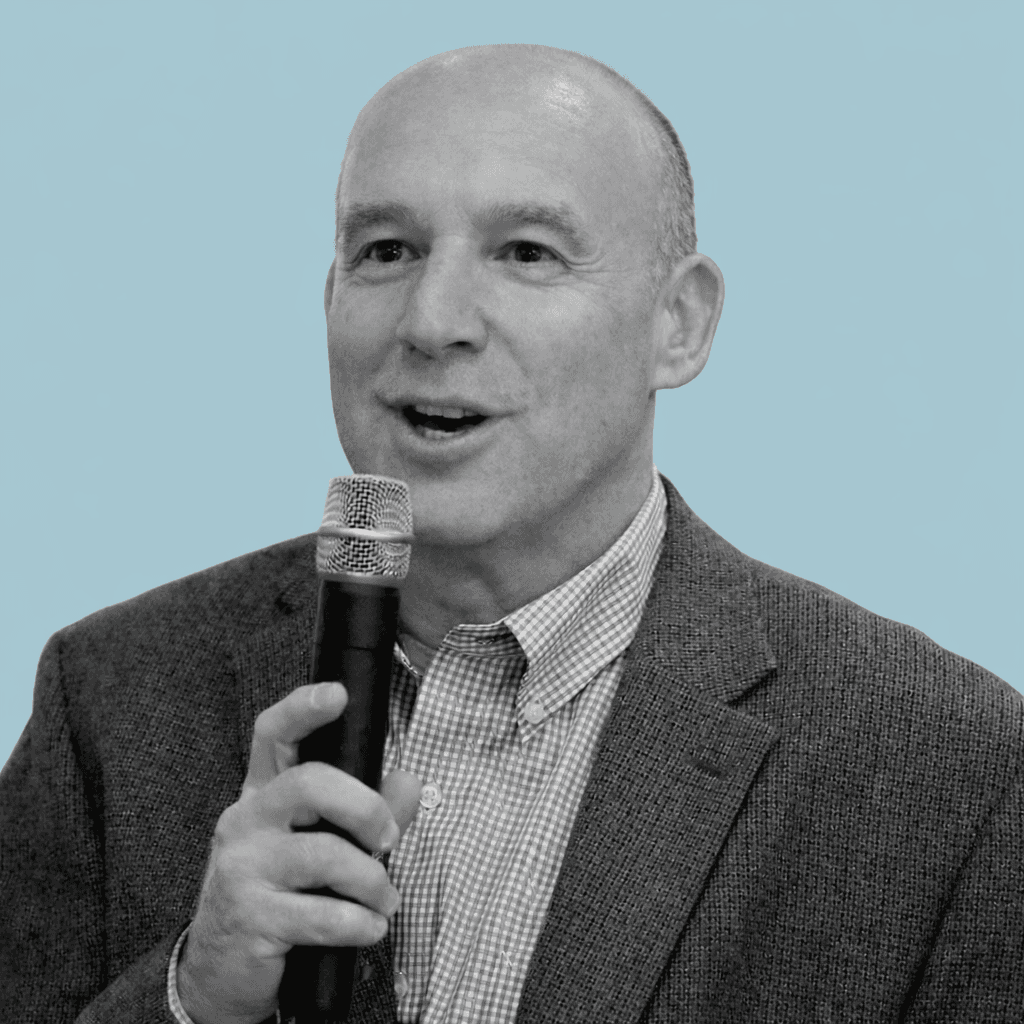
George Chmael II
Founder & CEO
In This Article
Shareholder capitalism, the model that powered two centuries of industrial growth, was built for a world that no longer exists. It concentrated wealth, externalized harm, and treated people and planet as inputs to be optimized.
The Crossroads: Why This Moment Demands We Choose
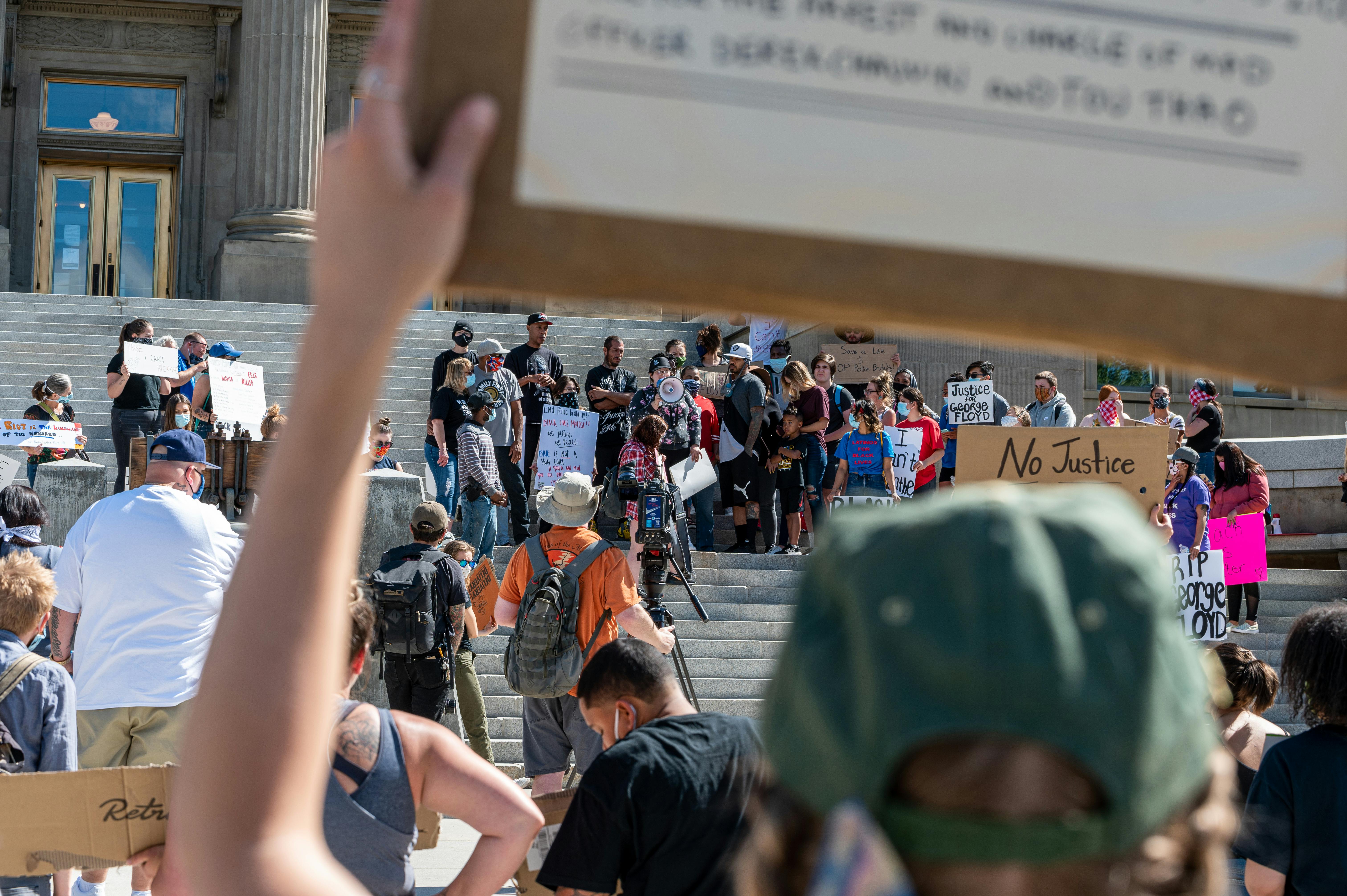
Last week, Minneapolis experienced something the United States hasn't seen in 80 years: a general strike.
Over 700 small businesses - coffee shops, bookstores, local groceries, salons - all closed their doors. Schools went remote. The local economy ground to a halt. 50,000 people took to the streets in minus-20-degree weather, not because of a single policy disagreement, but because trust in institutions has collapsed to the point where people feel they have no other recourse.
At the same time, climate disasters continued breaking records - $140 billion in insured losses in 2024 alone, double the previous decade's average. The richest 1% captured nearly two-thirds of all new wealth created since 2020 while most people fell further behind. Trust in institutions hit historic lows.
These aren't separate crises. They're symptoms of an economic system reaching its limits.
The System Isn't Broken. It's Obsolete.
Shareholder capitalism, the model that powered two centuries of industrial growth, was built for a world that no longer exists. It concentrated wealth, externalized harm, and treated people and planet as inputs to be optimized.
For a long time, that worked. GDP grew. Technology advanced. Material living standards rose for billions.
But the very success of that system created conditions it can't handle: climate disruption accelerating faster than we can adapt, inequality so extreme it is destabilizing institutions, trust collapsing under the weight of concentrated power.
The economy that got us here can't get us through what's next.
We're at an Inflection Point
But this is more than just a crisis to survive. It's a transition to navigate.
The old system is failing. But what replaces it isn't automatic. Right now, we're choosing between two paths:
Managed decline — where we defend the current system while its contradictions intensify. Inequality worsens. Climate shocks multiply. Institutions fragment. Eventually, collapse forces reorganization on terms we didn't choose.
Intentional transition — where we build the next economy by design. One rooted in stakeholder value instead of shareholder primacy. One that regenerates ecological systems instead of exhausting them. One that distributes prosperity instead of concentrating it.
That second path isn't theory. It's already happening.
Over 10,000 B Corporations across 100+ countries are proving business can create value for people, planet, and profit together. Cities from Barcelona to Portland are redesigning their civic economies around stakeholder principles. The European Union is codifying stakeholder accountability into law. Patient capital funds focused on long-term value are managing over $50 trillion in assets.
The proof exists. The question is whether we build the infrastructure to make it permanent.
What We Must Build
The transition from shareholder to stakeholder capitalism won't happen by accident. It requires deliberate construction:
Policy infrastructure that rewards long-term value creation instead of quarterly extraction.
Financial infrastructure that channels capital toward regeneration instead of speculation.
Civic infrastructure that gives communities power to shape their economic futures.
Cultural infrastructure that treats care, cooperation, and stewardship as economic strengths, not weaknesses.
This is systems change work, a fundamental redesign of the rules, incentives, and power structures that determine who wins and who loses in our economy.
The Cost of Waiting
Minneapolis is showing us what happens when we wait for crisis to force our hand. When institutions break down before we've built what comes next.
Those 700 small businesses that closed weren't making a symbolic gesture. Many are struggling. Sales down because economic anxiety has kept customers home. But they closed anyway, because they understood that, if the system keeps breaking this way, there won't be businesses to save.
The window for intentional transition is still open. But it's narrowing.
The systems that powered past prosperity are exhausting themselves. What we build in their place will determine whether the next economy works for everyone or just for the few who can weather the collapse.
What This Paper Offers
For those looking to understand these patterns more deeply and explore what comes next, we offer The End of Extraction as a resource. It maps why shareholder capitalism is reaching its structural limits. It shows how stakeholder capitalism works in practice, with proof from enterprises, cities, and regions already doing it. And it identifies what infrastructure we need to build to make this the next economic default.
This isn't about what needs to end. It's about what we need to build next.
And the choice to start building is ours to make.
👉 Download the full white paper The End of Extraction - a roadmap for the economic transition already underway and the infrastructure we need to make stakeholder capitalism permanent.
Latest Articles
©2025

Narrative Change and Power Building: The Missing Half of Advocacy
Narrative change is the process of disrupting dominant narratives that normalize inequity and advancing new narratives from historically marginalized communities.
Funding Resilience Without Federal Grants
BRIC is unreliable and FEMA is shrinking. Here's how cities fund climate resilience with dedicated revenue, blended finance, and a coordinating authority.

The ESG Blind Spot: How AI Is Finding Risks in Companies Nobody Else Is Watching
Norway's sovereign wealth fund uses AI to screen 7,200 portfolio companies for forced labor and corruption within 24 hours. The real story is the emerging-market coverage gap that traditional ESG data vendors miss — and what it means for any company with a global supply chain.
Narrative Change and Power Building: The Missing Half of Advocacy
Narrative change is the process of disrupting dominant narratives that normalize inequity and advancing new narratives from historically marginalized communities.
Funding Resilience Without Federal Grants
BRIC is unreliable and FEMA is shrinking. Here's how cities fund climate resilience with dedicated revenue, blended finance, and a coordinating authority.
The ESG Blind Spot: How AI Is Finding Risks in Companies Nobody Else Is Watching
Norway's sovereign wealth fund uses AI to screen 7,200 portfolio companies for forced labor and corruption within 24 hours. The real story is the emerging-market coverage gap that traditional ESG data vendors miss — and what it means for any company with a global supply chain.
FAQ
01
What does it really mean to “redefine profit”?
02
What makes Council Fire different?
03
Who does Council Fire work with?
04
What does working with Council Fire actually look like?
05
How does Council Fire help organizations turn big goals into action?
06
How does Council Fire define and measure success?
Feb 2, 2026
The Crossroads: Why This Moment Demands We Choose
The New Economy
George Chmael II
Founder & CEO
In This Article
Shareholder capitalism, the model that powered two centuries of industrial growth, was built for a world that no longer exists. It concentrated wealth, externalized harm, and treated people and planet as inputs to be optimized.
The Crossroads: Why This Moment Demands We Choose
Last week, Minneapolis experienced something the United States hasn't seen in 80 years: a general strike.
Over 700 small businesses - coffee shops, bookstores, local groceries, salons - all closed their doors. Schools went remote. The local economy ground to a halt. 50,000 people took to the streets in minus-20-degree weather, not because of a single policy disagreement, but because trust in institutions has collapsed to the point where people feel they have no other recourse.
At the same time, climate disasters continued breaking records - $140 billion in insured losses in 2024 alone, double the previous decade's average. The richest 1% captured nearly two-thirds of all new wealth created since 2020 while most people fell further behind. Trust in institutions hit historic lows.
These aren't separate crises. They're symptoms of an economic system reaching its limits.
The System Isn't Broken. It's Obsolete.
Shareholder capitalism, the model that powered two centuries of industrial growth, was built for a world that no longer exists. It concentrated wealth, externalized harm, and treated people and planet as inputs to be optimized.
For a long time, that worked. GDP grew. Technology advanced. Material living standards rose for billions.
But the very success of that system created conditions it can't handle: climate disruption accelerating faster than we can adapt, inequality so extreme it is destabilizing institutions, trust collapsing under the weight of concentrated power.
The economy that got us here can't get us through what's next.
We're at an Inflection Point
But this is more than just a crisis to survive. It's a transition to navigate.
The old system is failing. But what replaces it isn't automatic. Right now, we're choosing between two paths:
Managed decline — where we defend the current system while its contradictions intensify. Inequality worsens. Climate shocks multiply. Institutions fragment. Eventually, collapse forces reorganization on terms we didn't choose.
Intentional transition — where we build the next economy by design. One rooted in stakeholder value instead of shareholder primacy. One that regenerates ecological systems instead of exhausting them. One that distributes prosperity instead of concentrating it.
That second path isn't theory. It's already happening.
Over 10,000 B Corporations across 100+ countries are proving business can create value for people, planet, and profit together. Cities from Barcelona to Portland are redesigning their civic economies around stakeholder principles. The European Union is codifying stakeholder accountability into law. Patient capital funds focused on long-term value are managing over $50 trillion in assets.
The proof exists. The question is whether we build the infrastructure to make it permanent.
What We Must Build
The transition from shareholder to stakeholder capitalism won't happen by accident. It requires deliberate construction:
Policy infrastructure that rewards long-term value creation instead of quarterly extraction.
Financial infrastructure that channels capital toward regeneration instead of speculation.
Civic infrastructure that gives communities power to shape their economic futures.
Cultural infrastructure that treats care, cooperation, and stewardship as economic strengths, not weaknesses.
This is systems change work, a fundamental redesign of the rules, incentives, and power structures that determine who wins and who loses in our economy.
The Cost of Waiting
Minneapolis is showing us what happens when we wait for crisis to force our hand. When institutions break down before we've built what comes next.
Those 700 small businesses that closed weren't making a symbolic gesture. Many are struggling. Sales down because economic anxiety has kept customers home. But they closed anyway, because they understood that, if the system keeps breaking this way, there won't be businesses to save.
The window for intentional transition is still open. But it's narrowing.
The systems that powered past prosperity are exhausting themselves. What we build in their place will determine whether the next economy works for everyone or just for the few who can weather the collapse.
What This Paper Offers
For those looking to understand these patterns more deeply and explore what comes next, we offer The End of Extraction as a resource. It maps why shareholder capitalism is reaching its structural limits. It shows how stakeholder capitalism works in practice, with proof from enterprises, cities, and regions already doing it. And it identifies what infrastructure we need to build to make this the next economic default.
This isn't about what needs to end. It's about what we need to build next.
And the choice to start building is ours to make.
👉 Download the full white paper The End of Extraction - a roadmap for the economic transition already underway and the infrastructure we need to make stakeholder capitalism permanent.
Latest Articles
©2025
Narrative Change and Power Building: The Missing Half of Advocacy
Narrative change is the process of disrupting dominant narratives that normalize inequity and advancing new narratives from historically marginalized communities.
Funding Resilience Without Federal Grants
BRIC is unreliable and FEMA is shrinking. Here's how cities fund climate resilience with dedicated revenue, blended finance, and a coordinating authority.
The ESG Blind Spot: How AI Is Finding Risks in Companies Nobody Else Is Watching
Norway's sovereign wealth fund uses AI to screen 7,200 portfolio companies for forced labor and corruption within 24 hours. The real story is the emerging-market coverage gap that traditional ESG data vendors miss — and what it means for any company with a global supply chain.
FAQ
01
What does it really mean to “redefine profit”?
02
What makes Council Fire different?
03
Who does Council Fire work with?
04
What does working with Council Fire actually look like?
05
How does Council Fire help organizations turn big goals into action?
06
How does Council Fire define and measure success?
Feb 2, 2026
The Crossroads: Why This Moment Demands We Choose
The New Economy
George Chmael II
Founder & CEO
In This Article
Shareholder capitalism, the model that powered two centuries of industrial growth, was built for a world that no longer exists. It concentrated wealth, externalized harm, and treated people and planet as inputs to be optimized.
The Crossroads: Why This Moment Demands We Choose
Last week, Minneapolis experienced something the United States hasn't seen in 80 years: a general strike.
Over 700 small businesses - coffee shops, bookstores, local groceries, salons - all closed their doors. Schools went remote. The local economy ground to a halt. 50,000 people took to the streets in minus-20-degree weather, not because of a single policy disagreement, but because trust in institutions has collapsed to the point where people feel they have no other recourse.
At the same time, climate disasters continued breaking records - $140 billion in insured losses in 2024 alone, double the previous decade's average. The richest 1% captured nearly two-thirds of all new wealth created since 2020 while most people fell further behind. Trust in institutions hit historic lows.
These aren't separate crises. They're symptoms of an economic system reaching its limits.
The System Isn't Broken. It's Obsolete.
Shareholder capitalism, the model that powered two centuries of industrial growth, was built for a world that no longer exists. It concentrated wealth, externalized harm, and treated people and planet as inputs to be optimized.
For a long time, that worked. GDP grew. Technology advanced. Material living standards rose for billions.
But the very success of that system created conditions it can't handle: climate disruption accelerating faster than we can adapt, inequality so extreme it is destabilizing institutions, trust collapsing under the weight of concentrated power.
The economy that got us here can't get us through what's next.
We're at an Inflection Point
But this is more than just a crisis to survive. It's a transition to navigate.
The old system is failing. But what replaces it isn't automatic. Right now, we're choosing between two paths:
Managed decline — where we defend the current system while its contradictions intensify. Inequality worsens. Climate shocks multiply. Institutions fragment. Eventually, collapse forces reorganization on terms we didn't choose.
Intentional transition — where we build the next economy by design. One rooted in stakeholder value instead of shareholder primacy. One that regenerates ecological systems instead of exhausting them. One that distributes prosperity instead of concentrating it.
That second path isn't theory. It's already happening.
Over 10,000 B Corporations across 100+ countries are proving business can create value for people, planet, and profit together. Cities from Barcelona to Portland are redesigning their civic economies around stakeholder principles. The European Union is codifying stakeholder accountability into law. Patient capital funds focused on long-term value are managing over $50 trillion in assets.
The proof exists. The question is whether we build the infrastructure to make it permanent.
What We Must Build
The transition from shareholder to stakeholder capitalism won't happen by accident. It requires deliberate construction:
Policy infrastructure that rewards long-term value creation instead of quarterly extraction.
Financial infrastructure that channels capital toward regeneration instead of speculation.
Civic infrastructure that gives communities power to shape their economic futures.
Cultural infrastructure that treats care, cooperation, and stewardship as economic strengths, not weaknesses.
This is systems change work, a fundamental redesign of the rules, incentives, and power structures that determine who wins and who loses in our economy.
The Cost of Waiting
Minneapolis is showing us what happens when we wait for crisis to force our hand. When institutions break down before we've built what comes next.
Those 700 small businesses that closed weren't making a symbolic gesture. Many are struggling. Sales down because economic anxiety has kept customers home. But they closed anyway, because they understood that, if the system keeps breaking this way, there won't be businesses to save.
The window for intentional transition is still open. But it's narrowing.
The systems that powered past prosperity are exhausting themselves. What we build in their place will determine whether the next economy works for everyone or just for the few who can weather the collapse.
What This Paper Offers
For those looking to understand these patterns more deeply and explore what comes next, we offer The End of Extraction as a resource. It maps why shareholder capitalism is reaching its structural limits. It shows how stakeholder capitalism works in practice, with proof from enterprises, cities, and regions already doing it. And it identifies what infrastructure we need to build to make this the next economic default.
This isn't about what needs to end. It's about what we need to build next.
And the choice to start building is ours to make.
👉 Download the full white paper The End of Extraction - a roadmap for the economic transition already underway and the infrastructure we need to make stakeholder capitalism permanent.
Latest Articles
©2025
Narrative Change and Power Building: The Missing Half of Advocacy
Narrative change is the process of disrupting dominant narratives that normalize inequity and advancing new narratives from historically marginalized communities.
Funding Resilience Without Federal Grants
BRIC is unreliable and FEMA is shrinking. Here's how cities fund climate resilience with dedicated revenue, blended finance, and a coordinating authority.
The ESG Blind Spot: How AI Is Finding Risks in Companies Nobody Else Is Watching
Norway's sovereign wealth fund uses AI to screen 7,200 portfolio companies for forced labor and corruption within 24 hours. The real story is the emerging-market coverage gap that traditional ESG data vendors miss — and what it means for any company with a global supply chain.
FAQ
What does it really mean to “redefine profit”?
What makes Council Fire different?
Who does Council Fire work with?
What does working with Council Fire actually look like?
How does Council Fire help organizations turn big goals into action?
How does Council Fire define and measure success?