
Jan 28, 2026
Ultimate Guide to Triple Bottom Line Metrics Development
ESG Strategy
In This Article
Measure people, planet, and profit with practical TBL metrics - steps for goal setting, standardized data collection, reporting, and continuous improvement.
Ultimate Guide to Triple Bottom Line Metrics Development
Business success today requires measuring more than just profits. The Triple Bottom Line (TBL) approach evaluates impact across three dimensions: People, Planet, and Profit. This guide outlines how organizations can define and measure these metrics to align with stakeholder priorities, comply with regulations, and drive long-term value.
Key Takeaways:
TBL Metrics Explained: Measure financial performance alongside social and environmental impact to create lasting value.
Why It Matters: Regulations like the EU’s CSRD make sustainability reporting mandatory. Consumers and investors increasingly favor companies with measurable social and environmental contributions.
Core Metrics:
People: Employee satisfaction, diversity, wages, and safety.
Planet: Carbon emissions, energy use, waste reduction, and renewable energy.
Profit: Revenue from sustainable products, cost savings, and risk reduction.
Challenges: Collecting reliable data, aligning metrics with goals, and balancing qualitative and quantitative measures.
Steps to Success:
Define goals based on stakeholder priorities.
Choose measurable and relevant indicators.
Standardize data collection and reporting.
Regularly evaluate and refine metrics.
TBL metrics aren’t just about compliance - they help organizations make informed decisions, improve performance, and build trust with stakeholders.
Triple Bottom Line: How Companies Are Redefining Success in the 21st Century
Core Components of Triple Bottom Line Metrics
A TBL measurement system only works when you turn good intentions into hard numbers. You need specific indicators for each of the three dimensions that reflect what your stakeholders actually care about, while staying practical enough to track without a full-time data team. When you nail this balance, social, planet, and profit data stop being abstract goals and become the scorecard for your daily decisions.
Social Metrics: Measuring Impact on People
Your people metrics should capture how the company feels from the inside out. Employee Net Promoter Score (eNPS) cuts through the noise to reveal loyalty and satisfaction in one clean number. Layer in representation data - actual percentages showing diversity across leadership levels and living wage coverage compared to minimum wage - to see if your inclusion efforts show up in payroll and promotions. Look beyond the office walls too: track volunteer hours invested in local communities and watch your TRIR (Total Recordable Incident Rate) to keep safety standards honest. These figures directly predict who stays, who leaves, and who lines up to join you.
Environmental Metrics: Tracking Planetary Impact
This is where you measure your footprint in physical units. Start with greenhouse gas emissions across all three scopes - direct operations, purchased energy, and your full supply chain. Watch energy intensity (kWh per unit of production) to spot efficiency gaps, alongside water consumption and recycling rates. Track what percentage of your waste skips the landfill entirely, and monitor your shift toward renewable power sources. These numbers expose waste that costs you money while mapping your path to lower emissions.
Economic Metrics: Measuring Financial and Economic Value
The financial piece proves that doing good aligns with doing well. Calculate revenue streams coming specifically from sustainable products or services. Add up the savings from using less energy, water, and raw materials. Factor in risk reduction - lower insurance premiums, fewer regulatory fines, and reduced exposure to supply chain disruptions. Don't overlook your cost of capital; strong TBL performance often leads to better loan terms and investor confidence. Together, these metrics demonstrate that responsible operations build lasting business value.
Challenges in Developing and Implementing TBL Metrics
Creating a triple bottom line (TBL) measurement system comes with its fair share of hurdles. One of the most significant challenges lies in distinguishing causation from correlation. For instance, if employee satisfaction improves after introducing a training program, how can you be certain the program was the cause? It could just as easily be linked to broader economic improvements or unrelated factors. Moving from simple metrics to more rigorous impact assessments, like randomized controlled trials, requires both time and resources - luxuries that many organizations lack [5]. Below, we explore key challenges and practical strategies for addressing them.
Balancing Quantitative and Qualitative Metrics
Financial metrics are relatively straightforward - revenue either goes up or it doesn't. However, measuring social and environmental impacts often requires using proxy indicators when direct data is unavailable. For example, ESG rating agencies frequently rely on varying methodologies and weightings, which can result in the same company receiving drastically different scores depending on the agency [7]. When direct data, like school district records, isn't accessible, alternative methods - such as evaluating readiness levels before and after a program - can provide useful insights [5]. Collecting qualitative data systematically is also critical. By gathering feedback consistently across multiple touchpoints, organizations can turn subjective insights into actionable data.
Data Collection and Standardization
Collecting reliable data across different departments, suppliers, and global locations is another major challenge. Organizations often face restrictions, such as being unable to access individual-level data due to funder-imposed system limitations. Similarly, obtaining external data from partners can be difficult [5]. Even when data is available, inconsistent calculation methods can reduce comparisons to educated guesses. To tackle these issues, adopting standardized frameworks - like the World Economic Forum's 21 core metrics or the GHG Protocol - can help. Additionally, implementing a formal RACI (Responsible, Accountable, Consulted, Informed) approval process ensures that subject matter experts validate methodologies. Regularly reassessing tools and metrics allows organizations to adapt to updated coefficients and regulatory changes [6][1].
"Reporting accurate and traceable sustainability data is as important as publishing the financial data of your company." - Marina Bulova, SLB [6]
Aligning TBL Metrics with Organizational Goals
One common mistake is treating sustainability as an isolated initiative rather than embedding it into the organization's core priorities. To avoid this, TBL metrics should align directly with the objectives of key stakeholders, such as the CFO, COO, and board members. A double materiality assessment can help identify issues that impact both financial value and broader social or environmental outcomes [7]. Stakeholder mapping is another crucial step, ensuring metrics are tailored to answer their specific concerns. Objectives should be structured across four tiers: a long-term vision (10+ years), public commitments (5–10 years), measurable targets (1–5 years), and annual goals that guide immediate decisions. By integrating sustainability metrics into core business processes, organizations can make them an essential part of their operations rather than an afterthought.
Steps to Develop and Operationalize TBL Metrics
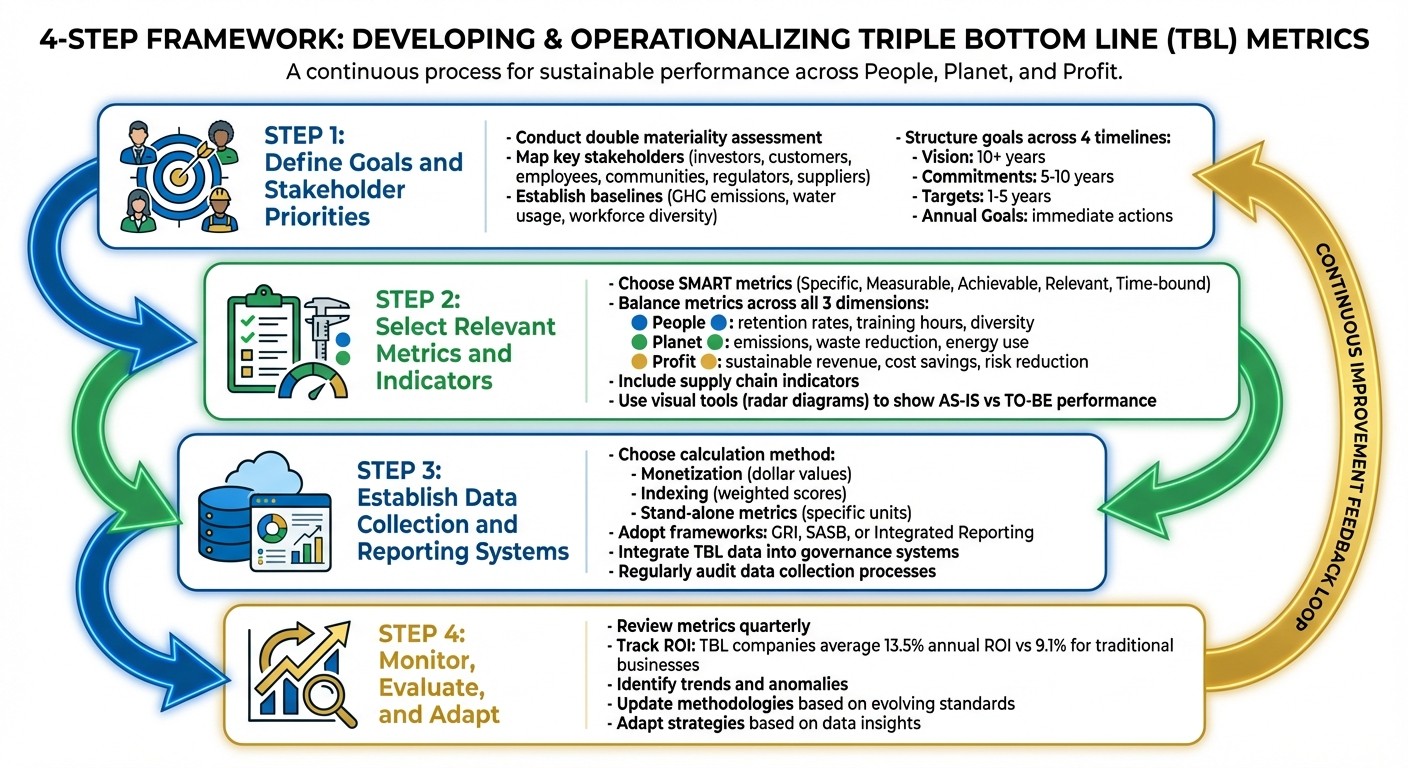
4-Step Process to Develop Triple Bottom Line Metrics
Creating a triple bottom line (TBL) measurement system involves a structured process that transitions from strategic planning to everyday operations. This approach ensures sustainability becomes an integral part of decision-making and resource allocation. By following these steps, organizations can embed TBL principles into their daily practices, starting with stakeholder priorities and ending with ongoing refinement.
Step 1: Define Goals and Stakeholder Priorities
The first step is conducting a double materiality assessment, which evaluates how environmental and social factors impact your organization's value and how your operations affect the broader world. This helps identify what matters most to both stakeholders and the business itself.
Map out key stakeholders - investors, customers, employees, communities, regulators, and suppliers - and understand their concerns. For instance, investors often focus on risk and transparency, while local communities may prioritize environmental impact and economic contributions. Use tailored engagement strategies such as ESG roadshows for investors or community partnerships for residents.
Establish baselines for metrics like greenhouse gas (GHG) emissions, water usage, workforce diversity, and ethics. Then, structure goals across four timelines:
Vision: Long-term aspirations (10+ years)
Commitments: Public promises (5-10 years)
Targets: Specific objectives (1-5 years)
Annual Goals: Short-term actions guiding daily decisions
Align climate-related goals with science-based standards, like the Science Based Targets initiative (SBTi), to ensure credibility. Use a prioritization matrix to rank sustainability issues based on stakeholder importance and business impact, helping you focus on the most pressing areas.
Step 2: Select Relevant Metrics and Indicators
Choose metrics that are Specific, Measurable, Achievable, Relevant, and Time-bound (SMART). Since much of the TBL impact originates in supply chains, include indicators that track supplier practices, such as monitoring "overtime hours" to assess employee welfare [8]. A balanced TBL report should include comparable metrics across Profit, People, and Planet to emphasize their equal value [2].
Examples of TBL metrics include:
Cascade Engineering: Tracks taxes paid, training hours, retention rates, and landfill waste [3].
Grand Rapids, Michigan: Measures public transit ridership (Planet), income per capita (Profit), and infant mortality rates (People) [3].
Visual tools like radar or spiderweb diagrams can illustrate your current ("AS-IS") versus desired ("TO-BE") performance, making it easier to identify gaps and communicate progress to stakeholders [8]. These visuals simplify complex data for audiences unfamiliar with sustainability terminology.
Step 3: Establish Data Collection and Reporting Systems
To calculate TBL performance, organizations typically use one of three methods:
Monetization: Converting all impacts into dollar values
Indexing: Creating a weighted score
Stand-alone Metrics: Tracking specific units, such as "acres of wetlands restored" [3]
Adopt established frameworks like the Global Reporting Initiative (GRI), Sustainability Accounting Standards Board (SASB), or Integrated Reporting to ensure relevance and comparability [10]. Begin with critical impact areas and expand as resources grow [10].
Integrate TBL data into governance systems to inform strategic decisions [9][10]. Regularly audit data collection processes to maintain accuracy and transparency. When determining which metrics matter most locally, consider using decision matrices or narrative formats to gather stakeholder input [3].
Step 4: Monitor, Evaluate, and Adapt
Continuous monitoring and evaluation are key to improving outcomes. Companies implementing TBL strategies see an average annual ROI of 13.5%, compared to 9.1% for traditional businesses [10]. This advantage stems from their ability to adapt based on insights from data.
Review metrics quarterly to identify trends and anomalies. For example, if Scope 3 emissions rise despite operational improvements, it may signal a need to engage suppliers more effectively. Positive outcomes, like improved employee retention after training investments, can guide future initiatives. Stay responsive to evolving standards, regulatory changes, and scientific advancements by updating methodologies when necessary.
Additionally, TBL metrics can reveal whether your organization is meeting the expectations of the growing "purpose-driven" consumer segment. With 44% of consumers choosing brands aligned with their values and 50% willing to pay more for sustainable products, understanding this market is essential [4].
"In many situations, it's possible to do the right thing and make money at the same time." – Rebecca Henderson, Professor at Harvard Business School [4]
Council Fire's Approach to Operationalizing Sustainability
Turning Triple Bottom Line (TBL) metrics into actionable strategies involves more than just tracking numbers - it’s about weaving them into the fabric of an organization. Council Fire excels at this by transforming TBL metrics from mere compliance checklists into tools for creating long-term enterprise value. Their approach relies on systems thinking, collaborative partnerships, and data-driven strategies. By working with a team of economists, scientists, and financial experts, they help businesses transition from simple reporting to driving meaningful outcomes.
Systems Thinking for Integrated Action
Council Fire’s method emphasizes the interconnected nature of sustainability efforts. They understand that achieving measurable results requires addressing policy, infrastructure, and community behavior simultaneously. For example, when conducting carbon footprint analyses, they don’t stop at calculating Scope 1, 2, and 3 emissions. Instead, they map out how energy efficiency measures can lead to cost savings while also reducing risks tied to climate change, such as higher insurance premiums or increased capital costs. This holistic approach ensures that TBL metrics are not just numbers in a report but tools for strategic decision-making.
Building Partnerships for Collective Solutions
To drive systemic change, Council Fire uses a tool called the Complementarity Matrix, which helps identify and align the technical, financial, and relational strengths of potential partners. This approach brings together governments, NGOs, corporations, and local communities to co-create solutions that no single organization could achieve alone. By fostering collaboration and trust, they ensure that TBL metrics address the diverse priorities of stakeholders - from investors seeking transparency on risks to communities concerned about local environmental and economic impacts.
Linking Data to Long-Term Business Value
Council Fire bridges the gap between sustainability goals and financial performance by connecting environmental and social progress to measurable business outcomes. They design custom frameworks that help organizations quantify the return on investment (ROI) of their sustainability efforts. Their strategic roadmaps categorize initiatives into "Quick Wins", "Foundation Building", and "Strategic Investments" to maximize impact and guide resource allocation effectively.
| Impact Area | Council Fire’s Data-Driven Connection | Financial Value Driver |
| --- | --- | --- |
| <strong>Environmental</strong> | Energy efficiency and waste reduction | Operational cost savings |
| <strong>Social</strong> | Employee engagement and retention rates | Lower recruitment and training expenses |
| <strong>Risk</strong> | Climate resilience and compliance tracking | Reduced insurance premiums and capital costs |
| <strong>Market</strong> | Green product sales and improved brand sentiment | Revenue growth and increased customer loyalty
| Impact Area | Council Fire’s Data-Driven Connection | Financial Value Driver |
| --- | --- | --- |
| <strong>Environmental</strong> | Energy efficiency and waste reduction | Operational cost savings |
| <strong>Social</strong> | Employee engagement and retention rates | Lower recruitment and training expenses |
| <strong>Risk</strong> | Climate resilience and compliance tracking | Reduced insurance premiums and capital costs |
| <strong>Market</strong> | Green product sales and improved brand sentiment | Revenue growth and increased customer loyalty
This structured approach ensures that sustainability initiatives not only align with organizational goals but also deliver measurable value across multiple dimensions. By linking TBL metrics to business performance, Council Fire helps organizations turn sustainability into a driver of both impact and profitability.
Conclusion: The Path Forward for TBL Metrics Development
Key Takeaways
To effectively embed Triple Bottom Line (TBL) metrics into your operations, start by setting clear goals that align with stakeholder priorities. Choose metrics that balance environmental, social, and economic performance, and approach this with a systems mindset. For example, cutting carbon emissions can simultaneously reduce operational expenses and help address climate risks. As EY highlights, integrating long-term value creation into your strategy is essential [1].
Begin by establishing baselines and focusing on quick wins to build momentum. Simple initiatives, like switching to LED lighting, can create early successes. From there, concentrate on foundational efforts such as implementing greenhouse gas (GHG) inventory systems. Once these are in place, pursue strategic investments like renewable energy procurement to achieve larger-scale results. This phased approach ensures resources are used efficiently while delivering meaningful outcomes.
These steps provide a roadmap for taking immediate, purposeful action.
Next Steps
With your goals and metrics defined, it’s time to move forward. Start by documenting your current performance across the three TBL dimensions - people, planet, and profit - to establish a baseline. Standardize data collection processes across teams and locations to ensure consistent and reliable information. Tools like a RACI matrix can help clarify roles and responsibilities for validating sustainability data.
To signal the strategic importance of TBL metrics, consider linking executive compensation to performance in this area and establishing board-level oversight. Align environmental goals with science-driven frameworks such as the Science Based Targets initiative (SBTi) to enhance credibility. Conduct annual evaluations of your measurement systems and quarterly reviews of progress to adapt to evolving regulations and stakeholder expectations.
Successfully implementing TBL metrics often requires specialized expertise. Whether it’s conducting a detailed carbon footprint analysis or building a tailored framework to measure sustainability ROI, having the right support is critical. Council Fire helps organizations translate sustainability ambitions into practical frameworks, aligning infrastructure, partnerships, and data systems to deliver lasting results.
FAQs
How can businesses effectively balance qualitative and quantitative Triple Bottom Line (TBL) metrics?
To achieve a balanced view of sustainability performance, businesses should integrate quantitative metrics with qualitative insights. Quantitative metrics - such as greenhouse gas emissions, revenue growth, or workforce diversity percentages - offer concrete, measurable progress. On the other hand, qualitative metrics, like employee feedback, case studies, or stakeholder interviews, uncover the stories and behaviors that give depth to these numbers.
Aligning these two types of metrics with defined goals, employing a variety of data collection methods, and interpreting the results in a comprehensive way allows businesses to pair hard data with meaningful context. This combined approach ensures sustainability initiatives are not only measurable but also impactful, enabling better decision-making and lasting results.
How can organizations address challenges in collecting data for Triple Bottom Line (TBL) reporting?
Overcoming hurdles in data collection for triple bottom line (TBL) reporting calls for a well-thought-out and team-oriented strategy. Start by pinpointing the metrics that best reflect your organization's sustainability goals and core business priorities. This focus ensures that your efforts target the data that truly matters.
Collaboration across departments is key to improving both alignment and the quality of the data you gather. Crafting a detailed data management plan - complete with clear boundaries, the right tools, and consistent methodologies - can simplify the entire process. Additionally, blending numerical data with qualitative insights, such as interviews or case studies, provides essential context and strengthens the trustworthiness of your reports.
By zeroing in on relevant metrics, encouraging teamwork, and integrating diverse data types, organizations can navigate common obstacles and create TBL metrics that are both practical and impactful.
How do Triple Bottom Line (TBL) metrics contribute to financial success and long-term business growth?
Triple Bottom Line (TBL) metrics enable businesses to achieve financial growth while addressing broader goals by focusing on social and environmental impacts alongside profits. This expanded perspective often reveals ways to cut costs through resource efficiency, minimize regulatory risks, and tap into new revenue streams linked to sustainability efforts.
Incorporating TBL metrics into a company’s core strategies can also foster deeper trust with stakeholders, improve brand perception, and increase employee commitment - key elements for maintaining long-term success. Moreover, these metrics shed light on how tackling social and environmental challenges can bolster resilience and create lasting value, helping businesses stay competitive in a rapidly changing global landscape.
Related Blog Posts
Latest Articles
©2025



FAQ
01
What does it really mean to “redefine profit”?
02
What makes Council Fire different?
03
Who does Council Fire you work with?
04
What does working with Council Fire actually look like?
05
How does Council Fire help organizations turn big goals into action?
06
How does Council Fire define and measure success?
Jan 28, 2026
Ultimate Guide to Triple Bottom Line Metrics Development
ESG Strategy
In This Article
Measure people, planet, and profit with practical TBL metrics - steps for goal setting, standardized data collection, reporting, and continuous improvement.
Ultimate Guide to Triple Bottom Line Metrics Development
Business success today requires measuring more than just profits. The Triple Bottom Line (TBL) approach evaluates impact across three dimensions: People, Planet, and Profit. This guide outlines how organizations can define and measure these metrics to align with stakeholder priorities, comply with regulations, and drive long-term value.
Key Takeaways:
TBL Metrics Explained: Measure financial performance alongside social and environmental impact to create lasting value.
Why It Matters: Regulations like the EU’s CSRD make sustainability reporting mandatory. Consumers and investors increasingly favor companies with measurable social and environmental contributions.
Core Metrics:
People: Employee satisfaction, diversity, wages, and safety.
Planet: Carbon emissions, energy use, waste reduction, and renewable energy.
Profit: Revenue from sustainable products, cost savings, and risk reduction.
Challenges: Collecting reliable data, aligning metrics with goals, and balancing qualitative and quantitative measures.
Steps to Success:
Define goals based on stakeholder priorities.
Choose measurable and relevant indicators.
Standardize data collection and reporting.
Regularly evaluate and refine metrics.
TBL metrics aren’t just about compliance - they help organizations make informed decisions, improve performance, and build trust with stakeholders.
Triple Bottom Line: How Companies Are Redefining Success in the 21st Century
Core Components of Triple Bottom Line Metrics
A TBL measurement system only works when you turn good intentions into hard numbers. You need specific indicators for each of the three dimensions that reflect what your stakeholders actually care about, while staying practical enough to track without a full-time data team. When you nail this balance, social, planet, and profit data stop being abstract goals and become the scorecard for your daily decisions.
Social Metrics: Measuring Impact on People
Your people metrics should capture how the company feels from the inside out. Employee Net Promoter Score (eNPS) cuts through the noise to reveal loyalty and satisfaction in one clean number. Layer in representation data - actual percentages showing diversity across leadership levels and living wage coverage compared to minimum wage - to see if your inclusion efforts show up in payroll and promotions. Look beyond the office walls too: track volunteer hours invested in local communities and watch your TRIR (Total Recordable Incident Rate) to keep safety standards honest. These figures directly predict who stays, who leaves, and who lines up to join you.
Environmental Metrics: Tracking Planetary Impact
This is where you measure your footprint in physical units. Start with greenhouse gas emissions across all three scopes - direct operations, purchased energy, and your full supply chain. Watch energy intensity (kWh per unit of production) to spot efficiency gaps, alongside water consumption and recycling rates. Track what percentage of your waste skips the landfill entirely, and monitor your shift toward renewable power sources. These numbers expose waste that costs you money while mapping your path to lower emissions.
Economic Metrics: Measuring Financial and Economic Value
The financial piece proves that doing good aligns with doing well. Calculate revenue streams coming specifically from sustainable products or services. Add up the savings from using less energy, water, and raw materials. Factor in risk reduction - lower insurance premiums, fewer regulatory fines, and reduced exposure to supply chain disruptions. Don't overlook your cost of capital; strong TBL performance often leads to better loan terms and investor confidence. Together, these metrics demonstrate that responsible operations build lasting business value.
Challenges in Developing and Implementing TBL Metrics
Creating a triple bottom line (TBL) measurement system comes with its fair share of hurdles. One of the most significant challenges lies in distinguishing causation from correlation. For instance, if employee satisfaction improves after introducing a training program, how can you be certain the program was the cause? It could just as easily be linked to broader economic improvements or unrelated factors. Moving from simple metrics to more rigorous impact assessments, like randomized controlled trials, requires both time and resources - luxuries that many organizations lack [5]. Below, we explore key challenges and practical strategies for addressing them.
Balancing Quantitative and Qualitative Metrics
Financial metrics are relatively straightforward - revenue either goes up or it doesn't. However, measuring social and environmental impacts often requires using proxy indicators when direct data is unavailable. For example, ESG rating agencies frequently rely on varying methodologies and weightings, which can result in the same company receiving drastically different scores depending on the agency [7]. When direct data, like school district records, isn't accessible, alternative methods - such as evaluating readiness levels before and after a program - can provide useful insights [5]. Collecting qualitative data systematically is also critical. By gathering feedback consistently across multiple touchpoints, organizations can turn subjective insights into actionable data.
Data Collection and Standardization
Collecting reliable data across different departments, suppliers, and global locations is another major challenge. Organizations often face restrictions, such as being unable to access individual-level data due to funder-imposed system limitations. Similarly, obtaining external data from partners can be difficult [5]. Even when data is available, inconsistent calculation methods can reduce comparisons to educated guesses. To tackle these issues, adopting standardized frameworks - like the World Economic Forum's 21 core metrics or the GHG Protocol - can help. Additionally, implementing a formal RACI (Responsible, Accountable, Consulted, Informed) approval process ensures that subject matter experts validate methodologies. Regularly reassessing tools and metrics allows organizations to adapt to updated coefficients and regulatory changes [6][1].
"Reporting accurate and traceable sustainability data is as important as publishing the financial data of your company." - Marina Bulova, SLB [6]
Aligning TBL Metrics with Organizational Goals
One common mistake is treating sustainability as an isolated initiative rather than embedding it into the organization's core priorities. To avoid this, TBL metrics should align directly with the objectives of key stakeholders, such as the CFO, COO, and board members. A double materiality assessment can help identify issues that impact both financial value and broader social or environmental outcomes [7]. Stakeholder mapping is another crucial step, ensuring metrics are tailored to answer their specific concerns. Objectives should be structured across four tiers: a long-term vision (10+ years), public commitments (5–10 years), measurable targets (1–5 years), and annual goals that guide immediate decisions. By integrating sustainability metrics into core business processes, organizations can make them an essential part of their operations rather than an afterthought.
Steps to Develop and Operationalize TBL Metrics
4-Step Process to Develop Triple Bottom Line Metrics
Creating a triple bottom line (TBL) measurement system involves a structured process that transitions from strategic planning to everyday operations. This approach ensures sustainability becomes an integral part of decision-making and resource allocation. By following these steps, organizations can embed TBL principles into their daily practices, starting with stakeholder priorities and ending with ongoing refinement.
Step 1: Define Goals and Stakeholder Priorities
The first step is conducting a double materiality assessment, which evaluates how environmental and social factors impact your organization's value and how your operations affect the broader world. This helps identify what matters most to both stakeholders and the business itself.
Map out key stakeholders - investors, customers, employees, communities, regulators, and suppliers - and understand their concerns. For instance, investors often focus on risk and transparency, while local communities may prioritize environmental impact and economic contributions. Use tailored engagement strategies such as ESG roadshows for investors or community partnerships for residents.
Establish baselines for metrics like greenhouse gas (GHG) emissions, water usage, workforce diversity, and ethics. Then, structure goals across four timelines:
Vision: Long-term aspirations (10+ years)
Commitments: Public promises (5-10 years)
Targets: Specific objectives (1-5 years)
Annual Goals: Short-term actions guiding daily decisions
Align climate-related goals with science-based standards, like the Science Based Targets initiative (SBTi), to ensure credibility. Use a prioritization matrix to rank sustainability issues based on stakeholder importance and business impact, helping you focus on the most pressing areas.
Step 2: Select Relevant Metrics and Indicators
Choose metrics that are Specific, Measurable, Achievable, Relevant, and Time-bound (SMART). Since much of the TBL impact originates in supply chains, include indicators that track supplier practices, such as monitoring "overtime hours" to assess employee welfare [8]. A balanced TBL report should include comparable metrics across Profit, People, and Planet to emphasize their equal value [2].
Examples of TBL metrics include:
Cascade Engineering: Tracks taxes paid, training hours, retention rates, and landfill waste [3].
Grand Rapids, Michigan: Measures public transit ridership (Planet), income per capita (Profit), and infant mortality rates (People) [3].
Visual tools like radar or spiderweb diagrams can illustrate your current ("AS-IS") versus desired ("TO-BE") performance, making it easier to identify gaps and communicate progress to stakeholders [8]. These visuals simplify complex data for audiences unfamiliar with sustainability terminology.
Step 3: Establish Data Collection and Reporting Systems
To calculate TBL performance, organizations typically use one of three methods:
Monetization: Converting all impacts into dollar values
Indexing: Creating a weighted score
Stand-alone Metrics: Tracking specific units, such as "acres of wetlands restored" [3]
Adopt established frameworks like the Global Reporting Initiative (GRI), Sustainability Accounting Standards Board (SASB), or Integrated Reporting to ensure relevance and comparability [10]. Begin with critical impact areas and expand as resources grow [10].
Integrate TBL data into governance systems to inform strategic decisions [9][10]. Regularly audit data collection processes to maintain accuracy and transparency. When determining which metrics matter most locally, consider using decision matrices or narrative formats to gather stakeholder input [3].
Step 4: Monitor, Evaluate, and Adapt
Continuous monitoring and evaluation are key to improving outcomes. Companies implementing TBL strategies see an average annual ROI of 13.5%, compared to 9.1% for traditional businesses [10]. This advantage stems from their ability to adapt based on insights from data.
Review metrics quarterly to identify trends and anomalies. For example, if Scope 3 emissions rise despite operational improvements, it may signal a need to engage suppliers more effectively. Positive outcomes, like improved employee retention after training investments, can guide future initiatives. Stay responsive to evolving standards, regulatory changes, and scientific advancements by updating methodologies when necessary.
Additionally, TBL metrics can reveal whether your organization is meeting the expectations of the growing "purpose-driven" consumer segment. With 44% of consumers choosing brands aligned with their values and 50% willing to pay more for sustainable products, understanding this market is essential [4].
"In many situations, it's possible to do the right thing and make money at the same time." – Rebecca Henderson, Professor at Harvard Business School [4]
Council Fire's Approach to Operationalizing Sustainability
Turning Triple Bottom Line (TBL) metrics into actionable strategies involves more than just tracking numbers - it’s about weaving them into the fabric of an organization. Council Fire excels at this by transforming TBL metrics from mere compliance checklists into tools for creating long-term enterprise value. Their approach relies on systems thinking, collaborative partnerships, and data-driven strategies. By working with a team of economists, scientists, and financial experts, they help businesses transition from simple reporting to driving meaningful outcomes.
Systems Thinking for Integrated Action
Council Fire’s method emphasizes the interconnected nature of sustainability efforts. They understand that achieving measurable results requires addressing policy, infrastructure, and community behavior simultaneously. For example, when conducting carbon footprint analyses, they don’t stop at calculating Scope 1, 2, and 3 emissions. Instead, they map out how energy efficiency measures can lead to cost savings while also reducing risks tied to climate change, such as higher insurance premiums or increased capital costs. This holistic approach ensures that TBL metrics are not just numbers in a report but tools for strategic decision-making.
Building Partnerships for Collective Solutions
To drive systemic change, Council Fire uses a tool called the Complementarity Matrix, which helps identify and align the technical, financial, and relational strengths of potential partners. This approach brings together governments, NGOs, corporations, and local communities to co-create solutions that no single organization could achieve alone. By fostering collaboration and trust, they ensure that TBL metrics address the diverse priorities of stakeholders - from investors seeking transparency on risks to communities concerned about local environmental and economic impacts.
Linking Data to Long-Term Business Value
Council Fire bridges the gap between sustainability goals and financial performance by connecting environmental and social progress to measurable business outcomes. They design custom frameworks that help organizations quantify the return on investment (ROI) of their sustainability efforts. Their strategic roadmaps categorize initiatives into "Quick Wins", "Foundation Building", and "Strategic Investments" to maximize impact and guide resource allocation effectively.
| Impact Area | Council Fire’s Data-Driven Connection | Financial Value Driver |
| --- | --- | --- |
| <strong>Environmental</strong> | Energy efficiency and waste reduction | Operational cost savings |
| <strong>Social</strong> | Employee engagement and retention rates | Lower recruitment and training expenses |
| <strong>Risk</strong> | Climate resilience and compliance tracking | Reduced insurance premiums and capital costs |
| <strong>Market</strong> | Green product sales and improved brand sentiment | Revenue growth and increased customer loyalty
This structured approach ensures that sustainability initiatives not only align with organizational goals but also deliver measurable value across multiple dimensions. By linking TBL metrics to business performance, Council Fire helps organizations turn sustainability into a driver of both impact and profitability.
Conclusion: The Path Forward for TBL Metrics Development
Key Takeaways
To effectively embed Triple Bottom Line (TBL) metrics into your operations, start by setting clear goals that align with stakeholder priorities. Choose metrics that balance environmental, social, and economic performance, and approach this with a systems mindset. For example, cutting carbon emissions can simultaneously reduce operational expenses and help address climate risks. As EY highlights, integrating long-term value creation into your strategy is essential [1].
Begin by establishing baselines and focusing on quick wins to build momentum. Simple initiatives, like switching to LED lighting, can create early successes. From there, concentrate on foundational efforts such as implementing greenhouse gas (GHG) inventory systems. Once these are in place, pursue strategic investments like renewable energy procurement to achieve larger-scale results. This phased approach ensures resources are used efficiently while delivering meaningful outcomes.
These steps provide a roadmap for taking immediate, purposeful action.
Next Steps
With your goals and metrics defined, it’s time to move forward. Start by documenting your current performance across the three TBL dimensions - people, planet, and profit - to establish a baseline. Standardize data collection processes across teams and locations to ensure consistent and reliable information. Tools like a RACI matrix can help clarify roles and responsibilities for validating sustainability data.
To signal the strategic importance of TBL metrics, consider linking executive compensation to performance in this area and establishing board-level oversight. Align environmental goals with science-driven frameworks such as the Science Based Targets initiative (SBTi) to enhance credibility. Conduct annual evaluations of your measurement systems and quarterly reviews of progress to adapt to evolving regulations and stakeholder expectations.
Successfully implementing TBL metrics often requires specialized expertise. Whether it’s conducting a detailed carbon footprint analysis or building a tailored framework to measure sustainability ROI, having the right support is critical. Council Fire helps organizations translate sustainability ambitions into practical frameworks, aligning infrastructure, partnerships, and data systems to deliver lasting results.
FAQs
How can businesses effectively balance qualitative and quantitative Triple Bottom Line (TBL) metrics?
To achieve a balanced view of sustainability performance, businesses should integrate quantitative metrics with qualitative insights. Quantitative metrics - such as greenhouse gas emissions, revenue growth, or workforce diversity percentages - offer concrete, measurable progress. On the other hand, qualitative metrics, like employee feedback, case studies, or stakeholder interviews, uncover the stories and behaviors that give depth to these numbers.
Aligning these two types of metrics with defined goals, employing a variety of data collection methods, and interpreting the results in a comprehensive way allows businesses to pair hard data with meaningful context. This combined approach ensures sustainability initiatives are not only measurable but also impactful, enabling better decision-making and lasting results.
How can organizations address challenges in collecting data for Triple Bottom Line (TBL) reporting?
Overcoming hurdles in data collection for triple bottom line (TBL) reporting calls for a well-thought-out and team-oriented strategy. Start by pinpointing the metrics that best reflect your organization's sustainability goals and core business priorities. This focus ensures that your efforts target the data that truly matters.
Collaboration across departments is key to improving both alignment and the quality of the data you gather. Crafting a detailed data management plan - complete with clear boundaries, the right tools, and consistent methodologies - can simplify the entire process. Additionally, blending numerical data with qualitative insights, such as interviews or case studies, provides essential context and strengthens the trustworthiness of your reports.
By zeroing in on relevant metrics, encouraging teamwork, and integrating diverse data types, organizations can navigate common obstacles and create TBL metrics that are both practical and impactful.
How do Triple Bottom Line (TBL) metrics contribute to financial success and long-term business growth?
Triple Bottom Line (TBL) metrics enable businesses to achieve financial growth while addressing broader goals by focusing on social and environmental impacts alongside profits. This expanded perspective often reveals ways to cut costs through resource efficiency, minimize regulatory risks, and tap into new revenue streams linked to sustainability efforts.
Incorporating TBL metrics into a company’s core strategies can also foster deeper trust with stakeholders, improve brand perception, and increase employee commitment - key elements for maintaining long-term success. Moreover, these metrics shed light on how tackling social and environmental challenges can bolster resilience and create lasting value, helping businesses stay competitive in a rapidly changing global landscape.
Related Blog Posts
FAQ
01
What does it really mean to “redefine profit”?
02
What makes Council Fire different?
03
Who does Council Fire you work with?
04
What does working with Council Fire actually look like?
05
How does Council Fire help organizations turn big goals into action?
06
How does Council Fire define and measure success?
Jan 28, 2026
Ultimate Guide to Triple Bottom Line Metrics Development
ESG Strategy
In This Article
Measure people, planet, and profit with practical TBL metrics - steps for goal setting, standardized data collection, reporting, and continuous improvement.
Ultimate Guide to Triple Bottom Line Metrics Development
Business success today requires measuring more than just profits. The Triple Bottom Line (TBL) approach evaluates impact across three dimensions: People, Planet, and Profit. This guide outlines how organizations can define and measure these metrics to align with stakeholder priorities, comply with regulations, and drive long-term value.
Key Takeaways:
TBL Metrics Explained: Measure financial performance alongside social and environmental impact to create lasting value.
Why It Matters: Regulations like the EU’s CSRD make sustainability reporting mandatory. Consumers and investors increasingly favor companies with measurable social and environmental contributions.
Core Metrics:
People: Employee satisfaction, diversity, wages, and safety.
Planet: Carbon emissions, energy use, waste reduction, and renewable energy.
Profit: Revenue from sustainable products, cost savings, and risk reduction.
Challenges: Collecting reliable data, aligning metrics with goals, and balancing qualitative and quantitative measures.
Steps to Success:
Define goals based on stakeholder priorities.
Choose measurable and relevant indicators.
Standardize data collection and reporting.
Regularly evaluate and refine metrics.
TBL metrics aren’t just about compliance - they help organizations make informed decisions, improve performance, and build trust with stakeholders.
Triple Bottom Line: How Companies Are Redefining Success in the 21st Century
Core Components of Triple Bottom Line Metrics
A TBL measurement system only works when you turn good intentions into hard numbers. You need specific indicators for each of the three dimensions that reflect what your stakeholders actually care about, while staying practical enough to track without a full-time data team. When you nail this balance, social, planet, and profit data stop being abstract goals and become the scorecard for your daily decisions.
Social Metrics: Measuring Impact on People
Your people metrics should capture how the company feels from the inside out. Employee Net Promoter Score (eNPS) cuts through the noise to reveal loyalty and satisfaction in one clean number. Layer in representation data - actual percentages showing diversity across leadership levels and living wage coverage compared to minimum wage - to see if your inclusion efforts show up in payroll and promotions. Look beyond the office walls too: track volunteer hours invested in local communities and watch your TRIR (Total Recordable Incident Rate) to keep safety standards honest. These figures directly predict who stays, who leaves, and who lines up to join you.
Environmental Metrics: Tracking Planetary Impact
This is where you measure your footprint in physical units. Start with greenhouse gas emissions across all three scopes - direct operations, purchased energy, and your full supply chain. Watch energy intensity (kWh per unit of production) to spot efficiency gaps, alongside water consumption and recycling rates. Track what percentage of your waste skips the landfill entirely, and monitor your shift toward renewable power sources. These numbers expose waste that costs you money while mapping your path to lower emissions.
Economic Metrics: Measuring Financial and Economic Value
The financial piece proves that doing good aligns with doing well. Calculate revenue streams coming specifically from sustainable products or services. Add up the savings from using less energy, water, and raw materials. Factor in risk reduction - lower insurance premiums, fewer regulatory fines, and reduced exposure to supply chain disruptions. Don't overlook your cost of capital; strong TBL performance often leads to better loan terms and investor confidence. Together, these metrics demonstrate that responsible operations build lasting business value.
Challenges in Developing and Implementing TBL Metrics
Creating a triple bottom line (TBL) measurement system comes with its fair share of hurdles. One of the most significant challenges lies in distinguishing causation from correlation. For instance, if employee satisfaction improves after introducing a training program, how can you be certain the program was the cause? It could just as easily be linked to broader economic improvements or unrelated factors. Moving from simple metrics to more rigorous impact assessments, like randomized controlled trials, requires both time and resources - luxuries that many organizations lack [5]. Below, we explore key challenges and practical strategies for addressing them.
Balancing Quantitative and Qualitative Metrics
Financial metrics are relatively straightforward - revenue either goes up or it doesn't. However, measuring social and environmental impacts often requires using proxy indicators when direct data is unavailable. For example, ESG rating agencies frequently rely on varying methodologies and weightings, which can result in the same company receiving drastically different scores depending on the agency [7]. When direct data, like school district records, isn't accessible, alternative methods - such as evaluating readiness levels before and after a program - can provide useful insights [5]. Collecting qualitative data systematically is also critical. By gathering feedback consistently across multiple touchpoints, organizations can turn subjective insights into actionable data.
Data Collection and Standardization
Collecting reliable data across different departments, suppliers, and global locations is another major challenge. Organizations often face restrictions, such as being unable to access individual-level data due to funder-imposed system limitations. Similarly, obtaining external data from partners can be difficult [5]. Even when data is available, inconsistent calculation methods can reduce comparisons to educated guesses. To tackle these issues, adopting standardized frameworks - like the World Economic Forum's 21 core metrics or the GHG Protocol - can help. Additionally, implementing a formal RACI (Responsible, Accountable, Consulted, Informed) approval process ensures that subject matter experts validate methodologies. Regularly reassessing tools and metrics allows organizations to adapt to updated coefficients and regulatory changes [6][1].
"Reporting accurate and traceable sustainability data is as important as publishing the financial data of your company." - Marina Bulova, SLB [6]
Aligning TBL Metrics with Organizational Goals
One common mistake is treating sustainability as an isolated initiative rather than embedding it into the organization's core priorities. To avoid this, TBL metrics should align directly with the objectives of key stakeholders, such as the CFO, COO, and board members. A double materiality assessment can help identify issues that impact both financial value and broader social or environmental outcomes [7]. Stakeholder mapping is another crucial step, ensuring metrics are tailored to answer their specific concerns. Objectives should be structured across four tiers: a long-term vision (10+ years), public commitments (5–10 years), measurable targets (1–5 years), and annual goals that guide immediate decisions. By integrating sustainability metrics into core business processes, organizations can make them an essential part of their operations rather than an afterthought.
Steps to Develop and Operationalize TBL Metrics
4-Step Process to Develop Triple Bottom Line Metrics
Creating a triple bottom line (TBL) measurement system involves a structured process that transitions from strategic planning to everyday operations. This approach ensures sustainability becomes an integral part of decision-making and resource allocation. By following these steps, organizations can embed TBL principles into their daily practices, starting with stakeholder priorities and ending with ongoing refinement.
Step 1: Define Goals and Stakeholder Priorities
The first step is conducting a double materiality assessment, which evaluates how environmental and social factors impact your organization's value and how your operations affect the broader world. This helps identify what matters most to both stakeholders and the business itself.
Map out key stakeholders - investors, customers, employees, communities, regulators, and suppliers - and understand their concerns. For instance, investors often focus on risk and transparency, while local communities may prioritize environmental impact and economic contributions. Use tailored engagement strategies such as ESG roadshows for investors or community partnerships for residents.
Establish baselines for metrics like greenhouse gas (GHG) emissions, water usage, workforce diversity, and ethics. Then, structure goals across four timelines:
Vision: Long-term aspirations (10+ years)
Commitments: Public promises (5-10 years)
Targets: Specific objectives (1-5 years)
Annual Goals: Short-term actions guiding daily decisions
Align climate-related goals with science-based standards, like the Science Based Targets initiative (SBTi), to ensure credibility. Use a prioritization matrix to rank sustainability issues based on stakeholder importance and business impact, helping you focus on the most pressing areas.
Step 2: Select Relevant Metrics and Indicators
Choose metrics that are Specific, Measurable, Achievable, Relevant, and Time-bound (SMART). Since much of the TBL impact originates in supply chains, include indicators that track supplier practices, such as monitoring "overtime hours" to assess employee welfare [8]. A balanced TBL report should include comparable metrics across Profit, People, and Planet to emphasize their equal value [2].
Examples of TBL metrics include:
Cascade Engineering: Tracks taxes paid, training hours, retention rates, and landfill waste [3].
Grand Rapids, Michigan: Measures public transit ridership (Planet), income per capita (Profit), and infant mortality rates (People) [3].
Visual tools like radar or spiderweb diagrams can illustrate your current ("AS-IS") versus desired ("TO-BE") performance, making it easier to identify gaps and communicate progress to stakeholders [8]. These visuals simplify complex data for audiences unfamiliar with sustainability terminology.
Step 3: Establish Data Collection and Reporting Systems
To calculate TBL performance, organizations typically use one of three methods:
Monetization: Converting all impacts into dollar values
Indexing: Creating a weighted score
Stand-alone Metrics: Tracking specific units, such as "acres of wetlands restored" [3]
Adopt established frameworks like the Global Reporting Initiative (GRI), Sustainability Accounting Standards Board (SASB), or Integrated Reporting to ensure relevance and comparability [10]. Begin with critical impact areas and expand as resources grow [10].
Integrate TBL data into governance systems to inform strategic decisions [9][10]. Regularly audit data collection processes to maintain accuracy and transparency. When determining which metrics matter most locally, consider using decision matrices or narrative formats to gather stakeholder input [3].
Step 4: Monitor, Evaluate, and Adapt
Continuous monitoring and evaluation are key to improving outcomes. Companies implementing TBL strategies see an average annual ROI of 13.5%, compared to 9.1% for traditional businesses [10]. This advantage stems from their ability to adapt based on insights from data.
Review metrics quarterly to identify trends and anomalies. For example, if Scope 3 emissions rise despite operational improvements, it may signal a need to engage suppliers more effectively. Positive outcomes, like improved employee retention after training investments, can guide future initiatives. Stay responsive to evolving standards, regulatory changes, and scientific advancements by updating methodologies when necessary.
Additionally, TBL metrics can reveal whether your organization is meeting the expectations of the growing "purpose-driven" consumer segment. With 44% of consumers choosing brands aligned with their values and 50% willing to pay more for sustainable products, understanding this market is essential [4].
"In many situations, it's possible to do the right thing and make money at the same time." – Rebecca Henderson, Professor at Harvard Business School [4]
Council Fire's Approach to Operationalizing Sustainability
Turning Triple Bottom Line (TBL) metrics into actionable strategies involves more than just tracking numbers - it’s about weaving them into the fabric of an organization. Council Fire excels at this by transforming TBL metrics from mere compliance checklists into tools for creating long-term enterprise value. Their approach relies on systems thinking, collaborative partnerships, and data-driven strategies. By working with a team of economists, scientists, and financial experts, they help businesses transition from simple reporting to driving meaningful outcomes.
Systems Thinking for Integrated Action
Council Fire’s method emphasizes the interconnected nature of sustainability efforts. They understand that achieving measurable results requires addressing policy, infrastructure, and community behavior simultaneously. For example, when conducting carbon footprint analyses, they don’t stop at calculating Scope 1, 2, and 3 emissions. Instead, they map out how energy efficiency measures can lead to cost savings while also reducing risks tied to climate change, such as higher insurance premiums or increased capital costs. This holistic approach ensures that TBL metrics are not just numbers in a report but tools for strategic decision-making.
Building Partnerships for Collective Solutions
To drive systemic change, Council Fire uses a tool called the Complementarity Matrix, which helps identify and align the technical, financial, and relational strengths of potential partners. This approach brings together governments, NGOs, corporations, and local communities to co-create solutions that no single organization could achieve alone. By fostering collaboration and trust, they ensure that TBL metrics address the diverse priorities of stakeholders - from investors seeking transparency on risks to communities concerned about local environmental and economic impacts.
Linking Data to Long-Term Business Value
Council Fire bridges the gap between sustainability goals and financial performance by connecting environmental and social progress to measurable business outcomes. They design custom frameworks that help organizations quantify the return on investment (ROI) of their sustainability efforts. Their strategic roadmaps categorize initiatives into "Quick Wins", "Foundation Building", and "Strategic Investments" to maximize impact and guide resource allocation effectively.
| Impact Area | Council Fire’s Data-Driven Connection | Financial Value Driver |
| --- | --- | --- |
| <strong>Environmental</strong> | Energy efficiency and waste reduction | Operational cost savings |
| <strong>Social</strong> | Employee engagement and retention rates | Lower recruitment and training expenses |
| <strong>Risk</strong> | Climate resilience and compliance tracking | Reduced insurance premiums and capital costs |
| <strong>Market</strong> | Green product sales and improved brand sentiment | Revenue growth and increased customer loyalty
This structured approach ensures that sustainability initiatives not only align with organizational goals but also deliver measurable value across multiple dimensions. By linking TBL metrics to business performance, Council Fire helps organizations turn sustainability into a driver of both impact and profitability.
Conclusion: The Path Forward for TBL Metrics Development
Key Takeaways
To effectively embed Triple Bottom Line (TBL) metrics into your operations, start by setting clear goals that align with stakeholder priorities. Choose metrics that balance environmental, social, and economic performance, and approach this with a systems mindset. For example, cutting carbon emissions can simultaneously reduce operational expenses and help address climate risks. As EY highlights, integrating long-term value creation into your strategy is essential [1].
Begin by establishing baselines and focusing on quick wins to build momentum. Simple initiatives, like switching to LED lighting, can create early successes. From there, concentrate on foundational efforts such as implementing greenhouse gas (GHG) inventory systems. Once these are in place, pursue strategic investments like renewable energy procurement to achieve larger-scale results. This phased approach ensures resources are used efficiently while delivering meaningful outcomes.
These steps provide a roadmap for taking immediate, purposeful action.
Next Steps
With your goals and metrics defined, it’s time to move forward. Start by documenting your current performance across the three TBL dimensions - people, planet, and profit - to establish a baseline. Standardize data collection processes across teams and locations to ensure consistent and reliable information. Tools like a RACI matrix can help clarify roles and responsibilities for validating sustainability data.
To signal the strategic importance of TBL metrics, consider linking executive compensation to performance in this area and establishing board-level oversight. Align environmental goals with science-driven frameworks such as the Science Based Targets initiative (SBTi) to enhance credibility. Conduct annual evaluations of your measurement systems and quarterly reviews of progress to adapt to evolving regulations and stakeholder expectations.
Successfully implementing TBL metrics often requires specialized expertise. Whether it’s conducting a detailed carbon footprint analysis or building a tailored framework to measure sustainability ROI, having the right support is critical. Council Fire helps organizations translate sustainability ambitions into practical frameworks, aligning infrastructure, partnerships, and data systems to deliver lasting results.
FAQs
How can businesses effectively balance qualitative and quantitative Triple Bottom Line (TBL) metrics?
To achieve a balanced view of sustainability performance, businesses should integrate quantitative metrics with qualitative insights. Quantitative metrics - such as greenhouse gas emissions, revenue growth, or workforce diversity percentages - offer concrete, measurable progress. On the other hand, qualitative metrics, like employee feedback, case studies, or stakeholder interviews, uncover the stories and behaviors that give depth to these numbers.
Aligning these two types of metrics with defined goals, employing a variety of data collection methods, and interpreting the results in a comprehensive way allows businesses to pair hard data with meaningful context. This combined approach ensures sustainability initiatives are not only measurable but also impactful, enabling better decision-making and lasting results.
How can organizations address challenges in collecting data for Triple Bottom Line (TBL) reporting?
Overcoming hurdles in data collection for triple bottom line (TBL) reporting calls for a well-thought-out and team-oriented strategy. Start by pinpointing the metrics that best reflect your organization's sustainability goals and core business priorities. This focus ensures that your efforts target the data that truly matters.
Collaboration across departments is key to improving both alignment and the quality of the data you gather. Crafting a detailed data management plan - complete with clear boundaries, the right tools, and consistent methodologies - can simplify the entire process. Additionally, blending numerical data with qualitative insights, such as interviews or case studies, provides essential context and strengthens the trustworthiness of your reports.
By zeroing in on relevant metrics, encouraging teamwork, and integrating diverse data types, organizations can navigate common obstacles and create TBL metrics that are both practical and impactful.
How do Triple Bottom Line (TBL) metrics contribute to financial success and long-term business growth?
Triple Bottom Line (TBL) metrics enable businesses to achieve financial growth while addressing broader goals by focusing on social and environmental impacts alongside profits. This expanded perspective often reveals ways to cut costs through resource efficiency, minimize regulatory risks, and tap into new revenue streams linked to sustainability efforts.
Incorporating TBL metrics into a company’s core strategies can also foster deeper trust with stakeholders, improve brand perception, and increase employee commitment - key elements for maintaining long-term success. Moreover, these metrics shed light on how tackling social and environmental challenges can bolster resilience and create lasting value, helping businesses stay competitive in a rapidly changing global landscape.
Related Blog Posts
FAQ
What does it really mean to “redefine profit”?
What makes Council Fire different?
Who does Council Fire you work with?
What does working with Council Fire actually look like?
How does Council Fire help organizations turn big goals into action?
How does Council Fire define and measure success?