
Jan 18, 2026
Stakeholder Engagement for Policy Alignment
Capacity Building
In This Article
Effective stakeholder engagement turns competing interests into aligned policy outcomes via mapping, tailored communication, trust-building, and adaptive metrics.
Stakeholder Engagement for Policy Alignment
Stakeholder engagement is the process of identifying, consulting, and collaborating with groups impacted by or influential to a project’s success. Misalignment between stakeholder priorities and policy goals often leads to delays, poor decisions, or project failure. Effective engagement can address these challenges by fostering trust, reducing resistance, and ensuring diverse perspectives shape outcomes. Key steps include:
Stakeholder Mapping: Identify and visualize all stakeholders and their relationships to understand influence and dynamics.
Prioritization: Use tools like the Mendelow Power-Interest Matrix to focus on stakeholders with the most influence and interest.
Collecting Input: Gather stakeholder needs through surveys, interviews, and discussions while addressing barriers to participation.
Transparency and Trust: Share clear information, define stakeholder influence, and close feedback loops to show how input impacts decisions.
Conflict Resolution: Address competing interests through compromise, communication, and mutual responsiveness.
Communication Plans: Tailor messages and engagement levels to stakeholder roles, ensuring regular updates and two-way dialogue.
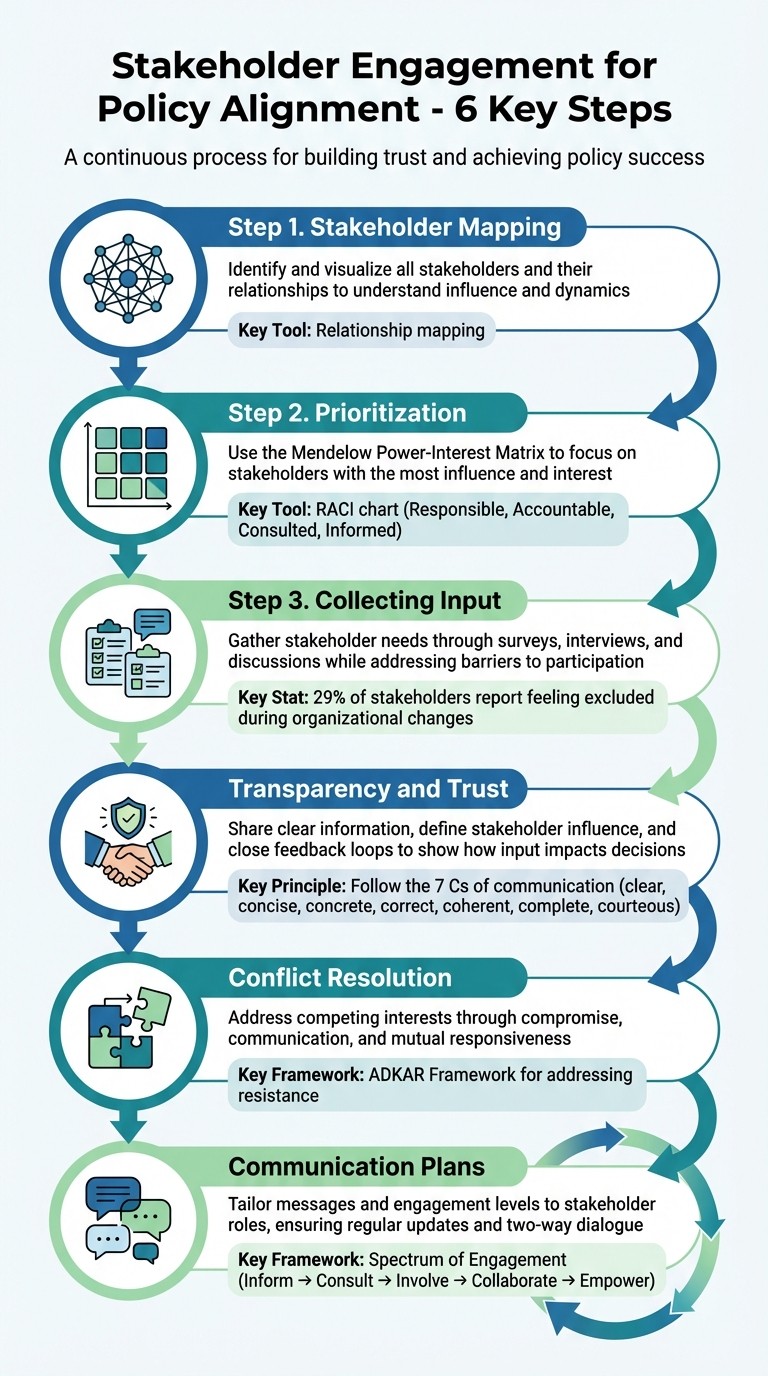
6-Step Stakeholder Engagement Process for Policy Alignment
Identifying and Categorizing Stakeholders
Mapping the Stakeholder Landscape
Before aligning policies and interests, it's essential to identify all stakeholders involved. Stakeholder mapping provides a clear, visual representation of all parties with a vested interest in your project or policy [5]. This process uncovers relationships, influence dynamics, and power structures that may not always align with formal hierarchies.
Start with a Situation Analysis: First, evaluate internal resources, strengthen ecosystems, and define the problem at hand. Then, identify external stakeholders and their interests [6]. This two-step approach ensures your focus remains on the individuals and groups with the most significant influence.
Relationship mapping takes this process further by illustrating how stakeholders are connected [4]. For example, you might find that a local community leader - despite lacking official authority - has significant sway over key decision-makers. As Simply Stakeholders explains:
"Stakeholder relationship mapping is a type of stakeholder mapping that visualizes how your stakeholders are connected to one another" [4].
To create an effective map, engage stakeholders directly by asking about their connections during discussions, embedding relationship-focused questions into surveys, and tracking referrals or introductions [4]. Regular updates to these maps are crucial, as stakeholder roles and perspectives can shift over time [4]. This approach lays the groundwork for a more targeted and effective engagement strategy.
Prioritizing Stakeholder Tiers
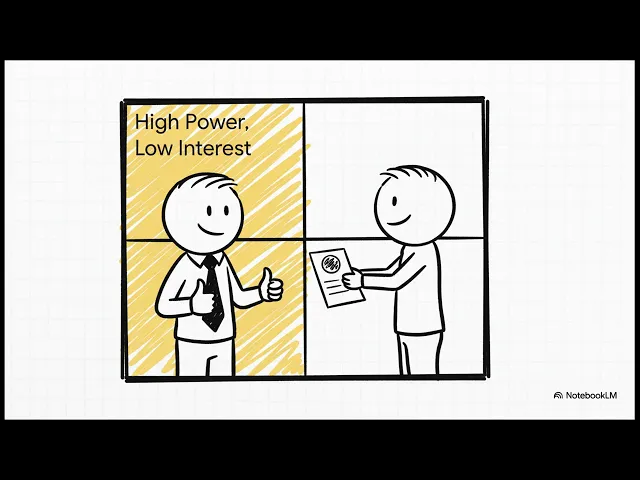
Once your stakeholder map is complete, the next step is to prioritize stakeholders based on their level of influence and interest. The Mendelow Power-Interest Matrix is a widely-used tool for this purpose, categorizing stakeholders into four quadrants based on their power and interest [5][6]. Those with both high power and high interest require close management, while stakeholders with lower power and interest need only minimal monitoring.
To clarify roles and responsibilities, a RACI chart can be invaluable. This tool identifies who is Responsible, Accountable, Consulted, and Informed, helping to streamline communication and avoid over-engaging stakeholders who only need occasional updates - or under-engaging those whose input is crucial [5].
The U.S. Fish & Wildlife Service highlights the importance of balancing engagement levels:
"As the level of engagement increases, the number of participants decreases" [6].
Higher levels of participation, such as full collaboration, demand significant time, energy, and financial resources. Before assigning stakeholders to tiers, assess how much decision-making influence your organization is prepared to share [6]. For stakeholders in the "Manage Closely" category, prioritize building trust through consistent and transparent communication. For those in the "Keep Satisfied" group, timely updates can prevent unnecessary obstacles. Meanwhile, the "Keep Informed" group benefits from regular but less intensive communication, and stakeholders in the "Monitor" category require minimal attention unless their circumstances change [5][6].
Understanding Stakeholder Needs and Expectations
Collecting Stakeholder Input
Once stakeholders are mapped and prioritized, the next step is to gather their specific needs and expectations. This can be done through various methods, such as surveys to capture wide-ranging input, interviews for deeper insights from key influencers, and town halls to facilitate group discussions. For stakeholders who desire a more substantial role in shaping outcomes, smaller dialogue sessions often prove more effective than traditional public hearings, as they encourage meaningful exchanges.
Before engaging externally, conduct an internal analysis to identify any constraints that could impact decisions. This helps align internal capabilities with external concerns. As the U.S. EPA aptly states:
"You cannot effectively participate with people you do not know" [8].
This process also clarifies the extent of influence stakeholders will have - whether the engagement involves informing, consulting, involving, collaborating, or empowering them. Addressing any mismatched expectations about influence early on can prevent misunderstandings or dissatisfaction later.
It’s essential to consider potential barriers to participation, such as limited internet access, lack of devices, language differences, or other cultural factors. Tools like stakeholder registers or specialized software can help track interactions, creating a centralized system for ongoing analysis and follow-ups. This comprehensive approach ensures that stakeholder input becomes the foundation for transparent and trustworthy communication.
Building Trust Through Transparency
Transparency is the cornerstone of trust in stakeholder engagement. Sharing information openly about project activities and decision-making processes encourages stakeholders to provide honest and constructive feedback in return.
The U.S. EPA highlights this principle, stating:
"If there is little or no room for public influence over the decision, then public participation is not a reasonable option... instead, you should consider a public information or public relations project" [8].
Stakeholders can quickly identify when engagement efforts are superficial or merely procedural. Offering genuine opportunities for influence - and clearly defining their scope - shows respect for their input and builds long-term credibility.
Consistency in communication is equally important. Regular updates, paired with clear explanations of how stakeholder feedback will be used and stored (in compliance with relevant regulations), foster trust and confidence. Following the 7 Cs of communication - ensuring messages are clear, concise, concrete, correct, coherent, complete, and courteous - can further strengthen credibility.
Closing the feedback loop is a critical step. Share how stakeholder input has shaped decisions, using measurable indicators like increased survey participation or higher newsletter subscriptions as evidence of meaningful engagement. This demonstrates that stakeholders’ voices are valued and impactful.
Creating an environment where both the project team and stakeholders feel comfortable expressing their views is vital. As Susanne Hollmann and colleagues emphasize, Responsible Research and Innovation (RRI) encourages stakeholders to be mutually responsive and to anticipate outcomes collaboratively for addressing shared "grand challenges" [9]. By adopting this reciprocal approach, data collection evolves from a simple transaction into a partnership that builds lasting relationships.
Aligning Policy Objectives with Stakeholder Goals
Identifying Shared Goals
Finding common ground between policy objectives and stakeholder priorities starts with gathering insights through surveys, focus groups, and interviews. This process should rely on structured analysis and real data rather than assumptions [10][9].
To begin, clearly outline stakeholders' goals, their connection to the organization, and their roles [10]. Then, align these goals with policy objectives to uncover areas of overlap. Tools like concept maps can help visualize these intersections [12]. As Simply Stakeholders highlights:
"Finding areas of overlap will be key to building alignment, minimizing conflict, and working together towards common goals" [10].
It’s also crucial to reevaluate stakeholder priorities using tools like Mendelow's Matrix. This helps refine alignment efforts by identifying key contributors. Stakeholders with high interest and influence should be actively involved from the start, while those with high influence but lower interest can be engaged by showcasing project benefits that might draw their attention.
Collaboration with key stakeholders is essential to establish clear acceptance criteria, ensuring that policy outcomes meet both technical requirements and stakeholder expectations [9]. This approach is particularly important given that 29% of survey respondents reported feeling excluded during organizational changes - a sentiment that often leads to resistance [11]. A top-down goal-setting approach can further ensure that specific policy goals align with broader organizational objectives while maintaining transparency [12].
Once shared goals are established, the next step is to tackle any conflicting interests.
Navigating Conflicting Interests
Even with aligned goals, conflicts between stakeholder interests and policy objectives are bound to arise. Addressing these challenges requires transparency and a willingness to find compromises. Start by identifying areas where mutual adjustments can be made without undermining core objectives [10].
Effective conflict resolution depends on two-way communication. Moving beyond simply informing stakeholders, focus on fostering mutual responsiveness. As Susanne Hollmann and her colleagues explain:
"Responsible Research and Innovation (RRI) should be understood as a strategy of stakeholders to become mutually responsive to each other and anticipate research and innovation outcomes underpinning the 'grand challenges' of our time for which they share responsibility" [9].
The ADKAR Framework can be a valuable tool for diagnosing and addressing resistance to policy changes [11]. If stakeholders lack the desire to support changes, leadership should clearly communicate both personal and organizational benefits to ease concerns. If disagreements persist, revisiting the evaluation process can help clarify positions and determine whether adjustments to the strategy are warranted.
For more serious conflicts between stakeholder groups, consider engaging with them individually to mediate tensions before bringing them together for group discussions [6]. Professional facilitators can help manage complex disputes and keep the conversation productive. Additionally, maintaining detailed records of all interactions ensures institutional knowledge is preserved and helps avoid miscommunication when multiple team members are involved.
Conflict is an inevitable part of collaboration, but organizations that approach engagement as true partnership - rather than merely seeking approval for pre-decided plans - are better positioned to build trust and achieve successful policy outcomes [11][8].
At Council Fire, we apply these strategies to align policy objectives with stakeholder goals, ensuring that every initiative is rooted in trust, open communication, and meaningful collaboration.
Power, Interest & Stakeholder Alignment: The Key to Project and Strategy Success | Uplatz
Implementing Effective Communication Plans
Once goals are aligned and conflicts resolved, keeping stakeholders informed and engaged becomes essential. Effective communication builds on established stakeholder alignment, ensuring continued collaboration and deeper involvement. A well-structured communication plan provides timely, targeted information that resonates with stakeholders.
The backbone of any successful communication plan lies in an initial analysis. This step involves examining both internal and external factors to determine the appropriate level of stakeholder influence and participation [2][7]. Skipping this analysis risks mismatched communication strategies that fail to meet stakeholder expectations.
Crafting Targeted Messaging
Not all stakeholders require the same information or communication channels. For example:
Investors: Require detailed budget breakdowns and strategic risk assessments.
Internal Teams: Need technical details and frequent updates via tools like Slack or Microsoft Teams.
Community Groups and NGOs: Focus on social and environmental impacts, often communicated through monthly public meetings or forums [13].
The Spectrum of Engagement framework provides a guide for tailoring messages to meet different communication goals [2][7]. Depending on the objective, messaging can vary significantly:
Inform: Share clear, objective information to help stakeholders understand a project or policy.
Consult: Invite feedback on analyses or proposed alternatives.
Involve: Collaborate directly with stakeholders to address their concerns and integrate their needs into proposed solutions.
Collaborate: Partner with stakeholders throughout the decision-making process to develop preferred outcomes.
Engagement Level | Communication Goal | Stakeholder Role |
|---|---|---|
Inform | Share clear, objective information to build understanding. | Learn about the project or policy. |
Consult | Gather feedback on proposals or decisions. | Offer input on options. |
Involve | Work closely with stakeholders to address concerns. | Ensure their needs shape the alternatives. |
Collaborate | Partner in decision-making at every stage. | Co-create the preferred solution. |
Communication frequency should reflect stakeholder influence. High-influence stakeholders often need frequent updates - daily or weekly - while those with lower influence may only require monthly milestone updates [13]. Using tools like a stakeholder register or central database helps track preferences, contact details, and interests, ensuring no stakeholder is overlooked [13][1].
For complex initiatives, such as energy system modernization spanning multiple sectors like power, transport, and buildings, engaging neutral facilitators can help design effective communication processes [7][3].
Establishing Feedback Loops
While tailored messaging informs and consults, feedback loops turn communication into a two-way exchange. One-way communication rarely fosters meaningful engagement. Instead, the most effective strategies create genuine dialogue. As the U.S. Fish & Wildlife Service highlights:
"Stakeholder engagement recognizes that people should have a say in decisions about agency actions that affect their lives" [7].
Feedback loops should align with the same Spectrum of Engagement framework used for messaging:
At the Consult level, tools like surveys, feedback forms, and interactive meetings gather stakeholder input on proposed alternatives.
At the Involve level, direct collaboration ensures stakeholder concerns are understood and addressed.
At the Collaborate level, stakeholders become active partners, influencing decisions at every stage [2][7].
The key is ensuring feedback mechanisms match your engagement goals. If the goal is simply to inform, avoid creating false expectations of influence. Conversely, when seeking collaboration, ensure stakeholders have a meaningful role in shaping decisions. Aligning goals with practice builds trust and strengthens outcomes. When done well, robust feedback loops enhance decision-making and deliver better results across sectors [7].
At Council Fire, our communication strategies are designed to reinforce stakeholder relationships and amplify policy impact. These plans lay the groundwork for continuous evaluation and adaptive engagement.
Building Stakeholder Involvement and Ownership
Establishing effective communication is just the beginning of creating alignment in policies and initiatives. The real progress happens when stakeholders shift from being passive observers to active participants. This transformation turns engagement into a mutual partnership where stakeholders share both the responsibility for outcomes and the accountability for success.
Once clear communication is in place, the next step is to actively involve stakeholders in the decision-making process. It's not enough to simply seek their approval; their input must be meaningfully integrated into decisions. This commitment to valuing public input is what defines genuine engagement.
Engaging Stakeholders in Decision-Making
After laying the groundwork with open communication, involving stakeholders early in the decision-making process is crucial. Early participation not only strengthens their connection to the outcomes but also ensures they have clear opportunities to influence the direction of initiatives. The Environmental Protection Agency (EPA) refers to this as offering a "promise to the public" - a transparent commitment that outlines how stakeholders can contribute and what they can expect in return.
Creating a collaborative process begins with engaging stakeholders in shaping the participation framework itself. Instead of presenting a finalized plan, organizations should invite key stakeholders to help design meeting structures, frame discussion topics, and determine how their input will be used. This approach fosters immediate buy-in and ensures the engagement process meets real-world needs.
Smaller, focused dialogue sessions also play a critical role. These spaces allow for meaningful interactions, building trust and encouraging the free exchange of ideas. Through this active participation, stakeholders naturally become collaborators, sharing both the decision-making process and the accountability for its results.
Empowering Stakeholders Through Collaboration
Collaboration goes beyond participation by tapping into stakeholders' expertise and resources to achieve shared goals. At this level, stakeholders are involved in every stage, from brainstorming alternatives to finalizing decisions. For this to work, effective facilitation and conflict resolution are key to maintaining shared authority and ensuring progress.
Formal structures like advisory boards, committees, and joint planning sessions provide a framework for integrating diverse perspectives. For complex challenges - such as transitioning to sustainable energy - early and inclusive decision-making ensures that all voices are heard and valued. Stakeholders often bring specialized knowledge and practical experience that organizations might lack, making their input indispensable.
Collaboration also involves resource sharing, which can take many forms. Stakeholders may act as subject matter experts, offer financial support, or contribute time and effort to advance shared goals. This reciprocal investment builds stronger commitment and establishes what Simply Stakeholders calls a "social license to operate" - the community's trust and support, which are essential for long-term success [1].
The U.S. Fish & Wildlife Service emphasizes this core principle:
"Stakeholder engagement recognizes that people should have a say in decisions about agency actions that affect their lives" [7].
When organizations honor this principle and embrace collaboration, they not only improve policy outcomes but also cultivate the shared ownership needed for successful implementation.
At Council Fire, we specialize in designing stakeholder engagement processes that go beyond consultation. By creating authentic partnerships, we ensure that diverse perspectives shape solutions from the earliest stages through to execution. This approach leads to more effective and inclusive outcomes.
Monitoring and Adapting Your Engagement Approach
Maintaining effective stakeholder engagement requires ongoing monitoring and flexibility, ensuring that strategies evolve as stakeholder needs and priorities shift.
Setting Metrics for Success
To truly measure the impact of engagement, it's essential to go beyond simply counting participants. The Office of Management and Budget highlights the importance of assessing how participation influences outcomes, helping agencies refine their policies[14]. Success lies in pinpointing decision-making moments where public input has shaped policy, diversifying the range of voices involved, and embedding engagement into all aspects of agency operations. Performance.gov reinforces this idea:
"A critical part of designing effective policies and programs is hearing from those who would be affected by them"[14].
Tools like notice and comment processes, focus groups, surveys, and user research can help collect meaningful data. Defining clear engagement metrics establishes a foundation for building trust and transparency. These metrics not only evaluate the current effectiveness of strategies but also signal when adjustments are needed to improve outcomes.
Adjusting to Evolving Stakeholder Needs
Stakeholder engagement plans should be dynamic, evolving in tandem with the progress of any policy initiative[16]. Sarah Gibbons, Vice President at Nielsen Norman Group, emphasizes this approach:
"Stakeholder engagement should not be a siloed process. Successful teams make it a part of everyday operations and bake it into the fabric of how they function"[16].
The Spectrum of Engagement framework - spanning levels from Inform to Consult, Involve, Collaborate, and Empower - offers a structured way to adapt participation strategies as needs change[15]. Regular evaluations ensure that the level of engagement aligns with current objectives[7]. Assigning a dedicated "custodian" to each stakeholder group ensures consistent monitoring and timely adjustments[16]. Researchers Giacomo Manetti and Simone Toccafondi describe this dynamic process as:
"a process that creates a dynamic context of interaction, mutual respect, dialog, and change, not a unilateral management of stakeholders"[16].
Conclusion
Bringing policy goals in line with stakeholder interests is a continuous effort that hinges on thoughtful planning, open communication, and flexible strategies. Successful organizations recognize that engaging stakeholders isn't a one-size-fits-all process - it ranges from simply sharing information to actively collaborating on solutions. Tailoring your approach based on how much influence stakeholders have in decision-making is key to building the trust necessary for long-term policy success.
The U.S. Environmental Protection Agency highlights the broader value of meaningful engagement:
"Communities will develop long-term capacity to solve and manage challenging social issues, often overcoming longstanding differences and misunderstandings." [17]
This kind of capacity-building elevates stakeholder engagement from a routine task to a strategic asset, strengthening both policies and the communities they aim to serve.
Reflecting on the stakeholder mapping and engagement strategies discussed earlier, organizations that focus on building genuine relationships rather than transactional interactions set themselves up for lasting success. Whether tackling infrastructure projects that cross multiple jurisdictions, upgrading intricate energy systems, or addressing environmental policy challenges, the same core principles apply: conduct thorough situation assessments, involve stakeholders early in the process, and create clear feedback mechanisms to show how their input influences outcomes. These steps form the foundation of effective engagement at every phase.
Achieving success also requires decision-makers to actively welcome public input and for teams to develop skills in facilitation and conflict resolution. By embedding these practices into daily operations, organizations can craft policies that reflect diverse perspectives and deliver meaningful results.
At Council Fire, we help organizations implement engagement strategies that ensure policies remain inclusive, resilient, and adaptable.
FAQs
How does stakeholder mapping help align policies with stakeholder interests?
Stakeholder mapping enhances the alignment of policies by pinpointing and visualizing the key individuals and groups who influence, support, or are affected by a specific issue. By categorizing stakeholders based on their power, legitimacy, and urgency, decision-makers can focus their efforts on the most critical voices. This approach ensures that policies address genuine concerns rather than relying on assumptions.
The process also uncovers relationships, potential conflicts, and gaps in representation, enabling policymakers to foresee challenges and build stronger alliances. By gaining a clear picture of stakeholder dynamics, organizations are better equipped to craft policies that balance financial, social, and environmental goals. Council Fire uses this method to help clients achieve impactful and enduring results through thoughtful stakeholder collaboration.
Why is transparency important for building trust with stakeholders?
Transparency plays a key role in building trust by providing stakeholders with clear, accurate, and timely insights into an organization’s goals, decisions, and actions. When organizations openly share their data, assumptions, and reasoning, they help reduce uncertainty, hold themselves accountable, and show their commitment to good practices.
Beyond trust, transparency also creates opportunities for collaboration. By keeping stakeholders informed and involved, organizations can turn potential disagreements into productive partnerships. This inclusive approach fosters support for aligning policies and strengthens the chances of achieving lasting results. Open and honest communication is at the heart of transparency, making it a cornerstone of effective stakeholder engagement.
How can organizations align stakeholder interests with policy goals effectively?
Aligning stakeholder interests with policy objectives begins with early and open communication. Start by clearly outlining the goals, identifying those affected, and conducting a detailed stakeholder analysis. This process helps uncover key interests, power dynamics, and potential compromises, paving the way for measurable objectives and minimizing misunderstandings.
When disagreements surface, neutral facilitation or mediation can provide a constructive environment for differing viewpoints to be shared. Structured conflict-resolution methods, guided by skilled facilitators, help ensure discussions are fair and lead to actionable outcomes. Keeping a record of agreements and setting up clear escalation procedures can further prevent delays in policy execution.
A flexible engagement strategy that incorporates regular feedback, ongoing monitoring, and necessary adjustments is essential for maintaining alignment over time. When stakeholders see their contributions genuinely shape decisions, policies are more likely to be embraced and lead to effective, lasting solutions. Council Fire offers expertise and tools to help organizations navigate this process while balancing financial, environmental, and social priorities.
Related Blog Posts
Latest Articles
©2025



FAQ
01
What does it really mean to “redefine profit”?
02
What makes Council Fire different?
03
Who does Council Fire you work with?
04
What does working with Council Fire actually look like?
05
How does Council Fire help organizations turn big goals into action?
06
How does Council Fire define and measure success?
Jan 18, 2026
Stakeholder Engagement for Policy Alignment
Capacity Building
In This Article
Effective stakeholder engagement turns competing interests into aligned policy outcomes via mapping, tailored communication, trust-building, and adaptive metrics.
Stakeholder Engagement for Policy Alignment
Stakeholder engagement is the process of identifying, consulting, and collaborating with groups impacted by or influential to a project’s success. Misalignment between stakeholder priorities and policy goals often leads to delays, poor decisions, or project failure. Effective engagement can address these challenges by fostering trust, reducing resistance, and ensuring diverse perspectives shape outcomes. Key steps include:
Stakeholder Mapping: Identify and visualize all stakeholders and their relationships to understand influence and dynamics.
Prioritization: Use tools like the Mendelow Power-Interest Matrix to focus on stakeholders with the most influence and interest.
Collecting Input: Gather stakeholder needs through surveys, interviews, and discussions while addressing barriers to participation.
Transparency and Trust: Share clear information, define stakeholder influence, and close feedback loops to show how input impacts decisions.
Conflict Resolution: Address competing interests through compromise, communication, and mutual responsiveness.
Communication Plans: Tailor messages and engagement levels to stakeholder roles, ensuring regular updates and two-way dialogue.
6-Step Stakeholder Engagement Process for Policy Alignment
Identifying and Categorizing Stakeholders
Mapping the Stakeholder Landscape
Before aligning policies and interests, it's essential to identify all stakeholders involved. Stakeholder mapping provides a clear, visual representation of all parties with a vested interest in your project or policy [5]. This process uncovers relationships, influence dynamics, and power structures that may not always align with formal hierarchies.
Start with a Situation Analysis: First, evaluate internal resources, strengthen ecosystems, and define the problem at hand. Then, identify external stakeholders and their interests [6]. This two-step approach ensures your focus remains on the individuals and groups with the most significant influence.
Relationship mapping takes this process further by illustrating how stakeholders are connected [4]. For example, you might find that a local community leader - despite lacking official authority - has significant sway over key decision-makers. As Simply Stakeholders explains:
"Stakeholder relationship mapping is a type of stakeholder mapping that visualizes how your stakeholders are connected to one another" [4].
To create an effective map, engage stakeholders directly by asking about their connections during discussions, embedding relationship-focused questions into surveys, and tracking referrals or introductions [4]. Regular updates to these maps are crucial, as stakeholder roles and perspectives can shift over time [4]. This approach lays the groundwork for a more targeted and effective engagement strategy.
Prioritizing Stakeholder Tiers
Once your stakeholder map is complete, the next step is to prioritize stakeholders based on their level of influence and interest. The Mendelow Power-Interest Matrix is a widely-used tool for this purpose, categorizing stakeholders into four quadrants based on their power and interest [5][6]. Those with both high power and high interest require close management, while stakeholders with lower power and interest need only minimal monitoring.
To clarify roles and responsibilities, a RACI chart can be invaluable. This tool identifies who is Responsible, Accountable, Consulted, and Informed, helping to streamline communication and avoid over-engaging stakeholders who only need occasional updates - or under-engaging those whose input is crucial [5].
The U.S. Fish & Wildlife Service highlights the importance of balancing engagement levels:
"As the level of engagement increases, the number of participants decreases" [6].
Higher levels of participation, such as full collaboration, demand significant time, energy, and financial resources. Before assigning stakeholders to tiers, assess how much decision-making influence your organization is prepared to share [6]. For stakeholders in the "Manage Closely" category, prioritize building trust through consistent and transparent communication. For those in the "Keep Satisfied" group, timely updates can prevent unnecessary obstacles. Meanwhile, the "Keep Informed" group benefits from regular but less intensive communication, and stakeholders in the "Monitor" category require minimal attention unless their circumstances change [5][6].
Understanding Stakeholder Needs and Expectations
Collecting Stakeholder Input
Once stakeholders are mapped and prioritized, the next step is to gather their specific needs and expectations. This can be done through various methods, such as surveys to capture wide-ranging input, interviews for deeper insights from key influencers, and town halls to facilitate group discussions. For stakeholders who desire a more substantial role in shaping outcomes, smaller dialogue sessions often prove more effective than traditional public hearings, as they encourage meaningful exchanges.
Before engaging externally, conduct an internal analysis to identify any constraints that could impact decisions. This helps align internal capabilities with external concerns. As the U.S. EPA aptly states:
"You cannot effectively participate with people you do not know" [8].
This process also clarifies the extent of influence stakeholders will have - whether the engagement involves informing, consulting, involving, collaborating, or empowering them. Addressing any mismatched expectations about influence early on can prevent misunderstandings or dissatisfaction later.
It’s essential to consider potential barriers to participation, such as limited internet access, lack of devices, language differences, or other cultural factors. Tools like stakeholder registers or specialized software can help track interactions, creating a centralized system for ongoing analysis and follow-ups. This comprehensive approach ensures that stakeholder input becomes the foundation for transparent and trustworthy communication.
Building Trust Through Transparency
Transparency is the cornerstone of trust in stakeholder engagement. Sharing information openly about project activities and decision-making processes encourages stakeholders to provide honest and constructive feedback in return.
The U.S. EPA highlights this principle, stating:
"If there is little or no room for public influence over the decision, then public participation is not a reasonable option... instead, you should consider a public information or public relations project" [8].
Stakeholders can quickly identify when engagement efforts are superficial or merely procedural. Offering genuine opportunities for influence - and clearly defining their scope - shows respect for their input and builds long-term credibility.
Consistency in communication is equally important. Regular updates, paired with clear explanations of how stakeholder feedback will be used and stored (in compliance with relevant regulations), foster trust and confidence. Following the 7 Cs of communication - ensuring messages are clear, concise, concrete, correct, coherent, complete, and courteous - can further strengthen credibility.
Closing the feedback loop is a critical step. Share how stakeholder input has shaped decisions, using measurable indicators like increased survey participation or higher newsletter subscriptions as evidence of meaningful engagement. This demonstrates that stakeholders’ voices are valued and impactful.
Creating an environment where both the project team and stakeholders feel comfortable expressing their views is vital. As Susanne Hollmann and colleagues emphasize, Responsible Research and Innovation (RRI) encourages stakeholders to be mutually responsive and to anticipate outcomes collaboratively for addressing shared "grand challenges" [9]. By adopting this reciprocal approach, data collection evolves from a simple transaction into a partnership that builds lasting relationships.
Aligning Policy Objectives with Stakeholder Goals
Identifying Shared Goals
Finding common ground between policy objectives and stakeholder priorities starts with gathering insights through surveys, focus groups, and interviews. This process should rely on structured analysis and real data rather than assumptions [10][9].
To begin, clearly outline stakeholders' goals, their connection to the organization, and their roles [10]. Then, align these goals with policy objectives to uncover areas of overlap. Tools like concept maps can help visualize these intersections [12]. As Simply Stakeholders highlights:
"Finding areas of overlap will be key to building alignment, minimizing conflict, and working together towards common goals" [10].
It’s also crucial to reevaluate stakeholder priorities using tools like Mendelow's Matrix. This helps refine alignment efforts by identifying key contributors. Stakeholders with high interest and influence should be actively involved from the start, while those with high influence but lower interest can be engaged by showcasing project benefits that might draw their attention.
Collaboration with key stakeholders is essential to establish clear acceptance criteria, ensuring that policy outcomes meet both technical requirements and stakeholder expectations [9]. This approach is particularly important given that 29% of survey respondents reported feeling excluded during organizational changes - a sentiment that often leads to resistance [11]. A top-down goal-setting approach can further ensure that specific policy goals align with broader organizational objectives while maintaining transparency [12].
Once shared goals are established, the next step is to tackle any conflicting interests.
Navigating Conflicting Interests
Even with aligned goals, conflicts between stakeholder interests and policy objectives are bound to arise. Addressing these challenges requires transparency and a willingness to find compromises. Start by identifying areas where mutual adjustments can be made without undermining core objectives [10].
Effective conflict resolution depends on two-way communication. Moving beyond simply informing stakeholders, focus on fostering mutual responsiveness. As Susanne Hollmann and her colleagues explain:
"Responsible Research and Innovation (RRI) should be understood as a strategy of stakeholders to become mutually responsive to each other and anticipate research and innovation outcomes underpinning the 'grand challenges' of our time for which they share responsibility" [9].
The ADKAR Framework can be a valuable tool for diagnosing and addressing resistance to policy changes [11]. If stakeholders lack the desire to support changes, leadership should clearly communicate both personal and organizational benefits to ease concerns. If disagreements persist, revisiting the evaluation process can help clarify positions and determine whether adjustments to the strategy are warranted.
For more serious conflicts between stakeholder groups, consider engaging with them individually to mediate tensions before bringing them together for group discussions [6]. Professional facilitators can help manage complex disputes and keep the conversation productive. Additionally, maintaining detailed records of all interactions ensures institutional knowledge is preserved and helps avoid miscommunication when multiple team members are involved.
Conflict is an inevitable part of collaboration, but organizations that approach engagement as true partnership - rather than merely seeking approval for pre-decided plans - are better positioned to build trust and achieve successful policy outcomes [11][8].
At Council Fire, we apply these strategies to align policy objectives with stakeholder goals, ensuring that every initiative is rooted in trust, open communication, and meaningful collaboration.
Power, Interest & Stakeholder Alignment: The Key to Project and Strategy Success | Uplatz
Implementing Effective Communication Plans
Once goals are aligned and conflicts resolved, keeping stakeholders informed and engaged becomes essential. Effective communication builds on established stakeholder alignment, ensuring continued collaboration and deeper involvement. A well-structured communication plan provides timely, targeted information that resonates with stakeholders.
The backbone of any successful communication plan lies in an initial analysis. This step involves examining both internal and external factors to determine the appropriate level of stakeholder influence and participation [2][7]. Skipping this analysis risks mismatched communication strategies that fail to meet stakeholder expectations.
Crafting Targeted Messaging
Not all stakeholders require the same information or communication channels. For example:
Investors: Require detailed budget breakdowns and strategic risk assessments.
Internal Teams: Need technical details and frequent updates via tools like Slack or Microsoft Teams.
Community Groups and NGOs: Focus on social and environmental impacts, often communicated through monthly public meetings or forums [13].
The Spectrum of Engagement framework provides a guide for tailoring messages to meet different communication goals [2][7]. Depending on the objective, messaging can vary significantly:
Inform: Share clear, objective information to help stakeholders understand a project or policy.
Consult: Invite feedback on analyses or proposed alternatives.
Involve: Collaborate directly with stakeholders to address their concerns and integrate their needs into proposed solutions.
Collaborate: Partner with stakeholders throughout the decision-making process to develop preferred outcomes.
Engagement Level | Communication Goal | Stakeholder Role |
|---|---|---|
Inform | Share clear, objective information to build understanding. | Learn about the project or policy. |
Consult | Gather feedback on proposals or decisions. | Offer input on options. |
Involve | Work closely with stakeholders to address concerns. | Ensure their needs shape the alternatives. |
Collaborate | Partner in decision-making at every stage. | Co-create the preferred solution. |
Communication frequency should reflect stakeholder influence. High-influence stakeholders often need frequent updates - daily or weekly - while those with lower influence may only require monthly milestone updates [13]. Using tools like a stakeholder register or central database helps track preferences, contact details, and interests, ensuring no stakeholder is overlooked [13][1].
For complex initiatives, such as energy system modernization spanning multiple sectors like power, transport, and buildings, engaging neutral facilitators can help design effective communication processes [7][3].
Establishing Feedback Loops
While tailored messaging informs and consults, feedback loops turn communication into a two-way exchange. One-way communication rarely fosters meaningful engagement. Instead, the most effective strategies create genuine dialogue. As the U.S. Fish & Wildlife Service highlights:
"Stakeholder engagement recognizes that people should have a say in decisions about agency actions that affect their lives" [7].
Feedback loops should align with the same Spectrum of Engagement framework used for messaging:
At the Consult level, tools like surveys, feedback forms, and interactive meetings gather stakeholder input on proposed alternatives.
At the Involve level, direct collaboration ensures stakeholder concerns are understood and addressed.
At the Collaborate level, stakeholders become active partners, influencing decisions at every stage [2][7].
The key is ensuring feedback mechanisms match your engagement goals. If the goal is simply to inform, avoid creating false expectations of influence. Conversely, when seeking collaboration, ensure stakeholders have a meaningful role in shaping decisions. Aligning goals with practice builds trust and strengthens outcomes. When done well, robust feedback loops enhance decision-making and deliver better results across sectors [7].
At Council Fire, our communication strategies are designed to reinforce stakeholder relationships and amplify policy impact. These plans lay the groundwork for continuous evaluation and adaptive engagement.
Building Stakeholder Involvement and Ownership
Establishing effective communication is just the beginning of creating alignment in policies and initiatives. The real progress happens when stakeholders shift from being passive observers to active participants. This transformation turns engagement into a mutual partnership where stakeholders share both the responsibility for outcomes and the accountability for success.
Once clear communication is in place, the next step is to actively involve stakeholders in the decision-making process. It's not enough to simply seek their approval; their input must be meaningfully integrated into decisions. This commitment to valuing public input is what defines genuine engagement.
Engaging Stakeholders in Decision-Making
After laying the groundwork with open communication, involving stakeholders early in the decision-making process is crucial. Early participation not only strengthens their connection to the outcomes but also ensures they have clear opportunities to influence the direction of initiatives. The Environmental Protection Agency (EPA) refers to this as offering a "promise to the public" - a transparent commitment that outlines how stakeholders can contribute and what they can expect in return.
Creating a collaborative process begins with engaging stakeholders in shaping the participation framework itself. Instead of presenting a finalized plan, organizations should invite key stakeholders to help design meeting structures, frame discussion topics, and determine how their input will be used. This approach fosters immediate buy-in and ensures the engagement process meets real-world needs.
Smaller, focused dialogue sessions also play a critical role. These spaces allow for meaningful interactions, building trust and encouraging the free exchange of ideas. Through this active participation, stakeholders naturally become collaborators, sharing both the decision-making process and the accountability for its results.
Empowering Stakeholders Through Collaboration
Collaboration goes beyond participation by tapping into stakeholders' expertise and resources to achieve shared goals. At this level, stakeholders are involved in every stage, from brainstorming alternatives to finalizing decisions. For this to work, effective facilitation and conflict resolution are key to maintaining shared authority and ensuring progress.
Formal structures like advisory boards, committees, and joint planning sessions provide a framework for integrating diverse perspectives. For complex challenges - such as transitioning to sustainable energy - early and inclusive decision-making ensures that all voices are heard and valued. Stakeholders often bring specialized knowledge and practical experience that organizations might lack, making their input indispensable.
Collaboration also involves resource sharing, which can take many forms. Stakeholders may act as subject matter experts, offer financial support, or contribute time and effort to advance shared goals. This reciprocal investment builds stronger commitment and establishes what Simply Stakeholders calls a "social license to operate" - the community's trust and support, which are essential for long-term success [1].
The U.S. Fish & Wildlife Service emphasizes this core principle:
"Stakeholder engagement recognizes that people should have a say in decisions about agency actions that affect their lives" [7].
When organizations honor this principle and embrace collaboration, they not only improve policy outcomes but also cultivate the shared ownership needed for successful implementation.
At Council Fire, we specialize in designing stakeholder engagement processes that go beyond consultation. By creating authentic partnerships, we ensure that diverse perspectives shape solutions from the earliest stages through to execution. This approach leads to more effective and inclusive outcomes.
Monitoring and Adapting Your Engagement Approach
Maintaining effective stakeholder engagement requires ongoing monitoring and flexibility, ensuring that strategies evolve as stakeholder needs and priorities shift.
Setting Metrics for Success
To truly measure the impact of engagement, it's essential to go beyond simply counting participants. The Office of Management and Budget highlights the importance of assessing how participation influences outcomes, helping agencies refine their policies[14]. Success lies in pinpointing decision-making moments where public input has shaped policy, diversifying the range of voices involved, and embedding engagement into all aspects of agency operations. Performance.gov reinforces this idea:
"A critical part of designing effective policies and programs is hearing from those who would be affected by them"[14].
Tools like notice and comment processes, focus groups, surveys, and user research can help collect meaningful data. Defining clear engagement metrics establishes a foundation for building trust and transparency. These metrics not only evaluate the current effectiveness of strategies but also signal when adjustments are needed to improve outcomes.
Adjusting to Evolving Stakeholder Needs
Stakeholder engagement plans should be dynamic, evolving in tandem with the progress of any policy initiative[16]. Sarah Gibbons, Vice President at Nielsen Norman Group, emphasizes this approach:
"Stakeholder engagement should not be a siloed process. Successful teams make it a part of everyday operations and bake it into the fabric of how they function"[16].
The Spectrum of Engagement framework - spanning levels from Inform to Consult, Involve, Collaborate, and Empower - offers a structured way to adapt participation strategies as needs change[15]. Regular evaluations ensure that the level of engagement aligns with current objectives[7]. Assigning a dedicated "custodian" to each stakeholder group ensures consistent monitoring and timely adjustments[16]. Researchers Giacomo Manetti and Simone Toccafondi describe this dynamic process as:
"a process that creates a dynamic context of interaction, mutual respect, dialog, and change, not a unilateral management of stakeholders"[16].
Conclusion
Bringing policy goals in line with stakeholder interests is a continuous effort that hinges on thoughtful planning, open communication, and flexible strategies. Successful organizations recognize that engaging stakeholders isn't a one-size-fits-all process - it ranges from simply sharing information to actively collaborating on solutions. Tailoring your approach based on how much influence stakeholders have in decision-making is key to building the trust necessary for long-term policy success.
The U.S. Environmental Protection Agency highlights the broader value of meaningful engagement:
"Communities will develop long-term capacity to solve and manage challenging social issues, often overcoming longstanding differences and misunderstandings." [17]
This kind of capacity-building elevates stakeholder engagement from a routine task to a strategic asset, strengthening both policies and the communities they aim to serve.
Reflecting on the stakeholder mapping and engagement strategies discussed earlier, organizations that focus on building genuine relationships rather than transactional interactions set themselves up for lasting success. Whether tackling infrastructure projects that cross multiple jurisdictions, upgrading intricate energy systems, or addressing environmental policy challenges, the same core principles apply: conduct thorough situation assessments, involve stakeholders early in the process, and create clear feedback mechanisms to show how their input influences outcomes. These steps form the foundation of effective engagement at every phase.
Achieving success also requires decision-makers to actively welcome public input and for teams to develop skills in facilitation and conflict resolution. By embedding these practices into daily operations, organizations can craft policies that reflect diverse perspectives and deliver meaningful results.
At Council Fire, we help organizations implement engagement strategies that ensure policies remain inclusive, resilient, and adaptable.
FAQs
How does stakeholder mapping help align policies with stakeholder interests?
Stakeholder mapping enhances the alignment of policies by pinpointing and visualizing the key individuals and groups who influence, support, or are affected by a specific issue. By categorizing stakeholders based on their power, legitimacy, and urgency, decision-makers can focus their efforts on the most critical voices. This approach ensures that policies address genuine concerns rather than relying on assumptions.
The process also uncovers relationships, potential conflicts, and gaps in representation, enabling policymakers to foresee challenges and build stronger alliances. By gaining a clear picture of stakeholder dynamics, organizations are better equipped to craft policies that balance financial, social, and environmental goals. Council Fire uses this method to help clients achieve impactful and enduring results through thoughtful stakeholder collaboration.
Why is transparency important for building trust with stakeholders?
Transparency plays a key role in building trust by providing stakeholders with clear, accurate, and timely insights into an organization’s goals, decisions, and actions. When organizations openly share their data, assumptions, and reasoning, they help reduce uncertainty, hold themselves accountable, and show their commitment to good practices.
Beyond trust, transparency also creates opportunities for collaboration. By keeping stakeholders informed and involved, organizations can turn potential disagreements into productive partnerships. This inclusive approach fosters support for aligning policies and strengthens the chances of achieving lasting results. Open and honest communication is at the heart of transparency, making it a cornerstone of effective stakeholder engagement.
How can organizations align stakeholder interests with policy goals effectively?
Aligning stakeholder interests with policy objectives begins with early and open communication. Start by clearly outlining the goals, identifying those affected, and conducting a detailed stakeholder analysis. This process helps uncover key interests, power dynamics, and potential compromises, paving the way for measurable objectives and minimizing misunderstandings.
When disagreements surface, neutral facilitation or mediation can provide a constructive environment for differing viewpoints to be shared. Structured conflict-resolution methods, guided by skilled facilitators, help ensure discussions are fair and lead to actionable outcomes. Keeping a record of agreements and setting up clear escalation procedures can further prevent delays in policy execution.
A flexible engagement strategy that incorporates regular feedback, ongoing monitoring, and necessary adjustments is essential for maintaining alignment over time. When stakeholders see their contributions genuinely shape decisions, policies are more likely to be embraced and lead to effective, lasting solutions. Council Fire offers expertise and tools to help organizations navigate this process while balancing financial, environmental, and social priorities.
Related Blog Posts
FAQ
01
What does it really mean to “redefine profit”?
02
What makes Council Fire different?
03
Who does Council Fire you work with?
04
What does working with Council Fire actually look like?
05
How does Council Fire help organizations turn big goals into action?
06
How does Council Fire define and measure success?
Jan 18, 2026
Stakeholder Engagement for Policy Alignment
Capacity Building
In This Article
Effective stakeholder engagement turns competing interests into aligned policy outcomes via mapping, tailored communication, trust-building, and adaptive metrics.
Stakeholder Engagement for Policy Alignment
Stakeholder engagement is the process of identifying, consulting, and collaborating with groups impacted by or influential to a project’s success. Misalignment between stakeholder priorities and policy goals often leads to delays, poor decisions, or project failure. Effective engagement can address these challenges by fostering trust, reducing resistance, and ensuring diverse perspectives shape outcomes. Key steps include:
Stakeholder Mapping: Identify and visualize all stakeholders and their relationships to understand influence and dynamics.
Prioritization: Use tools like the Mendelow Power-Interest Matrix to focus on stakeholders with the most influence and interest.
Collecting Input: Gather stakeholder needs through surveys, interviews, and discussions while addressing barriers to participation.
Transparency and Trust: Share clear information, define stakeholder influence, and close feedback loops to show how input impacts decisions.
Conflict Resolution: Address competing interests through compromise, communication, and mutual responsiveness.
Communication Plans: Tailor messages and engagement levels to stakeholder roles, ensuring regular updates and two-way dialogue.
6-Step Stakeholder Engagement Process for Policy Alignment
Identifying and Categorizing Stakeholders
Mapping the Stakeholder Landscape
Before aligning policies and interests, it's essential to identify all stakeholders involved. Stakeholder mapping provides a clear, visual representation of all parties with a vested interest in your project or policy [5]. This process uncovers relationships, influence dynamics, and power structures that may not always align with formal hierarchies.
Start with a Situation Analysis: First, evaluate internal resources, strengthen ecosystems, and define the problem at hand. Then, identify external stakeholders and their interests [6]. This two-step approach ensures your focus remains on the individuals and groups with the most significant influence.
Relationship mapping takes this process further by illustrating how stakeholders are connected [4]. For example, you might find that a local community leader - despite lacking official authority - has significant sway over key decision-makers. As Simply Stakeholders explains:
"Stakeholder relationship mapping is a type of stakeholder mapping that visualizes how your stakeholders are connected to one another" [4].
To create an effective map, engage stakeholders directly by asking about their connections during discussions, embedding relationship-focused questions into surveys, and tracking referrals or introductions [4]. Regular updates to these maps are crucial, as stakeholder roles and perspectives can shift over time [4]. This approach lays the groundwork for a more targeted and effective engagement strategy.
Prioritizing Stakeholder Tiers
Once your stakeholder map is complete, the next step is to prioritize stakeholders based on their level of influence and interest. The Mendelow Power-Interest Matrix is a widely-used tool for this purpose, categorizing stakeholders into four quadrants based on their power and interest [5][6]. Those with both high power and high interest require close management, while stakeholders with lower power and interest need only minimal monitoring.
To clarify roles and responsibilities, a RACI chart can be invaluable. This tool identifies who is Responsible, Accountable, Consulted, and Informed, helping to streamline communication and avoid over-engaging stakeholders who only need occasional updates - or under-engaging those whose input is crucial [5].
The U.S. Fish & Wildlife Service highlights the importance of balancing engagement levels:
"As the level of engagement increases, the number of participants decreases" [6].
Higher levels of participation, such as full collaboration, demand significant time, energy, and financial resources. Before assigning stakeholders to tiers, assess how much decision-making influence your organization is prepared to share [6]. For stakeholders in the "Manage Closely" category, prioritize building trust through consistent and transparent communication. For those in the "Keep Satisfied" group, timely updates can prevent unnecessary obstacles. Meanwhile, the "Keep Informed" group benefits from regular but less intensive communication, and stakeholders in the "Monitor" category require minimal attention unless their circumstances change [5][6].
Understanding Stakeholder Needs and Expectations
Collecting Stakeholder Input
Once stakeholders are mapped and prioritized, the next step is to gather their specific needs and expectations. This can be done through various methods, such as surveys to capture wide-ranging input, interviews for deeper insights from key influencers, and town halls to facilitate group discussions. For stakeholders who desire a more substantial role in shaping outcomes, smaller dialogue sessions often prove more effective than traditional public hearings, as they encourage meaningful exchanges.
Before engaging externally, conduct an internal analysis to identify any constraints that could impact decisions. This helps align internal capabilities with external concerns. As the U.S. EPA aptly states:
"You cannot effectively participate with people you do not know" [8].
This process also clarifies the extent of influence stakeholders will have - whether the engagement involves informing, consulting, involving, collaborating, or empowering them. Addressing any mismatched expectations about influence early on can prevent misunderstandings or dissatisfaction later.
It’s essential to consider potential barriers to participation, such as limited internet access, lack of devices, language differences, or other cultural factors. Tools like stakeholder registers or specialized software can help track interactions, creating a centralized system for ongoing analysis and follow-ups. This comprehensive approach ensures that stakeholder input becomes the foundation for transparent and trustworthy communication.
Building Trust Through Transparency
Transparency is the cornerstone of trust in stakeholder engagement. Sharing information openly about project activities and decision-making processes encourages stakeholders to provide honest and constructive feedback in return.
The U.S. EPA highlights this principle, stating:
"If there is little or no room for public influence over the decision, then public participation is not a reasonable option... instead, you should consider a public information or public relations project" [8].
Stakeholders can quickly identify when engagement efforts are superficial or merely procedural. Offering genuine opportunities for influence - and clearly defining their scope - shows respect for their input and builds long-term credibility.
Consistency in communication is equally important. Regular updates, paired with clear explanations of how stakeholder feedback will be used and stored (in compliance with relevant regulations), foster trust and confidence. Following the 7 Cs of communication - ensuring messages are clear, concise, concrete, correct, coherent, complete, and courteous - can further strengthen credibility.
Closing the feedback loop is a critical step. Share how stakeholder input has shaped decisions, using measurable indicators like increased survey participation or higher newsletter subscriptions as evidence of meaningful engagement. This demonstrates that stakeholders’ voices are valued and impactful.
Creating an environment where both the project team and stakeholders feel comfortable expressing their views is vital. As Susanne Hollmann and colleagues emphasize, Responsible Research and Innovation (RRI) encourages stakeholders to be mutually responsive and to anticipate outcomes collaboratively for addressing shared "grand challenges" [9]. By adopting this reciprocal approach, data collection evolves from a simple transaction into a partnership that builds lasting relationships.
Aligning Policy Objectives with Stakeholder Goals
Identifying Shared Goals
Finding common ground between policy objectives and stakeholder priorities starts with gathering insights through surveys, focus groups, and interviews. This process should rely on structured analysis and real data rather than assumptions [10][9].
To begin, clearly outline stakeholders' goals, their connection to the organization, and their roles [10]. Then, align these goals with policy objectives to uncover areas of overlap. Tools like concept maps can help visualize these intersections [12]. As Simply Stakeholders highlights:
"Finding areas of overlap will be key to building alignment, minimizing conflict, and working together towards common goals" [10].
It’s also crucial to reevaluate stakeholder priorities using tools like Mendelow's Matrix. This helps refine alignment efforts by identifying key contributors. Stakeholders with high interest and influence should be actively involved from the start, while those with high influence but lower interest can be engaged by showcasing project benefits that might draw their attention.
Collaboration with key stakeholders is essential to establish clear acceptance criteria, ensuring that policy outcomes meet both technical requirements and stakeholder expectations [9]. This approach is particularly important given that 29% of survey respondents reported feeling excluded during organizational changes - a sentiment that often leads to resistance [11]. A top-down goal-setting approach can further ensure that specific policy goals align with broader organizational objectives while maintaining transparency [12].
Once shared goals are established, the next step is to tackle any conflicting interests.
Navigating Conflicting Interests
Even with aligned goals, conflicts between stakeholder interests and policy objectives are bound to arise. Addressing these challenges requires transparency and a willingness to find compromises. Start by identifying areas where mutual adjustments can be made without undermining core objectives [10].
Effective conflict resolution depends on two-way communication. Moving beyond simply informing stakeholders, focus on fostering mutual responsiveness. As Susanne Hollmann and her colleagues explain:
"Responsible Research and Innovation (RRI) should be understood as a strategy of stakeholders to become mutually responsive to each other and anticipate research and innovation outcomes underpinning the 'grand challenges' of our time for which they share responsibility" [9].
The ADKAR Framework can be a valuable tool for diagnosing and addressing resistance to policy changes [11]. If stakeholders lack the desire to support changes, leadership should clearly communicate both personal and organizational benefits to ease concerns. If disagreements persist, revisiting the evaluation process can help clarify positions and determine whether adjustments to the strategy are warranted.
For more serious conflicts between stakeholder groups, consider engaging with them individually to mediate tensions before bringing them together for group discussions [6]. Professional facilitators can help manage complex disputes and keep the conversation productive. Additionally, maintaining detailed records of all interactions ensures institutional knowledge is preserved and helps avoid miscommunication when multiple team members are involved.
Conflict is an inevitable part of collaboration, but organizations that approach engagement as true partnership - rather than merely seeking approval for pre-decided plans - are better positioned to build trust and achieve successful policy outcomes [11][8].
At Council Fire, we apply these strategies to align policy objectives with stakeholder goals, ensuring that every initiative is rooted in trust, open communication, and meaningful collaboration.
Power, Interest & Stakeholder Alignment: The Key to Project and Strategy Success | Uplatz
Implementing Effective Communication Plans
Once goals are aligned and conflicts resolved, keeping stakeholders informed and engaged becomes essential. Effective communication builds on established stakeholder alignment, ensuring continued collaboration and deeper involvement. A well-structured communication plan provides timely, targeted information that resonates with stakeholders.
The backbone of any successful communication plan lies in an initial analysis. This step involves examining both internal and external factors to determine the appropriate level of stakeholder influence and participation [2][7]. Skipping this analysis risks mismatched communication strategies that fail to meet stakeholder expectations.
Crafting Targeted Messaging
Not all stakeholders require the same information or communication channels. For example:
Investors: Require detailed budget breakdowns and strategic risk assessments.
Internal Teams: Need technical details and frequent updates via tools like Slack or Microsoft Teams.
Community Groups and NGOs: Focus on social and environmental impacts, often communicated through monthly public meetings or forums [13].
The Spectrum of Engagement framework provides a guide for tailoring messages to meet different communication goals [2][7]. Depending on the objective, messaging can vary significantly:
Inform: Share clear, objective information to help stakeholders understand a project or policy.
Consult: Invite feedback on analyses or proposed alternatives.
Involve: Collaborate directly with stakeholders to address their concerns and integrate their needs into proposed solutions.
Collaborate: Partner with stakeholders throughout the decision-making process to develop preferred outcomes.
Engagement Level | Communication Goal | Stakeholder Role |
|---|---|---|
Inform | Share clear, objective information to build understanding. | Learn about the project or policy. |
Consult | Gather feedback on proposals or decisions. | Offer input on options. |
Involve | Work closely with stakeholders to address concerns. | Ensure their needs shape the alternatives. |
Collaborate | Partner in decision-making at every stage. | Co-create the preferred solution. |
Communication frequency should reflect stakeholder influence. High-influence stakeholders often need frequent updates - daily or weekly - while those with lower influence may only require monthly milestone updates [13]. Using tools like a stakeholder register or central database helps track preferences, contact details, and interests, ensuring no stakeholder is overlooked [13][1].
For complex initiatives, such as energy system modernization spanning multiple sectors like power, transport, and buildings, engaging neutral facilitators can help design effective communication processes [7][3].
Establishing Feedback Loops
While tailored messaging informs and consults, feedback loops turn communication into a two-way exchange. One-way communication rarely fosters meaningful engagement. Instead, the most effective strategies create genuine dialogue. As the U.S. Fish & Wildlife Service highlights:
"Stakeholder engagement recognizes that people should have a say in decisions about agency actions that affect their lives" [7].
Feedback loops should align with the same Spectrum of Engagement framework used for messaging:
At the Consult level, tools like surveys, feedback forms, and interactive meetings gather stakeholder input on proposed alternatives.
At the Involve level, direct collaboration ensures stakeholder concerns are understood and addressed.
At the Collaborate level, stakeholders become active partners, influencing decisions at every stage [2][7].
The key is ensuring feedback mechanisms match your engagement goals. If the goal is simply to inform, avoid creating false expectations of influence. Conversely, when seeking collaboration, ensure stakeholders have a meaningful role in shaping decisions. Aligning goals with practice builds trust and strengthens outcomes. When done well, robust feedback loops enhance decision-making and deliver better results across sectors [7].
At Council Fire, our communication strategies are designed to reinforce stakeholder relationships and amplify policy impact. These plans lay the groundwork for continuous evaluation and adaptive engagement.
Building Stakeholder Involvement and Ownership
Establishing effective communication is just the beginning of creating alignment in policies and initiatives. The real progress happens when stakeholders shift from being passive observers to active participants. This transformation turns engagement into a mutual partnership where stakeholders share both the responsibility for outcomes and the accountability for success.
Once clear communication is in place, the next step is to actively involve stakeholders in the decision-making process. It's not enough to simply seek their approval; their input must be meaningfully integrated into decisions. This commitment to valuing public input is what defines genuine engagement.
Engaging Stakeholders in Decision-Making
After laying the groundwork with open communication, involving stakeholders early in the decision-making process is crucial. Early participation not only strengthens their connection to the outcomes but also ensures they have clear opportunities to influence the direction of initiatives. The Environmental Protection Agency (EPA) refers to this as offering a "promise to the public" - a transparent commitment that outlines how stakeholders can contribute and what they can expect in return.
Creating a collaborative process begins with engaging stakeholders in shaping the participation framework itself. Instead of presenting a finalized plan, organizations should invite key stakeholders to help design meeting structures, frame discussion topics, and determine how their input will be used. This approach fosters immediate buy-in and ensures the engagement process meets real-world needs.
Smaller, focused dialogue sessions also play a critical role. These spaces allow for meaningful interactions, building trust and encouraging the free exchange of ideas. Through this active participation, stakeholders naturally become collaborators, sharing both the decision-making process and the accountability for its results.
Empowering Stakeholders Through Collaboration
Collaboration goes beyond participation by tapping into stakeholders' expertise and resources to achieve shared goals. At this level, stakeholders are involved in every stage, from brainstorming alternatives to finalizing decisions. For this to work, effective facilitation and conflict resolution are key to maintaining shared authority and ensuring progress.
Formal structures like advisory boards, committees, and joint planning sessions provide a framework for integrating diverse perspectives. For complex challenges - such as transitioning to sustainable energy - early and inclusive decision-making ensures that all voices are heard and valued. Stakeholders often bring specialized knowledge and practical experience that organizations might lack, making their input indispensable.
Collaboration also involves resource sharing, which can take many forms. Stakeholders may act as subject matter experts, offer financial support, or contribute time and effort to advance shared goals. This reciprocal investment builds stronger commitment and establishes what Simply Stakeholders calls a "social license to operate" - the community's trust and support, which are essential for long-term success [1].
The U.S. Fish & Wildlife Service emphasizes this core principle:
"Stakeholder engagement recognizes that people should have a say in decisions about agency actions that affect their lives" [7].
When organizations honor this principle and embrace collaboration, they not only improve policy outcomes but also cultivate the shared ownership needed for successful implementation.
At Council Fire, we specialize in designing stakeholder engagement processes that go beyond consultation. By creating authentic partnerships, we ensure that diverse perspectives shape solutions from the earliest stages through to execution. This approach leads to more effective and inclusive outcomes.
Monitoring and Adapting Your Engagement Approach
Maintaining effective stakeholder engagement requires ongoing monitoring and flexibility, ensuring that strategies evolve as stakeholder needs and priorities shift.
Setting Metrics for Success
To truly measure the impact of engagement, it's essential to go beyond simply counting participants. The Office of Management and Budget highlights the importance of assessing how participation influences outcomes, helping agencies refine their policies[14]. Success lies in pinpointing decision-making moments where public input has shaped policy, diversifying the range of voices involved, and embedding engagement into all aspects of agency operations. Performance.gov reinforces this idea:
"A critical part of designing effective policies and programs is hearing from those who would be affected by them"[14].
Tools like notice and comment processes, focus groups, surveys, and user research can help collect meaningful data. Defining clear engagement metrics establishes a foundation for building trust and transparency. These metrics not only evaluate the current effectiveness of strategies but also signal when adjustments are needed to improve outcomes.
Adjusting to Evolving Stakeholder Needs
Stakeholder engagement plans should be dynamic, evolving in tandem with the progress of any policy initiative[16]. Sarah Gibbons, Vice President at Nielsen Norman Group, emphasizes this approach:
"Stakeholder engagement should not be a siloed process. Successful teams make it a part of everyday operations and bake it into the fabric of how they function"[16].
The Spectrum of Engagement framework - spanning levels from Inform to Consult, Involve, Collaborate, and Empower - offers a structured way to adapt participation strategies as needs change[15]. Regular evaluations ensure that the level of engagement aligns with current objectives[7]. Assigning a dedicated "custodian" to each stakeholder group ensures consistent monitoring and timely adjustments[16]. Researchers Giacomo Manetti and Simone Toccafondi describe this dynamic process as:
"a process that creates a dynamic context of interaction, mutual respect, dialog, and change, not a unilateral management of stakeholders"[16].
Conclusion
Bringing policy goals in line with stakeholder interests is a continuous effort that hinges on thoughtful planning, open communication, and flexible strategies. Successful organizations recognize that engaging stakeholders isn't a one-size-fits-all process - it ranges from simply sharing information to actively collaborating on solutions. Tailoring your approach based on how much influence stakeholders have in decision-making is key to building the trust necessary for long-term policy success.
The U.S. Environmental Protection Agency highlights the broader value of meaningful engagement:
"Communities will develop long-term capacity to solve and manage challenging social issues, often overcoming longstanding differences and misunderstandings." [17]
This kind of capacity-building elevates stakeholder engagement from a routine task to a strategic asset, strengthening both policies and the communities they aim to serve.
Reflecting on the stakeholder mapping and engagement strategies discussed earlier, organizations that focus on building genuine relationships rather than transactional interactions set themselves up for lasting success. Whether tackling infrastructure projects that cross multiple jurisdictions, upgrading intricate energy systems, or addressing environmental policy challenges, the same core principles apply: conduct thorough situation assessments, involve stakeholders early in the process, and create clear feedback mechanisms to show how their input influences outcomes. These steps form the foundation of effective engagement at every phase.
Achieving success also requires decision-makers to actively welcome public input and for teams to develop skills in facilitation and conflict resolution. By embedding these practices into daily operations, organizations can craft policies that reflect diverse perspectives and deliver meaningful results.
At Council Fire, we help organizations implement engagement strategies that ensure policies remain inclusive, resilient, and adaptable.
FAQs
How does stakeholder mapping help align policies with stakeholder interests?
Stakeholder mapping enhances the alignment of policies by pinpointing and visualizing the key individuals and groups who influence, support, or are affected by a specific issue. By categorizing stakeholders based on their power, legitimacy, and urgency, decision-makers can focus their efforts on the most critical voices. This approach ensures that policies address genuine concerns rather than relying on assumptions.
The process also uncovers relationships, potential conflicts, and gaps in representation, enabling policymakers to foresee challenges and build stronger alliances. By gaining a clear picture of stakeholder dynamics, organizations are better equipped to craft policies that balance financial, social, and environmental goals. Council Fire uses this method to help clients achieve impactful and enduring results through thoughtful stakeholder collaboration.
Why is transparency important for building trust with stakeholders?
Transparency plays a key role in building trust by providing stakeholders with clear, accurate, and timely insights into an organization’s goals, decisions, and actions. When organizations openly share their data, assumptions, and reasoning, they help reduce uncertainty, hold themselves accountable, and show their commitment to good practices.
Beyond trust, transparency also creates opportunities for collaboration. By keeping stakeholders informed and involved, organizations can turn potential disagreements into productive partnerships. This inclusive approach fosters support for aligning policies and strengthens the chances of achieving lasting results. Open and honest communication is at the heart of transparency, making it a cornerstone of effective stakeholder engagement.
How can organizations align stakeholder interests with policy goals effectively?
Aligning stakeholder interests with policy objectives begins with early and open communication. Start by clearly outlining the goals, identifying those affected, and conducting a detailed stakeholder analysis. This process helps uncover key interests, power dynamics, and potential compromises, paving the way for measurable objectives and minimizing misunderstandings.
When disagreements surface, neutral facilitation or mediation can provide a constructive environment for differing viewpoints to be shared. Structured conflict-resolution methods, guided by skilled facilitators, help ensure discussions are fair and lead to actionable outcomes. Keeping a record of agreements and setting up clear escalation procedures can further prevent delays in policy execution.
A flexible engagement strategy that incorporates regular feedback, ongoing monitoring, and necessary adjustments is essential for maintaining alignment over time. When stakeholders see their contributions genuinely shape decisions, policies are more likely to be embraced and lead to effective, lasting solutions. Council Fire offers expertise and tools to help organizations navigate this process while balancing financial, environmental, and social priorities.
Related Blog Posts
FAQ
What does it really mean to “redefine profit”?
What makes Council Fire different?
Who does Council Fire you work with?
What does working with Council Fire actually look like?
How does Council Fire help organizations turn big goals into action?
How does Council Fire define and measure success?