
Apr 8, 2026
How to Mobilize Community Stakeholders Around Sustainability Goals for Maritime & Logistics Companies
ESG Strategy
In This Article
Framework for ports & logistics to engage communities, regulators, and customers on emissions, shore power, and KPIs.
How to Mobilize Community Stakeholders Around Sustainability Goals for Maritime & Logistics Companies
Maritime and logistics companies face growing pressure to address emissions and pollution, which impact both global climate and local communities near ports. With shipping responsible for 2–3% of global greenhouse gas emissions and port-adjacent neighborhoods suffering from poor air quality, collaboration with stakeholders is essential. Engaging local communities, regulators, customers, and other key groups can drive effective solutions like green fuels, shore power, and emissions reduction.
Key Takeaways:
Shipping contributes 2–3% of global emissions, with significant health impacts on nearby communities.
Stakeholder engagement is now a regulatory requirement under frameworks like CSRD.
Effective strategies include identifying high-impact stakeholders, aligning their interests with emissions goals, and using tools like advisory panels and feedback loops.
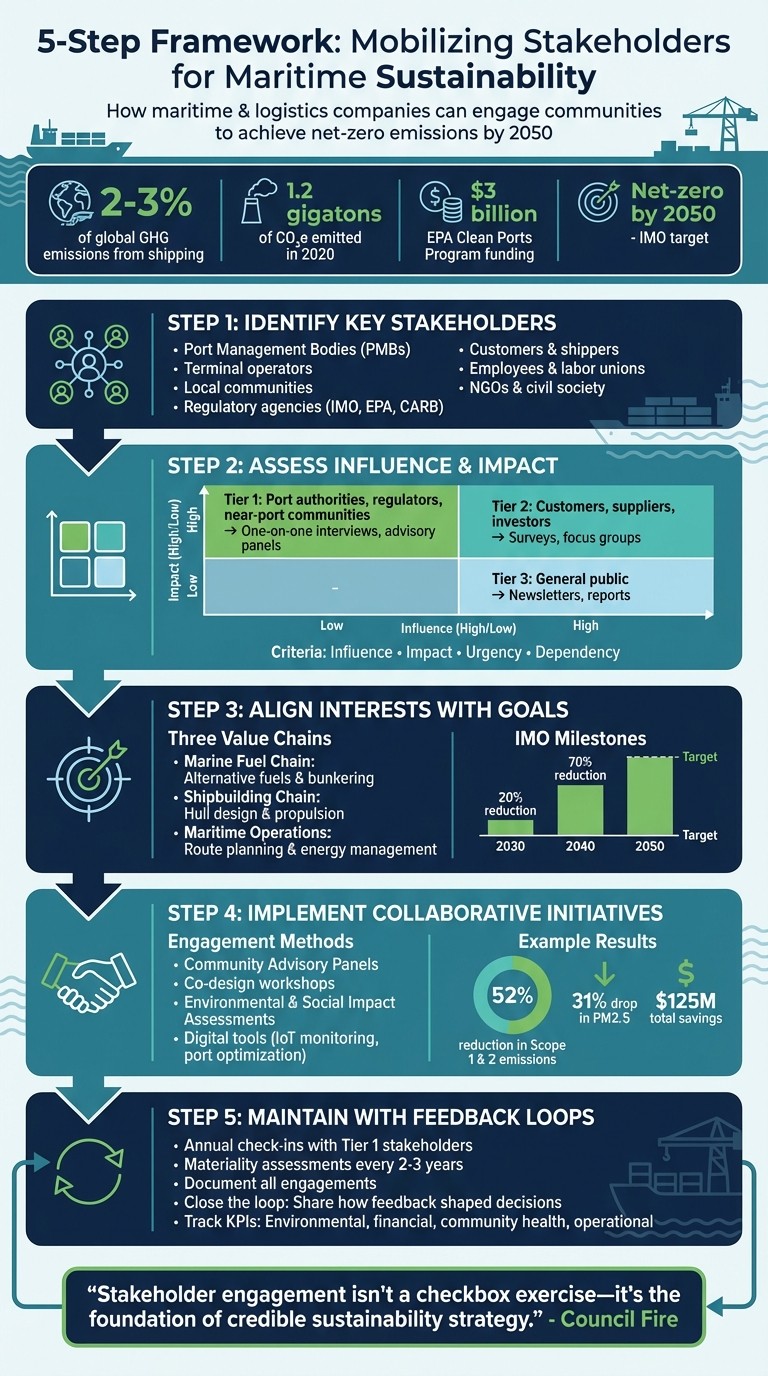
5-Step Framework for Maritime Stakeholder Engagement in Sustainability Initiatives
Identifying Key Community Stakeholders in Maritime and Logistics
Who Are the Key Stakeholders?
Sustainable practices in the maritime sector rely on a wide range of stakeholders, each playing a distinct role. At the forefront are Port Management Bodies (PMBs), who act as both regulators and facilitators. These entities enforce environmental regulations and incorporate eco-friendly strategies into port development plans [5]. Terminal operators, another pivotal group, benefit directly from improvements like energy-efficient systems and upgraded infrastructure [5].
Local communities, particularly those living near ports, face significant challenges such as noise pollution, poor air quality, and heavy truck traffic. These residents are crucial in demanding accountability, advocating for air quality monitoring, and pushing for health-focused mitigation measures [4][5]. Regulatory agencies, including the International Maritime Organization (IMO), the Environmental Protection Agency (EPA), and California’s Air Resources Board (CARB), also hold a key position. These organizations set emissions standards and fund decarbonization efforts. For instance, the EPA’s Clean Ports Program has allocated $3 billion toward zero-emission port equipment and infrastructure in the United States [4].
Customers and shippers influence sustainability by demanding low-emission logistics to meet their own environmental, social, and governance (ESG) commitments. Meanwhile, employees and labor unions contribute insights on safety protocols and equitable working conditions as new green technologies are adopted [2][5]. Civil society organizations and NGOs add another layer of expertise, offering independent oversight and sharing best practices to address environmental risks and shape sustainability goals [2].
The next step involves evaluating these stakeholders’ influence and interests to guide effective engagement strategies.
Assessing Stakeholder Influence and Interests
Once stakeholders are identified, understanding their varying levels of influence and impact becomes essential. Not all stakeholders exert the same power or face the same level of effects from maritime operations. To effectively prioritize engagement, consider four key criteria: Influence (their ability to shape strategy or operations), Impact (how significantly they are affected), Urgency (the time sensitivity of their concerns), and Dependency (how reliant they are on your organization) [1].
A practical way to organize this information is by using a 2x2 matrix that maps Influence against Impact:
Tier 1 stakeholders (high influence, high impact) demand close collaboration. This group includes port authorities, regulatory bodies, and near-port communities, who often bear the brunt of health risks from diesel particulate matter [1][4]. Engagement methods for this tier include one-on-one interviews, advisory panels, and co-design workshops.
Tier 2 stakeholders (high influence or high impact) benefit from active engagement methods like surveys, focus groups, and roundtable discussions. This group typically includes customers, suppliers, and investors [1].
Tier 3 stakeholders (low influence, low impact) can be kept informed through periodic updates, such as sustainability reports and newsletters [1].
Local communities, given their direct exposure to pollution, are often classified as Tier 1 stakeholders. This prioritization ensures that engagement efforts align with sustainability goals and that resources are directed toward the most impactful partnerships. As Council Fire aptly puts it, "Stakeholder engagement isn't a checkbox exercise - it's the foundation of credible sustainability strategy" [1]. By identifying who holds influence and who bears the greatest impact, organizations can channel their efforts into partnerships that lead to meaningful progress.
Aligning Stakeholder Interests with Sustainability Goals
Understanding Maritime Sustainability Objectives
The maritime industry faces a pressing challenge: in 2020, it emitted approximately 1.2 gigatons of CO₂ equivalents, accounting for about 3% of global greenhouse gas emissions [6]. If left unchecked, these emissions could rise by 90% to 130% by 2050 [6]. To combat this, the International Maritime Organization (IMO) has set ambitious targets to achieve net-zero greenhouse gas emissions by around 2050. Interim milestones include reducing emissions by at least 20% by 2030 and 70% by 2040, using 2008 levels as the baseline [4].
Meeting these goals demands collaboration across three key value chains:
Marine Fuel Chain: Expanding availability of alternative fuels and developing bunkering infrastructure.
Shipbuilding Chain: Innovating in hull design and propulsion systems for greater efficiency.
Maritime Operations Chain: Improving route planning and energy management to optimize performance.
This transformation cannot be achieved by any one entity alone. It requires a collective effort from shipping companies, fuel suppliers, port operators, shipbuilders, and regulators [6].
But sustainability in maritime operations goes beyond cutting emissions. Initiatives like shore power installations, which can eliminate 1,000–3,000 tons of CO₂e annually at high-traffic berths, renewable energy adoption, waste reduction, and circular economy practices - such as recycling ship components - are equally critical [4][5]. Ports are also evolving into energy hubs, focusing on storage and bunkering of alternative fuels like LNG [5]. These efforts form a technical roadmap that must align with the diverse expectations of all stakeholders.
Connecting Stakeholder Needs to Sustainability Goals
Once key stakeholders are identified, aligning their interests with sustainability objectives becomes essential. Decarbonizing shipping is not just an environmental necessity - it’s an opportunity to address the concerns of various groups [6]. For example:
Local Communities: Cleaner air and reduced congestion are direct benefits of sustainable practices.
Customers and Investors: They demand low-emission operations that align with their ESG commitments [2][4].
Practical measures, such as installing shore power systems, can reduce local air pollution while helping terminal operators comply with regulations [4]. Similarly, energy efficiency upgrades deliver cost savings to operators while lowering emissions in surrounding areas [5]. Maersk emphasizes the importance of stakeholder alignment in its ESG strategy:
"Understanding the needs and expectations of our stakeholders is a foundation for our ESG strategy and supporting actions" [3].
Using ESG ratings from platforms like EcoVadis, CDP, and MSCI can guide organizations in designing initiatives that resonate with stakeholder priorities. Transparent communication and feedback further strengthen trust and reinforce the social license to operate [2][1].
Developing Tailored Engagement Strategies
Building Effective Communication Channels
Engaging stakeholders effectively requires a strategy that matches their level of influence and potential impact. Using the stakeholder mapping as a foundation, communication efforts should be customized for each group [1].
Tier 1 stakeholders demand close, personalized interaction through methods like advisory panels and co-design workshops.
Tier 2 stakeholders benefit from active participation opportunities such as focus groups and roundtable discussions.
Tier 3 stakeholders can stay informed through updates like sustainability reports and newsletters [1].
This tiered approach is exemplified by A.P. Moller – Maersk. In 2025, the company engaged B2B clients about supply chain emissions through a Strategic Customer Council and customer satisfaction surveys. For local communities, they conducted Environmental and Social Impact Assessments and joined collective action alliances to address broader value chain concerns [2]. Similarly, the Western Ligurian Sea Port Network Authority launched the "Dune di Prà" project, creating a green buffer zone in Genoa to minimize noise pollution - directly addressing feedback from community engagement efforts [5].
Another critical step is "closing the loop" by summarizing stakeholder feedback and showing how it shaped decisions. As Council Fire highlights:
Failing to close the loop is the fastest way to destroy engagement quality in future cycles. Stakeholders who feel ignored won't participate again [1].
To ensure inclusivity, offer multiple communication formats - such as online, in-person, or phone - and provide materials in the appropriate languages. This approach can help engage underrepresented communities more effectively [1].
With communication channels established, the next phase involves integrating stakeholder insights into an overarching sustainability strategy.
Collaborative Planning Using Systems Thinking
Maritime sustainability challenges are interconnected, spanning ships, ports, and inland logistics. Tackling issues like shore power installations, alternative fuels, and emissions reduction requires a holistic approach. Systems thinking shifts the focus from isolated upgrades to addressing the entire ecosystem [7].
Co-design workshops and advisory panels bring together stakeholders to develop solutions that balance operational and environmental needs [1]. For instance, better berth coordination can reduce anchorage waiting times, cutting fuel consumption while improving logistics predictability for all involved parties [7].
Digital tools also play a pivotal role in ecosystem-wide planning. Port call optimization systems enhance cargo sequencing and minimize idle times for vessels and trucks [7]. IoT monitoring platforms track emissions and energy consumption across the logistics chain. In Italy, where ports managed 490 million tons of cargo and served 61 million passengers in 2022, digitalization now accounts for 9% of green strategies. This includes streamlining operations like gate management while reducing environmental impacts [5].
Operational teams must be actively involved in planning to ensure the success of these initiatives. Without coordination across stakeholders and adequate training, sustainability efforts often falter [7]. The London Maritime Academy emphasizes this shift:
Sustainability is no longer separate from operations. It has become part of how maritime trade functions, adapts, and remains viable in a changing global environment [7].
Implementing Collaborative Initiatives with Measurable Outcomes
Examples of Successful Stakeholder Collaborations
Collaborative efforts in the maritime and logistics sectors highlight how companies can achieve both environmental improvements and financial gains. Take, for instance, an East Coast port authority managing 3 million TEUs that, between 2021 and 2026, introduced a sustainability strategy involving community groups, independent truck operators, and tenant companies. A key element of this plan was the creation of a Community Advisory Panel. This panel brought together representatives from nearby neighborhoods, environmental justice groups, public health advocates, and labor unions. Their input helped shape the timeline for transitioning drayage trucks and the design of a community health monitoring program.
The port focused heavily on Scope 3 emissions, which accounted for over 80% of its carbon footprint, targeting tenant operations, vessels at berth, and drayage trucks. A $15 million fund supported independent truck operators in upgrading to trucks meeting 2010 EPA standards, while six berths were equipped with shore power facilities, allowing vessels to connect to the grid and reduce diesel usage.
The results were striking: $125 million in total savings, a 31% drop in PM2.5 concentrations, and a 52% reduction in Scope 1 and 2 emissions. These savings included $48 million from reduced diesel fuel costs and $36 million from avoiding capital expenses through climate-resilient design. Additionally, a community benefits agreement allocated $8 million over a decade for workforce development and health monitoring programs [8].
These achievements highlight the importance of using clear metrics to evaluate and sustain progress.
Defining and Measuring Key Performance Indicators (KPIs)
Building on these collaborative successes requires well-defined performance metrics to track progress effectively. Metrics should cover environmental, financial, community, and operational aspects. Financial KPIs, for instance, should reflect tangible returns that reinforce long-term organizational commitment. The port authority, for example, measured diesel fuel cost avoidance and savings from electrification, which cut per-unit energy costs by 65% compared to diesel.
Environmental metrics should emphasize Scope 3 emissions, as they often represent the largest share of a port's carbon footprint. Community health indicators, such as PM2.5 concentration levels, offer clear evidence of local benefits. Operational KPIs, like the percentage of drayage truck fleets meeting compliance standards, provide a way to monitor progress toward zero-emission goals for independent operators.
According to Council Fire Resources, demonstrating hard financial returns is key to securing lasting organizational support [8].
Aligning clean equipment upgrades with natural asset replacement cycles can also lower incremental capital costs. By planning up to a decade in advance, companies can synchronize sustainability investments with equipment replacement schedules, ensuring both financial efficiency and measurable progress toward reducing emissions [8].
Mastering Stakeholder Engagement for CSOs | Expert Panel by illuminem & AWorld
Maintaining Long-Term Partnerships
Building strong, lasting partnerships with stakeholders demands more than just initial engagement - it requires continuous effort, open communication, and a commitment to aligning goals over time.
Using Feedback Loops for Continuous Improvement
Turning stakeholder input into actionable outcomes is key to fostering real collaboration. Collecting feedback is just the first step; companies must also show how this input shapes their sustainability strategies. Sharing engagement summaries and detailing how recommendations are implemented can significantly strengthen trust.
A.P. Moller – Maersk sets a clear example of this process. By maintaining ongoing dialogue with seven key stakeholder groups, including local communities, the company ensures its strategies remain relevant. They use tools like Environmental and Social Impact Assessments (ESIAs) and community meetings to gather insights about local needs, which then influence decisions on resource procurement and investment priorities [2].
Feedback loops should be designed to address the varied needs of stakeholders. For survey-based engagements, companies should aim for a minimum 30% response rate to ensure that the data collected is meaningful and statistically significant [1].
Timing also plays a critical role. While comprehensive materiality assessments are typically conducted every two to three years, companies shouldn't wait for these formal cycles to engage. Annual check-ins with high-priority stakeholders - those with significant influence or impact - can help identify emerging issues early. To streamline this process, feedback should be integrated into existing communication channels rather than creating separate, sustainability-only systems [1][9].
These practices naturally pave the way for regular goal realignment, a critical component of maintaining long-term partnerships.
Keeping Goals Aligned Over Time
Continuous feedback is the foundation for keeping goals relevant as stakeholder priorities evolve. A community's concerns in 2023 may shift by 2026 due to changes in environmental data or economic conditions. Regularly revisiting and adjusting goals ensures that companies remain aligned with these shifting priorities.
Centralizing and documenting all stakeholder engagements is essential. Tracking participants, topics discussed, findings, and follow-up actions not only creates accountability but also helps maintain continuity during staff transitions. This approach also supports compliance with standards like GRI 2-29 and CSRD [1][9].
When stakeholder priorities clash - such as when community environmental concerns conflict with investor financial risks - transparency is critical. Companies should openly acknowledge these tensions and explain the criteria used to make decisions. Even when specific feedback cannot be acted upon, clearly communicating the reasons why helps maintain trust [1][9].
"Closing the loop transforms stakeholder engagement from an extractive research exercise into a trust-building relationship." – Council Fire [9]
To stay aligned with evolving needs, companies should revisit materiality assessments every two years. In the interim, ESG ratings can serve as a useful tool for tracking trends and ensuring that strategies remain in step with stakeholder expectations [1][2].
Conclusion
Engaging community stakeholders effectively is a cornerstone of advancing sustainability in the maritime industry. With mounting pressures - from the International Maritime Organization’s commitment to achieving net-zero greenhouse gas emissions by 2050 to the $3 billion EPA Clean Ports Program transforming port infrastructure in the U.S. - the stakes have never been higher [4]. Companies that view stakeholder engagement as a procedural checkbox risk losing access to ESG-linked funding and their social license to operate.
The way forward demands focused prioritization, open communication, and genuine collaboration. A practical tool, such as a 2x2 matrix, can help identify high-influence, high-impact stakeholders who warrant deeper engagement, like personal interviews or co-design workshops, rather than broad outreach methods like newsletters [1]. Building trust hinges on transparency - sharing measurable data, such as air quality metrics, or inviting community representatives to participate in decision-making panels, can make a significant difference [4].
It’s equally critical to document stakeholder interactions and show how their input shapes decisions. For example, A.P. Moller – Maersk exemplifies this by maintaining ongoing dialogue with seven key stakeholder groups, conducting Environmental and Social Impact Assessments, and hosting community meetings that directly inform procurement and investment strategies [2]. When stakeholders see their feedback reflected in tangible actions, they shift from being external critics to active collaborators in achieving sustainability goals.
This holistic approach not only delivers immediate benefits but also builds resilience for the future. Maritime companies that integrate sustainability into their core operations will be better equipped to navigate evolving regulations and environmental challenges, ensuring they remain competitive in a rapidly changing landscape [7].
FAQs
How do I choose which stakeholders to engage first?
To begin, identify and rank the stakeholders who are either most impacted by or have the greatest influence over your sustainability objectives. Pay close attention to internal groups, such as employees and leadership, as well as external parties like local communities, regulatory agencies, and NGOs. Early engagement with crucial stakeholders - such as nearby communities and regulators - helps establish trust, collect valuable feedback, and maintain compliance. This approach lays the groundwork for successful, wider collaboration efforts.
What should I offer communities to earn trust and support?
To earn trust and secure support, focus on fostering genuine dialogue and active collaboration. Treat communities as true partners by involving them in shaping sustainability initiatives and valuing their input. Be open about your actions, address any concerns head-on, and take proactive steps to manage environmental and social challenges. Implement clear and accessible grievance mechanisms to resolve conflicts effectively and create mutual benefits. These actions build stronger connections and highlight your dedication to lasting, impactful engagement.
Which KPIs best demonstrate port sustainability progress?
Key performance indicators (KPIs) for assessing port sustainability focus on three main areas:
Emissions Metrics: These include measurements like CO2 emissions (in kilotonnes), fuel consumption, and air quality levels, offering insight into the environmental impact of port activities.
Operational Efficiency: Metrics such as port throughput and energy efficiency highlight how effectively resources are being utilized.
Environmental Investments: This tracks spending on infrastructure projects designed to meet green objectives, reflecting a commitment to sustainable development.
These KPIs help quantify both environmental progress and operational advancements.
Related Blog Posts
How to Build a Corporate Sustainability Strategy Aligned to ROI for Maritime & Logistics Companies
How to Align Stakeholders Around a Shared ESG Vision for Maritime & Logistics Companies
How to Communicate ESG Progress Credibly for Maritime & Logistics Companies
How to Develop a Blue Economy Strategy for Maritime & Logistics Companies
Latest Articles
©2025



FAQ
01
What does it really mean to “redefine profit”?
02
What makes Council Fire different?
03
Who does Council Fire you work with?
04
What does working with Council Fire actually look like?
05
How does Council Fire help organizations turn big goals into action?
06
How does Council Fire define and measure success?
Apr 8, 2026
How to Mobilize Community Stakeholders Around Sustainability Goals for Maritime & Logistics Companies
ESG Strategy
In This Article
Framework for ports & logistics to engage communities, regulators, and customers on emissions, shore power, and KPIs.
How to Mobilize Community Stakeholders Around Sustainability Goals for Maritime & Logistics Companies
Maritime and logistics companies face growing pressure to address emissions and pollution, which impact both global climate and local communities near ports. With shipping responsible for 2–3% of global greenhouse gas emissions and port-adjacent neighborhoods suffering from poor air quality, collaboration with stakeholders is essential. Engaging local communities, regulators, customers, and other key groups can drive effective solutions like green fuels, shore power, and emissions reduction.
Key Takeaways:
Shipping contributes 2–3% of global emissions, with significant health impacts on nearby communities.
Stakeholder engagement is now a regulatory requirement under frameworks like CSRD.
Effective strategies include identifying high-impact stakeholders, aligning their interests with emissions goals, and using tools like advisory panels and feedback loops.
5-Step Framework for Maritime Stakeholder Engagement in Sustainability Initiatives
Identifying Key Community Stakeholders in Maritime and Logistics
Who Are the Key Stakeholders?
Sustainable practices in the maritime sector rely on a wide range of stakeholders, each playing a distinct role. At the forefront are Port Management Bodies (PMBs), who act as both regulators and facilitators. These entities enforce environmental regulations and incorporate eco-friendly strategies into port development plans [5]. Terminal operators, another pivotal group, benefit directly from improvements like energy-efficient systems and upgraded infrastructure [5].
Local communities, particularly those living near ports, face significant challenges such as noise pollution, poor air quality, and heavy truck traffic. These residents are crucial in demanding accountability, advocating for air quality monitoring, and pushing for health-focused mitigation measures [4][5]. Regulatory agencies, including the International Maritime Organization (IMO), the Environmental Protection Agency (EPA), and California’s Air Resources Board (CARB), also hold a key position. These organizations set emissions standards and fund decarbonization efforts. For instance, the EPA’s Clean Ports Program has allocated $3 billion toward zero-emission port equipment and infrastructure in the United States [4].
Customers and shippers influence sustainability by demanding low-emission logistics to meet their own environmental, social, and governance (ESG) commitments. Meanwhile, employees and labor unions contribute insights on safety protocols and equitable working conditions as new green technologies are adopted [2][5]. Civil society organizations and NGOs add another layer of expertise, offering independent oversight and sharing best practices to address environmental risks and shape sustainability goals [2].
The next step involves evaluating these stakeholders’ influence and interests to guide effective engagement strategies.
Assessing Stakeholder Influence and Interests
Once stakeholders are identified, understanding their varying levels of influence and impact becomes essential. Not all stakeholders exert the same power or face the same level of effects from maritime operations. To effectively prioritize engagement, consider four key criteria: Influence (their ability to shape strategy or operations), Impact (how significantly they are affected), Urgency (the time sensitivity of their concerns), and Dependency (how reliant they are on your organization) [1].
A practical way to organize this information is by using a 2x2 matrix that maps Influence against Impact:
Tier 1 stakeholders (high influence, high impact) demand close collaboration. This group includes port authorities, regulatory bodies, and near-port communities, who often bear the brunt of health risks from diesel particulate matter [1][4]. Engagement methods for this tier include one-on-one interviews, advisory panels, and co-design workshops.
Tier 2 stakeholders (high influence or high impact) benefit from active engagement methods like surveys, focus groups, and roundtable discussions. This group typically includes customers, suppliers, and investors [1].
Tier 3 stakeholders (low influence, low impact) can be kept informed through periodic updates, such as sustainability reports and newsletters [1].
Local communities, given their direct exposure to pollution, are often classified as Tier 1 stakeholders. This prioritization ensures that engagement efforts align with sustainability goals and that resources are directed toward the most impactful partnerships. As Council Fire aptly puts it, "Stakeholder engagement isn't a checkbox exercise - it's the foundation of credible sustainability strategy" [1]. By identifying who holds influence and who bears the greatest impact, organizations can channel their efforts into partnerships that lead to meaningful progress.
Aligning Stakeholder Interests with Sustainability Goals
Understanding Maritime Sustainability Objectives
The maritime industry faces a pressing challenge: in 2020, it emitted approximately 1.2 gigatons of CO₂ equivalents, accounting for about 3% of global greenhouse gas emissions [6]. If left unchecked, these emissions could rise by 90% to 130% by 2050 [6]. To combat this, the International Maritime Organization (IMO) has set ambitious targets to achieve net-zero greenhouse gas emissions by around 2050. Interim milestones include reducing emissions by at least 20% by 2030 and 70% by 2040, using 2008 levels as the baseline [4].
Meeting these goals demands collaboration across three key value chains:
Marine Fuel Chain: Expanding availability of alternative fuels and developing bunkering infrastructure.
Shipbuilding Chain: Innovating in hull design and propulsion systems for greater efficiency.
Maritime Operations Chain: Improving route planning and energy management to optimize performance.
This transformation cannot be achieved by any one entity alone. It requires a collective effort from shipping companies, fuel suppliers, port operators, shipbuilders, and regulators [6].
But sustainability in maritime operations goes beyond cutting emissions. Initiatives like shore power installations, which can eliminate 1,000–3,000 tons of CO₂e annually at high-traffic berths, renewable energy adoption, waste reduction, and circular economy practices - such as recycling ship components - are equally critical [4][5]. Ports are also evolving into energy hubs, focusing on storage and bunkering of alternative fuels like LNG [5]. These efforts form a technical roadmap that must align with the diverse expectations of all stakeholders.
Connecting Stakeholder Needs to Sustainability Goals
Once key stakeholders are identified, aligning their interests with sustainability objectives becomes essential. Decarbonizing shipping is not just an environmental necessity - it’s an opportunity to address the concerns of various groups [6]. For example:
Local Communities: Cleaner air and reduced congestion are direct benefits of sustainable practices.
Customers and Investors: They demand low-emission operations that align with their ESG commitments [2][4].
Practical measures, such as installing shore power systems, can reduce local air pollution while helping terminal operators comply with regulations [4]. Similarly, energy efficiency upgrades deliver cost savings to operators while lowering emissions in surrounding areas [5]. Maersk emphasizes the importance of stakeholder alignment in its ESG strategy:
"Understanding the needs and expectations of our stakeholders is a foundation for our ESG strategy and supporting actions" [3].
Using ESG ratings from platforms like EcoVadis, CDP, and MSCI can guide organizations in designing initiatives that resonate with stakeholder priorities. Transparent communication and feedback further strengthen trust and reinforce the social license to operate [2][1].
Developing Tailored Engagement Strategies
Building Effective Communication Channels
Engaging stakeholders effectively requires a strategy that matches their level of influence and potential impact. Using the stakeholder mapping as a foundation, communication efforts should be customized for each group [1].
Tier 1 stakeholders demand close, personalized interaction through methods like advisory panels and co-design workshops.
Tier 2 stakeholders benefit from active participation opportunities such as focus groups and roundtable discussions.
Tier 3 stakeholders can stay informed through updates like sustainability reports and newsletters [1].
This tiered approach is exemplified by A.P. Moller – Maersk. In 2025, the company engaged B2B clients about supply chain emissions through a Strategic Customer Council and customer satisfaction surveys. For local communities, they conducted Environmental and Social Impact Assessments and joined collective action alliances to address broader value chain concerns [2]. Similarly, the Western Ligurian Sea Port Network Authority launched the "Dune di Prà" project, creating a green buffer zone in Genoa to minimize noise pollution - directly addressing feedback from community engagement efforts [5].
Another critical step is "closing the loop" by summarizing stakeholder feedback and showing how it shaped decisions. As Council Fire highlights:
Failing to close the loop is the fastest way to destroy engagement quality in future cycles. Stakeholders who feel ignored won't participate again [1].
To ensure inclusivity, offer multiple communication formats - such as online, in-person, or phone - and provide materials in the appropriate languages. This approach can help engage underrepresented communities more effectively [1].
With communication channels established, the next phase involves integrating stakeholder insights into an overarching sustainability strategy.
Collaborative Planning Using Systems Thinking
Maritime sustainability challenges are interconnected, spanning ships, ports, and inland logistics. Tackling issues like shore power installations, alternative fuels, and emissions reduction requires a holistic approach. Systems thinking shifts the focus from isolated upgrades to addressing the entire ecosystem [7].
Co-design workshops and advisory panels bring together stakeholders to develop solutions that balance operational and environmental needs [1]. For instance, better berth coordination can reduce anchorage waiting times, cutting fuel consumption while improving logistics predictability for all involved parties [7].
Digital tools also play a pivotal role in ecosystem-wide planning. Port call optimization systems enhance cargo sequencing and minimize idle times for vessels and trucks [7]. IoT monitoring platforms track emissions and energy consumption across the logistics chain. In Italy, where ports managed 490 million tons of cargo and served 61 million passengers in 2022, digitalization now accounts for 9% of green strategies. This includes streamlining operations like gate management while reducing environmental impacts [5].
Operational teams must be actively involved in planning to ensure the success of these initiatives. Without coordination across stakeholders and adequate training, sustainability efforts often falter [7]. The London Maritime Academy emphasizes this shift:
Sustainability is no longer separate from operations. It has become part of how maritime trade functions, adapts, and remains viable in a changing global environment [7].
Implementing Collaborative Initiatives with Measurable Outcomes
Examples of Successful Stakeholder Collaborations
Collaborative efforts in the maritime and logistics sectors highlight how companies can achieve both environmental improvements and financial gains. Take, for instance, an East Coast port authority managing 3 million TEUs that, between 2021 and 2026, introduced a sustainability strategy involving community groups, independent truck operators, and tenant companies. A key element of this plan was the creation of a Community Advisory Panel. This panel brought together representatives from nearby neighborhoods, environmental justice groups, public health advocates, and labor unions. Their input helped shape the timeline for transitioning drayage trucks and the design of a community health monitoring program.
The port focused heavily on Scope 3 emissions, which accounted for over 80% of its carbon footprint, targeting tenant operations, vessels at berth, and drayage trucks. A $15 million fund supported independent truck operators in upgrading to trucks meeting 2010 EPA standards, while six berths were equipped with shore power facilities, allowing vessels to connect to the grid and reduce diesel usage.
The results were striking: $125 million in total savings, a 31% drop in PM2.5 concentrations, and a 52% reduction in Scope 1 and 2 emissions. These savings included $48 million from reduced diesel fuel costs and $36 million from avoiding capital expenses through climate-resilient design. Additionally, a community benefits agreement allocated $8 million over a decade for workforce development and health monitoring programs [8].
These achievements highlight the importance of using clear metrics to evaluate and sustain progress.
Defining and Measuring Key Performance Indicators (KPIs)
Building on these collaborative successes requires well-defined performance metrics to track progress effectively. Metrics should cover environmental, financial, community, and operational aspects. Financial KPIs, for instance, should reflect tangible returns that reinforce long-term organizational commitment. The port authority, for example, measured diesel fuel cost avoidance and savings from electrification, which cut per-unit energy costs by 65% compared to diesel.
Environmental metrics should emphasize Scope 3 emissions, as they often represent the largest share of a port's carbon footprint. Community health indicators, such as PM2.5 concentration levels, offer clear evidence of local benefits. Operational KPIs, like the percentage of drayage truck fleets meeting compliance standards, provide a way to monitor progress toward zero-emission goals for independent operators.
According to Council Fire Resources, demonstrating hard financial returns is key to securing lasting organizational support [8].
Aligning clean equipment upgrades with natural asset replacement cycles can also lower incremental capital costs. By planning up to a decade in advance, companies can synchronize sustainability investments with equipment replacement schedules, ensuring both financial efficiency and measurable progress toward reducing emissions [8].
Mastering Stakeholder Engagement for CSOs | Expert Panel by illuminem & AWorld
Maintaining Long-Term Partnerships
Building strong, lasting partnerships with stakeholders demands more than just initial engagement - it requires continuous effort, open communication, and a commitment to aligning goals over time.
Using Feedback Loops for Continuous Improvement
Turning stakeholder input into actionable outcomes is key to fostering real collaboration. Collecting feedback is just the first step; companies must also show how this input shapes their sustainability strategies. Sharing engagement summaries and detailing how recommendations are implemented can significantly strengthen trust.
A.P. Moller – Maersk sets a clear example of this process. By maintaining ongoing dialogue with seven key stakeholder groups, including local communities, the company ensures its strategies remain relevant. They use tools like Environmental and Social Impact Assessments (ESIAs) and community meetings to gather insights about local needs, which then influence decisions on resource procurement and investment priorities [2].
Feedback loops should be designed to address the varied needs of stakeholders. For survey-based engagements, companies should aim for a minimum 30% response rate to ensure that the data collected is meaningful and statistically significant [1].
Timing also plays a critical role. While comprehensive materiality assessments are typically conducted every two to three years, companies shouldn't wait for these formal cycles to engage. Annual check-ins with high-priority stakeholders - those with significant influence or impact - can help identify emerging issues early. To streamline this process, feedback should be integrated into existing communication channels rather than creating separate, sustainability-only systems [1][9].
These practices naturally pave the way for regular goal realignment, a critical component of maintaining long-term partnerships.
Keeping Goals Aligned Over Time
Continuous feedback is the foundation for keeping goals relevant as stakeholder priorities evolve. A community's concerns in 2023 may shift by 2026 due to changes in environmental data or economic conditions. Regularly revisiting and adjusting goals ensures that companies remain aligned with these shifting priorities.
Centralizing and documenting all stakeholder engagements is essential. Tracking participants, topics discussed, findings, and follow-up actions not only creates accountability but also helps maintain continuity during staff transitions. This approach also supports compliance with standards like GRI 2-29 and CSRD [1][9].
When stakeholder priorities clash - such as when community environmental concerns conflict with investor financial risks - transparency is critical. Companies should openly acknowledge these tensions and explain the criteria used to make decisions. Even when specific feedback cannot be acted upon, clearly communicating the reasons why helps maintain trust [1][9].
"Closing the loop transforms stakeholder engagement from an extractive research exercise into a trust-building relationship." – Council Fire [9]
To stay aligned with evolving needs, companies should revisit materiality assessments every two years. In the interim, ESG ratings can serve as a useful tool for tracking trends and ensuring that strategies remain in step with stakeholder expectations [1][2].
Conclusion
Engaging community stakeholders effectively is a cornerstone of advancing sustainability in the maritime industry. With mounting pressures - from the International Maritime Organization’s commitment to achieving net-zero greenhouse gas emissions by 2050 to the $3 billion EPA Clean Ports Program transforming port infrastructure in the U.S. - the stakes have never been higher [4]. Companies that view stakeholder engagement as a procedural checkbox risk losing access to ESG-linked funding and their social license to operate.
The way forward demands focused prioritization, open communication, and genuine collaboration. A practical tool, such as a 2x2 matrix, can help identify high-influence, high-impact stakeholders who warrant deeper engagement, like personal interviews or co-design workshops, rather than broad outreach methods like newsletters [1]. Building trust hinges on transparency - sharing measurable data, such as air quality metrics, or inviting community representatives to participate in decision-making panels, can make a significant difference [4].
It’s equally critical to document stakeholder interactions and show how their input shapes decisions. For example, A.P. Moller – Maersk exemplifies this by maintaining ongoing dialogue with seven key stakeholder groups, conducting Environmental and Social Impact Assessments, and hosting community meetings that directly inform procurement and investment strategies [2]. When stakeholders see their feedback reflected in tangible actions, they shift from being external critics to active collaborators in achieving sustainability goals.
This holistic approach not only delivers immediate benefits but also builds resilience for the future. Maritime companies that integrate sustainability into their core operations will be better equipped to navigate evolving regulations and environmental challenges, ensuring they remain competitive in a rapidly changing landscape [7].
FAQs
How do I choose which stakeholders to engage first?
To begin, identify and rank the stakeholders who are either most impacted by or have the greatest influence over your sustainability objectives. Pay close attention to internal groups, such as employees and leadership, as well as external parties like local communities, regulatory agencies, and NGOs. Early engagement with crucial stakeholders - such as nearby communities and regulators - helps establish trust, collect valuable feedback, and maintain compliance. This approach lays the groundwork for successful, wider collaboration efforts.
What should I offer communities to earn trust and support?
To earn trust and secure support, focus on fostering genuine dialogue and active collaboration. Treat communities as true partners by involving them in shaping sustainability initiatives and valuing their input. Be open about your actions, address any concerns head-on, and take proactive steps to manage environmental and social challenges. Implement clear and accessible grievance mechanisms to resolve conflicts effectively and create mutual benefits. These actions build stronger connections and highlight your dedication to lasting, impactful engagement.
Which KPIs best demonstrate port sustainability progress?
Key performance indicators (KPIs) for assessing port sustainability focus on three main areas:
Emissions Metrics: These include measurements like CO2 emissions (in kilotonnes), fuel consumption, and air quality levels, offering insight into the environmental impact of port activities.
Operational Efficiency: Metrics such as port throughput and energy efficiency highlight how effectively resources are being utilized.
Environmental Investments: This tracks spending on infrastructure projects designed to meet green objectives, reflecting a commitment to sustainable development.
These KPIs help quantify both environmental progress and operational advancements.
Related Blog Posts
How to Build a Corporate Sustainability Strategy Aligned to ROI for Maritime & Logistics Companies
How to Align Stakeholders Around a Shared ESG Vision for Maritime & Logistics Companies
How to Communicate ESG Progress Credibly for Maritime & Logistics Companies
How to Develop a Blue Economy Strategy for Maritime & Logistics Companies
FAQ
01
What does it really mean to “redefine profit”?
02
What makes Council Fire different?
03
Who does Council Fire you work with?
04
What does working with Council Fire actually look like?
05
How does Council Fire help organizations turn big goals into action?
06
How does Council Fire define and measure success?
Apr 8, 2026
How to Mobilize Community Stakeholders Around Sustainability Goals for Maritime & Logistics Companies
ESG Strategy
In This Article
Framework for ports & logistics to engage communities, regulators, and customers on emissions, shore power, and KPIs.
How to Mobilize Community Stakeholders Around Sustainability Goals for Maritime & Logistics Companies
Maritime and logistics companies face growing pressure to address emissions and pollution, which impact both global climate and local communities near ports. With shipping responsible for 2–3% of global greenhouse gas emissions and port-adjacent neighborhoods suffering from poor air quality, collaboration with stakeholders is essential. Engaging local communities, regulators, customers, and other key groups can drive effective solutions like green fuels, shore power, and emissions reduction.
Key Takeaways:
Shipping contributes 2–3% of global emissions, with significant health impacts on nearby communities.
Stakeholder engagement is now a regulatory requirement under frameworks like CSRD.
Effective strategies include identifying high-impact stakeholders, aligning their interests with emissions goals, and using tools like advisory panels and feedback loops.
5-Step Framework for Maritime Stakeholder Engagement in Sustainability Initiatives
Identifying Key Community Stakeholders in Maritime and Logistics
Who Are the Key Stakeholders?
Sustainable practices in the maritime sector rely on a wide range of stakeholders, each playing a distinct role. At the forefront are Port Management Bodies (PMBs), who act as both regulators and facilitators. These entities enforce environmental regulations and incorporate eco-friendly strategies into port development plans [5]. Terminal operators, another pivotal group, benefit directly from improvements like energy-efficient systems and upgraded infrastructure [5].
Local communities, particularly those living near ports, face significant challenges such as noise pollution, poor air quality, and heavy truck traffic. These residents are crucial in demanding accountability, advocating for air quality monitoring, and pushing for health-focused mitigation measures [4][5]. Regulatory agencies, including the International Maritime Organization (IMO), the Environmental Protection Agency (EPA), and California’s Air Resources Board (CARB), also hold a key position. These organizations set emissions standards and fund decarbonization efforts. For instance, the EPA’s Clean Ports Program has allocated $3 billion toward zero-emission port equipment and infrastructure in the United States [4].
Customers and shippers influence sustainability by demanding low-emission logistics to meet their own environmental, social, and governance (ESG) commitments. Meanwhile, employees and labor unions contribute insights on safety protocols and equitable working conditions as new green technologies are adopted [2][5]. Civil society organizations and NGOs add another layer of expertise, offering independent oversight and sharing best practices to address environmental risks and shape sustainability goals [2].
The next step involves evaluating these stakeholders’ influence and interests to guide effective engagement strategies.
Assessing Stakeholder Influence and Interests
Once stakeholders are identified, understanding their varying levels of influence and impact becomes essential. Not all stakeholders exert the same power or face the same level of effects from maritime operations. To effectively prioritize engagement, consider four key criteria: Influence (their ability to shape strategy or operations), Impact (how significantly they are affected), Urgency (the time sensitivity of their concerns), and Dependency (how reliant they are on your organization) [1].
A practical way to organize this information is by using a 2x2 matrix that maps Influence against Impact:
Tier 1 stakeholders (high influence, high impact) demand close collaboration. This group includes port authorities, regulatory bodies, and near-port communities, who often bear the brunt of health risks from diesel particulate matter [1][4]. Engagement methods for this tier include one-on-one interviews, advisory panels, and co-design workshops.
Tier 2 stakeholders (high influence or high impact) benefit from active engagement methods like surveys, focus groups, and roundtable discussions. This group typically includes customers, suppliers, and investors [1].
Tier 3 stakeholders (low influence, low impact) can be kept informed through periodic updates, such as sustainability reports and newsletters [1].
Local communities, given their direct exposure to pollution, are often classified as Tier 1 stakeholders. This prioritization ensures that engagement efforts align with sustainability goals and that resources are directed toward the most impactful partnerships. As Council Fire aptly puts it, "Stakeholder engagement isn't a checkbox exercise - it's the foundation of credible sustainability strategy" [1]. By identifying who holds influence and who bears the greatest impact, organizations can channel their efforts into partnerships that lead to meaningful progress.
Aligning Stakeholder Interests with Sustainability Goals
Understanding Maritime Sustainability Objectives
The maritime industry faces a pressing challenge: in 2020, it emitted approximately 1.2 gigatons of CO₂ equivalents, accounting for about 3% of global greenhouse gas emissions [6]. If left unchecked, these emissions could rise by 90% to 130% by 2050 [6]. To combat this, the International Maritime Organization (IMO) has set ambitious targets to achieve net-zero greenhouse gas emissions by around 2050. Interim milestones include reducing emissions by at least 20% by 2030 and 70% by 2040, using 2008 levels as the baseline [4].
Meeting these goals demands collaboration across three key value chains:
Marine Fuel Chain: Expanding availability of alternative fuels and developing bunkering infrastructure.
Shipbuilding Chain: Innovating in hull design and propulsion systems for greater efficiency.
Maritime Operations Chain: Improving route planning and energy management to optimize performance.
This transformation cannot be achieved by any one entity alone. It requires a collective effort from shipping companies, fuel suppliers, port operators, shipbuilders, and regulators [6].
But sustainability in maritime operations goes beyond cutting emissions. Initiatives like shore power installations, which can eliminate 1,000–3,000 tons of CO₂e annually at high-traffic berths, renewable energy adoption, waste reduction, and circular economy practices - such as recycling ship components - are equally critical [4][5]. Ports are also evolving into energy hubs, focusing on storage and bunkering of alternative fuels like LNG [5]. These efforts form a technical roadmap that must align with the diverse expectations of all stakeholders.
Connecting Stakeholder Needs to Sustainability Goals
Once key stakeholders are identified, aligning their interests with sustainability objectives becomes essential. Decarbonizing shipping is not just an environmental necessity - it’s an opportunity to address the concerns of various groups [6]. For example:
Local Communities: Cleaner air and reduced congestion are direct benefits of sustainable practices.
Customers and Investors: They demand low-emission operations that align with their ESG commitments [2][4].
Practical measures, such as installing shore power systems, can reduce local air pollution while helping terminal operators comply with regulations [4]. Similarly, energy efficiency upgrades deliver cost savings to operators while lowering emissions in surrounding areas [5]. Maersk emphasizes the importance of stakeholder alignment in its ESG strategy:
"Understanding the needs and expectations of our stakeholders is a foundation for our ESG strategy and supporting actions" [3].
Using ESG ratings from platforms like EcoVadis, CDP, and MSCI can guide organizations in designing initiatives that resonate with stakeholder priorities. Transparent communication and feedback further strengthen trust and reinforce the social license to operate [2][1].
Developing Tailored Engagement Strategies
Building Effective Communication Channels
Engaging stakeholders effectively requires a strategy that matches their level of influence and potential impact. Using the stakeholder mapping as a foundation, communication efforts should be customized for each group [1].
Tier 1 stakeholders demand close, personalized interaction through methods like advisory panels and co-design workshops.
Tier 2 stakeholders benefit from active participation opportunities such as focus groups and roundtable discussions.
Tier 3 stakeholders can stay informed through updates like sustainability reports and newsletters [1].
This tiered approach is exemplified by A.P. Moller – Maersk. In 2025, the company engaged B2B clients about supply chain emissions through a Strategic Customer Council and customer satisfaction surveys. For local communities, they conducted Environmental and Social Impact Assessments and joined collective action alliances to address broader value chain concerns [2]. Similarly, the Western Ligurian Sea Port Network Authority launched the "Dune di Prà" project, creating a green buffer zone in Genoa to minimize noise pollution - directly addressing feedback from community engagement efforts [5].
Another critical step is "closing the loop" by summarizing stakeholder feedback and showing how it shaped decisions. As Council Fire highlights:
Failing to close the loop is the fastest way to destroy engagement quality in future cycles. Stakeholders who feel ignored won't participate again [1].
To ensure inclusivity, offer multiple communication formats - such as online, in-person, or phone - and provide materials in the appropriate languages. This approach can help engage underrepresented communities more effectively [1].
With communication channels established, the next phase involves integrating stakeholder insights into an overarching sustainability strategy.
Collaborative Planning Using Systems Thinking
Maritime sustainability challenges are interconnected, spanning ships, ports, and inland logistics. Tackling issues like shore power installations, alternative fuels, and emissions reduction requires a holistic approach. Systems thinking shifts the focus from isolated upgrades to addressing the entire ecosystem [7].
Co-design workshops and advisory panels bring together stakeholders to develop solutions that balance operational and environmental needs [1]. For instance, better berth coordination can reduce anchorage waiting times, cutting fuel consumption while improving logistics predictability for all involved parties [7].
Digital tools also play a pivotal role in ecosystem-wide planning. Port call optimization systems enhance cargo sequencing and minimize idle times for vessels and trucks [7]. IoT monitoring platforms track emissions and energy consumption across the logistics chain. In Italy, where ports managed 490 million tons of cargo and served 61 million passengers in 2022, digitalization now accounts for 9% of green strategies. This includes streamlining operations like gate management while reducing environmental impacts [5].
Operational teams must be actively involved in planning to ensure the success of these initiatives. Without coordination across stakeholders and adequate training, sustainability efforts often falter [7]. The London Maritime Academy emphasizes this shift:
Sustainability is no longer separate from operations. It has become part of how maritime trade functions, adapts, and remains viable in a changing global environment [7].
Implementing Collaborative Initiatives with Measurable Outcomes
Examples of Successful Stakeholder Collaborations
Collaborative efforts in the maritime and logistics sectors highlight how companies can achieve both environmental improvements and financial gains. Take, for instance, an East Coast port authority managing 3 million TEUs that, between 2021 and 2026, introduced a sustainability strategy involving community groups, independent truck operators, and tenant companies. A key element of this plan was the creation of a Community Advisory Panel. This panel brought together representatives from nearby neighborhoods, environmental justice groups, public health advocates, and labor unions. Their input helped shape the timeline for transitioning drayage trucks and the design of a community health monitoring program.
The port focused heavily on Scope 3 emissions, which accounted for over 80% of its carbon footprint, targeting tenant operations, vessels at berth, and drayage trucks. A $15 million fund supported independent truck operators in upgrading to trucks meeting 2010 EPA standards, while six berths were equipped with shore power facilities, allowing vessels to connect to the grid and reduce diesel usage.
The results were striking: $125 million in total savings, a 31% drop in PM2.5 concentrations, and a 52% reduction in Scope 1 and 2 emissions. These savings included $48 million from reduced diesel fuel costs and $36 million from avoiding capital expenses through climate-resilient design. Additionally, a community benefits agreement allocated $8 million over a decade for workforce development and health monitoring programs [8].
These achievements highlight the importance of using clear metrics to evaluate and sustain progress.
Defining and Measuring Key Performance Indicators (KPIs)
Building on these collaborative successes requires well-defined performance metrics to track progress effectively. Metrics should cover environmental, financial, community, and operational aspects. Financial KPIs, for instance, should reflect tangible returns that reinforce long-term organizational commitment. The port authority, for example, measured diesel fuel cost avoidance and savings from electrification, which cut per-unit energy costs by 65% compared to diesel.
Environmental metrics should emphasize Scope 3 emissions, as they often represent the largest share of a port's carbon footprint. Community health indicators, such as PM2.5 concentration levels, offer clear evidence of local benefits. Operational KPIs, like the percentage of drayage truck fleets meeting compliance standards, provide a way to monitor progress toward zero-emission goals for independent operators.
According to Council Fire Resources, demonstrating hard financial returns is key to securing lasting organizational support [8].
Aligning clean equipment upgrades with natural asset replacement cycles can also lower incremental capital costs. By planning up to a decade in advance, companies can synchronize sustainability investments with equipment replacement schedules, ensuring both financial efficiency and measurable progress toward reducing emissions [8].
Mastering Stakeholder Engagement for CSOs | Expert Panel by illuminem & AWorld
Maintaining Long-Term Partnerships
Building strong, lasting partnerships with stakeholders demands more than just initial engagement - it requires continuous effort, open communication, and a commitment to aligning goals over time.
Using Feedback Loops for Continuous Improvement
Turning stakeholder input into actionable outcomes is key to fostering real collaboration. Collecting feedback is just the first step; companies must also show how this input shapes their sustainability strategies. Sharing engagement summaries and detailing how recommendations are implemented can significantly strengthen trust.
A.P. Moller – Maersk sets a clear example of this process. By maintaining ongoing dialogue with seven key stakeholder groups, including local communities, the company ensures its strategies remain relevant. They use tools like Environmental and Social Impact Assessments (ESIAs) and community meetings to gather insights about local needs, which then influence decisions on resource procurement and investment priorities [2].
Feedback loops should be designed to address the varied needs of stakeholders. For survey-based engagements, companies should aim for a minimum 30% response rate to ensure that the data collected is meaningful and statistically significant [1].
Timing also plays a critical role. While comprehensive materiality assessments are typically conducted every two to three years, companies shouldn't wait for these formal cycles to engage. Annual check-ins with high-priority stakeholders - those with significant influence or impact - can help identify emerging issues early. To streamline this process, feedback should be integrated into existing communication channels rather than creating separate, sustainability-only systems [1][9].
These practices naturally pave the way for regular goal realignment, a critical component of maintaining long-term partnerships.
Keeping Goals Aligned Over Time
Continuous feedback is the foundation for keeping goals relevant as stakeholder priorities evolve. A community's concerns in 2023 may shift by 2026 due to changes in environmental data or economic conditions. Regularly revisiting and adjusting goals ensures that companies remain aligned with these shifting priorities.
Centralizing and documenting all stakeholder engagements is essential. Tracking participants, topics discussed, findings, and follow-up actions not only creates accountability but also helps maintain continuity during staff transitions. This approach also supports compliance with standards like GRI 2-29 and CSRD [1][9].
When stakeholder priorities clash - such as when community environmental concerns conflict with investor financial risks - transparency is critical. Companies should openly acknowledge these tensions and explain the criteria used to make decisions. Even when specific feedback cannot be acted upon, clearly communicating the reasons why helps maintain trust [1][9].
"Closing the loop transforms stakeholder engagement from an extractive research exercise into a trust-building relationship." – Council Fire [9]
To stay aligned with evolving needs, companies should revisit materiality assessments every two years. In the interim, ESG ratings can serve as a useful tool for tracking trends and ensuring that strategies remain in step with stakeholder expectations [1][2].
Conclusion
Engaging community stakeholders effectively is a cornerstone of advancing sustainability in the maritime industry. With mounting pressures - from the International Maritime Organization’s commitment to achieving net-zero greenhouse gas emissions by 2050 to the $3 billion EPA Clean Ports Program transforming port infrastructure in the U.S. - the stakes have never been higher [4]. Companies that view stakeholder engagement as a procedural checkbox risk losing access to ESG-linked funding and their social license to operate.
The way forward demands focused prioritization, open communication, and genuine collaboration. A practical tool, such as a 2x2 matrix, can help identify high-influence, high-impact stakeholders who warrant deeper engagement, like personal interviews or co-design workshops, rather than broad outreach methods like newsletters [1]. Building trust hinges on transparency - sharing measurable data, such as air quality metrics, or inviting community representatives to participate in decision-making panels, can make a significant difference [4].
It’s equally critical to document stakeholder interactions and show how their input shapes decisions. For example, A.P. Moller – Maersk exemplifies this by maintaining ongoing dialogue with seven key stakeholder groups, conducting Environmental and Social Impact Assessments, and hosting community meetings that directly inform procurement and investment strategies [2]. When stakeholders see their feedback reflected in tangible actions, they shift from being external critics to active collaborators in achieving sustainability goals.
This holistic approach not only delivers immediate benefits but also builds resilience for the future. Maritime companies that integrate sustainability into their core operations will be better equipped to navigate evolving regulations and environmental challenges, ensuring they remain competitive in a rapidly changing landscape [7].
FAQs
How do I choose which stakeholders to engage first?
To begin, identify and rank the stakeholders who are either most impacted by or have the greatest influence over your sustainability objectives. Pay close attention to internal groups, such as employees and leadership, as well as external parties like local communities, regulatory agencies, and NGOs. Early engagement with crucial stakeholders - such as nearby communities and regulators - helps establish trust, collect valuable feedback, and maintain compliance. This approach lays the groundwork for successful, wider collaboration efforts.
What should I offer communities to earn trust and support?
To earn trust and secure support, focus on fostering genuine dialogue and active collaboration. Treat communities as true partners by involving them in shaping sustainability initiatives and valuing their input. Be open about your actions, address any concerns head-on, and take proactive steps to manage environmental and social challenges. Implement clear and accessible grievance mechanisms to resolve conflicts effectively and create mutual benefits. These actions build stronger connections and highlight your dedication to lasting, impactful engagement.
Which KPIs best demonstrate port sustainability progress?
Key performance indicators (KPIs) for assessing port sustainability focus on three main areas:
Emissions Metrics: These include measurements like CO2 emissions (in kilotonnes), fuel consumption, and air quality levels, offering insight into the environmental impact of port activities.
Operational Efficiency: Metrics such as port throughput and energy efficiency highlight how effectively resources are being utilized.
Environmental Investments: This tracks spending on infrastructure projects designed to meet green objectives, reflecting a commitment to sustainable development.
These KPIs help quantify both environmental progress and operational advancements.
Related Blog Posts
How to Build a Corporate Sustainability Strategy Aligned to ROI for Maritime & Logistics Companies
How to Align Stakeholders Around a Shared ESG Vision for Maritime & Logistics Companies
How to Communicate ESG Progress Credibly for Maritime & Logistics Companies
How to Develop a Blue Economy Strategy for Maritime & Logistics Companies
FAQ
What does it really mean to “redefine profit”?
What makes Council Fire different?
Who does Council Fire you work with?
What does working with Council Fire actually look like?
How does Council Fire help organizations turn big goals into action?
How does Council Fire define and measure success?