
May 29, 2026
How to Develop Metrics, Monitoring, and Verification (MRV) for Impact for Maritime & Logistics Companies
Sustainability Strategy
In This Article
Practical MRV guide for maritime and logistics: define boundaries, set metrics, automate fuel monitoring, and verify emissions for EU and IMO compliance.
How to Develop Metrics, Monitoring, and Verification (MRV) for Impact for Maritime & Logistics Companies
Monitoring, Reporting, and Verification (MRV) systems are essential for maritime and logistics companies to track greenhouse gas (GHG) emissions, meet regulatory requirements, and improve decision-making. With regulations like the EU MRV Maritime Regulation and the EU Emissions Trading System (ETS) expanding, companies must establish clear metrics, collect accurate data, and ensure rigorous verification to avoid penalties and financial risks.
Key Takeaways:
Why MRV Matters: Ensures compliance with EU and IMO regulations, supports carbon pricing, and enables sustainability reporting.
Core Steps: Define objectives, set boundaries, choose metrics, automate data collection, and verify through accredited audits.
Regulatory Scope: EU MRV and ETS cover CO₂, CH₄, and N₂O emissions for ships ≥5,000 GT (expanding to ≥400 GT for some vessels in 2025).
Data Accuracy: Use tools like flow meters and IoT sensors to ensure precise emissions reporting and avoid discrepancies.
Continuous Updates: Regularly review systems to align with evolving regulations and optimize processes.
By integrating MRV as part of everyday operations, companies can meet compliance needs while using verified data to improve efficiency and reduce emissions.
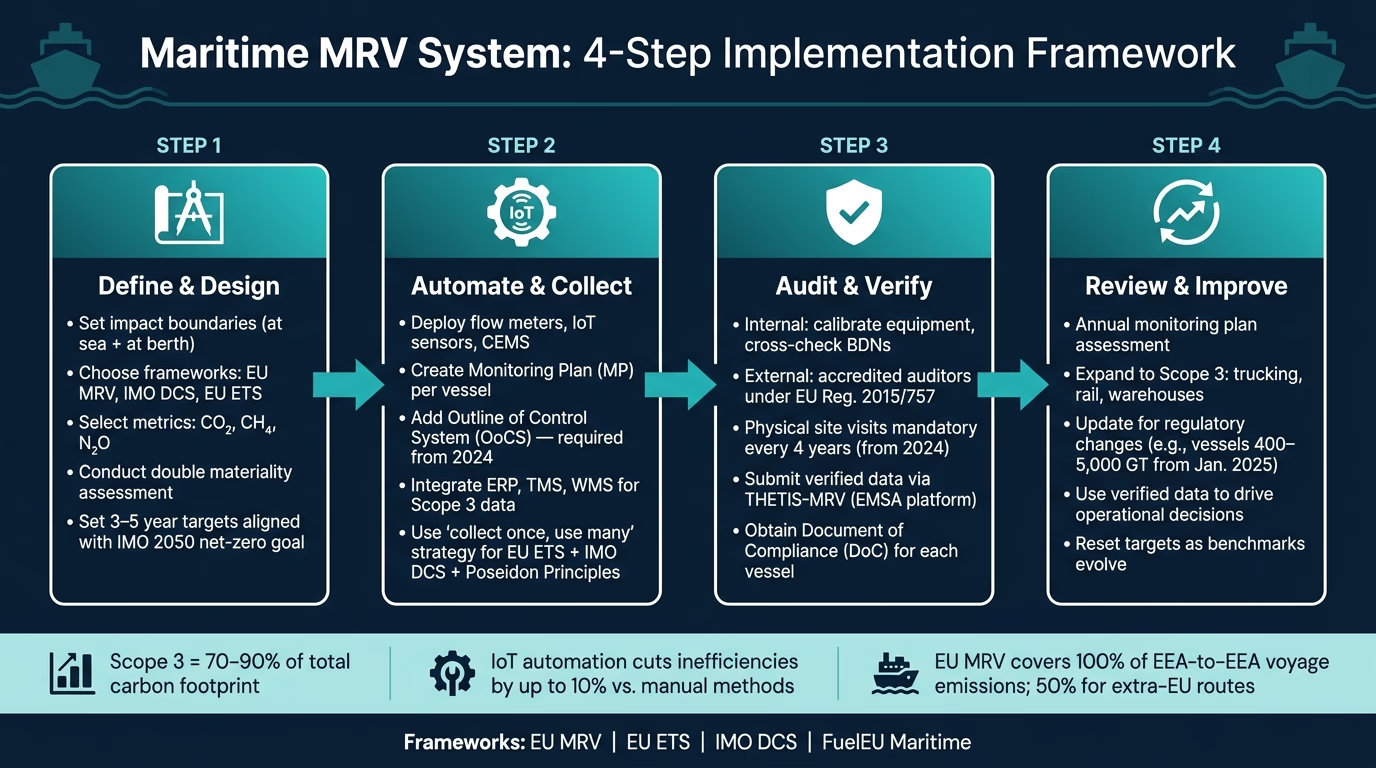
Maritime MRV System: 4-Step Implementation Framework
MRV Foundations for Maritime and Logistics Companies
Defining Impact Objectives and Boundaries
Before developing an MRV (Monitoring, Reporting, and Verification) system, it’s crucial to establish what will be measured and who will handle the process. These decisions are not just procedural - they directly influence every subsequent step in data collection.
For maritime companies, MRV objectives often start with greenhouse gas (GHG) emissions, focusing on CO₂, CH₄, and N₂O. These gases form the cornerstone of environmental reporting under current regulations. Beyond emissions, there is growing pressure to improve supply chain transparency. Shippers and freight forwarders increasingly demand access to verified emissions data to meet their own Scope 3 reporting obligations.
On the operational side, the EU MRV framework defines the responsible company as either the shipowner or the ISM (International Safety Management) company - whichever has taken on operational responsibility for the vessel [1][4]. Monitoring must cover emissions generated both at sea and while docked [1]. Geographically, the EU framework mandates reporting 100% of emissions from voyages between EEA ports and 50% of emissions from trips starting or ending outside the EEA [6].
"Monitoring and reporting shall be complete and cover greenhouse gas emissions from the combustion of fuels, while the ships are at sea as well as at berth." - Regulation (EU) 2015/757 [1]
It’s important to note that not every port visit is included in MRV calculations. Only stops involving cargo or passenger activities are counted; stops for refueling or shelter are excluded [4]. Additionally, ballast voyages - journeys between a discharge port and the next loading port - must be included because they are considered part of commercial operations [4].
Once impact objectives and boundaries are clearly defined, companies can focus on the regulatory frameworks that govern both mandatory and voluntary MRV reporting.
Regulatory and Voluntary MRV Requirements at a Glance
After outlining objectives and boundaries, maritime companies must navigate a complex regulatory landscape. A clear understanding of the overlapping frameworks that apply to their fleet is essential for building a system that ensures compliance while avoiding redundant efforts.
Currently, the three most relevant frameworks are the EU MRV Maritime Regulation, the EU Emissions Trading System (EU ETS), and the IMO Data Collection System (DCS). Although each serves a different purpose, their data requirements often overlap, allowing companies to design an MRV system that addresses all three simultaneously.
Framework | Geographical Scope | Gases Covered | Primary Obligation | Tonnage Threshold |
|---|---|---|---|---|
EU MRV Maritime | Voyages to/from/within EEA ports | CO₂, CH₄, N₂O (from 2024) | Report and verify emissions data | ≥5,000 GT; ≥400 GT for select vessel types (from Jan. 2025) |
EU ETS (Maritime) | Voyages to/from/within EEA ports (50% for extra-EU) | CO₂; CH₄ & N₂O from 2026 | Surrender emission allowances | ≥5,000 GT |
IMO DCS | Global (international shipping) | Fuel consumption (CO₂ proxy) | Report fuel data to flag State | ≥5,000 GT |
The FuelEU Maritime Regulation is another framework to monitor. It sets restrictions on the GHG intensity of onboard energy use and relies heavily on MRV data as its foundation [6]. Designing MRV systems with this regulation in mind can help avoid costly adjustments down the road.
For companies not yet subject to mandatory reporting, voluntary frameworks like the Science Based Targets initiative (SBTi) or CDP supply chain disclosures use many of the same metrics. Starting with a robust MRV system built for compliance can streamline voluntary reporting efforts without requiring separate processes.
Under the EU MRV framework, verified emissions data must be submitted through THETIS-MRV, the electronic platform managed by the European Maritime Safety Agency (EMSA) [3][5]. Each shipping company is assigned to an EU Member State’s administering authority, and a valid Document of Compliance (DoC) must be carried onboard at all times [6].
EU MRV Shipping - the Monitoring, Reporting, and Verification Shipping Regulation (EU) 2015/757
How to Design Metrics for Your MRV System
Once you’ve mapped out your regulatory obligations and reporting boundaries, the next crucial step is determining what to measure. Selecting the right metrics from the start not only saves time but also ensures your data serves both compliance and operational needs. Below, we explore how to identify these metrics and implement them using effective monitoring tools.
Choosing Core Environmental Metrics
Start by tracking key greenhouse gases like CO₂, CH₄, and N₂O through accurate fuel consumption data. To assess efficiency, use intensity metrics such as CO₂ per ton-mile or per TEU-mile, which provide a clearer picture of performance. Standardized templates like THETIS-MRV can simplify reporting, ensuring consistency and audit readiness [4][3][1]. For vessel design efficiency, the Energy Efficiency Design Index (EEDI), established under IMO Resolution MEPC.215, is a widely recognized technical standard [1].
Adding Social and Community Impact Metrics
Environmental metrics alone don’t paint the full picture. Social data is equally critical, covering areas like worker safety (e.g., lost-time injury rates and near-miss incidents), labor rights compliance, and the health impacts on communities near port operations. Conducting a double materiality assessment helps identify which social metrics matter most [8]. This approach, required under the EU's Corporate Sustainability Reporting Directive (CSRD), examines both the effects of your operations on people and the financial risks posed by social issues.
To ensure accuracy, actively engage with employees and local communities rather than relying solely on internal assumptions. Additionally, mapping social risks across your entire value chain - including upstream suppliers and subcontractors - provides a more comprehensive view of labor and human rights considerations.
Setting Baselines and Targets
The reliability of your baseline depends entirely on the quality of the data it’s built on. Before finalizing any numbers, conduct a data maturity assessment to identify and address gaps in your data collection process. Poor-quality data at this stage can lead to significant errors later.
Once your baseline is solid, set targets with a 3–5 year horizon - a timeframe that aligns with the priorities of financial markets and key stakeholders [4]. These targets should also reflect regulatory milestones. For instance, the 2023 IMO GHG Strategy aims for zero or near-zero greenhouse gas fuels to account for at least 5% - ideally 10% - of international shipping’s energy use by 2030, with a net-zero goal by 2050 [1]. Aligning your internal targets with such benchmarks strengthens their credibility and makes them easier to defend during external audits.
A compelling example of this in practice comes from Frontline, which partnered with DNV in 2020 to digitize fleet performance data using the Veracity maritime cloud platform. By automating quality checks and standardizing data formats, Frontline tracked its Annual Efficiency Ratio (AER) with precision, achieving an A-rating in its 2021 ESG report. This performance exceeded IMO benchmarks. As Lars Pedersen, Frontline’s Chief Technical Officer, explained:
"The ambition is to capture high frequency data without human involvement, making reliable real-time data easily accessible and visualizing it in a user-friendly way, which is key to making better decisions."
When calibrating the sensors and flow meters that feed your baseline data, schedule regular maintenance to prevent sensor drift. Use conservative estimates, as EU MRV guidance strictly prohibits underestimating annual emissions or inflating operational metrics [1].
How to Build and Run a Monitoring System
With metrics and baselines established, the next step is ensuring the data flowing into your Monitoring, Reporting, and Verification (MRV) system is accurate, consistent, and ready for audits. A monitoring system isn't just about gathering numbers - it's about trusting those numbers.
Data Collection and Governance Best Practices
A solid data governance framework is the backbone of turning metrics into actionable insights. For vessels covered by EU MRV, each requires a Monitoring Plan (MP) - a verifier-approved document detailing all emission sources, fuel types, and tracking methods. Since 2024, an additional Outline of the overall Control System (OoCs) is required to map how data flows through the organization and identify responsibilities at each step [2].
Key practices include:
Clear data ownership: Define who records fuel data, who transmits it to shore, and who validates it before submission. Establish surrogate data protocols to handle equipment failures. Without predefined steps in your MP, data gaps during incidents could lead to failed verifications [1].
Revision tracking: Maintain a revision record sheet to document changes in equipment, methodologies, or personnel responsibilities over time.
Manual logging: Record port departure and arrival timestamps in the ship's logbook to cover gaps caused by AIS signal issues [9].
Monitoring Tools and Methods
Both the EU MRV and IMO DCS frameworks allow four approved measurement methods, each with varying levels of accuracy and complexity:
Method | Accuracy | Complexity | Best For |
|---|---|---|---|
BDN + Tank Sounding | Moderate | Low | Standard use |
Bunker Tank Monitoring | High | Moderate | Detailed tracking |
Flow Meters | Highest | High | Automated systems |
Direct CEMS | Highest | Very High | Specialized needs |
Coriolis mass-flow meters, installed on main and auxiliary engine fuel lines, offer excellent accuracy by capturing real-time data every 15 minutes. This data integrates directly with shore-side systems, minimizing manual errors and reducing compliance risks. Though the initial hardware investment is higher, it significantly cuts audit preparation time and lowers the chance of penalties [9].
For organizations not ready for full automation, a unified data architecture can still streamline processes. Consolidating logbooks, Bunker Delivery Notes (BDNs), and voyage orders into a single platform reduces discrepancies between IMO DCS and EU MRV submissions [9].
Extending Monitoring Across the Supply Chain
Effective monitoring doesn't stop onboard. Expanding the system to include the entire logistics chain provides a more complete picture. For logistics companies, maritime emissions are just one piece of the puzzle. Emissions from trucking, rail transport, and warehouse energy use also contribute to the Scope 3 footprint. However, 70% of businesses cite supplier data availability as the biggest hurdle to accurate measurement [10].
To address this:
Automate data ingestion: Integrate directly with ERP, TMS, and WMS systems instead of relying on manual estimates from third-party logistics providers (3PLs).
Use precise data: For road transport, telematics and Electronic Logging Device (ELD) data can replace carrier-reported averages, which may overestimate emissions by up to 2.3x compared to actual shipment-level data [10].
Enhance ocean tracking: Connect with carrier Track & Trace systems and AIS feeds to achieve voyage-level granularity. This ensures compliance with EU MRV’s requirement to report emissions at sea separately from emissions at berth[4][5].
"VesselBot's pioneering work to accurately calculate maritime CO2 emissions is creating new opportunities for companies to reduce their Scope 3 supply chain emissions." - Vernon O'Donnell, Chief Product Officer, project44 [10]
For better Scope 3 reporting, engage 3PLs and forwarders contractually to share actual execution data rather than relying on modeled estimates. This approach strengthens the credibility of your reporting during external verification.
Verification and Continuous Improvement of MRV Systems
Ensuring your data holds up to external scrutiny is just the start. The real value comes from using verified data to improve operations over time.
How to Set Up Verification Processes
Verification is a two-step process involving both internal and external checks. Internally, you should document your control systems, perform regular calibration on equipment, maintain IT systems, and cross-check bunkering quantities from Bunker Delivery Notes (BDNs) with onboard measurements [7]. These steps form the foundation of your internal quality control before external audits take place.
For external verification, accredited auditors - recognized under EU Regulation 2015/757 - must conduct the reviews. Starting in 2024, physical site visits will be mandatory at least once every four years. However, under certain conditions, verifiers may opt for virtual visits or waive the requirement entirely [4].
The following table outlines the verification requirements for different monitoring methods:
Monitoring Method | Data Source | Verification Requirements |
|---|---|---|
Method A | BDN & periodic stocktakes | Specify uncertainty levels for BDN and tank sounding methods [7] |
Method B | Bunker fuel tank monitoring | Record daily readings at sea and during every bunkering/de-bunkering event [7] |
Method C | Flow meters | Include calibration methods and uncertainty values in the monitoring plan [7] |
Method D | Direct GHG measurement | Provide device-specific calibration records for concentration and exhaust gas flow measurements [7] |
Once verification processes are in place, the focus shifts to leveraging this reliable data for operational improvements.
Using MRV Data to Drive Better Decisions
Verified data becomes a powerful tool when it influences operational decisions. Companies like Frontline and A.P. Moller – Maersk demonstrate how verified MRV data can lead to significant improvements. For example, real-time efficiency tracking has enabled these companies to surpass IMO benchmarks, while safety enhancements have been implemented across warehouse and depot operations. These insights also play a crucial role in advancing decarbonization efforts and improving operational safety. By integrating verified data into decision-making, businesses can align their operations with broader environmental and social goals.
Refining MRV Systems Over Time
Regularly reviewing and updating your monitoring plan is essential. Conduct an annual assessment to ensure the plan reflects your fleet's current operations and to explore potential methodology upgrades [4]. If there’s a change in ownership or management, the outgoing company must submit a verified partial emissions report for its period of responsibility within three months of the transition [4][1].
On the technical front, transitioning from manual "Noon Reports" to IoT-enabled digital systems can revolutionize data collection. These systems provide real-time insights into fuel consumption and emissions. Adopting a "collect once, use many" strategy - where a single dataset fulfills reporting requirements for EU ETS, IMO DCS, and Poseidon Principles - can streamline compliance and reduce redundant efforts.
Additionally, regulatory changes are on the horizon. As of January 2025, EU MRV requirements will expand to include smaller vessels (400–5,000 GT) and offshore ships [4][2]. Companies managing mixed fleets should audit their current systems to ensure compliance with these expanded regulations. By staying ahead of these updates, organizations can maintain efficient and compliant MRV systems.
Conclusion and Key Takeaways
Now that we've explored the design, implementation, and verification of Monitoring, Reporting, and Verification (MRV) systems, let’s recap the key steps and insights.
Building an effective MRV system is not a one-and-done effort - it demands regular updates and integration into core operations. Industry leaders treat MRV as a foundational part of their strategy, not just a compliance checkbox.
To move forward effectively, follow this sequence: start by defining your impact boundaries and choosing a framework that aligns with your regulatory needs, such as EU MRV, IMO GHG Strategy, GRI, or SASB. Next, establish baselines and set measurable goals. Automating data collection is crucial - technologies like IoT sensors and flow meters can reveal operational efficiencies, boosting accuracy and trimming inefficiencies by up to 10% compared to manual methods. Finally, ensure rigorous verification through accredited third-party audits, including on-site inspections at least once every four years [4].
Summary of MRV Steps:
MRV Step | Key Focus Areas |
|---|---|
Design | Materiality assessment, choosing metrics, baselines |
Implementation | Automated data collection, governance, supply chain |
Verification | Third-party audits, emissions reports, site visits |
Refinement | Annual updates, Scope 3 data, resetting targets |
These elements form the backbone of a strong MRV system.
It’s worth noting that Scope 3 emissions often account for 70–90% of a company’s total carbon footprint [11]. With EU ETS requirements phasing in, companies without optimized MRV systems could face steep financial risks.
FAQs
Where do I start if my data quality is poor?
To begin, take a close look at your existing data environment. Conduct a thorough audit of all data sources, collection methods, and the teams or individuals responsible for managing them, aligning these elements with your reporting requirements. Scrutinize the data for completeness, accuracy, timeliness, and consistency to pinpoint any shortcomings. Work closely with your suppliers to refine Scope 3 emissions data, and consider leveraging technologies like blockchain or AI-powered analytics to improve verification throughout your value chain.
Which monitoring method should I choose for my vessels?
To determine the most suitable monitoring method for your vessels, evaluate the four EU MRV goal-based approaches: (A) using bunker delivery notes along with tank stocktakes, (B) direct monitoring of fuel tanks, (C) employing flow meters to measure fuel combustion, or (D) direct measurement of emissions. You have the flexibility to use a single method or combine multiple approaches for enhanced precision. Whichever method you select, ensure it is documented in a ship-specific monitoring plan and verified by an accredited third party.
How can one MRV dataset cover EU MRV, EU ETS, and IMO DCS?
To address the requirements of EU MRV, EU ETS, and IMO DCS in a single dataset, it's essential to implement a unified monitoring plan. This plan should gather critical operational data such as fuel consumption, voyage specifics, cargo details, and distances traveled. Since EU MRV and EU ETS have overlapping reporting structures, using a consistent framework simplifies compliance efforts. By monitoring fuel types and applying the appropriate emission factors, you can produce precise, verified reports that align with all three systems, ensuring transparency and adherence to regulations.
Related Blog Posts
Latest Articles
©2026

Narrative Change and Power Building: The Missing Half of Advocacy
Narrative change is the process of disrupting dominant narratives that normalize inequity and advancing new narratives from historically marginalized communities.

Funding Resilience Without Federal Grants
BRIC is unreliable and FEMA is shrinking. Here's how cities fund climate resilience with dedicated revenue, blended finance, and a coordinating authority.

The ESG Blind Spot: How AI Is Finding Risks in Companies Nobody Else Is Watching
Norway's sovereign wealth fund uses AI to screen 7,200 portfolio companies for forced labor and corruption within 24 hours. The real story is the emerging-market coverage gap that traditional ESG data vendors miss — and what it means for any company with a global supply chain.
Narrative Change and Power Building: The Missing Half of Advocacy
Narrative change is the process of disrupting dominant narratives that normalize inequity and advancing new narratives from historically marginalized communities.
Funding Resilience Without Federal Grants
BRIC is unreliable and FEMA is shrinking. Here's how cities fund climate resilience with dedicated revenue, blended finance, and a coordinating authority.
The ESG Blind Spot: How AI Is Finding Risks in Companies Nobody Else Is Watching
Norway's sovereign wealth fund uses AI to screen 7,200 portfolio companies for forced labor and corruption within 24 hours. The real story is the emerging-market coverage gap that traditional ESG data vendors miss — and what it means for any company with a global supply chain.
FAQ
01
What does it really mean to “redefine profit”?
02
What makes Council Fire different?
03
Who does Council Fire work with?
04
What does working with Council Fire actually look like?
05
How does Council Fire help organizations turn big goals into action?
06
How does Council Fire define and measure success?
07
How does technology fit into Council Fire’s work?
May 29, 2026
How to Develop Metrics, Monitoring, and Verification (MRV) for Impact for Maritime & Logistics Companies
Sustainability Strategy
In This Article
Practical MRV guide for maritime and logistics: define boundaries, set metrics, automate fuel monitoring, and verify emissions for EU and IMO compliance.
How to Develop Metrics, Monitoring, and Verification (MRV) for Impact for Maritime & Logistics Companies
Monitoring, Reporting, and Verification (MRV) systems are essential for maritime and logistics companies to track greenhouse gas (GHG) emissions, meet regulatory requirements, and improve decision-making. With regulations like the EU MRV Maritime Regulation and the EU Emissions Trading System (ETS) expanding, companies must establish clear metrics, collect accurate data, and ensure rigorous verification to avoid penalties and financial risks.
Key Takeaways:
Why MRV Matters: Ensures compliance with EU and IMO regulations, supports carbon pricing, and enables sustainability reporting.
Core Steps: Define objectives, set boundaries, choose metrics, automate data collection, and verify through accredited audits.
Regulatory Scope: EU MRV and ETS cover CO₂, CH₄, and N₂O emissions for ships ≥5,000 GT (expanding to ≥400 GT for some vessels in 2025).
Data Accuracy: Use tools like flow meters and IoT sensors to ensure precise emissions reporting and avoid discrepancies.
Continuous Updates: Regularly review systems to align with evolving regulations and optimize processes.
By integrating MRV as part of everyday operations, companies can meet compliance needs while using verified data to improve efficiency and reduce emissions.
Maritime MRV System: 4-Step Implementation Framework
MRV Foundations for Maritime and Logistics Companies
Defining Impact Objectives and Boundaries
Before developing an MRV (Monitoring, Reporting, and Verification) system, it’s crucial to establish what will be measured and who will handle the process. These decisions are not just procedural - they directly influence every subsequent step in data collection.
For maritime companies, MRV objectives often start with greenhouse gas (GHG) emissions, focusing on CO₂, CH₄, and N₂O. These gases form the cornerstone of environmental reporting under current regulations. Beyond emissions, there is growing pressure to improve supply chain transparency. Shippers and freight forwarders increasingly demand access to verified emissions data to meet their own Scope 3 reporting obligations.
On the operational side, the EU MRV framework defines the responsible company as either the shipowner or the ISM (International Safety Management) company - whichever has taken on operational responsibility for the vessel [1][4]. Monitoring must cover emissions generated both at sea and while docked [1]. Geographically, the EU framework mandates reporting 100% of emissions from voyages between EEA ports and 50% of emissions from trips starting or ending outside the EEA [6].
"Monitoring and reporting shall be complete and cover greenhouse gas emissions from the combustion of fuels, while the ships are at sea as well as at berth." - Regulation (EU) 2015/757 [1]
It’s important to note that not every port visit is included in MRV calculations. Only stops involving cargo or passenger activities are counted; stops for refueling or shelter are excluded [4]. Additionally, ballast voyages - journeys between a discharge port and the next loading port - must be included because they are considered part of commercial operations [4].
Once impact objectives and boundaries are clearly defined, companies can focus on the regulatory frameworks that govern both mandatory and voluntary MRV reporting.
Regulatory and Voluntary MRV Requirements at a Glance
After outlining objectives and boundaries, maritime companies must navigate a complex regulatory landscape. A clear understanding of the overlapping frameworks that apply to their fleet is essential for building a system that ensures compliance while avoiding redundant efforts.
Currently, the three most relevant frameworks are the EU MRV Maritime Regulation, the EU Emissions Trading System (EU ETS), and the IMO Data Collection System (DCS). Although each serves a different purpose, their data requirements often overlap, allowing companies to design an MRV system that addresses all three simultaneously.
Framework | Geographical Scope | Gases Covered | Primary Obligation | Tonnage Threshold |
|---|---|---|---|---|
EU MRV Maritime | Voyages to/from/within EEA ports | CO₂, CH₄, N₂O (from 2024) | Report and verify emissions data | ≥5,000 GT; ≥400 GT for select vessel types (from Jan. 2025) |
EU ETS (Maritime) | Voyages to/from/within EEA ports (50% for extra-EU) | CO₂; CH₄ & N₂O from 2026 | Surrender emission allowances | ≥5,000 GT |
IMO DCS | Global (international shipping) | Fuel consumption (CO₂ proxy) | Report fuel data to flag State | ≥5,000 GT |
The FuelEU Maritime Regulation is another framework to monitor. It sets restrictions on the GHG intensity of onboard energy use and relies heavily on MRV data as its foundation [6]. Designing MRV systems with this regulation in mind can help avoid costly adjustments down the road.
For companies not yet subject to mandatory reporting, voluntary frameworks like the Science Based Targets initiative (SBTi) or CDP supply chain disclosures use many of the same metrics. Starting with a robust MRV system built for compliance can streamline voluntary reporting efforts without requiring separate processes.
Under the EU MRV framework, verified emissions data must be submitted through THETIS-MRV, the electronic platform managed by the European Maritime Safety Agency (EMSA) [3][5]. Each shipping company is assigned to an EU Member State’s administering authority, and a valid Document of Compliance (DoC) must be carried onboard at all times [6].
EU MRV Shipping - the Monitoring, Reporting, and Verification Shipping Regulation (EU) 2015/757
How to Design Metrics for Your MRV System
Once you’ve mapped out your regulatory obligations and reporting boundaries, the next crucial step is determining what to measure. Selecting the right metrics from the start not only saves time but also ensures your data serves both compliance and operational needs. Below, we explore how to identify these metrics and implement them using effective monitoring tools.
Choosing Core Environmental Metrics
Start by tracking key greenhouse gases like CO₂, CH₄, and N₂O through accurate fuel consumption data. To assess efficiency, use intensity metrics such as CO₂ per ton-mile or per TEU-mile, which provide a clearer picture of performance. Standardized templates like THETIS-MRV can simplify reporting, ensuring consistency and audit readiness [4][3][1]. For vessel design efficiency, the Energy Efficiency Design Index (EEDI), established under IMO Resolution MEPC.215, is a widely recognized technical standard [1].
Adding Social and Community Impact Metrics
Environmental metrics alone don’t paint the full picture. Social data is equally critical, covering areas like worker safety (e.g., lost-time injury rates and near-miss incidents), labor rights compliance, and the health impacts on communities near port operations. Conducting a double materiality assessment helps identify which social metrics matter most [8]. This approach, required under the EU's Corporate Sustainability Reporting Directive (CSRD), examines both the effects of your operations on people and the financial risks posed by social issues.
To ensure accuracy, actively engage with employees and local communities rather than relying solely on internal assumptions. Additionally, mapping social risks across your entire value chain - including upstream suppliers and subcontractors - provides a more comprehensive view of labor and human rights considerations.
Setting Baselines and Targets
The reliability of your baseline depends entirely on the quality of the data it’s built on. Before finalizing any numbers, conduct a data maturity assessment to identify and address gaps in your data collection process. Poor-quality data at this stage can lead to significant errors later.
Once your baseline is solid, set targets with a 3–5 year horizon - a timeframe that aligns with the priorities of financial markets and key stakeholders [4]. These targets should also reflect regulatory milestones. For instance, the 2023 IMO GHG Strategy aims for zero or near-zero greenhouse gas fuels to account for at least 5% - ideally 10% - of international shipping’s energy use by 2030, with a net-zero goal by 2050 [1]. Aligning your internal targets with such benchmarks strengthens their credibility and makes them easier to defend during external audits.
A compelling example of this in practice comes from Frontline, which partnered with DNV in 2020 to digitize fleet performance data using the Veracity maritime cloud platform. By automating quality checks and standardizing data formats, Frontline tracked its Annual Efficiency Ratio (AER) with precision, achieving an A-rating in its 2021 ESG report. This performance exceeded IMO benchmarks. As Lars Pedersen, Frontline’s Chief Technical Officer, explained:
"The ambition is to capture high frequency data without human involvement, making reliable real-time data easily accessible and visualizing it in a user-friendly way, which is key to making better decisions."
When calibrating the sensors and flow meters that feed your baseline data, schedule regular maintenance to prevent sensor drift. Use conservative estimates, as EU MRV guidance strictly prohibits underestimating annual emissions or inflating operational metrics [1].
How to Build and Run a Monitoring System
With metrics and baselines established, the next step is ensuring the data flowing into your Monitoring, Reporting, and Verification (MRV) system is accurate, consistent, and ready for audits. A monitoring system isn't just about gathering numbers - it's about trusting those numbers.
Data Collection and Governance Best Practices
A solid data governance framework is the backbone of turning metrics into actionable insights. For vessels covered by EU MRV, each requires a Monitoring Plan (MP) - a verifier-approved document detailing all emission sources, fuel types, and tracking methods. Since 2024, an additional Outline of the overall Control System (OoCs) is required to map how data flows through the organization and identify responsibilities at each step [2].
Key practices include:
Clear data ownership: Define who records fuel data, who transmits it to shore, and who validates it before submission. Establish surrogate data protocols to handle equipment failures. Without predefined steps in your MP, data gaps during incidents could lead to failed verifications [1].
Revision tracking: Maintain a revision record sheet to document changes in equipment, methodologies, or personnel responsibilities over time.
Manual logging: Record port departure and arrival timestamps in the ship's logbook to cover gaps caused by AIS signal issues [9].
Monitoring Tools and Methods
Both the EU MRV and IMO DCS frameworks allow four approved measurement methods, each with varying levels of accuracy and complexity:
Method | Accuracy | Complexity | Best For |
|---|---|---|---|
BDN + Tank Sounding | Moderate | Low | Standard use |
Bunker Tank Monitoring | High | Moderate | Detailed tracking |
Flow Meters | Highest | High | Automated systems |
Direct CEMS | Highest | Very High | Specialized needs |
Coriolis mass-flow meters, installed on main and auxiliary engine fuel lines, offer excellent accuracy by capturing real-time data every 15 minutes. This data integrates directly with shore-side systems, minimizing manual errors and reducing compliance risks. Though the initial hardware investment is higher, it significantly cuts audit preparation time and lowers the chance of penalties [9].
For organizations not ready for full automation, a unified data architecture can still streamline processes. Consolidating logbooks, Bunker Delivery Notes (BDNs), and voyage orders into a single platform reduces discrepancies between IMO DCS and EU MRV submissions [9].
Extending Monitoring Across the Supply Chain
Effective monitoring doesn't stop onboard. Expanding the system to include the entire logistics chain provides a more complete picture. For logistics companies, maritime emissions are just one piece of the puzzle. Emissions from trucking, rail transport, and warehouse energy use also contribute to the Scope 3 footprint. However, 70% of businesses cite supplier data availability as the biggest hurdle to accurate measurement [10].
To address this:
Automate data ingestion: Integrate directly with ERP, TMS, and WMS systems instead of relying on manual estimates from third-party logistics providers (3PLs).
Use precise data: For road transport, telematics and Electronic Logging Device (ELD) data can replace carrier-reported averages, which may overestimate emissions by up to 2.3x compared to actual shipment-level data [10].
Enhance ocean tracking: Connect with carrier Track & Trace systems and AIS feeds to achieve voyage-level granularity. This ensures compliance with EU MRV’s requirement to report emissions at sea separately from emissions at berth[4][5].
"VesselBot's pioneering work to accurately calculate maritime CO2 emissions is creating new opportunities for companies to reduce their Scope 3 supply chain emissions." - Vernon O'Donnell, Chief Product Officer, project44 [10]
For better Scope 3 reporting, engage 3PLs and forwarders contractually to share actual execution data rather than relying on modeled estimates. This approach strengthens the credibility of your reporting during external verification.
Verification and Continuous Improvement of MRV Systems
Ensuring your data holds up to external scrutiny is just the start. The real value comes from using verified data to improve operations over time.
How to Set Up Verification Processes
Verification is a two-step process involving both internal and external checks. Internally, you should document your control systems, perform regular calibration on equipment, maintain IT systems, and cross-check bunkering quantities from Bunker Delivery Notes (BDNs) with onboard measurements [7]. These steps form the foundation of your internal quality control before external audits take place.
For external verification, accredited auditors - recognized under EU Regulation 2015/757 - must conduct the reviews. Starting in 2024, physical site visits will be mandatory at least once every four years. However, under certain conditions, verifiers may opt for virtual visits or waive the requirement entirely [4].
The following table outlines the verification requirements for different monitoring methods:
Monitoring Method | Data Source | Verification Requirements |
|---|---|---|
Method A | BDN & periodic stocktakes | Specify uncertainty levels for BDN and tank sounding methods [7] |
Method B | Bunker fuel tank monitoring | Record daily readings at sea and during every bunkering/de-bunkering event [7] |
Method C | Flow meters | Include calibration methods and uncertainty values in the monitoring plan [7] |
Method D | Direct GHG measurement | Provide device-specific calibration records for concentration and exhaust gas flow measurements [7] |
Once verification processes are in place, the focus shifts to leveraging this reliable data for operational improvements.
Using MRV Data to Drive Better Decisions
Verified data becomes a powerful tool when it influences operational decisions. Companies like Frontline and A.P. Moller – Maersk demonstrate how verified MRV data can lead to significant improvements. For example, real-time efficiency tracking has enabled these companies to surpass IMO benchmarks, while safety enhancements have been implemented across warehouse and depot operations. These insights also play a crucial role in advancing decarbonization efforts and improving operational safety. By integrating verified data into decision-making, businesses can align their operations with broader environmental and social goals.
Refining MRV Systems Over Time
Regularly reviewing and updating your monitoring plan is essential. Conduct an annual assessment to ensure the plan reflects your fleet's current operations and to explore potential methodology upgrades [4]. If there’s a change in ownership or management, the outgoing company must submit a verified partial emissions report for its period of responsibility within three months of the transition [4][1].
On the technical front, transitioning from manual "Noon Reports" to IoT-enabled digital systems can revolutionize data collection. These systems provide real-time insights into fuel consumption and emissions. Adopting a "collect once, use many" strategy - where a single dataset fulfills reporting requirements for EU ETS, IMO DCS, and Poseidon Principles - can streamline compliance and reduce redundant efforts.
Additionally, regulatory changes are on the horizon. As of January 2025, EU MRV requirements will expand to include smaller vessels (400–5,000 GT) and offshore ships [4][2]. Companies managing mixed fleets should audit their current systems to ensure compliance with these expanded regulations. By staying ahead of these updates, organizations can maintain efficient and compliant MRV systems.
Conclusion and Key Takeaways
Now that we've explored the design, implementation, and verification of Monitoring, Reporting, and Verification (MRV) systems, let’s recap the key steps and insights.
Building an effective MRV system is not a one-and-done effort - it demands regular updates and integration into core operations. Industry leaders treat MRV as a foundational part of their strategy, not just a compliance checkbox.
To move forward effectively, follow this sequence: start by defining your impact boundaries and choosing a framework that aligns with your regulatory needs, such as EU MRV, IMO GHG Strategy, GRI, or SASB. Next, establish baselines and set measurable goals. Automating data collection is crucial - technologies like IoT sensors and flow meters can reveal operational efficiencies, boosting accuracy and trimming inefficiencies by up to 10% compared to manual methods. Finally, ensure rigorous verification through accredited third-party audits, including on-site inspections at least once every four years [4].
Summary of MRV Steps:
MRV Step | Key Focus Areas |
|---|---|
Design | Materiality assessment, choosing metrics, baselines |
Implementation | Automated data collection, governance, supply chain |
Verification | Third-party audits, emissions reports, site visits |
Refinement | Annual updates, Scope 3 data, resetting targets |
These elements form the backbone of a strong MRV system.
It’s worth noting that Scope 3 emissions often account for 70–90% of a company’s total carbon footprint [11]. With EU ETS requirements phasing in, companies without optimized MRV systems could face steep financial risks.
FAQs
Where do I start if my data quality is poor?
To begin, take a close look at your existing data environment. Conduct a thorough audit of all data sources, collection methods, and the teams or individuals responsible for managing them, aligning these elements with your reporting requirements. Scrutinize the data for completeness, accuracy, timeliness, and consistency to pinpoint any shortcomings. Work closely with your suppliers to refine Scope 3 emissions data, and consider leveraging technologies like blockchain or AI-powered analytics to improve verification throughout your value chain.
Which monitoring method should I choose for my vessels?
To determine the most suitable monitoring method for your vessels, evaluate the four EU MRV goal-based approaches: (A) using bunker delivery notes along with tank stocktakes, (B) direct monitoring of fuel tanks, (C) employing flow meters to measure fuel combustion, or (D) direct measurement of emissions. You have the flexibility to use a single method or combine multiple approaches for enhanced precision. Whichever method you select, ensure it is documented in a ship-specific monitoring plan and verified by an accredited third party.
How can one MRV dataset cover EU MRV, EU ETS, and IMO DCS?
To address the requirements of EU MRV, EU ETS, and IMO DCS in a single dataset, it's essential to implement a unified monitoring plan. This plan should gather critical operational data such as fuel consumption, voyage specifics, cargo details, and distances traveled. Since EU MRV and EU ETS have overlapping reporting structures, using a consistent framework simplifies compliance efforts. By monitoring fuel types and applying the appropriate emission factors, you can produce precise, verified reports that align with all three systems, ensuring transparency and adherence to regulations.
Related Blog Posts
Latest Articles
©2026
Narrative Change and Power Building: The Missing Half of Advocacy
Narrative change is the process of disrupting dominant narratives that normalize inequity and advancing new narratives from historically marginalized communities.
Funding Resilience Without Federal Grants
BRIC is unreliable and FEMA is shrinking. Here's how cities fund climate resilience with dedicated revenue, blended finance, and a coordinating authority.
The ESG Blind Spot: How AI Is Finding Risks in Companies Nobody Else Is Watching
Norway's sovereign wealth fund uses AI to screen 7,200 portfolio companies for forced labor and corruption within 24 hours. The real story is the emerging-market coverage gap that traditional ESG data vendors miss — and what it means for any company with a global supply chain.
FAQ
01
What does it really mean to “redefine profit”?
02
What makes Council Fire different?
03
Who does Council Fire work with?
04
What does working with Council Fire actually look like?
05
How does Council Fire help organizations turn big goals into action?
06
How does Council Fire define and measure success?
07
How does technology fit into Council Fire’s work?
May 29, 2026
How to Develop Metrics, Monitoring, and Verification (MRV) for Impact for Maritime & Logistics Companies
Sustainability Strategy
In This Article
Practical MRV guide for maritime and logistics: define boundaries, set metrics, automate fuel monitoring, and verify emissions for EU and IMO compliance.
How to Develop Metrics, Monitoring, and Verification (MRV) for Impact for Maritime & Logistics Companies
Monitoring, Reporting, and Verification (MRV) systems are essential for maritime and logistics companies to track greenhouse gas (GHG) emissions, meet regulatory requirements, and improve decision-making. With regulations like the EU MRV Maritime Regulation and the EU Emissions Trading System (ETS) expanding, companies must establish clear metrics, collect accurate data, and ensure rigorous verification to avoid penalties and financial risks.
Key Takeaways:
Why MRV Matters: Ensures compliance with EU and IMO regulations, supports carbon pricing, and enables sustainability reporting.
Core Steps: Define objectives, set boundaries, choose metrics, automate data collection, and verify through accredited audits.
Regulatory Scope: EU MRV and ETS cover CO₂, CH₄, and N₂O emissions for ships ≥5,000 GT (expanding to ≥400 GT for some vessels in 2025).
Data Accuracy: Use tools like flow meters and IoT sensors to ensure precise emissions reporting and avoid discrepancies.
Continuous Updates: Regularly review systems to align with evolving regulations and optimize processes.
By integrating MRV as part of everyday operations, companies can meet compliance needs while using verified data to improve efficiency and reduce emissions.
Maritime MRV System: 4-Step Implementation Framework
MRV Foundations for Maritime and Logistics Companies
Defining Impact Objectives and Boundaries
Before developing an MRV (Monitoring, Reporting, and Verification) system, it’s crucial to establish what will be measured and who will handle the process. These decisions are not just procedural - they directly influence every subsequent step in data collection.
For maritime companies, MRV objectives often start with greenhouse gas (GHG) emissions, focusing on CO₂, CH₄, and N₂O. These gases form the cornerstone of environmental reporting under current regulations. Beyond emissions, there is growing pressure to improve supply chain transparency. Shippers and freight forwarders increasingly demand access to verified emissions data to meet their own Scope 3 reporting obligations.
On the operational side, the EU MRV framework defines the responsible company as either the shipowner or the ISM (International Safety Management) company - whichever has taken on operational responsibility for the vessel [1][4]. Monitoring must cover emissions generated both at sea and while docked [1]. Geographically, the EU framework mandates reporting 100% of emissions from voyages between EEA ports and 50% of emissions from trips starting or ending outside the EEA [6].
"Monitoring and reporting shall be complete and cover greenhouse gas emissions from the combustion of fuels, while the ships are at sea as well as at berth." - Regulation (EU) 2015/757 [1]
It’s important to note that not every port visit is included in MRV calculations. Only stops involving cargo or passenger activities are counted; stops for refueling or shelter are excluded [4]. Additionally, ballast voyages - journeys between a discharge port and the next loading port - must be included because they are considered part of commercial operations [4].
Once impact objectives and boundaries are clearly defined, companies can focus on the regulatory frameworks that govern both mandatory and voluntary MRV reporting.
Regulatory and Voluntary MRV Requirements at a Glance
After outlining objectives and boundaries, maritime companies must navigate a complex regulatory landscape. A clear understanding of the overlapping frameworks that apply to their fleet is essential for building a system that ensures compliance while avoiding redundant efforts.
Currently, the three most relevant frameworks are the EU MRV Maritime Regulation, the EU Emissions Trading System (EU ETS), and the IMO Data Collection System (DCS). Although each serves a different purpose, their data requirements often overlap, allowing companies to design an MRV system that addresses all three simultaneously.
Framework | Geographical Scope | Gases Covered | Primary Obligation | Tonnage Threshold |
|---|---|---|---|---|
EU MRV Maritime | Voyages to/from/within EEA ports | CO₂, CH₄, N₂O (from 2024) | Report and verify emissions data | ≥5,000 GT; ≥400 GT for select vessel types (from Jan. 2025) |
EU ETS (Maritime) | Voyages to/from/within EEA ports (50% for extra-EU) | CO₂; CH₄ & N₂O from 2026 | Surrender emission allowances | ≥5,000 GT |
IMO DCS | Global (international shipping) | Fuel consumption (CO₂ proxy) | Report fuel data to flag State | ≥5,000 GT |
The FuelEU Maritime Regulation is another framework to monitor. It sets restrictions on the GHG intensity of onboard energy use and relies heavily on MRV data as its foundation [6]. Designing MRV systems with this regulation in mind can help avoid costly adjustments down the road.
For companies not yet subject to mandatory reporting, voluntary frameworks like the Science Based Targets initiative (SBTi) or CDP supply chain disclosures use many of the same metrics. Starting with a robust MRV system built for compliance can streamline voluntary reporting efforts without requiring separate processes.
Under the EU MRV framework, verified emissions data must be submitted through THETIS-MRV, the electronic platform managed by the European Maritime Safety Agency (EMSA) [3][5]. Each shipping company is assigned to an EU Member State’s administering authority, and a valid Document of Compliance (DoC) must be carried onboard at all times [6].
EU MRV Shipping - the Monitoring, Reporting, and Verification Shipping Regulation (EU) 2015/757
How to Design Metrics for Your MRV System
Once you’ve mapped out your regulatory obligations and reporting boundaries, the next crucial step is determining what to measure. Selecting the right metrics from the start not only saves time but also ensures your data serves both compliance and operational needs. Below, we explore how to identify these metrics and implement them using effective monitoring tools.
Choosing Core Environmental Metrics
Start by tracking key greenhouse gases like CO₂, CH₄, and N₂O through accurate fuel consumption data. To assess efficiency, use intensity metrics such as CO₂ per ton-mile or per TEU-mile, which provide a clearer picture of performance. Standardized templates like THETIS-MRV can simplify reporting, ensuring consistency and audit readiness [4][3][1]. For vessel design efficiency, the Energy Efficiency Design Index (EEDI), established under IMO Resolution MEPC.215, is a widely recognized technical standard [1].
Adding Social and Community Impact Metrics
Environmental metrics alone don’t paint the full picture. Social data is equally critical, covering areas like worker safety (e.g., lost-time injury rates and near-miss incidents), labor rights compliance, and the health impacts on communities near port operations. Conducting a double materiality assessment helps identify which social metrics matter most [8]. This approach, required under the EU's Corporate Sustainability Reporting Directive (CSRD), examines both the effects of your operations on people and the financial risks posed by social issues.
To ensure accuracy, actively engage with employees and local communities rather than relying solely on internal assumptions. Additionally, mapping social risks across your entire value chain - including upstream suppliers and subcontractors - provides a more comprehensive view of labor and human rights considerations.
Setting Baselines and Targets
The reliability of your baseline depends entirely on the quality of the data it’s built on. Before finalizing any numbers, conduct a data maturity assessment to identify and address gaps in your data collection process. Poor-quality data at this stage can lead to significant errors later.
Once your baseline is solid, set targets with a 3–5 year horizon - a timeframe that aligns with the priorities of financial markets and key stakeholders [4]. These targets should also reflect regulatory milestones. For instance, the 2023 IMO GHG Strategy aims for zero or near-zero greenhouse gas fuels to account for at least 5% - ideally 10% - of international shipping’s energy use by 2030, with a net-zero goal by 2050 [1]. Aligning your internal targets with such benchmarks strengthens their credibility and makes them easier to defend during external audits.
A compelling example of this in practice comes from Frontline, which partnered with DNV in 2020 to digitize fleet performance data using the Veracity maritime cloud platform. By automating quality checks and standardizing data formats, Frontline tracked its Annual Efficiency Ratio (AER) with precision, achieving an A-rating in its 2021 ESG report. This performance exceeded IMO benchmarks. As Lars Pedersen, Frontline’s Chief Technical Officer, explained:
"The ambition is to capture high frequency data without human involvement, making reliable real-time data easily accessible and visualizing it in a user-friendly way, which is key to making better decisions."
When calibrating the sensors and flow meters that feed your baseline data, schedule regular maintenance to prevent sensor drift. Use conservative estimates, as EU MRV guidance strictly prohibits underestimating annual emissions or inflating operational metrics [1].
How to Build and Run a Monitoring System
With metrics and baselines established, the next step is ensuring the data flowing into your Monitoring, Reporting, and Verification (MRV) system is accurate, consistent, and ready for audits. A monitoring system isn't just about gathering numbers - it's about trusting those numbers.
Data Collection and Governance Best Practices
A solid data governance framework is the backbone of turning metrics into actionable insights. For vessels covered by EU MRV, each requires a Monitoring Plan (MP) - a verifier-approved document detailing all emission sources, fuel types, and tracking methods. Since 2024, an additional Outline of the overall Control System (OoCs) is required to map how data flows through the organization and identify responsibilities at each step [2].
Key practices include:
Clear data ownership: Define who records fuel data, who transmits it to shore, and who validates it before submission. Establish surrogate data protocols to handle equipment failures. Without predefined steps in your MP, data gaps during incidents could lead to failed verifications [1].
Revision tracking: Maintain a revision record sheet to document changes in equipment, methodologies, or personnel responsibilities over time.
Manual logging: Record port departure and arrival timestamps in the ship's logbook to cover gaps caused by AIS signal issues [9].
Monitoring Tools and Methods
Both the EU MRV and IMO DCS frameworks allow four approved measurement methods, each with varying levels of accuracy and complexity:
Method | Accuracy | Complexity | Best For |
|---|---|---|---|
BDN + Tank Sounding | Moderate | Low | Standard use |
Bunker Tank Monitoring | High | Moderate | Detailed tracking |
Flow Meters | Highest | High | Automated systems |
Direct CEMS | Highest | Very High | Specialized needs |
Coriolis mass-flow meters, installed on main and auxiliary engine fuel lines, offer excellent accuracy by capturing real-time data every 15 minutes. This data integrates directly with shore-side systems, minimizing manual errors and reducing compliance risks. Though the initial hardware investment is higher, it significantly cuts audit preparation time and lowers the chance of penalties [9].
For organizations not ready for full automation, a unified data architecture can still streamline processes. Consolidating logbooks, Bunker Delivery Notes (BDNs), and voyage orders into a single platform reduces discrepancies between IMO DCS and EU MRV submissions [9].
Extending Monitoring Across the Supply Chain
Effective monitoring doesn't stop onboard. Expanding the system to include the entire logistics chain provides a more complete picture. For logistics companies, maritime emissions are just one piece of the puzzle. Emissions from trucking, rail transport, and warehouse energy use also contribute to the Scope 3 footprint. However, 70% of businesses cite supplier data availability as the biggest hurdle to accurate measurement [10].
To address this:
Automate data ingestion: Integrate directly with ERP, TMS, and WMS systems instead of relying on manual estimates from third-party logistics providers (3PLs).
Use precise data: For road transport, telematics and Electronic Logging Device (ELD) data can replace carrier-reported averages, which may overestimate emissions by up to 2.3x compared to actual shipment-level data [10].
Enhance ocean tracking: Connect with carrier Track & Trace systems and AIS feeds to achieve voyage-level granularity. This ensures compliance with EU MRV’s requirement to report emissions at sea separately from emissions at berth[4][5].
"VesselBot's pioneering work to accurately calculate maritime CO2 emissions is creating new opportunities for companies to reduce their Scope 3 supply chain emissions." - Vernon O'Donnell, Chief Product Officer, project44 [10]
For better Scope 3 reporting, engage 3PLs and forwarders contractually to share actual execution data rather than relying on modeled estimates. This approach strengthens the credibility of your reporting during external verification.
Verification and Continuous Improvement of MRV Systems
Ensuring your data holds up to external scrutiny is just the start. The real value comes from using verified data to improve operations over time.
How to Set Up Verification Processes
Verification is a two-step process involving both internal and external checks. Internally, you should document your control systems, perform regular calibration on equipment, maintain IT systems, and cross-check bunkering quantities from Bunker Delivery Notes (BDNs) with onboard measurements [7]. These steps form the foundation of your internal quality control before external audits take place.
For external verification, accredited auditors - recognized under EU Regulation 2015/757 - must conduct the reviews. Starting in 2024, physical site visits will be mandatory at least once every four years. However, under certain conditions, verifiers may opt for virtual visits or waive the requirement entirely [4].
The following table outlines the verification requirements for different monitoring methods:
Monitoring Method | Data Source | Verification Requirements |
|---|---|---|
Method A | BDN & periodic stocktakes | Specify uncertainty levels for BDN and tank sounding methods [7] |
Method B | Bunker fuel tank monitoring | Record daily readings at sea and during every bunkering/de-bunkering event [7] |
Method C | Flow meters | Include calibration methods and uncertainty values in the monitoring plan [7] |
Method D | Direct GHG measurement | Provide device-specific calibration records for concentration and exhaust gas flow measurements [7] |
Once verification processes are in place, the focus shifts to leveraging this reliable data for operational improvements.
Using MRV Data to Drive Better Decisions
Verified data becomes a powerful tool when it influences operational decisions. Companies like Frontline and A.P. Moller – Maersk demonstrate how verified MRV data can lead to significant improvements. For example, real-time efficiency tracking has enabled these companies to surpass IMO benchmarks, while safety enhancements have been implemented across warehouse and depot operations. These insights also play a crucial role in advancing decarbonization efforts and improving operational safety. By integrating verified data into decision-making, businesses can align their operations with broader environmental and social goals.
Refining MRV Systems Over Time
Regularly reviewing and updating your monitoring plan is essential. Conduct an annual assessment to ensure the plan reflects your fleet's current operations and to explore potential methodology upgrades [4]. If there’s a change in ownership or management, the outgoing company must submit a verified partial emissions report for its period of responsibility within three months of the transition [4][1].
On the technical front, transitioning from manual "Noon Reports" to IoT-enabled digital systems can revolutionize data collection. These systems provide real-time insights into fuel consumption and emissions. Adopting a "collect once, use many" strategy - where a single dataset fulfills reporting requirements for EU ETS, IMO DCS, and Poseidon Principles - can streamline compliance and reduce redundant efforts.
Additionally, regulatory changes are on the horizon. As of January 2025, EU MRV requirements will expand to include smaller vessels (400–5,000 GT) and offshore ships [4][2]. Companies managing mixed fleets should audit their current systems to ensure compliance with these expanded regulations. By staying ahead of these updates, organizations can maintain efficient and compliant MRV systems.
Conclusion and Key Takeaways
Now that we've explored the design, implementation, and verification of Monitoring, Reporting, and Verification (MRV) systems, let’s recap the key steps and insights.
Building an effective MRV system is not a one-and-done effort - it demands regular updates and integration into core operations. Industry leaders treat MRV as a foundational part of their strategy, not just a compliance checkbox.
To move forward effectively, follow this sequence: start by defining your impact boundaries and choosing a framework that aligns with your regulatory needs, such as EU MRV, IMO GHG Strategy, GRI, or SASB. Next, establish baselines and set measurable goals. Automating data collection is crucial - technologies like IoT sensors and flow meters can reveal operational efficiencies, boosting accuracy and trimming inefficiencies by up to 10% compared to manual methods. Finally, ensure rigorous verification through accredited third-party audits, including on-site inspections at least once every four years [4].
Summary of MRV Steps:
MRV Step | Key Focus Areas |
|---|---|
Design | Materiality assessment, choosing metrics, baselines |
Implementation | Automated data collection, governance, supply chain |
Verification | Third-party audits, emissions reports, site visits |
Refinement | Annual updates, Scope 3 data, resetting targets |
These elements form the backbone of a strong MRV system.
It’s worth noting that Scope 3 emissions often account for 70–90% of a company’s total carbon footprint [11]. With EU ETS requirements phasing in, companies without optimized MRV systems could face steep financial risks.
FAQs
Where do I start if my data quality is poor?
To begin, take a close look at your existing data environment. Conduct a thorough audit of all data sources, collection methods, and the teams or individuals responsible for managing them, aligning these elements with your reporting requirements. Scrutinize the data for completeness, accuracy, timeliness, and consistency to pinpoint any shortcomings. Work closely with your suppliers to refine Scope 3 emissions data, and consider leveraging technologies like blockchain or AI-powered analytics to improve verification throughout your value chain.
Which monitoring method should I choose for my vessels?
To determine the most suitable monitoring method for your vessels, evaluate the four EU MRV goal-based approaches: (A) using bunker delivery notes along with tank stocktakes, (B) direct monitoring of fuel tanks, (C) employing flow meters to measure fuel combustion, or (D) direct measurement of emissions. You have the flexibility to use a single method or combine multiple approaches for enhanced precision. Whichever method you select, ensure it is documented in a ship-specific monitoring plan and verified by an accredited third party.
How can one MRV dataset cover EU MRV, EU ETS, and IMO DCS?
To address the requirements of EU MRV, EU ETS, and IMO DCS in a single dataset, it's essential to implement a unified monitoring plan. This plan should gather critical operational data such as fuel consumption, voyage specifics, cargo details, and distances traveled. Since EU MRV and EU ETS have overlapping reporting structures, using a consistent framework simplifies compliance efforts. By monitoring fuel types and applying the appropriate emission factors, you can produce precise, verified reports that align with all three systems, ensuring transparency and adherence to regulations.
Related Blog Posts
Latest Articles
©2026
Narrative Change and Power Building: The Missing Half of Advocacy
Narrative change is the process of disrupting dominant narratives that normalize inequity and advancing new narratives from historically marginalized communities.
Funding Resilience Without Federal Grants
BRIC is unreliable and FEMA is shrinking. Here's how cities fund climate resilience with dedicated revenue, blended finance, and a coordinating authority.
The ESG Blind Spot: How AI Is Finding Risks in Companies Nobody Else Is Watching
Norway's sovereign wealth fund uses AI to screen 7,200 portfolio companies for forced labor and corruption within 24 hours. The real story is the emerging-market coverage gap that traditional ESG data vendors miss — and what it means for any company with a global supply chain.
FAQ
What does it really mean to “redefine profit”?
What makes Council Fire different?
Who does Council Fire work with?
What does working with Council Fire actually look like?
How does Council Fire help organizations turn big goals into action?
How does Council Fire define and measure success?
How does technology fit into Council Fire’s work?