
Feb 23, 2026
How to Measure and Report ESG Impact Effectively for NGOs & Nonprofits
ESG Strategy
In This Article
Guide for nonprofits to select mission-aligned ESG metrics, centralize data, and create transparent, verifiable impact reports for donors and stakeholders.
How to Measure and Report ESG Impact Effectively for NGOs & Nonprofits
Proving your nonprofit's impact is just as important as achieving it. Measuring and reporting ESG (Environmental, Social, and Governance) outcomes helps nonprofits show donors, boards, and communities that their contributions matter. With 70% of U.S. consumers favoring transparency and nonprofits that share measurable results being 30% more likely to secure repeat support, ESG reporting isn’t optional - it’s essential.
Key Takeaways:
Focus on 3–5 core outcome metrics aligned with your mission.
Engage stakeholders, including beneficiaries, in defining metrics.
Use frameworks like the GHG Protocol for tracking emissions or GRI for reporting standards.
Prioritize transparency by sharing both successes and challenges.
Centralize data to reduce inefficiencies and improve accuracy.
Benefits of ESG Reporting:
Builds trust with donors and partners.
Improves decision-making and resource allocation.
Demonstrates mission alignment and long-term impact.
Demystifying ESG for Nonprofits
Selecting the Right ESG Metrics for Your Nonprofit
Choosing the right ESG (Environmental, Social, and Governance) metrics is about aligning them with your nonprofit's mission and addressing key questions about your impact. Before diving into metrics, consider this: What decisions can't we make because we lack the right data? Kelleen Kaye, Senior Advisor for Research Strategy at Upstream USA, emphasizes that measurement should be seen as a strategic tool, not just a reporting requirement [2].
The idea of "less is more" is critical. Laura Mills, Senior Director of Quality and Evaluation at A Place Called Home, explains it well: "If everything is important, nothing is important" [2]. Most nonprofits benefit from focusing on 3–5 core outcome metrics that directly tie to their mission and are actionable. Engaging your community in defining these metrics ensures they are both relevant and impactful.
Stakeholder involvement is crucial when selecting metrics. The most meaningful indicators often come from conversations with those you serve, along with front-line staff and community members - not just board members or funders. Always break down your data by race, gender, and geography to understand who benefits from your programs and who might be left out [1]. Once you’ve identified core metrics, consider how they fit into environmental, social, and governance categories.
Environmental Metrics for Nonprofits
Environmental metrics help track your nonprofit’s resource use and overall footprint. Common measures include energy consumption (in kilowatt-hours or therms), greenhouse gas emissions (across three scopes), waste reduction (tons diverted from landfills), and water usage (gallons consumed).
Scope 1: Direct emissions, like those from vehicles.
Scope 2: Emissions from purchased energy.
Scope 3: Indirect emissions, such as those from commuting or supply chains.
For smaller nonprofits, starting with Scope 1 and 2 emissions provides a manageable way to establish a baseline. This might involve tracking energy bills, calculating energy efficiency per square foot, or monitoring waste diversion rates. Nonprofits focused on environmental issues - like conservation or climate justice - can use these metrics to align operations with their mission.
Social Metrics: Measuring Community and Stakeholder Impact
Social metrics capture the human outcomes of your work. These can include both quantitative data - like the number of participants, program completion rates, or demographic reach - and qualitative insights, such as testimonials, behavioral changes, or shifts in community attitudes [1].
Take the example of KPMG UK’s partnership with Key4Life, an organization supporting ex-offenders. Instead of just counting participants, they measured outcomes like reoffending rates and employment success. The results were striking: participants had a 14% reoffending rate compared to the national average of 65%, and over 70% secured jobs, with some advancing to senior positions in technology and consulting [7]. When tracking social impact, interim measures - like shifts in knowledge or the formation of partnerships - can provide early signs of progress toward long-term goals [2].
Governance Metrics: Transparency and Accountability
Governance metrics highlight how your nonprofit makes decisions, manages resources, and stays accountable. Key indicators include board diversity (representation by race, gender, age, and professional background), financial transparency (e.g., public access to Form 990 and audited statements), ethical practices (such as conflict of interest policies), and participatory governance (the involvement of community members in decision-making) [8].
Strong governance metrics enhance trust with donors and partners. Track metrics like the percentage of surplus reinvested into your mission, the frequency of board meetings and attendance rates, and the diversity of voices in strategic planning. For nonprofits prioritizing equity, it’s essential that board composition reflects those values. These governance measures create a foundation for transparent reporting and reinforce your commitment to mission-driven work.
Building Data Collection Frameworks for ESG Measurement
To effectively measure and report on ESG (Environmental, Social, and Governance) efforts, it's essential to identify the metrics that matter most and establish a reliable framework for collecting accurate and consistent data. This framework should begin with your theory of change - a structured plan that connects your resources (inputs) to your ultimate impact. By mapping out how activities lead to outputs, outcomes, and measurable impact, you can pinpoint which data points are essential and which can be set aside [12][2].
"We need to formulate the questions first. What is it we want to learn? What can we learn? These aren't just measurement questions, they're strategy and organization questions." - Kelleen Kaye, Senior Advisor for Research Strategy, Upstream USA [2]
Define your reporting boundaries clearly. This involves determining which offices, facilities, and activities fall within your scope. For example, the World Resources Institute (WRI) considers offices "material" for their reporting if they exceed 1,000 square feet or house more than 10 staff members [11]. Similarly, operational boundaries should specify which emission scopes and activities to track. Some organizations exclude minor vendor payments that contribute less than 0.0001% to their total greenhouse gas (GHG) inventory, as these have negligible impact [11]. Once these boundaries are established, you can move on to practical tools and methods.
Using the GHG Protocol for Environmental Data
The GHG Protocol Corporate Standard offers a structured approach to tracking emissions across Scope 1, Scope 2, and Scope 3 categories. Between 2010 and 2021, WRI implemented a comprehensive GHG inventory using this framework, setting 2019 as their base year for 2030 reduction targets. Their system accounts for:
Scope 1 emissions: Direct emissions, such as those from diesel generators.
Scope 2 emissions: Indirect emissions from purchased electricity, calculated using both location-based and market-based methods.
Scope 3 emissions: Indirect emissions from activities like business travel, employee commuting, and investments.
For multi-tenant buildings, WRI allocates emissions based on an occupancy ratio tied to square footage [11]. The protocol also provides guidance on when to recalculate baselines. For instance, WRI deems a change significant if it alters the inventory by more than 5% [11]. This standardized methodology ensures consistent, year-over-year data and aligns with international reporting standards.
Centralizing ESG Data for Better Management
Disorganized data systems can drain resources, with nonprofits often spending 60% to 80% of their time cleaning data scattered across spreadsheets and disconnected tools. This leaves little time for meaningful analysis [6]. Centralized platforms address this issue by creating a single source of truth where all ESG data is stored in one place.
Modern tools can drastically reduce data cleanup time by ensuring data is "clean at the source." For example, assigning a unique stakeholder ID to every participant at their first interaction eliminates duplicate records and enables long-term tracking across programs and timeframes [6][13]. With a unified system, organizations can connect quantitative metrics (e.g., program completion rates) with qualitative insights (e.g., participant testimonials) to better understand both outcomes and underlying causes [6].
For organizations ready to invest in advanced solutions, platforms like Microsoft Cloud for Sustainability provide an extensive ESG data model with over 400 tables covering areas like carbon, water, waste, and governance [15]. Smaller nonprofits can start with simpler tools such as Airtable, which aligns with the Common Impact Data Standard, enabling seamless data sharing across funders and organizations without re-entry [14][16].
Maintaining Data Accuracy and Materiality
Accuracy begins with materiality assessments to identify which ESG metrics are most relevant to your mission and stakeholders. Focus on collecting only the most critical data points - those that directly inform decisions or drive improvements [2][9]. If a metric doesn’t lead to actionable insights, it may not be worth the effort to track.
Establish clear data governance protocols to define responsibilities for data collection, validation, and storage [9]. Standardized measurement techniques ensure consistency over time, while third-party verification of key metrics can further enhance credibility. Independent reviews build trust with funders and partners by confirming that reported impacts are both accurate and reliable [10].
Creating Clear and Stakeholder-Aligned ESG Reports
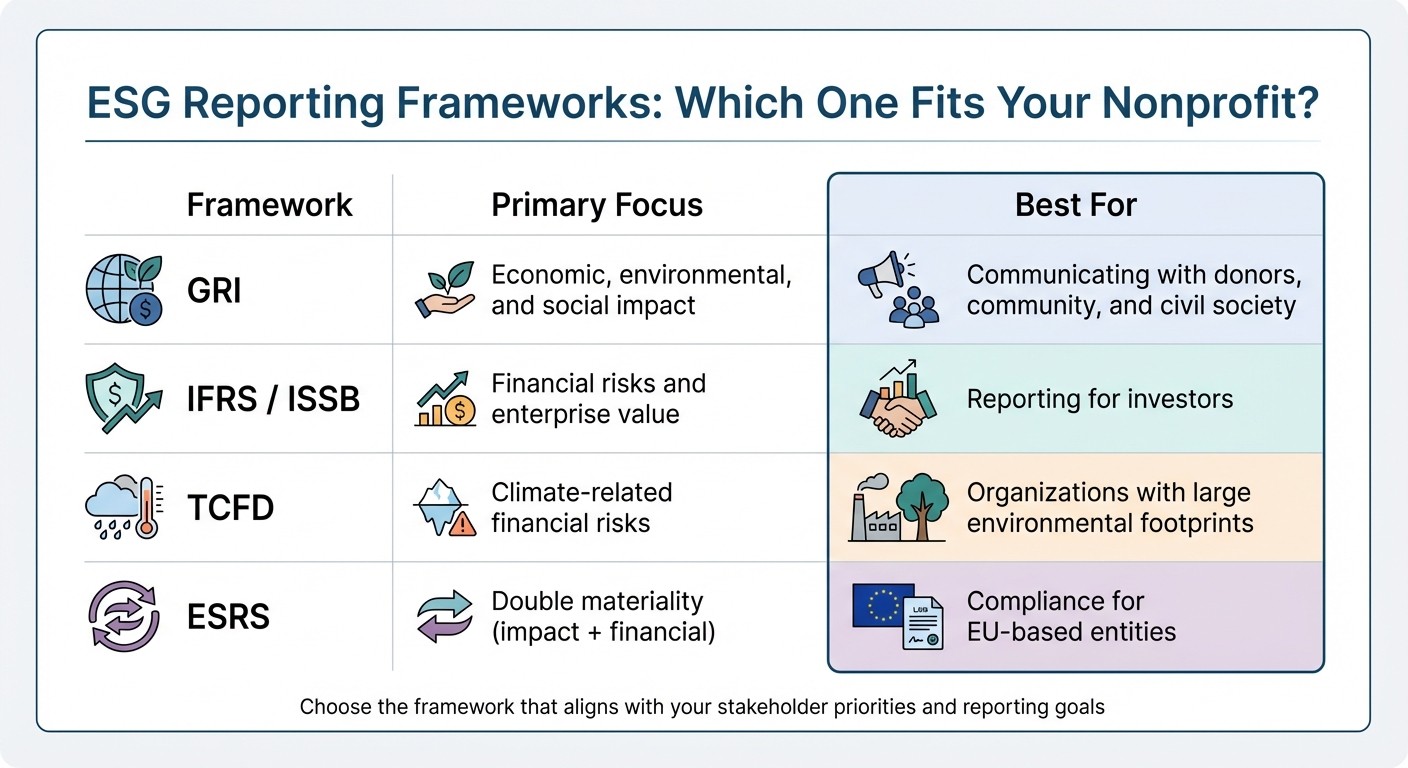
ESG Reporting Frameworks Comparison for Nonprofits
Transforming accurate ESG data into meaningful reports requires a focus on your audience - whether they are donors, constituents, regulators, or team members. Effective reports prioritize six core principles: Accuracy, Balance (highlighting both successes and challenges), Clarity, Comparability, Completeness, and Verifiability [20]. This approach ensures your impact is portrayed fairly, not just through selective highlights.
Using Global Reporting Frameworks
Global frameworks like the GRI (Global Reporting Initiative) and TCFD (Task Force on Climate-related Financial Disclosures) offer standardized methods to make your ESG reports consistent and comparable across industries. For example, the GRI Standards employ a modular structure, combining Universal Standards (GRI 1, 2, and 3) applicable to all organizations with Topic Standards tailored to your specific material impacts [4][17]. As of January 1, 2023, organizations using GRI must adhere to the updated Universal Standards [4][19][17].
Organizations can choose how deeply they engage with these frameworks. Reporting "in accordance with" GRI Standards means meeting all nine requirements, while reporting "with reference to" allows for targeted disclosures - an option particularly useful for smaller nonprofits with limited resources [17]. Additionally, if certain data is confidential or legally restricted, organizations can provide "reasons for omission" for most disclosures [17].
| Framework | Primary Focus | Best For |
| --- | --- | --- |
| <strong>GRI (Global Reporting Initiative)</strong> | Economic, environmental, and social impact | Communicating with donors, community, and civil society |
| <strong>IFRS / ISSB (S1 & S2)</strong> | Financial risks and enterprise value | Reporting for investors |
| <strong>TCFD</strong> | Climate-related financial risks | Organizations with large environmental footprints |
| <strong><a href="https://finance.ec.europa.eu/capital-markets-union-and-financial-markets/company-reporting-and-auditing/company-reporting/corporate-sustainability-reporting_en" target="_blank" rel="nofollow noopener noreferrer" data-framer-link="Link:{"url":"https://finance.ec.europa.eu/capital-markets-union-and-financial-markets/company-reporting-and-auditing/company-reporting/corporate-sustainability-reporting_en","type":"url"}" data-framer-open-in-new-tab="">ESRS</a> (CSRD)</strong> | Double materiality (impact + financial) | Compliance for EU-based entities |
| Framework | Primary Focus | Best For |
| --- | --- | --- |
| <strong>GRI (Global Reporting Initiative)</strong> | Economic, environmental, and social impact | Communicating with donors, community, and civil society |
| <strong>IFRS / ISSB (S1 & S2)</strong> | Financial risks and enterprise value | Reporting for investors |
| <strong>TCFD</strong> | Climate-related financial risks | Organizations with large environmental footprints |
| <strong><a href="https://finance.ec.europa.eu/capital-markets-union-and-financial-markets/company-reporting-and-auditing/company-reporting/corporate-sustainability-reporting_en" target="_blank" rel="nofollow noopener noreferrer" data-framer-link="Link:{"url":"https://finance.ec.europa.eu/capital-markets-union-and-financial-markets/company-reporting-and-auditing/company-reporting/corporate-sustainability-reporting_en","type":"url"}" data-framer-open-in-new-tab="">ESRS</a> (CSRD)</strong> | Double materiality (impact + financial) | Compliance for EU-based entities |These frameworks allow nonprofits to adapt their reporting strategies to fit specific goals, budgets, and missions.
Tailoring Reports to Nonprofit Financial Realities
Nonprofits face unique challenges, operating with limited budgets and a mission-first approach. To make ESG metrics resonate, contextualize your data relative to your scale or budget. Instead of simply stating, "served 500 students", you might say: "served 500 students with a program budget of $250,000, reaching 83% of eligible students in the district." This added context makes your impact more relatable and measurable.
Focus on the most critical metrics that align with your mission and theory of change. Avoid overwhelming stakeholders with excessive data points that dilute your message. For objectives that take years to achieve - like systemic policy changes - use interim measures to demonstrate progress. For instance, Upstream USA, a nonprofit improving contraceptive care, tracks "practice change" within health centers as a proxy for long-term outcomes. Senior Advisor Kelleen Kaye explains that while increased contraceptive access takes years to measure, reporting on whether a full range of services is offered during visits provides a meaningful indicator of progress [2].
Best Practices for Transparent ESG Communication
Clear data and structured frameworks are just the beginning. Transparent communication is essential to showcase your nonprofit's full impact. This goes beyond sharing successes - it involves candidly addressing challenges and setbacks. A learning agenda that openly discusses obstacles and improvement plans fosters greater trust than a report filled only with achievements [5][2]. Stakeholders value honesty and adaptability.
Engage stakeholders early in the process to define which outcomes matter most. Involving constituents, front-line staff, and donors ensures your report reflects the actual priorities of your community rather than assumptions [2][8]. Present your mission through a "narrative of change" - a clear explanation of how your actions lead to your intended impact [8]. The growing demand for transparency is evident: between 2011 and 2019, the percentage of S&P 500 companies publishing sustainability reports rose from 20% to 90% [18]. This trend underscores the importance of accountability in building stakeholder trust and engagement.
How Council Fire Supports ESG Impact Analysis
Council Fire enhances the ability to analyze and report on ESG (Environmental, Social, and Governance) impacts by offering detailed, actionable services. Their approach emphasizes creating measurable outcomes from sustainability goals, rather than just documenting efforts. By using a systems-based perspective, they help nonprofits develop structured frameworks, engage stakeholders, and gather meaningful data to demonstrate ESG progress.
Custom ESG Impact Analysis Services
Council Fire employs a clear five-step framework: goal setting, issue identification, governance, impact measurement, and communication. This method ensures that ESG reporting is tailored to your organization’s unique challenges, whether it’s working within tight budgets, managing diverse stakeholders, or addressing gaps in data collection.
To prepare organizations for audit-ready ESG reports, Council Fire conducts readiness assessments. These identify weaknesses in areas like governance, materiality, and data collection. They also use double materiality assessments, which evaluate sustainability issues from two perspectives: how your organization impacts people and the environment (impact materiality) and how sustainability risks affect your financial health (financial materiality). This dual lens provides a comprehensive view of both risks and opportunities, laying the groundwork for long-term ESG success.
Planning for Long-Term ESG Success
Achieving lasting ESG success involves aligning sustainability goals with your mission and stakeholder priorities. Council Fire assists nonprofits in moving beyond compliance to a more strategic integration of ESG principles. They guide organizations in adopting sustainability management software and integrated reporting platforms that support frameworks like GRI, SASB, TCFD, and CSRD. Additionally, they help map stakeholders on an "Interest vs. Influence" grid, ensuring communication strategies are tailored to each group’s needs.
This personalized approach ensures that financial metrics are presented clearly for investors, while community members receive compelling, narrative-driven updates. Council Fire also emphasizes the shift from static PDF reports to interactive digital reporting. These "living documents" include clickable data points, embedded videos, and real-time updates, making ESG reports more engaging and accessible for all stakeholders.
Stakeholder Engagement and Collaboration Tools
Transparent reporting is only effective when it reflects genuine community impact. Council Fire’s methods for stakeholder engagement - such as interviews, surveys, and workshops - ensure that ESG metrics align with real community needs. This collaborative process involves input from constituents, staff, donors, and partners to determine which outcomes should be measured and how progress should be communicated.
To build credibility, Council Fire establishes data quality controls that ensure ESG reporting is accurate, complete, and timely. By embedding these practices, they help nonprofits create reliable systems that not only meet reporting standards but also resonate with stakeholders. Through this approach, Council Fire equips organizations to deliver ESG reports that are both impactful and trustworthy.
Overcoming Common ESG Reporting Challenges
Nonprofits striving for transparent ESG reporting often encounter significant hurdles, even with robust frameworks and data collection strategies in place. Two major challenges stand out: bridging data gaps in broader impact areas and producing reports that withstand external scrutiny. Tackling these issues is essential for building trust and credibility.
Addressing Scope 3 Data Gaps
Scope 3 emissions encompass not just supply chain emissions but also the wider impacts of programs, partnerships, and purchased goods. However, tracking this data is particularly tricky because it often lies outside a nonprofit’s direct control, scattered across vendors, partner organizations, and community networks. Many nonprofits face difficulties due to missing invoices, supplier-specific reports, or detailed records from their value chain.
A practical starting point is conducting a materiality assessment to pinpoint the most relevant Scope 3 categories for your organization [23]. Instead of attempting to measure everything, focus on areas with the most significant risks or impacts. When primary vendor data isn’t accessible, the spend-based method can be a useful alternative - this approach uses purchase values combined with industry-average emission factors [23].
For initial estimates, free tools like the Scope 3 Evaluator can be invaluable. This web-based resource provides rough calculations to help organizations identify where to concentrate their efforts [22].
"Our Scope 3 inventory results are the backbone that informed our future footprint work."
Dan Pettit, Associate Director of Sustainability for Research Development & Quality at Kraft Foods [22].
Once priority areas are identified, nonprofits can work directly with suppliers to close data gaps. This includes requesting Environmental Product Declarations (EPDs) or Life Cycle Assessments (LCAs) through procurement contracts. Providing training to partners can also improve their data collection practices, creating a stronger foundation for Scope 3 reporting [23].
With these steps in place, the focus shifts to ensuring the credibility of ESG reports through robust verification methods.
Preparing for Third-Party Verification
Third-party verification transforms ESG reports into disclosures that carry significant weight with funders, regulators, and the public. Moving from "limited assurance" (confirming no evidence of inaccuracies) to "reasonable assurance" (positive confirmation of accuracy) is becoming a global expectation [21]. For nonprofits, this means building strong internal controls from the moment data is collected to the final stages of disclosure.
Consistency is key. Standardize methodologies across your reporting processes, document any assumptions thoroughly - especially limitations of chosen methods - and conduct internal audits to uncover weaknesses in governance or data quality before seeking external assurance [24].
"Working with an independent auditor adds credibility, strengthens trust and helps meet rising expectations from investors and regulators, even as skepticism around sustainability reporting persists."
Initially, prioritize verification for core metrics like Scope 1 and 2 emissions, where data is more accessible and verification is more straightforward [21]. As systems mature, extend verification efforts to more complex areas. It's worth noting that 33% of CEOs globally report that climate-focused investments made in the last five years have boosted revenue from products and services [21]. This highlights that rigorous, verified ESG reporting is not just about compliance - it opens doors to new opportunities for growth and meaningful impact.
Key Takeaways for ESG Measurement and Reporting
To make ESG measurement truly impactful, it must align with the core outcomes of your mission. Start by grounding your metrics in your organization's Theory of Change and Intended Impact. Instead of focusing solely on meeting external requirements, ask, "Are we achieving the change we set out to create?" This shift from merely "proving" results to actively "learning" transforms ESG reporting into a strategic tool for ongoing improvement [1][2]. This mindset forms the foundation for all effective ESG reporting efforts.
Concentrate on the "vital few" metrics that directly connect to your mission and address the strategic decisions you can't currently make due to missing data [1][2]. Experts emphasize that narrowing your focus to a small set of meaningful metrics helps maintain clarity and avoids diluting your mission. For long-term goals, such as systemic change, track short-term outputs and interim behavioral shifts that research shows contribute to those larger outcomes [2]. Frameworks like the DeCAL methodology (Define, Collect, Analyze, Leverage) provide a structured yet adaptable approach to measurement [3].
A well-rounded approach combines quantitative data (e.g., the number of participants in a program) with qualitative insights, such as personal stories that illustrate the program's impact [1]. To ensure equity, disaggregate data by race, gender, and location, which can reveal disparities and provide a clearer understanding of who benefits most - or least - from your efforts [1][2]. By focusing on these priorities, you avoid data overload while preserving insights that truly reflect meaningful impact.
FAQs
How do we choose ESG metrics that actually reflect our mission?
To select the right ESG metrics, start by aligning them with your organization's specific goals and areas of impact. Prioritize indicators that genuinely represent performance and measure the outcomes you're striving to achieve. It's also essential to involve stakeholders in the process to ensure the metrics resonate with their concerns and experiences. By using your theory of change, you can pinpoint indicators that not only track progress effectively but also deliver actionable insights to support ongoing improvements.
What’s the simplest way to start tracking emissions (Scope 1–3)?
To start tracking emissions across Scope 1, Scope 2, and Scope 3, the EPA’s Simplified GHG Emissions Calculator is a great tool for beginners. This free resource simplifies the process for organizations just beginning their greenhouse gas management efforts. The process involves a few straightforward steps:
Define your organizational boundaries: Determine which parts of your operations you'll include in the emissions assessment.
Identify emission sources: This might include stationary combustion, mobile sources, or refrigeration systems.
Collect activity data: Gather relevant data, such as fuel usage or energy consumption, from these sources.
Input the data into the calculator: The tool will help you estimate emissions across all scopes.
This method offers an accessible way to begin measuring and understanding your organization’s emissions.
How can we make ESG reports credible without a big budget?
To produce trustworthy ESG reports without overspending, prioritize honesty, focused metrics, and accurate data collection. Stick to established reporting frameworks and take advantage of free or affordable tools to simplify the process. Well-organized reports that openly share both achievements and obstacles foster credibility. Enhance your message with visuals and clear, concise storytelling to convey impact effectively while keeping costs low.
Related Blog Posts
Latest Articles
©2025



FAQ
01
What does it really mean to “redefine profit”?
02
What makes Council Fire different?
03
Who does Council Fire you work with?
04
What does working with Council Fire actually look like?
05
How does Council Fire help organizations turn big goals into action?
06
How does Council Fire define and measure success?
Feb 23, 2026
How to Measure and Report ESG Impact Effectively for NGOs & Nonprofits
ESG Strategy
In This Article
Guide for nonprofits to select mission-aligned ESG metrics, centralize data, and create transparent, verifiable impact reports for donors and stakeholders.
How to Measure and Report ESG Impact Effectively for NGOs & Nonprofits
Proving your nonprofit's impact is just as important as achieving it. Measuring and reporting ESG (Environmental, Social, and Governance) outcomes helps nonprofits show donors, boards, and communities that their contributions matter. With 70% of U.S. consumers favoring transparency and nonprofits that share measurable results being 30% more likely to secure repeat support, ESG reporting isn’t optional - it’s essential.
Key Takeaways:
Focus on 3–5 core outcome metrics aligned with your mission.
Engage stakeholders, including beneficiaries, in defining metrics.
Use frameworks like the GHG Protocol for tracking emissions or GRI for reporting standards.
Prioritize transparency by sharing both successes and challenges.
Centralize data to reduce inefficiencies and improve accuracy.
Benefits of ESG Reporting:
Builds trust with donors and partners.
Improves decision-making and resource allocation.
Demonstrates mission alignment and long-term impact.
Demystifying ESG for Nonprofits
Selecting the Right ESG Metrics for Your Nonprofit
Choosing the right ESG (Environmental, Social, and Governance) metrics is about aligning them with your nonprofit's mission and addressing key questions about your impact. Before diving into metrics, consider this: What decisions can't we make because we lack the right data? Kelleen Kaye, Senior Advisor for Research Strategy at Upstream USA, emphasizes that measurement should be seen as a strategic tool, not just a reporting requirement [2].
The idea of "less is more" is critical. Laura Mills, Senior Director of Quality and Evaluation at A Place Called Home, explains it well: "If everything is important, nothing is important" [2]. Most nonprofits benefit from focusing on 3–5 core outcome metrics that directly tie to their mission and are actionable. Engaging your community in defining these metrics ensures they are both relevant and impactful.
Stakeholder involvement is crucial when selecting metrics. The most meaningful indicators often come from conversations with those you serve, along with front-line staff and community members - not just board members or funders. Always break down your data by race, gender, and geography to understand who benefits from your programs and who might be left out [1]. Once you’ve identified core metrics, consider how they fit into environmental, social, and governance categories.
Environmental Metrics for Nonprofits
Environmental metrics help track your nonprofit’s resource use and overall footprint. Common measures include energy consumption (in kilowatt-hours or therms), greenhouse gas emissions (across three scopes), waste reduction (tons diverted from landfills), and water usage (gallons consumed).
Scope 1: Direct emissions, like those from vehicles.
Scope 2: Emissions from purchased energy.
Scope 3: Indirect emissions, such as those from commuting or supply chains.
For smaller nonprofits, starting with Scope 1 and 2 emissions provides a manageable way to establish a baseline. This might involve tracking energy bills, calculating energy efficiency per square foot, or monitoring waste diversion rates. Nonprofits focused on environmental issues - like conservation or climate justice - can use these metrics to align operations with their mission.
Social Metrics: Measuring Community and Stakeholder Impact
Social metrics capture the human outcomes of your work. These can include both quantitative data - like the number of participants, program completion rates, or demographic reach - and qualitative insights, such as testimonials, behavioral changes, or shifts in community attitudes [1].
Take the example of KPMG UK’s partnership with Key4Life, an organization supporting ex-offenders. Instead of just counting participants, they measured outcomes like reoffending rates and employment success. The results were striking: participants had a 14% reoffending rate compared to the national average of 65%, and over 70% secured jobs, with some advancing to senior positions in technology and consulting [7]. When tracking social impact, interim measures - like shifts in knowledge or the formation of partnerships - can provide early signs of progress toward long-term goals [2].
Governance Metrics: Transparency and Accountability
Governance metrics highlight how your nonprofit makes decisions, manages resources, and stays accountable. Key indicators include board diversity (representation by race, gender, age, and professional background), financial transparency (e.g., public access to Form 990 and audited statements), ethical practices (such as conflict of interest policies), and participatory governance (the involvement of community members in decision-making) [8].
Strong governance metrics enhance trust with donors and partners. Track metrics like the percentage of surplus reinvested into your mission, the frequency of board meetings and attendance rates, and the diversity of voices in strategic planning. For nonprofits prioritizing equity, it’s essential that board composition reflects those values. These governance measures create a foundation for transparent reporting and reinforce your commitment to mission-driven work.
Building Data Collection Frameworks for ESG Measurement
To effectively measure and report on ESG (Environmental, Social, and Governance) efforts, it's essential to identify the metrics that matter most and establish a reliable framework for collecting accurate and consistent data. This framework should begin with your theory of change - a structured plan that connects your resources (inputs) to your ultimate impact. By mapping out how activities lead to outputs, outcomes, and measurable impact, you can pinpoint which data points are essential and which can be set aside [12][2].
"We need to formulate the questions first. What is it we want to learn? What can we learn? These aren't just measurement questions, they're strategy and organization questions." - Kelleen Kaye, Senior Advisor for Research Strategy, Upstream USA [2]
Define your reporting boundaries clearly. This involves determining which offices, facilities, and activities fall within your scope. For example, the World Resources Institute (WRI) considers offices "material" for their reporting if they exceed 1,000 square feet or house more than 10 staff members [11]. Similarly, operational boundaries should specify which emission scopes and activities to track. Some organizations exclude minor vendor payments that contribute less than 0.0001% to their total greenhouse gas (GHG) inventory, as these have negligible impact [11]. Once these boundaries are established, you can move on to practical tools and methods.
Using the GHG Protocol for Environmental Data
The GHG Protocol Corporate Standard offers a structured approach to tracking emissions across Scope 1, Scope 2, and Scope 3 categories. Between 2010 and 2021, WRI implemented a comprehensive GHG inventory using this framework, setting 2019 as their base year for 2030 reduction targets. Their system accounts for:
Scope 1 emissions: Direct emissions, such as those from diesel generators.
Scope 2 emissions: Indirect emissions from purchased electricity, calculated using both location-based and market-based methods.
Scope 3 emissions: Indirect emissions from activities like business travel, employee commuting, and investments.
For multi-tenant buildings, WRI allocates emissions based on an occupancy ratio tied to square footage [11]. The protocol also provides guidance on when to recalculate baselines. For instance, WRI deems a change significant if it alters the inventory by more than 5% [11]. This standardized methodology ensures consistent, year-over-year data and aligns with international reporting standards.
Centralizing ESG Data for Better Management
Disorganized data systems can drain resources, with nonprofits often spending 60% to 80% of their time cleaning data scattered across spreadsheets and disconnected tools. This leaves little time for meaningful analysis [6]. Centralized platforms address this issue by creating a single source of truth where all ESG data is stored in one place.
Modern tools can drastically reduce data cleanup time by ensuring data is "clean at the source." For example, assigning a unique stakeholder ID to every participant at their first interaction eliminates duplicate records and enables long-term tracking across programs and timeframes [6][13]. With a unified system, organizations can connect quantitative metrics (e.g., program completion rates) with qualitative insights (e.g., participant testimonials) to better understand both outcomes and underlying causes [6].
For organizations ready to invest in advanced solutions, platforms like Microsoft Cloud for Sustainability provide an extensive ESG data model with over 400 tables covering areas like carbon, water, waste, and governance [15]. Smaller nonprofits can start with simpler tools such as Airtable, which aligns with the Common Impact Data Standard, enabling seamless data sharing across funders and organizations without re-entry [14][16].
Maintaining Data Accuracy and Materiality
Accuracy begins with materiality assessments to identify which ESG metrics are most relevant to your mission and stakeholders. Focus on collecting only the most critical data points - those that directly inform decisions or drive improvements [2][9]. If a metric doesn’t lead to actionable insights, it may not be worth the effort to track.
Establish clear data governance protocols to define responsibilities for data collection, validation, and storage [9]. Standardized measurement techniques ensure consistency over time, while third-party verification of key metrics can further enhance credibility. Independent reviews build trust with funders and partners by confirming that reported impacts are both accurate and reliable [10].
Creating Clear and Stakeholder-Aligned ESG Reports
ESG Reporting Frameworks Comparison for Nonprofits
Transforming accurate ESG data into meaningful reports requires a focus on your audience - whether they are donors, constituents, regulators, or team members. Effective reports prioritize six core principles: Accuracy, Balance (highlighting both successes and challenges), Clarity, Comparability, Completeness, and Verifiability [20]. This approach ensures your impact is portrayed fairly, not just through selective highlights.
Using Global Reporting Frameworks
Global frameworks like the GRI (Global Reporting Initiative) and TCFD (Task Force on Climate-related Financial Disclosures) offer standardized methods to make your ESG reports consistent and comparable across industries. For example, the GRI Standards employ a modular structure, combining Universal Standards (GRI 1, 2, and 3) applicable to all organizations with Topic Standards tailored to your specific material impacts [4][17]. As of January 1, 2023, organizations using GRI must adhere to the updated Universal Standards [4][19][17].
Organizations can choose how deeply they engage with these frameworks. Reporting "in accordance with" GRI Standards means meeting all nine requirements, while reporting "with reference to" allows for targeted disclosures - an option particularly useful for smaller nonprofits with limited resources [17]. Additionally, if certain data is confidential or legally restricted, organizations can provide "reasons for omission" for most disclosures [17].
| Framework | Primary Focus | Best For |
| --- | --- | --- |
| <strong>GRI (Global Reporting Initiative)</strong> | Economic, environmental, and social impact | Communicating with donors, community, and civil society |
| <strong>IFRS / ISSB (S1 & S2)</strong> | Financial risks and enterprise value | Reporting for investors |
| <strong>TCFD</strong> | Climate-related financial risks | Organizations with large environmental footprints |
| <strong><a href="https://finance.ec.europa.eu/capital-markets-union-and-financial-markets/company-reporting-and-auditing/company-reporting/corporate-sustainability-reporting_en" target="_blank" rel="nofollow noopener noreferrer" data-framer-link="Link:{"url":"https://finance.ec.europa.eu/capital-markets-union-and-financial-markets/company-reporting-and-auditing/company-reporting/corporate-sustainability-reporting_en","type":"url"}" data-framer-open-in-new-tab="">ESRS</a> (CSRD)</strong> | Double materiality (impact + financial) | Compliance for EU-based entities |
These frameworks allow nonprofits to adapt their reporting strategies to fit specific goals, budgets, and missions.
Tailoring Reports to Nonprofit Financial Realities
Nonprofits face unique challenges, operating with limited budgets and a mission-first approach. To make ESG metrics resonate, contextualize your data relative to your scale or budget. Instead of simply stating, "served 500 students", you might say: "served 500 students with a program budget of $250,000, reaching 83% of eligible students in the district." This added context makes your impact more relatable and measurable.
Focus on the most critical metrics that align with your mission and theory of change. Avoid overwhelming stakeholders with excessive data points that dilute your message. For objectives that take years to achieve - like systemic policy changes - use interim measures to demonstrate progress. For instance, Upstream USA, a nonprofit improving contraceptive care, tracks "practice change" within health centers as a proxy for long-term outcomes. Senior Advisor Kelleen Kaye explains that while increased contraceptive access takes years to measure, reporting on whether a full range of services is offered during visits provides a meaningful indicator of progress [2].
Best Practices for Transparent ESG Communication
Clear data and structured frameworks are just the beginning. Transparent communication is essential to showcase your nonprofit's full impact. This goes beyond sharing successes - it involves candidly addressing challenges and setbacks. A learning agenda that openly discusses obstacles and improvement plans fosters greater trust than a report filled only with achievements [5][2]. Stakeholders value honesty and adaptability.
Engage stakeholders early in the process to define which outcomes matter most. Involving constituents, front-line staff, and donors ensures your report reflects the actual priorities of your community rather than assumptions [2][8]. Present your mission through a "narrative of change" - a clear explanation of how your actions lead to your intended impact [8]. The growing demand for transparency is evident: between 2011 and 2019, the percentage of S&P 500 companies publishing sustainability reports rose from 20% to 90% [18]. This trend underscores the importance of accountability in building stakeholder trust and engagement.
How Council Fire Supports ESG Impact Analysis
Council Fire enhances the ability to analyze and report on ESG (Environmental, Social, and Governance) impacts by offering detailed, actionable services. Their approach emphasizes creating measurable outcomes from sustainability goals, rather than just documenting efforts. By using a systems-based perspective, they help nonprofits develop structured frameworks, engage stakeholders, and gather meaningful data to demonstrate ESG progress.
Custom ESG Impact Analysis Services
Council Fire employs a clear five-step framework: goal setting, issue identification, governance, impact measurement, and communication. This method ensures that ESG reporting is tailored to your organization’s unique challenges, whether it’s working within tight budgets, managing diverse stakeholders, or addressing gaps in data collection.
To prepare organizations for audit-ready ESG reports, Council Fire conducts readiness assessments. These identify weaknesses in areas like governance, materiality, and data collection. They also use double materiality assessments, which evaluate sustainability issues from two perspectives: how your organization impacts people and the environment (impact materiality) and how sustainability risks affect your financial health (financial materiality). This dual lens provides a comprehensive view of both risks and opportunities, laying the groundwork for long-term ESG success.
Planning for Long-Term ESG Success
Achieving lasting ESG success involves aligning sustainability goals with your mission and stakeholder priorities. Council Fire assists nonprofits in moving beyond compliance to a more strategic integration of ESG principles. They guide organizations in adopting sustainability management software and integrated reporting platforms that support frameworks like GRI, SASB, TCFD, and CSRD. Additionally, they help map stakeholders on an "Interest vs. Influence" grid, ensuring communication strategies are tailored to each group’s needs.
This personalized approach ensures that financial metrics are presented clearly for investors, while community members receive compelling, narrative-driven updates. Council Fire also emphasizes the shift from static PDF reports to interactive digital reporting. These "living documents" include clickable data points, embedded videos, and real-time updates, making ESG reports more engaging and accessible for all stakeholders.
Stakeholder Engagement and Collaboration Tools
Transparent reporting is only effective when it reflects genuine community impact. Council Fire’s methods for stakeholder engagement - such as interviews, surveys, and workshops - ensure that ESG metrics align with real community needs. This collaborative process involves input from constituents, staff, donors, and partners to determine which outcomes should be measured and how progress should be communicated.
To build credibility, Council Fire establishes data quality controls that ensure ESG reporting is accurate, complete, and timely. By embedding these practices, they help nonprofits create reliable systems that not only meet reporting standards but also resonate with stakeholders. Through this approach, Council Fire equips organizations to deliver ESG reports that are both impactful and trustworthy.
Overcoming Common ESG Reporting Challenges
Nonprofits striving for transparent ESG reporting often encounter significant hurdles, even with robust frameworks and data collection strategies in place. Two major challenges stand out: bridging data gaps in broader impact areas and producing reports that withstand external scrutiny. Tackling these issues is essential for building trust and credibility.
Addressing Scope 3 Data Gaps
Scope 3 emissions encompass not just supply chain emissions but also the wider impacts of programs, partnerships, and purchased goods. However, tracking this data is particularly tricky because it often lies outside a nonprofit’s direct control, scattered across vendors, partner organizations, and community networks. Many nonprofits face difficulties due to missing invoices, supplier-specific reports, or detailed records from their value chain.
A practical starting point is conducting a materiality assessment to pinpoint the most relevant Scope 3 categories for your organization [23]. Instead of attempting to measure everything, focus on areas with the most significant risks or impacts. When primary vendor data isn’t accessible, the spend-based method can be a useful alternative - this approach uses purchase values combined with industry-average emission factors [23].
For initial estimates, free tools like the Scope 3 Evaluator can be invaluable. This web-based resource provides rough calculations to help organizations identify where to concentrate their efforts [22].
"Our Scope 3 inventory results are the backbone that informed our future footprint work."
Dan Pettit, Associate Director of Sustainability for Research Development & Quality at Kraft Foods [22].
Once priority areas are identified, nonprofits can work directly with suppliers to close data gaps. This includes requesting Environmental Product Declarations (EPDs) or Life Cycle Assessments (LCAs) through procurement contracts. Providing training to partners can also improve their data collection practices, creating a stronger foundation for Scope 3 reporting [23].
With these steps in place, the focus shifts to ensuring the credibility of ESG reports through robust verification methods.
Preparing for Third-Party Verification
Third-party verification transforms ESG reports into disclosures that carry significant weight with funders, regulators, and the public. Moving from "limited assurance" (confirming no evidence of inaccuracies) to "reasonable assurance" (positive confirmation of accuracy) is becoming a global expectation [21]. For nonprofits, this means building strong internal controls from the moment data is collected to the final stages of disclosure.
Consistency is key. Standardize methodologies across your reporting processes, document any assumptions thoroughly - especially limitations of chosen methods - and conduct internal audits to uncover weaknesses in governance or data quality before seeking external assurance [24].
"Working with an independent auditor adds credibility, strengthens trust and helps meet rising expectations from investors and regulators, even as skepticism around sustainability reporting persists."
Initially, prioritize verification for core metrics like Scope 1 and 2 emissions, where data is more accessible and verification is more straightforward [21]. As systems mature, extend verification efforts to more complex areas. It's worth noting that 33% of CEOs globally report that climate-focused investments made in the last five years have boosted revenue from products and services [21]. This highlights that rigorous, verified ESG reporting is not just about compliance - it opens doors to new opportunities for growth and meaningful impact.
Key Takeaways for ESG Measurement and Reporting
To make ESG measurement truly impactful, it must align with the core outcomes of your mission. Start by grounding your metrics in your organization's Theory of Change and Intended Impact. Instead of focusing solely on meeting external requirements, ask, "Are we achieving the change we set out to create?" This shift from merely "proving" results to actively "learning" transforms ESG reporting into a strategic tool for ongoing improvement [1][2]. This mindset forms the foundation for all effective ESG reporting efforts.
Concentrate on the "vital few" metrics that directly connect to your mission and address the strategic decisions you can't currently make due to missing data [1][2]. Experts emphasize that narrowing your focus to a small set of meaningful metrics helps maintain clarity and avoids diluting your mission. For long-term goals, such as systemic change, track short-term outputs and interim behavioral shifts that research shows contribute to those larger outcomes [2]. Frameworks like the DeCAL methodology (Define, Collect, Analyze, Leverage) provide a structured yet adaptable approach to measurement [3].
A well-rounded approach combines quantitative data (e.g., the number of participants in a program) with qualitative insights, such as personal stories that illustrate the program's impact [1]. To ensure equity, disaggregate data by race, gender, and location, which can reveal disparities and provide a clearer understanding of who benefits most - or least - from your efforts [1][2]. By focusing on these priorities, you avoid data overload while preserving insights that truly reflect meaningful impact.
FAQs
How do we choose ESG metrics that actually reflect our mission?
To select the right ESG metrics, start by aligning them with your organization's specific goals and areas of impact. Prioritize indicators that genuinely represent performance and measure the outcomes you're striving to achieve. It's also essential to involve stakeholders in the process to ensure the metrics resonate with their concerns and experiences. By using your theory of change, you can pinpoint indicators that not only track progress effectively but also deliver actionable insights to support ongoing improvements.
What’s the simplest way to start tracking emissions (Scope 1–3)?
To start tracking emissions across Scope 1, Scope 2, and Scope 3, the EPA’s Simplified GHG Emissions Calculator is a great tool for beginners. This free resource simplifies the process for organizations just beginning their greenhouse gas management efforts. The process involves a few straightforward steps:
Define your organizational boundaries: Determine which parts of your operations you'll include in the emissions assessment.
Identify emission sources: This might include stationary combustion, mobile sources, or refrigeration systems.
Collect activity data: Gather relevant data, such as fuel usage or energy consumption, from these sources.
Input the data into the calculator: The tool will help you estimate emissions across all scopes.
This method offers an accessible way to begin measuring and understanding your organization’s emissions.
How can we make ESG reports credible without a big budget?
To produce trustworthy ESG reports without overspending, prioritize honesty, focused metrics, and accurate data collection. Stick to established reporting frameworks and take advantage of free or affordable tools to simplify the process. Well-organized reports that openly share both achievements and obstacles foster credibility. Enhance your message with visuals and clear, concise storytelling to convey impact effectively while keeping costs low.
Related Blog Posts
FAQ
01
What does it really mean to “redefine profit”?
02
What makes Council Fire different?
03
Who does Council Fire you work with?
04
What does working with Council Fire actually look like?
05
How does Council Fire help organizations turn big goals into action?
06
How does Council Fire define and measure success?
Feb 23, 2026
How to Measure and Report ESG Impact Effectively for NGOs & Nonprofits
ESG Strategy
In This Article
Guide for nonprofits to select mission-aligned ESG metrics, centralize data, and create transparent, verifiable impact reports for donors and stakeholders.
How to Measure and Report ESG Impact Effectively for NGOs & Nonprofits
Proving your nonprofit's impact is just as important as achieving it. Measuring and reporting ESG (Environmental, Social, and Governance) outcomes helps nonprofits show donors, boards, and communities that their contributions matter. With 70% of U.S. consumers favoring transparency and nonprofits that share measurable results being 30% more likely to secure repeat support, ESG reporting isn’t optional - it’s essential.
Key Takeaways:
Focus on 3–5 core outcome metrics aligned with your mission.
Engage stakeholders, including beneficiaries, in defining metrics.
Use frameworks like the GHG Protocol for tracking emissions or GRI for reporting standards.
Prioritize transparency by sharing both successes and challenges.
Centralize data to reduce inefficiencies and improve accuracy.
Benefits of ESG Reporting:
Builds trust with donors and partners.
Improves decision-making and resource allocation.
Demonstrates mission alignment and long-term impact.
Demystifying ESG for Nonprofits
Selecting the Right ESG Metrics for Your Nonprofit
Choosing the right ESG (Environmental, Social, and Governance) metrics is about aligning them with your nonprofit's mission and addressing key questions about your impact. Before diving into metrics, consider this: What decisions can't we make because we lack the right data? Kelleen Kaye, Senior Advisor for Research Strategy at Upstream USA, emphasizes that measurement should be seen as a strategic tool, not just a reporting requirement [2].
The idea of "less is more" is critical. Laura Mills, Senior Director of Quality and Evaluation at A Place Called Home, explains it well: "If everything is important, nothing is important" [2]. Most nonprofits benefit from focusing on 3–5 core outcome metrics that directly tie to their mission and are actionable. Engaging your community in defining these metrics ensures they are both relevant and impactful.
Stakeholder involvement is crucial when selecting metrics. The most meaningful indicators often come from conversations with those you serve, along with front-line staff and community members - not just board members or funders. Always break down your data by race, gender, and geography to understand who benefits from your programs and who might be left out [1]. Once you’ve identified core metrics, consider how they fit into environmental, social, and governance categories.
Environmental Metrics for Nonprofits
Environmental metrics help track your nonprofit’s resource use and overall footprint. Common measures include energy consumption (in kilowatt-hours or therms), greenhouse gas emissions (across three scopes), waste reduction (tons diverted from landfills), and water usage (gallons consumed).
Scope 1: Direct emissions, like those from vehicles.
Scope 2: Emissions from purchased energy.
Scope 3: Indirect emissions, such as those from commuting or supply chains.
For smaller nonprofits, starting with Scope 1 and 2 emissions provides a manageable way to establish a baseline. This might involve tracking energy bills, calculating energy efficiency per square foot, or monitoring waste diversion rates. Nonprofits focused on environmental issues - like conservation or climate justice - can use these metrics to align operations with their mission.
Social Metrics: Measuring Community and Stakeholder Impact
Social metrics capture the human outcomes of your work. These can include both quantitative data - like the number of participants, program completion rates, or demographic reach - and qualitative insights, such as testimonials, behavioral changes, or shifts in community attitudes [1].
Take the example of KPMG UK’s partnership with Key4Life, an organization supporting ex-offenders. Instead of just counting participants, they measured outcomes like reoffending rates and employment success. The results were striking: participants had a 14% reoffending rate compared to the national average of 65%, and over 70% secured jobs, with some advancing to senior positions in technology and consulting [7]. When tracking social impact, interim measures - like shifts in knowledge or the formation of partnerships - can provide early signs of progress toward long-term goals [2].
Governance Metrics: Transparency and Accountability
Governance metrics highlight how your nonprofit makes decisions, manages resources, and stays accountable. Key indicators include board diversity (representation by race, gender, age, and professional background), financial transparency (e.g., public access to Form 990 and audited statements), ethical practices (such as conflict of interest policies), and participatory governance (the involvement of community members in decision-making) [8].
Strong governance metrics enhance trust with donors and partners. Track metrics like the percentage of surplus reinvested into your mission, the frequency of board meetings and attendance rates, and the diversity of voices in strategic planning. For nonprofits prioritizing equity, it’s essential that board composition reflects those values. These governance measures create a foundation for transparent reporting and reinforce your commitment to mission-driven work.
Building Data Collection Frameworks for ESG Measurement
To effectively measure and report on ESG (Environmental, Social, and Governance) efforts, it's essential to identify the metrics that matter most and establish a reliable framework for collecting accurate and consistent data. This framework should begin with your theory of change - a structured plan that connects your resources (inputs) to your ultimate impact. By mapping out how activities lead to outputs, outcomes, and measurable impact, you can pinpoint which data points are essential and which can be set aside [12][2].
"We need to formulate the questions first. What is it we want to learn? What can we learn? These aren't just measurement questions, they're strategy and organization questions." - Kelleen Kaye, Senior Advisor for Research Strategy, Upstream USA [2]
Define your reporting boundaries clearly. This involves determining which offices, facilities, and activities fall within your scope. For example, the World Resources Institute (WRI) considers offices "material" for their reporting if they exceed 1,000 square feet or house more than 10 staff members [11]. Similarly, operational boundaries should specify which emission scopes and activities to track. Some organizations exclude minor vendor payments that contribute less than 0.0001% to their total greenhouse gas (GHG) inventory, as these have negligible impact [11]. Once these boundaries are established, you can move on to practical tools and methods.
Using the GHG Protocol for Environmental Data
The GHG Protocol Corporate Standard offers a structured approach to tracking emissions across Scope 1, Scope 2, and Scope 3 categories. Between 2010 and 2021, WRI implemented a comprehensive GHG inventory using this framework, setting 2019 as their base year for 2030 reduction targets. Their system accounts for:
Scope 1 emissions: Direct emissions, such as those from diesel generators.
Scope 2 emissions: Indirect emissions from purchased electricity, calculated using both location-based and market-based methods.
Scope 3 emissions: Indirect emissions from activities like business travel, employee commuting, and investments.
For multi-tenant buildings, WRI allocates emissions based on an occupancy ratio tied to square footage [11]. The protocol also provides guidance on when to recalculate baselines. For instance, WRI deems a change significant if it alters the inventory by more than 5% [11]. This standardized methodology ensures consistent, year-over-year data and aligns with international reporting standards.
Centralizing ESG Data for Better Management
Disorganized data systems can drain resources, with nonprofits often spending 60% to 80% of their time cleaning data scattered across spreadsheets and disconnected tools. This leaves little time for meaningful analysis [6]. Centralized platforms address this issue by creating a single source of truth where all ESG data is stored in one place.
Modern tools can drastically reduce data cleanup time by ensuring data is "clean at the source." For example, assigning a unique stakeholder ID to every participant at their first interaction eliminates duplicate records and enables long-term tracking across programs and timeframes [6][13]. With a unified system, organizations can connect quantitative metrics (e.g., program completion rates) with qualitative insights (e.g., participant testimonials) to better understand both outcomes and underlying causes [6].
For organizations ready to invest in advanced solutions, platforms like Microsoft Cloud for Sustainability provide an extensive ESG data model with over 400 tables covering areas like carbon, water, waste, and governance [15]. Smaller nonprofits can start with simpler tools such as Airtable, which aligns with the Common Impact Data Standard, enabling seamless data sharing across funders and organizations without re-entry [14][16].
Maintaining Data Accuracy and Materiality
Accuracy begins with materiality assessments to identify which ESG metrics are most relevant to your mission and stakeholders. Focus on collecting only the most critical data points - those that directly inform decisions or drive improvements [2][9]. If a metric doesn’t lead to actionable insights, it may not be worth the effort to track.
Establish clear data governance protocols to define responsibilities for data collection, validation, and storage [9]. Standardized measurement techniques ensure consistency over time, while third-party verification of key metrics can further enhance credibility. Independent reviews build trust with funders and partners by confirming that reported impacts are both accurate and reliable [10].
Creating Clear and Stakeholder-Aligned ESG Reports
ESG Reporting Frameworks Comparison for Nonprofits
Transforming accurate ESG data into meaningful reports requires a focus on your audience - whether they are donors, constituents, regulators, or team members. Effective reports prioritize six core principles: Accuracy, Balance (highlighting both successes and challenges), Clarity, Comparability, Completeness, and Verifiability [20]. This approach ensures your impact is portrayed fairly, not just through selective highlights.
Using Global Reporting Frameworks
Global frameworks like the GRI (Global Reporting Initiative) and TCFD (Task Force on Climate-related Financial Disclosures) offer standardized methods to make your ESG reports consistent and comparable across industries. For example, the GRI Standards employ a modular structure, combining Universal Standards (GRI 1, 2, and 3) applicable to all organizations with Topic Standards tailored to your specific material impacts [4][17]. As of January 1, 2023, organizations using GRI must adhere to the updated Universal Standards [4][19][17].
Organizations can choose how deeply they engage with these frameworks. Reporting "in accordance with" GRI Standards means meeting all nine requirements, while reporting "with reference to" allows for targeted disclosures - an option particularly useful for smaller nonprofits with limited resources [17]. Additionally, if certain data is confidential or legally restricted, organizations can provide "reasons for omission" for most disclosures [17].
| Framework | Primary Focus | Best For |
| --- | --- | --- |
| <strong>GRI (Global Reporting Initiative)</strong> | Economic, environmental, and social impact | Communicating with donors, community, and civil society |
| <strong>IFRS / ISSB (S1 & S2)</strong> | Financial risks and enterprise value | Reporting for investors |
| <strong>TCFD</strong> | Climate-related financial risks | Organizations with large environmental footprints |
| <strong><a href="https://finance.ec.europa.eu/capital-markets-union-and-financial-markets/company-reporting-and-auditing/company-reporting/corporate-sustainability-reporting_en" target="_blank" rel="nofollow noopener noreferrer" data-framer-link="Link:{"url":"https://finance.ec.europa.eu/capital-markets-union-and-financial-markets/company-reporting-and-auditing/company-reporting/corporate-sustainability-reporting_en","type":"url"}" data-framer-open-in-new-tab="">ESRS</a> (CSRD)</strong> | Double materiality (impact + financial) | Compliance for EU-based entities |
These frameworks allow nonprofits to adapt their reporting strategies to fit specific goals, budgets, and missions.
Tailoring Reports to Nonprofit Financial Realities
Nonprofits face unique challenges, operating with limited budgets and a mission-first approach. To make ESG metrics resonate, contextualize your data relative to your scale or budget. Instead of simply stating, "served 500 students", you might say: "served 500 students with a program budget of $250,000, reaching 83% of eligible students in the district." This added context makes your impact more relatable and measurable.
Focus on the most critical metrics that align with your mission and theory of change. Avoid overwhelming stakeholders with excessive data points that dilute your message. For objectives that take years to achieve - like systemic policy changes - use interim measures to demonstrate progress. For instance, Upstream USA, a nonprofit improving contraceptive care, tracks "practice change" within health centers as a proxy for long-term outcomes. Senior Advisor Kelleen Kaye explains that while increased contraceptive access takes years to measure, reporting on whether a full range of services is offered during visits provides a meaningful indicator of progress [2].
Best Practices for Transparent ESG Communication
Clear data and structured frameworks are just the beginning. Transparent communication is essential to showcase your nonprofit's full impact. This goes beyond sharing successes - it involves candidly addressing challenges and setbacks. A learning agenda that openly discusses obstacles and improvement plans fosters greater trust than a report filled only with achievements [5][2]. Stakeholders value honesty and adaptability.
Engage stakeholders early in the process to define which outcomes matter most. Involving constituents, front-line staff, and donors ensures your report reflects the actual priorities of your community rather than assumptions [2][8]. Present your mission through a "narrative of change" - a clear explanation of how your actions lead to your intended impact [8]. The growing demand for transparency is evident: between 2011 and 2019, the percentage of S&P 500 companies publishing sustainability reports rose from 20% to 90% [18]. This trend underscores the importance of accountability in building stakeholder trust and engagement.
How Council Fire Supports ESG Impact Analysis
Council Fire enhances the ability to analyze and report on ESG (Environmental, Social, and Governance) impacts by offering detailed, actionable services. Their approach emphasizes creating measurable outcomes from sustainability goals, rather than just documenting efforts. By using a systems-based perspective, they help nonprofits develop structured frameworks, engage stakeholders, and gather meaningful data to demonstrate ESG progress.
Custom ESG Impact Analysis Services
Council Fire employs a clear five-step framework: goal setting, issue identification, governance, impact measurement, and communication. This method ensures that ESG reporting is tailored to your organization’s unique challenges, whether it’s working within tight budgets, managing diverse stakeholders, or addressing gaps in data collection.
To prepare organizations for audit-ready ESG reports, Council Fire conducts readiness assessments. These identify weaknesses in areas like governance, materiality, and data collection. They also use double materiality assessments, which evaluate sustainability issues from two perspectives: how your organization impacts people and the environment (impact materiality) and how sustainability risks affect your financial health (financial materiality). This dual lens provides a comprehensive view of both risks and opportunities, laying the groundwork for long-term ESG success.
Planning for Long-Term ESG Success
Achieving lasting ESG success involves aligning sustainability goals with your mission and stakeholder priorities. Council Fire assists nonprofits in moving beyond compliance to a more strategic integration of ESG principles. They guide organizations in adopting sustainability management software and integrated reporting platforms that support frameworks like GRI, SASB, TCFD, and CSRD. Additionally, they help map stakeholders on an "Interest vs. Influence" grid, ensuring communication strategies are tailored to each group’s needs.
This personalized approach ensures that financial metrics are presented clearly for investors, while community members receive compelling, narrative-driven updates. Council Fire also emphasizes the shift from static PDF reports to interactive digital reporting. These "living documents" include clickable data points, embedded videos, and real-time updates, making ESG reports more engaging and accessible for all stakeholders.
Stakeholder Engagement and Collaboration Tools
Transparent reporting is only effective when it reflects genuine community impact. Council Fire’s methods for stakeholder engagement - such as interviews, surveys, and workshops - ensure that ESG metrics align with real community needs. This collaborative process involves input from constituents, staff, donors, and partners to determine which outcomes should be measured and how progress should be communicated.
To build credibility, Council Fire establishes data quality controls that ensure ESG reporting is accurate, complete, and timely. By embedding these practices, they help nonprofits create reliable systems that not only meet reporting standards but also resonate with stakeholders. Through this approach, Council Fire equips organizations to deliver ESG reports that are both impactful and trustworthy.
Overcoming Common ESG Reporting Challenges
Nonprofits striving for transparent ESG reporting often encounter significant hurdles, even with robust frameworks and data collection strategies in place. Two major challenges stand out: bridging data gaps in broader impact areas and producing reports that withstand external scrutiny. Tackling these issues is essential for building trust and credibility.
Addressing Scope 3 Data Gaps
Scope 3 emissions encompass not just supply chain emissions but also the wider impacts of programs, partnerships, and purchased goods. However, tracking this data is particularly tricky because it often lies outside a nonprofit’s direct control, scattered across vendors, partner organizations, and community networks. Many nonprofits face difficulties due to missing invoices, supplier-specific reports, or detailed records from their value chain.
A practical starting point is conducting a materiality assessment to pinpoint the most relevant Scope 3 categories for your organization [23]. Instead of attempting to measure everything, focus on areas with the most significant risks or impacts. When primary vendor data isn’t accessible, the spend-based method can be a useful alternative - this approach uses purchase values combined with industry-average emission factors [23].
For initial estimates, free tools like the Scope 3 Evaluator can be invaluable. This web-based resource provides rough calculations to help organizations identify where to concentrate their efforts [22].
"Our Scope 3 inventory results are the backbone that informed our future footprint work."
Dan Pettit, Associate Director of Sustainability for Research Development & Quality at Kraft Foods [22].
Once priority areas are identified, nonprofits can work directly with suppliers to close data gaps. This includes requesting Environmental Product Declarations (EPDs) or Life Cycle Assessments (LCAs) through procurement contracts. Providing training to partners can also improve their data collection practices, creating a stronger foundation for Scope 3 reporting [23].
With these steps in place, the focus shifts to ensuring the credibility of ESG reports through robust verification methods.
Preparing for Third-Party Verification
Third-party verification transforms ESG reports into disclosures that carry significant weight with funders, regulators, and the public. Moving from "limited assurance" (confirming no evidence of inaccuracies) to "reasonable assurance" (positive confirmation of accuracy) is becoming a global expectation [21]. For nonprofits, this means building strong internal controls from the moment data is collected to the final stages of disclosure.
Consistency is key. Standardize methodologies across your reporting processes, document any assumptions thoroughly - especially limitations of chosen methods - and conduct internal audits to uncover weaknesses in governance or data quality before seeking external assurance [24].
"Working with an independent auditor adds credibility, strengthens trust and helps meet rising expectations from investors and regulators, even as skepticism around sustainability reporting persists."
Initially, prioritize verification for core metrics like Scope 1 and 2 emissions, where data is more accessible and verification is more straightforward [21]. As systems mature, extend verification efforts to more complex areas. It's worth noting that 33% of CEOs globally report that climate-focused investments made in the last five years have boosted revenue from products and services [21]. This highlights that rigorous, verified ESG reporting is not just about compliance - it opens doors to new opportunities for growth and meaningful impact.
Key Takeaways for ESG Measurement and Reporting
To make ESG measurement truly impactful, it must align with the core outcomes of your mission. Start by grounding your metrics in your organization's Theory of Change and Intended Impact. Instead of focusing solely on meeting external requirements, ask, "Are we achieving the change we set out to create?" This shift from merely "proving" results to actively "learning" transforms ESG reporting into a strategic tool for ongoing improvement [1][2]. This mindset forms the foundation for all effective ESG reporting efforts.
Concentrate on the "vital few" metrics that directly connect to your mission and address the strategic decisions you can't currently make due to missing data [1][2]. Experts emphasize that narrowing your focus to a small set of meaningful metrics helps maintain clarity and avoids diluting your mission. For long-term goals, such as systemic change, track short-term outputs and interim behavioral shifts that research shows contribute to those larger outcomes [2]. Frameworks like the DeCAL methodology (Define, Collect, Analyze, Leverage) provide a structured yet adaptable approach to measurement [3].
A well-rounded approach combines quantitative data (e.g., the number of participants in a program) with qualitative insights, such as personal stories that illustrate the program's impact [1]. To ensure equity, disaggregate data by race, gender, and location, which can reveal disparities and provide a clearer understanding of who benefits most - or least - from your efforts [1][2]. By focusing on these priorities, you avoid data overload while preserving insights that truly reflect meaningful impact.
FAQs
How do we choose ESG metrics that actually reflect our mission?
To select the right ESG metrics, start by aligning them with your organization's specific goals and areas of impact. Prioritize indicators that genuinely represent performance and measure the outcomes you're striving to achieve. It's also essential to involve stakeholders in the process to ensure the metrics resonate with their concerns and experiences. By using your theory of change, you can pinpoint indicators that not only track progress effectively but also deliver actionable insights to support ongoing improvements.
What’s the simplest way to start tracking emissions (Scope 1–3)?
To start tracking emissions across Scope 1, Scope 2, and Scope 3, the EPA’s Simplified GHG Emissions Calculator is a great tool for beginners. This free resource simplifies the process for organizations just beginning their greenhouse gas management efforts. The process involves a few straightforward steps:
Define your organizational boundaries: Determine which parts of your operations you'll include in the emissions assessment.
Identify emission sources: This might include stationary combustion, mobile sources, or refrigeration systems.
Collect activity data: Gather relevant data, such as fuel usage or energy consumption, from these sources.
Input the data into the calculator: The tool will help you estimate emissions across all scopes.
This method offers an accessible way to begin measuring and understanding your organization’s emissions.
How can we make ESG reports credible without a big budget?
To produce trustworthy ESG reports without overspending, prioritize honesty, focused metrics, and accurate data collection. Stick to established reporting frameworks and take advantage of free or affordable tools to simplify the process. Well-organized reports that openly share both achievements and obstacles foster credibility. Enhance your message with visuals and clear, concise storytelling to convey impact effectively while keeping costs low.
Related Blog Posts
FAQ
What does it really mean to “redefine profit”?
What makes Council Fire different?
Who does Council Fire you work with?
What does working with Council Fire actually look like?
How does Council Fire help organizations turn big goals into action?
How does Council Fire define and measure success?