
Feb 22, 2026
How to Measure and Report ESG Impact Effectively for Municipalities & Government Agencies
ESG Strategy
In This Article
How municipalities measure and report ESG: choose frameworks, set core metrics, gather reliable data, engage stakeholders, and align reporting with budgets.
How to Measure and Report ESG Impact Effectively for Municipalities & Government Agencies
Municipalities and government agencies face growing pressure to measure and report their Environmental, Social, and Governance (ESG) impacts transparently. ESG reporting not only helps manage risks like climate hazards but also builds trust with stakeholders, including residents and investors. With the U.S. municipal bond market valued at $4 trillion and climate-related risks increasingly affecting financial stability, effective ESG reporting has become essential. Here's what you need to know:
Choose the Right Framework: Options include GRI for broad societal impacts, SASB for financial materiality, and TCFD for climate-related risks. Public sector-specific standards like IPSASB and tools like the GHG Protocol are also available.
Set Clear Metrics: Focus on measurable data like greenhouse gas emissions, public health indicators, and compliance with regulations. Start with key areas like energy use and transportation before expanding.
Gather Reliable Data: Use internal records (e.g., utility bills, fleet reports) and external sources (e.g., EPA databases) for accuracy. Tools like ICLEI ClearPath and EPA’s GHG Inventory Tool simplify analysis.
Engage Stakeholders: Actively involve residents and underserved groups in planning. Use diverse methods like surveys, town halls, and digital tools to ensure inclusive participation.
Integrate Reporting into Operations: Align ESG reporting with financial cycles and embed sustainability data into annual reports for better decision-making and transparency.
Monitoring and reporting ESG data in the public sector
Choosing the Right ESG Reporting Framework
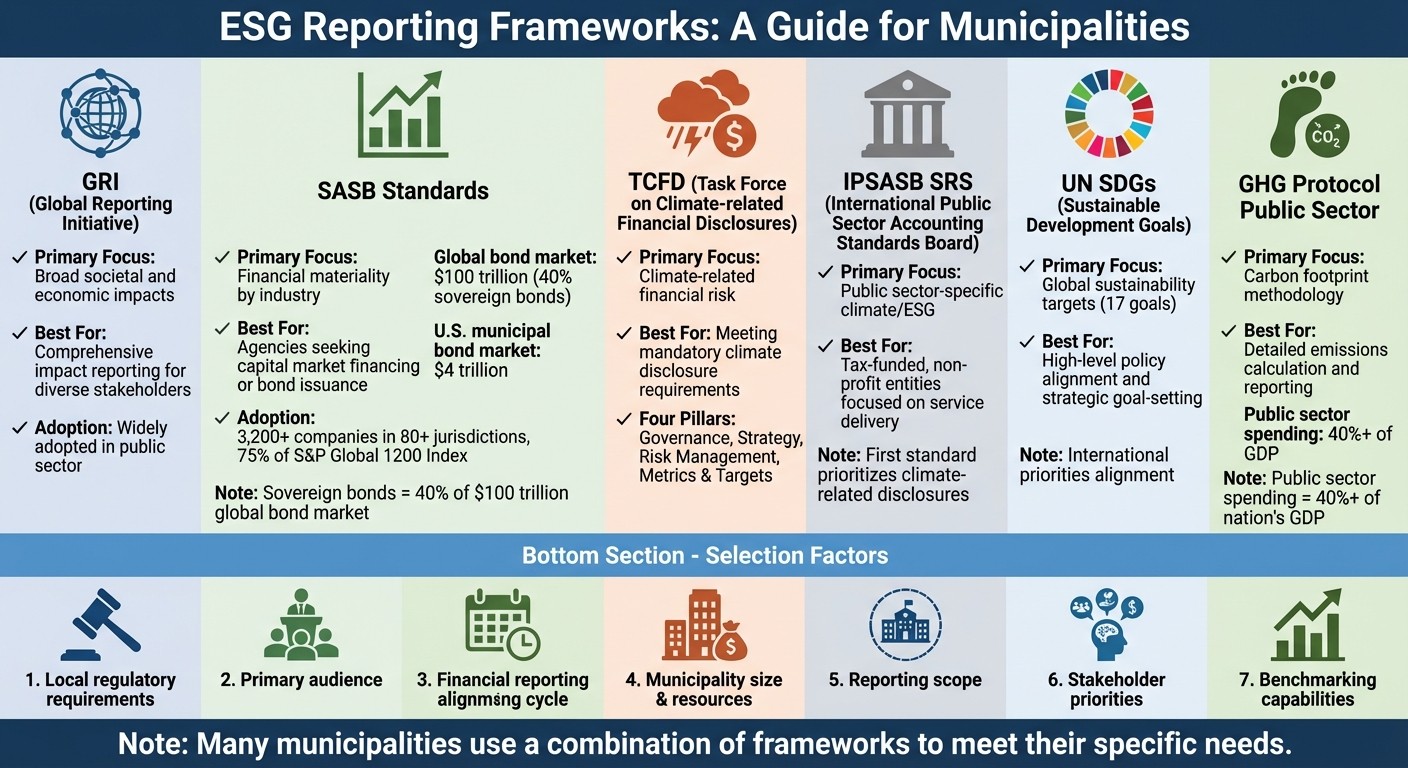
ESG Reporting Frameworks Comparison for Municipalities
Selecting the appropriate ESG reporting framework is crucial for municipalities aiming to address their unique goals and responsibilities. The landscape of reporting has grown more structured, with frameworks, standards, and protocols each playing distinct roles. Frameworks outline the "why" (the overarching structure), standards define the "what" (specific metrics to measure), and protocols explain the "how" (calculation methodologies) [3].
The ISSB global baseline, which integrates TCFD and SASB standards, has become a central feature in ESG reporting [3][4]. However, municipalities must ensure their chosen approach aligns with their primary audience, which often includes local citizens, oversight bodies, or state legislatures - rather than private investors [5].
Common ESG Frameworks Explained
Global Reporting Initiative (GRI) focuses on municipalities looking to showcase their impact across economic, environmental, and social dimensions. It is widely adopted in the public sector for its ability to address diverse stakeholder concerns and broad ESG topics [3][6].
SASB Standards emphasize financially material ESG issues across 77 industries. While initially designed for investors, these standards are now used by over 3,200 companies in 80+ jurisdictions, including 75% of the S&P Global 1200 Index [4]. For municipalities issuing bonds or seeking capital market financing, SASB helps identify risks affecting access to capital - a critical factor given that sovereign bonds account for almost 40% of the $100 trillion global bond market [6].
TCFD Recommendations address climate-related financial risks and opportunities through four pillars: Governance, Strategy, Risk Management, and Metrics and Targets [3][5]. With many governments mandating TCFD reporting for large departments, it has become essential for agencies in regions with climate disclosure requirements.
IFRS Sustainability Disclosure Standards (ISSB) create a unified global baseline by incorporating TCFD recommendations and SASB standards. The IFRS Foundation highlights their role:
"The IFRS Sustainability Disclosure Standards form the global baseline for sustainability-related disclosures and build upon the SASB Standards and the TCFD Recommendations" [4].
IPSASB Sustainability Reporting Standards (SRS) cater specifically to public sector entities funded by taxes and focused on public service. The first standard prioritizes climate-related disclosures, addressing the unique challenges faced by government agencies. As IPSASB explains:
"Public sector-specific sustainability reporting standards will encourage transparency, allowing governments to be held accountable for the long-term impacts of their interventions" [6].
UN Sustainable Development Goals (SDGs) provide a set of 17 global objectives that municipalities can use to align their local initiatives with international priorities [3][6]. Many agencies incorporate the SDGs into their reports to demonstrate alignment with broader sustainability goals.
GHG Protocol Public Sector Protocol offers a tailored methodology for government agencies to measure and report greenhouse gas emissions [6]. This is particularly relevant as public sector spending often constitutes 40% or more of a nation's GDP [6].
| Framework/Standard | Primary Focus | Best Public Sector Application |
| --- | --- | --- |
| <strong>GRI</strong> | Broad societal and economic impacts | Comprehensive impact reporting for diverse stakeholders |
| <strong>SASB</strong> | Financial materiality by industry | Agencies seeking capital market financing or bond issuance |
| <strong>TCFD</strong> | Climate-related financial risk | Meeting mandatory climate disclosure requirements |
| <strong>IPSASB SRS</strong> | Public sector-specific climate/ESG | Tax-funded, non-profit entities focused on service delivery |
| <strong>UN SDGs</strong> | Global sustainability targets | High-level policy alignment and strategic goal-setting |
| <strong>GHG Protocol</strong> | Carbon footprint methodology | Detailed emissions calculation and reporting
| Framework/Standard | Primary Focus | Best Public Sector Application |
| --- | --- | --- |
| <strong>GRI</strong> | Broad societal and economic impacts | Comprehensive impact reporting for diverse stakeholders |
| <strong>SASB</strong> | Financial materiality by industry | Agencies seeking capital market financing or bond issuance |
| <strong>TCFD</strong> | Climate-related financial risk | Meeting mandatory climate disclosure requirements |
| <strong>IPSASB SRS</strong> | Public sector-specific climate/ESG | Tax-funded, non-profit entities focused on service delivery |
| <strong>UN SDGs</strong> | Global sustainability targets | High-level policy alignment and strategic goal-setting |
| <strong>GHG Protocol</strong> | Carbon footprint methodology | Detailed emissions calculation and reporting
What to Consider When Selecting a Framework
When choosing a framework, municipalities should evaluate several key factors to ensure the model aligns with their goals and capacities.
Start by reviewing local regulatory requirements. For instance, some states, like California, have mandatory climate disclosure laws that may influence your choice of framework.
Next, identify the primary audience for your reports. Unlike private sector entities that cater to investors, government agencies typically report to legislatures, councils, or the public. This shifts the focus toward accountability and stewardship rather than financial returns.
Aligning sustainability reporting with your financial reporting cycle can streamline processes and improve data integration. Synchronizing these timelines ensures consistency and makes it easier to connect sustainability metrics with financial statements [7][5].
Consider your municipality's size and resources. Smaller municipalities might find it practical to start with simpler frameworks, like the UN SDGs, before transitioning to more detailed options [7].
Define the scope of your reporting. Decide whether to focus solely on internal operations or include community-wide impacts. This decision will shape which framework best suits your needs [5].
Stakeholder engagement is another critical element. Use feedback from local residents to determine which sustainability issues matter most to them. Many municipalities adopt a combination of frameworks - for example, using GRI for broad impact reporting and TCFD for managing climate-related risks [3].
Lastly, think about metrics that allow for comparisons across agencies. Frameworks offering performance ratios, such as emissions per full-time employee or per square foot of building space, provide valuable context and facilitate benchmarking with similar municipalities [5].
Setting ESG Metrics That Match Municipal Objectives
To effectively align Environmental, Social, and Governance (ESG) metrics with your municipality's goals, begin by clarifying your measurement purpose. Whether you're focusing on regulatory compliance, climate action, or setting a baseline for progress, your chosen metrics should reflect these priorities [1]. Decide if the metrics will apply solely to municipal operations or extend to the broader community. Clearly define organizational boundaries by selecting either an "operational control" approach (covering departments where policies can be directly implemented) or a "financial control" approach (focused on operations consolidated within your financial accounts) [1].
When resources are constrained, concentrate on high-impact areas. Local governments often see their largest emissions stemming from building energy use and transportation. Capture these primary sources first, then expand to optional areas such as employee commutes or purchased goods. This phased strategy ensures meaningful data collection without overwhelming your team. With the scope defined, the following metrics offer insights into environmental, social, and governance impacts.
Environmental Metrics
Environmental metrics should align with municipal goals, focusing on greenhouse gas emissions measured in metric tons of carbon dioxide equivalent (CO2e) [1]. These emissions are categorized into three scopes:
Scope 1: Direct emissions from city-owned vehicles and buildings.
Scope 2: Indirect emissions from purchased electricity.
Scope 3: Other indirect emissions, such as those from contracted waste disposal or employee travel.
Use primary data sources like utility bills, fuel records, and fleet reports rather than relying solely on regional estimates. To compare energy use over time, normalize data with heating and cooling degree-days (using 65°F as the baseline). This method separates weather-driven changes from actual operational improvements [1]. Beyond emissions, consider tracking metrics like vehicle miles traveled (VMT) for fleet efficiency and waste generation for resource management. Reliable data can be ensured through data-sharing agreements or Memorandums of Understanding (MOUs) with utilities and vendors. For additional accuracy, consider third-party verification using ISO 14061-1 standards.
Social Metrics
Social metrics evaluate how your municipality serves its community and fosters equity. These metrics might include employee commute patterns, public health indicators (such as the percentage of the population using sewer systems versus septic tanks), and stakeholder engagement levels [1]. Data sources for these metrics include human resources records, wastewater department data, and community surveys.
Tools like the Sustainable Communities Suite from ICLEI USA can integrate equity considerations into planning [8]. This ensures that sustainability efforts do not inadvertently disadvantage vulnerable populations. Organizing metrics by sector - such as streetlights, water delivery, or public transit fleets - can also help department heads take responsibility for specific ESG goals.
Governance Metrics
Governance metrics emphasize accountability through regulatory compliance, data transparency, and ethical procurement practices. Track whether your municipality meets mandatory disclosure requirements and maintains accurate records through systems like greenhouse gas registries (e.g., CDP) [1]. ISO standards can further ensure quality and process consistency.
Transparency involves more than meeting compliance standards. Assign a single inventory compiler to oversee data collection and maintain consistency across reporting cycles. This approach builds community trust and reinforces the importance of transparent engagement. When setting a baseline, choose a typical year without significant economic disruptions or extreme weather to ensure accurate progress tracking [1]. Governance metrics should also highlight how stakeholder engagement shapes decision-making and whether procurement policies prioritize sustainable vendors, reflecting a commitment to ethical practices and long-term goals.
Gathering and Analyzing ESG Data
Effective ESG reporting starts with identifying the right data sources. Most energy and fuel information comes from internal records like accounts payable, departmental logs, and reports from facility managers [1]. For vehicle-related emissions, fleet records, fuel receipts, and mileage logs provide the necessary details. Similarly, waste management datasets outline waste composition and track methane capture [1].
External sources are essential for filling in gaps. Utility providers can supply precise data on electricity and natural gas usage, while federal databases, such as the EPA's eGRID and the DOE's Building Performance Database, offer benchmarking data critical for calculating Scope 2 emissions tied to purchased electricity [1][11]. To gather Scope 3 data, such as employee commuting habits or community-wide waste metrics, tools like surveys and waste audits are invaluable [1]. Combining internal and external data sources ensures a more standardized and reliable approach to ESG reporting.
Finding Reliable Data Sources
Consistency is key when managing ESG data. Assigning a single inventory compiler to consolidate departmental data helps maintain uniformity and simplifies audits [1]. Providing contributors with standardized spreadsheets - complete with clearly labeled rows and columns - reduces errors in units or formatting. Additionally, documenting every aspect of the process, from data sources and points of contact to assumptions and emission factors, ensures updates can be made easily in the future [1].
When working with external data, formalize relationships through Memorandums of Understanding (MOUs) [1]. For emissions estimates, two main methods are available: bottom-up approaches, which use actual utility bills and localized activity data for precise tracking, and top-down approaches, which rely on regional averages to establish baseline estimates [1]. It’s also important to note that the U.S. Greenhouse Gas Inventory currently uses a Global Warming Potential (GWP) of 25 for methane, a critical factor for waste-related emissions calculations [1].
Tools and Technology for Data Analysis
Once reliable data is collected, advanced tools can simplify analysis and reporting. The EPA Local Greenhouse Gas Inventory Tool, for example, is a free interactive spreadsheet that calculates emissions across sectors like residential, commercial, transportation, and waste [9]. For purchased electricity, eGRID provides detailed environmental characteristics of power generation [11]. Long-term planning tools, such as the State and Local Planning for Energy (SLOPE) platform, integrate data on energy efficiency and renewable energy potential, while REopt Lite evaluates the cost-effectiveness of solar and battery storage systems connected to the grid [11].
Platforms like ICLEI ClearPath support large-scale emissions inventories and climate action planning [1]. These tools also translate technical emissions data into relatable comparisons - like the number of trees planted or cars removed - to improve public understanding [11]. Notably, nearly two-thirds of companies reporting through CDP now include nature-related data alongside climate metrics, reflecting a 21% increase from the previous year [10]. This shift highlights the growing importance of integrating environmental, social, and governance factors into a unified analysis.
Creating Clear and Actionable ESG Reports
Turning ESG (Environmental, Social, and Governance) data into meaningful reports is essential for informing council members, residents, oversight committees, and bond investors. A guiding principle here is: "Information is material if omitting, misstating, or obscuring it could reasonably influence decisions of primary users of annual reports and accounts" [5]. This underscores the importance of avoiding vague statements and instead providing a transparent account of past achievements, current standing, and future goals. Such clarity empowers stakeholders to make well-informed decisions.
To ensure effectiveness, ESG reports should adhere to four main principles: they must align with strategic objectives, use transparent methodologies, present data in context (such as alongside targets or historical trends), and rely on dependable information for year-to-year comparisons. Including three to five years of historical data allows stakeholders to track progress and assess whether real advancements are being made [5]. Standardized reporting frameworks further enhance the credibility and usability of these reports.
Using Standard Reporting Structures
Adopting established reporting frameworks ensures consistency and allows stakeholders to compare performance across different municipalities. The Global Reporting Initiative (GRI) provides a flexible structure for reporting on economic, environmental, and social impacts [12]. The International Sustainability Standards Board (ISSB) focuses on sustainability-related risks and opportunities that influence cash flows and financing costs [13]. For public sector entities, the International Public Sector Accounting Standards Board (IPSASB) is developing standards tailored to government agencies and municipalities [6]. These frameworks not only organize the content but also guide actionable strategies that align with municipal objectives.
For example, in 2025, HM Treasury in the UK introduced updated Sustainability Reporting Guidance for central government bodies. This guidance mandates TCFD-aligned disclosures and requires reports to include Scope 1 and 2 emissions, waste generation (in metric tons), and water consumption (in cubic meters) on a "comply or explain" basis [5][7].
Building ESG Reporting into Daily Operations
Once clear frameworks are in place, integrating ESG reporting into daily operations becomes the next step. Aligning sustainability reporting with financial reporting periods - such as a fiscal year running from April 1 to March 31 - helps tie environmental and social performance to budget allocation and spending patterns [5].
Sustainability and climate risks should be managed within the same risk frameworks used for other critical operational challenges. Embedding sustainability data directly into annual reports, rather than separate standalone documents, connects it with core municipal functions such as infrastructure, public health, and economic development. This integrated approach clarifies which sustainability goals are aspirational and which are actively accounted for in current budgets and operational plans [5][7].
Working with Stakeholders to Improve ESG Impact
Clear ESG reports are just the starting point; engaging stakeholders turns raw data into meaningful action. Successful ESG efforts go beyond simply sharing information - they thrive on active, ongoing collaboration. Municipalities that treat stakeholder engagement as a continuous relationship, rather than a one-off survey, often see stronger results and deeper community support. This shift from merely informing to truly working alongside the public lays the groundwork for impactful environmental and social progress.
Methods for Stakeholder Engagement
The International Association for Public Participation (IAP2) Spectrum outlines five levels of stakeholder involvement: Inform, Consult, Involve, Collaborate, and Empower. These levels help municipalities clarify the role of community members in various initiatives. For example, at the "Inform" level, agencies share balanced information to educate the public, while at the "Empower" level, the community takes on final decision-making authority [14].
"We often treat engagement like a checkbox - an event or a survey - but it's really about the relationships that make our systems work. Without understanding those, we're flying blind." - Dr. Danielle Varda, Founder & CEO, Visible Network Labs [14]
Stakeholder mapping is critical for identifying those most affected by ESG initiatives, particularly underserved groups or those traditionally left out of decision-making. This requires going beyond the usual participants at public meetings to include voices from diverse backgrounds whose lived experiences add essential perspectives [14]. Reducing barriers to participation - through language translation, accessible meeting spaces, transportation support, childcare, or stipends for participants' time - ensures broader and fairer representation [15].
Using a mix of engagement methods helps reach different demographics effectively. In-person approaches like pop-up events, site visits, and town halls can complement digital tools such as surveys, webinars, and social media outreach. The Georgetown Climate Center emphasizes that building trust and relationships should remain a top priority, which includes acting on community recommendations and being upfront about any limitations [15]. Closing the feedback loop is equally important - reporting back on how input was used (or explaining why certain suggestions weren't feasible) fosters transparency and trust [14]. This feedback process is essential for translating community insights into actionable plans.
Turning ESG Reports into Action
Stakeholder input should guide the transformation of ESG data into tangible initiatives. For instance, carbon emissions data can inform decarbonization strategies, water quality metrics can shape climate resilience plans, and equity indicators can lead to targeted community development projects. Co-developing goals with the community ensures flexibility, allowing municipalities to adapt as they learn from residents [15].
Recognizing community members as experts shifts the dynamic from mere data collection to genuine partnership. Neutral facilitators and subject matter experts can support community-led committees, ensuring that decisions align with local priorities rather than being imposed from above [15]. Establishing SMART engagement goals - Specific, Measurable, Achievable, Relevant, and Time-bound - helps track both quantitative metrics, like participation rates, and qualitative outcomes, such as trust levels and perceived alignment with community needs [14].
Transparent ESG reporting fosters accountability and drives momentum for change. As Dr. Danielle Varda explains, "You can't change a system unless you can see it. A CPRM gives you that visibility - it shows who's connected, who's missing, and where trust needs to be built to make change possible" [14]. When stakeholders understand the challenges and the progress being made, they become active collaborators in achieving sustainability goals that serve the entire community.
Conclusion
This guide has emphasized the importance of aligning ESG efforts with municipal goals. At the heart of effective ESG reporting is selecting a framework that matches your municipality's objectives, whether it's tracking operational emissions or assessing community-wide impacts. Using established protocols ensures data reliability and comparability, a necessity when accessing the $4 trillion municipal bond market [2]. Assigning a dedicated inventory compiler and relying on bottom-up data, such as utility bills, enhances the accuracy of progress measurement.
Defining measurable metrics across environmental, social, and governance areas is the next step. Metrics tailored to your community's priorities - like addressing major emission sources or tackling social challenges - create a solid foundation for improvement. Establishing a base year with dependable data serves as a benchmark to evaluate the success of sustainability initiatives over time.
Data becomes actionable when translated into relatable insights. Tools like the EPA's GHG Equivalencies Calculator simplify complex data into comparisons such as "cars removed" or "trees planted", making the information more meaningful and accessible for residents.
Engaging stakeholders transforms ESG reports into actionable strategies. Closing the feedback loop by incorporating community input not only enhances decision-making but also fosters trust. Events like the 2025 Los Angeles wildfires, which disrupted municipal bonds, highlight the importance of transparent climate disclosures for financial stability [2].
FAQs
How do we pick one ESG framework without overcomplicating reporting?
To make ESG reporting more straightforward, select a framework that aligns well with your organization’s reporting requirements, industry specifics, and the expectations of your stakeholders. Look for frameworks that provide clear and actionable guidance while fitting within your current resources and capabilities. Focus on those that transform regulatory challenges into opportunities by addressing your organization’s unique demands, avoiding unnecessary complications, and maintaining efficient, streamlined reporting processes.
What’s the fastest way to build a credible GHG inventory with limited staff?
To efficiently develop a greenhouse gas (GHG) inventory with a small team, consider using straightforward tools such as the EPA’s Local Greenhouse Gas Inventory Tool. This resource simplifies the process of gathering emissions data across essential sectors. Start by setting clear priorities, making use of existing data, and concentrating on the most significant emission sources first. Utilizing established frameworks like the GHG Protocol helps maintain consistency and reliability, while also streamlining the process by relying on tried-and-true methods and best practices.
How can we report ESG results so residents and bond investors both trust it?
To earn trust, municipalities need to adopt clear, consistent, and reliable reporting practices. This means openly sharing information about climate risks, resilience strategies, and ESG performance using widely recognized frameworks. Incorporating external reviews adds credibility, while aligning with established standards ensures clarity and comparability. Engaging stakeholders through accessible data and open dialogue is equally important. By committing to regular, long-term reporting that reflects community objectives, municipalities can strengthen accountability and build confidence among both residents and bond investors.
Related Blog Posts
Latest Articles
©2025



FAQ
01
What does it really mean to “redefine profit”?
02
What makes Council Fire different?
03
Who does Council Fire you work with?
04
What does working with Council Fire actually look like?
05
How does Council Fire help organizations turn big goals into action?
06
How does Council Fire define and measure success?
Feb 22, 2026
How to Measure and Report ESG Impact Effectively for Municipalities & Government Agencies
ESG Strategy
In This Article
How municipalities measure and report ESG: choose frameworks, set core metrics, gather reliable data, engage stakeholders, and align reporting with budgets.
How to Measure and Report ESG Impact Effectively for Municipalities & Government Agencies
Municipalities and government agencies face growing pressure to measure and report their Environmental, Social, and Governance (ESG) impacts transparently. ESG reporting not only helps manage risks like climate hazards but also builds trust with stakeholders, including residents and investors. With the U.S. municipal bond market valued at $4 trillion and climate-related risks increasingly affecting financial stability, effective ESG reporting has become essential. Here's what you need to know:
Choose the Right Framework: Options include GRI for broad societal impacts, SASB for financial materiality, and TCFD for climate-related risks. Public sector-specific standards like IPSASB and tools like the GHG Protocol are also available.
Set Clear Metrics: Focus on measurable data like greenhouse gas emissions, public health indicators, and compliance with regulations. Start with key areas like energy use and transportation before expanding.
Gather Reliable Data: Use internal records (e.g., utility bills, fleet reports) and external sources (e.g., EPA databases) for accuracy. Tools like ICLEI ClearPath and EPA’s GHG Inventory Tool simplify analysis.
Engage Stakeholders: Actively involve residents and underserved groups in planning. Use diverse methods like surveys, town halls, and digital tools to ensure inclusive participation.
Integrate Reporting into Operations: Align ESG reporting with financial cycles and embed sustainability data into annual reports for better decision-making and transparency.
Monitoring and reporting ESG data in the public sector
Choosing the Right ESG Reporting Framework
ESG Reporting Frameworks Comparison for Municipalities
Selecting the appropriate ESG reporting framework is crucial for municipalities aiming to address their unique goals and responsibilities. The landscape of reporting has grown more structured, with frameworks, standards, and protocols each playing distinct roles. Frameworks outline the "why" (the overarching structure), standards define the "what" (specific metrics to measure), and protocols explain the "how" (calculation methodologies) [3].
The ISSB global baseline, which integrates TCFD and SASB standards, has become a central feature in ESG reporting [3][4]. However, municipalities must ensure their chosen approach aligns with their primary audience, which often includes local citizens, oversight bodies, or state legislatures - rather than private investors [5].
Common ESG Frameworks Explained
Global Reporting Initiative (GRI) focuses on municipalities looking to showcase their impact across economic, environmental, and social dimensions. It is widely adopted in the public sector for its ability to address diverse stakeholder concerns and broad ESG topics [3][6].
SASB Standards emphasize financially material ESG issues across 77 industries. While initially designed for investors, these standards are now used by over 3,200 companies in 80+ jurisdictions, including 75% of the S&P Global 1200 Index [4]. For municipalities issuing bonds or seeking capital market financing, SASB helps identify risks affecting access to capital - a critical factor given that sovereign bonds account for almost 40% of the $100 trillion global bond market [6].
TCFD Recommendations address climate-related financial risks and opportunities through four pillars: Governance, Strategy, Risk Management, and Metrics and Targets [3][5]. With many governments mandating TCFD reporting for large departments, it has become essential for agencies in regions with climate disclosure requirements.
IFRS Sustainability Disclosure Standards (ISSB) create a unified global baseline by incorporating TCFD recommendations and SASB standards. The IFRS Foundation highlights their role:
"The IFRS Sustainability Disclosure Standards form the global baseline for sustainability-related disclosures and build upon the SASB Standards and the TCFD Recommendations" [4].
IPSASB Sustainability Reporting Standards (SRS) cater specifically to public sector entities funded by taxes and focused on public service. The first standard prioritizes climate-related disclosures, addressing the unique challenges faced by government agencies. As IPSASB explains:
"Public sector-specific sustainability reporting standards will encourage transparency, allowing governments to be held accountable for the long-term impacts of their interventions" [6].
UN Sustainable Development Goals (SDGs) provide a set of 17 global objectives that municipalities can use to align their local initiatives with international priorities [3][6]. Many agencies incorporate the SDGs into their reports to demonstrate alignment with broader sustainability goals.
GHG Protocol Public Sector Protocol offers a tailored methodology for government agencies to measure and report greenhouse gas emissions [6]. This is particularly relevant as public sector spending often constitutes 40% or more of a nation's GDP [6].
| Framework/Standard | Primary Focus | Best Public Sector Application |
| --- | --- | --- |
| <strong>GRI</strong> | Broad societal and economic impacts | Comprehensive impact reporting for diverse stakeholders |
| <strong>SASB</strong> | Financial materiality by industry | Agencies seeking capital market financing or bond issuance |
| <strong>TCFD</strong> | Climate-related financial risk | Meeting mandatory climate disclosure requirements |
| <strong>IPSASB SRS</strong> | Public sector-specific climate/ESG | Tax-funded, non-profit entities focused on service delivery |
| <strong>UN SDGs</strong> | Global sustainability targets | High-level policy alignment and strategic goal-setting |
| <strong>GHG Protocol</strong> | Carbon footprint methodology | Detailed emissions calculation and reporting
What to Consider When Selecting a Framework
When choosing a framework, municipalities should evaluate several key factors to ensure the model aligns with their goals and capacities.
Start by reviewing local regulatory requirements. For instance, some states, like California, have mandatory climate disclosure laws that may influence your choice of framework.
Next, identify the primary audience for your reports. Unlike private sector entities that cater to investors, government agencies typically report to legislatures, councils, or the public. This shifts the focus toward accountability and stewardship rather than financial returns.
Aligning sustainability reporting with your financial reporting cycle can streamline processes and improve data integration. Synchronizing these timelines ensures consistency and makes it easier to connect sustainability metrics with financial statements [7][5].
Consider your municipality's size and resources. Smaller municipalities might find it practical to start with simpler frameworks, like the UN SDGs, before transitioning to more detailed options [7].
Define the scope of your reporting. Decide whether to focus solely on internal operations or include community-wide impacts. This decision will shape which framework best suits your needs [5].
Stakeholder engagement is another critical element. Use feedback from local residents to determine which sustainability issues matter most to them. Many municipalities adopt a combination of frameworks - for example, using GRI for broad impact reporting and TCFD for managing climate-related risks [3].
Lastly, think about metrics that allow for comparisons across agencies. Frameworks offering performance ratios, such as emissions per full-time employee or per square foot of building space, provide valuable context and facilitate benchmarking with similar municipalities [5].
Setting ESG Metrics That Match Municipal Objectives
To effectively align Environmental, Social, and Governance (ESG) metrics with your municipality's goals, begin by clarifying your measurement purpose. Whether you're focusing on regulatory compliance, climate action, or setting a baseline for progress, your chosen metrics should reflect these priorities [1]. Decide if the metrics will apply solely to municipal operations or extend to the broader community. Clearly define organizational boundaries by selecting either an "operational control" approach (covering departments where policies can be directly implemented) or a "financial control" approach (focused on operations consolidated within your financial accounts) [1].
When resources are constrained, concentrate on high-impact areas. Local governments often see their largest emissions stemming from building energy use and transportation. Capture these primary sources first, then expand to optional areas such as employee commutes or purchased goods. This phased strategy ensures meaningful data collection without overwhelming your team. With the scope defined, the following metrics offer insights into environmental, social, and governance impacts.
Environmental Metrics
Environmental metrics should align with municipal goals, focusing on greenhouse gas emissions measured in metric tons of carbon dioxide equivalent (CO2e) [1]. These emissions are categorized into three scopes:
Scope 1: Direct emissions from city-owned vehicles and buildings.
Scope 2: Indirect emissions from purchased electricity.
Scope 3: Other indirect emissions, such as those from contracted waste disposal or employee travel.
Use primary data sources like utility bills, fuel records, and fleet reports rather than relying solely on regional estimates. To compare energy use over time, normalize data with heating and cooling degree-days (using 65°F as the baseline). This method separates weather-driven changes from actual operational improvements [1]. Beyond emissions, consider tracking metrics like vehicle miles traveled (VMT) for fleet efficiency and waste generation for resource management. Reliable data can be ensured through data-sharing agreements or Memorandums of Understanding (MOUs) with utilities and vendors. For additional accuracy, consider third-party verification using ISO 14061-1 standards.
Social Metrics
Social metrics evaluate how your municipality serves its community and fosters equity. These metrics might include employee commute patterns, public health indicators (such as the percentage of the population using sewer systems versus septic tanks), and stakeholder engagement levels [1]. Data sources for these metrics include human resources records, wastewater department data, and community surveys.
Tools like the Sustainable Communities Suite from ICLEI USA can integrate equity considerations into planning [8]. This ensures that sustainability efforts do not inadvertently disadvantage vulnerable populations. Organizing metrics by sector - such as streetlights, water delivery, or public transit fleets - can also help department heads take responsibility for specific ESG goals.
Governance Metrics
Governance metrics emphasize accountability through regulatory compliance, data transparency, and ethical procurement practices. Track whether your municipality meets mandatory disclosure requirements and maintains accurate records through systems like greenhouse gas registries (e.g., CDP) [1]. ISO standards can further ensure quality and process consistency.
Transparency involves more than meeting compliance standards. Assign a single inventory compiler to oversee data collection and maintain consistency across reporting cycles. This approach builds community trust and reinforces the importance of transparent engagement. When setting a baseline, choose a typical year without significant economic disruptions or extreme weather to ensure accurate progress tracking [1]. Governance metrics should also highlight how stakeholder engagement shapes decision-making and whether procurement policies prioritize sustainable vendors, reflecting a commitment to ethical practices and long-term goals.
Gathering and Analyzing ESG Data
Effective ESG reporting starts with identifying the right data sources. Most energy and fuel information comes from internal records like accounts payable, departmental logs, and reports from facility managers [1]. For vehicle-related emissions, fleet records, fuel receipts, and mileage logs provide the necessary details. Similarly, waste management datasets outline waste composition and track methane capture [1].
External sources are essential for filling in gaps. Utility providers can supply precise data on electricity and natural gas usage, while federal databases, such as the EPA's eGRID and the DOE's Building Performance Database, offer benchmarking data critical for calculating Scope 2 emissions tied to purchased electricity [1][11]. To gather Scope 3 data, such as employee commuting habits or community-wide waste metrics, tools like surveys and waste audits are invaluable [1]. Combining internal and external data sources ensures a more standardized and reliable approach to ESG reporting.
Finding Reliable Data Sources
Consistency is key when managing ESG data. Assigning a single inventory compiler to consolidate departmental data helps maintain uniformity and simplifies audits [1]. Providing contributors with standardized spreadsheets - complete with clearly labeled rows and columns - reduces errors in units or formatting. Additionally, documenting every aspect of the process, from data sources and points of contact to assumptions and emission factors, ensures updates can be made easily in the future [1].
When working with external data, formalize relationships through Memorandums of Understanding (MOUs) [1]. For emissions estimates, two main methods are available: bottom-up approaches, which use actual utility bills and localized activity data for precise tracking, and top-down approaches, which rely on regional averages to establish baseline estimates [1]. It’s also important to note that the U.S. Greenhouse Gas Inventory currently uses a Global Warming Potential (GWP) of 25 for methane, a critical factor for waste-related emissions calculations [1].
Tools and Technology for Data Analysis
Once reliable data is collected, advanced tools can simplify analysis and reporting. The EPA Local Greenhouse Gas Inventory Tool, for example, is a free interactive spreadsheet that calculates emissions across sectors like residential, commercial, transportation, and waste [9]. For purchased electricity, eGRID provides detailed environmental characteristics of power generation [11]. Long-term planning tools, such as the State and Local Planning for Energy (SLOPE) platform, integrate data on energy efficiency and renewable energy potential, while REopt Lite evaluates the cost-effectiveness of solar and battery storage systems connected to the grid [11].
Platforms like ICLEI ClearPath support large-scale emissions inventories and climate action planning [1]. These tools also translate technical emissions data into relatable comparisons - like the number of trees planted or cars removed - to improve public understanding [11]. Notably, nearly two-thirds of companies reporting through CDP now include nature-related data alongside climate metrics, reflecting a 21% increase from the previous year [10]. This shift highlights the growing importance of integrating environmental, social, and governance factors into a unified analysis.
Creating Clear and Actionable ESG Reports
Turning ESG (Environmental, Social, and Governance) data into meaningful reports is essential for informing council members, residents, oversight committees, and bond investors. A guiding principle here is: "Information is material if omitting, misstating, or obscuring it could reasonably influence decisions of primary users of annual reports and accounts" [5]. This underscores the importance of avoiding vague statements and instead providing a transparent account of past achievements, current standing, and future goals. Such clarity empowers stakeholders to make well-informed decisions.
To ensure effectiveness, ESG reports should adhere to four main principles: they must align with strategic objectives, use transparent methodologies, present data in context (such as alongside targets or historical trends), and rely on dependable information for year-to-year comparisons. Including three to five years of historical data allows stakeholders to track progress and assess whether real advancements are being made [5]. Standardized reporting frameworks further enhance the credibility and usability of these reports.
Using Standard Reporting Structures
Adopting established reporting frameworks ensures consistency and allows stakeholders to compare performance across different municipalities. The Global Reporting Initiative (GRI) provides a flexible structure for reporting on economic, environmental, and social impacts [12]. The International Sustainability Standards Board (ISSB) focuses on sustainability-related risks and opportunities that influence cash flows and financing costs [13]. For public sector entities, the International Public Sector Accounting Standards Board (IPSASB) is developing standards tailored to government agencies and municipalities [6]. These frameworks not only organize the content but also guide actionable strategies that align with municipal objectives.
For example, in 2025, HM Treasury in the UK introduced updated Sustainability Reporting Guidance for central government bodies. This guidance mandates TCFD-aligned disclosures and requires reports to include Scope 1 and 2 emissions, waste generation (in metric tons), and water consumption (in cubic meters) on a "comply or explain" basis [5][7].
Building ESG Reporting into Daily Operations
Once clear frameworks are in place, integrating ESG reporting into daily operations becomes the next step. Aligning sustainability reporting with financial reporting periods - such as a fiscal year running from April 1 to March 31 - helps tie environmental and social performance to budget allocation and spending patterns [5].
Sustainability and climate risks should be managed within the same risk frameworks used for other critical operational challenges. Embedding sustainability data directly into annual reports, rather than separate standalone documents, connects it with core municipal functions such as infrastructure, public health, and economic development. This integrated approach clarifies which sustainability goals are aspirational and which are actively accounted for in current budgets and operational plans [5][7].
Working with Stakeholders to Improve ESG Impact
Clear ESG reports are just the starting point; engaging stakeholders turns raw data into meaningful action. Successful ESG efforts go beyond simply sharing information - they thrive on active, ongoing collaboration. Municipalities that treat stakeholder engagement as a continuous relationship, rather than a one-off survey, often see stronger results and deeper community support. This shift from merely informing to truly working alongside the public lays the groundwork for impactful environmental and social progress.
Methods for Stakeholder Engagement
The International Association for Public Participation (IAP2) Spectrum outlines five levels of stakeholder involvement: Inform, Consult, Involve, Collaborate, and Empower. These levels help municipalities clarify the role of community members in various initiatives. For example, at the "Inform" level, agencies share balanced information to educate the public, while at the "Empower" level, the community takes on final decision-making authority [14].
"We often treat engagement like a checkbox - an event or a survey - but it's really about the relationships that make our systems work. Without understanding those, we're flying blind." - Dr. Danielle Varda, Founder & CEO, Visible Network Labs [14]
Stakeholder mapping is critical for identifying those most affected by ESG initiatives, particularly underserved groups or those traditionally left out of decision-making. This requires going beyond the usual participants at public meetings to include voices from diverse backgrounds whose lived experiences add essential perspectives [14]. Reducing barriers to participation - through language translation, accessible meeting spaces, transportation support, childcare, or stipends for participants' time - ensures broader and fairer representation [15].
Using a mix of engagement methods helps reach different demographics effectively. In-person approaches like pop-up events, site visits, and town halls can complement digital tools such as surveys, webinars, and social media outreach. The Georgetown Climate Center emphasizes that building trust and relationships should remain a top priority, which includes acting on community recommendations and being upfront about any limitations [15]. Closing the feedback loop is equally important - reporting back on how input was used (or explaining why certain suggestions weren't feasible) fosters transparency and trust [14]. This feedback process is essential for translating community insights into actionable plans.
Turning ESG Reports into Action
Stakeholder input should guide the transformation of ESG data into tangible initiatives. For instance, carbon emissions data can inform decarbonization strategies, water quality metrics can shape climate resilience plans, and equity indicators can lead to targeted community development projects. Co-developing goals with the community ensures flexibility, allowing municipalities to adapt as they learn from residents [15].
Recognizing community members as experts shifts the dynamic from mere data collection to genuine partnership. Neutral facilitators and subject matter experts can support community-led committees, ensuring that decisions align with local priorities rather than being imposed from above [15]. Establishing SMART engagement goals - Specific, Measurable, Achievable, Relevant, and Time-bound - helps track both quantitative metrics, like participation rates, and qualitative outcomes, such as trust levels and perceived alignment with community needs [14].
Transparent ESG reporting fosters accountability and drives momentum for change. As Dr. Danielle Varda explains, "You can't change a system unless you can see it. A CPRM gives you that visibility - it shows who's connected, who's missing, and where trust needs to be built to make change possible" [14]. When stakeholders understand the challenges and the progress being made, they become active collaborators in achieving sustainability goals that serve the entire community.
Conclusion
This guide has emphasized the importance of aligning ESG efforts with municipal goals. At the heart of effective ESG reporting is selecting a framework that matches your municipality's objectives, whether it's tracking operational emissions or assessing community-wide impacts. Using established protocols ensures data reliability and comparability, a necessity when accessing the $4 trillion municipal bond market [2]. Assigning a dedicated inventory compiler and relying on bottom-up data, such as utility bills, enhances the accuracy of progress measurement.
Defining measurable metrics across environmental, social, and governance areas is the next step. Metrics tailored to your community's priorities - like addressing major emission sources or tackling social challenges - create a solid foundation for improvement. Establishing a base year with dependable data serves as a benchmark to evaluate the success of sustainability initiatives over time.
Data becomes actionable when translated into relatable insights. Tools like the EPA's GHG Equivalencies Calculator simplify complex data into comparisons such as "cars removed" or "trees planted", making the information more meaningful and accessible for residents.
Engaging stakeholders transforms ESG reports into actionable strategies. Closing the feedback loop by incorporating community input not only enhances decision-making but also fosters trust. Events like the 2025 Los Angeles wildfires, which disrupted municipal bonds, highlight the importance of transparent climate disclosures for financial stability [2].
FAQs
How do we pick one ESG framework without overcomplicating reporting?
To make ESG reporting more straightforward, select a framework that aligns well with your organization’s reporting requirements, industry specifics, and the expectations of your stakeholders. Look for frameworks that provide clear and actionable guidance while fitting within your current resources and capabilities. Focus on those that transform regulatory challenges into opportunities by addressing your organization’s unique demands, avoiding unnecessary complications, and maintaining efficient, streamlined reporting processes.
What’s the fastest way to build a credible GHG inventory with limited staff?
To efficiently develop a greenhouse gas (GHG) inventory with a small team, consider using straightforward tools such as the EPA’s Local Greenhouse Gas Inventory Tool. This resource simplifies the process of gathering emissions data across essential sectors. Start by setting clear priorities, making use of existing data, and concentrating on the most significant emission sources first. Utilizing established frameworks like the GHG Protocol helps maintain consistency and reliability, while also streamlining the process by relying on tried-and-true methods and best practices.
How can we report ESG results so residents and bond investors both trust it?
To earn trust, municipalities need to adopt clear, consistent, and reliable reporting practices. This means openly sharing information about climate risks, resilience strategies, and ESG performance using widely recognized frameworks. Incorporating external reviews adds credibility, while aligning with established standards ensures clarity and comparability. Engaging stakeholders through accessible data and open dialogue is equally important. By committing to regular, long-term reporting that reflects community objectives, municipalities can strengthen accountability and build confidence among both residents and bond investors.
Related Blog Posts
FAQ
01
What does it really mean to “redefine profit”?
02
What makes Council Fire different?
03
Who does Council Fire you work with?
04
What does working with Council Fire actually look like?
05
How does Council Fire help organizations turn big goals into action?
06
How does Council Fire define and measure success?
Feb 22, 2026
How to Measure and Report ESG Impact Effectively for Municipalities & Government Agencies
ESG Strategy
In This Article
How municipalities measure and report ESG: choose frameworks, set core metrics, gather reliable data, engage stakeholders, and align reporting with budgets.
How to Measure and Report ESG Impact Effectively for Municipalities & Government Agencies
Municipalities and government agencies face growing pressure to measure and report their Environmental, Social, and Governance (ESG) impacts transparently. ESG reporting not only helps manage risks like climate hazards but also builds trust with stakeholders, including residents and investors. With the U.S. municipal bond market valued at $4 trillion and climate-related risks increasingly affecting financial stability, effective ESG reporting has become essential. Here's what you need to know:
Choose the Right Framework: Options include GRI for broad societal impacts, SASB for financial materiality, and TCFD for climate-related risks. Public sector-specific standards like IPSASB and tools like the GHG Protocol are also available.
Set Clear Metrics: Focus on measurable data like greenhouse gas emissions, public health indicators, and compliance with regulations. Start with key areas like energy use and transportation before expanding.
Gather Reliable Data: Use internal records (e.g., utility bills, fleet reports) and external sources (e.g., EPA databases) for accuracy. Tools like ICLEI ClearPath and EPA’s GHG Inventory Tool simplify analysis.
Engage Stakeholders: Actively involve residents and underserved groups in planning. Use diverse methods like surveys, town halls, and digital tools to ensure inclusive participation.
Integrate Reporting into Operations: Align ESG reporting with financial cycles and embed sustainability data into annual reports for better decision-making and transparency.
Monitoring and reporting ESG data in the public sector
Choosing the Right ESG Reporting Framework
ESG Reporting Frameworks Comparison for Municipalities
Selecting the appropriate ESG reporting framework is crucial for municipalities aiming to address their unique goals and responsibilities. The landscape of reporting has grown more structured, with frameworks, standards, and protocols each playing distinct roles. Frameworks outline the "why" (the overarching structure), standards define the "what" (specific metrics to measure), and protocols explain the "how" (calculation methodologies) [3].
The ISSB global baseline, which integrates TCFD and SASB standards, has become a central feature in ESG reporting [3][4]. However, municipalities must ensure their chosen approach aligns with their primary audience, which often includes local citizens, oversight bodies, or state legislatures - rather than private investors [5].
Common ESG Frameworks Explained
Global Reporting Initiative (GRI) focuses on municipalities looking to showcase their impact across economic, environmental, and social dimensions. It is widely adopted in the public sector for its ability to address diverse stakeholder concerns and broad ESG topics [3][6].
SASB Standards emphasize financially material ESG issues across 77 industries. While initially designed for investors, these standards are now used by over 3,200 companies in 80+ jurisdictions, including 75% of the S&P Global 1200 Index [4]. For municipalities issuing bonds or seeking capital market financing, SASB helps identify risks affecting access to capital - a critical factor given that sovereign bonds account for almost 40% of the $100 trillion global bond market [6].
TCFD Recommendations address climate-related financial risks and opportunities through four pillars: Governance, Strategy, Risk Management, and Metrics and Targets [3][5]. With many governments mandating TCFD reporting for large departments, it has become essential for agencies in regions with climate disclosure requirements.
IFRS Sustainability Disclosure Standards (ISSB) create a unified global baseline by incorporating TCFD recommendations and SASB standards. The IFRS Foundation highlights their role:
"The IFRS Sustainability Disclosure Standards form the global baseline for sustainability-related disclosures and build upon the SASB Standards and the TCFD Recommendations" [4].
IPSASB Sustainability Reporting Standards (SRS) cater specifically to public sector entities funded by taxes and focused on public service. The first standard prioritizes climate-related disclosures, addressing the unique challenges faced by government agencies. As IPSASB explains:
"Public sector-specific sustainability reporting standards will encourage transparency, allowing governments to be held accountable for the long-term impacts of their interventions" [6].
UN Sustainable Development Goals (SDGs) provide a set of 17 global objectives that municipalities can use to align their local initiatives with international priorities [3][6]. Many agencies incorporate the SDGs into their reports to demonstrate alignment with broader sustainability goals.
GHG Protocol Public Sector Protocol offers a tailored methodology for government agencies to measure and report greenhouse gas emissions [6]. This is particularly relevant as public sector spending often constitutes 40% or more of a nation's GDP [6].
| Framework/Standard | Primary Focus | Best Public Sector Application |
| --- | --- | --- |
| <strong>GRI</strong> | Broad societal and economic impacts | Comprehensive impact reporting for diverse stakeholders |
| <strong>SASB</strong> | Financial materiality by industry | Agencies seeking capital market financing or bond issuance |
| <strong>TCFD</strong> | Climate-related financial risk | Meeting mandatory climate disclosure requirements |
| <strong>IPSASB SRS</strong> | Public sector-specific climate/ESG | Tax-funded, non-profit entities focused on service delivery |
| <strong>UN SDGs</strong> | Global sustainability targets | High-level policy alignment and strategic goal-setting |
| <strong>GHG Protocol</strong> | Carbon footprint methodology | Detailed emissions calculation and reporting
What to Consider When Selecting a Framework
When choosing a framework, municipalities should evaluate several key factors to ensure the model aligns with their goals and capacities.
Start by reviewing local regulatory requirements. For instance, some states, like California, have mandatory climate disclosure laws that may influence your choice of framework.
Next, identify the primary audience for your reports. Unlike private sector entities that cater to investors, government agencies typically report to legislatures, councils, or the public. This shifts the focus toward accountability and stewardship rather than financial returns.
Aligning sustainability reporting with your financial reporting cycle can streamline processes and improve data integration. Synchronizing these timelines ensures consistency and makes it easier to connect sustainability metrics with financial statements [7][5].
Consider your municipality's size and resources. Smaller municipalities might find it practical to start with simpler frameworks, like the UN SDGs, before transitioning to more detailed options [7].
Define the scope of your reporting. Decide whether to focus solely on internal operations or include community-wide impacts. This decision will shape which framework best suits your needs [5].
Stakeholder engagement is another critical element. Use feedback from local residents to determine which sustainability issues matter most to them. Many municipalities adopt a combination of frameworks - for example, using GRI for broad impact reporting and TCFD for managing climate-related risks [3].
Lastly, think about metrics that allow for comparisons across agencies. Frameworks offering performance ratios, such as emissions per full-time employee or per square foot of building space, provide valuable context and facilitate benchmarking with similar municipalities [5].
Setting ESG Metrics That Match Municipal Objectives
To effectively align Environmental, Social, and Governance (ESG) metrics with your municipality's goals, begin by clarifying your measurement purpose. Whether you're focusing on regulatory compliance, climate action, or setting a baseline for progress, your chosen metrics should reflect these priorities [1]. Decide if the metrics will apply solely to municipal operations or extend to the broader community. Clearly define organizational boundaries by selecting either an "operational control" approach (covering departments where policies can be directly implemented) or a "financial control" approach (focused on operations consolidated within your financial accounts) [1].
When resources are constrained, concentrate on high-impact areas. Local governments often see their largest emissions stemming from building energy use and transportation. Capture these primary sources first, then expand to optional areas such as employee commutes or purchased goods. This phased strategy ensures meaningful data collection without overwhelming your team. With the scope defined, the following metrics offer insights into environmental, social, and governance impacts.
Environmental Metrics
Environmental metrics should align with municipal goals, focusing on greenhouse gas emissions measured in metric tons of carbon dioxide equivalent (CO2e) [1]. These emissions are categorized into three scopes:
Scope 1: Direct emissions from city-owned vehicles and buildings.
Scope 2: Indirect emissions from purchased electricity.
Scope 3: Other indirect emissions, such as those from contracted waste disposal or employee travel.
Use primary data sources like utility bills, fuel records, and fleet reports rather than relying solely on regional estimates. To compare energy use over time, normalize data with heating and cooling degree-days (using 65°F as the baseline). This method separates weather-driven changes from actual operational improvements [1]. Beyond emissions, consider tracking metrics like vehicle miles traveled (VMT) for fleet efficiency and waste generation for resource management. Reliable data can be ensured through data-sharing agreements or Memorandums of Understanding (MOUs) with utilities and vendors. For additional accuracy, consider third-party verification using ISO 14061-1 standards.
Social Metrics
Social metrics evaluate how your municipality serves its community and fosters equity. These metrics might include employee commute patterns, public health indicators (such as the percentage of the population using sewer systems versus septic tanks), and stakeholder engagement levels [1]. Data sources for these metrics include human resources records, wastewater department data, and community surveys.
Tools like the Sustainable Communities Suite from ICLEI USA can integrate equity considerations into planning [8]. This ensures that sustainability efforts do not inadvertently disadvantage vulnerable populations. Organizing metrics by sector - such as streetlights, water delivery, or public transit fleets - can also help department heads take responsibility for specific ESG goals.
Governance Metrics
Governance metrics emphasize accountability through regulatory compliance, data transparency, and ethical procurement practices. Track whether your municipality meets mandatory disclosure requirements and maintains accurate records through systems like greenhouse gas registries (e.g., CDP) [1]. ISO standards can further ensure quality and process consistency.
Transparency involves more than meeting compliance standards. Assign a single inventory compiler to oversee data collection and maintain consistency across reporting cycles. This approach builds community trust and reinforces the importance of transparent engagement. When setting a baseline, choose a typical year without significant economic disruptions or extreme weather to ensure accurate progress tracking [1]. Governance metrics should also highlight how stakeholder engagement shapes decision-making and whether procurement policies prioritize sustainable vendors, reflecting a commitment to ethical practices and long-term goals.
Gathering and Analyzing ESG Data
Effective ESG reporting starts with identifying the right data sources. Most energy and fuel information comes from internal records like accounts payable, departmental logs, and reports from facility managers [1]. For vehicle-related emissions, fleet records, fuel receipts, and mileage logs provide the necessary details. Similarly, waste management datasets outline waste composition and track methane capture [1].
External sources are essential for filling in gaps. Utility providers can supply precise data on electricity and natural gas usage, while federal databases, such as the EPA's eGRID and the DOE's Building Performance Database, offer benchmarking data critical for calculating Scope 2 emissions tied to purchased electricity [1][11]. To gather Scope 3 data, such as employee commuting habits or community-wide waste metrics, tools like surveys and waste audits are invaluable [1]. Combining internal and external data sources ensures a more standardized and reliable approach to ESG reporting.
Finding Reliable Data Sources
Consistency is key when managing ESG data. Assigning a single inventory compiler to consolidate departmental data helps maintain uniformity and simplifies audits [1]. Providing contributors with standardized spreadsheets - complete with clearly labeled rows and columns - reduces errors in units or formatting. Additionally, documenting every aspect of the process, from data sources and points of contact to assumptions and emission factors, ensures updates can be made easily in the future [1].
When working with external data, formalize relationships through Memorandums of Understanding (MOUs) [1]. For emissions estimates, two main methods are available: bottom-up approaches, which use actual utility bills and localized activity data for precise tracking, and top-down approaches, which rely on regional averages to establish baseline estimates [1]. It’s also important to note that the U.S. Greenhouse Gas Inventory currently uses a Global Warming Potential (GWP) of 25 for methane, a critical factor for waste-related emissions calculations [1].
Tools and Technology for Data Analysis
Once reliable data is collected, advanced tools can simplify analysis and reporting. The EPA Local Greenhouse Gas Inventory Tool, for example, is a free interactive spreadsheet that calculates emissions across sectors like residential, commercial, transportation, and waste [9]. For purchased electricity, eGRID provides detailed environmental characteristics of power generation [11]. Long-term planning tools, such as the State and Local Planning for Energy (SLOPE) platform, integrate data on energy efficiency and renewable energy potential, while REopt Lite evaluates the cost-effectiveness of solar and battery storage systems connected to the grid [11].
Platforms like ICLEI ClearPath support large-scale emissions inventories and climate action planning [1]. These tools also translate technical emissions data into relatable comparisons - like the number of trees planted or cars removed - to improve public understanding [11]. Notably, nearly two-thirds of companies reporting through CDP now include nature-related data alongside climate metrics, reflecting a 21% increase from the previous year [10]. This shift highlights the growing importance of integrating environmental, social, and governance factors into a unified analysis.
Creating Clear and Actionable ESG Reports
Turning ESG (Environmental, Social, and Governance) data into meaningful reports is essential for informing council members, residents, oversight committees, and bond investors. A guiding principle here is: "Information is material if omitting, misstating, or obscuring it could reasonably influence decisions of primary users of annual reports and accounts" [5]. This underscores the importance of avoiding vague statements and instead providing a transparent account of past achievements, current standing, and future goals. Such clarity empowers stakeholders to make well-informed decisions.
To ensure effectiveness, ESG reports should adhere to four main principles: they must align with strategic objectives, use transparent methodologies, present data in context (such as alongside targets or historical trends), and rely on dependable information for year-to-year comparisons. Including three to five years of historical data allows stakeholders to track progress and assess whether real advancements are being made [5]. Standardized reporting frameworks further enhance the credibility and usability of these reports.
Using Standard Reporting Structures
Adopting established reporting frameworks ensures consistency and allows stakeholders to compare performance across different municipalities. The Global Reporting Initiative (GRI) provides a flexible structure for reporting on economic, environmental, and social impacts [12]. The International Sustainability Standards Board (ISSB) focuses on sustainability-related risks and opportunities that influence cash flows and financing costs [13]. For public sector entities, the International Public Sector Accounting Standards Board (IPSASB) is developing standards tailored to government agencies and municipalities [6]. These frameworks not only organize the content but also guide actionable strategies that align with municipal objectives.
For example, in 2025, HM Treasury in the UK introduced updated Sustainability Reporting Guidance for central government bodies. This guidance mandates TCFD-aligned disclosures and requires reports to include Scope 1 and 2 emissions, waste generation (in metric tons), and water consumption (in cubic meters) on a "comply or explain" basis [5][7].
Building ESG Reporting into Daily Operations
Once clear frameworks are in place, integrating ESG reporting into daily operations becomes the next step. Aligning sustainability reporting with financial reporting periods - such as a fiscal year running from April 1 to March 31 - helps tie environmental and social performance to budget allocation and spending patterns [5].
Sustainability and climate risks should be managed within the same risk frameworks used for other critical operational challenges. Embedding sustainability data directly into annual reports, rather than separate standalone documents, connects it with core municipal functions such as infrastructure, public health, and economic development. This integrated approach clarifies which sustainability goals are aspirational and which are actively accounted for in current budgets and operational plans [5][7].
Working with Stakeholders to Improve ESG Impact
Clear ESG reports are just the starting point; engaging stakeholders turns raw data into meaningful action. Successful ESG efforts go beyond simply sharing information - they thrive on active, ongoing collaboration. Municipalities that treat stakeholder engagement as a continuous relationship, rather than a one-off survey, often see stronger results and deeper community support. This shift from merely informing to truly working alongside the public lays the groundwork for impactful environmental and social progress.
Methods for Stakeholder Engagement
The International Association for Public Participation (IAP2) Spectrum outlines five levels of stakeholder involvement: Inform, Consult, Involve, Collaborate, and Empower. These levels help municipalities clarify the role of community members in various initiatives. For example, at the "Inform" level, agencies share balanced information to educate the public, while at the "Empower" level, the community takes on final decision-making authority [14].
"We often treat engagement like a checkbox - an event or a survey - but it's really about the relationships that make our systems work. Without understanding those, we're flying blind." - Dr. Danielle Varda, Founder & CEO, Visible Network Labs [14]
Stakeholder mapping is critical for identifying those most affected by ESG initiatives, particularly underserved groups or those traditionally left out of decision-making. This requires going beyond the usual participants at public meetings to include voices from diverse backgrounds whose lived experiences add essential perspectives [14]. Reducing barriers to participation - through language translation, accessible meeting spaces, transportation support, childcare, or stipends for participants' time - ensures broader and fairer representation [15].
Using a mix of engagement methods helps reach different demographics effectively. In-person approaches like pop-up events, site visits, and town halls can complement digital tools such as surveys, webinars, and social media outreach. The Georgetown Climate Center emphasizes that building trust and relationships should remain a top priority, which includes acting on community recommendations and being upfront about any limitations [15]. Closing the feedback loop is equally important - reporting back on how input was used (or explaining why certain suggestions weren't feasible) fosters transparency and trust [14]. This feedback process is essential for translating community insights into actionable plans.
Turning ESG Reports into Action
Stakeholder input should guide the transformation of ESG data into tangible initiatives. For instance, carbon emissions data can inform decarbonization strategies, water quality metrics can shape climate resilience plans, and equity indicators can lead to targeted community development projects. Co-developing goals with the community ensures flexibility, allowing municipalities to adapt as they learn from residents [15].
Recognizing community members as experts shifts the dynamic from mere data collection to genuine partnership. Neutral facilitators and subject matter experts can support community-led committees, ensuring that decisions align with local priorities rather than being imposed from above [15]. Establishing SMART engagement goals - Specific, Measurable, Achievable, Relevant, and Time-bound - helps track both quantitative metrics, like participation rates, and qualitative outcomes, such as trust levels and perceived alignment with community needs [14].
Transparent ESG reporting fosters accountability and drives momentum for change. As Dr. Danielle Varda explains, "You can't change a system unless you can see it. A CPRM gives you that visibility - it shows who's connected, who's missing, and where trust needs to be built to make change possible" [14]. When stakeholders understand the challenges and the progress being made, they become active collaborators in achieving sustainability goals that serve the entire community.
Conclusion
This guide has emphasized the importance of aligning ESG efforts with municipal goals. At the heart of effective ESG reporting is selecting a framework that matches your municipality's objectives, whether it's tracking operational emissions or assessing community-wide impacts. Using established protocols ensures data reliability and comparability, a necessity when accessing the $4 trillion municipal bond market [2]. Assigning a dedicated inventory compiler and relying on bottom-up data, such as utility bills, enhances the accuracy of progress measurement.
Defining measurable metrics across environmental, social, and governance areas is the next step. Metrics tailored to your community's priorities - like addressing major emission sources or tackling social challenges - create a solid foundation for improvement. Establishing a base year with dependable data serves as a benchmark to evaluate the success of sustainability initiatives over time.
Data becomes actionable when translated into relatable insights. Tools like the EPA's GHG Equivalencies Calculator simplify complex data into comparisons such as "cars removed" or "trees planted", making the information more meaningful and accessible for residents.
Engaging stakeholders transforms ESG reports into actionable strategies. Closing the feedback loop by incorporating community input not only enhances decision-making but also fosters trust. Events like the 2025 Los Angeles wildfires, which disrupted municipal bonds, highlight the importance of transparent climate disclosures for financial stability [2].
FAQs
How do we pick one ESG framework without overcomplicating reporting?
To make ESG reporting more straightforward, select a framework that aligns well with your organization’s reporting requirements, industry specifics, and the expectations of your stakeholders. Look for frameworks that provide clear and actionable guidance while fitting within your current resources and capabilities. Focus on those that transform regulatory challenges into opportunities by addressing your organization’s unique demands, avoiding unnecessary complications, and maintaining efficient, streamlined reporting processes.
What’s the fastest way to build a credible GHG inventory with limited staff?
To efficiently develop a greenhouse gas (GHG) inventory with a small team, consider using straightforward tools such as the EPA’s Local Greenhouse Gas Inventory Tool. This resource simplifies the process of gathering emissions data across essential sectors. Start by setting clear priorities, making use of existing data, and concentrating on the most significant emission sources first. Utilizing established frameworks like the GHG Protocol helps maintain consistency and reliability, while also streamlining the process by relying on tried-and-true methods and best practices.
How can we report ESG results so residents and bond investors both trust it?
To earn trust, municipalities need to adopt clear, consistent, and reliable reporting practices. This means openly sharing information about climate risks, resilience strategies, and ESG performance using widely recognized frameworks. Incorporating external reviews adds credibility, while aligning with established standards ensures clarity and comparability. Engaging stakeholders through accessible data and open dialogue is equally important. By committing to regular, long-term reporting that reflects community objectives, municipalities can strengthen accountability and build confidence among both residents and bond investors.
Related Blog Posts
FAQ
What does it really mean to “redefine profit”?
What makes Council Fire different?
Who does Council Fire you work with?
What does working with Council Fire actually look like?
How does Council Fire help organizations turn big goals into action?
How does Council Fire define and measure success?