
Dec 23, 2025
Hotel Carbon Benchmarks: Key Metrics
Sustainability Strategy
In This Article
Hotels must standardize carbon measurement: HCMI metrics explain total, per-room and meeting emissions, renewable energy reporting, and industry benchmarking.
Hotel Carbon Benchmarks: Key Metrics
Hotels are under increasing pressure to measure and report their carbon emissions. From meeting corporate client requirements to attracting eco-conscious travelers, providing clear data is no longer optional. The Hotel Carbon Measurement Initiative (HCMI), used by over 30,000 properties globally, offers a standardized way to calculate emissions, enabling hotels to set reduction goals and align with global climate commitments.
Key metrics include:
Total Carbon Footprint: Measures a hotel's overall emissions in tons of CO2 equivalent (tCO2e).
Carbon Footprint Per Occupied Room: Tracks emissions per guest stay in kilograms of CO2 equivalent (kg CO2e).
Carbon Footprint Per Meeting Space Hour: Assesses emissions for events and conferences.
Renewable Energy Usage: Monitors the percentage of energy from renewable sources.
GHG Scope 1, 2, and 3 Emissions: Categorizes emissions by direct (fuel, refrigerants), indirect (electricity), and value chain sources (outsourced services).
The Hotel Carbon Measurement Initiative (HCMI)
What HCMI Is
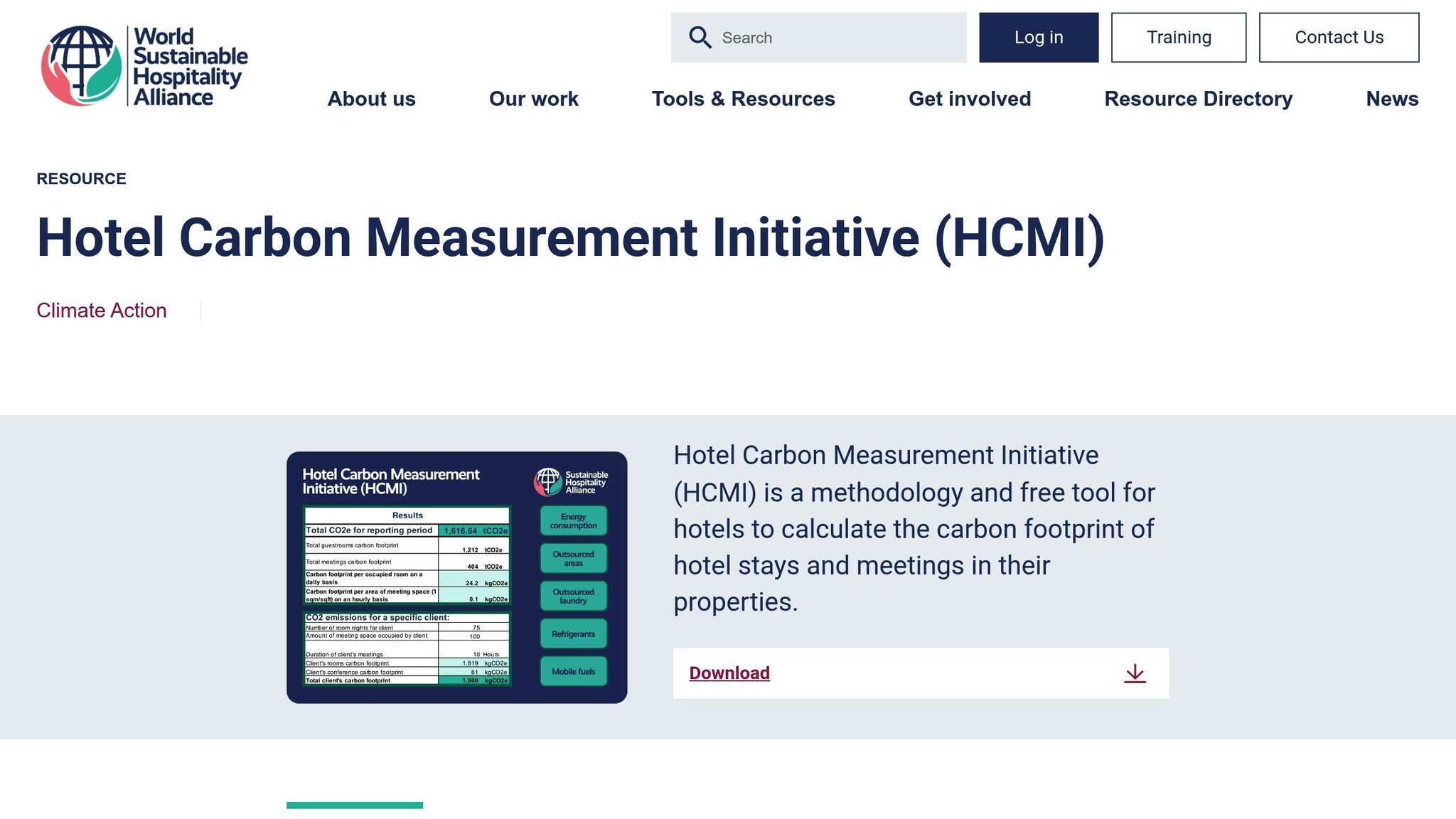
The Hotel Carbon Measurement Initiative (HCMI) is a free framework designed to calculate the carbon footprint of guest stays and meetings. Introduced in June 2012 by the Sustainable Hospitality Alliance and the World Travel & Tourism Council (WTTC), it was developed in partnership with 23 prominent global hospitality companies to establish a unified approach for the industry [1].
The tool adheres to Greenhouse Gas (GHG) Protocol Standards to ensure technical precision. Before its official launch, HCMI 1.0 underwent pilot testing in 52 hotels across the globe to confirm its effectiveness in practical settings [5]. Additionally, the World Resources Institute (WRI) reviewed the methodology to validate its accuracy [1].
"The Hotel Carbon Measurement Initiative is above all a practical tool for supporting hotels in their climate efforts and their commitment to the Glasgow Declaration." – Mr. Zurab Pololikashvili, Secretary-General, UNWTO [4]
Today, HCMI is widely recognized by key industry organizations such as the UN World Tourism Organization (UNWTO), the Global Sustainable Tourism Council (GSTC), and the American Hotel and Lodging Association (AHLA). Major hotel chains like Hyatt, Marriott International, Radisson Hotel Group, and Scandic have integrated the methodology into their carbon reporting practices. Furthermore, the UK government uses HCMI-based data in its official greenhouse gas reporting calculator [4].
This framework provides hotels with a systematic way to measure and report their emissions, making it a cornerstone of sustainability efforts in the hospitality sector.
How HCMI Works
HCMI's methodology focuses on tracking carbon emissions from on-site energy use - such as fuels, purchased electricity, and refrigerant emissions - as well as outsourced operations like laundry services. Hotels input utility data, including electricity bills and fuel usage, into the tool, which then converts this information into CO2e (carbon dioxide equivalent).
The framework accounts for both Scope 1 and Scope 2 emissions as defined by the GHG Protocol. Scope 1 covers direct emissions from sources controlled by the hotel, like boilers and company vehicles, while Scope 2 includes indirect emissions from purchased electricity and heating. A 2022 update refined the methodology by improving how renewable energy usage is reported, ensuring accurate representation of clean energy adoption [4].
The tool provides three essential outputs:
Total carbon footprint for the property: A comprehensive measure of the property's emissions.
Carbon footprint per occupied room: Calculated daily to offer insights into guest-related emissions.
Carbon footprint per meeting space hour: Measured per square foot to account for events and conferences [1].
These standardized metrics allow hotels to fairly compare their performance with others, regardless of size or type. They also help properties meet corporate RFP requirements, participate in benchmarking initiatives like the Cornell Hotel Sustainability Benchmarking Index, and transparently communicate their environmental efforts to guests.
Hotel Carbon Measurement Initiative - Instructional Video (2022)
Key Metrics for Measuring Hotel Carbon Footprints
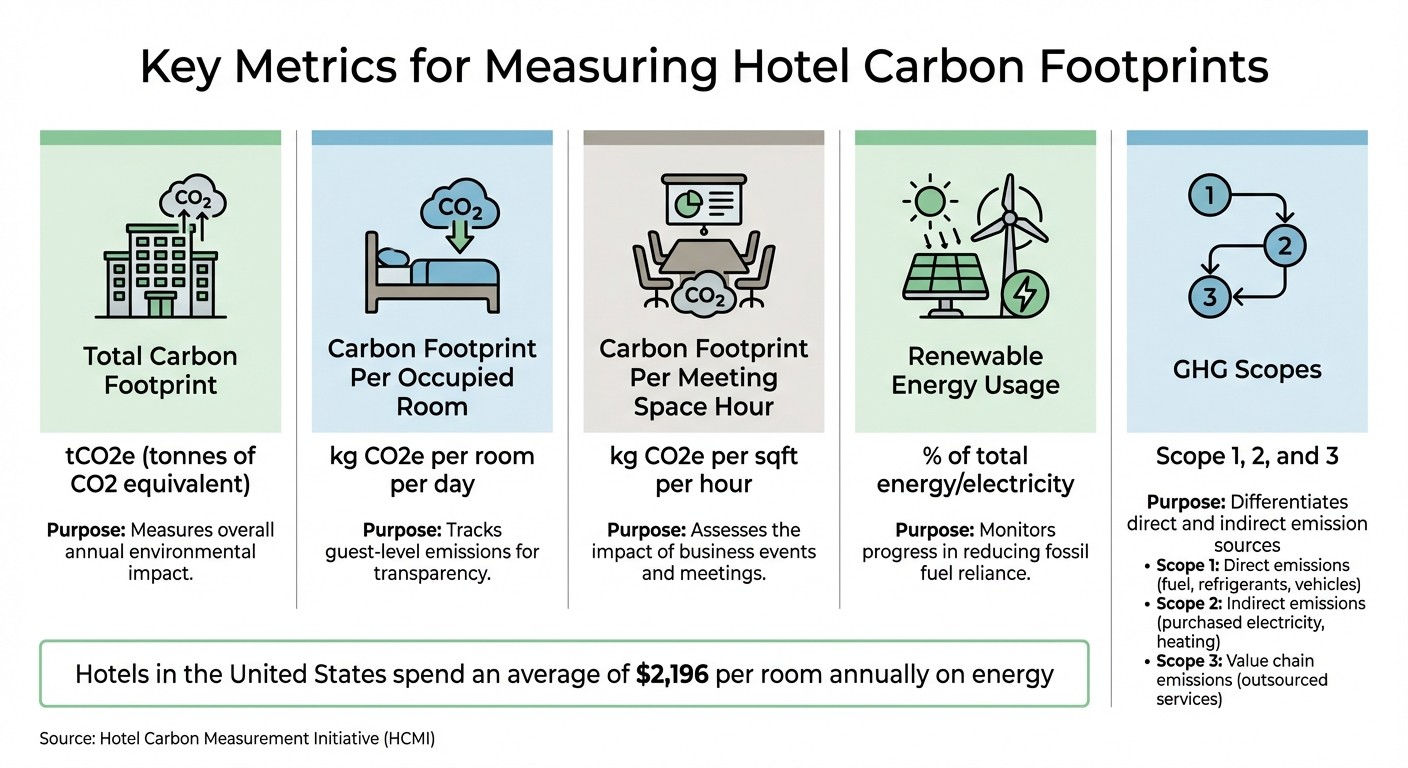
5 Key Hotel Carbon Metrics and Their Measurement Units
When it comes to assessing a hotel's environmental impact and reducing emissions, tracking the right metrics is essential. The HCMI framework outlines five key metrics that provide a comprehensive view of a hotel's carbon performance. Here's a breakdown of each metric and its purpose in driving sustainability efforts.
Total Carbon Footprint quantifies the overall emissions from hotel operations, measured in tonnes of CO2 equivalent (tCO2e). This includes emissions from on-site fuel combustion (e.g., natural gas or oil), electricity usage, fuel for hotel-owned vehicles, refrigerant leaks from HVAC systems, and outsourced services like laundry. This metric serves as the foundation for understanding the hotel's environmental footprint.
Carbon Footprint Per Occupied Room evaluates the emissions associated with each guest stay, expressed in kilograms of CO2 equivalent (kg CO2e) per room per day. By dividing the total annual emissions by the number of occupied rooms, this metric provides a clearer picture of environmental performance compared to metrics that focus on available rooms.
Carbon Footprint Per Meeting Space Hour calculates the emissions tied to business events and conferences, expressed in kg CO2e per square foot per hour. This data is particularly useful for corporate clients and event planners who need to account for the environmental impact of their activities and integrate it into their sustainability reports.
Renewable Energy Usage tracks the amount of energy derived from renewable sources, measured both in absolute terms (kWh) and as a percentage of total energy consumption. This metric highlights a hotel's progress in reducing reliance on fossil fuels, accounting for both on-site renewable energy generation - such as solar panels - and purchased renewable energy certificates.
Greenhouse Gas (GHG) Scopes 1, 2, and 3 categorize emissions based on their source. This classification is crucial for understanding and managing emissions across the value chain:
Scope 1 includes direct emissions from sources like fuel combustion, refrigerant leaks, and hotel-owned vehicles.
Scope 2 covers indirect emissions from purchased electricity, steam, or district heating.
Scope 3 addresses emissions from the broader value chain, such as outsourced laundry services. For context, hotels in the United States spend an average of $2,196 per room annually on energy [7].
Key Metrics Overview
| Metric | Unit of Measurement | Purpose |
| --- | --- | --- |
| Total Carbon Footprint | tCO2e (tonnes of CO2 equivalent) | Measures overall annual environmental impact |
| Carbon Footprint Per Occupied Room | kg CO2e per room per day | Tracks guest-level emissions for transparency |
| Carbon Footprint Per Meeting Space Hour | kg CO2e per sqft per hour | Assesses the impact of business events and meetings |
| Renewable Energy Usage | % of total energy/electricity | Monitors progress in reducing fossil fuel reliance |
| GHG Scopes | Scope 1, 2, and 3 | Differentiates direct and indirect emission sources
| Metric | Unit of Measurement | Purpose |
| --- | --- | --- |
| Total Carbon Footprint | tCO2e (tonnes of CO2 equivalent) | Measures overall annual environmental impact |
| Carbon Footprint Per Occupied Room | kg CO2e per room per day | Tracks guest-level emissions for transparency |
| Carbon Footprint Per Meeting Space Hour | kg CO2e per sqft per hour | Assesses the impact of business events and meetings |
| Renewable Energy Usage | % of total energy/electricity | Monitors progress in reducing fossil fuel reliance |
| GHG Scopes | Scope 1, 2, and 3 | Differentiates direct and indirect emission sources
Benchmarking Hotel Performance Against Industry Standards
Once you've calculated your carbon metrics, the next step is to compare your performance with industry peers. Benchmarking helps identify inefficiencies and external challenges, offering a clear picture of where improvements are needed. It can also differentiate between factors within your control - such as operational inefficiencies - and external influences like your local energy grid's dependence on fossil fuels [3].
Cornell Hotel Sustainability Benchmarking Index (CHSB)
The Cornell Hotel Sustainability Benchmarking Index stands as the largest annual benchmarking initiative for carbon, energy, and water in the hospitality sector. The 2023 edition gathered data from 25,576 hotels across 31 global hotel groups, spanning 64 countries, 84 regions, 410 metropolitan areas, and 88 climate zones [10][12]. This extensive dataset enables hotels to compare their performance against peers in the same city, climate zone, or asset class - whether it's a full-service resort or a limited-service property.
The findings are revealing: the top-performing 25% of hotels emit 2.5 times less carbon than those in the bottom 25% [12]. For instance, in 2023, Norway's carbon intensity measured 13.5 kg CO2e/m², while Hong Kong's reached a much higher 214.5 kg CO2e/m² [12]. Between 2015 and 2018, the industry's overall carbon intensity dropped by 10%, with UK hotels achieving a 23.4% reduction, followed by India at 14.4% and Canada at 13.6% [8].
Hotels that participate in the annual data collection receive a confidential report detailing their position within the energy and carbon spectrum of their market segment. To join future editions, reach out to info@greenviewportal.com [8]. Additionally, the published index is freely accessible to the entire industry each year [9].
For further insights, the Hotel Footprinting Tool builds on CHSB data, enabling direct market comparisons using the HCMI methodology.
Using the Hotel Footprinting Tool
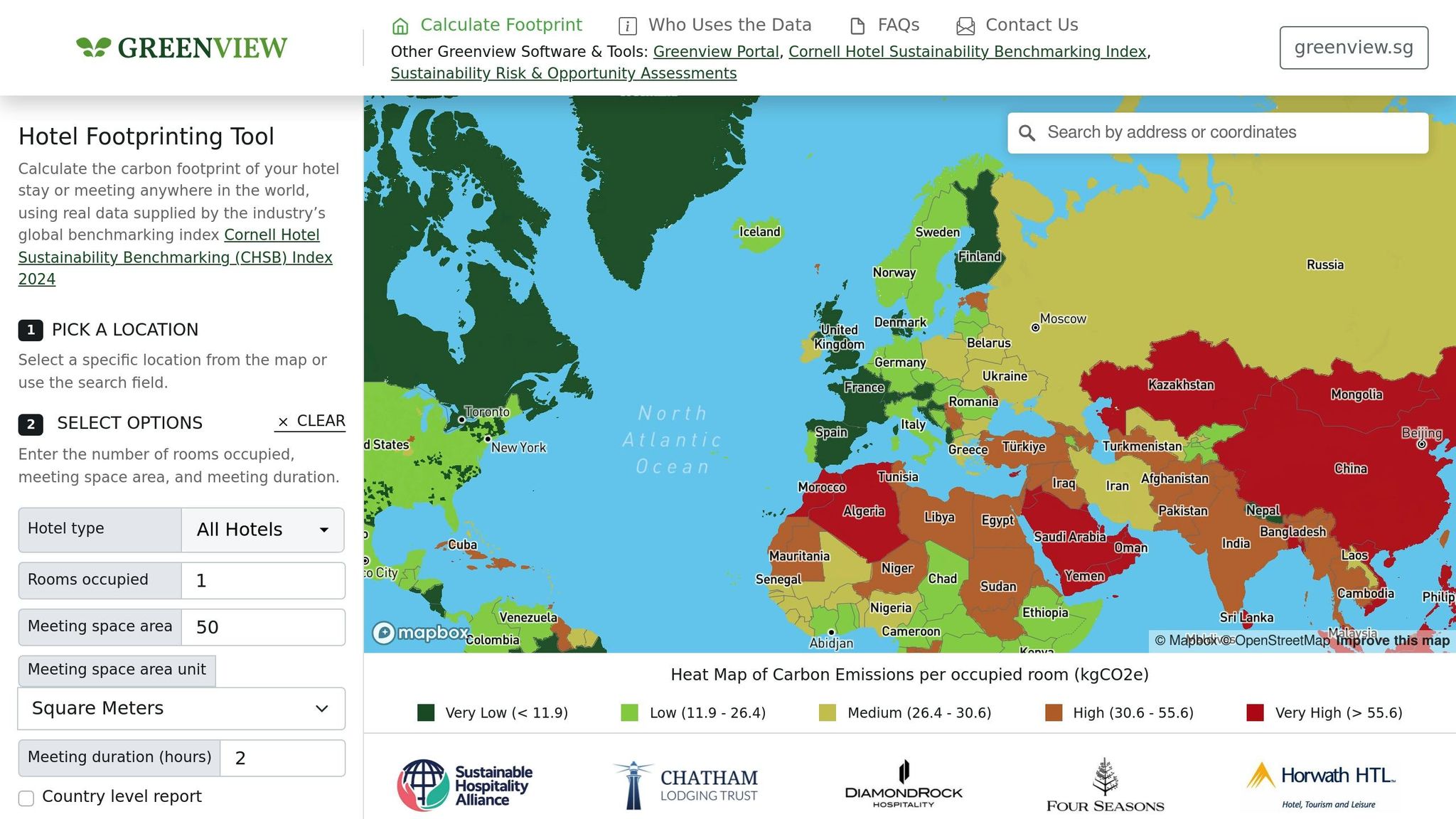
The Hotel Footprinting Tool (www.hotelfootprints.org) complements industry benchmarks by applying the HCMI standards for precise property comparisons. This free online resource leverages CHSB data to provide carbon footprint estimates for hotel stays or meetings worldwide, categorized by location and hotel class [8][11]. It’s particularly useful for responding to RFPs, as it delivers carbon estimates that align with corporate net-zero goals [4].
"CHSB [allows] hoteliers to understand the range of energy, water, and carbon performance globally." – Linda Canina, Dr. Michael Dang Director of the Center for Hospitality Research, Cornell University [12]
The tool also helps pinpoint whether your carbon intensity stems from controllable factors, like operational practices, or external elements such as regional energy infrastructure [3]. This distinction is crucial for setting achievable reduction targets and prioritizing sustainability investments effectively.
How to Implement Carbon Measurement and Reporting
Using the Hotel Carbon Measurement Initiative (HCMI) makes carbon measurement an accessible process. With over 30,000 hotels worldwide already relying on this tool to monitor their impact [1][4], it’s suitable for properties ranging from small boutiques to large resorts. The process involves three straightforward steps, all aligned with Greenhouse Gas Protocol Standards, ensuring your carbon data aligns with industry benchmarks and reporting frameworks.
Step 1: Collecting Data
Start by gathering operational data for the reporting year. This includes essential property metrics like total square footage, guest room areas, and meeting space dimensions, along with the number of guest rooms and occupied room nights. For energy consumption, record electricity usage in kilowatt-hours (kWh), natural gas (converted to kWh if necessary), oil in gallons, and any district heating or propane usage [2].
Don’t forget to account for mobile fuels used by hotel-owned vehicles (e.g., gasoline, diesel, or LPG) and keep refrigerant records for air-conditioning systems. Any gas leaks exceeding 220 pounds (around 100 kg) should be documented, noting the refrigerant type and quantity [2]. If laundry services are outsourced, request either the tonnage processed or the contractor’s energy consumption. A utilities tracker can help maintain consistent records [1].
In cases where energy consumption or occupancy deviates by more than 20% - due to renovations or temporary closures - use data from a period that reflects normal operations to ensure accuracy [1].
Step 2: Calculating Carbon Footprint
Once your data is collected, the HCMI digital tool translates it into standardized carbon metrics [2]. It calculates your total carbon footprint, carbon per occupied room per day, carbon per meeting space hour, and the percentage of renewable energy in your total consumption [1].
The tool addresses Scope 1 emissions (e.g., direct fuels and refrigerants), Scope 2 (purchased electricity and heating), and specific Scope 3 emissions like outsourced laundry [2]. This adherence to GHG Protocol Standards ensures your data meets corporate sustainability reporting needs and allows for comparisons across the industry.
With these metrics in hand, you can use the data for strategic reporting and to benchmark against peers.
Step 3: Reporting and Insights
Your calculated carbon data can serve a variety of strategic purposes. Many corporate clients now require standardized carbon metrics to assess their Scope 3 travel emissions, as 63% of the travel industry cites a lack of transparent sustainability data as a key obstacle to climate action [4]. The HCMI tool helps address this need by providing standardized, reliable data.
"The Hotel Carbon Measurement Initiative is a practical tool for supporting hotels in their climate efforts and their commitment to the Glasgow Declaration." – Mr. Zurab Pololikashvili, Secretary-General, UNWTO [4]
Submit your HCMI data to the Cornell Hotel Sustainability Benchmarking Index to compare your performance with industry peers [1][2]. This benchmarking can help identify whether your carbon intensity is influenced by operational practices or external factors, such as regional energy infrastructure. Insights from this analysis can guide investments in effective carbon reduction strategies. Leading hospitality brands, including Hyatt, Marriott International, Radisson Hotel Group, and Scandic, already use HCMI to support their sustainability reporting [4].
Conclusion
Measuring and benchmarking carbon metrics provides a clear picture of your hotel's environmental impact and helps shape effective sustainability strategies. With the hotel industry responsible for about 1% of global carbon emissions, meeting the 2°C threshold set during COP21 requires the sector to cut emissions by 66% by 2030 and 90% by 2050 [6]. Achieving these ambitious goals depends on accurate measurement, regular tracking, and well-planned actions.
The Hotel Carbon Measurement Initiative (HCMI) offers a standardized approach to carbon measurement, already adopted by over 30,000 properties worldwide [4]. Glenn Mandziuk, CEO of the Sustainable Hospitality Alliance, emphasizes the importance of consistency in his statement:
"We therefore all need to be speaking the same language by using consistent and robust methods... which will enable everyone to focus on minimising negative impacts and accelerate action towards net positive hospitality" [4].
Reliable metrics allow hotels to pinpoint performance gaps and develop focused strategies. Tools like the Cornell Hotel Sustainability Benchmarking Index help identify whether inefficiencies stem from internal operations or external factors. Between 2015 and 2018, the hotel sector reduced its carbon footprint by 10%, followed by an additional 3% drop between 2018 and 2019. Energy intensity has also declined by an average of 3.30% annually since 2017 [3]. These trends highlight the power of consistent measurement and informed action.
Transparent carbon reporting is increasingly vital, addressing corporate Scope 3 requirements and appealing to environmentally conscious travelers. However, 63% of industry professionals cite the lack of transparency as a major obstacle to advancing climate initiatives [4]. Hotels that provide accurate sustainability data not only meet market expectations but also gain a competitive edge in corporate and consumer markets. This clarity paves the way for meaningful progress.
FAQs
What are the benefits of using the Hotel Carbon Measurement Initiative (HCMI) for reducing emissions?
The Hotel Carbon Measurement Initiative (HCMI) offers hotels a free, standardized approach to measure their carbon footprint. It covers both overall operations and specific metrics like emissions per room or meeting space, ensuring clear and consistent reporting. This helps hotels pinpoint areas with higher emissions and monitor their progress effectively.
With HCMI, hotels can compare their performance to industry benchmarks, establish clear goals, and implement focused strategies to cut emissions. Beyond supporting environmental efforts, this approach can improve operational efficiency and attract travelers who prioritize eco-friendly choices.
What are the differences between Scope 1, Scope 2, and Scope 3 emissions for hotels?
Hotels contribute to carbon emissions in various ways, categorized into three distinct scopes: Scope 1, Scope 2, and Scope 3. Each scope highlights a different aspect of a hotel’s environmental impact.
Scope 1 refers to direct emissions from sources that the hotel owns or controls. These include fuel combustion in on-site boilers, emissions from vehicles owned by the hotel, or refrigerant leaks from heating, ventilation, and air conditioning (HVAC) systems.
Scope 2 focuses on indirect emissions tied to the energy the hotel purchases. This includes electricity used to run lighting, elevators, heating and cooling systems, and laundry equipment.
Scope 3 encompasses all other indirect emissions stemming from activities not directly managed by the hotel. These include emissions from guest travel, employees commuting to work, outsourced services, waste disposal, and the production of purchased goods such as food, beverages, and linens. Often, Scope 3 emissions make up the largest portion of a hotel’s carbon footprint, presenting substantial opportunities for reduction.
Council Fire specializes in helping hotels measure emissions across all three scopes, turning complex data into practical strategies to reduce their environmental impact.
How can hotels use the Cornell Hotel Sustainability Benchmarking Index to reduce their carbon footprint?
Hotels can use the Cornell Hotel Sustainability Benchmarking (CHSB) Index to assess their carbon performance by comparing their carbon-per-occupied-room metrics with similar properties. This comparison can be based on factors like location, climate zone, or asset type, offering a clear picture of how they measure up against their peers. Such benchmarking not only reveals their current standing but also pinpoints areas where improvements can be made.
To reduce their carbon footprint, hotels can set specific, measurable goals and implement established best practices. For more tailored strategies, organizations like Council Fire provide expertise to turn these insights into customized action plans, helping hotels improve carbon performance while aligning with broader sustainability objectives.
Related Blog Posts
Latest Articles
©2025



FAQ
01
What does it really mean to “redefine profit”?
02
What makes Council Fire different?
03
Who does Council Fire you work with?
04
What does working with Council Fire actually look like?
05
How does Council Fire help organizations turn big goals into action?
06
How does Council Fire define and measure success?
Dec 23, 2025
Hotel Carbon Benchmarks: Key Metrics
Sustainability Strategy
In This Article
Hotels must standardize carbon measurement: HCMI metrics explain total, per-room and meeting emissions, renewable energy reporting, and industry benchmarking.
Hotel Carbon Benchmarks: Key Metrics
Hotels are under increasing pressure to measure and report their carbon emissions. From meeting corporate client requirements to attracting eco-conscious travelers, providing clear data is no longer optional. The Hotel Carbon Measurement Initiative (HCMI), used by over 30,000 properties globally, offers a standardized way to calculate emissions, enabling hotels to set reduction goals and align with global climate commitments.
Key metrics include:
Total Carbon Footprint: Measures a hotel's overall emissions in tons of CO2 equivalent (tCO2e).
Carbon Footprint Per Occupied Room: Tracks emissions per guest stay in kilograms of CO2 equivalent (kg CO2e).
Carbon Footprint Per Meeting Space Hour: Assesses emissions for events and conferences.
Renewable Energy Usage: Monitors the percentage of energy from renewable sources.
GHG Scope 1, 2, and 3 Emissions: Categorizes emissions by direct (fuel, refrigerants), indirect (electricity), and value chain sources (outsourced services).
The Hotel Carbon Measurement Initiative (HCMI)
What HCMI Is
The Hotel Carbon Measurement Initiative (HCMI) is a free framework designed to calculate the carbon footprint of guest stays and meetings. Introduced in June 2012 by the Sustainable Hospitality Alliance and the World Travel & Tourism Council (WTTC), it was developed in partnership with 23 prominent global hospitality companies to establish a unified approach for the industry [1].
The tool adheres to Greenhouse Gas (GHG) Protocol Standards to ensure technical precision. Before its official launch, HCMI 1.0 underwent pilot testing in 52 hotels across the globe to confirm its effectiveness in practical settings [5]. Additionally, the World Resources Institute (WRI) reviewed the methodology to validate its accuracy [1].
"The Hotel Carbon Measurement Initiative is above all a practical tool for supporting hotels in their climate efforts and their commitment to the Glasgow Declaration." – Mr. Zurab Pololikashvili, Secretary-General, UNWTO [4]
Today, HCMI is widely recognized by key industry organizations such as the UN World Tourism Organization (UNWTO), the Global Sustainable Tourism Council (GSTC), and the American Hotel and Lodging Association (AHLA). Major hotel chains like Hyatt, Marriott International, Radisson Hotel Group, and Scandic have integrated the methodology into their carbon reporting practices. Furthermore, the UK government uses HCMI-based data in its official greenhouse gas reporting calculator [4].
This framework provides hotels with a systematic way to measure and report their emissions, making it a cornerstone of sustainability efforts in the hospitality sector.
How HCMI Works
HCMI's methodology focuses on tracking carbon emissions from on-site energy use - such as fuels, purchased electricity, and refrigerant emissions - as well as outsourced operations like laundry services. Hotels input utility data, including electricity bills and fuel usage, into the tool, which then converts this information into CO2e (carbon dioxide equivalent).
The framework accounts for both Scope 1 and Scope 2 emissions as defined by the GHG Protocol. Scope 1 covers direct emissions from sources controlled by the hotel, like boilers and company vehicles, while Scope 2 includes indirect emissions from purchased electricity and heating. A 2022 update refined the methodology by improving how renewable energy usage is reported, ensuring accurate representation of clean energy adoption [4].
The tool provides three essential outputs:
Total carbon footprint for the property: A comprehensive measure of the property's emissions.
Carbon footprint per occupied room: Calculated daily to offer insights into guest-related emissions.
Carbon footprint per meeting space hour: Measured per square foot to account for events and conferences [1].
These standardized metrics allow hotels to fairly compare their performance with others, regardless of size or type. They also help properties meet corporate RFP requirements, participate in benchmarking initiatives like the Cornell Hotel Sustainability Benchmarking Index, and transparently communicate their environmental efforts to guests.
Hotel Carbon Measurement Initiative - Instructional Video (2022)
Key Metrics for Measuring Hotel Carbon Footprints
5 Key Hotel Carbon Metrics and Their Measurement Units
When it comes to assessing a hotel's environmental impact and reducing emissions, tracking the right metrics is essential. The HCMI framework outlines five key metrics that provide a comprehensive view of a hotel's carbon performance. Here's a breakdown of each metric and its purpose in driving sustainability efforts.
Total Carbon Footprint quantifies the overall emissions from hotel operations, measured in tonnes of CO2 equivalent (tCO2e). This includes emissions from on-site fuel combustion (e.g., natural gas or oil), electricity usage, fuel for hotel-owned vehicles, refrigerant leaks from HVAC systems, and outsourced services like laundry. This metric serves as the foundation for understanding the hotel's environmental footprint.
Carbon Footprint Per Occupied Room evaluates the emissions associated with each guest stay, expressed in kilograms of CO2 equivalent (kg CO2e) per room per day. By dividing the total annual emissions by the number of occupied rooms, this metric provides a clearer picture of environmental performance compared to metrics that focus on available rooms.
Carbon Footprint Per Meeting Space Hour calculates the emissions tied to business events and conferences, expressed in kg CO2e per square foot per hour. This data is particularly useful for corporate clients and event planners who need to account for the environmental impact of their activities and integrate it into their sustainability reports.
Renewable Energy Usage tracks the amount of energy derived from renewable sources, measured both in absolute terms (kWh) and as a percentage of total energy consumption. This metric highlights a hotel's progress in reducing reliance on fossil fuels, accounting for both on-site renewable energy generation - such as solar panels - and purchased renewable energy certificates.
Greenhouse Gas (GHG) Scopes 1, 2, and 3 categorize emissions based on their source. This classification is crucial for understanding and managing emissions across the value chain:
Scope 1 includes direct emissions from sources like fuel combustion, refrigerant leaks, and hotel-owned vehicles.
Scope 2 covers indirect emissions from purchased electricity, steam, or district heating.
Scope 3 addresses emissions from the broader value chain, such as outsourced laundry services. For context, hotels in the United States spend an average of $2,196 per room annually on energy [7].
Key Metrics Overview
| Metric | Unit of Measurement | Purpose |
| --- | --- | --- |
| Total Carbon Footprint | tCO2e (tonnes of CO2 equivalent) | Measures overall annual environmental impact |
| Carbon Footprint Per Occupied Room | kg CO2e per room per day | Tracks guest-level emissions for transparency |
| Carbon Footprint Per Meeting Space Hour | kg CO2e per sqft per hour | Assesses the impact of business events and meetings |
| Renewable Energy Usage | % of total energy/electricity | Monitors progress in reducing fossil fuel reliance |
| GHG Scopes | Scope 1, 2, and 3 | Differentiates direct and indirect emission sources
Benchmarking Hotel Performance Against Industry Standards
Once you've calculated your carbon metrics, the next step is to compare your performance with industry peers. Benchmarking helps identify inefficiencies and external challenges, offering a clear picture of where improvements are needed. It can also differentiate between factors within your control - such as operational inefficiencies - and external influences like your local energy grid's dependence on fossil fuels [3].
Cornell Hotel Sustainability Benchmarking Index (CHSB)
The Cornell Hotel Sustainability Benchmarking Index stands as the largest annual benchmarking initiative for carbon, energy, and water in the hospitality sector. The 2023 edition gathered data from 25,576 hotels across 31 global hotel groups, spanning 64 countries, 84 regions, 410 metropolitan areas, and 88 climate zones [10][12]. This extensive dataset enables hotels to compare their performance against peers in the same city, climate zone, or asset class - whether it's a full-service resort or a limited-service property.
The findings are revealing: the top-performing 25% of hotels emit 2.5 times less carbon than those in the bottom 25% [12]. For instance, in 2023, Norway's carbon intensity measured 13.5 kg CO2e/m², while Hong Kong's reached a much higher 214.5 kg CO2e/m² [12]. Between 2015 and 2018, the industry's overall carbon intensity dropped by 10%, with UK hotels achieving a 23.4% reduction, followed by India at 14.4% and Canada at 13.6% [8].
Hotels that participate in the annual data collection receive a confidential report detailing their position within the energy and carbon spectrum of their market segment. To join future editions, reach out to info@greenviewportal.com [8]. Additionally, the published index is freely accessible to the entire industry each year [9].
For further insights, the Hotel Footprinting Tool builds on CHSB data, enabling direct market comparisons using the HCMI methodology.
Using the Hotel Footprinting Tool
The Hotel Footprinting Tool (www.hotelfootprints.org) complements industry benchmarks by applying the HCMI standards for precise property comparisons. This free online resource leverages CHSB data to provide carbon footprint estimates for hotel stays or meetings worldwide, categorized by location and hotel class [8][11]. It’s particularly useful for responding to RFPs, as it delivers carbon estimates that align with corporate net-zero goals [4].
"CHSB [allows] hoteliers to understand the range of energy, water, and carbon performance globally." – Linda Canina, Dr. Michael Dang Director of the Center for Hospitality Research, Cornell University [12]
The tool also helps pinpoint whether your carbon intensity stems from controllable factors, like operational practices, or external elements such as regional energy infrastructure [3]. This distinction is crucial for setting achievable reduction targets and prioritizing sustainability investments effectively.
How to Implement Carbon Measurement and Reporting
Using the Hotel Carbon Measurement Initiative (HCMI) makes carbon measurement an accessible process. With over 30,000 hotels worldwide already relying on this tool to monitor their impact [1][4], it’s suitable for properties ranging from small boutiques to large resorts. The process involves three straightforward steps, all aligned with Greenhouse Gas Protocol Standards, ensuring your carbon data aligns with industry benchmarks and reporting frameworks.
Step 1: Collecting Data
Start by gathering operational data for the reporting year. This includes essential property metrics like total square footage, guest room areas, and meeting space dimensions, along with the number of guest rooms and occupied room nights. For energy consumption, record electricity usage in kilowatt-hours (kWh), natural gas (converted to kWh if necessary), oil in gallons, and any district heating or propane usage [2].
Don’t forget to account for mobile fuels used by hotel-owned vehicles (e.g., gasoline, diesel, or LPG) and keep refrigerant records for air-conditioning systems. Any gas leaks exceeding 220 pounds (around 100 kg) should be documented, noting the refrigerant type and quantity [2]. If laundry services are outsourced, request either the tonnage processed or the contractor’s energy consumption. A utilities tracker can help maintain consistent records [1].
In cases where energy consumption or occupancy deviates by more than 20% - due to renovations or temporary closures - use data from a period that reflects normal operations to ensure accuracy [1].
Step 2: Calculating Carbon Footprint
Once your data is collected, the HCMI digital tool translates it into standardized carbon metrics [2]. It calculates your total carbon footprint, carbon per occupied room per day, carbon per meeting space hour, and the percentage of renewable energy in your total consumption [1].
The tool addresses Scope 1 emissions (e.g., direct fuels and refrigerants), Scope 2 (purchased electricity and heating), and specific Scope 3 emissions like outsourced laundry [2]. This adherence to GHG Protocol Standards ensures your data meets corporate sustainability reporting needs and allows for comparisons across the industry.
With these metrics in hand, you can use the data for strategic reporting and to benchmark against peers.
Step 3: Reporting and Insights
Your calculated carbon data can serve a variety of strategic purposes. Many corporate clients now require standardized carbon metrics to assess their Scope 3 travel emissions, as 63% of the travel industry cites a lack of transparent sustainability data as a key obstacle to climate action [4]. The HCMI tool helps address this need by providing standardized, reliable data.
"The Hotel Carbon Measurement Initiative is a practical tool for supporting hotels in their climate efforts and their commitment to the Glasgow Declaration." – Mr. Zurab Pololikashvili, Secretary-General, UNWTO [4]
Submit your HCMI data to the Cornell Hotel Sustainability Benchmarking Index to compare your performance with industry peers [1][2]. This benchmarking can help identify whether your carbon intensity is influenced by operational practices or external factors, such as regional energy infrastructure. Insights from this analysis can guide investments in effective carbon reduction strategies. Leading hospitality brands, including Hyatt, Marriott International, Radisson Hotel Group, and Scandic, already use HCMI to support their sustainability reporting [4].
Conclusion
Measuring and benchmarking carbon metrics provides a clear picture of your hotel's environmental impact and helps shape effective sustainability strategies. With the hotel industry responsible for about 1% of global carbon emissions, meeting the 2°C threshold set during COP21 requires the sector to cut emissions by 66% by 2030 and 90% by 2050 [6]. Achieving these ambitious goals depends on accurate measurement, regular tracking, and well-planned actions.
The Hotel Carbon Measurement Initiative (HCMI) offers a standardized approach to carbon measurement, already adopted by over 30,000 properties worldwide [4]. Glenn Mandziuk, CEO of the Sustainable Hospitality Alliance, emphasizes the importance of consistency in his statement:
"We therefore all need to be speaking the same language by using consistent and robust methods... which will enable everyone to focus on minimising negative impacts and accelerate action towards net positive hospitality" [4].
Reliable metrics allow hotels to pinpoint performance gaps and develop focused strategies. Tools like the Cornell Hotel Sustainability Benchmarking Index help identify whether inefficiencies stem from internal operations or external factors. Between 2015 and 2018, the hotel sector reduced its carbon footprint by 10%, followed by an additional 3% drop between 2018 and 2019. Energy intensity has also declined by an average of 3.30% annually since 2017 [3]. These trends highlight the power of consistent measurement and informed action.
Transparent carbon reporting is increasingly vital, addressing corporate Scope 3 requirements and appealing to environmentally conscious travelers. However, 63% of industry professionals cite the lack of transparency as a major obstacle to advancing climate initiatives [4]. Hotels that provide accurate sustainability data not only meet market expectations but also gain a competitive edge in corporate and consumer markets. This clarity paves the way for meaningful progress.
FAQs
What are the benefits of using the Hotel Carbon Measurement Initiative (HCMI) for reducing emissions?
The Hotel Carbon Measurement Initiative (HCMI) offers hotels a free, standardized approach to measure their carbon footprint. It covers both overall operations and specific metrics like emissions per room or meeting space, ensuring clear and consistent reporting. This helps hotels pinpoint areas with higher emissions and monitor their progress effectively.
With HCMI, hotels can compare their performance to industry benchmarks, establish clear goals, and implement focused strategies to cut emissions. Beyond supporting environmental efforts, this approach can improve operational efficiency and attract travelers who prioritize eco-friendly choices.
What are the differences between Scope 1, Scope 2, and Scope 3 emissions for hotels?
Hotels contribute to carbon emissions in various ways, categorized into three distinct scopes: Scope 1, Scope 2, and Scope 3. Each scope highlights a different aspect of a hotel’s environmental impact.
Scope 1 refers to direct emissions from sources that the hotel owns or controls. These include fuel combustion in on-site boilers, emissions from vehicles owned by the hotel, or refrigerant leaks from heating, ventilation, and air conditioning (HVAC) systems.
Scope 2 focuses on indirect emissions tied to the energy the hotel purchases. This includes electricity used to run lighting, elevators, heating and cooling systems, and laundry equipment.
Scope 3 encompasses all other indirect emissions stemming from activities not directly managed by the hotel. These include emissions from guest travel, employees commuting to work, outsourced services, waste disposal, and the production of purchased goods such as food, beverages, and linens. Often, Scope 3 emissions make up the largest portion of a hotel’s carbon footprint, presenting substantial opportunities for reduction.
Council Fire specializes in helping hotels measure emissions across all three scopes, turning complex data into practical strategies to reduce their environmental impact.
How can hotels use the Cornell Hotel Sustainability Benchmarking Index to reduce their carbon footprint?
Hotels can use the Cornell Hotel Sustainability Benchmarking (CHSB) Index to assess their carbon performance by comparing their carbon-per-occupied-room metrics with similar properties. This comparison can be based on factors like location, climate zone, or asset type, offering a clear picture of how they measure up against their peers. Such benchmarking not only reveals their current standing but also pinpoints areas where improvements can be made.
To reduce their carbon footprint, hotels can set specific, measurable goals and implement established best practices. For more tailored strategies, organizations like Council Fire provide expertise to turn these insights into customized action plans, helping hotels improve carbon performance while aligning with broader sustainability objectives.
Related Blog Posts
FAQ
01
What does it really mean to “redefine profit”?
02
What makes Council Fire different?
03
Who does Council Fire you work with?
04
What does working with Council Fire actually look like?
05
How does Council Fire help organizations turn big goals into action?
06
How does Council Fire define and measure success?
Dec 23, 2025
Hotel Carbon Benchmarks: Key Metrics
Sustainability Strategy
In This Article
Hotels must standardize carbon measurement: HCMI metrics explain total, per-room and meeting emissions, renewable energy reporting, and industry benchmarking.
Hotel Carbon Benchmarks: Key Metrics
Hotels are under increasing pressure to measure and report their carbon emissions. From meeting corporate client requirements to attracting eco-conscious travelers, providing clear data is no longer optional. The Hotel Carbon Measurement Initiative (HCMI), used by over 30,000 properties globally, offers a standardized way to calculate emissions, enabling hotels to set reduction goals and align with global climate commitments.
Key metrics include:
Total Carbon Footprint: Measures a hotel's overall emissions in tons of CO2 equivalent (tCO2e).
Carbon Footprint Per Occupied Room: Tracks emissions per guest stay in kilograms of CO2 equivalent (kg CO2e).
Carbon Footprint Per Meeting Space Hour: Assesses emissions for events and conferences.
Renewable Energy Usage: Monitors the percentage of energy from renewable sources.
GHG Scope 1, 2, and 3 Emissions: Categorizes emissions by direct (fuel, refrigerants), indirect (electricity), and value chain sources (outsourced services).
The Hotel Carbon Measurement Initiative (HCMI)
What HCMI Is
The Hotel Carbon Measurement Initiative (HCMI) is a free framework designed to calculate the carbon footprint of guest stays and meetings. Introduced in June 2012 by the Sustainable Hospitality Alliance and the World Travel & Tourism Council (WTTC), it was developed in partnership with 23 prominent global hospitality companies to establish a unified approach for the industry [1].
The tool adheres to Greenhouse Gas (GHG) Protocol Standards to ensure technical precision. Before its official launch, HCMI 1.0 underwent pilot testing in 52 hotels across the globe to confirm its effectiveness in practical settings [5]. Additionally, the World Resources Institute (WRI) reviewed the methodology to validate its accuracy [1].
"The Hotel Carbon Measurement Initiative is above all a practical tool for supporting hotels in their climate efforts and their commitment to the Glasgow Declaration." – Mr. Zurab Pololikashvili, Secretary-General, UNWTO [4]
Today, HCMI is widely recognized by key industry organizations such as the UN World Tourism Organization (UNWTO), the Global Sustainable Tourism Council (GSTC), and the American Hotel and Lodging Association (AHLA). Major hotel chains like Hyatt, Marriott International, Radisson Hotel Group, and Scandic have integrated the methodology into their carbon reporting practices. Furthermore, the UK government uses HCMI-based data in its official greenhouse gas reporting calculator [4].
This framework provides hotels with a systematic way to measure and report their emissions, making it a cornerstone of sustainability efforts in the hospitality sector.
How HCMI Works
HCMI's methodology focuses on tracking carbon emissions from on-site energy use - such as fuels, purchased electricity, and refrigerant emissions - as well as outsourced operations like laundry services. Hotels input utility data, including electricity bills and fuel usage, into the tool, which then converts this information into CO2e (carbon dioxide equivalent).
The framework accounts for both Scope 1 and Scope 2 emissions as defined by the GHG Protocol. Scope 1 covers direct emissions from sources controlled by the hotel, like boilers and company vehicles, while Scope 2 includes indirect emissions from purchased electricity and heating. A 2022 update refined the methodology by improving how renewable energy usage is reported, ensuring accurate representation of clean energy adoption [4].
The tool provides three essential outputs:
Total carbon footprint for the property: A comprehensive measure of the property's emissions.
Carbon footprint per occupied room: Calculated daily to offer insights into guest-related emissions.
Carbon footprint per meeting space hour: Measured per square foot to account for events and conferences [1].
These standardized metrics allow hotels to fairly compare their performance with others, regardless of size or type. They also help properties meet corporate RFP requirements, participate in benchmarking initiatives like the Cornell Hotel Sustainability Benchmarking Index, and transparently communicate their environmental efforts to guests.
Hotel Carbon Measurement Initiative - Instructional Video (2022)
Key Metrics for Measuring Hotel Carbon Footprints
5 Key Hotel Carbon Metrics and Their Measurement Units
When it comes to assessing a hotel's environmental impact and reducing emissions, tracking the right metrics is essential. The HCMI framework outlines five key metrics that provide a comprehensive view of a hotel's carbon performance. Here's a breakdown of each metric and its purpose in driving sustainability efforts.
Total Carbon Footprint quantifies the overall emissions from hotel operations, measured in tonnes of CO2 equivalent (tCO2e). This includes emissions from on-site fuel combustion (e.g., natural gas or oil), electricity usage, fuel for hotel-owned vehicles, refrigerant leaks from HVAC systems, and outsourced services like laundry. This metric serves as the foundation for understanding the hotel's environmental footprint.
Carbon Footprint Per Occupied Room evaluates the emissions associated with each guest stay, expressed in kilograms of CO2 equivalent (kg CO2e) per room per day. By dividing the total annual emissions by the number of occupied rooms, this metric provides a clearer picture of environmental performance compared to metrics that focus on available rooms.
Carbon Footprint Per Meeting Space Hour calculates the emissions tied to business events and conferences, expressed in kg CO2e per square foot per hour. This data is particularly useful for corporate clients and event planners who need to account for the environmental impact of their activities and integrate it into their sustainability reports.
Renewable Energy Usage tracks the amount of energy derived from renewable sources, measured both in absolute terms (kWh) and as a percentage of total energy consumption. This metric highlights a hotel's progress in reducing reliance on fossil fuels, accounting for both on-site renewable energy generation - such as solar panels - and purchased renewable energy certificates.
Greenhouse Gas (GHG) Scopes 1, 2, and 3 categorize emissions based on their source. This classification is crucial for understanding and managing emissions across the value chain:
Scope 1 includes direct emissions from sources like fuel combustion, refrigerant leaks, and hotel-owned vehicles.
Scope 2 covers indirect emissions from purchased electricity, steam, or district heating.
Scope 3 addresses emissions from the broader value chain, such as outsourced laundry services. For context, hotels in the United States spend an average of $2,196 per room annually on energy [7].
Key Metrics Overview
| Metric | Unit of Measurement | Purpose |
| --- | --- | --- |
| Total Carbon Footprint | tCO2e (tonnes of CO2 equivalent) | Measures overall annual environmental impact |
| Carbon Footprint Per Occupied Room | kg CO2e per room per day | Tracks guest-level emissions for transparency |
| Carbon Footprint Per Meeting Space Hour | kg CO2e per sqft per hour | Assesses the impact of business events and meetings |
| Renewable Energy Usage | % of total energy/electricity | Monitors progress in reducing fossil fuel reliance |
| GHG Scopes | Scope 1, 2, and 3 | Differentiates direct and indirect emission sources
Benchmarking Hotel Performance Against Industry Standards
Once you've calculated your carbon metrics, the next step is to compare your performance with industry peers. Benchmarking helps identify inefficiencies and external challenges, offering a clear picture of where improvements are needed. It can also differentiate between factors within your control - such as operational inefficiencies - and external influences like your local energy grid's dependence on fossil fuels [3].
Cornell Hotel Sustainability Benchmarking Index (CHSB)
The Cornell Hotel Sustainability Benchmarking Index stands as the largest annual benchmarking initiative for carbon, energy, and water in the hospitality sector. The 2023 edition gathered data from 25,576 hotels across 31 global hotel groups, spanning 64 countries, 84 regions, 410 metropolitan areas, and 88 climate zones [10][12]. This extensive dataset enables hotels to compare their performance against peers in the same city, climate zone, or asset class - whether it's a full-service resort or a limited-service property.
The findings are revealing: the top-performing 25% of hotels emit 2.5 times less carbon than those in the bottom 25% [12]. For instance, in 2023, Norway's carbon intensity measured 13.5 kg CO2e/m², while Hong Kong's reached a much higher 214.5 kg CO2e/m² [12]. Between 2015 and 2018, the industry's overall carbon intensity dropped by 10%, with UK hotels achieving a 23.4% reduction, followed by India at 14.4% and Canada at 13.6% [8].
Hotels that participate in the annual data collection receive a confidential report detailing their position within the energy and carbon spectrum of their market segment. To join future editions, reach out to info@greenviewportal.com [8]. Additionally, the published index is freely accessible to the entire industry each year [9].
For further insights, the Hotel Footprinting Tool builds on CHSB data, enabling direct market comparisons using the HCMI methodology.
Using the Hotel Footprinting Tool
The Hotel Footprinting Tool (www.hotelfootprints.org) complements industry benchmarks by applying the HCMI standards for precise property comparisons. This free online resource leverages CHSB data to provide carbon footprint estimates for hotel stays or meetings worldwide, categorized by location and hotel class [8][11]. It’s particularly useful for responding to RFPs, as it delivers carbon estimates that align with corporate net-zero goals [4].
"CHSB [allows] hoteliers to understand the range of energy, water, and carbon performance globally." – Linda Canina, Dr. Michael Dang Director of the Center for Hospitality Research, Cornell University [12]
The tool also helps pinpoint whether your carbon intensity stems from controllable factors, like operational practices, or external elements such as regional energy infrastructure [3]. This distinction is crucial for setting achievable reduction targets and prioritizing sustainability investments effectively.
How to Implement Carbon Measurement and Reporting
Using the Hotel Carbon Measurement Initiative (HCMI) makes carbon measurement an accessible process. With over 30,000 hotels worldwide already relying on this tool to monitor their impact [1][4], it’s suitable for properties ranging from small boutiques to large resorts. The process involves three straightforward steps, all aligned with Greenhouse Gas Protocol Standards, ensuring your carbon data aligns with industry benchmarks and reporting frameworks.
Step 1: Collecting Data
Start by gathering operational data for the reporting year. This includes essential property metrics like total square footage, guest room areas, and meeting space dimensions, along with the number of guest rooms and occupied room nights. For energy consumption, record electricity usage in kilowatt-hours (kWh), natural gas (converted to kWh if necessary), oil in gallons, and any district heating or propane usage [2].
Don’t forget to account for mobile fuels used by hotel-owned vehicles (e.g., gasoline, diesel, or LPG) and keep refrigerant records for air-conditioning systems. Any gas leaks exceeding 220 pounds (around 100 kg) should be documented, noting the refrigerant type and quantity [2]. If laundry services are outsourced, request either the tonnage processed or the contractor’s energy consumption. A utilities tracker can help maintain consistent records [1].
In cases where energy consumption or occupancy deviates by more than 20% - due to renovations or temporary closures - use data from a period that reflects normal operations to ensure accuracy [1].
Step 2: Calculating Carbon Footprint
Once your data is collected, the HCMI digital tool translates it into standardized carbon metrics [2]. It calculates your total carbon footprint, carbon per occupied room per day, carbon per meeting space hour, and the percentage of renewable energy in your total consumption [1].
The tool addresses Scope 1 emissions (e.g., direct fuels and refrigerants), Scope 2 (purchased electricity and heating), and specific Scope 3 emissions like outsourced laundry [2]. This adherence to GHG Protocol Standards ensures your data meets corporate sustainability reporting needs and allows for comparisons across the industry.
With these metrics in hand, you can use the data for strategic reporting and to benchmark against peers.
Step 3: Reporting and Insights
Your calculated carbon data can serve a variety of strategic purposes. Many corporate clients now require standardized carbon metrics to assess their Scope 3 travel emissions, as 63% of the travel industry cites a lack of transparent sustainability data as a key obstacle to climate action [4]. The HCMI tool helps address this need by providing standardized, reliable data.
"The Hotel Carbon Measurement Initiative is a practical tool for supporting hotels in their climate efforts and their commitment to the Glasgow Declaration." – Mr. Zurab Pololikashvili, Secretary-General, UNWTO [4]
Submit your HCMI data to the Cornell Hotel Sustainability Benchmarking Index to compare your performance with industry peers [1][2]. This benchmarking can help identify whether your carbon intensity is influenced by operational practices or external factors, such as regional energy infrastructure. Insights from this analysis can guide investments in effective carbon reduction strategies. Leading hospitality brands, including Hyatt, Marriott International, Radisson Hotel Group, and Scandic, already use HCMI to support their sustainability reporting [4].
Conclusion
Measuring and benchmarking carbon metrics provides a clear picture of your hotel's environmental impact and helps shape effective sustainability strategies. With the hotel industry responsible for about 1% of global carbon emissions, meeting the 2°C threshold set during COP21 requires the sector to cut emissions by 66% by 2030 and 90% by 2050 [6]. Achieving these ambitious goals depends on accurate measurement, regular tracking, and well-planned actions.
The Hotel Carbon Measurement Initiative (HCMI) offers a standardized approach to carbon measurement, already adopted by over 30,000 properties worldwide [4]. Glenn Mandziuk, CEO of the Sustainable Hospitality Alliance, emphasizes the importance of consistency in his statement:
"We therefore all need to be speaking the same language by using consistent and robust methods... which will enable everyone to focus on minimising negative impacts and accelerate action towards net positive hospitality" [4].
Reliable metrics allow hotels to pinpoint performance gaps and develop focused strategies. Tools like the Cornell Hotel Sustainability Benchmarking Index help identify whether inefficiencies stem from internal operations or external factors. Between 2015 and 2018, the hotel sector reduced its carbon footprint by 10%, followed by an additional 3% drop between 2018 and 2019. Energy intensity has also declined by an average of 3.30% annually since 2017 [3]. These trends highlight the power of consistent measurement and informed action.
Transparent carbon reporting is increasingly vital, addressing corporate Scope 3 requirements and appealing to environmentally conscious travelers. However, 63% of industry professionals cite the lack of transparency as a major obstacle to advancing climate initiatives [4]. Hotels that provide accurate sustainability data not only meet market expectations but also gain a competitive edge in corporate and consumer markets. This clarity paves the way for meaningful progress.
FAQs
What are the benefits of using the Hotel Carbon Measurement Initiative (HCMI) for reducing emissions?
The Hotel Carbon Measurement Initiative (HCMI) offers hotels a free, standardized approach to measure their carbon footprint. It covers both overall operations and specific metrics like emissions per room or meeting space, ensuring clear and consistent reporting. This helps hotels pinpoint areas with higher emissions and monitor their progress effectively.
With HCMI, hotels can compare their performance to industry benchmarks, establish clear goals, and implement focused strategies to cut emissions. Beyond supporting environmental efforts, this approach can improve operational efficiency and attract travelers who prioritize eco-friendly choices.
What are the differences between Scope 1, Scope 2, and Scope 3 emissions for hotels?
Hotels contribute to carbon emissions in various ways, categorized into three distinct scopes: Scope 1, Scope 2, and Scope 3. Each scope highlights a different aspect of a hotel’s environmental impact.
Scope 1 refers to direct emissions from sources that the hotel owns or controls. These include fuel combustion in on-site boilers, emissions from vehicles owned by the hotel, or refrigerant leaks from heating, ventilation, and air conditioning (HVAC) systems.
Scope 2 focuses on indirect emissions tied to the energy the hotel purchases. This includes electricity used to run lighting, elevators, heating and cooling systems, and laundry equipment.
Scope 3 encompasses all other indirect emissions stemming from activities not directly managed by the hotel. These include emissions from guest travel, employees commuting to work, outsourced services, waste disposal, and the production of purchased goods such as food, beverages, and linens. Often, Scope 3 emissions make up the largest portion of a hotel’s carbon footprint, presenting substantial opportunities for reduction.
Council Fire specializes in helping hotels measure emissions across all three scopes, turning complex data into practical strategies to reduce their environmental impact.
How can hotels use the Cornell Hotel Sustainability Benchmarking Index to reduce their carbon footprint?
Hotels can use the Cornell Hotel Sustainability Benchmarking (CHSB) Index to assess their carbon performance by comparing their carbon-per-occupied-room metrics with similar properties. This comparison can be based on factors like location, climate zone, or asset type, offering a clear picture of how they measure up against their peers. Such benchmarking not only reveals their current standing but also pinpoints areas where improvements can be made.
To reduce their carbon footprint, hotels can set specific, measurable goals and implement established best practices. For more tailored strategies, organizations like Council Fire provide expertise to turn these insights into customized action plans, helping hotels improve carbon performance while aligning with broader sustainability objectives.
Related Blog Posts
FAQ
What does it really mean to “redefine profit”?
What makes Council Fire different?
Who does Council Fire you work with?
What does working with Council Fire actually look like?
How does Council Fire help organizations turn big goals into action?
How does Council Fire define and measure success?