
Feb 2, 2026
How to Fund Climate Adaptation Projects via Public-Private Partnerships for Municipalities & Government Agencies
Sustainability Strategy
In This Article
Municipalities can leverage PPPs and federal tools to attract private capital, share climate risks, and fund resilient infrastructure.
How to Fund Climate Adaptation Projects via Public-Private Partnerships for Municipalities & Government Agencies
Public-private partnerships (PPPs) offer a practical way for municipalities to address the financial challenges of climate adaptation projects. These agreements allow private entities to share the costs, risks, and responsibilities of designing, building, and maintaining infrastructure projects, such as stormwater systems and flood defenses. By leveraging private capital and expertise, municipalities can stretch public funds further and accelerate project timelines.
Key Takeaways:
What are PPPs? Collaborations where private partners co-finance and manage public infrastructure projects, reducing the financial burden on local governments.
Why use them? PPPs can achieve funding leverage ratios of 10:1, meaning $1 of public funding attracts $10 of private investment.
Funding sources: Programs like WIFIA and State Revolving Funds (SRFs) offer low-interest loans and grants to support these partnerships.
How to prioritize projects: Conduct climate risk assessments and focus on high-priority assets using tools like FEMA’s National Risk Index and the Climate Mapping for Resilience and Adaptation (CMRA).
Examples of success: The Clean Water Partnership in Maryland used a PPP model to meet stormwater management goals while creating local jobs and supporting small businesses.
Municipalities can use these partnerships to fund critical climate projects, align with federal and state regulations, and deliver long-term benefits to their communities. The article explores practical steps to assess risks, secure funding, and structure effective partnerships.
WAPPP Roundtable on Blended Finance for Climate Adaptation
Assessing Climate Risks and Setting Project Priorities
Before moving forward with a public-private partnership (PPP), municipalities need to identify which assets are most vulnerable to climate threats. This starts by understanding two key factors: vulnerability, which measures how sensitive an asset is and how well it can recover, and risk, which combines the likelihood of a hazard with its potential impact [4].
Conducting Climate Risk Assessments
Many municipalities begin with qualitative assessments, categorizing asset vulnerabilities with simple ratings like low, medium, or high [4]. However, incorporating quantitative geospatial data can significantly reduce uncertainty, especially for intricate systems like water infrastructure or transportation networks [4].
A practical approach involves creating a vulnerability spreadsheet that lists assets alongside columns for impact, sensitivity, adaptive capacity, and overall vulnerability. To assess hazards, apply rules like labeling threats as "High" if they are likely to occur within the next five years. Pair this information with a 3x3 risk matrix to identify "High-High" priorities - assets that are both highly vulnerable and exposed to significant hazards [4].
Certain assets, if compromised, could trigger cascading failures across multiple sectors. As highlighted by the U.S. Climate Resilience Toolkit:
If you recognize that damage to a specific asset... could initiate multiple failures across other sectors in your community, consider that asset as a top priority [4].
Critical infrastructure, such as telecommunications systems or major bridges, often falls into this category and should be prioritized [4]. To support these assessments, federal tools like FEMA's National Risk Index and the Climate Mapping for Resilience and Adaptation (CMRA) tool offer localized data on 18 natural hazards [4][5]. For more specific risks, tools like the Sea Level Rise Viewer for coastal areas or the Wildfire Risk to Communities tool for energy grids and residential zones can provide targeted insights [5].
These evaluations lay the groundwork for identifying projects where adaptation efforts can deliver the greatest benefits.
Ranking High-Impact Adaptation Projects
Once a clear risk profile is established, the next step is to focus on projects that promise the highest returns in terms of resilience. Prioritize these initiatives by calculating their expected value, which considers the benefits of reduced risks, improved resilience, and any additional co-benefits [6]. Use regional loss data as a baseline to estimate the cost of inaction - what it would take to repair or replace assets if no preventive measures are taken [6]. Projects should only move forward if their expected value outweighs implementation costs [6].
The Steps to Resilience Framework is a helpful tool for evaluating exposure and vulnerability while guiding prioritization efforts [6][5]. Breaking larger projects into smaller, manageable milestones can help build early successes, which can attract further resources [6]. The Ready-to-Fund Resilience Toolkit outlines ten characteristics that make projects more appealing to public and private investors, offering guidance for designing initiatives that align with funding requirements [2].
To maximize impact, municipalities should integrate climate adaptation strategies into broader plans, such as transportation or economic development initiatives. This approach not only opens up additional funding opportunities but also amplifies the benefits of the projects [2]. Publicly documenting the selection and prioritization of assets builds trust among stakeholders and strengthens the case when seeking private partners for PPP arrangements [6].
Using Federal and State Financing Tools for PPPs
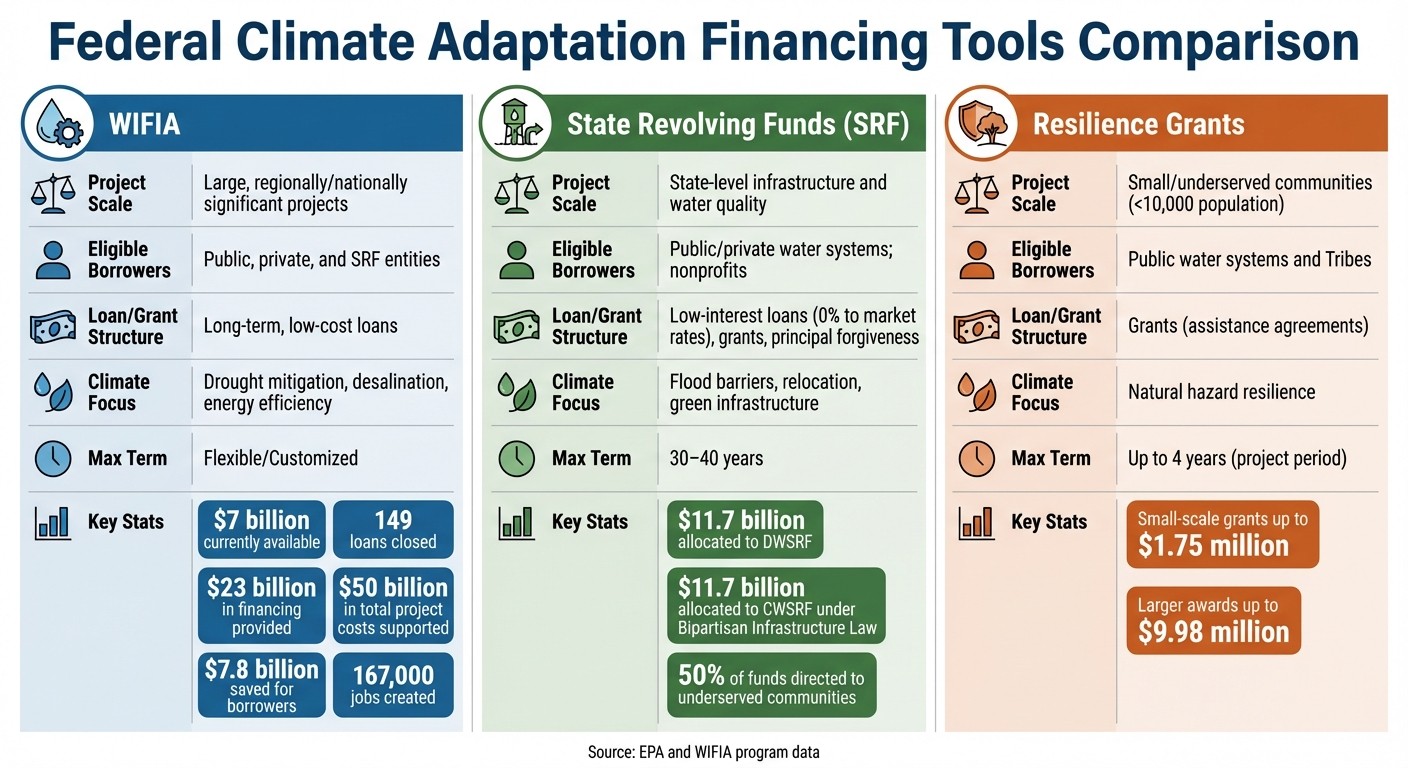
Federal Climate Adaptation Financing Tools Comparison for Municipalities
Once projects are prioritized, securing funding becomes the next critical step. Federal and state programs offer a range of financing tools specifically designed to address resilience needs in water infrastructure and climate initiatives. These programs provide a solid financial base for public-private partnerships (PPPs), ensuring alignment with long-term goals.
Federal and State Program Options
One of the most prominent federal tools is the WIFIA program, which currently offers about $7 billion in funding [7]. WIFIA specializes in long-term, low-cost supplemental loans with repayment terms tailored to match a project’s cash flow [8]. Since its launch, WIFIA has closed 149 loans, providing $23 billion in financing, supporting $50 billion in total project costs, saving borrowers $7.8 billion, and creating an estimated 167,000 jobs [7]. Both public and private entities are eligible, making it particularly well-suited for PPP models [7][8].
For smaller or localized projects, State Revolving Funds (SRFs) offer financing options with interest rates ranging from 0% to market rates [8]. The Drinking Water State Revolving Fund (DWSRF) supports projects like installing flood barriers, relocating facilities out of flood-prone areas, and using saltwater-resistant equipment [8]. The Clean Water State Revolving Fund (CWSRF), on the other hand, focuses on water quality improvements, including green stormwater management and water reuse initiatives [8]. Both programs received significant funding boosts under the Bipartisan Infrastructure Law, with $11.7 billion allocated to each fund [8]. Notably, around 50% of these funds are directed toward underserved communities as grants or loans with principal forgiveness [8]. For communities designated as "disadvantaged" by their state, extended loan terms of up to 40 years and additional subsidies are available [8].
Smaller communities, particularly those with populations under 10,000, can access the Drinking Water System Infrastructure Resilience and Sustainability Program. This program provides grants aimed at enhancing resilience to natural hazards, with small-scale grants of $1.75 million and larger awards reaching up to $9.98 million [8].
Navigating these programs can be complex, but municipalities can rely on state-level technical assistance providers for guidance [8]. Resources like the EPA's Water Technical Assistance (WaterTA) program, Environmental Finance Centers (EFCs), and the Water Finance Clearinghouse offer free support for planning, designing, and funding applications, connecting communities to over $10 billion in water-related funding sources [9].
Comparing Financing Tools for Climate Projects
Different financing tools cater to varying project scales and community needs. Here’s a comparative breakdown:
| <strong>Feature</strong> | <strong>WIFIA</strong> | <strong>State Revolving Funds (SRF)</strong> | <strong>Resilience Grants</strong> |
| --- | --- | --- | --- |
| <strong>Project Scale</strong> | Large, regionally/nationally significant projects | State-level infrastructure and water quality | Small/underserved communities (<10,000 pop) |
| <strong>Eligible Borrowers</strong> | Public, private, and SRF entities | Public/private water systems; nonprofits | Public water systems and Tribes |
| <strong>Loan/Grant Structure</strong> | Long-term, low-cost loans | Low-interest loans, grants, principal forgiveness | Grants (assistance agreements) |
| <strong>Climate Focus</strong> | Drought mitigation, desalination, energy efficiency | Flood barriers, relocation, green infrastructure | Natural hazard resilience |
| <strong>Max Term</strong>
| <strong>Feature</strong> | <strong>WIFIA</strong> | <strong>State Revolving Funds (SRF)</strong> | <strong>Resilience Grants</strong> |
| --- | --- | --- | --- |
| <strong>Project Scale</strong> | Large, regionally/nationally significant projects | State-level infrastructure and water quality | Small/underserved communities (<10,000 pop) |
| <strong>Eligible Borrowers</strong> | Public, private, and SRF entities | Public/private water systems; nonprofits | Public water systems and Tribes |
| <strong>Loan/Grant Structure</strong> | Long-term, low-cost loans | Low-interest loans, grants, principal forgiveness | Grants (assistance agreements) |
| <strong>Climate Focus</strong> | Drought mitigation, desalination, energy efficiency | Flood barriers, relocation, green infrastructure | Natural hazard resilience |
| <strong>Max Term</strong>
For municipalities, projects that qualify for the CWSRF Green Project Reserve are particularly appealing, as they emphasize green infrastructure and water efficiency [8]. WIFIA’s customizable repayment terms also make it a strong option for projects with variable revenue timelines [8]. Analytical tools like the Financing Alternatives Comparison Tool (FACT) can help communities evaluate various funding approaches, considering both regulatory and long-term costs [9].
"Lack of funding is consistently cited as a barrier to implementing green infrastructure. However, because green infrastructure projects offer multiple benefits, they can qualify for a variety of federal, nonprofit, and local funding sources."
US EPA [9]
Municipalities can maximize funding opportunities by integrating resilience projects into broader efforts, such as transportation or economic development plans [2]. Collaborations with state, county, or Tribal governments, as well as partnerships with academic institutions, can further expand access to resources and technical expertise [2].
Building Effective Public-Private Partnerships
Securing financing is only part of the equation; structuring partnerships that allocate risks wisely, ensure accountability, and achieve tangible climate outcomes is just as crucial.
Using Risk-Sharing Mechanisms
Climate adaptation projects often come with uncertainties that can make private investors hesitant. Risk-sharing tools like concessionary capital - offering low-interest public funding - help lower project costs, making these initiatives more appealing to private equity. Loan guarantees are another option, providing a safety net for private debt, particularly when municipalities experiment with new adaptation technologies. Performance-based payments, meanwhile, tie contractor compensation directly to meeting specific goals, such as cutting stormwater runoff.
The Community-Based Public-Private Partnership (CBP3) model is built on these principles, creating long-term collaborations where cost savings are reinvested into a pool for future projects. This approach has the potential to attract private equity at a ratio of 10:1, meaning every $1 of public funding brings in $10 of private investment [1]. A standout example is the Clean Water Partnership (CWP) launched in March 2015 in Prince George's County, Maryland. This stormwater-focused CBP3 aimed to meet federal and state stormwater management regulations by leveraging private-sector expertise for the design, construction, and maintenance of green infrastructure. It also prioritized creating "green jobs" and supporting local small businesses [1].
"A CBP3 model evolves the standard P3 contractual mechanism into a true partnership that focuses on improving water quality and a community's quality of life."
U.S. Environmental Protection Agency [1]
Municipalities can strengthen these partnerships by incorporating Environmental and Social (E&S) standards and standard clauses for "force majeure" and "change in law" to address extreme climate events and ensure sustainability. Resources like the Global Infrastructure Hub's Risk Allocation Tool can help allocate climate and project risks effectively.
While these risk-sharing strategies lay the groundwork, collaboration with stakeholders is equally essential when implementing nature-based solutions.
Working with Stakeholders on Nature-Based Solutions
Nature-based solutions - such as green stormwater infrastructure, wetland restoration, and urban tree canopies - thrive on cross-sector collaboration. Engaging stakeholders early in the project scoping phase is critical for refining goals and identifying partnership opportunities. Including private sector input during this stage ensures the investment pipeline remains attractive and aligned with broader objectives.
In successful nature-based public-private partnerships, risks related to design, construction, and long-term maintenance are often transferred to the private sector. This approach not only improves accountability and quality but also delivers environmental and economic benefits.
Municipalities can maximize funding opportunities by integrating resilience goals with existing infrastructure projects, such as transportation or utility upgrades. Partnering with academic institutions, community organizations, and climate adaptation experts can further strengthen project proposals. This collaborative strategy not only enhances local capacity but also generates both economic and social advantages.
Tracking and Evaluating PPP Performance
When a Public-Private Partnership (PPP) becomes operational, monitoring its performance is essential to achieving climate adaptation goals and ensuring the responsible use of taxpayer dollars. Unlike conventional infrastructure projects, which often focus on construction timelines and budgets, climate adaptation PPPs require a broader evaluation of outcomes, including environmental and community benefits.
Setting Up Resilience Metrics
Performance tracking for climate adaptation projects goes beyond construction milestones. It involves monitoring factors like water quality, community well-being, and local economic health. Additionally, measuring avoided costs - such as savings on flood insurance, reduced recovery expenses, and minimized infrastructure damage - demonstrates the value of these projects. Comparing these results with traditional procurement benchmarks helps validate the PPP approach.
The Community-Based Public-Private Partnership model provides a structured framework for tracking these outcomes. For example, in addition to achieving the primary adaptation goal, such as stormwater management, municipalities are encouraged to evaluate secondary benefits, including the creation of green jobs, growth of small businesses, and educational opportunities for students. Performance tracking should also include timely project delivery and compliance with federal and state regulatory requirements, such as the Clean Water Act. Embedding Key Performance Indicators (KPIs) into PPP contracts can motivate private operators to meet climate-smart technical standards. Tools like the CDP-ICLEI Track offer standardized climate data, making it easier to showcase results and attract future investments [10][11].
"Measurement and climate action are strongly linked. Cities reporting quantifiable climate outcomes took twice as much mitigation action as cities without measured results – suggesting a strong association between progress tracking and climate response."
Integrating these metrics into contracts and reporting systems ensures that performance data informs continuous improvement.
Adjusting Strategies for Long-Term Success
Regular assessments of cost savings and revenue generated by current projects can help build a funding pool for future climate adaptation initiatives. This creates a self-sustaining cycle where savings are reinvested into new projects.
Performance data also plays a critical role in refining maintenance strategies and adopting new solutions to address emerging challenges. Including regular reviews in PPP agreements ensures that strategies remain aligned with evolving climate risks [13]. Strengthening fiscal oversight - by tracking spending, taxes, and liabilities associated with the PPP - supports creditworthiness and attracts further investment [12]. The ability to adapt based on real-world results sets successful, long-term partnerships apart from rigid contracts that may fail to meet future needs.
Conclusion
Public-private partnerships provide municipalities with a way to finance climate adaptation projects by transferring the risks associated with design, construction, and maintenance to private entities. This approach often delivers higher quality and efficiency compared to traditional procurement methods.
The CBP3 model stands out by combining infrastructure resilience with benefits for the community. By leveraging public investments at a 10:1 ratio, it makes large-scale climate resilience projects financially viable[1]. Successful examples of CBP3 projects highlight how these partnerships not only meet regulatory requirements but also deliver economic and social benefits.
Key to success is the early establishment of partnerships, thorough value-for-money evaluations, and the strategic use of federal financing tools like TIFIA loans and Private Activity Bonds. For instance, the North Tarrant Express project in Texas used a $650 million TIFIA loan to help fund a $2.047 billion initiative, showcasing how federal credit support can address major funding gaps[3].
Municipalities that incorporate resilience metrics into contracts, actively involve stakeholders, and reinvest savings into future projects can create a sustainable cycle of climate adaptation. These practices strengthen both the financial and operational foundation needed for long-term resilience. Regular reviews and adaptive management ensure these partnerships remain effective as climate risks and community needs evolve.
With these strategies in place, municipalities must act swiftly. The growing intensity of climate risks demands decisive action. Communities that move quickly to establish well-structured public-private partnerships will be better equipped to safeguard their residents, infrastructure, and economic stability for the future.
FAQs
How can municipalities prioritize climate adaptation projects to address the most urgent risks?
Municipalities can take meaningful steps toward climate adaptation by starting with detailed risk assessments. These evaluations help identify areas, infrastructure, and populations most at risk from threats like flooding, heatwaves, and stormwater issues. By analyzing hazard data, exposure levels, and community vulnerabilities, local governments can prioritize resources and focus on addressing the most urgent risks first.
Integrating risk assessments into planning ensures that limited budgets are spent on projects that deliver the greatest resilience and cost benefits. Additionally, these assessments strengthen funding proposals by clearly outlining the anticipated benefits and costs of proposed actions. Tools such as opportunity mapping and capacity evaluations can further refine this effort, aligning projects with community priorities and available funding for a more strategic approach to climate adaptation.
What are the benefits of using public-private partnerships (PPPs) for funding climate adaptation projects?
Public-private partnerships (PPPs) offer a practical approach to funding climate adaptation projects by balancing the financial load between municipalities, government agencies, and private sector partners. This shared responsibility eases the strain on taxpayers while also spreading financial risks. Moreover, the involvement of private sector expertise and resources often leads to higher-quality outcomes, faster project completion, and the introduction of solutions that may not be achievable with public funding alone.
Another key advantage of PPPs is their ability to bring together diverse funding sources. By blending public funds, private investments, and other financial mechanisms, these partnerships help close funding gaps and strengthen the financial foundation of large-scale efforts, such as flood defense systems or green infrastructure projects. This collaborative model allows communities to implement essential climate resilience measures more efficiently, all while encouraging teamwork and long-term progress.
What are the best federal and state funding options for small climate adaptation projects?
Municipalities and government agencies have several practical ways to fund smaller climate adaptation projects. Federal programs, such as grants and low-interest loans from agencies like FEMA and the EPA, are a solid starting point. These resources often back projects like flood control, green infrastructure, and emergency management, all tailored to meet local priorities.
State-level funding options, including grants and specialized financing tools, are also valuable, particularly for improving infrastructure like water systems, stormwater management, and disaster risk reduction. Beyond government funding, public-private partnerships (PPPs) are gaining traction. These collaborations allow municipalities to work with private investors, sharing the financial burden and risks while moving forward with smaller resilience initiatives. Together, these funding approaches offer flexible and practical solutions to support climate adaptation efforts.
Related Blog Posts
Latest Articles
©2025


FAQ
01
What does it really mean to “redefine profit”?
02
What makes Council Fire different?
03
Who does Council Fire you work with?
04
What does working with Council Fire actually look like?
05
How does Council Fire help organizations turn big goals into action?
06
How does Council Fire define and measure success?
Feb 2, 2026
How to Fund Climate Adaptation Projects via Public-Private Partnerships for Municipalities & Government Agencies
Sustainability Strategy
In This Article
Municipalities can leverage PPPs and federal tools to attract private capital, share climate risks, and fund resilient infrastructure.
How to Fund Climate Adaptation Projects via Public-Private Partnerships for Municipalities & Government Agencies
Public-private partnerships (PPPs) offer a practical way for municipalities to address the financial challenges of climate adaptation projects. These agreements allow private entities to share the costs, risks, and responsibilities of designing, building, and maintaining infrastructure projects, such as stormwater systems and flood defenses. By leveraging private capital and expertise, municipalities can stretch public funds further and accelerate project timelines.
Key Takeaways:
What are PPPs? Collaborations where private partners co-finance and manage public infrastructure projects, reducing the financial burden on local governments.
Why use them? PPPs can achieve funding leverage ratios of 10:1, meaning $1 of public funding attracts $10 of private investment.
Funding sources: Programs like WIFIA and State Revolving Funds (SRFs) offer low-interest loans and grants to support these partnerships.
How to prioritize projects: Conduct climate risk assessments and focus on high-priority assets using tools like FEMA’s National Risk Index and the Climate Mapping for Resilience and Adaptation (CMRA).
Examples of success: The Clean Water Partnership in Maryland used a PPP model to meet stormwater management goals while creating local jobs and supporting small businesses.
Municipalities can use these partnerships to fund critical climate projects, align with federal and state regulations, and deliver long-term benefits to their communities. The article explores practical steps to assess risks, secure funding, and structure effective partnerships.
WAPPP Roundtable on Blended Finance for Climate Adaptation
Assessing Climate Risks and Setting Project Priorities
Before moving forward with a public-private partnership (PPP), municipalities need to identify which assets are most vulnerable to climate threats. This starts by understanding two key factors: vulnerability, which measures how sensitive an asset is and how well it can recover, and risk, which combines the likelihood of a hazard with its potential impact [4].
Conducting Climate Risk Assessments
Many municipalities begin with qualitative assessments, categorizing asset vulnerabilities with simple ratings like low, medium, or high [4]. However, incorporating quantitative geospatial data can significantly reduce uncertainty, especially for intricate systems like water infrastructure or transportation networks [4].
A practical approach involves creating a vulnerability spreadsheet that lists assets alongside columns for impact, sensitivity, adaptive capacity, and overall vulnerability. To assess hazards, apply rules like labeling threats as "High" if they are likely to occur within the next five years. Pair this information with a 3x3 risk matrix to identify "High-High" priorities - assets that are both highly vulnerable and exposed to significant hazards [4].
Certain assets, if compromised, could trigger cascading failures across multiple sectors. As highlighted by the U.S. Climate Resilience Toolkit:
If you recognize that damage to a specific asset... could initiate multiple failures across other sectors in your community, consider that asset as a top priority [4].
Critical infrastructure, such as telecommunications systems or major bridges, often falls into this category and should be prioritized [4]. To support these assessments, federal tools like FEMA's National Risk Index and the Climate Mapping for Resilience and Adaptation (CMRA) tool offer localized data on 18 natural hazards [4][5]. For more specific risks, tools like the Sea Level Rise Viewer for coastal areas or the Wildfire Risk to Communities tool for energy grids and residential zones can provide targeted insights [5].
These evaluations lay the groundwork for identifying projects where adaptation efforts can deliver the greatest benefits.
Ranking High-Impact Adaptation Projects
Once a clear risk profile is established, the next step is to focus on projects that promise the highest returns in terms of resilience. Prioritize these initiatives by calculating their expected value, which considers the benefits of reduced risks, improved resilience, and any additional co-benefits [6]. Use regional loss data as a baseline to estimate the cost of inaction - what it would take to repair or replace assets if no preventive measures are taken [6]. Projects should only move forward if their expected value outweighs implementation costs [6].
The Steps to Resilience Framework is a helpful tool for evaluating exposure and vulnerability while guiding prioritization efforts [6][5]. Breaking larger projects into smaller, manageable milestones can help build early successes, which can attract further resources [6]. The Ready-to-Fund Resilience Toolkit outlines ten characteristics that make projects more appealing to public and private investors, offering guidance for designing initiatives that align with funding requirements [2].
To maximize impact, municipalities should integrate climate adaptation strategies into broader plans, such as transportation or economic development initiatives. This approach not only opens up additional funding opportunities but also amplifies the benefits of the projects [2]. Publicly documenting the selection and prioritization of assets builds trust among stakeholders and strengthens the case when seeking private partners for PPP arrangements [6].
Using Federal and State Financing Tools for PPPs
Federal Climate Adaptation Financing Tools Comparison for Municipalities
Once projects are prioritized, securing funding becomes the next critical step. Federal and state programs offer a range of financing tools specifically designed to address resilience needs in water infrastructure and climate initiatives. These programs provide a solid financial base for public-private partnerships (PPPs), ensuring alignment with long-term goals.
Federal and State Program Options
One of the most prominent federal tools is the WIFIA program, which currently offers about $7 billion in funding [7]. WIFIA specializes in long-term, low-cost supplemental loans with repayment terms tailored to match a project’s cash flow [8]. Since its launch, WIFIA has closed 149 loans, providing $23 billion in financing, supporting $50 billion in total project costs, saving borrowers $7.8 billion, and creating an estimated 167,000 jobs [7]. Both public and private entities are eligible, making it particularly well-suited for PPP models [7][8].
For smaller or localized projects, State Revolving Funds (SRFs) offer financing options with interest rates ranging from 0% to market rates [8]. The Drinking Water State Revolving Fund (DWSRF) supports projects like installing flood barriers, relocating facilities out of flood-prone areas, and using saltwater-resistant equipment [8]. The Clean Water State Revolving Fund (CWSRF), on the other hand, focuses on water quality improvements, including green stormwater management and water reuse initiatives [8]. Both programs received significant funding boosts under the Bipartisan Infrastructure Law, with $11.7 billion allocated to each fund [8]. Notably, around 50% of these funds are directed toward underserved communities as grants or loans with principal forgiveness [8]. For communities designated as "disadvantaged" by their state, extended loan terms of up to 40 years and additional subsidies are available [8].
Smaller communities, particularly those with populations under 10,000, can access the Drinking Water System Infrastructure Resilience and Sustainability Program. This program provides grants aimed at enhancing resilience to natural hazards, with small-scale grants of $1.75 million and larger awards reaching up to $9.98 million [8].
Navigating these programs can be complex, but municipalities can rely on state-level technical assistance providers for guidance [8]. Resources like the EPA's Water Technical Assistance (WaterTA) program, Environmental Finance Centers (EFCs), and the Water Finance Clearinghouse offer free support for planning, designing, and funding applications, connecting communities to over $10 billion in water-related funding sources [9].
Comparing Financing Tools for Climate Projects
Different financing tools cater to varying project scales and community needs. Here’s a comparative breakdown:
| <strong>Feature</strong> | <strong>WIFIA</strong> | <strong>State Revolving Funds (SRF)</strong> | <strong>Resilience Grants</strong> |
| --- | --- | --- | --- |
| <strong>Project Scale</strong> | Large, regionally/nationally significant projects | State-level infrastructure and water quality | Small/underserved communities (<10,000 pop) |
| <strong>Eligible Borrowers</strong> | Public, private, and SRF entities | Public/private water systems; nonprofits | Public water systems and Tribes |
| <strong>Loan/Grant Structure</strong> | Long-term, low-cost loans | Low-interest loans, grants, principal forgiveness | Grants (assistance agreements) |
| <strong>Climate Focus</strong> | Drought mitigation, desalination, energy efficiency | Flood barriers, relocation, green infrastructure | Natural hazard resilience |
| <strong>Max Term</strong>
For municipalities, projects that qualify for the CWSRF Green Project Reserve are particularly appealing, as they emphasize green infrastructure and water efficiency [8]. WIFIA’s customizable repayment terms also make it a strong option for projects with variable revenue timelines [8]. Analytical tools like the Financing Alternatives Comparison Tool (FACT) can help communities evaluate various funding approaches, considering both regulatory and long-term costs [9].
"Lack of funding is consistently cited as a barrier to implementing green infrastructure. However, because green infrastructure projects offer multiple benefits, they can qualify for a variety of federal, nonprofit, and local funding sources."
US EPA [9]
Municipalities can maximize funding opportunities by integrating resilience projects into broader efforts, such as transportation or economic development plans [2]. Collaborations with state, county, or Tribal governments, as well as partnerships with academic institutions, can further expand access to resources and technical expertise [2].
Building Effective Public-Private Partnerships
Securing financing is only part of the equation; structuring partnerships that allocate risks wisely, ensure accountability, and achieve tangible climate outcomes is just as crucial.
Using Risk-Sharing Mechanisms
Climate adaptation projects often come with uncertainties that can make private investors hesitant. Risk-sharing tools like concessionary capital - offering low-interest public funding - help lower project costs, making these initiatives more appealing to private equity. Loan guarantees are another option, providing a safety net for private debt, particularly when municipalities experiment with new adaptation technologies. Performance-based payments, meanwhile, tie contractor compensation directly to meeting specific goals, such as cutting stormwater runoff.
The Community-Based Public-Private Partnership (CBP3) model is built on these principles, creating long-term collaborations where cost savings are reinvested into a pool for future projects. This approach has the potential to attract private equity at a ratio of 10:1, meaning every $1 of public funding brings in $10 of private investment [1]. A standout example is the Clean Water Partnership (CWP) launched in March 2015 in Prince George's County, Maryland. This stormwater-focused CBP3 aimed to meet federal and state stormwater management regulations by leveraging private-sector expertise for the design, construction, and maintenance of green infrastructure. It also prioritized creating "green jobs" and supporting local small businesses [1].
"A CBP3 model evolves the standard P3 contractual mechanism into a true partnership that focuses on improving water quality and a community's quality of life."
U.S. Environmental Protection Agency [1]
Municipalities can strengthen these partnerships by incorporating Environmental and Social (E&S) standards and standard clauses for "force majeure" and "change in law" to address extreme climate events and ensure sustainability. Resources like the Global Infrastructure Hub's Risk Allocation Tool can help allocate climate and project risks effectively.
While these risk-sharing strategies lay the groundwork, collaboration with stakeholders is equally essential when implementing nature-based solutions.
Working with Stakeholders on Nature-Based Solutions
Nature-based solutions - such as green stormwater infrastructure, wetland restoration, and urban tree canopies - thrive on cross-sector collaboration. Engaging stakeholders early in the project scoping phase is critical for refining goals and identifying partnership opportunities. Including private sector input during this stage ensures the investment pipeline remains attractive and aligned with broader objectives.
In successful nature-based public-private partnerships, risks related to design, construction, and long-term maintenance are often transferred to the private sector. This approach not only improves accountability and quality but also delivers environmental and economic benefits.
Municipalities can maximize funding opportunities by integrating resilience goals with existing infrastructure projects, such as transportation or utility upgrades. Partnering with academic institutions, community organizations, and climate adaptation experts can further strengthen project proposals. This collaborative strategy not only enhances local capacity but also generates both economic and social advantages.
Tracking and Evaluating PPP Performance
When a Public-Private Partnership (PPP) becomes operational, monitoring its performance is essential to achieving climate adaptation goals and ensuring the responsible use of taxpayer dollars. Unlike conventional infrastructure projects, which often focus on construction timelines and budgets, climate adaptation PPPs require a broader evaluation of outcomes, including environmental and community benefits.
Setting Up Resilience Metrics
Performance tracking for climate adaptation projects goes beyond construction milestones. It involves monitoring factors like water quality, community well-being, and local economic health. Additionally, measuring avoided costs - such as savings on flood insurance, reduced recovery expenses, and minimized infrastructure damage - demonstrates the value of these projects. Comparing these results with traditional procurement benchmarks helps validate the PPP approach.
The Community-Based Public-Private Partnership model provides a structured framework for tracking these outcomes. For example, in addition to achieving the primary adaptation goal, such as stormwater management, municipalities are encouraged to evaluate secondary benefits, including the creation of green jobs, growth of small businesses, and educational opportunities for students. Performance tracking should also include timely project delivery and compliance with federal and state regulatory requirements, such as the Clean Water Act. Embedding Key Performance Indicators (KPIs) into PPP contracts can motivate private operators to meet climate-smart technical standards. Tools like the CDP-ICLEI Track offer standardized climate data, making it easier to showcase results and attract future investments [10][11].
"Measurement and climate action are strongly linked. Cities reporting quantifiable climate outcomes took twice as much mitigation action as cities without measured results – suggesting a strong association between progress tracking and climate response."
Integrating these metrics into contracts and reporting systems ensures that performance data informs continuous improvement.
Adjusting Strategies for Long-Term Success
Regular assessments of cost savings and revenue generated by current projects can help build a funding pool for future climate adaptation initiatives. This creates a self-sustaining cycle where savings are reinvested into new projects.
Performance data also plays a critical role in refining maintenance strategies and adopting new solutions to address emerging challenges. Including regular reviews in PPP agreements ensures that strategies remain aligned with evolving climate risks [13]. Strengthening fiscal oversight - by tracking spending, taxes, and liabilities associated with the PPP - supports creditworthiness and attracts further investment [12]. The ability to adapt based on real-world results sets successful, long-term partnerships apart from rigid contracts that may fail to meet future needs.
Conclusion
Public-private partnerships provide municipalities with a way to finance climate adaptation projects by transferring the risks associated with design, construction, and maintenance to private entities. This approach often delivers higher quality and efficiency compared to traditional procurement methods.
The CBP3 model stands out by combining infrastructure resilience with benefits for the community. By leveraging public investments at a 10:1 ratio, it makes large-scale climate resilience projects financially viable[1]. Successful examples of CBP3 projects highlight how these partnerships not only meet regulatory requirements but also deliver economic and social benefits.
Key to success is the early establishment of partnerships, thorough value-for-money evaluations, and the strategic use of federal financing tools like TIFIA loans and Private Activity Bonds. For instance, the North Tarrant Express project in Texas used a $650 million TIFIA loan to help fund a $2.047 billion initiative, showcasing how federal credit support can address major funding gaps[3].
Municipalities that incorporate resilience metrics into contracts, actively involve stakeholders, and reinvest savings into future projects can create a sustainable cycle of climate adaptation. These practices strengthen both the financial and operational foundation needed for long-term resilience. Regular reviews and adaptive management ensure these partnerships remain effective as climate risks and community needs evolve.
With these strategies in place, municipalities must act swiftly. The growing intensity of climate risks demands decisive action. Communities that move quickly to establish well-structured public-private partnerships will be better equipped to safeguard their residents, infrastructure, and economic stability for the future.
FAQs
How can municipalities prioritize climate adaptation projects to address the most urgent risks?
Municipalities can take meaningful steps toward climate adaptation by starting with detailed risk assessments. These evaluations help identify areas, infrastructure, and populations most at risk from threats like flooding, heatwaves, and stormwater issues. By analyzing hazard data, exposure levels, and community vulnerabilities, local governments can prioritize resources and focus on addressing the most urgent risks first.
Integrating risk assessments into planning ensures that limited budgets are spent on projects that deliver the greatest resilience and cost benefits. Additionally, these assessments strengthen funding proposals by clearly outlining the anticipated benefits and costs of proposed actions. Tools such as opportunity mapping and capacity evaluations can further refine this effort, aligning projects with community priorities and available funding for a more strategic approach to climate adaptation.
What are the benefits of using public-private partnerships (PPPs) for funding climate adaptation projects?
Public-private partnerships (PPPs) offer a practical approach to funding climate adaptation projects by balancing the financial load between municipalities, government agencies, and private sector partners. This shared responsibility eases the strain on taxpayers while also spreading financial risks. Moreover, the involvement of private sector expertise and resources often leads to higher-quality outcomes, faster project completion, and the introduction of solutions that may not be achievable with public funding alone.
Another key advantage of PPPs is their ability to bring together diverse funding sources. By blending public funds, private investments, and other financial mechanisms, these partnerships help close funding gaps and strengthen the financial foundation of large-scale efforts, such as flood defense systems or green infrastructure projects. This collaborative model allows communities to implement essential climate resilience measures more efficiently, all while encouraging teamwork and long-term progress.
What are the best federal and state funding options for small climate adaptation projects?
Municipalities and government agencies have several practical ways to fund smaller climate adaptation projects. Federal programs, such as grants and low-interest loans from agencies like FEMA and the EPA, are a solid starting point. These resources often back projects like flood control, green infrastructure, and emergency management, all tailored to meet local priorities.
State-level funding options, including grants and specialized financing tools, are also valuable, particularly for improving infrastructure like water systems, stormwater management, and disaster risk reduction. Beyond government funding, public-private partnerships (PPPs) are gaining traction. These collaborations allow municipalities to work with private investors, sharing the financial burden and risks while moving forward with smaller resilience initiatives. Together, these funding approaches offer flexible and practical solutions to support climate adaptation efforts.
Related Blog Posts
FAQ
01
What does it really mean to “redefine profit”?
02
What makes Council Fire different?
03
Who does Council Fire you work with?
04
What does working with Council Fire actually look like?
05
How does Council Fire help organizations turn big goals into action?
06
How does Council Fire define and measure success?
Feb 2, 2026
How to Fund Climate Adaptation Projects via Public-Private Partnerships for Municipalities & Government Agencies
Sustainability Strategy
In This Article
Municipalities can leverage PPPs and federal tools to attract private capital, share climate risks, and fund resilient infrastructure.
How to Fund Climate Adaptation Projects via Public-Private Partnerships for Municipalities & Government Agencies
Public-private partnerships (PPPs) offer a practical way for municipalities to address the financial challenges of climate adaptation projects. These agreements allow private entities to share the costs, risks, and responsibilities of designing, building, and maintaining infrastructure projects, such as stormwater systems and flood defenses. By leveraging private capital and expertise, municipalities can stretch public funds further and accelerate project timelines.
Key Takeaways:
What are PPPs? Collaborations where private partners co-finance and manage public infrastructure projects, reducing the financial burden on local governments.
Why use them? PPPs can achieve funding leverage ratios of 10:1, meaning $1 of public funding attracts $10 of private investment.
Funding sources: Programs like WIFIA and State Revolving Funds (SRFs) offer low-interest loans and grants to support these partnerships.
How to prioritize projects: Conduct climate risk assessments and focus on high-priority assets using tools like FEMA’s National Risk Index and the Climate Mapping for Resilience and Adaptation (CMRA).
Examples of success: The Clean Water Partnership in Maryland used a PPP model to meet stormwater management goals while creating local jobs and supporting small businesses.
Municipalities can use these partnerships to fund critical climate projects, align with federal and state regulations, and deliver long-term benefits to their communities. The article explores practical steps to assess risks, secure funding, and structure effective partnerships.
WAPPP Roundtable on Blended Finance for Climate Adaptation
Assessing Climate Risks and Setting Project Priorities
Before moving forward with a public-private partnership (PPP), municipalities need to identify which assets are most vulnerable to climate threats. This starts by understanding two key factors: vulnerability, which measures how sensitive an asset is and how well it can recover, and risk, which combines the likelihood of a hazard with its potential impact [4].
Conducting Climate Risk Assessments
Many municipalities begin with qualitative assessments, categorizing asset vulnerabilities with simple ratings like low, medium, or high [4]. However, incorporating quantitative geospatial data can significantly reduce uncertainty, especially for intricate systems like water infrastructure or transportation networks [4].
A practical approach involves creating a vulnerability spreadsheet that lists assets alongside columns for impact, sensitivity, adaptive capacity, and overall vulnerability. To assess hazards, apply rules like labeling threats as "High" if they are likely to occur within the next five years. Pair this information with a 3x3 risk matrix to identify "High-High" priorities - assets that are both highly vulnerable and exposed to significant hazards [4].
Certain assets, if compromised, could trigger cascading failures across multiple sectors. As highlighted by the U.S. Climate Resilience Toolkit:
If you recognize that damage to a specific asset... could initiate multiple failures across other sectors in your community, consider that asset as a top priority [4].
Critical infrastructure, such as telecommunications systems or major bridges, often falls into this category and should be prioritized [4]. To support these assessments, federal tools like FEMA's National Risk Index and the Climate Mapping for Resilience and Adaptation (CMRA) tool offer localized data on 18 natural hazards [4][5]. For more specific risks, tools like the Sea Level Rise Viewer for coastal areas or the Wildfire Risk to Communities tool for energy grids and residential zones can provide targeted insights [5].
These evaluations lay the groundwork for identifying projects where adaptation efforts can deliver the greatest benefits.
Ranking High-Impact Adaptation Projects
Once a clear risk profile is established, the next step is to focus on projects that promise the highest returns in terms of resilience. Prioritize these initiatives by calculating their expected value, which considers the benefits of reduced risks, improved resilience, and any additional co-benefits [6]. Use regional loss data as a baseline to estimate the cost of inaction - what it would take to repair or replace assets if no preventive measures are taken [6]. Projects should only move forward if their expected value outweighs implementation costs [6].
The Steps to Resilience Framework is a helpful tool for evaluating exposure and vulnerability while guiding prioritization efforts [6][5]. Breaking larger projects into smaller, manageable milestones can help build early successes, which can attract further resources [6]. The Ready-to-Fund Resilience Toolkit outlines ten characteristics that make projects more appealing to public and private investors, offering guidance for designing initiatives that align with funding requirements [2].
To maximize impact, municipalities should integrate climate adaptation strategies into broader plans, such as transportation or economic development initiatives. This approach not only opens up additional funding opportunities but also amplifies the benefits of the projects [2]. Publicly documenting the selection and prioritization of assets builds trust among stakeholders and strengthens the case when seeking private partners for PPP arrangements [6].
Using Federal and State Financing Tools for PPPs
Federal Climate Adaptation Financing Tools Comparison for Municipalities
Once projects are prioritized, securing funding becomes the next critical step. Federal and state programs offer a range of financing tools specifically designed to address resilience needs in water infrastructure and climate initiatives. These programs provide a solid financial base for public-private partnerships (PPPs), ensuring alignment with long-term goals.
Federal and State Program Options
One of the most prominent federal tools is the WIFIA program, which currently offers about $7 billion in funding [7]. WIFIA specializes in long-term, low-cost supplemental loans with repayment terms tailored to match a project’s cash flow [8]. Since its launch, WIFIA has closed 149 loans, providing $23 billion in financing, supporting $50 billion in total project costs, saving borrowers $7.8 billion, and creating an estimated 167,000 jobs [7]. Both public and private entities are eligible, making it particularly well-suited for PPP models [7][8].
For smaller or localized projects, State Revolving Funds (SRFs) offer financing options with interest rates ranging from 0% to market rates [8]. The Drinking Water State Revolving Fund (DWSRF) supports projects like installing flood barriers, relocating facilities out of flood-prone areas, and using saltwater-resistant equipment [8]. The Clean Water State Revolving Fund (CWSRF), on the other hand, focuses on water quality improvements, including green stormwater management and water reuse initiatives [8]. Both programs received significant funding boosts under the Bipartisan Infrastructure Law, with $11.7 billion allocated to each fund [8]. Notably, around 50% of these funds are directed toward underserved communities as grants or loans with principal forgiveness [8]. For communities designated as "disadvantaged" by their state, extended loan terms of up to 40 years and additional subsidies are available [8].
Smaller communities, particularly those with populations under 10,000, can access the Drinking Water System Infrastructure Resilience and Sustainability Program. This program provides grants aimed at enhancing resilience to natural hazards, with small-scale grants of $1.75 million and larger awards reaching up to $9.98 million [8].
Navigating these programs can be complex, but municipalities can rely on state-level technical assistance providers for guidance [8]. Resources like the EPA's Water Technical Assistance (WaterTA) program, Environmental Finance Centers (EFCs), and the Water Finance Clearinghouse offer free support for planning, designing, and funding applications, connecting communities to over $10 billion in water-related funding sources [9].
Comparing Financing Tools for Climate Projects
Different financing tools cater to varying project scales and community needs. Here’s a comparative breakdown:
| <strong>Feature</strong> | <strong>WIFIA</strong> | <strong>State Revolving Funds (SRF)</strong> | <strong>Resilience Grants</strong> |
| --- | --- | --- | --- |
| <strong>Project Scale</strong> | Large, regionally/nationally significant projects | State-level infrastructure and water quality | Small/underserved communities (<10,000 pop) |
| <strong>Eligible Borrowers</strong> | Public, private, and SRF entities | Public/private water systems; nonprofits | Public water systems and Tribes |
| <strong>Loan/Grant Structure</strong> | Long-term, low-cost loans | Low-interest loans, grants, principal forgiveness | Grants (assistance agreements) |
| <strong>Climate Focus</strong> | Drought mitigation, desalination, energy efficiency | Flood barriers, relocation, green infrastructure | Natural hazard resilience |
| <strong>Max Term</strong>
For municipalities, projects that qualify for the CWSRF Green Project Reserve are particularly appealing, as they emphasize green infrastructure and water efficiency [8]. WIFIA’s customizable repayment terms also make it a strong option for projects with variable revenue timelines [8]. Analytical tools like the Financing Alternatives Comparison Tool (FACT) can help communities evaluate various funding approaches, considering both regulatory and long-term costs [9].
"Lack of funding is consistently cited as a barrier to implementing green infrastructure. However, because green infrastructure projects offer multiple benefits, they can qualify for a variety of federal, nonprofit, and local funding sources."
US EPA [9]
Municipalities can maximize funding opportunities by integrating resilience projects into broader efforts, such as transportation or economic development plans [2]. Collaborations with state, county, or Tribal governments, as well as partnerships with academic institutions, can further expand access to resources and technical expertise [2].
Building Effective Public-Private Partnerships
Securing financing is only part of the equation; structuring partnerships that allocate risks wisely, ensure accountability, and achieve tangible climate outcomes is just as crucial.
Using Risk-Sharing Mechanisms
Climate adaptation projects often come with uncertainties that can make private investors hesitant. Risk-sharing tools like concessionary capital - offering low-interest public funding - help lower project costs, making these initiatives more appealing to private equity. Loan guarantees are another option, providing a safety net for private debt, particularly when municipalities experiment with new adaptation technologies. Performance-based payments, meanwhile, tie contractor compensation directly to meeting specific goals, such as cutting stormwater runoff.
The Community-Based Public-Private Partnership (CBP3) model is built on these principles, creating long-term collaborations where cost savings are reinvested into a pool for future projects. This approach has the potential to attract private equity at a ratio of 10:1, meaning every $1 of public funding brings in $10 of private investment [1]. A standout example is the Clean Water Partnership (CWP) launched in March 2015 in Prince George's County, Maryland. This stormwater-focused CBP3 aimed to meet federal and state stormwater management regulations by leveraging private-sector expertise for the design, construction, and maintenance of green infrastructure. It also prioritized creating "green jobs" and supporting local small businesses [1].
"A CBP3 model evolves the standard P3 contractual mechanism into a true partnership that focuses on improving water quality and a community's quality of life."
U.S. Environmental Protection Agency [1]
Municipalities can strengthen these partnerships by incorporating Environmental and Social (E&S) standards and standard clauses for "force majeure" and "change in law" to address extreme climate events and ensure sustainability. Resources like the Global Infrastructure Hub's Risk Allocation Tool can help allocate climate and project risks effectively.
While these risk-sharing strategies lay the groundwork, collaboration with stakeholders is equally essential when implementing nature-based solutions.
Working with Stakeholders on Nature-Based Solutions
Nature-based solutions - such as green stormwater infrastructure, wetland restoration, and urban tree canopies - thrive on cross-sector collaboration. Engaging stakeholders early in the project scoping phase is critical for refining goals and identifying partnership opportunities. Including private sector input during this stage ensures the investment pipeline remains attractive and aligned with broader objectives.
In successful nature-based public-private partnerships, risks related to design, construction, and long-term maintenance are often transferred to the private sector. This approach not only improves accountability and quality but also delivers environmental and economic benefits.
Municipalities can maximize funding opportunities by integrating resilience goals with existing infrastructure projects, such as transportation or utility upgrades. Partnering with academic institutions, community organizations, and climate adaptation experts can further strengthen project proposals. This collaborative strategy not only enhances local capacity but also generates both economic and social advantages.
Tracking and Evaluating PPP Performance
When a Public-Private Partnership (PPP) becomes operational, monitoring its performance is essential to achieving climate adaptation goals and ensuring the responsible use of taxpayer dollars. Unlike conventional infrastructure projects, which often focus on construction timelines and budgets, climate adaptation PPPs require a broader evaluation of outcomes, including environmental and community benefits.
Setting Up Resilience Metrics
Performance tracking for climate adaptation projects goes beyond construction milestones. It involves monitoring factors like water quality, community well-being, and local economic health. Additionally, measuring avoided costs - such as savings on flood insurance, reduced recovery expenses, and minimized infrastructure damage - demonstrates the value of these projects. Comparing these results with traditional procurement benchmarks helps validate the PPP approach.
The Community-Based Public-Private Partnership model provides a structured framework for tracking these outcomes. For example, in addition to achieving the primary adaptation goal, such as stormwater management, municipalities are encouraged to evaluate secondary benefits, including the creation of green jobs, growth of small businesses, and educational opportunities for students. Performance tracking should also include timely project delivery and compliance with federal and state regulatory requirements, such as the Clean Water Act. Embedding Key Performance Indicators (KPIs) into PPP contracts can motivate private operators to meet climate-smart technical standards. Tools like the CDP-ICLEI Track offer standardized climate data, making it easier to showcase results and attract future investments [10][11].
"Measurement and climate action are strongly linked. Cities reporting quantifiable climate outcomes took twice as much mitigation action as cities without measured results – suggesting a strong association between progress tracking and climate response."
Integrating these metrics into contracts and reporting systems ensures that performance data informs continuous improvement.
Adjusting Strategies for Long-Term Success
Regular assessments of cost savings and revenue generated by current projects can help build a funding pool for future climate adaptation initiatives. This creates a self-sustaining cycle where savings are reinvested into new projects.
Performance data also plays a critical role in refining maintenance strategies and adopting new solutions to address emerging challenges. Including regular reviews in PPP agreements ensures that strategies remain aligned with evolving climate risks [13]. Strengthening fiscal oversight - by tracking spending, taxes, and liabilities associated with the PPP - supports creditworthiness and attracts further investment [12]. The ability to adapt based on real-world results sets successful, long-term partnerships apart from rigid contracts that may fail to meet future needs.
Conclusion
Public-private partnerships provide municipalities with a way to finance climate adaptation projects by transferring the risks associated with design, construction, and maintenance to private entities. This approach often delivers higher quality and efficiency compared to traditional procurement methods.
The CBP3 model stands out by combining infrastructure resilience with benefits for the community. By leveraging public investments at a 10:1 ratio, it makes large-scale climate resilience projects financially viable[1]. Successful examples of CBP3 projects highlight how these partnerships not only meet regulatory requirements but also deliver economic and social benefits.
Key to success is the early establishment of partnerships, thorough value-for-money evaluations, and the strategic use of federal financing tools like TIFIA loans and Private Activity Bonds. For instance, the North Tarrant Express project in Texas used a $650 million TIFIA loan to help fund a $2.047 billion initiative, showcasing how federal credit support can address major funding gaps[3].
Municipalities that incorporate resilience metrics into contracts, actively involve stakeholders, and reinvest savings into future projects can create a sustainable cycle of climate adaptation. These practices strengthen both the financial and operational foundation needed for long-term resilience. Regular reviews and adaptive management ensure these partnerships remain effective as climate risks and community needs evolve.
With these strategies in place, municipalities must act swiftly. The growing intensity of climate risks demands decisive action. Communities that move quickly to establish well-structured public-private partnerships will be better equipped to safeguard their residents, infrastructure, and economic stability for the future.
FAQs
How can municipalities prioritize climate adaptation projects to address the most urgent risks?
Municipalities can take meaningful steps toward climate adaptation by starting with detailed risk assessments. These evaluations help identify areas, infrastructure, and populations most at risk from threats like flooding, heatwaves, and stormwater issues. By analyzing hazard data, exposure levels, and community vulnerabilities, local governments can prioritize resources and focus on addressing the most urgent risks first.
Integrating risk assessments into planning ensures that limited budgets are spent on projects that deliver the greatest resilience and cost benefits. Additionally, these assessments strengthen funding proposals by clearly outlining the anticipated benefits and costs of proposed actions. Tools such as opportunity mapping and capacity evaluations can further refine this effort, aligning projects with community priorities and available funding for a more strategic approach to climate adaptation.
What are the benefits of using public-private partnerships (PPPs) for funding climate adaptation projects?
Public-private partnerships (PPPs) offer a practical approach to funding climate adaptation projects by balancing the financial load between municipalities, government agencies, and private sector partners. This shared responsibility eases the strain on taxpayers while also spreading financial risks. Moreover, the involvement of private sector expertise and resources often leads to higher-quality outcomes, faster project completion, and the introduction of solutions that may not be achievable with public funding alone.
Another key advantage of PPPs is their ability to bring together diverse funding sources. By blending public funds, private investments, and other financial mechanisms, these partnerships help close funding gaps and strengthen the financial foundation of large-scale efforts, such as flood defense systems or green infrastructure projects. This collaborative model allows communities to implement essential climate resilience measures more efficiently, all while encouraging teamwork and long-term progress.
What are the best federal and state funding options for small climate adaptation projects?
Municipalities and government agencies have several practical ways to fund smaller climate adaptation projects. Federal programs, such as grants and low-interest loans from agencies like FEMA and the EPA, are a solid starting point. These resources often back projects like flood control, green infrastructure, and emergency management, all tailored to meet local priorities.
State-level funding options, including grants and specialized financing tools, are also valuable, particularly for improving infrastructure like water systems, stormwater management, and disaster risk reduction. Beyond government funding, public-private partnerships (PPPs) are gaining traction. These collaborations allow municipalities to work with private investors, sharing the financial burden and risks while moving forward with smaller resilience initiatives. Together, these funding approaches offer flexible and practical solutions to support climate adaptation efforts.
Related Blog Posts
FAQ
What does it really mean to “redefine profit”?
What makes Council Fire different?
Who does Council Fire you work with?
What does working with Council Fire actually look like?
How does Council Fire help organizations turn big goals into action?
How does Council Fire define and measure success?