
May 9, 2026
How to Facilitate Cross-Sector Collaboration for Climate Action for Maritime & Logistics Companies
Sustainability Strategy
In This Article
Industry-wide partnerships that share risk and co-invest in green fuels are essential to cut maritime emissions and decarbonize logistics.
How to Facilitate Cross-Sector Collaboration for Climate Action for Maritime & Logistics Companies
Shipping accounts for 90% of global trade but contributes 2–3% of worldwide CO2 emissions. Without intervention, this could rise to 10–13% in the coming decades. Tackling this challenge requires maritime and logistics companies to work together across sectors, aligning shipowners, fuel producers, regulators, and technology providers. This guide outlines key strategies to achieve this:
Identify Stakeholders: Map and engage key players across marine fuel, shipbuilding, and operations. Focus on aligning roles and commitments.
Set Shared Goals: Define measurable climate targets, such as net-zero emissions, and align efforts with global frameworks like the IMO GHG Strategy.
Share Risks and Costs: Use co-investment models like offtake agreements, equity stakes, and public-private partnerships to fund green infrastructure.
Engage Customers: Build partnerships with cargo owners to reduce Scope 3 emissions and offer low-carbon shipping options.
Advocate for Policies: Collaborate with governments and NGOs to push for regulations and funding that support green infrastructure.
Leverage Expertise: Use consultants to align fragmented stakeholders and create actionable decarbonization plans.
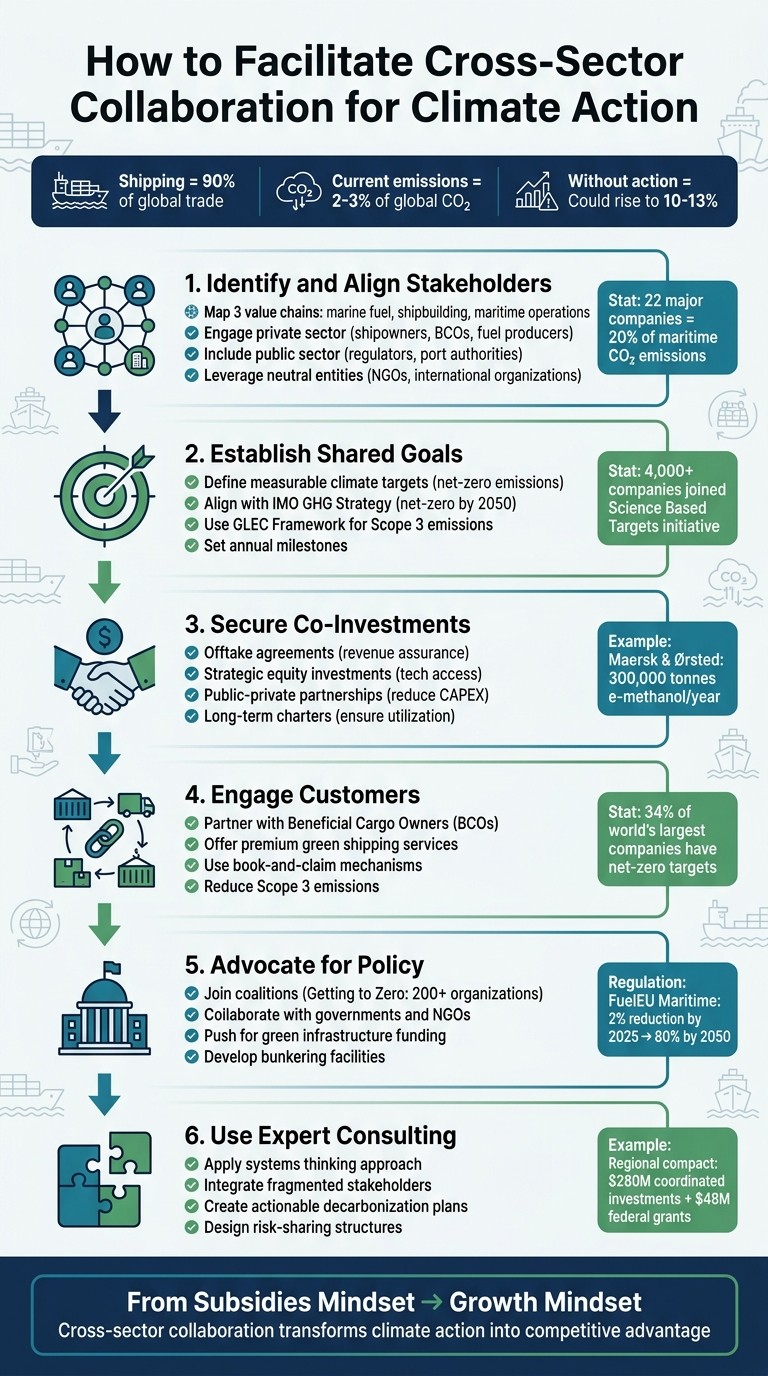
6-Step Framework for Cross-Sector Climate Collaboration in Maritime Logistics
Step 1: Identify and Align Stakeholders
Map Key Stakeholders in Maritime and Logistics
To effectively tackle climate challenges in maritime and logistics, it's crucial to map three key value chains - marine fuel, shipbuilding & technology, and maritime operations - and identify the interconnected stakeholders [6][1].
Stakeholders can be grouped into three main categories:
Private sector: Includes shipowners, operators, fuel producers, technology providers, and Beneficial Cargo Owners (BCOs). BCOs, in particular, are driving change by urging carriers to lower carbon emissions to meet their own Scope 3 targets [4].
Public sector: Comprising regulators and port authorities, this group establishes compliance frameworks and encourages investment [4].
Neutral entities: International organizations and NGOs that foster trust and facilitate partnerships across sectors [1][4].
The focus should be on key players influencing demand and supply. For example, in 2021, just 22 major companies - less than 0.15% of all shipowners - operated 3,355 vessels, accounting for 20% of maritime CO2 emissions [4]. Similarly, only 26 out of 5,578 ports were responsible for 20% of emissions from moored ships [4]. These entities often serve as catalysts for broader industry change.
Smaller players, such as the approximately 15,200 smaller fleet-owning companies, also play a significant role. While they may lack the resources of larger firms, their combined emissions impact is substantial. Inclusive mapping ensures that decarbonization efforts reach the entire industry, not just the largest contributors.
With this comprehensive map in place, the next step is aligning stakeholders' roles and commitments to create a unified climate strategy.
Build the Foundation for Collaboration
Effective climate action requires clear definitions of stakeholder roles and commitments. Engage directly with partners to understand their expectations and clarify their contributions [3]. This approach minimizes misunderstandings and encourages active participation [4].
Structured engagement strategies can help align efforts. For example, Siemens Energy assigns executive sponsors to its top suppliers, fostering meaningful, face-to-face interactions that go beyond transactional relationships [7]. Similarly, 65% of renewable energy companies highlight collaboration with partners as essential for overcoming long-term supply chain and logistics challenges [7].
Neutral facilitators are key to building trust among stakeholders with differing priorities. Partnerships that span sectors and stakeholder groups - often called diagonal partnerships - are most effective when led by impartial organizations like NGOs or international coalitions [1][4]. The Getting to Zero Coalition, for instance, brought together over 200 organizations, including 160 businesses and key governments, to work toward launching zero-emission vessels on deep-sea trade routes by 2030 [3][4].
For the industry to move forward, a mindset shift is needed. Instead of viewing decarbonization as a costly obligation requiring subsidies, stakeholders must see it as an opportunity to create shared value and drive growth across the ecosystem [6]. This perspective turns climate initiatives into strategic advantages, aligning diverse interests toward common goals.
Step 2: Establish Shared Goals and Measurable Commitments
Develop Joint Climate Targets
Once stakeholders are aligned, the next step is to define a shared objective - transitioning the maritime industry to zero emissions. This approach transforms climate action into a collaborative opportunity, moving away from reliance on subsidies and toward a mindset that values economic, environmental, and societal benefits [8][6].
"Reaching for the stars requires companies and governments to focus simultaneously on economic, environmental/climate, and societal value creation by applying a systematic ecosystems approach to decarbonisation."
Mikael Lind and co-authors of the Practical Playbook for Maritime Decarbonisation [6]
Annual targets are essential for translating ambitions into tangible outcomes. For instance, CMA CGM committed $1.5 billion in September 2022 to retrofit ships and develop decarbonization infrastructure [6]. Similarly, A.P. Moller-Maersk took the lead in 2021 by ordering 12 methanol-powered ships, followed by CMA CGM’s purchase of six 15,000 TEU dual-fuel methanol-powered vessels. These actions not only position companies as first movers but also help mitigate future compliance risks [4].
The foundation for setting clear goals lies in crafting a decarbonization business model. This model should identify specific requirements, such as vessel types, fuel volumes, and necessary technology [4]. A detailed analysis of emissions in areas like marine fuel, shipbuilding, and operations helps refine reduction strategies [6]. Large-scale collaborations should also include smaller players in the supply chain - often referred to as "long-tail" participants - via digital platforms or systems like "book and claim" to ensure broader industry adoption [4].
Aligning these targets with established global climate standards ensures measurable progress and accountability.
Use Global Climate Frameworks
Global frameworks provide essential benchmarks for progress. The International Maritime Organization (IMO) GHG Strategy, updated in July 2023, targets net-zero emissions in international shipping by 2050 or sooner [9][5]. This serves as the central global benchmark for maritime decarbonization. Additionally, the Global Logistics Emissions Council (GLEC) Framework is widely recognized for calculating and reporting logistics emissions across the value chain, particularly Scope 3 emissions [5].
Corporate initiatives are also gaining momentum. Over 4,000 companies have joined the Science Based Targets initiative (SBTi) to align their climate goals with the Paris Agreement. Notably, 34% of the world’s largest companies have now set public net-zero targets [3]. For ship charterers, the Sea Cargo Charter offers a specific framework to assess and disclose climate alignment, using a methodology that aligns with IMO objectives [9].
Regulations like FuelEU Maritime add another layer of accountability. Starting in January 2025, ships will be required to achieve a 2% reduction in greenhouse gas intensity, scaling up to an 80% reduction by 2050 [5]. Additionally, the IMO’s 2028 targets will impose penalties of $380 per ton of CO2 for ships exceeding Tier 1 baselines [5]. These frameworks ensure that commitments are backed by measurable actions, driving the industry toward meaningful change.
Step 3: Secure Co-Investments and Risk-Sharing Frameworks
Co-Investment Models for Climate Action
Decarbonization requires significant financial resources, making it impractical for any single organization to shoulder the burden alone. Partnerships across industries help distribute risks and speed up the rollout of green infrastructure. The best results often come from combining co-investment models tailored to the specific needs of each project.
Offtake agreements play a critical role in successful collaborations. For instance, in March 2022, A.P. Moller-Maersk and Ørsted signed a letter of intent to establish a Power-to-X facility on the U.S. Gulf Coast. Ørsted committed to building a 675 MW facility capable of producing approximately 300,000 tonnes of e-methanol annually, powered by 1.2 GW of renewable energy. Maersk agreed to purchase the entire output for its fleet of 12 methanol-powered vessels, with commissioning expected in the second half of 2025 [12]. This agreement gave Ørsted the revenue assurance needed to secure project financing.
Strategic equity investments offer another effective approach. In March 2022, Maersk Growth invested in WasteFuel, a California-based startup, to develop a bio-methanol project in South America. This facility is projected to produce over 30,000 tons annually by 2024, with Maersk committed to buying the full output [10]. This model allows for direct input into technological advancements while ensuring priority access to production.
Public-private partnerships lower financial risks for innovative projects. For example, in December 2025, Heidelberg Materials Norway and the Hartmann Group received a NOK 60 million (around $6 million) grant from the Norwegian NOx Fund to develop the first methanol-powered cement carrier. This project includes a 10-year charter agreement, ensuring vessel operation by 2028 and aiming to cut CO2 emissions by 80%, or 6,000 tons annually [13].
Co-Investment Model | Primary Advantage | Key Disadvantage | Real-World Example |
|---|---|---|---|
Offtake Agreement | Improves project financing by ensuring bankability | Long-term price and volume commitment risks | Maersk & Ørsted (300,000 tonnes/year) [12] |
Equity Stake | Offers control over technology and potential ROI | High risk if the startup or tech fails | Maersk Growth investment in WasteFuel [10] |
Public-Private Partnership | Reduces CAPEX with government support | Complex regulations and reporting requirements | Heidelberg Materials & NOx Fund [13] |
Long-term Charter | Ensures vessel utilization for shipowners | Limits operational flexibility over time | Hartmann Group & Heidelberg Materials [13] |
These models lay a foundation for risk-sharing agreements that address financial uncertainties and ensure project viability.
Examples of Risk-Sharing Agreements
Beyond co-investment models, collaboration among competitors offers another way to share risks. In September 2023, A.P. Moller-Maersk and CMA CGM - two of the world's largest container carriers - joined forces to accelerate decarbonization. Their partnership focuses on setting standards for alternative fuels like bio/e-methanol and bio/e-methane while working with regulators such as the Suez Canal Economic Zone to create safety protocols and bunkering infrastructure at ports [11].
"By combining the know-how and the expertise of two shipping leaders, we will accelerate the development of new solutions and technologies, enabling our industry to reach its CO2 reduction targets."
Rodolphe Saadé, Chairman and CEO, CMA CGM Group [11]
Multi-party consortia further distribute the costs and risks of developing new infrastructure. For instance, in February 2026, a partnership involving Mitsui O.S.K. Lines (MOL), the City of Yokohama, Kokuka Sangyo, Idemitsu Kosan, and Mitsubishi Gas Chemical completed Japan's first ship-to-ship methanol bunkering. Biomethanol was transferred from the Eika Maru to the Kohzan Maru VII at Keihin Port, showcasing how risk-sharing can help overcome technical and regulatory challenges [14].
Additionally, Maersk secured agreements to source 730,000 tonnes of green methanol annually by the end of 2025 through partnerships with six different companies [10]. This strategy of aggregating demand across multiple partners provides the market confidence necessary for fuel producers to invest in large-scale production facilities.
Together, these co-investment and risk-sharing frameworks highlight the importance of collaboration in advancing decarbonization efforts within the maritime and logistics sectors. By pooling resources and expertise, stakeholders can tackle the financial and technical challenges of climate action more effectively.
Step 4: Engage Customers and Integrate the Value Chain
Build Carbon-Neutral Shipping Partnerships
Once stakeholder commitments are aligned, the next step is engaging customers and weaving climate-conscious practices throughout the value chain. Beneficial Cargo Owners (BCOs) play a pivotal role here - when they push for reduced carbon footprints, shipowners and operators respond with cleaner, more sustainable practices [4]. Structuring partnerships that help customers achieve their climate goals while advancing low-carbon shipping is key.
One effective strategy is premium service agreements. A standout example occurred in February 2026, when Hapag-Lloyd and DSV signed a two-year "Ship Green" framework agreement, aiming to cut Scope 3 emissions by 18,000 tonnes of CO2e. This initiative uses second-generation biofuels and a book-and-claim mechanism, which allows DSV's customers to claim verified emission reductions even if the green fuel isn’t physically used on their specific shipping route [15]. By decoupling the environmental benefit from the actual fuel, this approach enables scalable climate solutions despite current limitations in fuel availability.
"This agreement demonstrates how carriers and forwarders can jointly drive meaningful progress and scale lower-emission shipping solutions."
Danny Smolders, Managing Director Global Sales, Hapag-Lloyd [15]
What makes this partnership particularly noteworthy is its flexibility - it includes not just biofuels but also alternative options like biomethane and green methanol [15]. This adaptability ensures the initiative remains relevant as new sustainable fuel technologies emerge, creating enduring value for both parties.
By prioritizing such customer-driven collaborations, companies can significantly reduce downstream emissions and make meaningful progress in their climate goals.
Reduce Scope 3 Emissions Through Collaboration
For many cargo owners, shipping is a major contributor to their Scope 3 (value chain) emissions. With over a third (34%) of the world’s largest companies committing to net-zero targets and more than 4,000 companies joining the Science Based Targets initiative, there’s a growing urgency for solutions that tackle maritime emissions directly [3].
Vertical partnerships between carriers and freight forwarders provide a pathway to create "green" transport solutions. These partnerships offer verified emission reductions that downstream customers can count toward their sustainability targets. For instance, in 2022, Hapag-Lloyd and DHL Global Forwarding formed a collaboration centered on advanced biofuels, delivering cleaner transport options for DHL’s customers [4].
"Sustainable marine fuels are a scalable solution to reducing CO2 emissions, and through close collaboration with Hapag-Lloyd, we are enabling our customers to decarbonize their supply chains."
Michael Hollstein, Head of Ocean Product, DSV [15]
The success of these collaborations hinges on clear governance frameworks and shared objectives from the outset [3]. Formal agreements should outline roles, establish mechanisms for resolving issues, and align all parties on climate goals. With 90% of institutional investors now factoring in environmental, social, and governance (ESG) criteria when making decisions [3], companies that can deliver measurable Scope 3 reductions not only strengthen their sustainability credentials but also enhance their appeal to investors and customers alike.
Step 5: Collaborate on Policy Advocacy and Infrastructure Development
Advocate for Policy Support
Individual efforts can only go so far; coordinated policy advocacy is essential to create lasting change. By forming "diagonal partnerships" that bring together private sector leaders, governments, and NGOs, organizations can align their innovative solutions with regulatory goals [4].
Joining large-scale coalitions, such as the Getting to Zero Coalition - which boasts over 200 organizations and 160 businesses - offers companies the chance to pool their resources and amplify their voices when engaging with influential bodies like the International Maritime Organization (IMO) [3]. Meanwhile, local entities and networks like C40 Cities help translate global ambitions into concrete policies for ports and shipping hubs [2].
"Moving away from carbon‑intensive fuels cannot happen in a vacuum - coordinated actions are needed across the entire supply chain."
Alisa Kreynes, Head, Ports & Shipping, C40 Cities [2]
Advocacy efforts should focus on securing policies and funding mechanisms that directly support infrastructure development. These initiatives lay the groundwork for significant investments in physical infrastructure [4][6].
Develop Green Infrastructure
Policy advancements must be accompanied by the development of robust physical infrastructure. Establishing green infrastructure, such as facilities for alternative fuel bunkering or upgraded port systems, demands strategic collaboration between public and private sectors [4].
For example, in November 2025, the International Bunker Industry Association (IBIA) partnered with the Hong Kong Shipowners Association through a memorandum of understanding. This agreement focuses on research into green shipping, alternative marine fuels, and strengthening the bunker supply chain, positioning Hong Kong as a key hub for sustainable bunkering [16].
"The transition to green fuels requires infrastructure, capital, and expertise. Hong Kong's proximity to major green fuel production centers positions us as a natural hub for sustainable bunkering."
Angad Banga, Chair, Hong Kong Shipowners Association [16]
Collaborative efforts like those in Hong Kong and at the Marseille-Fos Port highlight how aligning fuel supply with vessel demand can accelerate sustainable bunkering [4][16]. Similarly, in November 2022, the Spanish government joined forces with Maersk to explore large-scale green fuel production in Spain. This partnership could lead to a $10.8 billion investment in infrastructure for green hydrogen and methanol production [18].
The development of strategic hubs along key trade routes ensures that fuel supply meets vessel demand. Companies should prioritize infrastructure projects based on their readiness, availability, and cost-effectiveness. Working closely with governments can help secure the regulatory and financial backing needed to bring these initiatives to life [6].
Step 6: Use Expert Consulting for Implementation
Apply Systems Thinking
The maritime industry operates as a self-organized ecosystem, where key players such as ship owners, fuel suppliers, port operators, technology providers, and regulators make decisions independently but collaborate when necessary [17]. This decentralized structure often creates "decision confusion" among stakeholders [17].
Professional consultants play a critical role in addressing this challenge by serving as integrators. They bring together expertise from the maritime sector, energy industries, financial institutions, and government agencies to foster co-ownership of shared objectives and align fragmented stakeholders [3]. This broad, systems-level approach is vital because decarbonization relies on interconnected factors like alternative fuels, energy efficiency, and just-in-time arrivals, which span across three main value chains: fuel production, shipbuilding, and operations [17].
"The maritime industry is a self-organized ecosystem (SOE)... adaption is not centrally directed but organic in response to each party's pressures."
UNCTAD [17]
A notable example of this approach is Council Fire's regional climate compact, conducted between 2024 and February 2026. This initiative involved 35 organizations, including municipalities, businesses, NGOs, and academic institutions, across three counties. Through 65 one-on-one interviews, stakeholders were mapped, and four working groups, along with a 12-member steering committee of "pragmatic leaders", were formed. This collaborative effort unlocked $280 million in coordinated investments and secured $48 million in federal grants through regional proposals [19].
This kind of structured, integrative approach ensures that strategic goals can be effectively translated into operational actions.
Turn Strategies into Action
While many maritime and logistics companies have set ambitious sustainability goals - 34% of the largest global companies have public net-zero commitments [3] - they often lack the expertise to turn these goals into practical, actionable plans. Consulting services bridge this gap by developing detailed action plans, governance frameworks, and clear milestones to guide execution [3].
Consultants also help organizations define their roles within collaborative efforts. Whether acting as "first movers" who adopt new technologies early or as "followers" who implement proven solutions, companies can align these roles with their overall business strategies [3]. Additionally, consultants design risk-sharing structures to help businesses manage the uncertainties associated with innovation [3].
"Sustainability partnerships and collaboration enable businesses to work with supply chain partners and suppliers to pinpoint issues, develop solutions and drive shared agendas."
Helene Hofman, Customer Communication Manager, Maersk [3]
For example, an energy procurement initiative led by Council Fire demonstrates the measurable value of expert consulting. By aggregating demand for 420 GWh, the initiative achieved pricing 18% below retail rates, resulting in annual savings of $12 million [19]. These efforts showcase how consultants help cross-sector collaborations move beyond planning stages to deliver tangible outcomes [19].
From complexity to clarity: Practical pathways for maritime decarbonization (METS 2026)
Case Studies: Cross-Sector Collaborations in Action
These examples highlight the concrete results achieved through collaborative strategies across industries.
Maersk Mc-Kinney Møller Center for Zero Carbon Shipping
The Mærsk Mc-Kinney Møller Center for Zero Carbon Shipping, launched in Copenhagen in June 2020, serves as a prime example of how collaboration can drive transformation across an entire industry. Backed by industry heavyweights like A.P. Møller – Mærsk, NYK Line, Cargill, MAN Energy Solutions, Siemens Energy, Mitsubishi Heavy Industries, and ABS, the Center was initially funded with a $60 million donation from the A.P. Møller Foundation [20].
Operating as an independent non-profit, the Center provides a neutral platform where competitors, academics, and government bodies can work together. Founding partners contribute a third of the Center’s 100 specialists, ensuring a direct exchange of expertise, while the rest are independently recruited [20][22].
The Center’s initiatives span the entire maritime sector. It offers open-access tools like Fuel Cost Calculators and Fuel Pathway Maturity Maps, which help standardize decisions across the industry. Collaborating with regulatory bodies such as the UK Maritime and Coastguard Agency and the U.S. Department of Energy, the Center aligns its research with policy goals. One notable outcome is a retrofit study for 82,000 DWT bulk carriers, outlining how to equip them for methanol dual-fuel capabilities [22].
"This joint initiative will fast-track the maturation of solutions and strengthen the basis for decision making among industry players and regulators and hence accelerate investments and implementation of new technologies."
Søren Skou, CEO, A.P. Møller – Maersk [20]
The Center also co-leads the Zero-Emission Shipping Mission, a public-private partnership involving the U.S., Denmark, and Norway. This initiative aims to deploy 200 zero-emission ships and ensure zero-emission fuels account for 5% of global deep-sea fuel use by 2030 [21]. Additionally, the Kassøe Green Methanol Plant exemplifies how resource-sharing fosters innovation in sustainable fuel production.
European Energy's Kassøe Green Methanol Plant
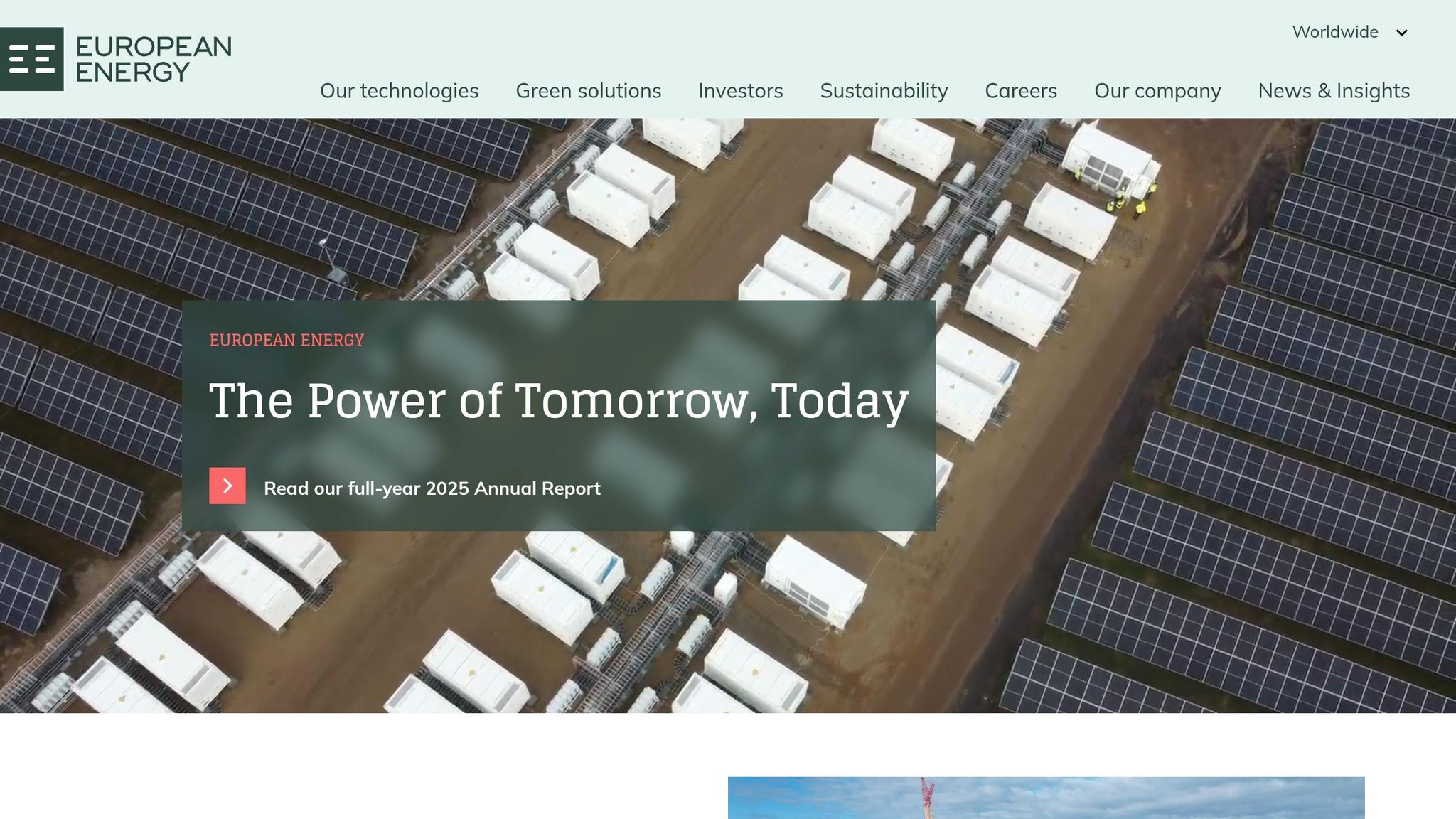
Denmark’s Kassøe e-methanol facility showcases how partnerships can turn green energy projects into operational realities. Structured as a joint venture under Solar Park Kassø ApS, the project is owned by European Energy (51%) and Mitsui & Co. (49%) [23].
The facility benefits from resource-sharing agreements that optimize its operations. Located near the 304 MW Kassø Solar Park, it sources half its electricity from this solar installation, with the rest managed through a grid optimization deal with Danske Commodities [23]. To secure biogenic CO₂, European Energy partnered with Tønder Biogas and acquired a majority stake in Ammongas for carbon capture solutions. Siemens Energy provides a 52 MW electrolysis system, enabling the production of 6,000 tonnes of green hydrogen annually [23].
To mitigate risks, the project secured cross-sector offtake agreements. In 2021, A.P. Møller – Maersk agreed to use the facility’s e-methanol to fuel the Laura Maersk, the first container ship capable of running on green methanol. By 2023, the LEGO Group and Novo Nordisk had committed to incorporating e-methanol into their production processes to replace fossil-based materials [23][24].
The plant began operations in May 2025, producing 42,000 tonnes of e-methanol annually. This output achieves up to a 97% reduction in carbon emissions compared to fossil alternatives. Surplus heat generated in the process now provides eco-friendly heating for 3,300 households in Aabenraa Municipality [23][24].
"The start of operations at Kassø marks a major step forward in bringing Power-to-X technologies into real-world use."
Knud Erik Andersen, CEO, European Energy [24]
Conclusion
The maritime and logistics industries are at a turning point, where collaboration across the entire ecosystem is essential for addressing the challenge of decarbonization. Shipping, which handles nearly 90% of global trade, is responsible for 2–3% of global greenhouse gas emissions. Tackling this issue requires shared resources, collective risk-taking, and aligned strategies among competitors, suppliers, governments, and neutral facilitators [3].
As explored earlier, bringing together diverse stakeholders can transform isolated efforts into impactful, large-scale change. Success hinges on clear stakeholder engagement, setting measurable goals, and establishing strong governance structures. Whether through vertical agreements like fuel supply partnerships, horizontal collaborations among competitors, or broader initiatives uniting entire industries, the key is shifting from a "subsidies mindset" to a "growth mindset" that highlights the long-term benefits of emissions-free operations [6].
Inclusivity is equally critical for scaling decarbonization efforts across the industry. In 2021, just 964 shipowners - 6.34% of the total - operated vessels responsible for 80% of maritime CO₂ emissions [4]. To achieve meaningful change, smaller operators in the "long tail" must also get involved. Tools like digital platforms, book-and-claim systems, and open-access resources can help lower barriers for these smaller players.
The business case for collaboration has never been stronger. With 90% of institutional investors now considering ESG criteria and 75% of customers favoring sustainable businesses [3], companies that embrace sustainability stand to gain a competitive edge. Examples like the Mærsk Mc-Kinney Møller Center and European Energy's Kassøe Green Methanol Plant show how cross-sector partnerships can reduce emissions, open new markets, and strengthen supply chains.
These successes highlight the urgency of taking action. By adopting these strategies, maritime and logistics companies can not only lead the way in sustainability but also secure their position in a rapidly evolving industry. The time to form the partnerships that will shape the future is now.
FAQs
Who should we involve first to kick off cross-sector climate collaboration?
To kick off collaborative efforts on climate across different sectors, it's crucial to involve influential stakeholders such as the International Maritime Organization (IMO) and industry leaders committed to decarbonization. These groups play a pivotal role in driving unified action by synchronizing objectives and sharing resources. Bringing them into the conversation early sets the stage for wider partnerships with governments, private enterprises, NGOs, and industry associations, ensuring initiatives are structured and effective.
How do we split costs and risks for green fuel and port infrastructure projects?
Splitting the costs and risks tied to green fuel and port infrastructure projects demands thoughtful public-private partnerships and shared financial responsibilities. By working closely with governments, stakeholders, and financial institutions, funding opportunities can be unlocked, and expenses can be distributed more equitably. Addressing regulatory uncertainties, like navigating federal incentives, plays a crucial role in this process. Incorporating sustainability into capital planning further helps manage risks, fostering a balanced and cooperative approach to financing these critical investments.
How can customers claim shipping emissions cuts if green fuel isn’t on their route?
Customers who lack access to green fuel along certain routes can still make meaningful strides in reducing emissions. Implementing operational improvements - such as optimizing routes or upgrading equipment for better fuel efficiency - can significantly cut emissions. Additionally, joining industry initiatives aimed at decarbonization showcases a proactive stance on climate action. These measures not only help lower emissions but also align with broader climate goals, even when green fuel options aren’t immediately available.
Related Blog Posts
How to Build a Climate Resilience Plan for Maritime & Logistics Companies
How to Build a Corporate Sustainability Strategy Aligned to ROI for Maritime & Logistics Companies
How to Align Stakeholders Around a Shared ESG Vision for Maritime & Logistics Companies
How to Build a Climate-Ready Energy & Water Infrastructure Plan for Maritime & Logistics Companies
Latest Articles
©2025

Narrative Change and Power Building: The Missing Half of Advocacy
Narrative change is the process of disrupting dominant narratives that normalize inequity and advancing new narratives from historically marginalized communities.

Funding Resilience Without Federal Grants
BRIC is unreliable and FEMA is shrinking. Here's how cities fund climate resilience with dedicated revenue, blended finance, and a coordinating authority.

The ESG Blind Spot: How AI Is Finding Risks in Companies Nobody Else Is Watching
Norway's sovereign wealth fund uses AI to screen 7,200 portfolio companies for forced labor and corruption within 24 hours. The real story is the emerging-market coverage gap that traditional ESG data vendors miss — and what it means for any company with a global supply chain.
Narrative Change and Power Building: The Missing Half of Advocacy
Narrative change is the process of disrupting dominant narratives that normalize inequity and advancing new narratives from historically marginalized communities.
Funding Resilience Without Federal Grants
BRIC is unreliable and FEMA is shrinking. Here's how cities fund climate resilience with dedicated revenue, blended finance, and a coordinating authority.
The ESG Blind Spot: How AI Is Finding Risks in Companies Nobody Else Is Watching
Norway's sovereign wealth fund uses AI to screen 7,200 portfolio companies for forced labor and corruption within 24 hours. The real story is the emerging-market coverage gap that traditional ESG data vendors miss — and what it means for any company with a global supply chain.
FAQ
01
What does it really mean to “redefine profit”?
02
What makes Council Fire different?
03
Who does Council Fire work with?
04
What does working with Council Fire actually look like?
05
How does Council Fire help organizations turn big goals into action?
06
How does Council Fire define and measure success?
May 9, 2026
How to Facilitate Cross-Sector Collaboration for Climate Action for Maritime & Logistics Companies
Sustainability Strategy
In This Article
Industry-wide partnerships that share risk and co-invest in green fuels are essential to cut maritime emissions and decarbonize logistics.
How to Facilitate Cross-Sector Collaboration for Climate Action for Maritime & Logistics Companies
Shipping accounts for 90% of global trade but contributes 2–3% of worldwide CO2 emissions. Without intervention, this could rise to 10–13% in the coming decades. Tackling this challenge requires maritime and logistics companies to work together across sectors, aligning shipowners, fuel producers, regulators, and technology providers. This guide outlines key strategies to achieve this:
Identify Stakeholders: Map and engage key players across marine fuel, shipbuilding, and operations. Focus on aligning roles and commitments.
Set Shared Goals: Define measurable climate targets, such as net-zero emissions, and align efforts with global frameworks like the IMO GHG Strategy.
Share Risks and Costs: Use co-investment models like offtake agreements, equity stakes, and public-private partnerships to fund green infrastructure.
Engage Customers: Build partnerships with cargo owners to reduce Scope 3 emissions and offer low-carbon shipping options.
Advocate for Policies: Collaborate with governments and NGOs to push for regulations and funding that support green infrastructure.
Leverage Expertise: Use consultants to align fragmented stakeholders and create actionable decarbonization plans.
6-Step Framework for Cross-Sector Climate Collaboration in Maritime Logistics
Step 1: Identify and Align Stakeholders
Map Key Stakeholders in Maritime and Logistics
To effectively tackle climate challenges in maritime and logistics, it's crucial to map three key value chains - marine fuel, shipbuilding & technology, and maritime operations - and identify the interconnected stakeholders [6][1].
Stakeholders can be grouped into three main categories:
Private sector: Includes shipowners, operators, fuel producers, technology providers, and Beneficial Cargo Owners (BCOs). BCOs, in particular, are driving change by urging carriers to lower carbon emissions to meet their own Scope 3 targets [4].
Public sector: Comprising regulators and port authorities, this group establishes compliance frameworks and encourages investment [4].
Neutral entities: International organizations and NGOs that foster trust and facilitate partnerships across sectors [1][4].
The focus should be on key players influencing demand and supply. For example, in 2021, just 22 major companies - less than 0.15% of all shipowners - operated 3,355 vessels, accounting for 20% of maritime CO2 emissions [4]. Similarly, only 26 out of 5,578 ports were responsible for 20% of emissions from moored ships [4]. These entities often serve as catalysts for broader industry change.
Smaller players, such as the approximately 15,200 smaller fleet-owning companies, also play a significant role. While they may lack the resources of larger firms, their combined emissions impact is substantial. Inclusive mapping ensures that decarbonization efforts reach the entire industry, not just the largest contributors.
With this comprehensive map in place, the next step is aligning stakeholders' roles and commitments to create a unified climate strategy.
Build the Foundation for Collaboration
Effective climate action requires clear definitions of stakeholder roles and commitments. Engage directly with partners to understand their expectations and clarify their contributions [3]. This approach minimizes misunderstandings and encourages active participation [4].
Structured engagement strategies can help align efforts. For example, Siemens Energy assigns executive sponsors to its top suppliers, fostering meaningful, face-to-face interactions that go beyond transactional relationships [7]. Similarly, 65% of renewable energy companies highlight collaboration with partners as essential for overcoming long-term supply chain and logistics challenges [7].
Neutral facilitators are key to building trust among stakeholders with differing priorities. Partnerships that span sectors and stakeholder groups - often called diagonal partnerships - are most effective when led by impartial organizations like NGOs or international coalitions [1][4]. The Getting to Zero Coalition, for instance, brought together over 200 organizations, including 160 businesses and key governments, to work toward launching zero-emission vessels on deep-sea trade routes by 2030 [3][4].
For the industry to move forward, a mindset shift is needed. Instead of viewing decarbonization as a costly obligation requiring subsidies, stakeholders must see it as an opportunity to create shared value and drive growth across the ecosystem [6]. This perspective turns climate initiatives into strategic advantages, aligning diverse interests toward common goals.
Step 2: Establish Shared Goals and Measurable Commitments
Develop Joint Climate Targets
Once stakeholders are aligned, the next step is to define a shared objective - transitioning the maritime industry to zero emissions. This approach transforms climate action into a collaborative opportunity, moving away from reliance on subsidies and toward a mindset that values economic, environmental, and societal benefits [8][6].
"Reaching for the stars requires companies and governments to focus simultaneously on economic, environmental/climate, and societal value creation by applying a systematic ecosystems approach to decarbonisation."
Mikael Lind and co-authors of the Practical Playbook for Maritime Decarbonisation [6]
Annual targets are essential for translating ambitions into tangible outcomes. For instance, CMA CGM committed $1.5 billion in September 2022 to retrofit ships and develop decarbonization infrastructure [6]. Similarly, A.P. Moller-Maersk took the lead in 2021 by ordering 12 methanol-powered ships, followed by CMA CGM’s purchase of six 15,000 TEU dual-fuel methanol-powered vessels. These actions not only position companies as first movers but also help mitigate future compliance risks [4].
The foundation for setting clear goals lies in crafting a decarbonization business model. This model should identify specific requirements, such as vessel types, fuel volumes, and necessary technology [4]. A detailed analysis of emissions in areas like marine fuel, shipbuilding, and operations helps refine reduction strategies [6]. Large-scale collaborations should also include smaller players in the supply chain - often referred to as "long-tail" participants - via digital platforms or systems like "book and claim" to ensure broader industry adoption [4].
Aligning these targets with established global climate standards ensures measurable progress and accountability.
Use Global Climate Frameworks
Global frameworks provide essential benchmarks for progress. The International Maritime Organization (IMO) GHG Strategy, updated in July 2023, targets net-zero emissions in international shipping by 2050 or sooner [9][5]. This serves as the central global benchmark for maritime decarbonization. Additionally, the Global Logistics Emissions Council (GLEC) Framework is widely recognized for calculating and reporting logistics emissions across the value chain, particularly Scope 3 emissions [5].
Corporate initiatives are also gaining momentum. Over 4,000 companies have joined the Science Based Targets initiative (SBTi) to align their climate goals with the Paris Agreement. Notably, 34% of the world’s largest companies have now set public net-zero targets [3]. For ship charterers, the Sea Cargo Charter offers a specific framework to assess and disclose climate alignment, using a methodology that aligns with IMO objectives [9].
Regulations like FuelEU Maritime add another layer of accountability. Starting in January 2025, ships will be required to achieve a 2% reduction in greenhouse gas intensity, scaling up to an 80% reduction by 2050 [5]. Additionally, the IMO’s 2028 targets will impose penalties of $380 per ton of CO2 for ships exceeding Tier 1 baselines [5]. These frameworks ensure that commitments are backed by measurable actions, driving the industry toward meaningful change.
Step 3: Secure Co-Investments and Risk-Sharing Frameworks
Co-Investment Models for Climate Action
Decarbonization requires significant financial resources, making it impractical for any single organization to shoulder the burden alone. Partnerships across industries help distribute risks and speed up the rollout of green infrastructure. The best results often come from combining co-investment models tailored to the specific needs of each project.
Offtake agreements play a critical role in successful collaborations. For instance, in March 2022, A.P. Moller-Maersk and Ørsted signed a letter of intent to establish a Power-to-X facility on the U.S. Gulf Coast. Ørsted committed to building a 675 MW facility capable of producing approximately 300,000 tonnes of e-methanol annually, powered by 1.2 GW of renewable energy. Maersk agreed to purchase the entire output for its fleet of 12 methanol-powered vessels, with commissioning expected in the second half of 2025 [12]. This agreement gave Ørsted the revenue assurance needed to secure project financing.
Strategic equity investments offer another effective approach. In March 2022, Maersk Growth invested in WasteFuel, a California-based startup, to develop a bio-methanol project in South America. This facility is projected to produce over 30,000 tons annually by 2024, with Maersk committed to buying the full output [10]. This model allows for direct input into technological advancements while ensuring priority access to production.
Public-private partnerships lower financial risks for innovative projects. For example, in December 2025, Heidelberg Materials Norway and the Hartmann Group received a NOK 60 million (around $6 million) grant from the Norwegian NOx Fund to develop the first methanol-powered cement carrier. This project includes a 10-year charter agreement, ensuring vessel operation by 2028 and aiming to cut CO2 emissions by 80%, or 6,000 tons annually [13].
Co-Investment Model | Primary Advantage | Key Disadvantage | Real-World Example |
|---|---|---|---|
Offtake Agreement | Improves project financing by ensuring bankability | Long-term price and volume commitment risks | Maersk & Ørsted (300,000 tonnes/year) [12] |
Equity Stake | Offers control over technology and potential ROI | High risk if the startup or tech fails | Maersk Growth investment in WasteFuel [10] |
Public-Private Partnership | Reduces CAPEX with government support | Complex regulations and reporting requirements | Heidelberg Materials & NOx Fund [13] |
Long-term Charter | Ensures vessel utilization for shipowners | Limits operational flexibility over time | Hartmann Group & Heidelberg Materials [13] |
These models lay a foundation for risk-sharing agreements that address financial uncertainties and ensure project viability.
Examples of Risk-Sharing Agreements
Beyond co-investment models, collaboration among competitors offers another way to share risks. In September 2023, A.P. Moller-Maersk and CMA CGM - two of the world's largest container carriers - joined forces to accelerate decarbonization. Their partnership focuses on setting standards for alternative fuels like bio/e-methanol and bio/e-methane while working with regulators such as the Suez Canal Economic Zone to create safety protocols and bunkering infrastructure at ports [11].
"By combining the know-how and the expertise of two shipping leaders, we will accelerate the development of new solutions and technologies, enabling our industry to reach its CO2 reduction targets."
Rodolphe Saadé, Chairman and CEO, CMA CGM Group [11]
Multi-party consortia further distribute the costs and risks of developing new infrastructure. For instance, in February 2026, a partnership involving Mitsui O.S.K. Lines (MOL), the City of Yokohama, Kokuka Sangyo, Idemitsu Kosan, and Mitsubishi Gas Chemical completed Japan's first ship-to-ship methanol bunkering. Biomethanol was transferred from the Eika Maru to the Kohzan Maru VII at Keihin Port, showcasing how risk-sharing can help overcome technical and regulatory challenges [14].
Additionally, Maersk secured agreements to source 730,000 tonnes of green methanol annually by the end of 2025 through partnerships with six different companies [10]. This strategy of aggregating demand across multiple partners provides the market confidence necessary for fuel producers to invest in large-scale production facilities.
Together, these co-investment and risk-sharing frameworks highlight the importance of collaboration in advancing decarbonization efforts within the maritime and logistics sectors. By pooling resources and expertise, stakeholders can tackle the financial and technical challenges of climate action more effectively.
Step 4: Engage Customers and Integrate the Value Chain
Build Carbon-Neutral Shipping Partnerships
Once stakeholder commitments are aligned, the next step is engaging customers and weaving climate-conscious practices throughout the value chain. Beneficial Cargo Owners (BCOs) play a pivotal role here - when they push for reduced carbon footprints, shipowners and operators respond with cleaner, more sustainable practices [4]. Structuring partnerships that help customers achieve their climate goals while advancing low-carbon shipping is key.
One effective strategy is premium service agreements. A standout example occurred in February 2026, when Hapag-Lloyd and DSV signed a two-year "Ship Green" framework agreement, aiming to cut Scope 3 emissions by 18,000 tonnes of CO2e. This initiative uses second-generation biofuels and a book-and-claim mechanism, which allows DSV's customers to claim verified emission reductions even if the green fuel isn’t physically used on their specific shipping route [15]. By decoupling the environmental benefit from the actual fuel, this approach enables scalable climate solutions despite current limitations in fuel availability.
"This agreement demonstrates how carriers and forwarders can jointly drive meaningful progress and scale lower-emission shipping solutions."
Danny Smolders, Managing Director Global Sales, Hapag-Lloyd [15]
What makes this partnership particularly noteworthy is its flexibility - it includes not just biofuels but also alternative options like biomethane and green methanol [15]. This adaptability ensures the initiative remains relevant as new sustainable fuel technologies emerge, creating enduring value for both parties.
By prioritizing such customer-driven collaborations, companies can significantly reduce downstream emissions and make meaningful progress in their climate goals.
Reduce Scope 3 Emissions Through Collaboration
For many cargo owners, shipping is a major contributor to their Scope 3 (value chain) emissions. With over a third (34%) of the world’s largest companies committing to net-zero targets and more than 4,000 companies joining the Science Based Targets initiative, there’s a growing urgency for solutions that tackle maritime emissions directly [3].
Vertical partnerships between carriers and freight forwarders provide a pathway to create "green" transport solutions. These partnerships offer verified emission reductions that downstream customers can count toward their sustainability targets. For instance, in 2022, Hapag-Lloyd and DHL Global Forwarding formed a collaboration centered on advanced biofuels, delivering cleaner transport options for DHL’s customers [4].
"Sustainable marine fuels are a scalable solution to reducing CO2 emissions, and through close collaboration with Hapag-Lloyd, we are enabling our customers to decarbonize their supply chains."
Michael Hollstein, Head of Ocean Product, DSV [15]
The success of these collaborations hinges on clear governance frameworks and shared objectives from the outset [3]. Formal agreements should outline roles, establish mechanisms for resolving issues, and align all parties on climate goals. With 90% of institutional investors now factoring in environmental, social, and governance (ESG) criteria when making decisions [3], companies that can deliver measurable Scope 3 reductions not only strengthen their sustainability credentials but also enhance their appeal to investors and customers alike.
Step 5: Collaborate on Policy Advocacy and Infrastructure Development
Advocate for Policy Support
Individual efforts can only go so far; coordinated policy advocacy is essential to create lasting change. By forming "diagonal partnerships" that bring together private sector leaders, governments, and NGOs, organizations can align their innovative solutions with regulatory goals [4].
Joining large-scale coalitions, such as the Getting to Zero Coalition - which boasts over 200 organizations and 160 businesses - offers companies the chance to pool their resources and amplify their voices when engaging with influential bodies like the International Maritime Organization (IMO) [3]. Meanwhile, local entities and networks like C40 Cities help translate global ambitions into concrete policies for ports and shipping hubs [2].
"Moving away from carbon‑intensive fuels cannot happen in a vacuum - coordinated actions are needed across the entire supply chain."
Alisa Kreynes, Head, Ports & Shipping, C40 Cities [2]
Advocacy efforts should focus on securing policies and funding mechanisms that directly support infrastructure development. These initiatives lay the groundwork for significant investments in physical infrastructure [4][6].
Develop Green Infrastructure
Policy advancements must be accompanied by the development of robust physical infrastructure. Establishing green infrastructure, such as facilities for alternative fuel bunkering or upgraded port systems, demands strategic collaboration between public and private sectors [4].
For example, in November 2025, the International Bunker Industry Association (IBIA) partnered with the Hong Kong Shipowners Association through a memorandum of understanding. This agreement focuses on research into green shipping, alternative marine fuels, and strengthening the bunker supply chain, positioning Hong Kong as a key hub for sustainable bunkering [16].
"The transition to green fuels requires infrastructure, capital, and expertise. Hong Kong's proximity to major green fuel production centers positions us as a natural hub for sustainable bunkering."
Angad Banga, Chair, Hong Kong Shipowners Association [16]
Collaborative efforts like those in Hong Kong and at the Marseille-Fos Port highlight how aligning fuel supply with vessel demand can accelerate sustainable bunkering [4][16]. Similarly, in November 2022, the Spanish government joined forces with Maersk to explore large-scale green fuel production in Spain. This partnership could lead to a $10.8 billion investment in infrastructure for green hydrogen and methanol production [18].
The development of strategic hubs along key trade routes ensures that fuel supply meets vessel demand. Companies should prioritize infrastructure projects based on their readiness, availability, and cost-effectiveness. Working closely with governments can help secure the regulatory and financial backing needed to bring these initiatives to life [6].
Step 6: Use Expert Consulting for Implementation
Apply Systems Thinking
The maritime industry operates as a self-organized ecosystem, where key players such as ship owners, fuel suppliers, port operators, technology providers, and regulators make decisions independently but collaborate when necessary [17]. This decentralized structure often creates "decision confusion" among stakeholders [17].
Professional consultants play a critical role in addressing this challenge by serving as integrators. They bring together expertise from the maritime sector, energy industries, financial institutions, and government agencies to foster co-ownership of shared objectives and align fragmented stakeholders [3]. This broad, systems-level approach is vital because decarbonization relies on interconnected factors like alternative fuels, energy efficiency, and just-in-time arrivals, which span across three main value chains: fuel production, shipbuilding, and operations [17].
"The maritime industry is a self-organized ecosystem (SOE)... adaption is not centrally directed but organic in response to each party's pressures."
UNCTAD [17]
A notable example of this approach is Council Fire's regional climate compact, conducted between 2024 and February 2026. This initiative involved 35 organizations, including municipalities, businesses, NGOs, and academic institutions, across three counties. Through 65 one-on-one interviews, stakeholders were mapped, and four working groups, along with a 12-member steering committee of "pragmatic leaders", were formed. This collaborative effort unlocked $280 million in coordinated investments and secured $48 million in federal grants through regional proposals [19].
This kind of structured, integrative approach ensures that strategic goals can be effectively translated into operational actions.
Turn Strategies into Action
While many maritime and logistics companies have set ambitious sustainability goals - 34% of the largest global companies have public net-zero commitments [3] - they often lack the expertise to turn these goals into practical, actionable plans. Consulting services bridge this gap by developing detailed action plans, governance frameworks, and clear milestones to guide execution [3].
Consultants also help organizations define their roles within collaborative efforts. Whether acting as "first movers" who adopt new technologies early or as "followers" who implement proven solutions, companies can align these roles with their overall business strategies [3]. Additionally, consultants design risk-sharing structures to help businesses manage the uncertainties associated with innovation [3].
"Sustainability partnerships and collaboration enable businesses to work with supply chain partners and suppliers to pinpoint issues, develop solutions and drive shared agendas."
Helene Hofman, Customer Communication Manager, Maersk [3]
For example, an energy procurement initiative led by Council Fire demonstrates the measurable value of expert consulting. By aggregating demand for 420 GWh, the initiative achieved pricing 18% below retail rates, resulting in annual savings of $12 million [19]. These efforts showcase how consultants help cross-sector collaborations move beyond planning stages to deliver tangible outcomes [19].
From complexity to clarity: Practical pathways for maritime decarbonization (METS 2026)
Case Studies: Cross-Sector Collaborations in Action
These examples highlight the concrete results achieved through collaborative strategies across industries.
Maersk Mc-Kinney Møller Center for Zero Carbon Shipping
The Mærsk Mc-Kinney Møller Center for Zero Carbon Shipping, launched in Copenhagen in June 2020, serves as a prime example of how collaboration can drive transformation across an entire industry. Backed by industry heavyweights like A.P. Møller – Mærsk, NYK Line, Cargill, MAN Energy Solutions, Siemens Energy, Mitsubishi Heavy Industries, and ABS, the Center was initially funded with a $60 million donation from the A.P. Møller Foundation [20].
Operating as an independent non-profit, the Center provides a neutral platform where competitors, academics, and government bodies can work together. Founding partners contribute a third of the Center’s 100 specialists, ensuring a direct exchange of expertise, while the rest are independently recruited [20][22].
The Center’s initiatives span the entire maritime sector. It offers open-access tools like Fuel Cost Calculators and Fuel Pathway Maturity Maps, which help standardize decisions across the industry. Collaborating with regulatory bodies such as the UK Maritime and Coastguard Agency and the U.S. Department of Energy, the Center aligns its research with policy goals. One notable outcome is a retrofit study for 82,000 DWT bulk carriers, outlining how to equip them for methanol dual-fuel capabilities [22].
"This joint initiative will fast-track the maturation of solutions and strengthen the basis for decision making among industry players and regulators and hence accelerate investments and implementation of new technologies."
Søren Skou, CEO, A.P. Møller – Maersk [20]
The Center also co-leads the Zero-Emission Shipping Mission, a public-private partnership involving the U.S., Denmark, and Norway. This initiative aims to deploy 200 zero-emission ships and ensure zero-emission fuels account for 5% of global deep-sea fuel use by 2030 [21]. Additionally, the Kassøe Green Methanol Plant exemplifies how resource-sharing fosters innovation in sustainable fuel production.
European Energy's Kassøe Green Methanol Plant
Denmark’s Kassøe e-methanol facility showcases how partnerships can turn green energy projects into operational realities. Structured as a joint venture under Solar Park Kassø ApS, the project is owned by European Energy (51%) and Mitsui & Co. (49%) [23].
The facility benefits from resource-sharing agreements that optimize its operations. Located near the 304 MW Kassø Solar Park, it sources half its electricity from this solar installation, with the rest managed through a grid optimization deal with Danske Commodities [23]. To secure biogenic CO₂, European Energy partnered with Tønder Biogas and acquired a majority stake in Ammongas for carbon capture solutions. Siemens Energy provides a 52 MW electrolysis system, enabling the production of 6,000 tonnes of green hydrogen annually [23].
To mitigate risks, the project secured cross-sector offtake agreements. In 2021, A.P. Møller – Maersk agreed to use the facility’s e-methanol to fuel the Laura Maersk, the first container ship capable of running on green methanol. By 2023, the LEGO Group and Novo Nordisk had committed to incorporating e-methanol into their production processes to replace fossil-based materials [23][24].
The plant began operations in May 2025, producing 42,000 tonnes of e-methanol annually. This output achieves up to a 97% reduction in carbon emissions compared to fossil alternatives. Surplus heat generated in the process now provides eco-friendly heating for 3,300 households in Aabenraa Municipality [23][24].
"The start of operations at Kassø marks a major step forward in bringing Power-to-X technologies into real-world use."
Knud Erik Andersen, CEO, European Energy [24]
Conclusion
The maritime and logistics industries are at a turning point, where collaboration across the entire ecosystem is essential for addressing the challenge of decarbonization. Shipping, which handles nearly 90% of global trade, is responsible for 2–3% of global greenhouse gas emissions. Tackling this issue requires shared resources, collective risk-taking, and aligned strategies among competitors, suppliers, governments, and neutral facilitators [3].
As explored earlier, bringing together diverse stakeholders can transform isolated efforts into impactful, large-scale change. Success hinges on clear stakeholder engagement, setting measurable goals, and establishing strong governance structures. Whether through vertical agreements like fuel supply partnerships, horizontal collaborations among competitors, or broader initiatives uniting entire industries, the key is shifting from a "subsidies mindset" to a "growth mindset" that highlights the long-term benefits of emissions-free operations [6].
Inclusivity is equally critical for scaling decarbonization efforts across the industry. In 2021, just 964 shipowners - 6.34% of the total - operated vessels responsible for 80% of maritime CO₂ emissions [4]. To achieve meaningful change, smaller operators in the "long tail" must also get involved. Tools like digital platforms, book-and-claim systems, and open-access resources can help lower barriers for these smaller players.
The business case for collaboration has never been stronger. With 90% of institutional investors now considering ESG criteria and 75% of customers favoring sustainable businesses [3], companies that embrace sustainability stand to gain a competitive edge. Examples like the Mærsk Mc-Kinney Møller Center and European Energy's Kassøe Green Methanol Plant show how cross-sector partnerships can reduce emissions, open new markets, and strengthen supply chains.
These successes highlight the urgency of taking action. By adopting these strategies, maritime and logistics companies can not only lead the way in sustainability but also secure their position in a rapidly evolving industry. The time to form the partnerships that will shape the future is now.
FAQs
Who should we involve first to kick off cross-sector climate collaboration?
To kick off collaborative efforts on climate across different sectors, it's crucial to involve influential stakeholders such as the International Maritime Organization (IMO) and industry leaders committed to decarbonization. These groups play a pivotal role in driving unified action by synchronizing objectives and sharing resources. Bringing them into the conversation early sets the stage for wider partnerships with governments, private enterprises, NGOs, and industry associations, ensuring initiatives are structured and effective.
How do we split costs and risks for green fuel and port infrastructure projects?
Splitting the costs and risks tied to green fuel and port infrastructure projects demands thoughtful public-private partnerships and shared financial responsibilities. By working closely with governments, stakeholders, and financial institutions, funding opportunities can be unlocked, and expenses can be distributed more equitably. Addressing regulatory uncertainties, like navigating federal incentives, plays a crucial role in this process. Incorporating sustainability into capital planning further helps manage risks, fostering a balanced and cooperative approach to financing these critical investments.
How can customers claim shipping emissions cuts if green fuel isn’t on their route?
Customers who lack access to green fuel along certain routes can still make meaningful strides in reducing emissions. Implementing operational improvements - such as optimizing routes or upgrading equipment for better fuel efficiency - can significantly cut emissions. Additionally, joining industry initiatives aimed at decarbonization showcases a proactive stance on climate action. These measures not only help lower emissions but also align with broader climate goals, even when green fuel options aren’t immediately available.
Related Blog Posts
How to Build a Climate Resilience Plan for Maritime & Logistics Companies
How to Build a Corporate Sustainability Strategy Aligned to ROI for Maritime & Logistics Companies
How to Align Stakeholders Around a Shared ESG Vision for Maritime & Logistics Companies
How to Build a Climate-Ready Energy & Water Infrastructure Plan for Maritime & Logistics Companies
Latest Articles
©2025
Narrative Change and Power Building: The Missing Half of Advocacy
Narrative change is the process of disrupting dominant narratives that normalize inequity and advancing new narratives from historically marginalized communities.
Funding Resilience Without Federal Grants
BRIC is unreliable and FEMA is shrinking. Here's how cities fund climate resilience with dedicated revenue, blended finance, and a coordinating authority.
The ESG Blind Spot: How AI Is Finding Risks in Companies Nobody Else Is Watching
Norway's sovereign wealth fund uses AI to screen 7,200 portfolio companies for forced labor and corruption within 24 hours. The real story is the emerging-market coverage gap that traditional ESG data vendors miss — and what it means for any company with a global supply chain.
FAQ
01
What does it really mean to “redefine profit”?
02
What makes Council Fire different?
03
Who does Council Fire work with?
04
What does working with Council Fire actually look like?
05
How does Council Fire help organizations turn big goals into action?
06
How does Council Fire define and measure success?
May 9, 2026
How to Facilitate Cross-Sector Collaboration for Climate Action for Maritime & Logistics Companies
Sustainability Strategy
In This Article
Industry-wide partnerships that share risk and co-invest in green fuels are essential to cut maritime emissions and decarbonize logistics.
How to Facilitate Cross-Sector Collaboration for Climate Action for Maritime & Logistics Companies
Shipping accounts for 90% of global trade but contributes 2–3% of worldwide CO2 emissions. Without intervention, this could rise to 10–13% in the coming decades. Tackling this challenge requires maritime and logistics companies to work together across sectors, aligning shipowners, fuel producers, regulators, and technology providers. This guide outlines key strategies to achieve this:
Identify Stakeholders: Map and engage key players across marine fuel, shipbuilding, and operations. Focus on aligning roles and commitments.
Set Shared Goals: Define measurable climate targets, such as net-zero emissions, and align efforts with global frameworks like the IMO GHG Strategy.
Share Risks and Costs: Use co-investment models like offtake agreements, equity stakes, and public-private partnerships to fund green infrastructure.
Engage Customers: Build partnerships with cargo owners to reduce Scope 3 emissions and offer low-carbon shipping options.
Advocate for Policies: Collaborate with governments and NGOs to push for regulations and funding that support green infrastructure.
Leverage Expertise: Use consultants to align fragmented stakeholders and create actionable decarbonization plans.
6-Step Framework for Cross-Sector Climate Collaboration in Maritime Logistics
Step 1: Identify and Align Stakeholders
Map Key Stakeholders in Maritime and Logistics
To effectively tackle climate challenges in maritime and logistics, it's crucial to map three key value chains - marine fuel, shipbuilding & technology, and maritime operations - and identify the interconnected stakeholders [6][1].
Stakeholders can be grouped into three main categories:
Private sector: Includes shipowners, operators, fuel producers, technology providers, and Beneficial Cargo Owners (BCOs). BCOs, in particular, are driving change by urging carriers to lower carbon emissions to meet their own Scope 3 targets [4].
Public sector: Comprising regulators and port authorities, this group establishes compliance frameworks and encourages investment [4].
Neutral entities: International organizations and NGOs that foster trust and facilitate partnerships across sectors [1][4].
The focus should be on key players influencing demand and supply. For example, in 2021, just 22 major companies - less than 0.15% of all shipowners - operated 3,355 vessels, accounting for 20% of maritime CO2 emissions [4]. Similarly, only 26 out of 5,578 ports were responsible for 20% of emissions from moored ships [4]. These entities often serve as catalysts for broader industry change.
Smaller players, such as the approximately 15,200 smaller fleet-owning companies, also play a significant role. While they may lack the resources of larger firms, their combined emissions impact is substantial. Inclusive mapping ensures that decarbonization efforts reach the entire industry, not just the largest contributors.
With this comprehensive map in place, the next step is aligning stakeholders' roles and commitments to create a unified climate strategy.
Build the Foundation for Collaboration
Effective climate action requires clear definitions of stakeholder roles and commitments. Engage directly with partners to understand their expectations and clarify their contributions [3]. This approach minimizes misunderstandings and encourages active participation [4].
Structured engagement strategies can help align efforts. For example, Siemens Energy assigns executive sponsors to its top suppliers, fostering meaningful, face-to-face interactions that go beyond transactional relationships [7]. Similarly, 65% of renewable energy companies highlight collaboration with partners as essential for overcoming long-term supply chain and logistics challenges [7].
Neutral facilitators are key to building trust among stakeholders with differing priorities. Partnerships that span sectors and stakeholder groups - often called diagonal partnerships - are most effective when led by impartial organizations like NGOs or international coalitions [1][4]. The Getting to Zero Coalition, for instance, brought together over 200 organizations, including 160 businesses and key governments, to work toward launching zero-emission vessels on deep-sea trade routes by 2030 [3][4].
For the industry to move forward, a mindset shift is needed. Instead of viewing decarbonization as a costly obligation requiring subsidies, stakeholders must see it as an opportunity to create shared value and drive growth across the ecosystem [6]. This perspective turns climate initiatives into strategic advantages, aligning diverse interests toward common goals.
Step 2: Establish Shared Goals and Measurable Commitments
Develop Joint Climate Targets
Once stakeholders are aligned, the next step is to define a shared objective - transitioning the maritime industry to zero emissions. This approach transforms climate action into a collaborative opportunity, moving away from reliance on subsidies and toward a mindset that values economic, environmental, and societal benefits [8][6].
"Reaching for the stars requires companies and governments to focus simultaneously on economic, environmental/climate, and societal value creation by applying a systematic ecosystems approach to decarbonisation."
Mikael Lind and co-authors of the Practical Playbook for Maritime Decarbonisation [6]
Annual targets are essential for translating ambitions into tangible outcomes. For instance, CMA CGM committed $1.5 billion in September 2022 to retrofit ships and develop decarbonization infrastructure [6]. Similarly, A.P. Moller-Maersk took the lead in 2021 by ordering 12 methanol-powered ships, followed by CMA CGM’s purchase of six 15,000 TEU dual-fuel methanol-powered vessels. These actions not only position companies as first movers but also help mitigate future compliance risks [4].
The foundation for setting clear goals lies in crafting a decarbonization business model. This model should identify specific requirements, such as vessel types, fuel volumes, and necessary technology [4]. A detailed analysis of emissions in areas like marine fuel, shipbuilding, and operations helps refine reduction strategies [6]. Large-scale collaborations should also include smaller players in the supply chain - often referred to as "long-tail" participants - via digital platforms or systems like "book and claim" to ensure broader industry adoption [4].
Aligning these targets with established global climate standards ensures measurable progress and accountability.
Use Global Climate Frameworks
Global frameworks provide essential benchmarks for progress. The International Maritime Organization (IMO) GHG Strategy, updated in July 2023, targets net-zero emissions in international shipping by 2050 or sooner [9][5]. This serves as the central global benchmark for maritime decarbonization. Additionally, the Global Logistics Emissions Council (GLEC) Framework is widely recognized for calculating and reporting logistics emissions across the value chain, particularly Scope 3 emissions [5].
Corporate initiatives are also gaining momentum. Over 4,000 companies have joined the Science Based Targets initiative (SBTi) to align their climate goals with the Paris Agreement. Notably, 34% of the world’s largest companies have now set public net-zero targets [3]. For ship charterers, the Sea Cargo Charter offers a specific framework to assess and disclose climate alignment, using a methodology that aligns with IMO objectives [9].
Regulations like FuelEU Maritime add another layer of accountability. Starting in January 2025, ships will be required to achieve a 2% reduction in greenhouse gas intensity, scaling up to an 80% reduction by 2050 [5]. Additionally, the IMO’s 2028 targets will impose penalties of $380 per ton of CO2 for ships exceeding Tier 1 baselines [5]. These frameworks ensure that commitments are backed by measurable actions, driving the industry toward meaningful change.
Step 3: Secure Co-Investments and Risk-Sharing Frameworks
Co-Investment Models for Climate Action
Decarbonization requires significant financial resources, making it impractical for any single organization to shoulder the burden alone. Partnerships across industries help distribute risks and speed up the rollout of green infrastructure. The best results often come from combining co-investment models tailored to the specific needs of each project.
Offtake agreements play a critical role in successful collaborations. For instance, in March 2022, A.P. Moller-Maersk and Ørsted signed a letter of intent to establish a Power-to-X facility on the U.S. Gulf Coast. Ørsted committed to building a 675 MW facility capable of producing approximately 300,000 tonnes of e-methanol annually, powered by 1.2 GW of renewable energy. Maersk agreed to purchase the entire output for its fleet of 12 methanol-powered vessels, with commissioning expected in the second half of 2025 [12]. This agreement gave Ørsted the revenue assurance needed to secure project financing.
Strategic equity investments offer another effective approach. In March 2022, Maersk Growth invested in WasteFuel, a California-based startup, to develop a bio-methanol project in South America. This facility is projected to produce over 30,000 tons annually by 2024, with Maersk committed to buying the full output [10]. This model allows for direct input into technological advancements while ensuring priority access to production.
Public-private partnerships lower financial risks for innovative projects. For example, in December 2025, Heidelberg Materials Norway and the Hartmann Group received a NOK 60 million (around $6 million) grant from the Norwegian NOx Fund to develop the first methanol-powered cement carrier. This project includes a 10-year charter agreement, ensuring vessel operation by 2028 and aiming to cut CO2 emissions by 80%, or 6,000 tons annually [13].
Co-Investment Model | Primary Advantage | Key Disadvantage | Real-World Example |
|---|---|---|---|
Offtake Agreement | Improves project financing by ensuring bankability | Long-term price and volume commitment risks | Maersk & Ørsted (300,000 tonnes/year) [12] |
Equity Stake | Offers control over technology and potential ROI | High risk if the startup or tech fails | Maersk Growth investment in WasteFuel [10] |
Public-Private Partnership | Reduces CAPEX with government support | Complex regulations and reporting requirements | Heidelberg Materials & NOx Fund [13] |
Long-term Charter | Ensures vessel utilization for shipowners | Limits operational flexibility over time | Hartmann Group & Heidelberg Materials [13] |
These models lay a foundation for risk-sharing agreements that address financial uncertainties and ensure project viability.
Examples of Risk-Sharing Agreements
Beyond co-investment models, collaboration among competitors offers another way to share risks. In September 2023, A.P. Moller-Maersk and CMA CGM - two of the world's largest container carriers - joined forces to accelerate decarbonization. Their partnership focuses on setting standards for alternative fuels like bio/e-methanol and bio/e-methane while working with regulators such as the Suez Canal Economic Zone to create safety protocols and bunkering infrastructure at ports [11].
"By combining the know-how and the expertise of two shipping leaders, we will accelerate the development of new solutions and technologies, enabling our industry to reach its CO2 reduction targets."
Rodolphe Saadé, Chairman and CEO, CMA CGM Group [11]
Multi-party consortia further distribute the costs and risks of developing new infrastructure. For instance, in February 2026, a partnership involving Mitsui O.S.K. Lines (MOL), the City of Yokohama, Kokuka Sangyo, Idemitsu Kosan, and Mitsubishi Gas Chemical completed Japan's first ship-to-ship methanol bunkering. Biomethanol was transferred from the Eika Maru to the Kohzan Maru VII at Keihin Port, showcasing how risk-sharing can help overcome technical and regulatory challenges [14].
Additionally, Maersk secured agreements to source 730,000 tonnes of green methanol annually by the end of 2025 through partnerships with six different companies [10]. This strategy of aggregating demand across multiple partners provides the market confidence necessary for fuel producers to invest in large-scale production facilities.
Together, these co-investment and risk-sharing frameworks highlight the importance of collaboration in advancing decarbonization efforts within the maritime and logistics sectors. By pooling resources and expertise, stakeholders can tackle the financial and technical challenges of climate action more effectively.
Step 4: Engage Customers and Integrate the Value Chain
Build Carbon-Neutral Shipping Partnerships
Once stakeholder commitments are aligned, the next step is engaging customers and weaving climate-conscious practices throughout the value chain. Beneficial Cargo Owners (BCOs) play a pivotal role here - when they push for reduced carbon footprints, shipowners and operators respond with cleaner, more sustainable practices [4]. Structuring partnerships that help customers achieve their climate goals while advancing low-carbon shipping is key.
One effective strategy is premium service agreements. A standout example occurred in February 2026, when Hapag-Lloyd and DSV signed a two-year "Ship Green" framework agreement, aiming to cut Scope 3 emissions by 18,000 tonnes of CO2e. This initiative uses second-generation biofuels and a book-and-claim mechanism, which allows DSV's customers to claim verified emission reductions even if the green fuel isn’t physically used on their specific shipping route [15]. By decoupling the environmental benefit from the actual fuel, this approach enables scalable climate solutions despite current limitations in fuel availability.
"This agreement demonstrates how carriers and forwarders can jointly drive meaningful progress and scale lower-emission shipping solutions."
Danny Smolders, Managing Director Global Sales, Hapag-Lloyd [15]
What makes this partnership particularly noteworthy is its flexibility - it includes not just biofuels but also alternative options like biomethane and green methanol [15]. This adaptability ensures the initiative remains relevant as new sustainable fuel technologies emerge, creating enduring value for both parties.
By prioritizing such customer-driven collaborations, companies can significantly reduce downstream emissions and make meaningful progress in their climate goals.
Reduce Scope 3 Emissions Through Collaboration
For many cargo owners, shipping is a major contributor to their Scope 3 (value chain) emissions. With over a third (34%) of the world’s largest companies committing to net-zero targets and more than 4,000 companies joining the Science Based Targets initiative, there’s a growing urgency for solutions that tackle maritime emissions directly [3].
Vertical partnerships between carriers and freight forwarders provide a pathway to create "green" transport solutions. These partnerships offer verified emission reductions that downstream customers can count toward their sustainability targets. For instance, in 2022, Hapag-Lloyd and DHL Global Forwarding formed a collaboration centered on advanced biofuels, delivering cleaner transport options for DHL’s customers [4].
"Sustainable marine fuels are a scalable solution to reducing CO2 emissions, and through close collaboration with Hapag-Lloyd, we are enabling our customers to decarbonize their supply chains."
Michael Hollstein, Head of Ocean Product, DSV [15]
The success of these collaborations hinges on clear governance frameworks and shared objectives from the outset [3]. Formal agreements should outline roles, establish mechanisms for resolving issues, and align all parties on climate goals. With 90% of institutional investors now factoring in environmental, social, and governance (ESG) criteria when making decisions [3], companies that can deliver measurable Scope 3 reductions not only strengthen their sustainability credentials but also enhance their appeal to investors and customers alike.
Step 5: Collaborate on Policy Advocacy and Infrastructure Development
Advocate for Policy Support
Individual efforts can only go so far; coordinated policy advocacy is essential to create lasting change. By forming "diagonal partnerships" that bring together private sector leaders, governments, and NGOs, organizations can align their innovative solutions with regulatory goals [4].
Joining large-scale coalitions, such as the Getting to Zero Coalition - which boasts over 200 organizations and 160 businesses - offers companies the chance to pool their resources and amplify their voices when engaging with influential bodies like the International Maritime Organization (IMO) [3]. Meanwhile, local entities and networks like C40 Cities help translate global ambitions into concrete policies for ports and shipping hubs [2].
"Moving away from carbon‑intensive fuels cannot happen in a vacuum - coordinated actions are needed across the entire supply chain."
Alisa Kreynes, Head, Ports & Shipping, C40 Cities [2]
Advocacy efforts should focus on securing policies and funding mechanisms that directly support infrastructure development. These initiatives lay the groundwork for significant investments in physical infrastructure [4][6].
Develop Green Infrastructure
Policy advancements must be accompanied by the development of robust physical infrastructure. Establishing green infrastructure, such as facilities for alternative fuel bunkering or upgraded port systems, demands strategic collaboration between public and private sectors [4].
For example, in November 2025, the International Bunker Industry Association (IBIA) partnered with the Hong Kong Shipowners Association through a memorandum of understanding. This agreement focuses on research into green shipping, alternative marine fuels, and strengthening the bunker supply chain, positioning Hong Kong as a key hub for sustainable bunkering [16].
"The transition to green fuels requires infrastructure, capital, and expertise. Hong Kong's proximity to major green fuel production centers positions us as a natural hub for sustainable bunkering."
Angad Banga, Chair, Hong Kong Shipowners Association [16]
Collaborative efforts like those in Hong Kong and at the Marseille-Fos Port highlight how aligning fuel supply with vessel demand can accelerate sustainable bunkering [4][16]. Similarly, in November 2022, the Spanish government joined forces with Maersk to explore large-scale green fuel production in Spain. This partnership could lead to a $10.8 billion investment in infrastructure for green hydrogen and methanol production [18].
The development of strategic hubs along key trade routes ensures that fuel supply meets vessel demand. Companies should prioritize infrastructure projects based on their readiness, availability, and cost-effectiveness. Working closely with governments can help secure the regulatory and financial backing needed to bring these initiatives to life [6].
Step 6: Use Expert Consulting for Implementation
Apply Systems Thinking
The maritime industry operates as a self-organized ecosystem, where key players such as ship owners, fuel suppliers, port operators, technology providers, and regulators make decisions independently but collaborate when necessary [17]. This decentralized structure often creates "decision confusion" among stakeholders [17].
Professional consultants play a critical role in addressing this challenge by serving as integrators. They bring together expertise from the maritime sector, energy industries, financial institutions, and government agencies to foster co-ownership of shared objectives and align fragmented stakeholders [3]. This broad, systems-level approach is vital because decarbonization relies on interconnected factors like alternative fuels, energy efficiency, and just-in-time arrivals, which span across three main value chains: fuel production, shipbuilding, and operations [17].
"The maritime industry is a self-organized ecosystem (SOE)... adaption is not centrally directed but organic in response to each party's pressures."
UNCTAD [17]
A notable example of this approach is Council Fire's regional climate compact, conducted between 2024 and February 2026. This initiative involved 35 organizations, including municipalities, businesses, NGOs, and academic institutions, across three counties. Through 65 one-on-one interviews, stakeholders were mapped, and four working groups, along with a 12-member steering committee of "pragmatic leaders", were formed. This collaborative effort unlocked $280 million in coordinated investments and secured $48 million in federal grants through regional proposals [19].
This kind of structured, integrative approach ensures that strategic goals can be effectively translated into operational actions.
Turn Strategies into Action
While many maritime and logistics companies have set ambitious sustainability goals - 34% of the largest global companies have public net-zero commitments [3] - they often lack the expertise to turn these goals into practical, actionable plans. Consulting services bridge this gap by developing detailed action plans, governance frameworks, and clear milestones to guide execution [3].
Consultants also help organizations define their roles within collaborative efforts. Whether acting as "first movers" who adopt new technologies early or as "followers" who implement proven solutions, companies can align these roles with their overall business strategies [3]. Additionally, consultants design risk-sharing structures to help businesses manage the uncertainties associated with innovation [3].
"Sustainability partnerships and collaboration enable businesses to work with supply chain partners and suppliers to pinpoint issues, develop solutions and drive shared agendas."
Helene Hofman, Customer Communication Manager, Maersk [3]
For example, an energy procurement initiative led by Council Fire demonstrates the measurable value of expert consulting. By aggregating demand for 420 GWh, the initiative achieved pricing 18% below retail rates, resulting in annual savings of $12 million [19]. These efforts showcase how consultants help cross-sector collaborations move beyond planning stages to deliver tangible outcomes [19].
From complexity to clarity: Practical pathways for maritime decarbonization (METS 2026)
Case Studies: Cross-Sector Collaborations in Action
These examples highlight the concrete results achieved through collaborative strategies across industries.
Maersk Mc-Kinney Møller Center for Zero Carbon Shipping
The Mærsk Mc-Kinney Møller Center for Zero Carbon Shipping, launched in Copenhagen in June 2020, serves as a prime example of how collaboration can drive transformation across an entire industry. Backed by industry heavyweights like A.P. Møller – Mærsk, NYK Line, Cargill, MAN Energy Solutions, Siemens Energy, Mitsubishi Heavy Industries, and ABS, the Center was initially funded with a $60 million donation from the A.P. Møller Foundation [20].
Operating as an independent non-profit, the Center provides a neutral platform where competitors, academics, and government bodies can work together. Founding partners contribute a third of the Center’s 100 specialists, ensuring a direct exchange of expertise, while the rest are independently recruited [20][22].
The Center’s initiatives span the entire maritime sector. It offers open-access tools like Fuel Cost Calculators and Fuel Pathway Maturity Maps, which help standardize decisions across the industry. Collaborating with regulatory bodies such as the UK Maritime and Coastguard Agency and the U.S. Department of Energy, the Center aligns its research with policy goals. One notable outcome is a retrofit study for 82,000 DWT bulk carriers, outlining how to equip them for methanol dual-fuel capabilities [22].
"This joint initiative will fast-track the maturation of solutions and strengthen the basis for decision making among industry players and regulators and hence accelerate investments and implementation of new technologies."
Søren Skou, CEO, A.P. Møller – Maersk [20]
The Center also co-leads the Zero-Emission Shipping Mission, a public-private partnership involving the U.S., Denmark, and Norway. This initiative aims to deploy 200 zero-emission ships and ensure zero-emission fuels account for 5% of global deep-sea fuel use by 2030 [21]. Additionally, the Kassøe Green Methanol Plant exemplifies how resource-sharing fosters innovation in sustainable fuel production.
European Energy's Kassøe Green Methanol Plant
Denmark’s Kassøe e-methanol facility showcases how partnerships can turn green energy projects into operational realities. Structured as a joint venture under Solar Park Kassø ApS, the project is owned by European Energy (51%) and Mitsui & Co. (49%) [23].
The facility benefits from resource-sharing agreements that optimize its operations. Located near the 304 MW Kassø Solar Park, it sources half its electricity from this solar installation, with the rest managed through a grid optimization deal with Danske Commodities [23]. To secure biogenic CO₂, European Energy partnered with Tønder Biogas and acquired a majority stake in Ammongas for carbon capture solutions. Siemens Energy provides a 52 MW electrolysis system, enabling the production of 6,000 tonnes of green hydrogen annually [23].
To mitigate risks, the project secured cross-sector offtake agreements. In 2021, A.P. Møller – Maersk agreed to use the facility’s e-methanol to fuel the Laura Maersk, the first container ship capable of running on green methanol. By 2023, the LEGO Group and Novo Nordisk had committed to incorporating e-methanol into their production processes to replace fossil-based materials [23][24].
The plant began operations in May 2025, producing 42,000 tonnes of e-methanol annually. This output achieves up to a 97% reduction in carbon emissions compared to fossil alternatives. Surplus heat generated in the process now provides eco-friendly heating for 3,300 households in Aabenraa Municipality [23][24].
"The start of operations at Kassø marks a major step forward in bringing Power-to-X technologies into real-world use."
Knud Erik Andersen, CEO, European Energy [24]
Conclusion
The maritime and logistics industries are at a turning point, where collaboration across the entire ecosystem is essential for addressing the challenge of decarbonization. Shipping, which handles nearly 90% of global trade, is responsible for 2–3% of global greenhouse gas emissions. Tackling this issue requires shared resources, collective risk-taking, and aligned strategies among competitors, suppliers, governments, and neutral facilitators [3].
As explored earlier, bringing together diverse stakeholders can transform isolated efforts into impactful, large-scale change. Success hinges on clear stakeholder engagement, setting measurable goals, and establishing strong governance structures. Whether through vertical agreements like fuel supply partnerships, horizontal collaborations among competitors, or broader initiatives uniting entire industries, the key is shifting from a "subsidies mindset" to a "growth mindset" that highlights the long-term benefits of emissions-free operations [6].
Inclusivity is equally critical for scaling decarbonization efforts across the industry. In 2021, just 964 shipowners - 6.34% of the total - operated vessels responsible for 80% of maritime CO₂ emissions [4]. To achieve meaningful change, smaller operators in the "long tail" must also get involved. Tools like digital platforms, book-and-claim systems, and open-access resources can help lower barriers for these smaller players.
The business case for collaboration has never been stronger. With 90% of institutional investors now considering ESG criteria and 75% of customers favoring sustainable businesses [3], companies that embrace sustainability stand to gain a competitive edge. Examples like the Mærsk Mc-Kinney Møller Center and European Energy's Kassøe Green Methanol Plant show how cross-sector partnerships can reduce emissions, open new markets, and strengthen supply chains.
These successes highlight the urgency of taking action. By adopting these strategies, maritime and logistics companies can not only lead the way in sustainability but also secure their position in a rapidly evolving industry. The time to form the partnerships that will shape the future is now.
FAQs
Who should we involve first to kick off cross-sector climate collaboration?
To kick off collaborative efforts on climate across different sectors, it's crucial to involve influential stakeholders such as the International Maritime Organization (IMO) and industry leaders committed to decarbonization. These groups play a pivotal role in driving unified action by synchronizing objectives and sharing resources. Bringing them into the conversation early sets the stage for wider partnerships with governments, private enterprises, NGOs, and industry associations, ensuring initiatives are structured and effective.
How do we split costs and risks for green fuel and port infrastructure projects?
Splitting the costs and risks tied to green fuel and port infrastructure projects demands thoughtful public-private partnerships and shared financial responsibilities. By working closely with governments, stakeholders, and financial institutions, funding opportunities can be unlocked, and expenses can be distributed more equitably. Addressing regulatory uncertainties, like navigating federal incentives, plays a crucial role in this process. Incorporating sustainability into capital planning further helps manage risks, fostering a balanced and cooperative approach to financing these critical investments.
How can customers claim shipping emissions cuts if green fuel isn’t on their route?
Customers who lack access to green fuel along certain routes can still make meaningful strides in reducing emissions. Implementing operational improvements - such as optimizing routes or upgrading equipment for better fuel efficiency - can significantly cut emissions. Additionally, joining industry initiatives aimed at decarbonization showcases a proactive stance on climate action. These measures not only help lower emissions but also align with broader climate goals, even when green fuel options aren’t immediately available.
Related Blog Posts
How to Build a Climate Resilience Plan for Maritime & Logistics Companies
How to Build a Corporate Sustainability Strategy Aligned to ROI for Maritime & Logistics Companies
How to Align Stakeholders Around a Shared ESG Vision for Maritime & Logistics Companies
How to Build a Climate-Ready Energy & Water Infrastructure Plan for Maritime & Logistics Companies
Latest Articles
©2025
Narrative Change and Power Building: The Missing Half of Advocacy
Narrative change is the process of disrupting dominant narratives that normalize inequity and advancing new narratives from historically marginalized communities.
Funding Resilience Without Federal Grants
BRIC is unreliable and FEMA is shrinking. Here's how cities fund climate resilience with dedicated revenue, blended finance, and a coordinating authority.
The ESG Blind Spot: How AI Is Finding Risks in Companies Nobody Else Is Watching
Norway's sovereign wealth fund uses AI to screen 7,200 portfolio companies for forced labor and corruption within 24 hours. The real story is the emerging-market coverage gap that traditional ESG data vendors miss — and what it means for any company with a global supply chain.
FAQ
What does it really mean to “redefine profit”?
What makes Council Fire different?
Who does Council Fire work with?
What does working with Council Fire actually look like?
How does Council Fire help organizations turn big goals into action?
How does Council Fire define and measure success?