Jan 30, 2026
Emerging Nature-Based Carbon Policies: Key Trends
Sustainability Strategy
In This Article
Global nature-based carbon policies: evolving markets, tech-driven verification, funding gaps, and opportunities to scale ecosystem-based carbon removal.
Emerging Nature-Based Carbon Policies: Key Trends
Nature-based carbon policies are reshaping climate strategies by leveraging ecosystems like forests and soils to absorb carbon dioxide. These approaches complement engineered solutions and offer added benefits, such as improving air quality, supporting wildlife, and strengthening resilient economies in rural areas. However, scaling these efforts faces challenges in funding, verification, and market development.
Key Insights:
Potential Impact: Nature-based solutions could deliver one-third of required CO₂ reductions by 2030, but current funding is only 3% of what's needed.
U.S. Approach: Incentive-driven programs like USDA’s EQIP and CSP reward landowners for sequestration, with costs ranging from $10 to $100 per ton of CO₂.
EU Policies: The Carbon Farming Initiative, launched in 2024, emphasizes certification and sustainability, with carbon credits priced at €70–€120 per ton.
Private Sector Role: Companies are shifting from one-off credits to long-term forest management, using tools like AI and satellite monitoring for verification.
Challenges: Risks include unstable carbon storage, high costs, and ensuring additionality, with up to 87% of voluntary credits potentially lacking real impact.
Opportunities Ahead:
Expanding funding through public–private partnerships and tax incentives.
Leveraging advanced technologies like AI for real-time monitoring.
Prioritizing ecosystem restoration over land-use conversion to balance carbon storage with biodiversity.
Nature-based solutions are gaining momentum globally, but further investment and innovation are required to scale their impact effectively.
Carbon Offsets Panel: “Nature-based” Carbon Offsets
Government Programs for Nature-Based Carbon Removal
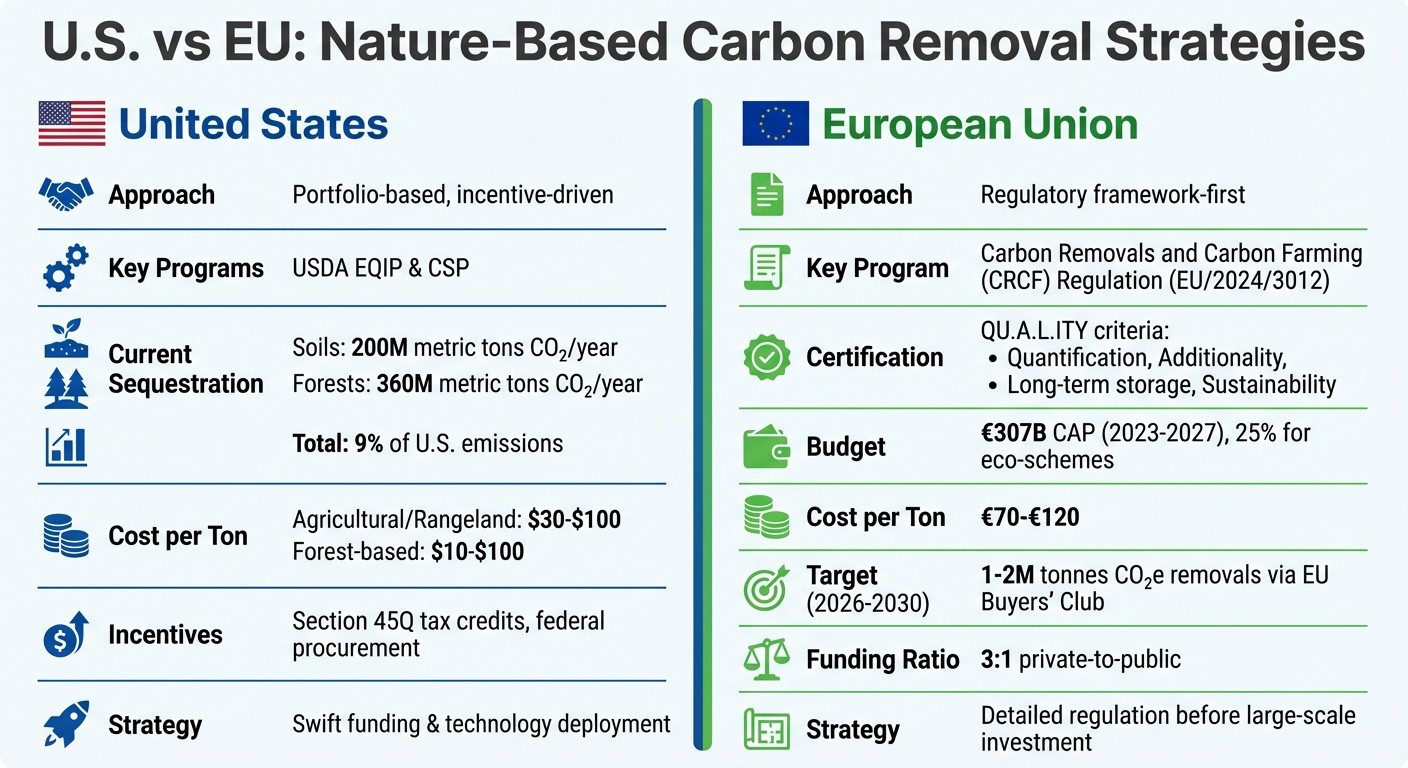
U.S. vs EU Nature-Based Carbon Removal Policies Comparison
Governments around the world are adopting various strategies to expand nature-based carbon removal efforts. In the U.S., the focus is on swift funding and technology deployment, while the EU prioritizes crafting detailed regulatory frameworks before committing to large-scale investments. Let’s take a closer look at how these approaches differ.
U.S. Framework for Permanent Carbon Removal
The U.S. employs a portfolio-based strategy that divides carbon removal efforts into three categories: natural solutions (like reforestation), hybrid technologies (such as Bioenergy with Carbon Capture and Storage), and engineered systems like Direct Air Capture [1]. This framework primarily relies on voluntary, incentive-driven policies. Programs under the USDA Farm Bill, such as EQIP and CSP, reward landowners for carbon sequestration efforts. U.S. soils currently sequester about 200 million metric tons of CO₂ annually, while forests account for an additional 360 million metric tons - roughly 9% of the country’s total emissions.
Cost-wise, agricultural and rangeland practices range between $30 and $100 per ton of CO₂ removed, while forest-based practices typically cost $10 to $100 per ton [4]. To make these efforts more efficient, third-party intermediaries like land trusts use "project aggregation" to bundle smaller projects, reducing administrative challenges and improving cost-effectiveness. On the demand side, incentives such as production tax credits under Section 45Q and federal procurement programs aim to create dependable markets for carbon removal [1].
EU Carbon Farming Initiative
In December 2024, the European Union introduced its Carbon Removals and Carbon Farming (CRCF) Regulation (EU/2024/3012), marking the first EU-wide voluntary certification framework for carbon removals. This initiative supports practices like peatland rewetting, agroforestry, cover cropping, conservation tillage, and reforestation. Certification under this framework adheres to the "QU.A.L.ITY" criteria, which stands for Quantification, Additionality, Long-term storage, and Sustainability.
To encourage participation from smaller operators, the EU has introduced group certification and is developing a Carbon Farming Database. This tool will integrate models, emission factors, and remote sensing data to simplify monitoring and verification. The EU's Common Agricultural Policy (CAP) for 2023–2027 allocates €307 billion, with 25% of direct payments earmarked for eco-schemes [6]. Additionally, the EU Buyers' Club pilot phase (2026–2030) aims to deliver 1 to 2 million tonnes of verified CO₂e removals, leveraging blended finance structures with a 3:1 private-to-public funding ratio. European carbon farming credits currently range from €70 to €120 per tonne of CO₂e, which is notably higher than many international voluntary offsets [5].
Private Sector Role in Nature-Based Carbon Markets
Private companies are redefining how nature-based carbon markets operate, moving away from one-off credit purchases to managing forests as sustainable assets. This approach not only supports carbon sequestration but also enhances biodiversity, water regulation, and soil health [7]. By shifting their focus from treating forests as mere "credit banks" to fostering long-term ecosystem health, businesses are introducing fresh investment models that prioritize sustainability.
One such model is Advanced Market Commitments (AMCs), where buyers commit to purchasing a set volume of credits. This provides predictable revenue streams, addressing a critical funding gap - despite nature-based solutions having the potential to deliver over one-third of the CO₂ mitigation needed by 2030, they currently receive less than 3% of global climate funding. High-quality credits, however, face an annual shortfall of 60 million metric tons [7]. To tackle this, companies are diversifying income sources by combining carbon projects with sustainable timber harvesting. This dual strategy can boost a forest’s 30-year net present value by as much as 50%, while premium credits command significantly higher prices - ranging from $8 to $15 per metric ton of CO₂e as of 2022 [7]. These developments reflect a broader evolution in the market, paving the way for technology-driven solutions.
Market Growth and Investment Patterns
Advanced technologies like AI are transforming carbon markets by using tools such as satellite imagery, SAR, and LIDAR to identify tree species and estimate biomass. These innovations enable the creation of dynamic, real-time baselines [7]. For example, the American Forest Foundation adopted the VM0045 methodology in 2024–2025, leveraging real-time data to ensure credits are issued only when additionality is clearly demonstrated. The foundation also established a permanence fund to support long-term forest management and reduce risks from wildfires [7]. Similarly, Verra, a credit registry, earned the Core Carbon Principles high-integrity label in 2024 for its VM0047 methodology, which focuses on afforestation, reforestation, and revegetation projects [7].
Private firms are also forging partnerships with Indigenous communities through eco-sovereignty initiatives. These collaborations equip communities with AI tools and drones to monitor their ancestral lands, allowing them to sell high-integrity credits directly. AI is further being used for predictive intelligence, identifying areas at risk of illegal logging, wildfires, or agricultural encroachment. This shifts carbon monitoring from being reactive to proactive [7].
"AI-driven verification offers a computational lens to discern the subtle shifts within vast forest ecosystems, transforming carbon accounting from reactive to proactive." - Sustainability Directory [8]
Public–private partnerships are setting new standards for market integrity. The LEAF Coalition, the largest public–private voluntary carbon market initiative, employs jurisdictional-scale strategies to combat tropical deforestation [9][10]. In May 2024, USAID launched the Acorn Carbon Fund, mobilizing $100 million to connect smallholder farmers in developing regions with voluntary carbon markets while ensuring revenues benefit local communities and Indigenous Peoples [9]. Additionally, the U.S. Department of Energy announced $35 million for the Carbon Dioxide Removal Purchase Pilot Prize, designed to create a stable revenue stream by purchasing removal credits from innovative companies [9][10].
These initiatives, alongside government programs, enhance market reliability through modern verification methods and local partnerships. At Council Fire, we integrate these advancements into strategies that balance long-term ecosystem stewardship with business growth, aligning private sector innovation with evolving policies.
Challenges and Opportunities in Nature-Based Policies
Nature-based policies, although promising, face several operational hurdles that need addressing to ensure their effectiveness. One major concern involves the stability of carbon stored in forests and soils, which remains vulnerable to threats like wildfires, pests, disease, and land-use changes. To mitigate these risks, financial mechanisms such as permanence funds and pooled reserves are being developed to support long-term ecosystem management during such disruptions [11].
Another critical challenge is demonstrating additionality - ensuring that carbon credits represent genuine climate benefits. Alarmingly, up to 87% of voluntary credits may fall short in delivering real impact [11]. Traditional static baselines often fail to capture the dynamic nature of ecosystems, but the use of real-time data in dynamic baselines offers a more accurate and reliable alternative. As Boston Consulting Group aptly advises, "Manage the land first, and credits will follow" [11], emphasizing that prioritizing ecosystem health naturally results in high-quality carbon outcomes.
Costs also present a significant barrier. Reforestation efforts can cost between $10 and $100 per ton, while agricultural soil practices range from $30 to $100 per ton. These high upfront expenses pose risks, particularly for landowners with limited market knowledge [4]. However, project aggregation through third-party intermediaries can help alleviate these financial and administrative burdens by achieving economies of scale [2][4].
Despite these obstacles, nature-based solutions hold immense potential. They could contribute over one-third of the CO₂ reductions needed by 2030, even though they currently receive less than 3% of global climate funding. Additionally, high-quality carbon credits are expected to command premiums of up to 250%, driven by a projected shortfall of 60 million metric tons [11]. These premium credits stand out for their integrity, permanence, and added benefits like enhanced biodiversity and improved water quality. Such dynamics highlight the importance of strategic site selection - balancing carbon sequestration with ecological integrity.
Biodiversity Factors in Carbon Removal Projects
Careful site selection plays a pivotal role in ensuring that carbon projects also contribute to biodiversity. Large-scale afforestation projects, for instance, can inadvertently displace biodiverse ecosystems such as natural grasslands. Current national climate pledges estimate the need for around 1 billion hectares of land for carbon removal, with over 40% involving land-use conversion to forests or energy crops [12]. This rapid transformation - about 13 million hectares annually - threatens food security and biodiversity goals [12].
A more sustainable approach prioritizes restoration over conversion. Restoring degraded ecosystems preserves existing land uses while supporting local biodiversity, whereas converting non-forested lands into plantations can lead to habitat loss and resource competition. For example, mangroves planted in historically native areas store up to 60% more carbon compared to those in non-native locations [11]. By tailoring projects to specific ecosystems, natural climate solutions can yield additional benefits, such as creating wildlife habitats, improving air and water quality, and boosting ecosystem resilience - goals that align with broader environmental health priorities [2].
Organizations like Council Fire play a crucial role in navigating these complexities. By incorporating biodiversity considerations into carbon project designs, they ensure site selection maximizes both carbon sequestration and ecological health, supporting long-term sustainability objectives.
What's Next for Nature-Based Carbon Policies
Building on earlier efforts in government programs and private sector initiatives, the next phase of nature-based carbon policies is leaning heavily on regional strategies and technological advancements. With regions like Africa, Latin America, and Southeast Asia boasting vast carbon sinks, they are emerging as central players in policy innovation. However, challenges remain - Africa alone faces a staggering $146 billion annual climate finance gap, highlighting the urgent need for creative solutions to draw in private investment [15]. These regional and global challenges are driving tailored policy responses that reflect local needs and opportunities.
Regional Policies and Technological Innovations
India has taken a leading role with its Indian Carbon Market (ICM), targeting a 40% emissions reduction by 2027 and aiming for full operational capacity by 2030. The "Prakriti 2025" conference, hosted by India's Ministry of Power and Bureau of Energy Efficiency, brought together over 600 global delegates in February 2025 to map out the phased implementation of the ICM. Union Minister for Power & Housing Manohar Lal emphasized the importance of carbon markets in making renewable energy adoption both cost-effective and transparent [13]. Similarly, Brazil is advancing its own national emissions trading system while expanding forest restoration efforts, aiming for a 59% to 67% reduction in emissions by 2035.
Technology is playing a transformative role in verifying and scaling carbon projects across these regions. Tools like drones, AI, and satellite monitoring have become essential for ensuring the credibility of carbon credits. The burgeoning "Nature Tech" sector, which now includes over 1,000 companies worldwide, provides the precise data required to meet the Integrity Council for the Voluntary Carbon Market's standards [18]. This shift comes in response to findings, such as a study published in Nature, which revealed that only 16% of historical carbon credits resulted in measurable emissions reductions. This has led to stricter criteria for project eligibility [17].
Africa is seeing progress with results-based payment frameworks. For instance, Gabon received $17 million in 2021 from the Central African Forest Initiative (CAFI) for verified carbon forestry savings. This payment was a direct result of Gabon's sustainable logging law enacted in 2001 and its participation in the REDD+ program in 2015 [16]. Meanwhile, in Indonesia, the Katingan Peatland Restoration and Conservation Project protects 150,000 hectares (around 370,000 acres) of peat swamp forest, preventing over 7.5 million tons of CO₂ emissions annually. This project underscores the potential of robust verification systems to achieve large-scale impact [14].
As policies continue to evolve, advanced verification methods and targeted investments are becoming essential. Blue carbon projects, such as those focused on mangroves, are gaining momentum due to their exceptional carbon sequestration capabilities - up to four times greater than terrestrial forests - while also offering coastal protection benefits [14]. Investment in sustainable forest management, restoration, and conservation nearly doubled to $23.5 billion by 2026, with forestry and land use projects accounting for 37% of all retired carbon credits [14]. Organizations like Council Fire are stepping in to provide strategic guidance, ensuring that technology is effectively integrated into regional frameworks, balancing environmental goals with financial feasibility.
Conclusion: Key Takeaways and Next Steps
Nature-based carbon policies are shifting from voluntary markets to government-led frameworks focused on long-term revenue and reliable crediting systems. To meet the U.S. goal of one gigaton of annual carbon dioxide removal by 2050, an estimated $100 billion in yearly revenue will be needed [1]. This underscores a pressing funding gap and the necessity for organizations to prepare for upcoming federal incentives, tax credits, and procurement programs [1].
These policies are also placing greater importance on broader benefits, such as improving biodiversity, enhancing soil health, and supporting rural economies. By incorporating these co-benefits, organizations can align with regulatory demands and meet stakeholder expectations more effectively.
Strong verification systems and well-structured incentives are crucial for maintaining market credibility. High-integrity monitoring, reporting, and verification (MRV) frameworks ensure accurate crediting, while clear Memorandums of Understanding (MOUs) with partners can prevent issues like double-counting [3]. Federal incentives, such as Section 45Q tax credits and loan guarantees, can help offset initial costs. Additionally, the federal government has proposed $6 billion for research and development and $18 billion for demonstration and deployment funding over the next decade to scale the carbon removal industry [1]. Collaborating with technical experts like Council Fire can guide organizations through these changes while balancing environmental goals with financial considerations.
Combining natural, hybrid, and engineered solutions will create a well-rounded decarbonization strategy. As Rhodium Group notes, "CDR is not a comprehensive solution for US decarbonization nor an excuse to continue emitting as usual. Instead, it is a strategy to complement deep emissions cuts across all sectors" [1]. Taking a diversified approach now will provide a strong foundation as these policies continue to evolve.
FAQs
What challenges exist in expanding nature-based carbon solutions?
Expanding carbon solutions rooted in nature presents several hurdles. One of the biggest challenges lies in maintaining the reliability and impact of carbon credits derived from forests, wetlands, and agricultural lands. Without stringent verification systems, there's a risk of exaggerating climate benefits or engaging in greenwashing, which can erode trust and slow progress.
Another significant obstacle is establishing sustainable financial incentives for landowners and developers. Instead of treating natural resources as short-term credit sources, they need encouragement to manage them as long-term carbon assets. Achieving this requires fresh policies, innovative market mechanisms, and coordinated efforts among various stakeholders - steps that take time to implement. Moreover, scaling up these solutions often demands higher initial investments compared to technology-based approaches, while also navigating the unique ecological and social challenges of different regions.
Overcoming these barriers is critical to unlocking the full potential of nature-based solutions in addressing climate change, ensuring both environmental integrity and fairness in the process.
How do U.S. and EU policies on nature-based carbon solutions compare?
The United States and the European Union approach nature-based carbon policies in ways that mirror their broader regulatory philosophies. The EU leans on a centralized, mandate-driven system, exemplified by the European Emissions Trading System (EU-ETS). This framework incorporates carbon removal into its overarching climate strategy, setting binding targets to ensure compliance. On the other hand, the U.S. takes a more decentralized route, emphasizing voluntary markets, financial incentives, and state-level programs rather than a cohesive federal policy.
The EU's strategy is rooted in structured legislative commitments, while the U.S. favors adaptable, incentive-driven initiatives, such as efforts in forest conservation and restoration. Despite these contrasting methods, both regions increasingly acknowledge the importance of nature-based solutions in combating climate change, tailoring their approaches to align with their unique political and economic landscapes.
How does technology help verify nature-based carbon credits?
Technology plays a key role in guaranteeing the precision and reliability of nature-based carbon credits. Tools such as remote sensing, satellite imagery, and advanced data analytics are instrumental in monitoring and measuring the carbon storage capacity and overall health of ecosystems tied to these projects. This ensures that the credits correspond to actual, measurable reductions or removals of emissions.
These advancements also promote transparency by offering dependable, real-time data, which helps build confidence in carbon markets. By streamlining verification processes, technology ensures that nature-based carbon credits achieve their intended climate benefits and contribute meaningfully to global climate mitigation efforts.
Related Blog Posts
Latest Articles
©2025


FAQ
01
What does it really mean to “redefine profit”?
02
What makes Council Fire different?
03
Who does Council Fire you work with?
04
What does working with Council Fire actually look like?
05
How does Council Fire help organizations turn big goals into action?
06
How does Council Fire define and measure success?
Jan 30, 2026
Emerging Nature-Based Carbon Policies: Key Trends
Sustainability Strategy
In This Article
Global nature-based carbon policies: evolving markets, tech-driven verification, funding gaps, and opportunities to scale ecosystem-based carbon removal.
Emerging Nature-Based Carbon Policies: Key Trends
Nature-based carbon policies are reshaping climate strategies by leveraging ecosystems like forests and soils to absorb carbon dioxide. These approaches complement engineered solutions and offer added benefits, such as improving air quality, supporting wildlife, and strengthening resilient economies in rural areas. However, scaling these efforts faces challenges in funding, verification, and market development.
Key Insights:
Potential Impact: Nature-based solutions could deliver one-third of required CO₂ reductions by 2030, but current funding is only 3% of what's needed.
U.S. Approach: Incentive-driven programs like USDA’s EQIP and CSP reward landowners for sequestration, with costs ranging from $10 to $100 per ton of CO₂.
EU Policies: The Carbon Farming Initiative, launched in 2024, emphasizes certification and sustainability, with carbon credits priced at €70–€120 per ton.
Private Sector Role: Companies are shifting from one-off credits to long-term forest management, using tools like AI and satellite monitoring for verification.
Challenges: Risks include unstable carbon storage, high costs, and ensuring additionality, with up to 87% of voluntary credits potentially lacking real impact.
Opportunities Ahead:
Expanding funding through public–private partnerships and tax incentives.
Leveraging advanced technologies like AI for real-time monitoring.
Prioritizing ecosystem restoration over land-use conversion to balance carbon storage with biodiversity.
Nature-based solutions are gaining momentum globally, but further investment and innovation are required to scale their impact effectively.
Carbon Offsets Panel: “Nature-based” Carbon Offsets
Government Programs for Nature-Based Carbon Removal
U.S. vs EU Nature-Based Carbon Removal Policies Comparison
Governments around the world are adopting various strategies to expand nature-based carbon removal efforts. In the U.S., the focus is on swift funding and technology deployment, while the EU prioritizes crafting detailed regulatory frameworks before committing to large-scale investments. Let’s take a closer look at how these approaches differ.
U.S. Framework for Permanent Carbon Removal
The U.S. employs a portfolio-based strategy that divides carbon removal efforts into three categories: natural solutions (like reforestation), hybrid technologies (such as Bioenergy with Carbon Capture and Storage), and engineered systems like Direct Air Capture [1]. This framework primarily relies on voluntary, incentive-driven policies. Programs under the USDA Farm Bill, such as EQIP and CSP, reward landowners for carbon sequestration efforts. U.S. soils currently sequester about 200 million metric tons of CO₂ annually, while forests account for an additional 360 million metric tons - roughly 9% of the country’s total emissions.
Cost-wise, agricultural and rangeland practices range between $30 and $100 per ton of CO₂ removed, while forest-based practices typically cost $10 to $100 per ton [4]. To make these efforts more efficient, third-party intermediaries like land trusts use "project aggregation" to bundle smaller projects, reducing administrative challenges and improving cost-effectiveness. On the demand side, incentives such as production tax credits under Section 45Q and federal procurement programs aim to create dependable markets for carbon removal [1].
EU Carbon Farming Initiative
In December 2024, the European Union introduced its Carbon Removals and Carbon Farming (CRCF) Regulation (EU/2024/3012), marking the first EU-wide voluntary certification framework for carbon removals. This initiative supports practices like peatland rewetting, agroforestry, cover cropping, conservation tillage, and reforestation. Certification under this framework adheres to the "QU.A.L.ITY" criteria, which stands for Quantification, Additionality, Long-term storage, and Sustainability.
To encourage participation from smaller operators, the EU has introduced group certification and is developing a Carbon Farming Database. This tool will integrate models, emission factors, and remote sensing data to simplify monitoring and verification. The EU's Common Agricultural Policy (CAP) for 2023–2027 allocates €307 billion, with 25% of direct payments earmarked for eco-schemes [6]. Additionally, the EU Buyers' Club pilot phase (2026–2030) aims to deliver 1 to 2 million tonnes of verified CO₂e removals, leveraging blended finance structures with a 3:1 private-to-public funding ratio. European carbon farming credits currently range from €70 to €120 per tonne of CO₂e, which is notably higher than many international voluntary offsets [5].
Private Sector Role in Nature-Based Carbon Markets
Private companies are redefining how nature-based carbon markets operate, moving away from one-off credit purchases to managing forests as sustainable assets. This approach not only supports carbon sequestration but also enhances biodiversity, water regulation, and soil health [7]. By shifting their focus from treating forests as mere "credit banks" to fostering long-term ecosystem health, businesses are introducing fresh investment models that prioritize sustainability.
One such model is Advanced Market Commitments (AMCs), where buyers commit to purchasing a set volume of credits. This provides predictable revenue streams, addressing a critical funding gap - despite nature-based solutions having the potential to deliver over one-third of the CO₂ mitigation needed by 2030, they currently receive less than 3% of global climate funding. High-quality credits, however, face an annual shortfall of 60 million metric tons [7]. To tackle this, companies are diversifying income sources by combining carbon projects with sustainable timber harvesting. This dual strategy can boost a forest’s 30-year net present value by as much as 50%, while premium credits command significantly higher prices - ranging from $8 to $15 per metric ton of CO₂e as of 2022 [7]. These developments reflect a broader evolution in the market, paving the way for technology-driven solutions.
Market Growth and Investment Patterns
Advanced technologies like AI are transforming carbon markets by using tools such as satellite imagery, SAR, and LIDAR to identify tree species and estimate biomass. These innovations enable the creation of dynamic, real-time baselines [7]. For example, the American Forest Foundation adopted the VM0045 methodology in 2024–2025, leveraging real-time data to ensure credits are issued only when additionality is clearly demonstrated. The foundation also established a permanence fund to support long-term forest management and reduce risks from wildfires [7]. Similarly, Verra, a credit registry, earned the Core Carbon Principles high-integrity label in 2024 for its VM0047 methodology, which focuses on afforestation, reforestation, and revegetation projects [7].
Private firms are also forging partnerships with Indigenous communities through eco-sovereignty initiatives. These collaborations equip communities with AI tools and drones to monitor their ancestral lands, allowing them to sell high-integrity credits directly. AI is further being used for predictive intelligence, identifying areas at risk of illegal logging, wildfires, or agricultural encroachment. This shifts carbon monitoring from being reactive to proactive [7].
"AI-driven verification offers a computational lens to discern the subtle shifts within vast forest ecosystems, transforming carbon accounting from reactive to proactive." - Sustainability Directory [8]
Public–private partnerships are setting new standards for market integrity. The LEAF Coalition, the largest public–private voluntary carbon market initiative, employs jurisdictional-scale strategies to combat tropical deforestation [9][10]. In May 2024, USAID launched the Acorn Carbon Fund, mobilizing $100 million to connect smallholder farmers in developing regions with voluntary carbon markets while ensuring revenues benefit local communities and Indigenous Peoples [9]. Additionally, the U.S. Department of Energy announced $35 million for the Carbon Dioxide Removal Purchase Pilot Prize, designed to create a stable revenue stream by purchasing removal credits from innovative companies [9][10].
These initiatives, alongside government programs, enhance market reliability through modern verification methods and local partnerships. At Council Fire, we integrate these advancements into strategies that balance long-term ecosystem stewardship with business growth, aligning private sector innovation with evolving policies.
Challenges and Opportunities in Nature-Based Policies
Nature-based policies, although promising, face several operational hurdles that need addressing to ensure their effectiveness. One major concern involves the stability of carbon stored in forests and soils, which remains vulnerable to threats like wildfires, pests, disease, and land-use changes. To mitigate these risks, financial mechanisms such as permanence funds and pooled reserves are being developed to support long-term ecosystem management during such disruptions [11].
Another critical challenge is demonstrating additionality - ensuring that carbon credits represent genuine climate benefits. Alarmingly, up to 87% of voluntary credits may fall short in delivering real impact [11]. Traditional static baselines often fail to capture the dynamic nature of ecosystems, but the use of real-time data in dynamic baselines offers a more accurate and reliable alternative. As Boston Consulting Group aptly advises, "Manage the land first, and credits will follow" [11], emphasizing that prioritizing ecosystem health naturally results in high-quality carbon outcomes.
Costs also present a significant barrier. Reforestation efforts can cost between $10 and $100 per ton, while agricultural soil practices range from $30 to $100 per ton. These high upfront expenses pose risks, particularly for landowners with limited market knowledge [4]. However, project aggregation through third-party intermediaries can help alleviate these financial and administrative burdens by achieving economies of scale [2][4].
Despite these obstacles, nature-based solutions hold immense potential. They could contribute over one-third of the CO₂ reductions needed by 2030, even though they currently receive less than 3% of global climate funding. Additionally, high-quality carbon credits are expected to command premiums of up to 250%, driven by a projected shortfall of 60 million metric tons [11]. These premium credits stand out for their integrity, permanence, and added benefits like enhanced biodiversity and improved water quality. Such dynamics highlight the importance of strategic site selection - balancing carbon sequestration with ecological integrity.
Biodiversity Factors in Carbon Removal Projects
Careful site selection plays a pivotal role in ensuring that carbon projects also contribute to biodiversity. Large-scale afforestation projects, for instance, can inadvertently displace biodiverse ecosystems such as natural grasslands. Current national climate pledges estimate the need for around 1 billion hectares of land for carbon removal, with over 40% involving land-use conversion to forests or energy crops [12]. This rapid transformation - about 13 million hectares annually - threatens food security and biodiversity goals [12].
A more sustainable approach prioritizes restoration over conversion. Restoring degraded ecosystems preserves existing land uses while supporting local biodiversity, whereas converting non-forested lands into plantations can lead to habitat loss and resource competition. For example, mangroves planted in historically native areas store up to 60% more carbon compared to those in non-native locations [11]. By tailoring projects to specific ecosystems, natural climate solutions can yield additional benefits, such as creating wildlife habitats, improving air and water quality, and boosting ecosystem resilience - goals that align with broader environmental health priorities [2].
Organizations like Council Fire play a crucial role in navigating these complexities. By incorporating biodiversity considerations into carbon project designs, they ensure site selection maximizes both carbon sequestration and ecological health, supporting long-term sustainability objectives.
What's Next for Nature-Based Carbon Policies
Building on earlier efforts in government programs and private sector initiatives, the next phase of nature-based carbon policies is leaning heavily on regional strategies and technological advancements. With regions like Africa, Latin America, and Southeast Asia boasting vast carbon sinks, they are emerging as central players in policy innovation. However, challenges remain - Africa alone faces a staggering $146 billion annual climate finance gap, highlighting the urgent need for creative solutions to draw in private investment [15]. These regional and global challenges are driving tailored policy responses that reflect local needs and opportunities.
Regional Policies and Technological Innovations
India has taken a leading role with its Indian Carbon Market (ICM), targeting a 40% emissions reduction by 2027 and aiming for full operational capacity by 2030. The "Prakriti 2025" conference, hosted by India's Ministry of Power and Bureau of Energy Efficiency, brought together over 600 global delegates in February 2025 to map out the phased implementation of the ICM. Union Minister for Power & Housing Manohar Lal emphasized the importance of carbon markets in making renewable energy adoption both cost-effective and transparent [13]. Similarly, Brazil is advancing its own national emissions trading system while expanding forest restoration efforts, aiming for a 59% to 67% reduction in emissions by 2035.
Technology is playing a transformative role in verifying and scaling carbon projects across these regions. Tools like drones, AI, and satellite monitoring have become essential for ensuring the credibility of carbon credits. The burgeoning "Nature Tech" sector, which now includes over 1,000 companies worldwide, provides the precise data required to meet the Integrity Council for the Voluntary Carbon Market's standards [18]. This shift comes in response to findings, such as a study published in Nature, which revealed that only 16% of historical carbon credits resulted in measurable emissions reductions. This has led to stricter criteria for project eligibility [17].
Africa is seeing progress with results-based payment frameworks. For instance, Gabon received $17 million in 2021 from the Central African Forest Initiative (CAFI) for verified carbon forestry savings. This payment was a direct result of Gabon's sustainable logging law enacted in 2001 and its participation in the REDD+ program in 2015 [16]. Meanwhile, in Indonesia, the Katingan Peatland Restoration and Conservation Project protects 150,000 hectares (around 370,000 acres) of peat swamp forest, preventing over 7.5 million tons of CO₂ emissions annually. This project underscores the potential of robust verification systems to achieve large-scale impact [14].
As policies continue to evolve, advanced verification methods and targeted investments are becoming essential. Blue carbon projects, such as those focused on mangroves, are gaining momentum due to their exceptional carbon sequestration capabilities - up to four times greater than terrestrial forests - while also offering coastal protection benefits [14]. Investment in sustainable forest management, restoration, and conservation nearly doubled to $23.5 billion by 2026, with forestry and land use projects accounting for 37% of all retired carbon credits [14]. Organizations like Council Fire are stepping in to provide strategic guidance, ensuring that technology is effectively integrated into regional frameworks, balancing environmental goals with financial feasibility.
Conclusion: Key Takeaways and Next Steps
Nature-based carbon policies are shifting from voluntary markets to government-led frameworks focused on long-term revenue and reliable crediting systems. To meet the U.S. goal of one gigaton of annual carbon dioxide removal by 2050, an estimated $100 billion in yearly revenue will be needed [1]. This underscores a pressing funding gap and the necessity for organizations to prepare for upcoming federal incentives, tax credits, and procurement programs [1].
These policies are also placing greater importance on broader benefits, such as improving biodiversity, enhancing soil health, and supporting rural economies. By incorporating these co-benefits, organizations can align with regulatory demands and meet stakeholder expectations more effectively.
Strong verification systems and well-structured incentives are crucial for maintaining market credibility. High-integrity monitoring, reporting, and verification (MRV) frameworks ensure accurate crediting, while clear Memorandums of Understanding (MOUs) with partners can prevent issues like double-counting [3]. Federal incentives, such as Section 45Q tax credits and loan guarantees, can help offset initial costs. Additionally, the federal government has proposed $6 billion for research and development and $18 billion for demonstration and deployment funding over the next decade to scale the carbon removal industry [1]. Collaborating with technical experts like Council Fire can guide organizations through these changes while balancing environmental goals with financial considerations.
Combining natural, hybrid, and engineered solutions will create a well-rounded decarbonization strategy. As Rhodium Group notes, "CDR is not a comprehensive solution for US decarbonization nor an excuse to continue emitting as usual. Instead, it is a strategy to complement deep emissions cuts across all sectors" [1]. Taking a diversified approach now will provide a strong foundation as these policies continue to evolve.
FAQs
What challenges exist in expanding nature-based carbon solutions?
Expanding carbon solutions rooted in nature presents several hurdles. One of the biggest challenges lies in maintaining the reliability and impact of carbon credits derived from forests, wetlands, and agricultural lands. Without stringent verification systems, there's a risk of exaggerating climate benefits or engaging in greenwashing, which can erode trust and slow progress.
Another significant obstacle is establishing sustainable financial incentives for landowners and developers. Instead of treating natural resources as short-term credit sources, they need encouragement to manage them as long-term carbon assets. Achieving this requires fresh policies, innovative market mechanisms, and coordinated efforts among various stakeholders - steps that take time to implement. Moreover, scaling up these solutions often demands higher initial investments compared to technology-based approaches, while also navigating the unique ecological and social challenges of different regions.
Overcoming these barriers is critical to unlocking the full potential of nature-based solutions in addressing climate change, ensuring both environmental integrity and fairness in the process.
How do U.S. and EU policies on nature-based carbon solutions compare?
The United States and the European Union approach nature-based carbon policies in ways that mirror their broader regulatory philosophies. The EU leans on a centralized, mandate-driven system, exemplified by the European Emissions Trading System (EU-ETS). This framework incorporates carbon removal into its overarching climate strategy, setting binding targets to ensure compliance. On the other hand, the U.S. takes a more decentralized route, emphasizing voluntary markets, financial incentives, and state-level programs rather than a cohesive federal policy.
The EU's strategy is rooted in structured legislative commitments, while the U.S. favors adaptable, incentive-driven initiatives, such as efforts in forest conservation and restoration. Despite these contrasting methods, both regions increasingly acknowledge the importance of nature-based solutions in combating climate change, tailoring their approaches to align with their unique political and economic landscapes.
How does technology help verify nature-based carbon credits?
Technology plays a key role in guaranteeing the precision and reliability of nature-based carbon credits. Tools such as remote sensing, satellite imagery, and advanced data analytics are instrumental in monitoring and measuring the carbon storage capacity and overall health of ecosystems tied to these projects. This ensures that the credits correspond to actual, measurable reductions or removals of emissions.
These advancements also promote transparency by offering dependable, real-time data, which helps build confidence in carbon markets. By streamlining verification processes, technology ensures that nature-based carbon credits achieve their intended climate benefits and contribute meaningfully to global climate mitigation efforts.
Related Blog Posts
FAQ
01
What does it really mean to “redefine profit”?
02
What makes Council Fire different?
03
Who does Council Fire you work with?
04
What does working with Council Fire actually look like?
05
How does Council Fire help organizations turn big goals into action?
06
How does Council Fire define and measure success?
Jan 30, 2026
Emerging Nature-Based Carbon Policies: Key Trends
Sustainability Strategy
In This Article
Global nature-based carbon policies: evolving markets, tech-driven verification, funding gaps, and opportunities to scale ecosystem-based carbon removal.
Emerging Nature-Based Carbon Policies: Key Trends
Nature-based carbon policies are reshaping climate strategies by leveraging ecosystems like forests and soils to absorb carbon dioxide. These approaches complement engineered solutions and offer added benefits, such as improving air quality, supporting wildlife, and strengthening resilient economies in rural areas. However, scaling these efforts faces challenges in funding, verification, and market development.
Key Insights:
Potential Impact: Nature-based solutions could deliver one-third of required CO₂ reductions by 2030, but current funding is only 3% of what's needed.
U.S. Approach: Incentive-driven programs like USDA’s EQIP and CSP reward landowners for sequestration, with costs ranging from $10 to $100 per ton of CO₂.
EU Policies: The Carbon Farming Initiative, launched in 2024, emphasizes certification and sustainability, with carbon credits priced at €70–€120 per ton.
Private Sector Role: Companies are shifting from one-off credits to long-term forest management, using tools like AI and satellite monitoring for verification.
Challenges: Risks include unstable carbon storage, high costs, and ensuring additionality, with up to 87% of voluntary credits potentially lacking real impact.
Opportunities Ahead:
Expanding funding through public–private partnerships and tax incentives.
Leveraging advanced technologies like AI for real-time monitoring.
Prioritizing ecosystem restoration over land-use conversion to balance carbon storage with biodiversity.
Nature-based solutions are gaining momentum globally, but further investment and innovation are required to scale their impact effectively.
Carbon Offsets Panel: “Nature-based” Carbon Offsets
Government Programs for Nature-Based Carbon Removal
U.S. vs EU Nature-Based Carbon Removal Policies Comparison
Governments around the world are adopting various strategies to expand nature-based carbon removal efforts. In the U.S., the focus is on swift funding and technology deployment, while the EU prioritizes crafting detailed regulatory frameworks before committing to large-scale investments. Let’s take a closer look at how these approaches differ.
U.S. Framework for Permanent Carbon Removal
The U.S. employs a portfolio-based strategy that divides carbon removal efforts into three categories: natural solutions (like reforestation), hybrid technologies (such as Bioenergy with Carbon Capture and Storage), and engineered systems like Direct Air Capture [1]. This framework primarily relies on voluntary, incentive-driven policies. Programs under the USDA Farm Bill, such as EQIP and CSP, reward landowners for carbon sequestration efforts. U.S. soils currently sequester about 200 million metric tons of CO₂ annually, while forests account for an additional 360 million metric tons - roughly 9% of the country’s total emissions.
Cost-wise, agricultural and rangeland practices range between $30 and $100 per ton of CO₂ removed, while forest-based practices typically cost $10 to $100 per ton [4]. To make these efforts more efficient, third-party intermediaries like land trusts use "project aggregation" to bundle smaller projects, reducing administrative challenges and improving cost-effectiveness. On the demand side, incentives such as production tax credits under Section 45Q and federal procurement programs aim to create dependable markets for carbon removal [1].
EU Carbon Farming Initiative
In December 2024, the European Union introduced its Carbon Removals and Carbon Farming (CRCF) Regulation (EU/2024/3012), marking the first EU-wide voluntary certification framework for carbon removals. This initiative supports practices like peatland rewetting, agroforestry, cover cropping, conservation tillage, and reforestation. Certification under this framework adheres to the "QU.A.L.ITY" criteria, which stands for Quantification, Additionality, Long-term storage, and Sustainability.
To encourage participation from smaller operators, the EU has introduced group certification and is developing a Carbon Farming Database. This tool will integrate models, emission factors, and remote sensing data to simplify monitoring and verification. The EU's Common Agricultural Policy (CAP) for 2023–2027 allocates €307 billion, with 25% of direct payments earmarked for eco-schemes [6]. Additionally, the EU Buyers' Club pilot phase (2026–2030) aims to deliver 1 to 2 million tonnes of verified CO₂e removals, leveraging blended finance structures with a 3:1 private-to-public funding ratio. European carbon farming credits currently range from €70 to €120 per tonne of CO₂e, which is notably higher than many international voluntary offsets [5].
Private Sector Role in Nature-Based Carbon Markets
Private companies are redefining how nature-based carbon markets operate, moving away from one-off credit purchases to managing forests as sustainable assets. This approach not only supports carbon sequestration but also enhances biodiversity, water regulation, and soil health [7]. By shifting their focus from treating forests as mere "credit banks" to fostering long-term ecosystem health, businesses are introducing fresh investment models that prioritize sustainability.
One such model is Advanced Market Commitments (AMCs), where buyers commit to purchasing a set volume of credits. This provides predictable revenue streams, addressing a critical funding gap - despite nature-based solutions having the potential to deliver over one-third of the CO₂ mitigation needed by 2030, they currently receive less than 3% of global climate funding. High-quality credits, however, face an annual shortfall of 60 million metric tons [7]. To tackle this, companies are diversifying income sources by combining carbon projects with sustainable timber harvesting. This dual strategy can boost a forest’s 30-year net present value by as much as 50%, while premium credits command significantly higher prices - ranging from $8 to $15 per metric ton of CO₂e as of 2022 [7]. These developments reflect a broader evolution in the market, paving the way for technology-driven solutions.
Market Growth and Investment Patterns
Advanced technologies like AI are transforming carbon markets by using tools such as satellite imagery, SAR, and LIDAR to identify tree species and estimate biomass. These innovations enable the creation of dynamic, real-time baselines [7]. For example, the American Forest Foundation adopted the VM0045 methodology in 2024–2025, leveraging real-time data to ensure credits are issued only when additionality is clearly demonstrated. The foundation also established a permanence fund to support long-term forest management and reduce risks from wildfires [7]. Similarly, Verra, a credit registry, earned the Core Carbon Principles high-integrity label in 2024 for its VM0047 methodology, which focuses on afforestation, reforestation, and revegetation projects [7].
Private firms are also forging partnerships with Indigenous communities through eco-sovereignty initiatives. These collaborations equip communities with AI tools and drones to monitor their ancestral lands, allowing them to sell high-integrity credits directly. AI is further being used for predictive intelligence, identifying areas at risk of illegal logging, wildfires, or agricultural encroachment. This shifts carbon monitoring from being reactive to proactive [7].
"AI-driven verification offers a computational lens to discern the subtle shifts within vast forest ecosystems, transforming carbon accounting from reactive to proactive." - Sustainability Directory [8]
Public–private partnerships are setting new standards for market integrity. The LEAF Coalition, the largest public–private voluntary carbon market initiative, employs jurisdictional-scale strategies to combat tropical deforestation [9][10]. In May 2024, USAID launched the Acorn Carbon Fund, mobilizing $100 million to connect smallholder farmers in developing regions with voluntary carbon markets while ensuring revenues benefit local communities and Indigenous Peoples [9]. Additionally, the U.S. Department of Energy announced $35 million for the Carbon Dioxide Removal Purchase Pilot Prize, designed to create a stable revenue stream by purchasing removal credits from innovative companies [9][10].
These initiatives, alongside government programs, enhance market reliability through modern verification methods and local partnerships. At Council Fire, we integrate these advancements into strategies that balance long-term ecosystem stewardship with business growth, aligning private sector innovation with evolving policies.
Challenges and Opportunities in Nature-Based Policies
Nature-based policies, although promising, face several operational hurdles that need addressing to ensure their effectiveness. One major concern involves the stability of carbon stored in forests and soils, which remains vulnerable to threats like wildfires, pests, disease, and land-use changes. To mitigate these risks, financial mechanisms such as permanence funds and pooled reserves are being developed to support long-term ecosystem management during such disruptions [11].
Another critical challenge is demonstrating additionality - ensuring that carbon credits represent genuine climate benefits. Alarmingly, up to 87% of voluntary credits may fall short in delivering real impact [11]. Traditional static baselines often fail to capture the dynamic nature of ecosystems, but the use of real-time data in dynamic baselines offers a more accurate and reliable alternative. As Boston Consulting Group aptly advises, "Manage the land first, and credits will follow" [11], emphasizing that prioritizing ecosystem health naturally results in high-quality carbon outcomes.
Costs also present a significant barrier. Reforestation efforts can cost between $10 and $100 per ton, while agricultural soil practices range from $30 to $100 per ton. These high upfront expenses pose risks, particularly for landowners with limited market knowledge [4]. However, project aggregation through third-party intermediaries can help alleviate these financial and administrative burdens by achieving economies of scale [2][4].
Despite these obstacles, nature-based solutions hold immense potential. They could contribute over one-third of the CO₂ reductions needed by 2030, even though they currently receive less than 3% of global climate funding. Additionally, high-quality carbon credits are expected to command premiums of up to 250%, driven by a projected shortfall of 60 million metric tons [11]. These premium credits stand out for their integrity, permanence, and added benefits like enhanced biodiversity and improved water quality. Such dynamics highlight the importance of strategic site selection - balancing carbon sequestration with ecological integrity.
Biodiversity Factors in Carbon Removal Projects
Careful site selection plays a pivotal role in ensuring that carbon projects also contribute to biodiversity. Large-scale afforestation projects, for instance, can inadvertently displace biodiverse ecosystems such as natural grasslands. Current national climate pledges estimate the need for around 1 billion hectares of land for carbon removal, with over 40% involving land-use conversion to forests or energy crops [12]. This rapid transformation - about 13 million hectares annually - threatens food security and biodiversity goals [12].
A more sustainable approach prioritizes restoration over conversion. Restoring degraded ecosystems preserves existing land uses while supporting local biodiversity, whereas converting non-forested lands into plantations can lead to habitat loss and resource competition. For example, mangroves planted in historically native areas store up to 60% more carbon compared to those in non-native locations [11]. By tailoring projects to specific ecosystems, natural climate solutions can yield additional benefits, such as creating wildlife habitats, improving air and water quality, and boosting ecosystem resilience - goals that align with broader environmental health priorities [2].
Organizations like Council Fire play a crucial role in navigating these complexities. By incorporating biodiversity considerations into carbon project designs, they ensure site selection maximizes both carbon sequestration and ecological health, supporting long-term sustainability objectives.
What's Next for Nature-Based Carbon Policies
Building on earlier efforts in government programs and private sector initiatives, the next phase of nature-based carbon policies is leaning heavily on regional strategies and technological advancements. With regions like Africa, Latin America, and Southeast Asia boasting vast carbon sinks, they are emerging as central players in policy innovation. However, challenges remain - Africa alone faces a staggering $146 billion annual climate finance gap, highlighting the urgent need for creative solutions to draw in private investment [15]. These regional and global challenges are driving tailored policy responses that reflect local needs and opportunities.
Regional Policies and Technological Innovations
India has taken a leading role with its Indian Carbon Market (ICM), targeting a 40% emissions reduction by 2027 and aiming for full operational capacity by 2030. The "Prakriti 2025" conference, hosted by India's Ministry of Power and Bureau of Energy Efficiency, brought together over 600 global delegates in February 2025 to map out the phased implementation of the ICM. Union Minister for Power & Housing Manohar Lal emphasized the importance of carbon markets in making renewable energy adoption both cost-effective and transparent [13]. Similarly, Brazil is advancing its own national emissions trading system while expanding forest restoration efforts, aiming for a 59% to 67% reduction in emissions by 2035.
Technology is playing a transformative role in verifying and scaling carbon projects across these regions. Tools like drones, AI, and satellite monitoring have become essential for ensuring the credibility of carbon credits. The burgeoning "Nature Tech" sector, which now includes over 1,000 companies worldwide, provides the precise data required to meet the Integrity Council for the Voluntary Carbon Market's standards [18]. This shift comes in response to findings, such as a study published in Nature, which revealed that only 16% of historical carbon credits resulted in measurable emissions reductions. This has led to stricter criteria for project eligibility [17].
Africa is seeing progress with results-based payment frameworks. For instance, Gabon received $17 million in 2021 from the Central African Forest Initiative (CAFI) for verified carbon forestry savings. This payment was a direct result of Gabon's sustainable logging law enacted in 2001 and its participation in the REDD+ program in 2015 [16]. Meanwhile, in Indonesia, the Katingan Peatland Restoration and Conservation Project protects 150,000 hectares (around 370,000 acres) of peat swamp forest, preventing over 7.5 million tons of CO₂ emissions annually. This project underscores the potential of robust verification systems to achieve large-scale impact [14].
As policies continue to evolve, advanced verification methods and targeted investments are becoming essential. Blue carbon projects, such as those focused on mangroves, are gaining momentum due to their exceptional carbon sequestration capabilities - up to four times greater than terrestrial forests - while also offering coastal protection benefits [14]. Investment in sustainable forest management, restoration, and conservation nearly doubled to $23.5 billion by 2026, with forestry and land use projects accounting for 37% of all retired carbon credits [14]. Organizations like Council Fire are stepping in to provide strategic guidance, ensuring that technology is effectively integrated into regional frameworks, balancing environmental goals with financial feasibility.
Conclusion: Key Takeaways and Next Steps
Nature-based carbon policies are shifting from voluntary markets to government-led frameworks focused on long-term revenue and reliable crediting systems. To meet the U.S. goal of one gigaton of annual carbon dioxide removal by 2050, an estimated $100 billion in yearly revenue will be needed [1]. This underscores a pressing funding gap and the necessity for organizations to prepare for upcoming federal incentives, tax credits, and procurement programs [1].
These policies are also placing greater importance on broader benefits, such as improving biodiversity, enhancing soil health, and supporting rural economies. By incorporating these co-benefits, organizations can align with regulatory demands and meet stakeholder expectations more effectively.
Strong verification systems and well-structured incentives are crucial for maintaining market credibility. High-integrity monitoring, reporting, and verification (MRV) frameworks ensure accurate crediting, while clear Memorandums of Understanding (MOUs) with partners can prevent issues like double-counting [3]. Federal incentives, such as Section 45Q tax credits and loan guarantees, can help offset initial costs. Additionally, the federal government has proposed $6 billion for research and development and $18 billion for demonstration and deployment funding over the next decade to scale the carbon removal industry [1]. Collaborating with technical experts like Council Fire can guide organizations through these changes while balancing environmental goals with financial considerations.
Combining natural, hybrid, and engineered solutions will create a well-rounded decarbonization strategy. As Rhodium Group notes, "CDR is not a comprehensive solution for US decarbonization nor an excuse to continue emitting as usual. Instead, it is a strategy to complement deep emissions cuts across all sectors" [1]. Taking a diversified approach now will provide a strong foundation as these policies continue to evolve.
FAQs
What challenges exist in expanding nature-based carbon solutions?
Expanding carbon solutions rooted in nature presents several hurdles. One of the biggest challenges lies in maintaining the reliability and impact of carbon credits derived from forests, wetlands, and agricultural lands. Without stringent verification systems, there's a risk of exaggerating climate benefits or engaging in greenwashing, which can erode trust and slow progress.
Another significant obstacle is establishing sustainable financial incentives for landowners and developers. Instead of treating natural resources as short-term credit sources, they need encouragement to manage them as long-term carbon assets. Achieving this requires fresh policies, innovative market mechanisms, and coordinated efforts among various stakeholders - steps that take time to implement. Moreover, scaling up these solutions often demands higher initial investments compared to technology-based approaches, while also navigating the unique ecological and social challenges of different regions.
Overcoming these barriers is critical to unlocking the full potential of nature-based solutions in addressing climate change, ensuring both environmental integrity and fairness in the process.
How do U.S. and EU policies on nature-based carbon solutions compare?
The United States and the European Union approach nature-based carbon policies in ways that mirror their broader regulatory philosophies. The EU leans on a centralized, mandate-driven system, exemplified by the European Emissions Trading System (EU-ETS). This framework incorporates carbon removal into its overarching climate strategy, setting binding targets to ensure compliance. On the other hand, the U.S. takes a more decentralized route, emphasizing voluntary markets, financial incentives, and state-level programs rather than a cohesive federal policy.
The EU's strategy is rooted in structured legislative commitments, while the U.S. favors adaptable, incentive-driven initiatives, such as efforts in forest conservation and restoration. Despite these contrasting methods, both regions increasingly acknowledge the importance of nature-based solutions in combating climate change, tailoring their approaches to align with their unique political and economic landscapes.
How does technology help verify nature-based carbon credits?
Technology plays a key role in guaranteeing the precision and reliability of nature-based carbon credits. Tools such as remote sensing, satellite imagery, and advanced data analytics are instrumental in monitoring and measuring the carbon storage capacity and overall health of ecosystems tied to these projects. This ensures that the credits correspond to actual, measurable reductions or removals of emissions.
These advancements also promote transparency by offering dependable, real-time data, which helps build confidence in carbon markets. By streamlining verification processes, technology ensures that nature-based carbon credits achieve their intended climate benefits and contribute meaningfully to global climate mitigation efforts.
Related Blog Posts
FAQ
What does it really mean to “redefine profit”?
What makes Council Fire different?
Who does Council Fire you work with?
What does working with Council Fire actually look like?
How does Council Fire help organizations turn big goals into action?
How does Council Fire define and measure success?