
May 6, 2026
How to Design a Stakeholder Engagement Strategy That Builds Trust for Maritime & Logistics Companies
ESG Strategy
In This Article
Step-by-step guide to mapping stakeholders, setting ESG goals, running two-way engagement, and measuring trust in maritime operations.
How to Design a Stakeholder Engagement Strategy That Builds Trust for Maritime & Logistics Companies
In the maritime and logistics sectors, building trust through stakeholder engagement is essential for addressing challenges like decarbonization, regulatory compliance, and community concerns. Effective engagement involves identifying key stakeholders, setting clear goals, and tailoring communication methods to foster collaboration and transparency. Companies like A.P. Moller - Maersk have demonstrated the importance of integrating stakeholder feedback into sustainability strategies to align with evolving expectations and regulations.
Key Takeaways:
Stakeholder Mapping: Identify and prioritize stakeholders by their influence and impact using categories such as employees, customers, regulators, and local communities.
Clear Goals: Define objectives tied to ESG priorities, such as reducing supply chain emissions or aligning with net-zero regulations.
Engagement Methods: Use tailored approaches like surveys, workshops, and advisory panels for different stakeholder groups.
Feedback Loops: Report back to stakeholders on how their input shaped decisions to maintain trust.
Monitoring and Adjustments: Track engagement success through metrics like participation rates and ESG ratings, and refine strategies as needed.
By following these steps, maritime and logistics companies can strengthen relationships, address risks, and meet sustainability expectations effectively.
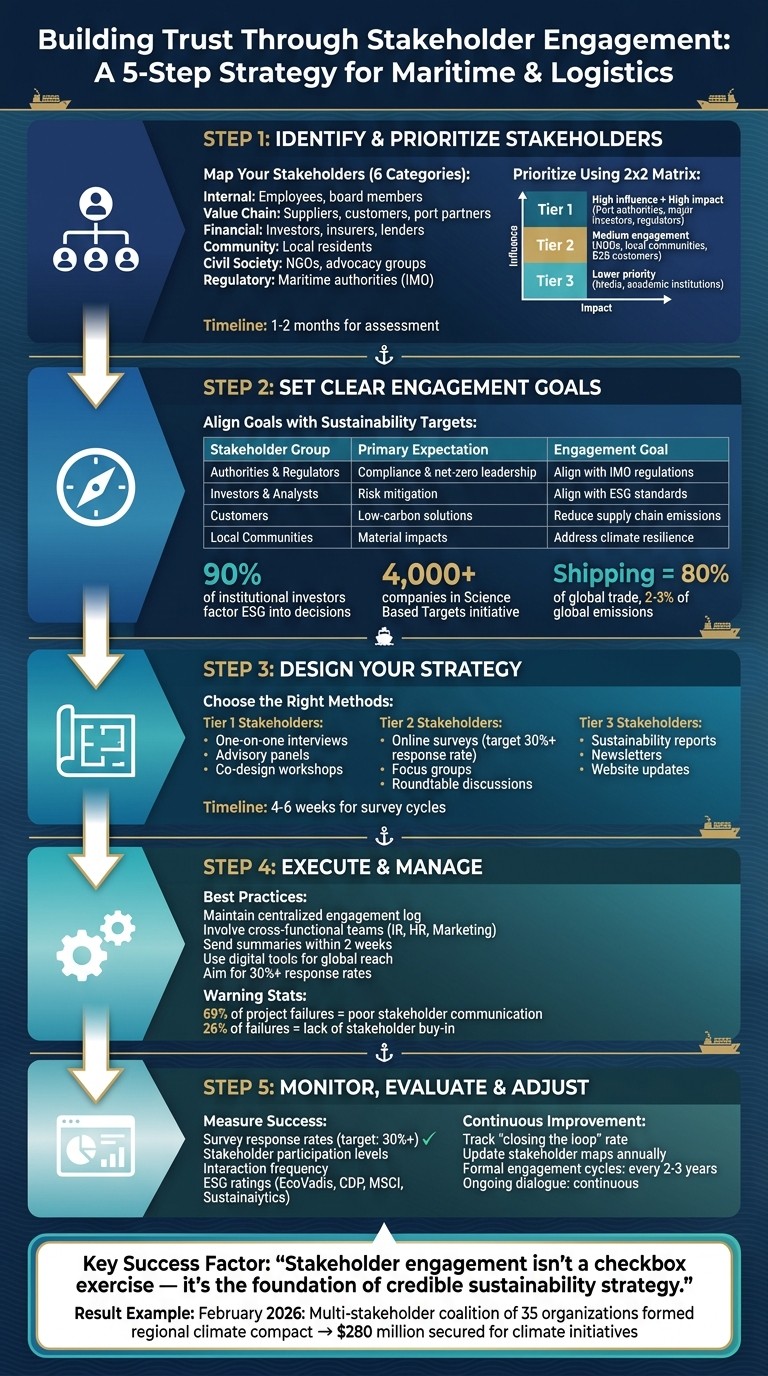
5-Step Stakeholder Engagement Strategy for Maritime Companies
How to Build a Stakeholder Engagement Strategy
Step 1: Identify and Prioritize Your Key Stakeholders
Before developing your engagement strategy, it’s essential to identify the key groups that influence or are affected by your operations. In the maritime and logistics sectors, relationships can be intricate, involving shipping companies, port authorities, environmental organizations, regulators, and communities near your facilities. Overlooking any critical group can result in gaps that weaken your sustainability initiatives.
Once you’ve identified these groups, the next step is to organize them into clear categories for better management.
Map Your Stakeholders
Begin by mapping all stakeholders impacted by your operations. Categorize them into six distinct groups:
Internal: Employees, board members
Value Chain: Suppliers, customers, port partners
Financial: Investors, insurers, lenders
Community: Local residents
Civil Society: NGOs, advocacy groups
Regulatory: Maritime authorities, such as the International Maritime Organization (IMO) [2]
It’s important to include both supportive and critical stakeholders, such as local communities or NGOs that may be affected by your operations. Council Fire emphasizes, "Poor engagement leads to blind spots - material topics you miss, risks you underestimate, and strategies that lack buy-in" [1]. In cases where direct engagement isn’t feasible, such as with distant supply chain workers, consider using credible proxies like trade unions, NGOs, or academic experts to represent their perspectives [2].
Under the Corporate Sustainability Reporting Directive (CSRD), stakeholders are divided into two primary categories: "affected stakeholders" (those directly impacted by your operations) and "users of sustainability information" (those who rely on your disclosures for decision-making) [2]. By applying this dual perspective, you can address both operational impacts and reporting requirements. Allocate 1–2 months to thoroughly assess each stakeholder’s interest, influence, and impact [2]. This structured approach ensures your engagement efforts are directed where they matter most, building trust and encouraging collaboration.
Rank Stakeholders by Influence and Impact
After mapping, prioritize stakeholders by analyzing their influence and how significantly your operations affect them. A 2x2 matrix - plotting stakeholder influence against operational impact - can help you categorize them into three tiers [1]:
Tier 1: High-influence, high-impact stakeholders (e.g., port authorities, major investors, regulators). Engage deeply with these groups through one-on-one interviews, advisory panels, and collaborative workshops.
Tier 2: Groups like NGOs, local communities, and B2B customers. Engage actively via focus groups, surveys, and roundtable discussions.
Tier 3: Stakeholders such as media and academic institutions. Maintain consistent communication through newsletters, sustainability reports, and website updates [1].
Beyond influence and impact, evaluate factors like urgency (time-sensitive issues, such as new environmental regulations) and dependency (stakeholders who rely heavily on your organization, like employees or local economies tied to port operations) [1]. For example, Maersk’s 2025 Annual Report highlighted engagement with seven key stakeholder groups - employees, customers, authorities/regulators, suppliers, investors, local communities, and civil society organizations. These interactions shaped their integrator strategy and helped identify emerging ESG risks [3].
Finally, document all stakeholder mapping activities, including participants and outcomes, in an engagement log. This not only supports CSRD and GRI disclosure requirements but also provides a clear audit trail for assurance providers [1].
Step 2: Set Clear Engagement Goals
Once stakeholders are identified, the next step is to establish specific and actionable objectives that foster trust and provide meaningful insights. These goals should align with regulatory requirements, ESG priorities, and operational realities. As Council Fire aptly notes, "Stakeholder engagement isn't a checkbox exercise - it's the foundation of credible sustainability strategy" [1].
Your engagement objectives should address distinct needs: gathering input on material ESG topics, validating your sustainability strategy to ensure it tackles genuine concerns, identifying emerging risks such as climate resilience challenges, or assessing the impact of your operations on local communities [1]. For instance, instead of setting a vague objective, aim for something more concrete, like "Engage investors to pinpoint their ESG data priorities for the next reporting cycle" or "Collaborate with port authorities to explore opportunities for industry-wide decarbonization" [1].
For maritime and logistics companies, these goals must also align with frameworks such as the Corporate Sustainability Reporting Directive (CSRD). This directive emphasizes considering the perspectives of affected stakeholders when identifying material sustainability issues through a double materiality lens [2]. With 90% of global institutional investors factoring ESG criteria into their decisions and over 4,000 companies participating in the Science Based Targets initiative, your engagement goals need to reflect these changing expectations [4]. These objectives should then tie directly to your sustainability targets to ensure they drive meaningful results.
Align Goals with Sustainability Targets
Stakeholder engagement should be tightly connected to your company’s sustainability commitments. Given that shipping is responsible for transporting nearly 80% of global trade and contributes 2-3% of global emissions, stakeholders now expect maritime companies to lead the way in achieving net-zero goals [4].
In 2025, A.P. Moller - Maersk demonstrated this by engaging with authorities, regulators, and standard setters to advocate for regulations supporting industry-wide decarbonization while ensuring compliance with evolving local and national laws. This approach not only strengthened regulatory alignment but also uncovered opportunities for broader collaboration on ESG initiatives [3]. Similarly, Maersk leveraged its Strategic Customer Council and customer satisfaction surveys to dive deeper into customers’ sustainability challenges, with the specific goal of developing innovative solutions to help them lower supply chain emissions [3]. These examples highlight how clear engagement goals can lead to actionable outcomes.
ESG ratings from platforms such as EcoVadis, CDP, MSCI, and Sustainalytics can serve as benchmarks for stakeholder expectations. These tools help identify management gaps and track emerging trends that should shape your engagement priorities [3].
Stakeholder Group | Primary Expectation | Engagement Goal |
|---|---|---|
Authorities & Regulators | Compliance & net-zero leadership | Align with IMO regulations and support decarbonization [3] |
Investors & Analysts | Risk mitigation (short & long-term) | Align with ESG standards and financial materiality [3] |
Customers | Low-carbon supply chain solutions | Develop products to reduce supply chain emissions [3] |
Local Communities | Responsibility for material impacts | Address climate resilience and secure social license to operate [3] |
Define What's Negotiable and What's Not
Transparency about what stakeholders can influence and what decisions are already set in stone is crucial for maintaining trust. As Council Fire warns, "If materiality determinations, strategy priorities, or project designs are finalized before engagement occurs, the process is performative. Stakeholders can tell - and will disengage" [2].
Clearly outline areas where stakeholders can contribute, such as co-creating maritime decarbonization solutions, developing community impact initiatives, or designing new sustainable services. These represent the negotiable zones where collaboration can yield real value. On the other hand, non-negotiable areas might include regulatory compliance (e.g., IMO regulations), human rights commitments, or fundamental business model decisions that have already been finalized [3].
To avoid confusion, incorporate these boundaries into your governance framework. When input cannot alter a decision, explain the reasons - whether due to legal requirements, safety considerations, or strategic imperatives. As Maersk explains, "Understanding the needs and expectations of our stakeholders is a foundation for our ESG strategy and supporting actions" [3]. This transparency minimizes stakeholder fatigue and encourages continued engagement in future cycles.
Finally, always close the loop by reporting back to stakeholders. Share how their input influenced your strategy and provide a clear explanation when decisions took a different direction. Council Fire stresses, "Failing to close the loop is the fastest way to destroy engagement quality in future cycles. Stakeholders who feel ignored won't participate again" [1]. Document these interactions in your engagement log to meet CSRD and GRI disclosure requirements [1].
Step 3: Design Your Engagement Strategy
Once you’ve identified stakeholders and set clear goals, the next step is to create a framework that matches communication methods with each stakeholder group. The maritime and logistics sectors face unique challenges, ranging from global supplier coordination to addressing local community concerns near port facilities. Your strategy needs to balance flexibility to address diverse needs with consistency to build trust.
Different stakeholders require tailored approaches. For instance, Tier 1 stakeholders, such as major investors or regulatory authorities, need in-depth engagement through one-on-one interviews, advisory panels, or co-design workshops. Tier 2 stakeholders, including mid-tier suppliers or regional community groups, can be effectively engaged through online surveys, focus groups, or roundtable discussions. Meanwhile, Tier 3 stakeholders with lower influence or impact can be kept informed via sustainability reports, newsletters, or website updates [1]. This approach builds on earlier prioritizations, ensuring methods align with stakeholder expectations.
Timing is just as important as the methods you choose. Allocate 4–6 weeks for survey design, distribution, collection, and analysis, and schedule executive interviews at least 3–4 weeks in advance to secure participation [1]. For complex topics, combine quantitative tools like surveys with qualitative approaches such as interviews or workshops. This mix helps capture nuances that standardized questions might overlook [2]. If direct engagement with certain groups isn’t feasible, credible proxies like trade unions or NGOs can provide valuable insights [2].
Choose the Right Engagement Methods
Once goals are defined, select methods that encourage two-way dialogue and cater to the specific needs of each group. Maritime and logistics companies can draw from a variety of engagement tools. For example, A.P. Moller – Maersk used a Strategic Customer Council alongside customer satisfaction surveys to guide product development and its integrator strategy [3].
For employees, consider daily interactions, pulse surveys, town halls, and grievance mechanisms to address issues like safety, wages, and working conditions.
For customers, tools like Strategic Customer Councils, satisfaction surveys, and partnerships can tackle concerns about supply chain emissions and responsible business practices.
Suppliers and partners benefit from supplier relationship management frameworks, audits, and capacity-building workshops to enhance visibility within the value chain.
Regulators and authorities expect engagement through industry associations, collaborations with standard setters, and direct communication on decarbonization and compliance.
Local communities require Environmental and Social Impact Assessments (ESIA), public meetings, and participatory workshops to address environmental impacts and maintain their social license to operate [2][3].
When designing surveys, aim for a response rate above 30% and keep them under 15 minutes to encourage completion [1]. For marginalized groups, such as migrant workers or communities near port facilities, address power imbalances by offering materials in relevant languages, providing multiple participation formats (online, in-person, phone), and covering expenses or offering modest compensation to ensure equitable participation [1][2].
Here’s an overview of engagement methods for key stakeholder groups:
Stakeholder Group | Recommended Engagement Methods | Maritime/Logistics Context |
|---|---|---|
Employees & Workers | Pulse surveys, town halls, grievance mechanisms, union engagement | Safety, fair wages, and working conditions |
Customers | Strategic Customer Councils, satisfaction surveys, partnerships | Supply chain emissions and responsible business |
Investors | One-on-one meetings, ESG roadshows, earnings calls | Risk mitigation and business model resilience |
Suppliers | Supplier days, audits, capacity-building workshops | Value chain visibility and ethical conduct |
Local Communities | Public meetings, ESIA, participatory workshops | Impact on nature and social license to operate |
Regulators | Industry associations, standard setter collaboration | Decarbonization and compliance |
Build Two-Way Communication
To ensure successful engagement, feedback loops must be central to your communication strategy. Engagement loses its effectiveness when it feels like a one-way process. Instead, move beyond data collection and foster genuine dialogue by reporting back to stakeholders. Share how their input influenced your strategy, highlight actions taken, and explain why certain suggestions couldn’t be implemented. As Council Fire notes, "Closing the loop transforms stakeholder engagement from an extractive research exercise into a trust-building relationship" [2].
Establish clear milestones for mapping, engagement, analysis, and follow-up so stakeholders can see the tangible results of their participation. In February 2026, a multi-stakeholder coalition of 35 organizations successfully formed a regional climate compact through structured engagement, unlocking $280 million for climate initiatives [1][2].
Documentation is another key element. Regulations like CSRD and ESRS 2 require companies to maintain a centralized log of all engagement activities, including participant details, discussion topics, and how results were incorporated into strategy. This documentation not only builds credibility but also helps meet audit standards [1][2]. It can serve as a reference for future engagement cycles, tracking participation, concerns raised, and your evolving responses. Collaborating with established departments, such as Investor Relations for investors or Human Resources for employees, can streamline this process by leveraging existing relationships [2].
Given the global nature of the maritime sector, engagement often involves navigating time zones, languages, and cultural nuances. While digital platforms can expand your reach, they should not replace in-person engagement for high-impact stakeholders or communities directly affected by your operations. Balancing efficiency with the depth of connection provided by face-to-face meetings is especially critical when discussing sensitive topics like environmental impacts or community displacement.
Step 4: Execute and Manage Your Engagement Program
Once your engagement strategy is in place, the next step is disciplined execution. This is where trust is built, and results start to take shape. Maritime and logistics companies, with their global operations, face the unique challenge of standardizing execution while accommodating local nuances.
Best Practices for Execution and Follow-Up
A good starting point is maintaining a centralized engagement log. This log should capture every interaction - recording the date, participants (anonymized if necessary), topics discussed, key findings, and any follow-up commitments [1][2]. For organizations reporting under frameworks like CSRD or ESRS, this documentation becomes even more important to meet audit requirements and demonstrate how stakeholder feedback informed materiality assessments [2]. Beyond compliance, these detailed records safeguard institutional knowledge, which can otherwise be lost due to staff turnover.
To streamline efforts and reduce stakeholder fatigue, involve cross-functional teams such as Investor Relations, HR, and marketing [2]. After each engagement, send a summary of activities within two weeks. This summary should highlight key points and outline next steps [5]. As Drew Giddings, Founder & Principal Consultant at Giddings Consulting Group, aptly points out:
"If you ask for input and then ignore it, you have done more damage than if you had never asked" [5].
With these practices in place, digital tools can further enhance your engagement by broadening your reach and improving efficiency.
Use Digital Tools for Global Reach
Digital platforms are invaluable for extending the reach of your engagement efforts while keeping costs and logistics manageable. However, they should complement - not replace - face-to-face interactions, especially for high-priority stakeholders. Aim for a response rate above 30% to ensure your data holds statistical weight [1]. To maximize participation, schedule digital interviews or webinars at least 3–4 weeks in advance [1].
A.P. Moller - Maersk demonstrated the effectiveness of digital tools in 2025 by employing Strategic Customer Councils, engagement surveys, and supplier audits to inform their integrator strategy and product development. They also used ESG ratings from EcoVadis, CDP, MSCI, and Sustainalytics to gauge stakeholder expectations and uncover trends and gaps [3]. This multi-channel approach allowed Maersk to engage seven distinct stakeholder groups consistently without overwhelming any single group.
To ensure accessibility, offer a mix of online, phone, and in-person options. Provide materials in relevant languages and ensure your digital platforms can handle varying levels of internet connectivity. Keep in mind that 69% of project failures stem from poor stakeholder communication, and 26% fail due to lack of stakeholder buy-in [5]. While digital tools can help bridge these gaps, their success depends on consistent follow-up and transparent reporting on how stakeholder input influenced your decisions.
Step 5: Monitor, Evaluate, and Adjust Your Strategy
In the ever-changing maritime and logistics sectors - where regulations, environmental demands, and stakeholder expectations are in constant flux - keeping a close eye on your strategy and being flexible is essential for maintaining trust. A rigid approach to stakeholder engagement will quickly become outdated. Companies that sustain credibility often distinguish themselves by consistently monitoring outcomes and adapting based on what they learn.
Measure Engagement Success
To assess the effectiveness of your engagement efforts, track key quantitative metrics. These include survey response rates (aim for at least 30% to ensure statistical reliability), stakeholder participation levels across different tiers, and the frequency of interactions, such as one-on-one interviews or town halls. Using standardized scales, like 1–5 or 1–10, helps provide a clear benchmark for evaluating stakeholder perceptions [1]. This data can highlight where trust is growing or where it might be slipping.
External ESG ratings from platforms such as EcoVadis, CDP, MSCI, and Sustainalytics can offer a valuable external perspective on how stakeholders perceive your performance [3]. A.P. Moller - Maersk, for instance, uses these ratings to spot gaps in their ESG management and monitor trends across their seven primary stakeholder groups [3]. Additionally, keep an eye on emerging risks identified during engagement activities [1]. For compliance with frameworks like CSRD, document your engagement outcomes thoroughly, including details like dates, participants, topics discussed, and key findings [2].
Once you've gathered measurable insights, use the data to fine-tune your strategy.
Use Feedback to Improve
Reliable metrics are the foundation of a strategy that evolves with stakeholder needs. Acting on feedback is a powerful way to build trust. One critical metric to track is your "closing the loop" rate - this measures the percentage of engagement activities where you report back to participants about the results and the actions taken in response [2].
To make meaningful improvements, analyze survey results, identify recurring themes in qualitative feedback, and compare these findings with your materiality assessments [1]. When weighing feedback, prioritize input from those directly affected by your operations, such as local communities near port facilities, over stakeholders like financial analysts, depending on the issue at hand. Maintain open lines of communication through regular channels like investor meetings, employee surveys, and community outreach to address concerns before they escalate [1][2].
Make it a habit to update stakeholder maps and communication plans annually as part of your strategy review [6]. While formal engagement cycles linked to materiality assessments typically occur every 2–3 years, ongoing dialogue ensures you can address issues early, preventing them from turning into larger challenges [1].
How Council Fire Supports Stakeholder Engagement
Council Fire's Approach to Building Trust
Council Fire places stakeholder engagement at the heart of its strategy, treating it as a key driver of effective decision-making and trust-building. By actively incorporating stakeholder feedback into materiality assessments, sustainability reporting, and operational planning, they ensure that the voices of stakeholders directly influence how maritime and logistics companies manage risks and allocate resources.
As Council Fire puts it:
"Stakeholder engagement isn't a checkbox exercise - it's the foundation of credible sustainability strategy." – Council Fire [1]
Rather than viewing engagement as a one-off data collection effort, Council Fire transforms it into an ongoing relationship built on transparency and trust. Their approach aligns with rigorous disclosure standards, including CSRD/ESRS double materiality principles and GRI reporting, ensuring accountability and credibility.
In addition to standard practices, Council Fire excels in managing complex maritime engagement scenarios. These include facilitating Free, Prior, and Informed Consent (FPIC) for port infrastructure projects, maintaining community relations after environmental incidents, and navigating contentious situations where stakeholder concerns are heightened. A standout example occurred in February 2026, when Council Fire led a coalition of 35 organizations to create a regional climate compact, successfully securing $280 million in funding for climate initiatives [1][2].
This commitment to tailored, transparent engagement underscores the importance of building strategies that resonate with stakeholders while meeting industry best practices.
Custom Solutions for Maritime Sustainability
Council Fire leverages its expertise in stakeholder engagement to address pressing challenges in maritime sustainability, such as decarbonization and climate resilience. Their approach goes beyond surface-level research, uncovering critical insights from frontline workers, community members, and other stakeholders. These insights often reveal potential risks, operational inefficiencies, or opportunities that might otherwise go unnoticed.
Their structured engagement framework focuses on high-impact groups, fostering deeper interactions while keeping broader audiences informed through digital updates. This tiered system ensures efficient communication without sacrificing depth or inclusivity. Additionally, centralized documentation supports ESG assurance processes. For instance, Council Fire helped a commercial real estate investment trust (REIT) integrate ESG considerations across an $8 billion portfolio, ultimately earning a GRESB 5-star rating [1][2].
Conclusion
Building trust through stakeholder engagement requires ongoing effort, starting with early involvement, using tailored approaches, and following through on commitments. In the maritime and logistics sectors, where challenges like decarbonization and community impacts near operational sites are prevalent, transparent communication becomes even more essential. This section reinforces the step-by-step process outlined earlier.
The five steps - mapping stakeholders, setting clear goals, designing your strategy, executing consistently, and continuously evaluating - establish a solid framework for effective engagement. What truly sets successful efforts apart is demonstrating how stakeholder input influences decisions. Equally important is being upfront about situations where changes aren’t possible. This honesty builds trust, while superficial efforts risk doing the opposite. Reporting back to stakeholders about how their feedback has been incorporated turns engagement into a relationship-building process rather than just data collection.
Leadership visibility plays a key role. While consultants can help craft strategies, stakeholders expect to connect with decision-makers directly, not just intermediaries [1]. High-priority stakeholders, such as those in Tier 1, benefit from deeper engagement methods like one-on-one interviews or advisory panels. Meanwhile, broader audiences can stay informed through digital updates or sustainability reports.
Research highlights how poor communication can significantly increase project risks, leading to delays, regulatory hurdles, and reputational harm. On the other hand, meaningful engagement often results in survey response rates of 30% or higher, providing the robust data needed for materiality assessments [1].
FAQs
How do I choose which stakeholders matter most?
Understanding who your stakeholders are and how they interact with your organization is key to achieving meaningful progress, particularly when it comes to sustainability and environmental goals. Begin by identifying those who are directly impacted by your operations or who hold the power to shape your direction. This approach ensures your efforts are well-targeted and aligned with your broader objectives.
Internal stakeholders - such as employees and leadership - play a vital role. Employees are often the driving force behind sustainable initiatives, offering insights and innovation, while leadership sets the tone and provides the resources needed to implement these efforts. Engaging these groups fosters alignment and ensures your sustainability goals are embedded across the organization.
Externally, groups such as local communities, regulators, and suppliers hold significant sway. Communities are directly affected by your environmental footprint and can serve as key partners in creating positive change. Regulators influence the compliance landscape, shaping the boundaries within which your organization operates. Suppliers, meanwhile, are critical in ensuring that your sustainability goals extend across the supply chain.
Mapping these stakeholders based on their level of influence and alignment with your strategic goals can help you prioritize engagement. This ensures that your outreach is not only efficient but also impactful, creating a foundation for collaboration and long-term success. By focusing on these relationships, you can align your sustainability efforts with the expectations and needs of those who matter most.
What engagement goals should we set first?
To create a meaningful strategy, begin by identifying the key groups affected by your operations - employees, communities, regulators, and suppliers. Take the time to understand their needs and expectations. Aligning your approach with these insights ensures your efforts resonate with those who matter most. Establishing clear goals to engage with stakeholders and maintaining open communication channels will not only build trust but also strengthen efforts toward broader sustainability and ESG goals.
How can we prove we acted on stakeholder feedback?
To show that you’ve acted on stakeholder feedback, start by documenting the input received. Clearly outline the key points or concerns raised during consultations or discussions. Then, provide a detailed account of the actions taken in response to address these inputs. This could include changes to policies, adjustments to projects, or any other steps taken to incorporate stakeholder suggestions.
Transparency is crucial. Share how the feedback directly influenced decisions and highlight any measurable outcomes or improvements that resulted. Regularly updating stakeholders with clear, concise documentation not only keeps them informed but also reinforces trust. This approach demonstrates a commitment to accountability and ensures that stakeholders feel their voices are valued.
Related Blog Posts
Latest Articles
©2025

Narrative Change and Power Building: The Missing Half of Advocacy
Narrative change is the process of disrupting dominant narratives that normalize inequity and advancing new narratives from historically marginalized communities.

Funding Resilience Without Federal Grants
BRIC is unreliable and FEMA is shrinking. Here's how cities fund climate resilience with dedicated revenue, blended finance, and a coordinating authority.

The ESG Blind Spot: How AI Is Finding Risks in Companies Nobody Else Is Watching
Norway's sovereign wealth fund uses AI to screen 7,200 portfolio companies for forced labor and corruption within 24 hours. The real story is the emerging-market coverage gap that traditional ESG data vendors miss — and what it means for any company with a global supply chain.
Narrative Change and Power Building: The Missing Half of Advocacy
Narrative change is the process of disrupting dominant narratives that normalize inequity and advancing new narratives from historically marginalized communities.
Funding Resilience Without Federal Grants
BRIC is unreliable and FEMA is shrinking. Here's how cities fund climate resilience with dedicated revenue, blended finance, and a coordinating authority.
The ESG Blind Spot: How AI Is Finding Risks in Companies Nobody Else Is Watching
Norway's sovereign wealth fund uses AI to screen 7,200 portfolio companies for forced labor and corruption within 24 hours. The real story is the emerging-market coverage gap that traditional ESG data vendors miss — and what it means for any company with a global supply chain.
FAQ
01
What does it really mean to “redefine profit”?
02
What makes Council Fire different?
03
Who does Council Fire work with?
04
What does working with Council Fire actually look like?
05
How does Council Fire help organizations turn big goals into action?
06
How does Council Fire define and measure success?
May 6, 2026
How to Design a Stakeholder Engagement Strategy That Builds Trust for Maritime & Logistics Companies
ESG Strategy
In This Article
Step-by-step guide to mapping stakeholders, setting ESG goals, running two-way engagement, and measuring trust in maritime operations.
How to Design a Stakeholder Engagement Strategy That Builds Trust for Maritime & Logistics Companies
In the maritime and logistics sectors, building trust through stakeholder engagement is essential for addressing challenges like decarbonization, regulatory compliance, and community concerns. Effective engagement involves identifying key stakeholders, setting clear goals, and tailoring communication methods to foster collaboration and transparency. Companies like A.P. Moller - Maersk have demonstrated the importance of integrating stakeholder feedback into sustainability strategies to align with evolving expectations and regulations.
Key Takeaways:
Stakeholder Mapping: Identify and prioritize stakeholders by their influence and impact using categories such as employees, customers, regulators, and local communities.
Clear Goals: Define objectives tied to ESG priorities, such as reducing supply chain emissions or aligning with net-zero regulations.
Engagement Methods: Use tailored approaches like surveys, workshops, and advisory panels for different stakeholder groups.
Feedback Loops: Report back to stakeholders on how their input shaped decisions to maintain trust.
Monitoring and Adjustments: Track engagement success through metrics like participation rates and ESG ratings, and refine strategies as needed.
By following these steps, maritime and logistics companies can strengthen relationships, address risks, and meet sustainability expectations effectively.
5-Step Stakeholder Engagement Strategy for Maritime Companies
How to Build a Stakeholder Engagement Strategy
Step 1: Identify and Prioritize Your Key Stakeholders
Before developing your engagement strategy, it’s essential to identify the key groups that influence or are affected by your operations. In the maritime and logistics sectors, relationships can be intricate, involving shipping companies, port authorities, environmental organizations, regulators, and communities near your facilities. Overlooking any critical group can result in gaps that weaken your sustainability initiatives.
Once you’ve identified these groups, the next step is to organize them into clear categories for better management.
Map Your Stakeholders
Begin by mapping all stakeholders impacted by your operations. Categorize them into six distinct groups:
Internal: Employees, board members
Value Chain: Suppliers, customers, port partners
Financial: Investors, insurers, lenders
Community: Local residents
Civil Society: NGOs, advocacy groups
Regulatory: Maritime authorities, such as the International Maritime Organization (IMO) [2]
It’s important to include both supportive and critical stakeholders, such as local communities or NGOs that may be affected by your operations. Council Fire emphasizes, "Poor engagement leads to blind spots - material topics you miss, risks you underestimate, and strategies that lack buy-in" [1]. In cases where direct engagement isn’t feasible, such as with distant supply chain workers, consider using credible proxies like trade unions, NGOs, or academic experts to represent their perspectives [2].
Under the Corporate Sustainability Reporting Directive (CSRD), stakeholders are divided into two primary categories: "affected stakeholders" (those directly impacted by your operations) and "users of sustainability information" (those who rely on your disclosures for decision-making) [2]. By applying this dual perspective, you can address both operational impacts and reporting requirements. Allocate 1–2 months to thoroughly assess each stakeholder’s interest, influence, and impact [2]. This structured approach ensures your engagement efforts are directed where they matter most, building trust and encouraging collaboration.
Rank Stakeholders by Influence and Impact
After mapping, prioritize stakeholders by analyzing their influence and how significantly your operations affect them. A 2x2 matrix - plotting stakeholder influence against operational impact - can help you categorize them into three tiers [1]:
Tier 1: High-influence, high-impact stakeholders (e.g., port authorities, major investors, regulators). Engage deeply with these groups through one-on-one interviews, advisory panels, and collaborative workshops.
Tier 2: Groups like NGOs, local communities, and B2B customers. Engage actively via focus groups, surveys, and roundtable discussions.
Tier 3: Stakeholders such as media and academic institutions. Maintain consistent communication through newsletters, sustainability reports, and website updates [1].
Beyond influence and impact, evaluate factors like urgency (time-sensitive issues, such as new environmental regulations) and dependency (stakeholders who rely heavily on your organization, like employees or local economies tied to port operations) [1]. For example, Maersk’s 2025 Annual Report highlighted engagement with seven key stakeholder groups - employees, customers, authorities/regulators, suppliers, investors, local communities, and civil society organizations. These interactions shaped their integrator strategy and helped identify emerging ESG risks [3].
Finally, document all stakeholder mapping activities, including participants and outcomes, in an engagement log. This not only supports CSRD and GRI disclosure requirements but also provides a clear audit trail for assurance providers [1].
Step 2: Set Clear Engagement Goals
Once stakeholders are identified, the next step is to establish specific and actionable objectives that foster trust and provide meaningful insights. These goals should align with regulatory requirements, ESG priorities, and operational realities. As Council Fire aptly notes, "Stakeholder engagement isn't a checkbox exercise - it's the foundation of credible sustainability strategy" [1].
Your engagement objectives should address distinct needs: gathering input on material ESG topics, validating your sustainability strategy to ensure it tackles genuine concerns, identifying emerging risks such as climate resilience challenges, or assessing the impact of your operations on local communities [1]. For instance, instead of setting a vague objective, aim for something more concrete, like "Engage investors to pinpoint their ESG data priorities for the next reporting cycle" or "Collaborate with port authorities to explore opportunities for industry-wide decarbonization" [1].
For maritime and logistics companies, these goals must also align with frameworks such as the Corporate Sustainability Reporting Directive (CSRD). This directive emphasizes considering the perspectives of affected stakeholders when identifying material sustainability issues through a double materiality lens [2]. With 90% of global institutional investors factoring ESG criteria into their decisions and over 4,000 companies participating in the Science Based Targets initiative, your engagement goals need to reflect these changing expectations [4]. These objectives should then tie directly to your sustainability targets to ensure they drive meaningful results.
Align Goals with Sustainability Targets
Stakeholder engagement should be tightly connected to your company’s sustainability commitments. Given that shipping is responsible for transporting nearly 80% of global trade and contributes 2-3% of global emissions, stakeholders now expect maritime companies to lead the way in achieving net-zero goals [4].
In 2025, A.P. Moller - Maersk demonstrated this by engaging with authorities, regulators, and standard setters to advocate for regulations supporting industry-wide decarbonization while ensuring compliance with evolving local and national laws. This approach not only strengthened regulatory alignment but also uncovered opportunities for broader collaboration on ESG initiatives [3]. Similarly, Maersk leveraged its Strategic Customer Council and customer satisfaction surveys to dive deeper into customers’ sustainability challenges, with the specific goal of developing innovative solutions to help them lower supply chain emissions [3]. These examples highlight how clear engagement goals can lead to actionable outcomes.
ESG ratings from platforms such as EcoVadis, CDP, MSCI, and Sustainalytics can serve as benchmarks for stakeholder expectations. These tools help identify management gaps and track emerging trends that should shape your engagement priorities [3].
Stakeholder Group | Primary Expectation | Engagement Goal |
|---|---|---|
Authorities & Regulators | Compliance & net-zero leadership | Align with IMO regulations and support decarbonization [3] |
Investors & Analysts | Risk mitigation (short & long-term) | Align with ESG standards and financial materiality [3] |
Customers | Low-carbon supply chain solutions | Develop products to reduce supply chain emissions [3] |
Local Communities | Responsibility for material impacts | Address climate resilience and secure social license to operate [3] |
Define What's Negotiable and What's Not
Transparency about what stakeholders can influence and what decisions are already set in stone is crucial for maintaining trust. As Council Fire warns, "If materiality determinations, strategy priorities, or project designs are finalized before engagement occurs, the process is performative. Stakeholders can tell - and will disengage" [2].
Clearly outline areas where stakeholders can contribute, such as co-creating maritime decarbonization solutions, developing community impact initiatives, or designing new sustainable services. These represent the negotiable zones where collaboration can yield real value. On the other hand, non-negotiable areas might include regulatory compliance (e.g., IMO regulations), human rights commitments, or fundamental business model decisions that have already been finalized [3].
To avoid confusion, incorporate these boundaries into your governance framework. When input cannot alter a decision, explain the reasons - whether due to legal requirements, safety considerations, or strategic imperatives. As Maersk explains, "Understanding the needs and expectations of our stakeholders is a foundation for our ESG strategy and supporting actions" [3]. This transparency minimizes stakeholder fatigue and encourages continued engagement in future cycles.
Finally, always close the loop by reporting back to stakeholders. Share how their input influenced your strategy and provide a clear explanation when decisions took a different direction. Council Fire stresses, "Failing to close the loop is the fastest way to destroy engagement quality in future cycles. Stakeholders who feel ignored won't participate again" [1]. Document these interactions in your engagement log to meet CSRD and GRI disclosure requirements [1].
Step 3: Design Your Engagement Strategy
Once you’ve identified stakeholders and set clear goals, the next step is to create a framework that matches communication methods with each stakeholder group. The maritime and logistics sectors face unique challenges, ranging from global supplier coordination to addressing local community concerns near port facilities. Your strategy needs to balance flexibility to address diverse needs with consistency to build trust.
Different stakeholders require tailored approaches. For instance, Tier 1 stakeholders, such as major investors or regulatory authorities, need in-depth engagement through one-on-one interviews, advisory panels, or co-design workshops. Tier 2 stakeholders, including mid-tier suppliers or regional community groups, can be effectively engaged through online surveys, focus groups, or roundtable discussions. Meanwhile, Tier 3 stakeholders with lower influence or impact can be kept informed via sustainability reports, newsletters, or website updates [1]. This approach builds on earlier prioritizations, ensuring methods align with stakeholder expectations.
Timing is just as important as the methods you choose. Allocate 4–6 weeks for survey design, distribution, collection, and analysis, and schedule executive interviews at least 3–4 weeks in advance to secure participation [1]. For complex topics, combine quantitative tools like surveys with qualitative approaches such as interviews or workshops. This mix helps capture nuances that standardized questions might overlook [2]. If direct engagement with certain groups isn’t feasible, credible proxies like trade unions or NGOs can provide valuable insights [2].
Choose the Right Engagement Methods
Once goals are defined, select methods that encourage two-way dialogue and cater to the specific needs of each group. Maritime and logistics companies can draw from a variety of engagement tools. For example, A.P. Moller – Maersk used a Strategic Customer Council alongside customer satisfaction surveys to guide product development and its integrator strategy [3].
For employees, consider daily interactions, pulse surveys, town halls, and grievance mechanisms to address issues like safety, wages, and working conditions.
For customers, tools like Strategic Customer Councils, satisfaction surveys, and partnerships can tackle concerns about supply chain emissions and responsible business practices.
Suppliers and partners benefit from supplier relationship management frameworks, audits, and capacity-building workshops to enhance visibility within the value chain.
Regulators and authorities expect engagement through industry associations, collaborations with standard setters, and direct communication on decarbonization and compliance.
Local communities require Environmental and Social Impact Assessments (ESIA), public meetings, and participatory workshops to address environmental impacts and maintain their social license to operate [2][3].
When designing surveys, aim for a response rate above 30% and keep them under 15 minutes to encourage completion [1]. For marginalized groups, such as migrant workers or communities near port facilities, address power imbalances by offering materials in relevant languages, providing multiple participation formats (online, in-person, phone), and covering expenses or offering modest compensation to ensure equitable participation [1][2].
Here’s an overview of engagement methods for key stakeholder groups:
Stakeholder Group | Recommended Engagement Methods | Maritime/Logistics Context |
|---|---|---|
Employees & Workers | Pulse surveys, town halls, grievance mechanisms, union engagement | Safety, fair wages, and working conditions |
Customers | Strategic Customer Councils, satisfaction surveys, partnerships | Supply chain emissions and responsible business |
Investors | One-on-one meetings, ESG roadshows, earnings calls | Risk mitigation and business model resilience |
Suppliers | Supplier days, audits, capacity-building workshops | Value chain visibility and ethical conduct |
Local Communities | Public meetings, ESIA, participatory workshops | Impact on nature and social license to operate |
Regulators | Industry associations, standard setter collaboration | Decarbonization and compliance |
Build Two-Way Communication
To ensure successful engagement, feedback loops must be central to your communication strategy. Engagement loses its effectiveness when it feels like a one-way process. Instead, move beyond data collection and foster genuine dialogue by reporting back to stakeholders. Share how their input influenced your strategy, highlight actions taken, and explain why certain suggestions couldn’t be implemented. As Council Fire notes, "Closing the loop transforms stakeholder engagement from an extractive research exercise into a trust-building relationship" [2].
Establish clear milestones for mapping, engagement, analysis, and follow-up so stakeholders can see the tangible results of their participation. In February 2026, a multi-stakeholder coalition of 35 organizations successfully formed a regional climate compact through structured engagement, unlocking $280 million for climate initiatives [1][2].
Documentation is another key element. Regulations like CSRD and ESRS 2 require companies to maintain a centralized log of all engagement activities, including participant details, discussion topics, and how results were incorporated into strategy. This documentation not only builds credibility but also helps meet audit standards [1][2]. It can serve as a reference for future engagement cycles, tracking participation, concerns raised, and your evolving responses. Collaborating with established departments, such as Investor Relations for investors or Human Resources for employees, can streamline this process by leveraging existing relationships [2].
Given the global nature of the maritime sector, engagement often involves navigating time zones, languages, and cultural nuances. While digital platforms can expand your reach, they should not replace in-person engagement for high-impact stakeholders or communities directly affected by your operations. Balancing efficiency with the depth of connection provided by face-to-face meetings is especially critical when discussing sensitive topics like environmental impacts or community displacement.
Step 4: Execute and Manage Your Engagement Program
Once your engagement strategy is in place, the next step is disciplined execution. This is where trust is built, and results start to take shape. Maritime and logistics companies, with their global operations, face the unique challenge of standardizing execution while accommodating local nuances.
Best Practices for Execution and Follow-Up
A good starting point is maintaining a centralized engagement log. This log should capture every interaction - recording the date, participants (anonymized if necessary), topics discussed, key findings, and any follow-up commitments [1][2]. For organizations reporting under frameworks like CSRD or ESRS, this documentation becomes even more important to meet audit requirements and demonstrate how stakeholder feedback informed materiality assessments [2]. Beyond compliance, these detailed records safeguard institutional knowledge, which can otherwise be lost due to staff turnover.
To streamline efforts and reduce stakeholder fatigue, involve cross-functional teams such as Investor Relations, HR, and marketing [2]. After each engagement, send a summary of activities within two weeks. This summary should highlight key points and outline next steps [5]. As Drew Giddings, Founder & Principal Consultant at Giddings Consulting Group, aptly points out:
"If you ask for input and then ignore it, you have done more damage than if you had never asked" [5].
With these practices in place, digital tools can further enhance your engagement by broadening your reach and improving efficiency.
Use Digital Tools for Global Reach
Digital platforms are invaluable for extending the reach of your engagement efforts while keeping costs and logistics manageable. However, they should complement - not replace - face-to-face interactions, especially for high-priority stakeholders. Aim for a response rate above 30% to ensure your data holds statistical weight [1]. To maximize participation, schedule digital interviews or webinars at least 3–4 weeks in advance [1].
A.P. Moller - Maersk demonstrated the effectiveness of digital tools in 2025 by employing Strategic Customer Councils, engagement surveys, and supplier audits to inform their integrator strategy and product development. They also used ESG ratings from EcoVadis, CDP, MSCI, and Sustainalytics to gauge stakeholder expectations and uncover trends and gaps [3]. This multi-channel approach allowed Maersk to engage seven distinct stakeholder groups consistently without overwhelming any single group.
To ensure accessibility, offer a mix of online, phone, and in-person options. Provide materials in relevant languages and ensure your digital platforms can handle varying levels of internet connectivity. Keep in mind that 69% of project failures stem from poor stakeholder communication, and 26% fail due to lack of stakeholder buy-in [5]. While digital tools can help bridge these gaps, their success depends on consistent follow-up and transparent reporting on how stakeholder input influenced your decisions.
Step 5: Monitor, Evaluate, and Adjust Your Strategy
In the ever-changing maritime and logistics sectors - where regulations, environmental demands, and stakeholder expectations are in constant flux - keeping a close eye on your strategy and being flexible is essential for maintaining trust. A rigid approach to stakeholder engagement will quickly become outdated. Companies that sustain credibility often distinguish themselves by consistently monitoring outcomes and adapting based on what they learn.
Measure Engagement Success
To assess the effectiveness of your engagement efforts, track key quantitative metrics. These include survey response rates (aim for at least 30% to ensure statistical reliability), stakeholder participation levels across different tiers, and the frequency of interactions, such as one-on-one interviews or town halls. Using standardized scales, like 1–5 or 1–10, helps provide a clear benchmark for evaluating stakeholder perceptions [1]. This data can highlight where trust is growing or where it might be slipping.
External ESG ratings from platforms such as EcoVadis, CDP, MSCI, and Sustainalytics can offer a valuable external perspective on how stakeholders perceive your performance [3]. A.P. Moller - Maersk, for instance, uses these ratings to spot gaps in their ESG management and monitor trends across their seven primary stakeholder groups [3]. Additionally, keep an eye on emerging risks identified during engagement activities [1]. For compliance with frameworks like CSRD, document your engagement outcomes thoroughly, including details like dates, participants, topics discussed, and key findings [2].
Once you've gathered measurable insights, use the data to fine-tune your strategy.
Use Feedback to Improve
Reliable metrics are the foundation of a strategy that evolves with stakeholder needs. Acting on feedback is a powerful way to build trust. One critical metric to track is your "closing the loop" rate - this measures the percentage of engagement activities where you report back to participants about the results and the actions taken in response [2].
To make meaningful improvements, analyze survey results, identify recurring themes in qualitative feedback, and compare these findings with your materiality assessments [1]. When weighing feedback, prioritize input from those directly affected by your operations, such as local communities near port facilities, over stakeholders like financial analysts, depending on the issue at hand. Maintain open lines of communication through regular channels like investor meetings, employee surveys, and community outreach to address concerns before they escalate [1][2].
Make it a habit to update stakeholder maps and communication plans annually as part of your strategy review [6]. While formal engagement cycles linked to materiality assessments typically occur every 2–3 years, ongoing dialogue ensures you can address issues early, preventing them from turning into larger challenges [1].
How Council Fire Supports Stakeholder Engagement
Council Fire's Approach to Building Trust
Council Fire places stakeholder engagement at the heart of its strategy, treating it as a key driver of effective decision-making and trust-building. By actively incorporating stakeholder feedback into materiality assessments, sustainability reporting, and operational planning, they ensure that the voices of stakeholders directly influence how maritime and logistics companies manage risks and allocate resources.
As Council Fire puts it:
"Stakeholder engagement isn't a checkbox exercise - it's the foundation of credible sustainability strategy." – Council Fire [1]
Rather than viewing engagement as a one-off data collection effort, Council Fire transforms it into an ongoing relationship built on transparency and trust. Their approach aligns with rigorous disclosure standards, including CSRD/ESRS double materiality principles and GRI reporting, ensuring accountability and credibility.
In addition to standard practices, Council Fire excels in managing complex maritime engagement scenarios. These include facilitating Free, Prior, and Informed Consent (FPIC) for port infrastructure projects, maintaining community relations after environmental incidents, and navigating contentious situations where stakeholder concerns are heightened. A standout example occurred in February 2026, when Council Fire led a coalition of 35 organizations to create a regional climate compact, successfully securing $280 million in funding for climate initiatives [1][2].
This commitment to tailored, transparent engagement underscores the importance of building strategies that resonate with stakeholders while meeting industry best practices.
Custom Solutions for Maritime Sustainability
Council Fire leverages its expertise in stakeholder engagement to address pressing challenges in maritime sustainability, such as decarbonization and climate resilience. Their approach goes beyond surface-level research, uncovering critical insights from frontline workers, community members, and other stakeholders. These insights often reveal potential risks, operational inefficiencies, or opportunities that might otherwise go unnoticed.
Their structured engagement framework focuses on high-impact groups, fostering deeper interactions while keeping broader audiences informed through digital updates. This tiered system ensures efficient communication without sacrificing depth or inclusivity. Additionally, centralized documentation supports ESG assurance processes. For instance, Council Fire helped a commercial real estate investment trust (REIT) integrate ESG considerations across an $8 billion portfolio, ultimately earning a GRESB 5-star rating [1][2].
Conclusion
Building trust through stakeholder engagement requires ongoing effort, starting with early involvement, using tailored approaches, and following through on commitments. In the maritime and logistics sectors, where challenges like decarbonization and community impacts near operational sites are prevalent, transparent communication becomes even more essential. This section reinforces the step-by-step process outlined earlier.
The five steps - mapping stakeholders, setting clear goals, designing your strategy, executing consistently, and continuously evaluating - establish a solid framework for effective engagement. What truly sets successful efforts apart is demonstrating how stakeholder input influences decisions. Equally important is being upfront about situations where changes aren’t possible. This honesty builds trust, while superficial efforts risk doing the opposite. Reporting back to stakeholders about how their feedback has been incorporated turns engagement into a relationship-building process rather than just data collection.
Leadership visibility plays a key role. While consultants can help craft strategies, stakeholders expect to connect with decision-makers directly, not just intermediaries [1]. High-priority stakeholders, such as those in Tier 1, benefit from deeper engagement methods like one-on-one interviews or advisory panels. Meanwhile, broader audiences can stay informed through digital updates or sustainability reports.
Research highlights how poor communication can significantly increase project risks, leading to delays, regulatory hurdles, and reputational harm. On the other hand, meaningful engagement often results in survey response rates of 30% or higher, providing the robust data needed for materiality assessments [1].
FAQs
How do I choose which stakeholders matter most?
Understanding who your stakeholders are and how they interact with your organization is key to achieving meaningful progress, particularly when it comes to sustainability and environmental goals. Begin by identifying those who are directly impacted by your operations or who hold the power to shape your direction. This approach ensures your efforts are well-targeted and aligned with your broader objectives.
Internal stakeholders - such as employees and leadership - play a vital role. Employees are often the driving force behind sustainable initiatives, offering insights and innovation, while leadership sets the tone and provides the resources needed to implement these efforts. Engaging these groups fosters alignment and ensures your sustainability goals are embedded across the organization.
Externally, groups such as local communities, regulators, and suppliers hold significant sway. Communities are directly affected by your environmental footprint and can serve as key partners in creating positive change. Regulators influence the compliance landscape, shaping the boundaries within which your organization operates. Suppliers, meanwhile, are critical in ensuring that your sustainability goals extend across the supply chain.
Mapping these stakeholders based on their level of influence and alignment with your strategic goals can help you prioritize engagement. This ensures that your outreach is not only efficient but also impactful, creating a foundation for collaboration and long-term success. By focusing on these relationships, you can align your sustainability efforts with the expectations and needs of those who matter most.
What engagement goals should we set first?
To create a meaningful strategy, begin by identifying the key groups affected by your operations - employees, communities, regulators, and suppliers. Take the time to understand their needs and expectations. Aligning your approach with these insights ensures your efforts resonate with those who matter most. Establishing clear goals to engage with stakeholders and maintaining open communication channels will not only build trust but also strengthen efforts toward broader sustainability and ESG goals.
How can we prove we acted on stakeholder feedback?
To show that you’ve acted on stakeholder feedback, start by documenting the input received. Clearly outline the key points or concerns raised during consultations or discussions. Then, provide a detailed account of the actions taken in response to address these inputs. This could include changes to policies, adjustments to projects, or any other steps taken to incorporate stakeholder suggestions.
Transparency is crucial. Share how the feedback directly influenced decisions and highlight any measurable outcomes or improvements that resulted. Regularly updating stakeholders with clear, concise documentation not only keeps them informed but also reinforces trust. This approach demonstrates a commitment to accountability and ensures that stakeholders feel their voices are valued.
Related Blog Posts
Latest Articles
©2025
Narrative Change and Power Building: The Missing Half of Advocacy
Narrative change is the process of disrupting dominant narratives that normalize inequity and advancing new narratives from historically marginalized communities.
Funding Resilience Without Federal Grants
BRIC is unreliable and FEMA is shrinking. Here's how cities fund climate resilience with dedicated revenue, blended finance, and a coordinating authority.
The ESG Blind Spot: How AI Is Finding Risks in Companies Nobody Else Is Watching
Norway's sovereign wealth fund uses AI to screen 7,200 portfolio companies for forced labor and corruption within 24 hours. The real story is the emerging-market coverage gap that traditional ESG data vendors miss — and what it means for any company with a global supply chain.
FAQ
01
What does it really mean to “redefine profit”?
02
What makes Council Fire different?
03
Who does Council Fire work with?
04
What does working with Council Fire actually look like?
05
How does Council Fire help organizations turn big goals into action?
06
How does Council Fire define and measure success?
May 6, 2026
How to Design a Stakeholder Engagement Strategy That Builds Trust for Maritime & Logistics Companies
ESG Strategy
In This Article
Step-by-step guide to mapping stakeholders, setting ESG goals, running two-way engagement, and measuring trust in maritime operations.
How to Design a Stakeholder Engagement Strategy That Builds Trust for Maritime & Logistics Companies
In the maritime and logistics sectors, building trust through stakeholder engagement is essential for addressing challenges like decarbonization, regulatory compliance, and community concerns. Effective engagement involves identifying key stakeholders, setting clear goals, and tailoring communication methods to foster collaboration and transparency. Companies like A.P. Moller - Maersk have demonstrated the importance of integrating stakeholder feedback into sustainability strategies to align with evolving expectations and regulations.
Key Takeaways:
Stakeholder Mapping: Identify and prioritize stakeholders by their influence and impact using categories such as employees, customers, regulators, and local communities.
Clear Goals: Define objectives tied to ESG priorities, such as reducing supply chain emissions or aligning with net-zero regulations.
Engagement Methods: Use tailored approaches like surveys, workshops, and advisory panels for different stakeholder groups.
Feedback Loops: Report back to stakeholders on how their input shaped decisions to maintain trust.
Monitoring and Adjustments: Track engagement success through metrics like participation rates and ESG ratings, and refine strategies as needed.
By following these steps, maritime and logistics companies can strengthen relationships, address risks, and meet sustainability expectations effectively.
5-Step Stakeholder Engagement Strategy for Maritime Companies
How to Build a Stakeholder Engagement Strategy
Step 1: Identify and Prioritize Your Key Stakeholders
Before developing your engagement strategy, it’s essential to identify the key groups that influence or are affected by your operations. In the maritime and logistics sectors, relationships can be intricate, involving shipping companies, port authorities, environmental organizations, regulators, and communities near your facilities. Overlooking any critical group can result in gaps that weaken your sustainability initiatives.
Once you’ve identified these groups, the next step is to organize them into clear categories for better management.
Map Your Stakeholders
Begin by mapping all stakeholders impacted by your operations. Categorize them into six distinct groups:
Internal: Employees, board members
Value Chain: Suppliers, customers, port partners
Financial: Investors, insurers, lenders
Community: Local residents
Civil Society: NGOs, advocacy groups
Regulatory: Maritime authorities, such as the International Maritime Organization (IMO) [2]
It’s important to include both supportive and critical stakeholders, such as local communities or NGOs that may be affected by your operations. Council Fire emphasizes, "Poor engagement leads to blind spots - material topics you miss, risks you underestimate, and strategies that lack buy-in" [1]. In cases where direct engagement isn’t feasible, such as with distant supply chain workers, consider using credible proxies like trade unions, NGOs, or academic experts to represent their perspectives [2].
Under the Corporate Sustainability Reporting Directive (CSRD), stakeholders are divided into two primary categories: "affected stakeholders" (those directly impacted by your operations) and "users of sustainability information" (those who rely on your disclosures for decision-making) [2]. By applying this dual perspective, you can address both operational impacts and reporting requirements. Allocate 1–2 months to thoroughly assess each stakeholder’s interest, influence, and impact [2]. This structured approach ensures your engagement efforts are directed where they matter most, building trust and encouraging collaboration.
Rank Stakeholders by Influence and Impact
After mapping, prioritize stakeholders by analyzing their influence and how significantly your operations affect them. A 2x2 matrix - plotting stakeholder influence against operational impact - can help you categorize them into three tiers [1]:
Tier 1: High-influence, high-impact stakeholders (e.g., port authorities, major investors, regulators). Engage deeply with these groups through one-on-one interviews, advisory panels, and collaborative workshops.
Tier 2: Groups like NGOs, local communities, and B2B customers. Engage actively via focus groups, surveys, and roundtable discussions.
Tier 3: Stakeholders such as media and academic institutions. Maintain consistent communication through newsletters, sustainability reports, and website updates [1].
Beyond influence and impact, evaluate factors like urgency (time-sensitive issues, such as new environmental regulations) and dependency (stakeholders who rely heavily on your organization, like employees or local economies tied to port operations) [1]. For example, Maersk’s 2025 Annual Report highlighted engagement with seven key stakeholder groups - employees, customers, authorities/regulators, suppliers, investors, local communities, and civil society organizations. These interactions shaped their integrator strategy and helped identify emerging ESG risks [3].
Finally, document all stakeholder mapping activities, including participants and outcomes, in an engagement log. This not only supports CSRD and GRI disclosure requirements but also provides a clear audit trail for assurance providers [1].
Step 2: Set Clear Engagement Goals
Once stakeholders are identified, the next step is to establish specific and actionable objectives that foster trust and provide meaningful insights. These goals should align with regulatory requirements, ESG priorities, and operational realities. As Council Fire aptly notes, "Stakeholder engagement isn't a checkbox exercise - it's the foundation of credible sustainability strategy" [1].
Your engagement objectives should address distinct needs: gathering input on material ESG topics, validating your sustainability strategy to ensure it tackles genuine concerns, identifying emerging risks such as climate resilience challenges, or assessing the impact of your operations on local communities [1]. For instance, instead of setting a vague objective, aim for something more concrete, like "Engage investors to pinpoint their ESG data priorities for the next reporting cycle" or "Collaborate with port authorities to explore opportunities for industry-wide decarbonization" [1].
For maritime and logistics companies, these goals must also align with frameworks such as the Corporate Sustainability Reporting Directive (CSRD). This directive emphasizes considering the perspectives of affected stakeholders when identifying material sustainability issues through a double materiality lens [2]. With 90% of global institutional investors factoring ESG criteria into their decisions and over 4,000 companies participating in the Science Based Targets initiative, your engagement goals need to reflect these changing expectations [4]. These objectives should then tie directly to your sustainability targets to ensure they drive meaningful results.
Align Goals with Sustainability Targets
Stakeholder engagement should be tightly connected to your company’s sustainability commitments. Given that shipping is responsible for transporting nearly 80% of global trade and contributes 2-3% of global emissions, stakeholders now expect maritime companies to lead the way in achieving net-zero goals [4].
In 2025, A.P. Moller - Maersk demonstrated this by engaging with authorities, regulators, and standard setters to advocate for regulations supporting industry-wide decarbonization while ensuring compliance with evolving local and national laws. This approach not only strengthened regulatory alignment but also uncovered opportunities for broader collaboration on ESG initiatives [3]. Similarly, Maersk leveraged its Strategic Customer Council and customer satisfaction surveys to dive deeper into customers’ sustainability challenges, with the specific goal of developing innovative solutions to help them lower supply chain emissions [3]. These examples highlight how clear engagement goals can lead to actionable outcomes.
ESG ratings from platforms such as EcoVadis, CDP, MSCI, and Sustainalytics can serve as benchmarks for stakeholder expectations. These tools help identify management gaps and track emerging trends that should shape your engagement priorities [3].
Stakeholder Group | Primary Expectation | Engagement Goal |
|---|---|---|
Authorities & Regulators | Compliance & net-zero leadership | Align with IMO regulations and support decarbonization [3] |
Investors & Analysts | Risk mitigation (short & long-term) | Align with ESG standards and financial materiality [3] |
Customers | Low-carbon supply chain solutions | Develop products to reduce supply chain emissions [3] |
Local Communities | Responsibility for material impacts | Address climate resilience and secure social license to operate [3] |
Define What's Negotiable and What's Not
Transparency about what stakeholders can influence and what decisions are already set in stone is crucial for maintaining trust. As Council Fire warns, "If materiality determinations, strategy priorities, or project designs are finalized before engagement occurs, the process is performative. Stakeholders can tell - and will disengage" [2].
Clearly outline areas where stakeholders can contribute, such as co-creating maritime decarbonization solutions, developing community impact initiatives, or designing new sustainable services. These represent the negotiable zones where collaboration can yield real value. On the other hand, non-negotiable areas might include regulatory compliance (e.g., IMO regulations), human rights commitments, or fundamental business model decisions that have already been finalized [3].
To avoid confusion, incorporate these boundaries into your governance framework. When input cannot alter a decision, explain the reasons - whether due to legal requirements, safety considerations, or strategic imperatives. As Maersk explains, "Understanding the needs and expectations of our stakeholders is a foundation for our ESG strategy and supporting actions" [3]. This transparency minimizes stakeholder fatigue and encourages continued engagement in future cycles.
Finally, always close the loop by reporting back to stakeholders. Share how their input influenced your strategy and provide a clear explanation when decisions took a different direction. Council Fire stresses, "Failing to close the loop is the fastest way to destroy engagement quality in future cycles. Stakeholders who feel ignored won't participate again" [1]. Document these interactions in your engagement log to meet CSRD and GRI disclosure requirements [1].
Step 3: Design Your Engagement Strategy
Once you’ve identified stakeholders and set clear goals, the next step is to create a framework that matches communication methods with each stakeholder group. The maritime and logistics sectors face unique challenges, ranging from global supplier coordination to addressing local community concerns near port facilities. Your strategy needs to balance flexibility to address diverse needs with consistency to build trust.
Different stakeholders require tailored approaches. For instance, Tier 1 stakeholders, such as major investors or regulatory authorities, need in-depth engagement through one-on-one interviews, advisory panels, or co-design workshops. Tier 2 stakeholders, including mid-tier suppliers or regional community groups, can be effectively engaged through online surveys, focus groups, or roundtable discussions. Meanwhile, Tier 3 stakeholders with lower influence or impact can be kept informed via sustainability reports, newsletters, or website updates [1]. This approach builds on earlier prioritizations, ensuring methods align with stakeholder expectations.
Timing is just as important as the methods you choose. Allocate 4–6 weeks for survey design, distribution, collection, and analysis, and schedule executive interviews at least 3–4 weeks in advance to secure participation [1]. For complex topics, combine quantitative tools like surveys with qualitative approaches such as interviews or workshops. This mix helps capture nuances that standardized questions might overlook [2]. If direct engagement with certain groups isn’t feasible, credible proxies like trade unions or NGOs can provide valuable insights [2].
Choose the Right Engagement Methods
Once goals are defined, select methods that encourage two-way dialogue and cater to the specific needs of each group. Maritime and logistics companies can draw from a variety of engagement tools. For example, A.P. Moller – Maersk used a Strategic Customer Council alongside customer satisfaction surveys to guide product development and its integrator strategy [3].
For employees, consider daily interactions, pulse surveys, town halls, and grievance mechanisms to address issues like safety, wages, and working conditions.
For customers, tools like Strategic Customer Councils, satisfaction surveys, and partnerships can tackle concerns about supply chain emissions and responsible business practices.
Suppliers and partners benefit from supplier relationship management frameworks, audits, and capacity-building workshops to enhance visibility within the value chain.
Regulators and authorities expect engagement through industry associations, collaborations with standard setters, and direct communication on decarbonization and compliance.
Local communities require Environmental and Social Impact Assessments (ESIA), public meetings, and participatory workshops to address environmental impacts and maintain their social license to operate [2][3].
When designing surveys, aim for a response rate above 30% and keep them under 15 minutes to encourage completion [1]. For marginalized groups, such as migrant workers or communities near port facilities, address power imbalances by offering materials in relevant languages, providing multiple participation formats (online, in-person, phone), and covering expenses or offering modest compensation to ensure equitable participation [1][2].
Here’s an overview of engagement methods for key stakeholder groups:
Stakeholder Group | Recommended Engagement Methods | Maritime/Logistics Context |
|---|---|---|
Employees & Workers | Pulse surveys, town halls, grievance mechanisms, union engagement | Safety, fair wages, and working conditions |
Customers | Strategic Customer Councils, satisfaction surveys, partnerships | Supply chain emissions and responsible business |
Investors | One-on-one meetings, ESG roadshows, earnings calls | Risk mitigation and business model resilience |
Suppliers | Supplier days, audits, capacity-building workshops | Value chain visibility and ethical conduct |
Local Communities | Public meetings, ESIA, participatory workshops | Impact on nature and social license to operate |
Regulators | Industry associations, standard setter collaboration | Decarbonization and compliance |
Build Two-Way Communication
To ensure successful engagement, feedback loops must be central to your communication strategy. Engagement loses its effectiveness when it feels like a one-way process. Instead, move beyond data collection and foster genuine dialogue by reporting back to stakeholders. Share how their input influenced your strategy, highlight actions taken, and explain why certain suggestions couldn’t be implemented. As Council Fire notes, "Closing the loop transforms stakeholder engagement from an extractive research exercise into a trust-building relationship" [2].
Establish clear milestones for mapping, engagement, analysis, and follow-up so stakeholders can see the tangible results of their participation. In February 2026, a multi-stakeholder coalition of 35 organizations successfully formed a regional climate compact through structured engagement, unlocking $280 million for climate initiatives [1][2].
Documentation is another key element. Regulations like CSRD and ESRS 2 require companies to maintain a centralized log of all engagement activities, including participant details, discussion topics, and how results were incorporated into strategy. This documentation not only builds credibility but also helps meet audit standards [1][2]. It can serve as a reference for future engagement cycles, tracking participation, concerns raised, and your evolving responses. Collaborating with established departments, such as Investor Relations for investors or Human Resources for employees, can streamline this process by leveraging existing relationships [2].
Given the global nature of the maritime sector, engagement often involves navigating time zones, languages, and cultural nuances. While digital platforms can expand your reach, they should not replace in-person engagement for high-impact stakeholders or communities directly affected by your operations. Balancing efficiency with the depth of connection provided by face-to-face meetings is especially critical when discussing sensitive topics like environmental impacts or community displacement.
Step 4: Execute and Manage Your Engagement Program
Once your engagement strategy is in place, the next step is disciplined execution. This is where trust is built, and results start to take shape. Maritime and logistics companies, with their global operations, face the unique challenge of standardizing execution while accommodating local nuances.
Best Practices for Execution and Follow-Up
A good starting point is maintaining a centralized engagement log. This log should capture every interaction - recording the date, participants (anonymized if necessary), topics discussed, key findings, and any follow-up commitments [1][2]. For organizations reporting under frameworks like CSRD or ESRS, this documentation becomes even more important to meet audit requirements and demonstrate how stakeholder feedback informed materiality assessments [2]. Beyond compliance, these detailed records safeguard institutional knowledge, which can otherwise be lost due to staff turnover.
To streamline efforts and reduce stakeholder fatigue, involve cross-functional teams such as Investor Relations, HR, and marketing [2]. After each engagement, send a summary of activities within two weeks. This summary should highlight key points and outline next steps [5]. As Drew Giddings, Founder & Principal Consultant at Giddings Consulting Group, aptly points out:
"If you ask for input and then ignore it, you have done more damage than if you had never asked" [5].
With these practices in place, digital tools can further enhance your engagement by broadening your reach and improving efficiency.
Use Digital Tools for Global Reach
Digital platforms are invaluable for extending the reach of your engagement efforts while keeping costs and logistics manageable. However, they should complement - not replace - face-to-face interactions, especially for high-priority stakeholders. Aim for a response rate above 30% to ensure your data holds statistical weight [1]. To maximize participation, schedule digital interviews or webinars at least 3–4 weeks in advance [1].
A.P. Moller - Maersk demonstrated the effectiveness of digital tools in 2025 by employing Strategic Customer Councils, engagement surveys, and supplier audits to inform their integrator strategy and product development. They also used ESG ratings from EcoVadis, CDP, MSCI, and Sustainalytics to gauge stakeholder expectations and uncover trends and gaps [3]. This multi-channel approach allowed Maersk to engage seven distinct stakeholder groups consistently without overwhelming any single group.
To ensure accessibility, offer a mix of online, phone, and in-person options. Provide materials in relevant languages and ensure your digital platforms can handle varying levels of internet connectivity. Keep in mind that 69% of project failures stem from poor stakeholder communication, and 26% fail due to lack of stakeholder buy-in [5]. While digital tools can help bridge these gaps, their success depends on consistent follow-up and transparent reporting on how stakeholder input influenced your decisions.
Step 5: Monitor, Evaluate, and Adjust Your Strategy
In the ever-changing maritime and logistics sectors - where regulations, environmental demands, and stakeholder expectations are in constant flux - keeping a close eye on your strategy and being flexible is essential for maintaining trust. A rigid approach to stakeholder engagement will quickly become outdated. Companies that sustain credibility often distinguish themselves by consistently monitoring outcomes and adapting based on what they learn.
Measure Engagement Success
To assess the effectiveness of your engagement efforts, track key quantitative metrics. These include survey response rates (aim for at least 30% to ensure statistical reliability), stakeholder participation levels across different tiers, and the frequency of interactions, such as one-on-one interviews or town halls. Using standardized scales, like 1–5 or 1–10, helps provide a clear benchmark for evaluating stakeholder perceptions [1]. This data can highlight where trust is growing or where it might be slipping.
External ESG ratings from platforms such as EcoVadis, CDP, MSCI, and Sustainalytics can offer a valuable external perspective on how stakeholders perceive your performance [3]. A.P. Moller - Maersk, for instance, uses these ratings to spot gaps in their ESG management and monitor trends across their seven primary stakeholder groups [3]. Additionally, keep an eye on emerging risks identified during engagement activities [1]. For compliance with frameworks like CSRD, document your engagement outcomes thoroughly, including details like dates, participants, topics discussed, and key findings [2].
Once you've gathered measurable insights, use the data to fine-tune your strategy.
Use Feedback to Improve
Reliable metrics are the foundation of a strategy that evolves with stakeholder needs. Acting on feedback is a powerful way to build trust. One critical metric to track is your "closing the loop" rate - this measures the percentage of engagement activities where you report back to participants about the results and the actions taken in response [2].
To make meaningful improvements, analyze survey results, identify recurring themes in qualitative feedback, and compare these findings with your materiality assessments [1]. When weighing feedback, prioritize input from those directly affected by your operations, such as local communities near port facilities, over stakeholders like financial analysts, depending on the issue at hand. Maintain open lines of communication through regular channels like investor meetings, employee surveys, and community outreach to address concerns before they escalate [1][2].
Make it a habit to update stakeholder maps and communication plans annually as part of your strategy review [6]. While formal engagement cycles linked to materiality assessments typically occur every 2–3 years, ongoing dialogue ensures you can address issues early, preventing them from turning into larger challenges [1].
How Council Fire Supports Stakeholder Engagement
Council Fire's Approach to Building Trust
Council Fire places stakeholder engagement at the heart of its strategy, treating it as a key driver of effective decision-making and trust-building. By actively incorporating stakeholder feedback into materiality assessments, sustainability reporting, and operational planning, they ensure that the voices of stakeholders directly influence how maritime and logistics companies manage risks and allocate resources.
As Council Fire puts it:
"Stakeholder engagement isn't a checkbox exercise - it's the foundation of credible sustainability strategy." – Council Fire [1]
Rather than viewing engagement as a one-off data collection effort, Council Fire transforms it into an ongoing relationship built on transparency and trust. Their approach aligns with rigorous disclosure standards, including CSRD/ESRS double materiality principles and GRI reporting, ensuring accountability and credibility.
In addition to standard practices, Council Fire excels in managing complex maritime engagement scenarios. These include facilitating Free, Prior, and Informed Consent (FPIC) for port infrastructure projects, maintaining community relations after environmental incidents, and navigating contentious situations where stakeholder concerns are heightened. A standout example occurred in February 2026, when Council Fire led a coalition of 35 organizations to create a regional climate compact, successfully securing $280 million in funding for climate initiatives [1][2].
This commitment to tailored, transparent engagement underscores the importance of building strategies that resonate with stakeholders while meeting industry best practices.
Custom Solutions for Maritime Sustainability
Council Fire leverages its expertise in stakeholder engagement to address pressing challenges in maritime sustainability, such as decarbonization and climate resilience. Their approach goes beyond surface-level research, uncovering critical insights from frontline workers, community members, and other stakeholders. These insights often reveal potential risks, operational inefficiencies, or opportunities that might otherwise go unnoticed.
Their structured engagement framework focuses on high-impact groups, fostering deeper interactions while keeping broader audiences informed through digital updates. This tiered system ensures efficient communication without sacrificing depth or inclusivity. Additionally, centralized documentation supports ESG assurance processes. For instance, Council Fire helped a commercial real estate investment trust (REIT) integrate ESG considerations across an $8 billion portfolio, ultimately earning a GRESB 5-star rating [1][2].
Conclusion
Building trust through stakeholder engagement requires ongoing effort, starting with early involvement, using tailored approaches, and following through on commitments. In the maritime and logistics sectors, where challenges like decarbonization and community impacts near operational sites are prevalent, transparent communication becomes even more essential. This section reinforces the step-by-step process outlined earlier.
The five steps - mapping stakeholders, setting clear goals, designing your strategy, executing consistently, and continuously evaluating - establish a solid framework for effective engagement. What truly sets successful efforts apart is demonstrating how stakeholder input influences decisions. Equally important is being upfront about situations where changes aren’t possible. This honesty builds trust, while superficial efforts risk doing the opposite. Reporting back to stakeholders about how their feedback has been incorporated turns engagement into a relationship-building process rather than just data collection.
Leadership visibility plays a key role. While consultants can help craft strategies, stakeholders expect to connect with decision-makers directly, not just intermediaries [1]. High-priority stakeholders, such as those in Tier 1, benefit from deeper engagement methods like one-on-one interviews or advisory panels. Meanwhile, broader audiences can stay informed through digital updates or sustainability reports.
Research highlights how poor communication can significantly increase project risks, leading to delays, regulatory hurdles, and reputational harm. On the other hand, meaningful engagement often results in survey response rates of 30% or higher, providing the robust data needed for materiality assessments [1].
FAQs
How do I choose which stakeholders matter most?
Understanding who your stakeholders are and how they interact with your organization is key to achieving meaningful progress, particularly when it comes to sustainability and environmental goals. Begin by identifying those who are directly impacted by your operations or who hold the power to shape your direction. This approach ensures your efforts are well-targeted and aligned with your broader objectives.
Internal stakeholders - such as employees and leadership - play a vital role. Employees are often the driving force behind sustainable initiatives, offering insights and innovation, while leadership sets the tone and provides the resources needed to implement these efforts. Engaging these groups fosters alignment and ensures your sustainability goals are embedded across the organization.
Externally, groups such as local communities, regulators, and suppliers hold significant sway. Communities are directly affected by your environmental footprint and can serve as key partners in creating positive change. Regulators influence the compliance landscape, shaping the boundaries within which your organization operates. Suppliers, meanwhile, are critical in ensuring that your sustainability goals extend across the supply chain.
Mapping these stakeholders based on their level of influence and alignment with your strategic goals can help you prioritize engagement. This ensures that your outreach is not only efficient but also impactful, creating a foundation for collaboration and long-term success. By focusing on these relationships, you can align your sustainability efforts with the expectations and needs of those who matter most.
What engagement goals should we set first?
To create a meaningful strategy, begin by identifying the key groups affected by your operations - employees, communities, regulators, and suppliers. Take the time to understand their needs and expectations. Aligning your approach with these insights ensures your efforts resonate with those who matter most. Establishing clear goals to engage with stakeholders and maintaining open communication channels will not only build trust but also strengthen efforts toward broader sustainability and ESG goals.
How can we prove we acted on stakeholder feedback?
To show that you’ve acted on stakeholder feedback, start by documenting the input received. Clearly outline the key points or concerns raised during consultations or discussions. Then, provide a detailed account of the actions taken in response to address these inputs. This could include changes to policies, adjustments to projects, or any other steps taken to incorporate stakeholder suggestions.
Transparency is crucial. Share how the feedback directly influenced decisions and highlight any measurable outcomes or improvements that resulted. Regularly updating stakeholders with clear, concise documentation not only keeps them informed but also reinforces trust. This approach demonstrates a commitment to accountability and ensures that stakeholders feel their voices are valued.
Related Blog Posts
Latest Articles
©2025
Narrative Change and Power Building: The Missing Half of Advocacy
Narrative change is the process of disrupting dominant narratives that normalize inequity and advancing new narratives from historically marginalized communities.
Funding Resilience Without Federal Grants
BRIC is unreliable and FEMA is shrinking. Here's how cities fund climate resilience with dedicated revenue, blended finance, and a coordinating authority.
The ESG Blind Spot: How AI Is Finding Risks in Companies Nobody Else Is Watching
Norway's sovereign wealth fund uses AI to screen 7,200 portfolio companies for forced labor and corruption within 24 hours. The real story is the emerging-market coverage gap that traditional ESG data vendors miss — and what it means for any company with a global supply chain.
FAQ
What does it really mean to “redefine profit”?
What makes Council Fire different?
Who does Council Fire work with?
What does working with Council Fire actually look like?
How does Council Fire help organizations turn big goals into action?
How does Council Fire define and measure success?