

Nov 26, 2025
Demystifying ESG: frameworks, regulations and reporting
ESG Strategy
In This Article
Explore the critical role of ESG in business, covering frameworks, regulations, and effective reporting strategies for sustainable success.
Demystifying ESG: frameworks, regulations and reporting
ESG (Environmental, Social, and Governance) has become central to how businesses operate, driven by investor demands, consumer preferences, and regulatory shifts. Companies are now expected to integrate ESG into their strategies, not just for compliance but to enhance resilience, attract capital, and build stakeholder trust. However, navigating ESG frameworks like GRI, SASB, TCFD, and ISSB, alongside U.S. regulations, can be challenging.
Key Takeaways:
Why ESG Matters: Strong ESG practices reduce risks, improve efficiency, attract investments, and align with consumer and employee expectations.
Core ESG Components:
Environmental: Focuses on emissions, resource use, and climate impact.
Social: Covers labor practices, diversity, and community impact.
Governance: Encompasses leadership, ethics, and transparency.
Frameworks:
GRI: Broad, stakeholder-focused reporting.
SASB: Industry-specific, investor-oriented metrics.
TCFD: Climate-related financial disclosures.
ISSB: Global sustainability standards.
U.S. Regulations: SEC climate disclosure rules and state-level mandates require robust ESG reporting.
Actionable Insights:
Conduct a materiality assessment to prioritize key ESG issues.
Select frameworks that align with your goals and audience.
Implement technology for accurate data collection and reporting.
Engage stakeholders regularly to refine ESG strategies.
ESG is no longer optional - it’s a business imperative. Companies that align frameworks with regulatory requirements and stakeholder needs can turn ESG into a driver of long-term success.
Sustainability /ESG Reporting I GRI I TCFD I CDP I SASB I BRSR I IFRS I Climate change
Understanding ESG: Core Concepts and Business Impact
ESG, which stands for Environmental, Social, and Governance, represents how organizations manage these critical responsibilities. The concept was first introduced in the 2004 UN-backed publication, Who Cares Wins [3]. Unlike broader ideas like sustainability or corporate social responsibility, ESG offers measurable data and metrics that guide decision-making for businesses and investors alike [6].
Over time, ESG has transitioned from being a voluntary initiative to a key business priority. It influences operational efficiency, risk management, and competitive standing, shaping how organizations create value in today’s market. To understand its impact, let’s delve into the three core components of ESG.
What ESG Means and Its 3 Main Components
Environmental factors focus on a company’s interaction with the natural world and how climate change influences its operations. Metrics in this area include carbon emissions, energy and water usage, waste management, and pollution control [1][2][3][4][6][7]. In the U.S., where climate-related disruptions are increasingly common, businesses face substantial risks if they neglect environmental responsibilities. Failing to meet regulations can result in hefty fines and reputational damage [1][3]. On the other hand, companies that prioritize environmental initiatives often reduce costs by improving resource efficiency and cutting waste [1][3]. Investments in renewable energy and sustainable supply chains not only align with consumer expectations but also strengthen brand image [4].
Social factors examine how companies affect people throughout their ecosystem, including employees, customers, shareholders, suppliers, and local communities. This includes topics such as diversity, fair labor practices, human rights, workplace safety, data security, and community involvement [1][2][3][4][6][7]. Poor social practices can lead to lawsuits, tarnished reputations, and decreased employee morale [1][3]. For example, neglecting labor standards or human rights can disrupt supply chains and provoke public backlash [3][4]. Conversely, businesses that invest in fair wages, mental health support, and flexible work environments often see higher employee satisfaction and loyalty [1]. Emphasizing diversity and inclusion fosters innovation and builds trust with stakeholders [5], while strong social policies enhance community ties and contribute to long-term success [3].
Governance factors focus on leadership quality, ethical standards, and operational transparency. This includes board composition, executive pay, risk management, data protection, and adherence to ethical practices [1][2][3][4][6][7]. Poor governance can expose companies to fraud, regulatory penalties, and even collapse [1][3]. A lack of transparency erodes stakeholder trust and increases legal risks [3][4]. In contrast, organizations with strong governance frameworks - such as clear codes of conduct and transparent operations - tend to make better decisions and build trust [1]. Effective governance not only ensures ethical behavior but also attracts investors who value accountability and transparency [4].
Understanding these three pillars is crucial for aligning business operations with sustainable practices and achieving long-term success.
Business Value Beyond Compliance
ESG is no longer just about meeting regulatory requirements - it has become a driver of measurable business value. Companies that integrate ESG into their strategies benefit from better risk management, improved access to capital, and stronger brand reputation.
Risk management is one of the immediate benefits. ESG practices help businesses identify and address risks stemming from environmental disasters, social unrest, or governance failures that could harm financial performance [3][6]. Companies with strong ESG frameworks have shown greater resilience during crises, such as the COVID-19 pandemic [6].
Access to capital is increasingly linked to ESG performance. Institutional investors often see a strong ESG commitment as an indicator of long-term success [2]. Companies with solid ESG practices tend to attract capital more easily, secure green financing options, and enjoy better credit terms [7].
Enhanced reputation and brand value are additional rewards of ESG excellence. Businesses that prioritize ESG are often viewed more favorably by customers, investors, and stakeholders, which boosts brand loyalty and sets them apart in the market [3].
The shift from treating ESG as a compliance requirement to recognizing it as a value generator marks a profound change in the way U.S. businesses operate. Companies that embrace this transformation are positioning themselves for lasting success in a market that increasingly values ESG-driven performance.
Major ESG Frameworks: GRI, SASB, TCFD, and ISSB
Understanding the ESG (Environmental, Social, Governance) landscape begins with familiarizing yourself with the key frameworks that guide reporting. Each framework serves a distinct purpose, catering to different goals, industries, and stakeholder groups. The four prominent frameworks shaping ESG reporting today are GRI, SASB, TCFD, and ISSB.
It’s worth noting that these frameworks are not mutually exclusive. Many organizations use a combination of them to meet diverse reporting requirements and address varied stakeholder needs. Knowing the unique features of each can help companies decide which aligns best with their ESG strategy.
Global Reporting Initiative (GRI)
The Global Reporting Initiative (GRI) is among the most widely adopted frameworks for sustainability reporting. It takes a broad approach, addressing environmental, social, and governance issues with a focus on transparency and stakeholder engagement.
GRI’s strength lies in its universal applicability - it’s designed for organizations of all sizes and industries. The framework emphasizes materiality, encouraging companies to report on topics that significantly affect both their business and stakeholders. For organizations seeking to engage deeply with stakeholders and disclose a wide range of sustainability efforts, GRI is a valuable tool.
The framework is structured into three categories:
GRI Universal Standards: Applicable to all organizations.
GRI Sector Standards: Tailored guidance for specific industries.
GRI Topic Standards: Focused on specific issues like emissions, labor practices, or anti-corruption.
GRI also incorporates the concept of double materiality, which evaluates not only how sustainability issues impact the business but also how the business affects society and the environment. This approach aligns with emerging global regulatory trends and is particularly relevant for multinational companies aiming for comprehensive sustainability reporting.
Sustainability Accounting Standards Board (SASB)

The Sustainability Accounting Standards Board (SASB) framework zeroes in on financially material sustainability factors - those that directly influence enterprise value. Unlike GRI’s broad stakeholder focus, SASB is designed specifically for investors and financial markets, offering industry-specific standards.
SASB’s distinguishing feature is its industry relevance. Each sector has its own set of material topics. For instance:
Technology companies report on issues like data security and energy management.
Oil and gas firms focus on metrics such as greenhouse gas emissions and water management.
This targeted approach ensures that the metrics reported are directly tied to business performance and investment decisions. SASB standards are especially useful for publicly traded companies or organizations looking to attract ESG-minded investors, as they integrate seamlessly with traditional financial reporting.
Task Force on Climate-Related Financial Disclosures (TCFD)
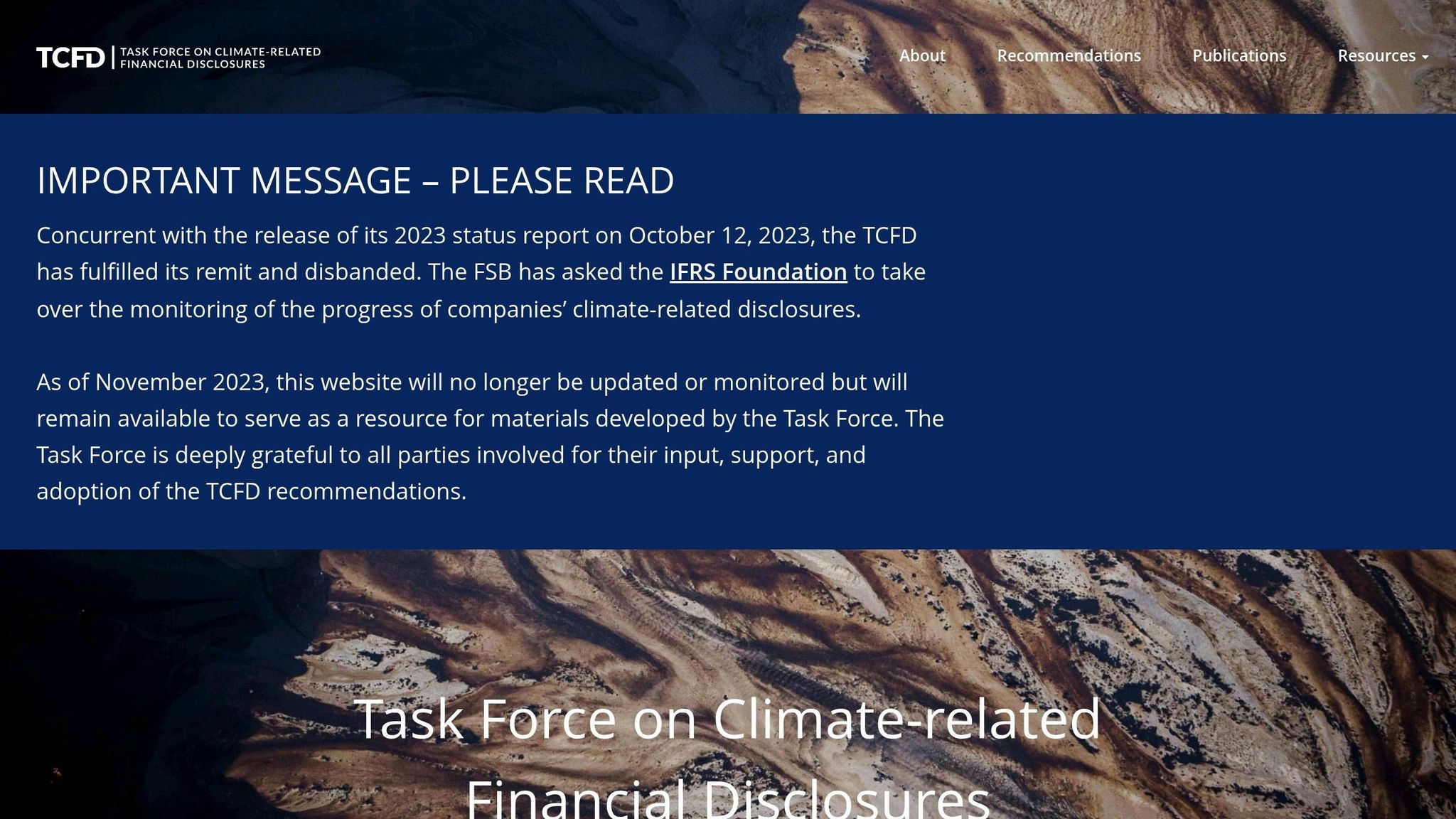
The Task Force on Climate-Related Financial Disclosures (TCFD) is a specialized framework addressing climate-related risks and opportunities. Established in 2015 by the Financial Stability Board, it focuses solely on the financial implications of climate change.
TCFD is organized around four core elements:
Governance: How climate risks are managed.
Strategy: The impacts of climate change on the business.
Risk Management: Processes for identifying and addressing climate risks.
Metrics and Targets: Measurements used to evaluate climate-related risks and opportunities.
One standout feature of TCFD is its forward-looking scenario analysis, which encourages companies to assess their resilience under various climate scenarios. This approach pushes organizations to think beyond historical data and consider future impacts on their business models, supply chains, and financial performance.
TCFD reporting is designed to integrate with mainstream financial disclosures, making climate-related information more accessible to investors, lenders, and insurers. This framework has also influenced regulatory requirements, with many countries incorporating TCFD recommendations into mandatory climate disclosure rules.
International Sustainability Standards Board (ISSB)
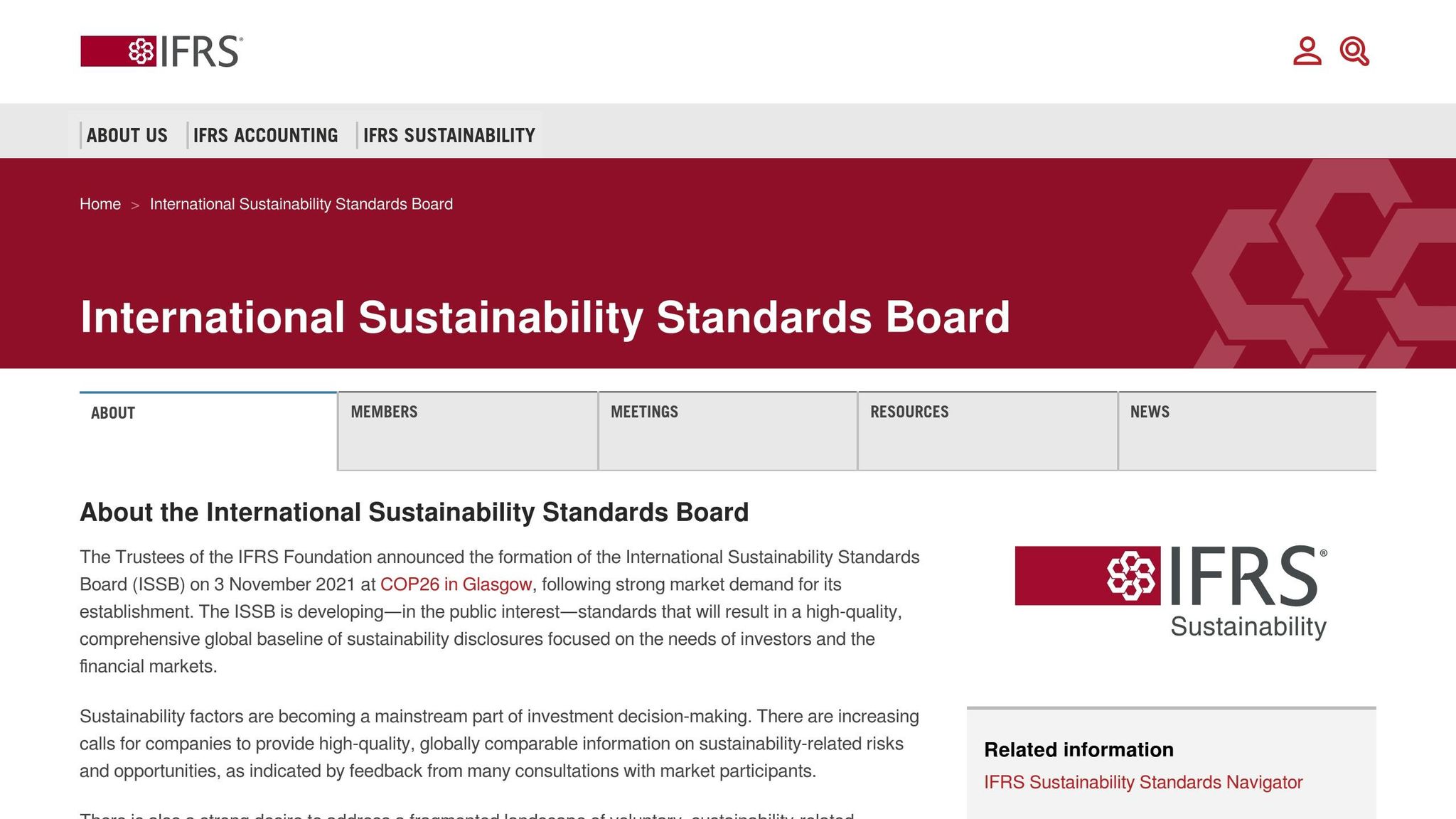
The International Sustainability Standards Board (ISSB), established in 2021, aims to create a global baseline for sustainability reporting. It builds on existing frameworks like SASB and TCFD, integrating their strengths to simplify reporting while maintaining depth and relevance.
ISSB has introduced two foundational standards:
IFRS S1: General requirements for sustainability-related financial disclosures.
IFRS S2: Focused specifically on climate-related disclosures.
ISSB’s investor-centric approach aligns with SASB’s focus on financial materiality but offers a broader structure for global standardization. For instance, IFRS S1 mirrors TCFD’s four-pillar structure - governance, strategy, risk management, and metrics - while IFRS S2 dives into climate-specific reporting.
This framework is particularly appealing to multinational companies seeking a standardized, global approach to sustainability reporting that meets the needs of investors and capital markets.
Framework Comparison Table
Framework | Primary Focus | Target Audience | Scope | Key Characteristics | Best Suited For |
|---|---|---|---|---|---|
GRI | Broad sustainability impact | Stakeholders across industries | All ESG topics | Principles-based, double materiality, stakeholder engagement | Companies prioritizing transparency and broad sustainability reporting |
SASB | Financially material sustainability factors | Investors and financial markets | Industry-specific topics | Industry-focused standards, quantitative metrics | Publicly traded companies or those targeting ESG investors |
TCFD | Climate-related risks and opportunities | Investors, lenders, insurers | Climate-specific | Scenario analysis, forward-looking, integrates with financial disclosures | Organizations with climate exposure or regulatory obligations |
ISSB | Sustainability-related financial data | Global investors and markets | Financially material topics | Global baseline standards, investor-focused | Multinational firms seeking standardized sustainability reporting |
The choice of framework depends on your organization’s goals, regulatory environment, and audience. Many companies combine frameworks - for example, using TCFD for climate-specific data, SASB for industry-relevant metrics, and GRI for broad stakeholder communication. As ISSB standards gain traction, they could simplify multi-framework reporting while maintaining the depth needed to meet diverse expectations.
Next, delve into U.S. ESG Regulations and Compliance Requirements to understand how these frameworks fit into the American regulatory context.
U.S. ESG Regulations and Compliance Requirements
The regulatory environment for ESG in the United States is undergoing significant changes, with both federal and state authorities introducing new rules that expand beyond voluntary ESG reporting. This evolving framework brings both opportunities and complexities for businesses across the country. Below, we explore the key federal and state requirements and their impact on compliance strategies.
SEC Climate Disclosure Rules
The Securities and Exchange Commission (SEC) has rolled out new climate disclosure rules aimed at public companies. These regulations require businesses to report on material climate-related risks and describe the governance processes in place to address them. The SEC employs a phased approach, focusing on areas like oversight, integration of climate risks into business strategy and financial planning, and risk management practices. While the rules don’t mandate reporting on all emissions data, they align closely with international climate disclosure standards. Companies that fail to comply may face enforcement actions and penalties, adding urgency to adherence.
State-Level Sustainability Mandates
In addition to federal requirements, several states have introduced their own ESG regulations. These mandates often focus on greenhouse gas emissions reporting and assessments of climate-related risks, targeting organizations that meet certain financial criteria. Businesses operating across multiple states must navigate a patchwork of requirements, which underscores the importance of consistent and robust reporting practices. Many state-level regulations draw from international frameworks, reflecting a broader push for transparent and standardized sustainability reporting across industries.
Building an Effective ESG Reporting Plan
Creating a strong ESG reporting plan involves focusing on what matters most, managing data effectively, and maintaining ongoing communication with stakeholders.
Materiality Assessment and Framework Selection
Pinpointing the most important ESG issues is the foundation of a successful reporting strategy. A materiality assessment helps organizations concentrate on areas that significantly affect their business and stakeholders. This involves examining two key aspects: financial materiality, which impacts enterprise value, and impact materiality, which covers how business activities influence the economy, environment, and society.
The process typically includes industry benchmarking and peer comparisons to identify sector-specific ESG priorities. Companies should evaluate their entire value chain - from suppliers to end customers - to uncover potential environmental and social impacts at every stage. Tools like risk registers and stakeholder surveys can provide further insights into pressing issues.
Choosing the right reporting framework depends on your organization’s needs and objectives. For instance, public companies subject to SEC climate disclosure requirements might lean toward TCFD for climate-related reporting, while using SASB standards for industry-specific metrics. Global organizations often find GRI’s broader approach helpful, as it covers a wide range of sustainability topics.
When selecting a framework, balance the effort required against the value delivered to stakeholders. Using too many frameworks at once can create unnecessary complexity. Many organizations start with one primary framework and gradually incorporate others as their reporting processes mature. The chosen framework should align with internal goals while meeting U.S. regulatory expectations.
Data Collection and Technology Integration
Gathering reliable data is one of the most challenging aspects of ESG reporting. Organizations need clear data governance protocols that outline roles, responsibilities, and quality standards. This includes identifying data sources, setting collection schedules, and implementing validation processes to ensure the information is both accurate and complete.
Integrating technology into data management can simplify this process and reduce errors. ESG management platforms can automate data collection from various systems, such as energy monitoring tools, HR databases, and supply chain software. Many platforms also offer built-in calculators for common ESG metrics and pre-designed reporting templates.
Ensuring data quality requires ongoing effort. Organizations should establish clear documentation trails, conduct regular audits, and provide staff training to maintain accuracy. As regulatory scrutiny increases, third-party verification of data becomes even more critical to meet stakeholder expectations.
The most effective ESG reporting systems embed data collection into existing business workflows rather than treating it as a separate task. This approach minimizes administrative effort and improves data reliability by capturing information directly at the source. With accurate data in hand, organizations can incorporate stakeholder feedback to refine their ESG performance over time.
Stakeholder Engagement and Continuous Improvement
Engaging with stakeholders is not a one-time task - it’s an ongoing process. Regular communication with investors, employees, customers, communities, and regulators helps organizations stay attuned to shifting expectations and identify emerging ESG priorities.
Incorporating stakeholder feedback is crucial for improving the relevance and quality of ESG reports. Organizations should actively seek input on report content, format, and accessibility. This often highlights gaps between what companies believe stakeholders need and what they actually require for informed decision-making.
Monitoring performance is essential for tracking progress toward ESG goals. Regular reviews should examine both measurable metrics and qualitative improvements in management practices. This demonstrates a genuine commitment to sustainability, moving beyond mere compliance.
Treat ESG reporting as a dynamic process. Annual reviews should evaluate the effectiveness of chosen frameworks, improvements in data quality, and stakeholder satisfaction. Organizations that view reporting as an evolving effort tend to achieve better results and build stronger relationships with stakeholders. Continuous refinement not only ensures compliance but also strengthens trust and long-term impact.
A well-executed ESG reporting plan strikes a balance between ambition and practicality. By setting clear milestones and staying flexible, organizations can adapt to new challenges and opportunities. Success hinges on building internal expertise, maintaining open dialogue with stakeholders, and focusing on material issues that deliver both business value and broader positive outcomes. This approach supports regulatory compliance while driving long-term strategic benefits.
Conclusion: Aligning Frameworks, Regulations, and Reporting for Impact
Achieving ESG success goes beyond simply picking the right framework or ticking regulatory boxes. It requires crafting a well-connected strategy that brings together frameworks, regulations, and reporting into a unified system. When these elements are treated as isolated tasks, companies often face challenges like inconsistent data, duplicated efforts, and missed chances to showcase meaningful value. However, aligning frameworks with U.S. regulatory requirements - such as the SEC's climate disclosure rules - can streamline reporting processes. This alignment not only reduces administrative strain but also ensures thorough coverage of critical ESG issues.
An integrated approach allows companies to maximize the impact of their reporting by understanding the interplay between different frameworks. For instance, a company might use the TCFD framework to address climate risk disclosures required by the SEC, while simultaneously leveraging SASB standards for industry-specific metrics. This dual approach provides stakeholders with both a standardized overview and detailed, relevant insights.
As regulations continue to evolve, adaptability becomes essential. Organizations that invest in advanced data systems capable of supporting multiple reporting standards will be better equipped to adjust to new requirements without major disruptions.
Ultimately, the goal is not just compliance but creating tangible business value. Companies that align their ESG frameworks, regulatory obligations, and reporting practices often uncover operational efficiencies, identify ways to mitigate risks, and strengthen relationships with stakeholders. Over time, these advantages can turn ESG efforts from a mere reporting task into a strategic asset.
Success in this area requires a commitment to ongoing improvement and meaningful stakeholder engagement. Treating ESG as a continuous conversation, rather than a once-a-year obligation, helps build trust and credibility. This approach not only prepares companies to tackle future challenges but also strengthens their reputation and relationships over the long term.
FAQs
How can businesses select the best ESG framework to meet their goals and comply with regulations?
To choose the most suitable ESG framework, businesses should begin by assessing their industry, geographical location, and key sustainability objectives. Take into account the regulations that apply to your operations and the expectations of your stakeholders. It's equally crucial to ensure the framework aligns with your organization's mission and the narrative you aim to convey about your impact.
Prioritize frameworks that tackle the specific challenges of your sector and provide metrics that are directly relevant to your activities. By aligning your selection with your goals and compliance requirements, you can create ESG initiatives that are both impactful and aligned with your business priorities.
What challenges do businesses face when incorporating ESG into their strategies, and how can they address them?
Integrating ESG (Environmental, Social, and Governance) into business strategies comes with its fair share of hurdles. Companies often find themselves grappling with a maze of reporting frameworks, keeping pace with ever-changing regulations, managing vast and complex datasets, quantifying ESG-related risks, and meeting the diverse expectations of stakeholders. It's no wonder the process can sometimes feel daunting.
To navigate these challenges effectively, businesses should focus on a few key strategies. Using well-established reporting frameworks can provide clarity and structure. Consistently collecting and maintaining accurate data is crucial for informed decision-making. Additionally, engaging with stakeholders to align goals and expectations ensures everyone is on the same page. Above all, treating ESG as a continuous journey rather than a one-time project can pave the way for compliance and sustained progress toward sustainability goals.
How does ESG reporting help companies achieve long-term success and build trust with stakeholders beyond just compliance?
ESG reporting serves as a cornerstone for achieving long-term success by highlighting a company’s dedication to openness, responsible practices, and ethical standards. By aligning business operations with societal and environmental priorities, it fosters trust among stakeholders and demonstrates a genuine commitment to accountability.
More than just meeting regulatory requirements, robust ESG reporting can elevate a company’s reputation, appeal to socially responsible investors, and uncover potential risks and opportunities within operations. It also aids in making informed decisions, deepens connections with stakeholders, and positions businesses to excel in a market that increasingly values sustainability.
Related Blog Posts
Latest Articles
©2025



FAQ
01
What does it really mean to “redefine profit”?
02
What makes Council Fire different?
03
Who does Council Fire you work with?
04
What does working with Council Fire actually look like?
05
How does Council Fire help organizations turn big goals into action?
06
How does Council Fire define and measure success?
Nov 26, 2025
Demystifying ESG: frameworks, regulations and reporting
ESG Strategy
In This Article
Explore the critical role of ESG in business, covering frameworks, regulations, and effective reporting strategies for sustainable success.
Demystifying ESG: frameworks, regulations and reporting
ESG (Environmental, Social, and Governance) has become central to how businesses operate, driven by investor demands, consumer preferences, and regulatory shifts. Companies are now expected to integrate ESG into their strategies, not just for compliance but to enhance resilience, attract capital, and build stakeholder trust. However, navigating ESG frameworks like GRI, SASB, TCFD, and ISSB, alongside U.S. regulations, can be challenging.
Key Takeaways:
Why ESG Matters: Strong ESG practices reduce risks, improve efficiency, attract investments, and align with consumer and employee expectations.
Core ESG Components:
Environmental: Focuses on emissions, resource use, and climate impact.
Social: Covers labor practices, diversity, and community impact.
Governance: Encompasses leadership, ethics, and transparency.
Frameworks:
GRI: Broad, stakeholder-focused reporting.
SASB: Industry-specific, investor-oriented metrics.
TCFD: Climate-related financial disclosures.
ISSB: Global sustainability standards.
U.S. Regulations: SEC climate disclosure rules and state-level mandates require robust ESG reporting.
Actionable Insights:
Conduct a materiality assessment to prioritize key ESG issues.
Select frameworks that align with your goals and audience.
Implement technology for accurate data collection and reporting.
Engage stakeholders regularly to refine ESG strategies.
ESG is no longer optional - it’s a business imperative. Companies that align frameworks with regulatory requirements and stakeholder needs can turn ESG into a driver of long-term success.
Sustainability /ESG Reporting I GRI I TCFD I CDP I SASB I BRSR I IFRS I Climate change
Understanding ESG: Core Concepts and Business Impact
ESG, which stands for Environmental, Social, and Governance, represents how organizations manage these critical responsibilities. The concept was first introduced in the 2004 UN-backed publication, Who Cares Wins [3]. Unlike broader ideas like sustainability or corporate social responsibility, ESG offers measurable data and metrics that guide decision-making for businesses and investors alike [6].
Over time, ESG has transitioned from being a voluntary initiative to a key business priority. It influences operational efficiency, risk management, and competitive standing, shaping how organizations create value in today’s market. To understand its impact, let’s delve into the three core components of ESG.
What ESG Means and Its 3 Main Components
Environmental factors focus on a company’s interaction with the natural world and how climate change influences its operations. Metrics in this area include carbon emissions, energy and water usage, waste management, and pollution control [1][2][3][4][6][7]. In the U.S., where climate-related disruptions are increasingly common, businesses face substantial risks if they neglect environmental responsibilities. Failing to meet regulations can result in hefty fines and reputational damage [1][3]. On the other hand, companies that prioritize environmental initiatives often reduce costs by improving resource efficiency and cutting waste [1][3]. Investments in renewable energy and sustainable supply chains not only align with consumer expectations but also strengthen brand image [4].
Social factors examine how companies affect people throughout their ecosystem, including employees, customers, shareholders, suppliers, and local communities. This includes topics such as diversity, fair labor practices, human rights, workplace safety, data security, and community involvement [1][2][3][4][6][7]. Poor social practices can lead to lawsuits, tarnished reputations, and decreased employee morale [1][3]. For example, neglecting labor standards or human rights can disrupt supply chains and provoke public backlash [3][4]. Conversely, businesses that invest in fair wages, mental health support, and flexible work environments often see higher employee satisfaction and loyalty [1]. Emphasizing diversity and inclusion fosters innovation and builds trust with stakeholders [5], while strong social policies enhance community ties and contribute to long-term success [3].
Governance factors focus on leadership quality, ethical standards, and operational transparency. This includes board composition, executive pay, risk management, data protection, and adherence to ethical practices [1][2][3][4][6][7]. Poor governance can expose companies to fraud, regulatory penalties, and even collapse [1][3]. A lack of transparency erodes stakeholder trust and increases legal risks [3][4]. In contrast, organizations with strong governance frameworks - such as clear codes of conduct and transparent operations - tend to make better decisions and build trust [1]. Effective governance not only ensures ethical behavior but also attracts investors who value accountability and transparency [4].
Understanding these three pillars is crucial for aligning business operations with sustainable practices and achieving long-term success.
Business Value Beyond Compliance
ESG is no longer just about meeting regulatory requirements - it has become a driver of measurable business value. Companies that integrate ESG into their strategies benefit from better risk management, improved access to capital, and stronger brand reputation.
Risk management is one of the immediate benefits. ESG practices help businesses identify and address risks stemming from environmental disasters, social unrest, or governance failures that could harm financial performance [3][6]. Companies with strong ESG frameworks have shown greater resilience during crises, such as the COVID-19 pandemic [6].
Access to capital is increasingly linked to ESG performance. Institutional investors often see a strong ESG commitment as an indicator of long-term success [2]. Companies with solid ESG practices tend to attract capital more easily, secure green financing options, and enjoy better credit terms [7].
Enhanced reputation and brand value are additional rewards of ESG excellence. Businesses that prioritize ESG are often viewed more favorably by customers, investors, and stakeholders, which boosts brand loyalty and sets them apart in the market [3].
The shift from treating ESG as a compliance requirement to recognizing it as a value generator marks a profound change in the way U.S. businesses operate. Companies that embrace this transformation are positioning themselves for lasting success in a market that increasingly values ESG-driven performance.
Major ESG Frameworks: GRI, SASB, TCFD, and ISSB
Understanding the ESG (Environmental, Social, Governance) landscape begins with familiarizing yourself with the key frameworks that guide reporting. Each framework serves a distinct purpose, catering to different goals, industries, and stakeholder groups. The four prominent frameworks shaping ESG reporting today are GRI, SASB, TCFD, and ISSB.
It’s worth noting that these frameworks are not mutually exclusive. Many organizations use a combination of them to meet diverse reporting requirements and address varied stakeholder needs. Knowing the unique features of each can help companies decide which aligns best with their ESG strategy.
Global Reporting Initiative (GRI)
The Global Reporting Initiative (GRI) is among the most widely adopted frameworks for sustainability reporting. It takes a broad approach, addressing environmental, social, and governance issues with a focus on transparency and stakeholder engagement.
GRI’s strength lies in its universal applicability - it’s designed for organizations of all sizes and industries. The framework emphasizes materiality, encouraging companies to report on topics that significantly affect both their business and stakeholders. For organizations seeking to engage deeply with stakeholders and disclose a wide range of sustainability efforts, GRI is a valuable tool.
The framework is structured into three categories:
GRI Universal Standards: Applicable to all organizations.
GRI Sector Standards: Tailored guidance for specific industries.
GRI Topic Standards: Focused on specific issues like emissions, labor practices, or anti-corruption.
GRI also incorporates the concept of double materiality, which evaluates not only how sustainability issues impact the business but also how the business affects society and the environment. This approach aligns with emerging global regulatory trends and is particularly relevant for multinational companies aiming for comprehensive sustainability reporting.
Sustainability Accounting Standards Board (SASB)
The Sustainability Accounting Standards Board (SASB) framework zeroes in on financially material sustainability factors - those that directly influence enterprise value. Unlike GRI’s broad stakeholder focus, SASB is designed specifically for investors and financial markets, offering industry-specific standards.
SASB’s distinguishing feature is its industry relevance. Each sector has its own set of material topics. For instance:
Technology companies report on issues like data security and energy management.
Oil and gas firms focus on metrics such as greenhouse gas emissions and water management.
This targeted approach ensures that the metrics reported are directly tied to business performance and investment decisions. SASB standards are especially useful for publicly traded companies or organizations looking to attract ESG-minded investors, as they integrate seamlessly with traditional financial reporting.
Task Force on Climate-Related Financial Disclosures (TCFD)
The Task Force on Climate-Related Financial Disclosures (TCFD) is a specialized framework addressing climate-related risks and opportunities. Established in 2015 by the Financial Stability Board, it focuses solely on the financial implications of climate change.
TCFD is organized around four core elements:
Governance: How climate risks are managed.
Strategy: The impacts of climate change on the business.
Risk Management: Processes for identifying and addressing climate risks.
Metrics and Targets: Measurements used to evaluate climate-related risks and opportunities.
One standout feature of TCFD is its forward-looking scenario analysis, which encourages companies to assess their resilience under various climate scenarios. This approach pushes organizations to think beyond historical data and consider future impacts on their business models, supply chains, and financial performance.
TCFD reporting is designed to integrate with mainstream financial disclosures, making climate-related information more accessible to investors, lenders, and insurers. This framework has also influenced regulatory requirements, with many countries incorporating TCFD recommendations into mandatory climate disclosure rules.
International Sustainability Standards Board (ISSB)
The International Sustainability Standards Board (ISSB), established in 2021, aims to create a global baseline for sustainability reporting. It builds on existing frameworks like SASB and TCFD, integrating their strengths to simplify reporting while maintaining depth and relevance.
ISSB has introduced two foundational standards:
IFRS S1: General requirements for sustainability-related financial disclosures.
IFRS S2: Focused specifically on climate-related disclosures.
ISSB’s investor-centric approach aligns with SASB’s focus on financial materiality but offers a broader structure for global standardization. For instance, IFRS S1 mirrors TCFD’s four-pillar structure - governance, strategy, risk management, and metrics - while IFRS S2 dives into climate-specific reporting.
This framework is particularly appealing to multinational companies seeking a standardized, global approach to sustainability reporting that meets the needs of investors and capital markets.
Framework Comparison Table
Framework | Primary Focus | Target Audience | Scope | Key Characteristics | Best Suited For |
|---|---|---|---|---|---|
GRI | Broad sustainability impact | Stakeholders across industries | All ESG topics | Principles-based, double materiality, stakeholder engagement | Companies prioritizing transparency and broad sustainability reporting |
SASB | Financially material sustainability factors | Investors and financial markets | Industry-specific topics | Industry-focused standards, quantitative metrics | Publicly traded companies or those targeting ESG investors |
TCFD | Climate-related risks and opportunities | Investors, lenders, insurers | Climate-specific | Scenario analysis, forward-looking, integrates with financial disclosures | Organizations with climate exposure or regulatory obligations |
ISSB | Sustainability-related financial data | Global investors and markets | Financially material topics | Global baseline standards, investor-focused | Multinational firms seeking standardized sustainability reporting |
The choice of framework depends on your organization’s goals, regulatory environment, and audience. Many companies combine frameworks - for example, using TCFD for climate-specific data, SASB for industry-relevant metrics, and GRI for broad stakeholder communication. As ISSB standards gain traction, they could simplify multi-framework reporting while maintaining the depth needed to meet diverse expectations.
Next, delve into U.S. ESG Regulations and Compliance Requirements to understand how these frameworks fit into the American regulatory context.
U.S. ESG Regulations and Compliance Requirements
The regulatory environment for ESG in the United States is undergoing significant changes, with both federal and state authorities introducing new rules that expand beyond voluntary ESG reporting. This evolving framework brings both opportunities and complexities for businesses across the country. Below, we explore the key federal and state requirements and their impact on compliance strategies.
SEC Climate Disclosure Rules
The Securities and Exchange Commission (SEC) has rolled out new climate disclosure rules aimed at public companies. These regulations require businesses to report on material climate-related risks and describe the governance processes in place to address them. The SEC employs a phased approach, focusing on areas like oversight, integration of climate risks into business strategy and financial planning, and risk management practices. While the rules don’t mandate reporting on all emissions data, they align closely with international climate disclosure standards. Companies that fail to comply may face enforcement actions and penalties, adding urgency to adherence.
State-Level Sustainability Mandates
In addition to federal requirements, several states have introduced their own ESG regulations. These mandates often focus on greenhouse gas emissions reporting and assessments of climate-related risks, targeting organizations that meet certain financial criteria. Businesses operating across multiple states must navigate a patchwork of requirements, which underscores the importance of consistent and robust reporting practices. Many state-level regulations draw from international frameworks, reflecting a broader push for transparent and standardized sustainability reporting across industries.
Building an Effective ESG Reporting Plan
Creating a strong ESG reporting plan involves focusing on what matters most, managing data effectively, and maintaining ongoing communication with stakeholders.
Materiality Assessment and Framework Selection
Pinpointing the most important ESG issues is the foundation of a successful reporting strategy. A materiality assessment helps organizations concentrate on areas that significantly affect their business and stakeholders. This involves examining two key aspects: financial materiality, which impacts enterprise value, and impact materiality, which covers how business activities influence the economy, environment, and society.
The process typically includes industry benchmarking and peer comparisons to identify sector-specific ESG priorities. Companies should evaluate their entire value chain - from suppliers to end customers - to uncover potential environmental and social impacts at every stage. Tools like risk registers and stakeholder surveys can provide further insights into pressing issues.
Choosing the right reporting framework depends on your organization’s needs and objectives. For instance, public companies subject to SEC climate disclosure requirements might lean toward TCFD for climate-related reporting, while using SASB standards for industry-specific metrics. Global organizations often find GRI’s broader approach helpful, as it covers a wide range of sustainability topics.
When selecting a framework, balance the effort required against the value delivered to stakeholders. Using too many frameworks at once can create unnecessary complexity. Many organizations start with one primary framework and gradually incorporate others as their reporting processes mature. The chosen framework should align with internal goals while meeting U.S. regulatory expectations.
Data Collection and Technology Integration
Gathering reliable data is one of the most challenging aspects of ESG reporting. Organizations need clear data governance protocols that outline roles, responsibilities, and quality standards. This includes identifying data sources, setting collection schedules, and implementing validation processes to ensure the information is both accurate and complete.
Integrating technology into data management can simplify this process and reduce errors. ESG management platforms can automate data collection from various systems, such as energy monitoring tools, HR databases, and supply chain software. Many platforms also offer built-in calculators for common ESG metrics and pre-designed reporting templates.
Ensuring data quality requires ongoing effort. Organizations should establish clear documentation trails, conduct regular audits, and provide staff training to maintain accuracy. As regulatory scrutiny increases, third-party verification of data becomes even more critical to meet stakeholder expectations.
The most effective ESG reporting systems embed data collection into existing business workflows rather than treating it as a separate task. This approach minimizes administrative effort and improves data reliability by capturing information directly at the source. With accurate data in hand, organizations can incorporate stakeholder feedback to refine their ESG performance over time.
Stakeholder Engagement and Continuous Improvement
Engaging with stakeholders is not a one-time task - it’s an ongoing process. Regular communication with investors, employees, customers, communities, and regulators helps organizations stay attuned to shifting expectations and identify emerging ESG priorities.
Incorporating stakeholder feedback is crucial for improving the relevance and quality of ESG reports. Organizations should actively seek input on report content, format, and accessibility. This often highlights gaps between what companies believe stakeholders need and what they actually require for informed decision-making.
Monitoring performance is essential for tracking progress toward ESG goals. Regular reviews should examine both measurable metrics and qualitative improvements in management practices. This demonstrates a genuine commitment to sustainability, moving beyond mere compliance.
Treat ESG reporting as a dynamic process. Annual reviews should evaluate the effectiveness of chosen frameworks, improvements in data quality, and stakeholder satisfaction. Organizations that view reporting as an evolving effort tend to achieve better results and build stronger relationships with stakeholders. Continuous refinement not only ensures compliance but also strengthens trust and long-term impact.
A well-executed ESG reporting plan strikes a balance between ambition and practicality. By setting clear milestones and staying flexible, organizations can adapt to new challenges and opportunities. Success hinges on building internal expertise, maintaining open dialogue with stakeholders, and focusing on material issues that deliver both business value and broader positive outcomes. This approach supports regulatory compliance while driving long-term strategic benefits.
Conclusion: Aligning Frameworks, Regulations, and Reporting for Impact
Achieving ESG success goes beyond simply picking the right framework or ticking regulatory boxes. It requires crafting a well-connected strategy that brings together frameworks, regulations, and reporting into a unified system. When these elements are treated as isolated tasks, companies often face challenges like inconsistent data, duplicated efforts, and missed chances to showcase meaningful value. However, aligning frameworks with U.S. regulatory requirements - such as the SEC's climate disclosure rules - can streamline reporting processes. This alignment not only reduces administrative strain but also ensures thorough coverage of critical ESG issues.
An integrated approach allows companies to maximize the impact of their reporting by understanding the interplay between different frameworks. For instance, a company might use the TCFD framework to address climate risk disclosures required by the SEC, while simultaneously leveraging SASB standards for industry-specific metrics. This dual approach provides stakeholders with both a standardized overview and detailed, relevant insights.
As regulations continue to evolve, adaptability becomes essential. Organizations that invest in advanced data systems capable of supporting multiple reporting standards will be better equipped to adjust to new requirements without major disruptions.
Ultimately, the goal is not just compliance but creating tangible business value. Companies that align their ESG frameworks, regulatory obligations, and reporting practices often uncover operational efficiencies, identify ways to mitigate risks, and strengthen relationships with stakeholders. Over time, these advantages can turn ESG efforts from a mere reporting task into a strategic asset.
Success in this area requires a commitment to ongoing improvement and meaningful stakeholder engagement. Treating ESG as a continuous conversation, rather than a once-a-year obligation, helps build trust and credibility. This approach not only prepares companies to tackle future challenges but also strengthens their reputation and relationships over the long term.
FAQs
How can businesses select the best ESG framework to meet their goals and comply with regulations?
To choose the most suitable ESG framework, businesses should begin by assessing their industry, geographical location, and key sustainability objectives. Take into account the regulations that apply to your operations and the expectations of your stakeholders. It's equally crucial to ensure the framework aligns with your organization's mission and the narrative you aim to convey about your impact.
Prioritize frameworks that tackle the specific challenges of your sector and provide metrics that are directly relevant to your activities. By aligning your selection with your goals and compliance requirements, you can create ESG initiatives that are both impactful and aligned with your business priorities.
What challenges do businesses face when incorporating ESG into their strategies, and how can they address them?
Integrating ESG (Environmental, Social, and Governance) into business strategies comes with its fair share of hurdles. Companies often find themselves grappling with a maze of reporting frameworks, keeping pace with ever-changing regulations, managing vast and complex datasets, quantifying ESG-related risks, and meeting the diverse expectations of stakeholders. It's no wonder the process can sometimes feel daunting.
To navigate these challenges effectively, businesses should focus on a few key strategies. Using well-established reporting frameworks can provide clarity and structure. Consistently collecting and maintaining accurate data is crucial for informed decision-making. Additionally, engaging with stakeholders to align goals and expectations ensures everyone is on the same page. Above all, treating ESG as a continuous journey rather than a one-time project can pave the way for compliance and sustained progress toward sustainability goals.
How does ESG reporting help companies achieve long-term success and build trust with stakeholders beyond just compliance?
ESG reporting serves as a cornerstone for achieving long-term success by highlighting a company’s dedication to openness, responsible practices, and ethical standards. By aligning business operations with societal and environmental priorities, it fosters trust among stakeholders and demonstrates a genuine commitment to accountability.
More than just meeting regulatory requirements, robust ESG reporting can elevate a company’s reputation, appeal to socially responsible investors, and uncover potential risks and opportunities within operations. It also aids in making informed decisions, deepens connections with stakeholders, and positions businesses to excel in a market that increasingly values sustainability.
Related Blog Posts
FAQ
01
What does it really mean to “redefine profit”?
02
What makes Council Fire different?
03
Who does Council Fire you work with?
04
What does working with Council Fire actually look like?
05
How does Council Fire help organizations turn big goals into action?
06
How does Council Fire define and measure success?
Nov 26, 2025
Demystifying ESG: frameworks, regulations and reporting
ESG Strategy
In This Article
Explore the critical role of ESG in business, covering frameworks, regulations, and effective reporting strategies for sustainable success.
Demystifying ESG: frameworks, regulations and reporting
ESG (Environmental, Social, and Governance) has become central to how businesses operate, driven by investor demands, consumer preferences, and regulatory shifts. Companies are now expected to integrate ESG into their strategies, not just for compliance but to enhance resilience, attract capital, and build stakeholder trust. However, navigating ESG frameworks like GRI, SASB, TCFD, and ISSB, alongside U.S. regulations, can be challenging.
Key Takeaways:
Why ESG Matters: Strong ESG practices reduce risks, improve efficiency, attract investments, and align with consumer and employee expectations.
Core ESG Components:
Environmental: Focuses on emissions, resource use, and climate impact.
Social: Covers labor practices, diversity, and community impact.
Governance: Encompasses leadership, ethics, and transparency.
Frameworks:
GRI: Broad, stakeholder-focused reporting.
SASB: Industry-specific, investor-oriented metrics.
TCFD: Climate-related financial disclosures.
ISSB: Global sustainability standards.
U.S. Regulations: SEC climate disclosure rules and state-level mandates require robust ESG reporting.
Actionable Insights:
Conduct a materiality assessment to prioritize key ESG issues.
Select frameworks that align with your goals and audience.
Implement technology for accurate data collection and reporting.
Engage stakeholders regularly to refine ESG strategies.
ESG is no longer optional - it’s a business imperative. Companies that align frameworks with regulatory requirements and stakeholder needs can turn ESG into a driver of long-term success.
Sustainability /ESG Reporting I GRI I TCFD I CDP I SASB I BRSR I IFRS I Climate change
Understanding ESG: Core Concepts and Business Impact
ESG, which stands for Environmental, Social, and Governance, represents how organizations manage these critical responsibilities. The concept was first introduced in the 2004 UN-backed publication, Who Cares Wins [3]. Unlike broader ideas like sustainability or corporate social responsibility, ESG offers measurable data and metrics that guide decision-making for businesses and investors alike [6].
Over time, ESG has transitioned from being a voluntary initiative to a key business priority. It influences operational efficiency, risk management, and competitive standing, shaping how organizations create value in today’s market. To understand its impact, let’s delve into the three core components of ESG.
What ESG Means and Its 3 Main Components
Environmental factors focus on a company’s interaction with the natural world and how climate change influences its operations. Metrics in this area include carbon emissions, energy and water usage, waste management, and pollution control [1][2][3][4][6][7]. In the U.S., where climate-related disruptions are increasingly common, businesses face substantial risks if they neglect environmental responsibilities. Failing to meet regulations can result in hefty fines and reputational damage [1][3]. On the other hand, companies that prioritize environmental initiatives often reduce costs by improving resource efficiency and cutting waste [1][3]. Investments in renewable energy and sustainable supply chains not only align with consumer expectations but also strengthen brand image [4].
Social factors examine how companies affect people throughout their ecosystem, including employees, customers, shareholders, suppliers, and local communities. This includes topics such as diversity, fair labor practices, human rights, workplace safety, data security, and community involvement [1][2][3][4][6][7]. Poor social practices can lead to lawsuits, tarnished reputations, and decreased employee morale [1][3]. For example, neglecting labor standards or human rights can disrupt supply chains and provoke public backlash [3][4]. Conversely, businesses that invest in fair wages, mental health support, and flexible work environments often see higher employee satisfaction and loyalty [1]. Emphasizing diversity and inclusion fosters innovation and builds trust with stakeholders [5], while strong social policies enhance community ties and contribute to long-term success [3].
Governance factors focus on leadership quality, ethical standards, and operational transparency. This includes board composition, executive pay, risk management, data protection, and adherence to ethical practices [1][2][3][4][6][7]. Poor governance can expose companies to fraud, regulatory penalties, and even collapse [1][3]. A lack of transparency erodes stakeholder trust and increases legal risks [3][4]. In contrast, organizations with strong governance frameworks - such as clear codes of conduct and transparent operations - tend to make better decisions and build trust [1]. Effective governance not only ensures ethical behavior but also attracts investors who value accountability and transparency [4].
Understanding these three pillars is crucial for aligning business operations with sustainable practices and achieving long-term success.
Business Value Beyond Compliance
ESG is no longer just about meeting regulatory requirements - it has become a driver of measurable business value. Companies that integrate ESG into their strategies benefit from better risk management, improved access to capital, and stronger brand reputation.
Risk management is one of the immediate benefits. ESG practices help businesses identify and address risks stemming from environmental disasters, social unrest, or governance failures that could harm financial performance [3][6]. Companies with strong ESG frameworks have shown greater resilience during crises, such as the COVID-19 pandemic [6].
Access to capital is increasingly linked to ESG performance. Institutional investors often see a strong ESG commitment as an indicator of long-term success [2]. Companies with solid ESG practices tend to attract capital more easily, secure green financing options, and enjoy better credit terms [7].
Enhanced reputation and brand value are additional rewards of ESG excellence. Businesses that prioritize ESG are often viewed more favorably by customers, investors, and stakeholders, which boosts brand loyalty and sets them apart in the market [3].
The shift from treating ESG as a compliance requirement to recognizing it as a value generator marks a profound change in the way U.S. businesses operate. Companies that embrace this transformation are positioning themselves for lasting success in a market that increasingly values ESG-driven performance.
Major ESG Frameworks: GRI, SASB, TCFD, and ISSB
Understanding the ESG (Environmental, Social, Governance) landscape begins with familiarizing yourself with the key frameworks that guide reporting. Each framework serves a distinct purpose, catering to different goals, industries, and stakeholder groups. The four prominent frameworks shaping ESG reporting today are GRI, SASB, TCFD, and ISSB.
It’s worth noting that these frameworks are not mutually exclusive. Many organizations use a combination of them to meet diverse reporting requirements and address varied stakeholder needs. Knowing the unique features of each can help companies decide which aligns best with their ESG strategy.
Global Reporting Initiative (GRI)
The Global Reporting Initiative (GRI) is among the most widely adopted frameworks for sustainability reporting. It takes a broad approach, addressing environmental, social, and governance issues with a focus on transparency and stakeholder engagement.
GRI’s strength lies in its universal applicability - it’s designed for organizations of all sizes and industries. The framework emphasizes materiality, encouraging companies to report on topics that significantly affect both their business and stakeholders. For organizations seeking to engage deeply with stakeholders and disclose a wide range of sustainability efforts, GRI is a valuable tool.
The framework is structured into three categories:
GRI Universal Standards: Applicable to all organizations.
GRI Sector Standards: Tailored guidance for specific industries.
GRI Topic Standards: Focused on specific issues like emissions, labor practices, or anti-corruption.
GRI also incorporates the concept of double materiality, which evaluates not only how sustainability issues impact the business but also how the business affects society and the environment. This approach aligns with emerging global regulatory trends and is particularly relevant for multinational companies aiming for comprehensive sustainability reporting.
Sustainability Accounting Standards Board (SASB)
The Sustainability Accounting Standards Board (SASB) framework zeroes in on financially material sustainability factors - those that directly influence enterprise value. Unlike GRI’s broad stakeholder focus, SASB is designed specifically for investors and financial markets, offering industry-specific standards.
SASB’s distinguishing feature is its industry relevance. Each sector has its own set of material topics. For instance:
Technology companies report on issues like data security and energy management.
Oil and gas firms focus on metrics such as greenhouse gas emissions and water management.
This targeted approach ensures that the metrics reported are directly tied to business performance and investment decisions. SASB standards are especially useful for publicly traded companies or organizations looking to attract ESG-minded investors, as they integrate seamlessly with traditional financial reporting.
Task Force on Climate-Related Financial Disclosures (TCFD)
The Task Force on Climate-Related Financial Disclosures (TCFD) is a specialized framework addressing climate-related risks and opportunities. Established in 2015 by the Financial Stability Board, it focuses solely on the financial implications of climate change.
TCFD is organized around four core elements:
Governance: How climate risks are managed.
Strategy: The impacts of climate change on the business.
Risk Management: Processes for identifying and addressing climate risks.
Metrics and Targets: Measurements used to evaluate climate-related risks and opportunities.
One standout feature of TCFD is its forward-looking scenario analysis, which encourages companies to assess their resilience under various climate scenarios. This approach pushes organizations to think beyond historical data and consider future impacts on their business models, supply chains, and financial performance.
TCFD reporting is designed to integrate with mainstream financial disclosures, making climate-related information more accessible to investors, lenders, and insurers. This framework has also influenced regulatory requirements, with many countries incorporating TCFD recommendations into mandatory climate disclosure rules.
International Sustainability Standards Board (ISSB)
The International Sustainability Standards Board (ISSB), established in 2021, aims to create a global baseline for sustainability reporting. It builds on existing frameworks like SASB and TCFD, integrating their strengths to simplify reporting while maintaining depth and relevance.
ISSB has introduced two foundational standards:
IFRS S1: General requirements for sustainability-related financial disclosures.
IFRS S2: Focused specifically on climate-related disclosures.
ISSB’s investor-centric approach aligns with SASB’s focus on financial materiality but offers a broader structure for global standardization. For instance, IFRS S1 mirrors TCFD’s four-pillar structure - governance, strategy, risk management, and metrics - while IFRS S2 dives into climate-specific reporting.
This framework is particularly appealing to multinational companies seeking a standardized, global approach to sustainability reporting that meets the needs of investors and capital markets.
Framework Comparison Table
Framework | Primary Focus | Target Audience | Scope | Key Characteristics | Best Suited For |
|---|---|---|---|---|---|
GRI | Broad sustainability impact | Stakeholders across industries | All ESG topics | Principles-based, double materiality, stakeholder engagement | Companies prioritizing transparency and broad sustainability reporting |
SASB | Financially material sustainability factors | Investors and financial markets | Industry-specific topics | Industry-focused standards, quantitative metrics | Publicly traded companies or those targeting ESG investors |
TCFD | Climate-related risks and opportunities | Investors, lenders, insurers | Climate-specific | Scenario analysis, forward-looking, integrates with financial disclosures | Organizations with climate exposure or regulatory obligations |
ISSB | Sustainability-related financial data | Global investors and markets | Financially material topics | Global baseline standards, investor-focused | Multinational firms seeking standardized sustainability reporting |
The choice of framework depends on your organization’s goals, regulatory environment, and audience. Many companies combine frameworks - for example, using TCFD for climate-specific data, SASB for industry-relevant metrics, and GRI for broad stakeholder communication. As ISSB standards gain traction, they could simplify multi-framework reporting while maintaining the depth needed to meet diverse expectations.
Next, delve into U.S. ESG Regulations and Compliance Requirements to understand how these frameworks fit into the American regulatory context.
U.S. ESG Regulations and Compliance Requirements
The regulatory environment for ESG in the United States is undergoing significant changes, with both federal and state authorities introducing new rules that expand beyond voluntary ESG reporting. This evolving framework brings both opportunities and complexities for businesses across the country. Below, we explore the key federal and state requirements and their impact on compliance strategies.
SEC Climate Disclosure Rules
The Securities and Exchange Commission (SEC) has rolled out new climate disclosure rules aimed at public companies. These regulations require businesses to report on material climate-related risks and describe the governance processes in place to address them. The SEC employs a phased approach, focusing on areas like oversight, integration of climate risks into business strategy and financial planning, and risk management practices. While the rules don’t mandate reporting on all emissions data, they align closely with international climate disclosure standards. Companies that fail to comply may face enforcement actions and penalties, adding urgency to adherence.
State-Level Sustainability Mandates
In addition to federal requirements, several states have introduced their own ESG regulations. These mandates often focus on greenhouse gas emissions reporting and assessments of climate-related risks, targeting organizations that meet certain financial criteria. Businesses operating across multiple states must navigate a patchwork of requirements, which underscores the importance of consistent and robust reporting practices. Many state-level regulations draw from international frameworks, reflecting a broader push for transparent and standardized sustainability reporting across industries.
Building an Effective ESG Reporting Plan
Creating a strong ESG reporting plan involves focusing on what matters most, managing data effectively, and maintaining ongoing communication with stakeholders.
Materiality Assessment and Framework Selection
Pinpointing the most important ESG issues is the foundation of a successful reporting strategy. A materiality assessment helps organizations concentrate on areas that significantly affect their business and stakeholders. This involves examining two key aspects: financial materiality, which impacts enterprise value, and impact materiality, which covers how business activities influence the economy, environment, and society.
The process typically includes industry benchmarking and peer comparisons to identify sector-specific ESG priorities. Companies should evaluate their entire value chain - from suppliers to end customers - to uncover potential environmental and social impacts at every stage. Tools like risk registers and stakeholder surveys can provide further insights into pressing issues.
Choosing the right reporting framework depends on your organization’s needs and objectives. For instance, public companies subject to SEC climate disclosure requirements might lean toward TCFD for climate-related reporting, while using SASB standards for industry-specific metrics. Global organizations often find GRI’s broader approach helpful, as it covers a wide range of sustainability topics.
When selecting a framework, balance the effort required against the value delivered to stakeholders. Using too many frameworks at once can create unnecessary complexity. Many organizations start with one primary framework and gradually incorporate others as their reporting processes mature. The chosen framework should align with internal goals while meeting U.S. regulatory expectations.
Data Collection and Technology Integration
Gathering reliable data is one of the most challenging aspects of ESG reporting. Organizations need clear data governance protocols that outline roles, responsibilities, and quality standards. This includes identifying data sources, setting collection schedules, and implementing validation processes to ensure the information is both accurate and complete.
Integrating technology into data management can simplify this process and reduce errors. ESG management platforms can automate data collection from various systems, such as energy monitoring tools, HR databases, and supply chain software. Many platforms also offer built-in calculators for common ESG metrics and pre-designed reporting templates.
Ensuring data quality requires ongoing effort. Organizations should establish clear documentation trails, conduct regular audits, and provide staff training to maintain accuracy. As regulatory scrutiny increases, third-party verification of data becomes even more critical to meet stakeholder expectations.
The most effective ESG reporting systems embed data collection into existing business workflows rather than treating it as a separate task. This approach minimizes administrative effort and improves data reliability by capturing information directly at the source. With accurate data in hand, organizations can incorporate stakeholder feedback to refine their ESG performance over time.
Stakeholder Engagement and Continuous Improvement
Engaging with stakeholders is not a one-time task - it’s an ongoing process. Regular communication with investors, employees, customers, communities, and regulators helps organizations stay attuned to shifting expectations and identify emerging ESG priorities.
Incorporating stakeholder feedback is crucial for improving the relevance and quality of ESG reports. Organizations should actively seek input on report content, format, and accessibility. This often highlights gaps between what companies believe stakeholders need and what they actually require for informed decision-making.
Monitoring performance is essential for tracking progress toward ESG goals. Regular reviews should examine both measurable metrics and qualitative improvements in management practices. This demonstrates a genuine commitment to sustainability, moving beyond mere compliance.
Treat ESG reporting as a dynamic process. Annual reviews should evaluate the effectiveness of chosen frameworks, improvements in data quality, and stakeholder satisfaction. Organizations that view reporting as an evolving effort tend to achieve better results and build stronger relationships with stakeholders. Continuous refinement not only ensures compliance but also strengthens trust and long-term impact.
A well-executed ESG reporting plan strikes a balance between ambition and practicality. By setting clear milestones and staying flexible, organizations can adapt to new challenges and opportunities. Success hinges on building internal expertise, maintaining open dialogue with stakeholders, and focusing on material issues that deliver both business value and broader positive outcomes. This approach supports regulatory compliance while driving long-term strategic benefits.
Conclusion: Aligning Frameworks, Regulations, and Reporting for Impact
Achieving ESG success goes beyond simply picking the right framework or ticking regulatory boxes. It requires crafting a well-connected strategy that brings together frameworks, regulations, and reporting into a unified system. When these elements are treated as isolated tasks, companies often face challenges like inconsistent data, duplicated efforts, and missed chances to showcase meaningful value. However, aligning frameworks with U.S. regulatory requirements - such as the SEC's climate disclosure rules - can streamline reporting processes. This alignment not only reduces administrative strain but also ensures thorough coverage of critical ESG issues.
An integrated approach allows companies to maximize the impact of their reporting by understanding the interplay between different frameworks. For instance, a company might use the TCFD framework to address climate risk disclosures required by the SEC, while simultaneously leveraging SASB standards for industry-specific metrics. This dual approach provides stakeholders with both a standardized overview and detailed, relevant insights.
As regulations continue to evolve, adaptability becomes essential. Organizations that invest in advanced data systems capable of supporting multiple reporting standards will be better equipped to adjust to new requirements without major disruptions.
Ultimately, the goal is not just compliance but creating tangible business value. Companies that align their ESG frameworks, regulatory obligations, and reporting practices often uncover operational efficiencies, identify ways to mitigate risks, and strengthen relationships with stakeholders. Over time, these advantages can turn ESG efforts from a mere reporting task into a strategic asset.
Success in this area requires a commitment to ongoing improvement and meaningful stakeholder engagement. Treating ESG as a continuous conversation, rather than a once-a-year obligation, helps build trust and credibility. This approach not only prepares companies to tackle future challenges but also strengthens their reputation and relationships over the long term.
FAQs
How can businesses select the best ESG framework to meet their goals and comply with regulations?
To choose the most suitable ESG framework, businesses should begin by assessing their industry, geographical location, and key sustainability objectives. Take into account the regulations that apply to your operations and the expectations of your stakeholders. It's equally crucial to ensure the framework aligns with your organization's mission and the narrative you aim to convey about your impact.
Prioritize frameworks that tackle the specific challenges of your sector and provide metrics that are directly relevant to your activities. By aligning your selection with your goals and compliance requirements, you can create ESG initiatives that are both impactful and aligned with your business priorities.
What challenges do businesses face when incorporating ESG into their strategies, and how can they address them?
Integrating ESG (Environmental, Social, and Governance) into business strategies comes with its fair share of hurdles. Companies often find themselves grappling with a maze of reporting frameworks, keeping pace with ever-changing regulations, managing vast and complex datasets, quantifying ESG-related risks, and meeting the diverse expectations of stakeholders. It's no wonder the process can sometimes feel daunting.
To navigate these challenges effectively, businesses should focus on a few key strategies. Using well-established reporting frameworks can provide clarity and structure. Consistently collecting and maintaining accurate data is crucial for informed decision-making. Additionally, engaging with stakeholders to align goals and expectations ensures everyone is on the same page. Above all, treating ESG as a continuous journey rather than a one-time project can pave the way for compliance and sustained progress toward sustainability goals.
How does ESG reporting help companies achieve long-term success and build trust with stakeholders beyond just compliance?
ESG reporting serves as a cornerstone for achieving long-term success by highlighting a company’s dedication to openness, responsible practices, and ethical standards. By aligning business operations with societal and environmental priorities, it fosters trust among stakeholders and demonstrates a genuine commitment to accountability.
More than just meeting regulatory requirements, robust ESG reporting can elevate a company’s reputation, appeal to socially responsible investors, and uncover potential risks and opportunities within operations. It also aids in making informed decisions, deepens connections with stakeholders, and positions businesses to excel in a market that increasingly values sustainability.
Related Blog Posts
FAQ
What does it really mean to “redefine profit”?
What makes Council Fire different?
Who does Council Fire you work with?
What does working with Council Fire actually look like?
How does Council Fire help organizations turn big goals into action?
How does Council Fire define and measure success?