Jun 10, 2026
How to Decarbonize Maritime Operations and Supply Chains for Maritime & Logistics Companies
Sustainability Strategy
In This Article
Measure emissions, optimize operations, adopt low-carbon fuels, electrify ports, and use digital tools to cut shipping emissions.
How to Decarbonize Maritime Operations and Supply Chains for Maritime & Logistics Companies
Maritime decarbonization requires decisions across vessels, terminals and the companies moving cargo between them. A port can commission electrical equipment without knowing which ships will connect. A carrier can select a fuel pathway without a dependable supply arrangement. Start by identifying the operational decision, the evidence needed and the organizations that must agree before money is committed.
This guide proposes a planning sequence covering emissions measurement, operational efficiency, vessel upgrades, fuel choices, port electrification and supply-chain coordination. Its detailed shore-power worksheet helps a port shortlist a berth for feasibility work. The sequence and worksheet are editorial recommendations, not an engineering standard, a compliance determination or results from a Council Fire client project.
How should you establish a maritime emissions baseline?
Choose the inventory boundary before comparing projects. The GHG Protocol Corporate Standard provides guidance for corporate greenhouse gas inventories; its accompanying guidance addresses purchased energy and value-chain emissions. Keep that corporate inventory distinct from a project-level estimate of avoided emissions. The standard itself cautions that it is not the method for quantifying mitigation projects for offsets or credits.
For a practical first pass, list the vessels, terminals, purchased electricity and contracted transport activities relevant to your organization. Record who owns the data, what period it covers and whether the activity is measured or estimated. Ask your accounting specialist to confirm the applicable organizational boundary and scope classification rather than assuming every port or vessel has the same reporting responsibilities.
Keep absolute emissions alongside an intensity measure with a stated denominator, such as cargo mass and distance. Do not compare unlike denominators or let a change in cargo mix stand in for an efficiency improvement. Our recommendation is to preserve the original activity records, factors and calculation version so a reviewer can reproduce the baseline.
Use the baseline to identify decisions, not just a total. Which vessel needs a maintenance investigation? Which terminal needs a better electricity meter? Which carrier has not supplied enough information to compare routes? Council Fire's ports and maritime practice connects decarbonization pathways with financing and stakeholder alignment. Bring those unresolved responsibilities into planning before treating an emissions estimate as an investment case.
Which operational and vessel improvements should you investigate first?
The International Maritime Organization's 2023 greenhouse gas strategy addresses technical and operational measures as part of the sector's transition. It provides strategic context, not a promised return for an individual vessel.
Ask operators to compare speed and arrival planning, route choices, hull and propeller maintenance, and candidate equipment upgrades against their actual service requirements. Before approving a change, document safety constraints, cargo commitments, berth availability and the party who can change the schedule. An efficiency proposal that depends on a terminal or charterer's cooperation needs that agreement in its implementation plan.
For each vessel upgrade, request the proposed operating conditions, installation window, maintenance needs and evidence behind any claimed savings. Separate a modeled estimate from a trial and a trial from independently verified fleet performance. Avoid adding several suppliers' percentage savings together without checking whether their measures overlap.
A useful pilot has a baseline, an accountable operator and a decision rule agreed before it starts. Record fuel use and relevant operating conditions over a comparable period, then decide whether to expand, modify or stop the measure. No universal speed reduction, payback period or retrofit ranking is assumed here.
How should you compare alternative marine fuels?
Compare the fuel pathway, not only the fuel name. The IMO's lifecycle greenhouse gas framework distinguishes upstream production and delivery, or well-to-tank, from onboard use, or tank-to-wake. Together they form the well-to-wake boundary. Its guidelines cover carbon dioxide, methane and nitrous oxide, and recognize that production pathways can have different environmental footprints.
Build a fuel decision file around the vessel and route. Request documented lifecycle assumptions, supply availability, engine and storage compatibility, crew training requirements, safety review and the cost of conversion or replacement. Check what the supplier's certification establishes and what remains outside it. Do not infer a lifecycle benefit from the absence of carbon dioxide at the exhaust alone.
Test the commercial proposal against a delayed fuel supply, a different price and a change in route. Require the responsible specialists to identify which regulatory obligations apply to that vessel and voyage. This guide does not assert a current grant window, a universal compliance pathway or a date by which every operator should switch fuels.
How should ports coordinate electrification with daily operations?
Prepare port equipment and shore-power proposals together with a view of electrical demand, while keeping their business cases separate. Ask terminal operators to describe equipment duty cycles, charging opportunities, maintenance requirements and the consequences of an outage. Ask the utility which capacity is available and which upgrades or studies remain outstanding.
The EPA shore-power assessment emphasizes early planning among ports, utilities and regulatory agencies, and identifies infrastructure and electricity costs as barriers. Its underlying assessment dates to December 2022. It remains useful foundational guidance; it is not a newly conducted 2026 study or evidence that funding is available today.
Council Fire's green-port infrastructure guide supplies wider capital-planning context. Our recommendation is to carry utility dependencies, cost ownership and operating responsibilities into the same project discussion. A terminal, shipowner and port authority may need different approvals even when their equipment must work together.
Which berth should receive shore power first?
Shore power supplies electricity from shore so a vessel can reduce auxiliary-engine operation at berth. The EPA assessment says benefits vary by port and vessel type. It identifies auxiliary-system power demand, time at berth, vessel characteristics and the electricity generation mix as relevant inputs. It also notes the value of frequently returning vessels.
A busy berth is a candidate for investigation, not automatically the best investment. Screen each berth and vessel group through the following questions. These are proposed due-diligence questions derived from the assessment, not an EPA scoring system.
- Can the vessels connect? Obtain carrier confirmation of onboard equipment and any retrofit plans. Have qualified technical partners verify ship-to-shore electrical compatibility, connection arrangements and operating procedures. Distinguish an equipped ship from a ship committed to using the installation.
- How much berth time is usable? Keep recorded berth hours separate from plausible connected hours. Allow for connection, disconnection and operational interruptions. Verify repeat calls and expected participation with carriers rather than assuming every call will use shore power.
- Can the electrical system serve the load? Request a dated utility response covering capacity, interconnection studies, required upgrades and delivery dependencies. Ask engineers to assess the combined loads and the physical berth arrangements. An early discussion is not a confirmed energization date.
- Which emissions are being compared? Keep the displaced auxiliary-engine activity and electricity supply within an explicit modeling boundary. EPA notes that shore power does not address boilers or other sources that must remain operational, and that vessels still emit while connecting and disconnecting. Do not describe a connected vessel or berth as emissions-free.
- Who pays, and on what assumptions? Separate port infrastructure, vessel retrofits, utility upgrades and operating costs. Request the applicable energy tariff, demand charges, connection-related charges and maintenance assumptions. Identify the party responsible for each cost and test the case at lower participation or fewer usable hours.
Compare only sufficiently evidenced candidates. If compatibility is unknown, request confirmation. If the utility cannot establish a credible path to service, resolve that dependency before treating the berth as construction-ready. If an emissions estimate excludes electricity generation, label that boundary rather than presenting it as a total climate benefit.
How do you use the blank berth-readiness worksheet?
Download the blank berth-readiness worksheet. It contains column headings only, because no observed port dataset was supplied. It is a proposed planning aid, not a calculator or a completed feasibility study.
Add one record per berth and vessel group where equipment or operating patterns differ. For each input, retain the dated source, uncertainty and person responsible for closing the gap. Use these groups of fields:
- Vessel compatibility, repeat calls, carrier participation and retrofit evidence.
- Berth hours, plausible connected hours and auxiliary-system demand.
- Electricity factor and emissions boundary, including sources left running.
- Utility capacity, interconnection status and infrastructure dependencies.
- Capital costs, energy tariffs, demand charges, maintenance and cost owner.
- Missing evidence, decision owner, next action and the evidence that would change the decision.
Leave unknown values visibly unresolved. A missing cost is not zero; an unanswered compatibility question is not a compatible vessel. Do not rank the rows automatically by traffic or invent a universal utilization threshold.
Choose one next step: advance to qualified feasibility review, request specific evidence, or defer with a stated reason. A shortlist is the beginning of engineering and financial analysis, not procurement approval. Bring the shortlist, carrier commitments and utility constraints to a joint review before ordering equipment.
How can digital tools support the plan without substituting for evidence?
Start with the decisions your team needs to make and the records it can maintain. A shared worksheet may be enough for an initial berth screen. If you evaluate a monitoring platform, ask it to demonstrate data provenance, missing-data flags, calculation versions, exports and responsibility for correcting errors using your own sample records.
Treat automated forecasts and emissions estimates as outputs to check, not proof that a vessel is compliant or that a project has reduced emissions. Compare like periods and operating conditions. Keep modeled savings separate from measured changes, and record what your team cannot yet attribute to the intervention.
For the wider program, assign one owner to each accepted data source and one decision owner for each investment. This is a proposed governance practice, not a claim that Council Fire supplies a particular maritime monitoring product or that software guarantees a fuel saving.
How should carriers, customers and suppliers share responsibility?
Map who controls the operating change, who funds it and who receives the benefit. For shore power, that discussion may involve a port authority, terminal, utility and ship operator. For a fuel transition, it may also require fuel suppliers and cargo owners. Ask each party to confirm its commitment, evidence requirements and fallback if another party cannot deliver.
Council Fire's port stakeholder engagement guide offers a starting point for structuring these conversations. Include affected communities and workers in decisions about local impacts and operating changes rather than treating them only as an audience for the finished plan.
Our recommendation is to write data-sharing and decision responsibilities into the project agreement. Specify the reporting period, calculation boundary and review process. Have qualified accounting and legal advisers examine environmental claims and any transfer of emissions attributes; this guide does not certify a book-and-claim arrangement.
What belongs in a phased maritime decarbonization plan?
Organize phases around resolved dependencies rather than a universal calendar. Begin with the baseline and operating measures your team can responsibly test. Move larger investments forward when evidence, counterparties and approvals are ready.
For each proposed investment, record its owner, evidence gap, technical dependency, funding route and next decision. Compare alternative sequencing when multiple projects compete for the same electrical capacity or capital. Use a conservative case as well as the expected case, and show which assumptions would change the choice.
Council Fire's maritime blended-finance guide addresses the adjacent question of financing structure and risk allocation. Confirm current eligibility and terms directly with each funding provider. An attractive funding opportunity should not substitute for compatibility, operating readiness or a credible emissions case.
The next useful deliverable is a decision brief: which action to investigate, why, who must participate and what is still unknown. Council Fire works on strategy, financing, stakeholder alignment and communications alongside technical partners; shore-power engineering remains with qualified engineers. Discuss your berth shortlist and wider maritime plan with that division of responsibility explicit.
FAQs
Is the busiest berth always the best shore-power candidate?
No. The EPA assessment identifies vessel characteristics, auxiliary demand, berth time and electricity mix as relevant. Our screening recommendation also asks for compatibility, usable connected hours, participation, electrical readiness and full costs before advancing a candidate.
Does shore power eliminate all emissions from a docked vessel?
No. EPA distinguishes auxiliary engines from boilers and other sources that remain operational, and notes emissions during connection and disconnection. State the modeling boundary and account for the electricity supply when assessing the climate benefit.
What should we do when the utility or carrier has not supplied the data?
Mark the input unknown and assign an evidence request. The worksheet's suggested outcome is request evidence, not a zero-cost assumption or an automatic rejection. This follows the planning emphasis in the EPA assessment; the particular decision labels are editorial recommendations.
Is a low-carbon fuel label enough to compare options?
No. The IMO lifecycle framework considers production, delivery and onboard use, including relevant greenhouse gases beyond carbon dioxide. Ask for the actual pathway, assumptions and verification, then assess compatibility and supply for your vessels and routes.
Can this worksheet replace a shore-power feasibility study?
No. It organizes inputs and unresolved decisions for the specialists conducting that study. Council Fire's stated role covers strategy, financing, alignment and communications alongside engineers, not direct shore-power engineering. No savings, funding outcome or technical approval is implied.
Related Resources
- How to Design Green Port Infrastructure for the Future for Maritime & Logistics Companies: connect a berth shortlist with utility capacity and port-wide capital planning.
- Ports, Policy, and Planet: How Maritime Leaders Can Future-Proof Infrastructure: consider the broader infrastructure and resilience context.
- How to Build a Blended Finance Model for Sustainability Initiatives for Maritime & Logistics Companies: examine funding roles and risk allocation after identifying a credible project.
- How to Engage Port Stakeholders in Resilience Planning for Maritime & Logistics Companies: organize the partners and continuing decisions needed for implementation.
Additional Resources
- EPA shore-power technology assessment: foundational guidance on emissions boundaries, vessel use and implementation constraints.
- IMO marine-fuel lifecycle framework: explains well-to-wake assessment and fuel-pathway differences.
- GHG Protocol Corporate Standard: guidance for corporate inventories, with links to purchased-energy and value-chain guidance.
About the Author
By the Council Fire team. Explore Council Fire's ports and maritime services and transportation systems practice. This guide offers a planning framework; it does not describe firsthand project results or an engineering design.
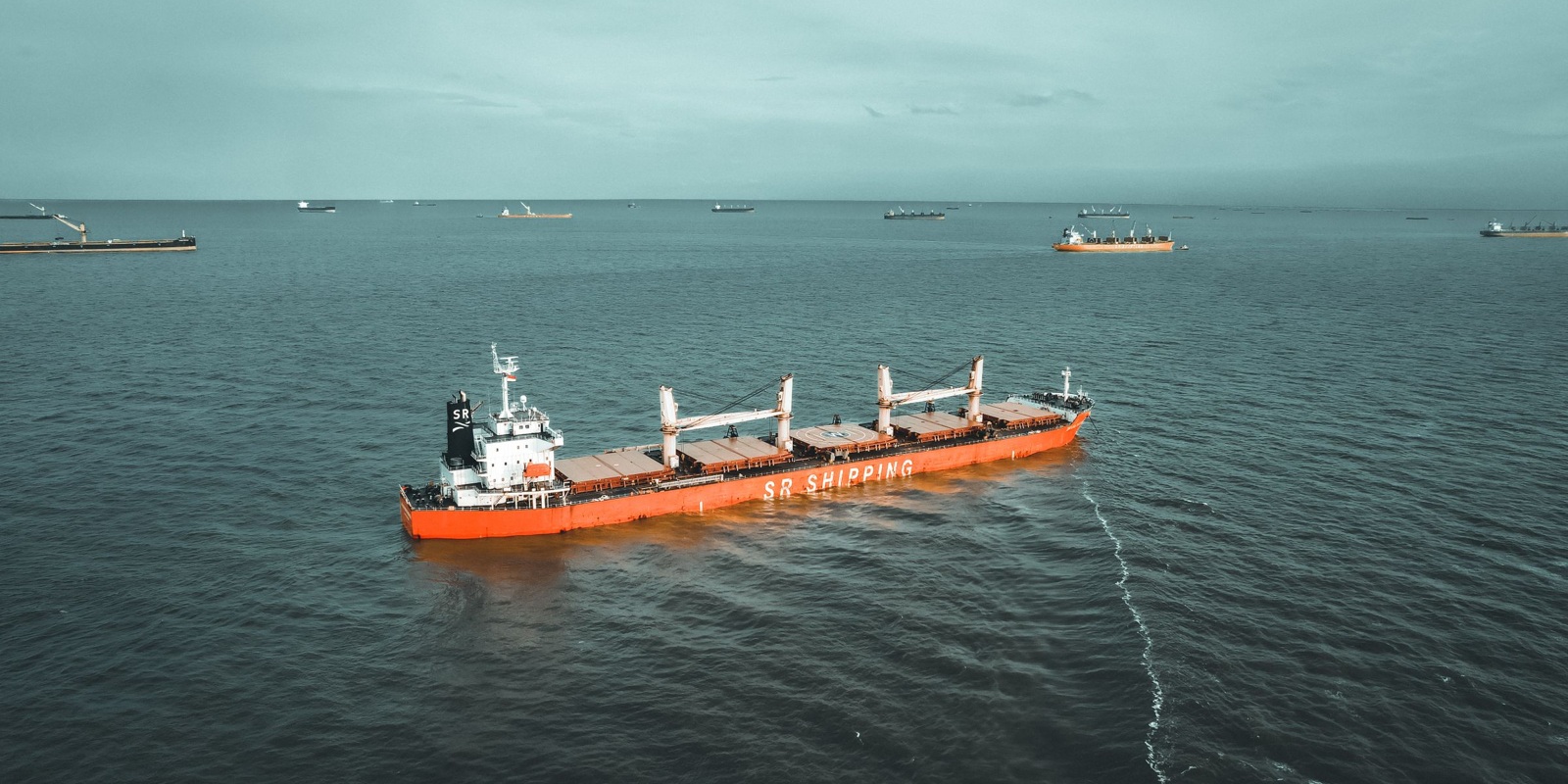
Cover photograph: Pexels photograph 18676400. Illustrative stock photograph, not a Council Fire project or an endorsement.
Latest Articles
©2026

Narrative Change and Power Building: The Missing Half of Advocacy
Narrative change is the process of disrupting dominant narratives that normalize inequity and advancing new narratives from historically marginalized communities.

Funding Resilience Without Federal Grants
BRIC is unreliable and FEMA is shrinking. Here's how cities fund climate resilience with dedicated revenue, blended finance, and a coordinating authority.

The ESG Blind Spot: How AI Is Finding Risks in Companies Nobody Else Is Watching
Norway's sovereign wealth fund uses AI to screen 7,200 portfolio companies for forced labor and corruption within 24 hours. The real story is the emerging-market coverage gap that traditional ESG data vendors miss — and what it means for any company with a global supply chain.
Narrative Change and Power Building: The Missing Half of Advocacy
Narrative change is the process of disrupting dominant narratives that normalize inequity and advancing new narratives from historically marginalized communities.
Funding Resilience Without Federal Grants
BRIC is unreliable and FEMA is shrinking. Here's how cities fund climate resilience with dedicated revenue, blended finance, and a coordinating authority.
The ESG Blind Spot: How AI Is Finding Risks in Companies Nobody Else Is Watching
Norway's sovereign wealth fund uses AI to screen 7,200 portfolio companies for forced labor and corruption within 24 hours. The real story is the emerging-market coverage gap that traditional ESG data vendors miss — and what it means for any company with a global supply chain.
FAQ
01
What does it really mean to “redefine profit”?
02
What makes Council Fire different?
03
Who does Council Fire work with?
04
What does working with Council Fire actually look like?
05
How does Council Fire help organizations turn big goals into action?
06
How does Council Fire define and measure success?
07
How does technology fit into Council Fire’s work?
Jun 10, 2026
How to Decarbonize Maritime Operations and Supply Chains for Maritime & Logistics Companies
Sustainability Strategy
In This Article
Measure emissions, optimize operations, adopt low-carbon fuels, electrify ports, and use digital tools to cut shipping emissions.
How to Decarbonize Maritime Operations and Supply Chains for Maritime & Logistics Companies
Maritime decarbonization requires decisions across vessels, terminals and the companies moving cargo between them. A port can commission electrical equipment without knowing which ships will connect. A carrier can select a fuel pathway without a dependable supply arrangement. Start by identifying the operational decision, the evidence needed and the organizations that must agree before money is committed.
This guide proposes a planning sequence covering emissions measurement, operational efficiency, vessel upgrades, fuel choices, port electrification and supply-chain coordination. Its detailed shore-power worksheet helps a port shortlist a berth for feasibility work. The sequence and worksheet are editorial recommendations, not an engineering standard, a compliance determination or results from a Council Fire client project.
How should you establish a maritime emissions baseline?
Choose the inventory boundary before comparing projects. The GHG Protocol Corporate Standard provides guidance for corporate greenhouse gas inventories; its accompanying guidance addresses purchased energy and value-chain emissions. Keep that corporate inventory distinct from a project-level estimate of avoided emissions. The standard itself cautions that it is not the method for quantifying mitigation projects for offsets or credits.
For a practical first pass, list the vessels, terminals, purchased electricity and contracted transport activities relevant to your organization. Record who owns the data, what period it covers and whether the activity is measured or estimated. Ask your accounting specialist to confirm the applicable organizational boundary and scope classification rather than assuming every port or vessel has the same reporting responsibilities.
Keep absolute emissions alongside an intensity measure with a stated denominator, such as cargo mass and distance. Do not compare unlike denominators or let a change in cargo mix stand in for an efficiency improvement. Our recommendation is to preserve the original activity records, factors and calculation version so a reviewer can reproduce the baseline.
Use the baseline to identify decisions, not just a total. Which vessel needs a maintenance investigation? Which terminal needs a better electricity meter? Which carrier has not supplied enough information to compare routes? Council Fire's ports and maritime practice connects decarbonization pathways with financing and stakeholder alignment. Bring those unresolved responsibilities into planning before treating an emissions estimate as an investment case.
Which operational and vessel improvements should you investigate first?
The International Maritime Organization's 2023 greenhouse gas strategy addresses technical and operational measures as part of the sector's transition. It provides strategic context, not a promised return for an individual vessel.
Ask operators to compare speed and arrival planning, route choices, hull and propeller maintenance, and candidate equipment upgrades against their actual service requirements. Before approving a change, document safety constraints, cargo commitments, berth availability and the party who can change the schedule. An efficiency proposal that depends on a terminal or charterer's cooperation needs that agreement in its implementation plan.
For each vessel upgrade, request the proposed operating conditions, installation window, maintenance needs and evidence behind any claimed savings. Separate a modeled estimate from a trial and a trial from independently verified fleet performance. Avoid adding several suppliers' percentage savings together without checking whether their measures overlap.
A useful pilot has a baseline, an accountable operator and a decision rule agreed before it starts. Record fuel use and relevant operating conditions over a comparable period, then decide whether to expand, modify or stop the measure. No universal speed reduction, payback period or retrofit ranking is assumed here.
How should you compare alternative marine fuels?
Compare the fuel pathway, not only the fuel name. The IMO's lifecycle greenhouse gas framework distinguishes upstream production and delivery, or well-to-tank, from onboard use, or tank-to-wake. Together they form the well-to-wake boundary. Its guidelines cover carbon dioxide, methane and nitrous oxide, and recognize that production pathways can have different environmental footprints.
Build a fuel decision file around the vessel and route. Request documented lifecycle assumptions, supply availability, engine and storage compatibility, crew training requirements, safety review and the cost of conversion or replacement. Check what the supplier's certification establishes and what remains outside it. Do not infer a lifecycle benefit from the absence of carbon dioxide at the exhaust alone.
Test the commercial proposal against a delayed fuel supply, a different price and a change in route. Require the responsible specialists to identify which regulatory obligations apply to that vessel and voyage. This guide does not assert a current grant window, a universal compliance pathway or a date by which every operator should switch fuels.
How should ports coordinate electrification with daily operations?
Prepare port equipment and shore-power proposals together with a view of electrical demand, while keeping their business cases separate. Ask terminal operators to describe equipment duty cycles, charging opportunities, maintenance requirements and the consequences of an outage. Ask the utility which capacity is available and which upgrades or studies remain outstanding.
The EPA shore-power assessment emphasizes early planning among ports, utilities and regulatory agencies, and identifies infrastructure and electricity costs as barriers. Its underlying assessment dates to December 2022. It remains useful foundational guidance; it is not a newly conducted 2026 study or evidence that funding is available today.
Council Fire's green-port infrastructure guide supplies wider capital-planning context. Our recommendation is to carry utility dependencies, cost ownership and operating responsibilities into the same project discussion. A terminal, shipowner and port authority may need different approvals even when their equipment must work together.
Which berth should receive shore power first?
Shore power supplies electricity from shore so a vessel can reduce auxiliary-engine operation at berth. The EPA assessment says benefits vary by port and vessel type. It identifies auxiliary-system power demand, time at berth, vessel characteristics and the electricity generation mix as relevant inputs. It also notes the value of frequently returning vessels.
A busy berth is a candidate for investigation, not automatically the best investment. Screen each berth and vessel group through the following questions. These are proposed due-diligence questions derived from the assessment, not an EPA scoring system.
- Can the vessels connect? Obtain carrier confirmation of onboard equipment and any retrofit plans. Have qualified technical partners verify ship-to-shore electrical compatibility, connection arrangements and operating procedures. Distinguish an equipped ship from a ship committed to using the installation.
- How much berth time is usable? Keep recorded berth hours separate from plausible connected hours. Allow for connection, disconnection and operational interruptions. Verify repeat calls and expected participation with carriers rather than assuming every call will use shore power.
- Can the electrical system serve the load? Request a dated utility response covering capacity, interconnection studies, required upgrades and delivery dependencies. Ask engineers to assess the combined loads and the physical berth arrangements. An early discussion is not a confirmed energization date.
- Which emissions are being compared? Keep the displaced auxiliary-engine activity and electricity supply within an explicit modeling boundary. EPA notes that shore power does not address boilers or other sources that must remain operational, and that vessels still emit while connecting and disconnecting. Do not describe a connected vessel or berth as emissions-free.
- Who pays, and on what assumptions? Separate port infrastructure, vessel retrofits, utility upgrades and operating costs. Request the applicable energy tariff, demand charges, connection-related charges and maintenance assumptions. Identify the party responsible for each cost and test the case at lower participation or fewer usable hours.
Compare only sufficiently evidenced candidates. If compatibility is unknown, request confirmation. If the utility cannot establish a credible path to service, resolve that dependency before treating the berth as construction-ready. If an emissions estimate excludes electricity generation, label that boundary rather than presenting it as a total climate benefit.
How do you use the blank berth-readiness worksheet?
Download the blank berth-readiness worksheet. It contains column headings only, because no observed port dataset was supplied. It is a proposed planning aid, not a calculator or a completed feasibility study.
Add one record per berth and vessel group where equipment or operating patterns differ. For each input, retain the dated source, uncertainty and person responsible for closing the gap. Use these groups of fields:
- Vessel compatibility, repeat calls, carrier participation and retrofit evidence.
- Berth hours, plausible connected hours and auxiliary-system demand.
- Electricity factor and emissions boundary, including sources left running.
- Utility capacity, interconnection status and infrastructure dependencies.
- Capital costs, energy tariffs, demand charges, maintenance and cost owner.
- Missing evidence, decision owner, next action and the evidence that would change the decision.
Leave unknown values visibly unresolved. A missing cost is not zero; an unanswered compatibility question is not a compatible vessel. Do not rank the rows automatically by traffic or invent a universal utilization threshold.
Choose one next step: advance to qualified feasibility review, request specific evidence, or defer with a stated reason. A shortlist is the beginning of engineering and financial analysis, not procurement approval. Bring the shortlist, carrier commitments and utility constraints to a joint review before ordering equipment.
How can digital tools support the plan without substituting for evidence?
Start with the decisions your team needs to make and the records it can maintain. A shared worksheet may be enough for an initial berth screen. If you evaluate a monitoring platform, ask it to demonstrate data provenance, missing-data flags, calculation versions, exports and responsibility for correcting errors using your own sample records.
Treat automated forecasts and emissions estimates as outputs to check, not proof that a vessel is compliant or that a project has reduced emissions. Compare like periods and operating conditions. Keep modeled savings separate from measured changes, and record what your team cannot yet attribute to the intervention.
For the wider program, assign one owner to each accepted data source and one decision owner for each investment. This is a proposed governance practice, not a claim that Council Fire supplies a particular maritime monitoring product or that software guarantees a fuel saving.
How should carriers, customers and suppliers share responsibility?
Map who controls the operating change, who funds it and who receives the benefit. For shore power, that discussion may involve a port authority, terminal, utility and ship operator. For a fuel transition, it may also require fuel suppliers and cargo owners. Ask each party to confirm its commitment, evidence requirements and fallback if another party cannot deliver.
Council Fire's port stakeholder engagement guide offers a starting point for structuring these conversations. Include affected communities and workers in decisions about local impacts and operating changes rather than treating them only as an audience for the finished plan.
Our recommendation is to write data-sharing and decision responsibilities into the project agreement. Specify the reporting period, calculation boundary and review process. Have qualified accounting and legal advisers examine environmental claims and any transfer of emissions attributes; this guide does not certify a book-and-claim arrangement.
What belongs in a phased maritime decarbonization plan?
Organize phases around resolved dependencies rather than a universal calendar. Begin with the baseline and operating measures your team can responsibly test. Move larger investments forward when evidence, counterparties and approvals are ready.
For each proposed investment, record its owner, evidence gap, technical dependency, funding route and next decision. Compare alternative sequencing when multiple projects compete for the same electrical capacity or capital. Use a conservative case as well as the expected case, and show which assumptions would change the choice.
Council Fire's maritime blended-finance guide addresses the adjacent question of financing structure and risk allocation. Confirm current eligibility and terms directly with each funding provider. An attractive funding opportunity should not substitute for compatibility, operating readiness or a credible emissions case.
The next useful deliverable is a decision brief: which action to investigate, why, who must participate and what is still unknown. Council Fire works on strategy, financing, stakeholder alignment and communications alongside technical partners; shore-power engineering remains with qualified engineers. Discuss your berth shortlist and wider maritime plan with that division of responsibility explicit.
FAQs
Is the busiest berth always the best shore-power candidate?
No. The EPA assessment identifies vessel characteristics, auxiliary demand, berth time and electricity mix as relevant. Our screening recommendation also asks for compatibility, usable connected hours, participation, electrical readiness and full costs before advancing a candidate.
Does shore power eliminate all emissions from a docked vessel?
No. EPA distinguishes auxiliary engines from boilers and other sources that remain operational, and notes emissions during connection and disconnection. State the modeling boundary and account for the electricity supply when assessing the climate benefit.
What should we do when the utility or carrier has not supplied the data?
Mark the input unknown and assign an evidence request. The worksheet's suggested outcome is request evidence, not a zero-cost assumption or an automatic rejection. This follows the planning emphasis in the EPA assessment; the particular decision labels are editorial recommendations.
Is a low-carbon fuel label enough to compare options?
No. The IMO lifecycle framework considers production, delivery and onboard use, including relevant greenhouse gases beyond carbon dioxide. Ask for the actual pathway, assumptions and verification, then assess compatibility and supply for your vessels and routes.
Can this worksheet replace a shore-power feasibility study?
No. It organizes inputs and unresolved decisions for the specialists conducting that study. Council Fire's stated role covers strategy, financing, alignment and communications alongside engineers, not direct shore-power engineering. No savings, funding outcome or technical approval is implied.
Related Resources
- How to Design Green Port Infrastructure for the Future for Maritime & Logistics Companies: connect a berth shortlist with utility capacity and port-wide capital planning.
- Ports, Policy, and Planet: How Maritime Leaders Can Future-Proof Infrastructure: consider the broader infrastructure and resilience context.
- How to Build a Blended Finance Model for Sustainability Initiatives for Maritime & Logistics Companies: examine funding roles and risk allocation after identifying a credible project.
- How to Engage Port Stakeholders in Resilience Planning for Maritime & Logistics Companies: organize the partners and continuing decisions needed for implementation.
Additional Resources
- EPA shore-power technology assessment: foundational guidance on emissions boundaries, vessel use and implementation constraints.
- IMO marine-fuel lifecycle framework: explains well-to-wake assessment and fuel-pathway differences.
- GHG Protocol Corporate Standard: guidance for corporate inventories, with links to purchased-energy and value-chain guidance.
About the Author
By the Council Fire team. Explore Council Fire's ports and maritime services and transportation systems practice. This guide offers a planning framework; it does not describe firsthand project results or an engineering design.
Cover photograph: Pexels photograph 18676400. Illustrative stock photograph, not a Council Fire project or an endorsement.
Latest Articles
©2026
Narrative Change and Power Building: The Missing Half of Advocacy
Narrative change is the process of disrupting dominant narratives that normalize inequity and advancing new narratives from historically marginalized communities.
Funding Resilience Without Federal Grants
BRIC is unreliable and FEMA is shrinking. Here's how cities fund climate resilience with dedicated revenue, blended finance, and a coordinating authority.
The ESG Blind Spot: How AI Is Finding Risks in Companies Nobody Else Is Watching
Norway's sovereign wealth fund uses AI to screen 7,200 portfolio companies for forced labor and corruption within 24 hours. The real story is the emerging-market coverage gap that traditional ESG data vendors miss — and what it means for any company with a global supply chain.
FAQ
01
What does it really mean to “redefine profit”?
02
What makes Council Fire different?
03
Who does Council Fire work with?
04
What does working with Council Fire actually look like?
05
How does Council Fire help organizations turn big goals into action?
06
How does Council Fire define and measure success?
07
How does technology fit into Council Fire’s work?
Jun 10, 2026
How to Decarbonize Maritime Operations and Supply Chains for Maritime & Logistics Companies
Sustainability Strategy
In This Article
Measure emissions, optimize operations, adopt low-carbon fuels, electrify ports, and use digital tools to cut shipping emissions.
How to Decarbonize Maritime Operations and Supply Chains for Maritime & Logistics Companies
Maritime decarbonization requires decisions across vessels, terminals and the companies moving cargo between them. A port can commission electrical equipment without knowing which ships will connect. A carrier can select a fuel pathway without a dependable supply arrangement. Start by identifying the operational decision, the evidence needed and the organizations that must agree before money is committed.
This guide proposes a planning sequence covering emissions measurement, operational efficiency, vessel upgrades, fuel choices, port electrification and supply-chain coordination. Its detailed shore-power worksheet helps a port shortlist a berth for feasibility work. The sequence and worksheet are editorial recommendations, not an engineering standard, a compliance determination or results from a Council Fire client project.
How should you establish a maritime emissions baseline?
Choose the inventory boundary before comparing projects. The GHG Protocol Corporate Standard provides guidance for corporate greenhouse gas inventories; its accompanying guidance addresses purchased energy and value-chain emissions. Keep that corporate inventory distinct from a project-level estimate of avoided emissions. The standard itself cautions that it is not the method for quantifying mitigation projects for offsets or credits.
For a practical first pass, list the vessels, terminals, purchased electricity and contracted transport activities relevant to your organization. Record who owns the data, what period it covers and whether the activity is measured or estimated. Ask your accounting specialist to confirm the applicable organizational boundary and scope classification rather than assuming every port or vessel has the same reporting responsibilities.
Keep absolute emissions alongside an intensity measure with a stated denominator, such as cargo mass and distance. Do not compare unlike denominators or let a change in cargo mix stand in for an efficiency improvement. Our recommendation is to preserve the original activity records, factors and calculation version so a reviewer can reproduce the baseline.
Use the baseline to identify decisions, not just a total. Which vessel needs a maintenance investigation? Which terminal needs a better electricity meter? Which carrier has not supplied enough information to compare routes? Council Fire's ports and maritime practice connects decarbonization pathways with financing and stakeholder alignment. Bring those unresolved responsibilities into planning before treating an emissions estimate as an investment case.
Which operational and vessel improvements should you investigate first?
The International Maritime Organization's 2023 greenhouse gas strategy addresses technical and operational measures as part of the sector's transition. It provides strategic context, not a promised return for an individual vessel.
Ask operators to compare speed and arrival planning, route choices, hull and propeller maintenance, and candidate equipment upgrades against their actual service requirements. Before approving a change, document safety constraints, cargo commitments, berth availability and the party who can change the schedule. An efficiency proposal that depends on a terminal or charterer's cooperation needs that agreement in its implementation plan.
For each vessel upgrade, request the proposed operating conditions, installation window, maintenance needs and evidence behind any claimed savings. Separate a modeled estimate from a trial and a trial from independently verified fleet performance. Avoid adding several suppliers' percentage savings together without checking whether their measures overlap.
A useful pilot has a baseline, an accountable operator and a decision rule agreed before it starts. Record fuel use and relevant operating conditions over a comparable period, then decide whether to expand, modify or stop the measure. No universal speed reduction, payback period or retrofit ranking is assumed here.
How should you compare alternative marine fuels?
Compare the fuel pathway, not only the fuel name. The IMO's lifecycle greenhouse gas framework distinguishes upstream production and delivery, or well-to-tank, from onboard use, or tank-to-wake. Together they form the well-to-wake boundary. Its guidelines cover carbon dioxide, methane and nitrous oxide, and recognize that production pathways can have different environmental footprints.
Build a fuel decision file around the vessel and route. Request documented lifecycle assumptions, supply availability, engine and storage compatibility, crew training requirements, safety review and the cost of conversion or replacement. Check what the supplier's certification establishes and what remains outside it. Do not infer a lifecycle benefit from the absence of carbon dioxide at the exhaust alone.
Test the commercial proposal against a delayed fuel supply, a different price and a change in route. Require the responsible specialists to identify which regulatory obligations apply to that vessel and voyage. This guide does not assert a current grant window, a universal compliance pathway or a date by which every operator should switch fuels.
How should ports coordinate electrification with daily operations?
Prepare port equipment and shore-power proposals together with a view of electrical demand, while keeping their business cases separate. Ask terminal operators to describe equipment duty cycles, charging opportunities, maintenance requirements and the consequences of an outage. Ask the utility which capacity is available and which upgrades or studies remain outstanding.
The EPA shore-power assessment emphasizes early planning among ports, utilities and regulatory agencies, and identifies infrastructure and electricity costs as barriers. Its underlying assessment dates to December 2022. It remains useful foundational guidance; it is not a newly conducted 2026 study or evidence that funding is available today.
Council Fire's green-port infrastructure guide supplies wider capital-planning context. Our recommendation is to carry utility dependencies, cost ownership and operating responsibilities into the same project discussion. A terminal, shipowner and port authority may need different approvals even when their equipment must work together.
Which berth should receive shore power first?
Shore power supplies electricity from shore so a vessel can reduce auxiliary-engine operation at berth. The EPA assessment says benefits vary by port and vessel type. It identifies auxiliary-system power demand, time at berth, vessel characteristics and the electricity generation mix as relevant inputs. It also notes the value of frequently returning vessels.
A busy berth is a candidate for investigation, not automatically the best investment. Screen each berth and vessel group through the following questions. These are proposed due-diligence questions derived from the assessment, not an EPA scoring system.
- Can the vessels connect? Obtain carrier confirmation of onboard equipment and any retrofit plans. Have qualified technical partners verify ship-to-shore electrical compatibility, connection arrangements and operating procedures. Distinguish an equipped ship from a ship committed to using the installation.
- How much berth time is usable? Keep recorded berth hours separate from plausible connected hours. Allow for connection, disconnection and operational interruptions. Verify repeat calls and expected participation with carriers rather than assuming every call will use shore power.
- Can the electrical system serve the load? Request a dated utility response covering capacity, interconnection studies, required upgrades and delivery dependencies. Ask engineers to assess the combined loads and the physical berth arrangements. An early discussion is not a confirmed energization date.
- Which emissions are being compared? Keep the displaced auxiliary-engine activity and electricity supply within an explicit modeling boundary. EPA notes that shore power does not address boilers or other sources that must remain operational, and that vessels still emit while connecting and disconnecting. Do not describe a connected vessel or berth as emissions-free.
- Who pays, and on what assumptions? Separate port infrastructure, vessel retrofits, utility upgrades and operating costs. Request the applicable energy tariff, demand charges, connection-related charges and maintenance assumptions. Identify the party responsible for each cost and test the case at lower participation or fewer usable hours.
Compare only sufficiently evidenced candidates. If compatibility is unknown, request confirmation. If the utility cannot establish a credible path to service, resolve that dependency before treating the berth as construction-ready. If an emissions estimate excludes electricity generation, label that boundary rather than presenting it as a total climate benefit.
How do you use the blank berth-readiness worksheet?
Download the blank berth-readiness worksheet. It contains column headings only, because no observed port dataset was supplied. It is a proposed planning aid, not a calculator or a completed feasibility study.
Add one record per berth and vessel group where equipment or operating patterns differ. For each input, retain the dated source, uncertainty and person responsible for closing the gap. Use these groups of fields:
- Vessel compatibility, repeat calls, carrier participation and retrofit evidence.
- Berth hours, plausible connected hours and auxiliary-system demand.
- Electricity factor and emissions boundary, including sources left running.
- Utility capacity, interconnection status and infrastructure dependencies.
- Capital costs, energy tariffs, demand charges, maintenance and cost owner.
- Missing evidence, decision owner, next action and the evidence that would change the decision.
Leave unknown values visibly unresolved. A missing cost is not zero; an unanswered compatibility question is not a compatible vessel. Do not rank the rows automatically by traffic or invent a universal utilization threshold.
Choose one next step: advance to qualified feasibility review, request specific evidence, or defer with a stated reason. A shortlist is the beginning of engineering and financial analysis, not procurement approval. Bring the shortlist, carrier commitments and utility constraints to a joint review before ordering equipment.
How can digital tools support the plan without substituting for evidence?
Start with the decisions your team needs to make and the records it can maintain. A shared worksheet may be enough for an initial berth screen. If you evaluate a monitoring platform, ask it to demonstrate data provenance, missing-data flags, calculation versions, exports and responsibility for correcting errors using your own sample records.
Treat automated forecasts and emissions estimates as outputs to check, not proof that a vessel is compliant or that a project has reduced emissions. Compare like periods and operating conditions. Keep modeled savings separate from measured changes, and record what your team cannot yet attribute to the intervention.
For the wider program, assign one owner to each accepted data source and one decision owner for each investment. This is a proposed governance practice, not a claim that Council Fire supplies a particular maritime monitoring product or that software guarantees a fuel saving.
How should carriers, customers and suppliers share responsibility?
Map who controls the operating change, who funds it and who receives the benefit. For shore power, that discussion may involve a port authority, terminal, utility and ship operator. For a fuel transition, it may also require fuel suppliers and cargo owners. Ask each party to confirm its commitment, evidence requirements and fallback if another party cannot deliver.
Council Fire's port stakeholder engagement guide offers a starting point for structuring these conversations. Include affected communities and workers in decisions about local impacts and operating changes rather than treating them only as an audience for the finished plan.
Our recommendation is to write data-sharing and decision responsibilities into the project agreement. Specify the reporting period, calculation boundary and review process. Have qualified accounting and legal advisers examine environmental claims and any transfer of emissions attributes; this guide does not certify a book-and-claim arrangement.
What belongs in a phased maritime decarbonization plan?
Organize phases around resolved dependencies rather than a universal calendar. Begin with the baseline and operating measures your team can responsibly test. Move larger investments forward when evidence, counterparties and approvals are ready.
For each proposed investment, record its owner, evidence gap, technical dependency, funding route and next decision. Compare alternative sequencing when multiple projects compete for the same electrical capacity or capital. Use a conservative case as well as the expected case, and show which assumptions would change the choice.
Council Fire's maritime blended-finance guide addresses the adjacent question of financing structure and risk allocation. Confirm current eligibility and terms directly with each funding provider. An attractive funding opportunity should not substitute for compatibility, operating readiness or a credible emissions case.
The next useful deliverable is a decision brief: which action to investigate, why, who must participate and what is still unknown. Council Fire works on strategy, financing, stakeholder alignment and communications alongside technical partners; shore-power engineering remains with qualified engineers. Discuss your berth shortlist and wider maritime plan with that division of responsibility explicit.
FAQs
Is the busiest berth always the best shore-power candidate?
No. The EPA assessment identifies vessel characteristics, auxiliary demand, berth time and electricity mix as relevant. Our screening recommendation also asks for compatibility, usable connected hours, participation, electrical readiness and full costs before advancing a candidate.
Does shore power eliminate all emissions from a docked vessel?
No. EPA distinguishes auxiliary engines from boilers and other sources that remain operational, and notes emissions during connection and disconnection. State the modeling boundary and account for the electricity supply when assessing the climate benefit.
What should we do when the utility or carrier has not supplied the data?
Mark the input unknown and assign an evidence request. The worksheet's suggested outcome is request evidence, not a zero-cost assumption or an automatic rejection. This follows the planning emphasis in the EPA assessment; the particular decision labels are editorial recommendations.
Is a low-carbon fuel label enough to compare options?
No. The IMO lifecycle framework considers production, delivery and onboard use, including relevant greenhouse gases beyond carbon dioxide. Ask for the actual pathway, assumptions and verification, then assess compatibility and supply for your vessels and routes.
Can this worksheet replace a shore-power feasibility study?
No. It organizes inputs and unresolved decisions for the specialists conducting that study. Council Fire's stated role covers strategy, financing, alignment and communications alongside engineers, not direct shore-power engineering. No savings, funding outcome or technical approval is implied.
Related Resources
- How to Design Green Port Infrastructure for the Future for Maritime & Logistics Companies: connect a berth shortlist with utility capacity and port-wide capital planning.
- Ports, Policy, and Planet: How Maritime Leaders Can Future-Proof Infrastructure: consider the broader infrastructure and resilience context.
- How to Build a Blended Finance Model for Sustainability Initiatives for Maritime & Logistics Companies: examine funding roles and risk allocation after identifying a credible project.
- How to Engage Port Stakeholders in Resilience Planning for Maritime & Logistics Companies: organize the partners and continuing decisions needed for implementation.
Additional Resources
- EPA shore-power technology assessment: foundational guidance on emissions boundaries, vessel use and implementation constraints.
- IMO marine-fuel lifecycle framework: explains well-to-wake assessment and fuel-pathway differences.
- GHG Protocol Corporate Standard: guidance for corporate inventories, with links to purchased-energy and value-chain guidance.
About the Author
By the Council Fire team. Explore Council Fire's ports and maritime services and transportation systems practice. This guide offers a planning framework; it does not describe firsthand project results or an engineering design.
Cover photograph: Pexels photograph 18676400. Illustrative stock photograph, not a Council Fire project or an endorsement.
Latest Articles
©2026
Narrative Change and Power Building: The Missing Half of Advocacy
Narrative change is the process of disrupting dominant narratives that normalize inequity and advancing new narratives from historically marginalized communities.
Funding Resilience Without Federal Grants
BRIC is unreliable and FEMA is shrinking. Here's how cities fund climate resilience with dedicated revenue, blended finance, and a coordinating authority.
The ESG Blind Spot: How AI Is Finding Risks in Companies Nobody Else Is Watching
Norway's sovereign wealth fund uses AI to screen 7,200 portfolio companies for forced labor and corruption within 24 hours. The real story is the emerging-market coverage gap that traditional ESG data vendors miss — and what it means for any company with a global supply chain.
FAQ
What does it really mean to “redefine profit”?
What makes Council Fire different?
Who does Council Fire work with?
What does working with Council Fire actually look like?
How does Council Fire help organizations turn big goals into action?
How does Council Fire define and measure success?
How does technology fit into Council Fire’s work?