
Dec 24, 2025
Consumer Awareness and Its Role in Ethical Supply Chains
ESG Strategy
In This Article
Explains how informed consumers can force supply chain transparency, support ethical sourcing, and boost business through labels, tech, and certifications.
Consumer Awareness and Its Role in Ethical Supply Chains
Consumers have the power to shape ethical supply chains, but many lack the knowledge to make informed choices.
Key points:
Supply chains contribute over 80% of a company's greenhouse gas emissions and 90% of its environmental impact.
Consumer demand for ethical products is growing: 60% are willing to pay more for products ensuring worker safety and no child labor.
Transparency is lacking due to the complexity of global supply chains, leaving unethical practices hidden.
Products with ESG claims grew 28% from 2017 to 2022, compared to 20% for non-ESG products.
Businesses can close the awareness gap by:
Using clear labels and trusted third-party certifications.
Sharing supply chain data through tools like QR codes and blockchain.
Engaging consumers in recycling and reuse programs.
Educating consumers builds trust, drives loyalty, and boosts sales, making ethical sourcing a win for both businesses and society.
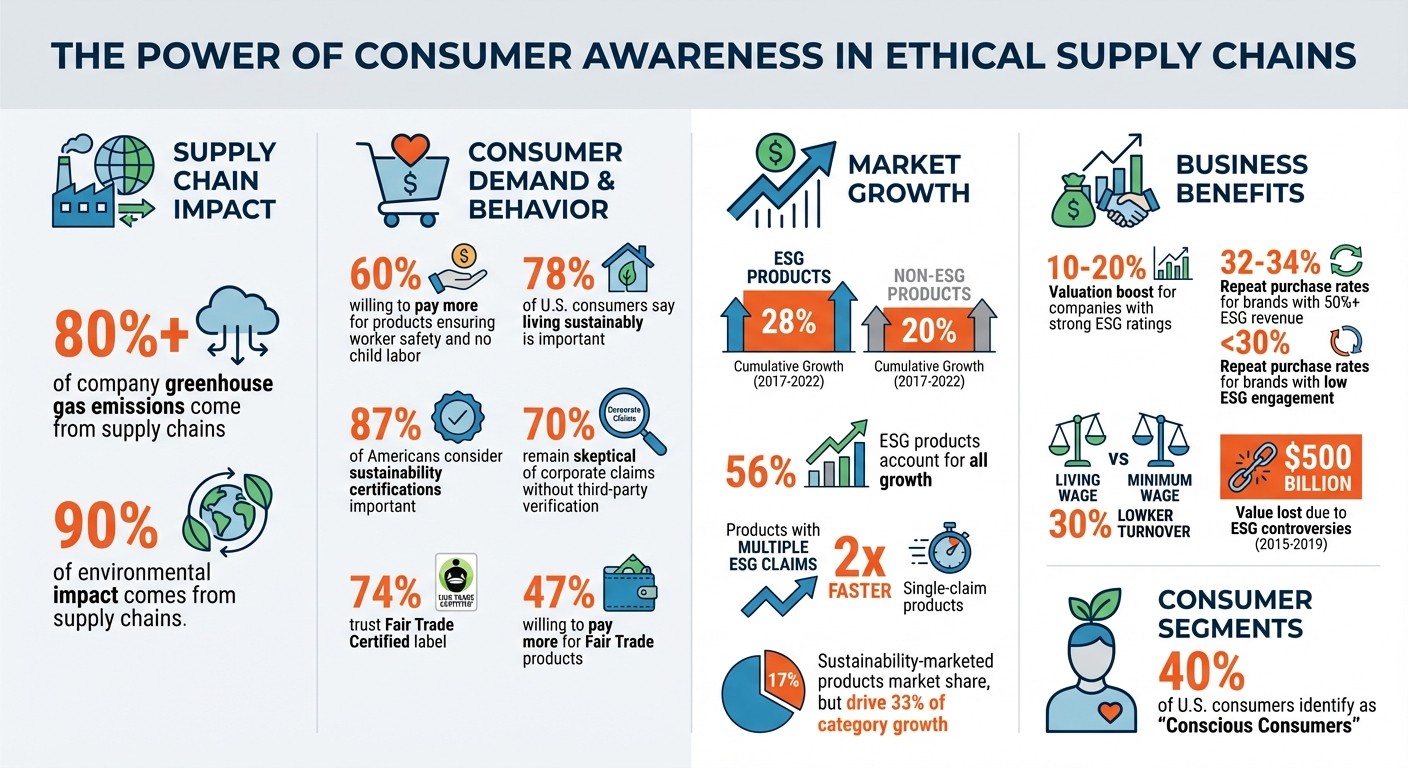
Consumer Awareness Impact on Ethical Supply Chains: Key Statistics
How Can Supply Chains Become Fully Transparent And Ethical? - Talking Tech Trends
Problems Created by Low Consumer Awareness
When consumers lack understanding of how their purchases impact workers and the environment, companies feel little urgency to change. This knowledge gap allows harmful practices to persist unchecked.
These challenges unfold across several interconnected areas.
Reduced Pressure for Supply Chain Transparency
When consumers aren't asking tough questions, companies often view transparency as an unnecessary expense rather than a priority. Tracking the activities of upper-tier suppliers can be costly, and without external pressure, management struggles to justify such investments [5].
"Efforts [to gain visibility] are often not required by regulation and thus are viewed as necessary only if 'something bad' has happened." - Tim Kraft and Yanchong Zheng, Professors and Researchers [5]
This reactive mindset means companies often wait for crises to act instead of addressing risks proactively.
A stark example of this came in November 2020, when executives from Amazon, Ikea, and Nike were summoned before the U.K. Parliament's Business, Energy and Industrial Strategy Committee. The inquiry focused on allegations of forced labor involving Uyghur Muslims in China's Xinjiang region. These corporations faced scrutiny for their lack of supply chain visibility - an issue they addressed only after public exposure [5]. Without consumer awareness driving accountability, companies often delay taking meaningful action.
Difficulty Understanding Complex Global Supply Chains
The journey of a single product often spans multiple countries. For instance, a shirt might use cotton from India, fabric from Bangladesh, and buttons from China, with final assembly in Vietnam. While environmental metrics like carbon emissions are relatively easier to track, social factors - such as fair wages and safe working conditions - are harder to measure due to the lack of standardized data collection [1].
Adding to the confusion are the numerous certification programs available. Each comes with its own goals and criteria, leaving consumers unsure which labels signify genuine ethical practices [4]. Compounding the issue, the perception of higher costs often deters shoppers from making ethical choices [7]. Economic pressures, like inflation, exacerbate this trend. Even among the 40% of U.S. consumers who identify as "Conscious Consumers", financial concerns often outweigh ethical considerations during tough times [7].
This lack of clarity not only confuses consumers but also creates opportunities for unethical practices to flourish unnoticed.
Perpetuation of Unethical Business Practices
When consumers don't demand ethical products, businesses have little motivation to improve their sourcing practices. Companies that cut corners on labor and environmental standards can offer lower prices, which pressures ethical brands to compete or risk being pushed out of the market. This dynamic fosters a "race to the bottom", where harmful practices become widespread.
The financial costs of unethical behavior are substantial. Between 2015 and 2019, controversies tied to environmental, social, and governance (ESG) issues wiped out nearly $500 billion in value from U.S. public companies [5]. Still, without consumer pressure, many businesses delay investing in ethical practices until forced by regulators or scandal. In the meantime, communities endure stagnant wages, child labor, and a lack of investment in local well-being [1]. The absence of informed consumer demand allows these injustices to remain buried within the complex layers of global supply chains.
Data Showing Increased Consumer Interest in Ethical Products
Consumer interest in ethical products is on the rise, presenting businesses with new opportunities to align with buyers' values. As supply chain transparency improves, shoppers are increasingly putting their money where their principles are, supporting companies that prioritize ethical sourcing.
How Ethics Influence Purchasing Decisions
Ethical concerns, particularly around fair labor practices and human rights, are now more influential in shopping decisions than environmental factors [10]. This broadens the scope of ethical sourcing to include not just environmental impacts but also the treatment and welfare of workers.
The statistics paint a clear picture. 78% of U.S. consumers say living sustainably is important to them [2][9]. Even more telling, 60% of consumers are willing to pay a premium for products that ensure worker safety and prohibit child labor [1]. Trust is a key factor here - shoppers are drawn to brands that demonstrate long-term commitments rather than quick fixes [8].
"Trust is a critical currency in sustainable commerce." - Deloitte [8]
Consumers also value authenticity. Products boasting multiple ESG (Environmental, Social, and Governance) claims, such as combining "fair trade" with "organic", grow at nearly twice the rate of those with only one claim. This suggests that consumers view comprehensive ethical practices as more credible and are willing to reward that commitment [2].
Consumer Willingness to Pay More for Ethical Products
When ethical sourcing aligns with personal benefits like health and safety, consumers are more likely to act. 87% of Americans consider sustainability certifications important when making purchases [9]. However, 70% of consumers remain skeptical of corporate claims, leaning toward products with third-party certifications and transparent supply chain information [9]. This demand for proof underscores the importance of credibility in ethical marketing.
Demographics play a role in willingness to pay more. Urban households, families with children, and younger generations are leading the charge in spending on ethical products [2][11]. Even budget-conscious shoppers are contributing to this trend. For instance, in 88% of product categories, private-label items with ESG claims captured more than their expected share of growth [2]. These buying patterns are driving the rapid expansion of the ethical products market.
Growth in the Ethical Products Market
Between 2017 and 2022, products with ESG-related claims saw 28% cumulative growth, compared to 20% for products without such claims [2]. These items now account for 56% of all growth in the categories studied by McKinsey and NielsenIQ [2].
"Products making ESG-related claims averaged 28 percent cumulative growth over the past five-year period, versus 20 percent for products that made no such claims." - McKinsey & NielsenIQ [2]
In the consumer packaged goods sector, sustainability-marketed products hold a 17% market share but have driven nearly one-third of all category growth [9]. Their sales growth is even more striking - sustainable products are growing almost three times faster than conventional ones [9].
Ethical commitment also fosters brand loyalty. Companies earning more than half their revenue from ESG-related products enjoy repeat purchase rates of 32% to 34%, compared to less than 30% for brands with lower ESG engagement [2]. This loyalty translates into tangible financial benefits, as businesses with higher ESG ratings experience a 10% to 20% valuation boost compared to their peers [1].
What’s more, the demand for ethical products is no longer confined to niche markets. Shoppers from all income levels, age groups, and regions are embracing conscious consumerism, solidifying its place as a mainstream expectation rather than a fringe trend [2].
How Businesses Can Educate Consumers About Ethical Sourcing
Closing the gap between consumer curiosity and accurate knowledge requires intentional communication that makes ethical practices both visible and credible. By addressing skepticism and fostering trust, businesses can guide consumers toward informed choices. Let’s explore some actionable strategies.
Clear Labels and Third-Party Certifications
Transparency begins with clear labeling and the use of trusted third-party certifications. These certifications provide independent validation of ethical claims, easing consumer doubts. For instance, research shows that 74% of consumers trust the Fair Trade Certified label when making purchasing decisions, and over 60% of U.S. consumers recognize it [14]. This trust directly influences buying behavior, as nearly half of consumers (47%) are willing to pay more for products displaying the label [14].
"Consumers say third-party certification is a trustworthy indicator when they make purchase decisions." - Fair Trade USA [14]
The influence of certifications isn’t limited to Fair Trade. Labels from organizations like the Marine Stewardship Council (MSC) for seafood or USDA Organic for agricultural products also serve as reliable trust markers. Partnering with established certification bodies not only boosts consumer confidence but also enhances brand visibility through recognized assurance networks [1].
Sharing Supply Chain Data with Consumers
Beyond certifications, offering detailed supply chain information strengthens accountability and builds consumer confidence. Mapping both direct (Tier 1) and indirect (Tier 2 and beyond) suppliers provides a comprehensive view of where raw materials originate [13].
"Supply chain transparency and traceability are at the heart of these demands, and companies should be paying attention to labeling requirements and preparing to meet them because supply-chain traceability is in a company's own business interest." - Alexis H. Bateman, Director of the Responsible Supply Chain Lab, MIT [12]
Digital tools make this transparency practical and accessible. QR codes on product packaging allow consumers to instantly view details about sourcing, manufacturing, and labor conditions. Blockchain technology ensures tamper-proof records of each step in the product's journey, while RFID tags enable real-time tracking [13]. Public disclosures, such as sustainability reports and audit summaries, further personalize supply chains without overwhelming consumers with excessive details.
Key Challenges and Solutions
The table below highlights common consumer challenges and the corresponding communication strategies businesses can use to address them.
| Problem | Solution |
| --- | --- |
| Consumer Skepticism | Third-party certifications (e.g., Fair Trade, MSC) for independent verification <a href="https://www.fairtradecertified.org/consumer-insights" target="_blank" style="text-decoration: none;" rel="nofollow noopener noreferrer" data-framer-link="Link:{"url":"https://www.fairtradecertified.org/consumer-insights","type":"url"}" data-framer-open-in-new-tab=""><sup>[14]</sup></a> |
| Supply Chain Complexity | Blockchain and digital ledgers to document and share every step of the product journey <a href="https://ibm.com/think/topics/supply-chain-transparency" target="_blank" style="text-decoration: none;" rel="nofollow noopener noreferrer" data-framer-link="Link:{"url":"https://ibm.com/think/topics/supply-chain-transparency","type":"url"}" data-framer-open-in-new-tab=""><sup>[13]</sup></a> |
| Information Gaps | Public sustainability reports and audit summaries available online <a href="https://ibm.com/think/topics/supply-chain-transparency" target="_blank" style="text-decoration: none;" rel="nofollow noopener noreferrer" data-framer-link="Link:{"url":"https://ibm.com/think/topics/supply-chain-transparency","type":"url"}" data-framer-open-in-new-tab=""><sup>[13]</sup></a> |
| Lack of Differentiation | Highlighting multiple specific ESG claims to showcase a comprehensive commitment <a href="https://www.mckinsey.com/industries/consumer-packaged-goods/our-insights/consumers-care-about-sustainability-and-back-it-up-with-their-wallets" target="_blank" style="text-decoration: none;" rel="nofollow noopener noreferrer" data-framer-link="Link:{"url":"https://www.mckinsey.com/industries/consumer-packaged-goods/our-insights/consumers-care-about-sustainability-and-back-it-up-with-their-wallets","type":"url"}" data-framer-open-in-new-tab=""><sup>[2]</sup></a> |
| Opaque Sourcing | QR codes and RFID tags for tracking products back to their origins <a href="https://ibm.com/think/topics/supply-chain-transparency" target="_blank" style="text-decoration: none;" rel="nofollow noopener noreferrer" data-framer-link="Link:{"url":"https://ibm.com/think/topics/supply-chain-transparency","type":"url"}" data-framer-open-in-new-tab=""><sup>[13]</sup></a> |
| Problem | Solution |
| --- | --- |
| Consumer Skepticism | Third-party certifications (e.g., Fair Trade, MSC) for independent verification <a href="https://www.fairtradecertified.org/consumer-insights" target="_blank" style="text-decoration: none;" rel="nofollow noopener noreferrer" data-framer-link="Link:{"url":"https://www.fairtradecertified.org/consumer-insights","type":"url"}" data-framer-open-in-new-tab=""><sup>[14]</sup></a> |
| Supply Chain Complexity | Blockchain and digital ledgers to document and share every step of the product journey <a href="https://ibm.com/think/topics/supply-chain-transparency" target="_blank" style="text-decoration: none;" rel="nofollow noopener noreferrer" data-framer-link="Link:{"url":"https://ibm.com/think/topics/supply-chain-transparency","type":"url"}" data-framer-open-in-new-tab=""><sup>[13]</sup></a> |
| Information Gaps | Public sustainability reports and audit summaries available online <a href="https://ibm.com/think/topics/supply-chain-transparency" target="_blank" style="text-decoration: none;" rel="nofollow noopener noreferrer" data-framer-link="Link:{"url":"https://ibm.com/think/topics/supply-chain-transparency","type":"url"}" data-framer-open-in-new-tab=""><sup>[13]</sup></a> |
| Lack of Differentiation | Highlighting multiple specific ESG claims to showcase a comprehensive commitment <a href="https://www.mckinsey.com/industries/consumer-packaged-goods/our-insights/consumers-care-about-sustainability-and-back-it-up-with-their-wallets" target="_blank" style="text-decoration: none;" rel="nofollow noopener noreferrer" data-framer-link="Link:{"url":"https://www.mckinsey.com/industries/consumer-packaged-goods/our-insights/consumers-care-about-sustainability-and-back-it-up-with-their-wallets","type":"url"}" data-framer-open-in-new-tab=""><sup>[2]</sup></a> |
| Opaque Sourcing | QR codes and RFID tags for tracking products back to their origins <a href="https://ibm.com/think/topics/supply-chain-transparency" target="_blank" style="text-decoration: none;" rel="nofollow noopener noreferrer" data-framer-link="Link:{"url":"https://ibm.com/think/topics/supply-chain-transparency","type":"url"}" data-framer-open-in-new-tab=""><sup>[13]</sup></a> |Ways to Involve Consumers in Ethical Supply Chain Efforts
Encouraging consumers to actively participate in ethical sourcing can transform it from a company-driven effort into a shared mission. When consumers feel like partners rather than passive buyers, the impact of ethical supply chain practices grows significantly. Here’s how businesses can foster that connection.
Using Technology to Track Supply Chains
Technology has made it easier than ever for consumers to see the journey behind the products they purchase. Blockchain, for instance, creates a secure and decentralized record of every step in the supply chain, ensuring that each stage meets ethical standards before it’s logged. This tamper-proof system allows consumers to verify the origins and production processes of the items they buy [15][16].
Digital tools, such as QR codes or mobile apps, provide real-time visibility into multi-tiered supply chains, offering transparency at the point of purchase [16]. To further bolster trust, advanced techniques like isotopic testing can confirm the geographical origin of raw materials, providing physical evidence to back up digital claims [16].
"Transparency has really become a license to operate. If you're not a transparent company, there is less willingness to work with you." - Alexis Bateman, Director of MIT Sustainable Supply Chains [17]
By enabling this level of transparency, businesses create a foundation for consumers to engage in broader sustainability efforts.
Working with Consumers on Recycling and Reuse Programs
A circular economy thrives on consumer participation. Recycling, repair, and resale initiatives not only reduce waste but also encourage consumers to play an active role in ethical practices [18]. However, for these programs to succeed, clear communication is key. Standardized labeling on packaging helps shoppers make informed decisions and minimizes contamination in recycling streams [19].
Products with ESG-related claims have seen sales grow by 28% over five years, compared to 20% for products without such claims [2]. Businesses can amplify this momentum through social marketing campaigns and events that normalize sustainable behaviors [19]. Mobile apps also educate consumers about pollution and provide platforms for sharing eco-friendly ideas [19]. Some retailers even use “sustainability leader” tags on e-commerce platforms to reward consumers for choosing ethical products [3].
How Council Fire Helps Organizations Implement Ethical Practices
To deepen consumer involvement, businesses often turn to experts like Council Fire. This consultancy specializes in mapping entire supply chains to identify sustainability risks and opportunities, making it easier for companies to align their operations with ethical standards [3][13]. Council Fire facilitates collaboration with suppliers, communicates clear ethical expectations, and establishes governance structures to ensure compliance with labor and environmental standards [1][13].
They also help organizations adopt advanced technologies like blockchain, IoT sensors, and AI-driven analytics, giving consumers access to verified information about product origins and manufacturing processes. Beyond implementation, Council Fire measures the impact of sustainability efforts, tracking how consumer education influences brand loyalty, trust, and business growth. By turning informed consumers into active participants, they help businesses achieve long-term success while advancing ethical supply chain practices.
Measuring the Results of Consumer Education on Ethical Sourcing
Building on efforts to engage consumers, evaluating the outcomes of these initiatives is essential for improving ethical sourcing strategies.
Tracking Brand Value and Customer Trust
Transparency plays a pivotal role in building trust, which significantly influences consumer decisions and, in turn, drives revenue. Clear and open supply chains enhance consumer confidence, leading to increased sales and higher revenue [6]. Companies with strong ESG (Environmental, Social, and Governance) ratings typically experience a valuation boost of 10% to 20% compared to their competitors [1].
Trust also fosters loyalty. Brands that derive over half of their sales from ESG-related products see repeat purchase rates between 32% and 34%, compared to less than 30% for brands with limited ethical engagement [2]. Third-party certifications further strengthen consumer trust; for instance, 74% of U.S. consumers place confidence in the Fair Trade Certified label [14]. This level of trust doesn’t just encourage loyalty - it also fuels business growth.
Business Growth from Ethical Sourcing Commitments
Educating consumers about ethical sourcing contributes directly to financial growth. Products making ESG claims enjoy a compound annual growth rate (CAGR) advantage of 1.7 percentage points and account for 56% of the growth in the categories studied [2].
"Products making ESG-related claims averaged 28 percent cumulative growth over the past five-year period, versus 20 percent for products that made no such claims." - McKinsey & Company [2]
Products with multiple ethical claims grow at double the rate of those with only one [2]. Operational benefits also emerge from ethical commitments; for example, paying a living wage rather than the minimum wage can lower worker turnover by 30% [1].
Council Fire's Impact Analysis Services
Turning consumer education into tangible outcomes requires precise evaluation. Council Fire specializes in helping organizations measure the effectiveness of their ethical supply chain programs through detailed impact analysis. They consolidate supply chain data into dashboards that highlight transparency gaps, risk areas, and consumer response metrics. By mapping suppliers beyond Tier 1 to trace raw material origins [13], Council Fire offers the visibility necessary to build authentic consumer trust.
Their approach goes far beyond standard reporting. By quantifying the impact of consumer education on brand loyalty, Council Fire strengthens the case for ethical sourcing. They track metrics like "prosociality" (the inclination of consumers to support ethical practices) and "indirect reciprocity" (how consumers reward companies for fair treatment of workers) [6][20]. This data-driven approach allows organizations to identify which educational efforts yield the best results, enabling them to refine strategies and maximize both social impact and financial returns.
Conclusion
When consumers are informed about the origins of products and the processes behind their creation, they tend to favor companies that prioritize transparency. This connection between awareness and action translates into loyalty and increased spending. Data supports this, showing that Environmental, Social, and Governance (ESG) claims significantly boost both growth and customer retention [2].
For businesses, openly sharing supply chain data, adopting well-recognized third-party certifications, and utilizing technology to enhance transparency are essential steps. A compelling example comes from Walmart's energy efficiency program for Chinese suppliers, launched in 2014. Factories involved in the initiative reduced energy consumption by 10% [3]. This kind of measurable progress, paired with clear communication efforts, strengthens trust and drives sales. Transparency, therefore, not only builds consumer confidence but also yields tangible financial gains.
Financial data reinforces the value of ethical practices. Companies with strong ESG ratings enjoy a 10%–20% increase in valuation, while products featuring multiple ethical claims grow at twice the rate of others. Additionally, paying a living wage reduces employee turnover by 30% [1][2]. These figures underscore how ethical commitments can enhance both brand reputation and operational efficiency.
Putting these principles into action requires expertise and precise measurement. For businesses looking to seize these opportunities, organizations like Council Fire offer specialized services. They help companies measure the impact of ethical sourcing programs by tracking key metrics such as brand loyalty and operational efficiency, while pinpointing which educational efforts yield the best results.
Consumer priorities are shifting, with 60% of shoppers willing to pay more for products that ensure employee safety and prohibit child labor [1]. Companies that champion transparency and educate their customers are positioned for sustained growth in a marketplace where ethics and profitability increasingly align.
FAQs
How can I check if a company’s supply chain follows ethical practices?
To assess a company’s ethical practices, start by reviewing publicly available supply chain data and certifications. Many businesses now publish sustainability reports that include detailed supply chain maps, labor audits, and certifications such as Fair Trade, GOTS, or B Corp. These documents offer tangible proof of their commitments.
You can also rely on independent rating tools or apps that evaluate brands based on factors like fair wages, labor rights, and environmental impact. In some cases, blockchain-based traceability tools are available to track the origins of materials, providing even greater transparency. Don’t shy away from reaching out to brands directly - ask about their sourcing policies, living-wage standards, or how they address violations within their supply chain.
Companies collaborating with sustainability experts like Council Fire often enhance transparency by developing clear and accessible communication strategies. This makes it easier for consumers to access and understand information about ethical sourcing. By using these tools and resources, you can make informed decisions and steer clear of misleading greenwashing claims.
How does consumer demand influence companies to prioritize ethical sourcing?
Consumer preferences are a driving force behind businesses embracing ethical sourcing practices. As shoppers increasingly value transparency and favor products tied to fair labor and responsible practices, companies are feeling the pressure to rise to these expectations. This trend influences not only what people buy but also fosters trust and loyalty toward brands that align with these principles.
When consumers are willing to pay a premium for ethically produced goods, it sends a clear message to businesses: aligning supply chains with ethical values isn’t just about doing the right thing - it’s also a smart business move. Ethical sourcing, in this context, becomes a dual benefit, boosting both financial performance and social responsibility.
Why are third-party certifications essential for promoting ethical and transparent supply chains?
Third-party certifications serve as an important tool for verifying ethical and sustainable practices within supply chains. By offering independent assessments, these certifications provide consumers with confidence that products align with established environmental, social, or labor standards.
They also address regulatory shortcomings by holding companies accountable for their practices. This level of transparency helps consumers make informed purchasing decisions while enhancing trust. Additionally, businesses benefit from a stronger reputation, which can be a significant advantage in a crowded and competitive market.
Related Blog Posts
Latest Articles
©2025



FAQ
01
What does it really mean to “redefine profit”?
02
What makes Council Fire different?
03
Who does Council Fire you work with?
04
What does working with Council Fire actually look like?
05
How does Council Fire help organizations turn big goals into action?
06
How does Council Fire define and measure success?
Dec 24, 2025
Consumer Awareness and Its Role in Ethical Supply Chains
ESG Strategy
In This Article
Explains how informed consumers can force supply chain transparency, support ethical sourcing, and boost business through labels, tech, and certifications.
Consumer Awareness and Its Role in Ethical Supply Chains
Consumers have the power to shape ethical supply chains, but many lack the knowledge to make informed choices.
Key points:
Supply chains contribute over 80% of a company's greenhouse gas emissions and 90% of its environmental impact.
Consumer demand for ethical products is growing: 60% are willing to pay more for products ensuring worker safety and no child labor.
Transparency is lacking due to the complexity of global supply chains, leaving unethical practices hidden.
Products with ESG claims grew 28% from 2017 to 2022, compared to 20% for non-ESG products.
Businesses can close the awareness gap by:
Using clear labels and trusted third-party certifications.
Sharing supply chain data through tools like QR codes and blockchain.
Engaging consumers in recycling and reuse programs.
Educating consumers builds trust, drives loyalty, and boosts sales, making ethical sourcing a win for both businesses and society.
Consumer Awareness Impact on Ethical Supply Chains: Key Statistics
How Can Supply Chains Become Fully Transparent And Ethical? - Talking Tech Trends
Problems Created by Low Consumer Awareness
When consumers lack understanding of how their purchases impact workers and the environment, companies feel little urgency to change. This knowledge gap allows harmful practices to persist unchecked.
These challenges unfold across several interconnected areas.
Reduced Pressure for Supply Chain Transparency
When consumers aren't asking tough questions, companies often view transparency as an unnecessary expense rather than a priority. Tracking the activities of upper-tier suppliers can be costly, and without external pressure, management struggles to justify such investments [5].
"Efforts [to gain visibility] are often not required by regulation and thus are viewed as necessary only if 'something bad' has happened." - Tim Kraft and Yanchong Zheng, Professors and Researchers [5]
This reactive mindset means companies often wait for crises to act instead of addressing risks proactively.
A stark example of this came in November 2020, when executives from Amazon, Ikea, and Nike were summoned before the U.K. Parliament's Business, Energy and Industrial Strategy Committee. The inquiry focused on allegations of forced labor involving Uyghur Muslims in China's Xinjiang region. These corporations faced scrutiny for their lack of supply chain visibility - an issue they addressed only after public exposure [5]. Without consumer awareness driving accountability, companies often delay taking meaningful action.
Difficulty Understanding Complex Global Supply Chains
The journey of a single product often spans multiple countries. For instance, a shirt might use cotton from India, fabric from Bangladesh, and buttons from China, with final assembly in Vietnam. While environmental metrics like carbon emissions are relatively easier to track, social factors - such as fair wages and safe working conditions - are harder to measure due to the lack of standardized data collection [1].
Adding to the confusion are the numerous certification programs available. Each comes with its own goals and criteria, leaving consumers unsure which labels signify genuine ethical practices [4]. Compounding the issue, the perception of higher costs often deters shoppers from making ethical choices [7]. Economic pressures, like inflation, exacerbate this trend. Even among the 40% of U.S. consumers who identify as "Conscious Consumers", financial concerns often outweigh ethical considerations during tough times [7].
This lack of clarity not only confuses consumers but also creates opportunities for unethical practices to flourish unnoticed.
Perpetuation of Unethical Business Practices
When consumers don't demand ethical products, businesses have little motivation to improve their sourcing practices. Companies that cut corners on labor and environmental standards can offer lower prices, which pressures ethical brands to compete or risk being pushed out of the market. This dynamic fosters a "race to the bottom", where harmful practices become widespread.
The financial costs of unethical behavior are substantial. Between 2015 and 2019, controversies tied to environmental, social, and governance (ESG) issues wiped out nearly $500 billion in value from U.S. public companies [5]. Still, without consumer pressure, many businesses delay investing in ethical practices until forced by regulators or scandal. In the meantime, communities endure stagnant wages, child labor, and a lack of investment in local well-being [1]. The absence of informed consumer demand allows these injustices to remain buried within the complex layers of global supply chains.
Data Showing Increased Consumer Interest in Ethical Products
Consumer interest in ethical products is on the rise, presenting businesses with new opportunities to align with buyers' values. As supply chain transparency improves, shoppers are increasingly putting their money where their principles are, supporting companies that prioritize ethical sourcing.
How Ethics Influence Purchasing Decisions
Ethical concerns, particularly around fair labor practices and human rights, are now more influential in shopping decisions than environmental factors [10]. This broadens the scope of ethical sourcing to include not just environmental impacts but also the treatment and welfare of workers.
The statistics paint a clear picture. 78% of U.S. consumers say living sustainably is important to them [2][9]. Even more telling, 60% of consumers are willing to pay a premium for products that ensure worker safety and prohibit child labor [1]. Trust is a key factor here - shoppers are drawn to brands that demonstrate long-term commitments rather than quick fixes [8].
"Trust is a critical currency in sustainable commerce." - Deloitte [8]
Consumers also value authenticity. Products boasting multiple ESG (Environmental, Social, and Governance) claims, such as combining "fair trade" with "organic", grow at nearly twice the rate of those with only one claim. This suggests that consumers view comprehensive ethical practices as more credible and are willing to reward that commitment [2].
Consumer Willingness to Pay More for Ethical Products
When ethical sourcing aligns with personal benefits like health and safety, consumers are more likely to act. 87% of Americans consider sustainability certifications important when making purchases [9]. However, 70% of consumers remain skeptical of corporate claims, leaning toward products with third-party certifications and transparent supply chain information [9]. This demand for proof underscores the importance of credibility in ethical marketing.
Demographics play a role in willingness to pay more. Urban households, families with children, and younger generations are leading the charge in spending on ethical products [2][11]. Even budget-conscious shoppers are contributing to this trend. For instance, in 88% of product categories, private-label items with ESG claims captured more than their expected share of growth [2]. These buying patterns are driving the rapid expansion of the ethical products market.
Growth in the Ethical Products Market
Between 2017 and 2022, products with ESG-related claims saw 28% cumulative growth, compared to 20% for products without such claims [2]. These items now account for 56% of all growth in the categories studied by McKinsey and NielsenIQ [2].
"Products making ESG-related claims averaged 28 percent cumulative growth over the past five-year period, versus 20 percent for products that made no such claims." - McKinsey & NielsenIQ [2]
In the consumer packaged goods sector, sustainability-marketed products hold a 17% market share but have driven nearly one-third of all category growth [9]. Their sales growth is even more striking - sustainable products are growing almost three times faster than conventional ones [9].
Ethical commitment also fosters brand loyalty. Companies earning more than half their revenue from ESG-related products enjoy repeat purchase rates of 32% to 34%, compared to less than 30% for brands with lower ESG engagement [2]. This loyalty translates into tangible financial benefits, as businesses with higher ESG ratings experience a 10% to 20% valuation boost compared to their peers [1].
What’s more, the demand for ethical products is no longer confined to niche markets. Shoppers from all income levels, age groups, and regions are embracing conscious consumerism, solidifying its place as a mainstream expectation rather than a fringe trend [2].
How Businesses Can Educate Consumers About Ethical Sourcing
Closing the gap between consumer curiosity and accurate knowledge requires intentional communication that makes ethical practices both visible and credible. By addressing skepticism and fostering trust, businesses can guide consumers toward informed choices. Let’s explore some actionable strategies.
Clear Labels and Third-Party Certifications
Transparency begins with clear labeling and the use of trusted third-party certifications. These certifications provide independent validation of ethical claims, easing consumer doubts. For instance, research shows that 74% of consumers trust the Fair Trade Certified label when making purchasing decisions, and over 60% of U.S. consumers recognize it [14]. This trust directly influences buying behavior, as nearly half of consumers (47%) are willing to pay more for products displaying the label [14].
"Consumers say third-party certification is a trustworthy indicator when they make purchase decisions." - Fair Trade USA [14]
The influence of certifications isn’t limited to Fair Trade. Labels from organizations like the Marine Stewardship Council (MSC) for seafood or USDA Organic for agricultural products also serve as reliable trust markers. Partnering with established certification bodies not only boosts consumer confidence but also enhances brand visibility through recognized assurance networks [1].
Sharing Supply Chain Data with Consumers
Beyond certifications, offering detailed supply chain information strengthens accountability and builds consumer confidence. Mapping both direct (Tier 1) and indirect (Tier 2 and beyond) suppliers provides a comprehensive view of where raw materials originate [13].
"Supply chain transparency and traceability are at the heart of these demands, and companies should be paying attention to labeling requirements and preparing to meet them because supply-chain traceability is in a company's own business interest." - Alexis H. Bateman, Director of the Responsible Supply Chain Lab, MIT [12]
Digital tools make this transparency practical and accessible. QR codes on product packaging allow consumers to instantly view details about sourcing, manufacturing, and labor conditions. Blockchain technology ensures tamper-proof records of each step in the product's journey, while RFID tags enable real-time tracking [13]. Public disclosures, such as sustainability reports and audit summaries, further personalize supply chains without overwhelming consumers with excessive details.
Key Challenges and Solutions
The table below highlights common consumer challenges and the corresponding communication strategies businesses can use to address them.
| Problem | Solution |
| --- | --- |
| Consumer Skepticism | Third-party certifications (e.g., Fair Trade, MSC) for independent verification <a href="https://www.fairtradecertified.org/consumer-insights" target="_blank" style="text-decoration: none;" rel="nofollow noopener noreferrer" data-framer-link="Link:{"url":"https://www.fairtradecertified.org/consumer-insights","type":"url"}" data-framer-open-in-new-tab=""><sup>[14]</sup></a> |
| Supply Chain Complexity | Blockchain and digital ledgers to document and share every step of the product journey <a href="https://ibm.com/think/topics/supply-chain-transparency" target="_blank" style="text-decoration: none;" rel="nofollow noopener noreferrer" data-framer-link="Link:{"url":"https://ibm.com/think/topics/supply-chain-transparency","type":"url"}" data-framer-open-in-new-tab=""><sup>[13]</sup></a> |
| Information Gaps | Public sustainability reports and audit summaries available online <a href="https://ibm.com/think/topics/supply-chain-transparency" target="_blank" style="text-decoration: none;" rel="nofollow noopener noreferrer" data-framer-link="Link:{"url":"https://ibm.com/think/topics/supply-chain-transparency","type":"url"}" data-framer-open-in-new-tab=""><sup>[13]</sup></a> |
| Lack of Differentiation | Highlighting multiple specific ESG claims to showcase a comprehensive commitment <a href="https://www.mckinsey.com/industries/consumer-packaged-goods/our-insights/consumers-care-about-sustainability-and-back-it-up-with-their-wallets" target="_blank" style="text-decoration: none;" rel="nofollow noopener noreferrer" data-framer-link="Link:{"url":"https://www.mckinsey.com/industries/consumer-packaged-goods/our-insights/consumers-care-about-sustainability-and-back-it-up-with-their-wallets","type":"url"}" data-framer-open-in-new-tab=""><sup>[2]</sup></a> |
| Opaque Sourcing | QR codes and RFID tags for tracking products back to their origins <a href="https://ibm.com/think/topics/supply-chain-transparency" target="_blank" style="text-decoration: none;" rel="nofollow noopener noreferrer" data-framer-link="Link:{"url":"https://ibm.com/think/topics/supply-chain-transparency","type":"url"}" data-framer-open-in-new-tab=""><sup>[13]</sup></a> |
Ways to Involve Consumers in Ethical Supply Chain Efforts
Encouraging consumers to actively participate in ethical sourcing can transform it from a company-driven effort into a shared mission. When consumers feel like partners rather than passive buyers, the impact of ethical supply chain practices grows significantly. Here’s how businesses can foster that connection.
Using Technology to Track Supply Chains
Technology has made it easier than ever for consumers to see the journey behind the products they purchase. Blockchain, for instance, creates a secure and decentralized record of every step in the supply chain, ensuring that each stage meets ethical standards before it’s logged. This tamper-proof system allows consumers to verify the origins and production processes of the items they buy [15][16].
Digital tools, such as QR codes or mobile apps, provide real-time visibility into multi-tiered supply chains, offering transparency at the point of purchase [16]. To further bolster trust, advanced techniques like isotopic testing can confirm the geographical origin of raw materials, providing physical evidence to back up digital claims [16].
"Transparency has really become a license to operate. If you're not a transparent company, there is less willingness to work with you." - Alexis Bateman, Director of MIT Sustainable Supply Chains [17]
By enabling this level of transparency, businesses create a foundation for consumers to engage in broader sustainability efforts.
Working with Consumers on Recycling and Reuse Programs
A circular economy thrives on consumer participation. Recycling, repair, and resale initiatives not only reduce waste but also encourage consumers to play an active role in ethical practices [18]. However, for these programs to succeed, clear communication is key. Standardized labeling on packaging helps shoppers make informed decisions and minimizes contamination in recycling streams [19].
Products with ESG-related claims have seen sales grow by 28% over five years, compared to 20% for products without such claims [2]. Businesses can amplify this momentum through social marketing campaigns and events that normalize sustainable behaviors [19]. Mobile apps also educate consumers about pollution and provide platforms for sharing eco-friendly ideas [19]. Some retailers even use “sustainability leader” tags on e-commerce platforms to reward consumers for choosing ethical products [3].
How Council Fire Helps Organizations Implement Ethical Practices
To deepen consumer involvement, businesses often turn to experts like Council Fire. This consultancy specializes in mapping entire supply chains to identify sustainability risks and opportunities, making it easier for companies to align their operations with ethical standards [3][13]. Council Fire facilitates collaboration with suppliers, communicates clear ethical expectations, and establishes governance structures to ensure compliance with labor and environmental standards [1][13].
They also help organizations adopt advanced technologies like blockchain, IoT sensors, and AI-driven analytics, giving consumers access to verified information about product origins and manufacturing processes. Beyond implementation, Council Fire measures the impact of sustainability efforts, tracking how consumer education influences brand loyalty, trust, and business growth. By turning informed consumers into active participants, they help businesses achieve long-term success while advancing ethical supply chain practices.
Measuring the Results of Consumer Education on Ethical Sourcing
Building on efforts to engage consumers, evaluating the outcomes of these initiatives is essential for improving ethical sourcing strategies.
Tracking Brand Value and Customer Trust
Transparency plays a pivotal role in building trust, which significantly influences consumer decisions and, in turn, drives revenue. Clear and open supply chains enhance consumer confidence, leading to increased sales and higher revenue [6]. Companies with strong ESG (Environmental, Social, and Governance) ratings typically experience a valuation boost of 10% to 20% compared to their competitors [1].
Trust also fosters loyalty. Brands that derive over half of their sales from ESG-related products see repeat purchase rates between 32% and 34%, compared to less than 30% for brands with limited ethical engagement [2]. Third-party certifications further strengthen consumer trust; for instance, 74% of U.S. consumers place confidence in the Fair Trade Certified label [14]. This level of trust doesn’t just encourage loyalty - it also fuels business growth.
Business Growth from Ethical Sourcing Commitments
Educating consumers about ethical sourcing contributes directly to financial growth. Products making ESG claims enjoy a compound annual growth rate (CAGR) advantage of 1.7 percentage points and account for 56% of the growth in the categories studied [2].
"Products making ESG-related claims averaged 28 percent cumulative growth over the past five-year period, versus 20 percent for products that made no such claims." - McKinsey & Company [2]
Products with multiple ethical claims grow at double the rate of those with only one [2]. Operational benefits also emerge from ethical commitments; for example, paying a living wage rather than the minimum wage can lower worker turnover by 30% [1].
Council Fire's Impact Analysis Services
Turning consumer education into tangible outcomes requires precise evaluation. Council Fire specializes in helping organizations measure the effectiveness of their ethical supply chain programs through detailed impact analysis. They consolidate supply chain data into dashboards that highlight transparency gaps, risk areas, and consumer response metrics. By mapping suppliers beyond Tier 1 to trace raw material origins [13], Council Fire offers the visibility necessary to build authentic consumer trust.
Their approach goes far beyond standard reporting. By quantifying the impact of consumer education on brand loyalty, Council Fire strengthens the case for ethical sourcing. They track metrics like "prosociality" (the inclination of consumers to support ethical practices) and "indirect reciprocity" (how consumers reward companies for fair treatment of workers) [6][20]. This data-driven approach allows organizations to identify which educational efforts yield the best results, enabling them to refine strategies and maximize both social impact and financial returns.
Conclusion
When consumers are informed about the origins of products and the processes behind their creation, they tend to favor companies that prioritize transparency. This connection between awareness and action translates into loyalty and increased spending. Data supports this, showing that Environmental, Social, and Governance (ESG) claims significantly boost both growth and customer retention [2].
For businesses, openly sharing supply chain data, adopting well-recognized third-party certifications, and utilizing technology to enhance transparency are essential steps. A compelling example comes from Walmart's energy efficiency program for Chinese suppliers, launched in 2014. Factories involved in the initiative reduced energy consumption by 10% [3]. This kind of measurable progress, paired with clear communication efforts, strengthens trust and drives sales. Transparency, therefore, not only builds consumer confidence but also yields tangible financial gains.
Financial data reinforces the value of ethical practices. Companies with strong ESG ratings enjoy a 10%–20% increase in valuation, while products featuring multiple ethical claims grow at twice the rate of others. Additionally, paying a living wage reduces employee turnover by 30% [1][2]. These figures underscore how ethical commitments can enhance both brand reputation and operational efficiency.
Putting these principles into action requires expertise and precise measurement. For businesses looking to seize these opportunities, organizations like Council Fire offer specialized services. They help companies measure the impact of ethical sourcing programs by tracking key metrics such as brand loyalty and operational efficiency, while pinpointing which educational efforts yield the best results.
Consumer priorities are shifting, with 60% of shoppers willing to pay more for products that ensure employee safety and prohibit child labor [1]. Companies that champion transparency and educate their customers are positioned for sustained growth in a marketplace where ethics and profitability increasingly align.
FAQs
How can I check if a company’s supply chain follows ethical practices?
To assess a company’s ethical practices, start by reviewing publicly available supply chain data and certifications. Many businesses now publish sustainability reports that include detailed supply chain maps, labor audits, and certifications such as Fair Trade, GOTS, or B Corp. These documents offer tangible proof of their commitments.
You can also rely on independent rating tools or apps that evaluate brands based on factors like fair wages, labor rights, and environmental impact. In some cases, blockchain-based traceability tools are available to track the origins of materials, providing even greater transparency. Don’t shy away from reaching out to brands directly - ask about their sourcing policies, living-wage standards, or how they address violations within their supply chain.
Companies collaborating with sustainability experts like Council Fire often enhance transparency by developing clear and accessible communication strategies. This makes it easier for consumers to access and understand information about ethical sourcing. By using these tools and resources, you can make informed decisions and steer clear of misleading greenwashing claims.
How does consumer demand influence companies to prioritize ethical sourcing?
Consumer preferences are a driving force behind businesses embracing ethical sourcing practices. As shoppers increasingly value transparency and favor products tied to fair labor and responsible practices, companies are feeling the pressure to rise to these expectations. This trend influences not only what people buy but also fosters trust and loyalty toward brands that align with these principles.
When consumers are willing to pay a premium for ethically produced goods, it sends a clear message to businesses: aligning supply chains with ethical values isn’t just about doing the right thing - it’s also a smart business move. Ethical sourcing, in this context, becomes a dual benefit, boosting both financial performance and social responsibility.
Why are third-party certifications essential for promoting ethical and transparent supply chains?
Third-party certifications serve as an important tool for verifying ethical and sustainable practices within supply chains. By offering independent assessments, these certifications provide consumers with confidence that products align with established environmental, social, or labor standards.
They also address regulatory shortcomings by holding companies accountable for their practices. This level of transparency helps consumers make informed purchasing decisions while enhancing trust. Additionally, businesses benefit from a stronger reputation, which can be a significant advantage in a crowded and competitive market.
Related Blog Posts
FAQ
01
What does it really mean to “redefine profit”?
02
What makes Council Fire different?
03
Who does Council Fire you work with?
04
What does working with Council Fire actually look like?
05
How does Council Fire help organizations turn big goals into action?
06
How does Council Fire define and measure success?
Dec 24, 2025
Consumer Awareness and Its Role in Ethical Supply Chains
ESG Strategy
In This Article
Explains how informed consumers can force supply chain transparency, support ethical sourcing, and boost business through labels, tech, and certifications.
Consumer Awareness and Its Role in Ethical Supply Chains
Consumers have the power to shape ethical supply chains, but many lack the knowledge to make informed choices.
Key points:
Supply chains contribute over 80% of a company's greenhouse gas emissions and 90% of its environmental impact.
Consumer demand for ethical products is growing: 60% are willing to pay more for products ensuring worker safety and no child labor.
Transparency is lacking due to the complexity of global supply chains, leaving unethical practices hidden.
Products with ESG claims grew 28% from 2017 to 2022, compared to 20% for non-ESG products.
Businesses can close the awareness gap by:
Using clear labels and trusted third-party certifications.
Sharing supply chain data through tools like QR codes and blockchain.
Engaging consumers in recycling and reuse programs.
Educating consumers builds trust, drives loyalty, and boosts sales, making ethical sourcing a win for both businesses and society.
Consumer Awareness Impact on Ethical Supply Chains: Key Statistics
How Can Supply Chains Become Fully Transparent And Ethical? - Talking Tech Trends
Problems Created by Low Consumer Awareness
When consumers lack understanding of how their purchases impact workers and the environment, companies feel little urgency to change. This knowledge gap allows harmful practices to persist unchecked.
These challenges unfold across several interconnected areas.
Reduced Pressure for Supply Chain Transparency
When consumers aren't asking tough questions, companies often view transparency as an unnecessary expense rather than a priority. Tracking the activities of upper-tier suppliers can be costly, and without external pressure, management struggles to justify such investments [5].
"Efforts [to gain visibility] are often not required by regulation and thus are viewed as necessary only if 'something bad' has happened." - Tim Kraft and Yanchong Zheng, Professors and Researchers [5]
This reactive mindset means companies often wait for crises to act instead of addressing risks proactively.
A stark example of this came in November 2020, when executives from Amazon, Ikea, and Nike were summoned before the U.K. Parliament's Business, Energy and Industrial Strategy Committee. The inquiry focused on allegations of forced labor involving Uyghur Muslims in China's Xinjiang region. These corporations faced scrutiny for their lack of supply chain visibility - an issue they addressed only after public exposure [5]. Without consumer awareness driving accountability, companies often delay taking meaningful action.
Difficulty Understanding Complex Global Supply Chains
The journey of a single product often spans multiple countries. For instance, a shirt might use cotton from India, fabric from Bangladesh, and buttons from China, with final assembly in Vietnam. While environmental metrics like carbon emissions are relatively easier to track, social factors - such as fair wages and safe working conditions - are harder to measure due to the lack of standardized data collection [1].
Adding to the confusion are the numerous certification programs available. Each comes with its own goals and criteria, leaving consumers unsure which labels signify genuine ethical practices [4]. Compounding the issue, the perception of higher costs often deters shoppers from making ethical choices [7]. Economic pressures, like inflation, exacerbate this trend. Even among the 40% of U.S. consumers who identify as "Conscious Consumers", financial concerns often outweigh ethical considerations during tough times [7].
This lack of clarity not only confuses consumers but also creates opportunities for unethical practices to flourish unnoticed.
Perpetuation of Unethical Business Practices
When consumers don't demand ethical products, businesses have little motivation to improve their sourcing practices. Companies that cut corners on labor and environmental standards can offer lower prices, which pressures ethical brands to compete or risk being pushed out of the market. This dynamic fosters a "race to the bottom", where harmful practices become widespread.
The financial costs of unethical behavior are substantial. Between 2015 and 2019, controversies tied to environmental, social, and governance (ESG) issues wiped out nearly $500 billion in value from U.S. public companies [5]. Still, without consumer pressure, many businesses delay investing in ethical practices until forced by regulators or scandal. In the meantime, communities endure stagnant wages, child labor, and a lack of investment in local well-being [1]. The absence of informed consumer demand allows these injustices to remain buried within the complex layers of global supply chains.
Data Showing Increased Consumer Interest in Ethical Products
Consumer interest in ethical products is on the rise, presenting businesses with new opportunities to align with buyers' values. As supply chain transparency improves, shoppers are increasingly putting their money where their principles are, supporting companies that prioritize ethical sourcing.
How Ethics Influence Purchasing Decisions
Ethical concerns, particularly around fair labor practices and human rights, are now more influential in shopping decisions than environmental factors [10]. This broadens the scope of ethical sourcing to include not just environmental impacts but also the treatment and welfare of workers.
The statistics paint a clear picture. 78% of U.S. consumers say living sustainably is important to them [2][9]. Even more telling, 60% of consumers are willing to pay a premium for products that ensure worker safety and prohibit child labor [1]. Trust is a key factor here - shoppers are drawn to brands that demonstrate long-term commitments rather than quick fixes [8].
"Trust is a critical currency in sustainable commerce." - Deloitte [8]
Consumers also value authenticity. Products boasting multiple ESG (Environmental, Social, and Governance) claims, such as combining "fair trade" with "organic", grow at nearly twice the rate of those with only one claim. This suggests that consumers view comprehensive ethical practices as more credible and are willing to reward that commitment [2].
Consumer Willingness to Pay More for Ethical Products
When ethical sourcing aligns with personal benefits like health and safety, consumers are more likely to act. 87% of Americans consider sustainability certifications important when making purchases [9]. However, 70% of consumers remain skeptical of corporate claims, leaning toward products with third-party certifications and transparent supply chain information [9]. This demand for proof underscores the importance of credibility in ethical marketing.
Demographics play a role in willingness to pay more. Urban households, families with children, and younger generations are leading the charge in spending on ethical products [2][11]. Even budget-conscious shoppers are contributing to this trend. For instance, in 88% of product categories, private-label items with ESG claims captured more than their expected share of growth [2]. These buying patterns are driving the rapid expansion of the ethical products market.
Growth in the Ethical Products Market
Between 2017 and 2022, products with ESG-related claims saw 28% cumulative growth, compared to 20% for products without such claims [2]. These items now account for 56% of all growth in the categories studied by McKinsey and NielsenIQ [2].
"Products making ESG-related claims averaged 28 percent cumulative growth over the past five-year period, versus 20 percent for products that made no such claims." - McKinsey & NielsenIQ [2]
In the consumer packaged goods sector, sustainability-marketed products hold a 17% market share but have driven nearly one-third of all category growth [9]. Their sales growth is even more striking - sustainable products are growing almost three times faster than conventional ones [9].
Ethical commitment also fosters brand loyalty. Companies earning more than half their revenue from ESG-related products enjoy repeat purchase rates of 32% to 34%, compared to less than 30% for brands with lower ESG engagement [2]. This loyalty translates into tangible financial benefits, as businesses with higher ESG ratings experience a 10% to 20% valuation boost compared to their peers [1].
What’s more, the demand for ethical products is no longer confined to niche markets. Shoppers from all income levels, age groups, and regions are embracing conscious consumerism, solidifying its place as a mainstream expectation rather than a fringe trend [2].
How Businesses Can Educate Consumers About Ethical Sourcing
Closing the gap between consumer curiosity and accurate knowledge requires intentional communication that makes ethical practices both visible and credible. By addressing skepticism and fostering trust, businesses can guide consumers toward informed choices. Let’s explore some actionable strategies.
Clear Labels and Third-Party Certifications
Transparency begins with clear labeling and the use of trusted third-party certifications. These certifications provide independent validation of ethical claims, easing consumer doubts. For instance, research shows that 74% of consumers trust the Fair Trade Certified label when making purchasing decisions, and over 60% of U.S. consumers recognize it [14]. This trust directly influences buying behavior, as nearly half of consumers (47%) are willing to pay more for products displaying the label [14].
"Consumers say third-party certification is a trustworthy indicator when they make purchase decisions." - Fair Trade USA [14]
The influence of certifications isn’t limited to Fair Trade. Labels from organizations like the Marine Stewardship Council (MSC) for seafood or USDA Organic for agricultural products also serve as reliable trust markers. Partnering with established certification bodies not only boosts consumer confidence but also enhances brand visibility through recognized assurance networks [1].
Sharing Supply Chain Data with Consumers
Beyond certifications, offering detailed supply chain information strengthens accountability and builds consumer confidence. Mapping both direct (Tier 1) and indirect (Tier 2 and beyond) suppliers provides a comprehensive view of where raw materials originate [13].
"Supply chain transparency and traceability are at the heart of these demands, and companies should be paying attention to labeling requirements and preparing to meet them because supply-chain traceability is in a company's own business interest." - Alexis H. Bateman, Director of the Responsible Supply Chain Lab, MIT [12]
Digital tools make this transparency practical and accessible. QR codes on product packaging allow consumers to instantly view details about sourcing, manufacturing, and labor conditions. Blockchain technology ensures tamper-proof records of each step in the product's journey, while RFID tags enable real-time tracking [13]. Public disclosures, such as sustainability reports and audit summaries, further personalize supply chains without overwhelming consumers with excessive details.
Key Challenges and Solutions
The table below highlights common consumer challenges and the corresponding communication strategies businesses can use to address them.
| Problem | Solution |
| --- | --- |
| Consumer Skepticism | Third-party certifications (e.g., Fair Trade, MSC) for independent verification <a href="https://www.fairtradecertified.org/consumer-insights" target="_blank" style="text-decoration: none;" rel="nofollow noopener noreferrer" data-framer-link="Link:{"url":"https://www.fairtradecertified.org/consumer-insights","type":"url"}" data-framer-open-in-new-tab=""><sup>[14]</sup></a> |
| Supply Chain Complexity | Blockchain and digital ledgers to document and share every step of the product journey <a href="https://ibm.com/think/topics/supply-chain-transparency" target="_blank" style="text-decoration: none;" rel="nofollow noopener noreferrer" data-framer-link="Link:{"url":"https://ibm.com/think/topics/supply-chain-transparency","type":"url"}" data-framer-open-in-new-tab=""><sup>[13]</sup></a> |
| Information Gaps | Public sustainability reports and audit summaries available online <a href="https://ibm.com/think/topics/supply-chain-transparency" target="_blank" style="text-decoration: none;" rel="nofollow noopener noreferrer" data-framer-link="Link:{"url":"https://ibm.com/think/topics/supply-chain-transparency","type":"url"}" data-framer-open-in-new-tab=""><sup>[13]</sup></a> |
| Lack of Differentiation | Highlighting multiple specific ESG claims to showcase a comprehensive commitment <a href="https://www.mckinsey.com/industries/consumer-packaged-goods/our-insights/consumers-care-about-sustainability-and-back-it-up-with-their-wallets" target="_blank" style="text-decoration: none;" rel="nofollow noopener noreferrer" data-framer-link="Link:{"url":"https://www.mckinsey.com/industries/consumer-packaged-goods/our-insights/consumers-care-about-sustainability-and-back-it-up-with-their-wallets","type":"url"}" data-framer-open-in-new-tab=""><sup>[2]</sup></a> |
| Opaque Sourcing | QR codes and RFID tags for tracking products back to their origins <a href="https://ibm.com/think/topics/supply-chain-transparency" target="_blank" style="text-decoration: none;" rel="nofollow noopener noreferrer" data-framer-link="Link:{"url":"https://ibm.com/think/topics/supply-chain-transparency","type":"url"}" data-framer-open-in-new-tab=""><sup>[13]</sup></a> |
Ways to Involve Consumers in Ethical Supply Chain Efforts
Encouraging consumers to actively participate in ethical sourcing can transform it from a company-driven effort into a shared mission. When consumers feel like partners rather than passive buyers, the impact of ethical supply chain practices grows significantly. Here’s how businesses can foster that connection.
Using Technology to Track Supply Chains
Technology has made it easier than ever for consumers to see the journey behind the products they purchase. Blockchain, for instance, creates a secure and decentralized record of every step in the supply chain, ensuring that each stage meets ethical standards before it’s logged. This tamper-proof system allows consumers to verify the origins and production processes of the items they buy [15][16].
Digital tools, such as QR codes or mobile apps, provide real-time visibility into multi-tiered supply chains, offering transparency at the point of purchase [16]. To further bolster trust, advanced techniques like isotopic testing can confirm the geographical origin of raw materials, providing physical evidence to back up digital claims [16].
"Transparency has really become a license to operate. If you're not a transparent company, there is less willingness to work with you." - Alexis Bateman, Director of MIT Sustainable Supply Chains [17]
By enabling this level of transparency, businesses create a foundation for consumers to engage in broader sustainability efforts.
Working with Consumers on Recycling and Reuse Programs
A circular economy thrives on consumer participation. Recycling, repair, and resale initiatives not only reduce waste but also encourage consumers to play an active role in ethical practices [18]. However, for these programs to succeed, clear communication is key. Standardized labeling on packaging helps shoppers make informed decisions and minimizes contamination in recycling streams [19].
Products with ESG-related claims have seen sales grow by 28% over five years, compared to 20% for products without such claims [2]. Businesses can amplify this momentum through social marketing campaigns and events that normalize sustainable behaviors [19]. Mobile apps also educate consumers about pollution and provide platforms for sharing eco-friendly ideas [19]. Some retailers even use “sustainability leader” tags on e-commerce platforms to reward consumers for choosing ethical products [3].
How Council Fire Helps Organizations Implement Ethical Practices
To deepen consumer involvement, businesses often turn to experts like Council Fire. This consultancy specializes in mapping entire supply chains to identify sustainability risks and opportunities, making it easier for companies to align their operations with ethical standards [3][13]. Council Fire facilitates collaboration with suppliers, communicates clear ethical expectations, and establishes governance structures to ensure compliance with labor and environmental standards [1][13].
They also help organizations adopt advanced technologies like blockchain, IoT sensors, and AI-driven analytics, giving consumers access to verified information about product origins and manufacturing processes. Beyond implementation, Council Fire measures the impact of sustainability efforts, tracking how consumer education influences brand loyalty, trust, and business growth. By turning informed consumers into active participants, they help businesses achieve long-term success while advancing ethical supply chain practices.
Measuring the Results of Consumer Education on Ethical Sourcing
Building on efforts to engage consumers, evaluating the outcomes of these initiatives is essential for improving ethical sourcing strategies.
Tracking Brand Value and Customer Trust
Transparency plays a pivotal role in building trust, which significantly influences consumer decisions and, in turn, drives revenue. Clear and open supply chains enhance consumer confidence, leading to increased sales and higher revenue [6]. Companies with strong ESG (Environmental, Social, and Governance) ratings typically experience a valuation boost of 10% to 20% compared to their competitors [1].
Trust also fosters loyalty. Brands that derive over half of their sales from ESG-related products see repeat purchase rates between 32% and 34%, compared to less than 30% for brands with limited ethical engagement [2]. Third-party certifications further strengthen consumer trust; for instance, 74% of U.S. consumers place confidence in the Fair Trade Certified label [14]. This level of trust doesn’t just encourage loyalty - it also fuels business growth.
Business Growth from Ethical Sourcing Commitments
Educating consumers about ethical sourcing contributes directly to financial growth. Products making ESG claims enjoy a compound annual growth rate (CAGR) advantage of 1.7 percentage points and account for 56% of the growth in the categories studied [2].
"Products making ESG-related claims averaged 28 percent cumulative growth over the past five-year period, versus 20 percent for products that made no such claims." - McKinsey & Company [2]
Products with multiple ethical claims grow at double the rate of those with only one [2]. Operational benefits also emerge from ethical commitments; for example, paying a living wage rather than the minimum wage can lower worker turnover by 30% [1].
Council Fire's Impact Analysis Services
Turning consumer education into tangible outcomes requires precise evaluation. Council Fire specializes in helping organizations measure the effectiveness of their ethical supply chain programs through detailed impact analysis. They consolidate supply chain data into dashboards that highlight transparency gaps, risk areas, and consumer response metrics. By mapping suppliers beyond Tier 1 to trace raw material origins [13], Council Fire offers the visibility necessary to build authentic consumer trust.
Their approach goes far beyond standard reporting. By quantifying the impact of consumer education on brand loyalty, Council Fire strengthens the case for ethical sourcing. They track metrics like "prosociality" (the inclination of consumers to support ethical practices) and "indirect reciprocity" (how consumers reward companies for fair treatment of workers) [6][20]. This data-driven approach allows organizations to identify which educational efforts yield the best results, enabling them to refine strategies and maximize both social impact and financial returns.
Conclusion
When consumers are informed about the origins of products and the processes behind their creation, they tend to favor companies that prioritize transparency. This connection between awareness and action translates into loyalty and increased spending. Data supports this, showing that Environmental, Social, and Governance (ESG) claims significantly boost both growth and customer retention [2].
For businesses, openly sharing supply chain data, adopting well-recognized third-party certifications, and utilizing technology to enhance transparency are essential steps. A compelling example comes from Walmart's energy efficiency program for Chinese suppliers, launched in 2014. Factories involved in the initiative reduced energy consumption by 10% [3]. This kind of measurable progress, paired with clear communication efforts, strengthens trust and drives sales. Transparency, therefore, not only builds consumer confidence but also yields tangible financial gains.
Financial data reinforces the value of ethical practices. Companies with strong ESG ratings enjoy a 10%–20% increase in valuation, while products featuring multiple ethical claims grow at twice the rate of others. Additionally, paying a living wage reduces employee turnover by 30% [1][2]. These figures underscore how ethical commitments can enhance both brand reputation and operational efficiency.
Putting these principles into action requires expertise and precise measurement. For businesses looking to seize these opportunities, organizations like Council Fire offer specialized services. They help companies measure the impact of ethical sourcing programs by tracking key metrics such as brand loyalty and operational efficiency, while pinpointing which educational efforts yield the best results.
Consumer priorities are shifting, with 60% of shoppers willing to pay more for products that ensure employee safety and prohibit child labor [1]. Companies that champion transparency and educate their customers are positioned for sustained growth in a marketplace where ethics and profitability increasingly align.
FAQs
How can I check if a company’s supply chain follows ethical practices?
To assess a company’s ethical practices, start by reviewing publicly available supply chain data and certifications. Many businesses now publish sustainability reports that include detailed supply chain maps, labor audits, and certifications such as Fair Trade, GOTS, or B Corp. These documents offer tangible proof of their commitments.
You can also rely on independent rating tools or apps that evaluate brands based on factors like fair wages, labor rights, and environmental impact. In some cases, blockchain-based traceability tools are available to track the origins of materials, providing even greater transparency. Don’t shy away from reaching out to brands directly - ask about their sourcing policies, living-wage standards, or how they address violations within their supply chain.
Companies collaborating with sustainability experts like Council Fire often enhance transparency by developing clear and accessible communication strategies. This makes it easier for consumers to access and understand information about ethical sourcing. By using these tools and resources, you can make informed decisions and steer clear of misleading greenwashing claims.
How does consumer demand influence companies to prioritize ethical sourcing?
Consumer preferences are a driving force behind businesses embracing ethical sourcing practices. As shoppers increasingly value transparency and favor products tied to fair labor and responsible practices, companies are feeling the pressure to rise to these expectations. This trend influences not only what people buy but also fosters trust and loyalty toward brands that align with these principles.
When consumers are willing to pay a premium for ethically produced goods, it sends a clear message to businesses: aligning supply chains with ethical values isn’t just about doing the right thing - it’s also a smart business move. Ethical sourcing, in this context, becomes a dual benefit, boosting both financial performance and social responsibility.
Why are third-party certifications essential for promoting ethical and transparent supply chains?
Third-party certifications serve as an important tool for verifying ethical and sustainable practices within supply chains. By offering independent assessments, these certifications provide consumers with confidence that products align with established environmental, social, or labor standards.
They also address regulatory shortcomings by holding companies accountable for their practices. This level of transparency helps consumers make informed purchasing decisions while enhancing trust. Additionally, businesses benefit from a stronger reputation, which can be a significant advantage in a crowded and competitive market.
Related Blog Posts
FAQ
What does it really mean to “redefine profit”?
What makes Council Fire different?
Who does Council Fire you work with?
What does working with Council Fire actually look like?
How does Council Fire help organizations turn big goals into action?
How does Council Fire define and measure success?