May 10, 2026
How to Communicate Sustainability to Non-Technical Audiences for Municipalities & Government Agencies
Sustainability Strategy
In This Article
Practical tips for municipalities to explain sustainability: know your audience, use plain language, visuals, trusted channels, and measure impact.
How to Communicate Sustainability to Non-Technical Audiences for Municipalities & Government Agencies
Making sustainability relatable is key to community engagement. Municipalities and government agencies often struggle to explain technical concepts like climate action plans or carbon metrics to non-technical audiences. To bridge this gap, focus on these strategies:
Understand your audience: Identify what matters most to different groups (e.g., cost savings for businesses, health benefits for residents).
Simplify language: Replace jargon with plain terms and relatable comparisons (e.g., "1,200 fewer miles driven" instead of "500 kilograms of CO₂ reduced").
Use visuals and local examples: Infographics and success stories from the community make complex ideas easier to grasp.
Engage through multiple channels: Combine digital tools (like social media) with in-person events (like town halls) to reach diverse groups.
Foster dialogue: Create opportunities for feedback and respond transparently to build trust.
Measure success: Track engagement, adjust messaging, and show how public input shapes decisions.
Communicating Sustainability: 10 Principles to be Effective | Phillip Haid
Know Your Audience
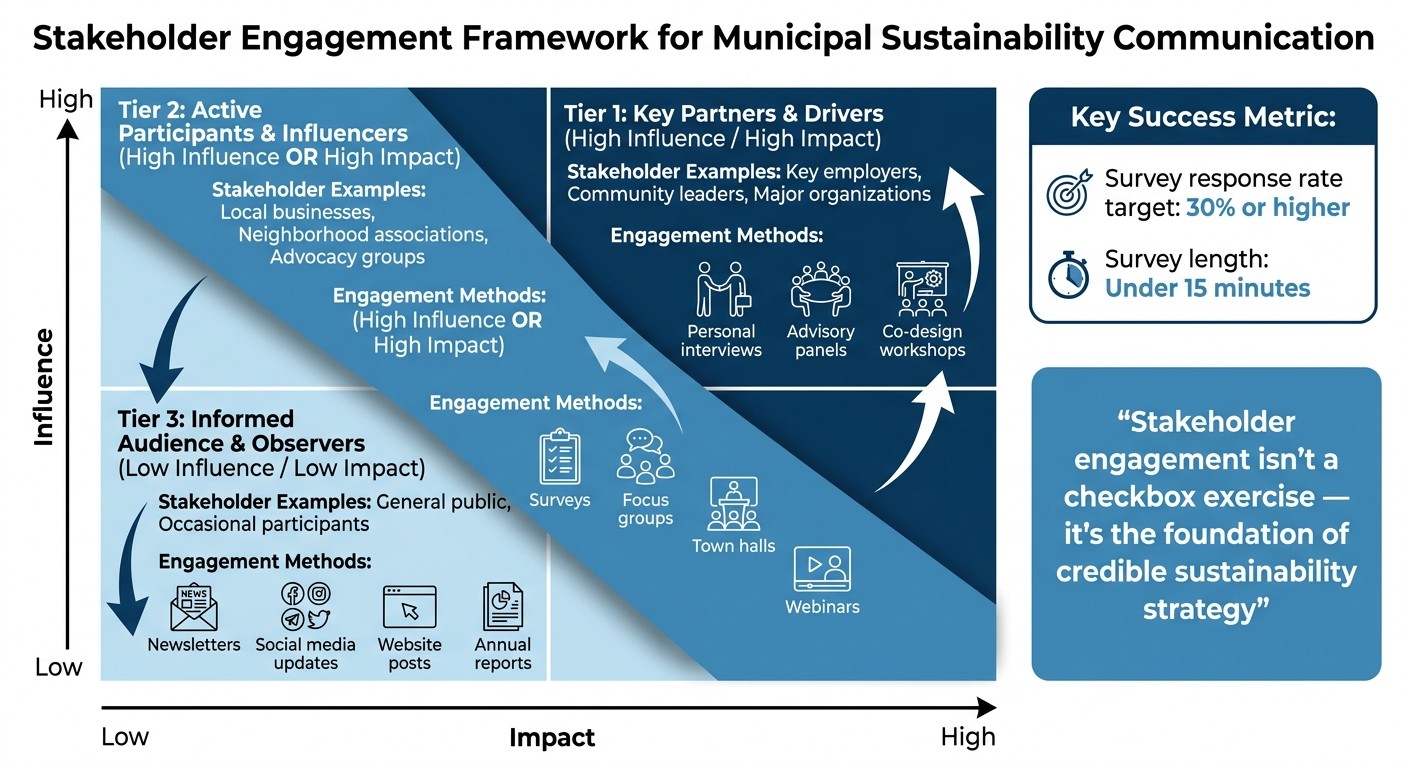
Stakeholder Engagement Methods by Influence and Impact Level
To simplify sustainability messaging effectively, the first step is to understand who you're talking to. Different groups care about different outcomes. For instance, the Denver Energy Challenge found that businesses were drawn to cost savings, while residents were more interested in improving home comfort [2].
Stakeholder mapping is a key starting point. This involves identifying everyone impacted by your sustainability efforts and categorizing them based on their influence and how much your programs affect them. As Council Fire succinctly puts it:
Stakeholder engagement isn't a checkbox exercise - it's the foundation of credible sustainability strategy [3].
A practical tool for this process is a 2x2 matrix, which helps map stakeholders by their influence (ability to shape your strategy) and impact (degree to which they are affected by your initiatives) [3].
This mapping helps determine how to engage each group. High-influence, high-impact stakeholders - like key employers or community leaders - require deeper involvement through personal interviews or advisory panels. Mid-level stakeholders benefit from surveys, focus groups, or town halls, while lower-priority groups can be kept informed via newsletters or social media [3]. A great example comes from February 2026, when Council Fire reported on a coalition that united 35 organizations into a Regional Climate Compact, leading to $280 million in regional investments by aligning diverse priorities [3]. This foundational step ensures your communication strategy resonates with each audience.
Categorize Stakeholders by Roles and Priorities
Stakeholders' motivations are diverse. Research from Yale University divides Americans into six categories regarding climate change: Alarmed, Concerned, Cautious, Disengaged, Doubtful, and Dismissive [2]. Efforts often yield the best results when directed at the "Cautious" and "Disengaged" groups, as they are most likely to adjust their behavior when provided with clear, actionable information [2].
Beyond climate attitudes, think about professional roles and daily concerns. Business stakeholders often focus on economic returns and operational efficiency, while residents care more about everyday issues like air quality, traffic, and utility costs. Elected officials must juggle these perspectives along with political feasibility and voter feedback. Tailoring your message to reflect each group's values is far more effective than a one-size-fits-all approach.
Collect Information Through Surveys and Public Forums
Understanding your audience's starting point is essential for targeted communication. After mapping stakeholders, gather direct feedback about their concerns and knowledge gaps. Sometimes, informal conversations - like quick phone calls or coffee chats - can uncover insights that formal surveys might miss [2].
For wider outreach, use surveys and public forums. Keep surveys concise (under 15 minutes) and aim for a response rate of 30% or more [3]. Before rolling out a full campaign, test your messaging with small focus groups. In Salt Lake City, Utah, stakeholder feedback led to SMS alerts for poor air quality days, ensuring timely and relevant communication for residents [2]. Always share a summary of what you learned and how it shaped your strategy - failing to do so can erode trust and reduce future engagement [3].
Stakeholder Tier | Influence/Impact Level | Engagement Methods |
|---|---|---|
Tier 1 | High Influence / High Impact | Personal interviews, advisory panels, co-design workshops |
Tier 2 | High Influence or High Impact | Surveys, focus groups, town halls, webinars |
Tier 3 | Low Influence / Low Impact | Newsletters, social media updates, website posts, annual reports |
Break Down Technical Concepts
One of the most effective ways to communicate sustainability goals is by cutting out technical jargon. Research suggests this approach can often outperform financial incentives. A great example comes from a field experiment conducted by MIT Sloan Professor Catherine Tucker between June 1 and August 31, 2023. Her team worked with 380,000 households in China, replacing complex CO₂ emission data with relatable comparisons, such as equating emissions to "1,200 miles of reduced driving." The result? Recycling weight per household increased by 2.2%, outperforming the 1.9% boost achieved through monetary rewards [4]. As Professor Tucker puts it:
Prioritize improving comprehension through jargon reduction in the near term, followed by targeted use of incentives or penalties once understanding is established [4].
The takeaway for municipalities is clear: simplifying language is cost-free and often more effective than financial programs. This example highlights the value of clear communication when implementing sustainability initiatives.
Use Plain Language
The key to engaging your audience is using words they already understand. Replace overly technical terms with simpler, more familiar language. For example, instead of saying "greenhouse gases", opt for "vehicle emissions" or "heat-trapping gases", depending on the context. Similarly, terms like "green stormwater infrastructure" can be swapped for locally recognized phrases - such as "environmental site design", a term commonly used by agencies in Maryland [2].
Avoid unnecessary word pairs like "rules and regulations." Stick to one clear term [5]. Keep sentences concise, averaging 15–20 words, and limit paragraphs to around seven lines for better readability [5]. The U.S. EPA emphasizes this approach:
The less you say, the more you are heard [2].
When technical terms are unavoidable, define them immediately within the same sentence. For example: "We're reducing particulate matter, the tiny pollution particles that trigger asthma and heart problems." This keeps readers informed without overwhelming them.
Use Relatable Comparisons
Making technical data relatable helps build a stronger connection with your audience. For instance, the Denver Energy Challenge found that business owners cared most about cost savings, while homeowners prioritized comfort. By emphasizing these tangible benefits instead of abstract environmental metrics, the program saw a significant increase in engagement [2]. Similarly, Salt Lake City used the tagline "Drive Less, Drive Smarter" to address air quality in a way that resonated locally [2].
Translate technical figures into everyday terms. Instead of saying "reducing 500 kilograms of CO₂", explain it as "1,200 fewer miles driven" [4]. Highlight savings in a way people can relate to, such as: "This upgrade typically cuts your electric bill by $45 per month." Frame public transit not just as an eco-friendly choice but as a way to enjoy more time for reading or hobbies during commutes.
As Professor Tucker's research illustrates:
We show that even when presented with accurate carbon emissions, consumers react less strongly to them than something more familiar [4].
Municipalities can use these insights to craft locally relevant messages. Focus on "no-brainer" solutions - actions that are low-cost, low-risk, and deliver immediate benefits. Highlight public health, safety, and the preservation of local landmarks and resources. By making the message personal and tangible, you can shift the focus from abstract global concerns to meaningful local impacts [1].
Use Visuals and Local Examples
Visuals can communicate complex ideas faster and more effectively than text alone. Images and graphics often resonate more deeply than words or numbers [2]. When explaining sustainability initiatives, visual tools like charts and infographics can simplify dense data, making it easier for residents to grasp. The key is to keep the information local and relatable [1]. Let’s look at how visual tools and local examples have successfully enhanced sustainability communication.
Create Infographics and Visual Data
Breaking down complicated budgets or environmental data into easily understandable visuals can help residents see how large-scale initiatives directly impact their lives [7]. For instance, in October 2023, Sunnyvale, California faced the daunting task of explaining a $730 million budget with only two people on its communications team. Jennifer Garnett, the city’s Communication Officer, designed a budget newsletter using simple language and clear graphics to illustrate who benefits from city services. The approach was so effective that residents brought copies of the newsletter to city council meetings, praising its clarity [7].
When it comes to climate data, interactive tools can make abstract threats feel more immediate. Between 2014 and 2016, Tybee Island, Georgia collaborated with Dr. Jason Evans from Georgia Sea Grant to develop a "Sea Level Rise Viewer." This tool illustrated the effects of a three-foot sea level rise on the island. Presented at town hall meetings attended by over 4,000 people, these visuals played a pivotal role in creating Georgia's first sea level rise plan in April 2016. The plan also improved the city’s FEMA Community Rating from class 7 to 5, saving local property owners $3 million in flood insurance costs [6]. As experts point out, "before and after" or "current vs. future" visualizations are especially effective in helping stakeholders explore long-term solutions for infrastructure and housing [6].
Highlight Local Success Stories
Pairing visuals with local success stories can build trust and credibility. Concrete examples from the community help turn abstract ideas into relatable outcomes. For example, between 2016 and 2024, Boise, Idaho reshaped public attitudes toward water recycling by replacing the term "wastewater" with "water renewal" and adopting the tagline "We give new life to used water." Led by Haley Falconer from the Department of Public Works and Kyle Patterson, the city partnered with local brewers to produce beer using purified recycled water. They also wrapped project trailers with graphics carrying simple, impactful messages like "Right water, right use." These efforts culminated in over 80% voter approval for a $570 million bond in 2021 [9]. Mayor Lauren McLean emphasized the importance of connecting with residents:
By keeping the values and experiences that matter most to our residents top of mind, we've transformed a challenging issue into a collective mission that supports sustainable water renewal [9].
Another success story comes from a Mid-Atlantic coastal city of 28,000 residents. Between 2025 and 2026, the city worked with Council Fire to create a resilience plan using GIS mapping. The maps overlaid sea-level rise scenarios with socioeconomic data, pinpointing high-risk neighborhoods. This led to the construction of a 1.2-mile living shoreline with oyster reefs, which reduced wave energy by 40-60% during storms and restored 8 acres of wetland. The visual, data-driven approach helped the city secure $14.7 million in federal and state grants within just 18 months [8]. These tangible benefits made the project’s value undeniable.
Choose the Right Communication Channels
Reaching everyone in your community means using a variety of communication methods. Some people rely on social media for updates, while others prefer face-to-face interactions at town meetings. Studies suggest that messages are most effective when they are simple, repeated frequently, and delivered by trusted sources [2]. The goal is to align your outreach strategy with the ways people already consume information, ensuring your message resonates across different groups.
Improve Digital Platforms
Digital platforms work well for one-way communication, such as sharing updates, raising awareness, or directing people to more detailed resources. To maintain a consistent online presence, consider cross-posting updates on Facebook, Twitter, and LinkedIn. For urgent matters, SMS alerts can be especially effective. For example, Salt Lake City, Utah, uses SMS notifications as part of its "Drive Less, Drive Smarter" program to inform residents about poor air quality days.
Keep in mind that visuals tend to engage audiences better than lengthy reports. Arlington, Texas, demonstrated this by replacing their traditional budget documents with an engaging video presentation. Additionally, partnering with trusted community figures can help amplify your online messages and build credibility.
Connect Through In-Person Events
While digital tools are great for quick updates, in-person events are invaluable for fostering meaningful engagement. Town halls and public meetings provide opportunities for two-way communication, allowing you to gather feedback, address concerns, and strengthen trust. Scheduling these events around key project milestones ensures that community input can influence outcomes.
Instead of relying solely on standalone meetings, consider hosting booths or presentations at existing events like county fairs, farmers markets, or festivals. For instance, the Town of Cary, North Carolina, showcased its "Climate Showcase Fire Station" by organizing public tours, using the building as a practical example of green construction principles. In-person events also help identify influential local messengers - such as faith leaders, neighborhood association heads, or business owners - who can extend your message through their own networks.
Communication Method | Channel Type | Best Use Case |
|---|---|---|
Social Media/Email | Digital (One-way) | Sharing updates and linking to detailed resources |
SMS/Text Alerts | Digital (One-way) | Urgent notifications and time-sensitive information |
Town Halls/Meetings | In-Person (Two-way) | Gathering feedback and fostering in-depth dialogue |
Community Events | In-Person (Two-way) | Reaching diverse groups in familiar, casual settings |
Create Opportunities for Dialogue
Engaging communities effectively in sustainability efforts means creating spaces where residents can voice their thoughts, ask questions, and contribute ideas. This kind of two-way communication not only uncovers the needs of the community but also builds trust over time. When people feel genuinely heard, they are more likely to support initiatives, even when the details are complex. Below are some practical ways to establish and nurture these dialogue channels.
Set Up Feedback Systems
Making it easy for people to provide feedback - and ensuring that feedback has real influence - is key. Engaging stakeholders early, before decisions are finalized, can yield valuable insights. For instance, Denver's Energy Challenge demonstrated this well: project staff reached out directly to participants to understand their motivations for adopting energy-efficient practices. They found that businesses were driven by cost savings, while homeowners prioritized comfort. This input allowed the city to tailor its messaging to address what mattered most to each group [2].
Effective feedback systems should also consider how different audiences prefer to communicate. For those with limited internet access, options like phone hotlines or physical information kiosks may work better than online platforms. Offering multiple channels - such as online polls, comment sections on project websites, and in-person Q&A sessions at community events - can help reach a wider audience. Partnering with trusted local leaders can also enhance the quality and reach of feedback collection efforts. As the US EPA highlights:
In most cases, you will need to use multiple tools to effectively reach all audiences [10].
Once feedback is collected, the next step is to respond openly and transparently to build trust and encourage ongoing participation.
Answer Questions Openly
Openly addressing questions is a natural extension of earlier strategies like simplifying technical concepts and using relatable examples. Honest and timely responses foster credibility. Avoid deflecting questions with technical jargon; instead, answer directly and clearly. If acting on feedback isn’t possible, explain the reasons behind the decision. Transparency often matters more than simply agreeing. The US EPA cautions:
Asking stakeholders for input, then choosing not to act on it may alienate the people you are seeking to engage [2].
Showcasing how public input influenced final decisions reinforces the value of community participation. This "closing the loop" approach demonstrates that residents' voices are heard and respected, encouraging future involvement. Tailor responses to what motivates each questioner: for instance, if a business owner is worried about costs, focus on financial savings; if a homeowner is concerned about health, emphasize improvements in comfort and air quality [2]. Testing responses with focus groups can help ensure they resonate with the intended audience.
Measure Communication Results
Building on the audience insights and feedback systems outlined earlier, measuring the results of your communication efforts is essential for validating and fine-tuning your strategy. Tracking the impact of sustainability messages ensures they are reaching the intended audience and inspiring action. Without clear metrics, it’s nearly impossible to determine effectiveness. Fortunately, tools and methods exist to measure both digital and in-person engagement, from monitoring website activity to evaluating event participation.
Monitor Engagement Data
Start by examining digital engagement metrics. These include website traffic, email click-through rates, and interactions on social media platforms like Facebook, Twitter, and LinkedIn. Beyond the digital realm, track attendance at community events and meetings. Earned media - such as coverage in local newspapers, blogs, or radio segments - provides another window into public interest and message reach.
Behavioral metrics are particularly valuable for gauging real-world impact. For example, monitor actions like sustainability pledges, transit ridership increases, or sign-ups for SMS alerts. Additional indicators, such as YouTube video views or responses to utility bill inserts, can reveal what communication methods resonate most with your audience. As the US EPA advises:
To maximize the effectiveness of both forms of outreach, use simple messages, repeated often over multiple channels, from trusted sources. [2]
These data points act as a foundation for refining your communication strategy over time.
Adjust Based on Feedback
Once you’ve collected data, use it to refine your approach and improve outcomes. Roll out messages in phases, allowing for adjustments based on early audience feedback before committing to a full-scale launch. Testing messages with focus groups or pilot programs can reveal which small changes - such as wording tweaks - might significantly improve reception. For example, the Denver Energy Challenge found that tailoring messages led to better engagement [2].
Pay close attention to patterns in your data. If infographics consistently outperform text-heavy materials in driving interaction, consider reallocating resources toward more visual content. Similarly, if messages that emphasize local health and safety concerns are more effective than those focused on global climate issues, prioritize those themes in future campaigns. Finally, close the feedback loop by showing your audience how their input has shaped your decisions. This not only reinforces the value of public participation but also encourages ongoing engagement.
Work with Experts Like Council Fire
Crafting a sustainability communication strategy that resonates with non-technical audiences requires a distinct set of skills. While your team might excel in technical planning and execution, translating complex data into accessible and relatable messages often calls for outside expertise. Partnering with seasoned consultants can help municipalities bridge this gap, blending effective stakeholder engagement with clear, data-driven communication. This collaboration not only simplifies technical details but also ensures a smooth transition to messages that resonate with the broader community.
Experts like Council Fire specialize in turning intricate technical data into messages grounded in community values. They focus on identifying trusted messengers - often local leaders or organizations more relatable than technical professionals. Tools like the "Global Warming’s Six Americas" framework are employed to analyze how different values influence beliefs, ensuring that messages align with what audiences already care about [1].
In an era where misinformation spreads quickly, professional guidance becomes even more critical. Beyond translating technical jargon, experts anticipate and counteract misconceptions with proactive strategies, helping agencies craft messages that feel genuine while steering clear of greenwashing pitfalls.
Additionally, experts shift the narrative from alarmism to solutions. As ICLEI notes, "Effective climate communication is essential for the successful execution of municipal climate action plans" [1]. Consultants refine audience-specific language to highlight local, immediate benefits - like improved health, safety, and resource protection - rather than focusing solely on abstract global challenges.
Council Fire’s approach integrates systems thinking with actionable communication strategies. By breaking down ambitious sustainability goals into clear, understandable pathways, they help diverse stakeholders rally behind these initiatives. Their expertise transforms technical plans into community-driven action, delivering measurable benefits across environmental, social, and economic dimensions.
Conclusion
Explaining sustainability to non-technical audiences doesn’t mean watering down the message - it’s about making it relatable. The most successful municipal sustainability programs have one thing in common: they connect with their audience's core values, use straightforward language, and emphasize local benefits instead of distant global challenges.
Clear communication starts with understanding what drives your stakeholders. Simplify complex details, use familiar communication channels, and create opportunities for meaningful dialogue. For instance, the City of Arlington, Texas transformed its annual budget presentation by using an accessible video format instead of dense reports. This shift in approach made the information easier for the public to grasp and highlighted how presentation choices can strengthen community understanding [2]. Such efforts lay a solid foundation for trust.
Local voices matter. Studies show that people are far more likely to trust information from familiar sources - community leaders, local groups, and other trusted figures - than from outside experts. Identifying and empowering these local champions is essential for building credibility and ensuring long-term success. Once trust is established, continuous improvement keeps the momentum going.
Track engagement consistently, listen to feedback, and adapt your approach based on measurable outcomes. Whether addressing the "cautious" or "disengaged" groups identified in Yale University's climate communication research or running local campaigns, success depends on staying adaptable and responsive to your community’s unique needs.
FAQs
How do we pick the right message for each stakeholder group?
To craft the right message for each stakeholder group, start by understanding what drives them - their motivations, values, and preferred ways of communicating. Pinpoint their specific interests or concerns, then shape your message to align with what matters most to them. Choose messengers they trust, use straightforward language, and deliver your message through the channels they are most likely to engage with. By aligning your communication approach to their preferences, you strengthen trust and ensure your message connects in a meaningful way.
What’s the easiest way to translate CO2 data into everyday terms?
To make emissions data relatable, link it to everyday activities people understand. For instance, describe CO2 emissions in terms of driving a certain number of miles or the energy needed to power a home for a month. Avoid overly technical jargon and instead highlight metrics that resonate with your audience, such as potential savings or improved health outcomes. Visual tools like charts or infographics can also help present the information in a clear and engaging way.
Which engagement metrics best show if our outreach is working?
Key metrics for measuring engagement include tailoring email and mailing lists based on specific audience segments and messages to gauge the effectiveness of campaigns. Collecting feedback through tools like surveys, forms, or direct conversations with stakeholders provides valuable insight into how well your communication is being received. Testing messages with small pilot groups and analyzing what motivates your audience also offer practical ways to refine your approach. These methods help ensure your messaging connects with the audience and encourages genuine interaction.
Related Blog Posts
Latest Articles
©2025

Narrative Change and Power Building: The Missing Half of Advocacy
Narrative change is the process of disrupting dominant narratives that normalize inequity and advancing new narratives from historically marginalized communities.

Funding Resilience Without Federal Grants
BRIC is unreliable and FEMA is shrinking. Here's how cities fund climate resilience with dedicated revenue, blended finance, and a coordinating authority.

The ESG Blind Spot: How AI Is Finding Risks in Companies Nobody Else Is Watching
Norway's sovereign wealth fund uses AI to screen 7,200 portfolio companies for forced labor and corruption within 24 hours. The real story is the emerging-market coverage gap that traditional ESG data vendors miss — and what it means for any company with a global supply chain.
Narrative Change and Power Building: The Missing Half of Advocacy
Narrative change is the process of disrupting dominant narratives that normalize inequity and advancing new narratives from historically marginalized communities.
Funding Resilience Without Federal Grants
BRIC is unreliable and FEMA is shrinking. Here's how cities fund climate resilience with dedicated revenue, blended finance, and a coordinating authority.
The ESG Blind Spot: How AI Is Finding Risks in Companies Nobody Else Is Watching
Norway's sovereign wealth fund uses AI to screen 7,200 portfolio companies for forced labor and corruption within 24 hours. The real story is the emerging-market coverage gap that traditional ESG data vendors miss — and what it means for any company with a global supply chain.
FAQ
01
What does it really mean to “redefine profit”?
02
What makes Council Fire different?
03
Who does Council Fire work with?
04
What does working with Council Fire actually look like?
05
How does Council Fire help organizations turn big goals into action?
06
How does Council Fire define and measure success?
May 10, 2026
How to Communicate Sustainability to Non-Technical Audiences for Municipalities & Government Agencies
Sustainability Strategy
In This Article
Practical tips for municipalities to explain sustainability: know your audience, use plain language, visuals, trusted channels, and measure impact.
How to Communicate Sustainability to Non-Technical Audiences for Municipalities & Government Agencies
Making sustainability relatable is key to community engagement. Municipalities and government agencies often struggle to explain technical concepts like climate action plans or carbon metrics to non-technical audiences. To bridge this gap, focus on these strategies:
Understand your audience: Identify what matters most to different groups (e.g., cost savings for businesses, health benefits for residents).
Simplify language: Replace jargon with plain terms and relatable comparisons (e.g., "1,200 fewer miles driven" instead of "500 kilograms of CO₂ reduced").
Use visuals and local examples: Infographics and success stories from the community make complex ideas easier to grasp.
Engage through multiple channels: Combine digital tools (like social media) with in-person events (like town halls) to reach diverse groups.
Foster dialogue: Create opportunities for feedback and respond transparently to build trust.
Measure success: Track engagement, adjust messaging, and show how public input shapes decisions.
Communicating Sustainability: 10 Principles to be Effective | Phillip Haid
Know Your Audience
Stakeholder Engagement Methods by Influence and Impact Level
To simplify sustainability messaging effectively, the first step is to understand who you're talking to. Different groups care about different outcomes. For instance, the Denver Energy Challenge found that businesses were drawn to cost savings, while residents were more interested in improving home comfort [2].
Stakeholder mapping is a key starting point. This involves identifying everyone impacted by your sustainability efforts and categorizing them based on their influence and how much your programs affect them. As Council Fire succinctly puts it:
Stakeholder engagement isn't a checkbox exercise - it's the foundation of credible sustainability strategy [3].
A practical tool for this process is a 2x2 matrix, which helps map stakeholders by their influence (ability to shape your strategy) and impact (degree to which they are affected by your initiatives) [3].
This mapping helps determine how to engage each group. High-influence, high-impact stakeholders - like key employers or community leaders - require deeper involvement through personal interviews or advisory panels. Mid-level stakeholders benefit from surveys, focus groups, or town halls, while lower-priority groups can be kept informed via newsletters or social media [3]. A great example comes from February 2026, when Council Fire reported on a coalition that united 35 organizations into a Regional Climate Compact, leading to $280 million in regional investments by aligning diverse priorities [3]. This foundational step ensures your communication strategy resonates with each audience.
Categorize Stakeholders by Roles and Priorities
Stakeholders' motivations are diverse. Research from Yale University divides Americans into six categories regarding climate change: Alarmed, Concerned, Cautious, Disengaged, Doubtful, and Dismissive [2]. Efforts often yield the best results when directed at the "Cautious" and "Disengaged" groups, as they are most likely to adjust their behavior when provided with clear, actionable information [2].
Beyond climate attitudes, think about professional roles and daily concerns. Business stakeholders often focus on economic returns and operational efficiency, while residents care more about everyday issues like air quality, traffic, and utility costs. Elected officials must juggle these perspectives along with political feasibility and voter feedback. Tailoring your message to reflect each group's values is far more effective than a one-size-fits-all approach.
Collect Information Through Surveys and Public Forums
Understanding your audience's starting point is essential for targeted communication. After mapping stakeholders, gather direct feedback about their concerns and knowledge gaps. Sometimes, informal conversations - like quick phone calls or coffee chats - can uncover insights that formal surveys might miss [2].
For wider outreach, use surveys and public forums. Keep surveys concise (under 15 minutes) and aim for a response rate of 30% or more [3]. Before rolling out a full campaign, test your messaging with small focus groups. In Salt Lake City, Utah, stakeholder feedback led to SMS alerts for poor air quality days, ensuring timely and relevant communication for residents [2]. Always share a summary of what you learned and how it shaped your strategy - failing to do so can erode trust and reduce future engagement [3].
Stakeholder Tier | Influence/Impact Level | Engagement Methods |
|---|---|---|
Tier 1 | High Influence / High Impact | Personal interviews, advisory panels, co-design workshops |
Tier 2 | High Influence or High Impact | Surveys, focus groups, town halls, webinars |
Tier 3 | Low Influence / Low Impact | Newsletters, social media updates, website posts, annual reports |
Break Down Technical Concepts
One of the most effective ways to communicate sustainability goals is by cutting out technical jargon. Research suggests this approach can often outperform financial incentives. A great example comes from a field experiment conducted by MIT Sloan Professor Catherine Tucker between June 1 and August 31, 2023. Her team worked with 380,000 households in China, replacing complex CO₂ emission data with relatable comparisons, such as equating emissions to "1,200 miles of reduced driving." The result? Recycling weight per household increased by 2.2%, outperforming the 1.9% boost achieved through monetary rewards [4]. As Professor Tucker puts it:
Prioritize improving comprehension through jargon reduction in the near term, followed by targeted use of incentives or penalties once understanding is established [4].
The takeaway for municipalities is clear: simplifying language is cost-free and often more effective than financial programs. This example highlights the value of clear communication when implementing sustainability initiatives.
Use Plain Language
The key to engaging your audience is using words they already understand. Replace overly technical terms with simpler, more familiar language. For example, instead of saying "greenhouse gases", opt for "vehicle emissions" or "heat-trapping gases", depending on the context. Similarly, terms like "green stormwater infrastructure" can be swapped for locally recognized phrases - such as "environmental site design", a term commonly used by agencies in Maryland [2].
Avoid unnecessary word pairs like "rules and regulations." Stick to one clear term [5]. Keep sentences concise, averaging 15–20 words, and limit paragraphs to around seven lines for better readability [5]. The U.S. EPA emphasizes this approach:
The less you say, the more you are heard [2].
When technical terms are unavoidable, define them immediately within the same sentence. For example: "We're reducing particulate matter, the tiny pollution particles that trigger asthma and heart problems." This keeps readers informed without overwhelming them.
Use Relatable Comparisons
Making technical data relatable helps build a stronger connection with your audience. For instance, the Denver Energy Challenge found that business owners cared most about cost savings, while homeowners prioritized comfort. By emphasizing these tangible benefits instead of abstract environmental metrics, the program saw a significant increase in engagement [2]. Similarly, Salt Lake City used the tagline "Drive Less, Drive Smarter" to address air quality in a way that resonated locally [2].
Translate technical figures into everyday terms. Instead of saying "reducing 500 kilograms of CO₂", explain it as "1,200 fewer miles driven" [4]. Highlight savings in a way people can relate to, such as: "This upgrade typically cuts your electric bill by $45 per month." Frame public transit not just as an eco-friendly choice but as a way to enjoy more time for reading or hobbies during commutes.
As Professor Tucker's research illustrates:
We show that even when presented with accurate carbon emissions, consumers react less strongly to them than something more familiar [4].
Municipalities can use these insights to craft locally relevant messages. Focus on "no-brainer" solutions - actions that are low-cost, low-risk, and deliver immediate benefits. Highlight public health, safety, and the preservation of local landmarks and resources. By making the message personal and tangible, you can shift the focus from abstract global concerns to meaningful local impacts [1].
Use Visuals and Local Examples
Visuals can communicate complex ideas faster and more effectively than text alone. Images and graphics often resonate more deeply than words or numbers [2]. When explaining sustainability initiatives, visual tools like charts and infographics can simplify dense data, making it easier for residents to grasp. The key is to keep the information local and relatable [1]. Let’s look at how visual tools and local examples have successfully enhanced sustainability communication.
Create Infographics and Visual Data
Breaking down complicated budgets or environmental data into easily understandable visuals can help residents see how large-scale initiatives directly impact their lives [7]. For instance, in October 2023, Sunnyvale, California faced the daunting task of explaining a $730 million budget with only two people on its communications team. Jennifer Garnett, the city’s Communication Officer, designed a budget newsletter using simple language and clear graphics to illustrate who benefits from city services. The approach was so effective that residents brought copies of the newsletter to city council meetings, praising its clarity [7].
When it comes to climate data, interactive tools can make abstract threats feel more immediate. Between 2014 and 2016, Tybee Island, Georgia collaborated with Dr. Jason Evans from Georgia Sea Grant to develop a "Sea Level Rise Viewer." This tool illustrated the effects of a three-foot sea level rise on the island. Presented at town hall meetings attended by over 4,000 people, these visuals played a pivotal role in creating Georgia's first sea level rise plan in April 2016. The plan also improved the city’s FEMA Community Rating from class 7 to 5, saving local property owners $3 million in flood insurance costs [6]. As experts point out, "before and after" or "current vs. future" visualizations are especially effective in helping stakeholders explore long-term solutions for infrastructure and housing [6].
Highlight Local Success Stories
Pairing visuals with local success stories can build trust and credibility. Concrete examples from the community help turn abstract ideas into relatable outcomes. For example, between 2016 and 2024, Boise, Idaho reshaped public attitudes toward water recycling by replacing the term "wastewater" with "water renewal" and adopting the tagline "We give new life to used water." Led by Haley Falconer from the Department of Public Works and Kyle Patterson, the city partnered with local brewers to produce beer using purified recycled water. They also wrapped project trailers with graphics carrying simple, impactful messages like "Right water, right use." These efforts culminated in over 80% voter approval for a $570 million bond in 2021 [9]. Mayor Lauren McLean emphasized the importance of connecting with residents:
By keeping the values and experiences that matter most to our residents top of mind, we've transformed a challenging issue into a collective mission that supports sustainable water renewal [9].
Another success story comes from a Mid-Atlantic coastal city of 28,000 residents. Between 2025 and 2026, the city worked with Council Fire to create a resilience plan using GIS mapping. The maps overlaid sea-level rise scenarios with socioeconomic data, pinpointing high-risk neighborhoods. This led to the construction of a 1.2-mile living shoreline with oyster reefs, which reduced wave energy by 40-60% during storms and restored 8 acres of wetland. The visual, data-driven approach helped the city secure $14.7 million in federal and state grants within just 18 months [8]. These tangible benefits made the project’s value undeniable.
Choose the Right Communication Channels
Reaching everyone in your community means using a variety of communication methods. Some people rely on social media for updates, while others prefer face-to-face interactions at town meetings. Studies suggest that messages are most effective when they are simple, repeated frequently, and delivered by trusted sources [2]. The goal is to align your outreach strategy with the ways people already consume information, ensuring your message resonates across different groups.
Improve Digital Platforms
Digital platforms work well for one-way communication, such as sharing updates, raising awareness, or directing people to more detailed resources. To maintain a consistent online presence, consider cross-posting updates on Facebook, Twitter, and LinkedIn. For urgent matters, SMS alerts can be especially effective. For example, Salt Lake City, Utah, uses SMS notifications as part of its "Drive Less, Drive Smarter" program to inform residents about poor air quality days.
Keep in mind that visuals tend to engage audiences better than lengthy reports. Arlington, Texas, demonstrated this by replacing their traditional budget documents with an engaging video presentation. Additionally, partnering with trusted community figures can help amplify your online messages and build credibility.
Connect Through In-Person Events
While digital tools are great for quick updates, in-person events are invaluable for fostering meaningful engagement. Town halls and public meetings provide opportunities for two-way communication, allowing you to gather feedback, address concerns, and strengthen trust. Scheduling these events around key project milestones ensures that community input can influence outcomes.
Instead of relying solely on standalone meetings, consider hosting booths or presentations at existing events like county fairs, farmers markets, or festivals. For instance, the Town of Cary, North Carolina, showcased its "Climate Showcase Fire Station" by organizing public tours, using the building as a practical example of green construction principles. In-person events also help identify influential local messengers - such as faith leaders, neighborhood association heads, or business owners - who can extend your message through their own networks.
Communication Method | Channel Type | Best Use Case |
|---|---|---|
Social Media/Email | Digital (One-way) | Sharing updates and linking to detailed resources |
SMS/Text Alerts | Digital (One-way) | Urgent notifications and time-sensitive information |
Town Halls/Meetings | In-Person (Two-way) | Gathering feedback and fostering in-depth dialogue |
Community Events | In-Person (Two-way) | Reaching diverse groups in familiar, casual settings |
Create Opportunities for Dialogue
Engaging communities effectively in sustainability efforts means creating spaces where residents can voice their thoughts, ask questions, and contribute ideas. This kind of two-way communication not only uncovers the needs of the community but also builds trust over time. When people feel genuinely heard, they are more likely to support initiatives, even when the details are complex. Below are some practical ways to establish and nurture these dialogue channels.
Set Up Feedback Systems
Making it easy for people to provide feedback - and ensuring that feedback has real influence - is key. Engaging stakeholders early, before decisions are finalized, can yield valuable insights. For instance, Denver's Energy Challenge demonstrated this well: project staff reached out directly to participants to understand their motivations for adopting energy-efficient practices. They found that businesses were driven by cost savings, while homeowners prioritized comfort. This input allowed the city to tailor its messaging to address what mattered most to each group [2].
Effective feedback systems should also consider how different audiences prefer to communicate. For those with limited internet access, options like phone hotlines or physical information kiosks may work better than online platforms. Offering multiple channels - such as online polls, comment sections on project websites, and in-person Q&A sessions at community events - can help reach a wider audience. Partnering with trusted local leaders can also enhance the quality and reach of feedback collection efforts. As the US EPA highlights:
In most cases, you will need to use multiple tools to effectively reach all audiences [10].
Once feedback is collected, the next step is to respond openly and transparently to build trust and encourage ongoing participation.
Answer Questions Openly
Openly addressing questions is a natural extension of earlier strategies like simplifying technical concepts and using relatable examples. Honest and timely responses foster credibility. Avoid deflecting questions with technical jargon; instead, answer directly and clearly. If acting on feedback isn’t possible, explain the reasons behind the decision. Transparency often matters more than simply agreeing. The US EPA cautions:
Asking stakeholders for input, then choosing not to act on it may alienate the people you are seeking to engage [2].
Showcasing how public input influenced final decisions reinforces the value of community participation. This "closing the loop" approach demonstrates that residents' voices are heard and respected, encouraging future involvement. Tailor responses to what motivates each questioner: for instance, if a business owner is worried about costs, focus on financial savings; if a homeowner is concerned about health, emphasize improvements in comfort and air quality [2]. Testing responses with focus groups can help ensure they resonate with the intended audience.
Measure Communication Results
Building on the audience insights and feedback systems outlined earlier, measuring the results of your communication efforts is essential for validating and fine-tuning your strategy. Tracking the impact of sustainability messages ensures they are reaching the intended audience and inspiring action. Without clear metrics, it’s nearly impossible to determine effectiveness. Fortunately, tools and methods exist to measure both digital and in-person engagement, from monitoring website activity to evaluating event participation.
Monitor Engagement Data
Start by examining digital engagement metrics. These include website traffic, email click-through rates, and interactions on social media platforms like Facebook, Twitter, and LinkedIn. Beyond the digital realm, track attendance at community events and meetings. Earned media - such as coverage in local newspapers, blogs, or radio segments - provides another window into public interest and message reach.
Behavioral metrics are particularly valuable for gauging real-world impact. For example, monitor actions like sustainability pledges, transit ridership increases, or sign-ups for SMS alerts. Additional indicators, such as YouTube video views or responses to utility bill inserts, can reveal what communication methods resonate most with your audience. As the US EPA advises:
To maximize the effectiveness of both forms of outreach, use simple messages, repeated often over multiple channels, from trusted sources. [2]
These data points act as a foundation for refining your communication strategy over time.
Adjust Based on Feedback
Once you’ve collected data, use it to refine your approach and improve outcomes. Roll out messages in phases, allowing for adjustments based on early audience feedback before committing to a full-scale launch. Testing messages with focus groups or pilot programs can reveal which small changes - such as wording tweaks - might significantly improve reception. For example, the Denver Energy Challenge found that tailoring messages led to better engagement [2].
Pay close attention to patterns in your data. If infographics consistently outperform text-heavy materials in driving interaction, consider reallocating resources toward more visual content. Similarly, if messages that emphasize local health and safety concerns are more effective than those focused on global climate issues, prioritize those themes in future campaigns. Finally, close the feedback loop by showing your audience how their input has shaped your decisions. This not only reinforces the value of public participation but also encourages ongoing engagement.
Work with Experts Like Council Fire
Crafting a sustainability communication strategy that resonates with non-technical audiences requires a distinct set of skills. While your team might excel in technical planning and execution, translating complex data into accessible and relatable messages often calls for outside expertise. Partnering with seasoned consultants can help municipalities bridge this gap, blending effective stakeholder engagement with clear, data-driven communication. This collaboration not only simplifies technical details but also ensures a smooth transition to messages that resonate with the broader community.
Experts like Council Fire specialize in turning intricate technical data into messages grounded in community values. They focus on identifying trusted messengers - often local leaders or organizations more relatable than technical professionals. Tools like the "Global Warming’s Six Americas" framework are employed to analyze how different values influence beliefs, ensuring that messages align with what audiences already care about [1].
In an era where misinformation spreads quickly, professional guidance becomes even more critical. Beyond translating technical jargon, experts anticipate and counteract misconceptions with proactive strategies, helping agencies craft messages that feel genuine while steering clear of greenwashing pitfalls.
Additionally, experts shift the narrative from alarmism to solutions. As ICLEI notes, "Effective climate communication is essential for the successful execution of municipal climate action plans" [1]. Consultants refine audience-specific language to highlight local, immediate benefits - like improved health, safety, and resource protection - rather than focusing solely on abstract global challenges.
Council Fire’s approach integrates systems thinking with actionable communication strategies. By breaking down ambitious sustainability goals into clear, understandable pathways, they help diverse stakeholders rally behind these initiatives. Their expertise transforms technical plans into community-driven action, delivering measurable benefits across environmental, social, and economic dimensions.
Conclusion
Explaining sustainability to non-technical audiences doesn’t mean watering down the message - it’s about making it relatable. The most successful municipal sustainability programs have one thing in common: they connect with their audience's core values, use straightforward language, and emphasize local benefits instead of distant global challenges.
Clear communication starts with understanding what drives your stakeholders. Simplify complex details, use familiar communication channels, and create opportunities for meaningful dialogue. For instance, the City of Arlington, Texas transformed its annual budget presentation by using an accessible video format instead of dense reports. This shift in approach made the information easier for the public to grasp and highlighted how presentation choices can strengthen community understanding [2]. Such efforts lay a solid foundation for trust.
Local voices matter. Studies show that people are far more likely to trust information from familiar sources - community leaders, local groups, and other trusted figures - than from outside experts. Identifying and empowering these local champions is essential for building credibility and ensuring long-term success. Once trust is established, continuous improvement keeps the momentum going.
Track engagement consistently, listen to feedback, and adapt your approach based on measurable outcomes. Whether addressing the "cautious" or "disengaged" groups identified in Yale University's climate communication research or running local campaigns, success depends on staying adaptable and responsive to your community’s unique needs.
FAQs
How do we pick the right message for each stakeholder group?
To craft the right message for each stakeholder group, start by understanding what drives them - their motivations, values, and preferred ways of communicating. Pinpoint their specific interests or concerns, then shape your message to align with what matters most to them. Choose messengers they trust, use straightforward language, and deliver your message through the channels they are most likely to engage with. By aligning your communication approach to their preferences, you strengthen trust and ensure your message connects in a meaningful way.
What’s the easiest way to translate CO2 data into everyday terms?
To make emissions data relatable, link it to everyday activities people understand. For instance, describe CO2 emissions in terms of driving a certain number of miles or the energy needed to power a home for a month. Avoid overly technical jargon and instead highlight metrics that resonate with your audience, such as potential savings or improved health outcomes. Visual tools like charts or infographics can also help present the information in a clear and engaging way.
Which engagement metrics best show if our outreach is working?
Key metrics for measuring engagement include tailoring email and mailing lists based on specific audience segments and messages to gauge the effectiveness of campaigns. Collecting feedback through tools like surveys, forms, or direct conversations with stakeholders provides valuable insight into how well your communication is being received. Testing messages with small pilot groups and analyzing what motivates your audience also offer practical ways to refine your approach. These methods help ensure your messaging connects with the audience and encourages genuine interaction.
Related Blog Posts
Latest Articles
©2025
Narrative Change and Power Building: The Missing Half of Advocacy
Narrative change is the process of disrupting dominant narratives that normalize inequity and advancing new narratives from historically marginalized communities.
Funding Resilience Without Federal Grants
BRIC is unreliable and FEMA is shrinking. Here's how cities fund climate resilience with dedicated revenue, blended finance, and a coordinating authority.
The ESG Blind Spot: How AI Is Finding Risks in Companies Nobody Else Is Watching
Norway's sovereign wealth fund uses AI to screen 7,200 portfolio companies for forced labor and corruption within 24 hours. The real story is the emerging-market coverage gap that traditional ESG data vendors miss — and what it means for any company with a global supply chain.
FAQ
01
What does it really mean to “redefine profit”?
02
What makes Council Fire different?
03
Who does Council Fire work with?
04
What does working with Council Fire actually look like?
05
How does Council Fire help organizations turn big goals into action?
06
How does Council Fire define and measure success?
May 10, 2026
How to Communicate Sustainability to Non-Technical Audiences for Municipalities & Government Agencies
Sustainability Strategy
In This Article
Practical tips for municipalities to explain sustainability: know your audience, use plain language, visuals, trusted channels, and measure impact.
How to Communicate Sustainability to Non-Technical Audiences for Municipalities & Government Agencies
Making sustainability relatable is key to community engagement. Municipalities and government agencies often struggle to explain technical concepts like climate action plans or carbon metrics to non-technical audiences. To bridge this gap, focus on these strategies:
Understand your audience: Identify what matters most to different groups (e.g., cost savings for businesses, health benefits for residents).
Simplify language: Replace jargon with plain terms and relatable comparisons (e.g., "1,200 fewer miles driven" instead of "500 kilograms of CO₂ reduced").
Use visuals and local examples: Infographics and success stories from the community make complex ideas easier to grasp.
Engage through multiple channels: Combine digital tools (like social media) with in-person events (like town halls) to reach diverse groups.
Foster dialogue: Create opportunities for feedback and respond transparently to build trust.
Measure success: Track engagement, adjust messaging, and show how public input shapes decisions.
Communicating Sustainability: 10 Principles to be Effective | Phillip Haid
Know Your Audience
Stakeholder Engagement Methods by Influence and Impact Level
To simplify sustainability messaging effectively, the first step is to understand who you're talking to. Different groups care about different outcomes. For instance, the Denver Energy Challenge found that businesses were drawn to cost savings, while residents were more interested in improving home comfort [2].
Stakeholder mapping is a key starting point. This involves identifying everyone impacted by your sustainability efforts and categorizing them based on their influence and how much your programs affect them. As Council Fire succinctly puts it:
Stakeholder engagement isn't a checkbox exercise - it's the foundation of credible sustainability strategy [3].
A practical tool for this process is a 2x2 matrix, which helps map stakeholders by their influence (ability to shape your strategy) and impact (degree to which they are affected by your initiatives) [3].
This mapping helps determine how to engage each group. High-influence, high-impact stakeholders - like key employers or community leaders - require deeper involvement through personal interviews or advisory panels. Mid-level stakeholders benefit from surveys, focus groups, or town halls, while lower-priority groups can be kept informed via newsletters or social media [3]. A great example comes from February 2026, when Council Fire reported on a coalition that united 35 organizations into a Regional Climate Compact, leading to $280 million in regional investments by aligning diverse priorities [3]. This foundational step ensures your communication strategy resonates with each audience.
Categorize Stakeholders by Roles and Priorities
Stakeholders' motivations are diverse. Research from Yale University divides Americans into six categories regarding climate change: Alarmed, Concerned, Cautious, Disengaged, Doubtful, and Dismissive [2]. Efforts often yield the best results when directed at the "Cautious" and "Disengaged" groups, as they are most likely to adjust their behavior when provided with clear, actionable information [2].
Beyond climate attitudes, think about professional roles and daily concerns. Business stakeholders often focus on economic returns and operational efficiency, while residents care more about everyday issues like air quality, traffic, and utility costs. Elected officials must juggle these perspectives along with political feasibility and voter feedback. Tailoring your message to reflect each group's values is far more effective than a one-size-fits-all approach.
Collect Information Through Surveys and Public Forums
Understanding your audience's starting point is essential for targeted communication. After mapping stakeholders, gather direct feedback about their concerns and knowledge gaps. Sometimes, informal conversations - like quick phone calls or coffee chats - can uncover insights that formal surveys might miss [2].
For wider outreach, use surveys and public forums. Keep surveys concise (under 15 minutes) and aim for a response rate of 30% or more [3]. Before rolling out a full campaign, test your messaging with small focus groups. In Salt Lake City, Utah, stakeholder feedback led to SMS alerts for poor air quality days, ensuring timely and relevant communication for residents [2]. Always share a summary of what you learned and how it shaped your strategy - failing to do so can erode trust and reduce future engagement [3].
Stakeholder Tier | Influence/Impact Level | Engagement Methods |
|---|---|---|
Tier 1 | High Influence / High Impact | Personal interviews, advisory panels, co-design workshops |
Tier 2 | High Influence or High Impact | Surveys, focus groups, town halls, webinars |
Tier 3 | Low Influence / Low Impact | Newsletters, social media updates, website posts, annual reports |
Break Down Technical Concepts
One of the most effective ways to communicate sustainability goals is by cutting out technical jargon. Research suggests this approach can often outperform financial incentives. A great example comes from a field experiment conducted by MIT Sloan Professor Catherine Tucker between June 1 and August 31, 2023. Her team worked with 380,000 households in China, replacing complex CO₂ emission data with relatable comparisons, such as equating emissions to "1,200 miles of reduced driving." The result? Recycling weight per household increased by 2.2%, outperforming the 1.9% boost achieved through monetary rewards [4]. As Professor Tucker puts it:
Prioritize improving comprehension through jargon reduction in the near term, followed by targeted use of incentives or penalties once understanding is established [4].
The takeaway for municipalities is clear: simplifying language is cost-free and often more effective than financial programs. This example highlights the value of clear communication when implementing sustainability initiatives.
Use Plain Language
The key to engaging your audience is using words they already understand. Replace overly technical terms with simpler, more familiar language. For example, instead of saying "greenhouse gases", opt for "vehicle emissions" or "heat-trapping gases", depending on the context. Similarly, terms like "green stormwater infrastructure" can be swapped for locally recognized phrases - such as "environmental site design", a term commonly used by agencies in Maryland [2].
Avoid unnecessary word pairs like "rules and regulations." Stick to one clear term [5]. Keep sentences concise, averaging 15–20 words, and limit paragraphs to around seven lines for better readability [5]. The U.S. EPA emphasizes this approach:
The less you say, the more you are heard [2].
When technical terms are unavoidable, define them immediately within the same sentence. For example: "We're reducing particulate matter, the tiny pollution particles that trigger asthma and heart problems." This keeps readers informed without overwhelming them.
Use Relatable Comparisons
Making technical data relatable helps build a stronger connection with your audience. For instance, the Denver Energy Challenge found that business owners cared most about cost savings, while homeowners prioritized comfort. By emphasizing these tangible benefits instead of abstract environmental metrics, the program saw a significant increase in engagement [2]. Similarly, Salt Lake City used the tagline "Drive Less, Drive Smarter" to address air quality in a way that resonated locally [2].
Translate technical figures into everyday terms. Instead of saying "reducing 500 kilograms of CO₂", explain it as "1,200 fewer miles driven" [4]. Highlight savings in a way people can relate to, such as: "This upgrade typically cuts your electric bill by $45 per month." Frame public transit not just as an eco-friendly choice but as a way to enjoy more time for reading or hobbies during commutes.
As Professor Tucker's research illustrates:
We show that even when presented with accurate carbon emissions, consumers react less strongly to them than something more familiar [4].
Municipalities can use these insights to craft locally relevant messages. Focus on "no-brainer" solutions - actions that are low-cost, low-risk, and deliver immediate benefits. Highlight public health, safety, and the preservation of local landmarks and resources. By making the message personal and tangible, you can shift the focus from abstract global concerns to meaningful local impacts [1].
Use Visuals and Local Examples
Visuals can communicate complex ideas faster and more effectively than text alone. Images and graphics often resonate more deeply than words or numbers [2]. When explaining sustainability initiatives, visual tools like charts and infographics can simplify dense data, making it easier for residents to grasp. The key is to keep the information local and relatable [1]. Let’s look at how visual tools and local examples have successfully enhanced sustainability communication.
Create Infographics and Visual Data
Breaking down complicated budgets or environmental data into easily understandable visuals can help residents see how large-scale initiatives directly impact their lives [7]. For instance, in October 2023, Sunnyvale, California faced the daunting task of explaining a $730 million budget with only two people on its communications team. Jennifer Garnett, the city’s Communication Officer, designed a budget newsletter using simple language and clear graphics to illustrate who benefits from city services. The approach was so effective that residents brought copies of the newsletter to city council meetings, praising its clarity [7].
When it comes to climate data, interactive tools can make abstract threats feel more immediate. Between 2014 and 2016, Tybee Island, Georgia collaborated with Dr. Jason Evans from Georgia Sea Grant to develop a "Sea Level Rise Viewer." This tool illustrated the effects of a three-foot sea level rise on the island. Presented at town hall meetings attended by over 4,000 people, these visuals played a pivotal role in creating Georgia's first sea level rise plan in April 2016. The plan also improved the city’s FEMA Community Rating from class 7 to 5, saving local property owners $3 million in flood insurance costs [6]. As experts point out, "before and after" or "current vs. future" visualizations are especially effective in helping stakeholders explore long-term solutions for infrastructure and housing [6].
Highlight Local Success Stories
Pairing visuals with local success stories can build trust and credibility. Concrete examples from the community help turn abstract ideas into relatable outcomes. For example, between 2016 and 2024, Boise, Idaho reshaped public attitudes toward water recycling by replacing the term "wastewater" with "water renewal" and adopting the tagline "We give new life to used water." Led by Haley Falconer from the Department of Public Works and Kyle Patterson, the city partnered with local brewers to produce beer using purified recycled water. They also wrapped project trailers with graphics carrying simple, impactful messages like "Right water, right use." These efforts culminated in over 80% voter approval for a $570 million bond in 2021 [9]. Mayor Lauren McLean emphasized the importance of connecting with residents:
By keeping the values and experiences that matter most to our residents top of mind, we've transformed a challenging issue into a collective mission that supports sustainable water renewal [9].
Another success story comes from a Mid-Atlantic coastal city of 28,000 residents. Between 2025 and 2026, the city worked with Council Fire to create a resilience plan using GIS mapping. The maps overlaid sea-level rise scenarios with socioeconomic data, pinpointing high-risk neighborhoods. This led to the construction of a 1.2-mile living shoreline with oyster reefs, which reduced wave energy by 40-60% during storms and restored 8 acres of wetland. The visual, data-driven approach helped the city secure $14.7 million in federal and state grants within just 18 months [8]. These tangible benefits made the project’s value undeniable.
Choose the Right Communication Channels
Reaching everyone in your community means using a variety of communication methods. Some people rely on social media for updates, while others prefer face-to-face interactions at town meetings. Studies suggest that messages are most effective when they are simple, repeated frequently, and delivered by trusted sources [2]. The goal is to align your outreach strategy with the ways people already consume information, ensuring your message resonates across different groups.
Improve Digital Platforms
Digital platforms work well for one-way communication, such as sharing updates, raising awareness, or directing people to more detailed resources. To maintain a consistent online presence, consider cross-posting updates on Facebook, Twitter, and LinkedIn. For urgent matters, SMS alerts can be especially effective. For example, Salt Lake City, Utah, uses SMS notifications as part of its "Drive Less, Drive Smarter" program to inform residents about poor air quality days.
Keep in mind that visuals tend to engage audiences better than lengthy reports. Arlington, Texas, demonstrated this by replacing their traditional budget documents with an engaging video presentation. Additionally, partnering with trusted community figures can help amplify your online messages and build credibility.
Connect Through In-Person Events
While digital tools are great for quick updates, in-person events are invaluable for fostering meaningful engagement. Town halls and public meetings provide opportunities for two-way communication, allowing you to gather feedback, address concerns, and strengthen trust. Scheduling these events around key project milestones ensures that community input can influence outcomes.
Instead of relying solely on standalone meetings, consider hosting booths or presentations at existing events like county fairs, farmers markets, or festivals. For instance, the Town of Cary, North Carolina, showcased its "Climate Showcase Fire Station" by organizing public tours, using the building as a practical example of green construction principles. In-person events also help identify influential local messengers - such as faith leaders, neighborhood association heads, or business owners - who can extend your message through their own networks.
Communication Method | Channel Type | Best Use Case |
|---|---|---|
Social Media/Email | Digital (One-way) | Sharing updates and linking to detailed resources |
SMS/Text Alerts | Digital (One-way) | Urgent notifications and time-sensitive information |
Town Halls/Meetings | In-Person (Two-way) | Gathering feedback and fostering in-depth dialogue |
Community Events | In-Person (Two-way) | Reaching diverse groups in familiar, casual settings |
Create Opportunities for Dialogue
Engaging communities effectively in sustainability efforts means creating spaces where residents can voice their thoughts, ask questions, and contribute ideas. This kind of two-way communication not only uncovers the needs of the community but also builds trust over time. When people feel genuinely heard, they are more likely to support initiatives, even when the details are complex. Below are some practical ways to establish and nurture these dialogue channels.
Set Up Feedback Systems
Making it easy for people to provide feedback - and ensuring that feedback has real influence - is key. Engaging stakeholders early, before decisions are finalized, can yield valuable insights. For instance, Denver's Energy Challenge demonstrated this well: project staff reached out directly to participants to understand their motivations for adopting energy-efficient practices. They found that businesses were driven by cost savings, while homeowners prioritized comfort. This input allowed the city to tailor its messaging to address what mattered most to each group [2].
Effective feedback systems should also consider how different audiences prefer to communicate. For those with limited internet access, options like phone hotlines or physical information kiosks may work better than online platforms. Offering multiple channels - such as online polls, comment sections on project websites, and in-person Q&A sessions at community events - can help reach a wider audience. Partnering with trusted local leaders can also enhance the quality and reach of feedback collection efforts. As the US EPA highlights:
In most cases, you will need to use multiple tools to effectively reach all audiences [10].
Once feedback is collected, the next step is to respond openly and transparently to build trust and encourage ongoing participation.
Answer Questions Openly
Openly addressing questions is a natural extension of earlier strategies like simplifying technical concepts and using relatable examples. Honest and timely responses foster credibility. Avoid deflecting questions with technical jargon; instead, answer directly and clearly. If acting on feedback isn’t possible, explain the reasons behind the decision. Transparency often matters more than simply agreeing. The US EPA cautions:
Asking stakeholders for input, then choosing not to act on it may alienate the people you are seeking to engage [2].
Showcasing how public input influenced final decisions reinforces the value of community participation. This "closing the loop" approach demonstrates that residents' voices are heard and respected, encouraging future involvement. Tailor responses to what motivates each questioner: for instance, if a business owner is worried about costs, focus on financial savings; if a homeowner is concerned about health, emphasize improvements in comfort and air quality [2]. Testing responses with focus groups can help ensure they resonate with the intended audience.
Measure Communication Results
Building on the audience insights and feedback systems outlined earlier, measuring the results of your communication efforts is essential for validating and fine-tuning your strategy. Tracking the impact of sustainability messages ensures they are reaching the intended audience and inspiring action. Without clear metrics, it’s nearly impossible to determine effectiveness. Fortunately, tools and methods exist to measure both digital and in-person engagement, from monitoring website activity to evaluating event participation.
Monitor Engagement Data
Start by examining digital engagement metrics. These include website traffic, email click-through rates, and interactions on social media platforms like Facebook, Twitter, and LinkedIn. Beyond the digital realm, track attendance at community events and meetings. Earned media - such as coverage in local newspapers, blogs, or radio segments - provides another window into public interest and message reach.
Behavioral metrics are particularly valuable for gauging real-world impact. For example, monitor actions like sustainability pledges, transit ridership increases, or sign-ups for SMS alerts. Additional indicators, such as YouTube video views or responses to utility bill inserts, can reveal what communication methods resonate most with your audience. As the US EPA advises:
To maximize the effectiveness of both forms of outreach, use simple messages, repeated often over multiple channels, from trusted sources. [2]
These data points act as a foundation for refining your communication strategy over time.
Adjust Based on Feedback
Once you’ve collected data, use it to refine your approach and improve outcomes. Roll out messages in phases, allowing for adjustments based on early audience feedback before committing to a full-scale launch. Testing messages with focus groups or pilot programs can reveal which small changes - such as wording tweaks - might significantly improve reception. For example, the Denver Energy Challenge found that tailoring messages led to better engagement [2].
Pay close attention to patterns in your data. If infographics consistently outperform text-heavy materials in driving interaction, consider reallocating resources toward more visual content. Similarly, if messages that emphasize local health and safety concerns are more effective than those focused on global climate issues, prioritize those themes in future campaigns. Finally, close the feedback loop by showing your audience how their input has shaped your decisions. This not only reinforces the value of public participation but also encourages ongoing engagement.
Work with Experts Like Council Fire
Crafting a sustainability communication strategy that resonates with non-technical audiences requires a distinct set of skills. While your team might excel in technical planning and execution, translating complex data into accessible and relatable messages often calls for outside expertise. Partnering with seasoned consultants can help municipalities bridge this gap, blending effective stakeholder engagement with clear, data-driven communication. This collaboration not only simplifies technical details but also ensures a smooth transition to messages that resonate with the broader community.
Experts like Council Fire specialize in turning intricate technical data into messages grounded in community values. They focus on identifying trusted messengers - often local leaders or organizations more relatable than technical professionals. Tools like the "Global Warming’s Six Americas" framework are employed to analyze how different values influence beliefs, ensuring that messages align with what audiences already care about [1].
In an era where misinformation spreads quickly, professional guidance becomes even more critical. Beyond translating technical jargon, experts anticipate and counteract misconceptions with proactive strategies, helping agencies craft messages that feel genuine while steering clear of greenwashing pitfalls.
Additionally, experts shift the narrative from alarmism to solutions. As ICLEI notes, "Effective climate communication is essential for the successful execution of municipal climate action plans" [1]. Consultants refine audience-specific language to highlight local, immediate benefits - like improved health, safety, and resource protection - rather than focusing solely on abstract global challenges.
Council Fire’s approach integrates systems thinking with actionable communication strategies. By breaking down ambitious sustainability goals into clear, understandable pathways, they help diverse stakeholders rally behind these initiatives. Their expertise transforms technical plans into community-driven action, delivering measurable benefits across environmental, social, and economic dimensions.
Conclusion
Explaining sustainability to non-technical audiences doesn’t mean watering down the message - it’s about making it relatable. The most successful municipal sustainability programs have one thing in common: they connect with their audience's core values, use straightforward language, and emphasize local benefits instead of distant global challenges.
Clear communication starts with understanding what drives your stakeholders. Simplify complex details, use familiar communication channels, and create opportunities for meaningful dialogue. For instance, the City of Arlington, Texas transformed its annual budget presentation by using an accessible video format instead of dense reports. This shift in approach made the information easier for the public to grasp and highlighted how presentation choices can strengthen community understanding [2]. Such efforts lay a solid foundation for trust.
Local voices matter. Studies show that people are far more likely to trust information from familiar sources - community leaders, local groups, and other trusted figures - than from outside experts. Identifying and empowering these local champions is essential for building credibility and ensuring long-term success. Once trust is established, continuous improvement keeps the momentum going.
Track engagement consistently, listen to feedback, and adapt your approach based on measurable outcomes. Whether addressing the "cautious" or "disengaged" groups identified in Yale University's climate communication research or running local campaigns, success depends on staying adaptable and responsive to your community’s unique needs.
FAQs
How do we pick the right message for each stakeholder group?
To craft the right message for each stakeholder group, start by understanding what drives them - their motivations, values, and preferred ways of communicating. Pinpoint their specific interests or concerns, then shape your message to align with what matters most to them. Choose messengers they trust, use straightforward language, and deliver your message through the channels they are most likely to engage with. By aligning your communication approach to their preferences, you strengthen trust and ensure your message connects in a meaningful way.
What’s the easiest way to translate CO2 data into everyday terms?
To make emissions data relatable, link it to everyday activities people understand. For instance, describe CO2 emissions in terms of driving a certain number of miles or the energy needed to power a home for a month. Avoid overly technical jargon and instead highlight metrics that resonate with your audience, such as potential savings or improved health outcomes. Visual tools like charts or infographics can also help present the information in a clear and engaging way.
Which engagement metrics best show if our outreach is working?
Key metrics for measuring engagement include tailoring email and mailing lists based on specific audience segments and messages to gauge the effectiveness of campaigns. Collecting feedback through tools like surveys, forms, or direct conversations with stakeholders provides valuable insight into how well your communication is being received. Testing messages with small pilot groups and analyzing what motivates your audience also offer practical ways to refine your approach. These methods help ensure your messaging connects with the audience and encourages genuine interaction.
Related Blog Posts
Latest Articles
©2025
Narrative Change and Power Building: The Missing Half of Advocacy
Narrative change is the process of disrupting dominant narratives that normalize inequity and advancing new narratives from historically marginalized communities.
Funding Resilience Without Federal Grants
BRIC is unreliable and FEMA is shrinking. Here's how cities fund climate resilience with dedicated revenue, blended finance, and a coordinating authority.
The ESG Blind Spot: How AI Is Finding Risks in Companies Nobody Else Is Watching
Norway's sovereign wealth fund uses AI to screen 7,200 portfolio companies for forced labor and corruption within 24 hours. The real story is the emerging-market coverage gap that traditional ESG data vendors miss — and what it means for any company with a global supply chain.
FAQ
What does it really mean to “redefine profit”?
What makes Council Fire different?
Who does Council Fire work with?
What does working with Council Fire actually look like?
How does Council Fire help organizations turn big goals into action?
How does Council Fire define and measure success?