
May 18, 2026
How to Communicate Sustainability to Non-Technical Audiences for Maritime & Logistics Companies
Sustainability Strategy
In This Article
How maritime and logistics firms explain emissions, simplify jargon, and engage investors, employees, ports and customers.
How to Communicate Sustainability to Non-Technical Audiences for Maritime & Logistics Companies
Shipping generates about 3% of global greenhouse gas emissions, and cutting these emissions is no longer optional. The International Maritime Organization (IMO) has set clear reduction targets: 40% by 2030 and 70% by 2040. For maritime and logistics companies, communicating these efforts to non-technical audiences is critical - not just for compliance but for securing investments, attracting talent, and building trust with stakeholders.
Key Takeaways:
Stakeholder Priorities: Different groups care about different things. Investors want verifiable data, employees value company culture, and customers demand greener supply chains.
Simplify Jargon: Replace complex terms like "carbon intensity" with relatable analogies - e.g., "equivalent to taking X cars off the road."
Tailored Messaging: Align sustainability efforts with stakeholder goals, such as cost savings, operational efficiency, or regulatory compliance.
Effective Channels: Use LinkedIn, trade publications, and digital dashboards to reach the right audience. Internal teams benefit from consistent updates and training.
Transparency Builds Trust: Share both successes and challenges. Back claims with third-party validation to avoid skepticism.
Clear communication bridges the gap between complex sustainability metrics and stakeholder understanding, ensuring alignment and action toward meeting industry goals.
Communicating Sustainability - Achieving effective and truthful communication
Understanding Non-Technical Stakeholders in Maritime and Logistics
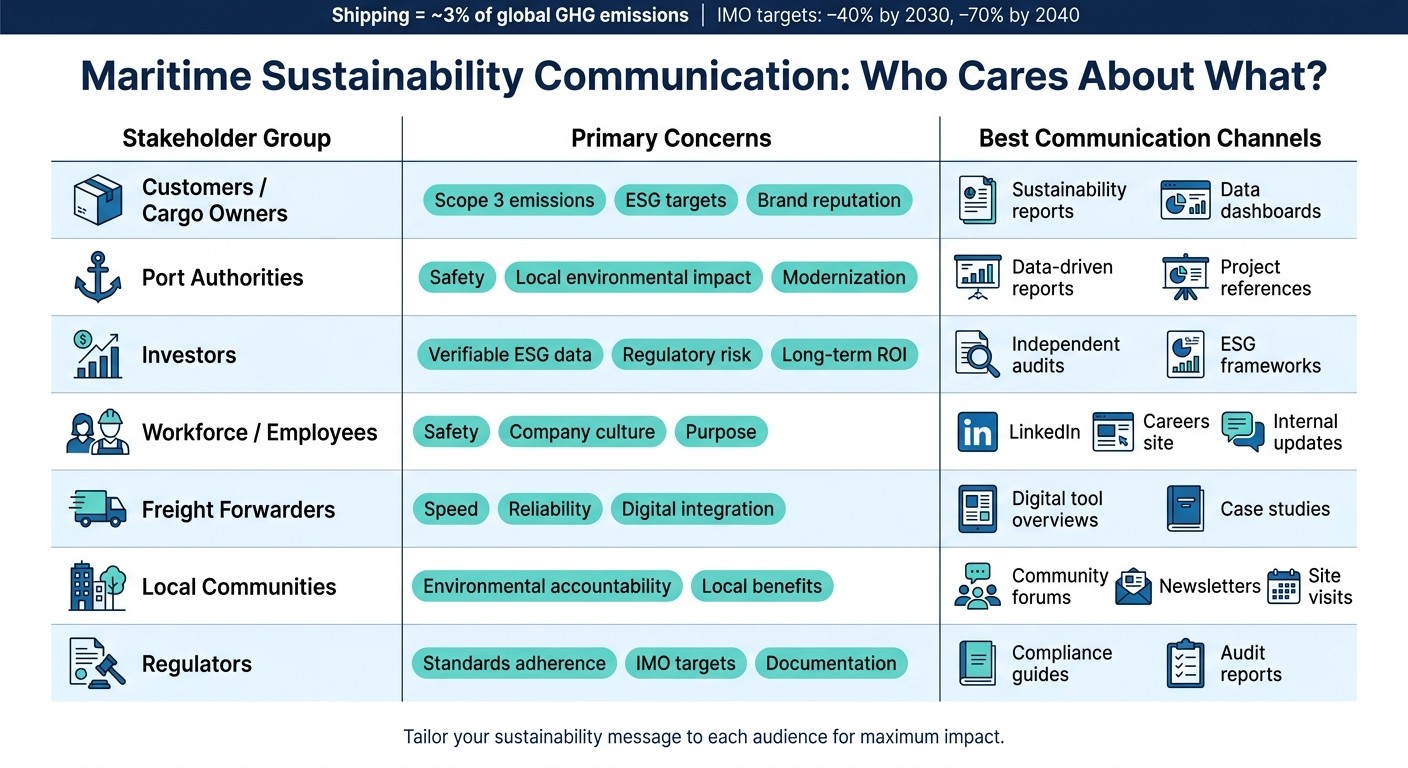
Maritime Sustainability: Stakeholder Priorities & Communication Channels
Before crafting sustainability messages, it’s important to understand your audience. In maritime and logistics, non-technical stakeholders represent a wide range of roles, priorities, and success measures.
Who Are the Key Stakeholder Groups
The main stakeholder groups include customers and cargo owners, port authorities and terminal operators, investors and financial institutions, employees, freight forwarders, local communities, and regulators and compliance teams. Each group has its own priorities. For instance, customers increasingly demand greener supply chains to address Scope 3 emissions in their ESG reporting [4]. Similarly, local communities act as informal gatekeepers, granting the "social license" companies need to operate in their regions [6]. Tailoring your approach to these diverse groups is essential for effective communication.
What Each Stakeholder Group Cares About
A common pitfall is treating all stakeholders as though they have identical concerns. Consider the following examples:
Port authorities focus on safety, local environmental impacts, and modernizing operations.
Investors, especially those with an ESG focus, demand verifiable data and insights on long-term financial risks, not just lofty mission statements. Clare Ryan, Senior Marketing Manager at MTM Agency, emphasizes this point:
"Shipowners, operators, and maritime brands are expected to prove their environmental credentials with real data, not just grand vision and mission statements." [2]
Employees, particularly younger candidates, assess a company’s culture and purpose before applying.
Freight forwarders prioritize speed, reliability, and seamless digital integration [4].
By understanding these distinct priorities, you can craft messages that resonate and lead to productive engagement.
How to Build a Stakeholder Matrix
A stakeholder matrix helps you focus your efforts by categorizing groups based on four criteria: influence (their ability to shape your strategy), impact (how your operations affect them), urgency (time-sensitive concerns), and dependency (their reliance on your services) [6].
This matrix enables you to prioritize engagement efforts. For example:
High-priority stakeholders, such as major investors or regulators, benefit from direct, tailored communication like one-on-one meetings or collaborative workshops.
Mid-tier stakeholders, including freight forwarders or industry associations, often respond well to surveys and webinars.
Broader groups, like local communities, can be engaged through newsletters, public reports, or community forums [6].
The table below illustrates how communication strategies align with the concerns of various stakeholder groups:
Stakeholder Group | Primary Concerns | Communication Channels |
|---|---|---|
Customers / Cargo Owners | Scope 3 emissions, brand reputation, ESG targets | Sustainability reports, data dashboards [4] |
Port Authorities | Safety, local environmental impact, modernization | Data-driven reports, project references [1] |
Investors | Verifiable ESG data, regulatory risk, long-term ROI | Independent audits, ESG frameworks [2] |
Workforce | Safety, fair treatment, company culture, purpose | LinkedIn, careers site, internal updates [1] |
Freight Forwarders | Speed, reliability, digital integration | Digital tool overviews, case studies [4] |
Local Communities | Environmental accountability, local benefits | Community forums, site visits, newsletters [6] |
Regulators | Standards adherence, documentation, IMO targets | Compliance guides, audit reports [1] |
Finally, make sure to close the feedback loop by sharing summaries of stakeholder input. This not only builds trust but also makes future engagement more effective [6].
How to Simplify Technical Sustainability Concepts
Once you’ve identified your stakeholders and their priorities, the next step is to simplify complex sustainability metrics. Keeping your audience engaged requires breaking down technical terms into relatable comparisons. For instance, instead of presenting raw data like CO₂ quantities or carbon intensity ratios, use examples that connect with everyday experiences. This approach ensures that even non-technical audiences can grasp the significance of the information.
Plain-Language Definitions of Common Technical Terms
Replacing technical jargon with familiar language can make all the difference. Research from MIT Sloan highlights this point. During a study conducted from June to August 2023, Professor Catherine Tucker and her team tested how framing impacts engagement. They compared traditional carbon metrics with relatable outcomes like “miles of driving reduced” in a field experiment involving 380,000 households. The results? Recyclable collection increased by 2.2% with plain-language framing, outperforming even small cash incentives, which only boosted results by 1.9% [7].
"We show that even when presented with accurate carbon emissions, consumers react less strongly to them than something more familiar." - Catherine Tucker, Professor of Marketing, MIT Sloan [7]
In the maritime and logistics sectors, translating “10 tons of CO₂ reduced” into something more tangible - like the equivalent number of cars taken off the road for a year or gallons of fuel saved - can resonate more deeply with stakeholders.
Here’s how to simplify other technical terms:
Biodiesel: Fuel derived from organic fats and oils.
E-methanol: A fuel produced using renewable electricity and captured CO₂ [9].
Carbon Intensity Indicator (CII): A straightforward A-to-E report card for vessel efficiency, helping cargo owners and port managers assess performance at a glance [8].
By making these terms relatable, you not only clarify the metrics but also create a foundation for linking sustainability efforts to real-world benefits.
Connecting Technical Outcomes to Business and Community Benefits
Clear definitions are just the start. To truly engage your audience, tie technical outcomes to tangible impacts they care about. For example:
Fuel efficiency: Reduces operating costs and enhances schedule reliability - key priorities for freight forwarders and operations managers.
Port electrification: This involves ships connecting to shore power grids while docked, eliminating diesel exhaust and reducing noise pollution. These benefits extend to local communities while also supporting regulatory compliance [3][8].
For supply chain teams, integrating Scope 3 emissions tracking with cost and speed visibility is becoming increasingly feasible. Lars Fabricius Kierkegaard, Senior Business Product Manager at Maersk, emphasizes the importance of linking these dimensions:
"Better refined scope 3 emissions tracking tools will enable businesses to look at scope 3 emissions alongside cost and speed. For optimal supply chain management, these three dimensions will need to be interconnected with performance for better visibility, predictability, and optimisation." [4]
Building a Sustainability Glossary
A shared glossary can streamline communication by ensuring everyone uses consistent terms. Misunderstandings caused by inconsistent definitions can lead to confusion in reports, proposals, and client discussions. A well-organized glossary ensures clarity across teams.
In February 2024, Maersk updated its “Logistics Explained” resource to include a decarbonization glossary. This glossary simplifies terms like Well-to-Tank (emissions from fuel production) and Well-to-Wake (total emissions from production through combustion), making them accessible to customers and policymakers alike [9]. As Maersk noted:
"Since the signing of the Paris Agreement in 2015, accurate language around climate change mitigation efforts and emissions goals has become more and more important." [9]
For maritime and logistics companies, a practical glossary should be organized by themes - such as Alternative Fuels, Regulatory Compliance, and Operational Metrics - and written in plain American English. Here’s an example of how to structure key terms:
Technical Term | Plain-Language Definition | Relatable Analogy |
|---|---|---|
Scope 1 Emissions | Direct emissions from sources a company owns or controls | Exhaust from the company’s own ships or trucks |
Well-to-Wake (WTW) | Total emissions from fuel production through combustion | A “cradle-to-grave” impact of a gallon of fuel |
CII Rating | A vessel’s annual carbon efficiency score | A fuel efficiency report card (A through E) |
Shore Power | Ships plugging into a land-based electrical grid at port | “Plugging in” so ships don’t idle and pollute |
Drop-in Fuel | Sustainable fuel compatible with existing engines | A cleaner fuel that works with the same tank |
Keeping this glossary updated and easily accessible - whether as an internal document or a webpage - ensures consistency across your organization. Clear communication not only simplifies your sustainability message but also builds trust with stakeholders.
How to Frame Sustainability Messages Around Stakeholder Priorities
To effectively communicate sustainability, it’s essential to align messages with what stakeholders already value - whether it’s operational efficiency, cost control, or regulatory compliance. By connecting sustainability to these priorities, you can foster understanding and action across different groups.
Tying Sustainability to Day-to-Day Operations
The best sustainability messages don’t rely on abstract appeals to environmental responsibility. Instead, they demonstrate how sustainability simplifies daily tasks, reduces costs, or minimizes risks.
Take route optimization as an example. Platforms designed to optimize vessel routes can achieve 10–15% fuel savings [11]. For operations managers, this translates into fewer delays, lower fuel expenses, and more reliable schedules. Presenting sustainability as an operational enhancement - rather than a compliance obligation - helps non-technical stakeholders see its immediate value and lays the groundwork for financial discussions.
Communicating Financial Benefits Clearly
When addressing financial decision-makers, focus on cost savings and avoided expenses. These are measurable, tangible outcomes that resonate strongly with this audience. For instance, starting in 2028, the International Maritime Organization (IMO) will introduce penalties of $380 per ton of CO₂ for ships exceeding Tier 1 emissions standards [11]. This figure provides a clear, actionable incentive for CFOs to prioritize emissions reduction.
Consider this real-world example: a major East Coast port authority incorporated sustainability into its $800 million capital plan (2021–2026), achieving $125 million in cumulative savings and avoided costs over five years. Key outcomes included:
$48 million saved in diesel fuel costs by electrifying 65% of cargo handling equipment.
$22 million saved through LED and solar retrofits.
$36 million in avoided capital costs by building climate resilience into infrastructure upfront rather than retrofitting later [10].
As noted by Council Fire: "When sustainability generates hard financial returns, it builds organizational commitment that outlasts any individual champion." [10] This alignment of sustainability with financial outcomes ensures long-term buy-in.
Using Concrete Examples and Scenarios
Real-life scenarios help translate operational and financial insights into actionable strategies. For instance, logistics teams might hear: "If we optimize routing on our top 10 lanes, we could save roughly 15% on fuel - equating to approximately $X annually based on current usage." Incorporating specific operational data makes these scenarios relatable and actionable.
Regulatory deadlines also create opportunities for clarity. California’s Climate Corporate Data Accountability Act, for example, will require companies with over $1 billion in revenue to disclose Scope 1, 2, and 3 emissions by 2027 [11]. Framing the message around this requirement - such as how proactive reporting can reduce costs compared to reactive compliance - underscores the immediate benefits for compliance teams.
Choosing the Right Communication Channels
Once you’ve tailored your sustainability messages to align with the priorities of each stakeholder group, the next step is ensuring those messages reach the right people through the most effective channels. Even the most well-crafted message can fall flat if delivered through an unsuitable medium or platform.
Common Internal and External Communication Channels
The maritime and logistics sectors offer a variety of communication options, each with its own impact. For example, LinkedIn serves as a powerful tool for amplifying your sustainability narrative across the industry, reaching everyone from executives to fleet managers [1]. Meanwhile, your website acts as a vital credibility checkpoint, especially for non-technical stakeholders who often research suppliers online before initiating contact. Clear service descriptions and detailed team profiles here can make all the difference [1].
Trade media outlets such as Lloyd's List and TradeWinds remain influential platforms for establishing your company as a knowledgeable and trustworthy voice in the industry [1]. Internally, tools like digital dashboards help simplify complex ESG data - such as CO₂ emissions or supplier performance - by presenting it visually [12]. Similarly, email newsletters provide a direct line to stakeholders, offering quarterly updates on regulatory changes or project milestones [1]. These channels, when used strategically, can ensure your messages reach the right audience effectively.
Matching Channels to Stakeholder Groups
Different stakeholder groups respond best to specific formats and platforms. The table below highlights these preferences:
Audience Segment | Preferred Content Format | Primary Channels |
|---|---|---|
Shipowners & Fleet Managers | Case studies, technical documentation | Trade publications, industry events |
Port Authorities | Detailed reports, project examples | LinkedIn, specialist conferences |
Freight Forwarders | Service comparisons, testimonials | Trade associations, referrals |
Regulators & Compliance Teams | Compliance guides, audit reports | IMO publications, flag state bulletins |
Internal Operations Teams | Training materials, dashboards | Intranet, team briefings |
Trade events, such as SMM Hamburg and London International Shipping Week, also play a crucial role. These gatherings are more than just networking opportunities - they foster trust in an industry that values personal relationships. Attending such events with a clear sustainability narrative can establish credibility far more quickly than relying solely on digital outreach [1].
Using Consistent Message Formats
Consistency in message formats is essential for reinforcing the simplified sustainability language discussed earlier. Whether it’s a one-page summary, a quarterly scorecard, or a live dashboard, sticking to familiar formats helps stakeholders focus on the content rather than the presentation [12]. This approach is particularly effective for non-technical audiences, who may engage with sustainability updates less frequently.
"Sustainability initiatives almost always fail when operational teams don't have the knowledge to implement and maintain new systems." - London Maritime Academy [3]
This quote highlights an often-neglected point: internal communication is just as crucial as external outreach. Tools like scorecards and team briefings can embed sustainability into day-to-day decision-making, ensuring it’s not treated as a separate or secondary initiative. When both internal teams and external stakeholders see the same core data presented in a consistent way, it builds trust and reduces the risk of mixed messages.
Building Trust Through Transparency and Partnerships
Trust isn’t something you can manufacture with glossy reports or bold declarations - it’s earned through steady, truthful communication that’s backed by solid data. For maritime and logistics companies, being transparent about sustainability efforts helps address stakeholder doubts about vague or exaggerated claims.
How to Present Data Clearly and Effectively
When sharing data, make it relatable. For example, instead of just stating emission reductions in tons, compare it to something tangible, like removing thousands of cars from the road. Pair these metrics with visual aids, such as trend charts or scorecards, to clearly illustrate progress over time.
"Without accuracy, you don't have a story to tell, and you don't have something that's challengeable. If you want to avoid greenwashing, you just need to be able to back-up your stories and claims." - Adrian Segens, Sustainability Consultant and Founder of Leveller Tech [5]
The Role of Third-Party Standards and Certifications
Independent validation is key to building credibility. Instead of using vague phrases like "eco-friendly operations" or "green shipping", provide specific, verified claims. For instance, saying, "Our routing optimization reduces GHG emissions by 24% over 10 years, verified by DNV", gives stakeholders a clear and defensible benchmark [2]. Aligning with established frameworks, such as the IMO's Carbon Intensity Indicator (CII), and adopting science-based targets further strengthens your claims [4].
"Validation through independent data. Back up ESG claims with third-party verification. Certification bodies, classification societies, and verified carbon tracking frameworks are all essential in demonstrating real impact." - Clare Ryan, Senior Marketing Manager at MTM [2]
This type of third-party validation not only bolsters your credibility but also opens the door for honest discussions about the challenges you face.
Acknowledging Challenges and Trade-Offs
It’s just as important to be upfront about obstacles as it is to highlight successes. The maritime industry, for instance, faces tough trade-offs - alternative fuels may offer promise but often come with technical or logistical challenges that aren’t widely understood [2]. If your company hasn’t reached net-zero yet, be clear about this and outline the steps you’re taking to get there. Transparency about setbacks and efforts builds trust and shows commitment to meaningful progress.
Conclusion: Turning Sustainability Communication into Action
Key Strategies Recap
To effectively communicate sustainability, it’s essential to understand your audience, simplify technical jargon, and support every claim with solid data. Start by conducting a stakeholder analysis to pinpoint what matters most to your audience - whether it’s cost savings, compliance, or efficiency - and tailor your messaging accordingly. Use language that resonates with their priorities and choose the most effective channels to deliver your message.
The shift from vague environmental claims to concrete, verifiable outcomes is critical, especially as regulatory frameworks become more stringent. Companies that embrace clear and honest communication will be better equipped to foster trust and align with evolving industry expectations.
Why Communication Drives Sustainability Results
Clear communication plays a pivotal role in driving sustainability efforts by empowering stakeholders to make informed decisions. Lars Fabricius Kierkegaard, Senior Business Product Manager at Maersk, highlights this point:
"For optimal supply chain management, these three dimensions [emissions, cost, speed] will need to be interconnected with performance for better visibility, predictability, and optimisation." [4]
When decision-makers receive clear, actionable information, it enhances visibility and fosters coordinated action. For example, while 77% of shipowners and operators view net-zero as a top priority, only 60% of maritime companies have formalized net-zero targets [2]. This gap often stems from communication breakdowns - ambiguous strategies, fragmented data, or messages that fail to resonate with key audiences. Addressing these issues through well-crafted communication can bridge the gap between intention and meaningful action.
By adopting these strategies, companies can not only enhance decision-making but also achieve measurable progress in their sustainability goals.
How Council Fire Can Help
Turning complex sustainability strategies into clear, actionable messages is a challenge for many maritime and logistics companies. Council Fire specializes in transforming intricate decarbonization plans, emissions data, and ESG frameworks into communication that drives action. Whether it’s through carbon footprint analysis or stakeholder engagement strategies, Council Fire helps organizations move from planning to execution. If your company is ready to communicate sustainability with impact, Council Fire can provide the tools and expertise to set you on the right path.
FAQs
How do I pick the right sustainability message for each stakeholder group?
To craft an effective sustainability message, it's crucial to align it with the priorities of each stakeholder group. For instance, investors and regulators are often drawn to transparency and measurable ESG progress. Meanwhile, other audiences might care more about cost savings or meeting compliance requirements. Simplify complex technical metrics and use relatable stories to make the message resonate. Highlight trust and long-term advantages to foster connection. By addressing their specific concerns, your message becomes more impactful and meaningful.
What’s the simplest way to explain shipping emissions and fuel metrics to non-technical people?
The easiest approach is to use familiar comparisons. For instance: "Shipping emissions can be compared to a car's carbon footprint - the greenhouse gases produced when ships burn fuel to move goods. Fuel metrics, such as fuel consumption, work like miles per gallon in a car - the more fuel used, the greater the emissions." This kind of analogy simplifies complex concepts, making them more accessible to those without technical expertise.
How can we prove our sustainability claims without sounding like greenwashing?
To steer clear of greenwashing, it's crucial to base your claims on reliable and transparent data while presenting them with honesty. Break down complicated sustainability metrics into relatable, easy-to-understand narratives, supported by clear visuals and straightforward messaging. Prioritize openness, factual reporting, and genuine storytelling to build trust and make your message connect with audiences who may not have technical expertise.
Related Blog Posts
Latest Articles
©2025

Narrative Change and Power Building: The Missing Half of Advocacy
Narrative change is the process of disrupting dominant narratives that normalize inequity and advancing new narratives from historically marginalized communities.

Funding Resilience Without Federal Grants
BRIC is unreliable and FEMA is shrinking. Here's how cities fund climate resilience with dedicated revenue, blended finance, and a coordinating authority.

The ESG Blind Spot: How AI Is Finding Risks in Companies Nobody Else Is Watching
Norway's sovereign wealth fund uses AI to screen 7,200 portfolio companies for forced labor and corruption within 24 hours. The real story is the emerging-market coverage gap that traditional ESG data vendors miss — and what it means for any company with a global supply chain.
Narrative Change and Power Building: The Missing Half of Advocacy
Narrative change is the process of disrupting dominant narratives that normalize inequity and advancing new narratives from historically marginalized communities.
Funding Resilience Without Federal Grants
BRIC is unreliable and FEMA is shrinking. Here's how cities fund climate resilience with dedicated revenue, blended finance, and a coordinating authority.
The ESG Blind Spot: How AI Is Finding Risks in Companies Nobody Else Is Watching
Norway's sovereign wealth fund uses AI to screen 7,200 portfolio companies for forced labor and corruption within 24 hours. The real story is the emerging-market coverage gap that traditional ESG data vendors miss — and what it means for any company with a global supply chain.
FAQ
01
What does it really mean to “redefine profit”?
02
What makes Council Fire different?
03
Who does Council Fire work with?
04
What does working with Council Fire actually look like?
05
How does Council Fire help organizations turn big goals into action?
06
How does Council Fire define and measure success?
May 18, 2026
How to Communicate Sustainability to Non-Technical Audiences for Maritime & Logistics Companies
Sustainability Strategy
In This Article
How maritime and logistics firms explain emissions, simplify jargon, and engage investors, employees, ports and customers.
How to Communicate Sustainability to Non-Technical Audiences for Maritime & Logistics Companies
Shipping generates about 3% of global greenhouse gas emissions, and cutting these emissions is no longer optional. The International Maritime Organization (IMO) has set clear reduction targets: 40% by 2030 and 70% by 2040. For maritime and logistics companies, communicating these efforts to non-technical audiences is critical - not just for compliance but for securing investments, attracting talent, and building trust with stakeholders.
Key Takeaways:
Stakeholder Priorities: Different groups care about different things. Investors want verifiable data, employees value company culture, and customers demand greener supply chains.
Simplify Jargon: Replace complex terms like "carbon intensity" with relatable analogies - e.g., "equivalent to taking X cars off the road."
Tailored Messaging: Align sustainability efforts with stakeholder goals, such as cost savings, operational efficiency, or regulatory compliance.
Effective Channels: Use LinkedIn, trade publications, and digital dashboards to reach the right audience. Internal teams benefit from consistent updates and training.
Transparency Builds Trust: Share both successes and challenges. Back claims with third-party validation to avoid skepticism.
Clear communication bridges the gap between complex sustainability metrics and stakeholder understanding, ensuring alignment and action toward meeting industry goals.
Communicating Sustainability - Achieving effective and truthful communication
Understanding Non-Technical Stakeholders in Maritime and Logistics
Maritime Sustainability: Stakeholder Priorities & Communication Channels
Before crafting sustainability messages, it’s important to understand your audience. In maritime and logistics, non-technical stakeholders represent a wide range of roles, priorities, and success measures.
Who Are the Key Stakeholder Groups
The main stakeholder groups include customers and cargo owners, port authorities and terminal operators, investors and financial institutions, employees, freight forwarders, local communities, and regulators and compliance teams. Each group has its own priorities. For instance, customers increasingly demand greener supply chains to address Scope 3 emissions in their ESG reporting [4]. Similarly, local communities act as informal gatekeepers, granting the "social license" companies need to operate in their regions [6]. Tailoring your approach to these diverse groups is essential for effective communication.
What Each Stakeholder Group Cares About
A common pitfall is treating all stakeholders as though they have identical concerns. Consider the following examples:
Port authorities focus on safety, local environmental impacts, and modernizing operations.
Investors, especially those with an ESG focus, demand verifiable data and insights on long-term financial risks, not just lofty mission statements. Clare Ryan, Senior Marketing Manager at MTM Agency, emphasizes this point:
"Shipowners, operators, and maritime brands are expected to prove their environmental credentials with real data, not just grand vision and mission statements." [2]
Employees, particularly younger candidates, assess a company’s culture and purpose before applying.
Freight forwarders prioritize speed, reliability, and seamless digital integration [4].
By understanding these distinct priorities, you can craft messages that resonate and lead to productive engagement.
How to Build a Stakeholder Matrix
A stakeholder matrix helps you focus your efforts by categorizing groups based on four criteria: influence (their ability to shape your strategy), impact (how your operations affect them), urgency (time-sensitive concerns), and dependency (their reliance on your services) [6].
This matrix enables you to prioritize engagement efforts. For example:
High-priority stakeholders, such as major investors or regulators, benefit from direct, tailored communication like one-on-one meetings or collaborative workshops.
Mid-tier stakeholders, including freight forwarders or industry associations, often respond well to surveys and webinars.
Broader groups, like local communities, can be engaged through newsletters, public reports, or community forums [6].
The table below illustrates how communication strategies align with the concerns of various stakeholder groups:
Stakeholder Group | Primary Concerns | Communication Channels |
|---|---|---|
Customers / Cargo Owners | Scope 3 emissions, brand reputation, ESG targets | Sustainability reports, data dashboards [4] |
Port Authorities | Safety, local environmental impact, modernization | Data-driven reports, project references [1] |
Investors | Verifiable ESG data, regulatory risk, long-term ROI | Independent audits, ESG frameworks [2] |
Workforce | Safety, fair treatment, company culture, purpose | LinkedIn, careers site, internal updates [1] |
Freight Forwarders | Speed, reliability, digital integration | Digital tool overviews, case studies [4] |
Local Communities | Environmental accountability, local benefits | Community forums, site visits, newsletters [6] |
Regulators | Standards adherence, documentation, IMO targets | Compliance guides, audit reports [1] |
Finally, make sure to close the feedback loop by sharing summaries of stakeholder input. This not only builds trust but also makes future engagement more effective [6].
How to Simplify Technical Sustainability Concepts
Once you’ve identified your stakeholders and their priorities, the next step is to simplify complex sustainability metrics. Keeping your audience engaged requires breaking down technical terms into relatable comparisons. For instance, instead of presenting raw data like CO₂ quantities or carbon intensity ratios, use examples that connect with everyday experiences. This approach ensures that even non-technical audiences can grasp the significance of the information.
Plain-Language Definitions of Common Technical Terms
Replacing technical jargon with familiar language can make all the difference. Research from MIT Sloan highlights this point. During a study conducted from June to August 2023, Professor Catherine Tucker and her team tested how framing impacts engagement. They compared traditional carbon metrics with relatable outcomes like “miles of driving reduced” in a field experiment involving 380,000 households. The results? Recyclable collection increased by 2.2% with plain-language framing, outperforming even small cash incentives, which only boosted results by 1.9% [7].
"We show that even when presented with accurate carbon emissions, consumers react less strongly to them than something more familiar." - Catherine Tucker, Professor of Marketing, MIT Sloan [7]
In the maritime and logistics sectors, translating “10 tons of CO₂ reduced” into something more tangible - like the equivalent number of cars taken off the road for a year or gallons of fuel saved - can resonate more deeply with stakeholders.
Here’s how to simplify other technical terms:
Biodiesel: Fuel derived from organic fats and oils.
E-methanol: A fuel produced using renewable electricity and captured CO₂ [9].
Carbon Intensity Indicator (CII): A straightforward A-to-E report card for vessel efficiency, helping cargo owners and port managers assess performance at a glance [8].
By making these terms relatable, you not only clarify the metrics but also create a foundation for linking sustainability efforts to real-world benefits.
Connecting Technical Outcomes to Business and Community Benefits
Clear definitions are just the start. To truly engage your audience, tie technical outcomes to tangible impacts they care about. For example:
Fuel efficiency: Reduces operating costs and enhances schedule reliability - key priorities for freight forwarders and operations managers.
Port electrification: This involves ships connecting to shore power grids while docked, eliminating diesel exhaust and reducing noise pollution. These benefits extend to local communities while also supporting regulatory compliance [3][8].
For supply chain teams, integrating Scope 3 emissions tracking with cost and speed visibility is becoming increasingly feasible. Lars Fabricius Kierkegaard, Senior Business Product Manager at Maersk, emphasizes the importance of linking these dimensions:
"Better refined scope 3 emissions tracking tools will enable businesses to look at scope 3 emissions alongside cost and speed. For optimal supply chain management, these three dimensions will need to be interconnected with performance for better visibility, predictability, and optimisation." [4]
Building a Sustainability Glossary
A shared glossary can streamline communication by ensuring everyone uses consistent terms. Misunderstandings caused by inconsistent definitions can lead to confusion in reports, proposals, and client discussions. A well-organized glossary ensures clarity across teams.
In February 2024, Maersk updated its “Logistics Explained” resource to include a decarbonization glossary. This glossary simplifies terms like Well-to-Tank (emissions from fuel production) and Well-to-Wake (total emissions from production through combustion), making them accessible to customers and policymakers alike [9]. As Maersk noted:
"Since the signing of the Paris Agreement in 2015, accurate language around climate change mitigation efforts and emissions goals has become more and more important." [9]
For maritime and logistics companies, a practical glossary should be organized by themes - such as Alternative Fuels, Regulatory Compliance, and Operational Metrics - and written in plain American English. Here’s an example of how to structure key terms:
Technical Term | Plain-Language Definition | Relatable Analogy |
|---|---|---|
Scope 1 Emissions | Direct emissions from sources a company owns or controls | Exhaust from the company’s own ships or trucks |
Well-to-Wake (WTW) | Total emissions from fuel production through combustion | A “cradle-to-grave” impact of a gallon of fuel |
CII Rating | A vessel’s annual carbon efficiency score | A fuel efficiency report card (A through E) |
Shore Power | Ships plugging into a land-based electrical grid at port | “Plugging in” so ships don’t idle and pollute |
Drop-in Fuel | Sustainable fuel compatible with existing engines | A cleaner fuel that works with the same tank |
Keeping this glossary updated and easily accessible - whether as an internal document or a webpage - ensures consistency across your organization. Clear communication not only simplifies your sustainability message but also builds trust with stakeholders.
How to Frame Sustainability Messages Around Stakeholder Priorities
To effectively communicate sustainability, it’s essential to align messages with what stakeholders already value - whether it’s operational efficiency, cost control, or regulatory compliance. By connecting sustainability to these priorities, you can foster understanding and action across different groups.
Tying Sustainability to Day-to-Day Operations
The best sustainability messages don’t rely on abstract appeals to environmental responsibility. Instead, they demonstrate how sustainability simplifies daily tasks, reduces costs, or minimizes risks.
Take route optimization as an example. Platforms designed to optimize vessel routes can achieve 10–15% fuel savings [11]. For operations managers, this translates into fewer delays, lower fuel expenses, and more reliable schedules. Presenting sustainability as an operational enhancement - rather than a compliance obligation - helps non-technical stakeholders see its immediate value and lays the groundwork for financial discussions.
Communicating Financial Benefits Clearly
When addressing financial decision-makers, focus on cost savings and avoided expenses. These are measurable, tangible outcomes that resonate strongly with this audience. For instance, starting in 2028, the International Maritime Organization (IMO) will introduce penalties of $380 per ton of CO₂ for ships exceeding Tier 1 emissions standards [11]. This figure provides a clear, actionable incentive for CFOs to prioritize emissions reduction.
Consider this real-world example: a major East Coast port authority incorporated sustainability into its $800 million capital plan (2021–2026), achieving $125 million in cumulative savings and avoided costs over five years. Key outcomes included:
$48 million saved in diesel fuel costs by electrifying 65% of cargo handling equipment.
$22 million saved through LED and solar retrofits.
$36 million in avoided capital costs by building climate resilience into infrastructure upfront rather than retrofitting later [10].
As noted by Council Fire: "When sustainability generates hard financial returns, it builds organizational commitment that outlasts any individual champion." [10] This alignment of sustainability with financial outcomes ensures long-term buy-in.
Using Concrete Examples and Scenarios
Real-life scenarios help translate operational and financial insights into actionable strategies. For instance, logistics teams might hear: "If we optimize routing on our top 10 lanes, we could save roughly 15% on fuel - equating to approximately $X annually based on current usage." Incorporating specific operational data makes these scenarios relatable and actionable.
Regulatory deadlines also create opportunities for clarity. California’s Climate Corporate Data Accountability Act, for example, will require companies with over $1 billion in revenue to disclose Scope 1, 2, and 3 emissions by 2027 [11]. Framing the message around this requirement - such as how proactive reporting can reduce costs compared to reactive compliance - underscores the immediate benefits for compliance teams.
Choosing the Right Communication Channels
Once you’ve tailored your sustainability messages to align with the priorities of each stakeholder group, the next step is ensuring those messages reach the right people through the most effective channels. Even the most well-crafted message can fall flat if delivered through an unsuitable medium or platform.
Common Internal and External Communication Channels
The maritime and logistics sectors offer a variety of communication options, each with its own impact. For example, LinkedIn serves as a powerful tool for amplifying your sustainability narrative across the industry, reaching everyone from executives to fleet managers [1]. Meanwhile, your website acts as a vital credibility checkpoint, especially for non-technical stakeholders who often research suppliers online before initiating contact. Clear service descriptions and detailed team profiles here can make all the difference [1].
Trade media outlets such as Lloyd's List and TradeWinds remain influential platforms for establishing your company as a knowledgeable and trustworthy voice in the industry [1]. Internally, tools like digital dashboards help simplify complex ESG data - such as CO₂ emissions or supplier performance - by presenting it visually [12]. Similarly, email newsletters provide a direct line to stakeholders, offering quarterly updates on regulatory changes or project milestones [1]. These channels, when used strategically, can ensure your messages reach the right audience effectively.
Matching Channels to Stakeholder Groups
Different stakeholder groups respond best to specific formats and platforms. The table below highlights these preferences:
Audience Segment | Preferred Content Format | Primary Channels |
|---|---|---|
Shipowners & Fleet Managers | Case studies, technical documentation | Trade publications, industry events |
Port Authorities | Detailed reports, project examples | LinkedIn, specialist conferences |
Freight Forwarders | Service comparisons, testimonials | Trade associations, referrals |
Regulators & Compliance Teams | Compliance guides, audit reports | IMO publications, flag state bulletins |
Internal Operations Teams | Training materials, dashboards | Intranet, team briefings |
Trade events, such as SMM Hamburg and London International Shipping Week, also play a crucial role. These gatherings are more than just networking opportunities - they foster trust in an industry that values personal relationships. Attending such events with a clear sustainability narrative can establish credibility far more quickly than relying solely on digital outreach [1].
Using Consistent Message Formats
Consistency in message formats is essential for reinforcing the simplified sustainability language discussed earlier. Whether it’s a one-page summary, a quarterly scorecard, or a live dashboard, sticking to familiar formats helps stakeholders focus on the content rather than the presentation [12]. This approach is particularly effective for non-technical audiences, who may engage with sustainability updates less frequently.
"Sustainability initiatives almost always fail when operational teams don't have the knowledge to implement and maintain new systems." - London Maritime Academy [3]
This quote highlights an often-neglected point: internal communication is just as crucial as external outreach. Tools like scorecards and team briefings can embed sustainability into day-to-day decision-making, ensuring it’s not treated as a separate or secondary initiative. When both internal teams and external stakeholders see the same core data presented in a consistent way, it builds trust and reduces the risk of mixed messages.
Building Trust Through Transparency and Partnerships
Trust isn’t something you can manufacture with glossy reports or bold declarations - it’s earned through steady, truthful communication that’s backed by solid data. For maritime and logistics companies, being transparent about sustainability efforts helps address stakeholder doubts about vague or exaggerated claims.
How to Present Data Clearly and Effectively
When sharing data, make it relatable. For example, instead of just stating emission reductions in tons, compare it to something tangible, like removing thousands of cars from the road. Pair these metrics with visual aids, such as trend charts or scorecards, to clearly illustrate progress over time.
"Without accuracy, you don't have a story to tell, and you don't have something that's challengeable. If you want to avoid greenwashing, you just need to be able to back-up your stories and claims." - Adrian Segens, Sustainability Consultant and Founder of Leveller Tech [5]
The Role of Third-Party Standards and Certifications
Independent validation is key to building credibility. Instead of using vague phrases like "eco-friendly operations" or "green shipping", provide specific, verified claims. For instance, saying, "Our routing optimization reduces GHG emissions by 24% over 10 years, verified by DNV", gives stakeholders a clear and defensible benchmark [2]. Aligning with established frameworks, such as the IMO's Carbon Intensity Indicator (CII), and adopting science-based targets further strengthens your claims [4].
"Validation through independent data. Back up ESG claims with third-party verification. Certification bodies, classification societies, and verified carbon tracking frameworks are all essential in demonstrating real impact." - Clare Ryan, Senior Marketing Manager at MTM [2]
This type of third-party validation not only bolsters your credibility but also opens the door for honest discussions about the challenges you face.
Acknowledging Challenges and Trade-Offs
It’s just as important to be upfront about obstacles as it is to highlight successes. The maritime industry, for instance, faces tough trade-offs - alternative fuels may offer promise but often come with technical or logistical challenges that aren’t widely understood [2]. If your company hasn’t reached net-zero yet, be clear about this and outline the steps you’re taking to get there. Transparency about setbacks and efforts builds trust and shows commitment to meaningful progress.
Conclusion: Turning Sustainability Communication into Action
Key Strategies Recap
To effectively communicate sustainability, it’s essential to understand your audience, simplify technical jargon, and support every claim with solid data. Start by conducting a stakeholder analysis to pinpoint what matters most to your audience - whether it’s cost savings, compliance, or efficiency - and tailor your messaging accordingly. Use language that resonates with their priorities and choose the most effective channels to deliver your message.
The shift from vague environmental claims to concrete, verifiable outcomes is critical, especially as regulatory frameworks become more stringent. Companies that embrace clear and honest communication will be better equipped to foster trust and align with evolving industry expectations.
Why Communication Drives Sustainability Results
Clear communication plays a pivotal role in driving sustainability efforts by empowering stakeholders to make informed decisions. Lars Fabricius Kierkegaard, Senior Business Product Manager at Maersk, highlights this point:
"For optimal supply chain management, these three dimensions [emissions, cost, speed] will need to be interconnected with performance for better visibility, predictability, and optimisation." [4]
When decision-makers receive clear, actionable information, it enhances visibility and fosters coordinated action. For example, while 77% of shipowners and operators view net-zero as a top priority, only 60% of maritime companies have formalized net-zero targets [2]. This gap often stems from communication breakdowns - ambiguous strategies, fragmented data, or messages that fail to resonate with key audiences. Addressing these issues through well-crafted communication can bridge the gap between intention and meaningful action.
By adopting these strategies, companies can not only enhance decision-making but also achieve measurable progress in their sustainability goals.
How Council Fire Can Help
Turning complex sustainability strategies into clear, actionable messages is a challenge for many maritime and logistics companies. Council Fire specializes in transforming intricate decarbonization plans, emissions data, and ESG frameworks into communication that drives action. Whether it’s through carbon footprint analysis or stakeholder engagement strategies, Council Fire helps organizations move from planning to execution. If your company is ready to communicate sustainability with impact, Council Fire can provide the tools and expertise to set you on the right path.
FAQs
How do I pick the right sustainability message for each stakeholder group?
To craft an effective sustainability message, it's crucial to align it with the priorities of each stakeholder group. For instance, investors and regulators are often drawn to transparency and measurable ESG progress. Meanwhile, other audiences might care more about cost savings or meeting compliance requirements. Simplify complex technical metrics and use relatable stories to make the message resonate. Highlight trust and long-term advantages to foster connection. By addressing their specific concerns, your message becomes more impactful and meaningful.
What’s the simplest way to explain shipping emissions and fuel metrics to non-technical people?
The easiest approach is to use familiar comparisons. For instance: "Shipping emissions can be compared to a car's carbon footprint - the greenhouse gases produced when ships burn fuel to move goods. Fuel metrics, such as fuel consumption, work like miles per gallon in a car - the more fuel used, the greater the emissions." This kind of analogy simplifies complex concepts, making them more accessible to those without technical expertise.
How can we prove our sustainability claims without sounding like greenwashing?
To steer clear of greenwashing, it's crucial to base your claims on reliable and transparent data while presenting them with honesty. Break down complicated sustainability metrics into relatable, easy-to-understand narratives, supported by clear visuals and straightforward messaging. Prioritize openness, factual reporting, and genuine storytelling to build trust and make your message connect with audiences who may not have technical expertise.
Related Blog Posts
Latest Articles
©2025
Narrative Change and Power Building: The Missing Half of Advocacy
Narrative change is the process of disrupting dominant narratives that normalize inequity and advancing new narratives from historically marginalized communities.
Funding Resilience Without Federal Grants
BRIC is unreliable and FEMA is shrinking. Here's how cities fund climate resilience with dedicated revenue, blended finance, and a coordinating authority.
The ESG Blind Spot: How AI Is Finding Risks in Companies Nobody Else Is Watching
Norway's sovereign wealth fund uses AI to screen 7,200 portfolio companies for forced labor and corruption within 24 hours. The real story is the emerging-market coverage gap that traditional ESG data vendors miss — and what it means for any company with a global supply chain.
FAQ
01
What does it really mean to “redefine profit”?
02
What makes Council Fire different?
03
Who does Council Fire work with?
04
What does working with Council Fire actually look like?
05
How does Council Fire help organizations turn big goals into action?
06
How does Council Fire define and measure success?
May 18, 2026
How to Communicate Sustainability to Non-Technical Audiences for Maritime & Logistics Companies
Sustainability Strategy
In This Article
How maritime and logistics firms explain emissions, simplify jargon, and engage investors, employees, ports and customers.
How to Communicate Sustainability to Non-Technical Audiences for Maritime & Logistics Companies
Shipping generates about 3% of global greenhouse gas emissions, and cutting these emissions is no longer optional. The International Maritime Organization (IMO) has set clear reduction targets: 40% by 2030 and 70% by 2040. For maritime and logistics companies, communicating these efforts to non-technical audiences is critical - not just for compliance but for securing investments, attracting talent, and building trust with stakeholders.
Key Takeaways:
Stakeholder Priorities: Different groups care about different things. Investors want verifiable data, employees value company culture, and customers demand greener supply chains.
Simplify Jargon: Replace complex terms like "carbon intensity" with relatable analogies - e.g., "equivalent to taking X cars off the road."
Tailored Messaging: Align sustainability efforts with stakeholder goals, such as cost savings, operational efficiency, or regulatory compliance.
Effective Channels: Use LinkedIn, trade publications, and digital dashboards to reach the right audience. Internal teams benefit from consistent updates and training.
Transparency Builds Trust: Share both successes and challenges. Back claims with third-party validation to avoid skepticism.
Clear communication bridges the gap between complex sustainability metrics and stakeholder understanding, ensuring alignment and action toward meeting industry goals.
Communicating Sustainability - Achieving effective and truthful communication
Understanding Non-Technical Stakeholders in Maritime and Logistics
Maritime Sustainability: Stakeholder Priorities & Communication Channels
Before crafting sustainability messages, it’s important to understand your audience. In maritime and logistics, non-technical stakeholders represent a wide range of roles, priorities, and success measures.
Who Are the Key Stakeholder Groups
The main stakeholder groups include customers and cargo owners, port authorities and terminal operators, investors and financial institutions, employees, freight forwarders, local communities, and regulators and compliance teams. Each group has its own priorities. For instance, customers increasingly demand greener supply chains to address Scope 3 emissions in their ESG reporting [4]. Similarly, local communities act as informal gatekeepers, granting the "social license" companies need to operate in their regions [6]. Tailoring your approach to these diverse groups is essential for effective communication.
What Each Stakeholder Group Cares About
A common pitfall is treating all stakeholders as though they have identical concerns. Consider the following examples:
Port authorities focus on safety, local environmental impacts, and modernizing operations.
Investors, especially those with an ESG focus, demand verifiable data and insights on long-term financial risks, not just lofty mission statements. Clare Ryan, Senior Marketing Manager at MTM Agency, emphasizes this point:
"Shipowners, operators, and maritime brands are expected to prove their environmental credentials with real data, not just grand vision and mission statements." [2]
Employees, particularly younger candidates, assess a company’s culture and purpose before applying.
Freight forwarders prioritize speed, reliability, and seamless digital integration [4].
By understanding these distinct priorities, you can craft messages that resonate and lead to productive engagement.
How to Build a Stakeholder Matrix
A stakeholder matrix helps you focus your efforts by categorizing groups based on four criteria: influence (their ability to shape your strategy), impact (how your operations affect them), urgency (time-sensitive concerns), and dependency (their reliance on your services) [6].
This matrix enables you to prioritize engagement efforts. For example:
High-priority stakeholders, such as major investors or regulators, benefit from direct, tailored communication like one-on-one meetings or collaborative workshops.
Mid-tier stakeholders, including freight forwarders or industry associations, often respond well to surveys and webinars.
Broader groups, like local communities, can be engaged through newsletters, public reports, or community forums [6].
The table below illustrates how communication strategies align with the concerns of various stakeholder groups:
Stakeholder Group | Primary Concerns | Communication Channels |
|---|---|---|
Customers / Cargo Owners | Scope 3 emissions, brand reputation, ESG targets | Sustainability reports, data dashboards [4] |
Port Authorities | Safety, local environmental impact, modernization | Data-driven reports, project references [1] |
Investors | Verifiable ESG data, regulatory risk, long-term ROI | Independent audits, ESG frameworks [2] |
Workforce | Safety, fair treatment, company culture, purpose | LinkedIn, careers site, internal updates [1] |
Freight Forwarders | Speed, reliability, digital integration | Digital tool overviews, case studies [4] |
Local Communities | Environmental accountability, local benefits | Community forums, site visits, newsletters [6] |
Regulators | Standards adherence, documentation, IMO targets | Compliance guides, audit reports [1] |
Finally, make sure to close the feedback loop by sharing summaries of stakeholder input. This not only builds trust but also makes future engagement more effective [6].
How to Simplify Technical Sustainability Concepts
Once you’ve identified your stakeholders and their priorities, the next step is to simplify complex sustainability metrics. Keeping your audience engaged requires breaking down technical terms into relatable comparisons. For instance, instead of presenting raw data like CO₂ quantities or carbon intensity ratios, use examples that connect with everyday experiences. This approach ensures that even non-technical audiences can grasp the significance of the information.
Plain-Language Definitions of Common Technical Terms
Replacing technical jargon with familiar language can make all the difference. Research from MIT Sloan highlights this point. During a study conducted from June to August 2023, Professor Catherine Tucker and her team tested how framing impacts engagement. They compared traditional carbon metrics with relatable outcomes like “miles of driving reduced” in a field experiment involving 380,000 households. The results? Recyclable collection increased by 2.2% with plain-language framing, outperforming even small cash incentives, which only boosted results by 1.9% [7].
"We show that even when presented with accurate carbon emissions, consumers react less strongly to them than something more familiar." - Catherine Tucker, Professor of Marketing, MIT Sloan [7]
In the maritime and logistics sectors, translating “10 tons of CO₂ reduced” into something more tangible - like the equivalent number of cars taken off the road for a year or gallons of fuel saved - can resonate more deeply with stakeholders.
Here’s how to simplify other technical terms:
Biodiesel: Fuel derived from organic fats and oils.
E-methanol: A fuel produced using renewable electricity and captured CO₂ [9].
Carbon Intensity Indicator (CII): A straightforward A-to-E report card for vessel efficiency, helping cargo owners and port managers assess performance at a glance [8].
By making these terms relatable, you not only clarify the metrics but also create a foundation for linking sustainability efforts to real-world benefits.
Connecting Technical Outcomes to Business and Community Benefits
Clear definitions are just the start. To truly engage your audience, tie technical outcomes to tangible impacts they care about. For example:
Fuel efficiency: Reduces operating costs and enhances schedule reliability - key priorities for freight forwarders and operations managers.
Port electrification: This involves ships connecting to shore power grids while docked, eliminating diesel exhaust and reducing noise pollution. These benefits extend to local communities while also supporting regulatory compliance [3][8].
For supply chain teams, integrating Scope 3 emissions tracking with cost and speed visibility is becoming increasingly feasible. Lars Fabricius Kierkegaard, Senior Business Product Manager at Maersk, emphasizes the importance of linking these dimensions:
"Better refined scope 3 emissions tracking tools will enable businesses to look at scope 3 emissions alongside cost and speed. For optimal supply chain management, these three dimensions will need to be interconnected with performance for better visibility, predictability, and optimisation." [4]
Building a Sustainability Glossary
A shared glossary can streamline communication by ensuring everyone uses consistent terms. Misunderstandings caused by inconsistent definitions can lead to confusion in reports, proposals, and client discussions. A well-organized glossary ensures clarity across teams.
In February 2024, Maersk updated its “Logistics Explained” resource to include a decarbonization glossary. This glossary simplifies terms like Well-to-Tank (emissions from fuel production) and Well-to-Wake (total emissions from production through combustion), making them accessible to customers and policymakers alike [9]. As Maersk noted:
"Since the signing of the Paris Agreement in 2015, accurate language around climate change mitigation efforts and emissions goals has become more and more important." [9]
For maritime and logistics companies, a practical glossary should be organized by themes - such as Alternative Fuels, Regulatory Compliance, and Operational Metrics - and written in plain American English. Here’s an example of how to structure key terms:
Technical Term | Plain-Language Definition | Relatable Analogy |
|---|---|---|
Scope 1 Emissions | Direct emissions from sources a company owns or controls | Exhaust from the company’s own ships or trucks |
Well-to-Wake (WTW) | Total emissions from fuel production through combustion | A “cradle-to-grave” impact of a gallon of fuel |
CII Rating | A vessel’s annual carbon efficiency score | A fuel efficiency report card (A through E) |
Shore Power | Ships plugging into a land-based electrical grid at port | “Plugging in” so ships don’t idle and pollute |
Drop-in Fuel | Sustainable fuel compatible with existing engines | A cleaner fuel that works with the same tank |
Keeping this glossary updated and easily accessible - whether as an internal document or a webpage - ensures consistency across your organization. Clear communication not only simplifies your sustainability message but also builds trust with stakeholders.
How to Frame Sustainability Messages Around Stakeholder Priorities
To effectively communicate sustainability, it’s essential to align messages with what stakeholders already value - whether it’s operational efficiency, cost control, or regulatory compliance. By connecting sustainability to these priorities, you can foster understanding and action across different groups.
Tying Sustainability to Day-to-Day Operations
The best sustainability messages don’t rely on abstract appeals to environmental responsibility. Instead, they demonstrate how sustainability simplifies daily tasks, reduces costs, or minimizes risks.
Take route optimization as an example. Platforms designed to optimize vessel routes can achieve 10–15% fuel savings [11]. For operations managers, this translates into fewer delays, lower fuel expenses, and more reliable schedules. Presenting sustainability as an operational enhancement - rather than a compliance obligation - helps non-technical stakeholders see its immediate value and lays the groundwork for financial discussions.
Communicating Financial Benefits Clearly
When addressing financial decision-makers, focus on cost savings and avoided expenses. These are measurable, tangible outcomes that resonate strongly with this audience. For instance, starting in 2028, the International Maritime Organization (IMO) will introduce penalties of $380 per ton of CO₂ for ships exceeding Tier 1 emissions standards [11]. This figure provides a clear, actionable incentive for CFOs to prioritize emissions reduction.
Consider this real-world example: a major East Coast port authority incorporated sustainability into its $800 million capital plan (2021–2026), achieving $125 million in cumulative savings and avoided costs over five years. Key outcomes included:
$48 million saved in diesel fuel costs by electrifying 65% of cargo handling equipment.
$22 million saved through LED and solar retrofits.
$36 million in avoided capital costs by building climate resilience into infrastructure upfront rather than retrofitting later [10].
As noted by Council Fire: "When sustainability generates hard financial returns, it builds organizational commitment that outlasts any individual champion." [10] This alignment of sustainability with financial outcomes ensures long-term buy-in.
Using Concrete Examples and Scenarios
Real-life scenarios help translate operational and financial insights into actionable strategies. For instance, logistics teams might hear: "If we optimize routing on our top 10 lanes, we could save roughly 15% on fuel - equating to approximately $X annually based on current usage." Incorporating specific operational data makes these scenarios relatable and actionable.
Regulatory deadlines also create opportunities for clarity. California’s Climate Corporate Data Accountability Act, for example, will require companies with over $1 billion in revenue to disclose Scope 1, 2, and 3 emissions by 2027 [11]. Framing the message around this requirement - such as how proactive reporting can reduce costs compared to reactive compliance - underscores the immediate benefits for compliance teams.
Choosing the Right Communication Channels
Once you’ve tailored your sustainability messages to align with the priorities of each stakeholder group, the next step is ensuring those messages reach the right people through the most effective channels. Even the most well-crafted message can fall flat if delivered through an unsuitable medium or platform.
Common Internal and External Communication Channels
The maritime and logistics sectors offer a variety of communication options, each with its own impact. For example, LinkedIn serves as a powerful tool for amplifying your sustainability narrative across the industry, reaching everyone from executives to fleet managers [1]. Meanwhile, your website acts as a vital credibility checkpoint, especially for non-technical stakeholders who often research suppliers online before initiating contact. Clear service descriptions and detailed team profiles here can make all the difference [1].
Trade media outlets such as Lloyd's List and TradeWinds remain influential platforms for establishing your company as a knowledgeable and trustworthy voice in the industry [1]. Internally, tools like digital dashboards help simplify complex ESG data - such as CO₂ emissions or supplier performance - by presenting it visually [12]. Similarly, email newsletters provide a direct line to stakeholders, offering quarterly updates on regulatory changes or project milestones [1]. These channels, when used strategically, can ensure your messages reach the right audience effectively.
Matching Channels to Stakeholder Groups
Different stakeholder groups respond best to specific formats and platforms. The table below highlights these preferences:
Audience Segment | Preferred Content Format | Primary Channels |
|---|---|---|
Shipowners & Fleet Managers | Case studies, technical documentation | Trade publications, industry events |
Port Authorities | Detailed reports, project examples | LinkedIn, specialist conferences |
Freight Forwarders | Service comparisons, testimonials | Trade associations, referrals |
Regulators & Compliance Teams | Compliance guides, audit reports | IMO publications, flag state bulletins |
Internal Operations Teams | Training materials, dashboards | Intranet, team briefings |
Trade events, such as SMM Hamburg and London International Shipping Week, also play a crucial role. These gatherings are more than just networking opportunities - they foster trust in an industry that values personal relationships. Attending such events with a clear sustainability narrative can establish credibility far more quickly than relying solely on digital outreach [1].
Using Consistent Message Formats
Consistency in message formats is essential for reinforcing the simplified sustainability language discussed earlier. Whether it’s a one-page summary, a quarterly scorecard, or a live dashboard, sticking to familiar formats helps stakeholders focus on the content rather than the presentation [12]. This approach is particularly effective for non-technical audiences, who may engage with sustainability updates less frequently.
"Sustainability initiatives almost always fail when operational teams don't have the knowledge to implement and maintain new systems." - London Maritime Academy [3]
This quote highlights an often-neglected point: internal communication is just as crucial as external outreach. Tools like scorecards and team briefings can embed sustainability into day-to-day decision-making, ensuring it’s not treated as a separate or secondary initiative. When both internal teams and external stakeholders see the same core data presented in a consistent way, it builds trust and reduces the risk of mixed messages.
Building Trust Through Transparency and Partnerships
Trust isn’t something you can manufacture with glossy reports or bold declarations - it’s earned through steady, truthful communication that’s backed by solid data. For maritime and logistics companies, being transparent about sustainability efforts helps address stakeholder doubts about vague or exaggerated claims.
How to Present Data Clearly and Effectively
When sharing data, make it relatable. For example, instead of just stating emission reductions in tons, compare it to something tangible, like removing thousands of cars from the road. Pair these metrics with visual aids, such as trend charts or scorecards, to clearly illustrate progress over time.
"Without accuracy, you don't have a story to tell, and you don't have something that's challengeable. If you want to avoid greenwashing, you just need to be able to back-up your stories and claims." - Adrian Segens, Sustainability Consultant and Founder of Leveller Tech [5]
The Role of Third-Party Standards and Certifications
Independent validation is key to building credibility. Instead of using vague phrases like "eco-friendly operations" or "green shipping", provide specific, verified claims. For instance, saying, "Our routing optimization reduces GHG emissions by 24% over 10 years, verified by DNV", gives stakeholders a clear and defensible benchmark [2]. Aligning with established frameworks, such as the IMO's Carbon Intensity Indicator (CII), and adopting science-based targets further strengthens your claims [4].
"Validation through independent data. Back up ESG claims with third-party verification. Certification bodies, classification societies, and verified carbon tracking frameworks are all essential in demonstrating real impact." - Clare Ryan, Senior Marketing Manager at MTM [2]
This type of third-party validation not only bolsters your credibility but also opens the door for honest discussions about the challenges you face.
Acknowledging Challenges and Trade-Offs
It’s just as important to be upfront about obstacles as it is to highlight successes. The maritime industry, for instance, faces tough trade-offs - alternative fuels may offer promise but often come with technical or logistical challenges that aren’t widely understood [2]. If your company hasn’t reached net-zero yet, be clear about this and outline the steps you’re taking to get there. Transparency about setbacks and efforts builds trust and shows commitment to meaningful progress.
Conclusion: Turning Sustainability Communication into Action
Key Strategies Recap
To effectively communicate sustainability, it’s essential to understand your audience, simplify technical jargon, and support every claim with solid data. Start by conducting a stakeholder analysis to pinpoint what matters most to your audience - whether it’s cost savings, compliance, or efficiency - and tailor your messaging accordingly. Use language that resonates with their priorities and choose the most effective channels to deliver your message.
The shift from vague environmental claims to concrete, verifiable outcomes is critical, especially as regulatory frameworks become more stringent. Companies that embrace clear and honest communication will be better equipped to foster trust and align with evolving industry expectations.
Why Communication Drives Sustainability Results
Clear communication plays a pivotal role in driving sustainability efforts by empowering stakeholders to make informed decisions. Lars Fabricius Kierkegaard, Senior Business Product Manager at Maersk, highlights this point:
"For optimal supply chain management, these three dimensions [emissions, cost, speed] will need to be interconnected with performance for better visibility, predictability, and optimisation." [4]
When decision-makers receive clear, actionable information, it enhances visibility and fosters coordinated action. For example, while 77% of shipowners and operators view net-zero as a top priority, only 60% of maritime companies have formalized net-zero targets [2]. This gap often stems from communication breakdowns - ambiguous strategies, fragmented data, or messages that fail to resonate with key audiences. Addressing these issues through well-crafted communication can bridge the gap between intention and meaningful action.
By adopting these strategies, companies can not only enhance decision-making but also achieve measurable progress in their sustainability goals.
How Council Fire Can Help
Turning complex sustainability strategies into clear, actionable messages is a challenge for many maritime and logistics companies. Council Fire specializes in transforming intricate decarbonization plans, emissions data, and ESG frameworks into communication that drives action. Whether it’s through carbon footprint analysis or stakeholder engagement strategies, Council Fire helps organizations move from planning to execution. If your company is ready to communicate sustainability with impact, Council Fire can provide the tools and expertise to set you on the right path.
FAQs
How do I pick the right sustainability message for each stakeholder group?
To craft an effective sustainability message, it's crucial to align it with the priorities of each stakeholder group. For instance, investors and regulators are often drawn to transparency and measurable ESG progress. Meanwhile, other audiences might care more about cost savings or meeting compliance requirements. Simplify complex technical metrics and use relatable stories to make the message resonate. Highlight trust and long-term advantages to foster connection. By addressing their specific concerns, your message becomes more impactful and meaningful.
What’s the simplest way to explain shipping emissions and fuel metrics to non-technical people?
The easiest approach is to use familiar comparisons. For instance: "Shipping emissions can be compared to a car's carbon footprint - the greenhouse gases produced when ships burn fuel to move goods. Fuel metrics, such as fuel consumption, work like miles per gallon in a car - the more fuel used, the greater the emissions." This kind of analogy simplifies complex concepts, making them more accessible to those without technical expertise.
How can we prove our sustainability claims without sounding like greenwashing?
To steer clear of greenwashing, it's crucial to base your claims on reliable and transparent data while presenting them with honesty. Break down complicated sustainability metrics into relatable, easy-to-understand narratives, supported by clear visuals and straightforward messaging. Prioritize openness, factual reporting, and genuine storytelling to build trust and make your message connect with audiences who may not have technical expertise.
Related Blog Posts
Latest Articles
©2025
Narrative Change and Power Building: The Missing Half of Advocacy
Narrative change is the process of disrupting dominant narratives that normalize inequity and advancing new narratives from historically marginalized communities.
Funding Resilience Without Federal Grants
BRIC is unreliable and FEMA is shrinking. Here's how cities fund climate resilience with dedicated revenue, blended finance, and a coordinating authority.
The ESG Blind Spot: How AI Is Finding Risks in Companies Nobody Else Is Watching
Norway's sovereign wealth fund uses AI to screen 7,200 portfolio companies for forced labor and corruption within 24 hours. The real story is the emerging-market coverage gap that traditional ESG data vendors miss — and what it means for any company with a global supply chain.
FAQ
What does it really mean to “redefine profit”?
What makes Council Fire different?
Who does Council Fire work with?
What does working with Council Fire actually look like?
How does Council Fire help organizations turn big goals into action?
How does Council Fire define and measure success?