Dec 29, 2025
How to Build a Climate Resilience Plan for Universities & Research Institutions
Sustainability Strategy
In This Article
Practical 5-step guide for universities to assess climate risks, engage stakeholders, strengthen infrastructure, prepare emergencies, and monitor resilience.
How to Build a Climate Resilience Plan for Universities & Research Institutions
Universities and research institutions face growing risks from climate change, including flooding, heatwaves, and infrastructure disruptions. A robust climate resilience plan can help safeguard operations, protect critical facilities, and ensure long-term stability. Here's a quick breakdown of the key steps:
Identify Risks: Use tools like federal maps and climate data to assess threats such as flooding, heat, and wildfires.
Engage Stakeholders: Form a planning committee with faculty, staff, students, and community partners.
Fortify Infrastructure: Upgrade systems like energy, water, and transportation to withstand extreme weather.
Prepare for Emergencies: Develop response plans, train staff, and ensure 72-hour self-sufficiency for critical operations.
Track Progress: Monitor metrics like energy use and water management, and update plans annually.
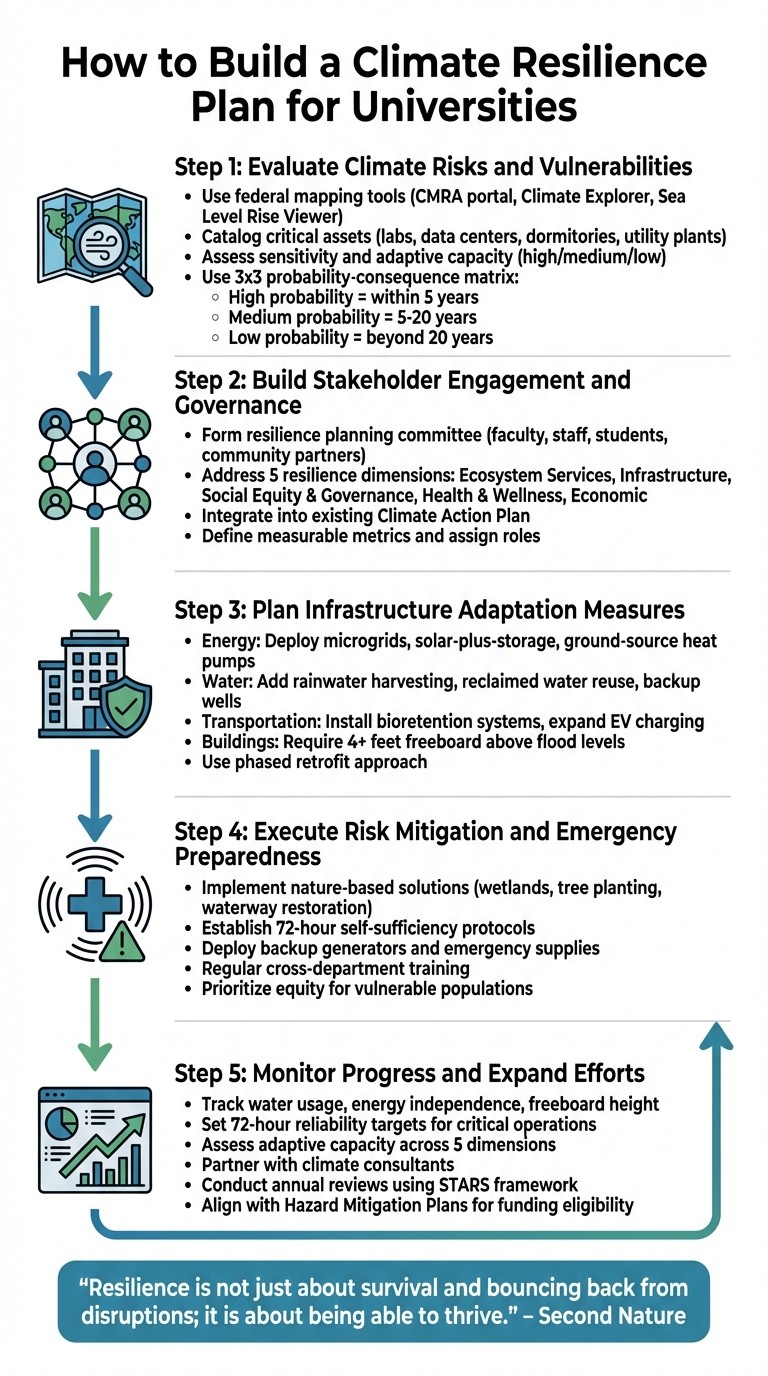
5-Step Climate Resilience Plan for Universities
CAP Webinar Series, Part 7: Embedding Resilience into your Climate Action Plan
Step 1: Evaluate Climate Risks and Vulnerabilities
To kickstart your resilience plan, it’s essential to identify the specific climate challenges your institution faces and determine the areas where your campus is most exposed. This requires a focused, data-driven analysis of potential hazards and their impacts, forming the backbone of sound decision-making.
Start by utilizing federal mapping tools to identify threats unique to your location. Resources like the CMRA portal provide historical and forecasted climate data [9], while The Climate Explorer offers insights into temperature, precipitation, and extreme weather trends [5][8]. For coastal flooding risks, the Sea Level Rise Viewer is invaluable, and the Wildfire Risk to Communities tool highlights localized fire threats [5][6].
Next, evaluate how these hazards could affect critical campus infrastructure and operations. Build a spreadsheet cataloging vital assets - such as laboratories, data centers, dormitories, and utility plants - alongside the hazards they face. For each asset-hazard combination, assess two key factors: sensitivity (the extent of possible damage) and adaptive capacity (how well it can recover). Rate these factors as high, medium, or low [7].
To prioritize risks, use a 3x3 matrix that considers "Probability" and "Magnitude of Consequence." Define "High" probability for events expected within five years, "Medium" for those likely in 5–20 years, and "Low" for anything beyond that timeframe [7]. Focus your planning efforts on asset-hazard combinations that score high in both probability and consequence, or high in one and medium in the other - especially when they involve critical infrastructure like telecommunications hubs or central utility plants.
Step 2: Build Stakeholder Engagement and Governance
After identifying your climate risks, the next essential step is setting up a governance structure and fostering stakeholder collaboration to move your plan forward. Addressing climate adaptation requires a coordinated effort that spans your entire institution and extends into the surrounding community.
Create a Resilience Planning Committee
Start by forming a resilience planning committee that draws on a variety of perspectives and expertise. This group should include faculty from relevant fields, facilities and operations staff, sustainability officers, student representatives, and local community partners [3][8]. Collaborating with local resource networks can also strengthen your efforts [3].
Bring in champions from the community, government, and technical consulting fields to guide the process. These leaders can help navigate institutional systems and provide the technical expertise needed to advance your resilience initiatives [8].
Gather and Apply Stakeholder Input
Building on the committee’s work, gather insights from all relevant stakeholders to refine your plan. Identify key groups, such as community members and institutional representatives, whose input will shape your approach [8]. Effective engagement should address five critical dimensions of resilience: Ecosystem Services, Infrastructure, Social Equity & Governance, Health & Wellness, and Economic considerations [3].
To streamline this process, integrate climate resilience into existing planning cycles [8]. For example, many institutions already host community sessions for documents like Hazard Mitigation Plans - these meetings are an opportunity to incorporate resilience discussions. Tools like a "Resilience Prioritization Quadrant" can help stakeholders evaluate potential actions based on urgency and importance [2].
"The most successful campus resilience plans will be those that fully embrace the dynamic resilience planning, and that incorporate diversity and inclusiveness throughout the process." – Second Nature [3]
Establish Policies, Responsibilities, and Metrics
A clear governance framework is vital for ensuring active and coordinated planning. Incorporate resilience goals into your existing Climate Action Plan (CAP) to highlight the connections between climate mitigation and adaptation efforts [2].
Define measurable resilience metrics and assign specific roles for areas like infrastructure, emergency response, and community coordination [2][3][8]. Keep in mind that resilience planning is an ongoing process, not a one-time task. Your governance structure should enable simultaneous work on assessment, planning, and implementation [3][8]. This approach will help create institutions that are better prepared to sustain their missions in the face of climate challenges.
Start by establishing your resilience planning committee to drive these integrated efforts forward.
Step 3: Plan Infrastructure Adaptation Measures
With a strong governance framework in place, the next step is to focus on making critical infrastructure more resilient. This involves adapting essential campus systems - such as energy, water, and buildings - to better handle the challenges posed by climate disruptions.
Strengthening Energy Systems with Renewables
To ensure uninterrupted power during outages, consider integrating microgrids and distributed renewable energy systems like solar-plus-storage and combined heat and power (CHP) setups. Solar-plus-storage systems pair photovoltaic panels with battery storage, providing reliable power while also helping to lower peak demand charges[11].
"Combining renewable energy with electricity storage can help hospitals remain operational during extreme weather or other disruptions to the electric grid." – Practice Greenhealth[11]
Critical infrastructure should also be fortified by elevating components above anticipated flood levels and designing systems to function independently during extended outages[1]. Ground-source heat pumps, particularly when powered by renewable electricity, can offer an energy-efficient solution for both heating and cooling needs[11].
Securing Water and Transportation Systems
To safeguard water supplies, diversify sources and improve stormwater management. Consider adding rainwater harvesting systems, reclaimed water reuse infrastructure, and backup wells to maintain operations if municipal water is disrupted[10]. Sewer systems can benefit from continuous deflection separation units, which help prevent debris contamination during floods[1]. Reclaimed water systems also reduce strain on primary water sources[10].
Transportation infrastructure offers another opportunity to enhance resilience. When planning road maintenance, incorporate bioretention systems and green infrastructure along streets to manage stormwater runoff[12]. Expanding EV charging stations can support an electrified campus fleet, cutting emissions while improving adaptability[1]. Additionally, updating building codes to require at least four feet of freeboard above base flood levels for renovated facilities and utilities can help mitigate flood risks[1]. These measures create a solid foundation for future retrofits aimed at bolstering campus resilience.
Rolling Out Phased Building Retrofits
Rather than upgrading the entire campus at once, take a phased approach by prioritizing retrofits based on urgency and potential impact. Use a Resilience Prioritization Quadrant to identify high-risk buildings and focus on those first. Start with a baseline assessment to locate inefficiencies in resource use, and incorporate upgrades into regular maintenance schedules[1][2][3][8]. This strategy minimizes disruptions by aligning resilience improvements with existing sustainability goals.
To ensure continuity during construction, plan for temporary relocation of critical operations[1]. As new climate data becomes available and institutional needs evolve, regularly review and adjust your retrofit schedule to stay aligned with long-term objectives[3].
Step 4: Execute Risk Mitigation and Emergency Preparedness
With risk assessments and infrastructure adjustments in place, the next step is to turn plans into concrete actions that safeguard people, property, and operations during extreme climate events.
Use Nature-Based Solutions
Incorporating nature-based solutions can play a critical role in managing climate risks. Wetlands and natural drainage systems, for instance, help control rainfall runoff and maintain water quality. By integrating these solutions into campus designs through updated land-use codes, institutions can enhance their resilience. Planting trees and managing forests can reduce the urban heat island effect, helping to combat extreme heat. Additionally, restoring natural waterways - such as removing fish barriers or improving river ecosystems - strengthens both ecological health and community preparedness. These environmentally conscious measures lay a strong foundation for effective emergency protocols [1].
Create Emergency Response Plans and Training
Developing comprehensive emergency response plans is essential for maintaining operations during extreme weather. Establish protocols for 72-hour self-sufficiency, including backup generators, emergency supplies, and designated relocation centers. For example, the University of Minnesota-Twin Cities' Climate Resilience Plan incorporates a formal Resilience Assessment to guide its strategies [2]. After severe flooding, the Texas Medical Center rebuilt its infrastructure to withstand future events, ensuring critical healthcare services remain operational during crises [1].
Regular training across departments is key to ensuring readiness. This includes familiarizing teams with response protocols, relocation sites, and the proper use of emergency resources. Institutions should also invest in hazard-specific tools, such as flood-response equipment and operational microgrids for extreme heat scenarios. As climate conditions evolve, these plans should be reviewed and updated to reflect the latest data. Beyond immediate preparedness, these efforts should encompass support for the entire campus community.
Address Equity in Resilience Planning
Equity must remain a central focus in resilience efforts. Support vulnerable populations - including students and staff with disabilities or those facing financial challenges - by implementing flexible policies, accessible services, and emergency funding during climate crises [13].
"Institutions should prioritize support for members of their community who are most vulnerable to climate change." – The Aspen Institute [13]
Engaging historically marginalized groups is also crucial. Formal partnerships and feedback mechanisms can ensure that resilience strategies are inclusive and effective. Extending technical assistance to nearby communities lacking resources further amplifies the impact of these efforts, fostering broader adaptation and protection.
Step 5: Monitor Progress and Expand Efforts
Creating a climate resilience plan isn’t a one-and-done task - it’s a continuous process that evolves along with changing climate conditions. To remain effective, institutions need to track their progress consistently and commit to refining their strategies over time.
Monitor Key Performance Indicators
Keeping an eye on key metrics is essential to measure progress and identify areas for improvement. For instance, analyzing water usage trends at the building level can uncover ways to mitigate drought risks. Similarly, tracking energy independence metrics, such as microgrid capacity and renewable energy adoption, highlights advancements in ensuring reliable power during extreme heat or grid disruptions [1]. Physical measures like "freeboard" height - ensuring buildings are elevated at least 4 feet above base flood levels in flood-prone areas - are also critical [1]. When it comes to emergency preparedness, setting time-based reliability targets - such as maintaining 72-hour self-sufficiency for generators and critical operations - can make a significant difference during disasters [1].
"Resilience is not just about survival and bouncing back from disruptions; it is about being able to thrive." – Second Nature [3]
Institutions should also evaluate their adaptive capacity, or their ability to thrive under shifting conditions. This involves assessing progress across five areas: Ecosystem Services, Infrastructure, Social Equity & Governance, Health & Wellness, and Economic Stability [3]. To avoid duplicating efforts, integrate these metrics into existing Climate Action Plans, ensuring alignment between emissions reduction and adaptation strategies [2]. With these benchmarks in place, institutions can turn to experts for guidance in refining their approaches.
Work with Consulting Partners for Guidance
Once metrics are established, collaborating with professional climate-service consultants can provide the specialized expertise needed to address risks and vulnerabilities. These experts help document evolving hazards, craft professional-grade Climate Action Plans, and simplify complex climate data into actionable steps [8]. For example, Council Fire offers technical expertise and planning support, helping universities achieve measurable progress in resilience, stakeholder engagement, and infrastructure improvements. Partnering with experienced professionals not only enhances the quality of your resilience plan but also strengthens your institution’s chances of securing federal and state funding.
Review Plans Annually and Obtain Funding
Regular evaluation is key to keeping your resilience plan relevant. Annual reviews, guided by frameworks like "Steps to Resilience", ensure your strategy adapts to shifting campus needs. These reviews should revisit emissions reduction targets to confirm they align with resilience goals - such as ensuring backup power systems support both emergency operations and long-term carbon reduction efforts [2].
Using tools like the Sustainability Tracking, Assessment & Rating System (STARS) to measure and report progress annually can also open doors to funding opportunities. When resilience objectives align with official Hazard Mitigation Plans, institutions become eligible for federal and state programs [4][8]. Dashboards that track building-level data can demonstrate a clear return on investment, strengthening future funding requests [1]. To maximize impact, focus on high-priority projects and use community engagement sessions to incorporate climate considerations into broader institutional plans [8].
Conclusion
Creating a plan for climate resilience is not a one-time task but an ongoing process that evolves with changing conditions. A thoughtful five-step approach - assessing risks, engaging stakeholders, adapting infrastructure, implementing mitigation efforts, and maintaining regular monitoring - provides a structured path to prepare for and navigate climate challenges effectively.
The most effective plans take a broad, interconnected view, addressing key areas like Ecosystem Services, Infrastructure, Social Equity & Governance, Health & Wellness, and Economic Stability. Rather than treating resilience as a standalone effort, incorporate these objectives directly into your existing Climate Action Plan. This alignment ensures that emissions reduction and adaptation strategies complement each other. For example, the University of Minnesota-Twin Cities in 2024 demonstrated how an integrated Climate Resilience Plan can serve as a blueprint for embedding climate action into institutional priorities, offering tailored strategies to address specific challenges [2]. Such integration not only safeguards operations during disruptions but also reaffirms a commitment to forward-thinking sustainability efforts.
FAQs
What steps can universities take to identify and address their biggest climate risks?
To tackle their most pressing climate risks, universities should begin by evaluating their exposure to potential climate hazards like extreme heat, flooding, or water shortages. This process involves reviewing local climate projections and mapping these risks against key campus assets, such as buildings, research facilities, and essential infrastructure.
Following this, conducting a vulnerability and risk assessment is critical. This step examines how susceptible these assets are to climate impacts and assesses the institution's ability to adapt. Attention should be directed toward risks that could disrupt core operations, such as student housing, research activities, or public safety. Prioritize measures that strike a balance between mitigation, adaptation, and equitable outcomes.
Equally important is engaging stakeholders - faculty, staff, students, and community partners - throughout the process. Including a variety of perspectives not only enhances the plan’s credibility but also fosters a campus environment that is resilient, forward-thinking, and better equipped to face future climate challenges.
Why is stakeholder involvement crucial in creating a climate resilience plan for universities?
Stakeholders - including faculty, staff, students, alumni, donors, local community members, and municipal partners - are essential to shaping and carrying out a university’s climate resilience plan. Involving such a wide range of voices early on allows institutions to gather critical perspectives on issues like equity, health, infrastructure, and economic impacts. This ensures the plan is grounded in practical needs and is more likely to earn broad support.
Bringing stakeholders into the process also fosters collaboration and promotes clear communication. Each group offers unique expertise, helps evaluate risks, and identifies priority actions, contributing to a shared vision for the university’s future. This inclusive strategy not only strengthens the plan’s credibility but also builds the trust and commitment needed to ensure its long-term success.
How can universities and research institutions create climate resilience plans that are inclusive and equitable?
To build climate resilience plans that genuinely address the needs of all, institutions must weave social equity into every phase of their planning efforts. This begins with identifying groups most at risk, understanding the challenges they face, and directing resources to bridge these gaps. Equity-focused assessments are essential for setting clear, measurable goals that ensure fair access to essentials like housing, transportation, and emergency services - alongside meeting emissions-reduction targets.
Bringing diverse voices into the conversation is equally important. Engaging stakeholders such as students, faculty, staff, local residents, and historically underserved communities from the outset and throughout the process can reveal overlooked vulnerabilities. This collaboration fosters trust and encourages shared ownership of solutions. Tools like inclusive workshops and demographic risk mapping can help guide decisions and prioritize actions that protect those most at risk.
Equity also needs to be embedded in governance and funding structures. Accountability mechanisms, such as appointing equity officers or forming advisory boards, can help ensure fairness remains central to decision-making. Additionally, dedicated funding - through grants or specific budget allocations - can support projects that address disparities, such as retrofitting buildings in flood-prone areas or expanding mental health support after extreme weather events. Regular progress tracking and transparent reporting will keep equity at the forefront of your climate strategy.
Related Blog Posts
Latest Articles
©2025


FAQ
01
What does it really mean to “redefine profit”?
02
What makes Council Fire different?
03
Who does Council Fire you work with?
04
What does working with Council Fire actually look like?
05
How does Council Fire help organizations turn big goals into action?
06
How does Council Fire define and measure success?
Dec 29, 2025
How to Build a Climate Resilience Plan for Universities & Research Institutions
Sustainability Strategy
In This Article
Practical 5-step guide for universities to assess climate risks, engage stakeholders, strengthen infrastructure, prepare emergencies, and monitor resilience.
How to Build a Climate Resilience Plan for Universities & Research Institutions
Universities and research institutions face growing risks from climate change, including flooding, heatwaves, and infrastructure disruptions. A robust climate resilience plan can help safeguard operations, protect critical facilities, and ensure long-term stability. Here's a quick breakdown of the key steps:
Identify Risks: Use tools like federal maps and climate data to assess threats such as flooding, heat, and wildfires.
Engage Stakeholders: Form a planning committee with faculty, staff, students, and community partners.
Fortify Infrastructure: Upgrade systems like energy, water, and transportation to withstand extreme weather.
Prepare for Emergencies: Develop response plans, train staff, and ensure 72-hour self-sufficiency for critical operations.
Track Progress: Monitor metrics like energy use and water management, and update plans annually.
5-Step Climate Resilience Plan for Universities
CAP Webinar Series, Part 7: Embedding Resilience into your Climate Action Plan
Step 1: Evaluate Climate Risks and Vulnerabilities
To kickstart your resilience plan, it’s essential to identify the specific climate challenges your institution faces and determine the areas where your campus is most exposed. This requires a focused, data-driven analysis of potential hazards and their impacts, forming the backbone of sound decision-making.
Start by utilizing federal mapping tools to identify threats unique to your location. Resources like the CMRA portal provide historical and forecasted climate data [9], while The Climate Explorer offers insights into temperature, precipitation, and extreme weather trends [5][8]. For coastal flooding risks, the Sea Level Rise Viewer is invaluable, and the Wildfire Risk to Communities tool highlights localized fire threats [5][6].
Next, evaluate how these hazards could affect critical campus infrastructure and operations. Build a spreadsheet cataloging vital assets - such as laboratories, data centers, dormitories, and utility plants - alongside the hazards they face. For each asset-hazard combination, assess two key factors: sensitivity (the extent of possible damage) and adaptive capacity (how well it can recover). Rate these factors as high, medium, or low [7].
To prioritize risks, use a 3x3 matrix that considers "Probability" and "Magnitude of Consequence." Define "High" probability for events expected within five years, "Medium" for those likely in 5–20 years, and "Low" for anything beyond that timeframe [7]. Focus your planning efforts on asset-hazard combinations that score high in both probability and consequence, or high in one and medium in the other - especially when they involve critical infrastructure like telecommunications hubs or central utility plants.
Step 2: Build Stakeholder Engagement and Governance
After identifying your climate risks, the next essential step is setting up a governance structure and fostering stakeholder collaboration to move your plan forward. Addressing climate adaptation requires a coordinated effort that spans your entire institution and extends into the surrounding community.
Create a Resilience Planning Committee
Start by forming a resilience planning committee that draws on a variety of perspectives and expertise. This group should include faculty from relevant fields, facilities and operations staff, sustainability officers, student representatives, and local community partners [3][8]. Collaborating with local resource networks can also strengthen your efforts [3].
Bring in champions from the community, government, and technical consulting fields to guide the process. These leaders can help navigate institutional systems and provide the technical expertise needed to advance your resilience initiatives [8].
Gather and Apply Stakeholder Input
Building on the committee’s work, gather insights from all relevant stakeholders to refine your plan. Identify key groups, such as community members and institutional representatives, whose input will shape your approach [8]. Effective engagement should address five critical dimensions of resilience: Ecosystem Services, Infrastructure, Social Equity & Governance, Health & Wellness, and Economic considerations [3].
To streamline this process, integrate climate resilience into existing planning cycles [8]. For example, many institutions already host community sessions for documents like Hazard Mitigation Plans - these meetings are an opportunity to incorporate resilience discussions. Tools like a "Resilience Prioritization Quadrant" can help stakeholders evaluate potential actions based on urgency and importance [2].
"The most successful campus resilience plans will be those that fully embrace the dynamic resilience planning, and that incorporate diversity and inclusiveness throughout the process." – Second Nature [3]
Establish Policies, Responsibilities, and Metrics
A clear governance framework is vital for ensuring active and coordinated planning. Incorporate resilience goals into your existing Climate Action Plan (CAP) to highlight the connections between climate mitigation and adaptation efforts [2].
Define measurable resilience metrics and assign specific roles for areas like infrastructure, emergency response, and community coordination [2][3][8]. Keep in mind that resilience planning is an ongoing process, not a one-time task. Your governance structure should enable simultaneous work on assessment, planning, and implementation [3][8]. This approach will help create institutions that are better prepared to sustain their missions in the face of climate challenges.
Start by establishing your resilience planning committee to drive these integrated efforts forward.
Step 3: Plan Infrastructure Adaptation Measures
With a strong governance framework in place, the next step is to focus on making critical infrastructure more resilient. This involves adapting essential campus systems - such as energy, water, and buildings - to better handle the challenges posed by climate disruptions.
Strengthening Energy Systems with Renewables
To ensure uninterrupted power during outages, consider integrating microgrids and distributed renewable energy systems like solar-plus-storage and combined heat and power (CHP) setups. Solar-plus-storage systems pair photovoltaic panels with battery storage, providing reliable power while also helping to lower peak demand charges[11].
"Combining renewable energy with electricity storage can help hospitals remain operational during extreme weather or other disruptions to the electric grid." – Practice Greenhealth[11]
Critical infrastructure should also be fortified by elevating components above anticipated flood levels and designing systems to function independently during extended outages[1]. Ground-source heat pumps, particularly when powered by renewable electricity, can offer an energy-efficient solution for both heating and cooling needs[11].
Securing Water and Transportation Systems
To safeguard water supplies, diversify sources and improve stormwater management. Consider adding rainwater harvesting systems, reclaimed water reuse infrastructure, and backup wells to maintain operations if municipal water is disrupted[10]. Sewer systems can benefit from continuous deflection separation units, which help prevent debris contamination during floods[1]. Reclaimed water systems also reduce strain on primary water sources[10].
Transportation infrastructure offers another opportunity to enhance resilience. When planning road maintenance, incorporate bioretention systems and green infrastructure along streets to manage stormwater runoff[12]. Expanding EV charging stations can support an electrified campus fleet, cutting emissions while improving adaptability[1]. Additionally, updating building codes to require at least four feet of freeboard above base flood levels for renovated facilities and utilities can help mitigate flood risks[1]. These measures create a solid foundation for future retrofits aimed at bolstering campus resilience.
Rolling Out Phased Building Retrofits
Rather than upgrading the entire campus at once, take a phased approach by prioritizing retrofits based on urgency and potential impact. Use a Resilience Prioritization Quadrant to identify high-risk buildings and focus on those first. Start with a baseline assessment to locate inefficiencies in resource use, and incorporate upgrades into regular maintenance schedules[1][2][3][8]. This strategy minimizes disruptions by aligning resilience improvements with existing sustainability goals.
To ensure continuity during construction, plan for temporary relocation of critical operations[1]. As new climate data becomes available and institutional needs evolve, regularly review and adjust your retrofit schedule to stay aligned with long-term objectives[3].
Step 4: Execute Risk Mitigation and Emergency Preparedness
With risk assessments and infrastructure adjustments in place, the next step is to turn plans into concrete actions that safeguard people, property, and operations during extreme climate events.
Use Nature-Based Solutions
Incorporating nature-based solutions can play a critical role in managing climate risks. Wetlands and natural drainage systems, for instance, help control rainfall runoff and maintain water quality. By integrating these solutions into campus designs through updated land-use codes, institutions can enhance their resilience. Planting trees and managing forests can reduce the urban heat island effect, helping to combat extreme heat. Additionally, restoring natural waterways - such as removing fish barriers or improving river ecosystems - strengthens both ecological health and community preparedness. These environmentally conscious measures lay a strong foundation for effective emergency protocols [1].
Create Emergency Response Plans and Training
Developing comprehensive emergency response plans is essential for maintaining operations during extreme weather. Establish protocols for 72-hour self-sufficiency, including backup generators, emergency supplies, and designated relocation centers. For example, the University of Minnesota-Twin Cities' Climate Resilience Plan incorporates a formal Resilience Assessment to guide its strategies [2]. After severe flooding, the Texas Medical Center rebuilt its infrastructure to withstand future events, ensuring critical healthcare services remain operational during crises [1].
Regular training across departments is key to ensuring readiness. This includes familiarizing teams with response protocols, relocation sites, and the proper use of emergency resources. Institutions should also invest in hazard-specific tools, such as flood-response equipment and operational microgrids for extreme heat scenarios. As climate conditions evolve, these plans should be reviewed and updated to reflect the latest data. Beyond immediate preparedness, these efforts should encompass support for the entire campus community.
Address Equity in Resilience Planning
Equity must remain a central focus in resilience efforts. Support vulnerable populations - including students and staff with disabilities or those facing financial challenges - by implementing flexible policies, accessible services, and emergency funding during climate crises [13].
"Institutions should prioritize support for members of their community who are most vulnerable to climate change." – The Aspen Institute [13]
Engaging historically marginalized groups is also crucial. Formal partnerships and feedback mechanisms can ensure that resilience strategies are inclusive and effective. Extending technical assistance to nearby communities lacking resources further amplifies the impact of these efforts, fostering broader adaptation and protection.
Step 5: Monitor Progress and Expand Efforts
Creating a climate resilience plan isn’t a one-and-done task - it’s a continuous process that evolves along with changing climate conditions. To remain effective, institutions need to track their progress consistently and commit to refining their strategies over time.
Monitor Key Performance Indicators
Keeping an eye on key metrics is essential to measure progress and identify areas for improvement. For instance, analyzing water usage trends at the building level can uncover ways to mitigate drought risks. Similarly, tracking energy independence metrics, such as microgrid capacity and renewable energy adoption, highlights advancements in ensuring reliable power during extreme heat or grid disruptions [1]. Physical measures like "freeboard" height - ensuring buildings are elevated at least 4 feet above base flood levels in flood-prone areas - are also critical [1]. When it comes to emergency preparedness, setting time-based reliability targets - such as maintaining 72-hour self-sufficiency for generators and critical operations - can make a significant difference during disasters [1].
"Resilience is not just about survival and bouncing back from disruptions; it is about being able to thrive." – Second Nature [3]
Institutions should also evaluate their adaptive capacity, or their ability to thrive under shifting conditions. This involves assessing progress across five areas: Ecosystem Services, Infrastructure, Social Equity & Governance, Health & Wellness, and Economic Stability [3]. To avoid duplicating efforts, integrate these metrics into existing Climate Action Plans, ensuring alignment between emissions reduction and adaptation strategies [2]. With these benchmarks in place, institutions can turn to experts for guidance in refining their approaches.
Work with Consulting Partners for Guidance
Once metrics are established, collaborating with professional climate-service consultants can provide the specialized expertise needed to address risks and vulnerabilities. These experts help document evolving hazards, craft professional-grade Climate Action Plans, and simplify complex climate data into actionable steps [8]. For example, Council Fire offers technical expertise and planning support, helping universities achieve measurable progress in resilience, stakeholder engagement, and infrastructure improvements. Partnering with experienced professionals not only enhances the quality of your resilience plan but also strengthens your institution’s chances of securing federal and state funding.
Review Plans Annually and Obtain Funding
Regular evaluation is key to keeping your resilience plan relevant. Annual reviews, guided by frameworks like "Steps to Resilience", ensure your strategy adapts to shifting campus needs. These reviews should revisit emissions reduction targets to confirm they align with resilience goals - such as ensuring backup power systems support both emergency operations and long-term carbon reduction efforts [2].
Using tools like the Sustainability Tracking, Assessment & Rating System (STARS) to measure and report progress annually can also open doors to funding opportunities. When resilience objectives align with official Hazard Mitigation Plans, institutions become eligible for federal and state programs [4][8]. Dashboards that track building-level data can demonstrate a clear return on investment, strengthening future funding requests [1]. To maximize impact, focus on high-priority projects and use community engagement sessions to incorporate climate considerations into broader institutional plans [8].
Conclusion
Creating a plan for climate resilience is not a one-time task but an ongoing process that evolves with changing conditions. A thoughtful five-step approach - assessing risks, engaging stakeholders, adapting infrastructure, implementing mitigation efforts, and maintaining regular monitoring - provides a structured path to prepare for and navigate climate challenges effectively.
The most effective plans take a broad, interconnected view, addressing key areas like Ecosystem Services, Infrastructure, Social Equity & Governance, Health & Wellness, and Economic Stability. Rather than treating resilience as a standalone effort, incorporate these objectives directly into your existing Climate Action Plan. This alignment ensures that emissions reduction and adaptation strategies complement each other. For example, the University of Minnesota-Twin Cities in 2024 demonstrated how an integrated Climate Resilience Plan can serve as a blueprint for embedding climate action into institutional priorities, offering tailored strategies to address specific challenges [2]. Such integration not only safeguards operations during disruptions but also reaffirms a commitment to forward-thinking sustainability efforts.
FAQs
What steps can universities take to identify and address their biggest climate risks?
To tackle their most pressing climate risks, universities should begin by evaluating their exposure to potential climate hazards like extreme heat, flooding, or water shortages. This process involves reviewing local climate projections and mapping these risks against key campus assets, such as buildings, research facilities, and essential infrastructure.
Following this, conducting a vulnerability and risk assessment is critical. This step examines how susceptible these assets are to climate impacts and assesses the institution's ability to adapt. Attention should be directed toward risks that could disrupt core operations, such as student housing, research activities, or public safety. Prioritize measures that strike a balance between mitigation, adaptation, and equitable outcomes.
Equally important is engaging stakeholders - faculty, staff, students, and community partners - throughout the process. Including a variety of perspectives not only enhances the plan’s credibility but also fosters a campus environment that is resilient, forward-thinking, and better equipped to face future climate challenges.
Why is stakeholder involvement crucial in creating a climate resilience plan for universities?
Stakeholders - including faculty, staff, students, alumni, donors, local community members, and municipal partners - are essential to shaping and carrying out a university’s climate resilience plan. Involving such a wide range of voices early on allows institutions to gather critical perspectives on issues like equity, health, infrastructure, and economic impacts. This ensures the plan is grounded in practical needs and is more likely to earn broad support.
Bringing stakeholders into the process also fosters collaboration and promotes clear communication. Each group offers unique expertise, helps evaluate risks, and identifies priority actions, contributing to a shared vision for the university’s future. This inclusive strategy not only strengthens the plan’s credibility but also builds the trust and commitment needed to ensure its long-term success.
How can universities and research institutions create climate resilience plans that are inclusive and equitable?
To build climate resilience plans that genuinely address the needs of all, institutions must weave social equity into every phase of their planning efforts. This begins with identifying groups most at risk, understanding the challenges they face, and directing resources to bridge these gaps. Equity-focused assessments are essential for setting clear, measurable goals that ensure fair access to essentials like housing, transportation, and emergency services - alongside meeting emissions-reduction targets.
Bringing diverse voices into the conversation is equally important. Engaging stakeholders such as students, faculty, staff, local residents, and historically underserved communities from the outset and throughout the process can reveal overlooked vulnerabilities. This collaboration fosters trust and encourages shared ownership of solutions. Tools like inclusive workshops and demographic risk mapping can help guide decisions and prioritize actions that protect those most at risk.
Equity also needs to be embedded in governance and funding structures. Accountability mechanisms, such as appointing equity officers or forming advisory boards, can help ensure fairness remains central to decision-making. Additionally, dedicated funding - through grants or specific budget allocations - can support projects that address disparities, such as retrofitting buildings in flood-prone areas or expanding mental health support after extreme weather events. Regular progress tracking and transparent reporting will keep equity at the forefront of your climate strategy.
Related Blog Posts
FAQ
01
What does it really mean to “redefine profit”?
02
What makes Council Fire different?
03
Who does Council Fire you work with?
04
What does working with Council Fire actually look like?
05
How does Council Fire help organizations turn big goals into action?
06
How does Council Fire define and measure success?
Dec 29, 2025
How to Build a Climate Resilience Plan for Universities & Research Institutions
Sustainability Strategy
In This Article
Practical 5-step guide for universities to assess climate risks, engage stakeholders, strengthen infrastructure, prepare emergencies, and monitor resilience.
How to Build a Climate Resilience Plan for Universities & Research Institutions
Universities and research institutions face growing risks from climate change, including flooding, heatwaves, and infrastructure disruptions. A robust climate resilience plan can help safeguard operations, protect critical facilities, and ensure long-term stability. Here's a quick breakdown of the key steps:
Identify Risks: Use tools like federal maps and climate data to assess threats such as flooding, heat, and wildfires.
Engage Stakeholders: Form a planning committee with faculty, staff, students, and community partners.
Fortify Infrastructure: Upgrade systems like energy, water, and transportation to withstand extreme weather.
Prepare for Emergencies: Develop response plans, train staff, and ensure 72-hour self-sufficiency for critical operations.
Track Progress: Monitor metrics like energy use and water management, and update plans annually.
5-Step Climate Resilience Plan for Universities
CAP Webinar Series, Part 7: Embedding Resilience into your Climate Action Plan
Step 1: Evaluate Climate Risks and Vulnerabilities
To kickstart your resilience plan, it’s essential to identify the specific climate challenges your institution faces and determine the areas where your campus is most exposed. This requires a focused, data-driven analysis of potential hazards and their impacts, forming the backbone of sound decision-making.
Start by utilizing federal mapping tools to identify threats unique to your location. Resources like the CMRA portal provide historical and forecasted climate data [9], while The Climate Explorer offers insights into temperature, precipitation, and extreme weather trends [5][8]. For coastal flooding risks, the Sea Level Rise Viewer is invaluable, and the Wildfire Risk to Communities tool highlights localized fire threats [5][6].
Next, evaluate how these hazards could affect critical campus infrastructure and operations. Build a spreadsheet cataloging vital assets - such as laboratories, data centers, dormitories, and utility plants - alongside the hazards they face. For each asset-hazard combination, assess two key factors: sensitivity (the extent of possible damage) and adaptive capacity (how well it can recover). Rate these factors as high, medium, or low [7].
To prioritize risks, use a 3x3 matrix that considers "Probability" and "Magnitude of Consequence." Define "High" probability for events expected within five years, "Medium" for those likely in 5–20 years, and "Low" for anything beyond that timeframe [7]. Focus your planning efforts on asset-hazard combinations that score high in both probability and consequence, or high in one and medium in the other - especially when they involve critical infrastructure like telecommunications hubs or central utility plants.
Step 2: Build Stakeholder Engagement and Governance
After identifying your climate risks, the next essential step is setting up a governance structure and fostering stakeholder collaboration to move your plan forward. Addressing climate adaptation requires a coordinated effort that spans your entire institution and extends into the surrounding community.
Create a Resilience Planning Committee
Start by forming a resilience planning committee that draws on a variety of perspectives and expertise. This group should include faculty from relevant fields, facilities and operations staff, sustainability officers, student representatives, and local community partners [3][8]. Collaborating with local resource networks can also strengthen your efforts [3].
Bring in champions from the community, government, and technical consulting fields to guide the process. These leaders can help navigate institutional systems and provide the technical expertise needed to advance your resilience initiatives [8].
Gather and Apply Stakeholder Input
Building on the committee’s work, gather insights from all relevant stakeholders to refine your plan. Identify key groups, such as community members and institutional representatives, whose input will shape your approach [8]. Effective engagement should address five critical dimensions of resilience: Ecosystem Services, Infrastructure, Social Equity & Governance, Health & Wellness, and Economic considerations [3].
To streamline this process, integrate climate resilience into existing planning cycles [8]. For example, many institutions already host community sessions for documents like Hazard Mitigation Plans - these meetings are an opportunity to incorporate resilience discussions. Tools like a "Resilience Prioritization Quadrant" can help stakeholders evaluate potential actions based on urgency and importance [2].
"The most successful campus resilience plans will be those that fully embrace the dynamic resilience planning, and that incorporate diversity and inclusiveness throughout the process." – Second Nature [3]
Establish Policies, Responsibilities, and Metrics
A clear governance framework is vital for ensuring active and coordinated planning. Incorporate resilience goals into your existing Climate Action Plan (CAP) to highlight the connections between climate mitigation and adaptation efforts [2].
Define measurable resilience metrics and assign specific roles for areas like infrastructure, emergency response, and community coordination [2][3][8]. Keep in mind that resilience planning is an ongoing process, not a one-time task. Your governance structure should enable simultaneous work on assessment, planning, and implementation [3][8]. This approach will help create institutions that are better prepared to sustain their missions in the face of climate challenges.
Start by establishing your resilience planning committee to drive these integrated efforts forward.
Step 3: Plan Infrastructure Adaptation Measures
With a strong governance framework in place, the next step is to focus on making critical infrastructure more resilient. This involves adapting essential campus systems - such as energy, water, and buildings - to better handle the challenges posed by climate disruptions.
Strengthening Energy Systems with Renewables
To ensure uninterrupted power during outages, consider integrating microgrids and distributed renewable energy systems like solar-plus-storage and combined heat and power (CHP) setups. Solar-plus-storage systems pair photovoltaic panels with battery storage, providing reliable power while also helping to lower peak demand charges[11].
"Combining renewable energy with electricity storage can help hospitals remain operational during extreme weather or other disruptions to the electric grid." – Practice Greenhealth[11]
Critical infrastructure should also be fortified by elevating components above anticipated flood levels and designing systems to function independently during extended outages[1]. Ground-source heat pumps, particularly when powered by renewable electricity, can offer an energy-efficient solution for both heating and cooling needs[11].
Securing Water and Transportation Systems
To safeguard water supplies, diversify sources and improve stormwater management. Consider adding rainwater harvesting systems, reclaimed water reuse infrastructure, and backup wells to maintain operations if municipal water is disrupted[10]. Sewer systems can benefit from continuous deflection separation units, which help prevent debris contamination during floods[1]. Reclaimed water systems also reduce strain on primary water sources[10].
Transportation infrastructure offers another opportunity to enhance resilience. When planning road maintenance, incorporate bioretention systems and green infrastructure along streets to manage stormwater runoff[12]. Expanding EV charging stations can support an electrified campus fleet, cutting emissions while improving adaptability[1]. Additionally, updating building codes to require at least four feet of freeboard above base flood levels for renovated facilities and utilities can help mitigate flood risks[1]. These measures create a solid foundation for future retrofits aimed at bolstering campus resilience.
Rolling Out Phased Building Retrofits
Rather than upgrading the entire campus at once, take a phased approach by prioritizing retrofits based on urgency and potential impact. Use a Resilience Prioritization Quadrant to identify high-risk buildings and focus on those first. Start with a baseline assessment to locate inefficiencies in resource use, and incorporate upgrades into regular maintenance schedules[1][2][3][8]. This strategy minimizes disruptions by aligning resilience improvements with existing sustainability goals.
To ensure continuity during construction, plan for temporary relocation of critical operations[1]. As new climate data becomes available and institutional needs evolve, regularly review and adjust your retrofit schedule to stay aligned with long-term objectives[3].
Step 4: Execute Risk Mitigation and Emergency Preparedness
With risk assessments and infrastructure adjustments in place, the next step is to turn plans into concrete actions that safeguard people, property, and operations during extreme climate events.
Use Nature-Based Solutions
Incorporating nature-based solutions can play a critical role in managing climate risks. Wetlands and natural drainage systems, for instance, help control rainfall runoff and maintain water quality. By integrating these solutions into campus designs through updated land-use codes, institutions can enhance their resilience. Planting trees and managing forests can reduce the urban heat island effect, helping to combat extreme heat. Additionally, restoring natural waterways - such as removing fish barriers or improving river ecosystems - strengthens both ecological health and community preparedness. These environmentally conscious measures lay a strong foundation for effective emergency protocols [1].
Create Emergency Response Plans and Training
Developing comprehensive emergency response plans is essential for maintaining operations during extreme weather. Establish protocols for 72-hour self-sufficiency, including backup generators, emergency supplies, and designated relocation centers. For example, the University of Minnesota-Twin Cities' Climate Resilience Plan incorporates a formal Resilience Assessment to guide its strategies [2]. After severe flooding, the Texas Medical Center rebuilt its infrastructure to withstand future events, ensuring critical healthcare services remain operational during crises [1].
Regular training across departments is key to ensuring readiness. This includes familiarizing teams with response protocols, relocation sites, and the proper use of emergency resources. Institutions should also invest in hazard-specific tools, such as flood-response equipment and operational microgrids for extreme heat scenarios. As climate conditions evolve, these plans should be reviewed and updated to reflect the latest data. Beyond immediate preparedness, these efforts should encompass support for the entire campus community.
Address Equity in Resilience Planning
Equity must remain a central focus in resilience efforts. Support vulnerable populations - including students and staff with disabilities or those facing financial challenges - by implementing flexible policies, accessible services, and emergency funding during climate crises [13].
"Institutions should prioritize support for members of their community who are most vulnerable to climate change." – The Aspen Institute [13]
Engaging historically marginalized groups is also crucial. Formal partnerships and feedback mechanisms can ensure that resilience strategies are inclusive and effective. Extending technical assistance to nearby communities lacking resources further amplifies the impact of these efforts, fostering broader adaptation and protection.
Step 5: Monitor Progress and Expand Efforts
Creating a climate resilience plan isn’t a one-and-done task - it’s a continuous process that evolves along with changing climate conditions. To remain effective, institutions need to track their progress consistently and commit to refining their strategies over time.
Monitor Key Performance Indicators
Keeping an eye on key metrics is essential to measure progress and identify areas for improvement. For instance, analyzing water usage trends at the building level can uncover ways to mitigate drought risks. Similarly, tracking energy independence metrics, such as microgrid capacity and renewable energy adoption, highlights advancements in ensuring reliable power during extreme heat or grid disruptions [1]. Physical measures like "freeboard" height - ensuring buildings are elevated at least 4 feet above base flood levels in flood-prone areas - are also critical [1]. When it comes to emergency preparedness, setting time-based reliability targets - such as maintaining 72-hour self-sufficiency for generators and critical operations - can make a significant difference during disasters [1].
"Resilience is not just about survival and bouncing back from disruptions; it is about being able to thrive." – Second Nature [3]
Institutions should also evaluate their adaptive capacity, or their ability to thrive under shifting conditions. This involves assessing progress across five areas: Ecosystem Services, Infrastructure, Social Equity & Governance, Health & Wellness, and Economic Stability [3]. To avoid duplicating efforts, integrate these metrics into existing Climate Action Plans, ensuring alignment between emissions reduction and adaptation strategies [2]. With these benchmarks in place, institutions can turn to experts for guidance in refining their approaches.
Work with Consulting Partners for Guidance
Once metrics are established, collaborating with professional climate-service consultants can provide the specialized expertise needed to address risks and vulnerabilities. These experts help document evolving hazards, craft professional-grade Climate Action Plans, and simplify complex climate data into actionable steps [8]. For example, Council Fire offers technical expertise and planning support, helping universities achieve measurable progress in resilience, stakeholder engagement, and infrastructure improvements. Partnering with experienced professionals not only enhances the quality of your resilience plan but also strengthens your institution’s chances of securing federal and state funding.
Review Plans Annually and Obtain Funding
Regular evaluation is key to keeping your resilience plan relevant. Annual reviews, guided by frameworks like "Steps to Resilience", ensure your strategy adapts to shifting campus needs. These reviews should revisit emissions reduction targets to confirm they align with resilience goals - such as ensuring backup power systems support both emergency operations and long-term carbon reduction efforts [2].
Using tools like the Sustainability Tracking, Assessment & Rating System (STARS) to measure and report progress annually can also open doors to funding opportunities. When resilience objectives align with official Hazard Mitigation Plans, institutions become eligible for federal and state programs [4][8]. Dashboards that track building-level data can demonstrate a clear return on investment, strengthening future funding requests [1]. To maximize impact, focus on high-priority projects and use community engagement sessions to incorporate climate considerations into broader institutional plans [8].
Conclusion
Creating a plan for climate resilience is not a one-time task but an ongoing process that evolves with changing conditions. A thoughtful five-step approach - assessing risks, engaging stakeholders, adapting infrastructure, implementing mitigation efforts, and maintaining regular monitoring - provides a structured path to prepare for and navigate climate challenges effectively.
The most effective plans take a broad, interconnected view, addressing key areas like Ecosystem Services, Infrastructure, Social Equity & Governance, Health & Wellness, and Economic Stability. Rather than treating resilience as a standalone effort, incorporate these objectives directly into your existing Climate Action Plan. This alignment ensures that emissions reduction and adaptation strategies complement each other. For example, the University of Minnesota-Twin Cities in 2024 demonstrated how an integrated Climate Resilience Plan can serve as a blueprint for embedding climate action into institutional priorities, offering tailored strategies to address specific challenges [2]. Such integration not only safeguards operations during disruptions but also reaffirms a commitment to forward-thinking sustainability efforts.
FAQs
What steps can universities take to identify and address their biggest climate risks?
To tackle their most pressing climate risks, universities should begin by evaluating their exposure to potential climate hazards like extreme heat, flooding, or water shortages. This process involves reviewing local climate projections and mapping these risks against key campus assets, such as buildings, research facilities, and essential infrastructure.
Following this, conducting a vulnerability and risk assessment is critical. This step examines how susceptible these assets are to climate impacts and assesses the institution's ability to adapt. Attention should be directed toward risks that could disrupt core operations, such as student housing, research activities, or public safety. Prioritize measures that strike a balance between mitigation, adaptation, and equitable outcomes.
Equally important is engaging stakeholders - faculty, staff, students, and community partners - throughout the process. Including a variety of perspectives not only enhances the plan’s credibility but also fosters a campus environment that is resilient, forward-thinking, and better equipped to face future climate challenges.
Why is stakeholder involvement crucial in creating a climate resilience plan for universities?
Stakeholders - including faculty, staff, students, alumni, donors, local community members, and municipal partners - are essential to shaping and carrying out a university’s climate resilience plan. Involving such a wide range of voices early on allows institutions to gather critical perspectives on issues like equity, health, infrastructure, and economic impacts. This ensures the plan is grounded in practical needs and is more likely to earn broad support.
Bringing stakeholders into the process also fosters collaboration and promotes clear communication. Each group offers unique expertise, helps evaluate risks, and identifies priority actions, contributing to a shared vision for the university’s future. This inclusive strategy not only strengthens the plan’s credibility but also builds the trust and commitment needed to ensure its long-term success.
How can universities and research institutions create climate resilience plans that are inclusive and equitable?
To build climate resilience plans that genuinely address the needs of all, institutions must weave social equity into every phase of their planning efforts. This begins with identifying groups most at risk, understanding the challenges they face, and directing resources to bridge these gaps. Equity-focused assessments are essential for setting clear, measurable goals that ensure fair access to essentials like housing, transportation, and emergency services - alongside meeting emissions-reduction targets.
Bringing diverse voices into the conversation is equally important. Engaging stakeholders such as students, faculty, staff, local residents, and historically underserved communities from the outset and throughout the process can reveal overlooked vulnerabilities. This collaboration fosters trust and encourages shared ownership of solutions. Tools like inclusive workshops and demographic risk mapping can help guide decisions and prioritize actions that protect those most at risk.
Equity also needs to be embedded in governance and funding structures. Accountability mechanisms, such as appointing equity officers or forming advisory boards, can help ensure fairness remains central to decision-making. Additionally, dedicated funding - through grants or specific budget allocations - can support projects that address disparities, such as retrofitting buildings in flood-prone areas or expanding mental health support after extreme weather events. Regular progress tracking and transparent reporting will keep equity at the forefront of your climate strategy.
Related Blog Posts
FAQ
What does it really mean to “redefine profit”?
What makes Council Fire different?
Who does Council Fire you work with?
What does working with Council Fire actually look like?
How does Council Fire help organizations turn big goals into action?
How does Council Fire define and measure success?