Feb 28, 2026
How to Design a Circular Supply Chain Roadmap for Maritime & Logistics Companies
Sustainability Strategy
In This Article
Maritime and logistics firms must map material flows, deploy reverse logistics, recover high‑value resources, and shift to low‑carbon fuels to cut waste and boost resilience.
How to Design a Circular Supply Chain Roadmap for Maritime & Logistics Companies
Circular supply chains are transforming maritime and logistics operations by reducing waste, cutting emissions, and creating new revenue streams. Traditional linear supply chains generate inefficiencies, with over 90% of emissions and $163 billion in annual losses tied to wasted stock. By shifting to circular practices - repairing, reusing, and recycling materials - companies can reduce costs, secure resources, and boost resilience.
Key Steps to Build a Circular Supply Chain:
Evaluate Current Supply Chains: Map material flows, identify inefficiencies, and use tools like Life Cycle Analysis (LCA) to measure emissions and resource use.
Apply Circular Principles: Design ships and ports for repairability and recyclability, adopt modular construction, and use low-carbon materials.
Develop Reverse Logistics: Create systems to recover, refurbish, and redistribute materials, recovering up to 65% of original value.
Integrate Resource Recovery: Focus on high-value materials like recycled aluminum and use digital tools like Product Passports for tracking.
Transition to Clean Energy: Invest in zero-emission fuels, renewable energy at ports, and regional fuel production infrastructure.
Collaborate for Scale: Build partnerships across ports, shipyards, recyclers, and governments to align efforts and share resources.
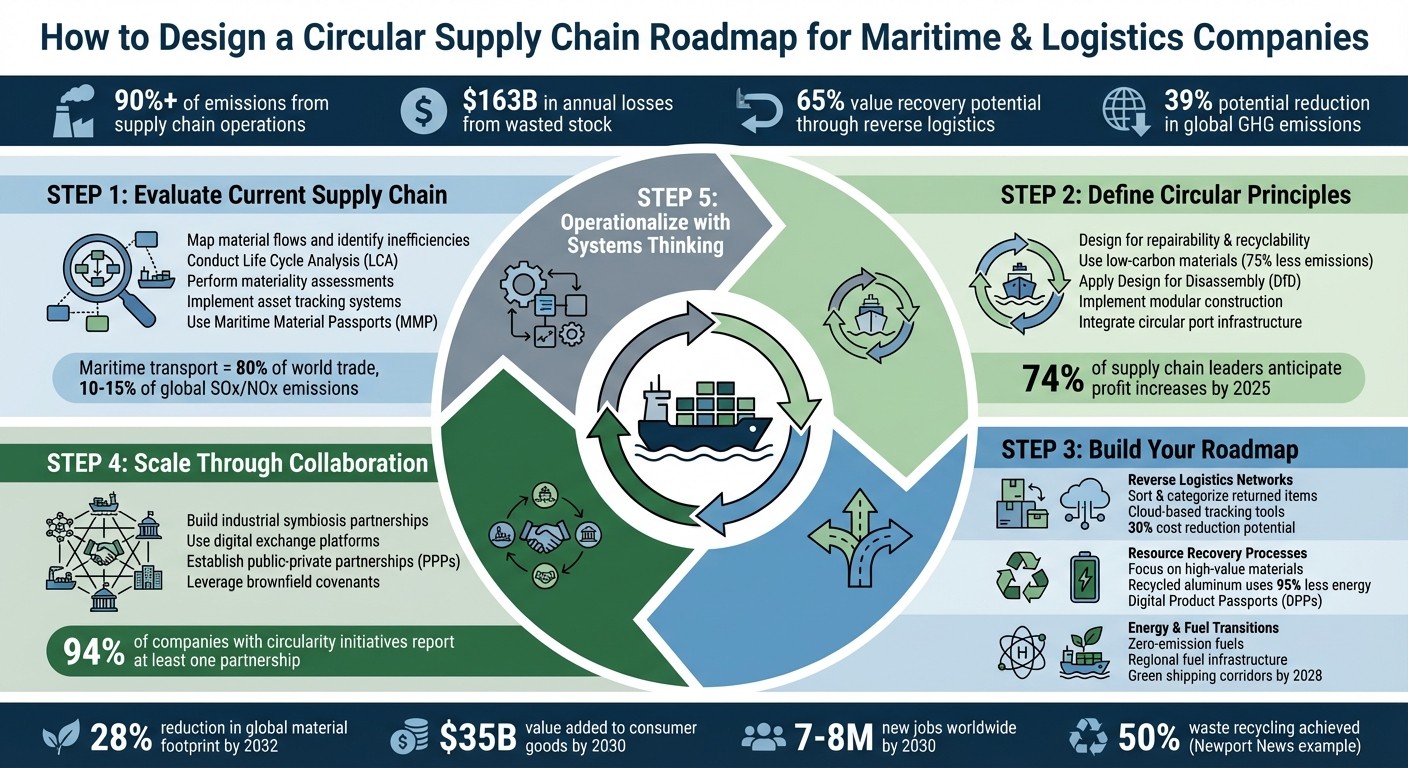
5-Step Circular Supply Chain Roadmap for Maritime and Logistics Companies
N' Talks - Webinar 5 - Operations and Functioning of the Supply Chain
Step 1: Evaluate Your Current Supply Chain
Start by mapping out the entire flow of your supply chain - tracking inputs, processes, and outputs - to identify areas for improvement. This includes tracing how materials enter, move through, and exit your system, whether as finished products, waste, or emissions. Establishing this baseline is critical for spotting quick wins and understanding where longer-term investments are needed. It also provides a foundation for better resource management and reverse logistics planning.
A Life Cycle Analysis (LCA) can help you measure emissions across the supply chain, from shipbuilding to operational fuel use. It's worth noting that over 90% of a brand's carbon emissions typically occur upstream and downstream [5][6].
Conducting materiality assessments can help prioritize actions by identifying where your operations provide the most societal and environmental benefits. By focusing on easily achievable goals first, you can make immediate progress while laying the groundwork for more significant circular initiatives [7].
Find Gaps in Resource Management
Maritime transport moves over 80% of the world’s trade, yet it accounts for roughly 10–15% of global SOx and NOx emissions [5]. These statistics underscore the potential for reducing waste and improving resource efficiency in the industry.
Examine where material losses are occurring. For instance:
Are containers frequently returned empty?
Is packaging discarded after just one use?
Could outdated equipment be refurbished instead of being scrapped?
With the average cargo vessel being about 22 years old, many lack modern sensors that enable real-time condition monitoring. This gap complicates maintenance scheduling and reduces opportunities to extend asset lifespans [5].
To address these issues, consider implementing asset tracking systems. These systems help estimate the remaining value of onboard equipment and streamline the collection of reusable components. As MDPI highlights:
"Asset tracking is an absolute must to enable almost all of the circular economy principles and even accurate LCA practices for new vessels" [5].
Another tool to consider is Maritime Material Passports (MMP), which digitally log the lifecycle of marine assets. These passports provide detailed data on material composition and maintenance history, supporting reuse and remanufacturing efforts [5]. By addressing these resource gaps, you set the stage for more effective reverse logistics strategies.
Use Reverse Logistics Maturity Models
Reverse logistics maturity models, combined with circularity metrics, can help track material retention, waste diversion, and financial benefits. These tools create a baseline for ongoing improvement. Recent research from ScienceDirect has identified 57 specialized circularity metrics tailored for shipyards and fleet operations [4]. As ScienceDirect explains:
"Quantifying circular economy performance will enable stakeholders to track progress, identify best practices, and drive transition" [4].
Step 2: Define Circular Principles for Maritime Operations
After establishing your baseline, the next move is to weave circular principles into the design and daily operations of maritime assets. This means prioritizing longevity, repairability, and recyclability right from the start. The aim? To extend the productive life of materials and equipment while recovering their value when they reach the end of their lifecycle.
Research highlights that 74% of supply chain leaders anticipate profit increases by 2025 from adopting circular principles [2][9]. Additionally, circular economy practices could potentially cut global greenhouse gas emissions by 39% [2]. These benefits underscore both environmental and financial advantages, making circularity a smart strategy for redesigning maritime assets and port infrastructure.
Design Maritime Assets for Circularity
Choosing the right materials is a critical first step. Steel, which makes up 75–80% of a vessel's weight, is a major contributor to global greenhouse gas emissions, accounting for 7–9% of the total [8]. Transitioning to low-carbon steel, produced in Electric Arc Furnaces, can slash emissions by 75% compared to traditional methods [8]. Shipping giant Maersk has pledged to source 50% low-emission steel by 2030, aiming for 100% net-zero steel by 2040 [8].
Incorporate Design for Disassembly (DfD) principles. Use mechanical fasteners instead of permanent adhesives to ensure components can be easily separated when the vessel is decommissioned. Modular construction - building ships in standardized blocks like engine rooms or cargo sections - allows for straightforward upgrades or refurbishments without dismantling the entire vessel.
Extend the lifespan of assets with predictive maintenance. Techniques like anti-corrosion treatments and biocide-free foul-release coatings can improve fuel efficiency by 5–8% and extend hull durability [8]. Smart sensors enable predictive maintenance, while maintaining an Inventory of Hazardous Materials (IHM) ensures safe dismantling and material recovery at the end of a vessel's life.
Consider repurposing assets. Shipping containers, for instance, typically last about 15 years in service. After that, they can be transformed into housing, offices, or storage units, keeping materials in circulation and opening up new revenue opportunities [10].
Integrate Circular Port Infrastructure
Ports can go beyond their traditional role as transfer points by becoming hubs for material recovery through reverse logistics and industrial symbiosis [10]. Start by conducting material flow mapping to track plastics, metals, waste heat, and wastewater in port operations. This analysis can reveal overlooked opportunities for circular practices.
Take the example of Newport News Shipbuilding in Virginia, which managed to recycle or reuse 50% of its waste stream by weight [8]. By converting welding slag and blasting grit into concrete additives and composting yard bio-waste, they demonstrated how ports can turn waste into valuable resources.
Modernize existing infrastructure with asset retrofitting. Simple upgrades like adding LED lighting, improving insulation, or installing solar panels on warehouses can help meet sustainability goals [10]. Repurposing contaminated brownfield sites with "brownfield covenants" enables circular activities while addressing environmental liabilities [10]. Some ports have even transformed these areas into "brightfields" (solar farms) or "windfields" (wind farms) to generate renewable energy.
Leverage digital exchange platforms to facilitate material reuse. Tools like material passports, digital twins, and matchmaking systems can track the history and composition of assets, making it easier for port-based industries to exchange materials [10]. As Dr. Theo Notteboom, Dr. Athanasios Pallis, and Dr. Jean‐Paul Rodrigue explain:
"The circular economy is a feedback system that aims to minimize resource inputs and waste generation, thereby reducing environmental externalities" [10].
Support small-scale pilot projects within port areas to test innovative upcycling techniques. These projects can help determine technical and economic viability before scaling up [10].
Step 3: Build Your Circular Supply Chain Roadmap
Once circular principles are in place, the next step is crafting a roadmap that ties together three key systems: reverse logistics networks to bring materials back, recovery processes to extract their value, and energy transitions to power operations sustainably. Together, these systems create a seamless circular flow.
Design Reverse Logistics Networks
The first step is setting up a system to inspect and sort returned items based on their condition and value. Items should be categorized into groups like those ready for resale, those needing refurbishment, recyclable materials, and waste requiring responsible disposal [3][11]. This sorting process is essential - companies with well-optimized reverse logistics can recover up to 65% of the original value of returned items [11].
To enhance efficiency, invest in cloud-based tracking tools to monitor assets, reduce inventory costs, and avoid delays [12]. Training employees in reverse flow management is equally critical [12].
Diversifying redistribution channels for recovered goods is another important strategy. Mary Cho, Director of Client Solutions at Liquidity Services, highlights the benefits of direct-to-consumer marketplaces:
"Direct-to-consumer marketplaces provide great engagement with the end buyers. And the closer we can get to the end buyers, the higher the revenue recovery" [11].
Reverse logistics not only helps recover value but also reduces operational costs by as much as 30% [12]. Once a strong reverse logistics network is established, the focus can shift to reclaiming and reintroducing value from these materials.
Establish Resource Recovery Processes
Resource recovery is the phase where value is extracted from returned materials. Designing products with modularity is key - this makes repair and remanufacturing much easier [13]. Using modular construction techniques and standardized fasteners ensures components can be repaired or reused rather than discarded [13]. This approach applies across industries, from shipping containers to engine parts, creating "return lanes" within supply chains to keep materials in circulation.
Focus on materials with significant recovery potential. For instance, recycled aluminum uses 95% less energy than producing new aluminum, making it an excellent candidate for recovery [13]. Collaborate with specialized recyclers and refurbishment facilities familiar with your materials. Track metrics like return reasons, repair costs, and recovery rates to improve processes and product quality over time [3].
Digital Product Passports (DPPs) can further streamline recovery efforts. These digital records provide detailed information on an asset’s material composition, carbon footprint, and repairability, making it easier to reclaim value [13].
Optimize Energy and Fuel Transitions
With material recovery streamlined, attention should turn to sustainable energy solutions. Transitioning to zero-emission fuels is critical, though it comes with challenges like high costs and limited infrastructure [14]. The Nordic Roadmap Project, launched in 2022 with over 60 partners including DNV and Man Energy Solutions, offers a detailed "Fuel Transition Roadmap" released in December 2024. This plan outlines 20 actions to scale zero-emission fuels and aims to establish ten green shipping corridors by 2028 [14].
Regional integration of fuel production and bunkering infrastructure is a practical step to reduce reliance on volatile global markets and minimize energy waste during transport [14]. Knut Ørbeck-Nilssen, Maritime CEO at DNV, stresses the urgency of action:
"We call on Nordic governments to act swiftly on the urgent measures identified in the Fuel Transition Roadmap for Nordic Shipping. Doing so will give the industry confidence to invest in ships capable of running on zero-emission fuels, and the fuel infrastructure needed to support them" [14].
Incorporating recycled materials throughout the supply chain can also reduce energy consumption significantly, as recycled inputs require far less energy than virgin materials [13]. To complete the transition, collaborate with regional authorities to standardize safety protocols for alternative fuels like hydrogen and ammonia. Additionally, work with governments on subsidies to help bridge the cost gap between traditional and sustainable fuel options [14].
Step 4: Scale Through Stakeholder Collaboration to Complete Your Circular Roadmap
Achieving circularity is not a solo endeavor. In the maritime and logistics sectors, success relies on interconnected networks of ports, shipyards, energy providers, and government agencies. A telling statistic: 94% of companies with circularity initiatives report at least one partnership [15]. Building circular supply chains demands shared infrastructure, coordinated investments, and alignment across the entire value chain. Collaboration is the glue that holds these efforts together, making network mapping and partnership development essential.
Build Collaborative Networks
The first step is understanding how materials and information flow through your operations. This helps identify partners who control critical resources like circular feedstocks, disposal data, or infrastructure [15]. Ports, for instance, serve a dual purpose: optimizing their own resources while providing the foundation for broader circularity in the maritime industry [10].
One effective approach is industrial symbiosis, where one company’s waste becomes another’s resource [10]. A standout example is Dow Chemical’s 2024 partnership with Freepoint Eco-Systems to establish a recycling facility in Arizona. This facility supplies Dow with 65,000 metric tons of pyrolysis oil annually, enabling the production of virgin-grade plastics for food and medical packaging [15]. Such partnerships benefit both parties while closing material loops.
Digital platforms can further streamline these efforts by connecting surplus materials with demand. Industry coalitions that standardize data sharing make it easier and cheaper to track circular materials across networks [15]. For example, the Global Battery Alliance, which includes Tesla, Microsoft, and Volkswagen, developed the "battery passport" to unify recycling and sustainability data across the global battery supply chain [15].
Aligning financial incentives is another critical component. A notable model comes from the Trumpf Group and Munich Re, which introduced a "pay-per-part" system for laser-cutting services in 2020. Under this arrangement, Munich Re finances the machinery and assumes investment risks, while Trumpf oversees maintenance and refurbishment. This collaboration has cut CO2 emissions by up to 65% through better material management [15]. Structuring partnerships to fairly distribute risks, costs, and revenues is key to long-term success [15].
Use Public-Private Partnerships
Once your internal systems are optimized, scaling circular initiatives requires collaboration with public and private stakeholders. Governments play a crucial role in aligning regulations and securing funding. Public-private partnerships (PPPs) are particularly effective for navigating regulatory landscapes and ensuring that port authorities allocate strategic sites for circular activities in their long-term planning [10].
Brownfield covenants offer another avenue for collaboration. These agreements address environmental liabilities when repurposing old port sites, transforming contaminated land into hubs for renewable energy or other circular activities [10]. By working with governments and NGOs, maritime and logistics companies can align their strategies with regional goals, while also tapping into subsidies and technical expertise to offset costs.
Step 5: Operationalize Circular Supply Chains with Systems Thinking
Creating circular supply chains demands a systems-thinking approach to weave together decarbonization, cost efficiency, and operational resilience. This step focuses on embedding such thinking into maritime operations, shifting from linear material flows to dynamic networks where goods, information, and financial resources circulate among partners [16][2].
Connect Decarbonization with Circularity
Circularity and decarbonization are deeply interconnected. Since a significant portion of a brand’s emissions originates from its supply chain [6], adopting circular strategies becomes essential for meeting climate targets. Systems thinking unifies these efforts by treating material flows, energy usage, and waste management as interconnected elements of one system. For instance, nearshoring recycled materials not only reduces transportation-related emissions but also shields companies from fluctuating material costs [2]. This dual impact highlights how circular strategies can advance both environmental and financial goals.
"Logistics is the engine of the circular economy." - EY [2]
In maritime operations, systems thinking fosters a cohesive strategy where decisions in waste management, material recovery, and energy efficiency reinforce one another. This approach minimizes dependence on natural resource extraction, mitigating risks from geopolitical disruptions and enhancing material availability [16][2]. By integrating these elements, stakeholders can align their efforts around shared sustainability objectives.
Align Stakeholders for Success
To translate circular strategies into measurable outcomes, it’s critical to align stakeholders around a unified vision. Systems thinking thrives when everyone - from executives to frontline teams - shares clear priorities. Start by defining the value proposition in terms that resonate with leadership. Demonstrate how circular initiatives can yield financial benefits, such as cost savings through resource efficiency or revenue from refurbishment services [6]. The rising popularity of sustainability-focused investments, which grew at a 14% compound annual growth rate in the U.S. between 1995 and 2020, reaching $16.6 trillion, underscores how investors value robust circular strategies [6].
Establish service-level agreements (SLAs) that include sustainability metrics, such as material recovery rates, alongside traditional measures like cost and speed [9]. This shift encourages a focus on long-term value rather than short-term gains. In maritime industries, 57 specialized circularity metrics are now available to help stakeholders evaluate shipyard and port operations effectively [4]. Additionally, empower sustainability leaders within your organization by forming cross-functional teams to test initiatives and linking employee performance goals to metrics like waste reduction or take-back volumes [9].
Conclusion
Designing a circular supply chain roadmap offers maritime and logistics companies the chance to achieve both resource efficiency and financial growth. By assessing current resource flows, incorporating circular principles into maritime assets, establishing reverse logistics networks, and promoting collaboration among stakeholders, companies can create a unified approach to resource management and energy optimization.
Circular strategies have the potential to reduce the global material footprint by 28% by 2032 and add $35 billion in value to the consumer goods sector by 2030 [2]. For maritime and logistics companies, this translates into reduced reliance on unstable raw material markets, stronger supply chain resilience, and revenue opportunities through refurbishment and material recovery.
Adopting circularity requires a shift in mindset across functions. As Eric Casavant, Director of Technical Marketing at Wiliot, aptly explains:
"When brands stay connected to products after the point of sale, they're incentivized to build products that actually solve the problem we buy them for, for as long as possible" [1].
This approach not only extends product lifecycles but also minimizes waste and ensures continuous value generation.
Additionally, the circular economy is expected to create 7–8 million new jobs worldwide by 2030, especially in areas like repair and remanufacturing [2]. For maritime and logistics companies, embracing circular strategies paves the way for resilient, forward-thinking operations. By implementing these steps, companies can reap both resource efficiency and financial rewards, completing their journey toward a circular supply chain.
FAQs
Where should we start with circularity in our supply chain?
To build a circular supply chain, start by designing products with reuse and recycling in mind. Prioritize modular designs and materials that are easy to recycle, making circular processes more straightforward. Set up reverse logistics systems capable of efficiently collecting, repairing, and recycling products. Incorporating technologies such as blockchain and AI can improve tracking and streamline operations. These measures lay the groundwork for a more sustainable and efficient supply chain.
How do we measure circularity and emissions in maritime operations?
Measuring circularity in maritime operations requires tailored metrics designed for this unique industry. Among these are 57 refined indicators that focus on key aspects such as resource reuse, recycling rates, and material recovery. To address emissions, companies rely on Scope 1, 2, and 3 greenhouse gas metrics. These metrics provide insights into fuel consumption, operational efficiency, and the broader impacts across the supply chain. By combining these approaches, maritime businesses can assess their environmental footprint more accurately and work toward achieving circular economy objectives.
What reverse logistics setup works best for ships, ports, and containers?
The best approach to reverse logistics for ships, ports, and containers relies on a well-organized process that focuses on returning, repairing, recycling, and reusing maritime equipment and containers. Central components include streamlined systems for managing container return flows, recovering materials, and fostering collaboration among stakeholders. By creating efficient methods for collecting and refurbishing containers, this setup minimizes waste, promotes reuse, and improves both cost-effectiveness and operational efficiency in maritime and port activities.
Related Blog Posts
The Circular Supply Chain: A Roadmap for Manufacturers Navigating ESG Pressures
How to Build a Corporate Sustainability Strategy Aligned to ROI for Maritime & Logistics Companies
How to Design a Circular Supply Chain Roadmap for Corporations
How to Design a Circular Supply Chain Roadmap for NGOs & Nonprofits
Latest Articles
©2025



FAQ
01
What does it really mean to “redefine profit”?
02
What makes Council Fire different?
03
Who does Council Fire you work with?
04
What does working with Council Fire actually look like?
05
How does Council Fire help organizations turn big goals into action?
06
How does Council Fire define and measure success?
Feb 28, 2026
How to Design a Circular Supply Chain Roadmap for Maritime & Logistics Companies
Sustainability Strategy
In This Article
Maritime and logistics firms must map material flows, deploy reverse logistics, recover high‑value resources, and shift to low‑carbon fuels to cut waste and boost resilience.
How to Design a Circular Supply Chain Roadmap for Maritime & Logistics Companies
Circular supply chains are transforming maritime and logistics operations by reducing waste, cutting emissions, and creating new revenue streams. Traditional linear supply chains generate inefficiencies, with over 90% of emissions and $163 billion in annual losses tied to wasted stock. By shifting to circular practices - repairing, reusing, and recycling materials - companies can reduce costs, secure resources, and boost resilience.
Key Steps to Build a Circular Supply Chain:
Evaluate Current Supply Chains: Map material flows, identify inefficiencies, and use tools like Life Cycle Analysis (LCA) to measure emissions and resource use.
Apply Circular Principles: Design ships and ports for repairability and recyclability, adopt modular construction, and use low-carbon materials.
Develop Reverse Logistics: Create systems to recover, refurbish, and redistribute materials, recovering up to 65% of original value.
Integrate Resource Recovery: Focus on high-value materials like recycled aluminum and use digital tools like Product Passports for tracking.
Transition to Clean Energy: Invest in zero-emission fuels, renewable energy at ports, and regional fuel production infrastructure.
Collaborate for Scale: Build partnerships across ports, shipyards, recyclers, and governments to align efforts and share resources.
5-Step Circular Supply Chain Roadmap for Maritime and Logistics Companies
N' Talks - Webinar 5 - Operations and Functioning of the Supply Chain
Step 1: Evaluate Your Current Supply Chain
Start by mapping out the entire flow of your supply chain - tracking inputs, processes, and outputs - to identify areas for improvement. This includes tracing how materials enter, move through, and exit your system, whether as finished products, waste, or emissions. Establishing this baseline is critical for spotting quick wins and understanding where longer-term investments are needed. It also provides a foundation for better resource management and reverse logistics planning.
A Life Cycle Analysis (LCA) can help you measure emissions across the supply chain, from shipbuilding to operational fuel use. It's worth noting that over 90% of a brand's carbon emissions typically occur upstream and downstream [5][6].
Conducting materiality assessments can help prioritize actions by identifying where your operations provide the most societal and environmental benefits. By focusing on easily achievable goals first, you can make immediate progress while laying the groundwork for more significant circular initiatives [7].
Find Gaps in Resource Management
Maritime transport moves over 80% of the world’s trade, yet it accounts for roughly 10–15% of global SOx and NOx emissions [5]. These statistics underscore the potential for reducing waste and improving resource efficiency in the industry.
Examine where material losses are occurring. For instance:
Are containers frequently returned empty?
Is packaging discarded after just one use?
Could outdated equipment be refurbished instead of being scrapped?
With the average cargo vessel being about 22 years old, many lack modern sensors that enable real-time condition monitoring. This gap complicates maintenance scheduling and reduces opportunities to extend asset lifespans [5].
To address these issues, consider implementing asset tracking systems. These systems help estimate the remaining value of onboard equipment and streamline the collection of reusable components. As MDPI highlights:
"Asset tracking is an absolute must to enable almost all of the circular economy principles and even accurate LCA practices for new vessels" [5].
Another tool to consider is Maritime Material Passports (MMP), which digitally log the lifecycle of marine assets. These passports provide detailed data on material composition and maintenance history, supporting reuse and remanufacturing efforts [5]. By addressing these resource gaps, you set the stage for more effective reverse logistics strategies.
Use Reverse Logistics Maturity Models
Reverse logistics maturity models, combined with circularity metrics, can help track material retention, waste diversion, and financial benefits. These tools create a baseline for ongoing improvement. Recent research from ScienceDirect has identified 57 specialized circularity metrics tailored for shipyards and fleet operations [4]. As ScienceDirect explains:
"Quantifying circular economy performance will enable stakeholders to track progress, identify best practices, and drive transition" [4].
Step 2: Define Circular Principles for Maritime Operations
After establishing your baseline, the next move is to weave circular principles into the design and daily operations of maritime assets. This means prioritizing longevity, repairability, and recyclability right from the start. The aim? To extend the productive life of materials and equipment while recovering their value when they reach the end of their lifecycle.
Research highlights that 74% of supply chain leaders anticipate profit increases by 2025 from adopting circular principles [2][9]. Additionally, circular economy practices could potentially cut global greenhouse gas emissions by 39% [2]. These benefits underscore both environmental and financial advantages, making circularity a smart strategy for redesigning maritime assets and port infrastructure.
Design Maritime Assets for Circularity
Choosing the right materials is a critical first step. Steel, which makes up 75–80% of a vessel's weight, is a major contributor to global greenhouse gas emissions, accounting for 7–9% of the total [8]. Transitioning to low-carbon steel, produced in Electric Arc Furnaces, can slash emissions by 75% compared to traditional methods [8]. Shipping giant Maersk has pledged to source 50% low-emission steel by 2030, aiming for 100% net-zero steel by 2040 [8].
Incorporate Design for Disassembly (DfD) principles. Use mechanical fasteners instead of permanent adhesives to ensure components can be easily separated when the vessel is decommissioned. Modular construction - building ships in standardized blocks like engine rooms or cargo sections - allows for straightforward upgrades or refurbishments without dismantling the entire vessel.
Extend the lifespan of assets with predictive maintenance. Techniques like anti-corrosion treatments and biocide-free foul-release coatings can improve fuel efficiency by 5–8% and extend hull durability [8]. Smart sensors enable predictive maintenance, while maintaining an Inventory of Hazardous Materials (IHM) ensures safe dismantling and material recovery at the end of a vessel's life.
Consider repurposing assets. Shipping containers, for instance, typically last about 15 years in service. After that, they can be transformed into housing, offices, or storage units, keeping materials in circulation and opening up new revenue opportunities [10].
Integrate Circular Port Infrastructure
Ports can go beyond their traditional role as transfer points by becoming hubs for material recovery through reverse logistics and industrial symbiosis [10]. Start by conducting material flow mapping to track plastics, metals, waste heat, and wastewater in port operations. This analysis can reveal overlooked opportunities for circular practices.
Take the example of Newport News Shipbuilding in Virginia, which managed to recycle or reuse 50% of its waste stream by weight [8]. By converting welding slag and blasting grit into concrete additives and composting yard bio-waste, they demonstrated how ports can turn waste into valuable resources.
Modernize existing infrastructure with asset retrofitting. Simple upgrades like adding LED lighting, improving insulation, or installing solar panels on warehouses can help meet sustainability goals [10]. Repurposing contaminated brownfield sites with "brownfield covenants" enables circular activities while addressing environmental liabilities [10]. Some ports have even transformed these areas into "brightfields" (solar farms) or "windfields" (wind farms) to generate renewable energy.
Leverage digital exchange platforms to facilitate material reuse. Tools like material passports, digital twins, and matchmaking systems can track the history and composition of assets, making it easier for port-based industries to exchange materials [10]. As Dr. Theo Notteboom, Dr. Athanasios Pallis, and Dr. Jean‐Paul Rodrigue explain:
"The circular economy is a feedback system that aims to minimize resource inputs and waste generation, thereby reducing environmental externalities" [10].
Support small-scale pilot projects within port areas to test innovative upcycling techniques. These projects can help determine technical and economic viability before scaling up [10].
Step 3: Build Your Circular Supply Chain Roadmap
Once circular principles are in place, the next step is crafting a roadmap that ties together three key systems: reverse logistics networks to bring materials back, recovery processes to extract their value, and energy transitions to power operations sustainably. Together, these systems create a seamless circular flow.
Design Reverse Logistics Networks
The first step is setting up a system to inspect and sort returned items based on their condition and value. Items should be categorized into groups like those ready for resale, those needing refurbishment, recyclable materials, and waste requiring responsible disposal [3][11]. This sorting process is essential - companies with well-optimized reverse logistics can recover up to 65% of the original value of returned items [11].
To enhance efficiency, invest in cloud-based tracking tools to monitor assets, reduce inventory costs, and avoid delays [12]. Training employees in reverse flow management is equally critical [12].
Diversifying redistribution channels for recovered goods is another important strategy. Mary Cho, Director of Client Solutions at Liquidity Services, highlights the benefits of direct-to-consumer marketplaces:
"Direct-to-consumer marketplaces provide great engagement with the end buyers. And the closer we can get to the end buyers, the higher the revenue recovery" [11].
Reverse logistics not only helps recover value but also reduces operational costs by as much as 30% [12]. Once a strong reverse logistics network is established, the focus can shift to reclaiming and reintroducing value from these materials.
Establish Resource Recovery Processes
Resource recovery is the phase where value is extracted from returned materials. Designing products with modularity is key - this makes repair and remanufacturing much easier [13]. Using modular construction techniques and standardized fasteners ensures components can be repaired or reused rather than discarded [13]. This approach applies across industries, from shipping containers to engine parts, creating "return lanes" within supply chains to keep materials in circulation.
Focus on materials with significant recovery potential. For instance, recycled aluminum uses 95% less energy than producing new aluminum, making it an excellent candidate for recovery [13]. Collaborate with specialized recyclers and refurbishment facilities familiar with your materials. Track metrics like return reasons, repair costs, and recovery rates to improve processes and product quality over time [3].
Digital Product Passports (DPPs) can further streamline recovery efforts. These digital records provide detailed information on an asset’s material composition, carbon footprint, and repairability, making it easier to reclaim value [13].
Optimize Energy and Fuel Transitions
With material recovery streamlined, attention should turn to sustainable energy solutions. Transitioning to zero-emission fuels is critical, though it comes with challenges like high costs and limited infrastructure [14]. The Nordic Roadmap Project, launched in 2022 with over 60 partners including DNV and Man Energy Solutions, offers a detailed "Fuel Transition Roadmap" released in December 2024. This plan outlines 20 actions to scale zero-emission fuels and aims to establish ten green shipping corridors by 2028 [14].
Regional integration of fuel production and bunkering infrastructure is a practical step to reduce reliance on volatile global markets and minimize energy waste during transport [14]. Knut Ørbeck-Nilssen, Maritime CEO at DNV, stresses the urgency of action:
"We call on Nordic governments to act swiftly on the urgent measures identified in the Fuel Transition Roadmap for Nordic Shipping. Doing so will give the industry confidence to invest in ships capable of running on zero-emission fuels, and the fuel infrastructure needed to support them" [14].
Incorporating recycled materials throughout the supply chain can also reduce energy consumption significantly, as recycled inputs require far less energy than virgin materials [13]. To complete the transition, collaborate with regional authorities to standardize safety protocols for alternative fuels like hydrogen and ammonia. Additionally, work with governments on subsidies to help bridge the cost gap between traditional and sustainable fuel options [14].
Step 4: Scale Through Stakeholder Collaboration to Complete Your Circular Roadmap
Achieving circularity is not a solo endeavor. In the maritime and logistics sectors, success relies on interconnected networks of ports, shipyards, energy providers, and government agencies. A telling statistic: 94% of companies with circularity initiatives report at least one partnership [15]. Building circular supply chains demands shared infrastructure, coordinated investments, and alignment across the entire value chain. Collaboration is the glue that holds these efforts together, making network mapping and partnership development essential.
Build Collaborative Networks
The first step is understanding how materials and information flow through your operations. This helps identify partners who control critical resources like circular feedstocks, disposal data, or infrastructure [15]. Ports, for instance, serve a dual purpose: optimizing their own resources while providing the foundation for broader circularity in the maritime industry [10].
One effective approach is industrial symbiosis, where one company’s waste becomes another’s resource [10]. A standout example is Dow Chemical’s 2024 partnership with Freepoint Eco-Systems to establish a recycling facility in Arizona. This facility supplies Dow with 65,000 metric tons of pyrolysis oil annually, enabling the production of virgin-grade plastics for food and medical packaging [15]. Such partnerships benefit both parties while closing material loops.
Digital platforms can further streamline these efforts by connecting surplus materials with demand. Industry coalitions that standardize data sharing make it easier and cheaper to track circular materials across networks [15]. For example, the Global Battery Alliance, which includes Tesla, Microsoft, and Volkswagen, developed the "battery passport" to unify recycling and sustainability data across the global battery supply chain [15].
Aligning financial incentives is another critical component. A notable model comes from the Trumpf Group and Munich Re, which introduced a "pay-per-part" system for laser-cutting services in 2020. Under this arrangement, Munich Re finances the machinery and assumes investment risks, while Trumpf oversees maintenance and refurbishment. This collaboration has cut CO2 emissions by up to 65% through better material management [15]. Structuring partnerships to fairly distribute risks, costs, and revenues is key to long-term success [15].
Use Public-Private Partnerships
Once your internal systems are optimized, scaling circular initiatives requires collaboration with public and private stakeholders. Governments play a crucial role in aligning regulations and securing funding. Public-private partnerships (PPPs) are particularly effective for navigating regulatory landscapes and ensuring that port authorities allocate strategic sites for circular activities in their long-term planning [10].
Brownfield covenants offer another avenue for collaboration. These agreements address environmental liabilities when repurposing old port sites, transforming contaminated land into hubs for renewable energy or other circular activities [10]. By working with governments and NGOs, maritime and logistics companies can align their strategies with regional goals, while also tapping into subsidies and technical expertise to offset costs.
Step 5: Operationalize Circular Supply Chains with Systems Thinking
Creating circular supply chains demands a systems-thinking approach to weave together decarbonization, cost efficiency, and operational resilience. This step focuses on embedding such thinking into maritime operations, shifting from linear material flows to dynamic networks where goods, information, and financial resources circulate among partners [16][2].
Connect Decarbonization with Circularity
Circularity and decarbonization are deeply interconnected. Since a significant portion of a brand’s emissions originates from its supply chain [6], adopting circular strategies becomes essential for meeting climate targets. Systems thinking unifies these efforts by treating material flows, energy usage, and waste management as interconnected elements of one system. For instance, nearshoring recycled materials not only reduces transportation-related emissions but also shields companies from fluctuating material costs [2]. This dual impact highlights how circular strategies can advance both environmental and financial goals.
"Logistics is the engine of the circular economy." - EY [2]
In maritime operations, systems thinking fosters a cohesive strategy where decisions in waste management, material recovery, and energy efficiency reinforce one another. This approach minimizes dependence on natural resource extraction, mitigating risks from geopolitical disruptions and enhancing material availability [16][2]. By integrating these elements, stakeholders can align their efforts around shared sustainability objectives.
Align Stakeholders for Success
To translate circular strategies into measurable outcomes, it’s critical to align stakeholders around a unified vision. Systems thinking thrives when everyone - from executives to frontline teams - shares clear priorities. Start by defining the value proposition in terms that resonate with leadership. Demonstrate how circular initiatives can yield financial benefits, such as cost savings through resource efficiency or revenue from refurbishment services [6]. The rising popularity of sustainability-focused investments, which grew at a 14% compound annual growth rate in the U.S. between 1995 and 2020, reaching $16.6 trillion, underscores how investors value robust circular strategies [6].
Establish service-level agreements (SLAs) that include sustainability metrics, such as material recovery rates, alongside traditional measures like cost and speed [9]. This shift encourages a focus on long-term value rather than short-term gains. In maritime industries, 57 specialized circularity metrics are now available to help stakeholders evaluate shipyard and port operations effectively [4]. Additionally, empower sustainability leaders within your organization by forming cross-functional teams to test initiatives and linking employee performance goals to metrics like waste reduction or take-back volumes [9].
Conclusion
Designing a circular supply chain roadmap offers maritime and logistics companies the chance to achieve both resource efficiency and financial growth. By assessing current resource flows, incorporating circular principles into maritime assets, establishing reverse logistics networks, and promoting collaboration among stakeholders, companies can create a unified approach to resource management and energy optimization.
Circular strategies have the potential to reduce the global material footprint by 28% by 2032 and add $35 billion in value to the consumer goods sector by 2030 [2]. For maritime and logistics companies, this translates into reduced reliance on unstable raw material markets, stronger supply chain resilience, and revenue opportunities through refurbishment and material recovery.
Adopting circularity requires a shift in mindset across functions. As Eric Casavant, Director of Technical Marketing at Wiliot, aptly explains:
"When brands stay connected to products after the point of sale, they're incentivized to build products that actually solve the problem we buy them for, for as long as possible" [1].
This approach not only extends product lifecycles but also minimizes waste and ensures continuous value generation.
Additionally, the circular economy is expected to create 7–8 million new jobs worldwide by 2030, especially in areas like repair and remanufacturing [2]. For maritime and logistics companies, embracing circular strategies paves the way for resilient, forward-thinking operations. By implementing these steps, companies can reap both resource efficiency and financial rewards, completing their journey toward a circular supply chain.
FAQs
Where should we start with circularity in our supply chain?
To build a circular supply chain, start by designing products with reuse and recycling in mind. Prioritize modular designs and materials that are easy to recycle, making circular processes more straightforward. Set up reverse logistics systems capable of efficiently collecting, repairing, and recycling products. Incorporating technologies such as blockchain and AI can improve tracking and streamline operations. These measures lay the groundwork for a more sustainable and efficient supply chain.
How do we measure circularity and emissions in maritime operations?
Measuring circularity in maritime operations requires tailored metrics designed for this unique industry. Among these are 57 refined indicators that focus on key aspects such as resource reuse, recycling rates, and material recovery. To address emissions, companies rely on Scope 1, 2, and 3 greenhouse gas metrics. These metrics provide insights into fuel consumption, operational efficiency, and the broader impacts across the supply chain. By combining these approaches, maritime businesses can assess their environmental footprint more accurately and work toward achieving circular economy objectives.
What reverse logistics setup works best for ships, ports, and containers?
The best approach to reverse logistics for ships, ports, and containers relies on a well-organized process that focuses on returning, repairing, recycling, and reusing maritime equipment and containers. Central components include streamlined systems for managing container return flows, recovering materials, and fostering collaboration among stakeholders. By creating efficient methods for collecting and refurbishing containers, this setup minimizes waste, promotes reuse, and improves both cost-effectiveness and operational efficiency in maritime and port activities.
Related Blog Posts
The Circular Supply Chain: A Roadmap for Manufacturers Navigating ESG Pressures
How to Build a Corporate Sustainability Strategy Aligned to ROI for Maritime & Logistics Companies
How to Design a Circular Supply Chain Roadmap for Corporations
How to Design a Circular Supply Chain Roadmap for NGOs & Nonprofits
FAQ
01
What does it really mean to “redefine profit”?
02
What makes Council Fire different?
03
Who does Council Fire you work with?
04
What does working with Council Fire actually look like?
05
How does Council Fire help organizations turn big goals into action?
06
How does Council Fire define and measure success?
Feb 28, 2026
How to Design a Circular Supply Chain Roadmap for Maritime & Logistics Companies
Sustainability Strategy
In This Article
Maritime and logistics firms must map material flows, deploy reverse logistics, recover high‑value resources, and shift to low‑carbon fuels to cut waste and boost resilience.
How to Design a Circular Supply Chain Roadmap for Maritime & Logistics Companies
Circular supply chains are transforming maritime and logistics operations by reducing waste, cutting emissions, and creating new revenue streams. Traditional linear supply chains generate inefficiencies, with over 90% of emissions and $163 billion in annual losses tied to wasted stock. By shifting to circular practices - repairing, reusing, and recycling materials - companies can reduce costs, secure resources, and boost resilience.
Key Steps to Build a Circular Supply Chain:
Evaluate Current Supply Chains: Map material flows, identify inefficiencies, and use tools like Life Cycle Analysis (LCA) to measure emissions and resource use.
Apply Circular Principles: Design ships and ports for repairability and recyclability, adopt modular construction, and use low-carbon materials.
Develop Reverse Logistics: Create systems to recover, refurbish, and redistribute materials, recovering up to 65% of original value.
Integrate Resource Recovery: Focus on high-value materials like recycled aluminum and use digital tools like Product Passports for tracking.
Transition to Clean Energy: Invest in zero-emission fuels, renewable energy at ports, and regional fuel production infrastructure.
Collaborate for Scale: Build partnerships across ports, shipyards, recyclers, and governments to align efforts and share resources.
5-Step Circular Supply Chain Roadmap for Maritime and Logistics Companies
N' Talks - Webinar 5 - Operations and Functioning of the Supply Chain
Step 1: Evaluate Your Current Supply Chain
Start by mapping out the entire flow of your supply chain - tracking inputs, processes, and outputs - to identify areas for improvement. This includes tracing how materials enter, move through, and exit your system, whether as finished products, waste, or emissions. Establishing this baseline is critical for spotting quick wins and understanding where longer-term investments are needed. It also provides a foundation for better resource management and reverse logistics planning.
A Life Cycle Analysis (LCA) can help you measure emissions across the supply chain, from shipbuilding to operational fuel use. It's worth noting that over 90% of a brand's carbon emissions typically occur upstream and downstream [5][6].
Conducting materiality assessments can help prioritize actions by identifying where your operations provide the most societal and environmental benefits. By focusing on easily achievable goals first, you can make immediate progress while laying the groundwork for more significant circular initiatives [7].
Find Gaps in Resource Management
Maritime transport moves over 80% of the world’s trade, yet it accounts for roughly 10–15% of global SOx and NOx emissions [5]. These statistics underscore the potential for reducing waste and improving resource efficiency in the industry.
Examine where material losses are occurring. For instance:
Are containers frequently returned empty?
Is packaging discarded after just one use?
Could outdated equipment be refurbished instead of being scrapped?
With the average cargo vessel being about 22 years old, many lack modern sensors that enable real-time condition monitoring. This gap complicates maintenance scheduling and reduces opportunities to extend asset lifespans [5].
To address these issues, consider implementing asset tracking systems. These systems help estimate the remaining value of onboard equipment and streamline the collection of reusable components. As MDPI highlights:
"Asset tracking is an absolute must to enable almost all of the circular economy principles and even accurate LCA practices for new vessels" [5].
Another tool to consider is Maritime Material Passports (MMP), which digitally log the lifecycle of marine assets. These passports provide detailed data on material composition and maintenance history, supporting reuse and remanufacturing efforts [5]. By addressing these resource gaps, you set the stage for more effective reverse logistics strategies.
Use Reverse Logistics Maturity Models
Reverse logistics maturity models, combined with circularity metrics, can help track material retention, waste diversion, and financial benefits. These tools create a baseline for ongoing improvement. Recent research from ScienceDirect has identified 57 specialized circularity metrics tailored for shipyards and fleet operations [4]. As ScienceDirect explains:
"Quantifying circular economy performance will enable stakeholders to track progress, identify best practices, and drive transition" [4].
Step 2: Define Circular Principles for Maritime Operations
After establishing your baseline, the next move is to weave circular principles into the design and daily operations of maritime assets. This means prioritizing longevity, repairability, and recyclability right from the start. The aim? To extend the productive life of materials and equipment while recovering their value when they reach the end of their lifecycle.
Research highlights that 74% of supply chain leaders anticipate profit increases by 2025 from adopting circular principles [2][9]. Additionally, circular economy practices could potentially cut global greenhouse gas emissions by 39% [2]. These benefits underscore both environmental and financial advantages, making circularity a smart strategy for redesigning maritime assets and port infrastructure.
Design Maritime Assets for Circularity
Choosing the right materials is a critical first step. Steel, which makes up 75–80% of a vessel's weight, is a major contributor to global greenhouse gas emissions, accounting for 7–9% of the total [8]. Transitioning to low-carbon steel, produced in Electric Arc Furnaces, can slash emissions by 75% compared to traditional methods [8]. Shipping giant Maersk has pledged to source 50% low-emission steel by 2030, aiming for 100% net-zero steel by 2040 [8].
Incorporate Design for Disassembly (DfD) principles. Use mechanical fasteners instead of permanent adhesives to ensure components can be easily separated when the vessel is decommissioned. Modular construction - building ships in standardized blocks like engine rooms or cargo sections - allows for straightforward upgrades or refurbishments without dismantling the entire vessel.
Extend the lifespan of assets with predictive maintenance. Techniques like anti-corrosion treatments and biocide-free foul-release coatings can improve fuel efficiency by 5–8% and extend hull durability [8]. Smart sensors enable predictive maintenance, while maintaining an Inventory of Hazardous Materials (IHM) ensures safe dismantling and material recovery at the end of a vessel's life.
Consider repurposing assets. Shipping containers, for instance, typically last about 15 years in service. After that, they can be transformed into housing, offices, or storage units, keeping materials in circulation and opening up new revenue opportunities [10].
Integrate Circular Port Infrastructure
Ports can go beyond their traditional role as transfer points by becoming hubs for material recovery through reverse logistics and industrial symbiosis [10]. Start by conducting material flow mapping to track plastics, metals, waste heat, and wastewater in port operations. This analysis can reveal overlooked opportunities for circular practices.
Take the example of Newport News Shipbuilding in Virginia, which managed to recycle or reuse 50% of its waste stream by weight [8]. By converting welding slag and blasting grit into concrete additives and composting yard bio-waste, they demonstrated how ports can turn waste into valuable resources.
Modernize existing infrastructure with asset retrofitting. Simple upgrades like adding LED lighting, improving insulation, or installing solar panels on warehouses can help meet sustainability goals [10]. Repurposing contaminated brownfield sites with "brownfield covenants" enables circular activities while addressing environmental liabilities [10]. Some ports have even transformed these areas into "brightfields" (solar farms) or "windfields" (wind farms) to generate renewable energy.
Leverage digital exchange platforms to facilitate material reuse. Tools like material passports, digital twins, and matchmaking systems can track the history and composition of assets, making it easier for port-based industries to exchange materials [10]. As Dr. Theo Notteboom, Dr. Athanasios Pallis, and Dr. Jean‐Paul Rodrigue explain:
"The circular economy is a feedback system that aims to minimize resource inputs and waste generation, thereby reducing environmental externalities" [10].
Support small-scale pilot projects within port areas to test innovative upcycling techniques. These projects can help determine technical and economic viability before scaling up [10].
Step 3: Build Your Circular Supply Chain Roadmap
Once circular principles are in place, the next step is crafting a roadmap that ties together three key systems: reverse logistics networks to bring materials back, recovery processes to extract their value, and energy transitions to power operations sustainably. Together, these systems create a seamless circular flow.
Design Reverse Logistics Networks
The first step is setting up a system to inspect and sort returned items based on their condition and value. Items should be categorized into groups like those ready for resale, those needing refurbishment, recyclable materials, and waste requiring responsible disposal [3][11]. This sorting process is essential - companies with well-optimized reverse logistics can recover up to 65% of the original value of returned items [11].
To enhance efficiency, invest in cloud-based tracking tools to monitor assets, reduce inventory costs, and avoid delays [12]. Training employees in reverse flow management is equally critical [12].
Diversifying redistribution channels for recovered goods is another important strategy. Mary Cho, Director of Client Solutions at Liquidity Services, highlights the benefits of direct-to-consumer marketplaces:
"Direct-to-consumer marketplaces provide great engagement with the end buyers. And the closer we can get to the end buyers, the higher the revenue recovery" [11].
Reverse logistics not only helps recover value but also reduces operational costs by as much as 30% [12]. Once a strong reverse logistics network is established, the focus can shift to reclaiming and reintroducing value from these materials.
Establish Resource Recovery Processes
Resource recovery is the phase where value is extracted from returned materials. Designing products with modularity is key - this makes repair and remanufacturing much easier [13]. Using modular construction techniques and standardized fasteners ensures components can be repaired or reused rather than discarded [13]. This approach applies across industries, from shipping containers to engine parts, creating "return lanes" within supply chains to keep materials in circulation.
Focus on materials with significant recovery potential. For instance, recycled aluminum uses 95% less energy than producing new aluminum, making it an excellent candidate for recovery [13]. Collaborate with specialized recyclers and refurbishment facilities familiar with your materials. Track metrics like return reasons, repair costs, and recovery rates to improve processes and product quality over time [3].
Digital Product Passports (DPPs) can further streamline recovery efforts. These digital records provide detailed information on an asset’s material composition, carbon footprint, and repairability, making it easier to reclaim value [13].
Optimize Energy and Fuel Transitions
With material recovery streamlined, attention should turn to sustainable energy solutions. Transitioning to zero-emission fuels is critical, though it comes with challenges like high costs and limited infrastructure [14]. The Nordic Roadmap Project, launched in 2022 with over 60 partners including DNV and Man Energy Solutions, offers a detailed "Fuel Transition Roadmap" released in December 2024. This plan outlines 20 actions to scale zero-emission fuels and aims to establish ten green shipping corridors by 2028 [14].
Regional integration of fuel production and bunkering infrastructure is a practical step to reduce reliance on volatile global markets and minimize energy waste during transport [14]. Knut Ørbeck-Nilssen, Maritime CEO at DNV, stresses the urgency of action:
"We call on Nordic governments to act swiftly on the urgent measures identified in the Fuel Transition Roadmap for Nordic Shipping. Doing so will give the industry confidence to invest in ships capable of running on zero-emission fuels, and the fuel infrastructure needed to support them" [14].
Incorporating recycled materials throughout the supply chain can also reduce energy consumption significantly, as recycled inputs require far less energy than virgin materials [13]. To complete the transition, collaborate with regional authorities to standardize safety protocols for alternative fuels like hydrogen and ammonia. Additionally, work with governments on subsidies to help bridge the cost gap between traditional and sustainable fuel options [14].
Step 4: Scale Through Stakeholder Collaboration to Complete Your Circular Roadmap
Achieving circularity is not a solo endeavor. In the maritime and logistics sectors, success relies on interconnected networks of ports, shipyards, energy providers, and government agencies. A telling statistic: 94% of companies with circularity initiatives report at least one partnership [15]. Building circular supply chains demands shared infrastructure, coordinated investments, and alignment across the entire value chain. Collaboration is the glue that holds these efforts together, making network mapping and partnership development essential.
Build Collaborative Networks
The first step is understanding how materials and information flow through your operations. This helps identify partners who control critical resources like circular feedstocks, disposal data, or infrastructure [15]. Ports, for instance, serve a dual purpose: optimizing their own resources while providing the foundation for broader circularity in the maritime industry [10].
One effective approach is industrial symbiosis, where one company’s waste becomes another’s resource [10]. A standout example is Dow Chemical’s 2024 partnership with Freepoint Eco-Systems to establish a recycling facility in Arizona. This facility supplies Dow with 65,000 metric tons of pyrolysis oil annually, enabling the production of virgin-grade plastics for food and medical packaging [15]. Such partnerships benefit both parties while closing material loops.
Digital platforms can further streamline these efforts by connecting surplus materials with demand. Industry coalitions that standardize data sharing make it easier and cheaper to track circular materials across networks [15]. For example, the Global Battery Alliance, which includes Tesla, Microsoft, and Volkswagen, developed the "battery passport" to unify recycling and sustainability data across the global battery supply chain [15].
Aligning financial incentives is another critical component. A notable model comes from the Trumpf Group and Munich Re, which introduced a "pay-per-part" system for laser-cutting services in 2020. Under this arrangement, Munich Re finances the machinery and assumes investment risks, while Trumpf oversees maintenance and refurbishment. This collaboration has cut CO2 emissions by up to 65% through better material management [15]. Structuring partnerships to fairly distribute risks, costs, and revenues is key to long-term success [15].
Use Public-Private Partnerships
Once your internal systems are optimized, scaling circular initiatives requires collaboration with public and private stakeholders. Governments play a crucial role in aligning regulations and securing funding. Public-private partnerships (PPPs) are particularly effective for navigating regulatory landscapes and ensuring that port authorities allocate strategic sites for circular activities in their long-term planning [10].
Brownfield covenants offer another avenue for collaboration. These agreements address environmental liabilities when repurposing old port sites, transforming contaminated land into hubs for renewable energy or other circular activities [10]. By working with governments and NGOs, maritime and logistics companies can align their strategies with regional goals, while also tapping into subsidies and technical expertise to offset costs.
Step 5: Operationalize Circular Supply Chains with Systems Thinking
Creating circular supply chains demands a systems-thinking approach to weave together decarbonization, cost efficiency, and operational resilience. This step focuses on embedding such thinking into maritime operations, shifting from linear material flows to dynamic networks where goods, information, and financial resources circulate among partners [16][2].
Connect Decarbonization with Circularity
Circularity and decarbonization are deeply interconnected. Since a significant portion of a brand’s emissions originates from its supply chain [6], adopting circular strategies becomes essential for meeting climate targets. Systems thinking unifies these efforts by treating material flows, energy usage, and waste management as interconnected elements of one system. For instance, nearshoring recycled materials not only reduces transportation-related emissions but also shields companies from fluctuating material costs [2]. This dual impact highlights how circular strategies can advance both environmental and financial goals.
"Logistics is the engine of the circular economy." - EY [2]
In maritime operations, systems thinking fosters a cohesive strategy where decisions in waste management, material recovery, and energy efficiency reinforce one another. This approach minimizes dependence on natural resource extraction, mitigating risks from geopolitical disruptions and enhancing material availability [16][2]. By integrating these elements, stakeholders can align their efforts around shared sustainability objectives.
Align Stakeholders for Success
To translate circular strategies into measurable outcomes, it’s critical to align stakeholders around a unified vision. Systems thinking thrives when everyone - from executives to frontline teams - shares clear priorities. Start by defining the value proposition in terms that resonate with leadership. Demonstrate how circular initiatives can yield financial benefits, such as cost savings through resource efficiency or revenue from refurbishment services [6]. The rising popularity of sustainability-focused investments, which grew at a 14% compound annual growth rate in the U.S. between 1995 and 2020, reaching $16.6 trillion, underscores how investors value robust circular strategies [6].
Establish service-level agreements (SLAs) that include sustainability metrics, such as material recovery rates, alongside traditional measures like cost and speed [9]. This shift encourages a focus on long-term value rather than short-term gains. In maritime industries, 57 specialized circularity metrics are now available to help stakeholders evaluate shipyard and port operations effectively [4]. Additionally, empower sustainability leaders within your organization by forming cross-functional teams to test initiatives and linking employee performance goals to metrics like waste reduction or take-back volumes [9].
Conclusion
Designing a circular supply chain roadmap offers maritime and logistics companies the chance to achieve both resource efficiency and financial growth. By assessing current resource flows, incorporating circular principles into maritime assets, establishing reverse logistics networks, and promoting collaboration among stakeholders, companies can create a unified approach to resource management and energy optimization.
Circular strategies have the potential to reduce the global material footprint by 28% by 2032 and add $35 billion in value to the consumer goods sector by 2030 [2]. For maritime and logistics companies, this translates into reduced reliance on unstable raw material markets, stronger supply chain resilience, and revenue opportunities through refurbishment and material recovery.
Adopting circularity requires a shift in mindset across functions. As Eric Casavant, Director of Technical Marketing at Wiliot, aptly explains:
"When brands stay connected to products after the point of sale, they're incentivized to build products that actually solve the problem we buy them for, for as long as possible" [1].
This approach not only extends product lifecycles but also minimizes waste and ensures continuous value generation.
Additionally, the circular economy is expected to create 7–8 million new jobs worldwide by 2030, especially in areas like repair and remanufacturing [2]. For maritime and logistics companies, embracing circular strategies paves the way for resilient, forward-thinking operations. By implementing these steps, companies can reap both resource efficiency and financial rewards, completing their journey toward a circular supply chain.
FAQs
Where should we start with circularity in our supply chain?
To build a circular supply chain, start by designing products with reuse and recycling in mind. Prioritize modular designs and materials that are easy to recycle, making circular processes more straightforward. Set up reverse logistics systems capable of efficiently collecting, repairing, and recycling products. Incorporating technologies such as blockchain and AI can improve tracking and streamline operations. These measures lay the groundwork for a more sustainable and efficient supply chain.
How do we measure circularity and emissions in maritime operations?
Measuring circularity in maritime operations requires tailored metrics designed for this unique industry. Among these are 57 refined indicators that focus on key aspects such as resource reuse, recycling rates, and material recovery. To address emissions, companies rely on Scope 1, 2, and 3 greenhouse gas metrics. These metrics provide insights into fuel consumption, operational efficiency, and the broader impacts across the supply chain. By combining these approaches, maritime businesses can assess their environmental footprint more accurately and work toward achieving circular economy objectives.
What reverse logistics setup works best for ships, ports, and containers?
The best approach to reverse logistics for ships, ports, and containers relies on a well-organized process that focuses on returning, repairing, recycling, and reusing maritime equipment and containers. Central components include streamlined systems for managing container return flows, recovering materials, and fostering collaboration among stakeholders. By creating efficient methods for collecting and refurbishing containers, this setup minimizes waste, promotes reuse, and improves both cost-effectiveness and operational efficiency in maritime and port activities.
Related Blog Posts
The Circular Supply Chain: A Roadmap for Manufacturers Navigating ESG Pressures
How to Build a Corporate Sustainability Strategy Aligned to ROI for Maritime & Logistics Companies
How to Design a Circular Supply Chain Roadmap for Corporations
How to Design a Circular Supply Chain Roadmap for NGOs & Nonprofits
FAQ
What does it really mean to “redefine profit”?
What makes Council Fire different?
Who does Council Fire you work with?
What does working with Council Fire actually look like?
How does Council Fire help organizations turn big goals into action?
How does Council Fire define and measure success?