Feb 28, 2026
Blended Finance Models for Green PPPs
Sustainability Strategy
In This Article
Blended finance reshapes risk and mobilizes private capital for green PPPs using concessional funding, guarantees, and pay-for-performance incentives.
Blended Finance Models for Green PPPs
Blended finance combines public or philanthropic funds with private capital to support projects that deliver social and environmental benefits but face challenges in attracting traditional investments. By reducing risks using concessional finance, guarantees, and results-based incentives, this approach enables private investors to participate in green public-private partnerships (PPPs). These partnerships focus on renewable energy, climate-resilient infrastructure, and other projects aligned with global development goals.
Key insights:
Between 2021 and 2023, $0.40 of private capital was mobilized for every $1 of public investment in blended finance deals.
Tools like concessional loans, first-loss guarantees, and technical assistance address barriers like high costs, long timelines, and regulatory risks.
Successful examples include IFC's $5.9 billion blended finance facility and Canada's clean growth initiatives, which leverage public funds to attract private investment while addressing climate goals.
Blended finance bridges funding gaps, reshapes risk profiles, and aligns public and private interests to drive green infrastructure projects forward.
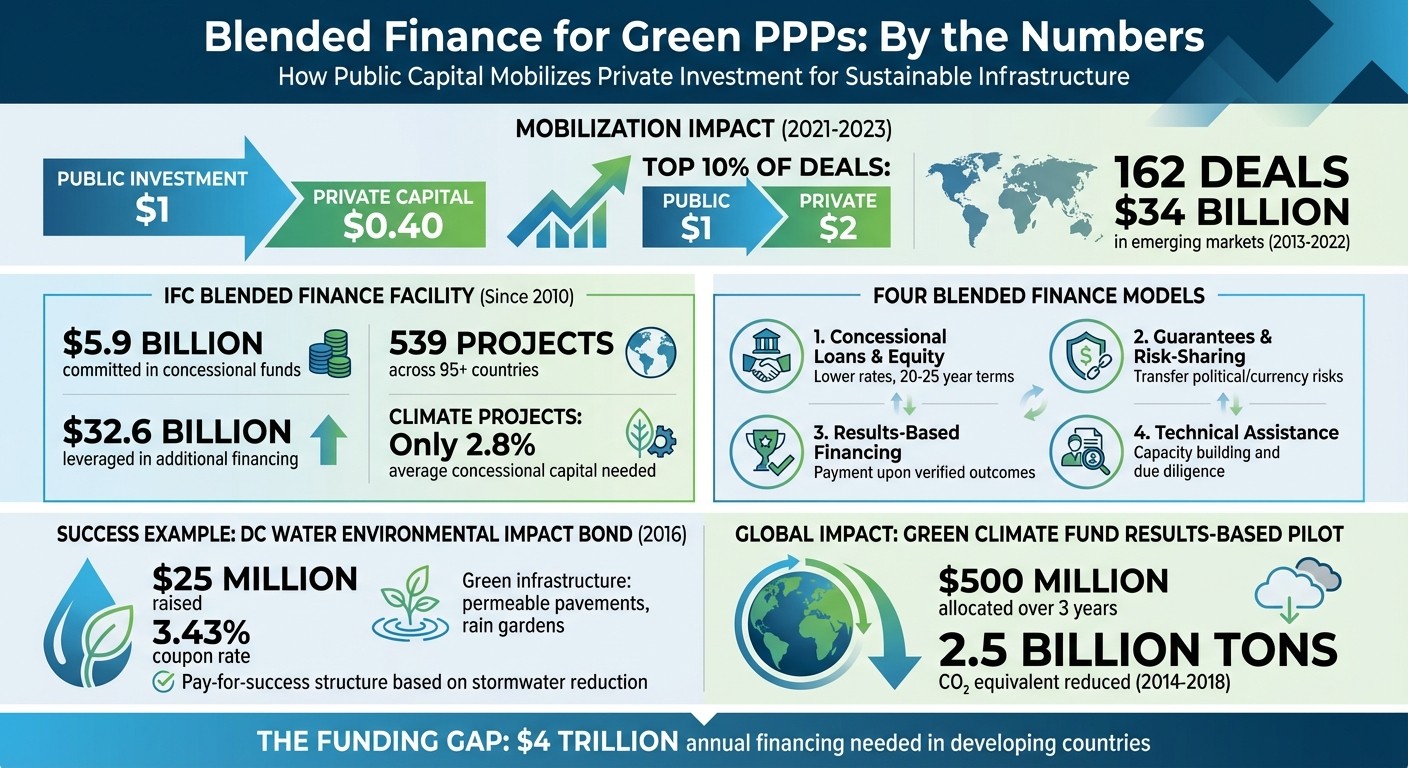
Blended Finance Impact: Key Statistics and Models for Green PPPs
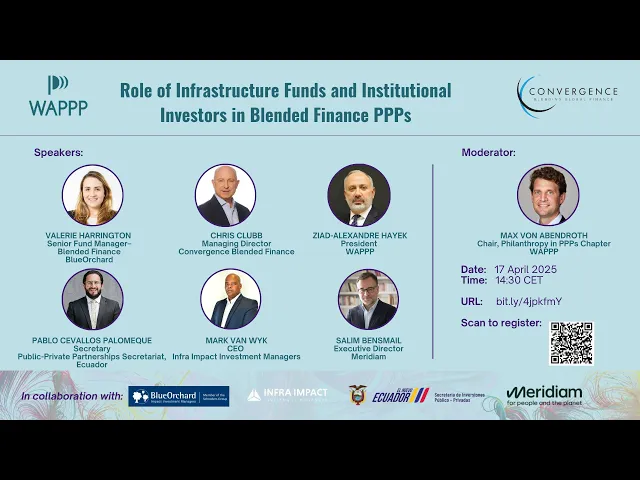
The Role of Infrastructure Funds and Institutional Investors in Blended Finance PPPs
Core Components of Blended Finance for Green PPPs
Blended finance models rest on three key components that work together to make green infrastructure projects more financially feasible. These elements address the barriers that have long hindered private investment in green public–private partnerships (PPPs), redirecting capital toward sustainable development goals.
Concessional Finance
Concessional finance involves public or philanthropic funding offered on terms more favorable than standard market rates. This might include lower interest rates, extended repayment periods, or grace periods, all aimed at reducing the initial financial burden of a project [1]. Within blended finance structures, this type of capital typically occupies the junior or mezzanine layers of the investment stack, absorbing early losses and creating a safety net that encourages commercial investors to participate [2].
"The aim is to use the minimum amount of concessional capital to catalyse private sector investment which may not have otherwise been invested." – Hogan Lovells [2]
A real-world example of this approach is the Africa Agriculture and Trade Investment Fund (AATIF), launched in November 2024. This fund combines a first-loss guarantee from Germany’s Federal Ministry of Economic Cooperation and Development with mezzanine investments from KfW and Deutsche Bank, alongside junior equity from the European Commission. Together, these elements support agricultural supply chains [2].
Once concessional finance has adjusted the capital structure, risk mitigation tools play a critical role in making projects more attractive to investors.
Risk Mitigation Tools
Risk mitigation instruments are designed to protect private investors from the inherent uncertainties of green infrastructure projects. These tools - such as guarantees, insurance products, and first-loss capital arrangements - shift financial risks from private investors to public or development entities. This improves the risk-adjusted return on investment, making projects more appealing [1][2].
For instance, the IFC’s Risk Mitigation Facility offers guarantees without requiring sovereign backing for large-scale energy and transportation projects. This approach addresses challenges like political instability and currency fluctuations, which are common in emerging markets [1].
While financial safeguards are essential, the success of blended finance often hinges on robust collaboration between public and private stakeholders.
Public–Private Collaboration
Strategic partnerships between governments, multilateral development banks, and private entities are the foundation of effective blended finance deals. These collaborations combine technical expertise and standardized processes to transform complex challenges into viable investment opportunities [2]. Multilateral development banks are particularly instrumental in structuring deals that balance diverse objectives, whether focused on financial returns, environmental goals, or a mix of both.
"Blended finance allows organisations with different objectives to invest alongside each other while achieving their own objectives (whether financial return, social/environmental impact, or a blend of both)." – Convergence [2]
Public–private collaboration also addresses the "invest-ability" gap in emerging markets by supporting capacity-building initiatives. For example, the AATIF includes a $6 million Technical Assistance facility to help beneficiaries with due diligence and impact assessments. Additionally, national governments are formalizing these partnerships through dedicated platforms like Singapore’s Financing Asia’s Transition Partnership and the UK’s National Wealth Fund, which focus on green sectors such as hydrogen and green steel [2].
Types of Blended Finance Models for Green PPPs
Green public-private partnerships (PPPs) often face unique financial challenges, such as high upfront costs and uncertain returns. To tackle these barriers, blended finance models combine public, private, and philanthropic funds in ways that align with the risks and needs of individual projects. Below, we explore some key models designed to make green infrastructure investments more attractive and feasible.
Concessional Loans and Equity Co-Investments
Concessional loans provide financing with terms that are more favorable than standard market rates. These loans typically feature lower interest rates, repayment periods stretching 20–25 years, and grace periods that align with a project's long-term cash flow [1]. By reducing the cost of borrowing, concessional loans improve the financial viability of green projects for private investors.
Equity co-investments use public or philanthropic funds as "junior" or "first-loss" equity in a project's funding structure. This means that public capital absorbs initial losses, creating a safety net for private investors holding senior equity. This structure reduces the perceived risk for private participants, encouraging them to invest [2].
Together, these tools show how strategic public capital can attract and amplify private funding, laying the groundwork for additional risk-mitigation strategies.
Guarantees and Risk-Sharing Instruments
Guarantees and risk-sharing tools are designed to transfer specific risks - such as political instability, currency volatility, or payment defaults - from private investors to a creditworthy third party [1]. Unlike concessional loans, these instruments typically don't require upfront public funding. Instead, they act as a financial backstop, stepping in only if the project encounters repayment difficulties.
This model is particularly effective in emerging markets, where non-commercial risks often deter private investment. By allowing private financiers to focus on project performance rather than external uncertainties, these tools help unlock funding for green PPPs.
"Blended finance works best when used like a scalpel: targeted to the real bottleneck, rather than spread thinly across the capital structure." – Aninver Development Partners [6]
While guarantees address external risks, performance-based incentives can further align private and public sector goals.
Results-Based Financing
Results-based financing (RBF) links financial support to measurable and independently verified outcomes. Payments are made only when specific goals - such as generating renewable energy or reducing emissions - are achieved [7]. This approach shifts operational and financial risks to private implementers, creating strong incentives for efficiency and success.
A notable example is the Environmental Impact Bond issued by DC Water in 2016. Partnering with Quantified Ventures, DC Water raised $25 million to fund green infrastructure projects like permeable pavements and rain gardens. The bond featured a pay-for-success structure, rewarding investors based on the project's performance in reducing stormwater runoff over five years, alongside a 3.43% coupon [7].
Similarly, the Green Climate Fund launched a results-based payment pilot, which allocated $500 million over three years. This initiative supported projects that collectively reduced 2.5 billion tons of CO₂ equivalent emissions between 2014 and 2018 [8].
These models highlight how blended finance can be tailored to address specific challenges in green PPPs, offering practical solutions for overcoming investment barriers and driving sustainable development.
Case Studies: Blended Finance in Action
These case studies highlight how blended finance transforms green infrastructure concepts into successful public-private partnerships. Each example demonstrates distinct approaches and measurable outcomes.
IFC's Blended Finance Facility
The International Finance Corporation (IFC) showcases how concessional financing can effectively mitigate risks and drive large-scale impact. Since 2010, IFC has committed US$5.9 billion in concessional funds across 539 projects in over 95 countries, leveraging an additional US$32.6 billion in private and public financing [9].
"IFC's Blended Finance practice uses concessional resources effectively, efficiently, and transparently to deliver on impact."
International Finance Corporation (IFC) [11]
IFC’s approach ensures that only the minimum concessional capital needed is used to make projects commercially viable. For climate-focused initiatives, this concessional funding averages just 2.8% of the total project cost [11].
One notable project is the Belgrade Landfill Transformation in Serbia, launched in 2018 under the Canada-IFC Blended Climate Finance Program. This CA$250 million initiative supported the conversion of one of Europe’s largest landfills into a modern waste management facility [10]. IFC’s Risk Mitigation Facility (RMF) further reduces barriers for large-scale projects by addressing key financial risks.
World Bank's Renewable Energy PPPs
The World Bank demonstrates the power of public-private collaboration through strategic de-risking. From 2013 to 2022, 162 deals in emerging markets, totaling US$34 billion, showed that every US$1 of blended finance mobilized US$0.4 in private capital [4]. During 2021–2023, these projects attracted 40 cents of private funding for every dollar of public or philanthropic investment [1].
The Bank’s strategy focuses on reducing risks that deter private investors in emerging markets. Tools like first-loss equity, guarantees, and revenue-backed structures help address these concerns [3].
"Blended finance strategically uses concessional public or philanthropic funds to reduce investment risks and attract private capital to infrastructure in developing regions."
World Bank [3]
Approximately 10% of these deals achieved high mobilization ratios, attracting over US$2 of private capital for every US$1 of public funds. These successful projects share key features: clear paths to commercial sustainability, strong technical assistance during preparation, and risk allocation tailored to local regulations. The Bank also employs patient capital, with long-term financing structures aligned with renewable energy project timelines, often extending 20–25 years.
Canadian Clean Growth Initiatives
Canada’s approach emphasizes pioneering projects and a gender-focused lens. Through its CA$250 million program, Canada supports first-of-its-kind initiatives in sectors like energy storage and climate-resilient infrastructure, areas where commercial financing remains scarce [10][4].
This program provides concessional co-financing to pave the way for future private investment [12]. It also integrates gender-lens investing, acknowledging the disproportionate impact of climate change on women and girls [10]. Transparency and governance are key priorities, with the program adhering to IFC standards by disclosing subsidy levels and justifications for each project in its Summary of Investment Information. This practice builds trust with private investors and prevents market distortion [11].
These examples demonstrate how blended finance can adapt to diverse contexts while adhering to principles like targeted concessionality, effective risk management, and clear paths to commercial viability. Despite differing instruments and strategies, the common goal remains the same: using public capital strategically to unlock private investment in green infrastructure.
How to Implement Blended Finance in Green PPPs
Assessing Financing Needs
The first step is to define the economic rationale for concessional support and demonstrate why private investment alone isn’t sufficient to move the project forward [1]. This involves identifying specific funding gaps that hinder green infrastructure projects. Projects must showcase their alignment with the Sustainable Development Goals (SDGs) and provide evidence of their development impact while pinpointing where traditional financing falls short.
Once the funding gaps are clear, select from four possible models to address these challenges: concessional/first-loss capital, credit enhancement (like guarantees or insurance), technical assistance facilities, or design grants [2]. Each model serves a unique purpose. For instance, if currency risk discourages private investors, a guarantee structure can mitigate this concern. On the other hand, if the project isn’t commercially ready, a technical assistance facility can help improve its preparation and capacity to attract investment [2]. With these elements in place, the next step is to design risk and return structures that appeal to senior investors.
Structuring Risk-Return Profiles
Public funds can play a key role as junior or mezzanine capital, absorbing initial losses to make risk-adjusted returns more attractive for senior investors [2]. A great example of this approach is the Africa Agriculture and Trade Investment Fund (AATIF). By late 2024, the fund employed a multi-layered capital stack that included a first-loss guarantee from Germany's Federal Ministry of Economic Cooperation and Development (BMZ), mezzanine investments from KfW and Deutsche Bank, and junior equity contributions from the European Commission and DWS. Additionally, the fund incorporated a $6 million Technical Assistance Facility to support due diligence and impact assessments [2]. This structure allows investors with varied goals - whether focused on financial returns, environmental outcomes, or both - to participate in the same project.
It’s crucial to apply minimum concessionality, ensuring that public funds provide just enough support to make the project commercially viable without distorting the market [1]. Engaging institutional investors, such as pension funds or insurers, is another key step. Understanding their regulatory constraints and risk-return thresholds will help tailor the financial structure to meet their needs [2].
Engaging Stakeholders and Measuring Impact
Once the financial structures are in place, collaboration with stakeholders and robust impact measurement become essential for long-term success. This collaboration often includes technical assistance components, which enhance project preparation and monitoring [2]. These facilities not only improve due diligence but also help track project performance post-investment, reducing perceived risks for private investors.
Impact should be measured in terms of net social returns and alignment with SDGs, rather than focusing solely on leverage ratios [13]. Successful projects tend to share common features: clear paths to commercial sustainability, strong preparation supported by technical expertise, and risk allocation adapted to local regulatory environments [1].
"Rather than viewing efficiency solely through financial mobilization, the study advocates aligning blended finance with investments that generate high societal value." - World Bank [13]
Effective communication is also vital. Highlight both the "DFI additionality" (what the development institution contributes) and the "blended finance additionality" (why concessional funding was critical) [1]. From the outset, it’s important to design an exit strategy, aiming for a future where the sector can thrive without ongoing concessional support [1].
Benefits and Challenges of Blended Finance Models
Key Benefits
Blended finance models, particularly in the realm of green public–private partnerships (PPPs), play a pivotal role in making projects more attractive to investors while accelerating the shift toward sustainable infrastructure. These models have proven effective at drawing significant private investment, with some deals generating over $2 in private funding for every $1 of public investment [1]. By reducing investment risks through tools like first-loss equity, guarantees, and subordinated debt, blended finance improves risk-adjusted returns, making it feasible for institutional investors like pension funds and insurers to participate in green initiatives [1][14].
From 2013 to 2022, 162 blended finance infrastructure projects in emerging markets raised a total of $34 billion, with renewable energy projects leading in numbers [5]. Notably, Latin America achieved the highest private capital mobilization ratios among emerging markets during this period [5]. These achievements highlight the potential of blended finance to close funding gaps and accelerate the development of green infrastructure. However, these benefits come with notable challenges that require careful navigation.
Major Challenges
Despite its advantages, blended finance faces several barriers that can limit its broader adoption. High upfront costs and the complexity of structuring these deals often deter smaller investors, while significant transaction costs can make participation financially unfeasible [1]. Additionally, infrastructure investments are often illiquid, making it difficult for private investors to exit their positions when needed [1]. Political and regulatory instability further complicates matters, as shifts in government policies can threaten the stability of long-term contracts, which often extend beyond 20 years [1][3].
Public perception also poses challenges. Concerns about privatization - such as the fear of increased costs for essential services like water and energy - can lead to resistance from citizens [1]. Moreover, while sectors like renewable energy and communications attract substantial private investment, many green projects involve smaller transaction sizes that fail to appeal to institutional investors seeking larger-scale opportunities [5]. The following table provides a side-by-side comparison of the benefits and challenges associated with blended finance.
Comparison Table: Benefits vs. Challenges
Category | Benefits | Challenges |
|---|---|---|
Financial | Fills funding gaps; improves risk-adjusted returns [1] | High upfront costs; exposure to currency and exchange rate risks [1] |
Operational | Drives green infrastructure; enhances efficiency [1] | Complex structuring; extended project timelines (20+ years) [1][3] |
Market | Opens new markets; proves viability of new technologies [1] | Illiquidity of assets; regulatory and political uncertainties [1][3] |
Social | Builds climate-resilient infrastructure [1] | Public opposition to privatization; concerns over higher service costs [1] |
How Council Fire Supports Blended Finance for Green PPPs
Planning and Stakeholder Collaboration
Council Fire takes the principles of blended finance and turns them into practical strategies that bring diverse groups together to achieve shared sustainability goals. By uniting governments, private investors, foundations, and community organizations, they create financing models that balance risk, returns, and environmental impact. This collaboration tackles a common hurdle in the sector: aligning the priorities and risk preferences of multiple stakeholders.
To address project-specific needs, Council Fire incorporates de-risking tools like first-loss equity and guarantees, making investments more appealing by improving risk-adjusted returns [3][1]. They work closely with clients to identify the most suitable blended finance model - whether it’s concessional debt, first-loss capital, results-based financing, or integrated programmatic approaches. Each option comes with its own set of challenges, requiring a careful and customized approach to ensure capital efficiency and structural feasibility.
Impact Measurement and Communication
Once stakeholders are aligned, Council Fire ensures that progress remains measurable and transparent. They focus on tracking and communicating outcomes through data-driven insights, which help demonstrate the value of blended finance projects to investors, governments, and communities. This is especially important for models like first-loss capital, where transparency is key [1].
Council Fire’s methodology includes analyzing carbon footprints, measuring stakeholder engagement, and monitoring financial performance to produce detailed impact reports. By turning sustainability goals into measurable achievements, they help organizations build trust with investors and secure funding for future climate-resilient and infrastructure-focused green PPP projects.
Conclusion
Blended finance has emerged as a powerful tool for advancing sustainable development goals through green public-private partnerships (PPPs). By combining public, philanthropic, and private capital, these models address the staggering $4 trillion annual financing gap in developing countries [15]. They also transform projects that were once deemed too risky into viable opportunities for commercial investment.
From 2021 to 2023, blended finance infrastructure deals demonstrated their effectiveness by attracting 40% private capital for every $1 of public or philanthropic funding. Impressively, about 10% of these deals managed to mobilize over $2 for every $1 invested [1]. By reshaping risk profiles, these structures have enabled critical projects in areas like climate mitigation, adaptation, and nature-based solutions to move forward.
Three key factors drive the success of blended finance models. First, using only the necessary amount of concessional capital ensures private investment is effectively leveraged [1][2]. Second, standardizing transaction structures helps cut down on the high legal costs and lengthy timelines that often delay deals [2]. Finally, collaboration among stakeholders - such as multilateral development banks (MDBs) and governments - fosters the trust needed for long-term success. Together, these strategies create a pathway for scalable and sustainable green infrastructure.
Governments are now building on these principles with initiatives like Singapore's $5 billion FAST-P platform [2] and the UK's National Wealth Fund. The move from traditional grants to structured investments that generate returns is enabling public funds to be reinvested, amplifying their impact across multiple sustainable development goals.
This shift underscores the article's central message: tailored financial models paired with strong stakeholder collaboration are turning green PPPs into actionable solutions, cementing blended finance as a cornerstone of sustainable development.
FAQs
When should a green PPP use blended finance?
Blended finance serves as a powerful tool for green public-private partnerships (PPPs), especially in scenarios where projects encounter significant risks, offer limited returns, or struggle to attract private investment due to underdeveloped markets. By merging public or philanthropic funds with private capital, this approach helps reduce risks, draw in private sector participation, and advance sustainability objectives. It proves particularly beneficial for areas like renewable energy, energy efficiency, and climate-resilient infrastructure - sectors where traditional financing methods often fail to meet the need.
How do first-loss capital and guarantees differ?
First-loss capital and guarantees are two distinct tools used in blended finance to manage risk and encourage private investment. First-loss capital serves as a protective layer by taking on initial losses, which lowers the risk for private investors and makes projects more appealing. On the other hand, guarantees are promises from third parties, such as governments or agencies, to cover specific risks like defaults. This assurance acts as a safety net, increasing confidence and drawing private sector involvement.
What metrics show a blended-finance green PPP succeeded?
Success metrics for blended-finance green PPPs focus on both environmental achievements and financial performance. These include reductions in greenhouse gas emissions, improved energy efficiency, and the amount of private capital mobilized for every dollar of public funding. Additional indicators cover the scalability of impact, the level of private sector involvement, and advancements toward SDG-related objectives. An effective green PPP strikes a balance between delivering measurable environmental benefits and leveraging financial resources through private sector collaboration.
Related Blog Posts
Latest Articles
©2025



FAQ
01
What does it really mean to “redefine profit”?
02
What makes Council Fire different?
03
Who does Council Fire you work with?
04
What does working with Council Fire actually look like?
05
How does Council Fire help organizations turn big goals into action?
06
How does Council Fire define and measure success?
Feb 28, 2026
Blended Finance Models for Green PPPs
Sustainability Strategy
In This Article
Blended finance reshapes risk and mobilizes private capital for green PPPs using concessional funding, guarantees, and pay-for-performance incentives.
Blended Finance Models for Green PPPs
Blended finance combines public or philanthropic funds with private capital to support projects that deliver social and environmental benefits but face challenges in attracting traditional investments. By reducing risks using concessional finance, guarantees, and results-based incentives, this approach enables private investors to participate in green public-private partnerships (PPPs). These partnerships focus on renewable energy, climate-resilient infrastructure, and other projects aligned with global development goals.
Key insights:
Between 2021 and 2023, $0.40 of private capital was mobilized for every $1 of public investment in blended finance deals.
Tools like concessional loans, first-loss guarantees, and technical assistance address barriers like high costs, long timelines, and regulatory risks.
Successful examples include IFC's $5.9 billion blended finance facility and Canada's clean growth initiatives, which leverage public funds to attract private investment while addressing climate goals.
Blended finance bridges funding gaps, reshapes risk profiles, and aligns public and private interests to drive green infrastructure projects forward.
Blended Finance Impact: Key Statistics and Models for Green PPPs
The Role of Infrastructure Funds and Institutional Investors in Blended Finance PPPs
Core Components of Blended Finance for Green PPPs
Blended finance models rest on three key components that work together to make green infrastructure projects more financially feasible. These elements address the barriers that have long hindered private investment in green public–private partnerships (PPPs), redirecting capital toward sustainable development goals.
Concessional Finance
Concessional finance involves public or philanthropic funding offered on terms more favorable than standard market rates. This might include lower interest rates, extended repayment periods, or grace periods, all aimed at reducing the initial financial burden of a project [1]. Within blended finance structures, this type of capital typically occupies the junior or mezzanine layers of the investment stack, absorbing early losses and creating a safety net that encourages commercial investors to participate [2].
"The aim is to use the minimum amount of concessional capital to catalyse private sector investment which may not have otherwise been invested." – Hogan Lovells [2]
A real-world example of this approach is the Africa Agriculture and Trade Investment Fund (AATIF), launched in November 2024. This fund combines a first-loss guarantee from Germany’s Federal Ministry of Economic Cooperation and Development with mezzanine investments from KfW and Deutsche Bank, alongside junior equity from the European Commission. Together, these elements support agricultural supply chains [2].
Once concessional finance has adjusted the capital structure, risk mitigation tools play a critical role in making projects more attractive to investors.
Risk Mitigation Tools
Risk mitigation instruments are designed to protect private investors from the inherent uncertainties of green infrastructure projects. These tools - such as guarantees, insurance products, and first-loss capital arrangements - shift financial risks from private investors to public or development entities. This improves the risk-adjusted return on investment, making projects more appealing [1][2].
For instance, the IFC’s Risk Mitigation Facility offers guarantees without requiring sovereign backing for large-scale energy and transportation projects. This approach addresses challenges like political instability and currency fluctuations, which are common in emerging markets [1].
While financial safeguards are essential, the success of blended finance often hinges on robust collaboration between public and private stakeholders.
Public–Private Collaboration
Strategic partnerships between governments, multilateral development banks, and private entities are the foundation of effective blended finance deals. These collaborations combine technical expertise and standardized processes to transform complex challenges into viable investment opportunities [2]. Multilateral development banks are particularly instrumental in structuring deals that balance diverse objectives, whether focused on financial returns, environmental goals, or a mix of both.
"Blended finance allows organisations with different objectives to invest alongside each other while achieving their own objectives (whether financial return, social/environmental impact, or a blend of both)." – Convergence [2]
Public–private collaboration also addresses the "invest-ability" gap in emerging markets by supporting capacity-building initiatives. For example, the AATIF includes a $6 million Technical Assistance facility to help beneficiaries with due diligence and impact assessments. Additionally, national governments are formalizing these partnerships through dedicated platforms like Singapore’s Financing Asia’s Transition Partnership and the UK’s National Wealth Fund, which focus on green sectors such as hydrogen and green steel [2].
Types of Blended Finance Models for Green PPPs
Green public-private partnerships (PPPs) often face unique financial challenges, such as high upfront costs and uncertain returns. To tackle these barriers, blended finance models combine public, private, and philanthropic funds in ways that align with the risks and needs of individual projects. Below, we explore some key models designed to make green infrastructure investments more attractive and feasible.
Concessional Loans and Equity Co-Investments
Concessional loans provide financing with terms that are more favorable than standard market rates. These loans typically feature lower interest rates, repayment periods stretching 20–25 years, and grace periods that align with a project's long-term cash flow [1]. By reducing the cost of borrowing, concessional loans improve the financial viability of green projects for private investors.
Equity co-investments use public or philanthropic funds as "junior" or "first-loss" equity in a project's funding structure. This means that public capital absorbs initial losses, creating a safety net for private investors holding senior equity. This structure reduces the perceived risk for private participants, encouraging them to invest [2].
Together, these tools show how strategic public capital can attract and amplify private funding, laying the groundwork for additional risk-mitigation strategies.
Guarantees and Risk-Sharing Instruments
Guarantees and risk-sharing tools are designed to transfer specific risks - such as political instability, currency volatility, or payment defaults - from private investors to a creditworthy third party [1]. Unlike concessional loans, these instruments typically don't require upfront public funding. Instead, they act as a financial backstop, stepping in only if the project encounters repayment difficulties.
This model is particularly effective in emerging markets, where non-commercial risks often deter private investment. By allowing private financiers to focus on project performance rather than external uncertainties, these tools help unlock funding for green PPPs.
"Blended finance works best when used like a scalpel: targeted to the real bottleneck, rather than spread thinly across the capital structure." – Aninver Development Partners [6]
While guarantees address external risks, performance-based incentives can further align private and public sector goals.
Results-Based Financing
Results-based financing (RBF) links financial support to measurable and independently verified outcomes. Payments are made only when specific goals - such as generating renewable energy or reducing emissions - are achieved [7]. This approach shifts operational and financial risks to private implementers, creating strong incentives for efficiency and success.
A notable example is the Environmental Impact Bond issued by DC Water in 2016. Partnering with Quantified Ventures, DC Water raised $25 million to fund green infrastructure projects like permeable pavements and rain gardens. The bond featured a pay-for-success structure, rewarding investors based on the project's performance in reducing stormwater runoff over five years, alongside a 3.43% coupon [7].
Similarly, the Green Climate Fund launched a results-based payment pilot, which allocated $500 million over three years. This initiative supported projects that collectively reduced 2.5 billion tons of CO₂ equivalent emissions between 2014 and 2018 [8].
These models highlight how blended finance can be tailored to address specific challenges in green PPPs, offering practical solutions for overcoming investment barriers and driving sustainable development.
Case Studies: Blended Finance in Action
These case studies highlight how blended finance transforms green infrastructure concepts into successful public-private partnerships. Each example demonstrates distinct approaches and measurable outcomes.
IFC's Blended Finance Facility
The International Finance Corporation (IFC) showcases how concessional financing can effectively mitigate risks and drive large-scale impact. Since 2010, IFC has committed US$5.9 billion in concessional funds across 539 projects in over 95 countries, leveraging an additional US$32.6 billion in private and public financing [9].
"IFC's Blended Finance practice uses concessional resources effectively, efficiently, and transparently to deliver on impact."
International Finance Corporation (IFC) [11]
IFC’s approach ensures that only the minimum concessional capital needed is used to make projects commercially viable. For climate-focused initiatives, this concessional funding averages just 2.8% of the total project cost [11].
One notable project is the Belgrade Landfill Transformation in Serbia, launched in 2018 under the Canada-IFC Blended Climate Finance Program. This CA$250 million initiative supported the conversion of one of Europe’s largest landfills into a modern waste management facility [10]. IFC’s Risk Mitigation Facility (RMF) further reduces barriers for large-scale projects by addressing key financial risks.
World Bank's Renewable Energy PPPs
The World Bank demonstrates the power of public-private collaboration through strategic de-risking. From 2013 to 2022, 162 deals in emerging markets, totaling US$34 billion, showed that every US$1 of blended finance mobilized US$0.4 in private capital [4]. During 2021–2023, these projects attracted 40 cents of private funding for every dollar of public or philanthropic investment [1].
The Bank’s strategy focuses on reducing risks that deter private investors in emerging markets. Tools like first-loss equity, guarantees, and revenue-backed structures help address these concerns [3].
"Blended finance strategically uses concessional public or philanthropic funds to reduce investment risks and attract private capital to infrastructure in developing regions."
World Bank [3]
Approximately 10% of these deals achieved high mobilization ratios, attracting over US$2 of private capital for every US$1 of public funds. These successful projects share key features: clear paths to commercial sustainability, strong technical assistance during preparation, and risk allocation tailored to local regulations. The Bank also employs patient capital, with long-term financing structures aligned with renewable energy project timelines, often extending 20–25 years.
Canadian Clean Growth Initiatives
Canada’s approach emphasizes pioneering projects and a gender-focused lens. Through its CA$250 million program, Canada supports first-of-its-kind initiatives in sectors like energy storage and climate-resilient infrastructure, areas where commercial financing remains scarce [10][4].
This program provides concessional co-financing to pave the way for future private investment [12]. It also integrates gender-lens investing, acknowledging the disproportionate impact of climate change on women and girls [10]. Transparency and governance are key priorities, with the program adhering to IFC standards by disclosing subsidy levels and justifications for each project in its Summary of Investment Information. This practice builds trust with private investors and prevents market distortion [11].
These examples demonstrate how blended finance can adapt to diverse contexts while adhering to principles like targeted concessionality, effective risk management, and clear paths to commercial viability. Despite differing instruments and strategies, the common goal remains the same: using public capital strategically to unlock private investment in green infrastructure.
How to Implement Blended Finance in Green PPPs
Assessing Financing Needs
The first step is to define the economic rationale for concessional support and demonstrate why private investment alone isn’t sufficient to move the project forward [1]. This involves identifying specific funding gaps that hinder green infrastructure projects. Projects must showcase their alignment with the Sustainable Development Goals (SDGs) and provide evidence of their development impact while pinpointing where traditional financing falls short.
Once the funding gaps are clear, select from four possible models to address these challenges: concessional/first-loss capital, credit enhancement (like guarantees or insurance), technical assistance facilities, or design grants [2]. Each model serves a unique purpose. For instance, if currency risk discourages private investors, a guarantee structure can mitigate this concern. On the other hand, if the project isn’t commercially ready, a technical assistance facility can help improve its preparation and capacity to attract investment [2]. With these elements in place, the next step is to design risk and return structures that appeal to senior investors.
Structuring Risk-Return Profiles
Public funds can play a key role as junior or mezzanine capital, absorbing initial losses to make risk-adjusted returns more attractive for senior investors [2]. A great example of this approach is the Africa Agriculture and Trade Investment Fund (AATIF). By late 2024, the fund employed a multi-layered capital stack that included a first-loss guarantee from Germany's Federal Ministry of Economic Cooperation and Development (BMZ), mezzanine investments from KfW and Deutsche Bank, and junior equity contributions from the European Commission and DWS. Additionally, the fund incorporated a $6 million Technical Assistance Facility to support due diligence and impact assessments [2]. This structure allows investors with varied goals - whether focused on financial returns, environmental outcomes, or both - to participate in the same project.
It’s crucial to apply minimum concessionality, ensuring that public funds provide just enough support to make the project commercially viable without distorting the market [1]. Engaging institutional investors, such as pension funds or insurers, is another key step. Understanding their regulatory constraints and risk-return thresholds will help tailor the financial structure to meet their needs [2].
Engaging Stakeholders and Measuring Impact
Once the financial structures are in place, collaboration with stakeholders and robust impact measurement become essential for long-term success. This collaboration often includes technical assistance components, which enhance project preparation and monitoring [2]. These facilities not only improve due diligence but also help track project performance post-investment, reducing perceived risks for private investors.
Impact should be measured in terms of net social returns and alignment with SDGs, rather than focusing solely on leverage ratios [13]. Successful projects tend to share common features: clear paths to commercial sustainability, strong preparation supported by technical expertise, and risk allocation adapted to local regulatory environments [1].
"Rather than viewing efficiency solely through financial mobilization, the study advocates aligning blended finance with investments that generate high societal value." - World Bank [13]
Effective communication is also vital. Highlight both the "DFI additionality" (what the development institution contributes) and the "blended finance additionality" (why concessional funding was critical) [1]. From the outset, it’s important to design an exit strategy, aiming for a future where the sector can thrive without ongoing concessional support [1].
Benefits and Challenges of Blended Finance Models
Key Benefits
Blended finance models, particularly in the realm of green public–private partnerships (PPPs), play a pivotal role in making projects more attractive to investors while accelerating the shift toward sustainable infrastructure. These models have proven effective at drawing significant private investment, with some deals generating over $2 in private funding for every $1 of public investment [1]. By reducing investment risks through tools like first-loss equity, guarantees, and subordinated debt, blended finance improves risk-adjusted returns, making it feasible for institutional investors like pension funds and insurers to participate in green initiatives [1][14].
From 2013 to 2022, 162 blended finance infrastructure projects in emerging markets raised a total of $34 billion, with renewable energy projects leading in numbers [5]. Notably, Latin America achieved the highest private capital mobilization ratios among emerging markets during this period [5]. These achievements highlight the potential of blended finance to close funding gaps and accelerate the development of green infrastructure. However, these benefits come with notable challenges that require careful navigation.
Major Challenges
Despite its advantages, blended finance faces several barriers that can limit its broader adoption. High upfront costs and the complexity of structuring these deals often deter smaller investors, while significant transaction costs can make participation financially unfeasible [1]. Additionally, infrastructure investments are often illiquid, making it difficult for private investors to exit their positions when needed [1]. Political and regulatory instability further complicates matters, as shifts in government policies can threaten the stability of long-term contracts, which often extend beyond 20 years [1][3].
Public perception also poses challenges. Concerns about privatization - such as the fear of increased costs for essential services like water and energy - can lead to resistance from citizens [1]. Moreover, while sectors like renewable energy and communications attract substantial private investment, many green projects involve smaller transaction sizes that fail to appeal to institutional investors seeking larger-scale opportunities [5]. The following table provides a side-by-side comparison of the benefits and challenges associated with blended finance.
Comparison Table: Benefits vs. Challenges
Category | Benefits | Challenges |
|---|---|---|
Financial | Fills funding gaps; improves risk-adjusted returns [1] | High upfront costs; exposure to currency and exchange rate risks [1] |
Operational | Drives green infrastructure; enhances efficiency [1] | Complex structuring; extended project timelines (20+ years) [1][3] |
Market | Opens new markets; proves viability of new technologies [1] | Illiquidity of assets; regulatory and political uncertainties [1][3] |
Social | Builds climate-resilient infrastructure [1] | Public opposition to privatization; concerns over higher service costs [1] |
How Council Fire Supports Blended Finance for Green PPPs
Planning and Stakeholder Collaboration
Council Fire takes the principles of blended finance and turns them into practical strategies that bring diverse groups together to achieve shared sustainability goals. By uniting governments, private investors, foundations, and community organizations, they create financing models that balance risk, returns, and environmental impact. This collaboration tackles a common hurdle in the sector: aligning the priorities and risk preferences of multiple stakeholders.
To address project-specific needs, Council Fire incorporates de-risking tools like first-loss equity and guarantees, making investments more appealing by improving risk-adjusted returns [3][1]. They work closely with clients to identify the most suitable blended finance model - whether it’s concessional debt, first-loss capital, results-based financing, or integrated programmatic approaches. Each option comes with its own set of challenges, requiring a careful and customized approach to ensure capital efficiency and structural feasibility.
Impact Measurement and Communication
Once stakeholders are aligned, Council Fire ensures that progress remains measurable and transparent. They focus on tracking and communicating outcomes through data-driven insights, which help demonstrate the value of blended finance projects to investors, governments, and communities. This is especially important for models like first-loss capital, where transparency is key [1].
Council Fire’s methodology includes analyzing carbon footprints, measuring stakeholder engagement, and monitoring financial performance to produce detailed impact reports. By turning sustainability goals into measurable achievements, they help organizations build trust with investors and secure funding for future climate-resilient and infrastructure-focused green PPP projects.
Conclusion
Blended finance has emerged as a powerful tool for advancing sustainable development goals through green public-private partnerships (PPPs). By combining public, philanthropic, and private capital, these models address the staggering $4 trillion annual financing gap in developing countries [15]. They also transform projects that were once deemed too risky into viable opportunities for commercial investment.
From 2021 to 2023, blended finance infrastructure deals demonstrated their effectiveness by attracting 40% private capital for every $1 of public or philanthropic funding. Impressively, about 10% of these deals managed to mobilize over $2 for every $1 invested [1]. By reshaping risk profiles, these structures have enabled critical projects in areas like climate mitigation, adaptation, and nature-based solutions to move forward.
Three key factors drive the success of blended finance models. First, using only the necessary amount of concessional capital ensures private investment is effectively leveraged [1][2]. Second, standardizing transaction structures helps cut down on the high legal costs and lengthy timelines that often delay deals [2]. Finally, collaboration among stakeholders - such as multilateral development banks (MDBs) and governments - fosters the trust needed for long-term success. Together, these strategies create a pathway for scalable and sustainable green infrastructure.
Governments are now building on these principles with initiatives like Singapore's $5 billion FAST-P platform [2] and the UK's National Wealth Fund. The move from traditional grants to structured investments that generate returns is enabling public funds to be reinvested, amplifying their impact across multiple sustainable development goals.
This shift underscores the article's central message: tailored financial models paired with strong stakeholder collaboration are turning green PPPs into actionable solutions, cementing blended finance as a cornerstone of sustainable development.
FAQs
When should a green PPP use blended finance?
Blended finance serves as a powerful tool for green public-private partnerships (PPPs), especially in scenarios where projects encounter significant risks, offer limited returns, or struggle to attract private investment due to underdeveloped markets. By merging public or philanthropic funds with private capital, this approach helps reduce risks, draw in private sector participation, and advance sustainability objectives. It proves particularly beneficial for areas like renewable energy, energy efficiency, and climate-resilient infrastructure - sectors where traditional financing methods often fail to meet the need.
How do first-loss capital and guarantees differ?
First-loss capital and guarantees are two distinct tools used in blended finance to manage risk and encourage private investment. First-loss capital serves as a protective layer by taking on initial losses, which lowers the risk for private investors and makes projects more appealing. On the other hand, guarantees are promises from third parties, such as governments or agencies, to cover specific risks like defaults. This assurance acts as a safety net, increasing confidence and drawing private sector involvement.
What metrics show a blended-finance green PPP succeeded?
Success metrics for blended-finance green PPPs focus on both environmental achievements and financial performance. These include reductions in greenhouse gas emissions, improved energy efficiency, and the amount of private capital mobilized for every dollar of public funding. Additional indicators cover the scalability of impact, the level of private sector involvement, and advancements toward SDG-related objectives. An effective green PPP strikes a balance between delivering measurable environmental benefits and leveraging financial resources through private sector collaboration.
Related Blog Posts
FAQ
01
What does it really mean to “redefine profit”?
02
What makes Council Fire different?
03
Who does Council Fire you work with?
04
What does working with Council Fire actually look like?
05
How does Council Fire help organizations turn big goals into action?
06
How does Council Fire define and measure success?
Feb 28, 2026
Blended Finance Models for Green PPPs
Sustainability Strategy
In This Article
Blended finance reshapes risk and mobilizes private capital for green PPPs using concessional funding, guarantees, and pay-for-performance incentives.
Blended Finance Models for Green PPPs
Blended finance combines public or philanthropic funds with private capital to support projects that deliver social and environmental benefits but face challenges in attracting traditional investments. By reducing risks using concessional finance, guarantees, and results-based incentives, this approach enables private investors to participate in green public-private partnerships (PPPs). These partnerships focus on renewable energy, climate-resilient infrastructure, and other projects aligned with global development goals.
Key insights:
Between 2021 and 2023, $0.40 of private capital was mobilized for every $1 of public investment in blended finance deals.
Tools like concessional loans, first-loss guarantees, and technical assistance address barriers like high costs, long timelines, and regulatory risks.
Successful examples include IFC's $5.9 billion blended finance facility and Canada's clean growth initiatives, which leverage public funds to attract private investment while addressing climate goals.
Blended finance bridges funding gaps, reshapes risk profiles, and aligns public and private interests to drive green infrastructure projects forward.
Blended Finance Impact: Key Statistics and Models for Green PPPs
The Role of Infrastructure Funds and Institutional Investors in Blended Finance PPPs
Core Components of Blended Finance for Green PPPs
Blended finance models rest on three key components that work together to make green infrastructure projects more financially feasible. These elements address the barriers that have long hindered private investment in green public–private partnerships (PPPs), redirecting capital toward sustainable development goals.
Concessional Finance
Concessional finance involves public or philanthropic funding offered on terms more favorable than standard market rates. This might include lower interest rates, extended repayment periods, or grace periods, all aimed at reducing the initial financial burden of a project [1]. Within blended finance structures, this type of capital typically occupies the junior or mezzanine layers of the investment stack, absorbing early losses and creating a safety net that encourages commercial investors to participate [2].
"The aim is to use the minimum amount of concessional capital to catalyse private sector investment which may not have otherwise been invested." – Hogan Lovells [2]
A real-world example of this approach is the Africa Agriculture and Trade Investment Fund (AATIF), launched in November 2024. This fund combines a first-loss guarantee from Germany’s Federal Ministry of Economic Cooperation and Development with mezzanine investments from KfW and Deutsche Bank, alongside junior equity from the European Commission. Together, these elements support agricultural supply chains [2].
Once concessional finance has adjusted the capital structure, risk mitigation tools play a critical role in making projects more attractive to investors.
Risk Mitigation Tools
Risk mitigation instruments are designed to protect private investors from the inherent uncertainties of green infrastructure projects. These tools - such as guarantees, insurance products, and first-loss capital arrangements - shift financial risks from private investors to public or development entities. This improves the risk-adjusted return on investment, making projects more appealing [1][2].
For instance, the IFC’s Risk Mitigation Facility offers guarantees without requiring sovereign backing for large-scale energy and transportation projects. This approach addresses challenges like political instability and currency fluctuations, which are common in emerging markets [1].
While financial safeguards are essential, the success of blended finance often hinges on robust collaboration between public and private stakeholders.
Public–Private Collaboration
Strategic partnerships between governments, multilateral development banks, and private entities are the foundation of effective blended finance deals. These collaborations combine technical expertise and standardized processes to transform complex challenges into viable investment opportunities [2]. Multilateral development banks are particularly instrumental in structuring deals that balance diverse objectives, whether focused on financial returns, environmental goals, or a mix of both.
"Blended finance allows organisations with different objectives to invest alongside each other while achieving their own objectives (whether financial return, social/environmental impact, or a blend of both)." – Convergence [2]
Public–private collaboration also addresses the "invest-ability" gap in emerging markets by supporting capacity-building initiatives. For example, the AATIF includes a $6 million Technical Assistance facility to help beneficiaries with due diligence and impact assessments. Additionally, national governments are formalizing these partnerships through dedicated platforms like Singapore’s Financing Asia’s Transition Partnership and the UK’s National Wealth Fund, which focus on green sectors such as hydrogen and green steel [2].
Types of Blended Finance Models for Green PPPs
Green public-private partnerships (PPPs) often face unique financial challenges, such as high upfront costs and uncertain returns. To tackle these barriers, blended finance models combine public, private, and philanthropic funds in ways that align with the risks and needs of individual projects. Below, we explore some key models designed to make green infrastructure investments more attractive and feasible.
Concessional Loans and Equity Co-Investments
Concessional loans provide financing with terms that are more favorable than standard market rates. These loans typically feature lower interest rates, repayment periods stretching 20–25 years, and grace periods that align with a project's long-term cash flow [1]. By reducing the cost of borrowing, concessional loans improve the financial viability of green projects for private investors.
Equity co-investments use public or philanthropic funds as "junior" or "first-loss" equity in a project's funding structure. This means that public capital absorbs initial losses, creating a safety net for private investors holding senior equity. This structure reduces the perceived risk for private participants, encouraging them to invest [2].
Together, these tools show how strategic public capital can attract and amplify private funding, laying the groundwork for additional risk-mitigation strategies.
Guarantees and Risk-Sharing Instruments
Guarantees and risk-sharing tools are designed to transfer specific risks - such as political instability, currency volatility, or payment defaults - from private investors to a creditworthy third party [1]. Unlike concessional loans, these instruments typically don't require upfront public funding. Instead, they act as a financial backstop, stepping in only if the project encounters repayment difficulties.
This model is particularly effective in emerging markets, where non-commercial risks often deter private investment. By allowing private financiers to focus on project performance rather than external uncertainties, these tools help unlock funding for green PPPs.
"Blended finance works best when used like a scalpel: targeted to the real bottleneck, rather than spread thinly across the capital structure." – Aninver Development Partners [6]
While guarantees address external risks, performance-based incentives can further align private and public sector goals.
Results-Based Financing
Results-based financing (RBF) links financial support to measurable and independently verified outcomes. Payments are made only when specific goals - such as generating renewable energy or reducing emissions - are achieved [7]. This approach shifts operational and financial risks to private implementers, creating strong incentives for efficiency and success.
A notable example is the Environmental Impact Bond issued by DC Water in 2016. Partnering with Quantified Ventures, DC Water raised $25 million to fund green infrastructure projects like permeable pavements and rain gardens. The bond featured a pay-for-success structure, rewarding investors based on the project's performance in reducing stormwater runoff over five years, alongside a 3.43% coupon [7].
Similarly, the Green Climate Fund launched a results-based payment pilot, which allocated $500 million over three years. This initiative supported projects that collectively reduced 2.5 billion tons of CO₂ equivalent emissions between 2014 and 2018 [8].
These models highlight how blended finance can be tailored to address specific challenges in green PPPs, offering practical solutions for overcoming investment barriers and driving sustainable development.
Case Studies: Blended Finance in Action
These case studies highlight how blended finance transforms green infrastructure concepts into successful public-private partnerships. Each example demonstrates distinct approaches and measurable outcomes.
IFC's Blended Finance Facility
The International Finance Corporation (IFC) showcases how concessional financing can effectively mitigate risks and drive large-scale impact. Since 2010, IFC has committed US$5.9 billion in concessional funds across 539 projects in over 95 countries, leveraging an additional US$32.6 billion in private and public financing [9].
"IFC's Blended Finance practice uses concessional resources effectively, efficiently, and transparently to deliver on impact."
International Finance Corporation (IFC) [11]
IFC’s approach ensures that only the minimum concessional capital needed is used to make projects commercially viable. For climate-focused initiatives, this concessional funding averages just 2.8% of the total project cost [11].
One notable project is the Belgrade Landfill Transformation in Serbia, launched in 2018 under the Canada-IFC Blended Climate Finance Program. This CA$250 million initiative supported the conversion of one of Europe’s largest landfills into a modern waste management facility [10]. IFC’s Risk Mitigation Facility (RMF) further reduces barriers for large-scale projects by addressing key financial risks.
World Bank's Renewable Energy PPPs
The World Bank demonstrates the power of public-private collaboration through strategic de-risking. From 2013 to 2022, 162 deals in emerging markets, totaling US$34 billion, showed that every US$1 of blended finance mobilized US$0.4 in private capital [4]. During 2021–2023, these projects attracted 40 cents of private funding for every dollar of public or philanthropic investment [1].
The Bank’s strategy focuses on reducing risks that deter private investors in emerging markets. Tools like first-loss equity, guarantees, and revenue-backed structures help address these concerns [3].
"Blended finance strategically uses concessional public or philanthropic funds to reduce investment risks and attract private capital to infrastructure in developing regions."
World Bank [3]
Approximately 10% of these deals achieved high mobilization ratios, attracting over US$2 of private capital for every US$1 of public funds. These successful projects share key features: clear paths to commercial sustainability, strong technical assistance during preparation, and risk allocation tailored to local regulations. The Bank also employs patient capital, with long-term financing structures aligned with renewable energy project timelines, often extending 20–25 years.
Canadian Clean Growth Initiatives
Canada’s approach emphasizes pioneering projects and a gender-focused lens. Through its CA$250 million program, Canada supports first-of-its-kind initiatives in sectors like energy storage and climate-resilient infrastructure, areas where commercial financing remains scarce [10][4].
This program provides concessional co-financing to pave the way for future private investment [12]. It also integrates gender-lens investing, acknowledging the disproportionate impact of climate change on women and girls [10]. Transparency and governance are key priorities, with the program adhering to IFC standards by disclosing subsidy levels and justifications for each project in its Summary of Investment Information. This practice builds trust with private investors and prevents market distortion [11].
These examples demonstrate how blended finance can adapt to diverse contexts while adhering to principles like targeted concessionality, effective risk management, and clear paths to commercial viability. Despite differing instruments and strategies, the common goal remains the same: using public capital strategically to unlock private investment in green infrastructure.
How to Implement Blended Finance in Green PPPs
Assessing Financing Needs
The first step is to define the economic rationale for concessional support and demonstrate why private investment alone isn’t sufficient to move the project forward [1]. This involves identifying specific funding gaps that hinder green infrastructure projects. Projects must showcase their alignment with the Sustainable Development Goals (SDGs) and provide evidence of their development impact while pinpointing where traditional financing falls short.
Once the funding gaps are clear, select from four possible models to address these challenges: concessional/first-loss capital, credit enhancement (like guarantees or insurance), technical assistance facilities, or design grants [2]. Each model serves a unique purpose. For instance, if currency risk discourages private investors, a guarantee structure can mitigate this concern. On the other hand, if the project isn’t commercially ready, a technical assistance facility can help improve its preparation and capacity to attract investment [2]. With these elements in place, the next step is to design risk and return structures that appeal to senior investors.
Structuring Risk-Return Profiles
Public funds can play a key role as junior or mezzanine capital, absorbing initial losses to make risk-adjusted returns more attractive for senior investors [2]. A great example of this approach is the Africa Agriculture and Trade Investment Fund (AATIF). By late 2024, the fund employed a multi-layered capital stack that included a first-loss guarantee from Germany's Federal Ministry of Economic Cooperation and Development (BMZ), mezzanine investments from KfW and Deutsche Bank, and junior equity contributions from the European Commission and DWS. Additionally, the fund incorporated a $6 million Technical Assistance Facility to support due diligence and impact assessments [2]. This structure allows investors with varied goals - whether focused on financial returns, environmental outcomes, or both - to participate in the same project.
It’s crucial to apply minimum concessionality, ensuring that public funds provide just enough support to make the project commercially viable without distorting the market [1]. Engaging institutional investors, such as pension funds or insurers, is another key step. Understanding their regulatory constraints and risk-return thresholds will help tailor the financial structure to meet their needs [2].
Engaging Stakeholders and Measuring Impact
Once the financial structures are in place, collaboration with stakeholders and robust impact measurement become essential for long-term success. This collaboration often includes technical assistance components, which enhance project preparation and monitoring [2]. These facilities not only improve due diligence but also help track project performance post-investment, reducing perceived risks for private investors.
Impact should be measured in terms of net social returns and alignment with SDGs, rather than focusing solely on leverage ratios [13]. Successful projects tend to share common features: clear paths to commercial sustainability, strong preparation supported by technical expertise, and risk allocation adapted to local regulatory environments [1].
"Rather than viewing efficiency solely through financial mobilization, the study advocates aligning blended finance with investments that generate high societal value." - World Bank [13]
Effective communication is also vital. Highlight both the "DFI additionality" (what the development institution contributes) and the "blended finance additionality" (why concessional funding was critical) [1]. From the outset, it’s important to design an exit strategy, aiming for a future where the sector can thrive without ongoing concessional support [1].
Benefits and Challenges of Blended Finance Models
Key Benefits
Blended finance models, particularly in the realm of green public–private partnerships (PPPs), play a pivotal role in making projects more attractive to investors while accelerating the shift toward sustainable infrastructure. These models have proven effective at drawing significant private investment, with some deals generating over $2 in private funding for every $1 of public investment [1]. By reducing investment risks through tools like first-loss equity, guarantees, and subordinated debt, blended finance improves risk-adjusted returns, making it feasible for institutional investors like pension funds and insurers to participate in green initiatives [1][14].
From 2013 to 2022, 162 blended finance infrastructure projects in emerging markets raised a total of $34 billion, with renewable energy projects leading in numbers [5]. Notably, Latin America achieved the highest private capital mobilization ratios among emerging markets during this period [5]. These achievements highlight the potential of blended finance to close funding gaps and accelerate the development of green infrastructure. However, these benefits come with notable challenges that require careful navigation.
Major Challenges
Despite its advantages, blended finance faces several barriers that can limit its broader adoption. High upfront costs and the complexity of structuring these deals often deter smaller investors, while significant transaction costs can make participation financially unfeasible [1]. Additionally, infrastructure investments are often illiquid, making it difficult for private investors to exit their positions when needed [1]. Political and regulatory instability further complicates matters, as shifts in government policies can threaten the stability of long-term contracts, which often extend beyond 20 years [1][3].
Public perception also poses challenges. Concerns about privatization - such as the fear of increased costs for essential services like water and energy - can lead to resistance from citizens [1]. Moreover, while sectors like renewable energy and communications attract substantial private investment, many green projects involve smaller transaction sizes that fail to appeal to institutional investors seeking larger-scale opportunities [5]. The following table provides a side-by-side comparison of the benefits and challenges associated with blended finance.
Comparison Table: Benefits vs. Challenges
Category | Benefits | Challenges |
|---|---|---|
Financial | Fills funding gaps; improves risk-adjusted returns [1] | High upfront costs; exposure to currency and exchange rate risks [1] |
Operational | Drives green infrastructure; enhances efficiency [1] | Complex structuring; extended project timelines (20+ years) [1][3] |
Market | Opens new markets; proves viability of new technologies [1] | Illiquidity of assets; regulatory and political uncertainties [1][3] |
Social | Builds climate-resilient infrastructure [1] | Public opposition to privatization; concerns over higher service costs [1] |
How Council Fire Supports Blended Finance for Green PPPs
Planning and Stakeholder Collaboration
Council Fire takes the principles of blended finance and turns them into practical strategies that bring diverse groups together to achieve shared sustainability goals. By uniting governments, private investors, foundations, and community organizations, they create financing models that balance risk, returns, and environmental impact. This collaboration tackles a common hurdle in the sector: aligning the priorities and risk preferences of multiple stakeholders.
To address project-specific needs, Council Fire incorporates de-risking tools like first-loss equity and guarantees, making investments more appealing by improving risk-adjusted returns [3][1]. They work closely with clients to identify the most suitable blended finance model - whether it’s concessional debt, first-loss capital, results-based financing, or integrated programmatic approaches. Each option comes with its own set of challenges, requiring a careful and customized approach to ensure capital efficiency and structural feasibility.
Impact Measurement and Communication
Once stakeholders are aligned, Council Fire ensures that progress remains measurable and transparent. They focus on tracking and communicating outcomes through data-driven insights, which help demonstrate the value of blended finance projects to investors, governments, and communities. This is especially important for models like first-loss capital, where transparency is key [1].
Council Fire’s methodology includes analyzing carbon footprints, measuring stakeholder engagement, and monitoring financial performance to produce detailed impact reports. By turning sustainability goals into measurable achievements, they help organizations build trust with investors and secure funding for future climate-resilient and infrastructure-focused green PPP projects.
Conclusion
Blended finance has emerged as a powerful tool for advancing sustainable development goals through green public-private partnerships (PPPs). By combining public, philanthropic, and private capital, these models address the staggering $4 trillion annual financing gap in developing countries [15]. They also transform projects that were once deemed too risky into viable opportunities for commercial investment.
From 2021 to 2023, blended finance infrastructure deals demonstrated their effectiveness by attracting 40% private capital for every $1 of public or philanthropic funding. Impressively, about 10% of these deals managed to mobilize over $2 for every $1 invested [1]. By reshaping risk profiles, these structures have enabled critical projects in areas like climate mitigation, adaptation, and nature-based solutions to move forward.
Three key factors drive the success of blended finance models. First, using only the necessary amount of concessional capital ensures private investment is effectively leveraged [1][2]. Second, standardizing transaction structures helps cut down on the high legal costs and lengthy timelines that often delay deals [2]. Finally, collaboration among stakeholders - such as multilateral development banks (MDBs) and governments - fosters the trust needed for long-term success. Together, these strategies create a pathway for scalable and sustainable green infrastructure.
Governments are now building on these principles with initiatives like Singapore's $5 billion FAST-P platform [2] and the UK's National Wealth Fund. The move from traditional grants to structured investments that generate returns is enabling public funds to be reinvested, amplifying their impact across multiple sustainable development goals.
This shift underscores the article's central message: tailored financial models paired with strong stakeholder collaboration are turning green PPPs into actionable solutions, cementing blended finance as a cornerstone of sustainable development.
FAQs
When should a green PPP use blended finance?
Blended finance serves as a powerful tool for green public-private partnerships (PPPs), especially in scenarios where projects encounter significant risks, offer limited returns, or struggle to attract private investment due to underdeveloped markets. By merging public or philanthropic funds with private capital, this approach helps reduce risks, draw in private sector participation, and advance sustainability objectives. It proves particularly beneficial for areas like renewable energy, energy efficiency, and climate-resilient infrastructure - sectors where traditional financing methods often fail to meet the need.
How do first-loss capital and guarantees differ?
First-loss capital and guarantees are two distinct tools used in blended finance to manage risk and encourage private investment. First-loss capital serves as a protective layer by taking on initial losses, which lowers the risk for private investors and makes projects more appealing. On the other hand, guarantees are promises from third parties, such as governments or agencies, to cover specific risks like defaults. This assurance acts as a safety net, increasing confidence and drawing private sector involvement.
What metrics show a blended-finance green PPP succeeded?
Success metrics for blended-finance green PPPs focus on both environmental achievements and financial performance. These include reductions in greenhouse gas emissions, improved energy efficiency, and the amount of private capital mobilized for every dollar of public funding. Additional indicators cover the scalability of impact, the level of private sector involvement, and advancements toward SDG-related objectives. An effective green PPP strikes a balance between delivering measurable environmental benefits and leveraging financial resources through private sector collaboration.
Related Blog Posts
FAQ
What does it really mean to “redefine profit”?
What makes Council Fire different?
Who does Council Fire you work with?
What does working with Council Fire actually look like?
How does Council Fire help organizations turn big goals into action?
How does Council Fire define and measure success?