
May 25, 2026
How to Build a Blended Finance Model for Sustainability Initiatives for Universities & Research Institutions
Sustainability Strategy
In This Article
Step-by-step guide to structuring blended finance for university sustainability projects, from pilot efficiency measures to capital stacks and governance.
How to Build a Blended Finance Model for Sustainability Initiatives for Universities & Research Institutions
Blended finance is a powerful approach to funding large-scale projects by combining public, philanthropic, and private capital. For universities, this model can address challenges like aging infrastructure, high emissions, and limited budgets. By leveraging tools such as grants, low-interest loans, and tax incentives like the Inflation Reduction Act’s direct pay provisions, institutions can reduce risks for private investors and unlock funding for projects like energy system upgrades and building retrofits.
Key Takeaways:
Blended Finance Basics: Uses concessional funds to attract private investment, often achieving $4 of private funding for every $1 of public or philanthropic capital.
University Challenges: Projects like central heating upgrades, often costing over $180M, face barriers due to long payback periods and risks tied to new technologies.
Funding Opportunities: Tools like green revolving funds, energy performance contracts, and federal incentives make previously unfeasible projects viable.
Steps to Success:
Ground goals in data (e.g., emissions inventories using the Greenhouse Gas Protocol).
Break down broad goals into specific, fundable projects (e.g., HVAC upgrades, solar installations).
Build a capital stack with clear roles for public, philanthropic, and private investors.
Develop governance systems and monitor financial and impact metrics to ensure long-term success.
This guide outlines how universities can structure and implement blended finance strategies to advance their sustainability goals while ensuring financial feasibility.
SHoF Annual Conference: Blended Finance
Mapping Sustainability Needs to Fundable Projects
Broad commitments like "achieve carbon neutrality by 2040" don’t automatically draw investor interest. To secure funding, institutions need to present clearly defined projects with detailed costs, predictable returns, and measurable results. This is often where universities face challenges - bridging the gap between ambitious goals and investor-ready initiatives. The solution lies in breaking down these broad ambitions into specific, actionable, and fundable projects.
Defining Institutional Goals and Constraints
Start by grounding your goals in solid data. For example, the Greenhouse Gas Protocol can help dissect emissions by building, fuel type, and campus sector instead of just presenting an overall figure. Since building operations typically account for about 75% of campus emissions at U.S. universities, targeting energy efficiency and decarbonizing heating and cooling systems often offers the most practical opportunities for financing [6][7].
Equally important is understanding your institution's constraints. Factors like debt capacity, bond covenants, state procurement rules, and board approval thresholds can significantly influence what financing options are feasible. For instance, a public university in a state with strict public-private partnership (P3) statutes faces very different limitations compared to a private institution with flexible 501(c)(3) bond authority. Engaging key stakeholders - such as the CFO, general counsel, and facilities team - early in the process is essential. Documenting these limitations in a "constraints memo" can save time by ensuring efforts focus on viable financing structures [4][5].
Once goals and constraints are clearly defined, the next step is converting sustainability plans into projects that attract investors.
Turning Sustainability Plans into Bankable Projects
With a clear baseline and constraints, you can begin categorizing sustainability goals into specific project types. Examples include building envelope and HVAC upgrades, central plant modernization, on-site solar installations, microgrids, EV charging networks, and stormwater management systems. For each project, create a standardized template outlining its physical scope, estimated capital cost (in U.S. dollars), timeline, expected operational savings, and any key dependencies.
Using a scoring matrix can help prioritize projects. Metrics like payback period, net present value (NPV), greenhouse gas (GHG) reduction per dollar invested, and strategic alignment can identify "quick wins" (such as efficiency upgrades with paybacks under seven years) versus longer-term infrastructure investments. For instance, the University of Colorado Boulder's 2018 Climate Action Plan identified 22 projects capable of reducing campus emissions by about 40% by 2030, with many focused on building systems that offered measurable cost savings and were well-suited for third-party financing [7].
Bundling projects can also make them more attractive to lenders. For example, combining $30–$50 million worth of lighting, HVAC, and controls upgrades across multiple buildings into a single energy performance contract creates a package that lenders and energy service companies (ESCOs) are more likely to underwrite. By contrast, individual building projects often fail to meet the necessary scale [4].
Setting Impact and Financial Performance Targets
Every project should undergo a dual evaluation: one side focusing on impact metrics (e.g., annual CO₂ reductions, water savings) and the other on financial metrics (e.g., NPV, internal rate of return (IRR), payback period). This ensures projects align with both institutional goals and financial realities.
Metric Category | Example Target | Benchmark |
|---|---|---|
GHG Reduction | 85%+ reduction without offsets | GHG Protocol, ENERGY STAR [3] |
Offset Cap | 10% or less of baseline emissions | Best practice [3] |
Net Present Value | Positive NPV over 20–25 years | Project finance standard [3] |
Renewable Energy Cost | PPA rates below blended grid rate | e.g., $32/MWh off-site wind [3] |
Annual Operating Savings | Measurable reduction in utility/O&M costs | e.g., $2.8M/year for central plant [3] |
One increasingly popular tool is internal carbon pricing. For example, setting a $25-per-ton fee on institutional air travel can generate a steady revenue stream for a green revolving fund (GRF). Schools using GRFs for efficiency projects report a median annual return of around 28%, with payback periods ranging from three to seven years. These projects often serve as strong foundational investments for broader financing strategies [8].
"Starting with efficiency measures that generate immediate savings creates a revenue stream that funds larger capital projects. This sequencing also builds organizational confidence as early wins demonstrate feasibility." - Council Fire Resources [3]
Structuring the Capital Stack and Risk-Sharing Mechanisms
Once priority projects and financial targets are clearly defined, the next step is to build a capital stack that assigns roles and distributes risk effectively among all stakeholders. This involves carefully aligning funding sources with project needs, ensuring that risk and return expectations are met for each participant.
Identifying and Aligning Capital Providers
Every capital provider operates with unique risk tolerances and financial goals, so matching them to the right type of project is essential. For example:
Public funds and state green bonds are ideal for large-scale, long-term infrastructure projects, such as district geothermal systems or central plant upgrades.
Philanthropic contributions from alumni or foundations are better suited for early-stage work, like technical assessments or feasibility studies, which are critical for laying the groundwork for a project but don't generate direct financial returns.
Private investors and commercial lenders prefer projects with defined cash flows and repayment schedules, making them a good fit for initiatives like energy performance contracts or off-site power purchase agreements (PPAs).
The success of this alignment lies in understanding what each capital provider values most. For instance, a state agency might prioritize metrics like job creation or emissions reductions, while private lenders focus on reliable debt service coverage. Foundations, on the other hand, often seek measurable social or environmental impact. Structuring a deal requires balancing these needs so that all parties are satisfied without undermining the project's overall goals.
Key Blended Finance Instruments and Their Roles
Blended finance tools play a critical role in making university projects financially viable. Here’s how some of these instruments fit into the capital stack:
Instrument | Role in the Capital Stack |
|---|---|
First-Loss Capital | Public or philanthropic funds absorb initial losses, reducing risk for private investors [2]. |
IRA Direct Pay | Enables tax-exempt universities to receive federal clean energy tax credits as cash payments, improving project economics and making previously unviable projects feasible [3]. |
Concessional Loans | Low-interest debt reduces the overall cost of capital, boosting project net present value (NPV) [2]. |
Green Revolving Fund (GRF) | An internal fund, often seeded by energy savings or carbon fees, reinvested into future projects [3]. |
Off-Site PPA | Long-term contracts for renewable energy at fixed rates, such as a 50 MW wind PPA secured by a university at $32/MWh, below its grid rate [3]. |
"The IRA's direct pay provisions for tax-exempt entities made projects financially viable that had been rejected in prior analyses." - Council Fire [3]
Financial Structures for Campus Projects
By combining aligned capital sources with tailored financial instruments, universities can create multi-layered financial structures that optimize cash flow and distribute risk across a project's lifecycle. Effective structures often use a "junior-senior" capital stack. In this setup, public or philanthropic funds are positioned in the junior tranche, absorbing losses first, while private capital occupies the senior tranche, ensuring it is repaid first. This arrangement helps attract private investors to projects that might otherwise be deemed too risky [9].
One example is a $340 million sustainability investment at a large public research university. Early-phase efficiency upgrades were funded through a green revolving fund and internal carbon fees, generating $2.8 million in annual operating savings from a central plant transition. These savings then supported debt service for larger infrastructure bonds. Over 25 years, the program is projected to deliver $410 million in energy cost savings and avoided maintenance expenses [3].
The choice of financial structure depends on the project's cash flow timeline. Shorter-payback projects, typically under seven years, can often be self-funded or financed through energy performance contracts. In contrast, longer-term infrastructure projects - such as a 12-mile underground district energy system - require patient capital, often combining green bonds or state-backed financing with a first-loss layer to attract private investment [3].
Building Governance, Implementation, and Monitoring Systems
Once the capital stack is in place, having strong governance, implementation, and monitoring systems becomes essential. These systems not only help avoid potential issues but also build trust among stakeholders. Clear authority and accountability are necessary to effectively manage a blended finance structure, ensuring that governance aligns seamlessly with the financial strategies already established.
Setting Up Governance and Decision-Making Processes
For blended finance to work effectively, governance requires a cross-functional committee. This group should include trustees, faculty, facilities managers, finance staff, and representatives from state higher education offices, each with well-defined roles and approval responsibilities. The committee handles major decisions, such as calibrating tranches, committing capital, and determining project sequencing.
Adding a student advisory committee can help address concerns like construction disruptions or additional fees. To further enhance transparency, an open data dashboard can provide real-time updates on project assumptions, timelines, and financial progress [3].
"Opacity and complexity drive up transaction costs and undermine trust." - Columbia Center on Sustainable Investment [2]
Developing Contractual and Operational Frameworks
Once decision-making processes are established, standardized frameworks ensure consistency in tracking performance. Impact measurement plays a key role here. By embedding impact metrics into term sheets and agreements, with defined KPIs, baselines, and reporting schedules, accountability becomes a contractual obligation rather than a vague aspiration [1].
For university-related projects, essential contractual elements include ESG reporting aligned with standards like the GHG Protocol and ENERGY STAR. Additionally, pre-defined waterfall mechanics outline how cash flows are distributed among senior, mezzanine, and first-loss tranches. Deals that include these mechanics tend to close 40% faster compared to those that rely on ad hoc negotiations [1][3].
Continuous Monitoring of Impact, Performance, and Risk
To complement the risk-sharing mechanisms of the capital stack, continuous monitoring is crucial. This involves tracking financial performance, impact outcomes, and risk exposure. Two key financial metrics stand out: the mobilization ratio, which measures how much private capital is attracted per dollar of concessional funding (with a median of 4:1 across blended finance deals), and the Avoided Loss Ratio, which quantifies damages avoided per dollar invested [1].
Technological tools play a significant role here. Digital MRV (Measurement, Reporting, and Verification) systems can monitor CO₂ reductions and clean energy capacity in near-real time. Meanwhile, Monte Carlo simulations provide insights into how credit shocks might affect different tranches [1][9].
Metric Type | Key Indicator | Benchmark |
|---|---|---|
Financial | Mobilization Ratio | ~4:1 (median across blended deals) |
Financial | Avoided Loss Ratio | 0–2 (avoided damages per $1 invested) |
Impact | CO₂ Avoided | Project-specific; tracked via MRV tools |
Impact | Clean Energy Installed | Measured in MW |
Governance | Waterfall Mechanics | Pre-agreed; defined before financial close |
Step-by-Step Guide to Launching a Blended Finance Initiative
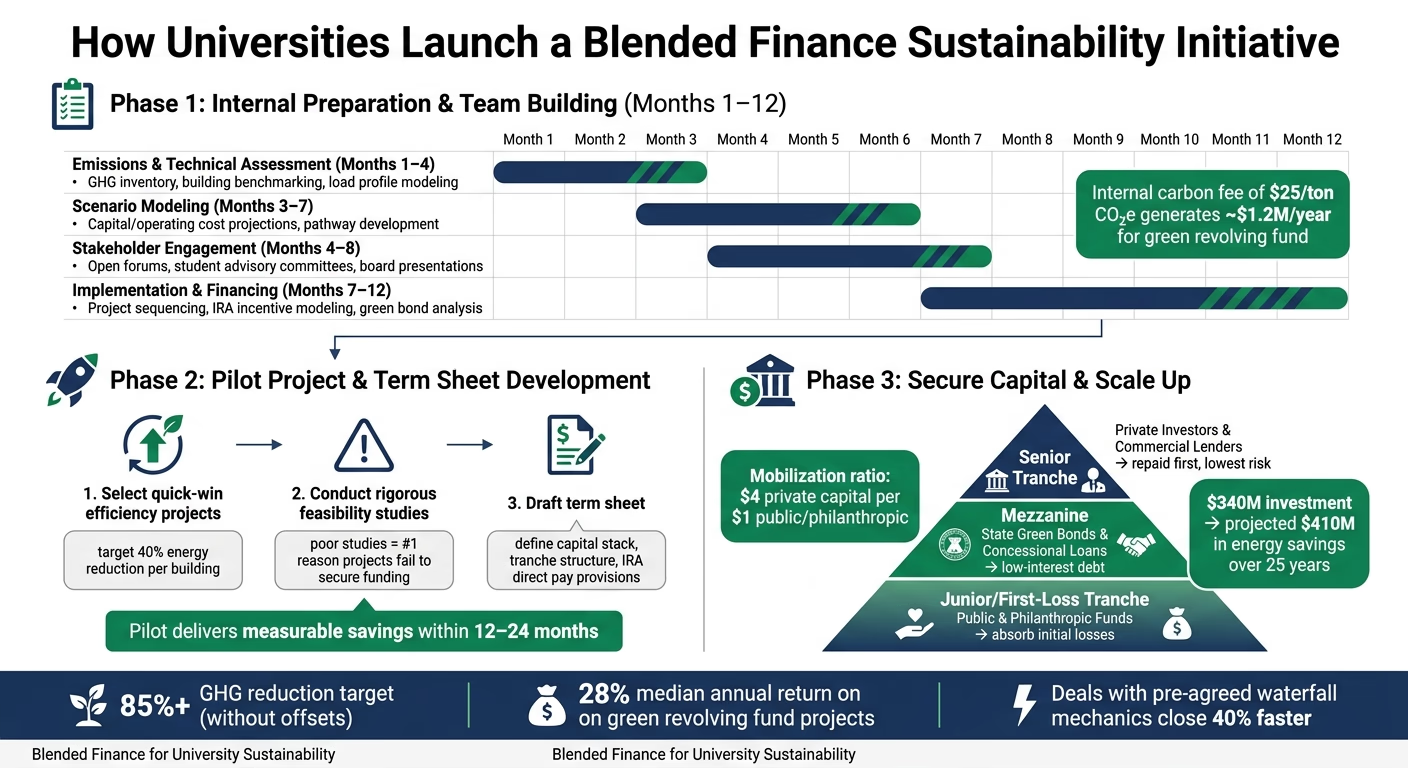
How Universities Build a Blended Finance Model for Sustainability
Once governance, monitoring, and capital stack structures are in place, the focus shifts to execution. Here's how to transition from planning to a fully operational blended finance model.
Step 1: Internal Preparation and Team Building
Before reaching out to external funders, universities need a solid understanding of their financial and operational standing. Start by conducting a comprehensive emissions inventory following the GHG Protocol. This should break down emissions by building, system, and fuel type, and include benchmarking each building against ENERGY STAR performance data. This foundational work typically spans four months and sets the stage for all subsequent steps [3].
Develop two pathways - one conservative and one accelerated - with detailed projections of capital and operating costs. These plans will help identify funding gaps and leverage IRA direct pay provisions to improve project economics [3].
Introduce an internal carbon fee of $25 per ton of CO₂e on institutional air travel. This measure alone can generate approximately $1.2 million annually for a dedicated green revolving fund, providing the initial capital for early-stage projects [3].
Preparation Phase | Duration | Key Activities |
|---|---|---|
Emissions & Technical Assessment | Months 1–4 | GHG inventory, building benchmarking, load profile modeling |
Scenario Modeling | Months 3–7 | Capital/operating cost projections, pathway development |
Stakeholder Engagement | Months 4–8 | Open forums, student advisory committees, board presentations |
Implementation & Financing | Months 7–12 | Sequencing projects, modeling IRA incentives, green bond analysis |
Engaging stakeholders is critical during this phase. Students, faculty, facilities teams, and the board of trustees should be involved early in the process. An experienced external advisor, such as Council Fire, can help translate technical data into insights that resonate with both financial and academic stakeholders [3].
Once these foundational steps are complete, the focus shifts to selecting pilot projects and developing a term sheet.
Step 2: Developing a Pilot Project and Term Sheet
Start with pilot projects that offer quick-win efficiency measures and deliver measurable savings within 12–24 months. These early savings can serve as a revenue stream to fund larger, more complex projects down the line. This approach not only builds confidence but also demonstrates financial returns [3].
Deep building retrofits are an effective starting point, often achieving 40% energy reduction per building [3]. Invest heavily in feasibility studies for these pilots. Poorly executed feasibility studies are a common reason projects fail to secure funding, so rigorous modeling is essential [2].
The term sheet should clearly outline the capital stack, tranche structure, and risk-sharing arrangements. Incorporating current federal incentives, like IRA direct pay provisions, can make previously unviable projects financially feasible [3].
With a tested pilot and a well-defined term sheet, the next challenge is securing capital for scaling.
Step 3: Securing Capital Commitments and Scaling Up
With a successful pilot and structured term sheet in hand, begin engaging funders. Public and philanthropic capital should take the lead in de-risking the project, attracting private investment. State green bond authorities can provide low-cost debt, while off-site Power Purchase Agreements (PPAs) can lock in renewable energy rates below blended grid costs.
For example, one public research university secured a 50 MW off-site wind PPA at $32/MWh, far below its existing grid rate [3].
After gathering internal assessments and pilot results, use standardized documentation to streamline due diligence and build investor confidence. Once early performance data from the pilot becomes available, present these results to your board and state higher education system. Concrete data from completed projects is far more convincing than projections.
Scaling up follows the same principles as the pilot phase. Sequence investments to ensure positive cash flow, phase major transitions instead of attempting a single overhaul, and use an open data dashboard to track progress in real time. For instance, a $340 million investment structured this way was projected to deliver $410 million in energy cost savings and avoided maintenance over 25 years, resulting in a positive net present value for the institution [3].
Conclusion: Moving Sustainability Goals Forward with Blended Finance
Building a blended finance model for sustainability requires careful planning and a step-by-step approach. Institutions that succeed often begin with smaller projects, proving their impact through measurable results. These early successes can then pave the way for securing larger financial commitments. Over time, this method has shown to deliver considerable cost savings, especially when paired with disciplined planning[3].
Two critical elements separate successful programs from those that falter: prioritizing upgrades to the central plant and minimizing reliance on offsets. Central heating and cooling systems alone can contribute between 30% and 50% of a university's total emissions[3]. Tackling these systems early ensures a meaningful reduction in emissions. Additionally, limiting offsets to 10% or less helps institutions focus on operational improvements, which not only strengthen their credibility but also address growing scrutiny from students and faculty[3]. This strategy fosters trust, encourages stakeholder collaboration, and supports long-term financial and environmental goals.
Collaboration is at the heart of these initiatives. Students, faculty, facilities teams, and trustees each play a vital role. Tools like open data dashboards and advisory committees help align these diverse groups, reinforcing governance and maintaining momentum across multi-year efforts. These collaborative frameworks mirror the cross-functional strategies highlighted earlier.
Strong financial tools further amplify these efforts. Federal incentives, such as the IRA direct pay provisions, have made previously unfeasible projects attainable[3]. Additionally, internal carbon fees can gradually fund green revolving initiatives. In the end, the key to turning sustainability goals into actionable, funded projects lies in thoughtful planning and effective sequencing.
FAQs
What projects are easiest to finance first?
Focusing on projects that yield immediate savings and fast results is often the simplest way to secure financing. Universities can start with efficiency improvements that cut costs right away, generating funds to support more ambitious efforts down the line. This strategy not only boosts cash flow but also strengthens organizational confidence, setting the stage for more extensive, long-term investments.
How do we use IRA direct pay on campus projects?
To utilize IRA direct pay for campus projects, qualifying tax-exempt institutions need to take specific steps. First, each project must be pre-registered with the IRS to receive a unique registration number. Once registered, institutions should select the direct pay option on the relevant tax form, such as Form 990-T, for the tax year when the project becomes operational.
Preparation is key. Institutions should evaluate the financial advantages, confirm eligibility requirements, and explore options like bridge funding to maintain cash flow while waiting for federal payments.
How should we set up first-loss risk sharing?
To establish a first-loss risk-sharing structure, begin by assigning the initial layer of risk to public or philanthropic investors. This creates a safety net that shields private investors from early losses. Use concessional capital and structured tranches to absorb these initial losses, making the investment more appealing to private participants. The key is to carefully determine the size and terms of each tranche to strike the right balance between risk and return. Advanced modeling tools, such as Monte Carlo simulations, can help refine the structure, optimize performance, and ensure the risks are distributed effectively.
Related Blog Posts
Latest Articles
©2026

Narrative Change and Power Building: The Missing Half of Advocacy
Narrative change is the process of disrupting dominant narratives that normalize inequity and advancing new narratives from historically marginalized communities.

Funding Resilience Without Federal Grants
BRIC is unreliable and FEMA is shrinking. Here's how cities fund climate resilience with dedicated revenue, blended finance, and a coordinating authority.

The ESG Blind Spot: How AI Is Finding Risks in Companies Nobody Else Is Watching
Norway's sovereign wealth fund uses AI to screen 7,200 portfolio companies for forced labor and corruption within 24 hours. The real story is the emerging-market coverage gap that traditional ESG data vendors miss — and what it means for any company with a global supply chain.
Narrative Change and Power Building: The Missing Half of Advocacy
Narrative change is the process of disrupting dominant narratives that normalize inequity and advancing new narratives from historically marginalized communities.
Funding Resilience Without Federal Grants
BRIC is unreliable and FEMA is shrinking. Here's how cities fund climate resilience with dedicated revenue, blended finance, and a coordinating authority.
The ESG Blind Spot: How AI Is Finding Risks in Companies Nobody Else Is Watching
Norway's sovereign wealth fund uses AI to screen 7,200 portfolio companies for forced labor and corruption within 24 hours. The real story is the emerging-market coverage gap that traditional ESG data vendors miss — and what it means for any company with a global supply chain.
FAQ
01
What does it really mean to “redefine profit”?
02
What makes Council Fire different?
03
Who does Council Fire work with?
04
What does working with Council Fire actually look like?
05
How does Council Fire help organizations turn big goals into action?
06
How does Council Fire define and measure success?
07
How does technology fit into Council Fire’s work?
May 25, 2026
How to Build a Blended Finance Model for Sustainability Initiatives for Universities & Research Institutions
Sustainability Strategy
In This Article
Step-by-step guide to structuring blended finance for university sustainability projects, from pilot efficiency measures to capital stacks and governance.
How to Build a Blended Finance Model for Sustainability Initiatives for Universities & Research Institutions
Blended finance is a powerful approach to funding large-scale projects by combining public, philanthropic, and private capital. For universities, this model can address challenges like aging infrastructure, high emissions, and limited budgets. By leveraging tools such as grants, low-interest loans, and tax incentives like the Inflation Reduction Act’s direct pay provisions, institutions can reduce risks for private investors and unlock funding for projects like energy system upgrades and building retrofits.
Key Takeaways:
Blended Finance Basics: Uses concessional funds to attract private investment, often achieving $4 of private funding for every $1 of public or philanthropic capital.
University Challenges: Projects like central heating upgrades, often costing over $180M, face barriers due to long payback periods and risks tied to new technologies.
Funding Opportunities: Tools like green revolving funds, energy performance contracts, and federal incentives make previously unfeasible projects viable.
Steps to Success:
Ground goals in data (e.g., emissions inventories using the Greenhouse Gas Protocol).
Break down broad goals into specific, fundable projects (e.g., HVAC upgrades, solar installations).
Build a capital stack with clear roles for public, philanthropic, and private investors.
Develop governance systems and monitor financial and impact metrics to ensure long-term success.
This guide outlines how universities can structure and implement blended finance strategies to advance their sustainability goals while ensuring financial feasibility.
SHoF Annual Conference: Blended Finance
Mapping Sustainability Needs to Fundable Projects
Broad commitments like "achieve carbon neutrality by 2040" don’t automatically draw investor interest. To secure funding, institutions need to present clearly defined projects with detailed costs, predictable returns, and measurable results. This is often where universities face challenges - bridging the gap between ambitious goals and investor-ready initiatives. The solution lies in breaking down these broad ambitions into specific, actionable, and fundable projects.
Defining Institutional Goals and Constraints
Start by grounding your goals in solid data. For example, the Greenhouse Gas Protocol can help dissect emissions by building, fuel type, and campus sector instead of just presenting an overall figure. Since building operations typically account for about 75% of campus emissions at U.S. universities, targeting energy efficiency and decarbonizing heating and cooling systems often offers the most practical opportunities for financing [6][7].
Equally important is understanding your institution's constraints. Factors like debt capacity, bond covenants, state procurement rules, and board approval thresholds can significantly influence what financing options are feasible. For instance, a public university in a state with strict public-private partnership (P3) statutes faces very different limitations compared to a private institution with flexible 501(c)(3) bond authority. Engaging key stakeholders - such as the CFO, general counsel, and facilities team - early in the process is essential. Documenting these limitations in a "constraints memo" can save time by ensuring efforts focus on viable financing structures [4][5].
Once goals and constraints are clearly defined, the next step is converting sustainability plans into projects that attract investors.
Turning Sustainability Plans into Bankable Projects
With a clear baseline and constraints, you can begin categorizing sustainability goals into specific project types. Examples include building envelope and HVAC upgrades, central plant modernization, on-site solar installations, microgrids, EV charging networks, and stormwater management systems. For each project, create a standardized template outlining its physical scope, estimated capital cost (in U.S. dollars), timeline, expected operational savings, and any key dependencies.
Using a scoring matrix can help prioritize projects. Metrics like payback period, net present value (NPV), greenhouse gas (GHG) reduction per dollar invested, and strategic alignment can identify "quick wins" (such as efficiency upgrades with paybacks under seven years) versus longer-term infrastructure investments. For instance, the University of Colorado Boulder's 2018 Climate Action Plan identified 22 projects capable of reducing campus emissions by about 40% by 2030, with many focused on building systems that offered measurable cost savings and were well-suited for third-party financing [7].
Bundling projects can also make them more attractive to lenders. For example, combining $30–$50 million worth of lighting, HVAC, and controls upgrades across multiple buildings into a single energy performance contract creates a package that lenders and energy service companies (ESCOs) are more likely to underwrite. By contrast, individual building projects often fail to meet the necessary scale [4].
Setting Impact and Financial Performance Targets
Every project should undergo a dual evaluation: one side focusing on impact metrics (e.g., annual CO₂ reductions, water savings) and the other on financial metrics (e.g., NPV, internal rate of return (IRR), payback period). This ensures projects align with both institutional goals and financial realities.
Metric Category | Example Target | Benchmark |
|---|---|---|
GHG Reduction | 85%+ reduction without offsets | GHG Protocol, ENERGY STAR [3] |
Offset Cap | 10% or less of baseline emissions | Best practice [3] |
Net Present Value | Positive NPV over 20–25 years | Project finance standard [3] |
Renewable Energy Cost | PPA rates below blended grid rate | e.g., $32/MWh off-site wind [3] |
Annual Operating Savings | Measurable reduction in utility/O&M costs | e.g., $2.8M/year for central plant [3] |
One increasingly popular tool is internal carbon pricing. For example, setting a $25-per-ton fee on institutional air travel can generate a steady revenue stream for a green revolving fund (GRF). Schools using GRFs for efficiency projects report a median annual return of around 28%, with payback periods ranging from three to seven years. These projects often serve as strong foundational investments for broader financing strategies [8].
"Starting with efficiency measures that generate immediate savings creates a revenue stream that funds larger capital projects. This sequencing also builds organizational confidence as early wins demonstrate feasibility." - Council Fire Resources [3]
Structuring the Capital Stack and Risk-Sharing Mechanisms
Once priority projects and financial targets are clearly defined, the next step is to build a capital stack that assigns roles and distributes risk effectively among all stakeholders. This involves carefully aligning funding sources with project needs, ensuring that risk and return expectations are met for each participant.
Identifying and Aligning Capital Providers
Every capital provider operates with unique risk tolerances and financial goals, so matching them to the right type of project is essential. For example:
Public funds and state green bonds are ideal for large-scale, long-term infrastructure projects, such as district geothermal systems or central plant upgrades.
Philanthropic contributions from alumni or foundations are better suited for early-stage work, like technical assessments or feasibility studies, which are critical for laying the groundwork for a project but don't generate direct financial returns.
Private investors and commercial lenders prefer projects with defined cash flows and repayment schedules, making them a good fit for initiatives like energy performance contracts or off-site power purchase agreements (PPAs).
The success of this alignment lies in understanding what each capital provider values most. For instance, a state agency might prioritize metrics like job creation or emissions reductions, while private lenders focus on reliable debt service coverage. Foundations, on the other hand, often seek measurable social or environmental impact. Structuring a deal requires balancing these needs so that all parties are satisfied without undermining the project's overall goals.
Key Blended Finance Instruments and Their Roles
Blended finance tools play a critical role in making university projects financially viable. Here’s how some of these instruments fit into the capital stack:
Instrument | Role in the Capital Stack |
|---|---|
First-Loss Capital | Public or philanthropic funds absorb initial losses, reducing risk for private investors [2]. |
IRA Direct Pay | Enables tax-exempt universities to receive federal clean energy tax credits as cash payments, improving project economics and making previously unviable projects feasible [3]. |
Concessional Loans | Low-interest debt reduces the overall cost of capital, boosting project net present value (NPV) [2]. |
Green Revolving Fund (GRF) | An internal fund, often seeded by energy savings or carbon fees, reinvested into future projects [3]. |
Off-Site PPA | Long-term contracts for renewable energy at fixed rates, such as a 50 MW wind PPA secured by a university at $32/MWh, below its grid rate [3]. |
"The IRA's direct pay provisions for tax-exempt entities made projects financially viable that had been rejected in prior analyses." - Council Fire [3]
Financial Structures for Campus Projects
By combining aligned capital sources with tailored financial instruments, universities can create multi-layered financial structures that optimize cash flow and distribute risk across a project's lifecycle. Effective structures often use a "junior-senior" capital stack. In this setup, public or philanthropic funds are positioned in the junior tranche, absorbing losses first, while private capital occupies the senior tranche, ensuring it is repaid first. This arrangement helps attract private investors to projects that might otherwise be deemed too risky [9].
One example is a $340 million sustainability investment at a large public research university. Early-phase efficiency upgrades were funded through a green revolving fund and internal carbon fees, generating $2.8 million in annual operating savings from a central plant transition. These savings then supported debt service for larger infrastructure bonds. Over 25 years, the program is projected to deliver $410 million in energy cost savings and avoided maintenance expenses [3].
The choice of financial structure depends on the project's cash flow timeline. Shorter-payback projects, typically under seven years, can often be self-funded or financed through energy performance contracts. In contrast, longer-term infrastructure projects - such as a 12-mile underground district energy system - require patient capital, often combining green bonds or state-backed financing with a first-loss layer to attract private investment [3].
Building Governance, Implementation, and Monitoring Systems
Once the capital stack is in place, having strong governance, implementation, and monitoring systems becomes essential. These systems not only help avoid potential issues but also build trust among stakeholders. Clear authority and accountability are necessary to effectively manage a blended finance structure, ensuring that governance aligns seamlessly with the financial strategies already established.
Setting Up Governance and Decision-Making Processes
For blended finance to work effectively, governance requires a cross-functional committee. This group should include trustees, faculty, facilities managers, finance staff, and representatives from state higher education offices, each with well-defined roles and approval responsibilities. The committee handles major decisions, such as calibrating tranches, committing capital, and determining project sequencing.
Adding a student advisory committee can help address concerns like construction disruptions or additional fees. To further enhance transparency, an open data dashboard can provide real-time updates on project assumptions, timelines, and financial progress [3].
"Opacity and complexity drive up transaction costs and undermine trust." - Columbia Center on Sustainable Investment [2]
Developing Contractual and Operational Frameworks
Once decision-making processes are established, standardized frameworks ensure consistency in tracking performance. Impact measurement plays a key role here. By embedding impact metrics into term sheets and agreements, with defined KPIs, baselines, and reporting schedules, accountability becomes a contractual obligation rather than a vague aspiration [1].
For university-related projects, essential contractual elements include ESG reporting aligned with standards like the GHG Protocol and ENERGY STAR. Additionally, pre-defined waterfall mechanics outline how cash flows are distributed among senior, mezzanine, and first-loss tranches. Deals that include these mechanics tend to close 40% faster compared to those that rely on ad hoc negotiations [1][3].
Continuous Monitoring of Impact, Performance, and Risk
To complement the risk-sharing mechanisms of the capital stack, continuous monitoring is crucial. This involves tracking financial performance, impact outcomes, and risk exposure. Two key financial metrics stand out: the mobilization ratio, which measures how much private capital is attracted per dollar of concessional funding (with a median of 4:1 across blended finance deals), and the Avoided Loss Ratio, which quantifies damages avoided per dollar invested [1].
Technological tools play a significant role here. Digital MRV (Measurement, Reporting, and Verification) systems can monitor CO₂ reductions and clean energy capacity in near-real time. Meanwhile, Monte Carlo simulations provide insights into how credit shocks might affect different tranches [1][9].
Metric Type | Key Indicator | Benchmark |
|---|---|---|
Financial | Mobilization Ratio | ~4:1 (median across blended deals) |
Financial | Avoided Loss Ratio | 0–2 (avoided damages per $1 invested) |
Impact | CO₂ Avoided | Project-specific; tracked via MRV tools |
Impact | Clean Energy Installed | Measured in MW |
Governance | Waterfall Mechanics | Pre-agreed; defined before financial close |
Step-by-Step Guide to Launching a Blended Finance Initiative
How Universities Build a Blended Finance Model for Sustainability
Once governance, monitoring, and capital stack structures are in place, the focus shifts to execution. Here's how to transition from planning to a fully operational blended finance model.
Step 1: Internal Preparation and Team Building
Before reaching out to external funders, universities need a solid understanding of their financial and operational standing. Start by conducting a comprehensive emissions inventory following the GHG Protocol. This should break down emissions by building, system, and fuel type, and include benchmarking each building against ENERGY STAR performance data. This foundational work typically spans four months and sets the stage for all subsequent steps [3].
Develop two pathways - one conservative and one accelerated - with detailed projections of capital and operating costs. These plans will help identify funding gaps and leverage IRA direct pay provisions to improve project economics [3].
Introduce an internal carbon fee of $25 per ton of CO₂e on institutional air travel. This measure alone can generate approximately $1.2 million annually for a dedicated green revolving fund, providing the initial capital for early-stage projects [3].
Preparation Phase | Duration | Key Activities |
|---|---|---|
Emissions & Technical Assessment | Months 1–4 | GHG inventory, building benchmarking, load profile modeling |
Scenario Modeling | Months 3–7 | Capital/operating cost projections, pathway development |
Stakeholder Engagement | Months 4–8 | Open forums, student advisory committees, board presentations |
Implementation & Financing | Months 7–12 | Sequencing projects, modeling IRA incentives, green bond analysis |
Engaging stakeholders is critical during this phase. Students, faculty, facilities teams, and the board of trustees should be involved early in the process. An experienced external advisor, such as Council Fire, can help translate technical data into insights that resonate with both financial and academic stakeholders [3].
Once these foundational steps are complete, the focus shifts to selecting pilot projects and developing a term sheet.
Step 2: Developing a Pilot Project and Term Sheet
Start with pilot projects that offer quick-win efficiency measures and deliver measurable savings within 12–24 months. These early savings can serve as a revenue stream to fund larger, more complex projects down the line. This approach not only builds confidence but also demonstrates financial returns [3].
Deep building retrofits are an effective starting point, often achieving 40% energy reduction per building [3]. Invest heavily in feasibility studies for these pilots. Poorly executed feasibility studies are a common reason projects fail to secure funding, so rigorous modeling is essential [2].
The term sheet should clearly outline the capital stack, tranche structure, and risk-sharing arrangements. Incorporating current federal incentives, like IRA direct pay provisions, can make previously unviable projects financially feasible [3].
With a tested pilot and a well-defined term sheet, the next challenge is securing capital for scaling.
Step 3: Securing Capital Commitments and Scaling Up
With a successful pilot and structured term sheet in hand, begin engaging funders. Public and philanthropic capital should take the lead in de-risking the project, attracting private investment. State green bond authorities can provide low-cost debt, while off-site Power Purchase Agreements (PPAs) can lock in renewable energy rates below blended grid costs.
For example, one public research university secured a 50 MW off-site wind PPA at $32/MWh, far below its existing grid rate [3].
After gathering internal assessments and pilot results, use standardized documentation to streamline due diligence and build investor confidence. Once early performance data from the pilot becomes available, present these results to your board and state higher education system. Concrete data from completed projects is far more convincing than projections.
Scaling up follows the same principles as the pilot phase. Sequence investments to ensure positive cash flow, phase major transitions instead of attempting a single overhaul, and use an open data dashboard to track progress in real time. For instance, a $340 million investment structured this way was projected to deliver $410 million in energy cost savings and avoided maintenance over 25 years, resulting in a positive net present value for the institution [3].
Conclusion: Moving Sustainability Goals Forward with Blended Finance
Building a blended finance model for sustainability requires careful planning and a step-by-step approach. Institutions that succeed often begin with smaller projects, proving their impact through measurable results. These early successes can then pave the way for securing larger financial commitments. Over time, this method has shown to deliver considerable cost savings, especially when paired with disciplined planning[3].
Two critical elements separate successful programs from those that falter: prioritizing upgrades to the central plant and minimizing reliance on offsets. Central heating and cooling systems alone can contribute between 30% and 50% of a university's total emissions[3]. Tackling these systems early ensures a meaningful reduction in emissions. Additionally, limiting offsets to 10% or less helps institutions focus on operational improvements, which not only strengthen their credibility but also address growing scrutiny from students and faculty[3]. This strategy fosters trust, encourages stakeholder collaboration, and supports long-term financial and environmental goals.
Collaboration is at the heart of these initiatives. Students, faculty, facilities teams, and trustees each play a vital role. Tools like open data dashboards and advisory committees help align these diverse groups, reinforcing governance and maintaining momentum across multi-year efforts. These collaborative frameworks mirror the cross-functional strategies highlighted earlier.
Strong financial tools further amplify these efforts. Federal incentives, such as the IRA direct pay provisions, have made previously unfeasible projects attainable[3]. Additionally, internal carbon fees can gradually fund green revolving initiatives. In the end, the key to turning sustainability goals into actionable, funded projects lies in thoughtful planning and effective sequencing.
FAQs
What projects are easiest to finance first?
Focusing on projects that yield immediate savings and fast results is often the simplest way to secure financing. Universities can start with efficiency improvements that cut costs right away, generating funds to support more ambitious efforts down the line. This strategy not only boosts cash flow but also strengthens organizational confidence, setting the stage for more extensive, long-term investments.
How do we use IRA direct pay on campus projects?
To utilize IRA direct pay for campus projects, qualifying tax-exempt institutions need to take specific steps. First, each project must be pre-registered with the IRS to receive a unique registration number. Once registered, institutions should select the direct pay option on the relevant tax form, such as Form 990-T, for the tax year when the project becomes operational.
Preparation is key. Institutions should evaluate the financial advantages, confirm eligibility requirements, and explore options like bridge funding to maintain cash flow while waiting for federal payments.
How should we set up first-loss risk sharing?
To establish a first-loss risk-sharing structure, begin by assigning the initial layer of risk to public or philanthropic investors. This creates a safety net that shields private investors from early losses. Use concessional capital and structured tranches to absorb these initial losses, making the investment more appealing to private participants. The key is to carefully determine the size and terms of each tranche to strike the right balance between risk and return. Advanced modeling tools, such as Monte Carlo simulations, can help refine the structure, optimize performance, and ensure the risks are distributed effectively.
Related Blog Posts
Latest Articles
©2026
Narrative Change and Power Building: The Missing Half of Advocacy
Narrative change is the process of disrupting dominant narratives that normalize inequity and advancing new narratives from historically marginalized communities.
Funding Resilience Without Federal Grants
BRIC is unreliable and FEMA is shrinking. Here's how cities fund climate resilience with dedicated revenue, blended finance, and a coordinating authority.
The ESG Blind Spot: How AI Is Finding Risks in Companies Nobody Else Is Watching
Norway's sovereign wealth fund uses AI to screen 7,200 portfolio companies for forced labor and corruption within 24 hours. The real story is the emerging-market coverage gap that traditional ESG data vendors miss — and what it means for any company with a global supply chain.
FAQ
01
What does it really mean to “redefine profit”?
02
What makes Council Fire different?
03
Who does Council Fire work with?
04
What does working with Council Fire actually look like?
05
How does Council Fire help organizations turn big goals into action?
06
How does Council Fire define and measure success?
07
How does technology fit into Council Fire’s work?
May 25, 2026
How to Build a Blended Finance Model for Sustainability Initiatives for Universities & Research Institutions
Sustainability Strategy
In This Article
Step-by-step guide to structuring blended finance for university sustainability projects, from pilot efficiency measures to capital stacks and governance.
How to Build a Blended Finance Model for Sustainability Initiatives for Universities & Research Institutions
Blended finance is a powerful approach to funding large-scale projects by combining public, philanthropic, and private capital. For universities, this model can address challenges like aging infrastructure, high emissions, and limited budgets. By leveraging tools such as grants, low-interest loans, and tax incentives like the Inflation Reduction Act’s direct pay provisions, institutions can reduce risks for private investors and unlock funding for projects like energy system upgrades and building retrofits.
Key Takeaways:
Blended Finance Basics: Uses concessional funds to attract private investment, often achieving $4 of private funding for every $1 of public or philanthropic capital.
University Challenges: Projects like central heating upgrades, often costing over $180M, face barriers due to long payback periods and risks tied to new technologies.
Funding Opportunities: Tools like green revolving funds, energy performance contracts, and federal incentives make previously unfeasible projects viable.
Steps to Success:
Ground goals in data (e.g., emissions inventories using the Greenhouse Gas Protocol).
Break down broad goals into specific, fundable projects (e.g., HVAC upgrades, solar installations).
Build a capital stack with clear roles for public, philanthropic, and private investors.
Develop governance systems and monitor financial and impact metrics to ensure long-term success.
This guide outlines how universities can structure and implement blended finance strategies to advance their sustainability goals while ensuring financial feasibility.
SHoF Annual Conference: Blended Finance
Mapping Sustainability Needs to Fundable Projects
Broad commitments like "achieve carbon neutrality by 2040" don’t automatically draw investor interest. To secure funding, institutions need to present clearly defined projects with detailed costs, predictable returns, and measurable results. This is often where universities face challenges - bridging the gap between ambitious goals and investor-ready initiatives. The solution lies in breaking down these broad ambitions into specific, actionable, and fundable projects.
Defining Institutional Goals and Constraints
Start by grounding your goals in solid data. For example, the Greenhouse Gas Protocol can help dissect emissions by building, fuel type, and campus sector instead of just presenting an overall figure. Since building operations typically account for about 75% of campus emissions at U.S. universities, targeting energy efficiency and decarbonizing heating and cooling systems often offers the most practical opportunities for financing [6][7].
Equally important is understanding your institution's constraints. Factors like debt capacity, bond covenants, state procurement rules, and board approval thresholds can significantly influence what financing options are feasible. For instance, a public university in a state with strict public-private partnership (P3) statutes faces very different limitations compared to a private institution with flexible 501(c)(3) bond authority. Engaging key stakeholders - such as the CFO, general counsel, and facilities team - early in the process is essential. Documenting these limitations in a "constraints memo" can save time by ensuring efforts focus on viable financing structures [4][5].
Once goals and constraints are clearly defined, the next step is converting sustainability plans into projects that attract investors.
Turning Sustainability Plans into Bankable Projects
With a clear baseline and constraints, you can begin categorizing sustainability goals into specific project types. Examples include building envelope and HVAC upgrades, central plant modernization, on-site solar installations, microgrids, EV charging networks, and stormwater management systems. For each project, create a standardized template outlining its physical scope, estimated capital cost (in U.S. dollars), timeline, expected operational savings, and any key dependencies.
Using a scoring matrix can help prioritize projects. Metrics like payback period, net present value (NPV), greenhouse gas (GHG) reduction per dollar invested, and strategic alignment can identify "quick wins" (such as efficiency upgrades with paybacks under seven years) versus longer-term infrastructure investments. For instance, the University of Colorado Boulder's 2018 Climate Action Plan identified 22 projects capable of reducing campus emissions by about 40% by 2030, with many focused on building systems that offered measurable cost savings and were well-suited for third-party financing [7].
Bundling projects can also make them more attractive to lenders. For example, combining $30–$50 million worth of lighting, HVAC, and controls upgrades across multiple buildings into a single energy performance contract creates a package that lenders and energy service companies (ESCOs) are more likely to underwrite. By contrast, individual building projects often fail to meet the necessary scale [4].
Setting Impact and Financial Performance Targets
Every project should undergo a dual evaluation: one side focusing on impact metrics (e.g., annual CO₂ reductions, water savings) and the other on financial metrics (e.g., NPV, internal rate of return (IRR), payback period). This ensures projects align with both institutional goals and financial realities.
Metric Category | Example Target | Benchmark |
|---|---|---|
GHG Reduction | 85%+ reduction without offsets | GHG Protocol, ENERGY STAR [3] |
Offset Cap | 10% or less of baseline emissions | Best practice [3] |
Net Present Value | Positive NPV over 20–25 years | Project finance standard [3] |
Renewable Energy Cost | PPA rates below blended grid rate | e.g., $32/MWh off-site wind [3] |
Annual Operating Savings | Measurable reduction in utility/O&M costs | e.g., $2.8M/year for central plant [3] |
One increasingly popular tool is internal carbon pricing. For example, setting a $25-per-ton fee on institutional air travel can generate a steady revenue stream for a green revolving fund (GRF). Schools using GRFs for efficiency projects report a median annual return of around 28%, with payback periods ranging from three to seven years. These projects often serve as strong foundational investments for broader financing strategies [8].
"Starting with efficiency measures that generate immediate savings creates a revenue stream that funds larger capital projects. This sequencing also builds organizational confidence as early wins demonstrate feasibility." - Council Fire Resources [3]
Structuring the Capital Stack and Risk-Sharing Mechanisms
Once priority projects and financial targets are clearly defined, the next step is to build a capital stack that assigns roles and distributes risk effectively among all stakeholders. This involves carefully aligning funding sources with project needs, ensuring that risk and return expectations are met for each participant.
Identifying and Aligning Capital Providers
Every capital provider operates with unique risk tolerances and financial goals, so matching them to the right type of project is essential. For example:
Public funds and state green bonds are ideal for large-scale, long-term infrastructure projects, such as district geothermal systems or central plant upgrades.
Philanthropic contributions from alumni or foundations are better suited for early-stage work, like technical assessments or feasibility studies, which are critical for laying the groundwork for a project but don't generate direct financial returns.
Private investors and commercial lenders prefer projects with defined cash flows and repayment schedules, making them a good fit for initiatives like energy performance contracts or off-site power purchase agreements (PPAs).
The success of this alignment lies in understanding what each capital provider values most. For instance, a state agency might prioritize metrics like job creation or emissions reductions, while private lenders focus on reliable debt service coverage. Foundations, on the other hand, often seek measurable social or environmental impact. Structuring a deal requires balancing these needs so that all parties are satisfied without undermining the project's overall goals.
Key Blended Finance Instruments and Their Roles
Blended finance tools play a critical role in making university projects financially viable. Here’s how some of these instruments fit into the capital stack:
Instrument | Role in the Capital Stack |
|---|---|
First-Loss Capital | Public or philanthropic funds absorb initial losses, reducing risk for private investors [2]. |
IRA Direct Pay | Enables tax-exempt universities to receive federal clean energy tax credits as cash payments, improving project economics and making previously unviable projects feasible [3]. |
Concessional Loans | Low-interest debt reduces the overall cost of capital, boosting project net present value (NPV) [2]. |
Green Revolving Fund (GRF) | An internal fund, often seeded by energy savings or carbon fees, reinvested into future projects [3]. |
Off-Site PPA | Long-term contracts for renewable energy at fixed rates, such as a 50 MW wind PPA secured by a university at $32/MWh, below its grid rate [3]. |
"The IRA's direct pay provisions for tax-exempt entities made projects financially viable that had been rejected in prior analyses." - Council Fire [3]
Financial Structures for Campus Projects
By combining aligned capital sources with tailored financial instruments, universities can create multi-layered financial structures that optimize cash flow and distribute risk across a project's lifecycle. Effective structures often use a "junior-senior" capital stack. In this setup, public or philanthropic funds are positioned in the junior tranche, absorbing losses first, while private capital occupies the senior tranche, ensuring it is repaid first. This arrangement helps attract private investors to projects that might otherwise be deemed too risky [9].
One example is a $340 million sustainability investment at a large public research university. Early-phase efficiency upgrades were funded through a green revolving fund and internal carbon fees, generating $2.8 million in annual operating savings from a central plant transition. These savings then supported debt service for larger infrastructure bonds. Over 25 years, the program is projected to deliver $410 million in energy cost savings and avoided maintenance expenses [3].
The choice of financial structure depends on the project's cash flow timeline. Shorter-payback projects, typically under seven years, can often be self-funded or financed through energy performance contracts. In contrast, longer-term infrastructure projects - such as a 12-mile underground district energy system - require patient capital, often combining green bonds or state-backed financing with a first-loss layer to attract private investment [3].
Building Governance, Implementation, and Monitoring Systems
Once the capital stack is in place, having strong governance, implementation, and monitoring systems becomes essential. These systems not only help avoid potential issues but also build trust among stakeholders. Clear authority and accountability are necessary to effectively manage a blended finance structure, ensuring that governance aligns seamlessly with the financial strategies already established.
Setting Up Governance and Decision-Making Processes
For blended finance to work effectively, governance requires a cross-functional committee. This group should include trustees, faculty, facilities managers, finance staff, and representatives from state higher education offices, each with well-defined roles and approval responsibilities. The committee handles major decisions, such as calibrating tranches, committing capital, and determining project sequencing.
Adding a student advisory committee can help address concerns like construction disruptions or additional fees. To further enhance transparency, an open data dashboard can provide real-time updates on project assumptions, timelines, and financial progress [3].
"Opacity and complexity drive up transaction costs and undermine trust." - Columbia Center on Sustainable Investment [2]
Developing Contractual and Operational Frameworks
Once decision-making processes are established, standardized frameworks ensure consistency in tracking performance. Impact measurement plays a key role here. By embedding impact metrics into term sheets and agreements, with defined KPIs, baselines, and reporting schedules, accountability becomes a contractual obligation rather than a vague aspiration [1].
For university-related projects, essential contractual elements include ESG reporting aligned with standards like the GHG Protocol and ENERGY STAR. Additionally, pre-defined waterfall mechanics outline how cash flows are distributed among senior, mezzanine, and first-loss tranches. Deals that include these mechanics tend to close 40% faster compared to those that rely on ad hoc negotiations [1][3].
Continuous Monitoring of Impact, Performance, and Risk
To complement the risk-sharing mechanisms of the capital stack, continuous monitoring is crucial. This involves tracking financial performance, impact outcomes, and risk exposure. Two key financial metrics stand out: the mobilization ratio, which measures how much private capital is attracted per dollar of concessional funding (with a median of 4:1 across blended finance deals), and the Avoided Loss Ratio, which quantifies damages avoided per dollar invested [1].
Technological tools play a significant role here. Digital MRV (Measurement, Reporting, and Verification) systems can monitor CO₂ reductions and clean energy capacity in near-real time. Meanwhile, Monte Carlo simulations provide insights into how credit shocks might affect different tranches [1][9].
Metric Type | Key Indicator | Benchmark |
|---|---|---|
Financial | Mobilization Ratio | ~4:1 (median across blended deals) |
Financial | Avoided Loss Ratio | 0–2 (avoided damages per $1 invested) |
Impact | CO₂ Avoided | Project-specific; tracked via MRV tools |
Impact | Clean Energy Installed | Measured in MW |
Governance | Waterfall Mechanics | Pre-agreed; defined before financial close |
Step-by-Step Guide to Launching a Blended Finance Initiative
How Universities Build a Blended Finance Model for Sustainability
Once governance, monitoring, and capital stack structures are in place, the focus shifts to execution. Here's how to transition from planning to a fully operational blended finance model.
Step 1: Internal Preparation and Team Building
Before reaching out to external funders, universities need a solid understanding of their financial and operational standing. Start by conducting a comprehensive emissions inventory following the GHG Protocol. This should break down emissions by building, system, and fuel type, and include benchmarking each building against ENERGY STAR performance data. This foundational work typically spans four months and sets the stage for all subsequent steps [3].
Develop two pathways - one conservative and one accelerated - with detailed projections of capital and operating costs. These plans will help identify funding gaps and leverage IRA direct pay provisions to improve project economics [3].
Introduce an internal carbon fee of $25 per ton of CO₂e on institutional air travel. This measure alone can generate approximately $1.2 million annually for a dedicated green revolving fund, providing the initial capital for early-stage projects [3].
Preparation Phase | Duration | Key Activities |
|---|---|---|
Emissions & Technical Assessment | Months 1–4 | GHG inventory, building benchmarking, load profile modeling |
Scenario Modeling | Months 3–7 | Capital/operating cost projections, pathway development |
Stakeholder Engagement | Months 4–8 | Open forums, student advisory committees, board presentations |
Implementation & Financing | Months 7–12 | Sequencing projects, modeling IRA incentives, green bond analysis |
Engaging stakeholders is critical during this phase. Students, faculty, facilities teams, and the board of trustees should be involved early in the process. An experienced external advisor, such as Council Fire, can help translate technical data into insights that resonate with both financial and academic stakeholders [3].
Once these foundational steps are complete, the focus shifts to selecting pilot projects and developing a term sheet.
Step 2: Developing a Pilot Project and Term Sheet
Start with pilot projects that offer quick-win efficiency measures and deliver measurable savings within 12–24 months. These early savings can serve as a revenue stream to fund larger, more complex projects down the line. This approach not only builds confidence but also demonstrates financial returns [3].
Deep building retrofits are an effective starting point, often achieving 40% energy reduction per building [3]. Invest heavily in feasibility studies for these pilots. Poorly executed feasibility studies are a common reason projects fail to secure funding, so rigorous modeling is essential [2].
The term sheet should clearly outline the capital stack, tranche structure, and risk-sharing arrangements. Incorporating current federal incentives, like IRA direct pay provisions, can make previously unviable projects financially feasible [3].
With a tested pilot and a well-defined term sheet, the next challenge is securing capital for scaling.
Step 3: Securing Capital Commitments and Scaling Up
With a successful pilot and structured term sheet in hand, begin engaging funders. Public and philanthropic capital should take the lead in de-risking the project, attracting private investment. State green bond authorities can provide low-cost debt, while off-site Power Purchase Agreements (PPAs) can lock in renewable energy rates below blended grid costs.
For example, one public research university secured a 50 MW off-site wind PPA at $32/MWh, far below its existing grid rate [3].
After gathering internal assessments and pilot results, use standardized documentation to streamline due diligence and build investor confidence. Once early performance data from the pilot becomes available, present these results to your board and state higher education system. Concrete data from completed projects is far more convincing than projections.
Scaling up follows the same principles as the pilot phase. Sequence investments to ensure positive cash flow, phase major transitions instead of attempting a single overhaul, and use an open data dashboard to track progress in real time. For instance, a $340 million investment structured this way was projected to deliver $410 million in energy cost savings and avoided maintenance over 25 years, resulting in a positive net present value for the institution [3].
Conclusion: Moving Sustainability Goals Forward with Blended Finance
Building a blended finance model for sustainability requires careful planning and a step-by-step approach. Institutions that succeed often begin with smaller projects, proving their impact through measurable results. These early successes can then pave the way for securing larger financial commitments. Over time, this method has shown to deliver considerable cost savings, especially when paired with disciplined planning[3].
Two critical elements separate successful programs from those that falter: prioritizing upgrades to the central plant and minimizing reliance on offsets. Central heating and cooling systems alone can contribute between 30% and 50% of a university's total emissions[3]. Tackling these systems early ensures a meaningful reduction in emissions. Additionally, limiting offsets to 10% or less helps institutions focus on operational improvements, which not only strengthen their credibility but also address growing scrutiny from students and faculty[3]. This strategy fosters trust, encourages stakeholder collaboration, and supports long-term financial and environmental goals.
Collaboration is at the heart of these initiatives. Students, faculty, facilities teams, and trustees each play a vital role. Tools like open data dashboards and advisory committees help align these diverse groups, reinforcing governance and maintaining momentum across multi-year efforts. These collaborative frameworks mirror the cross-functional strategies highlighted earlier.
Strong financial tools further amplify these efforts. Federal incentives, such as the IRA direct pay provisions, have made previously unfeasible projects attainable[3]. Additionally, internal carbon fees can gradually fund green revolving initiatives. In the end, the key to turning sustainability goals into actionable, funded projects lies in thoughtful planning and effective sequencing.
FAQs
What projects are easiest to finance first?
Focusing on projects that yield immediate savings and fast results is often the simplest way to secure financing. Universities can start with efficiency improvements that cut costs right away, generating funds to support more ambitious efforts down the line. This strategy not only boosts cash flow but also strengthens organizational confidence, setting the stage for more extensive, long-term investments.
How do we use IRA direct pay on campus projects?
To utilize IRA direct pay for campus projects, qualifying tax-exempt institutions need to take specific steps. First, each project must be pre-registered with the IRS to receive a unique registration number. Once registered, institutions should select the direct pay option on the relevant tax form, such as Form 990-T, for the tax year when the project becomes operational.
Preparation is key. Institutions should evaluate the financial advantages, confirm eligibility requirements, and explore options like bridge funding to maintain cash flow while waiting for federal payments.
How should we set up first-loss risk sharing?
To establish a first-loss risk-sharing structure, begin by assigning the initial layer of risk to public or philanthropic investors. This creates a safety net that shields private investors from early losses. Use concessional capital and structured tranches to absorb these initial losses, making the investment more appealing to private participants. The key is to carefully determine the size and terms of each tranche to strike the right balance between risk and return. Advanced modeling tools, such as Monte Carlo simulations, can help refine the structure, optimize performance, and ensure the risks are distributed effectively.
Related Blog Posts
Latest Articles
©2026
Narrative Change and Power Building: The Missing Half of Advocacy
Narrative change is the process of disrupting dominant narratives that normalize inequity and advancing new narratives from historically marginalized communities.
Funding Resilience Without Federal Grants
BRIC is unreliable and FEMA is shrinking. Here's how cities fund climate resilience with dedicated revenue, blended finance, and a coordinating authority.
The ESG Blind Spot: How AI Is Finding Risks in Companies Nobody Else Is Watching
Norway's sovereign wealth fund uses AI to screen 7,200 portfolio companies for forced labor and corruption within 24 hours. The real story is the emerging-market coverage gap that traditional ESG data vendors miss — and what it means for any company with a global supply chain.
FAQ
What does it really mean to “redefine profit”?
What makes Council Fire different?
Who does Council Fire work with?
What does working with Council Fire actually look like?
How does Council Fire help organizations turn big goals into action?
How does Council Fire define and measure success?
How does technology fit into Council Fire’s work?