
Jan 26, 2026
How to Conduct Vulnerability Assessment & Equity Mapping for Foundations & Philanthropic Organizations
Capacity Building
In This Article
Foundations can use vulnerability assessments and equity mapping to identify at-risk communities, center marginalized voices, and direct funding for long-term systemic change.
How to Conduct Vulnerability Assessment & Equity Mapping for Foundations & Philanthropic Organizations
Philanthropy has the power to address systemic inequities by focusing on vulnerability and equity. Foundations can use tools like vulnerability assessments and equity mapping to ensure resources are directed to the communities most in need. These methods help organizations identify where risks are concentrated, understand systemic power dynamics, and create long-term solutions that empower marginalized groups.
Key Takeaways:
Vulnerability Assessment: Identifies communities at risk by analyzing exposure, sensitivity, and adaptive capacity.
Equity Mapping: Examines how power systems operate and highlights opportunities for systemic change.
Actionable Steps: Define clear objectives, assemble diverse teams, engage stakeholders early, and use data to guide decisions.
Benefits: Improves resource allocation, strengthens partnerships, and ensures equitable grantmaking processes.
By integrating these tools into decision-making, philanthropic organizations can shift from short-term fixes to impactful, equity-driven strategies.
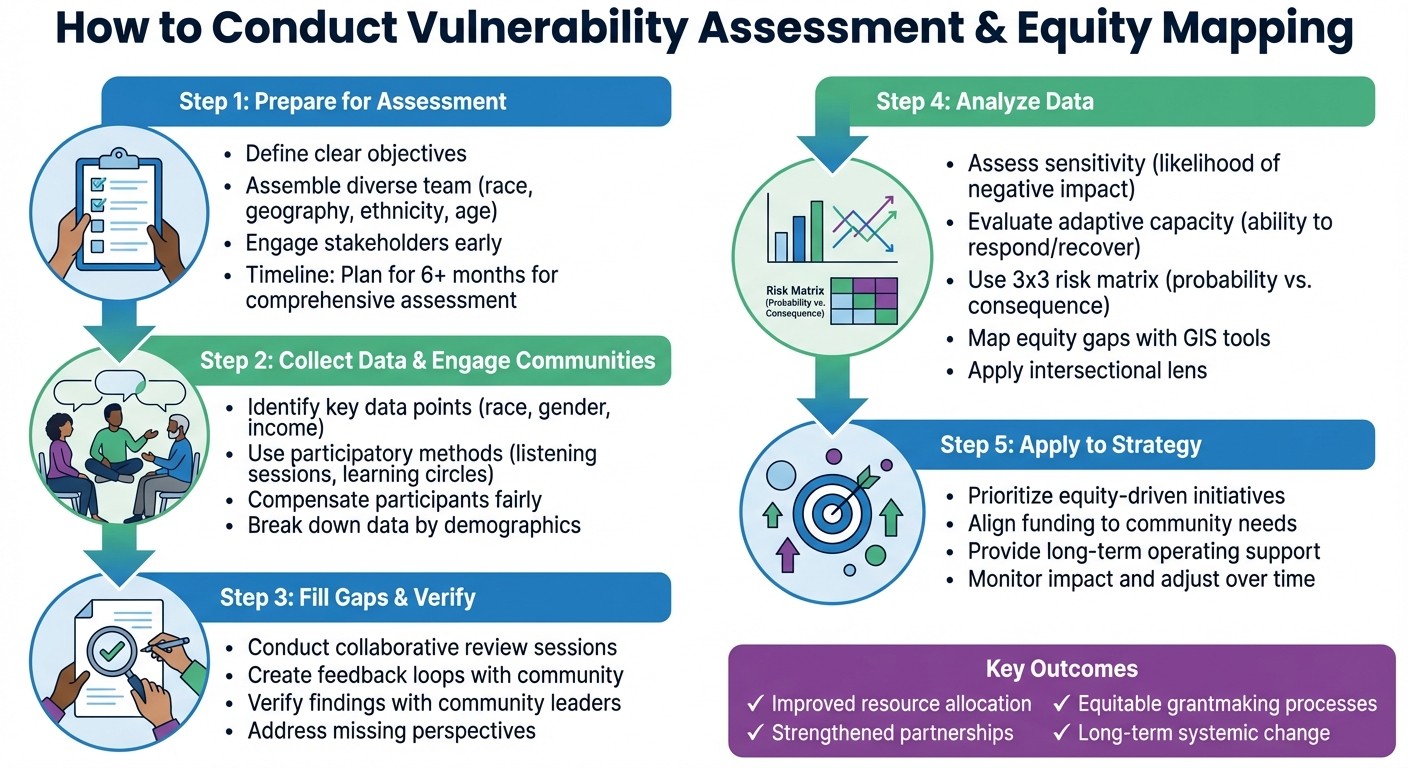
5-Step Vulnerability Assessment and Equity Mapping Process for Foundations
Preparing for Your Assessment
Define Your Objectives and Scope
To ensure your foundation’s strategy aligns with both internal priorities and external realities, it’s critical to start by defining clear objectives. Before collecting data, ask yourself: What do we want to achieve? Clear goals not only guide your efforts but also help avoid wasting resources, ensuring the results are actionable. The National Committee for Responsive Philanthropy suggests an 8-question readiness assessment to gauge preparedness - if you can answer "yes" to at least four, you’re ready to move forward [2].
Your objectives should examine how power operates within your grantmaking and acknowledge the privilege your foundation holds in relation to the communities it serves [5]. Decide whether to focus on a single program, several initiatives, or assess your entire portfolio and operations. Consider whether your approach will aim to build power by funding community-led solutions, share power through transparency, or leverage your influence to drive policy change [1][5]. Keep in mind that a comprehensive assessment across these areas typically requires at least six months, so plan realistically based on your timeline and resources [5].
Craft a Thumbnail Evaluation Plan to outline your primary motivation, assign roles, and justify your methods [7]. Your objectives should aim to address systemic inequities by tackling root causes - focusing on internal changes like embedding diversity in operations, as well as external impacts such as empowering marginalized communities to lead change [1]. With these goals in place, the next step is assembling a team that reflects a range of perspectives.
Assemble a Diverse Team
The makeup of your assessment team plays a vital role in shaping the quality of your findings. A cross-functional team that includes internal staff, external stakeholders, grantees, and community members helps decentralize power and brings varied perspectives into the process. Aim for diversity across race, geography, ethnicity, age, and lived experience - not just as a symbolic gesture, but to genuinely enhance your analysis.
For example, in 2021, the Elmina B. Sewall Foundation expanded its board through an open call, resulting in its most diverse board yet - enriching discussions and decision-making [8].
Engage with proximal partners, such as nonprofits that are embedded in and serve your target communities, as they can act as critical connectors and guides. When specific expertise is required, such as working with Native communities, bring in external consultants like Indigenous researchers to ensure the assessment is conducted with respect and sensitivity [5]. A neutral facilitator can also help navigate discussions about power, equity, and feedback, ensuring the process remains productive and balanced [5]. Building a diverse internal team lays the groundwork for meaningful collaboration with external stakeholders.
Engage Stakeholders Early and Openly
Engaging stakeholders from the start ensures your strategy reflects current realities rather than outdated assumptions. A 2020 survey of 165 grantmakers revealed that while 43% provided additional operating support during COVID-19, only 9% used demographic data to guide these efforts - despite the disproportionate impact on certain communities [10]. Early engagement helps align your assessment with equity-focused outcomes.
Start by establishing a vision rooted in shared values like dignity, equity, belonging, and transparency. Then, involve those most affected by your policies in identifying challenges and uncovering the root causes of inequality [3]. This means going beyond the usual voices to actively seek input from community members who are often overlooked but most impacted [1][9].
To reduce power imbalances, use anonymous feedback tools when gathering input from grant partners and applicants [1]. Foundation leaders must be willing to ask tough questions, accept critical feedback, and confront power dynamics [2][5]. As Lili Farhang, Co-Director of Human Impact Partners, emphasizes:
Developing an analysis of power is essential to break these cycles and be realistic about what it takes to achieve… policy change – where the status quo is often entrenched and resistant to change [5].
Collaboration builds trust and positions your foundation as a credible and engaged ally on key issues [1]. Instead of simply requesting data from nonprofits, partner with them to understand their data needs and provide resources to strengthen their capacity [10]. This reciprocal approach ensures stakeholder engagement becomes the cornerstone of informed decision-making.
Collecting Data and Engaging Communities
Identify and Gather Relevant Data
Start by pinpointing the key data points that reveal community vulnerabilities and highlight equity gaps. Break the data down by demographics such as race, gender, and income to avoid perpetuating existing inequalities. As Race Forward reminds us:
When racial equity is not consciously addressed, racial inequality is often unconsciously replicated [12].
To ensure equity remains central to your efforts, consider using tools like the Racial Equity Impact Assessment (REIA). This approach systematically evaluates how various racial and ethnic groups are affected by proposed actions or budget decisions [12]. During the planning phase, integrate structured guiding questions at every stage - whether forming teams, designing studies, or collecting data. These questions help keep equity at the forefront from the very beginning [3]. Early participation questions are particularly helpful for identifying whose perspectives might be missing [7]. Addressing these gaps upfront prevents critical oversights later in the process. Once you’ve gathered this foundational data, the next step is to actively involve the community to enrich and validate your findings.
Use Participatory Engagement Methods
Engage community members as partners rather than passive participants in the data collection process. Methods like community listening sessions, learning circles, and participatory mapping ensure that those most affected by decisions have a meaningful role in shaping them [11][13]. For example, the Fund for Shared Insight worked with groups such as the Bering Sea Elders Group and the North Carolina Climate Justice Collective, creating a "Participatory Philanthropy Toolkit" based on practical, community-led experiences [11].
It’s essential to fairly compensate participants for their time and expertise [11]. Include affected individuals - such as current and former program participants and local leaders - in designing the tools and methods used for data collection [7]. Building trust is a crucial first step. Establish rapport and maintain open communication before diving into the data-gathering process [13].
Fill Data Gaps and Verify Findings
Once you’ve engaged the community and gathered their input, take the time to verify your data through collaborative review sessions. These sessions, involving community leaders, partners, and members, help identify any gaps in the data and ensure findings are accurate. As the Annie E. Casey Foundation emphasizes:
Developing those solutions starts with promoting understanding among all people involved, emphasizing trust and open communication and involving those most affected in gathering and analyzing data to find the root causes of inequality and identify the best solutions [3].
Feedback loops are critical for ensuring that your interpretations align with the community’s lived experiences [9][11]. These collaborative reviews not only catch inaccuracies but also generate actionable recommendations that reflect the realities on the ground [7]. Rushing through this process risks leaving out marginalized voices, so allocate adequate time for thorough verification [3]. When gaps are identified, return to participatory methods to address them, ensuring the community’s collective knowledge is fully represented in your final assessment [3]. By following these steps, your findings will not only highlight critical issues but also pave the way for equity-driven decisions informed by the community itself.
Analyzing Your Vulnerability and Equity Data
Interpret Vulnerability Data
To make sense of your vulnerability data, use a framework that assesses two key dimensions: sensitivity and adaptive capacity. Sensitivity measures how likely a community is to be negatively affected by a hazard, while adaptive capacity evaluates its ability to respond or recover from that impact [6]. Together, these factors paint a picture of vulnerability - the extent to which different communities are at risk.
Start by organizing your data in a simple spreadsheet, categorizing assets or communities as High, Medium, or Low across both sensitivity and adaptive capacity [6]. For instance, a neighborhood with outdated infrastructure (high sensitivity) and limited financial resources (low adaptive capacity) would fall into the "highly vulnerable" category. This initial sorting serves as a starting point for deeper analysis. As the National Committee for Responsive Philanthropy puts it:
Power is the force that changes systems, and changing those systems is the only way to achieve equitable outcomes for all communities [5].
This approach not only identifies who is vulnerable but also uncovers the root causes of their risks. Traditional assessments often miss the link between power dynamics and equity [1]. To address this, explore how systemic power imbalances contribute to vulnerabilities, especially for marginalized racial and ethnic groups.
Map Equity Gaps and High-Risk Areas
Once you’ve completed your vulnerability analysis, transform the data into visuals that clearly highlight disparities and areas in need of attention. A 3x3 risk matrix is an effective tool for this. It plots the likelihood of a hazard against the severity of its consequences - whether financial or social [6]. This matrix helps prioritize interventions, focusing on "High-High" or "High-Medium" zones where both the risk and potential impact are substantial [6].
Geographic Information Systems (GIS) tools are invaluable for mapping how physical risks overlap with social vulnerabilities [6]. Use GIS to layer data such as hazard severity, property values, income levels, and demographics. This creates a clear visual representation of priority areas. Establish consistent criteria for categorizing your data to ensure objectivity. For example, define "High Probability" as an event likely to occur within five years, while "Medium Probability" might cover events expected once in five to 20 years [6].
Pay special attention to areas where damage could lead to cascading failures across multiple sectors. These represent critical priorities for strategic planning [6]. Additionally, apply an intersectional lens to address overlapping forms of oppression - such as race, gender, and disability - ensuring no community facing compounded risks is overlooked. Comprehensive assessments that account for these dimensions often require at least six months to complete [5], so plan accordingly.
Present Findings for Decision-Makers
After mapping your data, focus on presenting it in ways that drive action. Decision-makers need more than just problem identification - they need clear, actionable insights that outline the current situation and suggest a way forward. Visual aids like a "power continuum" can help illustrate where your organization stands on equity and justice and where it aims to go [1]. This visual tool allows leadership to track progress from "starting to build power" to fully integrating equitable practices [1].
Combine your quantitative findings with narratives and feedback from the communities you serve [1] [5]. While data highlights patterns, stories provide the context and human experience behind the numbers. Instead of simply presenting reports, create discussion guides to help leadership reflect on surprising insights or unconventional ideas from stakeholders [1]. Frame your findings around how your organization builds, shares, and uses power to shift the focus from temporary fixes to lasting, systemic solutions [1].
| Presentation Tool | Purpose | Key Components |
| --- | --- | --- |
| <strong>Vulnerability Spreadsheet</strong> | Initial screening of assets | Asset name, potential impact, sensitivity, adaptive capacity, vulnerability rating |
| <strong>3x3 Risk Matrix</strong> | Prioritizing resource allocation | Y-axis: probability; X-axis: magnitude of consequence |
| <strong>Power Continuum</strong> | Tracking organizational growth | Visual markers from "Beginning" to "Fully Integrated" equity practices |
| <strong>GIS Mapping</strong> | Visualizing spatial disparities | Map layers showing hazard severity, property values, and social vulnerability
| Presentation Tool | Purpose | Key Components |
| --- | --- | --- |
| <strong>Vulnerability Spreadsheet</strong> | Initial screening of assets | Asset name, potential impact, sensitivity, adaptive capacity, vulnerability rating |
| <strong>3x3 Risk Matrix</strong> | Prioritizing resource allocation | Y-axis: probability; X-axis: magnitude of consequence |
| <strong>Power Continuum</strong> | Tracking organizational growth | Visual markers from "Beginning" to "Fully Integrated" equity practices |
| <strong>GIS Mapping</strong> | Visualizing spatial disparities | Map layers showing hazard severity, property values, and social vulnerability
As Lili Farhang explains:
Developing an analysis of power is essential to break these cycles and be realistic about what it takes to achieve … policy change – where the status quo is often entrenched and resistant to change [5].
Mapping Equity to Drive Impactful Philanthropy - From 2022 SXSW Conference

Applying Findings to Strategy and Grantmaking
This section provides actionable ways to incorporate insights from your vulnerability and equity analysis into strategic planning and grantmaking efforts.
Prioritize Equity-Driven Initiatives
Use your findings to support meaningful, community-led change. Focus on long-term solutions that address the root causes of inequities by funding under-resourced communities to take the lead, rather than imposing external fixes [1].
Set clear goals and strategies that explicitly promote systemic equity for marginalized groups. Leverage your data to identify approaches that address intersecting forms of marginalization - such as those based on race, disability, or gender identity. For example, the National Committee for Responsive Philanthropy analyzed feedback from over 1,800 nonprofits and emphasized that foundations must recognize their own privilege and power to make deliberate choices that drive systemic change [5].
As Tina Eshaghpour, Director of Organizational Learning and Evaluation at The California Wellness Foundation, explains:
Whether you seek to use your grantmaking dollars to advance equity, build authentic and trusting relationships with your grantees or leverage all your assets and resources to catalyze change, POWER MOVES is a resource that can guide the way [1].
Align Funding and Resource Distribution
Once you’ve established your priorities, translate them into equitable funding practices. Use your vulnerability analysis to directly inform funding decisions, ensuring your grantmaking processes are accessible and inclusive. For instance, evaluate whether application and reporting requirements inadvertently create barriers for organizations led by people of color, people with disabilities, or other marginalized groups [1].
Provide long-term operating support to help organizations build sustainability, while maintaining flexibility to respond to urgent needs identified through your analysis [1] [5]. Shift from narrowly focused grants to funding that addresses the interconnected nature of community challenges. Engage a wider range of stakeholders and consider including community members in grant allocation decisions [1] [5].
Additionally, align your foundation’s financial resources with community-defined priorities. This ensures that equity becomes a guiding principle across all departments, not just within grantmaking.
Monitor Impact and Adjust Over Time
Building on earlier community engagement, create a feedback loop to refine your strategy. Regularly collect internal data and anonymous feedback from grant partners and applicants to identify areas for improvement [1] [5]. Schedule periodic reviews to ensure your efforts remain aligned with your equity goals.
Incorporate self-assessment into your organizational cycle of planning, action, and reflection. Tools like a "continuum of power" can visually map where your organization stands and where it needs to progress [1]. For example, the Annie E. Casey Foundation found that using structured questions helped their team turn equity commitments into practical steps, making the process more approachable [3].
The National Committee for Responsive Philanthropy underscores this approach:
Taking time out for self-assessment and learning is an important part of the organizational cycle of planning, action and reflection [4].
Before rolling out new strategies on a large scale, pilot equity-focused methods and adjust them based on initial results [3]. Facilitate group discussions using structured guides to help teams interpret data, navigate challenges, and brainstorm innovative solutions [1]. Sharing lessons learned and feedback publicly can demonstrate accountability and foster collaboration across the philanthropic sector [5].
Conclusion
Key Takeaways
Vulnerability assessments and equity mapping have proven to be powerful tools for driving long-term, community-driven change by addressing deep-seated inequities. These methods allow foundations to examine how power and resources are distributed within their ecosystems, prompting a critical look at how organizations build, share, and exercise influence. This process not only helps foundations recognize their own privilege but also equips them to make intentional decisions that uplift marginalized communities [1][5].
Though this approach requires time and dedication, the rewards are substantial. Foundations that commit to these practices often see stronger community trust, more effective grantmaking, and meaningful, lasting change [5]. As highlighted by the National Committee for Responsive Philanthropy:
Power is the force that changes systems, and changing those systems is the only way to achieve equitable outcomes for all communities [5].
By actively seeking feedback from the communities they serve and being transparent about their findings, foundations can build the trust necessary to implement actionable and impactful strategies.
Next Steps for Foundations and Philanthropic Leaders
With these insights in mind, it’s time to focus on tangible actions. Begin by assessing your leadership's willingness to confront difficult questions and act on constructive feedback. As the National Committee for Responsive Philanthropy points out:
the best time [to act] will be when the foundation's leaders and staff are ready to ask themselves tough questions, ask their constituents for unvarnished feedback and act on what they learn [5].
Consider utilizing structured tools like the Annie E. Casey Foundation's "Guiding Questions to Advance Equity in Evaluation and Research." This framework has been instrumental in helping teams turn high-level equity goals into actionable, day-to-day practices as of July 2024 [3]. Treat self-assessment as an ongoing process rather than a one-time exercise, building it into your regular cycle of planning, action, and reflection [4]. The challenges and discomfort that may arise during equity mapping should be seen as opportunities for creativity and growth [13].
Revisit earlier discussions about data collection and stakeholder engagement to refine your grantmaking processes. Remove barriers that hinder organizations led by marginalized groups, ensure decision-making bodies are diverse, and allocate time for staff to reflect on and learn from findings [1][13]. Keep the momentum alive through regular evaluation and a commitment to adapting as you learn.
FAQs
How can foundations make their vulnerability assessments more inclusive and equitable?
To build vulnerability assessments that prioritize inclusion and fairness, foundations should actively address systemic inequities and seek out a wide range of perspectives. A key step is involving marginalized communities in the process. Their participation provides genuine insights into the challenges they face, ensuring the assessment captures lived experiences and avoids overlooking critical issues.
It’s equally important to diversify assessment teams and offer training on bias and structural inequities. This equips teams with the knowledge needed to make decisions that are both informed and inclusive. Foundations should also take a closer look at their internal practices by reflecting on questions such as whether their values align with equity principles and whether leadership is genuinely committed to driving systemic change.
Transparency and accountability are essential throughout this process. Regularly tracking progress and engaging directly with communities through outreach can help maintain trust and ensure that assessments lead to actionable, equity-driven outcomes. These efforts not only pinpoint vulnerabilities but also pave the way for meaningful change.
What are the advantages of using GIS for equity mapping in communities?
Geographic Information Systems (GIS) offer a dynamic way to visualize data, making it easier to identify disparities and understand community needs. By mapping conditions across different areas, organizations can locate vulnerable regions and direct resources to where they are needed most. This method allows for better prioritization of equity-focused initiatives and supports informed decision-making.
Beyond resource allocation, GIS promotes transparency and encourages collaboration by giving stakeholders a clear picture of local strengths and challenges. It also provides a way to track progress over time, helping organizations evaluate the effectiveness of their efforts and refine their strategies accordingly. With these capabilities, GIS becomes a valuable tool for addressing systemic inequities and crafting inclusive, data-informed solutions.
How can foundations effectively involve communities during data collection?
Foundations can engage communities effectively during data collection by using inclusive and participatory methods. Involving community members in the design and execution of data collection ensures their perspectives and experiences are authentically represented. Approaches like focus groups, open community dialogues, and collaborative mapping can help establish trust while incorporating local insights into the process.
Equally important is clear communication about the purpose of the data collection, its intended use, and how community input will influence decisions. Being transparent fosters trust, empowers participants, and encourages a sense of shared responsibility. Emphasizing respect for cultural contexts and adhering to ethical practices ensures the process remains fair and respectful.
When communities are meaningfully involved, the results are not only more accurate but also contribute to stronger relationships and outcomes that align with equity and long-term goals.
Related Blog Posts
How to Conduct Vulnerability Assessment & Equity Mapping for Municipalities & Government Agencies
How to Conduct Vulnerability Assessment & Equity Mapping for Corporations
How to Conduct Vulnerability Assessment & Equity Mapping for NGOs & Nonprofits
How to Conduct Vulnerability Assessment & Equity Mapping for Universities & Research Institutions
Latest Articles
©2025



FAQ
01
What does it really mean to “redefine profit”?
02
What makes Council Fire different?
03
Who does Council Fire you work with?
04
What does working with Council Fire actually look like?
05
How does Council Fire help organizations turn big goals into action?
06
How does Council Fire define and measure success?
Jan 26, 2026
How to Conduct Vulnerability Assessment & Equity Mapping for Foundations & Philanthropic Organizations
Capacity Building
In This Article
Foundations can use vulnerability assessments and equity mapping to identify at-risk communities, center marginalized voices, and direct funding for long-term systemic change.
How to Conduct Vulnerability Assessment & Equity Mapping for Foundations & Philanthropic Organizations
Philanthropy has the power to address systemic inequities by focusing on vulnerability and equity. Foundations can use tools like vulnerability assessments and equity mapping to ensure resources are directed to the communities most in need. These methods help organizations identify where risks are concentrated, understand systemic power dynamics, and create long-term solutions that empower marginalized groups.
Key Takeaways:
Vulnerability Assessment: Identifies communities at risk by analyzing exposure, sensitivity, and adaptive capacity.
Equity Mapping: Examines how power systems operate and highlights opportunities for systemic change.
Actionable Steps: Define clear objectives, assemble diverse teams, engage stakeholders early, and use data to guide decisions.
Benefits: Improves resource allocation, strengthens partnerships, and ensures equitable grantmaking processes.
By integrating these tools into decision-making, philanthropic organizations can shift from short-term fixes to impactful, equity-driven strategies.
5-Step Vulnerability Assessment and Equity Mapping Process for Foundations
Preparing for Your Assessment
Define Your Objectives and Scope
To ensure your foundation’s strategy aligns with both internal priorities and external realities, it’s critical to start by defining clear objectives. Before collecting data, ask yourself: What do we want to achieve? Clear goals not only guide your efforts but also help avoid wasting resources, ensuring the results are actionable. The National Committee for Responsive Philanthropy suggests an 8-question readiness assessment to gauge preparedness - if you can answer "yes" to at least four, you’re ready to move forward [2].
Your objectives should examine how power operates within your grantmaking and acknowledge the privilege your foundation holds in relation to the communities it serves [5]. Decide whether to focus on a single program, several initiatives, or assess your entire portfolio and operations. Consider whether your approach will aim to build power by funding community-led solutions, share power through transparency, or leverage your influence to drive policy change [1][5]. Keep in mind that a comprehensive assessment across these areas typically requires at least six months, so plan realistically based on your timeline and resources [5].
Craft a Thumbnail Evaluation Plan to outline your primary motivation, assign roles, and justify your methods [7]. Your objectives should aim to address systemic inequities by tackling root causes - focusing on internal changes like embedding diversity in operations, as well as external impacts such as empowering marginalized communities to lead change [1]. With these goals in place, the next step is assembling a team that reflects a range of perspectives.
Assemble a Diverse Team
The makeup of your assessment team plays a vital role in shaping the quality of your findings. A cross-functional team that includes internal staff, external stakeholders, grantees, and community members helps decentralize power and brings varied perspectives into the process. Aim for diversity across race, geography, ethnicity, age, and lived experience - not just as a symbolic gesture, but to genuinely enhance your analysis.
For example, in 2021, the Elmina B. Sewall Foundation expanded its board through an open call, resulting in its most diverse board yet - enriching discussions and decision-making [8].
Engage with proximal partners, such as nonprofits that are embedded in and serve your target communities, as they can act as critical connectors and guides. When specific expertise is required, such as working with Native communities, bring in external consultants like Indigenous researchers to ensure the assessment is conducted with respect and sensitivity [5]. A neutral facilitator can also help navigate discussions about power, equity, and feedback, ensuring the process remains productive and balanced [5]. Building a diverse internal team lays the groundwork for meaningful collaboration with external stakeholders.
Engage Stakeholders Early and Openly
Engaging stakeholders from the start ensures your strategy reflects current realities rather than outdated assumptions. A 2020 survey of 165 grantmakers revealed that while 43% provided additional operating support during COVID-19, only 9% used demographic data to guide these efforts - despite the disproportionate impact on certain communities [10]. Early engagement helps align your assessment with equity-focused outcomes.
Start by establishing a vision rooted in shared values like dignity, equity, belonging, and transparency. Then, involve those most affected by your policies in identifying challenges and uncovering the root causes of inequality [3]. This means going beyond the usual voices to actively seek input from community members who are often overlooked but most impacted [1][9].
To reduce power imbalances, use anonymous feedback tools when gathering input from grant partners and applicants [1]. Foundation leaders must be willing to ask tough questions, accept critical feedback, and confront power dynamics [2][5]. As Lili Farhang, Co-Director of Human Impact Partners, emphasizes:
Developing an analysis of power is essential to break these cycles and be realistic about what it takes to achieve… policy change – where the status quo is often entrenched and resistant to change [5].
Collaboration builds trust and positions your foundation as a credible and engaged ally on key issues [1]. Instead of simply requesting data from nonprofits, partner with them to understand their data needs and provide resources to strengthen their capacity [10]. This reciprocal approach ensures stakeholder engagement becomes the cornerstone of informed decision-making.
Collecting Data and Engaging Communities
Identify and Gather Relevant Data
Start by pinpointing the key data points that reveal community vulnerabilities and highlight equity gaps. Break the data down by demographics such as race, gender, and income to avoid perpetuating existing inequalities. As Race Forward reminds us:
When racial equity is not consciously addressed, racial inequality is often unconsciously replicated [12].
To ensure equity remains central to your efforts, consider using tools like the Racial Equity Impact Assessment (REIA). This approach systematically evaluates how various racial and ethnic groups are affected by proposed actions or budget decisions [12]. During the planning phase, integrate structured guiding questions at every stage - whether forming teams, designing studies, or collecting data. These questions help keep equity at the forefront from the very beginning [3]. Early participation questions are particularly helpful for identifying whose perspectives might be missing [7]. Addressing these gaps upfront prevents critical oversights later in the process. Once you’ve gathered this foundational data, the next step is to actively involve the community to enrich and validate your findings.
Use Participatory Engagement Methods
Engage community members as partners rather than passive participants in the data collection process. Methods like community listening sessions, learning circles, and participatory mapping ensure that those most affected by decisions have a meaningful role in shaping them [11][13]. For example, the Fund for Shared Insight worked with groups such as the Bering Sea Elders Group and the North Carolina Climate Justice Collective, creating a "Participatory Philanthropy Toolkit" based on practical, community-led experiences [11].
It’s essential to fairly compensate participants for their time and expertise [11]. Include affected individuals - such as current and former program participants and local leaders - in designing the tools and methods used for data collection [7]. Building trust is a crucial first step. Establish rapport and maintain open communication before diving into the data-gathering process [13].
Fill Data Gaps and Verify Findings
Once you’ve engaged the community and gathered their input, take the time to verify your data through collaborative review sessions. These sessions, involving community leaders, partners, and members, help identify any gaps in the data and ensure findings are accurate. As the Annie E. Casey Foundation emphasizes:
Developing those solutions starts with promoting understanding among all people involved, emphasizing trust and open communication and involving those most affected in gathering and analyzing data to find the root causes of inequality and identify the best solutions [3].
Feedback loops are critical for ensuring that your interpretations align with the community’s lived experiences [9][11]. These collaborative reviews not only catch inaccuracies but also generate actionable recommendations that reflect the realities on the ground [7]. Rushing through this process risks leaving out marginalized voices, so allocate adequate time for thorough verification [3]. When gaps are identified, return to participatory methods to address them, ensuring the community’s collective knowledge is fully represented in your final assessment [3]. By following these steps, your findings will not only highlight critical issues but also pave the way for equity-driven decisions informed by the community itself.
Analyzing Your Vulnerability and Equity Data
Interpret Vulnerability Data
To make sense of your vulnerability data, use a framework that assesses two key dimensions: sensitivity and adaptive capacity. Sensitivity measures how likely a community is to be negatively affected by a hazard, while adaptive capacity evaluates its ability to respond or recover from that impact [6]. Together, these factors paint a picture of vulnerability - the extent to which different communities are at risk.
Start by organizing your data in a simple spreadsheet, categorizing assets or communities as High, Medium, or Low across both sensitivity and adaptive capacity [6]. For instance, a neighborhood with outdated infrastructure (high sensitivity) and limited financial resources (low adaptive capacity) would fall into the "highly vulnerable" category. This initial sorting serves as a starting point for deeper analysis. As the National Committee for Responsive Philanthropy puts it:
Power is the force that changes systems, and changing those systems is the only way to achieve equitable outcomes for all communities [5].
This approach not only identifies who is vulnerable but also uncovers the root causes of their risks. Traditional assessments often miss the link between power dynamics and equity [1]. To address this, explore how systemic power imbalances contribute to vulnerabilities, especially for marginalized racial and ethnic groups.
Map Equity Gaps and High-Risk Areas
Once you’ve completed your vulnerability analysis, transform the data into visuals that clearly highlight disparities and areas in need of attention. A 3x3 risk matrix is an effective tool for this. It plots the likelihood of a hazard against the severity of its consequences - whether financial or social [6]. This matrix helps prioritize interventions, focusing on "High-High" or "High-Medium" zones where both the risk and potential impact are substantial [6].
Geographic Information Systems (GIS) tools are invaluable for mapping how physical risks overlap with social vulnerabilities [6]. Use GIS to layer data such as hazard severity, property values, income levels, and demographics. This creates a clear visual representation of priority areas. Establish consistent criteria for categorizing your data to ensure objectivity. For example, define "High Probability" as an event likely to occur within five years, while "Medium Probability" might cover events expected once in five to 20 years [6].
Pay special attention to areas where damage could lead to cascading failures across multiple sectors. These represent critical priorities for strategic planning [6]. Additionally, apply an intersectional lens to address overlapping forms of oppression - such as race, gender, and disability - ensuring no community facing compounded risks is overlooked. Comprehensive assessments that account for these dimensions often require at least six months to complete [5], so plan accordingly.
Present Findings for Decision-Makers
After mapping your data, focus on presenting it in ways that drive action. Decision-makers need more than just problem identification - they need clear, actionable insights that outline the current situation and suggest a way forward. Visual aids like a "power continuum" can help illustrate where your organization stands on equity and justice and where it aims to go [1]. This visual tool allows leadership to track progress from "starting to build power" to fully integrating equitable practices [1].
Combine your quantitative findings with narratives and feedback from the communities you serve [1] [5]. While data highlights patterns, stories provide the context and human experience behind the numbers. Instead of simply presenting reports, create discussion guides to help leadership reflect on surprising insights or unconventional ideas from stakeholders [1]. Frame your findings around how your organization builds, shares, and uses power to shift the focus from temporary fixes to lasting, systemic solutions [1].
| Presentation Tool | Purpose | Key Components |
| --- | --- | --- |
| <strong>Vulnerability Spreadsheet</strong> | Initial screening of assets | Asset name, potential impact, sensitivity, adaptive capacity, vulnerability rating |
| <strong>3x3 Risk Matrix</strong> | Prioritizing resource allocation | Y-axis: probability; X-axis: magnitude of consequence |
| <strong>Power Continuum</strong> | Tracking organizational growth | Visual markers from "Beginning" to "Fully Integrated" equity practices |
| <strong>GIS Mapping</strong> | Visualizing spatial disparities | Map layers showing hazard severity, property values, and social vulnerability
As Lili Farhang explains:
Developing an analysis of power is essential to break these cycles and be realistic about what it takes to achieve … policy change – where the status quo is often entrenched and resistant to change [5].
Mapping Equity to Drive Impactful Philanthropy - From 2022 SXSW Conference
Applying Findings to Strategy and Grantmaking
This section provides actionable ways to incorporate insights from your vulnerability and equity analysis into strategic planning and grantmaking efforts.
Prioritize Equity-Driven Initiatives
Use your findings to support meaningful, community-led change. Focus on long-term solutions that address the root causes of inequities by funding under-resourced communities to take the lead, rather than imposing external fixes [1].
Set clear goals and strategies that explicitly promote systemic equity for marginalized groups. Leverage your data to identify approaches that address intersecting forms of marginalization - such as those based on race, disability, or gender identity. For example, the National Committee for Responsive Philanthropy analyzed feedback from over 1,800 nonprofits and emphasized that foundations must recognize their own privilege and power to make deliberate choices that drive systemic change [5].
As Tina Eshaghpour, Director of Organizational Learning and Evaluation at The California Wellness Foundation, explains:
Whether you seek to use your grantmaking dollars to advance equity, build authentic and trusting relationships with your grantees or leverage all your assets and resources to catalyze change, POWER MOVES is a resource that can guide the way [1].
Align Funding and Resource Distribution
Once you’ve established your priorities, translate them into equitable funding practices. Use your vulnerability analysis to directly inform funding decisions, ensuring your grantmaking processes are accessible and inclusive. For instance, evaluate whether application and reporting requirements inadvertently create barriers for organizations led by people of color, people with disabilities, or other marginalized groups [1].
Provide long-term operating support to help organizations build sustainability, while maintaining flexibility to respond to urgent needs identified through your analysis [1] [5]. Shift from narrowly focused grants to funding that addresses the interconnected nature of community challenges. Engage a wider range of stakeholders and consider including community members in grant allocation decisions [1] [5].
Additionally, align your foundation’s financial resources with community-defined priorities. This ensures that equity becomes a guiding principle across all departments, not just within grantmaking.
Monitor Impact and Adjust Over Time
Building on earlier community engagement, create a feedback loop to refine your strategy. Regularly collect internal data and anonymous feedback from grant partners and applicants to identify areas for improvement [1] [5]. Schedule periodic reviews to ensure your efforts remain aligned with your equity goals.
Incorporate self-assessment into your organizational cycle of planning, action, and reflection. Tools like a "continuum of power" can visually map where your organization stands and where it needs to progress [1]. For example, the Annie E. Casey Foundation found that using structured questions helped their team turn equity commitments into practical steps, making the process more approachable [3].
The National Committee for Responsive Philanthropy underscores this approach:
Taking time out for self-assessment and learning is an important part of the organizational cycle of planning, action and reflection [4].
Before rolling out new strategies on a large scale, pilot equity-focused methods and adjust them based on initial results [3]. Facilitate group discussions using structured guides to help teams interpret data, navigate challenges, and brainstorm innovative solutions [1]. Sharing lessons learned and feedback publicly can demonstrate accountability and foster collaboration across the philanthropic sector [5].
Conclusion
Key Takeaways
Vulnerability assessments and equity mapping have proven to be powerful tools for driving long-term, community-driven change by addressing deep-seated inequities. These methods allow foundations to examine how power and resources are distributed within their ecosystems, prompting a critical look at how organizations build, share, and exercise influence. This process not only helps foundations recognize their own privilege but also equips them to make intentional decisions that uplift marginalized communities [1][5].
Though this approach requires time and dedication, the rewards are substantial. Foundations that commit to these practices often see stronger community trust, more effective grantmaking, and meaningful, lasting change [5]. As highlighted by the National Committee for Responsive Philanthropy:
Power is the force that changes systems, and changing those systems is the only way to achieve equitable outcomes for all communities [5].
By actively seeking feedback from the communities they serve and being transparent about their findings, foundations can build the trust necessary to implement actionable and impactful strategies.
Next Steps for Foundations and Philanthropic Leaders
With these insights in mind, it’s time to focus on tangible actions. Begin by assessing your leadership's willingness to confront difficult questions and act on constructive feedback. As the National Committee for Responsive Philanthropy points out:
the best time [to act] will be when the foundation's leaders and staff are ready to ask themselves tough questions, ask their constituents for unvarnished feedback and act on what they learn [5].
Consider utilizing structured tools like the Annie E. Casey Foundation's "Guiding Questions to Advance Equity in Evaluation and Research." This framework has been instrumental in helping teams turn high-level equity goals into actionable, day-to-day practices as of July 2024 [3]. Treat self-assessment as an ongoing process rather than a one-time exercise, building it into your regular cycle of planning, action, and reflection [4]. The challenges and discomfort that may arise during equity mapping should be seen as opportunities for creativity and growth [13].
Revisit earlier discussions about data collection and stakeholder engagement to refine your grantmaking processes. Remove barriers that hinder organizations led by marginalized groups, ensure decision-making bodies are diverse, and allocate time for staff to reflect on and learn from findings [1][13]. Keep the momentum alive through regular evaluation and a commitment to adapting as you learn.
FAQs
How can foundations make their vulnerability assessments more inclusive and equitable?
To build vulnerability assessments that prioritize inclusion and fairness, foundations should actively address systemic inequities and seek out a wide range of perspectives. A key step is involving marginalized communities in the process. Their participation provides genuine insights into the challenges they face, ensuring the assessment captures lived experiences and avoids overlooking critical issues.
It’s equally important to diversify assessment teams and offer training on bias and structural inequities. This equips teams with the knowledge needed to make decisions that are both informed and inclusive. Foundations should also take a closer look at their internal practices by reflecting on questions such as whether their values align with equity principles and whether leadership is genuinely committed to driving systemic change.
Transparency and accountability are essential throughout this process. Regularly tracking progress and engaging directly with communities through outreach can help maintain trust and ensure that assessments lead to actionable, equity-driven outcomes. These efforts not only pinpoint vulnerabilities but also pave the way for meaningful change.
What are the advantages of using GIS for equity mapping in communities?
Geographic Information Systems (GIS) offer a dynamic way to visualize data, making it easier to identify disparities and understand community needs. By mapping conditions across different areas, organizations can locate vulnerable regions and direct resources to where they are needed most. This method allows for better prioritization of equity-focused initiatives and supports informed decision-making.
Beyond resource allocation, GIS promotes transparency and encourages collaboration by giving stakeholders a clear picture of local strengths and challenges. It also provides a way to track progress over time, helping organizations evaluate the effectiveness of their efforts and refine their strategies accordingly. With these capabilities, GIS becomes a valuable tool for addressing systemic inequities and crafting inclusive, data-informed solutions.
How can foundations effectively involve communities during data collection?
Foundations can engage communities effectively during data collection by using inclusive and participatory methods. Involving community members in the design and execution of data collection ensures their perspectives and experiences are authentically represented. Approaches like focus groups, open community dialogues, and collaborative mapping can help establish trust while incorporating local insights into the process.
Equally important is clear communication about the purpose of the data collection, its intended use, and how community input will influence decisions. Being transparent fosters trust, empowers participants, and encourages a sense of shared responsibility. Emphasizing respect for cultural contexts and adhering to ethical practices ensures the process remains fair and respectful.
When communities are meaningfully involved, the results are not only more accurate but also contribute to stronger relationships and outcomes that align with equity and long-term goals.
Related Blog Posts
How to Conduct Vulnerability Assessment & Equity Mapping for Municipalities & Government Agencies
How to Conduct Vulnerability Assessment & Equity Mapping for Corporations
How to Conduct Vulnerability Assessment & Equity Mapping for NGOs & Nonprofits
How to Conduct Vulnerability Assessment & Equity Mapping for Universities & Research Institutions
FAQ
01
What does it really mean to “redefine profit”?
02
What makes Council Fire different?
03
Who does Council Fire you work with?
04
What does working with Council Fire actually look like?
05
How does Council Fire help organizations turn big goals into action?
06
How does Council Fire define and measure success?
Jan 26, 2026
How to Conduct Vulnerability Assessment & Equity Mapping for Foundations & Philanthropic Organizations
Capacity Building
In This Article
Foundations can use vulnerability assessments and equity mapping to identify at-risk communities, center marginalized voices, and direct funding for long-term systemic change.
How to Conduct Vulnerability Assessment & Equity Mapping for Foundations & Philanthropic Organizations
Philanthropy has the power to address systemic inequities by focusing on vulnerability and equity. Foundations can use tools like vulnerability assessments and equity mapping to ensure resources are directed to the communities most in need. These methods help organizations identify where risks are concentrated, understand systemic power dynamics, and create long-term solutions that empower marginalized groups.
Key Takeaways:
Vulnerability Assessment: Identifies communities at risk by analyzing exposure, sensitivity, and adaptive capacity.
Equity Mapping: Examines how power systems operate and highlights opportunities for systemic change.
Actionable Steps: Define clear objectives, assemble diverse teams, engage stakeholders early, and use data to guide decisions.
Benefits: Improves resource allocation, strengthens partnerships, and ensures equitable grantmaking processes.
By integrating these tools into decision-making, philanthropic organizations can shift from short-term fixes to impactful, equity-driven strategies.
5-Step Vulnerability Assessment and Equity Mapping Process for Foundations
Preparing for Your Assessment
Define Your Objectives and Scope
To ensure your foundation’s strategy aligns with both internal priorities and external realities, it’s critical to start by defining clear objectives. Before collecting data, ask yourself: What do we want to achieve? Clear goals not only guide your efforts but also help avoid wasting resources, ensuring the results are actionable. The National Committee for Responsive Philanthropy suggests an 8-question readiness assessment to gauge preparedness - if you can answer "yes" to at least four, you’re ready to move forward [2].
Your objectives should examine how power operates within your grantmaking and acknowledge the privilege your foundation holds in relation to the communities it serves [5]. Decide whether to focus on a single program, several initiatives, or assess your entire portfolio and operations. Consider whether your approach will aim to build power by funding community-led solutions, share power through transparency, or leverage your influence to drive policy change [1][5]. Keep in mind that a comprehensive assessment across these areas typically requires at least six months, so plan realistically based on your timeline and resources [5].
Craft a Thumbnail Evaluation Plan to outline your primary motivation, assign roles, and justify your methods [7]. Your objectives should aim to address systemic inequities by tackling root causes - focusing on internal changes like embedding diversity in operations, as well as external impacts such as empowering marginalized communities to lead change [1]. With these goals in place, the next step is assembling a team that reflects a range of perspectives.
Assemble a Diverse Team
The makeup of your assessment team plays a vital role in shaping the quality of your findings. A cross-functional team that includes internal staff, external stakeholders, grantees, and community members helps decentralize power and brings varied perspectives into the process. Aim for diversity across race, geography, ethnicity, age, and lived experience - not just as a symbolic gesture, but to genuinely enhance your analysis.
For example, in 2021, the Elmina B. Sewall Foundation expanded its board through an open call, resulting in its most diverse board yet - enriching discussions and decision-making [8].
Engage with proximal partners, such as nonprofits that are embedded in and serve your target communities, as they can act as critical connectors and guides. When specific expertise is required, such as working with Native communities, bring in external consultants like Indigenous researchers to ensure the assessment is conducted with respect and sensitivity [5]. A neutral facilitator can also help navigate discussions about power, equity, and feedback, ensuring the process remains productive and balanced [5]. Building a diverse internal team lays the groundwork for meaningful collaboration with external stakeholders.
Engage Stakeholders Early and Openly
Engaging stakeholders from the start ensures your strategy reflects current realities rather than outdated assumptions. A 2020 survey of 165 grantmakers revealed that while 43% provided additional operating support during COVID-19, only 9% used demographic data to guide these efforts - despite the disproportionate impact on certain communities [10]. Early engagement helps align your assessment with equity-focused outcomes.
Start by establishing a vision rooted in shared values like dignity, equity, belonging, and transparency. Then, involve those most affected by your policies in identifying challenges and uncovering the root causes of inequality [3]. This means going beyond the usual voices to actively seek input from community members who are often overlooked but most impacted [1][9].
To reduce power imbalances, use anonymous feedback tools when gathering input from grant partners and applicants [1]. Foundation leaders must be willing to ask tough questions, accept critical feedback, and confront power dynamics [2][5]. As Lili Farhang, Co-Director of Human Impact Partners, emphasizes:
Developing an analysis of power is essential to break these cycles and be realistic about what it takes to achieve… policy change – where the status quo is often entrenched and resistant to change [5].
Collaboration builds trust and positions your foundation as a credible and engaged ally on key issues [1]. Instead of simply requesting data from nonprofits, partner with them to understand their data needs and provide resources to strengthen their capacity [10]. This reciprocal approach ensures stakeholder engagement becomes the cornerstone of informed decision-making.
Collecting Data and Engaging Communities
Identify and Gather Relevant Data
Start by pinpointing the key data points that reveal community vulnerabilities and highlight equity gaps. Break the data down by demographics such as race, gender, and income to avoid perpetuating existing inequalities. As Race Forward reminds us:
When racial equity is not consciously addressed, racial inequality is often unconsciously replicated [12].
To ensure equity remains central to your efforts, consider using tools like the Racial Equity Impact Assessment (REIA). This approach systematically evaluates how various racial and ethnic groups are affected by proposed actions or budget decisions [12]. During the planning phase, integrate structured guiding questions at every stage - whether forming teams, designing studies, or collecting data. These questions help keep equity at the forefront from the very beginning [3]. Early participation questions are particularly helpful for identifying whose perspectives might be missing [7]. Addressing these gaps upfront prevents critical oversights later in the process. Once you’ve gathered this foundational data, the next step is to actively involve the community to enrich and validate your findings.
Use Participatory Engagement Methods
Engage community members as partners rather than passive participants in the data collection process. Methods like community listening sessions, learning circles, and participatory mapping ensure that those most affected by decisions have a meaningful role in shaping them [11][13]. For example, the Fund for Shared Insight worked with groups such as the Bering Sea Elders Group and the North Carolina Climate Justice Collective, creating a "Participatory Philanthropy Toolkit" based on practical, community-led experiences [11].
It’s essential to fairly compensate participants for their time and expertise [11]. Include affected individuals - such as current and former program participants and local leaders - in designing the tools and methods used for data collection [7]. Building trust is a crucial first step. Establish rapport and maintain open communication before diving into the data-gathering process [13].
Fill Data Gaps and Verify Findings
Once you’ve engaged the community and gathered their input, take the time to verify your data through collaborative review sessions. These sessions, involving community leaders, partners, and members, help identify any gaps in the data and ensure findings are accurate. As the Annie E. Casey Foundation emphasizes:
Developing those solutions starts with promoting understanding among all people involved, emphasizing trust and open communication and involving those most affected in gathering and analyzing data to find the root causes of inequality and identify the best solutions [3].
Feedback loops are critical for ensuring that your interpretations align with the community’s lived experiences [9][11]. These collaborative reviews not only catch inaccuracies but also generate actionable recommendations that reflect the realities on the ground [7]. Rushing through this process risks leaving out marginalized voices, so allocate adequate time for thorough verification [3]. When gaps are identified, return to participatory methods to address them, ensuring the community’s collective knowledge is fully represented in your final assessment [3]. By following these steps, your findings will not only highlight critical issues but also pave the way for equity-driven decisions informed by the community itself.
Analyzing Your Vulnerability and Equity Data
Interpret Vulnerability Data
To make sense of your vulnerability data, use a framework that assesses two key dimensions: sensitivity and adaptive capacity. Sensitivity measures how likely a community is to be negatively affected by a hazard, while adaptive capacity evaluates its ability to respond or recover from that impact [6]. Together, these factors paint a picture of vulnerability - the extent to which different communities are at risk.
Start by organizing your data in a simple spreadsheet, categorizing assets or communities as High, Medium, or Low across both sensitivity and adaptive capacity [6]. For instance, a neighborhood with outdated infrastructure (high sensitivity) and limited financial resources (low adaptive capacity) would fall into the "highly vulnerable" category. This initial sorting serves as a starting point for deeper analysis. As the National Committee for Responsive Philanthropy puts it:
Power is the force that changes systems, and changing those systems is the only way to achieve equitable outcomes for all communities [5].
This approach not only identifies who is vulnerable but also uncovers the root causes of their risks. Traditional assessments often miss the link between power dynamics and equity [1]. To address this, explore how systemic power imbalances contribute to vulnerabilities, especially for marginalized racial and ethnic groups.
Map Equity Gaps and High-Risk Areas
Once you’ve completed your vulnerability analysis, transform the data into visuals that clearly highlight disparities and areas in need of attention. A 3x3 risk matrix is an effective tool for this. It plots the likelihood of a hazard against the severity of its consequences - whether financial or social [6]. This matrix helps prioritize interventions, focusing on "High-High" or "High-Medium" zones where both the risk and potential impact are substantial [6].
Geographic Information Systems (GIS) tools are invaluable for mapping how physical risks overlap with social vulnerabilities [6]. Use GIS to layer data such as hazard severity, property values, income levels, and demographics. This creates a clear visual representation of priority areas. Establish consistent criteria for categorizing your data to ensure objectivity. For example, define "High Probability" as an event likely to occur within five years, while "Medium Probability" might cover events expected once in five to 20 years [6].
Pay special attention to areas where damage could lead to cascading failures across multiple sectors. These represent critical priorities for strategic planning [6]. Additionally, apply an intersectional lens to address overlapping forms of oppression - such as race, gender, and disability - ensuring no community facing compounded risks is overlooked. Comprehensive assessments that account for these dimensions often require at least six months to complete [5], so plan accordingly.
Present Findings for Decision-Makers
After mapping your data, focus on presenting it in ways that drive action. Decision-makers need more than just problem identification - they need clear, actionable insights that outline the current situation and suggest a way forward. Visual aids like a "power continuum" can help illustrate where your organization stands on equity and justice and where it aims to go [1]. This visual tool allows leadership to track progress from "starting to build power" to fully integrating equitable practices [1].
Combine your quantitative findings with narratives and feedback from the communities you serve [1] [5]. While data highlights patterns, stories provide the context and human experience behind the numbers. Instead of simply presenting reports, create discussion guides to help leadership reflect on surprising insights or unconventional ideas from stakeholders [1]. Frame your findings around how your organization builds, shares, and uses power to shift the focus from temporary fixes to lasting, systemic solutions [1].
| Presentation Tool | Purpose | Key Components |
| --- | --- | --- |
| <strong>Vulnerability Spreadsheet</strong> | Initial screening of assets | Asset name, potential impact, sensitivity, adaptive capacity, vulnerability rating |
| <strong>3x3 Risk Matrix</strong> | Prioritizing resource allocation | Y-axis: probability; X-axis: magnitude of consequence |
| <strong>Power Continuum</strong> | Tracking organizational growth | Visual markers from "Beginning" to "Fully Integrated" equity practices |
| <strong>GIS Mapping</strong> | Visualizing spatial disparities | Map layers showing hazard severity, property values, and social vulnerability
As Lili Farhang explains:
Developing an analysis of power is essential to break these cycles and be realistic about what it takes to achieve … policy change – where the status quo is often entrenched and resistant to change [5].
Mapping Equity to Drive Impactful Philanthropy - From 2022 SXSW Conference
Applying Findings to Strategy and Grantmaking
This section provides actionable ways to incorporate insights from your vulnerability and equity analysis into strategic planning and grantmaking efforts.
Prioritize Equity-Driven Initiatives
Use your findings to support meaningful, community-led change. Focus on long-term solutions that address the root causes of inequities by funding under-resourced communities to take the lead, rather than imposing external fixes [1].
Set clear goals and strategies that explicitly promote systemic equity for marginalized groups. Leverage your data to identify approaches that address intersecting forms of marginalization - such as those based on race, disability, or gender identity. For example, the National Committee for Responsive Philanthropy analyzed feedback from over 1,800 nonprofits and emphasized that foundations must recognize their own privilege and power to make deliberate choices that drive systemic change [5].
As Tina Eshaghpour, Director of Organizational Learning and Evaluation at The California Wellness Foundation, explains:
Whether you seek to use your grantmaking dollars to advance equity, build authentic and trusting relationships with your grantees or leverage all your assets and resources to catalyze change, POWER MOVES is a resource that can guide the way [1].
Align Funding and Resource Distribution
Once you’ve established your priorities, translate them into equitable funding practices. Use your vulnerability analysis to directly inform funding decisions, ensuring your grantmaking processes are accessible and inclusive. For instance, evaluate whether application and reporting requirements inadvertently create barriers for organizations led by people of color, people with disabilities, or other marginalized groups [1].
Provide long-term operating support to help organizations build sustainability, while maintaining flexibility to respond to urgent needs identified through your analysis [1] [5]. Shift from narrowly focused grants to funding that addresses the interconnected nature of community challenges. Engage a wider range of stakeholders and consider including community members in grant allocation decisions [1] [5].
Additionally, align your foundation’s financial resources with community-defined priorities. This ensures that equity becomes a guiding principle across all departments, not just within grantmaking.
Monitor Impact and Adjust Over Time
Building on earlier community engagement, create a feedback loop to refine your strategy. Regularly collect internal data and anonymous feedback from grant partners and applicants to identify areas for improvement [1] [5]. Schedule periodic reviews to ensure your efforts remain aligned with your equity goals.
Incorporate self-assessment into your organizational cycle of planning, action, and reflection. Tools like a "continuum of power" can visually map where your organization stands and where it needs to progress [1]. For example, the Annie E. Casey Foundation found that using structured questions helped their team turn equity commitments into practical steps, making the process more approachable [3].
The National Committee for Responsive Philanthropy underscores this approach:
Taking time out for self-assessment and learning is an important part of the organizational cycle of planning, action and reflection [4].
Before rolling out new strategies on a large scale, pilot equity-focused methods and adjust them based on initial results [3]. Facilitate group discussions using structured guides to help teams interpret data, navigate challenges, and brainstorm innovative solutions [1]. Sharing lessons learned and feedback publicly can demonstrate accountability and foster collaboration across the philanthropic sector [5].
Conclusion
Key Takeaways
Vulnerability assessments and equity mapping have proven to be powerful tools for driving long-term, community-driven change by addressing deep-seated inequities. These methods allow foundations to examine how power and resources are distributed within their ecosystems, prompting a critical look at how organizations build, share, and exercise influence. This process not only helps foundations recognize their own privilege but also equips them to make intentional decisions that uplift marginalized communities [1][5].
Though this approach requires time and dedication, the rewards are substantial. Foundations that commit to these practices often see stronger community trust, more effective grantmaking, and meaningful, lasting change [5]. As highlighted by the National Committee for Responsive Philanthropy:
Power is the force that changes systems, and changing those systems is the only way to achieve equitable outcomes for all communities [5].
By actively seeking feedback from the communities they serve and being transparent about their findings, foundations can build the trust necessary to implement actionable and impactful strategies.
Next Steps for Foundations and Philanthropic Leaders
With these insights in mind, it’s time to focus on tangible actions. Begin by assessing your leadership's willingness to confront difficult questions and act on constructive feedback. As the National Committee for Responsive Philanthropy points out:
the best time [to act] will be when the foundation's leaders and staff are ready to ask themselves tough questions, ask their constituents for unvarnished feedback and act on what they learn [5].
Consider utilizing structured tools like the Annie E. Casey Foundation's "Guiding Questions to Advance Equity in Evaluation and Research." This framework has been instrumental in helping teams turn high-level equity goals into actionable, day-to-day practices as of July 2024 [3]. Treat self-assessment as an ongoing process rather than a one-time exercise, building it into your regular cycle of planning, action, and reflection [4]. The challenges and discomfort that may arise during equity mapping should be seen as opportunities for creativity and growth [13].
Revisit earlier discussions about data collection and stakeholder engagement to refine your grantmaking processes. Remove barriers that hinder organizations led by marginalized groups, ensure decision-making bodies are diverse, and allocate time for staff to reflect on and learn from findings [1][13]. Keep the momentum alive through regular evaluation and a commitment to adapting as you learn.
FAQs
How can foundations make their vulnerability assessments more inclusive and equitable?
To build vulnerability assessments that prioritize inclusion and fairness, foundations should actively address systemic inequities and seek out a wide range of perspectives. A key step is involving marginalized communities in the process. Their participation provides genuine insights into the challenges they face, ensuring the assessment captures lived experiences and avoids overlooking critical issues.
It’s equally important to diversify assessment teams and offer training on bias and structural inequities. This equips teams with the knowledge needed to make decisions that are both informed and inclusive. Foundations should also take a closer look at their internal practices by reflecting on questions such as whether their values align with equity principles and whether leadership is genuinely committed to driving systemic change.
Transparency and accountability are essential throughout this process. Regularly tracking progress and engaging directly with communities through outreach can help maintain trust and ensure that assessments lead to actionable, equity-driven outcomes. These efforts not only pinpoint vulnerabilities but also pave the way for meaningful change.
What are the advantages of using GIS for equity mapping in communities?
Geographic Information Systems (GIS) offer a dynamic way to visualize data, making it easier to identify disparities and understand community needs. By mapping conditions across different areas, organizations can locate vulnerable regions and direct resources to where they are needed most. This method allows for better prioritization of equity-focused initiatives and supports informed decision-making.
Beyond resource allocation, GIS promotes transparency and encourages collaboration by giving stakeholders a clear picture of local strengths and challenges. It also provides a way to track progress over time, helping organizations evaluate the effectiveness of their efforts and refine their strategies accordingly. With these capabilities, GIS becomes a valuable tool for addressing systemic inequities and crafting inclusive, data-informed solutions.
How can foundations effectively involve communities during data collection?
Foundations can engage communities effectively during data collection by using inclusive and participatory methods. Involving community members in the design and execution of data collection ensures their perspectives and experiences are authentically represented. Approaches like focus groups, open community dialogues, and collaborative mapping can help establish trust while incorporating local insights into the process.
Equally important is clear communication about the purpose of the data collection, its intended use, and how community input will influence decisions. Being transparent fosters trust, empowers participants, and encourages a sense of shared responsibility. Emphasizing respect for cultural contexts and adhering to ethical practices ensures the process remains fair and respectful.
When communities are meaningfully involved, the results are not only more accurate but also contribute to stronger relationships and outcomes that align with equity and long-term goals.
Related Blog Posts
How to Conduct Vulnerability Assessment & Equity Mapping for Municipalities & Government Agencies
How to Conduct Vulnerability Assessment & Equity Mapping for Corporations
How to Conduct Vulnerability Assessment & Equity Mapping for NGOs & Nonprofits
How to Conduct Vulnerability Assessment & Equity Mapping for Universities & Research Institutions
FAQ
What does it really mean to “redefine profit”?
What makes Council Fire different?
Who does Council Fire you work with?
What does working with Council Fire actually look like?
How does Council Fire help organizations turn big goals into action?
How does Council Fire define and measure success?