
Dec 18, 2025
Ultimate Guide to Stakeholder Impact Reporting
Sustainability Strategy
In This Article
Framework to set goals, measure outcomes, and communicate stakeholder-focused impact through materiality, governance, and reliable data practices.
Ultimate Guide to Stakeholder Impact Reporting
Stakeholder impact reporting helps organizations show how their actions benefit communities and the environment. Unlike financial or ESG reports, it focuses on measurable outcomes, such as improved public health or reduced emissions, rather than just financial performance or risk management.
Key Takeaways:
Why It Matters: Builds trust, meets investor demands for transparency, and strengthens relationships with stakeholders.
Examples of Success: Vermont's public health reporting improved childhood immunization rates by 22% and reduced youth smoking by 70% over 18 years.
Steps to Get Started:
Set Goals: Align reporting with organizational and stakeholder priorities.
Identify Material Issues: Use assessments to focus on what matters most.
Establish Governance: Create systems for accountability and accurate data collection.
Measure Impact: Use clear metrics and reliable data to track progress.
Communicate Effectively: Tailor reports for different audiences and use engaging formats.
This guide outlines the process of creating a clear, actionable impact reporting strategy that resonates with stakeholders and drives meaningful results.
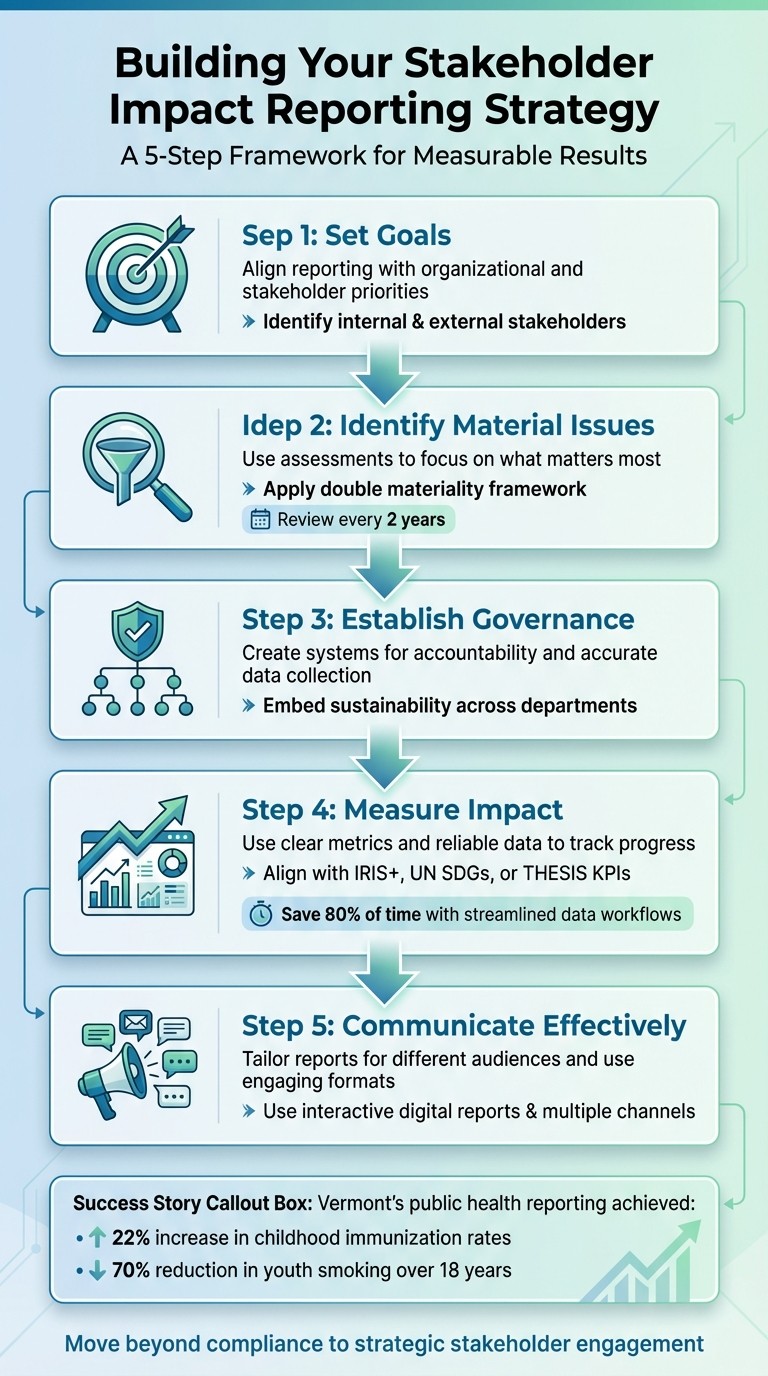
5-Step Stakeholder Impact Reporting Strategy Framework
How To Create Value-Focused Project Reports For Stakeholders?
Building a Stakeholder Impact Reporting Strategy
Developing a clear and effective impact reporting strategy involves understanding your audience, prioritizing what matters most, and demonstrating how your organization meets those priorities. Here's how to turn sustainability commitments into measurable and actionable outcomes.
Setting Goals and Identifying Key Stakeholders
To start, align your reporting objectives with both your organizational goals and the broader sustainability context. Stakeholders generally fall into two categories: internal stakeholders, such as the Board of Directors, senior management, and employees; and external stakeholders, including investors, customers, suppliers, partners, NGOs, community representatives, and regulatory bodies [3][6].
Engage with these groups through interviews and surveys to gather both qualitative and quantitative insights. This approach ensures you're addressing real concerns rather than relying on assumptions [3][6]. Once you've identified stakeholder priorities, you can focus on the sustainability topics that resonate most with them.
Determining Material Issues
Materiality assessments are crucial for identifying the sustainability topics that matter most. A comprehensive approach considers double materiality, evaluating issues from two perspectives: what is significant to stakeholders and what impacts your business strategy and value [2][3].
For example, in 2022, Equinix conducted an extensive materiality assessment, analyzing over 40 topics from the Global Reporting Initiative (GRI) Standards and additional frameworks like SASB, DJSI, ISS, UNGC, and Sustainalytics. Their Sustainability Program Office and functional leaders reviewed these findings, highlighting areas such as diversity, equity, inclusion, human capital, resilience, and biodiversity. These insights helped refine their "Future First" strategy, ensuring their reporting focused on high-priority areas [3].
"A materiality analysis is about the identification of key issues that are important to our stakeholders and our strategy. The results of this analysis guide our actions and ensure our sustainability ambitions remain relevant." – Corbion [2]
Plan to revisit materiality assessments every two years or whenever significant business shifts occur to keep your strategy aligned with evolving priorities [3].
Establishing Governance and Processes
Strong governance ensures that sustainability becomes an integral part of your core business operations. Your Board of Directors should establish clear frameworks and maintain accountability for sustainability initiatives. Additionally, tying executive compensation to specific social or environmental performance targets can drive meaningful progress [5][7][8].
Sustainability efforts should be embedded across departments. For example, one organization prioritized carbon management by creating a dedicated team to coordinate emissions-related efforts. Their R&D department focused on low-carbon innovations, while the procurement team worked on decarbonizing the supply chain [5].
"Sustainability today must become more than a public relations, investor relations, or corporate social responsibility endeavor. The modern sustainability organization must be set up to reshape a company's fundamental approach to business, set specific goals, and accomplish real results." – Aaron De Smet, Wenting Gao, Kimberly Henderson, and Thomas Hundertmark, McKinsey & Company [5]
To ensure accuracy and accountability, establish strong data management processes and adopt reliable technology platforms for impact reporting [4]. Specialized committees - such as Sustainability, Audit, or Privacy & Security - can support the board by overseeing risk management, internal controls, and data accuracy [7][9][10]. Additionally, implementing grievance mechanisms allows stakeholders to voice concerns and seek resolutions, further building trust and credibility [7][8].
Measuring and Managing Stakeholder Impact Data
This section dives into the practical steps for capturing, verifying, and acting on stakeholder impact data. Once governance is in place and material issues are identified, the focus shifts to building a robust data framework. This includes selecting meaningful metrics, ensuring data accuracy, and fostering active feedback loops with the communities and individuals your organization affects.
Defining Metrics and Indicators
Effective measurement combines quantitative metrics and qualitative indicators. Aligning these with established frameworks like IRIS+, the UN SDGs, or THESIS KPIs ensures your data remains consistent and comparable across platforms and stakeholders [1][11][12][13].
For instance, if carbon reduction is a priority, tracking Scope 1, 2, and 3 emissions provides a comprehensive view of your environmental impact.
Collecting and Validating Data
Traditional workflows often waste up to 80% of time on cleaning and organizing data [14]. Streamlining this process is essential for efficiency and accuracy. A few strategies include:
Unique Participant IDs: Assigning these allows you to track stakeholders across interactions without redundant data entry [14].
Self-Correction Workflows: Providing stakeholders with unique links to update their own responses reduces manual errors and saves time [14].
Centralized Data Systems: Consolidating all data into a single system of record eliminates the inconsistencies of fragmented spreadsheets and ensures audit readiness [15].
Advanced tools like AI-assisted validation can further enhance data management. These technologies quickly identify patterns, extract themes, and flag contradictions - tasks that once took weeks can now be completed in minutes, minimizing the risk of human error [14]. Regular internal audits and adherence to standards like GRI or SASB bolster data credibility [12][15].
With reliable, validated data, the next step is to ensure stakeholders have a voice in shaping your impact measures.
Incorporating Stakeholder Feedback
Stakeholders should be treated as partners in the impact measurement process. Actively soliciting their feedback and incorporating it into your strategies builds trust and strengthens relationships [17].
To analyze feedback effectively, combine quantitative benchmarks with qualitative insights [16][18]. Disaggregate data by key demographics such as race, gender, and geography to uncover disparities in impact [18]. Closing the loop is equally important - share your findings with stakeholders and demonstrate how their input influenced your decisions [16][18].
"When you listen to your stakeholders, acknowledge their concerns, and act on their feedback, it can help you build trust and build stronger stakeholder relationships." – Simply Stakeholders [16]
Structuring and Communicating Stakeholder Impact Reports
Once you've gathered accurate data and stakeholder insights, the challenge is to craft a report that not only informs but also engages. A well-structured impact report goes beyond presenting figures - it weaves a narrative that connects your mission to tangible outcomes, fostering trust through transparency. Let’s explore how to organize the report, tailor messages for different audiences, and strategically time and deliver your findings for maximum engagement.
Core Components of an Impact Report
An effective impact report begins with a concise executive summary that highlights the key findings and clearly states the report's purpose. Set measurable objectives to evaluate success, and blend quantitative data - such as participation rates or financial metrics - with qualitative elements like testimonials or success stories. This combination offers a fuller understanding of your impact. Use visual aids, such as graphs and charts, to make complex data more digestible, and include an honest discussion of challenges alongside future goals to show your commitment to progress.
For example, in 2019, SisterWeb - a nonprofit in San Francisco supporting Black, Pacific Islander, and Latinx communities with doula care - used tools like the Clear Impact Scorecard and Compyle systems to turn raw data into compelling narratives. They created public scorecards and printable PDF reports that combined client stories with data-driven insights, successfully engaging both community members and institutional funders.
Tailoring Messages to Stakeholder Groups
Different stakeholders prioritize different outcomes, so tailoring your communication is key. Investors and funders often focus on financial performance and long-term viability, while employees seek alignment between their roles and the organization's mission. Community members care about social benefits and service quality, whereas regulators require detailed compliance and methodology reports.
Stakeholder mapping can help you strategize. By plotting groups on an "Interest vs. Influence" grid, you can identify which stakeholders need frequent, detailed updates and which are better served with periodic summaries. Adjust your language accordingly: use straightforward, accessible terms for community members and more technical, precise language for investors. Choose communication channels that suit each audience, such as direct mail, interactive online reports, or in-person meetings for high-level stakeholders.
"Trust is the cornerstone, as it underpins effective communication, collaboration, and the ability to navigate challenges together." – Finance Alliance
Timing and Channels for Maximum Impact
The timing of your report can significantly affect its reach. Align releases with major milestones, such as the close of a fiscal year, the completion of a project, or the launch of a new initiative. While annual reports are common, more frequent updates - like quarterly or biannual reports - can strengthen relationships with stakeholders and reinforce your transparency.
To maximize engagement, use a variety of channels. Interactive digital reports and microsites allow stakeholders to explore data in real-time, while email newsletters keep supporters updated. Social media is ideal for sharing highlights, and webinars provide opportunities for deeper conversations with your audience. Many organizations are moving away from static PDFs toward dynamic "living reports" that feature clickable data points, embedded videos, and interactive elements. Including calls to action, such as surveys or comment sections, encourages feedback and promotes ongoing dialogue.
Council Fire specializes in helping organizations turn sustainability data into compelling stories. From creating interactive digital reports to developing audience-specific strategies, they ensure your impact reaches the right people through the most effective channels.
Next Steps
Key Takeaways from Stakeholder Impact Reporting
To create meaningful and effective impact reports, it's essential to focus on transparency, quality data, and engagement. Treating reporting as a strategic tool rather than a mere compliance requirement allows organizations to build stronger relationships and make tangible progress toward sustainability goals. The best reports strike a balance between numbers and narratives - combining quantitative data with qualitative insights. Tailoring these reports for specific audiences and openly addressing both successes and challenges fosters trust and credibility. Stakeholders now expect more frequent updates, with many preferring real-time information over traditional annual reports.
"Impact reporting is far more than a formality - it is a strategic tool that drives growth, fosters trust, and strengthens relationships." – Clear Impact [1]
Start by conducting a readiness assessment to uncover gaps in governance, materiality, and data collection [4]. Establish clear objectives for each stakeholder group, whether the aim is to reduce risk, enhance reputation, or meet regulatory standards. Map stakeholders based on their level of influence and interest, and develop an impact framework with metrics aligned to global standards such as the UN Sustainable Development Goals. Organizations that adopt structured approaches like Results-Based Accountability (RBA) early on are better positioned to achieve measurable improvements [1].
These steps lay the groundwork for actionable change and set the stage for expert guidance when needed.
How Council Fire Can Help Your Organization
Organizations looking to elevate their impact reporting can benefit from specialized support. Council Fire offers expertise in developing and implementing sustainability strategies that go beyond basic ESG compliance. Whether you're crafting your first impact report or refining an existing framework, their team helps turn sustainability data into compelling stories that resonate with investors, local communities, and regulators.
Council Fire's services align with the structured strategies discussed earlier, offering practical solutions like stakeholder mapping, materiality assessments, and the creation of interactive digital reports. By blending data-driven insights with a systems-based perspective, they help organizations transform ambitious sustainability goals into measurable actions. Their approach not only builds trust but also deepens stakeholder engagement while driving meaningful environmental, social, and economic outcomes.
FAQs
What makes stakeholder impact reporting different from traditional ESG reporting?
Stakeholder impact reporting zeroes in on providing detailed, outcome-focused insights that address the specific interests and concerns of distinct stakeholder groups. This approach leans heavily on storytelling and delivering actionable outcomes that directly connect with the individuals or communities affected by your organization’s initiatives.
On the other hand, traditional ESG reporting takes a broader approach, consolidating standardized metrics across environmental, social, and governance areas. These reports are typically aimed at meeting the expectations of a wide audience, including investors and regulators, and often adhere to established frameworks like GRI or ISSB. While ESG reporting offers a general snapshot, stakeholder impact reporting delves into the real-world effects of your efforts on people, communities, and the environment.
What are the essential steps for effective stakeholder engagement in sustainability impact reporting?
Engaging stakeholders in sustainability impact reporting involves a methodical and inclusive approach. Begin by identifying and prioritizing stakeholders - those directly impacted by or capable of influencing your sustainability objectives. This ensures you focus on the right groups from the start.
Develop a well-defined communication plan that outlines your goals, key messages, and the best ways to reach your audience. Depending on the stakeholders, this could include emails, webinars, or face-to-face meetings. Regularly provide transparent and timely updates, and invite their input through tools like surveys, workshops, or consultations. Make sure there’s a system in place to address any concerns they raise.
Once you’ve gathered feedback, integrate their insights into your reporting process. Highlight the issues that are most important to them and align your report with recognized frameworks such as GRI. When presenting the results, use a clear and engaging format that demonstrates how stakeholder input shaped your decisions and outlines the next steps.
Council Fire supports organizations through every phase of this journey, ensuring reports meet global standards while being tailored for U.S. audiences, using familiar elements like dollars ($), dates (MM/DD/YYYY), and measurement systems.
What are the best ways to communicate sustainability impact reports to different stakeholders?
To share sustainability impact reports effectively, it's essential to tailor your communication to the unique interests and priorities of each stakeholder group. For investors and grantmakers, focus on presenting concise summaries packed with key metrics - think figures like "$2.5 million in cost savings" or "a 15% reduction in emissions." On the other hand, employees and community partners often respond more positively to stories and visuals. Use relatable narratives, infographics, or dashboards that bring the real-world outcomes of your initiatives to life. When addressing regulators and industry peers, ensure your disclosures are compliant by aligning them with established frameworks such as the GRI standards.
Creating a stakeholder communications plan can make this process more efficient and impactful. Start by setting clear objectives and crafting messages that resonate with each group. Choose the best communication channels for your audience, whether that’s email newsletters, webinars, or printed materials. Regular updates - whether quarterly or annually - help maintain engagement, while feedback and analytics provide insights for continuous improvement. Council Fire offers expertise in designing tailored strategies that ensure your impact reports are not only clear and credible but also aligned with U.S. conventions.
Related Blog Posts
Latest Articles
©2025



FAQ
01
What does it really mean to “redefine profit”?
02
What makes Council Fire different?
03
Who does Council Fire you work with?
04
What does working with Council Fire actually look like?
05
How does Council Fire help organizations turn big goals into action?
06
How does Council Fire define and measure success?
Dec 18, 2025
Ultimate Guide to Stakeholder Impact Reporting
Sustainability Strategy
In This Article
Framework to set goals, measure outcomes, and communicate stakeholder-focused impact through materiality, governance, and reliable data practices.
Ultimate Guide to Stakeholder Impact Reporting
Stakeholder impact reporting helps organizations show how their actions benefit communities and the environment. Unlike financial or ESG reports, it focuses on measurable outcomes, such as improved public health or reduced emissions, rather than just financial performance or risk management.
Key Takeaways:
Why It Matters: Builds trust, meets investor demands for transparency, and strengthens relationships with stakeholders.
Examples of Success: Vermont's public health reporting improved childhood immunization rates by 22% and reduced youth smoking by 70% over 18 years.
Steps to Get Started:
Set Goals: Align reporting with organizational and stakeholder priorities.
Identify Material Issues: Use assessments to focus on what matters most.
Establish Governance: Create systems for accountability and accurate data collection.
Measure Impact: Use clear metrics and reliable data to track progress.
Communicate Effectively: Tailor reports for different audiences and use engaging formats.
This guide outlines the process of creating a clear, actionable impact reporting strategy that resonates with stakeholders and drives meaningful results.
5-Step Stakeholder Impact Reporting Strategy Framework
How To Create Value-Focused Project Reports For Stakeholders?
Building a Stakeholder Impact Reporting Strategy
Developing a clear and effective impact reporting strategy involves understanding your audience, prioritizing what matters most, and demonstrating how your organization meets those priorities. Here's how to turn sustainability commitments into measurable and actionable outcomes.
Setting Goals and Identifying Key Stakeholders
To start, align your reporting objectives with both your organizational goals and the broader sustainability context. Stakeholders generally fall into two categories: internal stakeholders, such as the Board of Directors, senior management, and employees; and external stakeholders, including investors, customers, suppliers, partners, NGOs, community representatives, and regulatory bodies [3][6].
Engage with these groups through interviews and surveys to gather both qualitative and quantitative insights. This approach ensures you're addressing real concerns rather than relying on assumptions [3][6]. Once you've identified stakeholder priorities, you can focus on the sustainability topics that resonate most with them.
Determining Material Issues
Materiality assessments are crucial for identifying the sustainability topics that matter most. A comprehensive approach considers double materiality, evaluating issues from two perspectives: what is significant to stakeholders and what impacts your business strategy and value [2][3].
For example, in 2022, Equinix conducted an extensive materiality assessment, analyzing over 40 topics from the Global Reporting Initiative (GRI) Standards and additional frameworks like SASB, DJSI, ISS, UNGC, and Sustainalytics. Their Sustainability Program Office and functional leaders reviewed these findings, highlighting areas such as diversity, equity, inclusion, human capital, resilience, and biodiversity. These insights helped refine their "Future First" strategy, ensuring their reporting focused on high-priority areas [3].
"A materiality analysis is about the identification of key issues that are important to our stakeholders and our strategy. The results of this analysis guide our actions and ensure our sustainability ambitions remain relevant." – Corbion [2]
Plan to revisit materiality assessments every two years or whenever significant business shifts occur to keep your strategy aligned with evolving priorities [3].
Establishing Governance and Processes
Strong governance ensures that sustainability becomes an integral part of your core business operations. Your Board of Directors should establish clear frameworks and maintain accountability for sustainability initiatives. Additionally, tying executive compensation to specific social or environmental performance targets can drive meaningful progress [5][7][8].
Sustainability efforts should be embedded across departments. For example, one organization prioritized carbon management by creating a dedicated team to coordinate emissions-related efforts. Their R&D department focused on low-carbon innovations, while the procurement team worked on decarbonizing the supply chain [5].
"Sustainability today must become more than a public relations, investor relations, or corporate social responsibility endeavor. The modern sustainability organization must be set up to reshape a company's fundamental approach to business, set specific goals, and accomplish real results." – Aaron De Smet, Wenting Gao, Kimberly Henderson, and Thomas Hundertmark, McKinsey & Company [5]
To ensure accuracy and accountability, establish strong data management processes and adopt reliable technology platforms for impact reporting [4]. Specialized committees - such as Sustainability, Audit, or Privacy & Security - can support the board by overseeing risk management, internal controls, and data accuracy [7][9][10]. Additionally, implementing grievance mechanisms allows stakeholders to voice concerns and seek resolutions, further building trust and credibility [7][8].
Measuring and Managing Stakeholder Impact Data
This section dives into the practical steps for capturing, verifying, and acting on stakeholder impact data. Once governance is in place and material issues are identified, the focus shifts to building a robust data framework. This includes selecting meaningful metrics, ensuring data accuracy, and fostering active feedback loops with the communities and individuals your organization affects.
Defining Metrics and Indicators
Effective measurement combines quantitative metrics and qualitative indicators. Aligning these with established frameworks like IRIS+, the UN SDGs, or THESIS KPIs ensures your data remains consistent and comparable across platforms and stakeholders [1][11][12][13].
For instance, if carbon reduction is a priority, tracking Scope 1, 2, and 3 emissions provides a comprehensive view of your environmental impact.
Collecting and Validating Data
Traditional workflows often waste up to 80% of time on cleaning and organizing data [14]. Streamlining this process is essential for efficiency and accuracy. A few strategies include:
Unique Participant IDs: Assigning these allows you to track stakeholders across interactions without redundant data entry [14].
Self-Correction Workflows: Providing stakeholders with unique links to update their own responses reduces manual errors and saves time [14].
Centralized Data Systems: Consolidating all data into a single system of record eliminates the inconsistencies of fragmented spreadsheets and ensures audit readiness [15].
Advanced tools like AI-assisted validation can further enhance data management. These technologies quickly identify patterns, extract themes, and flag contradictions - tasks that once took weeks can now be completed in minutes, minimizing the risk of human error [14]. Regular internal audits and adherence to standards like GRI or SASB bolster data credibility [12][15].
With reliable, validated data, the next step is to ensure stakeholders have a voice in shaping your impact measures.
Incorporating Stakeholder Feedback
Stakeholders should be treated as partners in the impact measurement process. Actively soliciting their feedback and incorporating it into your strategies builds trust and strengthens relationships [17].
To analyze feedback effectively, combine quantitative benchmarks with qualitative insights [16][18]. Disaggregate data by key demographics such as race, gender, and geography to uncover disparities in impact [18]. Closing the loop is equally important - share your findings with stakeholders and demonstrate how their input influenced your decisions [16][18].
"When you listen to your stakeholders, acknowledge their concerns, and act on their feedback, it can help you build trust and build stronger stakeholder relationships." – Simply Stakeholders [16]
Structuring and Communicating Stakeholder Impact Reports
Once you've gathered accurate data and stakeholder insights, the challenge is to craft a report that not only informs but also engages. A well-structured impact report goes beyond presenting figures - it weaves a narrative that connects your mission to tangible outcomes, fostering trust through transparency. Let’s explore how to organize the report, tailor messages for different audiences, and strategically time and deliver your findings for maximum engagement.
Core Components of an Impact Report
An effective impact report begins with a concise executive summary that highlights the key findings and clearly states the report's purpose. Set measurable objectives to evaluate success, and blend quantitative data - such as participation rates or financial metrics - with qualitative elements like testimonials or success stories. This combination offers a fuller understanding of your impact. Use visual aids, such as graphs and charts, to make complex data more digestible, and include an honest discussion of challenges alongside future goals to show your commitment to progress.
For example, in 2019, SisterWeb - a nonprofit in San Francisco supporting Black, Pacific Islander, and Latinx communities with doula care - used tools like the Clear Impact Scorecard and Compyle systems to turn raw data into compelling narratives. They created public scorecards and printable PDF reports that combined client stories with data-driven insights, successfully engaging both community members and institutional funders.
Tailoring Messages to Stakeholder Groups
Different stakeholders prioritize different outcomes, so tailoring your communication is key. Investors and funders often focus on financial performance and long-term viability, while employees seek alignment between their roles and the organization's mission. Community members care about social benefits and service quality, whereas regulators require detailed compliance and methodology reports.
Stakeholder mapping can help you strategize. By plotting groups on an "Interest vs. Influence" grid, you can identify which stakeholders need frequent, detailed updates and which are better served with periodic summaries. Adjust your language accordingly: use straightforward, accessible terms for community members and more technical, precise language for investors. Choose communication channels that suit each audience, such as direct mail, interactive online reports, or in-person meetings for high-level stakeholders.
"Trust is the cornerstone, as it underpins effective communication, collaboration, and the ability to navigate challenges together." – Finance Alliance
Timing and Channels for Maximum Impact
The timing of your report can significantly affect its reach. Align releases with major milestones, such as the close of a fiscal year, the completion of a project, or the launch of a new initiative. While annual reports are common, more frequent updates - like quarterly or biannual reports - can strengthen relationships with stakeholders and reinforce your transparency.
To maximize engagement, use a variety of channels. Interactive digital reports and microsites allow stakeholders to explore data in real-time, while email newsletters keep supporters updated. Social media is ideal for sharing highlights, and webinars provide opportunities for deeper conversations with your audience. Many organizations are moving away from static PDFs toward dynamic "living reports" that feature clickable data points, embedded videos, and interactive elements. Including calls to action, such as surveys or comment sections, encourages feedback and promotes ongoing dialogue.
Council Fire specializes in helping organizations turn sustainability data into compelling stories. From creating interactive digital reports to developing audience-specific strategies, they ensure your impact reaches the right people through the most effective channels.
Next Steps
Key Takeaways from Stakeholder Impact Reporting
To create meaningful and effective impact reports, it's essential to focus on transparency, quality data, and engagement. Treating reporting as a strategic tool rather than a mere compliance requirement allows organizations to build stronger relationships and make tangible progress toward sustainability goals. The best reports strike a balance between numbers and narratives - combining quantitative data with qualitative insights. Tailoring these reports for specific audiences and openly addressing both successes and challenges fosters trust and credibility. Stakeholders now expect more frequent updates, with many preferring real-time information over traditional annual reports.
"Impact reporting is far more than a formality - it is a strategic tool that drives growth, fosters trust, and strengthens relationships." – Clear Impact [1]
Start by conducting a readiness assessment to uncover gaps in governance, materiality, and data collection [4]. Establish clear objectives for each stakeholder group, whether the aim is to reduce risk, enhance reputation, or meet regulatory standards. Map stakeholders based on their level of influence and interest, and develop an impact framework with metrics aligned to global standards such as the UN Sustainable Development Goals. Organizations that adopt structured approaches like Results-Based Accountability (RBA) early on are better positioned to achieve measurable improvements [1].
These steps lay the groundwork for actionable change and set the stage for expert guidance when needed.
How Council Fire Can Help Your Organization
Organizations looking to elevate their impact reporting can benefit from specialized support. Council Fire offers expertise in developing and implementing sustainability strategies that go beyond basic ESG compliance. Whether you're crafting your first impact report or refining an existing framework, their team helps turn sustainability data into compelling stories that resonate with investors, local communities, and regulators.
Council Fire's services align with the structured strategies discussed earlier, offering practical solutions like stakeholder mapping, materiality assessments, and the creation of interactive digital reports. By blending data-driven insights with a systems-based perspective, they help organizations transform ambitious sustainability goals into measurable actions. Their approach not only builds trust but also deepens stakeholder engagement while driving meaningful environmental, social, and economic outcomes.
FAQs
What makes stakeholder impact reporting different from traditional ESG reporting?
Stakeholder impact reporting zeroes in on providing detailed, outcome-focused insights that address the specific interests and concerns of distinct stakeholder groups. This approach leans heavily on storytelling and delivering actionable outcomes that directly connect with the individuals or communities affected by your organization’s initiatives.
On the other hand, traditional ESG reporting takes a broader approach, consolidating standardized metrics across environmental, social, and governance areas. These reports are typically aimed at meeting the expectations of a wide audience, including investors and regulators, and often adhere to established frameworks like GRI or ISSB. While ESG reporting offers a general snapshot, stakeholder impact reporting delves into the real-world effects of your efforts on people, communities, and the environment.
What are the essential steps for effective stakeholder engagement in sustainability impact reporting?
Engaging stakeholders in sustainability impact reporting involves a methodical and inclusive approach. Begin by identifying and prioritizing stakeholders - those directly impacted by or capable of influencing your sustainability objectives. This ensures you focus on the right groups from the start.
Develop a well-defined communication plan that outlines your goals, key messages, and the best ways to reach your audience. Depending on the stakeholders, this could include emails, webinars, or face-to-face meetings. Regularly provide transparent and timely updates, and invite their input through tools like surveys, workshops, or consultations. Make sure there’s a system in place to address any concerns they raise.
Once you’ve gathered feedback, integrate their insights into your reporting process. Highlight the issues that are most important to them and align your report with recognized frameworks such as GRI. When presenting the results, use a clear and engaging format that demonstrates how stakeholder input shaped your decisions and outlines the next steps.
Council Fire supports organizations through every phase of this journey, ensuring reports meet global standards while being tailored for U.S. audiences, using familiar elements like dollars ($), dates (MM/DD/YYYY), and measurement systems.
What are the best ways to communicate sustainability impact reports to different stakeholders?
To share sustainability impact reports effectively, it's essential to tailor your communication to the unique interests and priorities of each stakeholder group. For investors and grantmakers, focus on presenting concise summaries packed with key metrics - think figures like "$2.5 million in cost savings" or "a 15% reduction in emissions." On the other hand, employees and community partners often respond more positively to stories and visuals. Use relatable narratives, infographics, or dashboards that bring the real-world outcomes of your initiatives to life. When addressing regulators and industry peers, ensure your disclosures are compliant by aligning them with established frameworks such as the GRI standards.
Creating a stakeholder communications plan can make this process more efficient and impactful. Start by setting clear objectives and crafting messages that resonate with each group. Choose the best communication channels for your audience, whether that’s email newsletters, webinars, or printed materials. Regular updates - whether quarterly or annually - help maintain engagement, while feedback and analytics provide insights for continuous improvement. Council Fire offers expertise in designing tailored strategies that ensure your impact reports are not only clear and credible but also aligned with U.S. conventions.
Related Blog Posts
FAQ
01
What does it really mean to “redefine profit”?
02
What makes Council Fire different?
03
Who does Council Fire you work with?
04
What does working with Council Fire actually look like?
05
How does Council Fire help organizations turn big goals into action?
06
How does Council Fire define and measure success?
Dec 18, 2025
Ultimate Guide to Stakeholder Impact Reporting
Sustainability Strategy
In This Article
Framework to set goals, measure outcomes, and communicate stakeholder-focused impact through materiality, governance, and reliable data practices.
Ultimate Guide to Stakeholder Impact Reporting
Stakeholder impact reporting helps organizations show how their actions benefit communities and the environment. Unlike financial or ESG reports, it focuses on measurable outcomes, such as improved public health or reduced emissions, rather than just financial performance or risk management.
Key Takeaways:
Why It Matters: Builds trust, meets investor demands for transparency, and strengthens relationships with stakeholders.
Examples of Success: Vermont's public health reporting improved childhood immunization rates by 22% and reduced youth smoking by 70% over 18 years.
Steps to Get Started:
Set Goals: Align reporting with organizational and stakeholder priorities.
Identify Material Issues: Use assessments to focus on what matters most.
Establish Governance: Create systems for accountability and accurate data collection.
Measure Impact: Use clear metrics and reliable data to track progress.
Communicate Effectively: Tailor reports for different audiences and use engaging formats.
This guide outlines the process of creating a clear, actionable impact reporting strategy that resonates with stakeholders and drives meaningful results.
5-Step Stakeholder Impact Reporting Strategy Framework
How To Create Value-Focused Project Reports For Stakeholders?
Building a Stakeholder Impact Reporting Strategy
Developing a clear and effective impact reporting strategy involves understanding your audience, prioritizing what matters most, and demonstrating how your organization meets those priorities. Here's how to turn sustainability commitments into measurable and actionable outcomes.
Setting Goals and Identifying Key Stakeholders
To start, align your reporting objectives with both your organizational goals and the broader sustainability context. Stakeholders generally fall into two categories: internal stakeholders, such as the Board of Directors, senior management, and employees; and external stakeholders, including investors, customers, suppliers, partners, NGOs, community representatives, and regulatory bodies [3][6].
Engage with these groups through interviews and surveys to gather both qualitative and quantitative insights. This approach ensures you're addressing real concerns rather than relying on assumptions [3][6]. Once you've identified stakeholder priorities, you can focus on the sustainability topics that resonate most with them.
Determining Material Issues
Materiality assessments are crucial for identifying the sustainability topics that matter most. A comprehensive approach considers double materiality, evaluating issues from two perspectives: what is significant to stakeholders and what impacts your business strategy and value [2][3].
For example, in 2022, Equinix conducted an extensive materiality assessment, analyzing over 40 topics from the Global Reporting Initiative (GRI) Standards and additional frameworks like SASB, DJSI, ISS, UNGC, and Sustainalytics. Their Sustainability Program Office and functional leaders reviewed these findings, highlighting areas such as diversity, equity, inclusion, human capital, resilience, and biodiversity. These insights helped refine their "Future First" strategy, ensuring their reporting focused on high-priority areas [3].
"A materiality analysis is about the identification of key issues that are important to our stakeholders and our strategy. The results of this analysis guide our actions and ensure our sustainability ambitions remain relevant." – Corbion [2]
Plan to revisit materiality assessments every two years or whenever significant business shifts occur to keep your strategy aligned with evolving priorities [3].
Establishing Governance and Processes
Strong governance ensures that sustainability becomes an integral part of your core business operations. Your Board of Directors should establish clear frameworks and maintain accountability for sustainability initiatives. Additionally, tying executive compensation to specific social or environmental performance targets can drive meaningful progress [5][7][8].
Sustainability efforts should be embedded across departments. For example, one organization prioritized carbon management by creating a dedicated team to coordinate emissions-related efforts. Their R&D department focused on low-carbon innovations, while the procurement team worked on decarbonizing the supply chain [5].
"Sustainability today must become more than a public relations, investor relations, or corporate social responsibility endeavor. The modern sustainability organization must be set up to reshape a company's fundamental approach to business, set specific goals, and accomplish real results." – Aaron De Smet, Wenting Gao, Kimberly Henderson, and Thomas Hundertmark, McKinsey & Company [5]
To ensure accuracy and accountability, establish strong data management processes and adopt reliable technology platforms for impact reporting [4]. Specialized committees - such as Sustainability, Audit, or Privacy & Security - can support the board by overseeing risk management, internal controls, and data accuracy [7][9][10]. Additionally, implementing grievance mechanisms allows stakeholders to voice concerns and seek resolutions, further building trust and credibility [7][8].
Measuring and Managing Stakeholder Impact Data
This section dives into the practical steps for capturing, verifying, and acting on stakeholder impact data. Once governance is in place and material issues are identified, the focus shifts to building a robust data framework. This includes selecting meaningful metrics, ensuring data accuracy, and fostering active feedback loops with the communities and individuals your organization affects.
Defining Metrics and Indicators
Effective measurement combines quantitative metrics and qualitative indicators. Aligning these with established frameworks like IRIS+, the UN SDGs, or THESIS KPIs ensures your data remains consistent and comparable across platforms and stakeholders [1][11][12][13].
For instance, if carbon reduction is a priority, tracking Scope 1, 2, and 3 emissions provides a comprehensive view of your environmental impact.
Collecting and Validating Data
Traditional workflows often waste up to 80% of time on cleaning and organizing data [14]. Streamlining this process is essential for efficiency and accuracy. A few strategies include:
Unique Participant IDs: Assigning these allows you to track stakeholders across interactions without redundant data entry [14].
Self-Correction Workflows: Providing stakeholders with unique links to update their own responses reduces manual errors and saves time [14].
Centralized Data Systems: Consolidating all data into a single system of record eliminates the inconsistencies of fragmented spreadsheets and ensures audit readiness [15].
Advanced tools like AI-assisted validation can further enhance data management. These technologies quickly identify patterns, extract themes, and flag contradictions - tasks that once took weeks can now be completed in minutes, minimizing the risk of human error [14]. Regular internal audits and adherence to standards like GRI or SASB bolster data credibility [12][15].
With reliable, validated data, the next step is to ensure stakeholders have a voice in shaping your impact measures.
Incorporating Stakeholder Feedback
Stakeholders should be treated as partners in the impact measurement process. Actively soliciting their feedback and incorporating it into your strategies builds trust and strengthens relationships [17].
To analyze feedback effectively, combine quantitative benchmarks with qualitative insights [16][18]. Disaggregate data by key demographics such as race, gender, and geography to uncover disparities in impact [18]. Closing the loop is equally important - share your findings with stakeholders and demonstrate how their input influenced your decisions [16][18].
"When you listen to your stakeholders, acknowledge their concerns, and act on their feedback, it can help you build trust and build stronger stakeholder relationships." – Simply Stakeholders [16]
Structuring and Communicating Stakeholder Impact Reports
Once you've gathered accurate data and stakeholder insights, the challenge is to craft a report that not only informs but also engages. A well-structured impact report goes beyond presenting figures - it weaves a narrative that connects your mission to tangible outcomes, fostering trust through transparency. Let’s explore how to organize the report, tailor messages for different audiences, and strategically time and deliver your findings for maximum engagement.
Core Components of an Impact Report
An effective impact report begins with a concise executive summary that highlights the key findings and clearly states the report's purpose. Set measurable objectives to evaluate success, and blend quantitative data - such as participation rates or financial metrics - with qualitative elements like testimonials or success stories. This combination offers a fuller understanding of your impact. Use visual aids, such as graphs and charts, to make complex data more digestible, and include an honest discussion of challenges alongside future goals to show your commitment to progress.
For example, in 2019, SisterWeb - a nonprofit in San Francisco supporting Black, Pacific Islander, and Latinx communities with doula care - used tools like the Clear Impact Scorecard and Compyle systems to turn raw data into compelling narratives. They created public scorecards and printable PDF reports that combined client stories with data-driven insights, successfully engaging both community members and institutional funders.
Tailoring Messages to Stakeholder Groups
Different stakeholders prioritize different outcomes, so tailoring your communication is key. Investors and funders often focus on financial performance and long-term viability, while employees seek alignment between their roles and the organization's mission. Community members care about social benefits and service quality, whereas regulators require detailed compliance and methodology reports.
Stakeholder mapping can help you strategize. By plotting groups on an "Interest vs. Influence" grid, you can identify which stakeholders need frequent, detailed updates and which are better served with periodic summaries. Adjust your language accordingly: use straightforward, accessible terms for community members and more technical, precise language for investors. Choose communication channels that suit each audience, such as direct mail, interactive online reports, or in-person meetings for high-level stakeholders.
"Trust is the cornerstone, as it underpins effective communication, collaboration, and the ability to navigate challenges together." – Finance Alliance
Timing and Channels for Maximum Impact
The timing of your report can significantly affect its reach. Align releases with major milestones, such as the close of a fiscal year, the completion of a project, or the launch of a new initiative. While annual reports are common, more frequent updates - like quarterly or biannual reports - can strengthen relationships with stakeholders and reinforce your transparency.
To maximize engagement, use a variety of channels. Interactive digital reports and microsites allow stakeholders to explore data in real-time, while email newsletters keep supporters updated. Social media is ideal for sharing highlights, and webinars provide opportunities for deeper conversations with your audience. Many organizations are moving away from static PDFs toward dynamic "living reports" that feature clickable data points, embedded videos, and interactive elements. Including calls to action, such as surveys or comment sections, encourages feedback and promotes ongoing dialogue.
Council Fire specializes in helping organizations turn sustainability data into compelling stories. From creating interactive digital reports to developing audience-specific strategies, they ensure your impact reaches the right people through the most effective channels.
Next Steps
Key Takeaways from Stakeholder Impact Reporting
To create meaningful and effective impact reports, it's essential to focus on transparency, quality data, and engagement. Treating reporting as a strategic tool rather than a mere compliance requirement allows organizations to build stronger relationships and make tangible progress toward sustainability goals. The best reports strike a balance between numbers and narratives - combining quantitative data with qualitative insights. Tailoring these reports for specific audiences and openly addressing both successes and challenges fosters trust and credibility. Stakeholders now expect more frequent updates, with many preferring real-time information over traditional annual reports.
"Impact reporting is far more than a formality - it is a strategic tool that drives growth, fosters trust, and strengthens relationships." – Clear Impact [1]
Start by conducting a readiness assessment to uncover gaps in governance, materiality, and data collection [4]. Establish clear objectives for each stakeholder group, whether the aim is to reduce risk, enhance reputation, or meet regulatory standards. Map stakeholders based on their level of influence and interest, and develop an impact framework with metrics aligned to global standards such as the UN Sustainable Development Goals. Organizations that adopt structured approaches like Results-Based Accountability (RBA) early on are better positioned to achieve measurable improvements [1].
These steps lay the groundwork for actionable change and set the stage for expert guidance when needed.
How Council Fire Can Help Your Organization
Organizations looking to elevate their impact reporting can benefit from specialized support. Council Fire offers expertise in developing and implementing sustainability strategies that go beyond basic ESG compliance. Whether you're crafting your first impact report or refining an existing framework, their team helps turn sustainability data into compelling stories that resonate with investors, local communities, and regulators.
Council Fire's services align with the structured strategies discussed earlier, offering practical solutions like stakeholder mapping, materiality assessments, and the creation of interactive digital reports. By blending data-driven insights with a systems-based perspective, they help organizations transform ambitious sustainability goals into measurable actions. Their approach not only builds trust but also deepens stakeholder engagement while driving meaningful environmental, social, and economic outcomes.
FAQs
What makes stakeholder impact reporting different from traditional ESG reporting?
Stakeholder impact reporting zeroes in on providing detailed, outcome-focused insights that address the specific interests and concerns of distinct stakeholder groups. This approach leans heavily on storytelling and delivering actionable outcomes that directly connect with the individuals or communities affected by your organization’s initiatives.
On the other hand, traditional ESG reporting takes a broader approach, consolidating standardized metrics across environmental, social, and governance areas. These reports are typically aimed at meeting the expectations of a wide audience, including investors and regulators, and often adhere to established frameworks like GRI or ISSB. While ESG reporting offers a general snapshot, stakeholder impact reporting delves into the real-world effects of your efforts on people, communities, and the environment.
What are the essential steps for effective stakeholder engagement in sustainability impact reporting?
Engaging stakeholders in sustainability impact reporting involves a methodical and inclusive approach. Begin by identifying and prioritizing stakeholders - those directly impacted by or capable of influencing your sustainability objectives. This ensures you focus on the right groups from the start.
Develop a well-defined communication plan that outlines your goals, key messages, and the best ways to reach your audience. Depending on the stakeholders, this could include emails, webinars, or face-to-face meetings. Regularly provide transparent and timely updates, and invite their input through tools like surveys, workshops, or consultations. Make sure there’s a system in place to address any concerns they raise.
Once you’ve gathered feedback, integrate their insights into your reporting process. Highlight the issues that are most important to them and align your report with recognized frameworks such as GRI. When presenting the results, use a clear and engaging format that demonstrates how stakeholder input shaped your decisions and outlines the next steps.
Council Fire supports organizations through every phase of this journey, ensuring reports meet global standards while being tailored for U.S. audiences, using familiar elements like dollars ($), dates (MM/DD/YYYY), and measurement systems.
What are the best ways to communicate sustainability impact reports to different stakeholders?
To share sustainability impact reports effectively, it's essential to tailor your communication to the unique interests and priorities of each stakeholder group. For investors and grantmakers, focus on presenting concise summaries packed with key metrics - think figures like "$2.5 million in cost savings" or "a 15% reduction in emissions." On the other hand, employees and community partners often respond more positively to stories and visuals. Use relatable narratives, infographics, or dashboards that bring the real-world outcomes of your initiatives to life. When addressing regulators and industry peers, ensure your disclosures are compliant by aligning them with established frameworks such as the GRI standards.
Creating a stakeholder communications plan can make this process more efficient and impactful. Start by setting clear objectives and crafting messages that resonate with each group. Choose the best communication channels for your audience, whether that’s email newsletters, webinars, or printed materials. Regular updates - whether quarterly or annually - help maintain engagement, while feedback and analytics provide insights for continuous improvement. Council Fire offers expertise in designing tailored strategies that ensure your impact reports are not only clear and credible but also aligned with U.S. conventions.
Related Blog Posts
FAQ
What does it really mean to “redefine profit”?
What makes Council Fire different?
Who does Council Fire you work with?
What does working with Council Fire actually look like?
How does Council Fire help organizations turn big goals into action?
How does Council Fire define and measure success?