Mar 3, 2026
Ultimate Guide to Sustainable Tourism Ecosystems
Sustainability Strategy
In This Article
Tourism must rebuild as a balanced ecosystem that restores nature, empowers locals, and manages visitors for net-positive impacts.
Ultimate Guide to Sustainable Tourism Ecosystems
Tourism can thrive without harming destinations. By balancing economic growth, preserving nature, and supporting local communities, tourism ecosystems can create long-term benefits for everyone involved. This guide explores how destinations can achieve this balance and highlights successful examples from around the world.
Key Takeaways:
Tourism's Global Impact: Tourism supports 357 million jobs and contributes $10.9 trillion to the global economy but generates 6.5% of greenhouse gas emissions.
Core Principles:
Protect Nature: Invest in restoring landscapes and reducing pollution.
Empower Communities: Ensure locals lead tourism efforts and benefit directly.
Manage Visitors: Regulate visitor numbers and promote responsible behavior.
Success Stories:
Costa Rica: Certification programs linking tourism with conservation.
Jordan: Community-run tourism creating jobs and preserving heritage.
Australia: Indigenous-led tourism combining tradition with conservation.
Action Steps for Destinations:
Involve local voices in planning.
Measure progress with metrics beyond visitor numbers.
Invest in eco-friendly infrastructure like renewable energy and waste systems.
By rethinking tourism as a system that supports people, places, and profits equally, destinations can ensure a thriving future for generations to come.
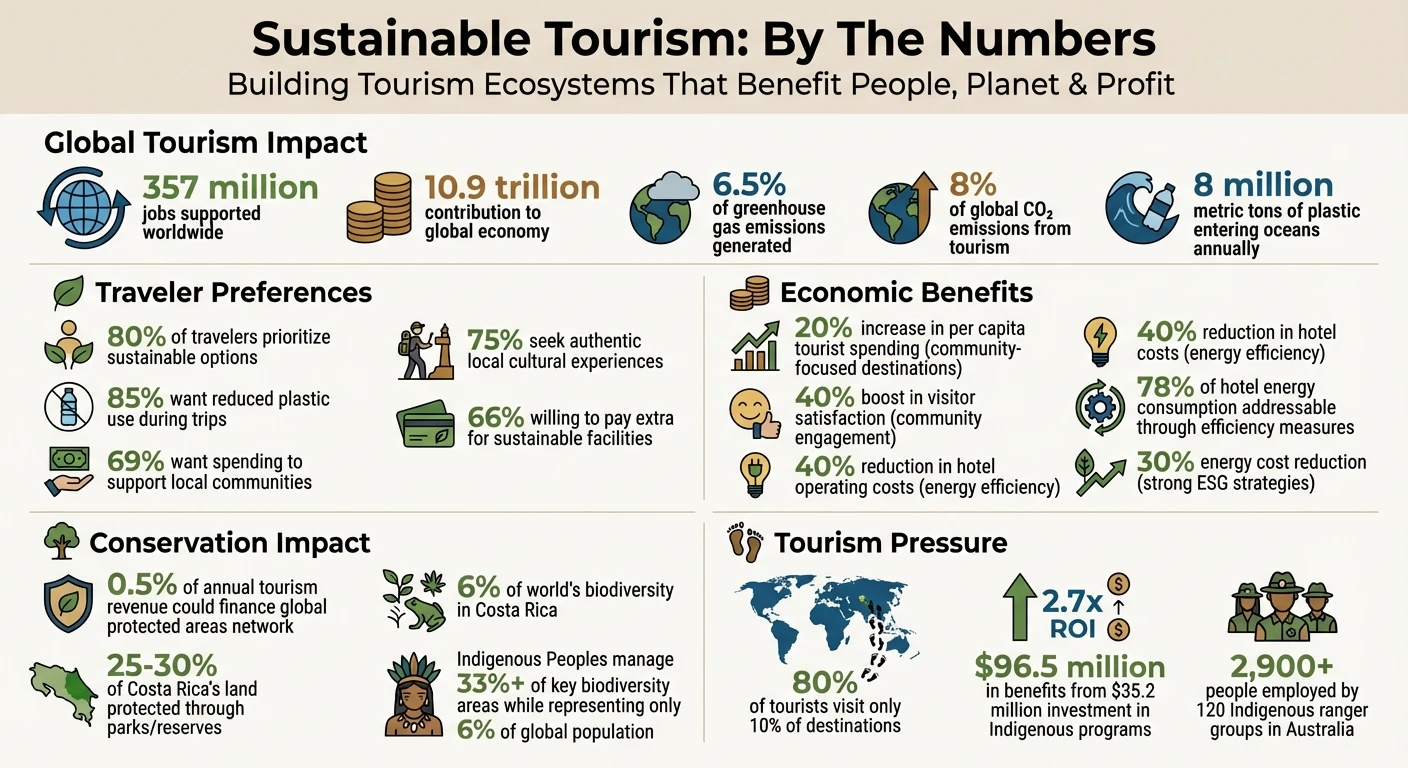
Sustainable Tourism Impact: Global Statistics and Key Metrics
What Is Sustainability Tourism? - Ecosystem Essentials
Core Principles of Sustainable Tourism Ecosystems
Creating a sustainable tourism ecosystem relies on three interconnected pillars: safeguarding the environment, empowering local communities, and managing visitor behavior responsibly. These elements work together to ensure long-term benefits for destinations and their inhabitants.
Environmental Conservation
At its core, sustainable tourism prioritizes the health of the environment - not just avoiding harm, but actively working to restore and protect ecosystems. This approach also directs tourism revenues toward conservation efforts.
The numbers paint a clear picture: tourism contributes about 8% of global CO₂ emissions, and approximately 8 million metric tons of plastic enter the oceans each year, affecting coastal destinations worldwide [1]. Interestingly, allocating just 0.5% of annual tourism revenue could finance a global network of protected areas [5].
Practical measures include environmental impact assessments, enforcing "carry-in carry-out" policies, and limiting group sizes at vulnerable sites [3]. Operationally, hotels and resorts can adopt energy-efficient systems such as LED lighting, HVAC upgrades, and thermal insulation, alongside water-saving methods like greywater recycling and rainwater capture. These initiatives can address up to 78% of a hotel’s energy consumption while potentially cutting operating costs by 40% [1].
The concept of regenerative travel is gaining momentum, reflecting travelers' growing expectations. Over 80% of travelers now prioritize sustainable options, and 85% want reduced plastic use during their trips [1]. Indigenous Peoples, who manage over one-third of the planet’s key biodiversity areas while making up only 6% of the global population [2], demonstrate how traditional knowledge can guide impactful conservation strategies.
While environmental efforts are crucial, empowering local communities is equally vital to building a sustainable tourism model.
Community Empowerment
When local communities take the lead in tourism and benefit directly from it, they become strong advocates for preserving both natural and cultural resources. This approach also reduces economic leakage, ensuring more money stays within the destination.
Research shows that destinations emphasizing community engagement see a 20% rise in per capita tourist spending and a 40% boost in visitor satisfaction [1]. Additionally, 69% of travelers want their spending to support local communities, and 75% seek authentic experiences that reflect local culture [8].
"A healthy and happy community is needed to support a healthy and happy tourism industry long-term."
Samantha Bray, PhD candidate, University of Waterloo[7]
Empowering communities starts with initiatives such as forming stewardship councils that include local governments, NGOs, and residents to ensure their voices shape tourism policies [7]. Stakeholder mapping can identify and uplift marginalized groups, ensuring equitable benefits for racial minorities, youth, and persons with disabilities. Providing locals with training in digital marketing, hospitality, and other essential skills promotes community-led tourism [6][9]. Feedback loops allow communities to adjust tourism strategies based on residents’ input [6][7]. Supporting local supply chains and offering microloans or grants further ensures that more revenue remains within the community [6][1].
This approach doesn’t just strengthen local economies - it also preserves cultural heritage by giving residents a direct stake in maintaining traditional crafts and historical sites [6][8].
Managing how visitors interact with these destinations is the final piece of the puzzle.
Responsible Visitor Management
Visitor behavior plays a significant role in maintaining the balance of tourism ecosystems. Currently, 80% of tourists visit just 10% of all available destinations, creating heavy pressure on popular sites [10].
Effective visitor management begins with understanding a site’s carrying capacity - evaluating its physical and ecological limits and regulating visitor numbers to prevent overcrowding [10]. Economic tools like visitation fees, such as Venice’s $1 to $5 entry charge for the first five nights, can help control tourist influx while funding environmental and social programs [10]. Encouraging slow travel with multi-day passes or off-season discounts spreads visitor traffic more evenly throughout the year [12].
Promoting low-impact transportation options, such as walking, cycling, or public transit, can significantly reduce tourists’ carbon footprints [12]. Behavioral rules - like staying on marked trails, avoiding wildlife disturbances, and refraining from taking natural souvenirs - set clear expectations for responsible conduct [10][12].
"Sustainable tourism should also maintain a high level of tourist satisfaction and ensure a meaningful experience to the tourists, raising their awareness about sustainability issues and promoting sustainable tourism practices amongst them."
Clear signage pointing to conservation sites, ethical tours, and eco-conscious attractions helps guide visitors toward sustainable choices while supporting genuine community programs [4][12]. By adopting these practices, tourists shift from being passive observers to active contributors in preserving destinations.
Together, these principles - environmental conservation, community empowerment, and responsible visitor management - create a framework where the needs of the environment, local communities, and visitors are balanced, ensuring tourism remains sustainable for generations to come.
Case Studies of Successful Tourism Ecosystems
These examples showcase different approaches to building sustainable tourism systems, from rigorous certification programs and community-driven initiatives to Indigenous-led stewardship. Each model brings valuable lessons for balancing conservation, local engagement, and visitor experience.
Costa Rica: Certification for Sustainable Tourism (CST)
Costa Rica's Certification for Sustainable Tourism (CST) program, established in 1997 by the ICT (Costa Rican Tourism Institute), has become a global benchmark for sustainable tourism. With over 400 certified businesses, the program evaluates participants across four areas: Environmental Management, Social-Economic Management, Business Management, and Cultural Management [13][14][16].
The CST employs a two-tier system - Basic and Elite - to promote continuous improvement. Basic certification requires meeting all mandatory criteria, while Elite status demands higher achievements, including 30% compliance in improvement measures and 70% in external impact categories. To date, fewer than 100 businesses have reached Elite status, highlighting the program's high standards [15][16].
A Technical Verification Commission, composed of experts from the ICT, Ministry of Environment, University of Costa Rica, and the International Union for Conservation of Nature (IUCN), oversees the program's rigorous audit process [16][19].
"CST is a well established certification program with a clever scheme of market incentives for participating businesses."
Randy Durband, CEO, Global Sustainable Tourism Council (GSTC) [13]
Beyond certifying individual businesses, the CST has contributed to broader conservation efforts. Costa Rica protects approximately 25% to 30% of its land through national parks and reserves, while the country is home to 6% of the world's biodiversity [14][18]. The CST model has inspired similar initiatives in Belize, Guatemala, and Panama [17].
While Costa Rica emphasizes formal certification, Jordan takes a more grassroots approach to sustainable tourism.
Jordan: Community-Based Tourism Initiatives
Jordan has developed a tourism model that prioritizes community leadership and local empowerment, ensuring tourism benefits flow directly to residents while preserving heritage and natural landscapes. The Royal Society for the Conservation of Nature (RSCN) integrates ecotourism with conservation, using tourism revenue to fund environmental protection.
One standout example is Feynan Ecolodge in the Dana Biosphere Reserve. This ecolodge reinvests over 50% of guest fees into the local economy, supporting more than 80 families. It also operates entirely on renewable energy and has significantly reduced plastic use [21]. For instance, Um Khalid, a Bedouin mother, earns an average of 400 Jordanian dinars per month (around $564) by supplying bread to the lodge. Her income has allowed her to purchase solar panels and a washing machine, improving her quality of life [21].
In Wadi Rum, ecotourism has created around 300 jobs for local Bedouins, including roles as guides, drivers, and camp managers. Annual tourism revenue in the area exceeds 5 million Jordanian dinars (approximately $7 million), with much of it benefiting local communities [20]. Similarly, the Ajloun Forest Reserve generated 369,000 Jordanian dinars in 2017, most of which went toward local salaries and goods, while creating 45 full-time jobs [22].
The Jordan Trail, a 675-kilometer (420-mile) route passing through 72 towns and villages, connects travelers with local guesthouses, artisans, and guides. This trail has become a vital source of income for rural communities and was recognized as a top travel destination in 2018 by Condé Nast and National Geographic [23].
While Jordan's model highlights community empowerment, Australia demonstrates the transformative potential of Indigenous leadership in eco-tourism.
Australia: Indigenous-Led Eco-Tourism
In Australia, Indigenous-led eco-tourism initiatives like Kakadu Tourism in Kakadu National Park exemplify a "Planet, People, Profit" approach. This philosophy integrates Indigenous values, emphasizing the connection between people and the land [25]. Key practices include a 650kW solar field, projected to cut diesel fuel use by up to 40%, and sustainable construction methods such as the tree-preserving Yellow Water Villas [25][28].
Traditional ecological knowledge is seamlessly combined with modern science through "two-way science", while cultural burning - a fire management practice - helps maintain ecosystems. Indigenous-led programs, such as bush tucker trails and cultural talks, provide visitors with authentic experiences rooted in local traditions [24][25][26].
The impact of Indigenous land and sea management (ILSM) programs extends far beyond tourism. A 2016 study found that $35.2 million invested in Indigenous Protected Areas and ranger programs yielded $96.5 million in social, economic, and environmental benefits - a return on investment of 2.7 times [28]. By 2018, 120 Indigenous ranger groups employed more than 2,900 people, making ILSM one of the fastest-growing employment sectors for Indigenous Australians [28].
"Ecotourism, when developed in genuine partnership with indigenous communities, offers a pathway towards a more sustainable and equitable future for both people and planet."
Sustainability Directory [27]
From Costa Rica's certification system to Jordan's community-driven efforts and Australia's Indigenous leadership, these examples provide practical insights for creating tourism ecosystems that harmonize conservation, community well-being, and visitor satisfaction.
How to Build Sustainable Tourism Ecosystems
Creating a sustainable tourism ecosystem requires careful planning, inclusive collaboration, and targeted investments in infrastructure. The first step is identifying a leader or team - whether from the public, private, or civil sectors - to drive the effort and form an informal planning group [7]. With leadership established, mapping out key stakeholders ensures that every critical perspective is included in the process.
A successful ecosystem brings together voices from various sectors, including government, private businesses, civil organizations, and underrepresented communities, such as racial minorities, individuals with disabilities, and LGBTQ+ groups [7][31]. It’s essential to shift the focus from asking, "How can we help you?" to "How can we be useful to you?" This approach empowers local communities to take on decision-making roles [32].
Once stakeholders are on board, the next step is gathering data and facilitating visioning sessions to build a shared understanding of local priorities. Tools like resident surveys and community forums capture what matters most to locals, rather than just catering to visitors [7]. This process often leads to the creation of a Destination Stewardship Council - a diverse group tasked with developing a mission, vision, and metrics for success that go beyond visitor numbers to include community satisfaction and environmental health [7][31]. This ensures that the well-being of local residents remains central to the tourism industry’s success.
Establishing Certification Programs and Standards
Certification programs provide a framework for accountability and measurable progress in sustainable tourism. Costa Rica’s Certification for Sustainable Tourism (CST), launched in 1997, evaluates businesses across four key areas: Environmental, Socioeconomic, Business, and Cultural Management [15]. Over 400 businesses participate, undergoing detailed on-site audits to achieve either Basic or Elite status. As the Costa Rican Tourism Institute notes, "Tourism sustainability is not only the answer to the demand, but also an essential condition to successfully compete now, and in the future" [15].
Global frameworks like the GSTC Criteria offer another way to assess and improve sustainability practices. These tools help destinations evaluate governance, socioeconomic impacts, cultural preservation, and environmental protection [29][30]. The GSTC Destination Self-Assessment Tool, for instance, provides a structured way for destinations to identify gaps and work toward better management. With 83% of global travelers viewing sustainable travel as important and 81% expressing interest in sustainable accommodations - up from 62% in 2016 - certification programs directly address this growing demand [29].
Successful implementation of these programs requires tailored training for destination managers and businesses, focusing on sustainable practices. This early investment in capacity building lays the groundwork for continuous improvement through transparent audits and performance evaluations. Such efforts reinforce the long-term principles needed for resilient tourism ecosystems.
Building Stakeholder Partnerships
Partnerships often fail when they mirror exploitative historical patterns. Building trust starts with acknowledging past harms and actively repairing relationships through visible actions, such as reparations, microfinance initiatives, or revenue-sharing agreements [32]. Employing a Strategic Doing approach, which emphasizes short cycles of planning and execution through volunteer-led projects, can deliver quick, measurable results [7].
Effective governance is key to these partnerships. Criterion A1 of the GSTC standards calls for a formal multi-sector group to ensure sustainability is embedded across both public and private sectors [30]. This involves bringing together representatives from government, businesses, community groups, universities, and social movements to collaborate [7]. In this setup, the private sector provides the tools for action, while community partners drive the change [32].
Defining success metrics should be a community-driven process. Instead of focusing solely on attracting more visitors, destinations can prioritize goals like economic stability, the preservation of local crafts, or biodiversity indicators that resonate with residents [32][7]. With 69% of travelers wanting to leave destinations better than they found them, aligning business models with community priorities can also provide a competitive edge [32]. Organizations like Council Fire specialize in helping destinations translate these visions into actionable strategies using data and systems thinking.
Strong partnerships lay the groundwork for eco-friendly infrastructure investments that align with both community and environmental needs.
Developing Eco-Friendly Infrastructure
Infrastructure development must balance traditional "hard" systems - such as hotels, roads, and utilities - with "green" networks like parks, trails, and natural corridors [33]. Key investments include renewable energy systems, efficient water and waste treatment facilities, and accommodations built with sustainable materials and certifications like LEED [35][36]. Tourism businesses with strong ESG (Environmental, Social, Governance) strategies attract 40% more funding and can cut energy costs by up to 30% [38].
Transportation infrastructure is another critical area. Low-emission options, such as electric vehicle charging stations and better intercity connectivity, can reduce carbon footprints while improving visitor access [33][38]. Digital tools, like high-speed internet and IoT sensors, enable real-time monitoring of visitor activity and resource management, helping destinations proactively address environmental concerns [33][37].
When prioritizing infrastructure, it’s important to consider current capacity. In underserved areas, the focus should first be on establishing basic eco-friendly accommodations before moving on to more advanced green initiatives [33]. Circular waste management systems that emphasize recycling and biodegradable products, along with community-based supply contracts, further support sustainability goals [15][34]. With 66% of travelers willing to pay extra for sustainable facilities and 75% preferring transparent companies, these investments deliver both environmental and financial returns [38]. Ultimately, infrastructure development should align with collective goals, ensuring it supports the broader vision of a sustainable tourism ecosystem.
Measuring and Maintaining Long-Term Success
Creating a sustainable tourism ecosystem is just the first step; the real challenge lies in tracking progress and adapting to inevitable changes. This approach builds on earlier efforts to establish resilient tourism systems. Success in this area means looking beyond traditional metrics like visitor numbers and GDP, instead focusing on a broader perspective that includes environmental health, community satisfaction, and cultural preservation.
Key Performance Metrics
The foundation of effective progress tracking begins with choosing the right metrics. Many destinations now monitor a combination of environmental, social, and economic indicators. For instance, environmental metrics might include forest recovery rates, biodiversity improvements, and carbon sequestration. Social metrics often focus on resident satisfaction, equitable distribution of tourism benefits, and the protection of cultural heritage. On the economic front, the emphasis has shifted toward measuring local spending rather than simply total revenue figures [39][40].
"What gets measured gets managed... what doesn't get measured, doesn't get managed." - Graham Miller and Anna Torres-Delgado [39]
Real-world examples highlight how this approach works. Costa Rica, for example, linked eco-tourism policies to forest conservation, boosting forest cover from about 26% in the 1980s to over 50% by 2019 [40]. Similarly, Hawaiʻi’s Act 128, passed in 2024, formally incorporated regenerative tourism into state law, with the Hawaiʻi Tourism Authority now using expanded metrics that go beyond economic indicators [40]. Valencia, Spain, stands out as the first city to verify its tourism carbon footprint while also tracking resident sentiment and working toward carbon neutrality [40].
Involving local communities in measurement ensures that the data reflects their priorities. For instance, in Boga Lake, Bangladesh, residents handle data collection and reporting, giving them a stronger voice when negotiating with local authorities [39]. In the Florida Keys, the Coral Restoration Foundation monitors reef recovery and coral survival rates from visitor-led restoration efforts [40]. Organizations like Council Fire help destinations analyze these diverse metrics and transform them into actionable strategies.
The shift from an "ecological footprint" to an "ecological handprint" changes how success is defined. Instead of merely reducing harm, destinations now focus on achieving net positive impacts - actively restoring ecosystems and supporting communities. As tourism expert Anna Pollock asks, "How can we help life thrive?" [40].
These metrics provide a solid foundation for informed, adaptive management.
Management Strategies for Changing Conditions
With strong metrics in place, destinations can adopt adaptive strategies to address evolving challenges. Long-term success depends on the ability to respond proactively to environmental, social, and economic changes. Factors like climate change, over-tourism, and shifting community needs require governance structures that enable quick and trusted decision-making. Collaboration among stakeholders, a theme previously discussed in partnership building, remains essential for tackling these challenges.
A practical framework for adaptation rests on two pillars:
Nature-based adaptation: Initiatives like reforestation, mangrove protection, and green infrastructure enhance environmental resilience against extreme weather events [41].
Product-based adaptation: Strategies such as educational experiences, off-season activities, and regenerative agriculture programs help reduce seasonal tourism pressures while diversifying local income sources [41].
Examples from Kerala and Peru illustrate how tourism can support local livelihoods. In Peru, the Potato Park uses tourism revenue to preserve over 1,300 native potato varieties while ensuring food security for indigenous communities [41]. In Amsterdam, urban hotels have incorporated biodiversity sanctuaries, installing swift houses, bat boxes, and insect habitats to rejuvenate urban ecosystems [41].
"Adaptation is no longer simply a responsible choice; it has become essential for long-term business viability." - Regenerative Travel [41]
Monitoring resident sentiment is another critical tool for identifying potential issues early. Surveys and community forums can uncover concerns about overcrowding, rising housing costs, or resource depletion, giving managers the chance to adjust policies before problems escalate [4]. Establishing SMART goals - specific, measurable, achievable, relevant, and time-bound - helps destinations set clear targets, such as increasing low-carbon transportation use, achieving conservation benchmarks, or ensuring fair distribution of tourism benefits [4].
Diversifying tourism offerings is equally important for reducing vulnerability to seasonal changes and shifting traveler preferences. Year-round activities and local skills training programs can build more resilient economies. Certification programs for local suppliers not only maintain high sustainability standards but also expand their participation in the tourism market [4]. When crises arise - whether due to climate impacts, social tensions, or economic pressures - strong collaboration among stakeholders ensures coordinated responses that protect both community interests and natural resources.
Conclusion: Building a Better Future for Tourism
Tourism's future depends on shifting focus from merely counting visitors and revenue to assessing resident well-being, ecosystem health, and the vibrancy of local traditions. With more travelers prioritizing sustainable destinations, these places enjoy a 20% rise in per capita tourist spending - showing that responsible practices can drive economic success as well [1].
Creating these thriving systems requires collaboration from the outset. Destination Stewardship Councils, bringing together communities, governments, NGOs, and businesses, ensure that tourism benefits everyone involved. As Samantha Bray, a PhD candidate at the University of Waterloo, aptly states:
"A healthy and happy community is needed to support a healthy and happy tourism industry long-term" [7].
Empowering residents to actively participate in planning is key. This inclusive approach lays the groundwork for strategies that can adapt and respond to evolving challenges.
The most effective destinations adopt flexible management styles rather than rigid, long-term plans. Frameworks like Strategic Doing, which rely on iterative "plan > do > plan > do" cycles, enable quick project execution and adjustments based on measurable outcomes [31]. This adaptability is crucial when addressing climate change, changing traveler behaviors, or unforeseen crises. By monitoring diverse metrics - ranging from forest regeneration rates to community satisfaction - decision-makers gain the insights needed to steer tourism in the right direction.
Taking it further, regenerative tourism reimagines success altogether. As tourism expert Anna Pollock explains:
"Regeneration asks not 'How can we sustain what we have?' but 'How can we help life thrive?'" [40].
This approach pushes tourism to actively restore ecosystems, uplift communities, and create net positive impacts. Organizations like Council Fire guide destinations in adopting strategies that balance financial goals with environmental and social priorities.
Action is needed now. Destination managers, business leaders, and policymakers must map stakeholders, establish metrics beyond GDP, strengthen local supply chains, and commit to credible certifications [3][1]. Every small step toward sustainability builds momentum for a tourism industry that leaves destinations better than before. By embracing these principles, destinations can create resilient, thriving ecosystems that benefit everyone involved.
FAQs
How do we set a destination’s carrying capacity?
Determining a destination's carrying capacity means figuring out the highest number of visitors it can handle without causing damage to its environment, local traditions, or community well-being. This process involves looking at key factors such as overcrowding, resource consumption, pollution levels, and the strain on infrastructure. By involving local stakeholders and applying tailored evaluation methods, like the Tourist Loading Capacity approach, destinations can support tourism that balances growth with preserving what makes the location special.
Which metrics best prove tourism is sustainable?
The best way to measure success in sustainable tourism is by evaluating its environmental, social, and economic effects. Important metrics include biodiversity conservation, efficient use of water and energy, proper waste management, community health and happiness, and safeguarding cultural heritage.
Custom Key Performance Indicators (KPIs) combined with established frameworks like the GSTC Criteria provide a clear path for tracking progress. These tools enable destinations to monitor their sustainability efforts and tackle challenges with greater precision.
How can tourism revenue stay in local communities?
Empowering residents to take part in tourism planning and decision-making can help ensure that tourism revenue stays within local communities. This involvement fosters a sense of ownership and encourages locals to actively shape the future of their area. Supporting local businesses, artisans, and service providers is another way to keep money circulating within the community, benefiting a broader range of people.
Reducing economic leakage is also crucial. By prioritizing local entrepreneurs, using local resources, and embracing circular economies, communities can retain more of the financial benefits generated by tourism. Collaborative destination stewardship models, where various stakeholders work together, can further align efforts to keep economic gains local. This approach not only helps communities thrive but also promotes equitable growth and long-term sustainability.
Related Blog Posts
Latest Articles
©2026

Narrative Change and Power Building: The Missing Half of Advocacy
Narrative change is the process of disrupting dominant narratives that normalize inequity and advancing new narratives from historically marginalized communities.

Funding Resilience Without Federal Grants
BRIC is unreliable and FEMA is shrinking. Here's how cities fund climate resilience with dedicated revenue, blended finance, and a coordinating authority.

The ESG Blind Spot: How AI Is Finding Risks in Companies Nobody Else Is Watching
Norway's sovereign wealth fund uses AI to screen 7,200 portfolio companies for forced labor and corruption within 24 hours. The real story is the emerging-market coverage gap that traditional ESG data vendors miss — and what it means for any company with a global supply chain.
Narrative Change and Power Building: The Missing Half of Advocacy
Narrative change is the process of disrupting dominant narratives that normalize inequity and advancing new narratives from historically marginalized communities.
Funding Resilience Without Federal Grants
BRIC is unreliable and FEMA is shrinking. Here's how cities fund climate resilience with dedicated revenue, blended finance, and a coordinating authority.
The ESG Blind Spot: How AI Is Finding Risks in Companies Nobody Else Is Watching
Norway's sovereign wealth fund uses AI to screen 7,200 portfolio companies for forced labor and corruption within 24 hours. The real story is the emerging-market coverage gap that traditional ESG data vendors miss — and what it means for any company with a global supply chain.
FAQ
01
What does it really mean to “redefine profit”?
02
What makes Council Fire different?
03
Who does Council Fire work with?
04
What does working with Council Fire actually look like?
05
How does Council Fire help organizations turn big goals into action?
06
How does Council Fire define and measure success?
07
How does technology fit into Council Fire’s work?
Mar 3, 2026
Ultimate Guide to Sustainable Tourism Ecosystems
Sustainability Strategy
In This Article
Tourism must rebuild as a balanced ecosystem that restores nature, empowers locals, and manages visitors for net-positive impacts.
Ultimate Guide to Sustainable Tourism Ecosystems
Tourism can thrive without harming destinations. By balancing economic growth, preserving nature, and supporting local communities, tourism ecosystems can create long-term benefits for everyone involved. This guide explores how destinations can achieve this balance and highlights successful examples from around the world.
Key Takeaways:
Tourism's Global Impact: Tourism supports 357 million jobs and contributes $10.9 trillion to the global economy but generates 6.5% of greenhouse gas emissions.
Core Principles:
Protect Nature: Invest in restoring landscapes and reducing pollution.
Empower Communities: Ensure locals lead tourism efforts and benefit directly.
Manage Visitors: Regulate visitor numbers and promote responsible behavior.
Success Stories:
Costa Rica: Certification programs linking tourism with conservation.
Jordan: Community-run tourism creating jobs and preserving heritage.
Australia: Indigenous-led tourism combining tradition with conservation.
Action Steps for Destinations:
Involve local voices in planning.
Measure progress with metrics beyond visitor numbers.
Invest in eco-friendly infrastructure like renewable energy and waste systems.
By rethinking tourism as a system that supports people, places, and profits equally, destinations can ensure a thriving future for generations to come.
Sustainable Tourism Impact: Global Statistics and Key Metrics
What Is Sustainability Tourism? - Ecosystem Essentials
Core Principles of Sustainable Tourism Ecosystems
Creating a sustainable tourism ecosystem relies on three interconnected pillars: safeguarding the environment, empowering local communities, and managing visitor behavior responsibly. These elements work together to ensure long-term benefits for destinations and their inhabitants.
Environmental Conservation
At its core, sustainable tourism prioritizes the health of the environment - not just avoiding harm, but actively working to restore and protect ecosystems. This approach also directs tourism revenues toward conservation efforts.
The numbers paint a clear picture: tourism contributes about 8% of global CO₂ emissions, and approximately 8 million metric tons of plastic enter the oceans each year, affecting coastal destinations worldwide [1]. Interestingly, allocating just 0.5% of annual tourism revenue could finance a global network of protected areas [5].
Practical measures include environmental impact assessments, enforcing "carry-in carry-out" policies, and limiting group sizes at vulnerable sites [3]. Operationally, hotels and resorts can adopt energy-efficient systems such as LED lighting, HVAC upgrades, and thermal insulation, alongside water-saving methods like greywater recycling and rainwater capture. These initiatives can address up to 78% of a hotel’s energy consumption while potentially cutting operating costs by 40% [1].
The concept of regenerative travel is gaining momentum, reflecting travelers' growing expectations. Over 80% of travelers now prioritize sustainable options, and 85% want reduced plastic use during their trips [1]. Indigenous Peoples, who manage over one-third of the planet’s key biodiversity areas while making up only 6% of the global population [2], demonstrate how traditional knowledge can guide impactful conservation strategies.
While environmental efforts are crucial, empowering local communities is equally vital to building a sustainable tourism model.
Community Empowerment
When local communities take the lead in tourism and benefit directly from it, they become strong advocates for preserving both natural and cultural resources. This approach also reduces economic leakage, ensuring more money stays within the destination.
Research shows that destinations emphasizing community engagement see a 20% rise in per capita tourist spending and a 40% boost in visitor satisfaction [1]. Additionally, 69% of travelers want their spending to support local communities, and 75% seek authentic experiences that reflect local culture [8].
"A healthy and happy community is needed to support a healthy and happy tourism industry long-term."
Samantha Bray, PhD candidate, University of Waterloo[7]
Empowering communities starts with initiatives such as forming stewardship councils that include local governments, NGOs, and residents to ensure their voices shape tourism policies [7]. Stakeholder mapping can identify and uplift marginalized groups, ensuring equitable benefits for racial minorities, youth, and persons with disabilities. Providing locals with training in digital marketing, hospitality, and other essential skills promotes community-led tourism [6][9]. Feedback loops allow communities to adjust tourism strategies based on residents’ input [6][7]. Supporting local supply chains and offering microloans or grants further ensures that more revenue remains within the community [6][1].
This approach doesn’t just strengthen local economies - it also preserves cultural heritage by giving residents a direct stake in maintaining traditional crafts and historical sites [6][8].
Managing how visitors interact with these destinations is the final piece of the puzzle.
Responsible Visitor Management
Visitor behavior plays a significant role in maintaining the balance of tourism ecosystems. Currently, 80% of tourists visit just 10% of all available destinations, creating heavy pressure on popular sites [10].
Effective visitor management begins with understanding a site’s carrying capacity - evaluating its physical and ecological limits and regulating visitor numbers to prevent overcrowding [10]. Economic tools like visitation fees, such as Venice’s $1 to $5 entry charge for the first five nights, can help control tourist influx while funding environmental and social programs [10]. Encouraging slow travel with multi-day passes or off-season discounts spreads visitor traffic more evenly throughout the year [12].
Promoting low-impact transportation options, such as walking, cycling, or public transit, can significantly reduce tourists’ carbon footprints [12]. Behavioral rules - like staying on marked trails, avoiding wildlife disturbances, and refraining from taking natural souvenirs - set clear expectations for responsible conduct [10][12].
"Sustainable tourism should also maintain a high level of tourist satisfaction and ensure a meaningful experience to the tourists, raising their awareness about sustainability issues and promoting sustainable tourism practices amongst them."
Clear signage pointing to conservation sites, ethical tours, and eco-conscious attractions helps guide visitors toward sustainable choices while supporting genuine community programs [4][12]. By adopting these practices, tourists shift from being passive observers to active contributors in preserving destinations.
Together, these principles - environmental conservation, community empowerment, and responsible visitor management - create a framework where the needs of the environment, local communities, and visitors are balanced, ensuring tourism remains sustainable for generations to come.
Case Studies of Successful Tourism Ecosystems
These examples showcase different approaches to building sustainable tourism systems, from rigorous certification programs and community-driven initiatives to Indigenous-led stewardship. Each model brings valuable lessons for balancing conservation, local engagement, and visitor experience.
Costa Rica: Certification for Sustainable Tourism (CST)
Costa Rica's Certification for Sustainable Tourism (CST) program, established in 1997 by the ICT (Costa Rican Tourism Institute), has become a global benchmark for sustainable tourism. With over 400 certified businesses, the program evaluates participants across four areas: Environmental Management, Social-Economic Management, Business Management, and Cultural Management [13][14][16].
The CST employs a two-tier system - Basic and Elite - to promote continuous improvement. Basic certification requires meeting all mandatory criteria, while Elite status demands higher achievements, including 30% compliance in improvement measures and 70% in external impact categories. To date, fewer than 100 businesses have reached Elite status, highlighting the program's high standards [15][16].
A Technical Verification Commission, composed of experts from the ICT, Ministry of Environment, University of Costa Rica, and the International Union for Conservation of Nature (IUCN), oversees the program's rigorous audit process [16][19].
"CST is a well established certification program with a clever scheme of market incentives for participating businesses."
Randy Durband, CEO, Global Sustainable Tourism Council (GSTC) [13]
Beyond certifying individual businesses, the CST has contributed to broader conservation efforts. Costa Rica protects approximately 25% to 30% of its land through national parks and reserves, while the country is home to 6% of the world's biodiversity [14][18]. The CST model has inspired similar initiatives in Belize, Guatemala, and Panama [17].
While Costa Rica emphasizes formal certification, Jordan takes a more grassroots approach to sustainable tourism.
Jordan: Community-Based Tourism Initiatives
Jordan has developed a tourism model that prioritizes community leadership and local empowerment, ensuring tourism benefits flow directly to residents while preserving heritage and natural landscapes. The Royal Society for the Conservation of Nature (RSCN) integrates ecotourism with conservation, using tourism revenue to fund environmental protection.
One standout example is Feynan Ecolodge in the Dana Biosphere Reserve. This ecolodge reinvests over 50% of guest fees into the local economy, supporting more than 80 families. It also operates entirely on renewable energy and has significantly reduced plastic use [21]. For instance, Um Khalid, a Bedouin mother, earns an average of 400 Jordanian dinars per month (around $564) by supplying bread to the lodge. Her income has allowed her to purchase solar panels and a washing machine, improving her quality of life [21].
In Wadi Rum, ecotourism has created around 300 jobs for local Bedouins, including roles as guides, drivers, and camp managers. Annual tourism revenue in the area exceeds 5 million Jordanian dinars (approximately $7 million), with much of it benefiting local communities [20]. Similarly, the Ajloun Forest Reserve generated 369,000 Jordanian dinars in 2017, most of which went toward local salaries and goods, while creating 45 full-time jobs [22].
The Jordan Trail, a 675-kilometer (420-mile) route passing through 72 towns and villages, connects travelers with local guesthouses, artisans, and guides. This trail has become a vital source of income for rural communities and was recognized as a top travel destination in 2018 by Condé Nast and National Geographic [23].
While Jordan's model highlights community empowerment, Australia demonstrates the transformative potential of Indigenous leadership in eco-tourism.
Australia: Indigenous-Led Eco-Tourism
In Australia, Indigenous-led eco-tourism initiatives like Kakadu Tourism in Kakadu National Park exemplify a "Planet, People, Profit" approach. This philosophy integrates Indigenous values, emphasizing the connection between people and the land [25]. Key practices include a 650kW solar field, projected to cut diesel fuel use by up to 40%, and sustainable construction methods such as the tree-preserving Yellow Water Villas [25][28].
Traditional ecological knowledge is seamlessly combined with modern science through "two-way science", while cultural burning - a fire management practice - helps maintain ecosystems. Indigenous-led programs, such as bush tucker trails and cultural talks, provide visitors with authentic experiences rooted in local traditions [24][25][26].
The impact of Indigenous land and sea management (ILSM) programs extends far beyond tourism. A 2016 study found that $35.2 million invested in Indigenous Protected Areas and ranger programs yielded $96.5 million in social, economic, and environmental benefits - a return on investment of 2.7 times [28]. By 2018, 120 Indigenous ranger groups employed more than 2,900 people, making ILSM one of the fastest-growing employment sectors for Indigenous Australians [28].
"Ecotourism, when developed in genuine partnership with indigenous communities, offers a pathway towards a more sustainable and equitable future for both people and planet."
Sustainability Directory [27]
From Costa Rica's certification system to Jordan's community-driven efforts and Australia's Indigenous leadership, these examples provide practical insights for creating tourism ecosystems that harmonize conservation, community well-being, and visitor satisfaction.
How to Build Sustainable Tourism Ecosystems
Creating a sustainable tourism ecosystem requires careful planning, inclusive collaboration, and targeted investments in infrastructure. The first step is identifying a leader or team - whether from the public, private, or civil sectors - to drive the effort and form an informal planning group [7]. With leadership established, mapping out key stakeholders ensures that every critical perspective is included in the process.
A successful ecosystem brings together voices from various sectors, including government, private businesses, civil organizations, and underrepresented communities, such as racial minorities, individuals with disabilities, and LGBTQ+ groups [7][31]. It’s essential to shift the focus from asking, "How can we help you?" to "How can we be useful to you?" This approach empowers local communities to take on decision-making roles [32].
Once stakeholders are on board, the next step is gathering data and facilitating visioning sessions to build a shared understanding of local priorities. Tools like resident surveys and community forums capture what matters most to locals, rather than just catering to visitors [7]. This process often leads to the creation of a Destination Stewardship Council - a diverse group tasked with developing a mission, vision, and metrics for success that go beyond visitor numbers to include community satisfaction and environmental health [7][31]. This ensures that the well-being of local residents remains central to the tourism industry’s success.
Establishing Certification Programs and Standards
Certification programs provide a framework for accountability and measurable progress in sustainable tourism. Costa Rica’s Certification for Sustainable Tourism (CST), launched in 1997, evaluates businesses across four key areas: Environmental, Socioeconomic, Business, and Cultural Management [15]. Over 400 businesses participate, undergoing detailed on-site audits to achieve either Basic or Elite status. As the Costa Rican Tourism Institute notes, "Tourism sustainability is not only the answer to the demand, but also an essential condition to successfully compete now, and in the future" [15].
Global frameworks like the GSTC Criteria offer another way to assess and improve sustainability practices. These tools help destinations evaluate governance, socioeconomic impacts, cultural preservation, and environmental protection [29][30]. The GSTC Destination Self-Assessment Tool, for instance, provides a structured way for destinations to identify gaps and work toward better management. With 83% of global travelers viewing sustainable travel as important and 81% expressing interest in sustainable accommodations - up from 62% in 2016 - certification programs directly address this growing demand [29].
Successful implementation of these programs requires tailored training for destination managers and businesses, focusing on sustainable practices. This early investment in capacity building lays the groundwork for continuous improvement through transparent audits and performance evaluations. Such efforts reinforce the long-term principles needed for resilient tourism ecosystems.
Building Stakeholder Partnerships
Partnerships often fail when they mirror exploitative historical patterns. Building trust starts with acknowledging past harms and actively repairing relationships through visible actions, such as reparations, microfinance initiatives, or revenue-sharing agreements [32]. Employing a Strategic Doing approach, which emphasizes short cycles of planning and execution through volunteer-led projects, can deliver quick, measurable results [7].
Effective governance is key to these partnerships. Criterion A1 of the GSTC standards calls for a formal multi-sector group to ensure sustainability is embedded across both public and private sectors [30]. This involves bringing together representatives from government, businesses, community groups, universities, and social movements to collaborate [7]. In this setup, the private sector provides the tools for action, while community partners drive the change [32].
Defining success metrics should be a community-driven process. Instead of focusing solely on attracting more visitors, destinations can prioritize goals like economic stability, the preservation of local crafts, or biodiversity indicators that resonate with residents [32][7]. With 69% of travelers wanting to leave destinations better than they found them, aligning business models with community priorities can also provide a competitive edge [32]. Organizations like Council Fire specialize in helping destinations translate these visions into actionable strategies using data and systems thinking.
Strong partnerships lay the groundwork for eco-friendly infrastructure investments that align with both community and environmental needs.
Developing Eco-Friendly Infrastructure
Infrastructure development must balance traditional "hard" systems - such as hotels, roads, and utilities - with "green" networks like parks, trails, and natural corridors [33]. Key investments include renewable energy systems, efficient water and waste treatment facilities, and accommodations built with sustainable materials and certifications like LEED [35][36]. Tourism businesses with strong ESG (Environmental, Social, Governance) strategies attract 40% more funding and can cut energy costs by up to 30% [38].
Transportation infrastructure is another critical area. Low-emission options, such as electric vehicle charging stations and better intercity connectivity, can reduce carbon footprints while improving visitor access [33][38]. Digital tools, like high-speed internet and IoT sensors, enable real-time monitoring of visitor activity and resource management, helping destinations proactively address environmental concerns [33][37].
When prioritizing infrastructure, it’s important to consider current capacity. In underserved areas, the focus should first be on establishing basic eco-friendly accommodations before moving on to more advanced green initiatives [33]. Circular waste management systems that emphasize recycling and biodegradable products, along with community-based supply contracts, further support sustainability goals [15][34]. With 66% of travelers willing to pay extra for sustainable facilities and 75% preferring transparent companies, these investments deliver both environmental and financial returns [38]. Ultimately, infrastructure development should align with collective goals, ensuring it supports the broader vision of a sustainable tourism ecosystem.
Measuring and Maintaining Long-Term Success
Creating a sustainable tourism ecosystem is just the first step; the real challenge lies in tracking progress and adapting to inevitable changes. This approach builds on earlier efforts to establish resilient tourism systems. Success in this area means looking beyond traditional metrics like visitor numbers and GDP, instead focusing on a broader perspective that includes environmental health, community satisfaction, and cultural preservation.
Key Performance Metrics
The foundation of effective progress tracking begins with choosing the right metrics. Many destinations now monitor a combination of environmental, social, and economic indicators. For instance, environmental metrics might include forest recovery rates, biodiversity improvements, and carbon sequestration. Social metrics often focus on resident satisfaction, equitable distribution of tourism benefits, and the protection of cultural heritage. On the economic front, the emphasis has shifted toward measuring local spending rather than simply total revenue figures [39][40].
"What gets measured gets managed... what doesn't get measured, doesn't get managed." - Graham Miller and Anna Torres-Delgado [39]
Real-world examples highlight how this approach works. Costa Rica, for example, linked eco-tourism policies to forest conservation, boosting forest cover from about 26% in the 1980s to over 50% by 2019 [40]. Similarly, Hawaiʻi’s Act 128, passed in 2024, formally incorporated regenerative tourism into state law, with the Hawaiʻi Tourism Authority now using expanded metrics that go beyond economic indicators [40]. Valencia, Spain, stands out as the first city to verify its tourism carbon footprint while also tracking resident sentiment and working toward carbon neutrality [40].
Involving local communities in measurement ensures that the data reflects their priorities. For instance, in Boga Lake, Bangladesh, residents handle data collection and reporting, giving them a stronger voice when negotiating with local authorities [39]. In the Florida Keys, the Coral Restoration Foundation monitors reef recovery and coral survival rates from visitor-led restoration efforts [40]. Organizations like Council Fire help destinations analyze these diverse metrics and transform them into actionable strategies.
The shift from an "ecological footprint" to an "ecological handprint" changes how success is defined. Instead of merely reducing harm, destinations now focus on achieving net positive impacts - actively restoring ecosystems and supporting communities. As tourism expert Anna Pollock asks, "How can we help life thrive?" [40].
These metrics provide a solid foundation for informed, adaptive management.
Management Strategies for Changing Conditions
With strong metrics in place, destinations can adopt adaptive strategies to address evolving challenges. Long-term success depends on the ability to respond proactively to environmental, social, and economic changes. Factors like climate change, over-tourism, and shifting community needs require governance structures that enable quick and trusted decision-making. Collaboration among stakeholders, a theme previously discussed in partnership building, remains essential for tackling these challenges.
A practical framework for adaptation rests on two pillars:
Nature-based adaptation: Initiatives like reforestation, mangrove protection, and green infrastructure enhance environmental resilience against extreme weather events [41].
Product-based adaptation: Strategies such as educational experiences, off-season activities, and regenerative agriculture programs help reduce seasonal tourism pressures while diversifying local income sources [41].
Examples from Kerala and Peru illustrate how tourism can support local livelihoods. In Peru, the Potato Park uses tourism revenue to preserve over 1,300 native potato varieties while ensuring food security for indigenous communities [41]. In Amsterdam, urban hotels have incorporated biodiversity sanctuaries, installing swift houses, bat boxes, and insect habitats to rejuvenate urban ecosystems [41].
"Adaptation is no longer simply a responsible choice; it has become essential for long-term business viability." - Regenerative Travel [41]
Monitoring resident sentiment is another critical tool for identifying potential issues early. Surveys and community forums can uncover concerns about overcrowding, rising housing costs, or resource depletion, giving managers the chance to adjust policies before problems escalate [4]. Establishing SMART goals - specific, measurable, achievable, relevant, and time-bound - helps destinations set clear targets, such as increasing low-carbon transportation use, achieving conservation benchmarks, or ensuring fair distribution of tourism benefits [4].
Diversifying tourism offerings is equally important for reducing vulnerability to seasonal changes and shifting traveler preferences. Year-round activities and local skills training programs can build more resilient economies. Certification programs for local suppliers not only maintain high sustainability standards but also expand their participation in the tourism market [4]. When crises arise - whether due to climate impacts, social tensions, or economic pressures - strong collaboration among stakeholders ensures coordinated responses that protect both community interests and natural resources.
Conclusion: Building a Better Future for Tourism
Tourism's future depends on shifting focus from merely counting visitors and revenue to assessing resident well-being, ecosystem health, and the vibrancy of local traditions. With more travelers prioritizing sustainable destinations, these places enjoy a 20% rise in per capita tourist spending - showing that responsible practices can drive economic success as well [1].
Creating these thriving systems requires collaboration from the outset. Destination Stewardship Councils, bringing together communities, governments, NGOs, and businesses, ensure that tourism benefits everyone involved. As Samantha Bray, a PhD candidate at the University of Waterloo, aptly states:
"A healthy and happy community is needed to support a healthy and happy tourism industry long-term" [7].
Empowering residents to actively participate in planning is key. This inclusive approach lays the groundwork for strategies that can adapt and respond to evolving challenges.
The most effective destinations adopt flexible management styles rather than rigid, long-term plans. Frameworks like Strategic Doing, which rely on iterative "plan > do > plan > do" cycles, enable quick project execution and adjustments based on measurable outcomes [31]. This adaptability is crucial when addressing climate change, changing traveler behaviors, or unforeseen crises. By monitoring diverse metrics - ranging from forest regeneration rates to community satisfaction - decision-makers gain the insights needed to steer tourism in the right direction.
Taking it further, regenerative tourism reimagines success altogether. As tourism expert Anna Pollock explains:
"Regeneration asks not 'How can we sustain what we have?' but 'How can we help life thrive?'" [40].
This approach pushes tourism to actively restore ecosystems, uplift communities, and create net positive impacts. Organizations like Council Fire guide destinations in adopting strategies that balance financial goals with environmental and social priorities.
Action is needed now. Destination managers, business leaders, and policymakers must map stakeholders, establish metrics beyond GDP, strengthen local supply chains, and commit to credible certifications [3][1]. Every small step toward sustainability builds momentum for a tourism industry that leaves destinations better than before. By embracing these principles, destinations can create resilient, thriving ecosystems that benefit everyone involved.
FAQs
How do we set a destination’s carrying capacity?
Determining a destination's carrying capacity means figuring out the highest number of visitors it can handle without causing damage to its environment, local traditions, or community well-being. This process involves looking at key factors such as overcrowding, resource consumption, pollution levels, and the strain on infrastructure. By involving local stakeholders and applying tailored evaluation methods, like the Tourist Loading Capacity approach, destinations can support tourism that balances growth with preserving what makes the location special.
Which metrics best prove tourism is sustainable?
The best way to measure success in sustainable tourism is by evaluating its environmental, social, and economic effects. Important metrics include biodiversity conservation, efficient use of water and energy, proper waste management, community health and happiness, and safeguarding cultural heritage.
Custom Key Performance Indicators (KPIs) combined with established frameworks like the GSTC Criteria provide a clear path for tracking progress. These tools enable destinations to monitor their sustainability efforts and tackle challenges with greater precision.
How can tourism revenue stay in local communities?
Empowering residents to take part in tourism planning and decision-making can help ensure that tourism revenue stays within local communities. This involvement fosters a sense of ownership and encourages locals to actively shape the future of their area. Supporting local businesses, artisans, and service providers is another way to keep money circulating within the community, benefiting a broader range of people.
Reducing economic leakage is also crucial. By prioritizing local entrepreneurs, using local resources, and embracing circular economies, communities can retain more of the financial benefits generated by tourism. Collaborative destination stewardship models, where various stakeholders work together, can further align efforts to keep economic gains local. This approach not only helps communities thrive but also promotes equitable growth and long-term sustainability.
Related Blog Posts
Latest Articles
©2026
Narrative Change and Power Building: The Missing Half of Advocacy
Narrative change is the process of disrupting dominant narratives that normalize inequity and advancing new narratives from historically marginalized communities.
Funding Resilience Without Federal Grants
BRIC is unreliable and FEMA is shrinking. Here's how cities fund climate resilience with dedicated revenue, blended finance, and a coordinating authority.
The ESG Blind Spot: How AI Is Finding Risks in Companies Nobody Else Is Watching
Norway's sovereign wealth fund uses AI to screen 7,200 portfolio companies for forced labor and corruption within 24 hours. The real story is the emerging-market coverage gap that traditional ESG data vendors miss — and what it means for any company with a global supply chain.
FAQ
01
What does it really mean to “redefine profit”?
02
What makes Council Fire different?
03
Who does Council Fire work with?
04
What does working with Council Fire actually look like?
05
How does Council Fire help organizations turn big goals into action?
06
How does Council Fire define and measure success?
07
How does technology fit into Council Fire’s work?
Mar 3, 2026
Ultimate Guide to Sustainable Tourism Ecosystems
Sustainability Strategy
In This Article
Tourism must rebuild as a balanced ecosystem that restores nature, empowers locals, and manages visitors for net-positive impacts.
Ultimate Guide to Sustainable Tourism Ecosystems
Tourism can thrive without harming destinations. By balancing economic growth, preserving nature, and supporting local communities, tourism ecosystems can create long-term benefits for everyone involved. This guide explores how destinations can achieve this balance and highlights successful examples from around the world.
Key Takeaways:
Tourism's Global Impact: Tourism supports 357 million jobs and contributes $10.9 trillion to the global economy but generates 6.5% of greenhouse gas emissions.
Core Principles:
Protect Nature: Invest in restoring landscapes and reducing pollution.
Empower Communities: Ensure locals lead tourism efforts and benefit directly.
Manage Visitors: Regulate visitor numbers and promote responsible behavior.
Success Stories:
Costa Rica: Certification programs linking tourism with conservation.
Jordan: Community-run tourism creating jobs and preserving heritage.
Australia: Indigenous-led tourism combining tradition with conservation.
Action Steps for Destinations:
Involve local voices in planning.
Measure progress with metrics beyond visitor numbers.
Invest in eco-friendly infrastructure like renewable energy and waste systems.
By rethinking tourism as a system that supports people, places, and profits equally, destinations can ensure a thriving future for generations to come.
Sustainable Tourism Impact: Global Statistics and Key Metrics
What Is Sustainability Tourism? - Ecosystem Essentials
Core Principles of Sustainable Tourism Ecosystems
Creating a sustainable tourism ecosystem relies on three interconnected pillars: safeguarding the environment, empowering local communities, and managing visitor behavior responsibly. These elements work together to ensure long-term benefits for destinations and their inhabitants.
Environmental Conservation
At its core, sustainable tourism prioritizes the health of the environment - not just avoiding harm, but actively working to restore and protect ecosystems. This approach also directs tourism revenues toward conservation efforts.
The numbers paint a clear picture: tourism contributes about 8% of global CO₂ emissions, and approximately 8 million metric tons of plastic enter the oceans each year, affecting coastal destinations worldwide [1]. Interestingly, allocating just 0.5% of annual tourism revenue could finance a global network of protected areas [5].
Practical measures include environmental impact assessments, enforcing "carry-in carry-out" policies, and limiting group sizes at vulnerable sites [3]. Operationally, hotels and resorts can adopt energy-efficient systems such as LED lighting, HVAC upgrades, and thermal insulation, alongside water-saving methods like greywater recycling and rainwater capture. These initiatives can address up to 78% of a hotel’s energy consumption while potentially cutting operating costs by 40% [1].
The concept of regenerative travel is gaining momentum, reflecting travelers' growing expectations. Over 80% of travelers now prioritize sustainable options, and 85% want reduced plastic use during their trips [1]. Indigenous Peoples, who manage over one-third of the planet’s key biodiversity areas while making up only 6% of the global population [2], demonstrate how traditional knowledge can guide impactful conservation strategies.
While environmental efforts are crucial, empowering local communities is equally vital to building a sustainable tourism model.
Community Empowerment
When local communities take the lead in tourism and benefit directly from it, they become strong advocates for preserving both natural and cultural resources. This approach also reduces economic leakage, ensuring more money stays within the destination.
Research shows that destinations emphasizing community engagement see a 20% rise in per capita tourist spending and a 40% boost in visitor satisfaction [1]. Additionally, 69% of travelers want their spending to support local communities, and 75% seek authentic experiences that reflect local culture [8].
"A healthy and happy community is needed to support a healthy and happy tourism industry long-term."
Samantha Bray, PhD candidate, University of Waterloo[7]
Empowering communities starts with initiatives such as forming stewardship councils that include local governments, NGOs, and residents to ensure their voices shape tourism policies [7]. Stakeholder mapping can identify and uplift marginalized groups, ensuring equitable benefits for racial minorities, youth, and persons with disabilities. Providing locals with training in digital marketing, hospitality, and other essential skills promotes community-led tourism [6][9]. Feedback loops allow communities to adjust tourism strategies based on residents’ input [6][7]. Supporting local supply chains and offering microloans or grants further ensures that more revenue remains within the community [6][1].
This approach doesn’t just strengthen local economies - it also preserves cultural heritage by giving residents a direct stake in maintaining traditional crafts and historical sites [6][8].
Managing how visitors interact with these destinations is the final piece of the puzzle.
Responsible Visitor Management
Visitor behavior plays a significant role in maintaining the balance of tourism ecosystems. Currently, 80% of tourists visit just 10% of all available destinations, creating heavy pressure on popular sites [10].
Effective visitor management begins with understanding a site’s carrying capacity - evaluating its physical and ecological limits and regulating visitor numbers to prevent overcrowding [10]. Economic tools like visitation fees, such as Venice’s $1 to $5 entry charge for the first five nights, can help control tourist influx while funding environmental and social programs [10]. Encouraging slow travel with multi-day passes or off-season discounts spreads visitor traffic more evenly throughout the year [12].
Promoting low-impact transportation options, such as walking, cycling, or public transit, can significantly reduce tourists’ carbon footprints [12]. Behavioral rules - like staying on marked trails, avoiding wildlife disturbances, and refraining from taking natural souvenirs - set clear expectations for responsible conduct [10][12].
"Sustainable tourism should also maintain a high level of tourist satisfaction and ensure a meaningful experience to the tourists, raising their awareness about sustainability issues and promoting sustainable tourism practices amongst them."
Clear signage pointing to conservation sites, ethical tours, and eco-conscious attractions helps guide visitors toward sustainable choices while supporting genuine community programs [4][12]. By adopting these practices, tourists shift from being passive observers to active contributors in preserving destinations.
Together, these principles - environmental conservation, community empowerment, and responsible visitor management - create a framework where the needs of the environment, local communities, and visitors are balanced, ensuring tourism remains sustainable for generations to come.
Case Studies of Successful Tourism Ecosystems
These examples showcase different approaches to building sustainable tourism systems, from rigorous certification programs and community-driven initiatives to Indigenous-led stewardship. Each model brings valuable lessons for balancing conservation, local engagement, and visitor experience.
Costa Rica: Certification for Sustainable Tourism (CST)
Costa Rica's Certification for Sustainable Tourism (CST) program, established in 1997 by the ICT (Costa Rican Tourism Institute), has become a global benchmark for sustainable tourism. With over 400 certified businesses, the program evaluates participants across four areas: Environmental Management, Social-Economic Management, Business Management, and Cultural Management [13][14][16].
The CST employs a two-tier system - Basic and Elite - to promote continuous improvement. Basic certification requires meeting all mandatory criteria, while Elite status demands higher achievements, including 30% compliance in improvement measures and 70% in external impact categories. To date, fewer than 100 businesses have reached Elite status, highlighting the program's high standards [15][16].
A Technical Verification Commission, composed of experts from the ICT, Ministry of Environment, University of Costa Rica, and the International Union for Conservation of Nature (IUCN), oversees the program's rigorous audit process [16][19].
"CST is a well established certification program with a clever scheme of market incentives for participating businesses."
Randy Durband, CEO, Global Sustainable Tourism Council (GSTC) [13]
Beyond certifying individual businesses, the CST has contributed to broader conservation efforts. Costa Rica protects approximately 25% to 30% of its land through national parks and reserves, while the country is home to 6% of the world's biodiversity [14][18]. The CST model has inspired similar initiatives in Belize, Guatemala, and Panama [17].
While Costa Rica emphasizes formal certification, Jordan takes a more grassroots approach to sustainable tourism.
Jordan: Community-Based Tourism Initiatives
Jordan has developed a tourism model that prioritizes community leadership and local empowerment, ensuring tourism benefits flow directly to residents while preserving heritage and natural landscapes. The Royal Society for the Conservation of Nature (RSCN) integrates ecotourism with conservation, using tourism revenue to fund environmental protection.
One standout example is Feynan Ecolodge in the Dana Biosphere Reserve. This ecolodge reinvests over 50% of guest fees into the local economy, supporting more than 80 families. It also operates entirely on renewable energy and has significantly reduced plastic use [21]. For instance, Um Khalid, a Bedouin mother, earns an average of 400 Jordanian dinars per month (around $564) by supplying bread to the lodge. Her income has allowed her to purchase solar panels and a washing machine, improving her quality of life [21].
In Wadi Rum, ecotourism has created around 300 jobs for local Bedouins, including roles as guides, drivers, and camp managers. Annual tourism revenue in the area exceeds 5 million Jordanian dinars (approximately $7 million), with much of it benefiting local communities [20]. Similarly, the Ajloun Forest Reserve generated 369,000 Jordanian dinars in 2017, most of which went toward local salaries and goods, while creating 45 full-time jobs [22].
The Jordan Trail, a 675-kilometer (420-mile) route passing through 72 towns and villages, connects travelers with local guesthouses, artisans, and guides. This trail has become a vital source of income for rural communities and was recognized as a top travel destination in 2018 by Condé Nast and National Geographic [23].
While Jordan's model highlights community empowerment, Australia demonstrates the transformative potential of Indigenous leadership in eco-tourism.
Australia: Indigenous-Led Eco-Tourism
In Australia, Indigenous-led eco-tourism initiatives like Kakadu Tourism in Kakadu National Park exemplify a "Planet, People, Profit" approach. This philosophy integrates Indigenous values, emphasizing the connection between people and the land [25]. Key practices include a 650kW solar field, projected to cut diesel fuel use by up to 40%, and sustainable construction methods such as the tree-preserving Yellow Water Villas [25][28].
Traditional ecological knowledge is seamlessly combined with modern science through "two-way science", while cultural burning - a fire management practice - helps maintain ecosystems. Indigenous-led programs, such as bush tucker trails and cultural talks, provide visitors with authentic experiences rooted in local traditions [24][25][26].
The impact of Indigenous land and sea management (ILSM) programs extends far beyond tourism. A 2016 study found that $35.2 million invested in Indigenous Protected Areas and ranger programs yielded $96.5 million in social, economic, and environmental benefits - a return on investment of 2.7 times [28]. By 2018, 120 Indigenous ranger groups employed more than 2,900 people, making ILSM one of the fastest-growing employment sectors for Indigenous Australians [28].
"Ecotourism, when developed in genuine partnership with indigenous communities, offers a pathway towards a more sustainable and equitable future for both people and planet."
Sustainability Directory [27]
From Costa Rica's certification system to Jordan's community-driven efforts and Australia's Indigenous leadership, these examples provide practical insights for creating tourism ecosystems that harmonize conservation, community well-being, and visitor satisfaction.
How to Build Sustainable Tourism Ecosystems
Creating a sustainable tourism ecosystem requires careful planning, inclusive collaboration, and targeted investments in infrastructure. The first step is identifying a leader or team - whether from the public, private, or civil sectors - to drive the effort and form an informal planning group [7]. With leadership established, mapping out key stakeholders ensures that every critical perspective is included in the process.
A successful ecosystem brings together voices from various sectors, including government, private businesses, civil organizations, and underrepresented communities, such as racial minorities, individuals with disabilities, and LGBTQ+ groups [7][31]. It’s essential to shift the focus from asking, "How can we help you?" to "How can we be useful to you?" This approach empowers local communities to take on decision-making roles [32].
Once stakeholders are on board, the next step is gathering data and facilitating visioning sessions to build a shared understanding of local priorities. Tools like resident surveys and community forums capture what matters most to locals, rather than just catering to visitors [7]. This process often leads to the creation of a Destination Stewardship Council - a diverse group tasked with developing a mission, vision, and metrics for success that go beyond visitor numbers to include community satisfaction and environmental health [7][31]. This ensures that the well-being of local residents remains central to the tourism industry’s success.
Establishing Certification Programs and Standards
Certification programs provide a framework for accountability and measurable progress in sustainable tourism. Costa Rica’s Certification for Sustainable Tourism (CST), launched in 1997, evaluates businesses across four key areas: Environmental, Socioeconomic, Business, and Cultural Management [15]. Over 400 businesses participate, undergoing detailed on-site audits to achieve either Basic or Elite status. As the Costa Rican Tourism Institute notes, "Tourism sustainability is not only the answer to the demand, but also an essential condition to successfully compete now, and in the future" [15].
Global frameworks like the GSTC Criteria offer another way to assess and improve sustainability practices. These tools help destinations evaluate governance, socioeconomic impacts, cultural preservation, and environmental protection [29][30]. The GSTC Destination Self-Assessment Tool, for instance, provides a structured way for destinations to identify gaps and work toward better management. With 83% of global travelers viewing sustainable travel as important and 81% expressing interest in sustainable accommodations - up from 62% in 2016 - certification programs directly address this growing demand [29].
Successful implementation of these programs requires tailored training for destination managers and businesses, focusing on sustainable practices. This early investment in capacity building lays the groundwork for continuous improvement through transparent audits and performance evaluations. Such efforts reinforce the long-term principles needed for resilient tourism ecosystems.
Building Stakeholder Partnerships
Partnerships often fail when they mirror exploitative historical patterns. Building trust starts with acknowledging past harms and actively repairing relationships through visible actions, such as reparations, microfinance initiatives, or revenue-sharing agreements [32]. Employing a Strategic Doing approach, which emphasizes short cycles of planning and execution through volunteer-led projects, can deliver quick, measurable results [7].
Effective governance is key to these partnerships. Criterion A1 of the GSTC standards calls for a formal multi-sector group to ensure sustainability is embedded across both public and private sectors [30]. This involves bringing together representatives from government, businesses, community groups, universities, and social movements to collaborate [7]. In this setup, the private sector provides the tools for action, while community partners drive the change [32].
Defining success metrics should be a community-driven process. Instead of focusing solely on attracting more visitors, destinations can prioritize goals like economic stability, the preservation of local crafts, or biodiversity indicators that resonate with residents [32][7]. With 69% of travelers wanting to leave destinations better than they found them, aligning business models with community priorities can also provide a competitive edge [32]. Organizations like Council Fire specialize in helping destinations translate these visions into actionable strategies using data and systems thinking.
Strong partnerships lay the groundwork for eco-friendly infrastructure investments that align with both community and environmental needs.
Developing Eco-Friendly Infrastructure
Infrastructure development must balance traditional "hard" systems - such as hotels, roads, and utilities - with "green" networks like parks, trails, and natural corridors [33]. Key investments include renewable energy systems, efficient water and waste treatment facilities, and accommodations built with sustainable materials and certifications like LEED [35][36]. Tourism businesses with strong ESG (Environmental, Social, Governance) strategies attract 40% more funding and can cut energy costs by up to 30% [38].
Transportation infrastructure is another critical area. Low-emission options, such as electric vehicle charging stations and better intercity connectivity, can reduce carbon footprints while improving visitor access [33][38]. Digital tools, like high-speed internet and IoT sensors, enable real-time monitoring of visitor activity and resource management, helping destinations proactively address environmental concerns [33][37].
When prioritizing infrastructure, it’s important to consider current capacity. In underserved areas, the focus should first be on establishing basic eco-friendly accommodations before moving on to more advanced green initiatives [33]. Circular waste management systems that emphasize recycling and biodegradable products, along with community-based supply contracts, further support sustainability goals [15][34]. With 66% of travelers willing to pay extra for sustainable facilities and 75% preferring transparent companies, these investments deliver both environmental and financial returns [38]. Ultimately, infrastructure development should align with collective goals, ensuring it supports the broader vision of a sustainable tourism ecosystem.
Measuring and Maintaining Long-Term Success
Creating a sustainable tourism ecosystem is just the first step; the real challenge lies in tracking progress and adapting to inevitable changes. This approach builds on earlier efforts to establish resilient tourism systems. Success in this area means looking beyond traditional metrics like visitor numbers and GDP, instead focusing on a broader perspective that includes environmental health, community satisfaction, and cultural preservation.
Key Performance Metrics
The foundation of effective progress tracking begins with choosing the right metrics. Many destinations now monitor a combination of environmental, social, and economic indicators. For instance, environmental metrics might include forest recovery rates, biodiversity improvements, and carbon sequestration. Social metrics often focus on resident satisfaction, equitable distribution of tourism benefits, and the protection of cultural heritage. On the economic front, the emphasis has shifted toward measuring local spending rather than simply total revenue figures [39][40].
"What gets measured gets managed... what doesn't get measured, doesn't get managed." - Graham Miller and Anna Torres-Delgado [39]
Real-world examples highlight how this approach works. Costa Rica, for example, linked eco-tourism policies to forest conservation, boosting forest cover from about 26% in the 1980s to over 50% by 2019 [40]. Similarly, Hawaiʻi’s Act 128, passed in 2024, formally incorporated regenerative tourism into state law, with the Hawaiʻi Tourism Authority now using expanded metrics that go beyond economic indicators [40]. Valencia, Spain, stands out as the first city to verify its tourism carbon footprint while also tracking resident sentiment and working toward carbon neutrality [40].
Involving local communities in measurement ensures that the data reflects their priorities. For instance, in Boga Lake, Bangladesh, residents handle data collection and reporting, giving them a stronger voice when negotiating with local authorities [39]. In the Florida Keys, the Coral Restoration Foundation monitors reef recovery and coral survival rates from visitor-led restoration efforts [40]. Organizations like Council Fire help destinations analyze these diverse metrics and transform them into actionable strategies.
The shift from an "ecological footprint" to an "ecological handprint" changes how success is defined. Instead of merely reducing harm, destinations now focus on achieving net positive impacts - actively restoring ecosystems and supporting communities. As tourism expert Anna Pollock asks, "How can we help life thrive?" [40].
These metrics provide a solid foundation for informed, adaptive management.
Management Strategies for Changing Conditions
With strong metrics in place, destinations can adopt adaptive strategies to address evolving challenges. Long-term success depends on the ability to respond proactively to environmental, social, and economic changes. Factors like climate change, over-tourism, and shifting community needs require governance structures that enable quick and trusted decision-making. Collaboration among stakeholders, a theme previously discussed in partnership building, remains essential for tackling these challenges.
A practical framework for adaptation rests on two pillars:
Nature-based adaptation: Initiatives like reforestation, mangrove protection, and green infrastructure enhance environmental resilience against extreme weather events [41].
Product-based adaptation: Strategies such as educational experiences, off-season activities, and regenerative agriculture programs help reduce seasonal tourism pressures while diversifying local income sources [41].
Examples from Kerala and Peru illustrate how tourism can support local livelihoods. In Peru, the Potato Park uses tourism revenue to preserve over 1,300 native potato varieties while ensuring food security for indigenous communities [41]. In Amsterdam, urban hotels have incorporated biodiversity sanctuaries, installing swift houses, bat boxes, and insect habitats to rejuvenate urban ecosystems [41].
"Adaptation is no longer simply a responsible choice; it has become essential for long-term business viability." - Regenerative Travel [41]
Monitoring resident sentiment is another critical tool for identifying potential issues early. Surveys and community forums can uncover concerns about overcrowding, rising housing costs, or resource depletion, giving managers the chance to adjust policies before problems escalate [4]. Establishing SMART goals - specific, measurable, achievable, relevant, and time-bound - helps destinations set clear targets, such as increasing low-carbon transportation use, achieving conservation benchmarks, or ensuring fair distribution of tourism benefits [4].
Diversifying tourism offerings is equally important for reducing vulnerability to seasonal changes and shifting traveler preferences. Year-round activities and local skills training programs can build more resilient economies. Certification programs for local suppliers not only maintain high sustainability standards but also expand their participation in the tourism market [4]. When crises arise - whether due to climate impacts, social tensions, or economic pressures - strong collaboration among stakeholders ensures coordinated responses that protect both community interests and natural resources.
Conclusion: Building a Better Future for Tourism
Tourism's future depends on shifting focus from merely counting visitors and revenue to assessing resident well-being, ecosystem health, and the vibrancy of local traditions. With more travelers prioritizing sustainable destinations, these places enjoy a 20% rise in per capita tourist spending - showing that responsible practices can drive economic success as well [1].
Creating these thriving systems requires collaboration from the outset. Destination Stewardship Councils, bringing together communities, governments, NGOs, and businesses, ensure that tourism benefits everyone involved. As Samantha Bray, a PhD candidate at the University of Waterloo, aptly states:
"A healthy and happy community is needed to support a healthy and happy tourism industry long-term" [7].
Empowering residents to actively participate in planning is key. This inclusive approach lays the groundwork for strategies that can adapt and respond to evolving challenges.
The most effective destinations adopt flexible management styles rather than rigid, long-term plans. Frameworks like Strategic Doing, which rely on iterative "plan > do > plan > do" cycles, enable quick project execution and adjustments based on measurable outcomes [31]. This adaptability is crucial when addressing climate change, changing traveler behaviors, or unforeseen crises. By monitoring diverse metrics - ranging from forest regeneration rates to community satisfaction - decision-makers gain the insights needed to steer tourism in the right direction.
Taking it further, regenerative tourism reimagines success altogether. As tourism expert Anna Pollock explains:
"Regeneration asks not 'How can we sustain what we have?' but 'How can we help life thrive?'" [40].
This approach pushes tourism to actively restore ecosystems, uplift communities, and create net positive impacts. Organizations like Council Fire guide destinations in adopting strategies that balance financial goals with environmental and social priorities.
Action is needed now. Destination managers, business leaders, and policymakers must map stakeholders, establish metrics beyond GDP, strengthen local supply chains, and commit to credible certifications [3][1]. Every small step toward sustainability builds momentum for a tourism industry that leaves destinations better than before. By embracing these principles, destinations can create resilient, thriving ecosystems that benefit everyone involved.
FAQs
How do we set a destination’s carrying capacity?
Determining a destination's carrying capacity means figuring out the highest number of visitors it can handle without causing damage to its environment, local traditions, or community well-being. This process involves looking at key factors such as overcrowding, resource consumption, pollution levels, and the strain on infrastructure. By involving local stakeholders and applying tailored evaluation methods, like the Tourist Loading Capacity approach, destinations can support tourism that balances growth with preserving what makes the location special.
Which metrics best prove tourism is sustainable?
The best way to measure success in sustainable tourism is by evaluating its environmental, social, and economic effects. Important metrics include biodiversity conservation, efficient use of water and energy, proper waste management, community health and happiness, and safeguarding cultural heritage.
Custom Key Performance Indicators (KPIs) combined with established frameworks like the GSTC Criteria provide a clear path for tracking progress. These tools enable destinations to monitor their sustainability efforts and tackle challenges with greater precision.
How can tourism revenue stay in local communities?
Empowering residents to take part in tourism planning and decision-making can help ensure that tourism revenue stays within local communities. This involvement fosters a sense of ownership and encourages locals to actively shape the future of their area. Supporting local businesses, artisans, and service providers is another way to keep money circulating within the community, benefiting a broader range of people.
Reducing economic leakage is also crucial. By prioritizing local entrepreneurs, using local resources, and embracing circular economies, communities can retain more of the financial benefits generated by tourism. Collaborative destination stewardship models, where various stakeholders work together, can further align efforts to keep economic gains local. This approach not only helps communities thrive but also promotes equitable growth and long-term sustainability.
Related Blog Posts
Latest Articles
©2026
Narrative Change and Power Building: The Missing Half of Advocacy
Narrative change is the process of disrupting dominant narratives that normalize inequity and advancing new narratives from historically marginalized communities.
Funding Resilience Without Federal Grants
BRIC is unreliable and FEMA is shrinking. Here's how cities fund climate resilience with dedicated revenue, blended finance, and a coordinating authority.
The ESG Blind Spot: How AI Is Finding Risks in Companies Nobody Else Is Watching
Norway's sovereign wealth fund uses AI to screen 7,200 portfolio companies for forced labor and corruption within 24 hours. The real story is the emerging-market coverage gap that traditional ESG data vendors miss — and what it means for any company with a global supply chain.
FAQ
What does it really mean to “redefine profit”?
What makes Council Fire different?
Who does Council Fire work with?
What does working with Council Fire actually look like?
How does Council Fire help organizations turn big goals into action?
How does Council Fire define and measure success?
How does technology fit into Council Fire’s work?