Jan 22, 2026
Ultimate Guide to Climate Risk Tools for Manufacturing
ESG Strategy
In This Article
Use location-based climate risk tools to map hazards, model future scenarios, protect facilities and supply chains, and meet TCFD reporting requirements.
Ultimate Guide to Climate Risk Tools for Manufacturing
Manufacturers face growing risks from climate change, such as extreme weather, flooding, and heatwaves, which can disrupt operations, damage facilities, and impact supply chains. To address these challenges, over 521 digital tools are available to assess vulnerabilities, map risks, and support decision-making. These tools provide location-specific data, future climate projections, and compliance-ready reports, helping manufacturers prepare for physical threats and policy shifts tied to the low-carbon economy.
Key Takeaways:
Physical Risks: Damage from floods, heat, drought, wildfires, and rising sea levels.
Transition Risks: Stricter climate policies, market demand for low-carbon products, and technology shifts.
Supply Chain Impact: Cascading failures from disruptions in supplier plants or logistics routes.
Risk Assessment Tools: Offer geospatial mapping, future hazard modeling, and regulatory alignment (e.g., TCFD).
Action Steps: Identify critical assets, use risk tools to evaluate hazards, and implement resilience strategies.
Why It Matters:
By integrating climate risk tools, manufacturers can protect facilities, ensure supply chain continuity, and meet regulatory requirements. The cost of inaction, including financial losses and operational downtime, far outweighs the investment in proactive measures.
The Best Climate Risk Assessment Method for Small and Medium Sized Companies | AI Supported | TCFD
Climate Risks Facing Manufacturers
Manufacturers today face a double-edged sword of climate-related risks: physical threats from extreme weather and transition risks tied to the global shift toward a low-carbon economy. Navigating these challenges is crucial for maintaining resilient operations and steady profits.
"The assets that are most likely to suffer a negative impact to a hazard are vulnerable to that hazard." - U.S. Climate Resilience Toolkit [5]
The severity of these risks depends on two factors: how likely a hazard is to occur and its potential impact. A facility’s vulnerability is shaped by its sensitivity to specific hazards and its ability to adapt or recover. For instance, facilities that have invested in measures like backup power systems or elevated storage are better equipped to handle disasters like flooding. Below, we explore the ways these risks affect manufacturers.
Physical Risks: Extreme Weather and Facility Damage
Physical risks stem from direct environmental threats such as coastal and inland flooding, wildfires, extreme heat, and rising sea levels [1][2][6]. These hazards can cause significant damage to buildings, equipment, and machinery, leading to costly repairs and operational downtime. Additionally, water scarcity poses a major challenge for manufacturers relying heavily on water in their production processes [3].
Beyond direct damage, extreme weather can also disrupt critical infrastructure - like telecommunications, bridges, and power grids - that manufacturers depend on. When these systems fail, entire delivery networks and production facilities can be brought to a halt.
Transition Risks: Policy and Market Shifts
Since the 2015 Paris Agreement, the global policy landscape has shifted dramatically, creating a new category of risks for manufacturers. Over 2,570 climate policies have been introduced worldwide, including carbon pricing, renewable energy mandates, and stricter emissions reporting requirements. Currently, 45 national and 34 subnational jurisdictions have implemented or are considering carbon pricing initiatives [7].
Market trends are also evolving. By early 2022, more than 80 countries - accounting for nearly 75% of global emissions - committed to achieving net-zero emissions [7]. Major corporations such as Mars and IKEA have set ambitious science-based targets, including those for Scope 3 emissions, which typically account for about 75% of a company’s total carbon footprint [7].
"Climate change is a financial risk. This includes risks stemming from the transition to a low carbon economy." - Janet Ranganathan, Co-founder of the Greenhouse Gas Protocol [7]
Technological advancements and regulatory requirements, like phasing out internal combustion engines in favor of electric vehicles, further intensify the pressure. Manufacturers that fail to adopt low-carbon technologies risk losing their competitive edge as consumer demand for sustainable products continues to grow.
Supply Chain and Production Disruptions
Climate risks extend beyond individual facilities and ripple through interconnected supply chains. A single event, like a flooded supplier plant or a heat-damaged transportation route, can disrupt operations, drive up costs, and delay production timelines. These cascading failures highlight the need for manufacturers to identify critical assets whose failure could jeopardize operations across multiple sectors.
To address these vulnerabilities, manufacturers often rely on tools like a 3×3 risk matrix, which evaluates the likelihood of climate hazards alongside their potential losses. This approach helps prioritize investments in resilience and pinpoint assets requiring urgent protection.
For a more data-driven strategy, tools such as FEMA's National Risk Index provide valuable insights into 18 natural hazards across specific regions. By shifting from qualitative assessments to quantitative geospatial data, manufacturers can reduce uncertainty and make better-informed decisions about protecting their facilities and supply chains [5].
What to Look for in Climate Risk Assessment Tools
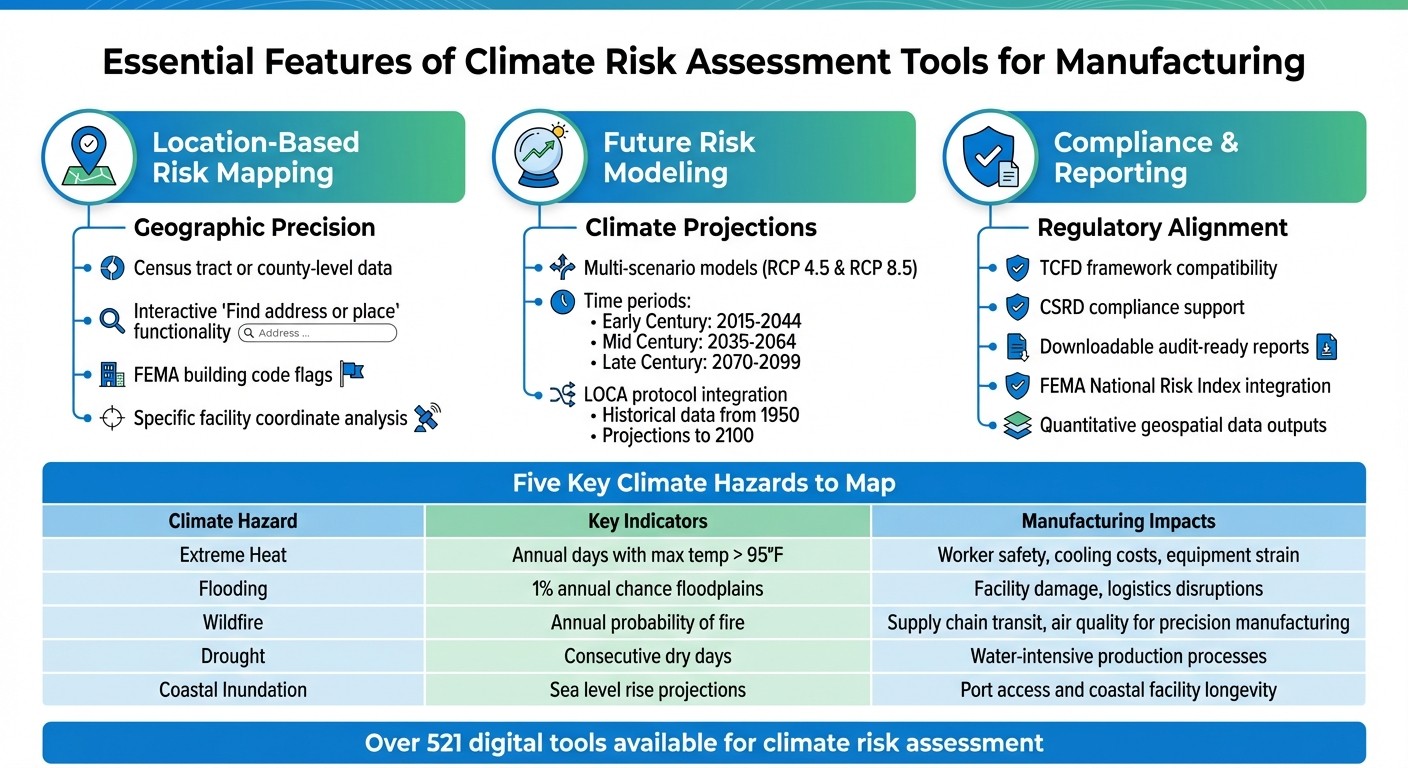
Climate Risk Assessment Tool Features: Location Mapping, Future Projections, and Compliance Integration
When evaluating climate risk assessment tools, it's essential to focus on those that provide precise local data, future projections, and outputs that meet regulatory requirements. The ideal tool goes beyond generic risk ratings, offering detailed geospatial data to reduce uncertainty and support informed capital investment decisions. These features are the backbone of effective risk management across your manufacturing operations.
The most effective tools offer mapping at the census tract level, enabling you to pinpoint risks at specific facility coordinates. They should address five key climate-related hazards: extreme heat, drought, wildfire, flooding, and coastal inundation [8]. A comprehensive tool will analyze exposure, sensitivity (the degree to which an asset is affected), and adaptive capacity (the ability to recover).
Location-Based Risk Mapping
Geographic accuracy is critical for safeguarding high-value facilities. Tools should deliver data at the census tract or county level, allowing manufacturers to produce hazard reports tailored to specific plant locations [8]. Leading platforms often include interactive features like "Find address or place", enabling users to drop pins on exact facility and supplier sites for detailed analysis.
Advanced tools also incorporate building code flags from FEMA's National Building Code Adoption Tracking project. These flags indicate whether local construction standards meet modern resilience requirements for hazards such as hurricanes, floods, or seismic events [8]. This feature ensures that facilities are built to withstand current and future risks.
| Climate Hazard | Key Indicators for Mapping | Manufacturing Impacts |
| --- | --- | --- |
| <strong>Extreme Heat</strong> | Annual days with max temp > 95°F | Worker safety, cooling costs, equipment strain |
| <strong>Flooding</strong> | 1% annual chance floodplains | Facility damage, logistics disruptions |
| <strong>Wildfire</strong> | Annual probability of fire | Supply chain transit, air quality for precision manufacturing |
| <strong>Drought</strong> | Consecutive dry days | Water-intensive production processes |
| <strong>Coastal Inundation</strong> | Sea level rise projections | Port access and coastal facility longevity
| Climate Hazard | Key Indicators for Mapping | Manufacturing Impacts |
| --- | --- | --- |
| <strong>Extreme Heat</strong> | Annual days with max temp > 95°F | Worker safety, cooling costs, equipment strain |
| <strong>Flooding</strong> | 1% annual chance floodplains | Facility damage, logistics disruptions |
| <strong>Wildfire</strong> | Annual probability of fire | Supply chain transit, air quality for precision manufacturing |
| <strong>Drought</strong> | Consecutive dry days | Water-intensive production processes |
| <strong>Coastal Inundation</strong> | Sea level rise projections | Port access and coastal facility longevity
Future Risk Modeling and Projections
Climate risks are not static - they change over time. Once risks are mapped, advanced tools project their evolution using multi-scenario models, such as RCP 4.5 and RCP 8.5. These projections are typically segmented into Early (2015–2044), Mid (2035–2064), and Late Century (2070–2099) periods, aligning with various capital investment timelines. Whether you're planning a short-term equipment upgrade or a multi-decade facility expansion, this approach ensures you’re prepared for evolving risks. Tools like the Climate Explorer leverage the Localized Constructed Analogs (LOCA) protocol to downscale global climate models, offering historical data from 1950 and projections extending to 2100 [9].
Compliance and Reporting Integration
Identifying and forecasting risks is only part of the equation - seamless integration with compliance reporting strengthens your overall risk management approach. Regulatory frameworks like TCFD and CSRD require well-documented and defensible climate risk assessments. The best tools generate downloadable hazard reports that are audit-ready and include details on data sources, projection methods, and specific indicators used in the analysis [8].
Aligning with national standards adds further credibility. Platforms that integrate with FEMA's National Risk Index ensure that your assessments meet federal benchmarks [4]. This alignment is invaluable when communicating with insurers, investors, or regulators who expect standardized and reliable risk data. Tools offering quantitative geospatial data provide the level of detail and rigor needed to withstand scrutiny, making them a critical asset for effective risk management.
How to Implement Climate Risk Tools
To strengthen manufacturing climate resilience with climate risk tools, start by assembling a team that includes operational leaders and climate experts. Their first task is to create a detailed inventory of critical assets - think facilities, equipment, transportation routes, and similar resources.
Once the assets are identified, use climate risk tools to analyze hazards from the past, present, and future. Projections should cover several decades. Create an exposure matrix by listing assets alongside potential hazards; exposure occurs when an asset and a hazard intersect. Next, assess vulnerability by considering each asset’s sensitivity (how easily it could be damaged) and its ability to adapt or recover. To prioritize actions, plot these asset-hazard combinations on a 3×3 risk matrix, focusing on high-risk overlaps. Start with qualitative evaluations, labeling risks as low, medium, or high, and then move to quantitative data like geospatial information and property values. Use consistent criteria, such as defining a hazard as "high probability" if it’s likely to occur within the next five years.
Assessing Risks at Individual Facilities
For specific facilities, begin by generating hazard reports for each location, using geospatial tools to analyze risks at the county or census-tract level. Reviewing both current and future conditions allows you to align risk evaluations with capital investment strategies. Use a spreadsheet to document each asset’s potential impact, sensitivity, and ability to adapt. For example, a facility in a flood-prone area with outdated infrastructure might show high sensitivity and low adaptive capacity, making it a top priority for resilience upgrades.
When analyzing risk, remember it’s a combination of two factors: the likelihood of a hazard happening and the severity of its consequences. The U.S. Climate Resilience Toolkit explains:
"Risk is a compound concept that describes the chance of sustaining a substantial loss. The first element of risk is the probability of a hazard occurring. The second element is the magnitude of consequences from the event." [5]
Analyzing Supply Chain Vulnerabilities
Evaluating supply chain vulnerabilities uses a similar exposure matrix but extends the analysis beyond internal operations to include suppliers, transportation routes, and other key service providers. Start by cataloging all suppliers and logistics partners, then map their exposure to hazards. The U.S. Climate Resilience Toolkit offers access to over 521 digital tools, including spatial data layers that highlight risks across multiple locations [2].
Pay attention to cascading failures - situations where damage to one asset could lead to disruptions elsewhere in the supply chain. For instance, a key supplier in a wildfire-prone area with lengthy lead times represents a significant risk that requires contingency planning. Tools like FEMA’s National Risk Index, which provides data on 18 natural hazards across supplier locations, can help ensure assessments align with federal benchmarks and resonate with stakeholders. Apply the 3×3 risk matrix here as well, prioritizing suppliers that demand immediate contingency measures.
"Stay focused on assets that are most vulnerable and at risk." [5]
Once vulnerabilities are mapped, the next step is converting these insights into actionable resilience strategies.
Creating Response and Adaptation Strategies
Building on the risk assessments, develop a resilience plan by evaluating adaptation options through a benefit-cost analysis. Start with solutions for the highest-priority risks. These could include physical improvements like elevating equipment or installing flood barriers, operational changes, or strategic moves such as diversifying suppliers or relocating facilities.
To evaluate potential actions systematically, use standardized templates like the STAPLEE method (Social, Technical, Administrative, Political, Legal, Economic, Environmental). For complex manufacturing systems, consider bringing in adaptation specialists or engineering firms to navigate the technical aspects, while your internal team provides operational insights.
Climate resilience efforts should be ongoing, integrating risk evaluations and solutions into existing planning processes rather than creating entirely new workflows. Roll out solutions in phases, starting with quick wins that address the most urgent risks. Continuously monitor their effectiveness and adjust strategies as conditions change.
"Using a map-based quantitative approach also helps reduce uncertainty, making it easier for your team and decision makers to set priorities." [4]
Meeting Regulatory Requirements with Climate Risk Tools
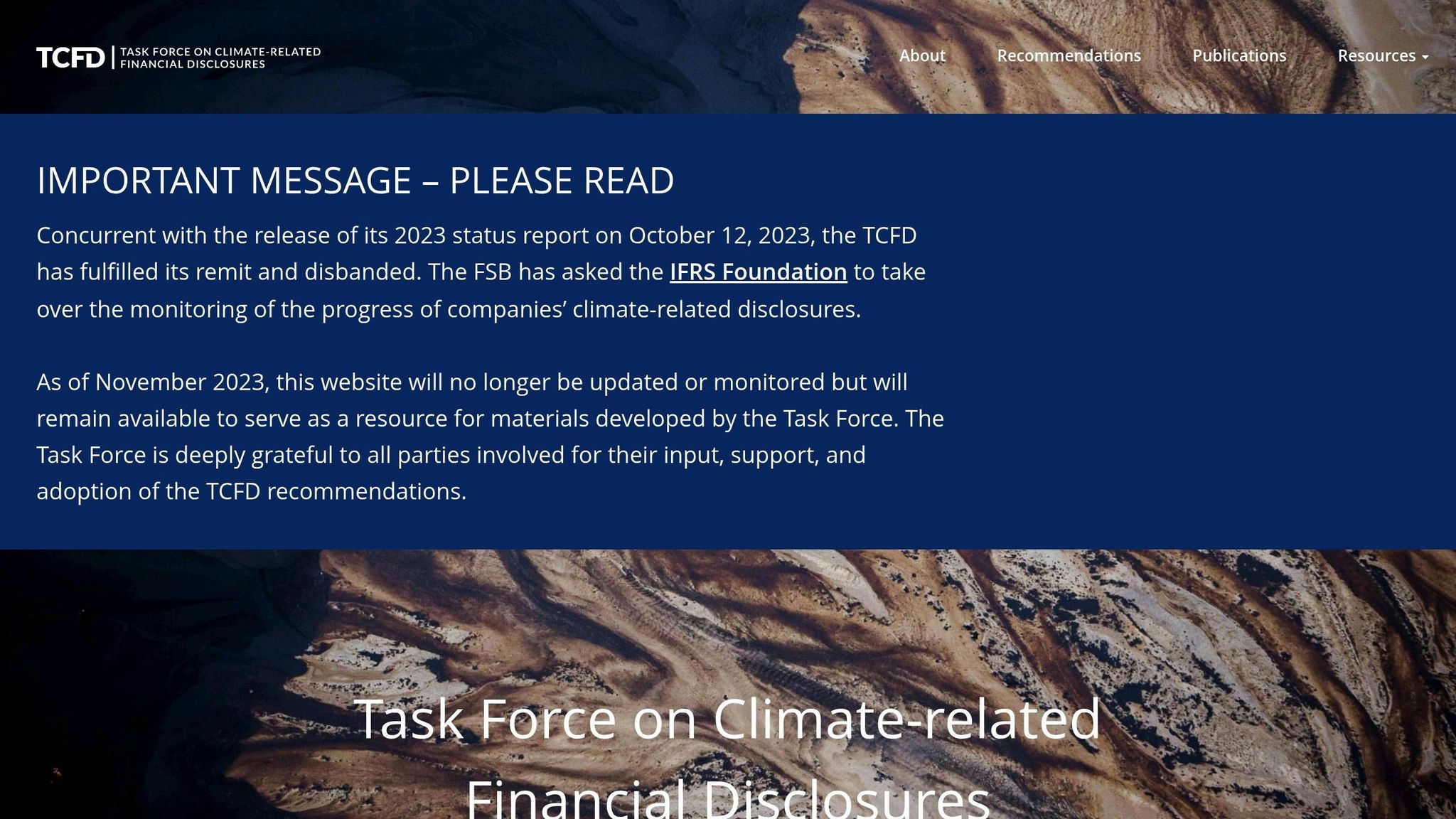
Climate risk assessment tools simplify the process of regulatory compliance by combining data collection with streamlined reporting. These tools are especially helpful for aligning with frameworks like the Task Force on Climate-Related Financial Disclosures (TCFD). The TCFD framework requires organizations to provide information across four key areas: governance, strategy, risk management, and metrics and targets. By using these tools, companies can effectively follow the Discover, Assess, Report, and Manage framework, addressing all 11 TCFD recommendations [11].
A good starting point is conducting a gap analysis with TCFD-aligned tools. This helps benchmark your current reporting practices against industry standards and pinpoints areas needing improvement. Integrated TCFD roadmaps can then track your progress, making it easier to show continuous improvement during regulatory audits [11]. From there, tailored TCFD disclosure tools help solidify compliance and ensure that reporting meets the required standards.
Meeting TCFD Disclosure Standards
Climate risk tools assist with TCFD compliance by calculating greenhouse gas (GHG) emissions across Scope 1, 2, and 3, modeling risks under different climate scenarios, and assessing vulnerabilities using resources like FEMA's National Risk Index [5][11][12].
The transition from qualitative to quantitative assessments has become a game-changer for regulatory filings. Quantitative geospatial data reduces uncertainty, giving auditors and decision-makers more confidence in the findings [5]. Establishing clear and consistent categorization - such as defining "high probability" as an event likely to occur within five years - ensures that reporting is both precise and standardized across facilities [4].
Identifying Material Climate Risks
Regulatory compliance goes beyond reporting - it requires identifying which climate risks are financially material. This involves evaluating how these risks impact your organization's financial and strategic position [11]. Assessment tools can estimate potential financial and social losses from climate hazards [4]. A visual matrix can be particularly effective in highlighting "High-High" risks that require immediate regulatory focus [5].
To validate predictive models, integrate historical data on extreme weather events with their corresponding financial impacts. This approach demonstrates to auditors that your assessments are grounded in real-world evidence [11]. Additionally, documenting the process is critical. Using standardized templates like the "Vulnerability and Risk Synthesis Report" ensures a clear audit trail. This documentation not only shows how risks were identified and prioritized but also aligns with earlier assessments, strengthening your regulatory filings [10].
Conclusion
Climate risk assessment tools serve as a safeguard for manufacturing operations, helping to prevent financial losses by identifying vulnerabilities before damage occurs. This is especially crucial for critical assets like telecommunications systems or infrastructure, where disruptions can have widespread consequences [4].
The financial stakes are immense. Projections indicate that global warming and extreme weather could reduce earnings for major manufacturers by at least 5%. Furthermore, the absence of adaptation measures could result in a $65 billion loss in export revenues for four key apparel-producing countries by 2030 [15]. Katie Frame, Active Ownership Manager at Schroders, highlights the urgency:
"Climate change-related extreme weather risks financial materiality for a lot of brands and industries" [15].
By implementing proven adaptation strategies backed by quantitative data, companies can justify investments in resilience [10]. Long-term climate forecasts allow businesses to anticipate future hazards and develop proactive strategies rather than relying on reactive measures [13].
Taking action now offers a competitive edge. For example, General Motors has partnered with Nucor to incorporate Econiq™ zero-carbon steel into its operations, aligning with its goal of achieving carbon neutrality by 2040 [14]. Such forward-thinking initiatives not only support sustainability goals but also position companies to stay ahead of evolving regulations and market demands.
Integrating these approaches builds on initial risk assessments by turning insights into actionable strategies. Focus on protecting assets located in high-risk areas [4], address vulnerabilities that could lead to cascading failures, and extend these evaluations to include supply chains. The cost of inaction far outweighs the investment in climate risk tools today.
FAQs
How do climate risk tools help manufacturers meet regulatory requirements?
Climate risk tools empower manufacturers to navigate regulatory requirements by offering critical data and insights to tackle climate-related challenges. These tools pinpoint weaknesses across operations, assets, and supply chains, enabling manufacturers to meet government standards for risk management and resilience strategies.
By incorporating climate projections and hazard evaluations into their workflows, manufacturers can produce more precise compliance reports and adaptation strategies. Taking this proactive route not only secures regulatory compliance but also strengthens resilience and promotes transparency as climate conditions continue to shift.
What should manufacturers look for in climate risk assessment tools?
When choosing tools for climate risk assessment, manufacturers should prioritize those that offer in-depth vulnerability analysis and localized risk insights. It's essential to select tools capable of analyzing both current and future climate threats - such as sea level rise, wildfires, and extreme weather - while providing precise geographic details down to specific regions or communities.
The most effective tools combine climate projections with historical data, enabling businesses to anticipate risks over time and make informed decisions about infrastructure and operational resilience. Key features to look for include asset prioritization, resources for engaging stakeholders, and vulnerability scoring, all of which help translate raw data into practical strategies. A user-friendly interface is another crucial factor, as it simplifies complex analyses and ensures smoother implementation.
By focusing on these features, manufacturers can better navigate climate challenges and strengthen the resilience of their operations for the future.
How can climate risk tools help manufacturers address supply chain vulnerabilities?
Climate risk tools equip manufacturers with the ability to spot and address vulnerabilities in their supply chains by offering insightful data about climate-related risks. These tools evaluate threats like extreme weather events, rising sea levels, and temperature fluctuations that can interfere with operations. By identifying areas most at risk, manufacturers can focus on safeguarding essential assets and ensuring the smooth functioning of their supply chains.
These tools also enable forward-thinking strategies through scenario analysis and forecasting. By simulating potential disruptions, manufacturers can craft contingency plans and adopt measures to minimize risks. By transforming detailed climate data into practical strategies, these tools help organizations strengthen their supply chains and prepare for a more resilient future.
Related Blog Posts
Latest Articles
©2025


FAQ
01
What does it really mean to “redefine profit”?
02
What makes Council Fire different?
03
Who does Council Fire you work with?
04
What does working with Council Fire actually look like?
05
How does Council Fire help organizations turn big goals into action?
06
How does Council Fire define and measure success?
Jan 22, 2026
Ultimate Guide to Climate Risk Tools for Manufacturing
ESG Strategy
In This Article
Use location-based climate risk tools to map hazards, model future scenarios, protect facilities and supply chains, and meet TCFD reporting requirements.
Ultimate Guide to Climate Risk Tools for Manufacturing
Manufacturers face growing risks from climate change, such as extreme weather, flooding, and heatwaves, which can disrupt operations, damage facilities, and impact supply chains. To address these challenges, over 521 digital tools are available to assess vulnerabilities, map risks, and support decision-making. These tools provide location-specific data, future climate projections, and compliance-ready reports, helping manufacturers prepare for physical threats and policy shifts tied to the low-carbon economy.
Key Takeaways:
Physical Risks: Damage from floods, heat, drought, wildfires, and rising sea levels.
Transition Risks: Stricter climate policies, market demand for low-carbon products, and technology shifts.
Supply Chain Impact: Cascading failures from disruptions in supplier plants or logistics routes.
Risk Assessment Tools: Offer geospatial mapping, future hazard modeling, and regulatory alignment (e.g., TCFD).
Action Steps: Identify critical assets, use risk tools to evaluate hazards, and implement resilience strategies.
Why It Matters:
By integrating climate risk tools, manufacturers can protect facilities, ensure supply chain continuity, and meet regulatory requirements. The cost of inaction, including financial losses and operational downtime, far outweighs the investment in proactive measures.
The Best Climate Risk Assessment Method for Small and Medium Sized Companies | AI Supported | TCFD
Climate Risks Facing Manufacturers
Manufacturers today face a double-edged sword of climate-related risks: physical threats from extreme weather and transition risks tied to the global shift toward a low-carbon economy. Navigating these challenges is crucial for maintaining resilient operations and steady profits.
"The assets that are most likely to suffer a negative impact to a hazard are vulnerable to that hazard." - U.S. Climate Resilience Toolkit [5]
The severity of these risks depends on two factors: how likely a hazard is to occur and its potential impact. A facility’s vulnerability is shaped by its sensitivity to specific hazards and its ability to adapt or recover. For instance, facilities that have invested in measures like backup power systems or elevated storage are better equipped to handle disasters like flooding. Below, we explore the ways these risks affect manufacturers.
Physical Risks: Extreme Weather and Facility Damage
Physical risks stem from direct environmental threats such as coastal and inland flooding, wildfires, extreme heat, and rising sea levels [1][2][6]. These hazards can cause significant damage to buildings, equipment, and machinery, leading to costly repairs and operational downtime. Additionally, water scarcity poses a major challenge for manufacturers relying heavily on water in their production processes [3].
Beyond direct damage, extreme weather can also disrupt critical infrastructure - like telecommunications, bridges, and power grids - that manufacturers depend on. When these systems fail, entire delivery networks and production facilities can be brought to a halt.
Transition Risks: Policy and Market Shifts
Since the 2015 Paris Agreement, the global policy landscape has shifted dramatically, creating a new category of risks for manufacturers. Over 2,570 climate policies have been introduced worldwide, including carbon pricing, renewable energy mandates, and stricter emissions reporting requirements. Currently, 45 national and 34 subnational jurisdictions have implemented or are considering carbon pricing initiatives [7].
Market trends are also evolving. By early 2022, more than 80 countries - accounting for nearly 75% of global emissions - committed to achieving net-zero emissions [7]. Major corporations such as Mars and IKEA have set ambitious science-based targets, including those for Scope 3 emissions, which typically account for about 75% of a company’s total carbon footprint [7].
"Climate change is a financial risk. This includes risks stemming from the transition to a low carbon economy." - Janet Ranganathan, Co-founder of the Greenhouse Gas Protocol [7]
Technological advancements and regulatory requirements, like phasing out internal combustion engines in favor of electric vehicles, further intensify the pressure. Manufacturers that fail to adopt low-carbon technologies risk losing their competitive edge as consumer demand for sustainable products continues to grow.
Supply Chain and Production Disruptions
Climate risks extend beyond individual facilities and ripple through interconnected supply chains. A single event, like a flooded supplier plant or a heat-damaged transportation route, can disrupt operations, drive up costs, and delay production timelines. These cascading failures highlight the need for manufacturers to identify critical assets whose failure could jeopardize operations across multiple sectors.
To address these vulnerabilities, manufacturers often rely on tools like a 3×3 risk matrix, which evaluates the likelihood of climate hazards alongside their potential losses. This approach helps prioritize investments in resilience and pinpoint assets requiring urgent protection.
For a more data-driven strategy, tools such as FEMA's National Risk Index provide valuable insights into 18 natural hazards across specific regions. By shifting from qualitative assessments to quantitative geospatial data, manufacturers can reduce uncertainty and make better-informed decisions about protecting their facilities and supply chains [5].
What to Look for in Climate Risk Assessment Tools
Climate Risk Assessment Tool Features: Location Mapping, Future Projections, and Compliance Integration
When evaluating climate risk assessment tools, it's essential to focus on those that provide precise local data, future projections, and outputs that meet regulatory requirements. The ideal tool goes beyond generic risk ratings, offering detailed geospatial data to reduce uncertainty and support informed capital investment decisions. These features are the backbone of effective risk management across your manufacturing operations.
The most effective tools offer mapping at the census tract level, enabling you to pinpoint risks at specific facility coordinates. They should address five key climate-related hazards: extreme heat, drought, wildfire, flooding, and coastal inundation [8]. A comprehensive tool will analyze exposure, sensitivity (the degree to which an asset is affected), and adaptive capacity (the ability to recover).
Location-Based Risk Mapping
Geographic accuracy is critical for safeguarding high-value facilities. Tools should deliver data at the census tract or county level, allowing manufacturers to produce hazard reports tailored to specific plant locations [8]. Leading platforms often include interactive features like "Find address or place", enabling users to drop pins on exact facility and supplier sites for detailed analysis.
Advanced tools also incorporate building code flags from FEMA's National Building Code Adoption Tracking project. These flags indicate whether local construction standards meet modern resilience requirements for hazards such as hurricanes, floods, or seismic events [8]. This feature ensures that facilities are built to withstand current and future risks.
| Climate Hazard | Key Indicators for Mapping | Manufacturing Impacts |
| --- | --- | --- |
| <strong>Extreme Heat</strong> | Annual days with max temp > 95°F | Worker safety, cooling costs, equipment strain |
| <strong>Flooding</strong> | 1% annual chance floodplains | Facility damage, logistics disruptions |
| <strong>Wildfire</strong> | Annual probability of fire | Supply chain transit, air quality for precision manufacturing |
| <strong>Drought</strong> | Consecutive dry days | Water-intensive production processes |
| <strong>Coastal Inundation</strong> | Sea level rise projections | Port access and coastal facility longevity
Future Risk Modeling and Projections
Climate risks are not static - they change over time. Once risks are mapped, advanced tools project their evolution using multi-scenario models, such as RCP 4.5 and RCP 8.5. These projections are typically segmented into Early (2015–2044), Mid (2035–2064), and Late Century (2070–2099) periods, aligning with various capital investment timelines. Whether you're planning a short-term equipment upgrade or a multi-decade facility expansion, this approach ensures you’re prepared for evolving risks. Tools like the Climate Explorer leverage the Localized Constructed Analogs (LOCA) protocol to downscale global climate models, offering historical data from 1950 and projections extending to 2100 [9].
Compliance and Reporting Integration
Identifying and forecasting risks is only part of the equation - seamless integration with compliance reporting strengthens your overall risk management approach. Regulatory frameworks like TCFD and CSRD require well-documented and defensible climate risk assessments. The best tools generate downloadable hazard reports that are audit-ready and include details on data sources, projection methods, and specific indicators used in the analysis [8].
Aligning with national standards adds further credibility. Platforms that integrate with FEMA's National Risk Index ensure that your assessments meet federal benchmarks [4]. This alignment is invaluable when communicating with insurers, investors, or regulators who expect standardized and reliable risk data. Tools offering quantitative geospatial data provide the level of detail and rigor needed to withstand scrutiny, making them a critical asset for effective risk management.
How to Implement Climate Risk Tools
To strengthen manufacturing climate resilience with climate risk tools, start by assembling a team that includes operational leaders and climate experts. Their first task is to create a detailed inventory of critical assets - think facilities, equipment, transportation routes, and similar resources.
Once the assets are identified, use climate risk tools to analyze hazards from the past, present, and future. Projections should cover several decades. Create an exposure matrix by listing assets alongside potential hazards; exposure occurs when an asset and a hazard intersect. Next, assess vulnerability by considering each asset’s sensitivity (how easily it could be damaged) and its ability to adapt or recover. To prioritize actions, plot these asset-hazard combinations on a 3×3 risk matrix, focusing on high-risk overlaps. Start with qualitative evaluations, labeling risks as low, medium, or high, and then move to quantitative data like geospatial information and property values. Use consistent criteria, such as defining a hazard as "high probability" if it’s likely to occur within the next five years.
Assessing Risks at Individual Facilities
For specific facilities, begin by generating hazard reports for each location, using geospatial tools to analyze risks at the county or census-tract level. Reviewing both current and future conditions allows you to align risk evaluations with capital investment strategies. Use a spreadsheet to document each asset’s potential impact, sensitivity, and ability to adapt. For example, a facility in a flood-prone area with outdated infrastructure might show high sensitivity and low adaptive capacity, making it a top priority for resilience upgrades.
When analyzing risk, remember it’s a combination of two factors: the likelihood of a hazard happening and the severity of its consequences. The U.S. Climate Resilience Toolkit explains:
"Risk is a compound concept that describes the chance of sustaining a substantial loss. The first element of risk is the probability of a hazard occurring. The second element is the magnitude of consequences from the event." [5]
Analyzing Supply Chain Vulnerabilities
Evaluating supply chain vulnerabilities uses a similar exposure matrix but extends the analysis beyond internal operations to include suppliers, transportation routes, and other key service providers. Start by cataloging all suppliers and logistics partners, then map their exposure to hazards. The U.S. Climate Resilience Toolkit offers access to over 521 digital tools, including spatial data layers that highlight risks across multiple locations [2].
Pay attention to cascading failures - situations where damage to one asset could lead to disruptions elsewhere in the supply chain. For instance, a key supplier in a wildfire-prone area with lengthy lead times represents a significant risk that requires contingency planning. Tools like FEMA’s National Risk Index, which provides data on 18 natural hazards across supplier locations, can help ensure assessments align with federal benchmarks and resonate with stakeholders. Apply the 3×3 risk matrix here as well, prioritizing suppliers that demand immediate contingency measures.
"Stay focused on assets that are most vulnerable and at risk." [5]
Once vulnerabilities are mapped, the next step is converting these insights into actionable resilience strategies.
Creating Response and Adaptation Strategies
Building on the risk assessments, develop a resilience plan by evaluating adaptation options through a benefit-cost analysis. Start with solutions for the highest-priority risks. These could include physical improvements like elevating equipment or installing flood barriers, operational changes, or strategic moves such as diversifying suppliers or relocating facilities.
To evaluate potential actions systematically, use standardized templates like the STAPLEE method (Social, Technical, Administrative, Political, Legal, Economic, Environmental). For complex manufacturing systems, consider bringing in adaptation specialists or engineering firms to navigate the technical aspects, while your internal team provides operational insights.
Climate resilience efforts should be ongoing, integrating risk evaluations and solutions into existing planning processes rather than creating entirely new workflows. Roll out solutions in phases, starting with quick wins that address the most urgent risks. Continuously monitor their effectiveness and adjust strategies as conditions change.
"Using a map-based quantitative approach also helps reduce uncertainty, making it easier for your team and decision makers to set priorities." [4]
Meeting Regulatory Requirements with Climate Risk Tools
Climate risk assessment tools simplify the process of regulatory compliance by combining data collection with streamlined reporting. These tools are especially helpful for aligning with frameworks like the Task Force on Climate-Related Financial Disclosures (TCFD). The TCFD framework requires organizations to provide information across four key areas: governance, strategy, risk management, and metrics and targets. By using these tools, companies can effectively follow the Discover, Assess, Report, and Manage framework, addressing all 11 TCFD recommendations [11].
A good starting point is conducting a gap analysis with TCFD-aligned tools. This helps benchmark your current reporting practices against industry standards and pinpoints areas needing improvement. Integrated TCFD roadmaps can then track your progress, making it easier to show continuous improvement during regulatory audits [11]. From there, tailored TCFD disclosure tools help solidify compliance and ensure that reporting meets the required standards.
Meeting TCFD Disclosure Standards
Climate risk tools assist with TCFD compliance by calculating greenhouse gas (GHG) emissions across Scope 1, 2, and 3, modeling risks under different climate scenarios, and assessing vulnerabilities using resources like FEMA's National Risk Index [5][11][12].
The transition from qualitative to quantitative assessments has become a game-changer for regulatory filings. Quantitative geospatial data reduces uncertainty, giving auditors and decision-makers more confidence in the findings [5]. Establishing clear and consistent categorization - such as defining "high probability" as an event likely to occur within five years - ensures that reporting is both precise and standardized across facilities [4].
Identifying Material Climate Risks
Regulatory compliance goes beyond reporting - it requires identifying which climate risks are financially material. This involves evaluating how these risks impact your organization's financial and strategic position [11]. Assessment tools can estimate potential financial and social losses from climate hazards [4]. A visual matrix can be particularly effective in highlighting "High-High" risks that require immediate regulatory focus [5].
To validate predictive models, integrate historical data on extreme weather events with their corresponding financial impacts. This approach demonstrates to auditors that your assessments are grounded in real-world evidence [11]. Additionally, documenting the process is critical. Using standardized templates like the "Vulnerability and Risk Synthesis Report" ensures a clear audit trail. This documentation not only shows how risks were identified and prioritized but also aligns with earlier assessments, strengthening your regulatory filings [10].
Conclusion
Climate risk assessment tools serve as a safeguard for manufacturing operations, helping to prevent financial losses by identifying vulnerabilities before damage occurs. This is especially crucial for critical assets like telecommunications systems or infrastructure, where disruptions can have widespread consequences [4].
The financial stakes are immense. Projections indicate that global warming and extreme weather could reduce earnings for major manufacturers by at least 5%. Furthermore, the absence of adaptation measures could result in a $65 billion loss in export revenues for four key apparel-producing countries by 2030 [15]. Katie Frame, Active Ownership Manager at Schroders, highlights the urgency:
"Climate change-related extreme weather risks financial materiality for a lot of brands and industries" [15].
By implementing proven adaptation strategies backed by quantitative data, companies can justify investments in resilience [10]. Long-term climate forecasts allow businesses to anticipate future hazards and develop proactive strategies rather than relying on reactive measures [13].
Taking action now offers a competitive edge. For example, General Motors has partnered with Nucor to incorporate Econiq™ zero-carbon steel into its operations, aligning with its goal of achieving carbon neutrality by 2040 [14]. Such forward-thinking initiatives not only support sustainability goals but also position companies to stay ahead of evolving regulations and market demands.
Integrating these approaches builds on initial risk assessments by turning insights into actionable strategies. Focus on protecting assets located in high-risk areas [4], address vulnerabilities that could lead to cascading failures, and extend these evaluations to include supply chains. The cost of inaction far outweighs the investment in climate risk tools today.
FAQs
How do climate risk tools help manufacturers meet regulatory requirements?
Climate risk tools empower manufacturers to navigate regulatory requirements by offering critical data and insights to tackle climate-related challenges. These tools pinpoint weaknesses across operations, assets, and supply chains, enabling manufacturers to meet government standards for risk management and resilience strategies.
By incorporating climate projections and hazard evaluations into their workflows, manufacturers can produce more precise compliance reports and adaptation strategies. Taking this proactive route not only secures regulatory compliance but also strengthens resilience and promotes transparency as climate conditions continue to shift.
What should manufacturers look for in climate risk assessment tools?
When choosing tools for climate risk assessment, manufacturers should prioritize those that offer in-depth vulnerability analysis and localized risk insights. It's essential to select tools capable of analyzing both current and future climate threats - such as sea level rise, wildfires, and extreme weather - while providing precise geographic details down to specific regions or communities.
The most effective tools combine climate projections with historical data, enabling businesses to anticipate risks over time and make informed decisions about infrastructure and operational resilience. Key features to look for include asset prioritization, resources for engaging stakeholders, and vulnerability scoring, all of which help translate raw data into practical strategies. A user-friendly interface is another crucial factor, as it simplifies complex analyses and ensures smoother implementation.
By focusing on these features, manufacturers can better navigate climate challenges and strengthen the resilience of their operations for the future.
How can climate risk tools help manufacturers address supply chain vulnerabilities?
Climate risk tools equip manufacturers with the ability to spot and address vulnerabilities in their supply chains by offering insightful data about climate-related risks. These tools evaluate threats like extreme weather events, rising sea levels, and temperature fluctuations that can interfere with operations. By identifying areas most at risk, manufacturers can focus on safeguarding essential assets and ensuring the smooth functioning of their supply chains.
These tools also enable forward-thinking strategies through scenario analysis and forecasting. By simulating potential disruptions, manufacturers can craft contingency plans and adopt measures to minimize risks. By transforming detailed climate data into practical strategies, these tools help organizations strengthen their supply chains and prepare for a more resilient future.
Related Blog Posts
FAQ
01
What does it really mean to “redefine profit”?
02
What makes Council Fire different?
03
Who does Council Fire you work with?
04
What does working with Council Fire actually look like?
05
How does Council Fire help organizations turn big goals into action?
06
How does Council Fire define and measure success?
Jan 22, 2026
Ultimate Guide to Climate Risk Tools for Manufacturing
ESG Strategy
In This Article
Use location-based climate risk tools to map hazards, model future scenarios, protect facilities and supply chains, and meet TCFD reporting requirements.
Ultimate Guide to Climate Risk Tools for Manufacturing
Manufacturers face growing risks from climate change, such as extreme weather, flooding, and heatwaves, which can disrupt operations, damage facilities, and impact supply chains. To address these challenges, over 521 digital tools are available to assess vulnerabilities, map risks, and support decision-making. These tools provide location-specific data, future climate projections, and compliance-ready reports, helping manufacturers prepare for physical threats and policy shifts tied to the low-carbon economy.
Key Takeaways:
Physical Risks: Damage from floods, heat, drought, wildfires, and rising sea levels.
Transition Risks: Stricter climate policies, market demand for low-carbon products, and technology shifts.
Supply Chain Impact: Cascading failures from disruptions in supplier plants or logistics routes.
Risk Assessment Tools: Offer geospatial mapping, future hazard modeling, and regulatory alignment (e.g., TCFD).
Action Steps: Identify critical assets, use risk tools to evaluate hazards, and implement resilience strategies.
Why It Matters:
By integrating climate risk tools, manufacturers can protect facilities, ensure supply chain continuity, and meet regulatory requirements. The cost of inaction, including financial losses and operational downtime, far outweighs the investment in proactive measures.
The Best Climate Risk Assessment Method for Small and Medium Sized Companies | AI Supported | TCFD
Climate Risks Facing Manufacturers
Manufacturers today face a double-edged sword of climate-related risks: physical threats from extreme weather and transition risks tied to the global shift toward a low-carbon economy. Navigating these challenges is crucial for maintaining resilient operations and steady profits.
"The assets that are most likely to suffer a negative impact to a hazard are vulnerable to that hazard." - U.S. Climate Resilience Toolkit [5]
The severity of these risks depends on two factors: how likely a hazard is to occur and its potential impact. A facility’s vulnerability is shaped by its sensitivity to specific hazards and its ability to adapt or recover. For instance, facilities that have invested in measures like backup power systems or elevated storage are better equipped to handle disasters like flooding. Below, we explore the ways these risks affect manufacturers.
Physical Risks: Extreme Weather and Facility Damage
Physical risks stem from direct environmental threats such as coastal and inland flooding, wildfires, extreme heat, and rising sea levels [1][2][6]. These hazards can cause significant damage to buildings, equipment, and machinery, leading to costly repairs and operational downtime. Additionally, water scarcity poses a major challenge for manufacturers relying heavily on water in their production processes [3].
Beyond direct damage, extreme weather can also disrupt critical infrastructure - like telecommunications, bridges, and power grids - that manufacturers depend on. When these systems fail, entire delivery networks and production facilities can be brought to a halt.
Transition Risks: Policy and Market Shifts
Since the 2015 Paris Agreement, the global policy landscape has shifted dramatically, creating a new category of risks for manufacturers. Over 2,570 climate policies have been introduced worldwide, including carbon pricing, renewable energy mandates, and stricter emissions reporting requirements. Currently, 45 national and 34 subnational jurisdictions have implemented or are considering carbon pricing initiatives [7].
Market trends are also evolving. By early 2022, more than 80 countries - accounting for nearly 75% of global emissions - committed to achieving net-zero emissions [7]. Major corporations such as Mars and IKEA have set ambitious science-based targets, including those for Scope 3 emissions, which typically account for about 75% of a company’s total carbon footprint [7].
"Climate change is a financial risk. This includes risks stemming from the transition to a low carbon economy." - Janet Ranganathan, Co-founder of the Greenhouse Gas Protocol [7]
Technological advancements and regulatory requirements, like phasing out internal combustion engines in favor of electric vehicles, further intensify the pressure. Manufacturers that fail to adopt low-carbon technologies risk losing their competitive edge as consumer demand for sustainable products continues to grow.
Supply Chain and Production Disruptions
Climate risks extend beyond individual facilities and ripple through interconnected supply chains. A single event, like a flooded supplier plant or a heat-damaged transportation route, can disrupt operations, drive up costs, and delay production timelines. These cascading failures highlight the need for manufacturers to identify critical assets whose failure could jeopardize operations across multiple sectors.
To address these vulnerabilities, manufacturers often rely on tools like a 3×3 risk matrix, which evaluates the likelihood of climate hazards alongside their potential losses. This approach helps prioritize investments in resilience and pinpoint assets requiring urgent protection.
For a more data-driven strategy, tools such as FEMA's National Risk Index provide valuable insights into 18 natural hazards across specific regions. By shifting from qualitative assessments to quantitative geospatial data, manufacturers can reduce uncertainty and make better-informed decisions about protecting their facilities and supply chains [5].
What to Look for in Climate Risk Assessment Tools
Climate Risk Assessment Tool Features: Location Mapping, Future Projections, and Compliance Integration
When evaluating climate risk assessment tools, it's essential to focus on those that provide precise local data, future projections, and outputs that meet regulatory requirements. The ideal tool goes beyond generic risk ratings, offering detailed geospatial data to reduce uncertainty and support informed capital investment decisions. These features are the backbone of effective risk management across your manufacturing operations.
The most effective tools offer mapping at the census tract level, enabling you to pinpoint risks at specific facility coordinates. They should address five key climate-related hazards: extreme heat, drought, wildfire, flooding, and coastal inundation [8]. A comprehensive tool will analyze exposure, sensitivity (the degree to which an asset is affected), and adaptive capacity (the ability to recover).
Location-Based Risk Mapping
Geographic accuracy is critical for safeguarding high-value facilities. Tools should deliver data at the census tract or county level, allowing manufacturers to produce hazard reports tailored to specific plant locations [8]. Leading platforms often include interactive features like "Find address or place", enabling users to drop pins on exact facility and supplier sites for detailed analysis.
Advanced tools also incorporate building code flags from FEMA's National Building Code Adoption Tracking project. These flags indicate whether local construction standards meet modern resilience requirements for hazards such as hurricanes, floods, or seismic events [8]. This feature ensures that facilities are built to withstand current and future risks.
| Climate Hazard | Key Indicators for Mapping | Manufacturing Impacts |
| --- | --- | --- |
| <strong>Extreme Heat</strong> | Annual days with max temp > 95°F | Worker safety, cooling costs, equipment strain |
| <strong>Flooding</strong> | 1% annual chance floodplains | Facility damage, logistics disruptions |
| <strong>Wildfire</strong> | Annual probability of fire | Supply chain transit, air quality for precision manufacturing |
| <strong>Drought</strong> | Consecutive dry days | Water-intensive production processes |
| <strong>Coastal Inundation</strong> | Sea level rise projections | Port access and coastal facility longevity
Future Risk Modeling and Projections
Climate risks are not static - they change over time. Once risks are mapped, advanced tools project their evolution using multi-scenario models, such as RCP 4.5 and RCP 8.5. These projections are typically segmented into Early (2015–2044), Mid (2035–2064), and Late Century (2070–2099) periods, aligning with various capital investment timelines. Whether you're planning a short-term equipment upgrade or a multi-decade facility expansion, this approach ensures you’re prepared for evolving risks. Tools like the Climate Explorer leverage the Localized Constructed Analogs (LOCA) protocol to downscale global climate models, offering historical data from 1950 and projections extending to 2100 [9].
Compliance and Reporting Integration
Identifying and forecasting risks is only part of the equation - seamless integration with compliance reporting strengthens your overall risk management approach. Regulatory frameworks like TCFD and CSRD require well-documented and defensible climate risk assessments. The best tools generate downloadable hazard reports that are audit-ready and include details on data sources, projection methods, and specific indicators used in the analysis [8].
Aligning with national standards adds further credibility. Platforms that integrate with FEMA's National Risk Index ensure that your assessments meet federal benchmarks [4]. This alignment is invaluable when communicating with insurers, investors, or regulators who expect standardized and reliable risk data. Tools offering quantitative geospatial data provide the level of detail and rigor needed to withstand scrutiny, making them a critical asset for effective risk management.
How to Implement Climate Risk Tools
To strengthen manufacturing climate resilience with climate risk tools, start by assembling a team that includes operational leaders and climate experts. Their first task is to create a detailed inventory of critical assets - think facilities, equipment, transportation routes, and similar resources.
Once the assets are identified, use climate risk tools to analyze hazards from the past, present, and future. Projections should cover several decades. Create an exposure matrix by listing assets alongside potential hazards; exposure occurs when an asset and a hazard intersect. Next, assess vulnerability by considering each asset’s sensitivity (how easily it could be damaged) and its ability to adapt or recover. To prioritize actions, plot these asset-hazard combinations on a 3×3 risk matrix, focusing on high-risk overlaps. Start with qualitative evaluations, labeling risks as low, medium, or high, and then move to quantitative data like geospatial information and property values. Use consistent criteria, such as defining a hazard as "high probability" if it’s likely to occur within the next five years.
Assessing Risks at Individual Facilities
For specific facilities, begin by generating hazard reports for each location, using geospatial tools to analyze risks at the county or census-tract level. Reviewing both current and future conditions allows you to align risk evaluations with capital investment strategies. Use a spreadsheet to document each asset’s potential impact, sensitivity, and ability to adapt. For example, a facility in a flood-prone area with outdated infrastructure might show high sensitivity and low adaptive capacity, making it a top priority for resilience upgrades.
When analyzing risk, remember it’s a combination of two factors: the likelihood of a hazard happening and the severity of its consequences. The U.S. Climate Resilience Toolkit explains:
"Risk is a compound concept that describes the chance of sustaining a substantial loss. The first element of risk is the probability of a hazard occurring. The second element is the magnitude of consequences from the event." [5]
Analyzing Supply Chain Vulnerabilities
Evaluating supply chain vulnerabilities uses a similar exposure matrix but extends the analysis beyond internal operations to include suppliers, transportation routes, and other key service providers. Start by cataloging all suppliers and logistics partners, then map their exposure to hazards. The U.S. Climate Resilience Toolkit offers access to over 521 digital tools, including spatial data layers that highlight risks across multiple locations [2].
Pay attention to cascading failures - situations where damage to one asset could lead to disruptions elsewhere in the supply chain. For instance, a key supplier in a wildfire-prone area with lengthy lead times represents a significant risk that requires contingency planning. Tools like FEMA’s National Risk Index, which provides data on 18 natural hazards across supplier locations, can help ensure assessments align with federal benchmarks and resonate with stakeholders. Apply the 3×3 risk matrix here as well, prioritizing suppliers that demand immediate contingency measures.
"Stay focused on assets that are most vulnerable and at risk." [5]
Once vulnerabilities are mapped, the next step is converting these insights into actionable resilience strategies.
Creating Response and Adaptation Strategies
Building on the risk assessments, develop a resilience plan by evaluating adaptation options through a benefit-cost analysis. Start with solutions for the highest-priority risks. These could include physical improvements like elevating equipment or installing flood barriers, operational changes, or strategic moves such as diversifying suppliers or relocating facilities.
To evaluate potential actions systematically, use standardized templates like the STAPLEE method (Social, Technical, Administrative, Political, Legal, Economic, Environmental). For complex manufacturing systems, consider bringing in adaptation specialists or engineering firms to navigate the technical aspects, while your internal team provides operational insights.
Climate resilience efforts should be ongoing, integrating risk evaluations and solutions into existing planning processes rather than creating entirely new workflows. Roll out solutions in phases, starting with quick wins that address the most urgent risks. Continuously monitor their effectiveness and adjust strategies as conditions change.
"Using a map-based quantitative approach also helps reduce uncertainty, making it easier for your team and decision makers to set priorities." [4]
Meeting Regulatory Requirements with Climate Risk Tools
Climate risk assessment tools simplify the process of regulatory compliance by combining data collection with streamlined reporting. These tools are especially helpful for aligning with frameworks like the Task Force on Climate-Related Financial Disclosures (TCFD). The TCFD framework requires organizations to provide information across four key areas: governance, strategy, risk management, and metrics and targets. By using these tools, companies can effectively follow the Discover, Assess, Report, and Manage framework, addressing all 11 TCFD recommendations [11].
A good starting point is conducting a gap analysis with TCFD-aligned tools. This helps benchmark your current reporting practices against industry standards and pinpoints areas needing improvement. Integrated TCFD roadmaps can then track your progress, making it easier to show continuous improvement during regulatory audits [11]. From there, tailored TCFD disclosure tools help solidify compliance and ensure that reporting meets the required standards.
Meeting TCFD Disclosure Standards
Climate risk tools assist with TCFD compliance by calculating greenhouse gas (GHG) emissions across Scope 1, 2, and 3, modeling risks under different climate scenarios, and assessing vulnerabilities using resources like FEMA's National Risk Index [5][11][12].
The transition from qualitative to quantitative assessments has become a game-changer for regulatory filings. Quantitative geospatial data reduces uncertainty, giving auditors and decision-makers more confidence in the findings [5]. Establishing clear and consistent categorization - such as defining "high probability" as an event likely to occur within five years - ensures that reporting is both precise and standardized across facilities [4].
Identifying Material Climate Risks
Regulatory compliance goes beyond reporting - it requires identifying which climate risks are financially material. This involves evaluating how these risks impact your organization's financial and strategic position [11]. Assessment tools can estimate potential financial and social losses from climate hazards [4]. A visual matrix can be particularly effective in highlighting "High-High" risks that require immediate regulatory focus [5].
To validate predictive models, integrate historical data on extreme weather events with their corresponding financial impacts. This approach demonstrates to auditors that your assessments are grounded in real-world evidence [11]. Additionally, documenting the process is critical. Using standardized templates like the "Vulnerability and Risk Synthesis Report" ensures a clear audit trail. This documentation not only shows how risks were identified and prioritized but also aligns with earlier assessments, strengthening your regulatory filings [10].
Conclusion
Climate risk assessment tools serve as a safeguard for manufacturing operations, helping to prevent financial losses by identifying vulnerabilities before damage occurs. This is especially crucial for critical assets like telecommunications systems or infrastructure, where disruptions can have widespread consequences [4].
The financial stakes are immense. Projections indicate that global warming and extreme weather could reduce earnings for major manufacturers by at least 5%. Furthermore, the absence of adaptation measures could result in a $65 billion loss in export revenues for four key apparel-producing countries by 2030 [15]. Katie Frame, Active Ownership Manager at Schroders, highlights the urgency:
"Climate change-related extreme weather risks financial materiality for a lot of brands and industries" [15].
By implementing proven adaptation strategies backed by quantitative data, companies can justify investments in resilience [10]. Long-term climate forecasts allow businesses to anticipate future hazards and develop proactive strategies rather than relying on reactive measures [13].
Taking action now offers a competitive edge. For example, General Motors has partnered with Nucor to incorporate Econiq™ zero-carbon steel into its operations, aligning with its goal of achieving carbon neutrality by 2040 [14]. Such forward-thinking initiatives not only support sustainability goals but also position companies to stay ahead of evolving regulations and market demands.
Integrating these approaches builds on initial risk assessments by turning insights into actionable strategies. Focus on protecting assets located in high-risk areas [4], address vulnerabilities that could lead to cascading failures, and extend these evaluations to include supply chains. The cost of inaction far outweighs the investment in climate risk tools today.
FAQs
How do climate risk tools help manufacturers meet regulatory requirements?
Climate risk tools empower manufacturers to navigate regulatory requirements by offering critical data and insights to tackle climate-related challenges. These tools pinpoint weaknesses across operations, assets, and supply chains, enabling manufacturers to meet government standards for risk management and resilience strategies.
By incorporating climate projections and hazard evaluations into their workflows, manufacturers can produce more precise compliance reports and adaptation strategies. Taking this proactive route not only secures regulatory compliance but also strengthens resilience and promotes transparency as climate conditions continue to shift.
What should manufacturers look for in climate risk assessment tools?
When choosing tools for climate risk assessment, manufacturers should prioritize those that offer in-depth vulnerability analysis and localized risk insights. It's essential to select tools capable of analyzing both current and future climate threats - such as sea level rise, wildfires, and extreme weather - while providing precise geographic details down to specific regions or communities.
The most effective tools combine climate projections with historical data, enabling businesses to anticipate risks over time and make informed decisions about infrastructure and operational resilience. Key features to look for include asset prioritization, resources for engaging stakeholders, and vulnerability scoring, all of which help translate raw data into practical strategies. A user-friendly interface is another crucial factor, as it simplifies complex analyses and ensures smoother implementation.
By focusing on these features, manufacturers can better navigate climate challenges and strengthen the resilience of their operations for the future.
How can climate risk tools help manufacturers address supply chain vulnerabilities?
Climate risk tools equip manufacturers with the ability to spot and address vulnerabilities in their supply chains by offering insightful data about climate-related risks. These tools evaluate threats like extreme weather events, rising sea levels, and temperature fluctuations that can interfere with operations. By identifying areas most at risk, manufacturers can focus on safeguarding essential assets and ensuring the smooth functioning of their supply chains.
These tools also enable forward-thinking strategies through scenario analysis and forecasting. By simulating potential disruptions, manufacturers can craft contingency plans and adopt measures to minimize risks. By transforming detailed climate data into practical strategies, these tools help organizations strengthen their supply chains and prepare for a more resilient future.
Related Blog Posts
FAQ
What does it really mean to “redefine profit”?
What makes Council Fire different?
Who does Council Fire you work with?
What does working with Council Fire actually look like?
How does Council Fire help organizations turn big goals into action?
How does Council Fire define and measure success?