Jan 2, 2026
Smart Water Grids for Resilient Communities
Sustainability Strategy
In This Article
How smart water grids use sensors, AI, and real‑time controls to cut leaks, lower costs, and boost community resilience — plus implementation best practices.
Smart Water Grids for Resilient Communities
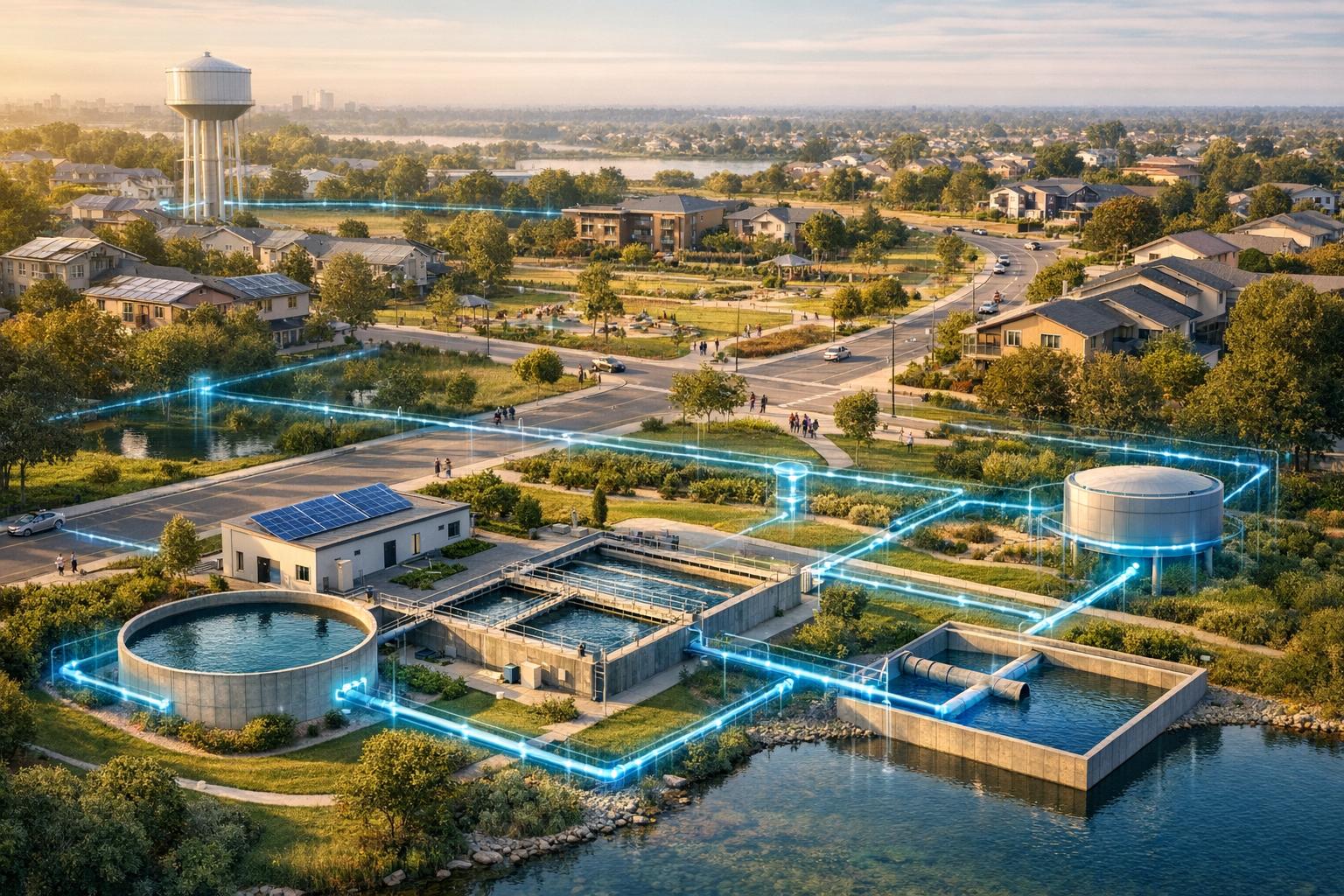
Smart water grids are transforming how communities manage water resources by integrating digital technology with existing infrastructure. These systems use IoT sensors, AI, and real-time data to monitor water flow, pressure, and quality, enabling utilities to address leaks, predict maintenance needs, and reduce waste. With nearly 6 billion gallons of drinking water lost daily in the U.S. and a projected 40% gap between global water supply and demand by 2050, these grids offer a practical solution.
Key Insights:
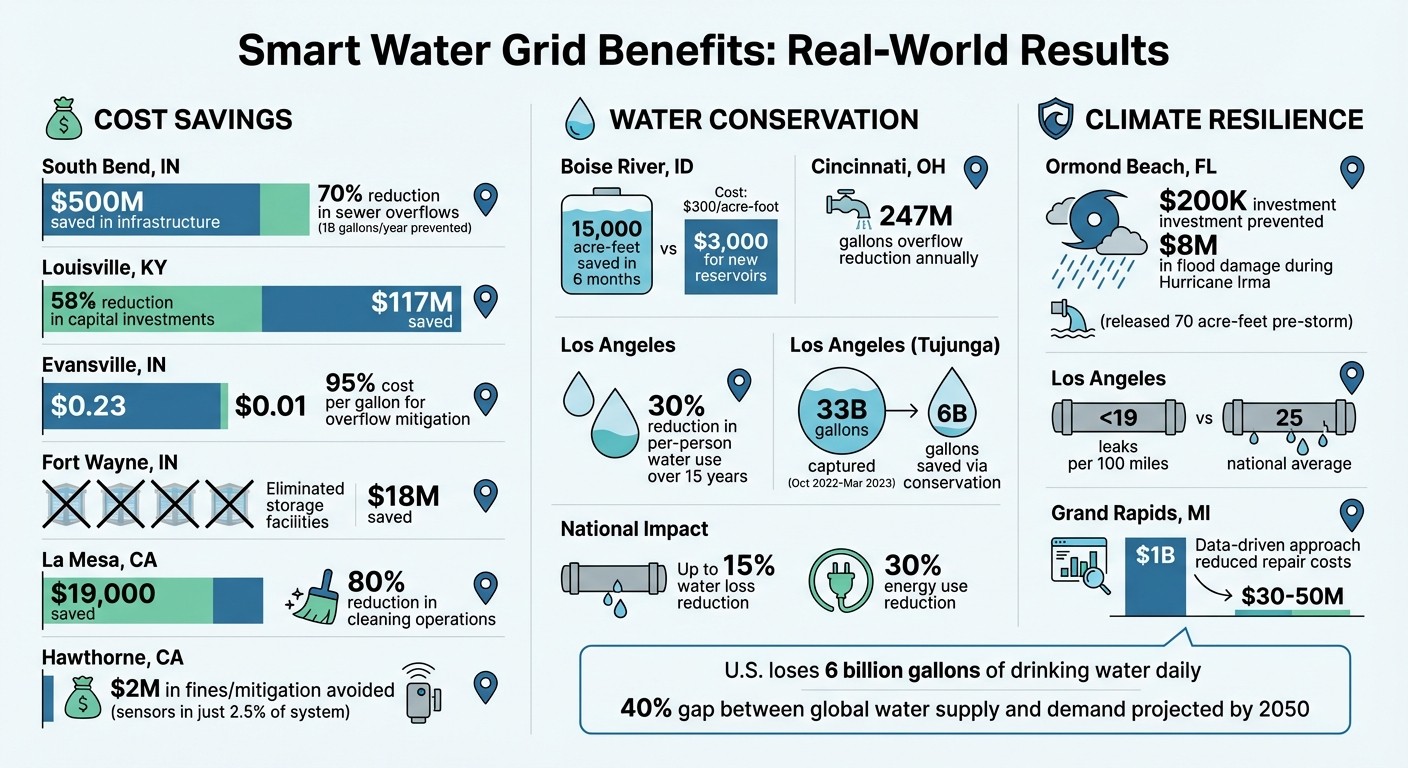
Cost Savings: Cities like South Bend, Indiana, saved $500 million in infrastructure costs by reducing sewer overflows by 70% using smart sensors.
Water Conservation: Idaho's Boise River system automation saved up to 15,000 acre-feet of water in six months, costing $300 per acre-foot compared to $3,000 for new reservoirs.
Efficiency Gains: Real-time controls and predictive analytics cut water loss by up to 15% and energy use by 30%.
Climate Resilience: Technologies like Continuous Monitoring and Adaptive Control (CMAC) prevented millions in flood damage during extreme weather events.
Communities adopting these systems are shifting from reactive fixes to proactive management, extending infrastructure lifespan and addressing water scarcity challenges. However, successful implementation requires collaboration between IT and utility teams, workforce training, and a focus on cybersecurity. By investing in smart water grids, cities can save resources, reduce costs, and prepare for future climate challenges.
SITAPE Smart Water Grid System
Smart Water Grid Technology and Benefits
Smart Water Grid Benefits: Cost Savings and Environmental Impact by City
Core Technologies in Smart Water Grids
Smart water grids combine sensors, meters, and data collectors with advanced ICS and SCADA networks, creating a connected system for monitoring and managing water infrastructure[4]. This integration allows for real-time oversight and more efficient operations.
The technology powering these grids involves several layers. Smart meters, acoustic sensors, rain gauges, and depth gauges gather data on flow, pressure, and environmental conditions. Cellular routers and IoT gateways securely transmit this information, significantly reducing data transfer times. For instance, in Downers Grove, Illinois, transmission times dropped from 3–7 minutes to under 12 seconds[4].
At the analytics level, artificial intelligence and machine learning process real-time data to predict equipment failures before they occur[4]. Digital twins - virtual models of physical water systems - enable operators to simulate potential scenarios and test solutions without risking real-world consequences[1][3]. In Houston, a partnership with the USGS introduced real-time monitors at water treatment plants, allowing adjustments to treatment processes in anticipation of storm surges before the water even arrived[4].
Real-Time Controls (RTC) form the action layer of smart water grids. These systems automatically manage pumps and valves based on system capacity, effectively preventing overflows during heavy storm events[2]. By replacing outdated manual processes, RTC systems provide immediate and actionable insights.
"With a denser sensor network, we can get more data, and with the secure connectivity tools we have, we can get actionable real-time data." – Rocky Smith, Industry Solutions Architect, Cisco[4]
The integration of these technologies not only boosts operational efficiency but also leads to significant cost reductions and environmental improvements.
Benefits for Communities and Stakeholders
The financial advantages of smart water grids are striking. In Louisville, Kentucky, capital investments for overflow mitigation were reduced by 58%, saving $117 million[2]. Similarly, Evansville, Indiana, cut the cost of overflow mitigation from $0.23 per gallon to just $0.01 per gallon - a 95% savings[2]. Fort Wayne, Indiana, utilized real-time flow data through a management dashboard, eliminating the need for five satellite storage facilities and saving $18 million[2].
Predictive maintenance is another game-changer, extending the lifespan of infrastructure and preventing costly failures. With an estimated 250,000 to 300,000 water main breaks occurring annually in the United States[4], early detection can save millions. In La Mesa, California, real-time remote monitors saved over $19,000 while reducing cleaning operations by 80% and preventing sanitary sewer overflows[2].
Environmental gains are equally impressive. Cincinnati, Ohio, integrated SCADA and RTC systems to cut overflow volumes by 247 million gallons annually, saving tens of millions in capital costs[2]. In Hawthorne, California, installing wireless sensors in just 2.5% of the system - about 50 manholes - helped avoid $2 million in fines and mitigation expenses tied to sewer overflows[2].
Smart grids also bolster climate resilience. For example, during Hurricane Irma in September 2017, Ormond Beach, Florida, used Continuous Monitoring and Adaptive Control (CMAC) technology to release 70 acre-feet of storage from its lake system ahead of the storm. This $200,000 investment prevented flooding and saved an estimated $8 million in additional infrastructure costs[2].
"Predictive analytics... identify failures before they happen, preventing catastrophic outcomes and costly downtimes, and maximizing the use of existing infrastructure." – Sielen Namdar, Global Industry Executive, Cisco[4]
Case Studies: Communities Using Smart Water Grids
Southern Water: Smart Meter Deployment
Southern Water has embraced smart meter technology to establish a network of IoT sensors that gather real-time data on water usage and the condition of its infrastructure [5]. This shift allows the utility to move from reacting to issues as they arise to anticipating and preventing them through predictive maintenance. The result? Reduced water loss and improved customer service. Similarly, other large urban utilities are turning to advanced technology as they modernize outdated systems.
LADWP: Advanced Distribution Management in Los Angeles

The Los Angeles Department of Water and Power (LADWP) is in the midst of a $7 billion, five-year investment to upgrade its aging water infrastructure and enhance its resilience to seismic activity [6]. Building on the success of the 2013 "Smart Grid LA" pilot, which installed 52,000 smart meters in partnership with the U.S. Department of Energy, USC, UCLA, and JPL, LADWP began rolling out a full Advanced Metering Infrastructure (AMI) system in 2025 [8]. The results speak for themselves: in fiscal year 2022–23, the utility reported fewer than 19 leaks per 100 miles of pipe - well below the national average of 25 leaks [6]. Over the past 15 years, per-person water use has dropped by 30% [7].
Another noteworthy project is the Tujunga Spreading Grounds Enhancement, completed in collaboration with the L.A. County Flood Control District. This initiative doubled the facility’s annual groundwater recharge capacity to 16,000 acre-feet [9]. Between October 2022 and March 2023, the facility captured an impressive 33 billion gallons of rainfall, while conservation measures during summer 2022 saved nearly 6 billion gallons compared to the prior year [9].
"Grid-monitoring technologies will provide real-time insight into the status and overall health of the distribution system... transforming our grid to be more reliable." – LADWP [8]
These achievements highlight how investments in smart grid technology can strengthen urban water systems, making them more efficient and resilient. Following a similar approach, the Las Vegas Valley Water District has turned to innovative acoustic leak detection.
Las Vegas Valley Water District: Acoustic Leak Detection

The Las Vegas Valley Water District has adopted acoustic leak detection as part of its strategy to improve water management. While detailed data on the program is limited, it reflects a broader national trend toward proactive system monitoring. By using advanced sensors to identify leaks early, utilities are moving away from relying on customer-reported issues and instead implementing automated solutions for efficient and timely maintenance.
Lessons and Best Practices for Resilient Communities
Communities embracing smart water grids have developed effective strategies that not only amplify their benefits but also serve as practical guides for broader implementation.
Scalable Approaches for Smart Grid Adoption
The journey to successful smart water grids often begins with small, strategic steps that pave the way for larger-scale adoption. South Bend, Indiana, offers a standout example by creating a real-time "commodities market" for managing conveyance capacity across its 600-mile sewer system. This targeted scaling of sensor deployment helped the city save an impressive $500 million compared to traditional infrastructure upgrades while cutting combined sewer overflow volumes by 70%, preventing about 1 billion gallons annually [10].
Another key approach is prioritizing data collection over immediate infrastructure upgrades to maximize the efficiency of existing systems. Grand Rapids, Michigan, exemplifies this by using 90 flow meters and 10 rain gauges to pinpoint inflow and infiltration issues. This data-driven strategy slashed their anticipated repair costs from $1 billion down to $30–$50 million [2].
"We spent cents and saved dollars by doing this; so don't be afraid of spending those extra cents early on. They will return the investment many times, many ways." – Kieran Fahey, South Bend's Department of Public Works [10]
Integration of operational teams is another essential factor. San Antonio Water System (SAWS) streamlined its operations by merging three separate platforms into one cohesive system. This allowed them to combine SCADA data with enterprise information, improving overall decision-making [4]. However, this shift requires new expertise. John Sudduth, CIO of the Water Reclamation District of Greater Chicago, describes it as:
"an IT and OT convergence" that demands "an entirely different skillset" [4]
To ease the transition to digital tools, peer-to-peer training has proven effective in helping staff adapt without feeling overwhelmed. These approaches demonstrate that with the right guidance and planning, scaling smart water grids can lead to substantial savings and improved efficiency.
How Council Fire Supports Climate Resilience Planning

Creating resilient water infrastructure involves more than installing sensors and technology. It requires careful planning that combines technological advancements with stakeholder collaboration and long-term goals. Council Fire specializes in guiding utilities and communities through this intricate process with a systems-thinking approach. They help turn ambitious climate resilience plans into actionable pathways that balance financial realities with environmental priorities.
One of Council Fire's strengths lies in fostering collaboration, particularly when cultural differences arise between operational teams and IT departments. Their efforts include establishing unified operational platforms, clarifying roles between contractors and city representatives, and developing training programs to help the workforce adapt to smart grid technologies. By blending technical expertise with strategic communication, Council Fire ensures that investments in smart water grids yield enduring environmental, social, and economic benefits. This shift moves communities from a reactive approach to proactive, data-driven water management.
Conclusion: Building Sustainability Through Smart Water Grids
Smart water grids are reshaping how communities manage water, offering a cost-effective alternative to traditional infrastructure upgrades. These systems can cut expenses by as much as 90% compared to building new reservoirs, storage tanks, or pump stations. They also provide the real-time data needed to reduce water loss and extend the lifespan of aging infrastructure - something many cities urgently need.
But the benefits go beyond just saving money. Smart water grids require a shift in how operations are managed. Proactive collaboration becomes essential, with IT and operations teams working together to harness the full potential of smart technologies. This approach not only prevents waste but also strengthens resilience. To make it work, communities must invest in workforce training and prioritize cybersecurity to protect increasingly interconnected systems.
As climate change brings more frequent droughts, floods, and extreme weather, the need for resilient water management has never been greater. By adopting smart water grids, communities can safeguard public health, conserve vital resources, and prepare their systems for the challenges ahead. The technology is here, the results are proven, and the financial advantages are clear. What remains is a collective commitment to act.
FAQs
How do smart water grids help conserve water and improve efficiency?
Smart water grids are transforming traditional water systems by leveraging cutting-edge technologies such as sensors, Internet of Things (IoT) devices, and data analytics. These systems continuously monitor real-time data on pressure, flow, and water quality, allowing utilities to quickly identify leaks, anticipate demand, and fine-tune water distribution. This forward-thinking approach helps conserve millions of gallons of water, lower energy usage, and avoid expensive problems like burst pipes.
One standout tool in this innovation is the digital twin - a virtual model of reservoirs, pipelines, and other infrastructure. These models allow utilities to simulate various scenarios, schedule maintenance proactively, and extend the lifespan of their systems. Cities that have adopted smart water grids report annual water savings ranging from 5% to 15%, leading to substantial cost reductions for both municipalities and households. By combining financial responsibility with environmental care, smart water grids enhance efficiency while fostering stronger, more sustainable communities.
What technologies make smart water grids work?
Smart water grids are revolutionizing how we manage water systems by turning them into efficient, data-driven networks. At the heart of these grids is advanced metering infrastructure (AMI), which uses smart meters to deliver real-time insights into water usage, pressure, and leaks. Alongside this, IoT-enabled sensors play a critical role in monitoring water quality by tracking factors like turbidity, chlorine levels, and temperature. To keep everything running smoothly, condition-based monitoring analyzes equipment like pumps, valves, and pipelines to predict when maintenance is needed.
These systems go a step further with AI-powered analytics and predictive models, which help utilities detect anomalies, anticipate demand, and fine-tune water distribution. Some utilities are even adopting digital twins - virtual replicas of their water networks - to simulate scenarios and tackle challenges such as those posed by changing climate conditions. By integrating these technologies, utilities can minimize water loss, boost reliability, and strengthen community resilience. Council Fire collaborates with utilities and municipalities to design and implement these solutions, ensuring they align with broader financial, environmental, and social objectives.
What steps can communities take to successfully implement smart water grids?
To implement smart water grids effectively, communities should begin with a thorough resiliency assessment. This step involves examining future water availability, anticipating population growth, and identifying potential risks such as natural disasters or infrastructure vulnerabilities. Thoughtful early planning ensures water systems can adapt and remain reliable for decades while aligning with funding sources like state revolving funds.
Integrating cutting-edge technologies is another crucial step. Tools such as interoperable sensors, digital twins, and real-time analytics can turn raw data into actionable insights. These technologies enhance water quality monitoring, streamline operations, and enable early detection of issues like leaks or climate-related pressures. Testing these solutions on a smaller scale before broader implementation helps refine their functionality and effectiveness.
Finally, collaboration and continuous monitoring play a vital role in long-term success. Engaging key stakeholders, establishing robust governance frameworks, and tracking performance metrics - like system efficiency and recovery times - ensure the grid operates effectively. Expert support, such as that provided by Council Fire, can guide communities in integrating these strategies while balancing financial, environmental, and social objectives.
Related Blog Posts
Latest Articles
©2025


FAQ
01
What does it really mean to “redefine profit”?
02
What makes Council Fire different?
03
Who does Council Fire you work with?
04
What does working with Council Fire actually look like?
05
How does Council Fire help organizations turn big goals into action?
06
How does Council Fire define and measure success?
Jan 2, 2026
Smart Water Grids for Resilient Communities
Sustainability Strategy
In This Article
How smart water grids use sensors, AI, and real‑time controls to cut leaks, lower costs, and boost community resilience — plus implementation best practices.
Smart Water Grids for Resilient Communities
Smart water grids are transforming how communities manage water resources by integrating digital technology with existing infrastructure. These systems use IoT sensors, AI, and real-time data to monitor water flow, pressure, and quality, enabling utilities to address leaks, predict maintenance needs, and reduce waste. With nearly 6 billion gallons of drinking water lost daily in the U.S. and a projected 40% gap between global water supply and demand by 2050, these grids offer a practical solution.
Key Insights:
Cost Savings: Cities like South Bend, Indiana, saved $500 million in infrastructure costs by reducing sewer overflows by 70% using smart sensors.
Water Conservation: Idaho's Boise River system automation saved up to 15,000 acre-feet of water in six months, costing $300 per acre-foot compared to $3,000 for new reservoirs.
Efficiency Gains: Real-time controls and predictive analytics cut water loss by up to 15% and energy use by 30%.
Climate Resilience: Technologies like Continuous Monitoring and Adaptive Control (CMAC) prevented millions in flood damage during extreme weather events.
Communities adopting these systems are shifting from reactive fixes to proactive management, extending infrastructure lifespan and addressing water scarcity challenges. However, successful implementation requires collaboration between IT and utility teams, workforce training, and a focus on cybersecurity. By investing in smart water grids, cities can save resources, reduce costs, and prepare for future climate challenges.
SITAPE Smart Water Grid System
Smart Water Grid Technology and Benefits
Smart Water Grid Benefits: Cost Savings and Environmental Impact by City
Core Technologies in Smart Water Grids
Smart water grids combine sensors, meters, and data collectors with advanced ICS and SCADA networks, creating a connected system for monitoring and managing water infrastructure[4]. This integration allows for real-time oversight and more efficient operations.
The technology powering these grids involves several layers. Smart meters, acoustic sensors, rain gauges, and depth gauges gather data on flow, pressure, and environmental conditions. Cellular routers and IoT gateways securely transmit this information, significantly reducing data transfer times. For instance, in Downers Grove, Illinois, transmission times dropped from 3–7 minutes to under 12 seconds[4].
At the analytics level, artificial intelligence and machine learning process real-time data to predict equipment failures before they occur[4]. Digital twins - virtual models of physical water systems - enable operators to simulate potential scenarios and test solutions without risking real-world consequences[1][3]. In Houston, a partnership with the USGS introduced real-time monitors at water treatment plants, allowing adjustments to treatment processes in anticipation of storm surges before the water even arrived[4].
Real-Time Controls (RTC) form the action layer of smart water grids. These systems automatically manage pumps and valves based on system capacity, effectively preventing overflows during heavy storm events[2]. By replacing outdated manual processes, RTC systems provide immediate and actionable insights.
"With a denser sensor network, we can get more data, and with the secure connectivity tools we have, we can get actionable real-time data." – Rocky Smith, Industry Solutions Architect, Cisco[4]
The integration of these technologies not only boosts operational efficiency but also leads to significant cost reductions and environmental improvements.
Benefits for Communities and Stakeholders
The financial advantages of smart water grids are striking. In Louisville, Kentucky, capital investments for overflow mitigation were reduced by 58%, saving $117 million[2]. Similarly, Evansville, Indiana, cut the cost of overflow mitigation from $0.23 per gallon to just $0.01 per gallon - a 95% savings[2]. Fort Wayne, Indiana, utilized real-time flow data through a management dashboard, eliminating the need for five satellite storage facilities and saving $18 million[2].
Predictive maintenance is another game-changer, extending the lifespan of infrastructure and preventing costly failures. With an estimated 250,000 to 300,000 water main breaks occurring annually in the United States[4], early detection can save millions. In La Mesa, California, real-time remote monitors saved over $19,000 while reducing cleaning operations by 80% and preventing sanitary sewer overflows[2].
Environmental gains are equally impressive. Cincinnati, Ohio, integrated SCADA and RTC systems to cut overflow volumes by 247 million gallons annually, saving tens of millions in capital costs[2]. In Hawthorne, California, installing wireless sensors in just 2.5% of the system - about 50 manholes - helped avoid $2 million in fines and mitigation expenses tied to sewer overflows[2].
Smart grids also bolster climate resilience. For example, during Hurricane Irma in September 2017, Ormond Beach, Florida, used Continuous Monitoring and Adaptive Control (CMAC) technology to release 70 acre-feet of storage from its lake system ahead of the storm. This $200,000 investment prevented flooding and saved an estimated $8 million in additional infrastructure costs[2].
"Predictive analytics... identify failures before they happen, preventing catastrophic outcomes and costly downtimes, and maximizing the use of existing infrastructure." – Sielen Namdar, Global Industry Executive, Cisco[4]
Case Studies: Communities Using Smart Water Grids
Southern Water: Smart Meter Deployment
Southern Water has embraced smart meter technology to establish a network of IoT sensors that gather real-time data on water usage and the condition of its infrastructure [5]. This shift allows the utility to move from reacting to issues as they arise to anticipating and preventing them through predictive maintenance. The result? Reduced water loss and improved customer service. Similarly, other large urban utilities are turning to advanced technology as they modernize outdated systems.
LADWP: Advanced Distribution Management in Los Angeles
The Los Angeles Department of Water and Power (LADWP) is in the midst of a $7 billion, five-year investment to upgrade its aging water infrastructure and enhance its resilience to seismic activity [6]. Building on the success of the 2013 "Smart Grid LA" pilot, which installed 52,000 smart meters in partnership with the U.S. Department of Energy, USC, UCLA, and JPL, LADWP began rolling out a full Advanced Metering Infrastructure (AMI) system in 2025 [8]. The results speak for themselves: in fiscal year 2022–23, the utility reported fewer than 19 leaks per 100 miles of pipe - well below the national average of 25 leaks [6]. Over the past 15 years, per-person water use has dropped by 30% [7].
Another noteworthy project is the Tujunga Spreading Grounds Enhancement, completed in collaboration with the L.A. County Flood Control District. This initiative doubled the facility’s annual groundwater recharge capacity to 16,000 acre-feet [9]. Between October 2022 and March 2023, the facility captured an impressive 33 billion gallons of rainfall, while conservation measures during summer 2022 saved nearly 6 billion gallons compared to the prior year [9].
"Grid-monitoring technologies will provide real-time insight into the status and overall health of the distribution system... transforming our grid to be more reliable." – LADWP [8]
These achievements highlight how investments in smart grid technology can strengthen urban water systems, making them more efficient and resilient. Following a similar approach, the Las Vegas Valley Water District has turned to innovative acoustic leak detection.
Las Vegas Valley Water District: Acoustic Leak Detection
The Las Vegas Valley Water District has adopted acoustic leak detection as part of its strategy to improve water management. While detailed data on the program is limited, it reflects a broader national trend toward proactive system monitoring. By using advanced sensors to identify leaks early, utilities are moving away from relying on customer-reported issues and instead implementing automated solutions for efficient and timely maintenance.
Lessons and Best Practices for Resilient Communities
Communities embracing smart water grids have developed effective strategies that not only amplify their benefits but also serve as practical guides for broader implementation.
Scalable Approaches for Smart Grid Adoption
The journey to successful smart water grids often begins with small, strategic steps that pave the way for larger-scale adoption. South Bend, Indiana, offers a standout example by creating a real-time "commodities market" for managing conveyance capacity across its 600-mile sewer system. This targeted scaling of sensor deployment helped the city save an impressive $500 million compared to traditional infrastructure upgrades while cutting combined sewer overflow volumes by 70%, preventing about 1 billion gallons annually [10].
Another key approach is prioritizing data collection over immediate infrastructure upgrades to maximize the efficiency of existing systems. Grand Rapids, Michigan, exemplifies this by using 90 flow meters and 10 rain gauges to pinpoint inflow and infiltration issues. This data-driven strategy slashed their anticipated repair costs from $1 billion down to $30–$50 million [2].
"We spent cents and saved dollars by doing this; so don't be afraid of spending those extra cents early on. They will return the investment many times, many ways." – Kieran Fahey, South Bend's Department of Public Works [10]
Integration of operational teams is another essential factor. San Antonio Water System (SAWS) streamlined its operations by merging three separate platforms into one cohesive system. This allowed them to combine SCADA data with enterprise information, improving overall decision-making [4]. However, this shift requires new expertise. John Sudduth, CIO of the Water Reclamation District of Greater Chicago, describes it as:
"an IT and OT convergence" that demands "an entirely different skillset" [4]
To ease the transition to digital tools, peer-to-peer training has proven effective in helping staff adapt without feeling overwhelmed. These approaches demonstrate that with the right guidance and planning, scaling smart water grids can lead to substantial savings and improved efficiency.
How Council Fire Supports Climate Resilience Planning
Creating resilient water infrastructure involves more than installing sensors and technology. It requires careful planning that combines technological advancements with stakeholder collaboration and long-term goals. Council Fire specializes in guiding utilities and communities through this intricate process with a systems-thinking approach. They help turn ambitious climate resilience plans into actionable pathways that balance financial realities with environmental priorities.
One of Council Fire's strengths lies in fostering collaboration, particularly when cultural differences arise between operational teams and IT departments. Their efforts include establishing unified operational platforms, clarifying roles between contractors and city representatives, and developing training programs to help the workforce adapt to smart grid technologies. By blending technical expertise with strategic communication, Council Fire ensures that investments in smart water grids yield enduring environmental, social, and economic benefits. This shift moves communities from a reactive approach to proactive, data-driven water management.
Conclusion: Building Sustainability Through Smart Water Grids
Smart water grids are reshaping how communities manage water, offering a cost-effective alternative to traditional infrastructure upgrades. These systems can cut expenses by as much as 90% compared to building new reservoirs, storage tanks, or pump stations. They also provide the real-time data needed to reduce water loss and extend the lifespan of aging infrastructure - something many cities urgently need.
But the benefits go beyond just saving money. Smart water grids require a shift in how operations are managed. Proactive collaboration becomes essential, with IT and operations teams working together to harness the full potential of smart technologies. This approach not only prevents waste but also strengthens resilience. To make it work, communities must invest in workforce training and prioritize cybersecurity to protect increasingly interconnected systems.
As climate change brings more frequent droughts, floods, and extreme weather, the need for resilient water management has never been greater. By adopting smart water grids, communities can safeguard public health, conserve vital resources, and prepare their systems for the challenges ahead. The technology is here, the results are proven, and the financial advantages are clear. What remains is a collective commitment to act.
FAQs
How do smart water grids help conserve water and improve efficiency?
Smart water grids are transforming traditional water systems by leveraging cutting-edge technologies such as sensors, Internet of Things (IoT) devices, and data analytics. These systems continuously monitor real-time data on pressure, flow, and water quality, allowing utilities to quickly identify leaks, anticipate demand, and fine-tune water distribution. This forward-thinking approach helps conserve millions of gallons of water, lower energy usage, and avoid expensive problems like burst pipes.
One standout tool in this innovation is the digital twin - a virtual model of reservoirs, pipelines, and other infrastructure. These models allow utilities to simulate various scenarios, schedule maintenance proactively, and extend the lifespan of their systems. Cities that have adopted smart water grids report annual water savings ranging from 5% to 15%, leading to substantial cost reductions for both municipalities and households. By combining financial responsibility with environmental care, smart water grids enhance efficiency while fostering stronger, more sustainable communities.
What technologies make smart water grids work?
Smart water grids are revolutionizing how we manage water systems by turning them into efficient, data-driven networks. At the heart of these grids is advanced metering infrastructure (AMI), which uses smart meters to deliver real-time insights into water usage, pressure, and leaks. Alongside this, IoT-enabled sensors play a critical role in monitoring water quality by tracking factors like turbidity, chlorine levels, and temperature. To keep everything running smoothly, condition-based monitoring analyzes equipment like pumps, valves, and pipelines to predict when maintenance is needed.
These systems go a step further with AI-powered analytics and predictive models, which help utilities detect anomalies, anticipate demand, and fine-tune water distribution. Some utilities are even adopting digital twins - virtual replicas of their water networks - to simulate scenarios and tackle challenges such as those posed by changing climate conditions. By integrating these technologies, utilities can minimize water loss, boost reliability, and strengthen community resilience. Council Fire collaborates with utilities and municipalities to design and implement these solutions, ensuring they align with broader financial, environmental, and social objectives.
What steps can communities take to successfully implement smart water grids?
To implement smart water grids effectively, communities should begin with a thorough resiliency assessment. This step involves examining future water availability, anticipating population growth, and identifying potential risks such as natural disasters or infrastructure vulnerabilities. Thoughtful early planning ensures water systems can adapt and remain reliable for decades while aligning with funding sources like state revolving funds.
Integrating cutting-edge technologies is another crucial step. Tools such as interoperable sensors, digital twins, and real-time analytics can turn raw data into actionable insights. These technologies enhance water quality monitoring, streamline operations, and enable early detection of issues like leaks or climate-related pressures. Testing these solutions on a smaller scale before broader implementation helps refine their functionality and effectiveness.
Finally, collaboration and continuous monitoring play a vital role in long-term success. Engaging key stakeholders, establishing robust governance frameworks, and tracking performance metrics - like system efficiency and recovery times - ensure the grid operates effectively. Expert support, such as that provided by Council Fire, can guide communities in integrating these strategies while balancing financial, environmental, and social objectives.
Related Blog Posts
FAQ
01
What does it really mean to “redefine profit”?
02
What makes Council Fire different?
03
Who does Council Fire you work with?
04
What does working with Council Fire actually look like?
05
How does Council Fire help organizations turn big goals into action?
06
How does Council Fire define and measure success?
Jan 2, 2026
Smart Water Grids for Resilient Communities
Sustainability Strategy
In This Article
How smart water grids use sensors, AI, and real‑time controls to cut leaks, lower costs, and boost community resilience — plus implementation best practices.
Smart Water Grids for Resilient Communities
Smart water grids are transforming how communities manage water resources by integrating digital technology with existing infrastructure. These systems use IoT sensors, AI, and real-time data to monitor water flow, pressure, and quality, enabling utilities to address leaks, predict maintenance needs, and reduce waste. With nearly 6 billion gallons of drinking water lost daily in the U.S. and a projected 40% gap between global water supply and demand by 2050, these grids offer a practical solution.
Key Insights:
Cost Savings: Cities like South Bend, Indiana, saved $500 million in infrastructure costs by reducing sewer overflows by 70% using smart sensors.
Water Conservation: Idaho's Boise River system automation saved up to 15,000 acre-feet of water in six months, costing $300 per acre-foot compared to $3,000 for new reservoirs.
Efficiency Gains: Real-time controls and predictive analytics cut water loss by up to 15% and energy use by 30%.
Climate Resilience: Technologies like Continuous Monitoring and Adaptive Control (CMAC) prevented millions in flood damage during extreme weather events.
Communities adopting these systems are shifting from reactive fixes to proactive management, extending infrastructure lifespan and addressing water scarcity challenges. However, successful implementation requires collaboration between IT and utility teams, workforce training, and a focus on cybersecurity. By investing in smart water grids, cities can save resources, reduce costs, and prepare for future climate challenges.
SITAPE Smart Water Grid System
Smart Water Grid Technology and Benefits
Smart Water Grid Benefits: Cost Savings and Environmental Impact by City
Core Technologies in Smart Water Grids
Smart water grids combine sensors, meters, and data collectors with advanced ICS and SCADA networks, creating a connected system for monitoring and managing water infrastructure[4]. This integration allows for real-time oversight and more efficient operations.
The technology powering these grids involves several layers. Smart meters, acoustic sensors, rain gauges, and depth gauges gather data on flow, pressure, and environmental conditions. Cellular routers and IoT gateways securely transmit this information, significantly reducing data transfer times. For instance, in Downers Grove, Illinois, transmission times dropped from 3–7 minutes to under 12 seconds[4].
At the analytics level, artificial intelligence and machine learning process real-time data to predict equipment failures before they occur[4]. Digital twins - virtual models of physical water systems - enable operators to simulate potential scenarios and test solutions without risking real-world consequences[1][3]. In Houston, a partnership with the USGS introduced real-time monitors at water treatment plants, allowing adjustments to treatment processes in anticipation of storm surges before the water even arrived[4].
Real-Time Controls (RTC) form the action layer of smart water grids. These systems automatically manage pumps and valves based on system capacity, effectively preventing overflows during heavy storm events[2]. By replacing outdated manual processes, RTC systems provide immediate and actionable insights.
"With a denser sensor network, we can get more data, and with the secure connectivity tools we have, we can get actionable real-time data." – Rocky Smith, Industry Solutions Architect, Cisco[4]
The integration of these technologies not only boosts operational efficiency but also leads to significant cost reductions and environmental improvements.
Benefits for Communities and Stakeholders
The financial advantages of smart water grids are striking. In Louisville, Kentucky, capital investments for overflow mitigation were reduced by 58%, saving $117 million[2]. Similarly, Evansville, Indiana, cut the cost of overflow mitigation from $0.23 per gallon to just $0.01 per gallon - a 95% savings[2]. Fort Wayne, Indiana, utilized real-time flow data through a management dashboard, eliminating the need for five satellite storage facilities and saving $18 million[2].
Predictive maintenance is another game-changer, extending the lifespan of infrastructure and preventing costly failures. With an estimated 250,000 to 300,000 water main breaks occurring annually in the United States[4], early detection can save millions. In La Mesa, California, real-time remote monitors saved over $19,000 while reducing cleaning operations by 80% and preventing sanitary sewer overflows[2].
Environmental gains are equally impressive. Cincinnati, Ohio, integrated SCADA and RTC systems to cut overflow volumes by 247 million gallons annually, saving tens of millions in capital costs[2]. In Hawthorne, California, installing wireless sensors in just 2.5% of the system - about 50 manholes - helped avoid $2 million in fines and mitigation expenses tied to sewer overflows[2].
Smart grids also bolster climate resilience. For example, during Hurricane Irma in September 2017, Ormond Beach, Florida, used Continuous Monitoring and Adaptive Control (CMAC) technology to release 70 acre-feet of storage from its lake system ahead of the storm. This $200,000 investment prevented flooding and saved an estimated $8 million in additional infrastructure costs[2].
"Predictive analytics... identify failures before they happen, preventing catastrophic outcomes and costly downtimes, and maximizing the use of existing infrastructure." – Sielen Namdar, Global Industry Executive, Cisco[4]
Case Studies: Communities Using Smart Water Grids
Southern Water: Smart Meter Deployment
Southern Water has embraced smart meter technology to establish a network of IoT sensors that gather real-time data on water usage and the condition of its infrastructure [5]. This shift allows the utility to move from reacting to issues as they arise to anticipating and preventing them through predictive maintenance. The result? Reduced water loss and improved customer service. Similarly, other large urban utilities are turning to advanced technology as they modernize outdated systems.
LADWP: Advanced Distribution Management in Los Angeles
The Los Angeles Department of Water and Power (LADWP) is in the midst of a $7 billion, five-year investment to upgrade its aging water infrastructure and enhance its resilience to seismic activity [6]. Building on the success of the 2013 "Smart Grid LA" pilot, which installed 52,000 smart meters in partnership with the U.S. Department of Energy, USC, UCLA, and JPL, LADWP began rolling out a full Advanced Metering Infrastructure (AMI) system in 2025 [8]. The results speak for themselves: in fiscal year 2022–23, the utility reported fewer than 19 leaks per 100 miles of pipe - well below the national average of 25 leaks [6]. Over the past 15 years, per-person water use has dropped by 30% [7].
Another noteworthy project is the Tujunga Spreading Grounds Enhancement, completed in collaboration with the L.A. County Flood Control District. This initiative doubled the facility’s annual groundwater recharge capacity to 16,000 acre-feet [9]. Between October 2022 and March 2023, the facility captured an impressive 33 billion gallons of rainfall, while conservation measures during summer 2022 saved nearly 6 billion gallons compared to the prior year [9].
"Grid-monitoring technologies will provide real-time insight into the status and overall health of the distribution system... transforming our grid to be more reliable." – LADWP [8]
These achievements highlight how investments in smart grid technology can strengthen urban water systems, making them more efficient and resilient. Following a similar approach, the Las Vegas Valley Water District has turned to innovative acoustic leak detection.
Las Vegas Valley Water District: Acoustic Leak Detection
The Las Vegas Valley Water District has adopted acoustic leak detection as part of its strategy to improve water management. While detailed data on the program is limited, it reflects a broader national trend toward proactive system monitoring. By using advanced sensors to identify leaks early, utilities are moving away from relying on customer-reported issues and instead implementing automated solutions for efficient and timely maintenance.
Lessons and Best Practices for Resilient Communities
Communities embracing smart water grids have developed effective strategies that not only amplify their benefits but also serve as practical guides for broader implementation.
Scalable Approaches for Smart Grid Adoption
The journey to successful smart water grids often begins with small, strategic steps that pave the way for larger-scale adoption. South Bend, Indiana, offers a standout example by creating a real-time "commodities market" for managing conveyance capacity across its 600-mile sewer system. This targeted scaling of sensor deployment helped the city save an impressive $500 million compared to traditional infrastructure upgrades while cutting combined sewer overflow volumes by 70%, preventing about 1 billion gallons annually [10].
Another key approach is prioritizing data collection over immediate infrastructure upgrades to maximize the efficiency of existing systems. Grand Rapids, Michigan, exemplifies this by using 90 flow meters and 10 rain gauges to pinpoint inflow and infiltration issues. This data-driven strategy slashed their anticipated repair costs from $1 billion down to $30–$50 million [2].
"We spent cents and saved dollars by doing this; so don't be afraid of spending those extra cents early on. They will return the investment many times, many ways." – Kieran Fahey, South Bend's Department of Public Works [10]
Integration of operational teams is another essential factor. San Antonio Water System (SAWS) streamlined its operations by merging three separate platforms into one cohesive system. This allowed them to combine SCADA data with enterprise information, improving overall decision-making [4]. However, this shift requires new expertise. John Sudduth, CIO of the Water Reclamation District of Greater Chicago, describes it as:
"an IT and OT convergence" that demands "an entirely different skillset" [4]
To ease the transition to digital tools, peer-to-peer training has proven effective in helping staff adapt without feeling overwhelmed. These approaches demonstrate that with the right guidance and planning, scaling smart water grids can lead to substantial savings and improved efficiency.
How Council Fire Supports Climate Resilience Planning
Creating resilient water infrastructure involves more than installing sensors and technology. It requires careful planning that combines technological advancements with stakeholder collaboration and long-term goals. Council Fire specializes in guiding utilities and communities through this intricate process with a systems-thinking approach. They help turn ambitious climate resilience plans into actionable pathways that balance financial realities with environmental priorities.
One of Council Fire's strengths lies in fostering collaboration, particularly when cultural differences arise between operational teams and IT departments. Their efforts include establishing unified operational platforms, clarifying roles between contractors and city representatives, and developing training programs to help the workforce adapt to smart grid technologies. By blending technical expertise with strategic communication, Council Fire ensures that investments in smart water grids yield enduring environmental, social, and economic benefits. This shift moves communities from a reactive approach to proactive, data-driven water management.
Conclusion: Building Sustainability Through Smart Water Grids
Smart water grids are reshaping how communities manage water, offering a cost-effective alternative to traditional infrastructure upgrades. These systems can cut expenses by as much as 90% compared to building new reservoirs, storage tanks, or pump stations. They also provide the real-time data needed to reduce water loss and extend the lifespan of aging infrastructure - something many cities urgently need.
But the benefits go beyond just saving money. Smart water grids require a shift in how operations are managed. Proactive collaboration becomes essential, with IT and operations teams working together to harness the full potential of smart technologies. This approach not only prevents waste but also strengthens resilience. To make it work, communities must invest in workforce training and prioritize cybersecurity to protect increasingly interconnected systems.
As climate change brings more frequent droughts, floods, and extreme weather, the need for resilient water management has never been greater. By adopting smart water grids, communities can safeguard public health, conserve vital resources, and prepare their systems for the challenges ahead. The technology is here, the results are proven, and the financial advantages are clear. What remains is a collective commitment to act.
FAQs
How do smart water grids help conserve water and improve efficiency?
Smart water grids are transforming traditional water systems by leveraging cutting-edge technologies such as sensors, Internet of Things (IoT) devices, and data analytics. These systems continuously monitor real-time data on pressure, flow, and water quality, allowing utilities to quickly identify leaks, anticipate demand, and fine-tune water distribution. This forward-thinking approach helps conserve millions of gallons of water, lower energy usage, and avoid expensive problems like burst pipes.
One standout tool in this innovation is the digital twin - a virtual model of reservoirs, pipelines, and other infrastructure. These models allow utilities to simulate various scenarios, schedule maintenance proactively, and extend the lifespan of their systems. Cities that have adopted smart water grids report annual water savings ranging from 5% to 15%, leading to substantial cost reductions for both municipalities and households. By combining financial responsibility with environmental care, smart water grids enhance efficiency while fostering stronger, more sustainable communities.
What technologies make smart water grids work?
Smart water grids are revolutionizing how we manage water systems by turning them into efficient, data-driven networks. At the heart of these grids is advanced metering infrastructure (AMI), which uses smart meters to deliver real-time insights into water usage, pressure, and leaks. Alongside this, IoT-enabled sensors play a critical role in monitoring water quality by tracking factors like turbidity, chlorine levels, and temperature. To keep everything running smoothly, condition-based monitoring analyzes equipment like pumps, valves, and pipelines to predict when maintenance is needed.
These systems go a step further with AI-powered analytics and predictive models, which help utilities detect anomalies, anticipate demand, and fine-tune water distribution. Some utilities are even adopting digital twins - virtual replicas of their water networks - to simulate scenarios and tackle challenges such as those posed by changing climate conditions. By integrating these technologies, utilities can minimize water loss, boost reliability, and strengthen community resilience. Council Fire collaborates with utilities and municipalities to design and implement these solutions, ensuring they align with broader financial, environmental, and social objectives.
What steps can communities take to successfully implement smart water grids?
To implement smart water grids effectively, communities should begin with a thorough resiliency assessment. This step involves examining future water availability, anticipating population growth, and identifying potential risks such as natural disasters or infrastructure vulnerabilities. Thoughtful early planning ensures water systems can adapt and remain reliable for decades while aligning with funding sources like state revolving funds.
Integrating cutting-edge technologies is another crucial step. Tools such as interoperable sensors, digital twins, and real-time analytics can turn raw data into actionable insights. These technologies enhance water quality monitoring, streamline operations, and enable early detection of issues like leaks or climate-related pressures. Testing these solutions on a smaller scale before broader implementation helps refine their functionality and effectiveness.
Finally, collaboration and continuous monitoring play a vital role in long-term success. Engaging key stakeholders, establishing robust governance frameworks, and tracking performance metrics - like system efficiency and recovery times - ensure the grid operates effectively. Expert support, such as that provided by Council Fire, can guide communities in integrating these strategies while balancing financial, environmental, and social objectives.
Related Blog Posts
FAQ
What does it really mean to “redefine profit”?
What makes Council Fire different?
Who does Council Fire you work with?
What does working with Council Fire actually look like?
How does Council Fire help organizations turn big goals into action?
How does Council Fire define and measure success?