
Nov 27, 2025
Smart, equitable mobility: designing transportation systems for all
Sustainability Strategy
In This Article
Explore innovative transportation strategies that promote equity and accessibility for all, reducing reliance on cars and enhancing community connectivity.
Smart, equitable mobility: designing transportation systems for all
Transportation systems connect people to jobs, healthcare, and education, but often fail to serve everyone equally. Barriers like poor infrastructure in low-income areas, inaccessible transit for people with disabilities, and limited options in rural regions deepen inequality. Addressing these gaps requires rethinking mobility to prioritize access, fairness, and environmental goals.
Key Takeaways:
Accessibility: Ensure transit systems work for all, regardless of income, age, or ability.
Fair Resource Allocation: Focus investments on underserved communities to reduce disparities.
Cleaner Transit: Promote walking, biking, and public transit to cut emissions and improve health.
Proposed Solutions:
Build safer pedestrian and bike infrastructure.
Modernize public transit with electric buses, zero-fare programs, and frequent service.
Design walkable neighborhoods centered around transit access.
Use data tools and community input to prioritize equity in planning.
Collaboration between governments, communities, and private entities is critical. By integrating these strategies, transportation systems can better support economic growth, health, and quality of life for all.
How to design safe and equitable transport systems to give access to all
How to Design Transportation Systems That Work for Everyone
To ensure transportation systems serve all communities effectively, planners must move past the traditional car-centered approach. A successful system combines improved infrastructure, better public transit, and thoughtful land-use planning that brings housing, jobs, and essential services closer together. When done right, this integrated approach reduces environmental harm while expanding access for everyone. The following strategies highlight practical ways to create transportation systems that are inclusive and efficient.
Building Infrastructure for Walking and Biking
Walkable neighborhoods and safe biking paths are cornerstones of equitable transportation. They provide affordable, healthy alternatives to driving and help reduce emissions. However, many communities across the U.S. still lack the necessary pedestrian and biking infrastructure, leaving residents dependent on cars - even for short trips.
The concept of complete streets offers a solution by designing roadways to meet the needs of everyone - pedestrians, cyclists, transit riders, and drivers. Features like wide sidewalks, protected bike lanes, and traffic-calming measures prioritize safety and accessibility without compromising functionality. While the specifics vary depending on the area (urban streets differ from suburban corridors), the goal remains the same: streets that work for all users.
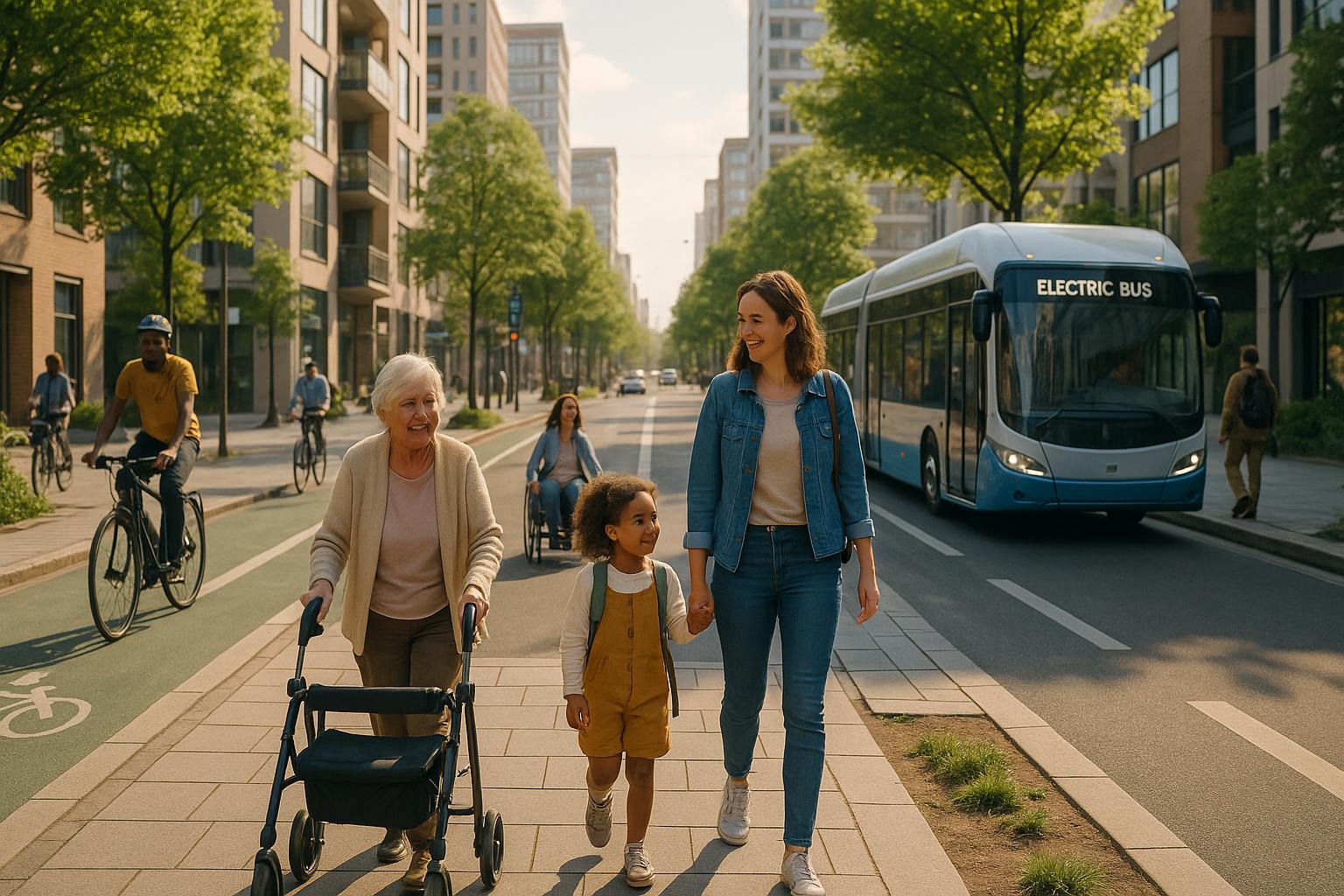
Separated bike lanes are particularly effective in boosting safety and encouraging more people to bike. Sidewalks should be smooth, stable, and wide enough to accommodate wheelchairs and mobility devices. Other accessibility features, such as audible crosswalk signals, curb ramps, and well-placed benches, make navigating public spaces easier for everyone. These upgrades not only promote inclusivity but also align with broader goals of environmental stewardship and healthier communities.
Upgrading Public Transit Systems
Public transit plays a critical role in connecting people to jobs, schools, and services while easing traffic and reducing pollution. However, many U.S. transit systems struggle with aging infrastructure, infrequent service, and fare costs that can burden low-income riders. Modernizing these systems requires both technological upgrades and thoughtful policies.
Switching to electric buses is one way to reduce emissions and lower long-term operating expenses. Though initial costs are higher than diesel buses, federal funding and the long-term savings make the transition feasible for many transit agencies. Similarly, rail electrification offers benefits like quieter, faster trains with reduced maintenance needs. While upfront investments are significant, the long-term advantages include cost savings and the potential to integrate renewable energy sources.
Another effective strategy is implementing zero-fare transit programs. By eliminating fares, these programs remove financial barriers, increase ridership, and simplify operations by reducing the need for fare collection systems.
Service frequency is equally important. Frequent, reliable service throughout the day makes public transit a more viable alternative to driving. Real-time information systems, such as mobile apps and digital displays, further enhance reliability by keeping riders informed about arrival times and service updates. Together, these improvements make transit systems more accessible and equitable, ensuring all communities can reach essential destinations. They also lay the groundwork for transit-oriented development, which can reshape neighborhoods for the better.
Creating Transit-Oriented Development
Transit-oriented development (TOD) focuses on building vibrant, walkable neighborhoods where housing, jobs, and services are located near high-quality transit. This approach reduces reliance on cars, supports economic growth, and expands access to affordable housing.
By adopting mixed-use zoning and reducing parking requirements, cities can create lively communities that encourage walking and transit use. Incorporating affordable housing into TOD projects ensures that families with lower incomes also benefit from improved transit access. Cities can further enhance these efforts by offering incentives for car-sharing programs, secure bike parking, and transit pass subsidies for residents.
The success of TOD hinges on pedestrian-friendly design. Features like wide sidewalks, street trees, weather protection, and active ground-floor spaces make walking around transit stations safe and enjoyable. Orienting building entrances toward the street, rather than parking lots, and adding public plazas or green spaces can strengthen community ties and create inviting public areas.
Finally, involving local residents in the planning process is crucial. By seeking input on building designs, development density, and the mix of services, planners can ensure projects meet the needs of current residents while opening up new opportunities. This collaborative approach ensures transportation investments benefit all members of the community, fostering fairness and inclusivity in the process.
Tools and Methods for Ensuring Equity in Transportation Planning
Creating truly inclusive transportation systems requires practical tools to identify access gaps, measure progress, and ensure that underserved communities see tangible benefits. This involves merging data-driven analysis with active community involvement. When these strategies work hand in hand, they uncover inequities and point to actionable solutions. Here's how equity goals can be turned into meaningful outcomes.
Equity Assessment Tools and Metrics
The first step in addressing transportation inequities is understanding who is affected and where. Mapping tools are instrumental here, as they combine transportation networks with demographic data to highlight areas with limited transit options, unsafe sidewalks, or long travel distances to essential services.
Demographic maps can reveal patterns of unequal access, which audits then quantify by examining how well transit systems connect people to jobs, healthcare, schools, and grocery stores. These audits go beyond just measuring distance - they assess whether transit services are practical and meet real-world needs. Community surveys add another layer by capturing personal experiences, such as concerns about safety, service reliability, or schedules that don’t align with nontraditional work hours. To ensure broad participation, surveys should be offered in multiple languages and through various channels, including online platforms, phone calls, community centers, and even door-to-door outreach.
Transportation agencies can also track specific metrics, such as average commute times by income bracket, the percentage of households within a certain distance of frequent transit, or the availability of accessible pedestrian crossings in different neighborhoods. By focusing on metrics that directly impact daily life, agencies can prioritize mobility investments where they are needed most.
Working with Stakeholders
While data provides critical insights, involving stakeholders brings those numbers to life and helps shape community-driven solutions. True engagement goes far beyond a one-time public meeting. It requires building long-term relationships with local organizations, faith groups, disability advocates, and neighborhood associations well before project decisions are finalized. Combining participatory approaches with data analysis ensures that the solutions address local realities.
Workshops can serve as a space for residents to actively shape projects from the beginning. Instead of presenting finalized plans, agencies can host interactive sessions where community members identify challenges and propose solutions. Activities like mapping unsafe areas or brainstorming needed improvements help pinpoint priorities.
Advisory committees that include representatives from underserved communities provide ongoing input throughout a project’s development. To ensure meaningful participation, these groups should be supported with stipends, flexible meeting times, and childcare options. In some cases, participatory budgeting allows residents to directly influence how funds are allocated, ensuring that investments reflect their priorities and needs.
Monitoring Progress with Data and Impact Analysis
Once tools are applied and communities are engaged, the next step is ensuring accountability through consistent monitoring. Setting equity goals is only the beginning; progress must be tracked to ensure those goals are met. Metrics should focus on real-world outcomes, such as reduced commute times or increased transit access in underserved areas.
Regular data reviews and surveys help agencies identify and address challenges as they arise. Evaluating both targeted outcomes and any unintended consequences fosters continuous improvement. Transparency is equally important - publishing progress reports in easy-to-read formats and multiple languages builds trust and keeps the public informed. Agencies should also evaluate their own processes, ensuring that community meetings remain inclusive and that project timelines allow for meaningful input. By doing so, transportation systems can adapt and evolve to better serve all communities over time.
Examples of Successful Mobility Projects
Across the United States, forward-thinking transportation initiatives are reshaping how people move, emphasizing accessibility, equity, and environmental responsibility. These projects highlight practical strategies that cut emissions, improve access for underserved communities, and give residents a voice in shaping their infrastructure.
Solar-Powered Rail Systems
Solar-powered rail systems bring renewable energy directly into public transit, offering a dual benefit of reducing emissions and lowering operational costs. For instance, Denver's Regional Transportation District has incorporated solar panels at several rail stations. These panels not only power station operations but also contribute surplus energy back to the grid. This initiative showcases how transit agencies can maximize existing infrastructure to support clean energy goals while providing accessible commuting options. By blending environmental stewardship with public transit, solar-powered rail systems illustrate a sustainable path forward.
Zero-Fare Transit Programs
Eliminating transit fares removes financial hurdles, making public transportation accessible to everyone, regardless of income. Kansas City, Missouri, set a precedent in 2020 by becoming the first major U.S. city to offer free transit across its entire system. Within the first year, ridership grew by over 13%, benefiting groups like low-income workers, students, and seniors who often face financial challenges. Beyond increasing access, zero-fare programs simplify operations and eliminate the stigma tied to fare enforcement, promoting equity while encouraging more people to choose public transit over cars.
Community-Led Infrastructure Improvements
When residents take the lead in identifying mobility needs, the results are often more effective and meaningful. In South Los Angeles, local organizations teamed up with the city to tackle pedestrian safety concerns. Together, they implemented measures such as new crosswalks, speed bumps, and better lighting in areas flagged by residents as unsafe. This collaboration ensured the solutions directly addressed community priorities rather than relying on assumptions from external planners. By putting local voices at the center of decision-making, these projects deliver safer, more equitable outcomes rooted in lived experiences.
These examples highlight the potential of collaborative, inclusive approaches to redefine mobility and create systems that serve all communities effectively.
Working Together to Create Better Mobility Solutions
Designing transportation systems that serve everyone effectively means bringing together a variety of voices and expertise. No single group - whether it’s government, nonprofits, or private companies - can address the complexities of equitable mobility on its own. Success relies on partnerships that pool resources, knowledge, and community perspectives. These collaborative efforts are essential to building the smart and inclusive transportation systems discussed throughout this guide.
Engaging Different Stakeholders
The foundation of effective mobility planning lies in identifying who should be involved and understanding the unique contributions each group can make. Residents, for example, provide firsthand insights into daily transportation challenges - like unsafe intersections or service gaps - that data alone might not fully reveal.
Local governments play a key role by managing budgets, zoning, and regulations, which can help streamline projects. Transit agencies, meanwhile, focus on service delivery and scheduling improvements to make transportation more accessible.
Nonprofits and community organizations, often trusted voices in neighborhoods, bring another layer of value. They can mobilize residents, simplify technical information, and ensure that underrepresented groups - such as seniors, people with disabilities, and low-income families - have a seat at the table. Their involvement helps create a planning process that feels inclusive and grounded in real-world needs.
Private companies contribute by offering technical expertise, advanced technologies, and sometimes even funding. Firms specializing in engineering or urban planning can provide the specialized knowledge needed for public projects, as long as their role supports rather than overshadows community priorities. Clearly defining responsibilities for all stakeholders minimizes confusion, avoids duplication of effort, and ensures everyone remains accountable to the shared vision.
Communication Methods That Build Trust
Once the right stakeholders are involved, trust becomes the cornerstone of effective collaboration. Building trust requires consistent, transparent communication that values every voice. Transparency means sharing essential information - like budgets, project timelines, and decision-making criteria - in formats that are easy to understand, such as executive summaries, infographics, or plain-language fact sheets. When communities see how their input influences decisions, trust grows.
Regular updates through newsletters, project websites, or public dashboards that track progress and performance metrics can keep everyone informed and engaged. Multilingual outreach is another important step, ensuring that language barriers don’t limit participation. Translating materials and offering interpretation services at meetings can make the process more inclusive.
Feedback mechanisms should go beyond surface-level engagement. It’s crucial to show how public input has shaped decisions, address concerns when possible, and provide multiple ways for people to participate - like online surveys or community events. Acknowledging when initial approaches fall short and making adjustments helps reinforce trust and shows a commitment to meaningful collaboration.
Planning Methods for Co-Creation
With trust established, co-creation turns stakeholder engagement into actionable plans. This approach ensures that community priorities influence every stage of the process. Co-design workshops, for example, bring together residents, planners, and experts to brainstorm solutions, identify challenges, and develop a shared understanding of local needs. These workshops are most effective when they’re interactive, using tools like maps, models, or drawing exercises rather than long slide presentations.
Facilitating these sessions thoughtfully is key. Breaking participants into small groups, allowing anonymous input, and actively inviting underrepresented voices can help ensure balanced participation. Offering practical supports - like childcare, meals, or stipends - shows that contributions are valued and can remove barriers to involvement.
Public forums provide another avenue for gathering input, presenting information, and answering questions. Formats like station-based discussions or live polling can make these events more engaging. For ongoing collaboration, joint task forces can bring together government agencies, community groups, and residents to guide projects with clear mandates and decision-making authority.
When disagreements arise, focusing on shared goals - such as safety, accessibility, or environmental sustainability - can help align differing interests. Reframing discussions around these common objectives often leads to creative compromises that address multiple concerns at once.
Finally, thorough documentation throughout the co-creation process is essential. Keeping detailed records of decisions and tracking how feedback shapes outcomes ensures transparency for those unable to participate directly. It also creates a valuable resource for future initiatives. While collaboration requires patience and adaptability, it leads to stronger solutions, broader support, and smoother execution.
Conclusion: Building Tomorrow's Transportation Systems Today
Designing transportation systems that truly serve everyone means rethinking traditional planning methods. This guide has highlighted how smart and inclusive mobility relies on deliberate design choices that emphasize accessibility, environmental responsibility, and the needs of diverse communities - particularly those historically overlooked by transportation projects.
The strategies discussed here offer a clear path toward meaningful transformation. By improving connectivity, reducing reliance on cars, and broadening access to vital services, these approaches can reshape mobility. They are most effective when combined with equity assessment tools that evaluate who benefits from transportation investments and who might be left behind. This framework provides a strong starting point for immediate, collective action.
The examples shared earlier show that cities across the United States are already implementing forward-thinking, inclusive mobility solutions. These success stories illustrate what’s achievable when decision-making prioritizes social equity and environmental responsibility from the outset.
However, progress cannot happen in isolation. Effective transportation planning requires collaboration among residents, government agencies, transit operators, nonprofits, and private sector partners. Transparent communication, co-design workshops, and shared decision-making processes ensure that mobility systems address actual community needs rather than assumptions made from a distance.
As discussed, integrated strategies are key to reimagining transportation. The challenges we face - ranging from climate change to persistent inequities in access - demand swift and thoughtful action. Every choice made today influences the future of mobility. By embracing systems thinking and amplifying community voices, we can build transportation networks that are inclusive and enduring. The tools, methods, and examples in this guide provide a practical foundation for creating the sustainable and accessible transportation systems our communities deserve.
FAQs
What steps can cities take to promote transit-oriented development and reduce car dependency?
Cities can encourage transit-oriented development (TOD) by creating compact, mixed-use neighborhoods centered around public transportation hubs. These thoughtfully designed areas help residents rely more on public transit, walking, and biking, reducing car dependence and improving overall accessibility.
To achieve this, cities can focus on several key strategies. Updating zoning regulations to allow for higher-density housing and mixed-use projects is a critical step. Enhancing pedestrian and bike infrastructure ensures safer, more efficient movement within these neighborhoods. Additionally, transit stations should be designed to be safe, convenient, and seamlessly connected to nearby areas. Collaboration plays a vital role in this process - working closely with residents, businesses, and transit agencies ensures that the solutions developed are inclusive and address the needs of all community members.
What are the key advantages and challenges of adopting electric buses in public transit systems?
Transitioning to electric buses brings a range of advantages for public transit systems. These vehicles help cut greenhouse gas emissions, leading to cleaner air and a healthier environment. They are also more economical in the long run, with lower fuel and maintenance costs. Beyond the financial and environmental perks, electric buses offer passengers a quieter, smoother, and more enjoyable ride, enhancing the overall transit experience.
That said, there are hurdles to address. The initial investment for purchasing electric buses and setting up charging infrastructure can be steep. Transit agencies also need to carefully manage charging schedules and ensure the electrical grid can handle the added demand. Furthermore, the limited range of some electric buses might necessitate changes to routes or schedules. While these obstacles are real, thoughtful planning and targeted investments can pave the way for electric buses to play a key role in building sustainable and accessible transit systems.
How can communities create transportation systems that are inclusive and meet the needs of all residents?
To create transportation systems that truly serve everyone, it’s essential to include diverse voices throughout the planning process. This involves reaching out to residents, particularly those from underserved communities, to better understand their specific needs and challenges.
A thoughtful, step-by-step approach can help ensure that inclusivity remains at the forefront. Consider these key phases:
Explore: Engage with all stakeholders to identify gaps in the current system and uncover new opportunities.
Design: Focus on crafting solutions that emphasize accessibility and fairness, while also considering long-term usability.
Implement: Roll out plans transparently, ensuring the community remains actively involved.
Evaluate: Track progress and outcomes to confirm the goals are being achieved.
Sustain: Keep the collaboration alive, adapting and refining systems as needs evolve.
By embedding collaboration and fairness into each stage, communities can build transportation networks that genuinely meet the needs of all residents.
Related Blog Posts
Latest Articles
©2025



FAQ
01
What does it really mean to “redefine profit”?
02
What makes Council Fire different?
03
Who does Council Fire you work with?
04
What does working with Council Fire actually look like?
05
How does Council Fire help organizations turn big goals into action?
06
How does Council Fire define and measure success?
Nov 27, 2025
Smart, equitable mobility: designing transportation systems for all
Sustainability Strategy
In This Article
Explore innovative transportation strategies that promote equity and accessibility for all, reducing reliance on cars and enhancing community connectivity.
Smart, equitable mobility: designing transportation systems for all
Transportation systems connect people to jobs, healthcare, and education, but often fail to serve everyone equally. Barriers like poor infrastructure in low-income areas, inaccessible transit for people with disabilities, and limited options in rural regions deepen inequality. Addressing these gaps requires rethinking mobility to prioritize access, fairness, and environmental goals.
Key Takeaways:
Accessibility: Ensure transit systems work for all, regardless of income, age, or ability.
Fair Resource Allocation: Focus investments on underserved communities to reduce disparities.
Cleaner Transit: Promote walking, biking, and public transit to cut emissions and improve health.
Proposed Solutions:
Build safer pedestrian and bike infrastructure.
Modernize public transit with electric buses, zero-fare programs, and frequent service.
Design walkable neighborhoods centered around transit access.
Use data tools and community input to prioritize equity in planning.
Collaboration between governments, communities, and private entities is critical. By integrating these strategies, transportation systems can better support economic growth, health, and quality of life for all.
How to design safe and equitable transport systems to give access to all
How to Design Transportation Systems That Work for Everyone
To ensure transportation systems serve all communities effectively, planners must move past the traditional car-centered approach. A successful system combines improved infrastructure, better public transit, and thoughtful land-use planning that brings housing, jobs, and essential services closer together. When done right, this integrated approach reduces environmental harm while expanding access for everyone. The following strategies highlight practical ways to create transportation systems that are inclusive and efficient.
Building Infrastructure for Walking and Biking
Walkable neighborhoods and safe biking paths are cornerstones of equitable transportation. They provide affordable, healthy alternatives to driving and help reduce emissions. However, many communities across the U.S. still lack the necessary pedestrian and biking infrastructure, leaving residents dependent on cars - even for short trips.
The concept of complete streets offers a solution by designing roadways to meet the needs of everyone - pedestrians, cyclists, transit riders, and drivers. Features like wide sidewalks, protected bike lanes, and traffic-calming measures prioritize safety and accessibility without compromising functionality. While the specifics vary depending on the area (urban streets differ from suburban corridors), the goal remains the same: streets that work for all users.
Separated bike lanes are particularly effective in boosting safety and encouraging more people to bike. Sidewalks should be smooth, stable, and wide enough to accommodate wheelchairs and mobility devices. Other accessibility features, such as audible crosswalk signals, curb ramps, and well-placed benches, make navigating public spaces easier for everyone. These upgrades not only promote inclusivity but also align with broader goals of environmental stewardship and healthier communities.
Upgrading Public Transit Systems
Public transit plays a critical role in connecting people to jobs, schools, and services while easing traffic and reducing pollution. However, many U.S. transit systems struggle with aging infrastructure, infrequent service, and fare costs that can burden low-income riders. Modernizing these systems requires both technological upgrades and thoughtful policies.
Switching to electric buses is one way to reduce emissions and lower long-term operating expenses. Though initial costs are higher than diesel buses, federal funding and the long-term savings make the transition feasible for many transit agencies. Similarly, rail electrification offers benefits like quieter, faster trains with reduced maintenance needs. While upfront investments are significant, the long-term advantages include cost savings and the potential to integrate renewable energy sources.
Another effective strategy is implementing zero-fare transit programs. By eliminating fares, these programs remove financial barriers, increase ridership, and simplify operations by reducing the need for fare collection systems.
Service frequency is equally important. Frequent, reliable service throughout the day makes public transit a more viable alternative to driving. Real-time information systems, such as mobile apps and digital displays, further enhance reliability by keeping riders informed about arrival times and service updates. Together, these improvements make transit systems more accessible and equitable, ensuring all communities can reach essential destinations. They also lay the groundwork for transit-oriented development, which can reshape neighborhoods for the better.
Creating Transit-Oriented Development
Transit-oriented development (TOD) focuses on building vibrant, walkable neighborhoods where housing, jobs, and services are located near high-quality transit. This approach reduces reliance on cars, supports economic growth, and expands access to affordable housing.
By adopting mixed-use zoning and reducing parking requirements, cities can create lively communities that encourage walking and transit use. Incorporating affordable housing into TOD projects ensures that families with lower incomes also benefit from improved transit access. Cities can further enhance these efforts by offering incentives for car-sharing programs, secure bike parking, and transit pass subsidies for residents.
The success of TOD hinges on pedestrian-friendly design. Features like wide sidewalks, street trees, weather protection, and active ground-floor spaces make walking around transit stations safe and enjoyable. Orienting building entrances toward the street, rather than parking lots, and adding public plazas or green spaces can strengthen community ties and create inviting public areas.
Finally, involving local residents in the planning process is crucial. By seeking input on building designs, development density, and the mix of services, planners can ensure projects meet the needs of current residents while opening up new opportunities. This collaborative approach ensures transportation investments benefit all members of the community, fostering fairness and inclusivity in the process.
Tools and Methods for Ensuring Equity in Transportation Planning
Creating truly inclusive transportation systems requires practical tools to identify access gaps, measure progress, and ensure that underserved communities see tangible benefits. This involves merging data-driven analysis with active community involvement. When these strategies work hand in hand, they uncover inequities and point to actionable solutions. Here's how equity goals can be turned into meaningful outcomes.
Equity Assessment Tools and Metrics
The first step in addressing transportation inequities is understanding who is affected and where. Mapping tools are instrumental here, as they combine transportation networks with demographic data to highlight areas with limited transit options, unsafe sidewalks, or long travel distances to essential services.
Demographic maps can reveal patterns of unequal access, which audits then quantify by examining how well transit systems connect people to jobs, healthcare, schools, and grocery stores. These audits go beyond just measuring distance - they assess whether transit services are practical and meet real-world needs. Community surveys add another layer by capturing personal experiences, such as concerns about safety, service reliability, or schedules that don’t align with nontraditional work hours. To ensure broad participation, surveys should be offered in multiple languages and through various channels, including online platforms, phone calls, community centers, and even door-to-door outreach.
Transportation agencies can also track specific metrics, such as average commute times by income bracket, the percentage of households within a certain distance of frequent transit, or the availability of accessible pedestrian crossings in different neighborhoods. By focusing on metrics that directly impact daily life, agencies can prioritize mobility investments where they are needed most.
Working with Stakeholders
While data provides critical insights, involving stakeholders brings those numbers to life and helps shape community-driven solutions. True engagement goes far beyond a one-time public meeting. It requires building long-term relationships with local organizations, faith groups, disability advocates, and neighborhood associations well before project decisions are finalized. Combining participatory approaches with data analysis ensures that the solutions address local realities.
Workshops can serve as a space for residents to actively shape projects from the beginning. Instead of presenting finalized plans, agencies can host interactive sessions where community members identify challenges and propose solutions. Activities like mapping unsafe areas or brainstorming needed improvements help pinpoint priorities.
Advisory committees that include representatives from underserved communities provide ongoing input throughout a project’s development. To ensure meaningful participation, these groups should be supported with stipends, flexible meeting times, and childcare options. In some cases, participatory budgeting allows residents to directly influence how funds are allocated, ensuring that investments reflect their priorities and needs.
Monitoring Progress with Data and Impact Analysis
Once tools are applied and communities are engaged, the next step is ensuring accountability through consistent monitoring. Setting equity goals is only the beginning; progress must be tracked to ensure those goals are met. Metrics should focus on real-world outcomes, such as reduced commute times or increased transit access in underserved areas.
Regular data reviews and surveys help agencies identify and address challenges as they arise. Evaluating both targeted outcomes and any unintended consequences fosters continuous improvement. Transparency is equally important - publishing progress reports in easy-to-read formats and multiple languages builds trust and keeps the public informed. Agencies should also evaluate their own processes, ensuring that community meetings remain inclusive and that project timelines allow for meaningful input. By doing so, transportation systems can adapt and evolve to better serve all communities over time.
Examples of Successful Mobility Projects
Across the United States, forward-thinking transportation initiatives are reshaping how people move, emphasizing accessibility, equity, and environmental responsibility. These projects highlight practical strategies that cut emissions, improve access for underserved communities, and give residents a voice in shaping their infrastructure.
Solar-Powered Rail Systems
Solar-powered rail systems bring renewable energy directly into public transit, offering a dual benefit of reducing emissions and lowering operational costs. For instance, Denver's Regional Transportation District has incorporated solar panels at several rail stations. These panels not only power station operations but also contribute surplus energy back to the grid. This initiative showcases how transit agencies can maximize existing infrastructure to support clean energy goals while providing accessible commuting options. By blending environmental stewardship with public transit, solar-powered rail systems illustrate a sustainable path forward.
Zero-Fare Transit Programs
Eliminating transit fares removes financial hurdles, making public transportation accessible to everyone, regardless of income. Kansas City, Missouri, set a precedent in 2020 by becoming the first major U.S. city to offer free transit across its entire system. Within the first year, ridership grew by over 13%, benefiting groups like low-income workers, students, and seniors who often face financial challenges. Beyond increasing access, zero-fare programs simplify operations and eliminate the stigma tied to fare enforcement, promoting equity while encouraging more people to choose public transit over cars.
Community-Led Infrastructure Improvements
When residents take the lead in identifying mobility needs, the results are often more effective and meaningful. In South Los Angeles, local organizations teamed up with the city to tackle pedestrian safety concerns. Together, they implemented measures such as new crosswalks, speed bumps, and better lighting in areas flagged by residents as unsafe. This collaboration ensured the solutions directly addressed community priorities rather than relying on assumptions from external planners. By putting local voices at the center of decision-making, these projects deliver safer, more equitable outcomes rooted in lived experiences.
These examples highlight the potential of collaborative, inclusive approaches to redefine mobility and create systems that serve all communities effectively.
Working Together to Create Better Mobility Solutions
Designing transportation systems that serve everyone effectively means bringing together a variety of voices and expertise. No single group - whether it’s government, nonprofits, or private companies - can address the complexities of equitable mobility on its own. Success relies on partnerships that pool resources, knowledge, and community perspectives. These collaborative efforts are essential to building the smart and inclusive transportation systems discussed throughout this guide.
Engaging Different Stakeholders
The foundation of effective mobility planning lies in identifying who should be involved and understanding the unique contributions each group can make. Residents, for example, provide firsthand insights into daily transportation challenges - like unsafe intersections or service gaps - that data alone might not fully reveal.
Local governments play a key role by managing budgets, zoning, and regulations, which can help streamline projects. Transit agencies, meanwhile, focus on service delivery and scheduling improvements to make transportation more accessible.
Nonprofits and community organizations, often trusted voices in neighborhoods, bring another layer of value. They can mobilize residents, simplify technical information, and ensure that underrepresented groups - such as seniors, people with disabilities, and low-income families - have a seat at the table. Their involvement helps create a planning process that feels inclusive and grounded in real-world needs.
Private companies contribute by offering technical expertise, advanced technologies, and sometimes even funding. Firms specializing in engineering or urban planning can provide the specialized knowledge needed for public projects, as long as their role supports rather than overshadows community priorities. Clearly defining responsibilities for all stakeholders minimizes confusion, avoids duplication of effort, and ensures everyone remains accountable to the shared vision.
Communication Methods That Build Trust
Once the right stakeholders are involved, trust becomes the cornerstone of effective collaboration. Building trust requires consistent, transparent communication that values every voice. Transparency means sharing essential information - like budgets, project timelines, and decision-making criteria - in formats that are easy to understand, such as executive summaries, infographics, or plain-language fact sheets. When communities see how their input influences decisions, trust grows.
Regular updates through newsletters, project websites, or public dashboards that track progress and performance metrics can keep everyone informed and engaged. Multilingual outreach is another important step, ensuring that language barriers don’t limit participation. Translating materials and offering interpretation services at meetings can make the process more inclusive.
Feedback mechanisms should go beyond surface-level engagement. It’s crucial to show how public input has shaped decisions, address concerns when possible, and provide multiple ways for people to participate - like online surveys or community events. Acknowledging when initial approaches fall short and making adjustments helps reinforce trust and shows a commitment to meaningful collaboration.
Planning Methods for Co-Creation
With trust established, co-creation turns stakeholder engagement into actionable plans. This approach ensures that community priorities influence every stage of the process. Co-design workshops, for example, bring together residents, planners, and experts to brainstorm solutions, identify challenges, and develop a shared understanding of local needs. These workshops are most effective when they’re interactive, using tools like maps, models, or drawing exercises rather than long slide presentations.
Facilitating these sessions thoughtfully is key. Breaking participants into small groups, allowing anonymous input, and actively inviting underrepresented voices can help ensure balanced participation. Offering practical supports - like childcare, meals, or stipends - shows that contributions are valued and can remove barriers to involvement.
Public forums provide another avenue for gathering input, presenting information, and answering questions. Formats like station-based discussions or live polling can make these events more engaging. For ongoing collaboration, joint task forces can bring together government agencies, community groups, and residents to guide projects with clear mandates and decision-making authority.
When disagreements arise, focusing on shared goals - such as safety, accessibility, or environmental sustainability - can help align differing interests. Reframing discussions around these common objectives often leads to creative compromises that address multiple concerns at once.
Finally, thorough documentation throughout the co-creation process is essential. Keeping detailed records of decisions and tracking how feedback shapes outcomes ensures transparency for those unable to participate directly. It also creates a valuable resource for future initiatives. While collaboration requires patience and adaptability, it leads to stronger solutions, broader support, and smoother execution.
Conclusion: Building Tomorrow's Transportation Systems Today
Designing transportation systems that truly serve everyone means rethinking traditional planning methods. This guide has highlighted how smart and inclusive mobility relies on deliberate design choices that emphasize accessibility, environmental responsibility, and the needs of diverse communities - particularly those historically overlooked by transportation projects.
The strategies discussed here offer a clear path toward meaningful transformation. By improving connectivity, reducing reliance on cars, and broadening access to vital services, these approaches can reshape mobility. They are most effective when combined with equity assessment tools that evaluate who benefits from transportation investments and who might be left behind. This framework provides a strong starting point for immediate, collective action.
The examples shared earlier show that cities across the United States are already implementing forward-thinking, inclusive mobility solutions. These success stories illustrate what’s achievable when decision-making prioritizes social equity and environmental responsibility from the outset.
However, progress cannot happen in isolation. Effective transportation planning requires collaboration among residents, government agencies, transit operators, nonprofits, and private sector partners. Transparent communication, co-design workshops, and shared decision-making processes ensure that mobility systems address actual community needs rather than assumptions made from a distance.
As discussed, integrated strategies are key to reimagining transportation. The challenges we face - ranging from climate change to persistent inequities in access - demand swift and thoughtful action. Every choice made today influences the future of mobility. By embracing systems thinking and amplifying community voices, we can build transportation networks that are inclusive and enduring. The tools, methods, and examples in this guide provide a practical foundation for creating the sustainable and accessible transportation systems our communities deserve.
FAQs
What steps can cities take to promote transit-oriented development and reduce car dependency?
Cities can encourage transit-oriented development (TOD) by creating compact, mixed-use neighborhoods centered around public transportation hubs. These thoughtfully designed areas help residents rely more on public transit, walking, and biking, reducing car dependence and improving overall accessibility.
To achieve this, cities can focus on several key strategies. Updating zoning regulations to allow for higher-density housing and mixed-use projects is a critical step. Enhancing pedestrian and bike infrastructure ensures safer, more efficient movement within these neighborhoods. Additionally, transit stations should be designed to be safe, convenient, and seamlessly connected to nearby areas. Collaboration plays a vital role in this process - working closely with residents, businesses, and transit agencies ensures that the solutions developed are inclusive and address the needs of all community members.
What are the key advantages and challenges of adopting electric buses in public transit systems?
Transitioning to electric buses brings a range of advantages for public transit systems. These vehicles help cut greenhouse gas emissions, leading to cleaner air and a healthier environment. They are also more economical in the long run, with lower fuel and maintenance costs. Beyond the financial and environmental perks, electric buses offer passengers a quieter, smoother, and more enjoyable ride, enhancing the overall transit experience.
That said, there are hurdles to address. The initial investment for purchasing electric buses and setting up charging infrastructure can be steep. Transit agencies also need to carefully manage charging schedules and ensure the electrical grid can handle the added demand. Furthermore, the limited range of some electric buses might necessitate changes to routes or schedules. While these obstacles are real, thoughtful planning and targeted investments can pave the way for electric buses to play a key role in building sustainable and accessible transit systems.
How can communities create transportation systems that are inclusive and meet the needs of all residents?
To create transportation systems that truly serve everyone, it’s essential to include diverse voices throughout the planning process. This involves reaching out to residents, particularly those from underserved communities, to better understand their specific needs and challenges.
A thoughtful, step-by-step approach can help ensure that inclusivity remains at the forefront. Consider these key phases:
Explore: Engage with all stakeholders to identify gaps in the current system and uncover new opportunities.
Design: Focus on crafting solutions that emphasize accessibility and fairness, while also considering long-term usability.
Implement: Roll out plans transparently, ensuring the community remains actively involved.
Evaluate: Track progress and outcomes to confirm the goals are being achieved.
Sustain: Keep the collaboration alive, adapting and refining systems as needs evolve.
By embedding collaboration and fairness into each stage, communities can build transportation networks that genuinely meet the needs of all residents.
Related Blog Posts
FAQ
01
What does it really mean to “redefine profit”?
02
What makes Council Fire different?
03
Who does Council Fire you work with?
04
What does working with Council Fire actually look like?
05
How does Council Fire help organizations turn big goals into action?
06
How does Council Fire define and measure success?
Nov 27, 2025
Smart, equitable mobility: designing transportation systems for all
Sustainability Strategy
In This Article
Explore innovative transportation strategies that promote equity and accessibility for all, reducing reliance on cars and enhancing community connectivity.
Smart, equitable mobility: designing transportation systems for all
Transportation systems connect people to jobs, healthcare, and education, but often fail to serve everyone equally. Barriers like poor infrastructure in low-income areas, inaccessible transit for people with disabilities, and limited options in rural regions deepen inequality. Addressing these gaps requires rethinking mobility to prioritize access, fairness, and environmental goals.
Key Takeaways:
Accessibility: Ensure transit systems work for all, regardless of income, age, or ability.
Fair Resource Allocation: Focus investments on underserved communities to reduce disparities.
Cleaner Transit: Promote walking, biking, and public transit to cut emissions and improve health.
Proposed Solutions:
Build safer pedestrian and bike infrastructure.
Modernize public transit with electric buses, zero-fare programs, and frequent service.
Design walkable neighborhoods centered around transit access.
Use data tools and community input to prioritize equity in planning.
Collaboration between governments, communities, and private entities is critical. By integrating these strategies, transportation systems can better support economic growth, health, and quality of life for all.
How to design safe and equitable transport systems to give access to all
How to Design Transportation Systems That Work for Everyone
To ensure transportation systems serve all communities effectively, planners must move past the traditional car-centered approach. A successful system combines improved infrastructure, better public transit, and thoughtful land-use planning that brings housing, jobs, and essential services closer together. When done right, this integrated approach reduces environmental harm while expanding access for everyone. The following strategies highlight practical ways to create transportation systems that are inclusive and efficient.
Building Infrastructure for Walking and Biking
Walkable neighborhoods and safe biking paths are cornerstones of equitable transportation. They provide affordable, healthy alternatives to driving and help reduce emissions. However, many communities across the U.S. still lack the necessary pedestrian and biking infrastructure, leaving residents dependent on cars - even for short trips.
The concept of complete streets offers a solution by designing roadways to meet the needs of everyone - pedestrians, cyclists, transit riders, and drivers. Features like wide sidewalks, protected bike lanes, and traffic-calming measures prioritize safety and accessibility without compromising functionality. While the specifics vary depending on the area (urban streets differ from suburban corridors), the goal remains the same: streets that work for all users.
Separated bike lanes are particularly effective in boosting safety and encouraging more people to bike. Sidewalks should be smooth, stable, and wide enough to accommodate wheelchairs and mobility devices. Other accessibility features, such as audible crosswalk signals, curb ramps, and well-placed benches, make navigating public spaces easier for everyone. These upgrades not only promote inclusivity but also align with broader goals of environmental stewardship and healthier communities.
Upgrading Public Transit Systems
Public transit plays a critical role in connecting people to jobs, schools, and services while easing traffic and reducing pollution. However, many U.S. transit systems struggle with aging infrastructure, infrequent service, and fare costs that can burden low-income riders. Modernizing these systems requires both technological upgrades and thoughtful policies.
Switching to electric buses is one way to reduce emissions and lower long-term operating expenses. Though initial costs are higher than diesel buses, federal funding and the long-term savings make the transition feasible for many transit agencies. Similarly, rail electrification offers benefits like quieter, faster trains with reduced maintenance needs. While upfront investments are significant, the long-term advantages include cost savings and the potential to integrate renewable energy sources.
Another effective strategy is implementing zero-fare transit programs. By eliminating fares, these programs remove financial barriers, increase ridership, and simplify operations by reducing the need for fare collection systems.
Service frequency is equally important. Frequent, reliable service throughout the day makes public transit a more viable alternative to driving. Real-time information systems, such as mobile apps and digital displays, further enhance reliability by keeping riders informed about arrival times and service updates. Together, these improvements make transit systems more accessible and equitable, ensuring all communities can reach essential destinations. They also lay the groundwork for transit-oriented development, which can reshape neighborhoods for the better.
Creating Transit-Oriented Development
Transit-oriented development (TOD) focuses on building vibrant, walkable neighborhoods where housing, jobs, and services are located near high-quality transit. This approach reduces reliance on cars, supports economic growth, and expands access to affordable housing.
By adopting mixed-use zoning and reducing parking requirements, cities can create lively communities that encourage walking and transit use. Incorporating affordable housing into TOD projects ensures that families with lower incomes also benefit from improved transit access. Cities can further enhance these efforts by offering incentives for car-sharing programs, secure bike parking, and transit pass subsidies for residents.
The success of TOD hinges on pedestrian-friendly design. Features like wide sidewalks, street trees, weather protection, and active ground-floor spaces make walking around transit stations safe and enjoyable. Orienting building entrances toward the street, rather than parking lots, and adding public plazas or green spaces can strengthen community ties and create inviting public areas.
Finally, involving local residents in the planning process is crucial. By seeking input on building designs, development density, and the mix of services, planners can ensure projects meet the needs of current residents while opening up new opportunities. This collaborative approach ensures transportation investments benefit all members of the community, fostering fairness and inclusivity in the process.
Tools and Methods for Ensuring Equity in Transportation Planning
Creating truly inclusive transportation systems requires practical tools to identify access gaps, measure progress, and ensure that underserved communities see tangible benefits. This involves merging data-driven analysis with active community involvement. When these strategies work hand in hand, they uncover inequities and point to actionable solutions. Here's how equity goals can be turned into meaningful outcomes.
Equity Assessment Tools and Metrics
The first step in addressing transportation inequities is understanding who is affected and where. Mapping tools are instrumental here, as they combine transportation networks with demographic data to highlight areas with limited transit options, unsafe sidewalks, or long travel distances to essential services.
Demographic maps can reveal patterns of unequal access, which audits then quantify by examining how well transit systems connect people to jobs, healthcare, schools, and grocery stores. These audits go beyond just measuring distance - they assess whether transit services are practical and meet real-world needs. Community surveys add another layer by capturing personal experiences, such as concerns about safety, service reliability, or schedules that don’t align with nontraditional work hours. To ensure broad participation, surveys should be offered in multiple languages and through various channels, including online platforms, phone calls, community centers, and even door-to-door outreach.
Transportation agencies can also track specific metrics, such as average commute times by income bracket, the percentage of households within a certain distance of frequent transit, or the availability of accessible pedestrian crossings in different neighborhoods. By focusing on metrics that directly impact daily life, agencies can prioritize mobility investments where they are needed most.
Working with Stakeholders
While data provides critical insights, involving stakeholders brings those numbers to life and helps shape community-driven solutions. True engagement goes far beyond a one-time public meeting. It requires building long-term relationships with local organizations, faith groups, disability advocates, and neighborhood associations well before project decisions are finalized. Combining participatory approaches with data analysis ensures that the solutions address local realities.
Workshops can serve as a space for residents to actively shape projects from the beginning. Instead of presenting finalized plans, agencies can host interactive sessions where community members identify challenges and propose solutions. Activities like mapping unsafe areas or brainstorming needed improvements help pinpoint priorities.
Advisory committees that include representatives from underserved communities provide ongoing input throughout a project’s development. To ensure meaningful participation, these groups should be supported with stipends, flexible meeting times, and childcare options. In some cases, participatory budgeting allows residents to directly influence how funds are allocated, ensuring that investments reflect their priorities and needs.
Monitoring Progress with Data and Impact Analysis
Once tools are applied and communities are engaged, the next step is ensuring accountability through consistent monitoring. Setting equity goals is only the beginning; progress must be tracked to ensure those goals are met. Metrics should focus on real-world outcomes, such as reduced commute times or increased transit access in underserved areas.
Regular data reviews and surveys help agencies identify and address challenges as they arise. Evaluating both targeted outcomes and any unintended consequences fosters continuous improvement. Transparency is equally important - publishing progress reports in easy-to-read formats and multiple languages builds trust and keeps the public informed. Agencies should also evaluate their own processes, ensuring that community meetings remain inclusive and that project timelines allow for meaningful input. By doing so, transportation systems can adapt and evolve to better serve all communities over time.
Examples of Successful Mobility Projects
Across the United States, forward-thinking transportation initiatives are reshaping how people move, emphasizing accessibility, equity, and environmental responsibility. These projects highlight practical strategies that cut emissions, improve access for underserved communities, and give residents a voice in shaping their infrastructure.
Solar-Powered Rail Systems
Solar-powered rail systems bring renewable energy directly into public transit, offering a dual benefit of reducing emissions and lowering operational costs. For instance, Denver's Regional Transportation District has incorporated solar panels at several rail stations. These panels not only power station operations but also contribute surplus energy back to the grid. This initiative showcases how transit agencies can maximize existing infrastructure to support clean energy goals while providing accessible commuting options. By blending environmental stewardship with public transit, solar-powered rail systems illustrate a sustainable path forward.
Zero-Fare Transit Programs
Eliminating transit fares removes financial hurdles, making public transportation accessible to everyone, regardless of income. Kansas City, Missouri, set a precedent in 2020 by becoming the first major U.S. city to offer free transit across its entire system. Within the first year, ridership grew by over 13%, benefiting groups like low-income workers, students, and seniors who often face financial challenges. Beyond increasing access, zero-fare programs simplify operations and eliminate the stigma tied to fare enforcement, promoting equity while encouraging more people to choose public transit over cars.
Community-Led Infrastructure Improvements
When residents take the lead in identifying mobility needs, the results are often more effective and meaningful. In South Los Angeles, local organizations teamed up with the city to tackle pedestrian safety concerns. Together, they implemented measures such as new crosswalks, speed bumps, and better lighting in areas flagged by residents as unsafe. This collaboration ensured the solutions directly addressed community priorities rather than relying on assumptions from external planners. By putting local voices at the center of decision-making, these projects deliver safer, more equitable outcomes rooted in lived experiences.
These examples highlight the potential of collaborative, inclusive approaches to redefine mobility and create systems that serve all communities effectively.
Working Together to Create Better Mobility Solutions
Designing transportation systems that serve everyone effectively means bringing together a variety of voices and expertise. No single group - whether it’s government, nonprofits, or private companies - can address the complexities of equitable mobility on its own. Success relies on partnerships that pool resources, knowledge, and community perspectives. These collaborative efforts are essential to building the smart and inclusive transportation systems discussed throughout this guide.
Engaging Different Stakeholders
The foundation of effective mobility planning lies in identifying who should be involved and understanding the unique contributions each group can make. Residents, for example, provide firsthand insights into daily transportation challenges - like unsafe intersections or service gaps - that data alone might not fully reveal.
Local governments play a key role by managing budgets, zoning, and regulations, which can help streamline projects. Transit agencies, meanwhile, focus on service delivery and scheduling improvements to make transportation more accessible.
Nonprofits and community organizations, often trusted voices in neighborhoods, bring another layer of value. They can mobilize residents, simplify technical information, and ensure that underrepresented groups - such as seniors, people with disabilities, and low-income families - have a seat at the table. Their involvement helps create a planning process that feels inclusive and grounded in real-world needs.
Private companies contribute by offering technical expertise, advanced technologies, and sometimes even funding. Firms specializing in engineering or urban planning can provide the specialized knowledge needed for public projects, as long as their role supports rather than overshadows community priorities. Clearly defining responsibilities for all stakeholders minimizes confusion, avoids duplication of effort, and ensures everyone remains accountable to the shared vision.
Communication Methods That Build Trust
Once the right stakeholders are involved, trust becomes the cornerstone of effective collaboration. Building trust requires consistent, transparent communication that values every voice. Transparency means sharing essential information - like budgets, project timelines, and decision-making criteria - in formats that are easy to understand, such as executive summaries, infographics, or plain-language fact sheets. When communities see how their input influences decisions, trust grows.
Regular updates through newsletters, project websites, or public dashboards that track progress and performance metrics can keep everyone informed and engaged. Multilingual outreach is another important step, ensuring that language barriers don’t limit participation. Translating materials and offering interpretation services at meetings can make the process more inclusive.
Feedback mechanisms should go beyond surface-level engagement. It’s crucial to show how public input has shaped decisions, address concerns when possible, and provide multiple ways for people to participate - like online surveys or community events. Acknowledging when initial approaches fall short and making adjustments helps reinforce trust and shows a commitment to meaningful collaboration.
Planning Methods for Co-Creation
With trust established, co-creation turns stakeholder engagement into actionable plans. This approach ensures that community priorities influence every stage of the process. Co-design workshops, for example, bring together residents, planners, and experts to brainstorm solutions, identify challenges, and develop a shared understanding of local needs. These workshops are most effective when they’re interactive, using tools like maps, models, or drawing exercises rather than long slide presentations.
Facilitating these sessions thoughtfully is key. Breaking participants into small groups, allowing anonymous input, and actively inviting underrepresented voices can help ensure balanced participation. Offering practical supports - like childcare, meals, or stipends - shows that contributions are valued and can remove barriers to involvement.
Public forums provide another avenue for gathering input, presenting information, and answering questions. Formats like station-based discussions or live polling can make these events more engaging. For ongoing collaboration, joint task forces can bring together government agencies, community groups, and residents to guide projects with clear mandates and decision-making authority.
When disagreements arise, focusing on shared goals - such as safety, accessibility, or environmental sustainability - can help align differing interests. Reframing discussions around these common objectives often leads to creative compromises that address multiple concerns at once.
Finally, thorough documentation throughout the co-creation process is essential. Keeping detailed records of decisions and tracking how feedback shapes outcomes ensures transparency for those unable to participate directly. It also creates a valuable resource for future initiatives. While collaboration requires patience and adaptability, it leads to stronger solutions, broader support, and smoother execution.
Conclusion: Building Tomorrow's Transportation Systems Today
Designing transportation systems that truly serve everyone means rethinking traditional planning methods. This guide has highlighted how smart and inclusive mobility relies on deliberate design choices that emphasize accessibility, environmental responsibility, and the needs of diverse communities - particularly those historically overlooked by transportation projects.
The strategies discussed here offer a clear path toward meaningful transformation. By improving connectivity, reducing reliance on cars, and broadening access to vital services, these approaches can reshape mobility. They are most effective when combined with equity assessment tools that evaluate who benefits from transportation investments and who might be left behind. This framework provides a strong starting point for immediate, collective action.
The examples shared earlier show that cities across the United States are already implementing forward-thinking, inclusive mobility solutions. These success stories illustrate what’s achievable when decision-making prioritizes social equity and environmental responsibility from the outset.
However, progress cannot happen in isolation. Effective transportation planning requires collaboration among residents, government agencies, transit operators, nonprofits, and private sector partners. Transparent communication, co-design workshops, and shared decision-making processes ensure that mobility systems address actual community needs rather than assumptions made from a distance.
As discussed, integrated strategies are key to reimagining transportation. The challenges we face - ranging from climate change to persistent inequities in access - demand swift and thoughtful action. Every choice made today influences the future of mobility. By embracing systems thinking and amplifying community voices, we can build transportation networks that are inclusive and enduring. The tools, methods, and examples in this guide provide a practical foundation for creating the sustainable and accessible transportation systems our communities deserve.
FAQs
What steps can cities take to promote transit-oriented development and reduce car dependency?
Cities can encourage transit-oriented development (TOD) by creating compact, mixed-use neighborhoods centered around public transportation hubs. These thoughtfully designed areas help residents rely more on public transit, walking, and biking, reducing car dependence and improving overall accessibility.
To achieve this, cities can focus on several key strategies. Updating zoning regulations to allow for higher-density housing and mixed-use projects is a critical step. Enhancing pedestrian and bike infrastructure ensures safer, more efficient movement within these neighborhoods. Additionally, transit stations should be designed to be safe, convenient, and seamlessly connected to nearby areas. Collaboration plays a vital role in this process - working closely with residents, businesses, and transit agencies ensures that the solutions developed are inclusive and address the needs of all community members.
What are the key advantages and challenges of adopting electric buses in public transit systems?
Transitioning to electric buses brings a range of advantages for public transit systems. These vehicles help cut greenhouse gas emissions, leading to cleaner air and a healthier environment. They are also more economical in the long run, with lower fuel and maintenance costs. Beyond the financial and environmental perks, electric buses offer passengers a quieter, smoother, and more enjoyable ride, enhancing the overall transit experience.
That said, there are hurdles to address. The initial investment for purchasing electric buses and setting up charging infrastructure can be steep. Transit agencies also need to carefully manage charging schedules and ensure the electrical grid can handle the added demand. Furthermore, the limited range of some electric buses might necessitate changes to routes or schedules. While these obstacles are real, thoughtful planning and targeted investments can pave the way for electric buses to play a key role in building sustainable and accessible transit systems.
How can communities create transportation systems that are inclusive and meet the needs of all residents?
To create transportation systems that truly serve everyone, it’s essential to include diverse voices throughout the planning process. This involves reaching out to residents, particularly those from underserved communities, to better understand their specific needs and challenges.
A thoughtful, step-by-step approach can help ensure that inclusivity remains at the forefront. Consider these key phases:
Explore: Engage with all stakeholders to identify gaps in the current system and uncover new opportunities.
Design: Focus on crafting solutions that emphasize accessibility and fairness, while also considering long-term usability.
Implement: Roll out plans transparently, ensuring the community remains actively involved.
Evaluate: Track progress and outcomes to confirm the goals are being achieved.
Sustain: Keep the collaboration alive, adapting and refining systems as needs evolve.
By embedding collaboration and fairness into each stage, communities can build transportation networks that genuinely meet the needs of all residents.
Related Blog Posts
FAQ
What does it really mean to “redefine profit”?
What makes Council Fire different?
Who does Council Fire you work with?
What does working with Council Fire actually look like?
How does Council Fire help organizations turn big goals into action?
How does Council Fire define and measure success?