Jan 20, 2026
How to Develop a Nature-Based Solutions Strategy for NGOs & Nonprofits
Sustainability Strategy
In This Article
A practical guide for nonprofits to assess ecosystem dependencies, set SMART NbS targets, implement restoration, measure outcomes, and secure funding.
How to Develop a Nature-Based Solutions Strategy for NGOs & Nonprofits
Nature-based solutions (NbS) leverage natural ecosystems to tackle challenges like climate change, flooding, food insecurity, and biodiversity loss. By restoring and managing ecosystems such as forests, wetlands, and mangroves, these strategies provide environmental and societal benefits. For nonprofits, NbS can significantly enhance impact by addressing critical issues while aligning with global goals like the Paris Agreement.
Key Steps:
Assess Your Organization's Relationship with Nature:
Understand how your work depends on and impacts ecosystems.
Conduct a materiality assessment to identify risks and opportunities.
Use tools like ecosystem mapping to pinpoint areas of focus.
Set Clear Goals and Targets:
Align objectives with global frameworks like the Kunming-Montreal Global Biodiversity Framework.
Write a commitment statement to define your organization's nature-positive goals.
Use the SMART framework to create actionable, measurable targets.
Implement NbS Actions:
Reduce your environmental footprint and restore ecosystems.
Prioritize projects like wetland restoration, green infrastructure, or regenerative agriculture.
Collaborate with communities, Indigenous groups, and experts to ensure success.
Track Progress and Secure Funding:
Measure outcomes (e.g., reduced flood risks, improved biodiversity) using tools like the IUCN Global Standard.
Leverage federal programs, private investments, and innovative funding models to sustain projects.
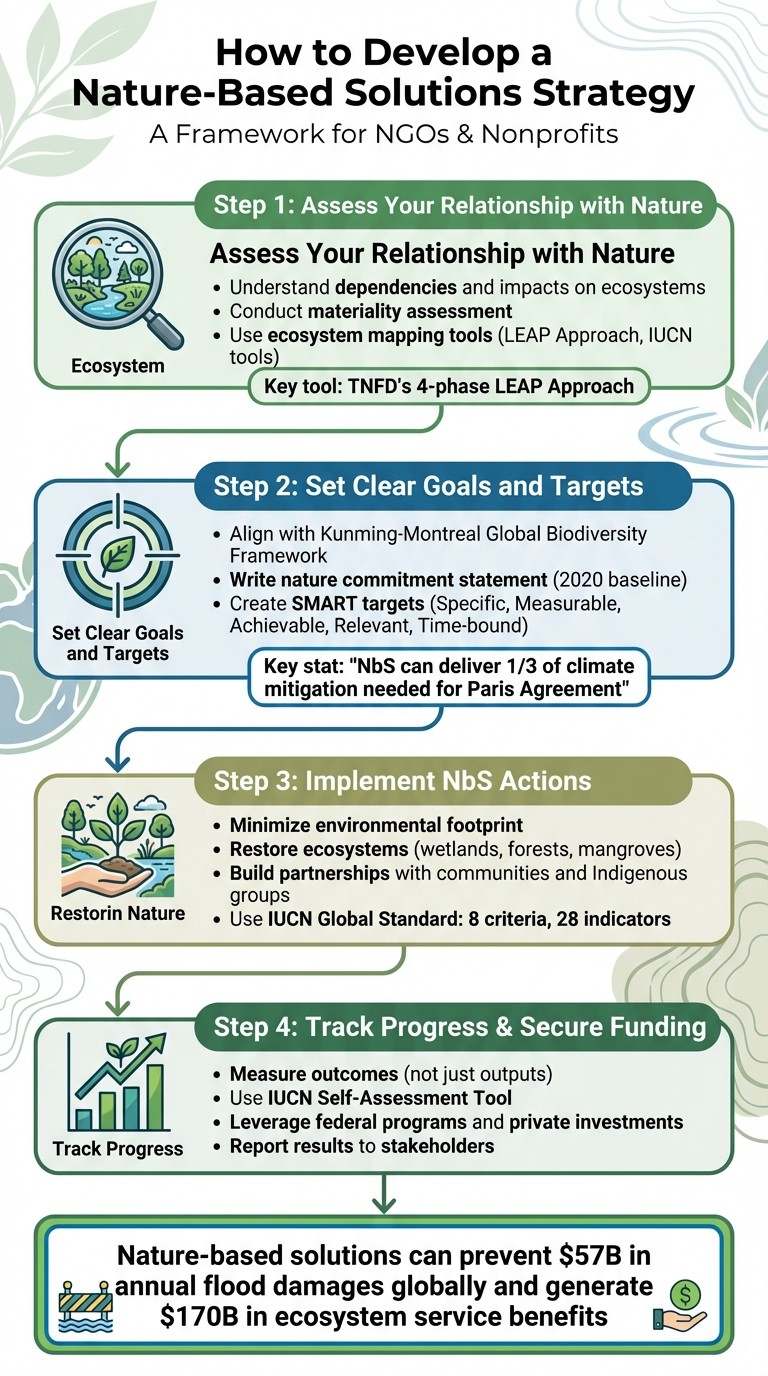
4-Step Nature-Based Solutions Strategy for Nonprofits
Building Community Resilience with Nature-Based Solutions, A Facilitated Discussion
Assess Your Organization's Relationship with Nature
Before crafting a strategy for nature-based solutions, it's essential to evaluate how your nonprofit interacts with and depends on natural ecosystems. This process uncovers both potential risks to your mission and opportunities to amplify your impact. Treat natural systems as essential infrastructure rather than optional assets - your programs rely on thriving ecosystems to succeed [6].
Start by identifying the ecosystems most critical to your work and measuring how your operations affect them. For example, if your mission involves reducing coastal disaster risks, assess how degraded wetlands might heighten flooding dangers. If food security is your focus, consider how shifting climate patterns impact agricultural land and water availability [6].
"Reliable quantification of the costs and benefits of Nature-Based Solutions (NBS) for climate resilience can facilitate further mainstreaming of these interventions by articulating the value proposition of NBS across sectors." – World Bank [4]
Once you've gathered insights, refine your approach by conducting a materiality review and ecosystem mapping to turn findings into actionable strategies.
Conduct a Materiality Assessment
A materiality assessment helps pinpoint which nature-related issues present the greatest risks or opportunities for your organization. This process evaluates your operations, programs, and supply chains to identify areas where ecosystem degradation could hinder your mission or where restoration might enhance your impact [6].
Focus on how climate-related changes affect the natural resources your organization depends on. For instance, are droughts threatening water supplies for community initiatives? Or is deforestation increasing disaster risks in your service areas? The goal is to ensure your activities contribute to net positive biodiversity outcomes rather than unintentionally harming the ecosystems you rely on [6].
To strengthen your case with donors and partners, use a decision framework to quantify the costs and benefits of nature-based interventions. Narrow your focus by categorizing operations based on specific ecosystem types - such as coastal wetlands, forests, urban green spaces, or inland wetlands - making the assessment more targeted and manageable [4].
Use Ecosystem Mapping Tools
Practical tools can help you identify and visualize the ecosystems that are most relevant to your mission. The LEAP Approach, developed by the Taskforce on Nature-related Financial Disclosures (TNFD), provides a structured method with four phases: Locate your interface with nature, Evaluate your dependencies and impacts, Assess your risks and opportunities, and Prepare to respond and report [7]. Begin with the "Locate" phase to determine where your operations significantly depend on or affect ecosystems.
The IUCN Global Standard for Nature-based Solutions offers a comprehensive framework with 8 criteria and 28 indicators to guide and evaluate your interventions. Created through input from over 800 practitioners in more than 100 countries, this standard serves as a reliable benchmark for nonprofit strategies. Additionally, the IUCN Online Self-Assessment Tool can help you identify gaps in your current projects and align them with global biodiversity goals [8].
For broader support, explore the Nature-Based Solutions Roadmap, which includes over 400 tools and resources such as strategy guides and case studies tailored to project development [5]. This resource can help you map ecosystem services relevant to your mission, whether you focus on climate resilience, water security, or community health. Incorporating indigenous knowledge and engaging local communities throughout the assessment process ensures your strategy aligns with on-the-ground realities [5].
Set Clear NbS Goals and Targets
Once you've assessed your organization's connection to nature, it's time to turn those insights into concrete objectives. Your goals should directly address the societal challenges your nonprofit is tackling - whether that's combating climate change, enhancing food security, reducing disaster risks, or improving community health - while also contributing to biodiversity gains [2][6].
The Kunming-Montreal Global Biodiversity Framework, adopted in December 2022, offers a global roadmap for halting and reversing nature loss by 2030 [12][13]. This framework underscores the urgency of the task, and your goals should reflect this while staying realistic about what your nonprofit can achieve.
"Nature positive by 2030 refers to halting and reversing nature loss by 2030 from a 2020 baseline, through measurable gains in the health, abundance, diversity and resilience of species, ecosystems, and natural processes." – Nature Positive Initiative [12]
The potential impact is immense: nature-based solutions can deliver one-third of the climate mitigation needed to meet the targets of the Paris Agreement [2]. Your goals should not only focus on primary environmental outcomes but also consider co-benefits. These might include improved water quality, enhanced recreational spaces, or stronger community resilience - all of which align well with nonprofit missions [5][9]. These objectives will serve as the foundation for the next steps in your strategy.
Write a Nature Commitment Statement
A formal commitment statement is a crucial step in building trust with stakeholders and anchoring your strategy. This document should clearly articulate what "nature positive" means for your organization and establish a 2020 baseline for tracking progress [12]. It should align with global biodiversity goals while being tailored to your nonprofit’s mission and values.
Key components of your commitment statement should include:
A clear definition of your nature-positive goals.
Recognition of the role healthy ecosystems play in your work.
Acknowledgment of Indigenous and local knowledge systems.
Transparency about how progress will be measured and reported [11][12][13].
Think of this as your organization’s public pledge. It should be specific enough to ensure accountability but flexible enough to allow for adjustments as needed.
As of September 2023, over 61 cities worldwide, including 23 in the U.S. and Canada, have signed the Montreal Pledge to implement the Kunming-Montreal Global Biodiversity Framework locally. Cities like Montreal, Vancouver, and Quebec City are leading the way [13]. Nonprofits can draw inspiration from these municipal commitments but should adapt their statements to fit their own scale and capacity.
"Clarity about what 'Nature Positive impact' means is essential for organizations to be able to report on their impacts and show progress against measurable actions and targets." – Eelco van de Enden, CEO of Global Reporting Initiative [12]
Your commitment statement should reflect your organization's most critical environmental dependencies. For example, if your work relies heavily on coastal ecosystems, prioritize marine and wetland restoration. If food security is a core focus, emphasize agricultural practices that improve soil carbon sequestration and protect water resources. A great example comes from Just Earth Uganda, which combines climate-smart agricultural initiatives with farmer education to ensure both land productivity and resource conservation [11]. These commitments should align closely with the environmental priorities identified earlier in your planning.
Create SMART Targets for Nature-Based Actions
Transform your commitment into actionable goals by applying the SMART framework - Specific, Measurable, Achievable, Relevant, and Time-bound. Identify pathways that make sense for your location and capacity, such as restoring wetlands, planting native trees, or adopting regenerative agriculture practices [10].
The IUCN Global Standard for Nature-based Solutions offers 8 criteria and 28 indicators to ensure your targets are well-structured and internationally aligned [8]. Tools like the IUCN Online NbS Self-Assessment Tool can help pinpoint areas for improvement in your project design and confirm that your targets meet global benchmarks.
Quantify both your starting point and your potential impact. For instance:
If you're working on reforestation, measure current greenhouse gas emissions from degraded land and estimate the carbon sequestration potential of restored forests.
For coastal protection efforts, calculate the number of community members at risk of flooding and assess how restored mangroves or salt marshes could mitigate that risk.
Natural England provides a useful example: in 2024, they initiated six pilot projects covering over 500 hectares each to evaluate nature-based solutions for carbon sequestration and ecosystem restoration [1].
Integrate your NbS targets into your organization’s existing planning frameworks [6]. If you already have strategies for climate adaptation or community resilience, embed nature-based goals within these plans. Include milestones for implementation, maintenance, and adjustments to ensure the long-term effectiveness of your initiatives [5]. With over one-third of U.S. fish and wildlife species currently at risk of extinction, the need for ambitious yet realistic targets has never been more pressing [6].
Your targets should outline both primary outcomes and co-benefits. For example, a wetland restoration project might specify the area to be restored (specific), the annual carbon sequestration in tons (measurable), a timeline for completion (time-bound), alignment with watershed protection goals (relevant), and feasibility within budget constraints (achievable). Additionally, the project could quantify co-benefits such as improved water quality for downstream communities, new habitats for migratory birds, and enhanced flood protection for local neighborhoods [5][9].
Implement NbS Actions and Build Partnerships
With clear goals for nature-based solutions (NbS) in place, the next step is to bring your strategy to life. This involves reducing your environmental footprint, restoring ecosystems, and forming partnerships that combine diverse expertise, Indigenous knowledge, and community-driven priorities.
"Implementing NBS projects requires numerous types of expertise and input from many different perspectives and sources of knowledge." – Nicholas Institute for Environmental Policy Solutions [14]
By streamlining operations, focusing on restoration, and fostering collaboration, you can turn your NbS vision into tangible outcomes.
Minimize Your Organization's Environmental Impact
Start by identifying and reducing your environmental footprint. Treat existing natural assets as vital infrastructure that needs safeguarding and care [6].
If your organization oversees land, consider replacing traditional “gray” infrastructure - like concrete drainage systems or hardened shorelines - with natural or hybrid "green-gray" solutions [5][6]. For instance, urban stormwater management could shift from underground pipes to bioswales and rain gardens, which naturally filter runoff while supporting local habitats [5].
Ensure natural features have the space to function and adapt over time. This might involve setting aside buffer zones around wetlands, maintaining floodplains to manage seasonal water surges, or keeping development away from stream corridors [6]. When planning infrastructure improvements, take future climate impacts - such as rising sea levels, heavier rainfall, or temperature shifts - into account to protect these natural systems [6].
Restore and Regenerate Ecosystems
Restoration efforts should address local challenges while delivering measurable benefits. The IUCN Global Standard for Nature-based Solutions provides a framework with eight criteria and 28 indicators to ensure projects are effective and sustainable [2]. Focus on societal issues that align with your mission, such as disaster risk reduction, food and water security, climate adaptation, or public health [2].
Common restoration approaches include wetland restoration, prescribed burns to reduce wildfire risks, and living shorelines to combat coastal erosion [5]. These projects can yield significant returns: mangroves, for example, prevent an estimated $57 billion in annual flood damages across countries like the U.S., India, and Vietnam [2]. Globally, nature-based solutions focused on climate challenges generate ecosystem service benefits valued at $170 billion [2].
Before launching any project, use the IUCN NbS Self-Assessment Tool to measure your design against global standards [2]. Build in adaptive management protocols to address the evolving nature of living systems [5]. To strengthen your expertise, consider certifications from the IUCN Academy [2].
Collaborate with Stakeholders for Greater Impact
Effective partnerships are essential for turning NbS goals into real-world results. Success depends on engaging ecologists, resource managers, engineers, planners, and, most importantly, the communities directly impacted by your work [14]. Incorporating Indigenous knowledge is particularly crucial for achieving meaningful outcomes [5].
Early community consultation helps identify socio-environmental priorities and ensures projects deliver measurable benefits [5]. Explore funding opportunities like the Bureau of Indian Affairs Annual Tribal Climate Resilience Awards to support initiatives led by or in partnership with Indigenous groups [14].
Organizations such as Council Fire assist nonprofits in navigating the complexities of stakeholder collaboration. By combining technical expertise, strategic planning, and effective communication, they help build trust and drive action. These partnerships transform ambitious sustainability goals into practical, measurable outcomes that benefit both the environment and society.
Additional resources and funding are available through programs like USDA Working Lands for Wildlife, which supports voluntary land improvements on private and tribal lands [14]. The National Fish and Wildlife Foundation's America The Beautiful Challenge funds collaborative projects focused on watershed restoration, resilience, and workforce development [14]. For further guidance, the Nature-Based Solutions Roadmap from the Nicholas Institute and the U.S. Department of the Interior offers access to over 400 case studies and tools to support implementation [5].
Track Progress and Secure Funding
Once your Nature-based Solutions (NbS) projects are underway, it's crucial to establish systems that track progress and secure sustainable funding. Monitoring outcomes not only strengthens credibility with stakeholders but also ensures your initiatives have the resources needed for lasting success.
Measure and Report Your NbS Results
Concentrate on measuring outcomes rather than just outputs. For example, instead of simply counting the number of trees planted, assess the tangible benefits such as reduced flood risks, improved water quality, or enhanced biodiversity. This approach highlights meaningful results and builds trust with donors who want to see the real-world impact of their contributions [15].
The IUCN Global Standard offers a reliable framework to evaluate outcomes [8]. Additionally, the free IUCN Online NbS Self-Assessment Tool helps generate comprehensive reports for stakeholders, a resource developed with input from over 800 practitioners across more than 100 countries [8].
"Measuring impact demonstrates to donors, funders, and stakeholders that the nonprofit's work is making a difference." – Nonprofit Megaphone [15]
Choose metrics that align with your project goals. Tools like Tableau or Google Looker Studio can help you create interactive dashboards to track these metrics. Start with a few key indicators and expand as your capacity grows [15]. Platforms such as Socialsuite and Submittable are also excellent for tracking outcomes, while the IUCN Contributions for Nature Platform allows you to document how your projects contribute to global conservation goals [8].
Once you’ve established measurable results, you can leverage these achievements to attract and secure funding for future projects.
Find Funding for NbS Projects
To sustain and scale your efforts, explore a mix of federal programs and innovative funding models. Established programs like FEMA’s Building Resilient Infrastructure and Communities (BRIC) and the EPA’s Clean Water State Revolving Fund offer support for projects ranging from hazard mitigation to streambank restoration [14]. The National Wildlife Federation’s Nature-Based Solutions Funding Database is a valuable resource for identifying federal funding opportunities tailored to your project type and region [16].
In addition to traditional sources, consider nontraditional funding pathways such as climate-focused investments. Institutional investors are increasingly channeling funds into natural climate solutions that deliver both financial returns and measurable environmental benefits [17][18]. For instance, in November 2025, Just Climate acquired a stake in AgroStar, an Indian agritech platform led by CEO Shardul Sheth. AgroStar supports over 10 million smallholder farmers through 10,000 retail stores, offering biological alternatives to chemical fertilizers and real-time agronomic advice. This initiative has led to higher crop yields, reduced input costs, and significant decreases in chemical and water use [17].
For larger-scale conservation efforts, Project Finance for Permanence (PFP) provides a collaborative model that brings together governments, donors, and communities to ensure enduring financial and ecological benefits. Additionally, the EPA’s Water Technical Assistance (WaterTA) program can help build the capacity required to access major infrastructure funding [16].
Conclusion: Creating Impact with Nature-Based Solutions
Crafting a nature-based solutions (NbS) strategy begins with aligning ecosystem health and community priorities. Start by evaluating your organization's connection to natural systems, setting clear and actionable SMART goals, and implementing measures that not only minimize environmental harm but actively work to restore ecosystems.
Treating natural systems as essential infrastructure - and ensuring they receive proper operations and maintenance - is vital for building long-term resilience [5][6].
Collaboration can significantly expand the reach of your efforts. For instance, the Family Forest Carbon Program, a partnership between the American Forest Foundation and The Nature Conservancy, supports private landowners in earning income while enhancing forest health and resilience [3]. Similarly, the Mangoro Market Meri initiative in Papua New Guinea connects women-led mangrove restoration projects with sustainable economic opportunities, exemplifying how community partnerships can lead to enduring results [3].
"Nature-based solutions can play an important role in community adaptation and resilience, not only by reducing climate-related risks but also through enhancing the quality of life for community residents."
– National Wildlife Federation [6]
This perspective underscores the importance of NbS in fostering community resilience. In fact, nature-based solutions have the potential to deliver one-third of the climate mitigation required to meet the goals of the Paris Agreement [2][3]. Integrating NbS into community planning can yield measurable benefits while ensuring equity so that all members of the community share in the advantages [6].
To ensure the success of your NbS strategy, continuous monitoring and adaptive management are key. Utilizing frameworks like the IUCN Global Standard helps projects remain effective as circumstances evolve, while also keeping equity at the forefront [5][6]. Measuring and demonstrating the outcomes of NbS efforts builds trust, attracts diverse funding sources, and allows for scaling these initiatives to achieve broader impact.
FAQs
How can nonprofits align their nature-based solutions strategies with global biodiversity goals?
Nonprofits aiming to support nature-based solutions (NbS) can align their efforts with global biodiversity objectives by leveraging frameworks like the Global Biodiversity Framework (GBF) and the Convention on Biological Diversity (CBD). These serve as valuable roadmaps for connecting an organization's mission to key targets, such as ecosystem restoration, halting species loss, and embedding biodiversity considerations across sectors. Developing a strategic plan with clear milestones and timelines will help track progress effectively.
To ensure initiatives meet global standards and deliver tangible biodiversity benefits, tools like the IUCN Global Standard for NbS can be invaluable. These frameworks help organizations avoid unintended harm while adhering to best practices. Monitoring systems should also be implemented to assess both ecological outcomes - such as the number of acres restored or species recovery rates - and the benefits to local communities. Collaborating with local governments, tribal groups, and private funders can provide additional resources and amplify the impact of projects.
Equally important is engaging communities throughout the process. Inclusive planning enhances biodiversity outcomes while promoting social equity and encouraging long-term stewardship. By aligning with global goals, tracking measurable progress, and actively involving stakeholders, nonprofits can play a significant role in combating biodiversity loss and fostering a healthier planet by 2030.
What are the best funding options for nature-based solutions projects in the U.S.?
For nonprofits across the United States, federal grants and loans stand out as dependable funding options for nature-based solutions (NbS) projects. Agencies such as the EPA, FEMA, NOAA, USDA, and the Department of the Interior offer competitive grants aimed at supporting efforts like ecosystem restoration, climate resilience, and disaster risk reduction. For instance, FEMA's Hazard Mitigation Assistance (HMA) and Building Resilient Infrastructure and Communities (BRIC) programs back initiatives like wetland restoration and urban tree planting, which help reduce flood and wildfire risks.
Low-interest loans also present valuable opportunities. The Clean Water State Revolving Fund, for example, has been instrumental in financing projects such as streambank restoration and stormwater management. Additionally, targeted grants from programs like the Climate Resilience Fund support community-level planning and implementation of NbS projects. By combining these federal resources with state-level funding and strategic partnerships, nonprofits can secure the financial backing needed to advance meaningful, nature-centered initiatives.
How can nonprofits measure the success of their nature-based solutions?
Nonprofits aiming to evaluate the success of their nature-based solutions (NbS) can achieve this by following a structured monitoring and evaluation process. The first step is to establish a baseline to understand the current condition of the ecosystem services you intend to enhance. These might include floodwater storage, carbon sequestration, or urban cooling. Tools such as GIS mapping, remote sensing, and community surveys can help gather precise and reliable data.
Once the baseline is established, progress should be tracked using measurable indicators that align with your objectives. Some key metrics to consider include:
Volume of water retained (measured in millions of gallons)
Reduction in peak flood levels (measured in feet)
Urban temperature decreases (measured in °F)
Biodiversity improvements (e.g., species count or habitat quality)
Economic benefits (e.g., avoided flood damage or increased property values, expressed in USD)
The final step is to translate these findings into clear, tangible outcomes. This can be done by calculating the financial value of the ecosystem services provided. For instance, you might report: "The restored wetland retained 2.5 million gallons of runoff, preventing $1.3 million in flood damages in 2025." This method not only ensures transparency but also demonstrates both ecological and financial benefits to stakeholders and donors.
Related Blog Posts
Latest Articles
©2025



FAQ
01
What does it really mean to “redefine profit”?
02
What makes Council Fire different?
03
Who does Council Fire you work with?
04
What does working with Council Fire actually look like?
05
How does Council Fire help organizations turn big goals into action?
06
How does Council Fire define and measure success?
Jan 20, 2026
How to Develop a Nature-Based Solutions Strategy for NGOs & Nonprofits
Sustainability Strategy
In This Article
A practical guide for nonprofits to assess ecosystem dependencies, set SMART NbS targets, implement restoration, measure outcomes, and secure funding.
How to Develop a Nature-Based Solutions Strategy for NGOs & Nonprofits
Nature-based solutions (NbS) leverage natural ecosystems to tackle challenges like climate change, flooding, food insecurity, and biodiversity loss. By restoring and managing ecosystems such as forests, wetlands, and mangroves, these strategies provide environmental and societal benefits. For nonprofits, NbS can significantly enhance impact by addressing critical issues while aligning with global goals like the Paris Agreement.
Key Steps:
Assess Your Organization's Relationship with Nature:
Understand how your work depends on and impacts ecosystems.
Conduct a materiality assessment to identify risks and opportunities.
Use tools like ecosystem mapping to pinpoint areas of focus.
Set Clear Goals and Targets:
Align objectives with global frameworks like the Kunming-Montreal Global Biodiversity Framework.
Write a commitment statement to define your organization's nature-positive goals.
Use the SMART framework to create actionable, measurable targets.
Implement NbS Actions:
Reduce your environmental footprint and restore ecosystems.
Prioritize projects like wetland restoration, green infrastructure, or regenerative agriculture.
Collaborate with communities, Indigenous groups, and experts to ensure success.
Track Progress and Secure Funding:
Measure outcomes (e.g., reduced flood risks, improved biodiversity) using tools like the IUCN Global Standard.
Leverage federal programs, private investments, and innovative funding models to sustain projects.
4-Step Nature-Based Solutions Strategy for Nonprofits
Building Community Resilience with Nature-Based Solutions, A Facilitated Discussion
Assess Your Organization's Relationship with Nature
Before crafting a strategy for nature-based solutions, it's essential to evaluate how your nonprofit interacts with and depends on natural ecosystems. This process uncovers both potential risks to your mission and opportunities to amplify your impact. Treat natural systems as essential infrastructure rather than optional assets - your programs rely on thriving ecosystems to succeed [6].
Start by identifying the ecosystems most critical to your work and measuring how your operations affect them. For example, if your mission involves reducing coastal disaster risks, assess how degraded wetlands might heighten flooding dangers. If food security is your focus, consider how shifting climate patterns impact agricultural land and water availability [6].
"Reliable quantification of the costs and benefits of Nature-Based Solutions (NBS) for climate resilience can facilitate further mainstreaming of these interventions by articulating the value proposition of NBS across sectors." – World Bank [4]
Once you've gathered insights, refine your approach by conducting a materiality review and ecosystem mapping to turn findings into actionable strategies.
Conduct a Materiality Assessment
A materiality assessment helps pinpoint which nature-related issues present the greatest risks or opportunities for your organization. This process evaluates your operations, programs, and supply chains to identify areas where ecosystem degradation could hinder your mission or where restoration might enhance your impact [6].
Focus on how climate-related changes affect the natural resources your organization depends on. For instance, are droughts threatening water supplies for community initiatives? Or is deforestation increasing disaster risks in your service areas? The goal is to ensure your activities contribute to net positive biodiversity outcomes rather than unintentionally harming the ecosystems you rely on [6].
To strengthen your case with donors and partners, use a decision framework to quantify the costs and benefits of nature-based interventions. Narrow your focus by categorizing operations based on specific ecosystem types - such as coastal wetlands, forests, urban green spaces, or inland wetlands - making the assessment more targeted and manageable [4].
Use Ecosystem Mapping Tools
Practical tools can help you identify and visualize the ecosystems that are most relevant to your mission. The LEAP Approach, developed by the Taskforce on Nature-related Financial Disclosures (TNFD), provides a structured method with four phases: Locate your interface with nature, Evaluate your dependencies and impacts, Assess your risks and opportunities, and Prepare to respond and report [7]. Begin with the "Locate" phase to determine where your operations significantly depend on or affect ecosystems.
The IUCN Global Standard for Nature-based Solutions offers a comprehensive framework with 8 criteria and 28 indicators to guide and evaluate your interventions. Created through input from over 800 practitioners in more than 100 countries, this standard serves as a reliable benchmark for nonprofit strategies. Additionally, the IUCN Online Self-Assessment Tool can help you identify gaps in your current projects and align them with global biodiversity goals [8].
For broader support, explore the Nature-Based Solutions Roadmap, which includes over 400 tools and resources such as strategy guides and case studies tailored to project development [5]. This resource can help you map ecosystem services relevant to your mission, whether you focus on climate resilience, water security, or community health. Incorporating indigenous knowledge and engaging local communities throughout the assessment process ensures your strategy aligns with on-the-ground realities [5].
Set Clear NbS Goals and Targets
Once you've assessed your organization's connection to nature, it's time to turn those insights into concrete objectives. Your goals should directly address the societal challenges your nonprofit is tackling - whether that's combating climate change, enhancing food security, reducing disaster risks, or improving community health - while also contributing to biodiversity gains [2][6].
The Kunming-Montreal Global Biodiversity Framework, adopted in December 2022, offers a global roadmap for halting and reversing nature loss by 2030 [12][13]. This framework underscores the urgency of the task, and your goals should reflect this while staying realistic about what your nonprofit can achieve.
"Nature positive by 2030 refers to halting and reversing nature loss by 2030 from a 2020 baseline, through measurable gains in the health, abundance, diversity and resilience of species, ecosystems, and natural processes." – Nature Positive Initiative [12]
The potential impact is immense: nature-based solutions can deliver one-third of the climate mitigation needed to meet the targets of the Paris Agreement [2]. Your goals should not only focus on primary environmental outcomes but also consider co-benefits. These might include improved water quality, enhanced recreational spaces, or stronger community resilience - all of which align well with nonprofit missions [5][9]. These objectives will serve as the foundation for the next steps in your strategy.
Write a Nature Commitment Statement
A formal commitment statement is a crucial step in building trust with stakeholders and anchoring your strategy. This document should clearly articulate what "nature positive" means for your organization and establish a 2020 baseline for tracking progress [12]. It should align with global biodiversity goals while being tailored to your nonprofit’s mission and values.
Key components of your commitment statement should include:
A clear definition of your nature-positive goals.
Recognition of the role healthy ecosystems play in your work.
Acknowledgment of Indigenous and local knowledge systems.
Transparency about how progress will be measured and reported [11][12][13].
Think of this as your organization’s public pledge. It should be specific enough to ensure accountability but flexible enough to allow for adjustments as needed.
As of September 2023, over 61 cities worldwide, including 23 in the U.S. and Canada, have signed the Montreal Pledge to implement the Kunming-Montreal Global Biodiversity Framework locally. Cities like Montreal, Vancouver, and Quebec City are leading the way [13]. Nonprofits can draw inspiration from these municipal commitments but should adapt their statements to fit their own scale and capacity.
"Clarity about what 'Nature Positive impact' means is essential for organizations to be able to report on their impacts and show progress against measurable actions and targets." – Eelco van de Enden, CEO of Global Reporting Initiative [12]
Your commitment statement should reflect your organization's most critical environmental dependencies. For example, if your work relies heavily on coastal ecosystems, prioritize marine and wetland restoration. If food security is a core focus, emphasize agricultural practices that improve soil carbon sequestration and protect water resources. A great example comes from Just Earth Uganda, which combines climate-smart agricultural initiatives with farmer education to ensure both land productivity and resource conservation [11]. These commitments should align closely with the environmental priorities identified earlier in your planning.
Create SMART Targets for Nature-Based Actions
Transform your commitment into actionable goals by applying the SMART framework - Specific, Measurable, Achievable, Relevant, and Time-bound. Identify pathways that make sense for your location and capacity, such as restoring wetlands, planting native trees, or adopting regenerative agriculture practices [10].
The IUCN Global Standard for Nature-based Solutions offers 8 criteria and 28 indicators to ensure your targets are well-structured and internationally aligned [8]. Tools like the IUCN Online NbS Self-Assessment Tool can help pinpoint areas for improvement in your project design and confirm that your targets meet global benchmarks.
Quantify both your starting point and your potential impact. For instance:
If you're working on reforestation, measure current greenhouse gas emissions from degraded land and estimate the carbon sequestration potential of restored forests.
For coastal protection efforts, calculate the number of community members at risk of flooding and assess how restored mangroves or salt marshes could mitigate that risk.
Natural England provides a useful example: in 2024, they initiated six pilot projects covering over 500 hectares each to evaluate nature-based solutions for carbon sequestration and ecosystem restoration [1].
Integrate your NbS targets into your organization’s existing planning frameworks [6]. If you already have strategies for climate adaptation or community resilience, embed nature-based goals within these plans. Include milestones for implementation, maintenance, and adjustments to ensure the long-term effectiveness of your initiatives [5]. With over one-third of U.S. fish and wildlife species currently at risk of extinction, the need for ambitious yet realistic targets has never been more pressing [6].
Your targets should outline both primary outcomes and co-benefits. For example, a wetland restoration project might specify the area to be restored (specific), the annual carbon sequestration in tons (measurable), a timeline for completion (time-bound), alignment with watershed protection goals (relevant), and feasibility within budget constraints (achievable). Additionally, the project could quantify co-benefits such as improved water quality for downstream communities, new habitats for migratory birds, and enhanced flood protection for local neighborhoods [5][9].
Implement NbS Actions and Build Partnerships
With clear goals for nature-based solutions (NbS) in place, the next step is to bring your strategy to life. This involves reducing your environmental footprint, restoring ecosystems, and forming partnerships that combine diverse expertise, Indigenous knowledge, and community-driven priorities.
"Implementing NBS projects requires numerous types of expertise and input from many different perspectives and sources of knowledge." – Nicholas Institute for Environmental Policy Solutions [14]
By streamlining operations, focusing on restoration, and fostering collaboration, you can turn your NbS vision into tangible outcomes.
Minimize Your Organization's Environmental Impact
Start by identifying and reducing your environmental footprint. Treat existing natural assets as vital infrastructure that needs safeguarding and care [6].
If your organization oversees land, consider replacing traditional “gray” infrastructure - like concrete drainage systems or hardened shorelines - with natural or hybrid "green-gray" solutions [5][6]. For instance, urban stormwater management could shift from underground pipes to bioswales and rain gardens, which naturally filter runoff while supporting local habitats [5].
Ensure natural features have the space to function and adapt over time. This might involve setting aside buffer zones around wetlands, maintaining floodplains to manage seasonal water surges, or keeping development away from stream corridors [6]. When planning infrastructure improvements, take future climate impacts - such as rising sea levels, heavier rainfall, or temperature shifts - into account to protect these natural systems [6].
Restore and Regenerate Ecosystems
Restoration efforts should address local challenges while delivering measurable benefits. The IUCN Global Standard for Nature-based Solutions provides a framework with eight criteria and 28 indicators to ensure projects are effective and sustainable [2]. Focus on societal issues that align with your mission, such as disaster risk reduction, food and water security, climate adaptation, or public health [2].
Common restoration approaches include wetland restoration, prescribed burns to reduce wildfire risks, and living shorelines to combat coastal erosion [5]. These projects can yield significant returns: mangroves, for example, prevent an estimated $57 billion in annual flood damages across countries like the U.S., India, and Vietnam [2]. Globally, nature-based solutions focused on climate challenges generate ecosystem service benefits valued at $170 billion [2].
Before launching any project, use the IUCN NbS Self-Assessment Tool to measure your design against global standards [2]. Build in adaptive management protocols to address the evolving nature of living systems [5]. To strengthen your expertise, consider certifications from the IUCN Academy [2].
Collaborate with Stakeholders for Greater Impact
Effective partnerships are essential for turning NbS goals into real-world results. Success depends on engaging ecologists, resource managers, engineers, planners, and, most importantly, the communities directly impacted by your work [14]. Incorporating Indigenous knowledge is particularly crucial for achieving meaningful outcomes [5].
Early community consultation helps identify socio-environmental priorities and ensures projects deliver measurable benefits [5]. Explore funding opportunities like the Bureau of Indian Affairs Annual Tribal Climate Resilience Awards to support initiatives led by or in partnership with Indigenous groups [14].
Organizations such as Council Fire assist nonprofits in navigating the complexities of stakeholder collaboration. By combining technical expertise, strategic planning, and effective communication, they help build trust and drive action. These partnerships transform ambitious sustainability goals into practical, measurable outcomes that benefit both the environment and society.
Additional resources and funding are available through programs like USDA Working Lands for Wildlife, which supports voluntary land improvements on private and tribal lands [14]. The National Fish and Wildlife Foundation's America The Beautiful Challenge funds collaborative projects focused on watershed restoration, resilience, and workforce development [14]. For further guidance, the Nature-Based Solutions Roadmap from the Nicholas Institute and the U.S. Department of the Interior offers access to over 400 case studies and tools to support implementation [5].
Track Progress and Secure Funding
Once your Nature-based Solutions (NbS) projects are underway, it's crucial to establish systems that track progress and secure sustainable funding. Monitoring outcomes not only strengthens credibility with stakeholders but also ensures your initiatives have the resources needed for lasting success.
Measure and Report Your NbS Results
Concentrate on measuring outcomes rather than just outputs. For example, instead of simply counting the number of trees planted, assess the tangible benefits such as reduced flood risks, improved water quality, or enhanced biodiversity. This approach highlights meaningful results and builds trust with donors who want to see the real-world impact of their contributions [15].
The IUCN Global Standard offers a reliable framework to evaluate outcomes [8]. Additionally, the free IUCN Online NbS Self-Assessment Tool helps generate comprehensive reports for stakeholders, a resource developed with input from over 800 practitioners across more than 100 countries [8].
"Measuring impact demonstrates to donors, funders, and stakeholders that the nonprofit's work is making a difference." – Nonprofit Megaphone [15]
Choose metrics that align with your project goals. Tools like Tableau or Google Looker Studio can help you create interactive dashboards to track these metrics. Start with a few key indicators and expand as your capacity grows [15]. Platforms such as Socialsuite and Submittable are also excellent for tracking outcomes, while the IUCN Contributions for Nature Platform allows you to document how your projects contribute to global conservation goals [8].
Once you’ve established measurable results, you can leverage these achievements to attract and secure funding for future projects.
Find Funding for NbS Projects
To sustain and scale your efforts, explore a mix of federal programs and innovative funding models. Established programs like FEMA’s Building Resilient Infrastructure and Communities (BRIC) and the EPA’s Clean Water State Revolving Fund offer support for projects ranging from hazard mitigation to streambank restoration [14]. The National Wildlife Federation’s Nature-Based Solutions Funding Database is a valuable resource for identifying federal funding opportunities tailored to your project type and region [16].
In addition to traditional sources, consider nontraditional funding pathways such as climate-focused investments. Institutional investors are increasingly channeling funds into natural climate solutions that deliver both financial returns and measurable environmental benefits [17][18]. For instance, in November 2025, Just Climate acquired a stake in AgroStar, an Indian agritech platform led by CEO Shardul Sheth. AgroStar supports over 10 million smallholder farmers through 10,000 retail stores, offering biological alternatives to chemical fertilizers and real-time agronomic advice. This initiative has led to higher crop yields, reduced input costs, and significant decreases in chemical and water use [17].
For larger-scale conservation efforts, Project Finance for Permanence (PFP) provides a collaborative model that brings together governments, donors, and communities to ensure enduring financial and ecological benefits. Additionally, the EPA’s Water Technical Assistance (WaterTA) program can help build the capacity required to access major infrastructure funding [16].
Conclusion: Creating Impact with Nature-Based Solutions
Crafting a nature-based solutions (NbS) strategy begins with aligning ecosystem health and community priorities. Start by evaluating your organization's connection to natural systems, setting clear and actionable SMART goals, and implementing measures that not only minimize environmental harm but actively work to restore ecosystems.
Treating natural systems as essential infrastructure - and ensuring they receive proper operations and maintenance - is vital for building long-term resilience [5][6].
Collaboration can significantly expand the reach of your efforts. For instance, the Family Forest Carbon Program, a partnership between the American Forest Foundation and The Nature Conservancy, supports private landowners in earning income while enhancing forest health and resilience [3]. Similarly, the Mangoro Market Meri initiative in Papua New Guinea connects women-led mangrove restoration projects with sustainable economic opportunities, exemplifying how community partnerships can lead to enduring results [3].
"Nature-based solutions can play an important role in community adaptation and resilience, not only by reducing climate-related risks but also through enhancing the quality of life for community residents."
– National Wildlife Federation [6]
This perspective underscores the importance of NbS in fostering community resilience. In fact, nature-based solutions have the potential to deliver one-third of the climate mitigation required to meet the goals of the Paris Agreement [2][3]. Integrating NbS into community planning can yield measurable benefits while ensuring equity so that all members of the community share in the advantages [6].
To ensure the success of your NbS strategy, continuous monitoring and adaptive management are key. Utilizing frameworks like the IUCN Global Standard helps projects remain effective as circumstances evolve, while also keeping equity at the forefront [5][6]. Measuring and demonstrating the outcomes of NbS efforts builds trust, attracts diverse funding sources, and allows for scaling these initiatives to achieve broader impact.
FAQs
How can nonprofits align their nature-based solutions strategies with global biodiversity goals?
Nonprofits aiming to support nature-based solutions (NbS) can align their efforts with global biodiversity objectives by leveraging frameworks like the Global Biodiversity Framework (GBF) and the Convention on Biological Diversity (CBD). These serve as valuable roadmaps for connecting an organization's mission to key targets, such as ecosystem restoration, halting species loss, and embedding biodiversity considerations across sectors. Developing a strategic plan with clear milestones and timelines will help track progress effectively.
To ensure initiatives meet global standards and deliver tangible biodiversity benefits, tools like the IUCN Global Standard for NbS can be invaluable. These frameworks help organizations avoid unintended harm while adhering to best practices. Monitoring systems should also be implemented to assess both ecological outcomes - such as the number of acres restored or species recovery rates - and the benefits to local communities. Collaborating with local governments, tribal groups, and private funders can provide additional resources and amplify the impact of projects.
Equally important is engaging communities throughout the process. Inclusive planning enhances biodiversity outcomes while promoting social equity and encouraging long-term stewardship. By aligning with global goals, tracking measurable progress, and actively involving stakeholders, nonprofits can play a significant role in combating biodiversity loss and fostering a healthier planet by 2030.
What are the best funding options for nature-based solutions projects in the U.S.?
For nonprofits across the United States, federal grants and loans stand out as dependable funding options for nature-based solutions (NbS) projects. Agencies such as the EPA, FEMA, NOAA, USDA, and the Department of the Interior offer competitive grants aimed at supporting efforts like ecosystem restoration, climate resilience, and disaster risk reduction. For instance, FEMA's Hazard Mitigation Assistance (HMA) and Building Resilient Infrastructure and Communities (BRIC) programs back initiatives like wetland restoration and urban tree planting, which help reduce flood and wildfire risks.
Low-interest loans also present valuable opportunities. The Clean Water State Revolving Fund, for example, has been instrumental in financing projects such as streambank restoration and stormwater management. Additionally, targeted grants from programs like the Climate Resilience Fund support community-level planning and implementation of NbS projects. By combining these federal resources with state-level funding and strategic partnerships, nonprofits can secure the financial backing needed to advance meaningful, nature-centered initiatives.
How can nonprofits measure the success of their nature-based solutions?
Nonprofits aiming to evaluate the success of their nature-based solutions (NbS) can achieve this by following a structured monitoring and evaluation process. The first step is to establish a baseline to understand the current condition of the ecosystem services you intend to enhance. These might include floodwater storage, carbon sequestration, or urban cooling. Tools such as GIS mapping, remote sensing, and community surveys can help gather precise and reliable data.
Once the baseline is established, progress should be tracked using measurable indicators that align with your objectives. Some key metrics to consider include:
Volume of water retained (measured in millions of gallons)
Reduction in peak flood levels (measured in feet)
Urban temperature decreases (measured in °F)
Biodiversity improvements (e.g., species count or habitat quality)
Economic benefits (e.g., avoided flood damage or increased property values, expressed in USD)
The final step is to translate these findings into clear, tangible outcomes. This can be done by calculating the financial value of the ecosystem services provided. For instance, you might report: "The restored wetland retained 2.5 million gallons of runoff, preventing $1.3 million in flood damages in 2025." This method not only ensures transparency but also demonstrates both ecological and financial benefits to stakeholders and donors.
Related Blog Posts
FAQ
01
What does it really mean to “redefine profit”?
02
What makes Council Fire different?
03
Who does Council Fire you work with?
04
What does working with Council Fire actually look like?
05
How does Council Fire help organizations turn big goals into action?
06
How does Council Fire define and measure success?
Jan 20, 2026
How to Develop a Nature-Based Solutions Strategy for NGOs & Nonprofits
Sustainability Strategy
In This Article
A practical guide for nonprofits to assess ecosystem dependencies, set SMART NbS targets, implement restoration, measure outcomes, and secure funding.
How to Develop a Nature-Based Solutions Strategy for NGOs & Nonprofits
Nature-based solutions (NbS) leverage natural ecosystems to tackle challenges like climate change, flooding, food insecurity, and biodiversity loss. By restoring and managing ecosystems such as forests, wetlands, and mangroves, these strategies provide environmental and societal benefits. For nonprofits, NbS can significantly enhance impact by addressing critical issues while aligning with global goals like the Paris Agreement.
Key Steps:
Assess Your Organization's Relationship with Nature:
Understand how your work depends on and impacts ecosystems.
Conduct a materiality assessment to identify risks and opportunities.
Use tools like ecosystem mapping to pinpoint areas of focus.
Set Clear Goals and Targets:
Align objectives with global frameworks like the Kunming-Montreal Global Biodiversity Framework.
Write a commitment statement to define your organization's nature-positive goals.
Use the SMART framework to create actionable, measurable targets.
Implement NbS Actions:
Reduce your environmental footprint and restore ecosystems.
Prioritize projects like wetland restoration, green infrastructure, or regenerative agriculture.
Collaborate with communities, Indigenous groups, and experts to ensure success.
Track Progress and Secure Funding:
Measure outcomes (e.g., reduced flood risks, improved biodiversity) using tools like the IUCN Global Standard.
Leverage federal programs, private investments, and innovative funding models to sustain projects.
4-Step Nature-Based Solutions Strategy for Nonprofits
Building Community Resilience with Nature-Based Solutions, A Facilitated Discussion
Assess Your Organization's Relationship with Nature
Before crafting a strategy for nature-based solutions, it's essential to evaluate how your nonprofit interacts with and depends on natural ecosystems. This process uncovers both potential risks to your mission and opportunities to amplify your impact. Treat natural systems as essential infrastructure rather than optional assets - your programs rely on thriving ecosystems to succeed [6].
Start by identifying the ecosystems most critical to your work and measuring how your operations affect them. For example, if your mission involves reducing coastal disaster risks, assess how degraded wetlands might heighten flooding dangers. If food security is your focus, consider how shifting climate patterns impact agricultural land and water availability [6].
"Reliable quantification of the costs and benefits of Nature-Based Solutions (NBS) for climate resilience can facilitate further mainstreaming of these interventions by articulating the value proposition of NBS across sectors." – World Bank [4]
Once you've gathered insights, refine your approach by conducting a materiality review and ecosystem mapping to turn findings into actionable strategies.
Conduct a Materiality Assessment
A materiality assessment helps pinpoint which nature-related issues present the greatest risks or opportunities for your organization. This process evaluates your operations, programs, and supply chains to identify areas where ecosystem degradation could hinder your mission or where restoration might enhance your impact [6].
Focus on how climate-related changes affect the natural resources your organization depends on. For instance, are droughts threatening water supplies for community initiatives? Or is deforestation increasing disaster risks in your service areas? The goal is to ensure your activities contribute to net positive biodiversity outcomes rather than unintentionally harming the ecosystems you rely on [6].
To strengthen your case with donors and partners, use a decision framework to quantify the costs and benefits of nature-based interventions. Narrow your focus by categorizing operations based on specific ecosystem types - such as coastal wetlands, forests, urban green spaces, or inland wetlands - making the assessment more targeted and manageable [4].
Use Ecosystem Mapping Tools
Practical tools can help you identify and visualize the ecosystems that are most relevant to your mission. The LEAP Approach, developed by the Taskforce on Nature-related Financial Disclosures (TNFD), provides a structured method with four phases: Locate your interface with nature, Evaluate your dependencies and impacts, Assess your risks and opportunities, and Prepare to respond and report [7]. Begin with the "Locate" phase to determine where your operations significantly depend on or affect ecosystems.
The IUCN Global Standard for Nature-based Solutions offers a comprehensive framework with 8 criteria and 28 indicators to guide and evaluate your interventions. Created through input from over 800 practitioners in more than 100 countries, this standard serves as a reliable benchmark for nonprofit strategies. Additionally, the IUCN Online Self-Assessment Tool can help you identify gaps in your current projects and align them with global biodiversity goals [8].
For broader support, explore the Nature-Based Solutions Roadmap, which includes over 400 tools and resources such as strategy guides and case studies tailored to project development [5]. This resource can help you map ecosystem services relevant to your mission, whether you focus on climate resilience, water security, or community health. Incorporating indigenous knowledge and engaging local communities throughout the assessment process ensures your strategy aligns with on-the-ground realities [5].
Set Clear NbS Goals and Targets
Once you've assessed your organization's connection to nature, it's time to turn those insights into concrete objectives. Your goals should directly address the societal challenges your nonprofit is tackling - whether that's combating climate change, enhancing food security, reducing disaster risks, or improving community health - while also contributing to biodiversity gains [2][6].
The Kunming-Montreal Global Biodiversity Framework, adopted in December 2022, offers a global roadmap for halting and reversing nature loss by 2030 [12][13]. This framework underscores the urgency of the task, and your goals should reflect this while staying realistic about what your nonprofit can achieve.
"Nature positive by 2030 refers to halting and reversing nature loss by 2030 from a 2020 baseline, through measurable gains in the health, abundance, diversity and resilience of species, ecosystems, and natural processes." – Nature Positive Initiative [12]
The potential impact is immense: nature-based solutions can deliver one-third of the climate mitigation needed to meet the targets of the Paris Agreement [2]. Your goals should not only focus on primary environmental outcomes but also consider co-benefits. These might include improved water quality, enhanced recreational spaces, or stronger community resilience - all of which align well with nonprofit missions [5][9]. These objectives will serve as the foundation for the next steps in your strategy.
Write a Nature Commitment Statement
A formal commitment statement is a crucial step in building trust with stakeholders and anchoring your strategy. This document should clearly articulate what "nature positive" means for your organization and establish a 2020 baseline for tracking progress [12]. It should align with global biodiversity goals while being tailored to your nonprofit’s mission and values.
Key components of your commitment statement should include:
A clear definition of your nature-positive goals.
Recognition of the role healthy ecosystems play in your work.
Acknowledgment of Indigenous and local knowledge systems.
Transparency about how progress will be measured and reported [11][12][13].
Think of this as your organization’s public pledge. It should be specific enough to ensure accountability but flexible enough to allow for adjustments as needed.
As of September 2023, over 61 cities worldwide, including 23 in the U.S. and Canada, have signed the Montreal Pledge to implement the Kunming-Montreal Global Biodiversity Framework locally. Cities like Montreal, Vancouver, and Quebec City are leading the way [13]. Nonprofits can draw inspiration from these municipal commitments but should adapt their statements to fit their own scale and capacity.
"Clarity about what 'Nature Positive impact' means is essential for organizations to be able to report on their impacts and show progress against measurable actions and targets." – Eelco van de Enden, CEO of Global Reporting Initiative [12]
Your commitment statement should reflect your organization's most critical environmental dependencies. For example, if your work relies heavily on coastal ecosystems, prioritize marine and wetland restoration. If food security is a core focus, emphasize agricultural practices that improve soil carbon sequestration and protect water resources. A great example comes from Just Earth Uganda, which combines climate-smart agricultural initiatives with farmer education to ensure both land productivity and resource conservation [11]. These commitments should align closely with the environmental priorities identified earlier in your planning.
Create SMART Targets for Nature-Based Actions
Transform your commitment into actionable goals by applying the SMART framework - Specific, Measurable, Achievable, Relevant, and Time-bound. Identify pathways that make sense for your location and capacity, such as restoring wetlands, planting native trees, or adopting regenerative agriculture practices [10].
The IUCN Global Standard for Nature-based Solutions offers 8 criteria and 28 indicators to ensure your targets are well-structured and internationally aligned [8]. Tools like the IUCN Online NbS Self-Assessment Tool can help pinpoint areas for improvement in your project design and confirm that your targets meet global benchmarks.
Quantify both your starting point and your potential impact. For instance:
If you're working on reforestation, measure current greenhouse gas emissions from degraded land and estimate the carbon sequestration potential of restored forests.
For coastal protection efforts, calculate the number of community members at risk of flooding and assess how restored mangroves or salt marshes could mitigate that risk.
Natural England provides a useful example: in 2024, they initiated six pilot projects covering over 500 hectares each to evaluate nature-based solutions for carbon sequestration and ecosystem restoration [1].
Integrate your NbS targets into your organization’s existing planning frameworks [6]. If you already have strategies for climate adaptation or community resilience, embed nature-based goals within these plans. Include milestones for implementation, maintenance, and adjustments to ensure the long-term effectiveness of your initiatives [5]. With over one-third of U.S. fish and wildlife species currently at risk of extinction, the need for ambitious yet realistic targets has never been more pressing [6].
Your targets should outline both primary outcomes and co-benefits. For example, a wetland restoration project might specify the area to be restored (specific), the annual carbon sequestration in tons (measurable), a timeline for completion (time-bound), alignment with watershed protection goals (relevant), and feasibility within budget constraints (achievable). Additionally, the project could quantify co-benefits such as improved water quality for downstream communities, new habitats for migratory birds, and enhanced flood protection for local neighborhoods [5][9].
Implement NbS Actions and Build Partnerships
With clear goals for nature-based solutions (NbS) in place, the next step is to bring your strategy to life. This involves reducing your environmental footprint, restoring ecosystems, and forming partnerships that combine diverse expertise, Indigenous knowledge, and community-driven priorities.
"Implementing NBS projects requires numerous types of expertise and input from many different perspectives and sources of knowledge." – Nicholas Institute for Environmental Policy Solutions [14]
By streamlining operations, focusing on restoration, and fostering collaboration, you can turn your NbS vision into tangible outcomes.
Minimize Your Organization's Environmental Impact
Start by identifying and reducing your environmental footprint. Treat existing natural assets as vital infrastructure that needs safeguarding and care [6].
If your organization oversees land, consider replacing traditional “gray” infrastructure - like concrete drainage systems or hardened shorelines - with natural or hybrid "green-gray" solutions [5][6]. For instance, urban stormwater management could shift from underground pipes to bioswales and rain gardens, which naturally filter runoff while supporting local habitats [5].
Ensure natural features have the space to function and adapt over time. This might involve setting aside buffer zones around wetlands, maintaining floodplains to manage seasonal water surges, or keeping development away from stream corridors [6]. When planning infrastructure improvements, take future climate impacts - such as rising sea levels, heavier rainfall, or temperature shifts - into account to protect these natural systems [6].
Restore and Regenerate Ecosystems
Restoration efforts should address local challenges while delivering measurable benefits. The IUCN Global Standard for Nature-based Solutions provides a framework with eight criteria and 28 indicators to ensure projects are effective and sustainable [2]. Focus on societal issues that align with your mission, such as disaster risk reduction, food and water security, climate adaptation, or public health [2].
Common restoration approaches include wetland restoration, prescribed burns to reduce wildfire risks, and living shorelines to combat coastal erosion [5]. These projects can yield significant returns: mangroves, for example, prevent an estimated $57 billion in annual flood damages across countries like the U.S., India, and Vietnam [2]. Globally, nature-based solutions focused on climate challenges generate ecosystem service benefits valued at $170 billion [2].
Before launching any project, use the IUCN NbS Self-Assessment Tool to measure your design against global standards [2]. Build in adaptive management protocols to address the evolving nature of living systems [5]. To strengthen your expertise, consider certifications from the IUCN Academy [2].
Collaborate with Stakeholders for Greater Impact
Effective partnerships are essential for turning NbS goals into real-world results. Success depends on engaging ecologists, resource managers, engineers, planners, and, most importantly, the communities directly impacted by your work [14]. Incorporating Indigenous knowledge is particularly crucial for achieving meaningful outcomes [5].
Early community consultation helps identify socio-environmental priorities and ensures projects deliver measurable benefits [5]. Explore funding opportunities like the Bureau of Indian Affairs Annual Tribal Climate Resilience Awards to support initiatives led by or in partnership with Indigenous groups [14].
Organizations such as Council Fire assist nonprofits in navigating the complexities of stakeholder collaboration. By combining technical expertise, strategic planning, and effective communication, they help build trust and drive action. These partnerships transform ambitious sustainability goals into practical, measurable outcomes that benefit both the environment and society.
Additional resources and funding are available through programs like USDA Working Lands for Wildlife, which supports voluntary land improvements on private and tribal lands [14]. The National Fish and Wildlife Foundation's America The Beautiful Challenge funds collaborative projects focused on watershed restoration, resilience, and workforce development [14]. For further guidance, the Nature-Based Solutions Roadmap from the Nicholas Institute and the U.S. Department of the Interior offers access to over 400 case studies and tools to support implementation [5].
Track Progress and Secure Funding
Once your Nature-based Solutions (NbS) projects are underway, it's crucial to establish systems that track progress and secure sustainable funding. Monitoring outcomes not only strengthens credibility with stakeholders but also ensures your initiatives have the resources needed for lasting success.
Measure and Report Your NbS Results
Concentrate on measuring outcomes rather than just outputs. For example, instead of simply counting the number of trees planted, assess the tangible benefits such as reduced flood risks, improved water quality, or enhanced biodiversity. This approach highlights meaningful results and builds trust with donors who want to see the real-world impact of their contributions [15].
The IUCN Global Standard offers a reliable framework to evaluate outcomes [8]. Additionally, the free IUCN Online NbS Self-Assessment Tool helps generate comprehensive reports for stakeholders, a resource developed with input from over 800 practitioners across more than 100 countries [8].
"Measuring impact demonstrates to donors, funders, and stakeholders that the nonprofit's work is making a difference." – Nonprofit Megaphone [15]
Choose metrics that align with your project goals. Tools like Tableau or Google Looker Studio can help you create interactive dashboards to track these metrics. Start with a few key indicators and expand as your capacity grows [15]. Platforms such as Socialsuite and Submittable are also excellent for tracking outcomes, while the IUCN Contributions for Nature Platform allows you to document how your projects contribute to global conservation goals [8].
Once you’ve established measurable results, you can leverage these achievements to attract and secure funding for future projects.
Find Funding for NbS Projects
To sustain and scale your efforts, explore a mix of federal programs and innovative funding models. Established programs like FEMA’s Building Resilient Infrastructure and Communities (BRIC) and the EPA’s Clean Water State Revolving Fund offer support for projects ranging from hazard mitigation to streambank restoration [14]. The National Wildlife Federation’s Nature-Based Solutions Funding Database is a valuable resource for identifying federal funding opportunities tailored to your project type and region [16].
In addition to traditional sources, consider nontraditional funding pathways such as climate-focused investments. Institutional investors are increasingly channeling funds into natural climate solutions that deliver both financial returns and measurable environmental benefits [17][18]. For instance, in November 2025, Just Climate acquired a stake in AgroStar, an Indian agritech platform led by CEO Shardul Sheth. AgroStar supports over 10 million smallholder farmers through 10,000 retail stores, offering biological alternatives to chemical fertilizers and real-time agronomic advice. This initiative has led to higher crop yields, reduced input costs, and significant decreases in chemical and water use [17].
For larger-scale conservation efforts, Project Finance for Permanence (PFP) provides a collaborative model that brings together governments, donors, and communities to ensure enduring financial and ecological benefits. Additionally, the EPA’s Water Technical Assistance (WaterTA) program can help build the capacity required to access major infrastructure funding [16].
Conclusion: Creating Impact with Nature-Based Solutions
Crafting a nature-based solutions (NbS) strategy begins with aligning ecosystem health and community priorities. Start by evaluating your organization's connection to natural systems, setting clear and actionable SMART goals, and implementing measures that not only minimize environmental harm but actively work to restore ecosystems.
Treating natural systems as essential infrastructure - and ensuring they receive proper operations and maintenance - is vital for building long-term resilience [5][6].
Collaboration can significantly expand the reach of your efforts. For instance, the Family Forest Carbon Program, a partnership between the American Forest Foundation and The Nature Conservancy, supports private landowners in earning income while enhancing forest health and resilience [3]. Similarly, the Mangoro Market Meri initiative in Papua New Guinea connects women-led mangrove restoration projects with sustainable economic opportunities, exemplifying how community partnerships can lead to enduring results [3].
"Nature-based solutions can play an important role in community adaptation and resilience, not only by reducing climate-related risks but also through enhancing the quality of life for community residents."
– National Wildlife Federation [6]
This perspective underscores the importance of NbS in fostering community resilience. In fact, nature-based solutions have the potential to deliver one-third of the climate mitigation required to meet the goals of the Paris Agreement [2][3]. Integrating NbS into community planning can yield measurable benefits while ensuring equity so that all members of the community share in the advantages [6].
To ensure the success of your NbS strategy, continuous monitoring and adaptive management are key. Utilizing frameworks like the IUCN Global Standard helps projects remain effective as circumstances evolve, while also keeping equity at the forefront [5][6]. Measuring and demonstrating the outcomes of NbS efforts builds trust, attracts diverse funding sources, and allows for scaling these initiatives to achieve broader impact.
FAQs
How can nonprofits align their nature-based solutions strategies with global biodiversity goals?
Nonprofits aiming to support nature-based solutions (NbS) can align their efforts with global biodiversity objectives by leveraging frameworks like the Global Biodiversity Framework (GBF) and the Convention on Biological Diversity (CBD). These serve as valuable roadmaps for connecting an organization's mission to key targets, such as ecosystem restoration, halting species loss, and embedding biodiversity considerations across sectors. Developing a strategic plan with clear milestones and timelines will help track progress effectively.
To ensure initiatives meet global standards and deliver tangible biodiversity benefits, tools like the IUCN Global Standard for NbS can be invaluable. These frameworks help organizations avoid unintended harm while adhering to best practices. Monitoring systems should also be implemented to assess both ecological outcomes - such as the number of acres restored or species recovery rates - and the benefits to local communities. Collaborating with local governments, tribal groups, and private funders can provide additional resources and amplify the impact of projects.
Equally important is engaging communities throughout the process. Inclusive planning enhances biodiversity outcomes while promoting social equity and encouraging long-term stewardship. By aligning with global goals, tracking measurable progress, and actively involving stakeholders, nonprofits can play a significant role in combating biodiversity loss and fostering a healthier planet by 2030.
What are the best funding options for nature-based solutions projects in the U.S.?
For nonprofits across the United States, federal grants and loans stand out as dependable funding options for nature-based solutions (NbS) projects. Agencies such as the EPA, FEMA, NOAA, USDA, and the Department of the Interior offer competitive grants aimed at supporting efforts like ecosystem restoration, climate resilience, and disaster risk reduction. For instance, FEMA's Hazard Mitigation Assistance (HMA) and Building Resilient Infrastructure and Communities (BRIC) programs back initiatives like wetland restoration and urban tree planting, which help reduce flood and wildfire risks.
Low-interest loans also present valuable opportunities. The Clean Water State Revolving Fund, for example, has been instrumental in financing projects such as streambank restoration and stormwater management. Additionally, targeted grants from programs like the Climate Resilience Fund support community-level planning and implementation of NbS projects. By combining these federal resources with state-level funding and strategic partnerships, nonprofits can secure the financial backing needed to advance meaningful, nature-centered initiatives.
How can nonprofits measure the success of their nature-based solutions?
Nonprofits aiming to evaluate the success of their nature-based solutions (NbS) can achieve this by following a structured monitoring and evaluation process. The first step is to establish a baseline to understand the current condition of the ecosystem services you intend to enhance. These might include floodwater storage, carbon sequestration, or urban cooling. Tools such as GIS mapping, remote sensing, and community surveys can help gather precise and reliable data.
Once the baseline is established, progress should be tracked using measurable indicators that align with your objectives. Some key metrics to consider include:
Volume of water retained (measured in millions of gallons)
Reduction in peak flood levels (measured in feet)
Urban temperature decreases (measured in °F)
Biodiversity improvements (e.g., species count or habitat quality)
Economic benefits (e.g., avoided flood damage or increased property values, expressed in USD)
The final step is to translate these findings into clear, tangible outcomes. This can be done by calculating the financial value of the ecosystem services provided. For instance, you might report: "The restored wetland retained 2.5 million gallons of runoff, preventing $1.3 million in flood damages in 2025." This method not only ensures transparency but also demonstrates both ecological and financial benefits to stakeholders and donors.
Related Blog Posts
FAQ
What does it really mean to “redefine profit”?
What makes Council Fire different?
Who does Council Fire you work with?
What does working with Council Fire actually look like?
How does Council Fire help organizations turn big goals into action?
How does Council Fire define and measure success?