Jan 21, 2026
How to Develop a Nature-Based Solutions Strategy for Foundations & Philanthropic Organizations
Sustainability Strategy
In This Article
Five-step roadmap for foundations to plan, finance, partner, monitor, and scale nature-based solutions for climate resilience, biodiversity, and community benefits.
How to Develop a Nature-Based Solutions Strategy for Foundations & Philanthropic Organizations
Nature-based solutions (NBS) offer a powerful way for foundations and philanthropic organizations to address pressing societal challenges like climate change, biodiversity loss, and disaster risks. By leveraging healthy ecosystems, NBS can provide cost-effective alternatives to traditional infrastructure, improve community well-being, and contribute significantly to global climate goals. However, implementing these solutions requires careful planning, partnerships, and financial strategies.
Key Steps to Building an NBS Strategy:
Assess Organizational Capacity: Evaluate your resources, expertise, and internal alignment to manage complex, multidisciplinary projects.
Align with Mission and Goals: Identify where NBS fits into your funding priorities and geographic focus.
Build Partnerships: Collaborate with local communities, Indigenous groups, and technical experts to ensure project success.
Design Financial Models: Use funding strategies like catalytic capital and pay-for-success models to scale investments.
Monitor and Measure Impact: Establish clear KPIs to track environmental, social, and economic outcomes.
Why It Matters:
NBS can deliver up to one-third of the climate mitigation needed to meet the Paris Agreement.
Projects like mangrove restoration prevent $57 billion in flood damages annually and support biodiversity.
Addressing the $700 billion annual funding gap for NBS requires increased private sector engagement and innovative financing.
By treating natural systems as critical infrastructure and integrating NBS into broader strategies, foundations can drive meaningful change while supporting long-term resilience and sustainability.
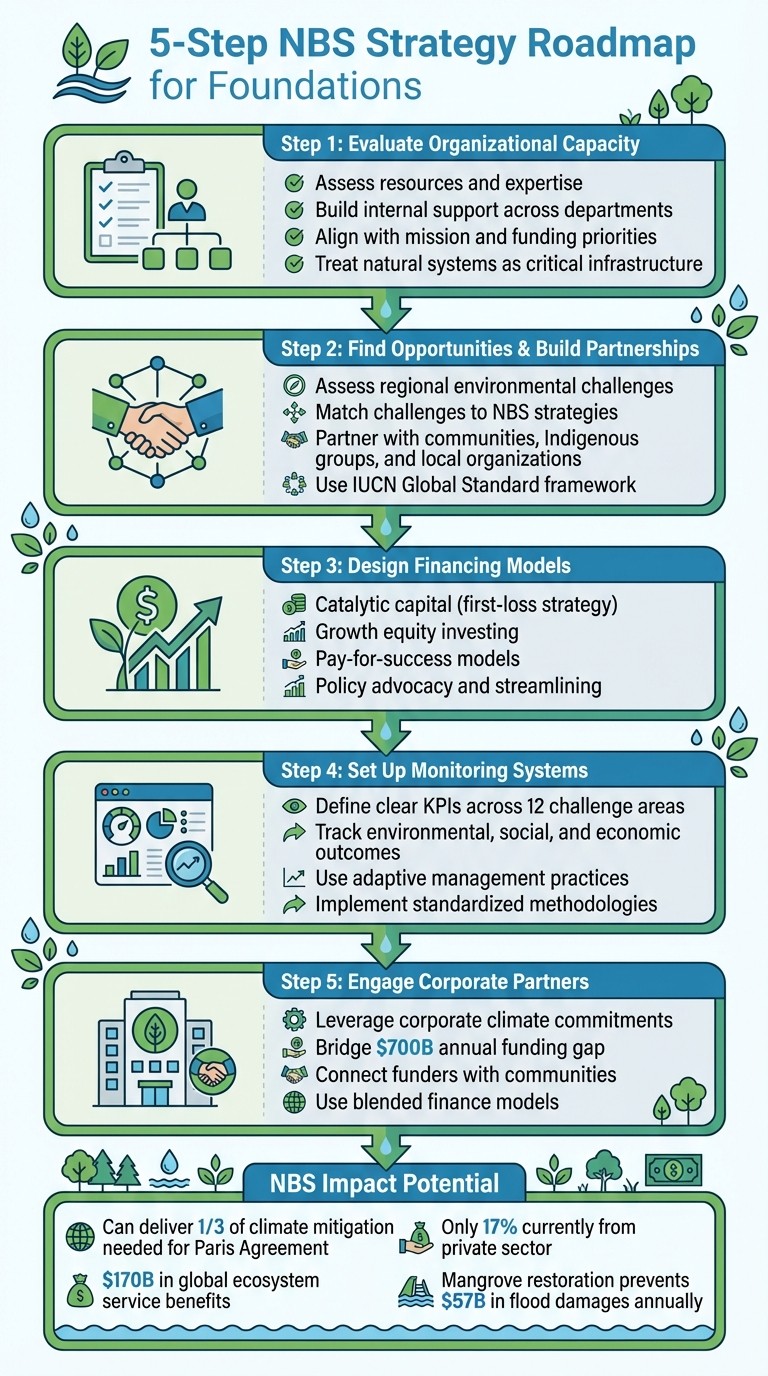
5-Step Nature-Based Solutions Strategy for Foundations
Nature-based solutions: strategies for climate resilience and biodiversity
Step 1: Evaluate Your Organization's Capacity for Nature-Based Solutions
Before diving into nature-based solutions (NBS), it's essential to take a step back and assess whether your organization has the necessary resources, expertise, and internal alignment to see these projects through successfully. Managing NBS initiatives often involves handling complex, multidisciplinary efforts spanning fields like ecology, engineering, community outreach, and regulatory compliance. It's crucial to treat natural systems as "critical infrastructure" - on the same level as traditional systems such as roads or water treatment facilities. This perspective helps in appreciating the additional benefits NBS can bring, like cleaner water, expanded recreational spaces, and healthier ecosystems [7][2]. Conducting this kind of internal evaluation lays the groundwork for aligning your resources with the opportunities NBS can offer.
Build Internal Support and Collaboration
Nature-based solutions thrive on collaboration and diverse expertise. Start by ensuring your organization has access to specialists in ecology, resource management, engineering, and planning. If these skills aren't available in-house, consider building partnerships with federal, state, and local agencies, tribal representatives, or community organizations. Assign senior leaders to champion NBS within your team, ensuring technical needs align with your mission and goals. To secure long-term success, integrate NBS into your existing planning and grant-making frameworks [2][7].
Collaboration across departments is equally important, as NBS projects often address multiple challenges simultaneously. For instance, a single project might improve water quality, reduce flood risks, and enhance biodiversity [3]. Once you’ve confirmed your internal capabilities, the next step is to ensure these projects align with your organization’s broader strategic goals.
Align NBS with Your Mission and Funding Priorities
Take a close look at your current funding portfolio to identify where natural solutions might fit. If your organization already supports traditional infrastructure like concrete storm drains, consider how urban wetlands could serve as a more sustainable alternative - offering flood control, wildlife habitat, and recreational opportunities all in one. Similarly, align your geographic focus and funding priorities with specific NBS strategies. For example:
Watershed restoration and wetland protection can enhance water quality initiatives.
Floodplain restoration or mangrove conservation can strengthen disaster mitigation programs.
Urban forestry and stormwater management can complement urban development projects.
Finally, consider how climate change might affect the natural assets you aim to protect or restore. This forward-looking approach ensures your NBS efforts remain resilient and impactful over time [7].
Step 2: Find Opportunities and Build Partnerships
Once your internal capacity is aligned, it’s time to shift your attention outward. Look at the external challenges your region faces and identify opportunities where nature-based solutions (NBS) can make a measurable difference. By pairing regional issues with proven strategies and forming the right partnerships, you can bring these solutions to life. The objective here is to address the specific environmental and social needs of the communities you serve while ensuring tangible results. This groundwork lays the path for strategic collaborations that drive effective implementation.
Assess Regional Challenges and Match Solutions
Start by identifying the key environmental risks in your target areas. Common challenges include coastal flooding and erosion, urban stormwater runoff, wildfire risks, and agricultural pollution. Each of these issues has nature-based strategies that can mitigate their impact. For instance:
Coastal erosion can be addressed with living shorelines or mangrove restoration.
Urban areas can benefit from green infrastructure, such as permeable surfaces and urban forestry, which reduce runoff and improve public spaces.
Wildfire-prone regions can adopt prescribed burns and forest thinning to maintain healthier ecosystems.
To guide this process, rely on established frameworks. The IUCN Global Standard for Nature-based Solutions offers a self-assessment tool with eight criteria and 28 indicators to evaluate the effectiveness of proposed solutions [1]. Similarly, the Steps to Resilience framework from the U.S. Climate Resilience Toolkit helps integrate natural features into existing community adaptation plans [7]. These tools ensure your interventions align with both local needs and global best practices.
Don’t overlook the added benefits these solutions can bring. For example, interventions that also improve water quality, expand wildlife habitats, or create recreational spaces often gain stronger community support [2].
Partner with Communities and Local Organizations
The success of NBS projects often hinges on collaboration. Bringing together expertise from a variety of sectors - such as federal and state agencies, nonprofits, tribal organizations, academic institutions, and local community groups - ensures a well-rounded approach [3]. A multidisciplinary team, including ecologists, resource managers, and engineers, can address the technical complexities involved in these projects.
Equity should be at the core of these partnerships. Engage local community members early to identify available resources, technical expertise, and funding opportunities that can support implementation [8]. Incorporating Indigenous knowledge is especially important for ensuring the long-term success of these projects [2]. Instead of creating standalone initiatives, integrate NBS efforts into ongoing community planning processes. This approach builds on existing relationships and ensures your work complements other resilience efforts [7].
Federal programs like the DOI Bureau of Indian Affairs Tribal Climate Resilience awards and the NFWF America the Beautiful Challenge offer funding specifically for collaborative watershed restoration and resilience projects [8].
"Implementing NBS projects requires numerous types of expertise and input from many different perspectives and sources of knowledge." - Nicholas Institute for Environmental Policy Solutions [3]
When working with partners on riparian or watershed restoration, prioritize restoring the natural hydrology of rivers. Focusing on natural processes, combined with strong community involvement, creates a foundation for NBS projects that deliver long-term environmental and social benefits.
Step 3: Design Financing Models for NBS Projects
Once partnerships are in place, the next step is to establish a financial framework that ensures the long-term viability of your Nature-Based Solutions (NBS) projects. A well-designed financing model not only supports measurable environmental and social outcomes but also aligns with your organization's risk appetite, impact goals, and the specific needs of the communities you aim to serve. With over half of global economic sectors directly dependent on nature, the loss of natural ecosystems poses a significant threat to financial stability [9]. This makes careful financial planning essential - not just for achieving project goals but also as a tool for managing systemic risks. This step builds on the collaborative foundations established in Step 2.
4 Approaches to Philanthropic Investment
When structuring investments in NBS, there are four key funding strategies to consider:
Catalytic capital: This approach allows foundations to take on higher risks, helping to attract private investors by de-risking projects. Often referred to as a "first-loss" strategy, it encourages institutional investors who might otherwise be hesitant to participate.
Growth equity investing: This focuses on scaling innovations in land use, water management, and waste systems. For instance, in November 2025, Just Climate's Natural Climate Solutions strategy acquired a stake in AgroStar, an agritech platform in India. Serving over 10 million smallholder farmers through 10,000 retail outlets, AgroStar aims to boost crop yields and farmer incomes while reducing reliance on chemical fertilizers, pesticides, and excessive water use through climate-resilient farming advice [10].
Pay-for-success models: These link financial rewards to measurable results. A notable example is Just Climate's Climate Assets Fund I, which closed in June 2023 with $1.5 billion in commitments, led by Microsoft's Climate Innovation Fund. The fund ties 100% of its performance fees to greenhouse gas reduction targets, with investments in companies like ABB E-mobility, H2 Green Steel, and Meva Energy[11].
Policy advocacy and streamlining: This method focuses on addressing regulatory hurdles that slow the implementation of NBS projects. Funding policy accelerators can help remove bureaucratic obstacles, making it easier to advance natural infrastructure initiatives [2].
"Establishing climate-led investing as a capital allocation imperative is core to our mission. We start with climate impact, identify solutions that will make the biggest difference, and then direct and scale institutional capital." - Clara Barby CBE, Senior Partner, Just Climate [11]
Choosing the Right Financing Model
Your choice of financing model should reflect your goals, whether they involve minimizing risks, driving sustainable growth, or capitalizing on emerging opportunities in NBS markets [9]. For instance:
To protect assets from nature-related risks, focus on tools like portfolio resilience assessments and risk-adjusted pricing.
To generate returns through nature-positive initiatives, consider green bonds or sustainability-linked loans.
For small-scale NBS projects often hindered by high transaction costs, explore options like special purpose vehicles or aggregation debt facilities.
Building internal expertise is crucial for identifying and structuring these financial opportunities. Use science-based metrics that cover financial, environmental, and social outcomes to meet fiduciary responsibilities while advancing sustainability objectives [9]. High-impact sectors such as agriculture, utilities, real estate, and food and beverage can serve as starting points for achieving meaningful results. Federal programs like FEMA’s Building Resilient Infrastructure and Communities, the USDA Agricultural Conservation Easement Program, and the EPA Clean Water State Revolving Fund can also complement philanthropic investments and expand your reach [3].
Finally, tailor your financing approach to the scale of your project and the challenges specific to its region. Smaller projects may need to be bundled together to attract institutional investors, while larger initiatives might benefit from blended finance models that combine philanthropic funding with contributions from pension funds or asset managers [10][11].
Step 4: Set Up Monitoring and Accountability Systems
After securing financing, the next critical step is establishing systems to monitor progress and measure impact. Without a proper monitoring framework, it’s impossible to validate the results of your investments or make necessary adjustments to your nature-based solutions (NBS) projects. This step connects your financial planning with the ongoing strategic evolution of your initiatives.
Set Key Performance Indicators (KPIs)
Defining clear and measurable KPIs is essential to track success across multiple dimensions - not just environmental outcomes. The European Taskforce for NBS Impact Assessment, which draws insights from 17 EU-funded projects, suggests organizing indicators into 12 societal challenge areas: climate resilience, water management, natural and climate hazards, green space management, biodiversity, air quality, place regeneration, social capacity building, participatory governance, social justice and cohesion, health and well-being, and green jobs [12].
For climate-related KPIs, focus on metrics like greenhouse gas reductions, carbon sequestration, and urban heat mitigation. Biodiversity indicators might include tracking habitat restoration, species inventories, and wildlife connectivity. Social and community-focused KPIs can measure improvements in water and air quality, flood risk reduction, and accessibility to recreational spaces. Economic indicators should assess cost-effectiveness compared to traditional infrastructure and the number of green jobs created [16, 17].
Consider real-world examples to see these KPIs in action. The Itaipú Preserves Program, spanning Brazil and Paraguay, planted 44 million trees across 101,000 hectares (about 250,000 acres). This effort captures 5.9 million tons of CO₂ equivalent annually and holds a net present value of $45 million [14]. Similarly, Boston's Resilient Harbor Plan - a $30 billion, 30-year initiative - aims to safeguard 80,000 residents and $85 billion in assets while creating 765,000 square meters (roughly 190 acres) of new open space [14].
"One of the core challenges in funding and implementing nature-based solutions is that people do not understand their much wider value to society." - Susie Roy, Technical Director – Water Quality and Catchment Management, WSP [13]
To ensure your data is consistent and comparable across projects, use standardized methodologies like the EKLIPSE framework or the EU Handbook for practitioners [12]. Digital tools can also simplify monitoring and provide transparent reporting. For example, California has invested approximately $9.3 billion in NBS climate action since 2020, supported by robust tracking systems as of December 2024 [5].
Use Adaptive Management Practices
Once KPIs are in place, adopt adaptive management practices to refine your strategies based on real-world outcomes. This flexible approach allows for adjustments as new data and insights emerge. Effective adaptive management typically follows a five-step cycle: conduct vulnerability assessments, identify potential actions, evaluate the need for significant changes, design interventions, and continuously monitor their effectiveness [15].
Start by establishing baseline vulnerability metrics and allocating resources for long-term maintenance to ensure sustained impact. As projects progress, gather feedback from local communities, governments, and partners to refine your evaluation processes [15]. This ensures that social outcomes are accurately captured and that accountability to stakeholders remains a priority.
Additionally, evaluation systems should go beyond climate mitigation to verify net positive impacts on biodiversity. Allow natural features the space they need to evolve and adapt over time [7]. By embedding adaptive management into your NBS strategy from the beginning, you create a robust feedback loop that strengthens accountability and enhances the overall impact of your initiatives.
Step 5: Engage Corporate Partners and Investors
Strengthen your nature-based solutions (NBS) strategy by involving corporate partners and institutional investors. This approach builds on the collaborative and financial groundwork already in place, linking high-quality projects to corporate climate goals. Currently, only 17% of NBS investments come from the private sector, leaving an annual funding gap of approximately $700 billion [6]. Foundations can play a vital role in bridging this gap by connecting corporations with projects that yield measurable benefits for both climate and biodiversity.
Leverage Corporate Climate Commitments for Funding
As companies face growing pressure to meet net-zero targets, their interest in NBS has significantly increased. With the World Economic Forum identifying biodiversity loss and ecosystem collapse as one of the top five global risks over the next decade [6], businesses in sectors like agriculture, energy, and finance are prioritizing NBS to address these challenges.
Target industries such as energy, mobility, manufacturing, and construction - sectors requiring substantial decarbonization efforts. Tools like the Nature Commitment Tracker can help identify companies making new or expanded pledges toward nature-positive goals. Align these corporate commitments with community-driven projects [4]. Additionally, focus on financial institutions and corporations aiming to mitigate climate and biodiversity risks.
A notable example of corporate engagement is Just Climate’s $1.5 billion Climate Assets Fund I, launched in June 2023 with Microsoft’s Climate Innovation Fund as a key partner. This initiative highlights how corporate involvement can scale institutional investment in NBS [11].
"Establishing climate-led investing as a capital allocation imperative is core to our mission. We start with climate impact, identify solutions that will make the biggest difference, and then direct and scale institutional capital to those solutions." - Clara Barby CBE, Senior Partner, Just Climate [11]
When presenting to corporate partners, emphasize both the practical benefits, such as flood prevention and carbon storage, and the additional advantages like enhanced community well-being and improved brand reputation [16]. Ensure your projects align with the five principles of Natural Climate Solutions - nature-based, sustainable, climate-additional, measurable, and equitable - to provide the credibility corporations seek [4]. Beyond securing funding, foundations should act as intermediaries, ensuring these investments translate into meaningful community outcomes.
Bridge the Gap Between Funders and Communities
Foundations can play a pivotal role in reducing transaction costs by linking corporate funders with local implementation partners and providing standardized metrics for transparent outcome verification. Over half of the global GDP - around $44 trillion - relies on nature [17].
Support local capacity by connecting corporate funders with experienced regional partners who understand the specific needs and contexts of their communities. Offer standardized data, like greenhouse gas tracking, to create a shared framework for outcome verification. Use blended finance models that combine philanthropic, public, and private funding to reduce risks and attract institutional capital [17].
For example, in November 2025, Just Climate’s Natural Climate Solutions strategy secured $375 million from global institutional investors, including the Royal Bank of Canada and the Environment Agency Pension Fund. This funding was directed toward AgroStar, an agritech platform in India that supports 10 million smallholder farmers through a network of 10,000 retail stores. By offering biological alternatives to chemical fertilizers, AgroStar delivered both economic and environmental benefits, showcasing the full spectrum of investment, from project financing to corporate engagement [10].
"Partnering with Just Climate brings far more than capital; they bring deep expertise in scaling natural climate solutions and the conviction to back businesses driving real systemic change." - Shardul Sheth, CEO and Co-Founder, AgroStar [10]
Facilitate public-private partnerships by assisting corporations in navigating municipal regulations and fostering community engagement - common hurdles for private NBS investments [16]. A successful example is the World Resources Institute’s collaboration with RE3CO in Mexico since 2020. This initiative focuses on community-led mangrove restoration in areas like Isla Aguada and Pantanos de Centla. By involving women-led groups to promote economic independence, the program has empowered 6,084 stakeholders and engaged 54 policymakers in creating incentive-driven solutions [17].
Conclusion: Your 5-Step NBS Strategy Roadmap
This roadmap offers a structured approach to embedding nature-based solutions (NBS) into your philanthropic efforts. From assessing capacity and forming partnerships to designing financing mechanisms, setting up monitoring systems, and engaging corporate stakeholders, these steps provide a clear path forward.
Achieving success means shifting away from isolated grantmaking and adopting a broader perspective that treats natural systems as critical infrastructure [2][7]. Nature-based solutions have the potential to deliver one-third of the climate mitigation needed to meet Paris Agreement targets while generating an estimated $170 billion in global ecosystem service benefits [1]. These impressive outcomes depend on partnerships that unite a diverse range of expertise, including ecologists, engineers, community leaders, and holders of Indigenous knowledge [3].
Leverage your foundation’s unique role to bring stakeholders together, foster public-private collaborations, and help local organizations tap into federal funding programs like FEMA’s Building Resilient Infrastructure and Communities initiative or the EPA Clean Water State Revolving Fund [3]. The Nature-Based Solutions Roadmap, with its database of over 400 case studies and tools, provides valuable resources to guide you through every stage of implementation [2].
Start small, refine your approach, and build on your successes. By embracing collaboration and adaptive management, your foundation can help communities tackle challenges like climate change, biodiversity loss, and disaster resilience - one nature-based solution at a time. These steps position your organization to create meaningful and lasting change.
FAQs
How can philanthropic organizations effectively measure the impact of nature-based solutions?
To evaluate the impact of nature-based solutions (NBS), philanthropic organizations should prioritize connecting environmental outcomes to social and economic benefits through well-defined metrics and frameworks. Begin by identifying baseline conditions, such as water quality (e.g., turbidity in mg/L), carbon storage (e.g., tons of CO₂), or biodiversity levels. From there, choose specific indicators that can measure ecological, social, and economic results. Examples might include reduced flooding, improved community health, or increased job opportunities.
Effective data collection is essential. Tools like GIS mapping can track land changes, water monitoring stations can provide insights into water quality, and community surveys can gauge local perspectives and benefits. To make the benefits tangible, translate ecosystem services into monetary terms - such as dollars saved from flood prevention or carbon sequestration efforts. Reporting these results in U.S. dollars and adhering to standard formats ensures the information is clear and easy to compare. Finally, transparent reporting practices and third-party verification can build trust and support, making it easier to expand successful initiatives across different projects.
What are some creative ways to fund nature-based solutions?
Funding nature-based solutions (NBS) often relies on blended-finance models, which bring together resources from public, private, and philanthropic sectors. For instance, federal grants can be combined with contributions from nonprofits, tribal organizations, and private companies, creating a diversified funding pool that helps distribute risks among stakeholders.
Watershed Investment Programs offer another effective strategy. These programs channel financial support from government agencies, foundations, and corporate partners into projects focused on green infrastructure and water security. They frequently adopt results-based contracts, where payouts depend on achieving specific, measurable goals, such as cleaner water or reduced flooding risks.
Impact-investment funds are also becoming a popular choice. These funds attract private investors to back large-scale environmental initiatives, tying financial returns to measurable ecological improvements. Instruments like green bonds and sustainability-linked loans are increasingly being used to finance NBS projects, bridging the gap between environmental goals and economic incentives.
Why are partnerships with local communities important for successful nature-based solutions?
Collaborating with local communities plays a crucial role in the success of nature-based solutions (NBS). These partnerships bring invaluable local knowledge, cultural understanding, and trust - elements that technical expertise alone cannot achieve. When communities are involved, projects are more likely to align with local priorities, meet specific needs, and gain the support required for lasting success.
Working alongside local groups, such as community organizations, tribes, and local governments, allows NBS initiatives to draw on a wide range of skills, including ecological knowledge, planning, and engineering. These collaborations also help uncover benefits that resonate locally, such as flood protection, recreational opportunities, or safeguarding cultural heritage. Involving communities fosters a stronger sense of ownership and responsibility, which strengthens the long-term impact and sustainability of these projects. By merging environmental goals with community interests, NBS efforts become both effective and meaningful on multiple levels.
Related Blog Posts
Latest Articles
©2025


FAQ
01
What does it really mean to “redefine profit”?
02
What makes Council Fire different?
03
Who does Council Fire you work with?
04
What does working with Council Fire actually look like?
05
How does Council Fire help organizations turn big goals into action?
06
How does Council Fire define and measure success?
Jan 21, 2026
How to Develop a Nature-Based Solutions Strategy for Foundations & Philanthropic Organizations
Sustainability Strategy
In This Article
Five-step roadmap for foundations to plan, finance, partner, monitor, and scale nature-based solutions for climate resilience, biodiversity, and community benefits.
How to Develop a Nature-Based Solutions Strategy for Foundations & Philanthropic Organizations
Nature-based solutions (NBS) offer a powerful way for foundations and philanthropic organizations to address pressing societal challenges like climate change, biodiversity loss, and disaster risks. By leveraging healthy ecosystems, NBS can provide cost-effective alternatives to traditional infrastructure, improve community well-being, and contribute significantly to global climate goals. However, implementing these solutions requires careful planning, partnerships, and financial strategies.
Key Steps to Building an NBS Strategy:
Assess Organizational Capacity: Evaluate your resources, expertise, and internal alignment to manage complex, multidisciplinary projects.
Align with Mission and Goals: Identify where NBS fits into your funding priorities and geographic focus.
Build Partnerships: Collaborate with local communities, Indigenous groups, and technical experts to ensure project success.
Design Financial Models: Use funding strategies like catalytic capital and pay-for-success models to scale investments.
Monitor and Measure Impact: Establish clear KPIs to track environmental, social, and economic outcomes.
Why It Matters:
NBS can deliver up to one-third of the climate mitigation needed to meet the Paris Agreement.
Projects like mangrove restoration prevent $57 billion in flood damages annually and support biodiversity.
Addressing the $700 billion annual funding gap for NBS requires increased private sector engagement and innovative financing.
By treating natural systems as critical infrastructure and integrating NBS into broader strategies, foundations can drive meaningful change while supporting long-term resilience and sustainability.
5-Step Nature-Based Solutions Strategy for Foundations
Nature-based solutions: strategies for climate resilience and biodiversity
Step 1: Evaluate Your Organization's Capacity for Nature-Based Solutions
Before diving into nature-based solutions (NBS), it's essential to take a step back and assess whether your organization has the necessary resources, expertise, and internal alignment to see these projects through successfully. Managing NBS initiatives often involves handling complex, multidisciplinary efforts spanning fields like ecology, engineering, community outreach, and regulatory compliance. It's crucial to treat natural systems as "critical infrastructure" - on the same level as traditional systems such as roads or water treatment facilities. This perspective helps in appreciating the additional benefits NBS can bring, like cleaner water, expanded recreational spaces, and healthier ecosystems [7][2]. Conducting this kind of internal evaluation lays the groundwork for aligning your resources with the opportunities NBS can offer.
Build Internal Support and Collaboration
Nature-based solutions thrive on collaboration and diverse expertise. Start by ensuring your organization has access to specialists in ecology, resource management, engineering, and planning. If these skills aren't available in-house, consider building partnerships with federal, state, and local agencies, tribal representatives, or community organizations. Assign senior leaders to champion NBS within your team, ensuring technical needs align with your mission and goals. To secure long-term success, integrate NBS into your existing planning and grant-making frameworks [2][7].
Collaboration across departments is equally important, as NBS projects often address multiple challenges simultaneously. For instance, a single project might improve water quality, reduce flood risks, and enhance biodiversity [3]. Once you’ve confirmed your internal capabilities, the next step is to ensure these projects align with your organization’s broader strategic goals.
Align NBS with Your Mission and Funding Priorities
Take a close look at your current funding portfolio to identify where natural solutions might fit. If your organization already supports traditional infrastructure like concrete storm drains, consider how urban wetlands could serve as a more sustainable alternative - offering flood control, wildlife habitat, and recreational opportunities all in one. Similarly, align your geographic focus and funding priorities with specific NBS strategies. For example:
Watershed restoration and wetland protection can enhance water quality initiatives.
Floodplain restoration or mangrove conservation can strengthen disaster mitigation programs.
Urban forestry and stormwater management can complement urban development projects.
Finally, consider how climate change might affect the natural assets you aim to protect or restore. This forward-looking approach ensures your NBS efforts remain resilient and impactful over time [7].
Step 2: Find Opportunities and Build Partnerships
Once your internal capacity is aligned, it’s time to shift your attention outward. Look at the external challenges your region faces and identify opportunities where nature-based solutions (NBS) can make a measurable difference. By pairing regional issues with proven strategies and forming the right partnerships, you can bring these solutions to life. The objective here is to address the specific environmental and social needs of the communities you serve while ensuring tangible results. This groundwork lays the path for strategic collaborations that drive effective implementation.
Assess Regional Challenges and Match Solutions
Start by identifying the key environmental risks in your target areas. Common challenges include coastal flooding and erosion, urban stormwater runoff, wildfire risks, and agricultural pollution. Each of these issues has nature-based strategies that can mitigate their impact. For instance:
Coastal erosion can be addressed with living shorelines or mangrove restoration.
Urban areas can benefit from green infrastructure, such as permeable surfaces and urban forestry, which reduce runoff and improve public spaces.
Wildfire-prone regions can adopt prescribed burns and forest thinning to maintain healthier ecosystems.
To guide this process, rely on established frameworks. The IUCN Global Standard for Nature-based Solutions offers a self-assessment tool with eight criteria and 28 indicators to evaluate the effectiveness of proposed solutions [1]. Similarly, the Steps to Resilience framework from the U.S. Climate Resilience Toolkit helps integrate natural features into existing community adaptation plans [7]. These tools ensure your interventions align with both local needs and global best practices.
Don’t overlook the added benefits these solutions can bring. For example, interventions that also improve water quality, expand wildlife habitats, or create recreational spaces often gain stronger community support [2].
Partner with Communities and Local Organizations
The success of NBS projects often hinges on collaboration. Bringing together expertise from a variety of sectors - such as federal and state agencies, nonprofits, tribal organizations, academic institutions, and local community groups - ensures a well-rounded approach [3]. A multidisciplinary team, including ecologists, resource managers, and engineers, can address the technical complexities involved in these projects.
Equity should be at the core of these partnerships. Engage local community members early to identify available resources, technical expertise, and funding opportunities that can support implementation [8]. Incorporating Indigenous knowledge is especially important for ensuring the long-term success of these projects [2]. Instead of creating standalone initiatives, integrate NBS efforts into ongoing community planning processes. This approach builds on existing relationships and ensures your work complements other resilience efforts [7].
Federal programs like the DOI Bureau of Indian Affairs Tribal Climate Resilience awards and the NFWF America the Beautiful Challenge offer funding specifically for collaborative watershed restoration and resilience projects [8].
"Implementing NBS projects requires numerous types of expertise and input from many different perspectives and sources of knowledge." - Nicholas Institute for Environmental Policy Solutions [3]
When working with partners on riparian or watershed restoration, prioritize restoring the natural hydrology of rivers. Focusing on natural processes, combined with strong community involvement, creates a foundation for NBS projects that deliver long-term environmental and social benefits.
Step 3: Design Financing Models for NBS Projects
Once partnerships are in place, the next step is to establish a financial framework that ensures the long-term viability of your Nature-Based Solutions (NBS) projects. A well-designed financing model not only supports measurable environmental and social outcomes but also aligns with your organization's risk appetite, impact goals, and the specific needs of the communities you aim to serve. With over half of global economic sectors directly dependent on nature, the loss of natural ecosystems poses a significant threat to financial stability [9]. This makes careful financial planning essential - not just for achieving project goals but also as a tool for managing systemic risks. This step builds on the collaborative foundations established in Step 2.
4 Approaches to Philanthropic Investment
When structuring investments in NBS, there are four key funding strategies to consider:
Catalytic capital: This approach allows foundations to take on higher risks, helping to attract private investors by de-risking projects. Often referred to as a "first-loss" strategy, it encourages institutional investors who might otherwise be hesitant to participate.
Growth equity investing: This focuses on scaling innovations in land use, water management, and waste systems. For instance, in November 2025, Just Climate's Natural Climate Solutions strategy acquired a stake in AgroStar, an agritech platform in India. Serving over 10 million smallholder farmers through 10,000 retail outlets, AgroStar aims to boost crop yields and farmer incomes while reducing reliance on chemical fertilizers, pesticides, and excessive water use through climate-resilient farming advice [10].
Pay-for-success models: These link financial rewards to measurable results. A notable example is Just Climate's Climate Assets Fund I, which closed in June 2023 with $1.5 billion in commitments, led by Microsoft's Climate Innovation Fund. The fund ties 100% of its performance fees to greenhouse gas reduction targets, with investments in companies like ABB E-mobility, H2 Green Steel, and Meva Energy[11].
Policy advocacy and streamlining: This method focuses on addressing regulatory hurdles that slow the implementation of NBS projects. Funding policy accelerators can help remove bureaucratic obstacles, making it easier to advance natural infrastructure initiatives [2].
"Establishing climate-led investing as a capital allocation imperative is core to our mission. We start with climate impact, identify solutions that will make the biggest difference, and then direct and scale institutional capital." - Clara Barby CBE, Senior Partner, Just Climate [11]
Choosing the Right Financing Model
Your choice of financing model should reflect your goals, whether they involve minimizing risks, driving sustainable growth, or capitalizing on emerging opportunities in NBS markets [9]. For instance:
To protect assets from nature-related risks, focus on tools like portfolio resilience assessments and risk-adjusted pricing.
To generate returns through nature-positive initiatives, consider green bonds or sustainability-linked loans.
For small-scale NBS projects often hindered by high transaction costs, explore options like special purpose vehicles or aggregation debt facilities.
Building internal expertise is crucial for identifying and structuring these financial opportunities. Use science-based metrics that cover financial, environmental, and social outcomes to meet fiduciary responsibilities while advancing sustainability objectives [9]. High-impact sectors such as agriculture, utilities, real estate, and food and beverage can serve as starting points for achieving meaningful results. Federal programs like FEMA’s Building Resilient Infrastructure and Communities, the USDA Agricultural Conservation Easement Program, and the EPA Clean Water State Revolving Fund can also complement philanthropic investments and expand your reach [3].
Finally, tailor your financing approach to the scale of your project and the challenges specific to its region. Smaller projects may need to be bundled together to attract institutional investors, while larger initiatives might benefit from blended finance models that combine philanthropic funding with contributions from pension funds or asset managers [10][11].
Step 4: Set Up Monitoring and Accountability Systems
After securing financing, the next critical step is establishing systems to monitor progress and measure impact. Without a proper monitoring framework, it’s impossible to validate the results of your investments or make necessary adjustments to your nature-based solutions (NBS) projects. This step connects your financial planning with the ongoing strategic evolution of your initiatives.
Set Key Performance Indicators (KPIs)
Defining clear and measurable KPIs is essential to track success across multiple dimensions - not just environmental outcomes. The European Taskforce for NBS Impact Assessment, which draws insights from 17 EU-funded projects, suggests organizing indicators into 12 societal challenge areas: climate resilience, water management, natural and climate hazards, green space management, biodiversity, air quality, place regeneration, social capacity building, participatory governance, social justice and cohesion, health and well-being, and green jobs [12].
For climate-related KPIs, focus on metrics like greenhouse gas reductions, carbon sequestration, and urban heat mitigation. Biodiversity indicators might include tracking habitat restoration, species inventories, and wildlife connectivity. Social and community-focused KPIs can measure improvements in water and air quality, flood risk reduction, and accessibility to recreational spaces. Economic indicators should assess cost-effectiveness compared to traditional infrastructure and the number of green jobs created [16, 17].
Consider real-world examples to see these KPIs in action. The Itaipú Preserves Program, spanning Brazil and Paraguay, planted 44 million trees across 101,000 hectares (about 250,000 acres). This effort captures 5.9 million tons of CO₂ equivalent annually and holds a net present value of $45 million [14]. Similarly, Boston's Resilient Harbor Plan - a $30 billion, 30-year initiative - aims to safeguard 80,000 residents and $85 billion in assets while creating 765,000 square meters (roughly 190 acres) of new open space [14].
"One of the core challenges in funding and implementing nature-based solutions is that people do not understand their much wider value to society." - Susie Roy, Technical Director – Water Quality and Catchment Management, WSP [13]
To ensure your data is consistent and comparable across projects, use standardized methodologies like the EKLIPSE framework or the EU Handbook for practitioners [12]. Digital tools can also simplify monitoring and provide transparent reporting. For example, California has invested approximately $9.3 billion in NBS climate action since 2020, supported by robust tracking systems as of December 2024 [5].
Use Adaptive Management Practices
Once KPIs are in place, adopt adaptive management practices to refine your strategies based on real-world outcomes. This flexible approach allows for adjustments as new data and insights emerge. Effective adaptive management typically follows a five-step cycle: conduct vulnerability assessments, identify potential actions, evaluate the need for significant changes, design interventions, and continuously monitor their effectiveness [15].
Start by establishing baseline vulnerability metrics and allocating resources for long-term maintenance to ensure sustained impact. As projects progress, gather feedback from local communities, governments, and partners to refine your evaluation processes [15]. This ensures that social outcomes are accurately captured and that accountability to stakeholders remains a priority.
Additionally, evaluation systems should go beyond climate mitigation to verify net positive impacts on biodiversity. Allow natural features the space they need to evolve and adapt over time [7]. By embedding adaptive management into your NBS strategy from the beginning, you create a robust feedback loop that strengthens accountability and enhances the overall impact of your initiatives.
Step 5: Engage Corporate Partners and Investors
Strengthen your nature-based solutions (NBS) strategy by involving corporate partners and institutional investors. This approach builds on the collaborative and financial groundwork already in place, linking high-quality projects to corporate climate goals. Currently, only 17% of NBS investments come from the private sector, leaving an annual funding gap of approximately $700 billion [6]. Foundations can play a vital role in bridging this gap by connecting corporations with projects that yield measurable benefits for both climate and biodiversity.
Leverage Corporate Climate Commitments for Funding
As companies face growing pressure to meet net-zero targets, their interest in NBS has significantly increased. With the World Economic Forum identifying biodiversity loss and ecosystem collapse as one of the top five global risks over the next decade [6], businesses in sectors like agriculture, energy, and finance are prioritizing NBS to address these challenges.
Target industries such as energy, mobility, manufacturing, and construction - sectors requiring substantial decarbonization efforts. Tools like the Nature Commitment Tracker can help identify companies making new or expanded pledges toward nature-positive goals. Align these corporate commitments with community-driven projects [4]. Additionally, focus on financial institutions and corporations aiming to mitigate climate and biodiversity risks.
A notable example of corporate engagement is Just Climate’s $1.5 billion Climate Assets Fund I, launched in June 2023 with Microsoft’s Climate Innovation Fund as a key partner. This initiative highlights how corporate involvement can scale institutional investment in NBS [11].
"Establishing climate-led investing as a capital allocation imperative is core to our mission. We start with climate impact, identify solutions that will make the biggest difference, and then direct and scale institutional capital to those solutions." - Clara Barby CBE, Senior Partner, Just Climate [11]
When presenting to corporate partners, emphasize both the practical benefits, such as flood prevention and carbon storage, and the additional advantages like enhanced community well-being and improved brand reputation [16]. Ensure your projects align with the five principles of Natural Climate Solutions - nature-based, sustainable, climate-additional, measurable, and equitable - to provide the credibility corporations seek [4]. Beyond securing funding, foundations should act as intermediaries, ensuring these investments translate into meaningful community outcomes.
Bridge the Gap Between Funders and Communities
Foundations can play a pivotal role in reducing transaction costs by linking corporate funders with local implementation partners and providing standardized metrics for transparent outcome verification. Over half of the global GDP - around $44 trillion - relies on nature [17].
Support local capacity by connecting corporate funders with experienced regional partners who understand the specific needs and contexts of their communities. Offer standardized data, like greenhouse gas tracking, to create a shared framework for outcome verification. Use blended finance models that combine philanthropic, public, and private funding to reduce risks and attract institutional capital [17].
For example, in November 2025, Just Climate’s Natural Climate Solutions strategy secured $375 million from global institutional investors, including the Royal Bank of Canada and the Environment Agency Pension Fund. This funding was directed toward AgroStar, an agritech platform in India that supports 10 million smallholder farmers through a network of 10,000 retail stores. By offering biological alternatives to chemical fertilizers, AgroStar delivered both economic and environmental benefits, showcasing the full spectrum of investment, from project financing to corporate engagement [10].
"Partnering with Just Climate brings far more than capital; they bring deep expertise in scaling natural climate solutions and the conviction to back businesses driving real systemic change." - Shardul Sheth, CEO and Co-Founder, AgroStar [10]
Facilitate public-private partnerships by assisting corporations in navigating municipal regulations and fostering community engagement - common hurdles for private NBS investments [16]. A successful example is the World Resources Institute’s collaboration with RE3CO in Mexico since 2020. This initiative focuses on community-led mangrove restoration in areas like Isla Aguada and Pantanos de Centla. By involving women-led groups to promote economic independence, the program has empowered 6,084 stakeholders and engaged 54 policymakers in creating incentive-driven solutions [17].
Conclusion: Your 5-Step NBS Strategy Roadmap
This roadmap offers a structured approach to embedding nature-based solutions (NBS) into your philanthropic efforts. From assessing capacity and forming partnerships to designing financing mechanisms, setting up monitoring systems, and engaging corporate stakeholders, these steps provide a clear path forward.
Achieving success means shifting away from isolated grantmaking and adopting a broader perspective that treats natural systems as critical infrastructure [2][7]. Nature-based solutions have the potential to deliver one-third of the climate mitigation needed to meet Paris Agreement targets while generating an estimated $170 billion in global ecosystem service benefits [1]. These impressive outcomes depend on partnerships that unite a diverse range of expertise, including ecologists, engineers, community leaders, and holders of Indigenous knowledge [3].
Leverage your foundation’s unique role to bring stakeholders together, foster public-private collaborations, and help local organizations tap into federal funding programs like FEMA’s Building Resilient Infrastructure and Communities initiative or the EPA Clean Water State Revolving Fund [3]. The Nature-Based Solutions Roadmap, with its database of over 400 case studies and tools, provides valuable resources to guide you through every stage of implementation [2].
Start small, refine your approach, and build on your successes. By embracing collaboration and adaptive management, your foundation can help communities tackle challenges like climate change, biodiversity loss, and disaster resilience - one nature-based solution at a time. These steps position your organization to create meaningful and lasting change.
FAQs
How can philanthropic organizations effectively measure the impact of nature-based solutions?
To evaluate the impact of nature-based solutions (NBS), philanthropic organizations should prioritize connecting environmental outcomes to social and economic benefits through well-defined metrics and frameworks. Begin by identifying baseline conditions, such as water quality (e.g., turbidity in mg/L), carbon storage (e.g., tons of CO₂), or biodiversity levels. From there, choose specific indicators that can measure ecological, social, and economic results. Examples might include reduced flooding, improved community health, or increased job opportunities.
Effective data collection is essential. Tools like GIS mapping can track land changes, water monitoring stations can provide insights into water quality, and community surveys can gauge local perspectives and benefits. To make the benefits tangible, translate ecosystem services into monetary terms - such as dollars saved from flood prevention or carbon sequestration efforts. Reporting these results in U.S. dollars and adhering to standard formats ensures the information is clear and easy to compare. Finally, transparent reporting practices and third-party verification can build trust and support, making it easier to expand successful initiatives across different projects.
What are some creative ways to fund nature-based solutions?
Funding nature-based solutions (NBS) often relies on blended-finance models, which bring together resources from public, private, and philanthropic sectors. For instance, federal grants can be combined with contributions from nonprofits, tribal organizations, and private companies, creating a diversified funding pool that helps distribute risks among stakeholders.
Watershed Investment Programs offer another effective strategy. These programs channel financial support from government agencies, foundations, and corporate partners into projects focused on green infrastructure and water security. They frequently adopt results-based contracts, where payouts depend on achieving specific, measurable goals, such as cleaner water or reduced flooding risks.
Impact-investment funds are also becoming a popular choice. These funds attract private investors to back large-scale environmental initiatives, tying financial returns to measurable ecological improvements. Instruments like green bonds and sustainability-linked loans are increasingly being used to finance NBS projects, bridging the gap between environmental goals and economic incentives.
Why are partnerships with local communities important for successful nature-based solutions?
Collaborating with local communities plays a crucial role in the success of nature-based solutions (NBS). These partnerships bring invaluable local knowledge, cultural understanding, and trust - elements that technical expertise alone cannot achieve. When communities are involved, projects are more likely to align with local priorities, meet specific needs, and gain the support required for lasting success.
Working alongside local groups, such as community organizations, tribes, and local governments, allows NBS initiatives to draw on a wide range of skills, including ecological knowledge, planning, and engineering. These collaborations also help uncover benefits that resonate locally, such as flood protection, recreational opportunities, or safeguarding cultural heritage. Involving communities fosters a stronger sense of ownership and responsibility, which strengthens the long-term impact and sustainability of these projects. By merging environmental goals with community interests, NBS efforts become both effective and meaningful on multiple levels.
Related Blog Posts
FAQ
01
What does it really mean to “redefine profit”?
02
What makes Council Fire different?
03
Who does Council Fire you work with?
04
What does working with Council Fire actually look like?
05
How does Council Fire help organizations turn big goals into action?
06
How does Council Fire define and measure success?
Jan 21, 2026
How to Develop a Nature-Based Solutions Strategy for Foundations & Philanthropic Organizations
Sustainability Strategy
In This Article
Five-step roadmap for foundations to plan, finance, partner, monitor, and scale nature-based solutions for climate resilience, biodiversity, and community benefits.
How to Develop a Nature-Based Solutions Strategy for Foundations & Philanthropic Organizations
Nature-based solutions (NBS) offer a powerful way for foundations and philanthropic organizations to address pressing societal challenges like climate change, biodiversity loss, and disaster risks. By leveraging healthy ecosystems, NBS can provide cost-effective alternatives to traditional infrastructure, improve community well-being, and contribute significantly to global climate goals. However, implementing these solutions requires careful planning, partnerships, and financial strategies.
Key Steps to Building an NBS Strategy:
Assess Organizational Capacity: Evaluate your resources, expertise, and internal alignment to manage complex, multidisciplinary projects.
Align with Mission and Goals: Identify where NBS fits into your funding priorities and geographic focus.
Build Partnerships: Collaborate with local communities, Indigenous groups, and technical experts to ensure project success.
Design Financial Models: Use funding strategies like catalytic capital and pay-for-success models to scale investments.
Monitor and Measure Impact: Establish clear KPIs to track environmental, social, and economic outcomes.
Why It Matters:
NBS can deliver up to one-third of the climate mitigation needed to meet the Paris Agreement.
Projects like mangrove restoration prevent $57 billion in flood damages annually and support biodiversity.
Addressing the $700 billion annual funding gap for NBS requires increased private sector engagement and innovative financing.
By treating natural systems as critical infrastructure and integrating NBS into broader strategies, foundations can drive meaningful change while supporting long-term resilience and sustainability.
5-Step Nature-Based Solutions Strategy for Foundations
Nature-based solutions: strategies for climate resilience and biodiversity
Step 1: Evaluate Your Organization's Capacity for Nature-Based Solutions
Before diving into nature-based solutions (NBS), it's essential to take a step back and assess whether your organization has the necessary resources, expertise, and internal alignment to see these projects through successfully. Managing NBS initiatives often involves handling complex, multidisciplinary efforts spanning fields like ecology, engineering, community outreach, and regulatory compliance. It's crucial to treat natural systems as "critical infrastructure" - on the same level as traditional systems such as roads or water treatment facilities. This perspective helps in appreciating the additional benefits NBS can bring, like cleaner water, expanded recreational spaces, and healthier ecosystems [7][2]. Conducting this kind of internal evaluation lays the groundwork for aligning your resources with the opportunities NBS can offer.
Build Internal Support and Collaboration
Nature-based solutions thrive on collaboration and diverse expertise. Start by ensuring your organization has access to specialists in ecology, resource management, engineering, and planning. If these skills aren't available in-house, consider building partnerships with federal, state, and local agencies, tribal representatives, or community organizations. Assign senior leaders to champion NBS within your team, ensuring technical needs align with your mission and goals. To secure long-term success, integrate NBS into your existing planning and grant-making frameworks [2][7].
Collaboration across departments is equally important, as NBS projects often address multiple challenges simultaneously. For instance, a single project might improve water quality, reduce flood risks, and enhance biodiversity [3]. Once you’ve confirmed your internal capabilities, the next step is to ensure these projects align with your organization’s broader strategic goals.
Align NBS with Your Mission and Funding Priorities
Take a close look at your current funding portfolio to identify where natural solutions might fit. If your organization already supports traditional infrastructure like concrete storm drains, consider how urban wetlands could serve as a more sustainable alternative - offering flood control, wildlife habitat, and recreational opportunities all in one. Similarly, align your geographic focus and funding priorities with specific NBS strategies. For example:
Watershed restoration and wetland protection can enhance water quality initiatives.
Floodplain restoration or mangrove conservation can strengthen disaster mitigation programs.
Urban forestry and stormwater management can complement urban development projects.
Finally, consider how climate change might affect the natural assets you aim to protect or restore. This forward-looking approach ensures your NBS efforts remain resilient and impactful over time [7].
Step 2: Find Opportunities and Build Partnerships
Once your internal capacity is aligned, it’s time to shift your attention outward. Look at the external challenges your region faces and identify opportunities where nature-based solutions (NBS) can make a measurable difference. By pairing regional issues with proven strategies and forming the right partnerships, you can bring these solutions to life. The objective here is to address the specific environmental and social needs of the communities you serve while ensuring tangible results. This groundwork lays the path for strategic collaborations that drive effective implementation.
Assess Regional Challenges and Match Solutions
Start by identifying the key environmental risks in your target areas. Common challenges include coastal flooding and erosion, urban stormwater runoff, wildfire risks, and agricultural pollution. Each of these issues has nature-based strategies that can mitigate their impact. For instance:
Coastal erosion can be addressed with living shorelines or mangrove restoration.
Urban areas can benefit from green infrastructure, such as permeable surfaces and urban forestry, which reduce runoff and improve public spaces.
Wildfire-prone regions can adopt prescribed burns and forest thinning to maintain healthier ecosystems.
To guide this process, rely on established frameworks. The IUCN Global Standard for Nature-based Solutions offers a self-assessment tool with eight criteria and 28 indicators to evaluate the effectiveness of proposed solutions [1]. Similarly, the Steps to Resilience framework from the U.S. Climate Resilience Toolkit helps integrate natural features into existing community adaptation plans [7]. These tools ensure your interventions align with both local needs and global best practices.
Don’t overlook the added benefits these solutions can bring. For example, interventions that also improve water quality, expand wildlife habitats, or create recreational spaces often gain stronger community support [2].
Partner with Communities and Local Organizations
The success of NBS projects often hinges on collaboration. Bringing together expertise from a variety of sectors - such as federal and state agencies, nonprofits, tribal organizations, academic institutions, and local community groups - ensures a well-rounded approach [3]. A multidisciplinary team, including ecologists, resource managers, and engineers, can address the technical complexities involved in these projects.
Equity should be at the core of these partnerships. Engage local community members early to identify available resources, technical expertise, and funding opportunities that can support implementation [8]. Incorporating Indigenous knowledge is especially important for ensuring the long-term success of these projects [2]. Instead of creating standalone initiatives, integrate NBS efforts into ongoing community planning processes. This approach builds on existing relationships and ensures your work complements other resilience efforts [7].
Federal programs like the DOI Bureau of Indian Affairs Tribal Climate Resilience awards and the NFWF America the Beautiful Challenge offer funding specifically for collaborative watershed restoration and resilience projects [8].
"Implementing NBS projects requires numerous types of expertise and input from many different perspectives and sources of knowledge." - Nicholas Institute for Environmental Policy Solutions [3]
When working with partners on riparian or watershed restoration, prioritize restoring the natural hydrology of rivers. Focusing on natural processes, combined with strong community involvement, creates a foundation for NBS projects that deliver long-term environmental and social benefits.
Step 3: Design Financing Models for NBS Projects
Once partnerships are in place, the next step is to establish a financial framework that ensures the long-term viability of your Nature-Based Solutions (NBS) projects. A well-designed financing model not only supports measurable environmental and social outcomes but also aligns with your organization's risk appetite, impact goals, and the specific needs of the communities you aim to serve. With over half of global economic sectors directly dependent on nature, the loss of natural ecosystems poses a significant threat to financial stability [9]. This makes careful financial planning essential - not just for achieving project goals but also as a tool for managing systemic risks. This step builds on the collaborative foundations established in Step 2.
4 Approaches to Philanthropic Investment
When structuring investments in NBS, there are four key funding strategies to consider:
Catalytic capital: This approach allows foundations to take on higher risks, helping to attract private investors by de-risking projects. Often referred to as a "first-loss" strategy, it encourages institutional investors who might otherwise be hesitant to participate.
Growth equity investing: This focuses on scaling innovations in land use, water management, and waste systems. For instance, in November 2025, Just Climate's Natural Climate Solutions strategy acquired a stake in AgroStar, an agritech platform in India. Serving over 10 million smallholder farmers through 10,000 retail outlets, AgroStar aims to boost crop yields and farmer incomes while reducing reliance on chemical fertilizers, pesticides, and excessive water use through climate-resilient farming advice [10].
Pay-for-success models: These link financial rewards to measurable results. A notable example is Just Climate's Climate Assets Fund I, which closed in June 2023 with $1.5 billion in commitments, led by Microsoft's Climate Innovation Fund. The fund ties 100% of its performance fees to greenhouse gas reduction targets, with investments in companies like ABB E-mobility, H2 Green Steel, and Meva Energy[11].
Policy advocacy and streamlining: This method focuses on addressing regulatory hurdles that slow the implementation of NBS projects. Funding policy accelerators can help remove bureaucratic obstacles, making it easier to advance natural infrastructure initiatives [2].
"Establishing climate-led investing as a capital allocation imperative is core to our mission. We start with climate impact, identify solutions that will make the biggest difference, and then direct and scale institutional capital." - Clara Barby CBE, Senior Partner, Just Climate [11]
Choosing the Right Financing Model
Your choice of financing model should reflect your goals, whether they involve minimizing risks, driving sustainable growth, or capitalizing on emerging opportunities in NBS markets [9]. For instance:
To protect assets from nature-related risks, focus on tools like portfolio resilience assessments and risk-adjusted pricing.
To generate returns through nature-positive initiatives, consider green bonds or sustainability-linked loans.
For small-scale NBS projects often hindered by high transaction costs, explore options like special purpose vehicles or aggregation debt facilities.
Building internal expertise is crucial for identifying and structuring these financial opportunities. Use science-based metrics that cover financial, environmental, and social outcomes to meet fiduciary responsibilities while advancing sustainability objectives [9]. High-impact sectors such as agriculture, utilities, real estate, and food and beverage can serve as starting points for achieving meaningful results. Federal programs like FEMA’s Building Resilient Infrastructure and Communities, the USDA Agricultural Conservation Easement Program, and the EPA Clean Water State Revolving Fund can also complement philanthropic investments and expand your reach [3].
Finally, tailor your financing approach to the scale of your project and the challenges specific to its region. Smaller projects may need to be bundled together to attract institutional investors, while larger initiatives might benefit from blended finance models that combine philanthropic funding with contributions from pension funds or asset managers [10][11].
Step 4: Set Up Monitoring and Accountability Systems
After securing financing, the next critical step is establishing systems to monitor progress and measure impact. Without a proper monitoring framework, it’s impossible to validate the results of your investments or make necessary adjustments to your nature-based solutions (NBS) projects. This step connects your financial planning with the ongoing strategic evolution of your initiatives.
Set Key Performance Indicators (KPIs)
Defining clear and measurable KPIs is essential to track success across multiple dimensions - not just environmental outcomes. The European Taskforce for NBS Impact Assessment, which draws insights from 17 EU-funded projects, suggests organizing indicators into 12 societal challenge areas: climate resilience, water management, natural and climate hazards, green space management, biodiversity, air quality, place regeneration, social capacity building, participatory governance, social justice and cohesion, health and well-being, and green jobs [12].
For climate-related KPIs, focus on metrics like greenhouse gas reductions, carbon sequestration, and urban heat mitigation. Biodiversity indicators might include tracking habitat restoration, species inventories, and wildlife connectivity. Social and community-focused KPIs can measure improvements in water and air quality, flood risk reduction, and accessibility to recreational spaces. Economic indicators should assess cost-effectiveness compared to traditional infrastructure and the number of green jobs created [16, 17].
Consider real-world examples to see these KPIs in action. The Itaipú Preserves Program, spanning Brazil and Paraguay, planted 44 million trees across 101,000 hectares (about 250,000 acres). This effort captures 5.9 million tons of CO₂ equivalent annually and holds a net present value of $45 million [14]. Similarly, Boston's Resilient Harbor Plan - a $30 billion, 30-year initiative - aims to safeguard 80,000 residents and $85 billion in assets while creating 765,000 square meters (roughly 190 acres) of new open space [14].
"One of the core challenges in funding and implementing nature-based solutions is that people do not understand their much wider value to society." - Susie Roy, Technical Director – Water Quality and Catchment Management, WSP [13]
To ensure your data is consistent and comparable across projects, use standardized methodologies like the EKLIPSE framework or the EU Handbook for practitioners [12]. Digital tools can also simplify monitoring and provide transparent reporting. For example, California has invested approximately $9.3 billion in NBS climate action since 2020, supported by robust tracking systems as of December 2024 [5].
Use Adaptive Management Practices
Once KPIs are in place, adopt adaptive management practices to refine your strategies based on real-world outcomes. This flexible approach allows for adjustments as new data and insights emerge. Effective adaptive management typically follows a five-step cycle: conduct vulnerability assessments, identify potential actions, evaluate the need for significant changes, design interventions, and continuously monitor their effectiveness [15].
Start by establishing baseline vulnerability metrics and allocating resources for long-term maintenance to ensure sustained impact. As projects progress, gather feedback from local communities, governments, and partners to refine your evaluation processes [15]. This ensures that social outcomes are accurately captured and that accountability to stakeholders remains a priority.
Additionally, evaluation systems should go beyond climate mitigation to verify net positive impacts on biodiversity. Allow natural features the space they need to evolve and adapt over time [7]. By embedding adaptive management into your NBS strategy from the beginning, you create a robust feedback loop that strengthens accountability and enhances the overall impact of your initiatives.
Step 5: Engage Corporate Partners and Investors
Strengthen your nature-based solutions (NBS) strategy by involving corporate partners and institutional investors. This approach builds on the collaborative and financial groundwork already in place, linking high-quality projects to corporate climate goals. Currently, only 17% of NBS investments come from the private sector, leaving an annual funding gap of approximately $700 billion [6]. Foundations can play a vital role in bridging this gap by connecting corporations with projects that yield measurable benefits for both climate and biodiversity.
Leverage Corporate Climate Commitments for Funding
As companies face growing pressure to meet net-zero targets, their interest in NBS has significantly increased. With the World Economic Forum identifying biodiversity loss and ecosystem collapse as one of the top five global risks over the next decade [6], businesses in sectors like agriculture, energy, and finance are prioritizing NBS to address these challenges.
Target industries such as energy, mobility, manufacturing, and construction - sectors requiring substantial decarbonization efforts. Tools like the Nature Commitment Tracker can help identify companies making new or expanded pledges toward nature-positive goals. Align these corporate commitments with community-driven projects [4]. Additionally, focus on financial institutions and corporations aiming to mitigate climate and biodiversity risks.
A notable example of corporate engagement is Just Climate’s $1.5 billion Climate Assets Fund I, launched in June 2023 with Microsoft’s Climate Innovation Fund as a key partner. This initiative highlights how corporate involvement can scale institutional investment in NBS [11].
"Establishing climate-led investing as a capital allocation imperative is core to our mission. We start with climate impact, identify solutions that will make the biggest difference, and then direct and scale institutional capital to those solutions." - Clara Barby CBE, Senior Partner, Just Climate [11]
When presenting to corporate partners, emphasize both the practical benefits, such as flood prevention and carbon storage, and the additional advantages like enhanced community well-being and improved brand reputation [16]. Ensure your projects align with the five principles of Natural Climate Solutions - nature-based, sustainable, climate-additional, measurable, and equitable - to provide the credibility corporations seek [4]. Beyond securing funding, foundations should act as intermediaries, ensuring these investments translate into meaningful community outcomes.
Bridge the Gap Between Funders and Communities
Foundations can play a pivotal role in reducing transaction costs by linking corporate funders with local implementation partners and providing standardized metrics for transparent outcome verification. Over half of the global GDP - around $44 trillion - relies on nature [17].
Support local capacity by connecting corporate funders with experienced regional partners who understand the specific needs and contexts of their communities. Offer standardized data, like greenhouse gas tracking, to create a shared framework for outcome verification. Use blended finance models that combine philanthropic, public, and private funding to reduce risks and attract institutional capital [17].
For example, in November 2025, Just Climate’s Natural Climate Solutions strategy secured $375 million from global institutional investors, including the Royal Bank of Canada and the Environment Agency Pension Fund. This funding was directed toward AgroStar, an agritech platform in India that supports 10 million smallholder farmers through a network of 10,000 retail stores. By offering biological alternatives to chemical fertilizers, AgroStar delivered both economic and environmental benefits, showcasing the full spectrum of investment, from project financing to corporate engagement [10].
"Partnering with Just Climate brings far more than capital; they bring deep expertise in scaling natural climate solutions and the conviction to back businesses driving real systemic change." - Shardul Sheth, CEO and Co-Founder, AgroStar [10]
Facilitate public-private partnerships by assisting corporations in navigating municipal regulations and fostering community engagement - common hurdles for private NBS investments [16]. A successful example is the World Resources Institute’s collaboration with RE3CO in Mexico since 2020. This initiative focuses on community-led mangrove restoration in areas like Isla Aguada and Pantanos de Centla. By involving women-led groups to promote economic independence, the program has empowered 6,084 stakeholders and engaged 54 policymakers in creating incentive-driven solutions [17].
Conclusion: Your 5-Step NBS Strategy Roadmap
This roadmap offers a structured approach to embedding nature-based solutions (NBS) into your philanthropic efforts. From assessing capacity and forming partnerships to designing financing mechanisms, setting up monitoring systems, and engaging corporate stakeholders, these steps provide a clear path forward.
Achieving success means shifting away from isolated grantmaking and adopting a broader perspective that treats natural systems as critical infrastructure [2][7]. Nature-based solutions have the potential to deliver one-third of the climate mitigation needed to meet Paris Agreement targets while generating an estimated $170 billion in global ecosystem service benefits [1]. These impressive outcomes depend on partnerships that unite a diverse range of expertise, including ecologists, engineers, community leaders, and holders of Indigenous knowledge [3].
Leverage your foundation’s unique role to bring stakeholders together, foster public-private collaborations, and help local organizations tap into federal funding programs like FEMA’s Building Resilient Infrastructure and Communities initiative or the EPA Clean Water State Revolving Fund [3]. The Nature-Based Solutions Roadmap, with its database of over 400 case studies and tools, provides valuable resources to guide you through every stage of implementation [2].
Start small, refine your approach, and build on your successes. By embracing collaboration and adaptive management, your foundation can help communities tackle challenges like climate change, biodiversity loss, and disaster resilience - one nature-based solution at a time. These steps position your organization to create meaningful and lasting change.
FAQs
How can philanthropic organizations effectively measure the impact of nature-based solutions?
To evaluate the impact of nature-based solutions (NBS), philanthropic organizations should prioritize connecting environmental outcomes to social and economic benefits through well-defined metrics and frameworks. Begin by identifying baseline conditions, such as water quality (e.g., turbidity in mg/L), carbon storage (e.g., tons of CO₂), or biodiversity levels. From there, choose specific indicators that can measure ecological, social, and economic results. Examples might include reduced flooding, improved community health, or increased job opportunities.
Effective data collection is essential. Tools like GIS mapping can track land changes, water monitoring stations can provide insights into water quality, and community surveys can gauge local perspectives and benefits. To make the benefits tangible, translate ecosystem services into monetary terms - such as dollars saved from flood prevention or carbon sequestration efforts. Reporting these results in U.S. dollars and adhering to standard formats ensures the information is clear and easy to compare. Finally, transparent reporting practices and third-party verification can build trust and support, making it easier to expand successful initiatives across different projects.
What are some creative ways to fund nature-based solutions?
Funding nature-based solutions (NBS) often relies on blended-finance models, which bring together resources from public, private, and philanthropic sectors. For instance, federal grants can be combined with contributions from nonprofits, tribal organizations, and private companies, creating a diversified funding pool that helps distribute risks among stakeholders.
Watershed Investment Programs offer another effective strategy. These programs channel financial support from government agencies, foundations, and corporate partners into projects focused on green infrastructure and water security. They frequently adopt results-based contracts, where payouts depend on achieving specific, measurable goals, such as cleaner water or reduced flooding risks.
Impact-investment funds are also becoming a popular choice. These funds attract private investors to back large-scale environmental initiatives, tying financial returns to measurable ecological improvements. Instruments like green bonds and sustainability-linked loans are increasingly being used to finance NBS projects, bridging the gap between environmental goals and economic incentives.
Why are partnerships with local communities important for successful nature-based solutions?
Collaborating with local communities plays a crucial role in the success of nature-based solutions (NBS). These partnerships bring invaluable local knowledge, cultural understanding, and trust - elements that technical expertise alone cannot achieve. When communities are involved, projects are more likely to align with local priorities, meet specific needs, and gain the support required for lasting success.
Working alongside local groups, such as community organizations, tribes, and local governments, allows NBS initiatives to draw on a wide range of skills, including ecological knowledge, planning, and engineering. These collaborations also help uncover benefits that resonate locally, such as flood protection, recreational opportunities, or safeguarding cultural heritage. Involving communities fosters a stronger sense of ownership and responsibility, which strengthens the long-term impact and sustainability of these projects. By merging environmental goals with community interests, NBS efforts become both effective and meaningful on multiple levels.
Related Blog Posts
FAQ
What does it really mean to “redefine profit”?
What makes Council Fire different?
Who does Council Fire you work with?
What does working with Council Fire actually look like?
How does Council Fire help organizations turn big goals into action?
How does Council Fire define and measure success?