Jan 19, 2026
How to Develop a Nature-Based Solutions Strategy for Corporations
Sustainability Strategy
In This Article
Integrate nature into core business strategy to cut risk and costs: a practical 5-step framework for assessing dependencies, selecting NbS, funding, tracking, and scaling.
How to Develop a Nature-Based Solutions Strategy for Corporations
Nature-based solutions (NbS) offer businesses a way to tackle risks like flooding, resource scarcity, and climate impacts while improving operations and reducing costs. With over half of the global GDP - $44 trillion - relying on natural systems, companies must rethink their relationship with nature to ensure future resilience and profitability. Here's how to get started:
Assess Dependencies and Impacts: Identify how your business relies on and affects ecosystems, using tools like ENCORE or the WWF Risk Filter Suite.
Select Solutions Aligned with Business Goals: Choose projects like reforestation, green infrastructure, or coastal restoration that address specific challenges and deliver measurable value.
Implement and Track Progress: Use monitoring frameworks (e.g., ARK model) to measure outcomes and align with clear KPIs.
Secure Funding: Explore options like carbon markets, water funds, or innovative models like blue bonds to finance NbS projects.
Partner and Scale: Collaborate with local communities, NGOs, and coalitions to expand efforts and ensure long-term success.
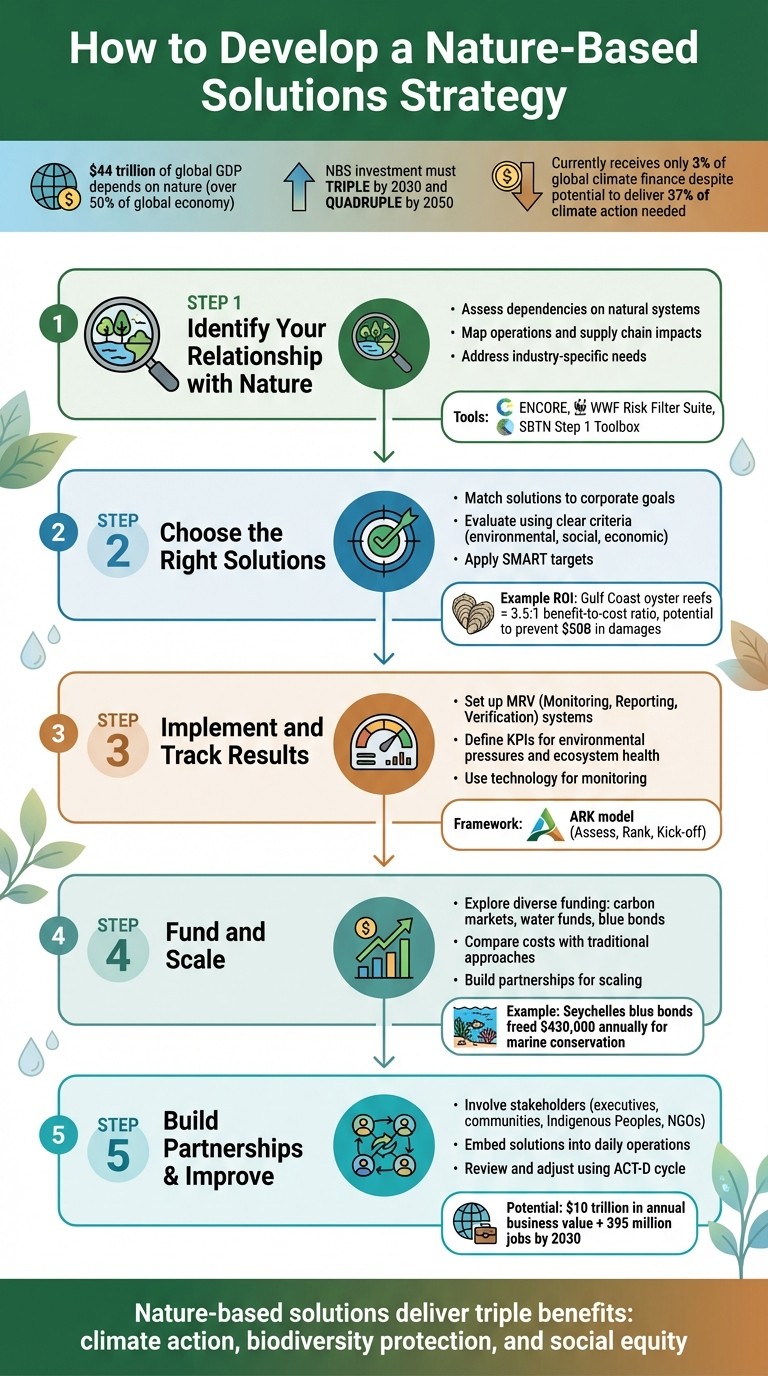
5-Step Framework for Corporate Nature-Based Solutions Strategy
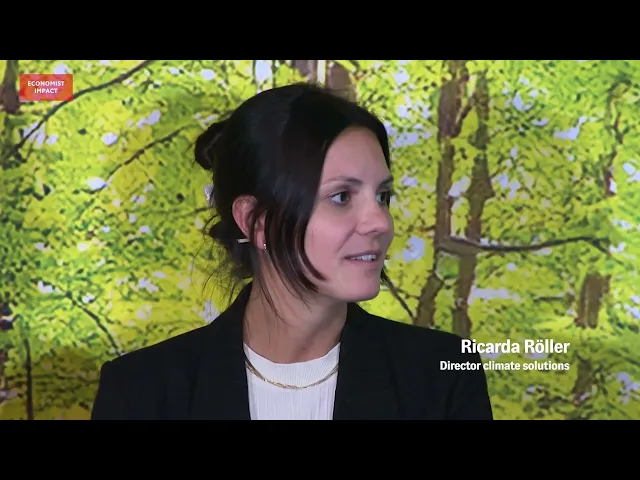
Sponsored video: Nature-based solutions: strategies for climate resilience and biodiversity
Step 1: Identify Your Company's Relationship with Nature
Before implementing nature-based solutions, it's essential to evaluate how your business relies on and affects natural systems. With over half of the global GDP facing moderate to severe risks from nature loss [6], this isn't just about environmental responsibility - it's a financial necessity. This initial assessment lays the groundwork for choosing solutions that align with your company's objectives.
Understand Your Dependencies on Natural Systems
Ecosystem services, such as water filtration, pollination, climate regulation, and soil health, are critical to various industries [6]. For example, agricultural businesses rely on pollinators to grow crops, manufacturing facilities need steady water supplies for cooling and processing, and tourism depends on thriving landscapes and biodiversity to attract visitors.
To map these dependencies, tools like ENCORE can provide valuable insights [6]. For a deeper dive into nature-related risks, consider the WWF Risk Filter Suite [6]. Companies aiming to set science-based targets can also use the SBTN Step 1 Toolbox, which offers open-source tools to identify which of eight key pressure categories - such as water use, land degradation, or emissions - are most relevant to their operations [5][8].
Assess Your Operations and Supply Chain Impacts
Building on your dependency map, evaluate how your operations contribute to environmental pressures. This includes both direct activities and impacts across your entire value chain, from sourcing raw materials to managing post-consumer waste [6]. The Science Based Targets Network outlines a two-step approach:
Step 1a: Conduct a high-level materiality screening to identify broad environmental pressures.
Step 1b: Perform a detailed value chain assessment to pinpoint specific activities and quantify their impacts [5][8].
"This integrated assessment of nature and climate impacts has led us to identify a raw material that, despite minimal GHG emissions, exerts significant impacts on nature." - Science Based Targets Network [5]
Focus your data collection on high-impact commodities, especially those linked to biodiversity loss and regulated under policies like the EU Deforestation Regulation [5]. Tools such as the Integrated Biodiversity Assessment Tool (IBAT) can help identify priority areas based on biodiversity significance [6]. Engaging key stakeholders, including Indigenous Peoples, local communities, and workers, ensures that critical issues are identified and addressed [8]. These insights will guide your decision-making as you move into solution planning and implementation.
Address Industry-Specific Needs
Each industry interacts with nature differently, requiring tailored strategies. Agricultural and food sectors face challenges like land conversion, nutrient runoff, and pollination needs. Manufacturing often focuses on water use, emissions, and resource extraction. Infrastructure and construction companies must tackle issues such as land use changes, coastal erosion, and stormwater management. Meanwhile, tourism depends heavily on healthy ecosystems, biodiversity, and visually appealing landscapes.
The Natural Capital Protocol offers a standardized framework to measure and value these specific impacts and dependencies [6]. To make progress, start by targeting a single high-impact area, like freshwater use, and then scale efforts across your organization [5][7]. This focused approach helps build momentum and demonstrates measurable benefits, while setting the stage for tracking and evaluation in later steps.
Step 2: Choose the Right Nature-Based Solutions
Once you've identified how your business relies on natural systems, the next step is selecting solutions that not only tackle operational hurdles but also align with your broader sustainability goals. The key is to choose projects that seamlessly integrate with your corporate strategy and deliver measurable value.
Match Solutions to Corporate Goals
To make nature-based solutions effective, tie them directly to your company's pressing challenges and strategic objectives. Rather than treating these initiatives as standalone efforts, think about how they can address specific issues. For example, if your coastal operations are vulnerable to storm damage, consider oyster reef restoration as a natural alternative to traditional seawalls.
Follow the Natural Climate Solutions hierarchy to guide your priorities: start by protecting existing ecosystems, adopt sustainable practices for working lands, and restore degraded areas where necessary [11]. The most impactful projects are those that simultaneously deliver benefits for climate, nature, and equity [1].
Evaluate Projects Using Clear Criteria
Selecting the right project means looking beyond just cost. Instead, focus on maximizing value across environmental, social, and economic factors [2]. This involves a thorough evaluation process: assess the business challenges, quantify the environmental and social benefits, design a feasible implementation plan, estimate total costs, and compare these projects to conventional alternatives [2][4].
To ensure integrity, apply The Nature Conservancy's five guiding principles [10]. Use SMART targets - Specific, Measurable, Achievable, Relevant, and Time-bound - anchored to a defined baseline year [8]. This structured approach ensures that your chosen solutions are both practical and financially sound.
Corporate Nature-Based Solutions in Action
Real-world examples show how businesses successfully implement nature-based solutions to reduce risks and cut costs. Dow Chemical Company, for instance, replaced a conventional ash pond at its Midland, Michigan facility with a constructed wetland system, demonstrating how natural systems can substitute for industrial infrastructure [3]. Along the Gulf Coast, oyster reef and wetland restoration projects boast an average benefit-to-cost ratio of 3.5:1, with the potential to prevent up to $50 billion in damages to coastal assets [3]. During Hurricane Sandy, coastal wetlands saved over $625 million in property damages and reduced overall damages in the Northeastern U.S. by an average of 10% [3].
"Smart business decisions should and must consider responsible ecological management." - The Nature Conservancy [3]
These examples highlight how nature-based projects address tangible business risks while delivering clear environmental benefits. To identify the best solutions for your specific region and ecosystem, tools like the WBCSD Nature-based Solutions Map can be invaluable [1]. It's worth noting that nature-based solutions currently receive only 3% of global climate finance, despite having the potential to contribute up to 37% of the climate action required to meet Paris Agreement targets [1][11].
Step 3: Implement and Track Results
Once you've chosen your nature-based solutions, the next step is putting them into action while keeping a close eye on the outcomes. Without a solid tracking system, it’s nearly impossible to demonstrate the impact of your investments or make necessary adjustments along the way.
Set Up Transparent Tracking Systems
A Monitoring, Reporting, and Verification (MRV) system is the backbone of accountability and effective management. To get started, consider using standardized frameworks like the ARK (Assess, Rank, Kick-off) model, which helps transition from setting goals to evaluating tangible results. Build your tracking system using existing data sources, such as materiality screenings, CDP disclosures, or TNFD assessments, to establish a strong baseline.
Validation from third-party organizations like the Accountability Accelerator can enhance credibility. Involve Indigenous peoples and local communities in monitoring efforts to ensure both social and environmental outcomes are accurately captured. Assemble a specialized team skilled in areas like life cycle assessment, spatial analysis, and environmental data management to maintain precision across your operations. Finally, define clear metrics to measure the success of your initiatives.
Define Key Performance Indicators
The metrics you choose should reflect both environmental pressures and ecosystem conditions. For instance, environmental pressures might include water usage, land use changes, or pollutant emissions like nitrogen and phosphorus. Meanwhile, ecosystem health metrics could focus on factors like water availability, biodiversity, pollutant concentrations, and the extent of ecosystems. Align these environmental KPIs with business goals, such as cost savings or revenue growth, to strengthen the case for sustained investment.
Keep it simple - focus on a handful of metrics that are most relevant to your operations and supply chain. Once your KPIs are in place, use technology to monitor them effectively and ensure accurate reporting.
Use Technology for Project Monitoring
Advancements in technology have made monitoring easier and more precise. Tools like spatial analysis, remote sensing, and resources such as the SBTN Step 1 Toolbox and Nutrient Navigator can help quantify specific environmental impacts. The Nature-Based Solutions Roadmap offers access to over 400 tools and resources tailored for developing and managing NBS projects [9].
"Just start - it doesn't have to be perfect. A good way to start with SBTN is to do the assessment." - Science Based Targets Network
Allocate resources for data collection, hiring experts, and setting up tracking systems. Many tools required for SBTN assessments and target setting are available for free, lowering the barriers to entry. Digital dashboards can also play a crucial role in visualizing progress and highlighting co-benefits like improved water quality and healthier habitats. These visual aids make it easier to communicate your results to stakeholders and build ongoing support for your initiatives.
Step 4: Fund and Scale Your Nature-Based Solutions
Securing funding remains one of the biggest challenges for nature-based solutions (NBS). With $44 trillion of global GDP - over half the world’s total - relying on nature, the urgency to invest in NBS is undeniable. To meet climate and biodiversity goals, investment in NBS must triple by 2030 and quadruple by 2050. Despite their potential to contribute one-third of the emissions reductions needed by 2030, natural climate solutions currently receive just 3.6% of global climate finance[13][14][15].
Explore Diverse Funding Sources
Beyond traditional budgets, there are multiple ways to secure funding for NBS. Voluntary carbon markets allow companies to purchase carbon credits from NBS projects, offsetting emissions that remain after reducing their Scope 1, 2, and 3 emissions[16]. For businesses reliant on freshwater, water funds bring together companies to collectively invest in protecting water sources[3].
Creative financial models are also gaining traction. For example, blue bonds offer a way to restructure national debt while allocating funds for conservation. The Republic of Seychelles partnered with The Nature Conservancy to restructure its debt, freeing $430,000 annually for marine conservation and establishing marine protected areas spanning 350,000 square kilometers (about 135,000 square miles) by 2019[15]. In Quintana Roo, Mexico, the tourism industry set up a "Coastal Zone Management Trust" funded by tourism taxes. This trust maintains 60 kilometers (approximately 37 miles) of the Mesoamerican reef and provides insurance payouts for reef restoration when wind speeds exceed 100 knots (roughly 115 mph)[15].
Another promising approach is advance purchase agreements, which provide upfront capital for large-scale restoration projects. When purchasing credits, prioritize jurisdictional REDD+ programs over project-level credits to support broader policy reforms and avoid risks like leakage or double counting[16]. High-quality credits that deliver additional benefits, such as biodiversity conservation and social equity, often come at a premium but align better with long-term environmental and social goals.
Consider Cost Comparisons with Traditional Approaches
NBS often proves more cost-effective than engineered solutions while delivering a wider range of benefits. When calculating costs, it’s vital to account for these co-benefits, which traditional infrastructure cannot match. For instance, mangroves in Mexico provide environmental services valued at $70 billion annually, translating to approximately $100,000 per hectare per year (about $40,600 per acre per year)[13]. Meanwhile, coral reefs can reduce 97% of wave energy, offering significant natural storm protection[15].
"Abating emissions with NBS typically costs less than technological solutions, including carbon capture, utilization, and storage." - Joshua Katz, Partner, McKinsey[17]
These benefits - ranging from carbon storage and storm protection to fisheries support and water filtration - highlight why NBS often delivers better overall value compared to traditional investments. By looking beyond upfront expenses, the full financial and environmental value of NBS becomes clear.
Build Partnerships to Scale Efforts
Scaling NBS requires collaboration across sectors to reduce costs and increase impact. The Cumberland Forest Project in the Appalachian region of the U.S. is a prime example. This initiative protects 100,000 hectares (about 247,000 acres) by generating income from diverse sources, including the California carbon market, Forest Stewardship Council-certified timber, and recreational leases[15]. Such partnerships demonstrate how diversified revenue streams can create financial resilience.
Involving local communities and Indigenous groups is critical for long-term success. Community-driven models, especially those led by women, often yield stronger social and environmental benefits[13]. Additionally, joining coalitions of high-level advocates can help promote best practices and push for carbon pricing policies that make NBS investments more competitive[15][16]. Blended finance, which combines private investment with public incentives and philanthropic capital, is another effective way to reduce risks and unlock new funding opportunities[13].
Step 5: Build Partnerships and Improve Over Time
Involve Stakeholders in Your Projects
Getting buy-in from the right people is essential for success. Start by engaging senior executives, middle management, and a diverse group of external stakeholders from the outset. Senior executives play a crucial role in championing these initiatives, while middle management ensures operational execution. It's equally important to help the broader workforce understand their role in achieving these goals. Some companies even link executive bonuses to sustainability targets to drive accountability [12].
For middle management, incorporating nature-related targets into performance KPIs and remuneration plans can help balance revenue goals with environmental priorities. On the external front, cast a wide net when mapping stakeholders - include local communities, Indigenous Peoples, NGOs, and academic institutions. Currently, the private sector accounts for only 18% of nature-positive investments, highlighting the need for greater involvement [12]. To ensure meaningful engagement, use structured tools like the ARK Framework to gauge stakeholder support, refine processes through dialogue, and establish clear governance with local buy-in. When working with Indigenous Peoples, adhere to FPIC (Free, Prior, and Informed Consent) protocols. Joining initiatives like the LEAF Coalition, the Symbiosis Coalition, or the Rimba Collective can also help you find reliable partners and share the risks associated with early-stage projects.
Once you've built a strong foundation with stakeholders, the next step is to embed these solutions into your daily operations.
Embed Solutions into Daily Operations
Nature-based solutions deliver the most value when they're fully integrated into your business strategy, rather than treated as separate sustainability efforts. To ensure accountability, governance for these initiatives should be handled at the board or executive management level. These solutions should align with existing business functions, such as climate strategies, supplier codes of conduct, and workforce planning. By reframing nature-based solutions as a vital part of risk management and supply chain resilience, businesses can unlock new opportunities. For instance, implementing nature-positive policies has the potential to generate over $10 trillion in annual business value by 2030 and create 395 million jobs [18].
The ACT-D cycle - Assess, Commit, Transform, Disclose - provides a structured approach for continuous improvement.
"We need to move from energy and enthusiasm to transformative action and make nature core to business decision-making." - Eva Zabey, CEO of Business for Nature
Expand these solutions across all operational levels and external landscapes, whether at the landscape, seascape, or river-basin level. It's also critical to establish grievance processes that allow affected stakeholders to voice concerns. This helps maintain trust and ensures long-term social license to operate.
Review and Adjust Your Approach
As your efforts progress, it's important to develop a comprehensive corporate biodiversity strategy with clear, measurable goals and specific indicators to track your impact [20]. Since natural ecosystems often take years to mature, it's essential to adopt a long-term perspective and commit to enduring partnerships rather than focusing solely on short-term returns [18]. This approach aligns with the robust monitoring systems you should have in place.
Maximize the overall value of your initiatives by considering both business and societal benefits [2]. Tools like the WBCSD Nature-based Solutions Map can help you identify projects that align with your business objectives and the needs of the ecosystems you operate in [19][1]. Collaborate with external organizations to conduct independent scientific assessments of how your operations impact biodiversity and climate [20]. Engage with scientific bodies such as IUCN and work closely with local stakeholders to co-create solutions that deliver measurable benefits for both ecosystems and communities.
Conclusion: Making Nature-Based Solutions Work for Your Business
Integrating nature-based solutions into your business strategy isn't just a choice - it's a necessity for long-term success. With over half of the global GDP - approximately $44 trillion - relying on natural systems, safeguarding ecosystems is directly tied to protecting the foundations of your operations, supply chains, and markets [13].
To move forward, businesses need a shift in mindset. Nature-based solutions shouldn't be seen as side projects or optional sustainability efforts. Instead, they should be embraced as key strategies for managing risks, cutting costs, and strengthening supply chain resilience [2]. The current gap between harmful financial practices and investments in nature presents a clear opportunity for meaningful change. This gap highlights both the risks of inaction and the strategic advantages that come with proactive investment.
"Recognizing the true impact of NbS – both on societal challenges and creating value for companies – will allow companies to make strong business cases for this solution set, enabling them to deliver for climate, nature, equity and business ambitions at scale." - WBCSD [2]
By adopting a practical five-step approach - from evaluating nature dependencies to forming impactful partnerships - businesses can achieve tangible results. These solutions offer a chance to generate environmental, social, and economic benefits all at once. The focus should be on maximizing long-term value rather than simply cutting short-term costs [2]. Nature-based solutions provide a triple advantage by addressing climate change, biodiversity loss, and social inequality simultaneously. Consider Mexico's 700,000 hectares of mangroves, which offer environmental services valued at $70 billion annually - around $100,000 per hectare each year [13].
The urgency to act cannot be overstated. To meet climate and biodiversity goals, global investment in nature-based solutions must triple by 2030 and quadruple by 2050 [13]. Investing in these strategies ensures a future where businesses and the natural systems they depend on can thrive together.
FAQs
What are the main benefits for corporations using nature-based solutions?
Nature-based solutions (NBS) provide businesses with a practical way to integrate natural processes - such as reforestation, green infrastructure, or biodiversity conservation - into their operations. These approaches help minimize environmental impacts, build resilience against risks like extreme weather, and support broader sustainability efforts. Beyond environmental benefits, they also open doors to new revenue streams, including sustainable product innovation and participation in ecosystem service markets.
The financial case for NBS is compelling. For example, during Hurricane Sandy, coastal wetlands helped prevent over $625 million in property damage. Similarly, restoration efforts in the Gulf Coast have the potential to avert up to $50 billion in asset losses, with an impressive 3.5-to-1 benefit-to-cost ratio. Urban trees, another example, enhance air quality and reduce healthcare costs. By cutting risks, lowering expenses, and delivering long-term value, NBS position nature as a valuable resource for businesses looking to stay ahead.
How can companies measure the success of their nature-based solutions?
To effectively gauge the success of nature-based solutions (NBS), it’s essential to begin by establishing a baseline for critical environmental metrics. These could include measures such as water quality, carbon sequestration, or biodiversity. Using site-specific data combined with established scientific methods ensures precise and reliable benchmarks. For instance, you might quantify gallons of stormwater runoff reduced, tons of CO₂ captured, or acres of habitat restored.
Once the baseline is set, regularly monitor these metrics - whether quarterly or annually - and compare the results to the initial benchmarks. To maintain consistency and credibility, align your evaluation process with recognized frameworks like the Science-Based Targets Network (SBTN) or the Taskforce on Nature-related Financial Disclosures (TNFD).
Lastly, make these outcomes resonate by translating them into business-relevant terms. Highlight tangible benefits, such as cost savings from avoided flood damage or revenue generated through ecosystem credits. Use familiar U.S. units like acres, gallons, and tons, and express financial gains in dollars. This approach not only underscores the environmental impact but also illustrates the economic advantages of continued investment in NBS.
What are some innovative ways to fund nature-based solutions projects?
Funding for nature-based solutions (NBS) is taking on new shapes, with creative approaches that merge public and private investments. One such approach, blended-finance structures, combines government grants or guarantees with private capital. This model supports initiatives like reforestation and biodiversity conservation while delivering competitive financial returns.
Corporate green bonds and sustainability-linked loans are also becoming popular. These financial tools connect interest rates to tangible NBS results, such as the number of acres restored or the reduction in emissions. This transparency appeals to companies and investors looking to make a measurable environmental impact.
Moreover, venture capital and private equity funds are increasingly backing startups dedicated to NBS. These include platforms for reforestation and technologies for green infrastructure. Many of these ventures adopt pay-for-success models, where financial returns depend on meeting specific ecological benchmarks, ensuring that conservation priorities align with investor goals.
Related Blog Posts
Latest Articles
©2025



FAQ
01
What does it really mean to “redefine profit”?
02
What makes Council Fire different?
03
Who does Council Fire you work with?
04
What does working with Council Fire actually look like?
05
How does Council Fire help organizations turn big goals into action?
06
How does Council Fire define and measure success?
Jan 19, 2026
How to Develop a Nature-Based Solutions Strategy for Corporations
Sustainability Strategy
In This Article
Integrate nature into core business strategy to cut risk and costs: a practical 5-step framework for assessing dependencies, selecting NbS, funding, tracking, and scaling.
How to Develop a Nature-Based Solutions Strategy for Corporations
Nature-based solutions (NbS) offer businesses a way to tackle risks like flooding, resource scarcity, and climate impacts while improving operations and reducing costs. With over half of the global GDP - $44 trillion - relying on natural systems, companies must rethink their relationship with nature to ensure future resilience and profitability. Here's how to get started:
Assess Dependencies and Impacts: Identify how your business relies on and affects ecosystems, using tools like ENCORE or the WWF Risk Filter Suite.
Select Solutions Aligned with Business Goals: Choose projects like reforestation, green infrastructure, or coastal restoration that address specific challenges and deliver measurable value.
Implement and Track Progress: Use monitoring frameworks (e.g., ARK model) to measure outcomes and align with clear KPIs.
Secure Funding: Explore options like carbon markets, water funds, or innovative models like blue bonds to finance NbS projects.
Partner and Scale: Collaborate with local communities, NGOs, and coalitions to expand efforts and ensure long-term success.
5-Step Framework for Corporate Nature-Based Solutions Strategy
Sponsored video: Nature-based solutions: strategies for climate resilience and biodiversity
Step 1: Identify Your Company's Relationship with Nature
Before implementing nature-based solutions, it's essential to evaluate how your business relies on and affects natural systems. With over half of the global GDP facing moderate to severe risks from nature loss [6], this isn't just about environmental responsibility - it's a financial necessity. This initial assessment lays the groundwork for choosing solutions that align with your company's objectives.
Understand Your Dependencies on Natural Systems
Ecosystem services, such as water filtration, pollination, climate regulation, and soil health, are critical to various industries [6]. For example, agricultural businesses rely on pollinators to grow crops, manufacturing facilities need steady water supplies for cooling and processing, and tourism depends on thriving landscapes and biodiversity to attract visitors.
To map these dependencies, tools like ENCORE can provide valuable insights [6]. For a deeper dive into nature-related risks, consider the WWF Risk Filter Suite [6]. Companies aiming to set science-based targets can also use the SBTN Step 1 Toolbox, which offers open-source tools to identify which of eight key pressure categories - such as water use, land degradation, or emissions - are most relevant to their operations [5][8].
Assess Your Operations and Supply Chain Impacts
Building on your dependency map, evaluate how your operations contribute to environmental pressures. This includes both direct activities and impacts across your entire value chain, from sourcing raw materials to managing post-consumer waste [6]. The Science Based Targets Network outlines a two-step approach:
Step 1a: Conduct a high-level materiality screening to identify broad environmental pressures.
Step 1b: Perform a detailed value chain assessment to pinpoint specific activities and quantify their impacts [5][8].
"This integrated assessment of nature and climate impacts has led us to identify a raw material that, despite minimal GHG emissions, exerts significant impacts on nature." - Science Based Targets Network [5]
Focus your data collection on high-impact commodities, especially those linked to biodiversity loss and regulated under policies like the EU Deforestation Regulation [5]. Tools such as the Integrated Biodiversity Assessment Tool (IBAT) can help identify priority areas based on biodiversity significance [6]. Engaging key stakeholders, including Indigenous Peoples, local communities, and workers, ensures that critical issues are identified and addressed [8]. These insights will guide your decision-making as you move into solution planning and implementation.
Address Industry-Specific Needs
Each industry interacts with nature differently, requiring tailored strategies. Agricultural and food sectors face challenges like land conversion, nutrient runoff, and pollination needs. Manufacturing often focuses on water use, emissions, and resource extraction. Infrastructure and construction companies must tackle issues such as land use changes, coastal erosion, and stormwater management. Meanwhile, tourism depends heavily on healthy ecosystems, biodiversity, and visually appealing landscapes.
The Natural Capital Protocol offers a standardized framework to measure and value these specific impacts and dependencies [6]. To make progress, start by targeting a single high-impact area, like freshwater use, and then scale efforts across your organization [5][7]. This focused approach helps build momentum and demonstrates measurable benefits, while setting the stage for tracking and evaluation in later steps.
Step 2: Choose the Right Nature-Based Solutions
Once you've identified how your business relies on natural systems, the next step is selecting solutions that not only tackle operational hurdles but also align with your broader sustainability goals. The key is to choose projects that seamlessly integrate with your corporate strategy and deliver measurable value.
Match Solutions to Corporate Goals
To make nature-based solutions effective, tie them directly to your company's pressing challenges and strategic objectives. Rather than treating these initiatives as standalone efforts, think about how they can address specific issues. For example, if your coastal operations are vulnerable to storm damage, consider oyster reef restoration as a natural alternative to traditional seawalls.
Follow the Natural Climate Solutions hierarchy to guide your priorities: start by protecting existing ecosystems, adopt sustainable practices for working lands, and restore degraded areas where necessary [11]. The most impactful projects are those that simultaneously deliver benefits for climate, nature, and equity [1].
Evaluate Projects Using Clear Criteria
Selecting the right project means looking beyond just cost. Instead, focus on maximizing value across environmental, social, and economic factors [2]. This involves a thorough evaluation process: assess the business challenges, quantify the environmental and social benefits, design a feasible implementation plan, estimate total costs, and compare these projects to conventional alternatives [2][4].
To ensure integrity, apply The Nature Conservancy's five guiding principles [10]. Use SMART targets - Specific, Measurable, Achievable, Relevant, and Time-bound - anchored to a defined baseline year [8]. This structured approach ensures that your chosen solutions are both practical and financially sound.
Corporate Nature-Based Solutions in Action
Real-world examples show how businesses successfully implement nature-based solutions to reduce risks and cut costs. Dow Chemical Company, for instance, replaced a conventional ash pond at its Midland, Michigan facility with a constructed wetland system, demonstrating how natural systems can substitute for industrial infrastructure [3]. Along the Gulf Coast, oyster reef and wetland restoration projects boast an average benefit-to-cost ratio of 3.5:1, with the potential to prevent up to $50 billion in damages to coastal assets [3]. During Hurricane Sandy, coastal wetlands saved over $625 million in property damages and reduced overall damages in the Northeastern U.S. by an average of 10% [3].
"Smart business decisions should and must consider responsible ecological management." - The Nature Conservancy [3]
These examples highlight how nature-based projects address tangible business risks while delivering clear environmental benefits. To identify the best solutions for your specific region and ecosystem, tools like the WBCSD Nature-based Solutions Map can be invaluable [1]. It's worth noting that nature-based solutions currently receive only 3% of global climate finance, despite having the potential to contribute up to 37% of the climate action required to meet Paris Agreement targets [1][11].
Step 3: Implement and Track Results
Once you've chosen your nature-based solutions, the next step is putting them into action while keeping a close eye on the outcomes. Without a solid tracking system, it’s nearly impossible to demonstrate the impact of your investments or make necessary adjustments along the way.
Set Up Transparent Tracking Systems
A Monitoring, Reporting, and Verification (MRV) system is the backbone of accountability and effective management. To get started, consider using standardized frameworks like the ARK (Assess, Rank, Kick-off) model, which helps transition from setting goals to evaluating tangible results. Build your tracking system using existing data sources, such as materiality screenings, CDP disclosures, or TNFD assessments, to establish a strong baseline.
Validation from third-party organizations like the Accountability Accelerator can enhance credibility. Involve Indigenous peoples and local communities in monitoring efforts to ensure both social and environmental outcomes are accurately captured. Assemble a specialized team skilled in areas like life cycle assessment, spatial analysis, and environmental data management to maintain precision across your operations. Finally, define clear metrics to measure the success of your initiatives.
Define Key Performance Indicators
The metrics you choose should reflect both environmental pressures and ecosystem conditions. For instance, environmental pressures might include water usage, land use changes, or pollutant emissions like nitrogen and phosphorus. Meanwhile, ecosystem health metrics could focus on factors like water availability, biodiversity, pollutant concentrations, and the extent of ecosystems. Align these environmental KPIs with business goals, such as cost savings or revenue growth, to strengthen the case for sustained investment.
Keep it simple - focus on a handful of metrics that are most relevant to your operations and supply chain. Once your KPIs are in place, use technology to monitor them effectively and ensure accurate reporting.
Use Technology for Project Monitoring
Advancements in technology have made monitoring easier and more precise. Tools like spatial analysis, remote sensing, and resources such as the SBTN Step 1 Toolbox and Nutrient Navigator can help quantify specific environmental impacts. The Nature-Based Solutions Roadmap offers access to over 400 tools and resources tailored for developing and managing NBS projects [9].
"Just start - it doesn't have to be perfect. A good way to start with SBTN is to do the assessment." - Science Based Targets Network
Allocate resources for data collection, hiring experts, and setting up tracking systems. Many tools required for SBTN assessments and target setting are available for free, lowering the barriers to entry. Digital dashboards can also play a crucial role in visualizing progress and highlighting co-benefits like improved water quality and healthier habitats. These visual aids make it easier to communicate your results to stakeholders and build ongoing support for your initiatives.
Step 4: Fund and Scale Your Nature-Based Solutions
Securing funding remains one of the biggest challenges for nature-based solutions (NBS). With $44 trillion of global GDP - over half the world’s total - relying on nature, the urgency to invest in NBS is undeniable. To meet climate and biodiversity goals, investment in NBS must triple by 2030 and quadruple by 2050. Despite their potential to contribute one-third of the emissions reductions needed by 2030, natural climate solutions currently receive just 3.6% of global climate finance[13][14][15].
Explore Diverse Funding Sources
Beyond traditional budgets, there are multiple ways to secure funding for NBS. Voluntary carbon markets allow companies to purchase carbon credits from NBS projects, offsetting emissions that remain after reducing their Scope 1, 2, and 3 emissions[16]. For businesses reliant on freshwater, water funds bring together companies to collectively invest in protecting water sources[3].
Creative financial models are also gaining traction. For example, blue bonds offer a way to restructure national debt while allocating funds for conservation. The Republic of Seychelles partnered with The Nature Conservancy to restructure its debt, freeing $430,000 annually for marine conservation and establishing marine protected areas spanning 350,000 square kilometers (about 135,000 square miles) by 2019[15]. In Quintana Roo, Mexico, the tourism industry set up a "Coastal Zone Management Trust" funded by tourism taxes. This trust maintains 60 kilometers (approximately 37 miles) of the Mesoamerican reef and provides insurance payouts for reef restoration when wind speeds exceed 100 knots (roughly 115 mph)[15].
Another promising approach is advance purchase agreements, which provide upfront capital for large-scale restoration projects. When purchasing credits, prioritize jurisdictional REDD+ programs over project-level credits to support broader policy reforms and avoid risks like leakage or double counting[16]. High-quality credits that deliver additional benefits, such as biodiversity conservation and social equity, often come at a premium but align better with long-term environmental and social goals.
Consider Cost Comparisons with Traditional Approaches
NBS often proves more cost-effective than engineered solutions while delivering a wider range of benefits. When calculating costs, it’s vital to account for these co-benefits, which traditional infrastructure cannot match. For instance, mangroves in Mexico provide environmental services valued at $70 billion annually, translating to approximately $100,000 per hectare per year (about $40,600 per acre per year)[13]. Meanwhile, coral reefs can reduce 97% of wave energy, offering significant natural storm protection[15].
"Abating emissions with NBS typically costs less than technological solutions, including carbon capture, utilization, and storage." - Joshua Katz, Partner, McKinsey[17]
These benefits - ranging from carbon storage and storm protection to fisheries support and water filtration - highlight why NBS often delivers better overall value compared to traditional investments. By looking beyond upfront expenses, the full financial and environmental value of NBS becomes clear.
Build Partnerships to Scale Efforts
Scaling NBS requires collaboration across sectors to reduce costs and increase impact. The Cumberland Forest Project in the Appalachian region of the U.S. is a prime example. This initiative protects 100,000 hectares (about 247,000 acres) by generating income from diverse sources, including the California carbon market, Forest Stewardship Council-certified timber, and recreational leases[15]. Such partnerships demonstrate how diversified revenue streams can create financial resilience.
Involving local communities and Indigenous groups is critical for long-term success. Community-driven models, especially those led by women, often yield stronger social and environmental benefits[13]. Additionally, joining coalitions of high-level advocates can help promote best practices and push for carbon pricing policies that make NBS investments more competitive[15][16]. Blended finance, which combines private investment with public incentives and philanthropic capital, is another effective way to reduce risks and unlock new funding opportunities[13].
Step 5: Build Partnerships and Improve Over Time
Involve Stakeholders in Your Projects
Getting buy-in from the right people is essential for success. Start by engaging senior executives, middle management, and a diverse group of external stakeholders from the outset. Senior executives play a crucial role in championing these initiatives, while middle management ensures operational execution. It's equally important to help the broader workforce understand their role in achieving these goals. Some companies even link executive bonuses to sustainability targets to drive accountability [12].
For middle management, incorporating nature-related targets into performance KPIs and remuneration plans can help balance revenue goals with environmental priorities. On the external front, cast a wide net when mapping stakeholders - include local communities, Indigenous Peoples, NGOs, and academic institutions. Currently, the private sector accounts for only 18% of nature-positive investments, highlighting the need for greater involvement [12]. To ensure meaningful engagement, use structured tools like the ARK Framework to gauge stakeholder support, refine processes through dialogue, and establish clear governance with local buy-in. When working with Indigenous Peoples, adhere to FPIC (Free, Prior, and Informed Consent) protocols. Joining initiatives like the LEAF Coalition, the Symbiosis Coalition, or the Rimba Collective can also help you find reliable partners and share the risks associated with early-stage projects.
Once you've built a strong foundation with stakeholders, the next step is to embed these solutions into your daily operations.
Embed Solutions into Daily Operations
Nature-based solutions deliver the most value when they're fully integrated into your business strategy, rather than treated as separate sustainability efforts. To ensure accountability, governance for these initiatives should be handled at the board or executive management level. These solutions should align with existing business functions, such as climate strategies, supplier codes of conduct, and workforce planning. By reframing nature-based solutions as a vital part of risk management and supply chain resilience, businesses can unlock new opportunities. For instance, implementing nature-positive policies has the potential to generate over $10 trillion in annual business value by 2030 and create 395 million jobs [18].
The ACT-D cycle - Assess, Commit, Transform, Disclose - provides a structured approach for continuous improvement.
"We need to move from energy and enthusiasm to transformative action and make nature core to business decision-making." - Eva Zabey, CEO of Business for Nature
Expand these solutions across all operational levels and external landscapes, whether at the landscape, seascape, or river-basin level. It's also critical to establish grievance processes that allow affected stakeholders to voice concerns. This helps maintain trust and ensures long-term social license to operate.
Review and Adjust Your Approach
As your efforts progress, it's important to develop a comprehensive corporate biodiversity strategy with clear, measurable goals and specific indicators to track your impact [20]. Since natural ecosystems often take years to mature, it's essential to adopt a long-term perspective and commit to enduring partnerships rather than focusing solely on short-term returns [18]. This approach aligns with the robust monitoring systems you should have in place.
Maximize the overall value of your initiatives by considering both business and societal benefits [2]. Tools like the WBCSD Nature-based Solutions Map can help you identify projects that align with your business objectives and the needs of the ecosystems you operate in [19][1]. Collaborate with external organizations to conduct independent scientific assessments of how your operations impact biodiversity and climate [20]. Engage with scientific bodies such as IUCN and work closely with local stakeholders to co-create solutions that deliver measurable benefits for both ecosystems and communities.
Conclusion: Making Nature-Based Solutions Work for Your Business
Integrating nature-based solutions into your business strategy isn't just a choice - it's a necessity for long-term success. With over half of the global GDP - approximately $44 trillion - relying on natural systems, safeguarding ecosystems is directly tied to protecting the foundations of your operations, supply chains, and markets [13].
To move forward, businesses need a shift in mindset. Nature-based solutions shouldn't be seen as side projects or optional sustainability efforts. Instead, they should be embraced as key strategies for managing risks, cutting costs, and strengthening supply chain resilience [2]. The current gap between harmful financial practices and investments in nature presents a clear opportunity for meaningful change. This gap highlights both the risks of inaction and the strategic advantages that come with proactive investment.
"Recognizing the true impact of NbS – both on societal challenges and creating value for companies – will allow companies to make strong business cases for this solution set, enabling them to deliver for climate, nature, equity and business ambitions at scale." - WBCSD [2]
By adopting a practical five-step approach - from evaluating nature dependencies to forming impactful partnerships - businesses can achieve tangible results. These solutions offer a chance to generate environmental, social, and economic benefits all at once. The focus should be on maximizing long-term value rather than simply cutting short-term costs [2]. Nature-based solutions provide a triple advantage by addressing climate change, biodiversity loss, and social inequality simultaneously. Consider Mexico's 700,000 hectares of mangroves, which offer environmental services valued at $70 billion annually - around $100,000 per hectare each year [13].
The urgency to act cannot be overstated. To meet climate and biodiversity goals, global investment in nature-based solutions must triple by 2030 and quadruple by 2050 [13]. Investing in these strategies ensures a future where businesses and the natural systems they depend on can thrive together.
FAQs
What are the main benefits for corporations using nature-based solutions?
Nature-based solutions (NBS) provide businesses with a practical way to integrate natural processes - such as reforestation, green infrastructure, or biodiversity conservation - into their operations. These approaches help minimize environmental impacts, build resilience against risks like extreme weather, and support broader sustainability efforts. Beyond environmental benefits, they also open doors to new revenue streams, including sustainable product innovation and participation in ecosystem service markets.
The financial case for NBS is compelling. For example, during Hurricane Sandy, coastal wetlands helped prevent over $625 million in property damage. Similarly, restoration efforts in the Gulf Coast have the potential to avert up to $50 billion in asset losses, with an impressive 3.5-to-1 benefit-to-cost ratio. Urban trees, another example, enhance air quality and reduce healthcare costs. By cutting risks, lowering expenses, and delivering long-term value, NBS position nature as a valuable resource for businesses looking to stay ahead.
How can companies measure the success of their nature-based solutions?
To effectively gauge the success of nature-based solutions (NBS), it’s essential to begin by establishing a baseline for critical environmental metrics. These could include measures such as water quality, carbon sequestration, or biodiversity. Using site-specific data combined with established scientific methods ensures precise and reliable benchmarks. For instance, you might quantify gallons of stormwater runoff reduced, tons of CO₂ captured, or acres of habitat restored.
Once the baseline is set, regularly monitor these metrics - whether quarterly or annually - and compare the results to the initial benchmarks. To maintain consistency and credibility, align your evaluation process with recognized frameworks like the Science-Based Targets Network (SBTN) or the Taskforce on Nature-related Financial Disclosures (TNFD).
Lastly, make these outcomes resonate by translating them into business-relevant terms. Highlight tangible benefits, such as cost savings from avoided flood damage or revenue generated through ecosystem credits. Use familiar U.S. units like acres, gallons, and tons, and express financial gains in dollars. This approach not only underscores the environmental impact but also illustrates the economic advantages of continued investment in NBS.
What are some innovative ways to fund nature-based solutions projects?
Funding for nature-based solutions (NBS) is taking on new shapes, with creative approaches that merge public and private investments. One such approach, blended-finance structures, combines government grants or guarantees with private capital. This model supports initiatives like reforestation and biodiversity conservation while delivering competitive financial returns.
Corporate green bonds and sustainability-linked loans are also becoming popular. These financial tools connect interest rates to tangible NBS results, such as the number of acres restored or the reduction in emissions. This transparency appeals to companies and investors looking to make a measurable environmental impact.
Moreover, venture capital and private equity funds are increasingly backing startups dedicated to NBS. These include platforms for reforestation and technologies for green infrastructure. Many of these ventures adopt pay-for-success models, where financial returns depend on meeting specific ecological benchmarks, ensuring that conservation priorities align with investor goals.
Related Blog Posts
FAQ
01
What does it really mean to “redefine profit”?
02
What makes Council Fire different?
03
Who does Council Fire you work with?
04
What does working with Council Fire actually look like?
05
How does Council Fire help organizations turn big goals into action?
06
How does Council Fire define and measure success?
Jan 19, 2026
How to Develop a Nature-Based Solutions Strategy for Corporations
Sustainability Strategy
In This Article
Integrate nature into core business strategy to cut risk and costs: a practical 5-step framework for assessing dependencies, selecting NbS, funding, tracking, and scaling.
How to Develop a Nature-Based Solutions Strategy for Corporations
Nature-based solutions (NbS) offer businesses a way to tackle risks like flooding, resource scarcity, and climate impacts while improving operations and reducing costs. With over half of the global GDP - $44 trillion - relying on natural systems, companies must rethink their relationship with nature to ensure future resilience and profitability. Here's how to get started:
Assess Dependencies and Impacts: Identify how your business relies on and affects ecosystems, using tools like ENCORE or the WWF Risk Filter Suite.
Select Solutions Aligned with Business Goals: Choose projects like reforestation, green infrastructure, or coastal restoration that address specific challenges and deliver measurable value.
Implement and Track Progress: Use monitoring frameworks (e.g., ARK model) to measure outcomes and align with clear KPIs.
Secure Funding: Explore options like carbon markets, water funds, or innovative models like blue bonds to finance NbS projects.
Partner and Scale: Collaborate with local communities, NGOs, and coalitions to expand efforts and ensure long-term success.
5-Step Framework for Corporate Nature-Based Solutions Strategy
Sponsored video: Nature-based solutions: strategies for climate resilience and biodiversity
Step 1: Identify Your Company's Relationship with Nature
Before implementing nature-based solutions, it's essential to evaluate how your business relies on and affects natural systems. With over half of the global GDP facing moderate to severe risks from nature loss [6], this isn't just about environmental responsibility - it's a financial necessity. This initial assessment lays the groundwork for choosing solutions that align with your company's objectives.
Understand Your Dependencies on Natural Systems
Ecosystem services, such as water filtration, pollination, climate regulation, and soil health, are critical to various industries [6]. For example, agricultural businesses rely on pollinators to grow crops, manufacturing facilities need steady water supplies for cooling and processing, and tourism depends on thriving landscapes and biodiversity to attract visitors.
To map these dependencies, tools like ENCORE can provide valuable insights [6]. For a deeper dive into nature-related risks, consider the WWF Risk Filter Suite [6]. Companies aiming to set science-based targets can also use the SBTN Step 1 Toolbox, which offers open-source tools to identify which of eight key pressure categories - such as water use, land degradation, or emissions - are most relevant to their operations [5][8].
Assess Your Operations and Supply Chain Impacts
Building on your dependency map, evaluate how your operations contribute to environmental pressures. This includes both direct activities and impacts across your entire value chain, from sourcing raw materials to managing post-consumer waste [6]. The Science Based Targets Network outlines a two-step approach:
Step 1a: Conduct a high-level materiality screening to identify broad environmental pressures.
Step 1b: Perform a detailed value chain assessment to pinpoint specific activities and quantify their impacts [5][8].
"This integrated assessment of nature and climate impacts has led us to identify a raw material that, despite minimal GHG emissions, exerts significant impacts on nature." - Science Based Targets Network [5]
Focus your data collection on high-impact commodities, especially those linked to biodiversity loss and regulated under policies like the EU Deforestation Regulation [5]. Tools such as the Integrated Biodiversity Assessment Tool (IBAT) can help identify priority areas based on biodiversity significance [6]. Engaging key stakeholders, including Indigenous Peoples, local communities, and workers, ensures that critical issues are identified and addressed [8]. These insights will guide your decision-making as you move into solution planning and implementation.
Address Industry-Specific Needs
Each industry interacts with nature differently, requiring tailored strategies. Agricultural and food sectors face challenges like land conversion, nutrient runoff, and pollination needs. Manufacturing often focuses on water use, emissions, and resource extraction. Infrastructure and construction companies must tackle issues such as land use changes, coastal erosion, and stormwater management. Meanwhile, tourism depends heavily on healthy ecosystems, biodiversity, and visually appealing landscapes.
The Natural Capital Protocol offers a standardized framework to measure and value these specific impacts and dependencies [6]. To make progress, start by targeting a single high-impact area, like freshwater use, and then scale efforts across your organization [5][7]. This focused approach helps build momentum and demonstrates measurable benefits, while setting the stage for tracking and evaluation in later steps.
Step 2: Choose the Right Nature-Based Solutions
Once you've identified how your business relies on natural systems, the next step is selecting solutions that not only tackle operational hurdles but also align with your broader sustainability goals. The key is to choose projects that seamlessly integrate with your corporate strategy and deliver measurable value.
Match Solutions to Corporate Goals
To make nature-based solutions effective, tie them directly to your company's pressing challenges and strategic objectives. Rather than treating these initiatives as standalone efforts, think about how they can address specific issues. For example, if your coastal operations are vulnerable to storm damage, consider oyster reef restoration as a natural alternative to traditional seawalls.
Follow the Natural Climate Solutions hierarchy to guide your priorities: start by protecting existing ecosystems, adopt sustainable practices for working lands, and restore degraded areas where necessary [11]. The most impactful projects are those that simultaneously deliver benefits for climate, nature, and equity [1].
Evaluate Projects Using Clear Criteria
Selecting the right project means looking beyond just cost. Instead, focus on maximizing value across environmental, social, and economic factors [2]. This involves a thorough evaluation process: assess the business challenges, quantify the environmental and social benefits, design a feasible implementation plan, estimate total costs, and compare these projects to conventional alternatives [2][4].
To ensure integrity, apply The Nature Conservancy's five guiding principles [10]. Use SMART targets - Specific, Measurable, Achievable, Relevant, and Time-bound - anchored to a defined baseline year [8]. This structured approach ensures that your chosen solutions are both practical and financially sound.
Corporate Nature-Based Solutions in Action
Real-world examples show how businesses successfully implement nature-based solutions to reduce risks and cut costs. Dow Chemical Company, for instance, replaced a conventional ash pond at its Midland, Michigan facility with a constructed wetland system, demonstrating how natural systems can substitute for industrial infrastructure [3]. Along the Gulf Coast, oyster reef and wetland restoration projects boast an average benefit-to-cost ratio of 3.5:1, with the potential to prevent up to $50 billion in damages to coastal assets [3]. During Hurricane Sandy, coastal wetlands saved over $625 million in property damages and reduced overall damages in the Northeastern U.S. by an average of 10% [3].
"Smart business decisions should and must consider responsible ecological management." - The Nature Conservancy [3]
These examples highlight how nature-based projects address tangible business risks while delivering clear environmental benefits. To identify the best solutions for your specific region and ecosystem, tools like the WBCSD Nature-based Solutions Map can be invaluable [1]. It's worth noting that nature-based solutions currently receive only 3% of global climate finance, despite having the potential to contribute up to 37% of the climate action required to meet Paris Agreement targets [1][11].
Step 3: Implement and Track Results
Once you've chosen your nature-based solutions, the next step is putting them into action while keeping a close eye on the outcomes. Without a solid tracking system, it’s nearly impossible to demonstrate the impact of your investments or make necessary adjustments along the way.
Set Up Transparent Tracking Systems
A Monitoring, Reporting, and Verification (MRV) system is the backbone of accountability and effective management. To get started, consider using standardized frameworks like the ARK (Assess, Rank, Kick-off) model, which helps transition from setting goals to evaluating tangible results. Build your tracking system using existing data sources, such as materiality screenings, CDP disclosures, or TNFD assessments, to establish a strong baseline.
Validation from third-party organizations like the Accountability Accelerator can enhance credibility. Involve Indigenous peoples and local communities in monitoring efforts to ensure both social and environmental outcomes are accurately captured. Assemble a specialized team skilled in areas like life cycle assessment, spatial analysis, and environmental data management to maintain precision across your operations. Finally, define clear metrics to measure the success of your initiatives.
Define Key Performance Indicators
The metrics you choose should reflect both environmental pressures and ecosystem conditions. For instance, environmental pressures might include water usage, land use changes, or pollutant emissions like nitrogen and phosphorus. Meanwhile, ecosystem health metrics could focus on factors like water availability, biodiversity, pollutant concentrations, and the extent of ecosystems. Align these environmental KPIs with business goals, such as cost savings or revenue growth, to strengthen the case for sustained investment.
Keep it simple - focus on a handful of metrics that are most relevant to your operations and supply chain. Once your KPIs are in place, use technology to monitor them effectively and ensure accurate reporting.
Use Technology for Project Monitoring
Advancements in technology have made monitoring easier and more precise. Tools like spatial analysis, remote sensing, and resources such as the SBTN Step 1 Toolbox and Nutrient Navigator can help quantify specific environmental impacts. The Nature-Based Solutions Roadmap offers access to over 400 tools and resources tailored for developing and managing NBS projects [9].
"Just start - it doesn't have to be perfect. A good way to start with SBTN is to do the assessment." - Science Based Targets Network
Allocate resources for data collection, hiring experts, and setting up tracking systems. Many tools required for SBTN assessments and target setting are available for free, lowering the barriers to entry. Digital dashboards can also play a crucial role in visualizing progress and highlighting co-benefits like improved water quality and healthier habitats. These visual aids make it easier to communicate your results to stakeholders and build ongoing support for your initiatives.
Step 4: Fund and Scale Your Nature-Based Solutions
Securing funding remains one of the biggest challenges for nature-based solutions (NBS). With $44 trillion of global GDP - over half the world’s total - relying on nature, the urgency to invest in NBS is undeniable. To meet climate and biodiversity goals, investment in NBS must triple by 2030 and quadruple by 2050. Despite their potential to contribute one-third of the emissions reductions needed by 2030, natural climate solutions currently receive just 3.6% of global climate finance[13][14][15].
Explore Diverse Funding Sources
Beyond traditional budgets, there are multiple ways to secure funding for NBS. Voluntary carbon markets allow companies to purchase carbon credits from NBS projects, offsetting emissions that remain after reducing their Scope 1, 2, and 3 emissions[16]. For businesses reliant on freshwater, water funds bring together companies to collectively invest in protecting water sources[3].
Creative financial models are also gaining traction. For example, blue bonds offer a way to restructure national debt while allocating funds for conservation. The Republic of Seychelles partnered with The Nature Conservancy to restructure its debt, freeing $430,000 annually for marine conservation and establishing marine protected areas spanning 350,000 square kilometers (about 135,000 square miles) by 2019[15]. In Quintana Roo, Mexico, the tourism industry set up a "Coastal Zone Management Trust" funded by tourism taxes. This trust maintains 60 kilometers (approximately 37 miles) of the Mesoamerican reef and provides insurance payouts for reef restoration when wind speeds exceed 100 knots (roughly 115 mph)[15].
Another promising approach is advance purchase agreements, which provide upfront capital for large-scale restoration projects. When purchasing credits, prioritize jurisdictional REDD+ programs over project-level credits to support broader policy reforms and avoid risks like leakage or double counting[16]. High-quality credits that deliver additional benefits, such as biodiversity conservation and social equity, often come at a premium but align better with long-term environmental and social goals.
Consider Cost Comparisons with Traditional Approaches
NBS often proves more cost-effective than engineered solutions while delivering a wider range of benefits. When calculating costs, it’s vital to account for these co-benefits, which traditional infrastructure cannot match. For instance, mangroves in Mexico provide environmental services valued at $70 billion annually, translating to approximately $100,000 per hectare per year (about $40,600 per acre per year)[13]. Meanwhile, coral reefs can reduce 97% of wave energy, offering significant natural storm protection[15].
"Abating emissions with NBS typically costs less than technological solutions, including carbon capture, utilization, and storage." - Joshua Katz, Partner, McKinsey[17]
These benefits - ranging from carbon storage and storm protection to fisheries support and water filtration - highlight why NBS often delivers better overall value compared to traditional investments. By looking beyond upfront expenses, the full financial and environmental value of NBS becomes clear.
Build Partnerships to Scale Efforts
Scaling NBS requires collaboration across sectors to reduce costs and increase impact. The Cumberland Forest Project in the Appalachian region of the U.S. is a prime example. This initiative protects 100,000 hectares (about 247,000 acres) by generating income from diverse sources, including the California carbon market, Forest Stewardship Council-certified timber, and recreational leases[15]. Such partnerships demonstrate how diversified revenue streams can create financial resilience.
Involving local communities and Indigenous groups is critical for long-term success. Community-driven models, especially those led by women, often yield stronger social and environmental benefits[13]. Additionally, joining coalitions of high-level advocates can help promote best practices and push for carbon pricing policies that make NBS investments more competitive[15][16]. Blended finance, which combines private investment with public incentives and philanthropic capital, is another effective way to reduce risks and unlock new funding opportunities[13].
Step 5: Build Partnerships and Improve Over Time
Involve Stakeholders in Your Projects
Getting buy-in from the right people is essential for success. Start by engaging senior executives, middle management, and a diverse group of external stakeholders from the outset. Senior executives play a crucial role in championing these initiatives, while middle management ensures operational execution. It's equally important to help the broader workforce understand their role in achieving these goals. Some companies even link executive bonuses to sustainability targets to drive accountability [12].
For middle management, incorporating nature-related targets into performance KPIs and remuneration plans can help balance revenue goals with environmental priorities. On the external front, cast a wide net when mapping stakeholders - include local communities, Indigenous Peoples, NGOs, and academic institutions. Currently, the private sector accounts for only 18% of nature-positive investments, highlighting the need for greater involvement [12]. To ensure meaningful engagement, use structured tools like the ARK Framework to gauge stakeholder support, refine processes through dialogue, and establish clear governance with local buy-in. When working with Indigenous Peoples, adhere to FPIC (Free, Prior, and Informed Consent) protocols. Joining initiatives like the LEAF Coalition, the Symbiosis Coalition, or the Rimba Collective can also help you find reliable partners and share the risks associated with early-stage projects.
Once you've built a strong foundation with stakeholders, the next step is to embed these solutions into your daily operations.
Embed Solutions into Daily Operations
Nature-based solutions deliver the most value when they're fully integrated into your business strategy, rather than treated as separate sustainability efforts. To ensure accountability, governance for these initiatives should be handled at the board or executive management level. These solutions should align with existing business functions, such as climate strategies, supplier codes of conduct, and workforce planning. By reframing nature-based solutions as a vital part of risk management and supply chain resilience, businesses can unlock new opportunities. For instance, implementing nature-positive policies has the potential to generate over $10 trillion in annual business value by 2030 and create 395 million jobs [18].
The ACT-D cycle - Assess, Commit, Transform, Disclose - provides a structured approach for continuous improvement.
"We need to move from energy and enthusiasm to transformative action and make nature core to business decision-making." - Eva Zabey, CEO of Business for Nature
Expand these solutions across all operational levels and external landscapes, whether at the landscape, seascape, or river-basin level. It's also critical to establish grievance processes that allow affected stakeholders to voice concerns. This helps maintain trust and ensures long-term social license to operate.
Review and Adjust Your Approach
As your efforts progress, it's important to develop a comprehensive corporate biodiversity strategy with clear, measurable goals and specific indicators to track your impact [20]. Since natural ecosystems often take years to mature, it's essential to adopt a long-term perspective and commit to enduring partnerships rather than focusing solely on short-term returns [18]. This approach aligns with the robust monitoring systems you should have in place.
Maximize the overall value of your initiatives by considering both business and societal benefits [2]. Tools like the WBCSD Nature-based Solutions Map can help you identify projects that align with your business objectives and the needs of the ecosystems you operate in [19][1]. Collaborate with external organizations to conduct independent scientific assessments of how your operations impact biodiversity and climate [20]. Engage with scientific bodies such as IUCN and work closely with local stakeholders to co-create solutions that deliver measurable benefits for both ecosystems and communities.
Conclusion: Making Nature-Based Solutions Work for Your Business
Integrating nature-based solutions into your business strategy isn't just a choice - it's a necessity for long-term success. With over half of the global GDP - approximately $44 trillion - relying on natural systems, safeguarding ecosystems is directly tied to protecting the foundations of your operations, supply chains, and markets [13].
To move forward, businesses need a shift in mindset. Nature-based solutions shouldn't be seen as side projects or optional sustainability efforts. Instead, they should be embraced as key strategies for managing risks, cutting costs, and strengthening supply chain resilience [2]. The current gap between harmful financial practices and investments in nature presents a clear opportunity for meaningful change. This gap highlights both the risks of inaction and the strategic advantages that come with proactive investment.
"Recognizing the true impact of NbS – both on societal challenges and creating value for companies – will allow companies to make strong business cases for this solution set, enabling them to deliver for climate, nature, equity and business ambitions at scale." - WBCSD [2]
By adopting a practical five-step approach - from evaluating nature dependencies to forming impactful partnerships - businesses can achieve tangible results. These solutions offer a chance to generate environmental, social, and economic benefits all at once. The focus should be on maximizing long-term value rather than simply cutting short-term costs [2]. Nature-based solutions provide a triple advantage by addressing climate change, biodiversity loss, and social inequality simultaneously. Consider Mexico's 700,000 hectares of mangroves, which offer environmental services valued at $70 billion annually - around $100,000 per hectare each year [13].
The urgency to act cannot be overstated. To meet climate and biodiversity goals, global investment in nature-based solutions must triple by 2030 and quadruple by 2050 [13]. Investing in these strategies ensures a future where businesses and the natural systems they depend on can thrive together.
FAQs
What are the main benefits for corporations using nature-based solutions?
Nature-based solutions (NBS) provide businesses with a practical way to integrate natural processes - such as reforestation, green infrastructure, or biodiversity conservation - into their operations. These approaches help minimize environmental impacts, build resilience against risks like extreme weather, and support broader sustainability efforts. Beyond environmental benefits, they also open doors to new revenue streams, including sustainable product innovation and participation in ecosystem service markets.
The financial case for NBS is compelling. For example, during Hurricane Sandy, coastal wetlands helped prevent over $625 million in property damage. Similarly, restoration efforts in the Gulf Coast have the potential to avert up to $50 billion in asset losses, with an impressive 3.5-to-1 benefit-to-cost ratio. Urban trees, another example, enhance air quality and reduce healthcare costs. By cutting risks, lowering expenses, and delivering long-term value, NBS position nature as a valuable resource for businesses looking to stay ahead.
How can companies measure the success of their nature-based solutions?
To effectively gauge the success of nature-based solutions (NBS), it’s essential to begin by establishing a baseline for critical environmental metrics. These could include measures such as water quality, carbon sequestration, or biodiversity. Using site-specific data combined with established scientific methods ensures precise and reliable benchmarks. For instance, you might quantify gallons of stormwater runoff reduced, tons of CO₂ captured, or acres of habitat restored.
Once the baseline is set, regularly monitor these metrics - whether quarterly or annually - and compare the results to the initial benchmarks. To maintain consistency and credibility, align your evaluation process with recognized frameworks like the Science-Based Targets Network (SBTN) or the Taskforce on Nature-related Financial Disclosures (TNFD).
Lastly, make these outcomes resonate by translating them into business-relevant terms. Highlight tangible benefits, such as cost savings from avoided flood damage or revenue generated through ecosystem credits. Use familiar U.S. units like acres, gallons, and tons, and express financial gains in dollars. This approach not only underscores the environmental impact but also illustrates the economic advantages of continued investment in NBS.
What are some innovative ways to fund nature-based solutions projects?
Funding for nature-based solutions (NBS) is taking on new shapes, with creative approaches that merge public and private investments. One such approach, blended-finance structures, combines government grants or guarantees with private capital. This model supports initiatives like reforestation and biodiversity conservation while delivering competitive financial returns.
Corporate green bonds and sustainability-linked loans are also becoming popular. These financial tools connect interest rates to tangible NBS results, such as the number of acres restored or the reduction in emissions. This transparency appeals to companies and investors looking to make a measurable environmental impact.
Moreover, venture capital and private equity funds are increasingly backing startups dedicated to NBS. These include platforms for reforestation and technologies for green infrastructure. Many of these ventures adopt pay-for-success models, where financial returns depend on meeting specific ecological benchmarks, ensuring that conservation priorities align with investor goals.
Related Blog Posts
FAQ
What does it really mean to “redefine profit”?
What makes Council Fire different?
Who does Council Fire you work with?
What does working with Council Fire actually look like?
How does Council Fire help organizations turn big goals into action?
How does Council Fire define and measure success?