
Apr 7, 2026
How to Mobilize Community Stakeholders Around Sustainability Goals for NGOs & Nonprofits
Sustainability Strategy
In This Article
Steps for NGOs to engage community stakeholders, build trust, form partnerships, and sustain stakeholder-led sustainability efforts.
How to Mobilize Community Stakeholders Around Sustainability Goals for NGOs & Nonprofits
Mobilizing community stakeholders is key to achieving sustainability goals. By involving diverse voices, organizations can build trust, secure resources, and create lasting impact. Here's how NGOs and nonprofits can engage stakeholders effectively:
Involve Stakeholders Early: Identify those affected by or influencing your work, including local communities, regulators, and employees. Use mapping techniques to prioritize engagement based on influence and impact.
Build Trust Through Grassroots Engagement: Meet stakeholders where they are - attend local gatherings, provide accessible materials, and compensate participants for their expertise.
Amplify Voices: Empower communities to define success and co-create solutions. Use participatory methods like workshops and advisory panels to ensure their input shapes decisions.
Ensure Transparency: Close the feedback loop by showing how stakeholder input impacts strategies. Use clear communication, avoid jargon, and provide regular updates through newsletters or meetings.
Form Partnerships for Resources: Collaborate with organizations, businesses, and local leaders to pool funding, knowledge, and efforts. Formal agreements can clarify roles and responsibilities.
Sustain Engagement: Maintain ongoing dialogue with stakeholders, track progress, and adapt initiatives to changing needs. Regular check-ins and transparent communication build long-term trust.
What makes stakeholder engagement meaningful? Policies and good practice of stakeholder consultation
What Is Stakeholder Mobilization?
Stakeholder mobilization turns passive observers into active participants, encouraging community investment and support for your mission [2]. It involves identifying those who are affected by or have an influence on your organization - such as local communities, regulators, other NGOs, and employees - and engaging them in ways that create a sense of shared ownership over project planning and outcomes [1]. By amplifying stakeholder voices, organizations gain access to local knowledge and resources that can strengthen their sustainability strategies. This approach sets the stage for trust-building and deeper community engagement, which are explored further below.
Engagement can take several forms. It might start with consultation, where feedback is gathered, progress to collaboration, which involves active input in decision-making, and ultimately reach partnership, where stakeholders co-create project goals [4]. The ultimate goal of mobilization is this partnership level, empowering communities to develop the capacity to address and manage complex social challenges over the long term.
The benefits of mobilization are far-reaching. It helps secure the "social license to operate" - the trust and acceptance from the community that enable your work to continue effectively [1]. This trust not only strengthens the resilience of your initiatives but also fosters a spirit of collaboration that is essential for achieving sustainability goals. Moreover, stakeholder engagement is increasingly required under international standards for materiality determination [1]. Treating this as a mere checkbox exercise misses its true value. As the U.S. EPA explains:
"Meaningful public participation has two benefits: 1) Sponsor agencies will make better and more easily implementable decisions, and 2) communities will develop long-term capacity to solve and manage challenging social issues." [4]
Without shared ownership, sustainability programs often falter when external funding runs out. In contrast, organizations with robust community partnerships are better equipped to endure funding challenges and maintain their initiatives [3]. Mobilization not only secures your social license but also builds the stakeholder capacity needed to navigate crises effectively.
How to Build Trust and Engage Communities
Building trust requires consistent actions and a genuine commitment to sharing power with communities. For NGOs and nonprofits, this means adopting practical methods that align sustainability efforts with the realities of the people they serve. Transitioning from a service provider to a community steward involves empowering communities to shape their own futures rather than imposing top-down solutions [6]. This approach calls for meeting communities where they are, compensating them for their expertise, and ensuring their input directly impacts decisions. These practices naturally lead to stronger grassroots engagement, where active community involvement becomes the foundation of success.
Use Grassroots Engagement
Effective grassroots engagement starts with meeting people on their own terms. Instead of asking communities to come to you, attend their existing gatherings at places like churches, schools, or neighborhood centers. A great example of this approach is the Connecticut Office of Early Childhood's Parent Cabinet, launched around 2022. This initiative brought parents into decision-making roles for childcare policy, enabling them to co-create policies rather than simply offering input. The result was a governance model that fully integrated parent leadership into agencies shaping family-related decisions [6].
To make participation accessible, provide multilingual materials, childcare, meals, flexible meeting times, and compensation for community contributions. For instance, in early 2025, Third Sector collaborated with the California Council on Criminal Justice and Behavioral Health to establish the Superior Region Champions Council. They compensated participants for their expertise and tailored meeting details - like food preferences and timing - to reduce barriers for advocates with lived experience in the criminal justice system [6].
Skilled, neutral facilitators are essential for guiding discussions and ensuring marginalized voices are heard. These facilitators help navigate challenging moments that arise during transparent power-sharing. Partnering with trusted local leaders or organizations to co-host events can also build credibility and trust with community members who may be wary of external groups.
Amplify Community Voices
Amplifying community voices means giving stakeholders the power to define success on their own terms. For example, Sutter-Yuba Behavioral Health's iCARE program in California allowed participants to design their own evaluation tools. This approach led to the inclusion of consumer-defined metrics for wellness and recovery, shifting the focus from treating people as data points to valuing their lived experiences [6]. As Kesha Lee, a Consultant at Third Sector, aptly states:
"The people closest to the problem are often closest to the solution" [6].
Use participatory methods like co-design workshops, real-time digital polls, and hands-on activities to foster a sense of ownership. Focus on engaging Tier 1 stakeholders - those most directly affected by your work - through one-on-one interviews, advisory panels, and site visits. Emotional storytelling can also be more impactful than statistics alone, helping new audiences connect with the purpose behind your goals.
| Engagement Tier | Stakeholder Type | Recommended Methods |
| --- | --- | --- |
| <strong>Tier 1: Deep Engagement</strong> | High Influence / High Impact | One-on-one interviews, advisory panels, co-design workshops, site visits |
| <strong>Tier 2: Active Engagement</strong> | High Influence / Low Impact (or vice versa) | Online surveys, focus groups, roundtable discussions, town halls |
| <strong>Tier 3: Inform</strong> | Lower Influence / Lower Impact | Sustainability reports, newsletters, social media, website updates
| Engagement Tier | Stakeholder Type | Recommended Methods |
| --- | --- | --- |
| <strong>Tier 1: Deep Engagement</strong> | High Influence / High Impact | One-on-one interviews, advisory panels, co-design workshops, site visits |
| <strong>Tier 2: Active Engagement</strong> | High Influence / Low Impact (or vice versa) | Online surveys, focus groups, roundtable discussions, town halls |
| <strong>Tier 3: Inform</strong> | Lower Influence / Lower Impact | Sustainability reports, newsletters, social media, website updates
Once community voices are elevated, it’s essential to ensure their insights directly inform strategies through transparent communication.
Create Transparent Communication Channels
Transparency is about closing the loop - showing how community feedback shaped decisions. Provide concise summaries explaining how input influenced your strategy and address concerns openly. As Council Fire Resources emphasizes:
"Failing to close the loop is the fastest way to destroy engagement quality in future cycles. Stakeholders who feel ignored won't participate again" [1].
Use a mix of communication methods - emails, live streams, flyers, and in-person town halls - to reach everyone, including those without internet access. Avoid technical jargon and present information in clear, simple language, offering alternative formats for individuals with disabilities. Regular progress updates through newsletters or community meetings help maintain trust and accountability. With 70% of Americans believing the government is "rigged", meaningful transparency is vital to overcoming distrust [6].
Keep a stakeholder engagement log that records participants, methods, and outcomes to strengthen transparency and meet reporting standards. For surveys, aim for at least a 30% response rate to ensure results are statistically valid, and allocate 4–6 weeks for the entire process, from design to analysis [1]. Ultimately, trust is built through consistent follow-through, not one-off efforts.
How to Identify and Engage Key Stakeholder Groups
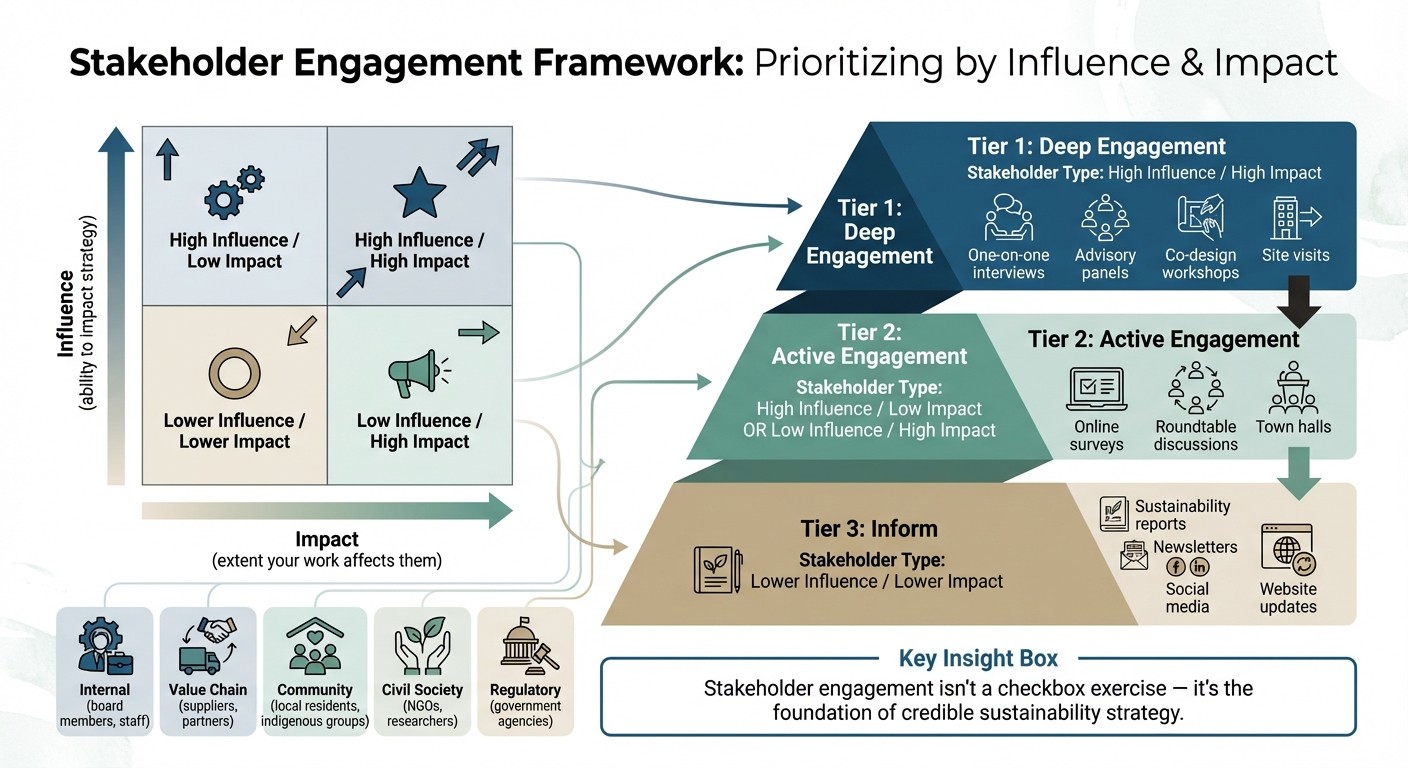
Stakeholder Engagement Tiers and Methods for NGOs
Engaging stakeholders effectively begins with identifying them accurately and understanding their unique perspectives. This process ensures that your sustainability efforts are inclusive and informed by diverse voices. Stakeholders should be defined broadly as anyone who can influence or be influenced by your initiatives, extending beyond familiar contacts. This includes groups such as local businesses, indigenous communities, government agencies, academic institutions, and residents near project sites. To capture these varied perspectives, use mapping techniques to categorize stakeholders and understand their specific interests [1][7].
Relying solely on existing relationships can unintentionally exclude new or underrepresented groups. Instead, adopt a deliberate approach to stakeholder mapping, considering factors like geographic proximity, shared sustainability goals, or levels of influence. Stakeholders can generally be grouped into five categories: internal (e.g., board members, staff), value chain (e.g., suppliers, partners), community (e.g., local residents, indigenous groups), civil society (e.g., NGOs, researchers), and regulatory (e.g., government agencies) [5].
Once stakeholders are mapped, prioritize them using a 2x2 matrix that evaluates their Influence (ability to impact your strategy) and Impact (extent to which your work affects them). This framework helps create three engagement tiers, guiding the depth of interaction needed for each group. Unlike general community members, stakeholders often have professional stakes and decision-making authority, requiring tailored engagement strategies [7].
Map Stakeholder Groups and Their Interests
To structure your engagement efforts, analytical mapping can help identify and prioritize stakeholder groups effectively. Start by determining which sustainability issues are most relevant to each group. For instance, local residents might focus on environmental concerns in their neighborhoods, while donors may prioritize financial risks and measurable outcomes [5]. A comprehensive mapping process typically takes 3 to 6 months, depending on your organization’s resources and data readiness. Use a prioritization matrix to organize stakeholders into actionable tiers [1].
Tier 1 stakeholders (high influence, high impact): Engage deeply through one-on-one interviews, advisory panels, or co-design workshops.
Tier 2 stakeholders (high influence or high impact): Involve them actively via focus groups, surveys, or town halls.
Tier 3 stakeholders (low influence, low impact): Keep them informed with newsletters, sustainability reports, or social media updates [1].
Timing is critical for meaningful engagement. Stakeholders should be involved early enough to shape decisions but not so early that you lack the foundational insights needed for productive conversations [7]. Maintaining a detailed engagement log - including dates, participants, topics, and outcomes - helps ensure transparency and supports reporting requirements [1][5].
Customize Engagement Methods
Each stakeholder group has different needs, so tailoring your engagement methods is essential. For example, schedule evening meetings for professionals and daytime sessions for parents [7]. Provide multilingual materials for non-English-speaking communities and accessible formats for individuals with disabilities.
Consider digital access limitations and cultural norms to address potential power imbalances. When direct engagement with hard-to-reach groups, such as supply chain workers, isn’t feasible, work with proxies like trade unions, NGOs, or community representatives to gather their insights [5]. Design surveys to be brief - under 15 minutes - to encourage participation, aiming for at least a 30% response rate to ensure reliable data [1].
Plan survey cycles carefully, allocating 4 to 6 weeks from design to analysis, and schedule executive interviews at least 3–4 weeks in advance [1]. Pilot test your interview guides and surveys with a small group to refine them. Offering modest compensation or honoraria to community members and vulnerable populations not only incentivizes participation but also signals that their contributions are valued [1][7].
"Stakeholder engagement isn't a checkbox exercise - it's the foundation of credible sustainability strategy." [1]
How to Collaborate for Resource Mobilization
Partnerships bring together a variety of resources that can drive sustainability efforts forward. When organizations collaborate strategically, they combine financial resources, share knowledge, and avoid duplicating work - achieving results that would be difficult to accomplish independently. The key is to identify partners with similar goals and establish clear roles through written agreements.
Build Collaborative Partnerships
Begin by identifying potential partners who align with your mission and can influence or benefit from your sustainability initiatives. Prioritize Tier 1 partners - those with a significant impact on your strategy or those directly affected by your work. Think beyond the usual collaborators and consider local businesses, universities, government bodies, and organizations from related sectors. For instance, a poverty-focused nonprofit that teams up with healthcare and education specialists can create a more comprehensive approach to solving community challenges [1][9].
In 2025, the Patchwork Collective, founded by Marie Dageville, joined forces with the Global Greengrants Fund to promote environmental justice. By allocating half of their grantmaking budget to this partnership, they empowered local leaders to make funding decisions. Global Greengrants, with over 18,000 grants distributed across 165 countries, played a key role in identifying and funding grassroots movements that often go unnoticed [8].
"Collaboratives were helpful on all those fronts... It helps to not be the only one making decisions, as I'm not an expert in knowing what communities need." - Marie Dageville, Co-founder, Patchwork Collective [8]
Formal agreements are vital for long-term partnerships. These documents should detail decision-making processes, financial contributions, and defined roles. While informal agreements may work for short-term projects, sustainability initiatives typically require legal frameworks to avoid misunderstandings and ensure accountability [9]. Collaborative funds, which pool donor capital to support grassroots efforts, are another effective model. Donors using this approach often dedicate about 23% of their grants to such funds, though some foundations allocate as much as 50% [8]. These structured partnerships create a solid foundation for effective resource mobilization.
Apply Effective Resource Mobilization Methods
Different initiatives call for different funding approaches. Grant applications remain a cornerstone for nonprofits, with organizations like the American Studies Association offering grants of up to $3,000 for community-focused projects [9]. Before applying, research potential funders thoroughly by reviewing their annual reports, social media activity, and past collaborations. This ensures alignment with your goals [9][10].
Corporate partnerships can offer significant benefits when they go beyond traditional fundraising events. For example, the Texas-based grocery chain HEB worked with Communities In Schools of San Antonio for their "Stuff the Bus" campaign. Customers could buy and donate school supplies during their regular shopping trips, giving the nonprofit access to daily donors and much-needed supplies for children [9]. Similarly, the North Texas Food Bank partnered with UNT Dallas to set up a mobile food distribution site. By providing outdoor space and parking facilities, UNT Dallas helped distribute over 1,000,000 pounds of food to the local community [9].
Keep track of all partnership activities, participants, and results in an engagement log. This not only supports accountability but also ensures compliance with disclosure standards [1]. Finally, always update partners on how their contributions have impacted the project. When stakeholders see the tangible results of their efforts, they are more likely to stay engaged in the future [1].
How to Maintain Engagement and Long-Term Impact
Maintain Collaboration and Accountability
Sustaining engagement with stakeholders requires more than just periodic check-ins - it demands a consistent and genuine effort to build trust. Research highlights that up to 70% of cross-functional initiatives fail due to poor stakeholder management rather than flawed strategies [11]. To avoid this, emotional intelligence and a commitment to transparency are essential.
Once you've gathered stakeholder feedback, share summaries of what you’ve learned and demonstrate how their input has influenced your sustainability plans. If their concerns differ from the direction you choose, acknowledge the divergence and explain your reasoning. This level of openness transforms the process from a one-sided task into a trust-building dialogue. Accountability strengthens these relationships and becomes a cornerstone of your sustainability efforts [1][5].
Keep an engagement log to track progress and follow up on commitments. While full stakeholder engagement cycles often take place every 2–3 years, annual check-ins with key stakeholders can help address emerging issues early on [1]. By maintaining these connections, you create a foundation for long-term collaboration.
Plan for Scalability and Flexibility
Once trust and collaboration are in place, it’s crucial to design initiatives that can adapt to changing circumstances. Flexibility ensures your efforts remain effective even as community needs evolve. Consider a tiered engagement approach to prioritize resources effectively: Tier 1 stakeholders - those with the most influence and impact - can participate in co-creation workshops and one-on-one discussions, while Tier 3 groups might receive updates through newsletters or social media [1][11].
When direct engagement with every stakeholder isn’t feasible, work through trusted intermediaries such as trade unions, local NGOs, or community leaders who already have established credibility [5]. For vulnerable groups, provide modest compensation or cover expenses to ensure their participation remains equitable over time [1]. Tailor your communication to resonate with each stakeholder’s priorities, whether they focus on managing risks or tracking performance metrics. A rigid, one-size-fits-all approach can alienate stakeholders and hinder meaningful progress [1][11].
Conclusion
Engaging stakeholders is much more than a simple task to check off - it’s about forging meaningful, lasting relationships. This guide has emphasized three key pillars for success: trust, collaboration, and tailored engagement. By treating stakeholders as true partners in decision-making, organizations can achieve a deeper, more transformational impact.
"The people closest to the problem are often closest to the solution."
Kesha Lee, Consultant, Third Sector [6]
This quote, previously mentioned, deserves to be revisited as it encapsulates the essence of effective stakeholder engagement. By centering on the expertise of those directly affected, organizations can ensure their initiatives address genuine needs rather than imposing external solutions.
Transparency plays a crucial role in sustaining these relationships. It’s vital to communicate how stakeholder feedback influenced decisions, even when not every suggestion can be implemented. As Council Fire Resources aptly states:
"Failing to close the loop is the fastest way to destroy engagement quality in future cycles. Stakeholders who feel ignored won't participate again." [1]
To truly shift from being a service provider to a community steward, organizations must embrace practices such as sharing power, compensating stakeholders for their expertise, and maintaining ongoing dialogue. Annual check-ins with key stakeholders can help keep the lines of communication open and trust intact [1].
With 70% of Americans believing the government is "rigged" [6], there’s a clear opportunity for NGOs to step in and bridge the trust gap. By prioritizing meaningful engagement and showing genuine commitment to stakeholder input, organizations can foster enduring partnerships that drive real change.
FAQs
How do I pick the right stakeholders to engage first?
To kick off, focus on pinpointing the stakeholders who are either most impacted by or hold the most sway over your sustainability objectives. This includes mapping out internal groups such as leadership teams and employees, as well as external parties like local communities and NGOs. From there, prioritize these groups by evaluating their level of influence, interest, and the potential effects they can have on your goals. Bringing key stakeholders into the conversation early helps establish trust, gather valuable input, and integrate their perspectives into your approach - laying the groundwork for a strategy that drives meaningful progress.
What if stakeholders don’t trust our organization?
If trust among stakeholders is missing, prioritize transparency, accountability, and open communication. Share your goals, actions, and even the challenges you face with clarity, showing a sincere commitment to shared sustainability objectives. Take the time to understand their concerns, respond to them honestly, and ensure you follow through on your commitments. Trust isn’t built overnight, but fostering meaningful conversations and demonstrating reliability will help strengthen relationships and align everyone’s efforts toward achieving sustainability goals.
How do we keep people engaged after the first meeting?
To keep the momentum alive after an initial meeting, it's crucial to set up a reliable and consistent communication strategy. Share regular updates to keep everyone informed, maintain open and honest conversations, and actively involve stakeholders in the decision-making process. Create meaningful opportunities for feedback and demonstrate that their input influences the actions taken. By prioritizing trust and encouraging teamwork, you can lay the groundwork for lasting engagement and collaboration.
Related Blog Posts
Latest Articles
©2025



FAQ
01
What does it really mean to “redefine profit”?
02
What makes Council Fire different?
03
Who does Council Fire you work with?
04
What does working with Council Fire actually look like?
05
How does Council Fire help organizations turn big goals into action?
06
How does Council Fire define and measure success?
Apr 7, 2026
How to Mobilize Community Stakeholders Around Sustainability Goals for NGOs & Nonprofits
Sustainability Strategy
In This Article
Steps for NGOs to engage community stakeholders, build trust, form partnerships, and sustain stakeholder-led sustainability efforts.
How to Mobilize Community Stakeholders Around Sustainability Goals for NGOs & Nonprofits
Mobilizing community stakeholders is key to achieving sustainability goals. By involving diverse voices, organizations can build trust, secure resources, and create lasting impact. Here's how NGOs and nonprofits can engage stakeholders effectively:
Involve Stakeholders Early: Identify those affected by or influencing your work, including local communities, regulators, and employees. Use mapping techniques to prioritize engagement based on influence and impact.
Build Trust Through Grassroots Engagement: Meet stakeholders where they are - attend local gatherings, provide accessible materials, and compensate participants for their expertise.
Amplify Voices: Empower communities to define success and co-create solutions. Use participatory methods like workshops and advisory panels to ensure their input shapes decisions.
Ensure Transparency: Close the feedback loop by showing how stakeholder input impacts strategies. Use clear communication, avoid jargon, and provide regular updates through newsletters or meetings.
Form Partnerships for Resources: Collaborate with organizations, businesses, and local leaders to pool funding, knowledge, and efforts. Formal agreements can clarify roles and responsibilities.
Sustain Engagement: Maintain ongoing dialogue with stakeholders, track progress, and adapt initiatives to changing needs. Regular check-ins and transparent communication build long-term trust.
What makes stakeholder engagement meaningful? Policies and good practice of stakeholder consultation
What Is Stakeholder Mobilization?
Stakeholder mobilization turns passive observers into active participants, encouraging community investment and support for your mission [2]. It involves identifying those who are affected by or have an influence on your organization - such as local communities, regulators, other NGOs, and employees - and engaging them in ways that create a sense of shared ownership over project planning and outcomes [1]. By amplifying stakeholder voices, organizations gain access to local knowledge and resources that can strengthen their sustainability strategies. This approach sets the stage for trust-building and deeper community engagement, which are explored further below.
Engagement can take several forms. It might start with consultation, where feedback is gathered, progress to collaboration, which involves active input in decision-making, and ultimately reach partnership, where stakeholders co-create project goals [4]. The ultimate goal of mobilization is this partnership level, empowering communities to develop the capacity to address and manage complex social challenges over the long term.
The benefits of mobilization are far-reaching. It helps secure the "social license to operate" - the trust and acceptance from the community that enable your work to continue effectively [1]. This trust not only strengthens the resilience of your initiatives but also fosters a spirit of collaboration that is essential for achieving sustainability goals. Moreover, stakeholder engagement is increasingly required under international standards for materiality determination [1]. Treating this as a mere checkbox exercise misses its true value. As the U.S. EPA explains:
"Meaningful public participation has two benefits: 1) Sponsor agencies will make better and more easily implementable decisions, and 2) communities will develop long-term capacity to solve and manage challenging social issues." [4]
Without shared ownership, sustainability programs often falter when external funding runs out. In contrast, organizations with robust community partnerships are better equipped to endure funding challenges and maintain their initiatives [3]. Mobilization not only secures your social license but also builds the stakeholder capacity needed to navigate crises effectively.
How to Build Trust and Engage Communities
Building trust requires consistent actions and a genuine commitment to sharing power with communities. For NGOs and nonprofits, this means adopting practical methods that align sustainability efforts with the realities of the people they serve. Transitioning from a service provider to a community steward involves empowering communities to shape their own futures rather than imposing top-down solutions [6]. This approach calls for meeting communities where they are, compensating them for their expertise, and ensuring their input directly impacts decisions. These practices naturally lead to stronger grassroots engagement, where active community involvement becomes the foundation of success.
Use Grassroots Engagement
Effective grassroots engagement starts with meeting people on their own terms. Instead of asking communities to come to you, attend their existing gatherings at places like churches, schools, or neighborhood centers. A great example of this approach is the Connecticut Office of Early Childhood's Parent Cabinet, launched around 2022. This initiative brought parents into decision-making roles for childcare policy, enabling them to co-create policies rather than simply offering input. The result was a governance model that fully integrated parent leadership into agencies shaping family-related decisions [6].
To make participation accessible, provide multilingual materials, childcare, meals, flexible meeting times, and compensation for community contributions. For instance, in early 2025, Third Sector collaborated with the California Council on Criminal Justice and Behavioral Health to establish the Superior Region Champions Council. They compensated participants for their expertise and tailored meeting details - like food preferences and timing - to reduce barriers for advocates with lived experience in the criminal justice system [6].
Skilled, neutral facilitators are essential for guiding discussions and ensuring marginalized voices are heard. These facilitators help navigate challenging moments that arise during transparent power-sharing. Partnering with trusted local leaders or organizations to co-host events can also build credibility and trust with community members who may be wary of external groups.
Amplify Community Voices
Amplifying community voices means giving stakeholders the power to define success on their own terms. For example, Sutter-Yuba Behavioral Health's iCARE program in California allowed participants to design their own evaluation tools. This approach led to the inclusion of consumer-defined metrics for wellness and recovery, shifting the focus from treating people as data points to valuing their lived experiences [6]. As Kesha Lee, a Consultant at Third Sector, aptly states:
"The people closest to the problem are often closest to the solution" [6].
Use participatory methods like co-design workshops, real-time digital polls, and hands-on activities to foster a sense of ownership. Focus on engaging Tier 1 stakeholders - those most directly affected by your work - through one-on-one interviews, advisory panels, and site visits. Emotional storytelling can also be more impactful than statistics alone, helping new audiences connect with the purpose behind your goals.
| Engagement Tier | Stakeholder Type | Recommended Methods |
| --- | --- | --- |
| <strong>Tier 1: Deep Engagement</strong> | High Influence / High Impact | One-on-one interviews, advisory panels, co-design workshops, site visits |
| <strong>Tier 2: Active Engagement</strong> | High Influence / Low Impact (or vice versa) | Online surveys, focus groups, roundtable discussions, town halls |
| <strong>Tier 3: Inform</strong> | Lower Influence / Lower Impact | Sustainability reports, newsletters, social media, website updates
Once community voices are elevated, it’s essential to ensure their insights directly inform strategies through transparent communication.
Create Transparent Communication Channels
Transparency is about closing the loop - showing how community feedback shaped decisions. Provide concise summaries explaining how input influenced your strategy and address concerns openly. As Council Fire Resources emphasizes:
"Failing to close the loop is the fastest way to destroy engagement quality in future cycles. Stakeholders who feel ignored won't participate again" [1].
Use a mix of communication methods - emails, live streams, flyers, and in-person town halls - to reach everyone, including those without internet access. Avoid technical jargon and present information in clear, simple language, offering alternative formats for individuals with disabilities. Regular progress updates through newsletters or community meetings help maintain trust and accountability. With 70% of Americans believing the government is "rigged", meaningful transparency is vital to overcoming distrust [6].
Keep a stakeholder engagement log that records participants, methods, and outcomes to strengthen transparency and meet reporting standards. For surveys, aim for at least a 30% response rate to ensure results are statistically valid, and allocate 4–6 weeks for the entire process, from design to analysis [1]. Ultimately, trust is built through consistent follow-through, not one-off efforts.
How to Identify and Engage Key Stakeholder Groups
Stakeholder Engagement Tiers and Methods for NGOs
Engaging stakeholders effectively begins with identifying them accurately and understanding their unique perspectives. This process ensures that your sustainability efforts are inclusive and informed by diverse voices. Stakeholders should be defined broadly as anyone who can influence or be influenced by your initiatives, extending beyond familiar contacts. This includes groups such as local businesses, indigenous communities, government agencies, academic institutions, and residents near project sites. To capture these varied perspectives, use mapping techniques to categorize stakeholders and understand their specific interests [1][7].
Relying solely on existing relationships can unintentionally exclude new or underrepresented groups. Instead, adopt a deliberate approach to stakeholder mapping, considering factors like geographic proximity, shared sustainability goals, or levels of influence. Stakeholders can generally be grouped into five categories: internal (e.g., board members, staff), value chain (e.g., suppliers, partners), community (e.g., local residents, indigenous groups), civil society (e.g., NGOs, researchers), and regulatory (e.g., government agencies) [5].
Once stakeholders are mapped, prioritize them using a 2x2 matrix that evaluates their Influence (ability to impact your strategy) and Impact (extent to which your work affects them). This framework helps create three engagement tiers, guiding the depth of interaction needed for each group. Unlike general community members, stakeholders often have professional stakes and decision-making authority, requiring tailored engagement strategies [7].
Map Stakeholder Groups and Their Interests
To structure your engagement efforts, analytical mapping can help identify and prioritize stakeholder groups effectively. Start by determining which sustainability issues are most relevant to each group. For instance, local residents might focus on environmental concerns in their neighborhoods, while donors may prioritize financial risks and measurable outcomes [5]. A comprehensive mapping process typically takes 3 to 6 months, depending on your organization’s resources and data readiness. Use a prioritization matrix to organize stakeholders into actionable tiers [1].
Tier 1 stakeholders (high influence, high impact): Engage deeply through one-on-one interviews, advisory panels, or co-design workshops.
Tier 2 stakeholders (high influence or high impact): Involve them actively via focus groups, surveys, or town halls.
Tier 3 stakeholders (low influence, low impact): Keep them informed with newsletters, sustainability reports, or social media updates [1].
Timing is critical for meaningful engagement. Stakeholders should be involved early enough to shape decisions but not so early that you lack the foundational insights needed for productive conversations [7]. Maintaining a detailed engagement log - including dates, participants, topics, and outcomes - helps ensure transparency and supports reporting requirements [1][5].
Customize Engagement Methods
Each stakeholder group has different needs, so tailoring your engagement methods is essential. For example, schedule evening meetings for professionals and daytime sessions for parents [7]. Provide multilingual materials for non-English-speaking communities and accessible formats for individuals with disabilities.
Consider digital access limitations and cultural norms to address potential power imbalances. When direct engagement with hard-to-reach groups, such as supply chain workers, isn’t feasible, work with proxies like trade unions, NGOs, or community representatives to gather their insights [5]. Design surveys to be brief - under 15 minutes - to encourage participation, aiming for at least a 30% response rate to ensure reliable data [1].
Plan survey cycles carefully, allocating 4 to 6 weeks from design to analysis, and schedule executive interviews at least 3–4 weeks in advance [1]. Pilot test your interview guides and surveys with a small group to refine them. Offering modest compensation or honoraria to community members and vulnerable populations not only incentivizes participation but also signals that their contributions are valued [1][7].
"Stakeholder engagement isn't a checkbox exercise - it's the foundation of credible sustainability strategy." [1]
How to Collaborate for Resource Mobilization
Partnerships bring together a variety of resources that can drive sustainability efforts forward. When organizations collaborate strategically, they combine financial resources, share knowledge, and avoid duplicating work - achieving results that would be difficult to accomplish independently. The key is to identify partners with similar goals and establish clear roles through written agreements.
Build Collaborative Partnerships
Begin by identifying potential partners who align with your mission and can influence or benefit from your sustainability initiatives. Prioritize Tier 1 partners - those with a significant impact on your strategy or those directly affected by your work. Think beyond the usual collaborators and consider local businesses, universities, government bodies, and organizations from related sectors. For instance, a poverty-focused nonprofit that teams up with healthcare and education specialists can create a more comprehensive approach to solving community challenges [1][9].
In 2025, the Patchwork Collective, founded by Marie Dageville, joined forces with the Global Greengrants Fund to promote environmental justice. By allocating half of their grantmaking budget to this partnership, they empowered local leaders to make funding decisions. Global Greengrants, with over 18,000 grants distributed across 165 countries, played a key role in identifying and funding grassroots movements that often go unnoticed [8].
"Collaboratives were helpful on all those fronts... It helps to not be the only one making decisions, as I'm not an expert in knowing what communities need." - Marie Dageville, Co-founder, Patchwork Collective [8]
Formal agreements are vital for long-term partnerships. These documents should detail decision-making processes, financial contributions, and defined roles. While informal agreements may work for short-term projects, sustainability initiatives typically require legal frameworks to avoid misunderstandings and ensure accountability [9]. Collaborative funds, which pool donor capital to support grassroots efforts, are another effective model. Donors using this approach often dedicate about 23% of their grants to such funds, though some foundations allocate as much as 50% [8]. These structured partnerships create a solid foundation for effective resource mobilization.
Apply Effective Resource Mobilization Methods
Different initiatives call for different funding approaches. Grant applications remain a cornerstone for nonprofits, with organizations like the American Studies Association offering grants of up to $3,000 for community-focused projects [9]. Before applying, research potential funders thoroughly by reviewing their annual reports, social media activity, and past collaborations. This ensures alignment with your goals [9][10].
Corporate partnerships can offer significant benefits when they go beyond traditional fundraising events. For example, the Texas-based grocery chain HEB worked with Communities In Schools of San Antonio for their "Stuff the Bus" campaign. Customers could buy and donate school supplies during their regular shopping trips, giving the nonprofit access to daily donors and much-needed supplies for children [9]. Similarly, the North Texas Food Bank partnered with UNT Dallas to set up a mobile food distribution site. By providing outdoor space and parking facilities, UNT Dallas helped distribute over 1,000,000 pounds of food to the local community [9].
Keep track of all partnership activities, participants, and results in an engagement log. This not only supports accountability but also ensures compliance with disclosure standards [1]. Finally, always update partners on how their contributions have impacted the project. When stakeholders see the tangible results of their efforts, they are more likely to stay engaged in the future [1].
How to Maintain Engagement and Long-Term Impact
Maintain Collaboration and Accountability
Sustaining engagement with stakeholders requires more than just periodic check-ins - it demands a consistent and genuine effort to build trust. Research highlights that up to 70% of cross-functional initiatives fail due to poor stakeholder management rather than flawed strategies [11]. To avoid this, emotional intelligence and a commitment to transparency are essential.
Once you've gathered stakeholder feedback, share summaries of what you’ve learned and demonstrate how their input has influenced your sustainability plans. If their concerns differ from the direction you choose, acknowledge the divergence and explain your reasoning. This level of openness transforms the process from a one-sided task into a trust-building dialogue. Accountability strengthens these relationships and becomes a cornerstone of your sustainability efforts [1][5].
Keep an engagement log to track progress and follow up on commitments. While full stakeholder engagement cycles often take place every 2–3 years, annual check-ins with key stakeholders can help address emerging issues early on [1]. By maintaining these connections, you create a foundation for long-term collaboration.
Plan for Scalability and Flexibility
Once trust and collaboration are in place, it’s crucial to design initiatives that can adapt to changing circumstances. Flexibility ensures your efforts remain effective even as community needs evolve. Consider a tiered engagement approach to prioritize resources effectively: Tier 1 stakeholders - those with the most influence and impact - can participate in co-creation workshops and one-on-one discussions, while Tier 3 groups might receive updates through newsletters or social media [1][11].
When direct engagement with every stakeholder isn’t feasible, work through trusted intermediaries such as trade unions, local NGOs, or community leaders who already have established credibility [5]. For vulnerable groups, provide modest compensation or cover expenses to ensure their participation remains equitable over time [1]. Tailor your communication to resonate with each stakeholder’s priorities, whether they focus on managing risks or tracking performance metrics. A rigid, one-size-fits-all approach can alienate stakeholders and hinder meaningful progress [1][11].
Conclusion
Engaging stakeholders is much more than a simple task to check off - it’s about forging meaningful, lasting relationships. This guide has emphasized three key pillars for success: trust, collaboration, and tailored engagement. By treating stakeholders as true partners in decision-making, organizations can achieve a deeper, more transformational impact.
"The people closest to the problem are often closest to the solution."
Kesha Lee, Consultant, Third Sector [6]
This quote, previously mentioned, deserves to be revisited as it encapsulates the essence of effective stakeholder engagement. By centering on the expertise of those directly affected, organizations can ensure their initiatives address genuine needs rather than imposing external solutions.
Transparency plays a crucial role in sustaining these relationships. It’s vital to communicate how stakeholder feedback influenced decisions, even when not every suggestion can be implemented. As Council Fire Resources aptly states:
"Failing to close the loop is the fastest way to destroy engagement quality in future cycles. Stakeholders who feel ignored won't participate again." [1]
To truly shift from being a service provider to a community steward, organizations must embrace practices such as sharing power, compensating stakeholders for their expertise, and maintaining ongoing dialogue. Annual check-ins with key stakeholders can help keep the lines of communication open and trust intact [1].
With 70% of Americans believing the government is "rigged" [6], there’s a clear opportunity for NGOs to step in and bridge the trust gap. By prioritizing meaningful engagement and showing genuine commitment to stakeholder input, organizations can foster enduring partnerships that drive real change.
FAQs
How do I pick the right stakeholders to engage first?
To kick off, focus on pinpointing the stakeholders who are either most impacted by or hold the most sway over your sustainability objectives. This includes mapping out internal groups such as leadership teams and employees, as well as external parties like local communities and NGOs. From there, prioritize these groups by evaluating their level of influence, interest, and the potential effects they can have on your goals. Bringing key stakeholders into the conversation early helps establish trust, gather valuable input, and integrate their perspectives into your approach - laying the groundwork for a strategy that drives meaningful progress.
What if stakeholders don’t trust our organization?
If trust among stakeholders is missing, prioritize transparency, accountability, and open communication. Share your goals, actions, and even the challenges you face with clarity, showing a sincere commitment to shared sustainability objectives. Take the time to understand their concerns, respond to them honestly, and ensure you follow through on your commitments. Trust isn’t built overnight, but fostering meaningful conversations and demonstrating reliability will help strengthen relationships and align everyone’s efforts toward achieving sustainability goals.
How do we keep people engaged after the first meeting?
To keep the momentum alive after an initial meeting, it's crucial to set up a reliable and consistent communication strategy. Share regular updates to keep everyone informed, maintain open and honest conversations, and actively involve stakeholders in the decision-making process. Create meaningful opportunities for feedback and demonstrate that their input influences the actions taken. By prioritizing trust and encouraging teamwork, you can lay the groundwork for lasting engagement and collaboration.
Related Blog Posts
FAQ
01
What does it really mean to “redefine profit”?
02
What makes Council Fire different?
03
Who does Council Fire you work with?
04
What does working with Council Fire actually look like?
05
How does Council Fire help organizations turn big goals into action?
06
How does Council Fire define and measure success?
Apr 7, 2026
How to Mobilize Community Stakeholders Around Sustainability Goals for NGOs & Nonprofits
Sustainability Strategy
In This Article
Steps for NGOs to engage community stakeholders, build trust, form partnerships, and sustain stakeholder-led sustainability efforts.
How to Mobilize Community Stakeholders Around Sustainability Goals for NGOs & Nonprofits
Mobilizing community stakeholders is key to achieving sustainability goals. By involving diverse voices, organizations can build trust, secure resources, and create lasting impact. Here's how NGOs and nonprofits can engage stakeholders effectively:
Involve Stakeholders Early: Identify those affected by or influencing your work, including local communities, regulators, and employees. Use mapping techniques to prioritize engagement based on influence and impact.
Build Trust Through Grassroots Engagement: Meet stakeholders where they are - attend local gatherings, provide accessible materials, and compensate participants for their expertise.
Amplify Voices: Empower communities to define success and co-create solutions. Use participatory methods like workshops and advisory panels to ensure their input shapes decisions.
Ensure Transparency: Close the feedback loop by showing how stakeholder input impacts strategies. Use clear communication, avoid jargon, and provide regular updates through newsletters or meetings.
Form Partnerships for Resources: Collaborate with organizations, businesses, and local leaders to pool funding, knowledge, and efforts. Formal agreements can clarify roles and responsibilities.
Sustain Engagement: Maintain ongoing dialogue with stakeholders, track progress, and adapt initiatives to changing needs. Regular check-ins and transparent communication build long-term trust.
What makes stakeholder engagement meaningful? Policies and good practice of stakeholder consultation
What Is Stakeholder Mobilization?
Stakeholder mobilization turns passive observers into active participants, encouraging community investment and support for your mission [2]. It involves identifying those who are affected by or have an influence on your organization - such as local communities, regulators, other NGOs, and employees - and engaging them in ways that create a sense of shared ownership over project planning and outcomes [1]. By amplifying stakeholder voices, organizations gain access to local knowledge and resources that can strengthen their sustainability strategies. This approach sets the stage for trust-building and deeper community engagement, which are explored further below.
Engagement can take several forms. It might start with consultation, where feedback is gathered, progress to collaboration, which involves active input in decision-making, and ultimately reach partnership, where stakeholders co-create project goals [4]. The ultimate goal of mobilization is this partnership level, empowering communities to develop the capacity to address and manage complex social challenges over the long term.
The benefits of mobilization are far-reaching. It helps secure the "social license to operate" - the trust and acceptance from the community that enable your work to continue effectively [1]. This trust not only strengthens the resilience of your initiatives but also fosters a spirit of collaboration that is essential for achieving sustainability goals. Moreover, stakeholder engagement is increasingly required under international standards for materiality determination [1]. Treating this as a mere checkbox exercise misses its true value. As the U.S. EPA explains:
"Meaningful public participation has two benefits: 1) Sponsor agencies will make better and more easily implementable decisions, and 2) communities will develop long-term capacity to solve and manage challenging social issues." [4]
Without shared ownership, sustainability programs often falter when external funding runs out. In contrast, organizations with robust community partnerships are better equipped to endure funding challenges and maintain their initiatives [3]. Mobilization not only secures your social license but also builds the stakeholder capacity needed to navigate crises effectively.
How to Build Trust and Engage Communities
Building trust requires consistent actions and a genuine commitment to sharing power with communities. For NGOs and nonprofits, this means adopting practical methods that align sustainability efforts with the realities of the people they serve. Transitioning from a service provider to a community steward involves empowering communities to shape their own futures rather than imposing top-down solutions [6]. This approach calls for meeting communities where they are, compensating them for their expertise, and ensuring their input directly impacts decisions. These practices naturally lead to stronger grassroots engagement, where active community involvement becomes the foundation of success.
Use Grassroots Engagement
Effective grassroots engagement starts with meeting people on their own terms. Instead of asking communities to come to you, attend their existing gatherings at places like churches, schools, or neighborhood centers. A great example of this approach is the Connecticut Office of Early Childhood's Parent Cabinet, launched around 2022. This initiative brought parents into decision-making roles for childcare policy, enabling them to co-create policies rather than simply offering input. The result was a governance model that fully integrated parent leadership into agencies shaping family-related decisions [6].
To make participation accessible, provide multilingual materials, childcare, meals, flexible meeting times, and compensation for community contributions. For instance, in early 2025, Third Sector collaborated with the California Council on Criminal Justice and Behavioral Health to establish the Superior Region Champions Council. They compensated participants for their expertise and tailored meeting details - like food preferences and timing - to reduce barriers for advocates with lived experience in the criminal justice system [6].
Skilled, neutral facilitators are essential for guiding discussions and ensuring marginalized voices are heard. These facilitators help navigate challenging moments that arise during transparent power-sharing. Partnering with trusted local leaders or organizations to co-host events can also build credibility and trust with community members who may be wary of external groups.
Amplify Community Voices
Amplifying community voices means giving stakeholders the power to define success on their own terms. For example, Sutter-Yuba Behavioral Health's iCARE program in California allowed participants to design their own evaluation tools. This approach led to the inclusion of consumer-defined metrics for wellness and recovery, shifting the focus from treating people as data points to valuing their lived experiences [6]. As Kesha Lee, a Consultant at Third Sector, aptly states:
"The people closest to the problem are often closest to the solution" [6].
Use participatory methods like co-design workshops, real-time digital polls, and hands-on activities to foster a sense of ownership. Focus on engaging Tier 1 stakeholders - those most directly affected by your work - through one-on-one interviews, advisory panels, and site visits. Emotional storytelling can also be more impactful than statistics alone, helping new audiences connect with the purpose behind your goals.
| Engagement Tier | Stakeholder Type | Recommended Methods |
| --- | --- | --- |
| <strong>Tier 1: Deep Engagement</strong> | High Influence / High Impact | One-on-one interviews, advisory panels, co-design workshops, site visits |
| <strong>Tier 2: Active Engagement</strong> | High Influence / Low Impact (or vice versa) | Online surveys, focus groups, roundtable discussions, town halls |
| <strong>Tier 3: Inform</strong> | Lower Influence / Lower Impact | Sustainability reports, newsletters, social media, website updates
Once community voices are elevated, it’s essential to ensure their insights directly inform strategies through transparent communication.
Create Transparent Communication Channels
Transparency is about closing the loop - showing how community feedback shaped decisions. Provide concise summaries explaining how input influenced your strategy and address concerns openly. As Council Fire Resources emphasizes:
"Failing to close the loop is the fastest way to destroy engagement quality in future cycles. Stakeholders who feel ignored won't participate again" [1].
Use a mix of communication methods - emails, live streams, flyers, and in-person town halls - to reach everyone, including those without internet access. Avoid technical jargon and present information in clear, simple language, offering alternative formats for individuals with disabilities. Regular progress updates through newsletters or community meetings help maintain trust and accountability. With 70% of Americans believing the government is "rigged", meaningful transparency is vital to overcoming distrust [6].
Keep a stakeholder engagement log that records participants, methods, and outcomes to strengthen transparency and meet reporting standards. For surveys, aim for at least a 30% response rate to ensure results are statistically valid, and allocate 4–6 weeks for the entire process, from design to analysis [1]. Ultimately, trust is built through consistent follow-through, not one-off efforts.
How to Identify and Engage Key Stakeholder Groups
Stakeholder Engagement Tiers and Methods for NGOs
Engaging stakeholders effectively begins with identifying them accurately and understanding their unique perspectives. This process ensures that your sustainability efforts are inclusive and informed by diverse voices. Stakeholders should be defined broadly as anyone who can influence or be influenced by your initiatives, extending beyond familiar contacts. This includes groups such as local businesses, indigenous communities, government agencies, academic institutions, and residents near project sites. To capture these varied perspectives, use mapping techniques to categorize stakeholders and understand their specific interests [1][7].
Relying solely on existing relationships can unintentionally exclude new or underrepresented groups. Instead, adopt a deliberate approach to stakeholder mapping, considering factors like geographic proximity, shared sustainability goals, or levels of influence. Stakeholders can generally be grouped into five categories: internal (e.g., board members, staff), value chain (e.g., suppliers, partners), community (e.g., local residents, indigenous groups), civil society (e.g., NGOs, researchers), and regulatory (e.g., government agencies) [5].
Once stakeholders are mapped, prioritize them using a 2x2 matrix that evaluates their Influence (ability to impact your strategy) and Impact (extent to which your work affects them). This framework helps create three engagement tiers, guiding the depth of interaction needed for each group. Unlike general community members, stakeholders often have professional stakes and decision-making authority, requiring tailored engagement strategies [7].
Map Stakeholder Groups and Their Interests
To structure your engagement efforts, analytical mapping can help identify and prioritize stakeholder groups effectively. Start by determining which sustainability issues are most relevant to each group. For instance, local residents might focus on environmental concerns in their neighborhoods, while donors may prioritize financial risks and measurable outcomes [5]. A comprehensive mapping process typically takes 3 to 6 months, depending on your organization’s resources and data readiness. Use a prioritization matrix to organize stakeholders into actionable tiers [1].
Tier 1 stakeholders (high influence, high impact): Engage deeply through one-on-one interviews, advisory panels, or co-design workshops.
Tier 2 stakeholders (high influence or high impact): Involve them actively via focus groups, surveys, or town halls.
Tier 3 stakeholders (low influence, low impact): Keep them informed with newsletters, sustainability reports, or social media updates [1].
Timing is critical for meaningful engagement. Stakeholders should be involved early enough to shape decisions but not so early that you lack the foundational insights needed for productive conversations [7]. Maintaining a detailed engagement log - including dates, participants, topics, and outcomes - helps ensure transparency and supports reporting requirements [1][5].
Customize Engagement Methods
Each stakeholder group has different needs, so tailoring your engagement methods is essential. For example, schedule evening meetings for professionals and daytime sessions for parents [7]. Provide multilingual materials for non-English-speaking communities and accessible formats for individuals with disabilities.
Consider digital access limitations and cultural norms to address potential power imbalances. When direct engagement with hard-to-reach groups, such as supply chain workers, isn’t feasible, work with proxies like trade unions, NGOs, or community representatives to gather their insights [5]. Design surveys to be brief - under 15 minutes - to encourage participation, aiming for at least a 30% response rate to ensure reliable data [1].
Plan survey cycles carefully, allocating 4 to 6 weeks from design to analysis, and schedule executive interviews at least 3–4 weeks in advance [1]. Pilot test your interview guides and surveys with a small group to refine them. Offering modest compensation or honoraria to community members and vulnerable populations not only incentivizes participation but also signals that their contributions are valued [1][7].
"Stakeholder engagement isn't a checkbox exercise - it's the foundation of credible sustainability strategy." [1]
How to Collaborate for Resource Mobilization
Partnerships bring together a variety of resources that can drive sustainability efforts forward. When organizations collaborate strategically, they combine financial resources, share knowledge, and avoid duplicating work - achieving results that would be difficult to accomplish independently. The key is to identify partners with similar goals and establish clear roles through written agreements.
Build Collaborative Partnerships
Begin by identifying potential partners who align with your mission and can influence or benefit from your sustainability initiatives. Prioritize Tier 1 partners - those with a significant impact on your strategy or those directly affected by your work. Think beyond the usual collaborators and consider local businesses, universities, government bodies, and organizations from related sectors. For instance, a poverty-focused nonprofit that teams up with healthcare and education specialists can create a more comprehensive approach to solving community challenges [1][9].
In 2025, the Patchwork Collective, founded by Marie Dageville, joined forces with the Global Greengrants Fund to promote environmental justice. By allocating half of their grantmaking budget to this partnership, they empowered local leaders to make funding decisions. Global Greengrants, with over 18,000 grants distributed across 165 countries, played a key role in identifying and funding grassroots movements that often go unnoticed [8].
"Collaboratives were helpful on all those fronts... It helps to not be the only one making decisions, as I'm not an expert in knowing what communities need." - Marie Dageville, Co-founder, Patchwork Collective [8]
Formal agreements are vital for long-term partnerships. These documents should detail decision-making processes, financial contributions, and defined roles. While informal agreements may work for short-term projects, sustainability initiatives typically require legal frameworks to avoid misunderstandings and ensure accountability [9]. Collaborative funds, which pool donor capital to support grassroots efforts, are another effective model. Donors using this approach often dedicate about 23% of their grants to such funds, though some foundations allocate as much as 50% [8]. These structured partnerships create a solid foundation for effective resource mobilization.
Apply Effective Resource Mobilization Methods
Different initiatives call for different funding approaches. Grant applications remain a cornerstone for nonprofits, with organizations like the American Studies Association offering grants of up to $3,000 for community-focused projects [9]. Before applying, research potential funders thoroughly by reviewing their annual reports, social media activity, and past collaborations. This ensures alignment with your goals [9][10].
Corporate partnerships can offer significant benefits when they go beyond traditional fundraising events. For example, the Texas-based grocery chain HEB worked with Communities In Schools of San Antonio for their "Stuff the Bus" campaign. Customers could buy and donate school supplies during their regular shopping trips, giving the nonprofit access to daily donors and much-needed supplies for children [9]. Similarly, the North Texas Food Bank partnered with UNT Dallas to set up a mobile food distribution site. By providing outdoor space and parking facilities, UNT Dallas helped distribute over 1,000,000 pounds of food to the local community [9].
Keep track of all partnership activities, participants, and results in an engagement log. This not only supports accountability but also ensures compliance with disclosure standards [1]. Finally, always update partners on how their contributions have impacted the project. When stakeholders see the tangible results of their efforts, they are more likely to stay engaged in the future [1].
How to Maintain Engagement and Long-Term Impact
Maintain Collaboration and Accountability
Sustaining engagement with stakeholders requires more than just periodic check-ins - it demands a consistent and genuine effort to build trust. Research highlights that up to 70% of cross-functional initiatives fail due to poor stakeholder management rather than flawed strategies [11]. To avoid this, emotional intelligence and a commitment to transparency are essential.
Once you've gathered stakeholder feedback, share summaries of what you’ve learned and demonstrate how their input has influenced your sustainability plans. If their concerns differ from the direction you choose, acknowledge the divergence and explain your reasoning. This level of openness transforms the process from a one-sided task into a trust-building dialogue. Accountability strengthens these relationships and becomes a cornerstone of your sustainability efforts [1][5].
Keep an engagement log to track progress and follow up on commitments. While full stakeholder engagement cycles often take place every 2–3 years, annual check-ins with key stakeholders can help address emerging issues early on [1]. By maintaining these connections, you create a foundation for long-term collaboration.
Plan for Scalability and Flexibility
Once trust and collaboration are in place, it’s crucial to design initiatives that can adapt to changing circumstances. Flexibility ensures your efforts remain effective even as community needs evolve. Consider a tiered engagement approach to prioritize resources effectively: Tier 1 stakeholders - those with the most influence and impact - can participate in co-creation workshops and one-on-one discussions, while Tier 3 groups might receive updates through newsletters or social media [1][11].
When direct engagement with every stakeholder isn’t feasible, work through trusted intermediaries such as trade unions, local NGOs, or community leaders who already have established credibility [5]. For vulnerable groups, provide modest compensation or cover expenses to ensure their participation remains equitable over time [1]. Tailor your communication to resonate with each stakeholder’s priorities, whether they focus on managing risks or tracking performance metrics. A rigid, one-size-fits-all approach can alienate stakeholders and hinder meaningful progress [1][11].
Conclusion
Engaging stakeholders is much more than a simple task to check off - it’s about forging meaningful, lasting relationships. This guide has emphasized three key pillars for success: trust, collaboration, and tailored engagement. By treating stakeholders as true partners in decision-making, organizations can achieve a deeper, more transformational impact.
"The people closest to the problem are often closest to the solution."
Kesha Lee, Consultant, Third Sector [6]
This quote, previously mentioned, deserves to be revisited as it encapsulates the essence of effective stakeholder engagement. By centering on the expertise of those directly affected, organizations can ensure their initiatives address genuine needs rather than imposing external solutions.
Transparency plays a crucial role in sustaining these relationships. It’s vital to communicate how stakeholder feedback influenced decisions, even when not every suggestion can be implemented. As Council Fire Resources aptly states:
"Failing to close the loop is the fastest way to destroy engagement quality in future cycles. Stakeholders who feel ignored won't participate again." [1]
To truly shift from being a service provider to a community steward, organizations must embrace practices such as sharing power, compensating stakeholders for their expertise, and maintaining ongoing dialogue. Annual check-ins with key stakeholders can help keep the lines of communication open and trust intact [1].
With 70% of Americans believing the government is "rigged" [6], there’s a clear opportunity for NGOs to step in and bridge the trust gap. By prioritizing meaningful engagement and showing genuine commitment to stakeholder input, organizations can foster enduring partnerships that drive real change.
FAQs
How do I pick the right stakeholders to engage first?
To kick off, focus on pinpointing the stakeholders who are either most impacted by or hold the most sway over your sustainability objectives. This includes mapping out internal groups such as leadership teams and employees, as well as external parties like local communities and NGOs. From there, prioritize these groups by evaluating their level of influence, interest, and the potential effects they can have on your goals. Bringing key stakeholders into the conversation early helps establish trust, gather valuable input, and integrate their perspectives into your approach - laying the groundwork for a strategy that drives meaningful progress.
What if stakeholders don’t trust our organization?
If trust among stakeholders is missing, prioritize transparency, accountability, and open communication. Share your goals, actions, and even the challenges you face with clarity, showing a sincere commitment to shared sustainability objectives. Take the time to understand their concerns, respond to them honestly, and ensure you follow through on your commitments. Trust isn’t built overnight, but fostering meaningful conversations and demonstrating reliability will help strengthen relationships and align everyone’s efforts toward achieving sustainability goals.
How do we keep people engaged after the first meeting?
To keep the momentum alive after an initial meeting, it's crucial to set up a reliable and consistent communication strategy. Share regular updates to keep everyone informed, maintain open and honest conversations, and actively involve stakeholders in the decision-making process. Create meaningful opportunities for feedback and demonstrate that their input influences the actions taken. By prioritizing trust and encouraging teamwork, you can lay the groundwork for lasting engagement and collaboration.
Related Blog Posts
FAQ
What does it really mean to “redefine profit”?
What makes Council Fire different?
Who does Council Fire you work with?
What does working with Council Fire actually look like?
How does Council Fire help organizations turn big goals into action?
How does Council Fire define and measure success?