
Apr 8, 2026
How to Mobilize Community Stakeholders Around Sustainability Goals for Foundations & Philanthropic Organizations
Sustainability Strategy
In This Article
Foundations must build trust and coalitions with communities to turn sustainability goals into measurable, scalable impact.
How to Mobilize Community Stakeholders Around Sustainability Goals for Foundations & Philanthropic Organizations
Mobilizing community stakeholders is essential for achieving effective sustainability goals. Foundations and philanthropic organizations must engage directly with communities to gain insights, build trust, and align initiatives with real-world needs. This process is not just a requirement for credible reporting but also a way to unlock funding and drive meaningful outcomes.
Key Steps to Engage Stakeholders:
Identify Stakeholders: Map all affected groups, including allies, critics, and vulnerable populations, and categorize them by influence and impact.
Build Trust: Communicate openly, close feedback loops, and reflect community input in decisions.
Collaborate Effectively: Use tools like Council Fire to form coalitions, pool resources, and achieve shared goals.
Develop Partnerships: Run co-creation workshops and share resources for collective action.
Measure Progress: Define clear metrics, monitor outcomes, and scale successful initiatives.
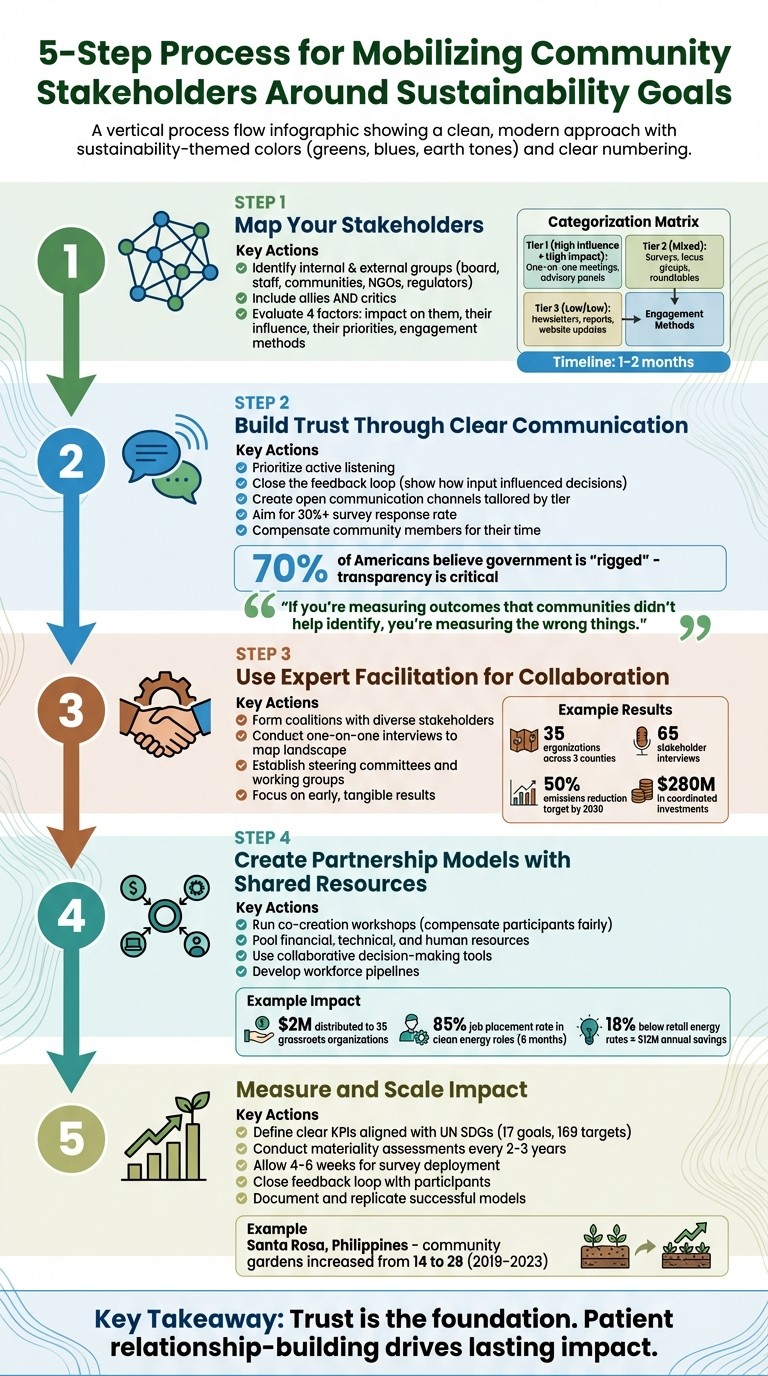
5 Steps to Mobilize Community Stakeholders Around Sustainability Goals
Strategies for Sustainable Stakeholder Engagement | Exclusive Lesson
Step 1: Map Your Stakeholders
Before taking action, it’s essential to identify all the groups involved in or impacted by your sustainability efforts. This process, known as stakeholder mapping, includes pinpointing both internal and external players. Internally, this might involve your board, leadership, and staff. Externally, it could include local communities, NGOs, regulators, academic institutions, and even critics [1][3].
Don’t limit your focus to allies - critics and groups negatively impacted by your work also need attention to avoid blind spots [1]. If direct communication with certain stakeholders, such as vulnerable populations or supply chain workers, isn’t feasible, consider reaching out to trusted representatives like NGOs, trade unions, or community leaders who can voice their concerns [3].
Identify Key Stakeholders
Start by listing all relevant stakeholders, such as:
Value Chain Partners: Suppliers, distributors, and other business collaborators.
Community Members: Local residents, indigenous groups, and other affected populations.
Civil Society Groups: Advocacy organizations, nonprofits, and similar entities [3].
For each stakeholder, evaluate these four factors: how your operations affect them, how they can influence your organization, the sustainability issues they care about most, and the best methods to engage them [3].
Rather than treating this as a separate task, use existing relationships to streamline the process. For example, site managers can handle community outreach, while investor relations teams can manage communication with investors [3]. This integrated approach prevents duplication and ensures you’re leveraging established connections.
Categorize by Influence and Interest
Once you’ve identified stakeholders, organize them using a 2x2 matrix based on their influence and impact [1][4]. This will help you prioritize engagement across three tiers:
| Stakeholder Tier | Criteria | Engagement Method |
| --- | --- | --- |
| <strong>Tier 1</strong> | High Influence, High Impact | Close engagement: One-on-one meetings, advisory panels, co-design workshops |
| <strong>Tier 2</strong> | High Influence/Low Impact OR Low Influence/High Impact | Active engagement: Surveys, focus groups, roundtable discussions |
| <strong>Tier 3</strong> | Low Influence, Low Impact | Informative updates: Newsletters, website content, annual reports
| Stakeholder Tier | Criteria | Engagement Method |
| --- | --- | --- |
| <strong>Tier 1</strong> | High Influence, High Impact | Close engagement: One-on-one meetings, advisory panels, co-design workshops |
| <strong>Tier 2</strong> | High Influence/Low Impact OR Low Influence/High Impact | Active engagement: Surveys, focus groups, roundtable discussions |
| <strong>Tier 3</strong> | Low Influence, Low Impact | Informative updates: Newsletters, website content, annual reports
Tier 1 stakeholders demand the most attention. These groups have the power to significantly shape your initiatives and are deeply affected by them. Tier 2 stakeholders require consistent engagement, though not necessarily at the same depth. Tier 3 stakeholders primarily need to stay informed through regular updates [1].
This tiered approach helps you focus your resources where they’re needed most. While mapping stakeholders typically takes 1–2 months [3], it provides valuable insights, such as early warnings about potential risks and perspectives from those directly impacted. Once you’ve mapped and prioritized your stakeholders, the next step is to establish trust through clear and transparent communication.
Step 2: Build Trust Through Clear Communication
Once you've mapped your stakeholders, the next step is to connect with them through open and transparent communication. Trust grows when stakeholders feel heard and see their input reflected in decisions. This means prioritizing active listening and allowing their perspectives to shape your strategies [5].
A great example comes from the Barr Foundation in Boston, Massachusetts. For years, they operated anonymously, which led to skepticism within the community. In 2021, they shifted to open communication, publicly committing to "center racial equity" as a core value. This commitment was backed by initiatives like "Powering Cultural Futures." By 2024, their Grantee Perception Report revealed that grantees felt supported, describing the foundation as an ally that "had their backs" [5].
"Nobody cares how much you know until they know how much you care." – Theodore Roosevelt [5]
Close the Feedback Loop
One of the most important aspects of trust-building is closing the feedback loop. Gathering stakeholder input - whether through surveys, focus groups, or advisory panels - is just the first step. You must also show how their feedback influenced your decisions or explain why certain suggestions weren’t implemented [1].
For instance, Sutter-Yuba Behavioral Health in California set a powerful example by involving participants in their iCARE program to revise the evaluation plan and design their own survey. This approach shifted decision-making power to the community and incorporated their perspectives into the behavioral health system [6].
Create Open Communication Channels
Different stakeholder groups require tailored communication strategies:
Tier 1 stakeholders (high influence and impact): Engage them through regular one-on-one meetings or advisory panels for in-depth dialogue.
Tier 2 stakeholders: Use quarterly surveys, focus groups, and roundtable discussions to maintain active engagement.
Tier 3 stakeholders: Keep them informed with newsletters, annual reports, and updated website content [1].
To ensure meaningful participation, aim for a 30% or higher survey response rate. This can be achieved by compensating community members and vulnerable populations for their time and insights [1][6]. The Connecticut Office of Early Childhood used this approach effectively by collaborating with a "Parent Cabinet" over three years. They held evening Zoom sessions to co-create childcare policies, demonstrating a commitment to "moving at the speed of trust" [6].
Using third-party tools can also encourage honest feedback by reducing power dynamics. For example, the Barr Foundation partners with the Center for Effective Philanthropy to collect candid, anonymous input from grantees and partners. Another idea is to invite community members to contribute guest articles to your website, giving them a platform to share their perspectives [5].
Tailor Messages for Specific Audiences
Different stakeholders care about different aspects of your work, so it's crucial to customize your messaging. Investors, for instance, often focus on financial risks and long-term stability, while local communities are more concerned with environmental and social impacts that affect their daily lives [1]. Crafting messages based on these priorities ensures your communication resonates with each group.
Focus on shared values to find common ground. Research shows that 78% of Americans agree on the importance of clean water, and 71% prioritize quality K-12 education [7]. Starting conversations around these widely supported goals can help bridge differences and foster collaboration.
Keep your language simple and accessible, targeting an 8th- to 10th-grade reading level for external communications [7]. Avoid jargon or terms that might alienate certain groups. For example, during the 2019 Colorado River Basin negotiations, the Walton Family Foundation emphasized why engaging tribal nations was essential. Framing it as "the smartest way forward" helped secure agreements among seven states, culminating in the largest water conservation deal in history and unlocking $280 million in coordinated investments [1][7].
"If communications advances mission, we should be doing it!" – Barr Foundation Trustees [5]
Given that 70% of Americans believe the government is "rigged", organizations must work harder to rebuild trust through transparency and shared power [6]. Position your organization as a steward of community resources by allowing communities to define success metrics [6].
"If you're measuring outcomes that communities didn't help identify, you're measuring the wrong things." – Kesha Lee, Consultant, Third Sector [6]
Lastly, maintain a stakeholder engagement log to track communication activities and outcomes. Document follow-up actions and set clear timelines for addressing feedback [1]. These practices lay the groundwork for the collaborative partnerships discussed in the next step.
Step 3: Use Council Fire for Stakeholder Collaboration
Once trust and clear communication are in place, the next step is to turn engagement into meaningful action. Council Fire's consulting services help organizations move sustainability strategies from the planning phase to measurable outcomes. They don’t treat stakeholder engagement as a mere formality; instead, they focus on creating coalitions that deliver tangible environmental and social results [1].
Planning and Engagement Support
Council Fire excels at bringing together diverse stakeholders - government entities, businesses, nonprofits, and academic institutions - into unified coalitions with shared goals [8]. Their approach prioritizes pragmatic leaders who balance ambition with a commitment to action, fostering collaboration between proactive advocates and more cautious participants.
For example, in February 2026, Council Fire facilitated a regional climate compact for a community foundation that provided anchor funding. This initiative brought together 35 organizations across three counties and 28 municipalities, including 14 municipalities, 12 businesses, 5 NGOs, and 4 academic institutions. Through 65 one-on-one interviews, they mapped the stakeholder landscape, established a 12-person steering committee, and formed four specialized working groups. The compact set an ambitious target of reducing regional emissions by 50% by 2030 and secured $280 million in coordinated investments, including $120 million for municipal infrastructure and $48 million in federal grants from FEMA and the DOE [8].
Council Fire’s process begins with trust-building through individual conversations before formal commitments are made. They focus on achieving early, tangible results - such as cost savings or quick-start projects - to build confidence and sustain momentum. A notable example includes their facilitation of a clean energy procurement collaborative, which aggregated 420 GWh of demand, secured pricing 18% below retail rates, and saved participants $12 million annually [8].
Council Fire Services Comparison
Council Fire provides three interconnected services designed to mobilize stakeholders around sustainability goals:
| Service Offering | Key Features | Primary Benefits |
| --- | --- | --- |
| <strong>Consulting Services</strong> | Stakeholder mapping, coalition building, workshops, and governance design | Aligns diverse agendas, builds trust among competing interests, and manages processes effectively |
| <strong>Impact Analysis</strong> | Double materiality assessments, regional vulnerability mapping, and data synthesis | Identifies ESG risks, avoids redundant efforts, and ensures actions are data-driven |
| <strong>Communication Strategies</strong> | Feedback mechanisms, progress reporting, and tailored messaging for varied audiences | Ensures transparency, secures social trust, and fosters long-term stakeholder engagement
| Service Offering | Key Features | Primary Benefits |
| --- | --- | --- |
| <strong>Consulting Services</strong> | Stakeholder mapping, coalition building, workshops, and governance design | Aligns diverse agendas, builds trust among competing interests, and manages processes effectively |
| <strong>Impact Analysis</strong> | Double materiality assessments, regional vulnerability mapping, and data synthesis | Identifies ESG risks, avoids redundant efforts, and ensures actions are data-driven |
| <strong>Communication Strategies</strong> | Feedback mechanisms, progress reporting, and tailored messaging for varied audiences | Ensures transparency, secures social trust, and fosters long-term stakeholder engagement
These services are most effective when combined. Consulting Services establish the groundwork by identifying stakeholders and forming coalitions. Impact Analysis provides the critical data needed to prioritize actions and secure funding. Communication Strategies maintain momentum by keeping stakeholders informed, fostering accountability, and ensuring ongoing collaboration.
One standout example of Council Fire’s impact is a workforce program they helped develop, which achieved an 85% job placement rate in clean energy roles within just six months [8]. Building on these successes, the next step is to measure and scale the outcomes of these collaborative efforts.
Step 4: Create Partnership Models with Shared Resources
With coalitions in place and communication channels open, the next step is to turn collaboration into action by developing partnership models that leverage shared resources. These models focus on pooling financial, technical, and human resources to achieve sustainability goals that no single organization could accomplish on its own. The most impactful partnerships create frameworks where collective efforts lead to measurable outcomes.
Run Co-Creation Workshops
Co-creation workshops shift the focus from top-down decision-making to collaborative problem-solving. These workshops bring together individuals with firsthand experience of environmental challenges, along with foundation staff and institutional partners. A great example of this approach is the Participatory Climate Initiative, carried out by the Fund for Shared Insight between 2020 and 2022. Spearheaded by Managing Director Melinda Tuan and consultants Katy Love and Winifred Olliff, the initiative included a 12-member Design Team and a 14-member Grantmaking Group. Participants, hailing from regions like the U.S. Southeast, Alaska, and Hawai'i, dedicated around 30 hours over a 10-week period. Using the "Gradients of Agreement" tool, they reached unanimous decisions on allocating resources, ultimately doubling their original $1 million fund to distribute $2 million in grants to 35 grassroots organizations [2].
For workshops to succeed, skilled facilitators and equitable participation are essential. Community members and NGO representatives should be compensated fairly for their time, while business and investor partners typically participate without compensation. It’s equally important to close the feedback loop by showing participants how their input influenced final decisions. The Fund for Shared Insight’s Design Team put it best:
"Trust people with lived experience to make decisions that affect them and to identify their own needs and priorities." [2]
Pool Resources for Greater Impact
Pooling resources turns fragmented efforts into powerful, coordinated initiatives. Combining financial contributions with shared technical assets reduces redundant costs and creates a strong foundation for collective action. For instance, a regional coalition conducted joint vulnerability assessments across 28 municipalities, cutting consultant expenses and establishing a unified data set for infrastructure planning [8]. Additionally, the coalition developed workforce pipelines connecting educational institutions, labor unions, and employers, leading to an 85% job placement rate in clean energy roles within just six months [8].
Step 5: Measure and Scale Impact
Once partnerships begin delivering results, it's time to track progress and expand on those successes. Measurement isn't just about showcasing outcomes - it’s about understanding what drives meaningful change and applying those insights to replicate effective strategies across different communities. This step connects collaborative efforts to tangible, scalable outcomes.
Define Key Performance Indicators
Building on the foundation of your partnerships, establish clear Key Performance Indicators (KPIs) to monitor progress. Start by aligning these KPIs with established frameworks, such as the UN Sustainable Development Goals, which feature 17 goals and 169 specific targets [10]. Use consistent rating systems - like scales ranging from 1–5 or 1–10 - to analyze trends effectively. For example, track stakeholder response rates to ensure statistical accuracy and measure the total coordinated investment mobilized through your coalitions [1].
A practical example of this approach comes from Santa Rosa, Philippines. Between 2019 and 2023, the city conducted face-to-face interviews and barangay consultations to monitor community-led proposals. Their efforts revealed that the number of community gardens and farms increased from 14 to 29 during the city’s first voluntary local review of the UN SDGs under Mayor Arlene Arcillas [9].
Combine this quantitative data with qualitative insights gathered through open-ended questions, interviews, and focus groups. By coding qualitative responses to identify recurring themes and grouping results by stakeholder types, you can uncover emerging risks and potential blind spots [1].
Improve Through Continuous Evaluation
Ongoing monitoring is key to refining and enhancing mobilization strategies. Conduct materiality assessments every two to three years, with annual reviews for key stakeholders. Allow sufficient time - typically 4–6 weeks - for survey deployment, from design to analysis, and schedule stakeholder interviews 3–4 weeks in advance [1]. Close the feedback loop by reporting findings back to participants, showing how their input influenced decisions. As Fernando Ortiz-Moya, PhD, Chief Policy Researcher at the Institute for Global Environmental Strategies, emphasizes:
"Stakeholder engagement is not merely a tick-box exercise or a technical process: it's a relationship. And as in every relationship, trust is essential" [9].
Scaling successful initiatives magnifies their impact and strengthens collaborative efforts. For example, a regional climate compact involving 35 organizations unlocked $280 million in coordinated investment by addressing both infrastructure needs and the institutional frameworks necessary for sustainability [1]. Use these insights to refine your models and replicate success in other communities. Document what works, share lessons learned across your network, and adapt proven strategies to fit the unique needs of each new community. This approach ensures both growth and respect for local contexts.
Conclusion
Engaging community stakeholders effectively requires trust, structured collaboration, and meaningful, measurable actions. The five steps outlined here provide a clear path forward: identify and map key stakeholders, establish trust through open and honest communication, bring in expert facilitators to guide discussions, design partnership models that combine resources, and measure outcomes to refine and expand successful initiatives.
The results speak for themselves. When organizations prioritize authentic engagement over superficial efforts, the impact is profound. Successful outcomes consistently stem from treating stakeholder engagement as a process of building relationships rather than simply checking boxes.
Fernando Ortiz-Moya, PhD, Chief Policy Researcher at the Institute for Global Environmental Strategies, underscores this point:
"What matters most isn't the size of the budget or the number of workshops. It's trust - and the patient work of building it" [9].
Trust is the cornerstone of everything else: aligning goals, sharing resources, and maintaining long-term momentum. But the work doesn't stop with a single project. By documenting methods, continuously assessing efforts, and adapting strategies to new contexts, organizations can turn standalone projects into broader, scalable movements.
Looking ahead, long-term partnerships will be key to future success. Council Fire collaborates with foundations and philanthropic organizations at every stage of this journey, offering expertise in areas like stakeholder mapping, facilitation, and engagement strategy design. Whether you're starting your first initiative or expanding proven approaches across communities, having the right partner can accelerate progress and deepen results. Begin with trust, focus on measurable outcomes, and build partnerships that endure. Together, these steps can transform isolated efforts into lasting, impactful movements.
FAQs
How do I choose which stakeholders to engage first?
When setting sustainability goals, begin by pinpointing the stakeholders who are most impacted by or hold the greatest influence over these objectives. Start with internal groups - such as company leadership, sustainability teams, and employees - to create a unified direction and ensure everyone is on the same page. Afterward, shift your focus to external stakeholders, including local communities, regulatory bodies, and civil society organizations operating near your facilities. Engaging these essential groups early on helps establish trust, reinforces your credibility, and generates the support needed to drive your initiatives forward.
How can we get honest community feedback without power dynamics?
Creating an environment where honest community feedback thrives requires breaking down power dynamics and fostering trust. Start by ensuring everyone feels valued and heard through participatory approaches that highlight community voices and allow them to shape decisions meaningfully. Active listening is essential - engage sincerely, and let the community know their input matters.
Building long-term relationships is another cornerstone. When communities see consistent commitment, they’re more likely to share openly. Prioritize leadership from within the community, empowering them to take charge of initiatives and decisions. Transparent communication is critical - keep everyone informed and ensure clarity in actions and intentions.
Avoid tokenism at all costs. Feedback should never feel like a checkbox exercise; instead, it should lead to real, community-driven solutions. By addressing these imbalances, you create a space where feedback is not only safe but also genuinely impactful.
Which KPIs best prove stakeholder engagement impact to funders?
Key performance indicators (KPIs) that effectively highlight the impact of stakeholder engagement for funders include Community Engagement metrics and Social Return on Investment (SROI). Community Engagement metrics track tangible aspects like stakeholder participation, volunteer hours, and event attendance, offering a snapshot of involvement levels. SROI goes a step further by calculating the financial value of the social impact generated compared to the resources invested. Together, these metrics offer a solid, measurable framework to demonstrate the success and value of engagement initiatives.
Related Blog Posts
Latest Articles
©2025


FAQ
01
What does it really mean to “redefine profit”?
02
What makes Council Fire different?
03
Who does Council Fire you work with?
04
What does working with Council Fire actually look like?
05
How does Council Fire help organizations turn big goals into action?
06
How does Council Fire define and measure success?
Apr 8, 2026
How to Mobilize Community Stakeholders Around Sustainability Goals for Foundations & Philanthropic Organizations
Sustainability Strategy
In This Article
Foundations must build trust and coalitions with communities to turn sustainability goals into measurable, scalable impact.
How to Mobilize Community Stakeholders Around Sustainability Goals for Foundations & Philanthropic Organizations
Mobilizing community stakeholders is essential for achieving effective sustainability goals. Foundations and philanthropic organizations must engage directly with communities to gain insights, build trust, and align initiatives with real-world needs. This process is not just a requirement for credible reporting but also a way to unlock funding and drive meaningful outcomes.
Key Steps to Engage Stakeholders:
Identify Stakeholders: Map all affected groups, including allies, critics, and vulnerable populations, and categorize them by influence and impact.
Build Trust: Communicate openly, close feedback loops, and reflect community input in decisions.
Collaborate Effectively: Use tools like Council Fire to form coalitions, pool resources, and achieve shared goals.
Develop Partnerships: Run co-creation workshops and share resources for collective action.
Measure Progress: Define clear metrics, monitor outcomes, and scale successful initiatives.
5 Steps to Mobilize Community Stakeholders Around Sustainability Goals
Strategies for Sustainable Stakeholder Engagement | Exclusive Lesson
Step 1: Map Your Stakeholders
Before taking action, it’s essential to identify all the groups involved in or impacted by your sustainability efforts. This process, known as stakeholder mapping, includes pinpointing both internal and external players. Internally, this might involve your board, leadership, and staff. Externally, it could include local communities, NGOs, regulators, academic institutions, and even critics [1][3].
Don’t limit your focus to allies - critics and groups negatively impacted by your work also need attention to avoid blind spots [1]. If direct communication with certain stakeholders, such as vulnerable populations or supply chain workers, isn’t feasible, consider reaching out to trusted representatives like NGOs, trade unions, or community leaders who can voice their concerns [3].
Identify Key Stakeholders
Start by listing all relevant stakeholders, such as:
Value Chain Partners: Suppliers, distributors, and other business collaborators.
Community Members: Local residents, indigenous groups, and other affected populations.
Civil Society Groups: Advocacy organizations, nonprofits, and similar entities [3].
For each stakeholder, evaluate these four factors: how your operations affect them, how they can influence your organization, the sustainability issues they care about most, and the best methods to engage them [3].
Rather than treating this as a separate task, use existing relationships to streamline the process. For example, site managers can handle community outreach, while investor relations teams can manage communication with investors [3]. This integrated approach prevents duplication and ensures you’re leveraging established connections.
Categorize by Influence and Interest
Once you’ve identified stakeholders, organize them using a 2x2 matrix based on their influence and impact [1][4]. This will help you prioritize engagement across three tiers:
| Stakeholder Tier | Criteria | Engagement Method |
| --- | --- | --- |
| <strong>Tier 1</strong> | High Influence, High Impact | Close engagement: One-on-one meetings, advisory panels, co-design workshops |
| <strong>Tier 2</strong> | High Influence/Low Impact OR Low Influence/High Impact | Active engagement: Surveys, focus groups, roundtable discussions |
| <strong>Tier 3</strong> | Low Influence, Low Impact | Informative updates: Newsletters, website content, annual reports
Tier 1 stakeholders demand the most attention. These groups have the power to significantly shape your initiatives and are deeply affected by them. Tier 2 stakeholders require consistent engagement, though not necessarily at the same depth. Tier 3 stakeholders primarily need to stay informed through regular updates [1].
This tiered approach helps you focus your resources where they’re needed most. While mapping stakeholders typically takes 1–2 months [3], it provides valuable insights, such as early warnings about potential risks and perspectives from those directly impacted. Once you’ve mapped and prioritized your stakeholders, the next step is to establish trust through clear and transparent communication.
Step 2: Build Trust Through Clear Communication
Once you've mapped your stakeholders, the next step is to connect with them through open and transparent communication. Trust grows when stakeholders feel heard and see their input reflected in decisions. This means prioritizing active listening and allowing their perspectives to shape your strategies [5].
A great example comes from the Barr Foundation in Boston, Massachusetts. For years, they operated anonymously, which led to skepticism within the community. In 2021, they shifted to open communication, publicly committing to "center racial equity" as a core value. This commitment was backed by initiatives like "Powering Cultural Futures." By 2024, their Grantee Perception Report revealed that grantees felt supported, describing the foundation as an ally that "had their backs" [5].
"Nobody cares how much you know until they know how much you care." – Theodore Roosevelt [5]
Close the Feedback Loop
One of the most important aspects of trust-building is closing the feedback loop. Gathering stakeholder input - whether through surveys, focus groups, or advisory panels - is just the first step. You must also show how their feedback influenced your decisions or explain why certain suggestions weren’t implemented [1].
For instance, Sutter-Yuba Behavioral Health in California set a powerful example by involving participants in their iCARE program to revise the evaluation plan and design their own survey. This approach shifted decision-making power to the community and incorporated their perspectives into the behavioral health system [6].
Create Open Communication Channels
Different stakeholder groups require tailored communication strategies:
Tier 1 stakeholders (high influence and impact): Engage them through regular one-on-one meetings or advisory panels for in-depth dialogue.
Tier 2 stakeholders: Use quarterly surveys, focus groups, and roundtable discussions to maintain active engagement.
Tier 3 stakeholders: Keep them informed with newsletters, annual reports, and updated website content [1].
To ensure meaningful participation, aim for a 30% or higher survey response rate. This can be achieved by compensating community members and vulnerable populations for their time and insights [1][6]. The Connecticut Office of Early Childhood used this approach effectively by collaborating with a "Parent Cabinet" over three years. They held evening Zoom sessions to co-create childcare policies, demonstrating a commitment to "moving at the speed of trust" [6].
Using third-party tools can also encourage honest feedback by reducing power dynamics. For example, the Barr Foundation partners with the Center for Effective Philanthropy to collect candid, anonymous input from grantees and partners. Another idea is to invite community members to contribute guest articles to your website, giving them a platform to share their perspectives [5].
Tailor Messages for Specific Audiences
Different stakeholders care about different aspects of your work, so it's crucial to customize your messaging. Investors, for instance, often focus on financial risks and long-term stability, while local communities are more concerned with environmental and social impacts that affect their daily lives [1]. Crafting messages based on these priorities ensures your communication resonates with each group.
Focus on shared values to find common ground. Research shows that 78% of Americans agree on the importance of clean water, and 71% prioritize quality K-12 education [7]. Starting conversations around these widely supported goals can help bridge differences and foster collaboration.
Keep your language simple and accessible, targeting an 8th- to 10th-grade reading level for external communications [7]. Avoid jargon or terms that might alienate certain groups. For example, during the 2019 Colorado River Basin negotiations, the Walton Family Foundation emphasized why engaging tribal nations was essential. Framing it as "the smartest way forward" helped secure agreements among seven states, culminating in the largest water conservation deal in history and unlocking $280 million in coordinated investments [1][7].
"If communications advances mission, we should be doing it!" – Barr Foundation Trustees [5]
Given that 70% of Americans believe the government is "rigged", organizations must work harder to rebuild trust through transparency and shared power [6]. Position your organization as a steward of community resources by allowing communities to define success metrics [6].
"If you're measuring outcomes that communities didn't help identify, you're measuring the wrong things." – Kesha Lee, Consultant, Third Sector [6]
Lastly, maintain a stakeholder engagement log to track communication activities and outcomes. Document follow-up actions and set clear timelines for addressing feedback [1]. These practices lay the groundwork for the collaborative partnerships discussed in the next step.
Step 3: Use Council Fire for Stakeholder Collaboration
Once trust and clear communication are in place, the next step is to turn engagement into meaningful action. Council Fire's consulting services help organizations move sustainability strategies from the planning phase to measurable outcomes. They don’t treat stakeholder engagement as a mere formality; instead, they focus on creating coalitions that deliver tangible environmental and social results [1].
Planning and Engagement Support
Council Fire excels at bringing together diverse stakeholders - government entities, businesses, nonprofits, and academic institutions - into unified coalitions with shared goals [8]. Their approach prioritizes pragmatic leaders who balance ambition with a commitment to action, fostering collaboration between proactive advocates and more cautious participants.
For example, in February 2026, Council Fire facilitated a regional climate compact for a community foundation that provided anchor funding. This initiative brought together 35 organizations across three counties and 28 municipalities, including 14 municipalities, 12 businesses, 5 NGOs, and 4 academic institutions. Through 65 one-on-one interviews, they mapped the stakeholder landscape, established a 12-person steering committee, and formed four specialized working groups. The compact set an ambitious target of reducing regional emissions by 50% by 2030 and secured $280 million in coordinated investments, including $120 million for municipal infrastructure and $48 million in federal grants from FEMA and the DOE [8].
Council Fire’s process begins with trust-building through individual conversations before formal commitments are made. They focus on achieving early, tangible results - such as cost savings or quick-start projects - to build confidence and sustain momentum. A notable example includes their facilitation of a clean energy procurement collaborative, which aggregated 420 GWh of demand, secured pricing 18% below retail rates, and saved participants $12 million annually [8].
Council Fire Services Comparison
Council Fire provides three interconnected services designed to mobilize stakeholders around sustainability goals:
| Service Offering | Key Features | Primary Benefits |
| --- | --- | --- |
| <strong>Consulting Services</strong> | Stakeholder mapping, coalition building, workshops, and governance design | Aligns diverse agendas, builds trust among competing interests, and manages processes effectively |
| <strong>Impact Analysis</strong> | Double materiality assessments, regional vulnerability mapping, and data synthesis | Identifies ESG risks, avoids redundant efforts, and ensures actions are data-driven |
| <strong>Communication Strategies</strong> | Feedback mechanisms, progress reporting, and tailored messaging for varied audiences | Ensures transparency, secures social trust, and fosters long-term stakeholder engagement
These services are most effective when combined. Consulting Services establish the groundwork by identifying stakeholders and forming coalitions. Impact Analysis provides the critical data needed to prioritize actions and secure funding. Communication Strategies maintain momentum by keeping stakeholders informed, fostering accountability, and ensuring ongoing collaboration.
One standout example of Council Fire’s impact is a workforce program they helped develop, which achieved an 85% job placement rate in clean energy roles within just six months [8]. Building on these successes, the next step is to measure and scale the outcomes of these collaborative efforts.
Step 4: Create Partnership Models with Shared Resources
With coalitions in place and communication channels open, the next step is to turn collaboration into action by developing partnership models that leverage shared resources. These models focus on pooling financial, technical, and human resources to achieve sustainability goals that no single organization could accomplish on its own. The most impactful partnerships create frameworks where collective efforts lead to measurable outcomes.
Run Co-Creation Workshops
Co-creation workshops shift the focus from top-down decision-making to collaborative problem-solving. These workshops bring together individuals with firsthand experience of environmental challenges, along with foundation staff and institutional partners. A great example of this approach is the Participatory Climate Initiative, carried out by the Fund for Shared Insight between 2020 and 2022. Spearheaded by Managing Director Melinda Tuan and consultants Katy Love and Winifred Olliff, the initiative included a 12-member Design Team and a 14-member Grantmaking Group. Participants, hailing from regions like the U.S. Southeast, Alaska, and Hawai'i, dedicated around 30 hours over a 10-week period. Using the "Gradients of Agreement" tool, they reached unanimous decisions on allocating resources, ultimately doubling their original $1 million fund to distribute $2 million in grants to 35 grassroots organizations [2].
For workshops to succeed, skilled facilitators and equitable participation are essential. Community members and NGO representatives should be compensated fairly for their time, while business and investor partners typically participate without compensation. It’s equally important to close the feedback loop by showing participants how their input influenced final decisions. The Fund for Shared Insight’s Design Team put it best:
"Trust people with lived experience to make decisions that affect them and to identify their own needs and priorities." [2]
Pool Resources for Greater Impact
Pooling resources turns fragmented efforts into powerful, coordinated initiatives. Combining financial contributions with shared technical assets reduces redundant costs and creates a strong foundation for collective action. For instance, a regional coalition conducted joint vulnerability assessments across 28 municipalities, cutting consultant expenses and establishing a unified data set for infrastructure planning [8]. Additionally, the coalition developed workforce pipelines connecting educational institutions, labor unions, and employers, leading to an 85% job placement rate in clean energy roles within just six months [8].
Step 5: Measure and Scale Impact
Once partnerships begin delivering results, it's time to track progress and expand on those successes. Measurement isn't just about showcasing outcomes - it’s about understanding what drives meaningful change and applying those insights to replicate effective strategies across different communities. This step connects collaborative efforts to tangible, scalable outcomes.
Define Key Performance Indicators
Building on the foundation of your partnerships, establish clear Key Performance Indicators (KPIs) to monitor progress. Start by aligning these KPIs with established frameworks, such as the UN Sustainable Development Goals, which feature 17 goals and 169 specific targets [10]. Use consistent rating systems - like scales ranging from 1–5 or 1–10 - to analyze trends effectively. For example, track stakeholder response rates to ensure statistical accuracy and measure the total coordinated investment mobilized through your coalitions [1].
A practical example of this approach comes from Santa Rosa, Philippines. Between 2019 and 2023, the city conducted face-to-face interviews and barangay consultations to monitor community-led proposals. Their efforts revealed that the number of community gardens and farms increased from 14 to 29 during the city’s first voluntary local review of the UN SDGs under Mayor Arlene Arcillas [9].
Combine this quantitative data with qualitative insights gathered through open-ended questions, interviews, and focus groups. By coding qualitative responses to identify recurring themes and grouping results by stakeholder types, you can uncover emerging risks and potential blind spots [1].
Improve Through Continuous Evaluation
Ongoing monitoring is key to refining and enhancing mobilization strategies. Conduct materiality assessments every two to three years, with annual reviews for key stakeholders. Allow sufficient time - typically 4–6 weeks - for survey deployment, from design to analysis, and schedule stakeholder interviews 3–4 weeks in advance [1]. Close the feedback loop by reporting findings back to participants, showing how their input influenced decisions. As Fernando Ortiz-Moya, PhD, Chief Policy Researcher at the Institute for Global Environmental Strategies, emphasizes:
"Stakeholder engagement is not merely a tick-box exercise or a technical process: it's a relationship. And as in every relationship, trust is essential" [9].
Scaling successful initiatives magnifies their impact and strengthens collaborative efforts. For example, a regional climate compact involving 35 organizations unlocked $280 million in coordinated investment by addressing both infrastructure needs and the institutional frameworks necessary for sustainability [1]. Use these insights to refine your models and replicate success in other communities. Document what works, share lessons learned across your network, and adapt proven strategies to fit the unique needs of each new community. This approach ensures both growth and respect for local contexts.
Conclusion
Engaging community stakeholders effectively requires trust, structured collaboration, and meaningful, measurable actions. The five steps outlined here provide a clear path forward: identify and map key stakeholders, establish trust through open and honest communication, bring in expert facilitators to guide discussions, design partnership models that combine resources, and measure outcomes to refine and expand successful initiatives.
The results speak for themselves. When organizations prioritize authentic engagement over superficial efforts, the impact is profound. Successful outcomes consistently stem from treating stakeholder engagement as a process of building relationships rather than simply checking boxes.
Fernando Ortiz-Moya, PhD, Chief Policy Researcher at the Institute for Global Environmental Strategies, underscores this point:
"What matters most isn't the size of the budget or the number of workshops. It's trust - and the patient work of building it" [9].
Trust is the cornerstone of everything else: aligning goals, sharing resources, and maintaining long-term momentum. But the work doesn't stop with a single project. By documenting methods, continuously assessing efforts, and adapting strategies to new contexts, organizations can turn standalone projects into broader, scalable movements.
Looking ahead, long-term partnerships will be key to future success. Council Fire collaborates with foundations and philanthropic organizations at every stage of this journey, offering expertise in areas like stakeholder mapping, facilitation, and engagement strategy design. Whether you're starting your first initiative or expanding proven approaches across communities, having the right partner can accelerate progress and deepen results. Begin with trust, focus on measurable outcomes, and build partnerships that endure. Together, these steps can transform isolated efforts into lasting, impactful movements.
FAQs
How do I choose which stakeholders to engage first?
When setting sustainability goals, begin by pinpointing the stakeholders who are most impacted by or hold the greatest influence over these objectives. Start with internal groups - such as company leadership, sustainability teams, and employees - to create a unified direction and ensure everyone is on the same page. Afterward, shift your focus to external stakeholders, including local communities, regulatory bodies, and civil society organizations operating near your facilities. Engaging these essential groups early on helps establish trust, reinforces your credibility, and generates the support needed to drive your initiatives forward.
How can we get honest community feedback without power dynamics?
Creating an environment where honest community feedback thrives requires breaking down power dynamics and fostering trust. Start by ensuring everyone feels valued and heard through participatory approaches that highlight community voices and allow them to shape decisions meaningfully. Active listening is essential - engage sincerely, and let the community know their input matters.
Building long-term relationships is another cornerstone. When communities see consistent commitment, they’re more likely to share openly. Prioritize leadership from within the community, empowering them to take charge of initiatives and decisions. Transparent communication is critical - keep everyone informed and ensure clarity in actions and intentions.
Avoid tokenism at all costs. Feedback should never feel like a checkbox exercise; instead, it should lead to real, community-driven solutions. By addressing these imbalances, you create a space where feedback is not only safe but also genuinely impactful.
Which KPIs best prove stakeholder engagement impact to funders?
Key performance indicators (KPIs) that effectively highlight the impact of stakeholder engagement for funders include Community Engagement metrics and Social Return on Investment (SROI). Community Engagement metrics track tangible aspects like stakeholder participation, volunteer hours, and event attendance, offering a snapshot of involvement levels. SROI goes a step further by calculating the financial value of the social impact generated compared to the resources invested. Together, these metrics offer a solid, measurable framework to demonstrate the success and value of engagement initiatives.
Related Blog Posts
FAQ
01
What does it really mean to “redefine profit”?
02
What makes Council Fire different?
03
Who does Council Fire you work with?
04
What does working with Council Fire actually look like?
05
How does Council Fire help organizations turn big goals into action?
06
How does Council Fire define and measure success?
Apr 8, 2026
How to Mobilize Community Stakeholders Around Sustainability Goals for Foundations & Philanthropic Organizations
Sustainability Strategy
In This Article
Foundations must build trust and coalitions with communities to turn sustainability goals into measurable, scalable impact.
How to Mobilize Community Stakeholders Around Sustainability Goals for Foundations & Philanthropic Organizations
Mobilizing community stakeholders is essential for achieving effective sustainability goals. Foundations and philanthropic organizations must engage directly with communities to gain insights, build trust, and align initiatives with real-world needs. This process is not just a requirement for credible reporting but also a way to unlock funding and drive meaningful outcomes.
Key Steps to Engage Stakeholders:
Identify Stakeholders: Map all affected groups, including allies, critics, and vulnerable populations, and categorize them by influence and impact.
Build Trust: Communicate openly, close feedback loops, and reflect community input in decisions.
Collaborate Effectively: Use tools like Council Fire to form coalitions, pool resources, and achieve shared goals.
Develop Partnerships: Run co-creation workshops and share resources for collective action.
Measure Progress: Define clear metrics, monitor outcomes, and scale successful initiatives.
5 Steps to Mobilize Community Stakeholders Around Sustainability Goals
Strategies for Sustainable Stakeholder Engagement | Exclusive Lesson
Step 1: Map Your Stakeholders
Before taking action, it’s essential to identify all the groups involved in or impacted by your sustainability efforts. This process, known as stakeholder mapping, includes pinpointing both internal and external players. Internally, this might involve your board, leadership, and staff. Externally, it could include local communities, NGOs, regulators, academic institutions, and even critics [1][3].
Don’t limit your focus to allies - critics and groups negatively impacted by your work also need attention to avoid blind spots [1]. If direct communication with certain stakeholders, such as vulnerable populations or supply chain workers, isn’t feasible, consider reaching out to trusted representatives like NGOs, trade unions, or community leaders who can voice their concerns [3].
Identify Key Stakeholders
Start by listing all relevant stakeholders, such as:
Value Chain Partners: Suppliers, distributors, and other business collaborators.
Community Members: Local residents, indigenous groups, and other affected populations.
Civil Society Groups: Advocacy organizations, nonprofits, and similar entities [3].
For each stakeholder, evaluate these four factors: how your operations affect them, how they can influence your organization, the sustainability issues they care about most, and the best methods to engage them [3].
Rather than treating this as a separate task, use existing relationships to streamline the process. For example, site managers can handle community outreach, while investor relations teams can manage communication with investors [3]. This integrated approach prevents duplication and ensures you’re leveraging established connections.
Categorize by Influence and Interest
Once you’ve identified stakeholders, organize them using a 2x2 matrix based on their influence and impact [1][4]. This will help you prioritize engagement across three tiers:
| Stakeholder Tier | Criteria | Engagement Method |
| --- | --- | --- |
| <strong>Tier 1</strong> | High Influence, High Impact | Close engagement: One-on-one meetings, advisory panels, co-design workshops |
| <strong>Tier 2</strong> | High Influence/Low Impact OR Low Influence/High Impact | Active engagement: Surveys, focus groups, roundtable discussions |
| <strong>Tier 3</strong> | Low Influence, Low Impact | Informative updates: Newsletters, website content, annual reports
Tier 1 stakeholders demand the most attention. These groups have the power to significantly shape your initiatives and are deeply affected by them. Tier 2 stakeholders require consistent engagement, though not necessarily at the same depth. Tier 3 stakeholders primarily need to stay informed through regular updates [1].
This tiered approach helps you focus your resources where they’re needed most. While mapping stakeholders typically takes 1–2 months [3], it provides valuable insights, such as early warnings about potential risks and perspectives from those directly impacted. Once you’ve mapped and prioritized your stakeholders, the next step is to establish trust through clear and transparent communication.
Step 2: Build Trust Through Clear Communication
Once you've mapped your stakeholders, the next step is to connect with them through open and transparent communication. Trust grows when stakeholders feel heard and see their input reflected in decisions. This means prioritizing active listening and allowing their perspectives to shape your strategies [5].
A great example comes from the Barr Foundation in Boston, Massachusetts. For years, they operated anonymously, which led to skepticism within the community. In 2021, they shifted to open communication, publicly committing to "center racial equity" as a core value. This commitment was backed by initiatives like "Powering Cultural Futures." By 2024, their Grantee Perception Report revealed that grantees felt supported, describing the foundation as an ally that "had their backs" [5].
"Nobody cares how much you know until they know how much you care." – Theodore Roosevelt [5]
Close the Feedback Loop
One of the most important aspects of trust-building is closing the feedback loop. Gathering stakeholder input - whether through surveys, focus groups, or advisory panels - is just the first step. You must also show how their feedback influenced your decisions or explain why certain suggestions weren’t implemented [1].
For instance, Sutter-Yuba Behavioral Health in California set a powerful example by involving participants in their iCARE program to revise the evaluation plan and design their own survey. This approach shifted decision-making power to the community and incorporated their perspectives into the behavioral health system [6].
Create Open Communication Channels
Different stakeholder groups require tailored communication strategies:
Tier 1 stakeholders (high influence and impact): Engage them through regular one-on-one meetings or advisory panels for in-depth dialogue.
Tier 2 stakeholders: Use quarterly surveys, focus groups, and roundtable discussions to maintain active engagement.
Tier 3 stakeholders: Keep them informed with newsletters, annual reports, and updated website content [1].
To ensure meaningful participation, aim for a 30% or higher survey response rate. This can be achieved by compensating community members and vulnerable populations for their time and insights [1][6]. The Connecticut Office of Early Childhood used this approach effectively by collaborating with a "Parent Cabinet" over three years. They held evening Zoom sessions to co-create childcare policies, demonstrating a commitment to "moving at the speed of trust" [6].
Using third-party tools can also encourage honest feedback by reducing power dynamics. For example, the Barr Foundation partners with the Center for Effective Philanthropy to collect candid, anonymous input from grantees and partners. Another idea is to invite community members to contribute guest articles to your website, giving them a platform to share their perspectives [5].
Tailor Messages for Specific Audiences
Different stakeholders care about different aspects of your work, so it's crucial to customize your messaging. Investors, for instance, often focus on financial risks and long-term stability, while local communities are more concerned with environmental and social impacts that affect their daily lives [1]. Crafting messages based on these priorities ensures your communication resonates with each group.
Focus on shared values to find common ground. Research shows that 78% of Americans agree on the importance of clean water, and 71% prioritize quality K-12 education [7]. Starting conversations around these widely supported goals can help bridge differences and foster collaboration.
Keep your language simple and accessible, targeting an 8th- to 10th-grade reading level for external communications [7]. Avoid jargon or terms that might alienate certain groups. For example, during the 2019 Colorado River Basin negotiations, the Walton Family Foundation emphasized why engaging tribal nations was essential. Framing it as "the smartest way forward" helped secure agreements among seven states, culminating in the largest water conservation deal in history and unlocking $280 million in coordinated investments [1][7].
"If communications advances mission, we should be doing it!" – Barr Foundation Trustees [5]
Given that 70% of Americans believe the government is "rigged", organizations must work harder to rebuild trust through transparency and shared power [6]. Position your organization as a steward of community resources by allowing communities to define success metrics [6].
"If you're measuring outcomes that communities didn't help identify, you're measuring the wrong things." – Kesha Lee, Consultant, Third Sector [6]
Lastly, maintain a stakeholder engagement log to track communication activities and outcomes. Document follow-up actions and set clear timelines for addressing feedback [1]. These practices lay the groundwork for the collaborative partnerships discussed in the next step.
Step 3: Use Council Fire for Stakeholder Collaboration
Once trust and clear communication are in place, the next step is to turn engagement into meaningful action. Council Fire's consulting services help organizations move sustainability strategies from the planning phase to measurable outcomes. They don’t treat stakeholder engagement as a mere formality; instead, they focus on creating coalitions that deliver tangible environmental and social results [1].
Planning and Engagement Support
Council Fire excels at bringing together diverse stakeholders - government entities, businesses, nonprofits, and academic institutions - into unified coalitions with shared goals [8]. Their approach prioritizes pragmatic leaders who balance ambition with a commitment to action, fostering collaboration between proactive advocates and more cautious participants.
For example, in February 2026, Council Fire facilitated a regional climate compact for a community foundation that provided anchor funding. This initiative brought together 35 organizations across three counties and 28 municipalities, including 14 municipalities, 12 businesses, 5 NGOs, and 4 academic institutions. Through 65 one-on-one interviews, they mapped the stakeholder landscape, established a 12-person steering committee, and formed four specialized working groups. The compact set an ambitious target of reducing regional emissions by 50% by 2030 and secured $280 million in coordinated investments, including $120 million for municipal infrastructure and $48 million in federal grants from FEMA and the DOE [8].
Council Fire’s process begins with trust-building through individual conversations before formal commitments are made. They focus on achieving early, tangible results - such as cost savings or quick-start projects - to build confidence and sustain momentum. A notable example includes their facilitation of a clean energy procurement collaborative, which aggregated 420 GWh of demand, secured pricing 18% below retail rates, and saved participants $12 million annually [8].
Council Fire Services Comparison
Council Fire provides three interconnected services designed to mobilize stakeholders around sustainability goals:
| Service Offering | Key Features | Primary Benefits |
| --- | --- | --- |
| <strong>Consulting Services</strong> | Stakeholder mapping, coalition building, workshops, and governance design | Aligns diverse agendas, builds trust among competing interests, and manages processes effectively |
| <strong>Impact Analysis</strong> | Double materiality assessments, regional vulnerability mapping, and data synthesis | Identifies ESG risks, avoids redundant efforts, and ensures actions are data-driven |
| <strong>Communication Strategies</strong> | Feedback mechanisms, progress reporting, and tailored messaging for varied audiences | Ensures transparency, secures social trust, and fosters long-term stakeholder engagement
These services are most effective when combined. Consulting Services establish the groundwork by identifying stakeholders and forming coalitions. Impact Analysis provides the critical data needed to prioritize actions and secure funding. Communication Strategies maintain momentum by keeping stakeholders informed, fostering accountability, and ensuring ongoing collaboration.
One standout example of Council Fire’s impact is a workforce program they helped develop, which achieved an 85% job placement rate in clean energy roles within just six months [8]. Building on these successes, the next step is to measure and scale the outcomes of these collaborative efforts.
Step 4: Create Partnership Models with Shared Resources
With coalitions in place and communication channels open, the next step is to turn collaboration into action by developing partnership models that leverage shared resources. These models focus on pooling financial, technical, and human resources to achieve sustainability goals that no single organization could accomplish on its own. The most impactful partnerships create frameworks where collective efforts lead to measurable outcomes.
Run Co-Creation Workshops
Co-creation workshops shift the focus from top-down decision-making to collaborative problem-solving. These workshops bring together individuals with firsthand experience of environmental challenges, along with foundation staff and institutional partners. A great example of this approach is the Participatory Climate Initiative, carried out by the Fund for Shared Insight between 2020 and 2022. Spearheaded by Managing Director Melinda Tuan and consultants Katy Love and Winifred Olliff, the initiative included a 12-member Design Team and a 14-member Grantmaking Group. Participants, hailing from regions like the U.S. Southeast, Alaska, and Hawai'i, dedicated around 30 hours over a 10-week period. Using the "Gradients of Agreement" tool, they reached unanimous decisions on allocating resources, ultimately doubling their original $1 million fund to distribute $2 million in grants to 35 grassroots organizations [2].
For workshops to succeed, skilled facilitators and equitable participation are essential. Community members and NGO representatives should be compensated fairly for their time, while business and investor partners typically participate without compensation. It’s equally important to close the feedback loop by showing participants how their input influenced final decisions. The Fund for Shared Insight’s Design Team put it best:
"Trust people with lived experience to make decisions that affect them and to identify their own needs and priorities." [2]
Pool Resources for Greater Impact
Pooling resources turns fragmented efforts into powerful, coordinated initiatives. Combining financial contributions with shared technical assets reduces redundant costs and creates a strong foundation for collective action. For instance, a regional coalition conducted joint vulnerability assessments across 28 municipalities, cutting consultant expenses and establishing a unified data set for infrastructure planning [8]. Additionally, the coalition developed workforce pipelines connecting educational institutions, labor unions, and employers, leading to an 85% job placement rate in clean energy roles within just six months [8].
Step 5: Measure and Scale Impact
Once partnerships begin delivering results, it's time to track progress and expand on those successes. Measurement isn't just about showcasing outcomes - it’s about understanding what drives meaningful change and applying those insights to replicate effective strategies across different communities. This step connects collaborative efforts to tangible, scalable outcomes.
Define Key Performance Indicators
Building on the foundation of your partnerships, establish clear Key Performance Indicators (KPIs) to monitor progress. Start by aligning these KPIs with established frameworks, such as the UN Sustainable Development Goals, which feature 17 goals and 169 specific targets [10]. Use consistent rating systems - like scales ranging from 1–5 or 1–10 - to analyze trends effectively. For example, track stakeholder response rates to ensure statistical accuracy and measure the total coordinated investment mobilized through your coalitions [1].
A practical example of this approach comes from Santa Rosa, Philippines. Between 2019 and 2023, the city conducted face-to-face interviews and barangay consultations to monitor community-led proposals. Their efforts revealed that the number of community gardens and farms increased from 14 to 29 during the city’s first voluntary local review of the UN SDGs under Mayor Arlene Arcillas [9].
Combine this quantitative data with qualitative insights gathered through open-ended questions, interviews, and focus groups. By coding qualitative responses to identify recurring themes and grouping results by stakeholder types, you can uncover emerging risks and potential blind spots [1].
Improve Through Continuous Evaluation
Ongoing monitoring is key to refining and enhancing mobilization strategies. Conduct materiality assessments every two to three years, with annual reviews for key stakeholders. Allow sufficient time - typically 4–6 weeks - for survey deployment, from design to analysis, and schedule stakeholder interviews 3–4 weeks in advance [1]. Close the feedback loop by reporting findings back to participants, showing how their input influenced decisions. As Fernando Ortiz-Moya, PhD, Chief Policy Researcher at the Institute for Global Environmental Strategies, emphasizes:
"Stakeholder engagement is not merely a tick-box exercise or a technical process: it's a relationship. And as in every relationship, trust is essential" [9].
Scaling successful initiatives magnifies their impact and strengthens collaborative efforts. For example, a regional climate compact involving 35 organizations unlocked $280 million in coordinated investment by addressing both infrastructure needs and the institutional frameworks necessary for sustainability [1]. Use these insights to refine your models and replicate success in other communities. Document what works, share lessons learned across your network, and adapt proven strategies to fit the unique needs of each new community. This approach ensures both growth and respect for local contexts.
Conclusion
Engaging community stakeholders effectively requires trust, structured collaboration, and meaningful, measurable actions. The five steps outlined here provide a clear path forward: identify and map key stakeholders, establish trust through open and honest communication, bring in expert facilitators to guide discussions, design partnership models that combine resources, and measure outcomes to refine and expand successful initiatives.
The results speak for themselves. When organizations prioritize authentic engagement over superficial efforts, the impact is profound. Successful outcomes consistently stem from treating stakeholder engagement as a process of building relationships rather than simply checking boxes.
Fernando Ortiz-Moya, PhD, Chief Policy Researcher at the Institute for Global Environmental Strategies, underscores this point:
"What matters most isn't the size of the budget or the number of workshops. It's trust - and the patient work of building it" [9].
Trust is the cornerstone of everything else: aligning goals, sharing resources, and maintaining long-term momentum. But the work doesn't stop with a single project. By documenting methods, continuously assessing efforts, and adapting strategies to new contexts, organizations can turn standalone projects into broader, scalable movements.
Looking ahead, long-term partnerships will be key to future success. Council Fire collaborates with foundations and philanthropic organizations at every stage of this journey, offering expertise in areas like stakeholder mapping, facilitation, and engagement strategy design. Whether you're starting your first initiative or expanding proven approaches across communities, having the right partner can accelerate progress and deepen results. Begin with trust, focus on measurable outcomes, and build partnerships that endure. Together, these steps can transform isolated efforts into lasting, impactful movements.
FAQs
How do I choose which stakeholders to engage first?
When setting sustainability goals, begin by pinpointing the stakeholders who are most impacted by or hold the greatest influence over these objectives. Start with internal groups - such as company leadership, sustainability teams, and employees - to create a unified direction and ensure everyone is on the same page. Afterward, shift your focus to external stakeholders, including local communities, regulatory bodies, and civil society organizations operating near your facilities. Engaging these essential groups early on helps establish trust, reinforces your credibility, and generates the support needed to drive your initiatives forward.
How can we get honest community feedback without power dynamics?
Creating an environment where honest community feedback thrives requires breaking down power dynamics and fostering trust. Start by ensuring everyone feels valued and heard through participatory approaches that highlight community voices and allow them to shape decisions meaningfully. Active listening is essential - engage sincerely, and let the community know their input matters.
Building long-term relationships is another cornerstone. When communities see consistent commitment, they’re more likely to share openly. Prioritize leadership from within the community, empowering them to take charge of initiatives and decisions. Transparent communication is critical - keep everyone informed and ensure clarity in actions and intentions.
Avoid tokenism at all costs. Feedback should never feel like a checkbox exercise; instead, it should lead to real, community-driven solutions. By addressing these imbalances, you create a space where feedback is not only safe but also genuinely impactful.
Which KPIs best prove stakeholder engagement impact to funders?
Key performance indicators (KPIs) that effectively highlight the impact of stakeholder engagement for funders include Community Engagement metrics and Social Return on Investment (SROI). Community Engagement metrics track tangible aspects like stakeholder participation, volunteer hours, and event attendance, offering a snapshot of involvement levels. SROI goes a step further by calculating the financial value of the social impact generated compared to the resources invested. Together, these metrics offer a solid, measurable framework to demonstrate the success and value of engagement initiatives.
Related Blog Posts
FAQ
What does it really mean to “redefine profit”?
What makes Council Fire different?
Who does Council Fire you work with?
What does working with Council Fire actually look like?
How does Council Fire help organizations turn big goals into action?
How does Council Fire define and measure success?