Mar 27, 2026
How to Design Marine Protected Area Governance for NGOs & Nonprofits
Capacity Building
In This Article
Practical steps for NGOs to design effective MPA governance: readiness assessment, shared governance, incentives, and community-led enforcement.
How to Design Marine Protected Area Governance for NGOs & Nonprofits
Marine Protected Areas (MPAs) are critical for restoring ocean biodiversity and fish populations, but their success depends heavily on effective governance. For NGOs and nonprofits, shared governance - where governments, local communities, and organizations collaborate - has proven to be 98% more effective in boosting fish biomass compared to state-only management. However, many MPAs fail due to poor stakeholder engagement, lack of enforcement, and ineffective management structures.
To address these challenges, this guide outlines key steps for creating governance systems that align conservation goals with local needs:
Assess Readiness: Evaluate organizational capacity, stakeholder participation, and governance structures using tools like the "40 Incentives Framework."
Engage Stakeholders: Build trust and legitimacy by involving local communities, Indigenous groups, and ocean users in decision-making.
Use Economic and Legal Tools: Combine financial incentives like revenue-sharing with clear enforcement mechanisms to encourage compliance.
Adopt Shared Governance Models: Create collaborative boards or Community Conserved Areas (CCAs) to distribute authority and improve outcomes.
With only 3% of MPAs effectively managed today, improving governance is crucial to achieving global conservation targets like the 30x30 initiative. This guide provides actionable strategies to ensure MPAs deliver measurable results.
Social Aspects of MPA Management – Building Effective and Equitable Ocean Conservation
Assessing Governance Readiness for MPAs
Laying the groundwork for effective Marine Protected Area (MPA) governance starts with a thorough readiness assessment. This process ensures that organizational structures are in sync with conservation objectives. Before diving into an MPA initiative, it’s essential to evaluate your organization’s capacity, authority, and how well stakeholders are engaged. Such an evaluation sheds light on where decision-making power currently resides - whether it’s centralized, shared, or local - and identifies gaps in both resources and stakeholder involvement. This foundational step shapes a Governance Readiness Plan, which aligns your organization’s capabilities with its conservation goals [2]. It also sets the stage for implementing governance strategies tailored to your specific needs, as discussed in later sections.
The MPA Governance (MPAG) framework, often referred to as the "40 Incentives Framework", serves as a valuable tool for this assessment. It categorizes governance mechanisms into five key types: Economic, Legal, Participatory, Knowledge, and Communication incentives [3]. Successful MPAs rely on a balanced mix of these incentives. As Professor Peter J. S. Jones explains:
Effectiveness is not determined by any specific governance approaches or incentives, but rather the combination of a diversity of functionally integrated incentives, which interact with and support one another [3].
To start, organizations should audit their current governance structures, identifying which of these incentives are already in place and where there may be gaps.
Additionally, the assessment should pinpoint the locus of authority. Does governance align with IUCN categories such as state-governed, shared governance, private governance, or governance by Indigenous Peoples and local communities [1]? Decentralized governance models, which bring decision-making closer to affected communities, often enhance legitimacy and compliance. If your current model is heavily centralized, this assessment might reveal opportunities to transition toward shared or sub-national governance arrangements, which have shown greater effectiveness in many contexts.
Participatory Incentives for Stakeholder Inclusion
Incorporating participatory incentives ensures that local stakeholders - such as fishing communities, Indigenous groups, and other ocean users - are genuinely involved in decision-making, rather than being consulted superficially. When stakeholders see their contributions reflected in MPA boundaries and regulations, they are more likely to voluntarily comply and even take on stewardship roles.
As Mast et al. highlighted in PLOS One:
Shared governance arrangements that include diverse groups throughout design and implementation may foster collaboration, support community interests, instill responsibility across multiple groups, and increase management capacity by leveraging shared resources [1].
When evaluating your governance structures, look for areas where traditional practices are ignored, local ecological knowledge goes untapped, or affected communities lack representation. Addressing these gaps through mechanisms like user committees, co-management boards, or community-led monitoring programs can strengthen the legitimacy and effectiveness of your MPA.
Economic and Legal Incentives for Enforcement
While participatory measures are critical, economic and legal incentives provide the backbone for successful governance.
Economic incentives offer tangible benefits that encourage stakeholders to support conservation efforts rather than oppose them. Examples include revenue-sharing from ecotourism, programs that promote sustainable livelihoods, or preferential access to resources in designated buffer zones. When communities directly benefit financially from a thriving marine ecosystem, enforcement often becomes a matter of collective interest rather than external policing. Research has shown that national GDP positively correlates with fish biomass in MPAs, likely because wealthier nations have more resources for environmental management and stronger governance capacity [1].
Legal incentives, on the other hand, create the regulatory framework that formalizes MPA rules and provides enforcement mechanisms when voluntary compliance isn’t enough. These structures are most effective when combined with communication and participatory efforts that build understanding and trust. As part of your readiness assessment, consider whether your organization has adequate enforcement resources, whether local legal systems support your MPA’s goals, and if penalties are appropriately scaled. The aim is a governance system where legal authority complements collaborative decision-making, ensuring clear consequences for violations while prioritizing education and stakeholder engagement as the first line of compliance [3][5].
Core Governance Principles for MPA Management
To effectively manage Marine Protected Areas (MPAs), it's essential to build governance frameworks on principles that have been shown to work. An analysis of 217 MPAs worldwide reveals that shared governance can increase fish biomass by an average of 32% [1]. Embedding these principles into your management approach is crucial. Equally important is fostering legitimacy through inclusive, consensus-driven decision-making processes.
It's worth noting that simply designating an area as an MPA isn't enough. Between 30% and 40% of MPAs globally suffer from inadequate management, turning them into "paper parks" that fail to deliver conservation benefits [7]. Effective governance requires more than drawing boundaries; it demands robust staffing plans, enforcement mechanisms, and monitoring systems. For instance, a $200 million ocean conservation initiative recently reallocated 14% of its budget from designation advocacy to improving management, resulting in better outcomes across key sites [7].
Legitimacy and Consensus Orientation
Legitimacy in governance hinges on inclusive participation and stakeholder trust in the fairness of decision-making processes. When local communities, Indigenous groups, and resource users see their perspectives and knowledge reflected in MPA management rules, compliance tends to be voluntary rather than enforced. Collaborative governance - where a central management body actively engages with diverse stakeholders - has been linked to fish biomass levels 49% higher than those under national-level governance [1]. Incorporating local and traditional knowledge into the design of boundaries and rules ensures that management aligns with on-the-ground realities.
Decentralization also plays a significant role in strengthening governance. Sub-national governance structures, such as co-management boards or community-conserved areas, support fish biomass levels 26% higher than national-level governance [1]. For NGOs, this means advocating for governance models that bring decision-making closer to the communities directly affected, enabling more responsive and effective management.
Accountability and Clear Vision
Legitimacy alone isn't enough; governance must also be accountable and guided by a clear vision.
Accountability requires setting measurable goals and ensuring transparency in reporting. Tools like the Management Effectiveness Tracking Tool (METT) can help monitor progress and confirm whether governance structures are delivering intended outcomes.
A well-defined vision acts as a roadmap for long-term collaboration. The Great Barrier Reef Marine Park Authority (GBRMPA) exemplifies this with its "Co-management Principles" policy, which ensures consistent stakeholder engagement and strategic direction, even amidst political shifts [6]. For nonprofits, this means crafting a strategic platform that communicates the MPA's goals to all stakeholders - government bodies, local communities, funders, and enforcement partners. This vision should connect governance efforts, such as policy reforms and community outreach, to tangible conservation outcomes like fish stock recovery. A clear Theory of Change can guide resource allocation and demonstrate the value of these efforts to donors.
Shared governance structures naturally promote accountability by distributing responsibilities and pooling resources [1]. When authority is shared, no single entity can evade scrutiny, and diverse stakeholders collectively ensure that results are achieved.
Building Shared Governance Structures
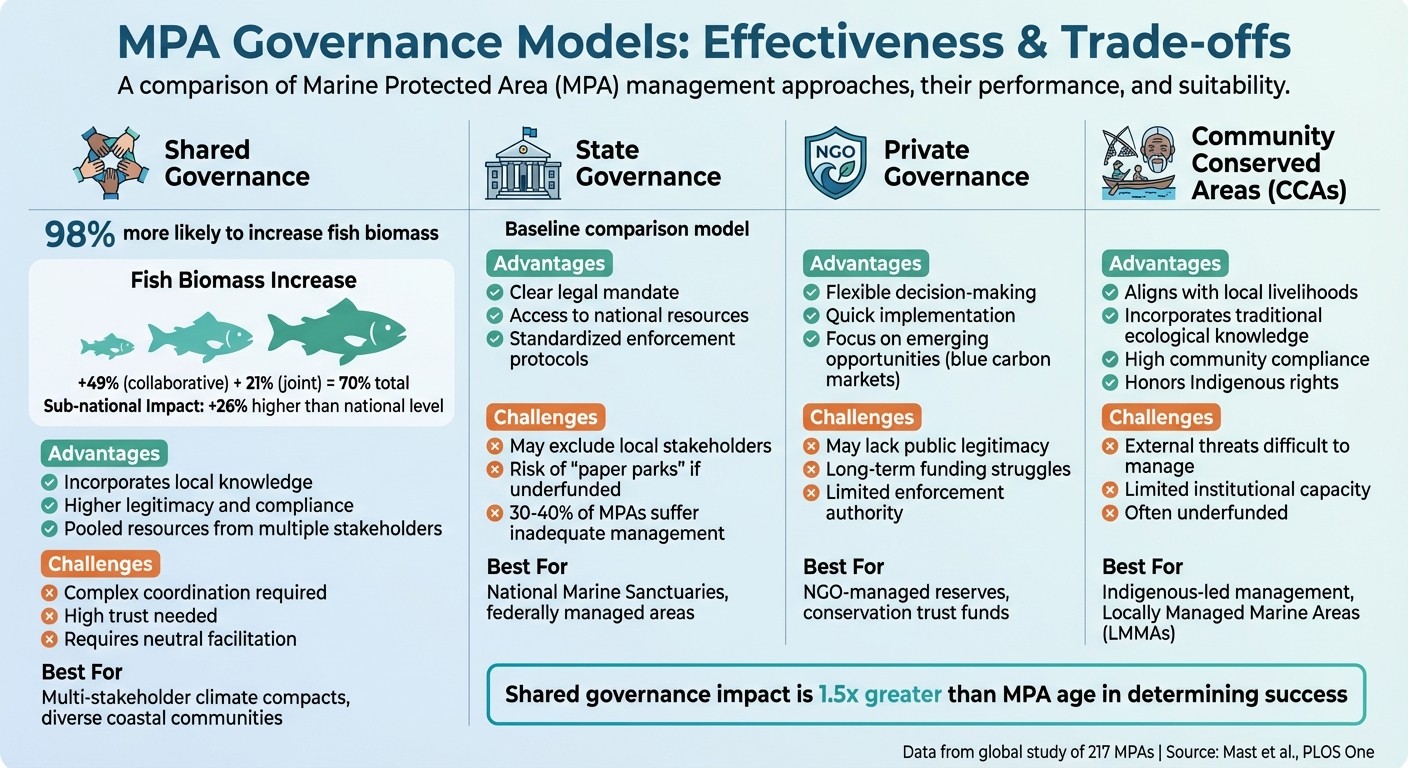
Marine Protected Area Governance Models: Effectiveness Comparison
Adopting shared governance models significantly enhances the effectiveness of Marine Protected Areas (MPAs). A global study of 217 MPAs revealed that shared governance structures are 98% more likely to result in higher fish biomass compared to those managed solely by government agencies [1]. Collaborative governance, which involves a lead entity working with diverse stakeholders, increases fish biomass by 49%. Joint governance models contribute an additional 21% boost. These results highlight the importance of combining clear leadership with active stakeholder involvement.
Joint Governance with Diverse Boards
Joint governance relies on multi-stakeholder boards that bring together government bodies, NGOs, fishing communities, and Indigenous groups. This approach leverages a variety of resources and local knowledge to improve outcomes [1]. For nonprofits, building a diverse board means identifying stakeholders with essential expertise and credibility relevant to the MPA. Interestingly, governance at the sub-national level - such as provincial or municipal boards - often outperforms national-level management. These localized boards achieve fish biomass levels 26% higher because they bridge the gap between decision-makers and the communities directly impacted [1]. Including members with traditional ecological knowledge ensures that boundaries and rules are practical and grounded in local realities.
Community Conserved Areas for Local Stewardship
Community Conserved Areas (CCAs) transfer primary management authority to local communities, honoring their traditional rights and deep connections to marine ecosystems. This model works especially well where local governance systems predate the establishment of the MPA. The Kunming-Montreal Global Biodiversity Framework emphasizes "equitable governance" for protected areas by 2030, prioritizing community-led approaches [8].
"Lasting ocean protection depends on people being included, heard, and respected. When governance is fair and inclusive, marine protection is stronger and built to endure."
– Ryan Dolan, Managing Director, Blue Nature Alliance [8]
To implement CCAs effectively, it’s crucial to recognize local rights, fairly distribute costs and benefits, and provide technical support without overshadowing community authority. Tools like the IUCN "Guidebook for Assessing and Improving Social Equity in Marine Conservation" can help ensure governance structures genuinely empower communities [8]. Notably, shared governance has an impact over 1.5 times greater than the age of an MPA in determining conservation success [1]. These governance models lay the groundwork for fostering participatory processes that actively involve stakeholders.
Creating Participatory Processes and Best Practices
Shifting governance from top-down directives to stakeholder-driven approaches can lead to more effective outcomes. For nonprofits, this means creating structured opportunities for diverse voices - ranging from commercial fishermen to tribal governments - to share their expertise. The focus is on using tools and facilitation techniques that build trust while producing actionable insights for conservation efforts. Below are methods that translate participation into meaningful conservation strategies.
Collaborative Planning with User Committees and GIS
Geographic Information Systems (GIS) have become indispensable for turning local knowledge into spatial data, helping shape marine protected area (MPA) boundaries and regulations. For example, the Environmental Defense Fund and the Pacific Coast Federation of Fishermen's Associations developed "OceanMap," a GIS-based tool that aims to resolve conflicts in California’s marine reserve planning. This tool enables fishermen and local experts to map their socioeconomic concerns and traditional fishing grounds, integrating this data directly into conservation strategies [9].
"The GIS tool ('OceanMap') and rapid socioeconomic protocol... grew out of past conflicts amongst stakeholders, specifically fishermen, regarding marine protected area planning processes in California."
– Environmental Defense Fund [9]
User committees thrive when they operate at the local level. A prime example is California's MPA Collaborative Network, which oversees over 124 marine protected areas through 14 county-based collaboratives. This "network of networks" approach ensures that local voices directly influence state-level decisions. For instance, in March 2026, the network facilitated joint meetings, such as the Monterey and Santa Cruz MPA Collaborative session scheduled for March 30, 2026, to promote cross-regional communication and resource sharing [10]. By focusing committees geographically, nonprofits can address specific coastal challenges while aligning with broader conservation objectives.
Neutral Facilitators and Trust-Building Techniques
When stakeholders have conflicting interests or differing perspectives on marine ecosystems, neutral facilitation becomes essential. Professional facilitators help navigate these complexities by clarifying trade-offs and steering discussions toward practical, solution-oriented outcomes [11]. In 2023, NOAA Fisheries' Southeast Fisheries Science Center hosted a strategic planning workshop with 13 regional partners from the Caribbean. With neutral facilitation, the workshop produced 117 distinct ideas for improving fisheries data collection and ecosystem management, breaking down long-standing data silos [12].
Participatory mapping tools like SeaSketch also play a key role in building trust. These tools help stakeholders visualize areas of conflict and identify shared priorities. Between 2024 and 2025, stakeholders in Cádiz Bay used SeaSketch to address gaps in implementing an MPA, while counterparts in the Azores mapped climate change perceptions to guide new protected area designs [11]. For these tools to be effective, nonprofits must provide technical support to participants with varying levels of digital proficiency. Combining accessible mapping platforms with regular joint meetings fosters the transparency and collaboration needed for lasting stakeholder engagement.
Using Council Fire Consulting for Stakeholder Collaboration
Council Fire builds on established collaborative methods to align stakeholders effectively, offering tools for planning and evaluation that drive measurable outcomes. For nonprofits tackling marine conservation challenges, their expertise helps unify diverse groups into coordinated actions. By focusing on trust-building and accountability, Council Fire aids NGOs in transitioning from advocacy efforts to achieving tangible management results. Their approach integrates participatory strategies with systems that track measurable conservation impacts.
Custom Planning Services
Council Fire's planning services tackle common governance challenges in Marine Protected Areas (MPAs), such as balancing ambition with practicality, ensuring sustainable funding, and measuring ecosystem outcomes. Their process begins with detailed stakeholder mapping to identify key leaders who can guide implementation efforts [14].
One notable example occurred in February 2026, when Council Fire restructured a $200 million ocean conservation portfolio for a private environmental foundation. This project involved interviews with 35 grantees and a Theory of Change workshop with marine scientists, Indigenous experts, and economists. The result? A shift of $28 million from low-impact advocacy to initiatives focusing on management effectiveness and blue carbon projects. Within 18 months, Management Effectiveness Tracking Tool (METT) scores improved at 8 of 12 priority sites, and the foundation secured $45 million in additional co-funding from partner organizations [7]. This demonstrates how governance principles and participatory methods can yield concrete results.
Council Fire also develops measurement frameworks that separate outputs from outcomes. These systems monitor leading indicators, like partnership building and policy advancements, alongside lagging indicators, such as fish biomass and verified carbon credits from mangrove conservation. This dual-tracking system ensures governance investments deliver measurable conservation results [7].
Governance Options Comparison Table
In addition to custom planning, Council Fire uses comparative tools to help organizations navigate governance options. The table below outlines the trade-offs between governance models, highlighting their advantages, challenges, and real-world applications based on fish biomass outcomes and operational complexities:
Governance Approach | Advantages | Challenges | Real-World Examples |
|---|---|---|---|
Shared Governance | Higher likelihood of increased fish biomass (98%), incorporates local knowledge, boosts legitimacy [1]. | Requires complex coordination, high trust, and neutral facilitation [1]. | |
State Governance | Clear legal mandate, access to national resources, standardized enforcement protocols [1]. | May exclude local stakeholders, risks creating "paper parks" if underfunded [7][1]. | Federally managed National Marine Sanctuaries [1]. |
Private Governance | Flexible, quick decision-making, focuses on emerging opportunities like blue carbon markets [1][7]. | May lack public legitimacy, struggles with long-term private funding [1][7]. | NGO-managed marine reserves, conservation trust funds [7]. |
Community Conserved Areas | Aligns with local livelihoods and traditional ecological knowledge, high community compliance [1]. | Faces challenges from external threats and limited institutional capacity, often underfunded [1][4]. | Indigenous-led management, Locally Managed Marine Areas (LMMAs) [7]. |
Council Fire’s facilitation services help nonprofits navigate these governance trade-offs. For example, in a coastal resilience project, they conducted 48 interviews to design a 15-member governance board. This structure secured $340 million in infrastructure funding from FEMA, the EPA, and state sources within three years [13]. Their phased approach - starting with small steering committees, expanding to multi-sector working groups, and culminating in public engagement - ensures governance systems balance technical expertise with community needs.
Conclusion: Key Takeaways for Designing Effective MPA Governance
Creating effective governance for Marine Protected Areas (MPAs) requires a careful balance of scientific precision and social fairness. Achieving conservation goals depends on governance systems that are both inclusive and equitable in how they distribute benefits and costs [8]. As Ryan Dolan, Managing Director of the Blue Nature Alliance, aptly puts it:
"When governance is fair and inclusive, marine protection is stronger and built to endure" [8].
Adopting a systems approach is essential. Disjointed management has long been a stumbling block for marine conservation [4]. A systems-based perspective emphasizes the need for cross-sector integration, fostering diverse political support, and ensuring consistent, long-term funding. This comprehensive view lays the groundwork for the next key component: empowering those most connected to the resources - the local communities.
Local stewardship is a cornerstone of success. Collaborative partnerships that bring together Tribal governments, state agencies, enforcement officials, and local fishing communities have demonstrated their ability to enhance MPA governance. Such networks promote transparency and equitable resource management, making them a vital part of sustainable conservation [10].
Equity assessments reinforce accountability. Accountability is strengthened when equity is actively measured. The IUCN’s "Guidebook for Assessing and Improving Social Equity in Marine Conservation", introduced in January 2026, provides a framework for evaluating rights recognition, participation, and benefit distribution. Tested in four pilot MPAs, this tool aligns with the global "30 by 30" initiative, which mandates that protected areas must be "equitably governed" [8].
FAQs
How do we choose the right MPA governance model?
Choosing the most suitable governance model for a Marine Protected Area (MPA) requires a careful look at how different approaches perform. Shared governance, which distributes authority among both government and non-government stakeholders, often yields better results. A clear example is that MPAs managed under shared governance tend to have much higher fish biomass compared to those governed solely by state authorities. To determine if this approach fits your objectives and local conditions, examine how it encourages collaboration among stakeholders to improve conservation efforts.
What’s the fastest way to build stakeholder trust?
The fastest path to earning stakeholder trust in Marine Protected Area governance lies in authentic, two-way engagement. This means truly listening to community concerns, sharing useful knowledge transparently, and working together toward shared goals. Effective efforts often amplify local voices, build meaningful partnerships with Indigenous communities, and ensure public feedback aligns with local priorities. These approaches lay the groundwork for trust and cooperative management.
How can we fund and enforce an MPA long-term?
To ensure consistent funding and effective enforcement of a Marine Protected Area (MPA), it's essential to adopt a multi-faceted approach to financing and management. Support can come from diverse sources such as government budgets, private sector investments, and community-driven revenue streams. Conservation trust funds play a key role in providing financial stability, while economic incentives encourage participation and compliance.
On the enforcement side, leveraging advanced monitoring tools, such as satellite tracking or drones, can enhance oversight. Actively involving local communities and implementing shared governance models foster collaboration and accountability. Together, these methods not only strengthen enforcement but also encourage stakeholder engagement, ensuring the long-term success of the MPA.
Related Blog Posts
Latest Articles
©2025



FAQ
01
What does it really mean to “redefine profit”?
02
What makes Council Fire different?
03
Who does Council Fire you work with?
04
What does working with Council Fire actually look like?
05
How does Council Fire help organizations turn big goals into action?
06
How does Council Fire define and measure success?
Mar 27, 2026
How to Design Marine Protected Area Governance for NGOs & Nonprofits
Capacity Building
In This Article
Practical steps for NGOs to design effective MPA governance: readiness assessment, shared governance, incentives, and community-led enforcement.
How to Design Marine Protected Area Governance for NGOs & Nonprofits
Marine Protected Areas (MPAs) are critical for restoring ocean biodiversity and fish populations, but their success depends heavily on effective governance. For NGOs and nonprofits, shared governance - where governments, local communities, and organizations collaborate - has proven to be 98% more effective in boosting fish biomass compared to state-only management. However, many MPAs fail due to poor stakeholder engagement, lack of enforcement, and ineffective management structures.
To address these challenges, this guide outlines key steps for creating governance systems that align conservation goals with local needs:
Assess Readiness: Evaluate organizational capacity, stakeholder participation, and governance structures using tools like the "40 Incentives Framework."
Engage Stakeholders: Build trust and legitimacy by involving local communities, Indigenous groups, and ocean users in decision-making.
Use Economic and Legal Tools: Combine financial incentives like revenue-sharing with clear enforcement mechanisms to encourage compliance.
Adopt Shared Governance Models: Create collaborative boards or Community Conserved Areas (CCAs) to distribute authority and improve outcomes.
With only 3% of MPAs effectively managed today, improving governance is crucial to achieving global conservation targets like the 30x30 initiative. This guide provides actionable strategies to ensure MPAs deliver measurable results.
Social Aspects of MPA Management – Building Effective and Equitable Ocean Conservation
Assessing Governance Readiness for MPAs
Laying the groundwork for effective Marine Protected Area (MPA) governance starts with a thorough readiness assessment. This process ensures that organizational structures are in sync with conservation objectives. Before diving into an MPA initiative, it’s essential to evaluate your organization’s capacity, authority, and how well stakeholders are engaged. Such an evaluation sheds light on where decision-making power currently resides - whether it’s centralized, shared, or local - and identifies gaps in both resources and stakeholder involvement. This foundational step shapes a Governance Readiness Plan, which aligns your organization’s capabilities with its conservation goals [2]. It also sets the stage for implementing governance strategies tailored to your specific needs, as discussed in later sections.
The MPA Governance (MPAG) framework, often referred to as the "40 Incentives Framework", serves as a valuable tool for this assessment. It categorizes governance mechanisms into five key types: Economic, Legal, Participatory, Knowledge, and Communication incentives [3]. Successful MPAs rely on a balanced mix of these incentives. As Professor Peter J. S. Jones explains:
Effectiveness is not determined by any specific governance approaches or incentives, but rather the combination of a diversity of functionally integrated incentives, which interact with and support one another [3].
To start, organizations should audit their current governance structures, identifying which of these incentives are already in place and where there may be gaps.
Additionally, the assessment should pinpoint the locus of authority. Does governance align with IUCN categories such as state-governed, shared governance, private governance, or governance by Indigenous Peoples and local communities [1]? Decentralized governance models, which bring decision-making closer to affected communities, often enhance legitimacy and compliance. If your current model is heavily centralized, this assessment might reveal opportunities to transition toward shared or sub-national governance arrangements, which have shown greater effectiveness in many contexts.
Participatory Incentives for Stakeholder Inclusion
Incorporating participatory incentives ensures that local stakeholders - such as fishing communities, Indigenous groups, and other ocean users - are genuinely involved in decision-making, rather than being consulted superficially. When stakeholders see their contributions reflected in MPA boundaries and regulations, they are more likely to voluntarily comply and even take on stewardship roles.
As Mast et al. highlighted in PLOS One:
Shared governance arrangements that include diverse groups throughout design and implementation may foster collaboration, support community interests, instill responsibility across multiple groups, and increase management capacity by leveraging shared resources [1].
When evaluating your governance structures, look for areas where traditional practices are ignored, local ecological knowledge goes untapped, or affected communities lack representation. Addressing these gaps through mechanisms like user committees, co-management boards, or community-led monitoring programs can strengthen the legitimacy and effectiveness of your MPA.
Economic and Legal Incentives for Enforcement
While participatory measures are critical, economic and legal incentives provide the backbone for successful governance.
Economic incentives offer tangible benefits that encourage stakeholders to support conservation efforts rather than oppose them. Examples include revenue-sharing from ecotourism, programs that promote sustainable livelihoods, or preferential access to resources in designated buffer zones. When communities directly benefit financially from a thriving marine ecosystem, enforcement often becomes a matter of collective interest rather than external policing. Research has shown that national GDP positively correlates with fish biomass in MPAs, likely because wealthier nations have more resources for environmental management and stronger governance capacity [1].
Legal incentives, on the other hand, create the regulatory framework that formalizes MPA rules and provides enforcement mechanisms when voluntary compliance isn’t enough. These structures are most effective when combined with communication and participatory efforts that build understanding and trust. As part of your readiness assessment, consider whether your organization has adequate enforcement resources, whether local legal systems support your MPA’s goals, and if penalties are appropriately scaled. The aim is a governance system where legal authority complements collaborative decision-making, ensuring clear consequences for violations while prioritizing education and stakeholder engagement as the first line of compliance [3][5].
Core Governance Principles for MPA Management
To effectively manage Marine Protected Areas (MPAs), it's essential to build governance frameworks on principles that have been shown to work. An analysis of 217 MPAs worldwide reveals that shared governance can increase fish biomass by an average of 32% [1]. Embedding these principles into your management approach is crucial. Equally important is fostering legitimacy through inclusive, consensus-driven decision-making processes.
It's worth noting that simply designating an area as an MPA isn't enough. Between 30% and 40% of MPAs globally suffer from inadequate management, turning them into "paper parks" that fail to deliver conservation benefits [7]. Effective governance requires more than drawing boundaries; it demands robust staffing plans, enforcement mechanisms, and monitoring systems. For instance, a $200 million ocean conservation initiative recently reallocated 14% of its budget from designation advocacy to improving management, resulting in better outcomes across key sites [7].
Legitimacy and Consensus Orientation
Legitimacy in governance hinges on inclusive participation and stakeholder trust in the fairness of decision-making processes. When local communities, Indigenous groups, and resource users see their perspectives and knowledge reflected in MPA management rules, compliance tends to be voluntary rather than enforced. Collaborative governance - where a central management body actively engages with diverse stakeholders - has been linked to fish biomass levels 49% higher than those under national-level governance [1]. Incorporating local and traditional knowledge into the design of boundaries and rules ensures that management aligns with on-the-ground realities.
Decentralization also plays a significant role in strengthening governance. Sub-national governance structures, such as co-management boards or community-conserved areas, support fish biomass levels 26% higher than national-level governance [1]. For NGOs, this means advocating for governance models that bring decision-making closer to the communities directly affected, enabling more responsive and effective management.
Accountability and Clear Vision
Legitimacy alone isn't enough; governance must also be accountable and guided by a clear vision.
Accountability requires setting measurable goals and ensuring transparency in reporting. Tools like the Management Effectiveness Tracking Tool (METT) can help monitor progress and confirm whether governance structures are delivering intended outcomes.
A well-defined vision acts as a roadmap for long-term collaboration. The Great Barrier Reef Marine Park Authority (GBRMPA) exemplifies this with its "Co-management Principles" policy, which ensures consistent stakeholder engagement and strategic direction, even amidst political shifts [6]. For nonprofits, this means crafting a strategic platform that communicates the MPA's goals to all stakeholders - government bodies, local communities, funders, and enforcement partners. This vision should connect governance efforts, such as policy reforms and community outreach, to tangible conservation outcomes like fish stock recovery. A clear Theory of Change can guide resource allocation and demonstrate the value of these efforts to donors.
Shared governance structures naturally promote accountability by distributing responsibilities and pooling resources [1]. When authority is shared, no single entity can evade scrutiny, and diverse stakeholders collectively ensure that results are achieved.
Building Shared Governance Structures
Marine Protected Area Governance Models: Effectiveness Comparison
Adopting shared governance models significantly enhances the effectiveness of Marine Protected Areas (MPAs). A global study of 217 MPAs revealed that shared governance structures are 98% more likely to result in higher fish biomass compared to those managed solely by government agencies [1]. Collaborative governance, which involves a lead entity working with diverse stakeholders, increases fish biomass by 49%. Joint governance models contribute an additional 21% boost. These results highlight the importance of combining clear leadership with active stakeholder involvement.
Joint Governance with Diverse Boards
Joint governance relies on multi-stakeholder boards that bring together government bodies, NGOs, fishing communities, and Indigenous groups. This approach leverages a variety of resources and local knowledge to improve outcomes [1]. For nonprofits, building a diverse board means identifying stakeholders with essential expertise and credibility relevant to the MPA. Interestingly, governance at the sub-national level - such as provincial or municipal boards - often outperforms national-level management. These localized boards achieve fish biomass levels 26% higher because they bridge the gap between decision-makers and the communities directly impacted [1]. Including members with traditional ecological knowledge ensures that boundaries and rules are practical and grounded in local realities.
Community Conserved Areas for Local Stewardship
Community Conserved Areas (CCAs) transfer primary management authority to local communities, honoring their traditional rights and deep connections to marine ecosystems. This model works especially well where local governance systems predate the establishment of the MPA. The Kunming-Montreal Global Biodiversity Framework emphasizes "equitable governance" for protected areas by 2030, prioritizing community-led approaches [8].
"Lasting ocean protection depends on people being included, heard, and respected. When governance is fair and inclusive, marine protection is stronger and built to endure."
– Ryan Dolan, Managing Director, Blue Nature Alliance [8]
To implement CCAs effectively, it’s crucial to recognize local rights, fairly distribute costs and benefits, and provide technical support without overshadowing community authority. Tools like the IUCN "Guidebook for Assessing and Improving Social Equity in Marine Conservation" can help ensure governance structures genuinely empower communities [8]. Notably, shared governance has an impact over 1.5 times greater than the age of an MPA in determining conservation success [1]. These governance models lay the groundwork for fostering participatory processes that actively involve stakeholders.
Creating Participatory Processes and Best Practices
Shifting governance from top-down directives to stakeholder-driven approaches can lead to more effective outcomes. For nonprofits, this means creating structured opportunities for diverse voices - ranging from commercial fishermen to tribal governments - to share their expertise. The focus is on using tools and facilitation techniques that build trust while producing actionable insights for conservation efforts. Below are methods that translate participation into meaningful conservation strategies.
Collaborative Planning with User Committees and GIS
Geographic Information Systems (GIS) have become indispensable for turning local knowledge into spatial data, helping shape marine protected area (MPA) boundaries and regulations. For example, the Environmental Defense Fund and the Pacific Coast Federation of Fishermen's Associations developed "OceanMap," a GIS-based tool that aims to resolve conflicts in California’s marine reserve planning. This tool enables fishermen and local experts to map their socioeconomic concerns and traditional fishing grounds, integrating this data directly into conservation strategies [9].
"The GIS tool ('OceanMap') and rapid socioeconomic protocol... grew out of past conflicts amongst stakeholders, specifically fishermen, regarding marine protected area planning processes in California."
– Environmental Defense Fund [9]
User committees thrive when they operate at the local level. A prime example is California's MPA Collaborative Network, which oversees over 124 marine protected areas through 14 county-based collaboratives. This "network of networks" approach ensures that local voices directly influence state-level decisions. For instance, in March 2026, the network facilitated joint meetings, such as the Monterey and Santa Cruz MPA Collaborative session scheduled for March 30, 2026, to promote cross-regional communication and resource sharing [10]. By focusing committees geographically, nonprofits can address specific coastal challenges while aligning with broader conservation objectives.
Neutral Facilitators and Trust-Building Techniques
When stakeholders have conflicting interests or differing perspectives on marine ecosystems, neutral facilitation becomes essential. Professional facilitators help navigate these complexities by clarifying trade-offs and steering discussions toward practical, solution-oriented outcomes [11]. In 2023, NOAA Fisheries' Southeast Fisheries Science Center hosted a strategic planning workshop with 13 regional partners from the Caribbean. With neutral facilitation, the workshop produced 117 distinct ideas for improving fisheries data collection and ecosystem management, breaking down long-standing data silos [12].
Participatory mapping tools like SeaSketch also play a key role in building trust. These tools help stakeholders visualize areas of conflict and identify shared priorities. Between 2024 and 2025, stakeholders in Cádiz Bay used SeaSketch to address gaps in implementing an MPA, while counterparts in the Azores mapped climate change perceptions to guide new protected area designs [11]. For these tools to be effective, nonprofits must provide technical support to participants with varying levels of digital proficiency. Combining accessible mapping platforms with regular joint meetings fosters the transparency and collaboration needed for lasting stakeholder engagement.
Using Council Fire Consulting for Stakeholder Collaboration
Council Fire builds on established collaborative methods to align stakeholders effectively, offering tools for planning and evaluation that drive measurable outcomes. For nonprofits tackling marine conservation challenges, their expertise helps unify diverse groups into coordinated actions. By focusing on trust-building and accountability, Council Fire aids NGOs in transitioning from advocacy efforts to achieving tangible management results. Their approach integrates participatory strategies with systems that track measurable conservation impacts.
Custom Planning Services
Council Fire's planning services tackle common governance challenges in Marine Protected Areas (MPAs), such as balancing ambition with practicality, ensuring sustainable funding, and measuring ecosystem outcomes. Their process begins with detailed stakeholder mapping to identify key leaders who can guide implementation efforts [14].
One notable example occurred in February 2026, when Council Fire restructured a $200 million ocean conservation portfolio for a private environmental foundation. This project involved interviews with 35 grantees and a Theory of Change workshop with marine scientists, Indigenous experts, and economists. The result? A shift of $28 million from low-impact advocacy to initiatives focusing on management effectiveness and blue carbon projects. Within 18 months, Management Effectiveness Tracking Tool (METT) scores improved at 8 of 12 priority sites, and the foundation secured $45 million in additional co-funding from partner organizations [7]. This demonstrates how governance principles and participatory methods can yield concrete results.
Council Fire also develops measurement frameworks that separate outputs from outcomes. These systems monitor leading indicators, like partnership building and policy advancements, alongside lagging indicators, such as fish biomass and verified carbon credits from mangrove conservation. This dual-tracking system ensures governance investments deliver measurable conservation results [7].
Governance Options Comparison Table
In addition to custom planning, Council Fire uses comparative tools to help organizations navigate governance options. The table below outlines the trade-offs between governance models, highlighting their advantages, challenges, and real-world applications based on fish biomass outcomes and operational complexities:
Governance Approach | Advantages | Challenges | Real-World Examples |
|---|---|---|---|
Shared Governance | Higher likelihood of increased fish biomass (98%), incorporates local knowledge, boosts legitimacy [1]. | Requires complex coordination, high trust, and neutral facilitation [1]. | |
State Governance | Clear legal mandate, access to national resources, standardized enforcement protocols [1]. | May exclude local stakeholders, risks creating "paper parks" if underfunded [7][1]. | Federally managed National Marine Sanctuaries [1]. |
Private Governance | Flexible, quick decision-making, focuses on emerging opportunities like blue carbon markets [1][7]. | May lack public legitimacy, struggles with long-term private funding [1][7]. | NGO-managed marine reserves, conservation trust funds [7]. |
Community Conserved Areas | Aligns with local livelihoods and traditional ecological knowledge, high community compliance [1]. | Faces challenges from external threats and limited institutional capacity, often underfunded [1][4]. | Indigenous-led management, Locally Managed Marine Areas (LMMAs) [7]. |
Council Fire’s facilitation services help nonprofits navigate these governance trade-offs. For example, in a coastal resilience project, they conducted 48 interviews to design a 15-member governance board. This structure secured $340 million in infrastructure funding from FEMA, the EPA, and state sources within three years [13]. Their phased approach - starting with small steering committees, expanding to multi-sector working groups, and culminating in public engagement - ensures governance systems balance technical expertise with community needs.
Conclusion: Key Takeaways for Designing Effective MPA Governance
Creating effective governance for Marine Protected Areas (MPAs) requires a careful balance of scientific precision and social fairness. Achieving conservation goals depends on governance systems that are both inclusive and equitable in how they distribute benefits and costs [8]. As Ryan Dolan, Managing Director of the Blue Nature Alliance, aptly puts it:
"When governance is fair and inclusive, marine protection is stronger and built to endure" [8].
Adopting a systems approach is essential. Disjointed management has long been a stumbling block for marine conservation [4]. A systems-based perspective emphasizes the need for cross-sector integration, fostering diverse political support, and ensuring consistent, long-term funding. This comprehensive view lays the groundwork for the next key component: empowering those most connected to the resources - the local communities.
Local stewardship is a cornerstone of success. Collaborative partnerships that bring together Tribal governments, state agencies, enforcement officials, and local fishing communities have demonstrated their ability to enhance MPA governance. Such networks promote transparency and equitable resource management, making them a vital part of sustainable conservation [10].
Equity assessments reinforce accountability. Accountability is strengthened when equity is actively measured. The IUCN’s "Guidebook for Assessing and Improving Social Equity in Marine Conservation", introduced in January 2026, provides a framework for evaluating rights recognition, participation, and benefit distribution. Tested in four pilot MPAs, this tool aligns with the global "30 by 30" initiative, which mandates that protected areas must be "equitably governed" [8].
FAQs
How do we choose the right MPA governance model?
Choosing the most suitable governance model for a Marine Protected Area (MPA) requires a careful look at how different approaches perform. Shared governance, which distributes authority among both government and non-government stakeholders, often yields better results. A clear example is that MPAs managed under shared governance tend to have much higher fish biomass compared to those governed solely by state authorities. To determine if this approach fits your objectives and local conditions, examine how it encourages collaboration among stakeholders to improve conservation efforts.
What’s the fastest way to build stakeholder trust?
The fastest path to earning stakeholder trust in Marine Protected Area governance lies in authentic, two-way engagement. This means truly listening to community concerns, sharing useful knowledge transparently, and working together toward shared goals. Effective efforts often amplify local voices, build meaningful partnerships with Indigenous communities, and ensure public feedback aligns with local priorities. These approaches lay the groundwork for trust and cooperative management.
How can we fund and enforce an MPA long-term?
To ensure consistent funding and effective enforcement of a Marine Protected Area (MPA), it's essential to adopt a multi-faceted approach to financing and management. Support can come from diverse sources such as government budgets, private sector investments, and community-driven revenue streams. Conservation trust funds play a key role in providing financial stability, while economic incentives encourage participation and compliance.
On the enforcement side, leveraging advanced monitoring tools, such as satellite tracking or drones, can enhance oversight. Actively involving local communities and implementing shared governance models foster collaboration and accountability. Together, these methods not only strengthen enforcement but also encourage stakeholder engagement, ensuring the long-term success of the MPA.
Related Blog Posts
FAQ
01
What does it really mean to “redefine profit”?
02
What makes Council Fire different?
03
Who does Council Fire you work with?
04
What does working with Council Fire actually look like?
05
How does Council Fire help organizations turn big goals into action?
06
How does Council Fire define and measure success?
Mar 27, 2026
How to Design Marine Protected Area Governance for NGOs & Nonprofits
Capacity Building
In This Article
Practical steps for NGOs to design effective MPA governance: readiness assessment, shared governance, incentives, and community-led enforcement.
How to Design Marine Protected Area Governance for NGOs & Nonprofits
Marine Protected Areas (MPAs) are critical for restoring ocean biodiversity and fish populations, but their success depends heavily on effective governance. For NGOs and nonprofits, shared governance - where governments, local communities, and organizations collaborate - has proven to be 98% more effective in boosting fish biomass compared to state-only management. However, many MPAs fail due to poor stakeholder engagement, lack of enforcement, and ineffective management structures.
To address these challenges, this guide outlines key steps for creating governance systems that align conservation goals with local needs:
Assess Readiness: Evaluate organizational capacity, stakeholder participation, and governance structures using tools like the "40 Incentives Framework."
Engage Stakeholders: Build trust and legitimacy by involving local communities, Indigenous groups, and ocean users in decision-making.
Use Economic and Legal Tools: Combine financial incentives like revenue-sharing with clear enforcement mechanisms to encourage compliance.
Adopt Shared Governance Models: Create collaborative boards or Community Conserved Areas (CCAs) to distribute authority and improve outcomes.
With only 3% of MPAs effectively managed today, improving governance is crucial to achieving global conservation targets like the 30x30 initiative. This guide provides actionable strategies to ensure MPAs deliver measurable results.
Social Aspects of MPA Management – Building Effective and Equitable Ocean Conservation
Assessing Governance Readiness for MPAs
Laying the groundwork for effective Marine Protected Area (MPA) governance starts with a thorough readiness assessment. This process ensures that organizational structures are in sync with conservation objectives. Before diving into an MPA initiative, it’s essential to evaluate your organization’s capacity, authority, and how well stakeholders are engaged. Such an evaluation sheds light on where decision-making power currently resides - whether it’s centralized, shared, or local - and identifies gaps in both resources and stakeholder involvement. This foundational step shapes a Governance Readiness Plan, which aligns your organization’s capabilities with its conservation goals [2]. It also sets the stage for implementing governance strategies tailored to your specific needs, as discussed in later sections.
The MPA Governance (MPAG) framework, often referred to as the "40 Incentives Framework", serves as a valuable tool for this assessment. It categorizes governance mechanisms into five key types: Economic, Legal, Participatory, Knowledge, and Communication incentives [3]. Successful MPAs rely on a balanced mix of these incentives. As Professor Peter J. S. Jones explains:
Effectiveness is not determined by any specific governance approaches or incentives, but rather the combination of a diversity of functionally integrated incentives, which interact with and support one another [3].
To start, organizations should audit their current governance structures, identifying which of these incentives are already in place and where there may be gaps.
Additionally, the assessment should pinpoint the locus of authority. Does governance align with IUCN categories such as state-governed, shared governance, private governance, or governance by Indigenous Peoples and local communities [1]? Decentralized governance models, which bring decision-making closer to affected communities, often enhance legitimacy and compliance. If your current model is heavily centralized, this assessment might reveal opportunities to transition toward shared or sub-national governance arrangements, which have shown greater effectiveness in many contexts.
Participatory Incentives for Stakeholder Inclusion
Incorporating participatory incentives ensures that local stakeholders - such as fishing communities, Indigenous groups, and other ocean users - are genuinely involved in decision-making, rather than being consulted superficially. When stakeholders see their contributions reflected in MPA boundaries and regulations, they are more likely to voluntarily comply and even take on stewardship roles.
As Mast et al. highlighted in PLOS One:
Shared governance arrangements that include diverse groups throughout design and implementation may foster collaboration, support community interests, instill responsibility across multiple groups, and increase management capacity by leveraging shared resources [1].
When evaluating your governance structures, look for areas where traditional practices are ignored, local ecological knowledge goes untapped, or affected communities lack representation. Addressing these gaps through mechanisms like user committees, co-management boards, or community-led monitoring programs can strengthen the legitimacy and effectiveness of your MPA.
Economic and Legal Incentives for Enforcement
While participatory measures are critical, economic and legal incentives provide the backbone for successful governance.
Economic incentives offer tangible benefits that encourage stakeholders to support conservation efforts rather than oppose them. Examples include revenue-sharing from ecotourism, programs that promote sustainable livelihoods, or preferential access to resources in designated buffer zones. When communities directly benefit financially from a thriving marine ecosystem, enforcement often becomes a matter of collective interest rather than external policing. Research has shown that national GDP positively correlates with fish biomass in MPAs, likely because wealthier nations have more resources for environmental management and stronger governance capacity [1].
Legal incentives, on the other hand, create the regulatory framework that formalizes MPA rules and provides enforcement mechanisms when voluntary compliance isn’t enough. These structures are most effective when combined with communication and participatory efforts that build understanding and trust. As part of your readiness assessment, consider whether your organization has adequate enforcement resources, whether local legal systems support your MPA’s goals, and if penalties are appropriately scaled. The aim is a governance system where legal authority complements collaborative decision-making, ensuring clear consequences for violations while prioritizing education and stakeholder engagement as the first line of compliance [3][5].
Core Governance Principles for MPA Management
To effectively manage Marine Protected Areas (MPAs), it's essential to build governance frameworks on principles that have been shown to work. An analysis of 217 MPAs worldwide reveals that shared governance can increase fish biomass by an average of 32% [1]. Embedding these principles into your management approach is crucial. Equally important is fostering legitimacy through inclusive, consensus-driven decision-making processes.
It's worth noting that simply designating an area as an MPA isn't enough. Between 30% and 40% of MPAs globally suffer from inadequate management, turning them into "paper parks" that fail to deliver conservation benefits [7]. Effective governance requires more than drawing boundaries; it demands robust staffing plans, enforcement mechanisms, and monitoring systems. For instance, a $200 million ocean conservation initiative recently reallocated 14% of its budget from designation advocacy to improving management, resulting in better outcomes across key sites [7].
Legitimacy and Consensus Orientation
Legitimacy in governance hinges on inclusive participation and stakeholder trust in the fairness of decision-making processes. When local communities, Indigenous groups, and resource users see their perspectives and knowledge reflected in MPA management rules, compliance tends to be voluntary rather than enforced. Collaborative governance - where a central management body actively engages with diverse stakeholders - has been linked to fish biomass levels 49% higher than those under national-level governance [1]. Incorporating local and traditional knowledge into the design of boundaries and rules ensures that management aligns with on-the-ground realities.
Decentralization also plays a significant role in strengthening governance. Sub-national governance structures, such as co-management boards or community-conserved areas, support fish biomass levels 26% higher than national-level governance [1]. For NGOs, this means advocating for governance models that bring decision-making closer to the communities directly affected, enabling more responsive and effective management.
Accountability and Clear Vision
Legitimacy alone isn't enough; governance must also be accountable and guided by a clear vision.
Accountability requires setting measurable goals and ensuring transparency in reporting. Tools like the Management Effectiveness Tracking Tool (METT) can help monitor progress and confirm whether governance structures are delivering intended outcomes.
A well-defined vision acts as a roadmap for long-term collaboration. The Great Barrier Reef Marine Park Authority (GBRMPA) exemplifies this with its "Co-management Principles" policy, which ensures consistent stakeholder engagement and strategic direction, even amidst political shifts [6]. For nonprofits, this means crafting a strategic platform that communicates the MPA's goals to all stakeholders - government bodies, local communities, funders, and enforcement partners. This vision should connect governance efforts, such as policy reforms and community outreach, to tangible conservation outcomes like fish stock recovery. A clear Theory of Change can guide resource allocation and demonstrate the value of these efforts to donors.
Shared governance structures naturally promote accountability by distributing responsibilities and pooling resources [1]. When authority is shared, no single entity can evade scrutiny, and diverse stakeholders collectively ensure that results are achieved.
Building Shared Governance Structures
Marine Protected Area Governance Models: Effectiveness Comparison
Adopting shared governance models significantly enhances the effectiveness of Marine Protected Areas (MPAs). A global study of 217 MPAs revealed that shared governance structures are 98% more likely to result in higher fish biomass compared to those managed solely by government agencies [1]. Collaborative governance, which involves a lead entity working with diverse stakeholders, increases fish biomass by 49%. Joint governance models contribute an additional 21% boost. These results highlight the importance of combining clear leadership with active stakeholder involvement.
Joint Governance with Diverse Boards
Joint governance relies on multi-stakeholder boards that bring together government bodies, NGOs, fishing communities, and Indigenous groups. This approach leverages a variety of resources and local knowledge to improve outcomes [1]. For nonprofits, building a diverse board means identifying stakeholders with essential expertise and credibility relevant to the MPA. Interestingly, governance at the sub-national level - such as provincial or municipal boards - often outperforms national-level management. These localized boards achieve fish biomass levels 26% higher because they bridge the gap between decision-makers and the communities directly impacted [1]. Including members with traditional ecological knowledge ensures that boundaries and rules are practical and grounded in local realities.
Community Conserved Areas for Local Stewardship
Community Conserved Areas (CCAs) transfer primary management authority to local communities, honoring their traditional rights and deep connections to marine ecosystems. This model works especially well where local governance systems predate the establishment of the MPA. The Kunming-Montreal Global Biodiversity Framework emphasizes "equitable governance" for protected areas by 2030, prioritizing community-led approaches [8].
"Lasting ocean protection depends on people being included, heard, and respected. When governance is fair and inclusive, marine protection is stronger and built to endure."
– Ryan Dolan, Managing Director, Blue Nature Alliance [8]
To implement CCAs effectively, it’s crucial to recognize local rights, fairly distribute costs and benefits, and provide technical support without overshadowing community authority. Tools like the IUCN "Guidebook for Assessing and Improving Social Equity in Marine Conservation" can help ensure governance structures genuinely empower communities [8]. Notably, shared governance has an impact over 1.5 times greater than the age of an MPA in determining conservation success [1]. These governance models lay the groundwork for fostering participatory processes that actively involve stakeholders.
Creating Participatory Processes and Best Practices
Shifting governance from top-down directives to stakeholder-driven approaches can lead to more effective outcomes. For nonprofits, this means creating structured opportunities for diverse voices - ranging from commercial fishermen to tribal governments - to share their expertise. The focus is on using tools and facilitation techniques that build trust while producing actionable insights for conservation efforts. Below are methods that translate participation into meaningful conservation strategies.
Collaborative Planning with User Committees and GIS
Geographic Information Systems (GIS) have become indispensable for turning local knowledge into spatial data, helping shape marine protected area (MPA) boundaries and regulations. For example, the Environmental Defense Fund and the Pacific Coast Federation of Fishermen's Associations developed "OceanMap," a GIS-based tool that aims to resolve conflicts in California’s marine reserve planning. This tool enables fishermen and local experts to map their socioeconomic concerns and traditional fishing grounds, integrating this data directly into conservation strategies [9].
"The GIS tool ('OceanMap') and rapid socioeconomic protocol... grew out of past conflicts amongst stakeholders, specifically fishermen, regarding marine protected area planning processes in California."
– Environmental Defense Fund [9]
User committees thrive when they operate at the local level. A prime example is California's MPA Collaborative Network, which oversees over 124 marine protected areas through 14 county-based collaboratives. This "network of networks" approach ensures that local voices directly influence state-level decisions. For instance, in March 2026, the network facilitated joint meetings, such as the Monterey and Santa Cruz MPA Collaborative session scheduled for March 30, 2026, to promote cross-regional communication and resource sharing [10]. By focusing committees geographically, nonprofits can address specific coastal challenges while aligning with broader conservation objectives.
Neutral Facilitators and Trust-Building Techniques
When stakeholders have conflicting interests or differing perspectives on marine ecosystems, neutral facilitation becomes essential. Professional facilitators help navigate these complexities by clarifying trade-offs and steering discussions toward practical, solution-oriented outcomes [11]. In 2023, NOAA Fisheries' Southeast Fisheries Science Center hosted a strategic planning workshop with 13 regional partners from the Caribbean. With neutral facilitation, the workshop produced 117 distinct ideas for improving fisheries data collection and ecosystem management, breaking down long-standing data silos [12].
Participatory mapping tools like SeaSketch also play a key role in building trust. These tools help stakeholders visualize areas of conflict and identify shared priorities. Between 2024 and 2025, stakeholders in Cádiz Bay used SeaSketch to address gaps in implementing an MPA, while counterparts in the Azores mapped climate change perceptions to guide new protected area designs [11]. For these tools to be effective, nonprofits must provide technical support to participants with varying levels of digital proficiency. Combining accessible mapping platforms with regular joint meetings fosters the transparency and collaboration needed for lasting stakeholder engagement.
Using Council Fire Consulting for Stakeholder Collaboration
Council Fire builds on established collaborative methods to align stakeholders effectively, offering tools for planning and evaluation that drive measurable outcomes. For nonprofits tackling marine conservation challenges, their expertise helps unify diverse groups into coordinated actions. By focusing on trust-building and accountability, Council Fire aids NGOs in transitioning from advocacy efforts to achieving tangible management results. Their approach integrates participatory strategies with systems that track measurable conservation impacts.
Custom Planning Services
Council Fire's planning services tackle common governance challenges in Marine Protected Areas (MPAs), such as balancing ambition with practicality, ensuring sustainable funding, and measuring ecosystem outcomes. Their process begins with detailed stakeholder mapping to identify key leaders who can guide implementation efforts [14].
One notable example occurred in February 2026, when Council Fire restructured a $200 million ocean conservation portfolio for a private environmental foundation. This project involved interviews with 35 grantees and a Theory of Change workshop with marine scientists, Indigenous experts, and economists. The result? A shift of $28 million from low-impact advocacy to initiatives focusing on management effectiveness and blue carbon projects. Within 18 months, Management Effectiveness Tracking Tool (METT) scores improved at 8 of 12 priority sites, and the foundation secured $45 million in additional co-funding from partner organizations [7]. This demonstrates how governance principles and participatory methods can yield concrete results.
Council Fire also develops measurement frameworks that separate outputs from outcomes. These systems monitor leading indicators, like partnership building and policy advancements, alongside lagging indicators, such as fish biomass and verified carbon credits from mangrove conservation. This dual-tracking system ensures governance investments deliver measurable conservation results [7].
Governance Options Comparison Table
In addition to custom planning, Council Fire uses comparative tools to help organizations navigate governance options. The table below outlines the trade-offs between governance models, highlighting their advantages, challenges, and real-world applications based on fish biomass outcomes and operational complexities:
Governance Approach | Advantages | Challenges | Real-World Examples |
|---|---|---|---|
Shared Governance | Higher likelihood of increased fish biomass (98%), incorporates local knowledge, boosts legitimacy [1]. | Requires complex coordination, high trust, and neutral facilitation [1]. | |
State Governance | Clear legal mandate, access to national resources, standardized enforcement protocols [1]. | May exclude local stakeholders, risks creating "paper parks" if underfunded [7][1]. | Federally managed National Marine Sanctuaries [1]. |
Private Governance | Flexible, quick decision-making, focuses on emerging opportunities like blue carbon markets [1][7]. | May lack public legitimacy, struggles with long-term private funding [1][7]. | NGO-managed marine reserves, conservation trust funds [7]. |
Community Conserved Areas | Aligns with local livelihoods and traditional ecological knowledge, high community compliance [1]. | Faces challenges from external threats and limited institutional capacity, often underfunded [1][4]. | Indigenous-led management, Locally Managed Marine Areas (LMMAs) [7]. |
Council Fire’s facilitation services help nonprofits navigate these governance trade-offs. For example, in a coastal resilience project, they conducted 48 interviews to design a 15-member governance board. This structure secured $340 million in infrastructure funding from FEMA, the EPA, and state sources within three years [13]. Their phased approach - starting with small steering committees, expanding to multi-sector working groups, and culminating in public engagement - ensures governance systems balance technical expertise with community needs.
Conclusion: Key Takeaways for Designing Effective MPA Governance
Creating effective governance for Marine Protected Areas (MPAs) requires a careful balance of scientific precision and social fairness. Achieving conservation goals depends on governance systems that are both inclusive and equitable in how they distribute benefits and costs [8]. As Ryan Dolan, Managing Director of the Blue Nature Alliance, aptly puts it:
"When governance is fair and inclusive, marine protection is stronger and built to endure" [8].
Adopting a systems approach is essential. Disjointed management has long been a stumbling block for marine conservation [4]. A systems-based perspective emphasizes the need for cross-sector integration, fostering diverse political support, and ensuring consistent, long-term funding. This comprehensive view lays the groundwork for the next key component: empowering those most connected to the resources - the local communities.
Local stewardship is a cornerstone of success. Collaborative partnerships that bring together Tribal governments, state agencies, enforcement officials, and local fishing communities have demonstrated their ability to enhance MPA governance. Such networks promote transparency and equitable resource management, making them a vital part of sustainable conservation [10].
Equity assessments reinforce accountability. Accountability is strengthened when equity is actively measured. The IUCN’s "Guidebook for Assessing and Improving Social Equity in Marine Conservation", introduced in January 2026, provides a framework for evaluating rights recognition, participation, and benefit distribution. Tested in four pilot MPAs, this tool aligns with the global "30 by 30" initiative, which mandates that protected areas must be "equitably governed" [8].
FAQs
How do we choose the right MPA governance model?
Choosing the most suitable governance model for a Marine Protected Area (MPA) requires a careful look at how different approaches perform. Shared governance, which distributes authority among both government and non-government stakeholders, often yields better results. A clear example is that MPAs managed under shared governance tend to have much higher fish biomass compared to those governed solely by state authorities. To determine if this approach fits your objectives and local conditions, examine how it encourages collaboration among stakeholders to improve conservation efforts.
What’s the fastest way to build stakeholder trust?
The fastest path to earning stakeholder trust in Marine Protected Area governance lies in authentic, two-way engagement. This means truly listening to community concerns, sharing useful knowledge transparently, and working together toward shared goals. Effective efforts often amplify local voices, build meaningful partnerships with Indigenous communities, and ensure public feedback aligns with local priorities. These approaches lay the groundwork for trust and cooperative management.
How can we fund and enforce an MPA long-term?
To ensure consistent funding and effective enforcement of a Marine Protected Area (MPA), it's essential to adopt a multi-faceted approach to financing and management. Support can come from diverse sources such as government budgets, private sector investments, and community-driven revenue streams. Conservation trust funds play a key role in providing financial stability, while economic incentives encourage participation and compliance.
On the enforcement side, leveraging advanced monitoring tools, such as satellite tracking or drones, can enhance oversight. Actively involving local communities and implementing shared governance models foster collaboration and accountability. Together, these methods not only strengthen enforcement but also encourage stakeholder engagement, ensuring the long-term success of the MPA.
Related Blog Posts
FAQ
What does it really mean to “redefine profit”?
What makes Council Fire different?
Who does Council Fire you work with?
What does working with Council Fire actually look like?
How does Council Fire help organizations turn big goals into action?
How does Council Fire define and measure success?