Mar 28, 2026
How to Design Marine Protected Area Governance for Maritime & Logistics Companies
ESG Strategy
In This Article
Maritime and logistics firms can shape MPA governance to protect ecosystems while preserving routes and minimizing operational disruption.
How to Design Marine Protected Area Governance for Maritime & Logistics Companies
Marine Protected Areas (MPAs) now cover a growing portion of global waters, directly impacting maritime and logistics operations. These zones influence shipping routes, port development, and compliance with environmental regulations, often increasing costs and logistical complexity. Shared governance models - where governments collaborate with private and community stakeholders - are proven to be 98% more effective in improving marine ecosystems compared to state-only management. This approach also ensures smoother regulatory compliance and stronger legitimacy for maritime companies.
Key insights include:
Shared Governance Benefits: MPAs managed collaboratively deliver 32% more overall benefits and 98% higher fish biomass.
Operational Adjustments: MPAs require changes to shipping routes, schedules, and practices, often leading to higher fuel consumption and extended transit times.
Proactive Involvement: Early participation in planning processes helps companies align conservation goals with operational needs, reducing disruptions.
Tools for Collaboration: Maritime Spatial Planning (MSP) and participatory mapping tools like SeaSketch help balance conservation and shipping priorities.
Case Study: Chumbe Island’s closed-loop financing model demonstrates how private funding can sustain MPAs while benefiting local communities and ecosystems.
Social Aspects of MPA Management – Building Effective and Equitable Ocean Conservation
How MPAs Affect Maritime & Logistics Operations
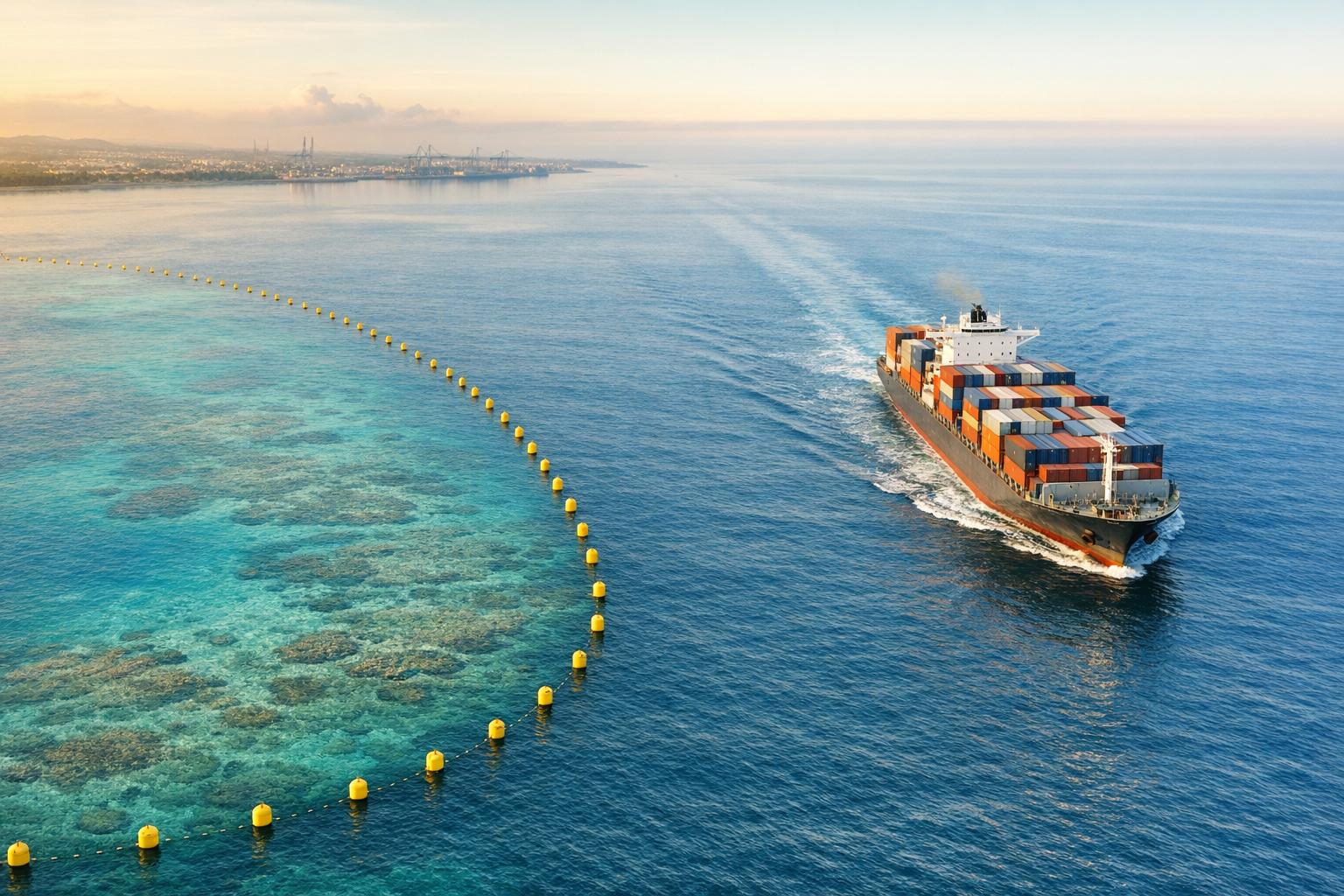
Marine Protected Areas (MPAs) introduce specific challenges for maritime and logistics operations. In England, MPAs cover 51% of inshore waters and 37% of offshore waters [5], while the U.S. oversees nearly 1,000 individual MPAs across ocean, estuarine, and Great Lakes waters [4]. These zones often require vessels to adjust shipping routes, modify schedules, and change operational practices to avoid disrupting sensitive ecosystems. Such adjustments can lead to higher fuel consumption, longer transit times, and more complex logistics planning.
The most stringent restrictions come from Highly Protected Marine Areas (HPMAs), which aim to fully restore species and habitats within their boundaries [5]. These zones often prohibit commercial transit and include no-anchor areas around cultural heritage sites, such as shipwrecks and archaeological locations [6]. Regulatory bodies like England’s Marine Management Organisation (MMO) enforce specific rules through byelaws, creating a patchwork of regulations that maritime companies must navigate [5]. Adhering to these rules requires careful compliance and strategic operational planning.
Meeting Environmental Regulations
Operating near or within MPAs involves navigating multiple layers of federal regulation. The National Marine Sanctuaries Act (NMSA), outlined in 15 CFR Part 922, governs activities within designated sanctuaries to protect ecological, historical, and cultural assets [7][8]. Similarly, the Marine Protection, Research & Sanctuaries Act (MPRSA) - commonly referred to as the Ocean Dumping Act - regulates the transportation and disposal of materials in U.S. ocean waters, including the territorial sea and Exclusive Economic Zone (EEZ).
To create balanced regulations, authorities often rely on calls for evidence, workshops, and formal consultations [5]. By contributing operational data during these processes, maritime companies can help shape rules that balance conservation goals with operational feasibility. Staying informed about new HPMA designations and participating in these discussions allows businesses to anticipate and adapt to areas with the highest levels of protection [5]. This proactive approach aligns with broader sustainability objectives while ensuring smoother regulatory compliance.
Balancing Business Operations with Conservation
Beyond meeting regulatory requirements, companies must align their operational strategies with conservation priorities. Early involvement in MPA planning can help minimize disruptions. Tools for ocean planning, for example, allow businesses to identify potential conflicts between shipping routes and conservation goals before they impact supply chains [6]. By engaging in multi-stakeholder planning boards, companies can advocate for maintaining access to critical shipping lanes during the design phase of MPA boundaries, ensuring that maritime corridors are considered in conservation efforts.
The concept of ecological connectivity is increasingly influencing MPA design. This approach integrates protected zones into the broader "seascape", making navigation more complex but also offering opportunities for collaboration [4]. By working with local experts, companies can help shape conservation measures that align with operational needs, reducing the need for costly route changes. Incorporating these strategies not only supports conservation but also strengthens long-term operational sustainability for maritime businesses.
Steps to Design MPA Governance Frameworks
Maritime and logistics companies play a critical role in shaping Marine Protected Area (MPA) governance by stepping beyond compliance and actively collaborating in how these areas are managed. This requires a strong focus on stakeholder engagement and cooperative governance models.
Engaging Stakeholders Through Systems Thinking
The foundation of effective MPA governance lies in involving the right stakeholders. Communities of Practice (CoPs) provide a platform for maritime companies to work closely with government agencies, NGOs, and local communities on a regular basis [3]. These groups promote social learning and build the trust necessary for collaborative decision-making. By joining regional MPA collaboratives, companies can share operational data, technical expertise, and insights into shipping routes and logistical challenges [9].
Adopting a bottom-up approach ensures that local concerns are heard and governance models align with on-the-ground realities [9]. Early identification of all impacted groups - such as port authorities, fishing communities, environmental organizations, and indigenous populations - is essential. Establishing ongoing communication channels allows for a continuous exchange of ideas. This systems thinking approach acknowledges the interconnectedness of ecosystem services, emphasizing integrated management over isolated conservation efforts [3]. As Zaucha et al. [3] highlight:
"Stakeholder participation is crucial as it encourages social acceptance, reduces conflicts and increases trust between the partners."
Such collaborative efforts naturally lead to co-management practices, where industry expertise and data play a vital role in enhancing governance.
Building Co-Management Models with Private Sector Participation
Co-management models thrive on the integration of real-time industry data with local knowledge. The benefits of shared governance are striking: MPAs managed collaboratively show 98% higher fish biomass compared to those under state-only governance [2]. For maritime companies, these governance structures - where a central body works actively with external stakeholders - yield biomass levels 49% higher than those managed at the national level [2].
Co-management goes beyond consultation, requiring active involvement in activities like monitoring and enforcement [2]. Maritime companies can contribute by sharing vessel tracking data, reporting illegal fishing, and supporting patrol operations. Sub-national governance models, led by local or provincial authorities, are particularly effective, outperforming national management by 26% due to their ability to adapt to local conditions and maintain closer ties with affected communities [2]. Interestingly, the success of shared governance has an impact over 1.4 times greater than factors like the MPA’s age or the implementation of no-take zones [2].
Using Maritime Spatial Planning in Governance Design
Maritime Spatial Planning (MSP) offers a structured approach to address the operational and conservation challenges associated with MPAs. The process includes securing legal frameworks, engaging stakeholders, defining conditions, analyzing trade-offs, developing a spatial plan, implementing collaboratively, and maintaining ongoing monitoring [10][3]. For maritime companies, the trade-off analysis phase is particularly important. As White et al. [3] explain:
"Making trade-offs explicit improves transparency in decision-making, helps avoid unnecessary conflicts attributable to perceived but weak trade-offs, and focuses debate on finding the most efficient solutions."
Tools like SeaSketch allow companies to use participatory mapping to identify potential conflicts between shipping lanes and conservation zones in real time [3]. This proactive approach helps resolve issues before they escalate. MSP also opens doors to mutually beneficial opportunities, such as combining renewable energy projects with conservation zones to create investment stability [11]. By mapping and quantifying ecosystem services - like coastal protection and water regulation - companies can adopt an ecosystem-based strategy that balances environmental health with operational needs [3]. The resulting spatial management plans streamline agency coordination, minimize redundant permitting processes, and provide legal clarity for maritime operators [10][11].
Tools and Case Studies for MPA Governance
Monitoring and Enforcement Protocols
Collaborative Management Partnerships (CMPs) have shown success in enforcing Marine Protected Areas (MPAs), particularly in Africa. Here, 15 governments have implemented 40 co-management and delegated CMPs, covering about 11.5% of protected areas on the continent [14].
Community-based ranger patrols present an efficient approach to enforcement. For example, on Chumbe Island, hiring local fishers as rangers not only reduced operational expenses but also built strong relationships with fishing communities [15]. Establishing long-term legal frameworks provides the stability necessary for sustained investment [12]. Additionally, gaining the support of key stakeholders, such as regional fishermen and local communities, is essential for ensuring project success [12].
These strategies can be adapted for maritime operations by incorporating local monitoring protocols and collaborating with regulatory bodies. Maritime companies can adopt such measures to improve compliance and streamline operations. These enforcement practices also create a foundation for innovative financing models, as illustrated in the following case study.
Case Study: Chumbe Island's Closed-Loop Financing
Chumbe Island Coral Park in Tanzania offers a compelling example of how innovative financing can support MPA governance without relying on continuous government funding. In 1994, the Revolutionary Government of Zanzibar granted exclusive management rights for a marine sanctuary to Chumbe Island Coral Park Ltd (CHICOP) through long-term legal agreements [12][[18]](https://archive.iwlearn.net/coast.iwlearn.org/coast.iwlearn.org/coast.iwlearn.org/en/News and Events/the-chumbe-island-coral-park-in-zanzibar-a-model-of-financially-ecologically-and-socially-sustainable-marine-park-management.html). CHICOP initially invested around $1.2 million, with two-thirds coming from private funding sources [12].
The park operates on a closed-loop financing model, reinvesting 100% of its ecotourism revenue into conservation, research, and education [17][[18]](https://archive.iwlearn.net/coast.iwlearn.org/coast.iwlearn.org/coast.iwlearn.org/en/News and Events/the-chumbe-island-coral-park-in-zanzibar-a-model-of-financially-ecologically-and-socially-sustainable-marine-park-management.html). Despite lower-than-expected visitor numbers, the project achieved financial independence by 2000, with annual operating costs ranging from $150,000 to $200,000 [12]. Today, the sanctuary protects a 74-acre no-take coral reef zone and employs 43 people, 95% of whom are Tanzanians, with over two-thirds coming from nearby communities [[18]](https://archive.iwlearn.net/coast.iwlearn.org/coast.iwlearn.org/coast.iwlearn.org/en/News and Events/the-chumbe-island-coral-park-in-zanzibar-a-model-of-financially-ecologically-and-socially-sustainable-marine-park-management.html).
Maritime companies could replicate this model by allocating portions of port fees, environmental levies, or carbon credits to fund MPA governance. The documented spill-over effect - where fish biomass exceeds 1,100 kg per hectare - demonstrates the economic benefits of effective governance for surrounding communities [16]. As highlighted by the UN Secretary-General:
"local fishermen benefit from the Reef Sanctuary, as research findings confirmed that fish inside the protected no-take zone travel out and increase their yields in the vicinity"
UN Secretary-General, Report to the General Assembly on Protection of Coral Reefs [[18]](https://archive.iwlearn.net/coast.iwlearn.org/coast.iwlearn.org/coast.iwlearn.org/en/News and Events/the-chumbe-island-coral-park-in-zanzibar-a-model-of-financially-ecologically-and-socially-sustainable-marine-park-management.html)
This case study illustrates how closed-loop financing can ensure sustainable conservation funding while aligning with corporate environmental goals. The recognition of the project, including its accreditation as a Global Ocean Refuge in 2018 and the 2023 Regenerative Travel Impact Awards, highlights the potential for private-sector leadership to achieve both financial and conservation milestones [13][17].
Aligning MPA Governance with Corporate Sustainability Goals
Maritime and logistics companies have a unique opportunity to take the lead in environmental responsibility by going beyond basic regulatory requirements. By integrating Marine Protected Area (MPA) governance into their corporate sustainability strategies, these businesses can enhance their ESG (Environmental, Social, and Governance) performance while maintaining operational efficiency. Research highlights that shared governance models - where responsibilities are distributed among various stakeholders - yield significantly greater ecological benefits than state-only management. This approach aligns well with earlier discussions on flexible MPA governance frameworks, emphasizing the dual objectives of conservation and operational functionality. These ecological advantages also create a strong financial case for embedding sustainability into broader corporate strategies.
Financial Incentives and Sustainability Alignment
Financial incentives play a key role in motivating companies to align their operations with MPA governance. For instance, the Maritime and Port Authority of Singapore (MPA) revamped its Maritime Singapore Green Initiative (MSGI) in 2024 to include five targeted programs: Green Ship, Green Port Infrastructure, Green Craft, Green Energy and Technology, and Green Awareness. Under the Green Ship Program, Singapore-registered ships that surpass the International Maritime Organization's (IMO) Energy Efficiency Design Index (EEDI) Phase 3 standards by at least 10% can receive up to 100% concessions on initial registration fees and annual tonnage taxes [20].
Additionally, the Green Port Infrastructure program offers financial support to encourage energy-efficient technologies. For example, the Energy Efficiency Grant provides up to 70% co-funding for electric forklifts, with a funding cap of S$350,000 per company [19][20]. These initiatives illustrate how financial incentives can directly support environmental goals while also reducing operational costs.
Working with Council Fire for Stakeholder Collaboration
To turn ecological benefits into measurable corporate value, effective collaboration with stakeholders is crucial. Council Fire's stakeholder-centered planning approach simplifies the complexities of multi-party MPA governance. By utilizing systems thinking, companies can participate in co-management models that achieve higher conservation outcomes.
One example is the Green Awareness Program under MSGI, which provides 50% co-funding for carbon management workshops. These workshops are designed to build internal expertise in carbon accounting and ESG reporting [20]. As Mast et al. [2] note:
"shared governance arrangements that include diverse groups throughout the design and implementation process... may foster collaboration, support community interests, instill responsibility across multiple groups, and increase management capacity by leveraging shared resources."
Building Long-Term Value Through Environmental Stewardship
Active involvement in MPA governance not only supports environmental recovery but also fosters long-term competitive advantages. Companies that prioritize ecological improvements enhance their reputation with key stakeholders, including investors, customers, and regulators, all of whom are increasingly focused on measurable environmental outcomes.
Engaging in legitimate multi-stakeholder governance can also reduce enforcement challenges and minimize operational disruptions. By participating early in planning processes - such as through Communities of Practice - companies can identify potential conflicts and advocate for shared-use zones that balance conservation needs with logistical operations. This forward-thinking approach builds trust among stakeholders, safeguards vital maritime routes, and ensures continued access to port facilities. Ultimately, it demonstrates how environmental stewardship can translate into tangible business value.
Key Takeaways and Next Steps
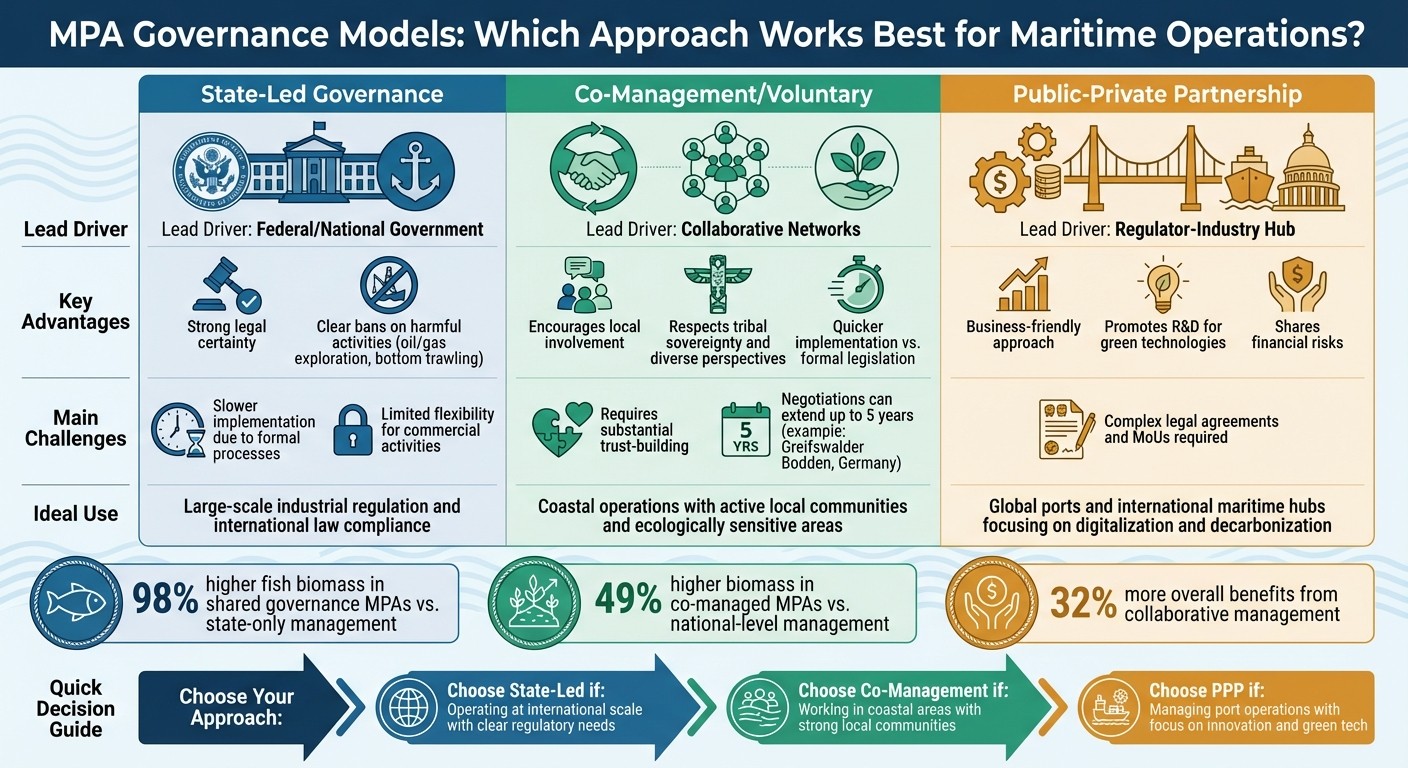
MPA Governance Models Comparison for Maritime Companies
To effectively integrate Marine Protected Area (MPA) governance into your sustainability strategy, it's essential to balance regulatory clarity with active collaboration among stakeholders. Companies can take the lead by participating in co-management networks and forming strategic partnerships that address both conservation goals and business priorities. Below, you'll find a table summarizing governance models and a checklist to guide implementation.
Governance Model Comparison Table
Governance Model | Lead Driver | Key Advantages | Main Challenges | Ideal Use |
|---|---|---|---|---|
State-Led | Federal/National Government | Provides strong legal certainty; clear bans on harmful activities like oil/gas exploration and bottom trawling [22]. | Slower implementation due to formal processes; limited flexibility for commercial activities [23]. | Best suited for large-scale industrial regulation and compliance with international laws. |
Co-Management / Voluntary | Collaborative Networks | Encourages local involvement; respects tribal sovereignty and diverse perspectives [9]; quicker implementation compared to formal legislation [23]. | Requires substantial trust-building; negotiations can extend up to 5 years (e.g., Greifswalder Bodden, Germany) [23]. | Ideal for coastal operations involving active local communities and ecologically sensitive areas. |
Public-Private Partnership | Regulator-Industry Hub | Supports a business-friendly approach; promotes R&D for green technologies; shares financial risks [20]. | Involves complex legal agreements and memorandums of understanding (MoUs). | Suitable for global ports and international maritime hubs focusing on digitalization and decarbonization [1][21]. |
MPA Governance Implementation Checklist
Boundary and Compliance Verification:
Ensure operational alignment with current federal MPA boundaries to avoid prohibited zones [22].
Conduct audits on discharge protocols for oily bilge water, sewage, greywater, food waste, and scrubber washwater, especially within 12 nautical miles of protected areas [22].
Stakeholder Engagement and Strategic Alignment:
Engage with local tribes, fishing communities, and environmental organizations to form regional MPA collaboratives [9].
Participate in carbon management workshops and explore funding opportunities like Singapore's Energy Efficiency Grant, which offers up to 70% co-funding for electric forklifts [20].
Operational Optimization:
Adjust shipping schedules to minimize activities during sensitive periods and in critical locations [23].
Leverage decision-support tools such as Marxan or Cumulative Impact Models to evaluate trade-offs between conservation measures and operational needs [23].
For cross-border operations, align with international initiatives to manage mobile species at a population level [23].
FAQs
How can we find out if a route crosses an MPA?
To check if a route intersects a Marine Protected Area (MPA), rely on electronic navigational charts (ENCs) that provide detailed geospatial data on MPA boundaries and associated regulations. Tools adhering to the IHO S-122 standard are particularly useful for pinpointing routes that may cross into MPAs. Additionally, participatory mapping and advanced navigation systems equipped with dynamic geospatial data can aid in maintaining compliance while aligning routes with environmental guidelines.
What should we share in MPA planning consultations?
During Marine Protected Area (MPA) planning consultations, it's crucial to provide information that fosters collaboration and builds trust. Share a wide range of data, including ecological insights, community priorities, and traditional knowledge, alongside strategies for management, enforcement, and monitoring. This ensures transparency and encourages meaningful participation.
Engage a diverse group of stakeholders to address local concerns effectively. This includes nonprofits, fishermen, tribal representatives, government agencies, and scientists. By involving these groups, you can create a space for open dialogue about conservation goals, operational hurdles, and potential partnerships. Such discussions help align efforts toward effective governance and long-term sustainability.
How can we help fund MPA governance without raising costs too much?
To support Marine Protected Area (MPA) governance without dramatically raising expenses, tapping into current funding sources like government grants or contributions from international organizations can be effective. Collaborating with private sector partners to create mutual benefits can further ease financial pressures. Moreover, adopting shared governance models that engage multiple stakeholders can enhance operational efficiency, cut costs, and promote long-term conservation goals.
Related Blog Posts
How to Design Marine Protected Area Governance for Municipalities & Government Agencies
How to Design Marine Protected Area Governance for Corporations
How to Design Marine Protected Area Governance for NGOs & Nonprofits
How to Design Marine Protected Area Governance for Universities & Research Institutions
Latest Articles
©2025
Narrative Change and Power Building: The Missing Half of Advocacy
Narrative change is the process of disrupting dominant narratives that normalize inequity and advancing new narratives from historically marginalized communities.

Funding Resilience Without Federal Grants
BRIC is unreliable and FEMA is shrinking. Here's how cities fund climate resilience with dedicated revenue, blended finance, and a coordinating authority.

The ESG Blind Spot: How AI Is Finding Risks in Companies Nobody Else Is Watching
Norway's sovereign wealth fund uses AI to screen 7,200 portfolio companies for forced labor and corruption within 24 hours. The real story is the emerging-market coverage gap that traditional ESG data vendors miss — and what it means for any company with a global supply chain.
Narrative Change and Power Building: The Missing Half of Advocacy
Narrative change is the process of disrupting dominant narratives that normalize inequity and advancing new narratives from historically marginalized communities.
Funding Resilience Without Federal Grants
BRIC is unreliable and FEMA is shrinking. Here's how cities fund climate resilience with dedicated revenue, blended finance, and a coordinating authority.
The ESG Blind Spot: How AI Is Finding Risks in Companies Nobody Else Is Watching
Norway's sovereign wealth fund uses AI to screen 7,200 portfolio companies for forced labor and corruption within 24 hours. The real story is the emerging-market coverage gap that traditional ESG data vendors miss — and what it means for any company with a global supply chain.
FAQ
01
What does it really mean to “redefine profit”?
02
What makes Council Fire different?
03
Who does Council Fire work with?
04
What does working with Council Fire actually look like?
05
How does Council Fire help organizations turn big goals into action?
06
How does Council Fire define and measure success?
Mar 28, 2026
How to Design Marine Protected Area Governance for Maritime & Logistics Companies
ESG Strategy
In This Article
Maritime and logistics firms can shape MPA governance to protect ecosystems while preserving routes and minimizing operational disruption.
How to Design Marine Protected Area Governance for Maritime & Logistics Companies
Marine Protected Areas (MPAs) now cover a growing portion of global waters, directly impacting maritime and logistics operations. These zones influence shipping routes, port development, and compliance with environmental regulations, often increasing costs and logistical complexity. Shared governance models - where governments collaborate with private and community stakeholders - are proven to be 98% more effective in improving marine ecosystems compared to state-only management. This approach also ensures smoother regulatory compliance and stronger legitimacy for maritime companies.
Key insights include:
Shared Governance Benefits: MPAs managed collaboratively deliver 32% more overall benefits and 98% higher fish biomass.
Operational Adjustments: MPAs require changes to shipping routes, schedules, and practices, often leading to higher fuel consumption and extended transit times.
Proactive Involvement: Early participation in planning processes helps companies align conservation goals with operational needs, reducing disruptions.
Tools for Collaboration: Maritime Spatial Planning (MSP) and participatory mapping tools like SeaSketch help balance conservation and shipping priorities.
Case Study: Chumbe Island’s closed-loop financing model demonstrates how private funding can sustain MPAs while benefiting local communities and ecosystems.
Social Aspects of MPA Management – Building Effective and Equitable Ocean Conservation
How MPAs Affect Maritime & Logistics Operations
Marine Protected Areas (MPAs) introduce specific challenges for maritime and logistics operations. In England, MPAs cover 51% of inshore waters and 37% of offshore waters [5], while the U.S. oversees nearly 1,000 individual MPAs across ocean, estuarine, and Great Lakes waters [4]. These zones often require vessels to adjust shipping routes, modify schedules, and change operational practices to avoid disrupting sensitive ecosystems. Such adjustments can lead to higher fuel consumption, longer transit times, and more complex logistics planning.
The most stringent restrictions come from Highly Protected Marine Areas (HPMAs), which aim to fully restore species and habitats within their boundaries [5]. These zones often prohibit commercial transit and include no-anchor areas around cultural heritage sites, such as shipwrecks and archaeological locations [6]. Regulatory bodies like England’s Marine Management Organisation (MMO) enforce specific rules through byelaws, creating a patchwork of regulations that maritime companies must navigate [5]. Adhering to these rules requires careful compliance and strategic operational planning.
Meeting Environmental Regulations
Operating near or within MPAs involves navigating multiple layers of federal regulation. The National Marine Sanctuaries Act (NMSA), outlined in 15 CFR Part 922, governs activities within designated sanctuaries to protect ecological, historical, and cultural assets [7][8]. Similarly, the Marine Protection, Research & Sanctuaries Act (MPRSA) - commonly referred to as the Ocean Dumping Act - regulates the transportation and disposal of materials in U.S. ocean waters, including the territorial sea and Exclusive Economic Zone (EEZ).
To create balanced regulations, authorities often rely on calls for evidence, workshops, and formal consultations [5]. By contributing operational data during these processes, maritime companies can help shape rules that balance conservation goals with operational feasibility. Staying informed about new HPMA designations and participating in these discussions allows businesses to anticipate and adapt to areas with the highest levels of protection [5]. This proactive approach aligns with broader sustainability objectives while ensuring smoother regulatory compliance.
Balancing Business Operations with Conservation
Beyond meeting regulatory requirements, companies must align their operational strategies with conservation priorities. Early involvement in MPA planning can help minimize disruptions. Tools for ocean planning, for example, allow businesses to identify potential conflicts between shipping routes and conservation goals before they impact supply chains [6]. By engaging in multi-stakeholder planning boards, companies can advocate for maintaining access to critical shipping lanes during the design phase of MPA boundaries, ensuring that maritime corridors are considered in conservation efforts.
The concept of ecological connectivity is increasingly influencing MPA design. This approach integrates protected zones into the broader "seascape", making navigation more complex but also offering opportunities for collaboration [4]. By working with local experts, companies can help shape conservation measures that align with operational needs, reducing the need for costly route changes. Incorporating these strategies not only supports conservation but also strengthens long-term operational sustainability for maritime businesses.
Steps to Design MPA Governance Frameworks
Maritime and logistics companies play a critical role in shaping Marine Protected Area (MPA) governance by stepping beyond compliance and actively collaborating in how these areas are managed. This requires a strong focus on stakeholder engagement and cooperative governance models.
Engaging Stakeholders Through Systems Thinking
The foundation of effective MPA governance lies in involving the right stakeholders. Communities of Practice (CoPs) provide a platform for maritime companies to work closely with government agencies, NGOs, and local communities on a regular basis [3]. These groups promote social learning and build the trust necessary for collaborative decision-making. By joining regional MPA collaboratives, companies can share operational data, technical expertise, and insights into shipping routes and logistical challenges [9].
Adopting a bottom-up approach ensures that local concerns are heard and governance models align with on-the-ground realities [9]. Early identification of all impacted groups - such as port authorities, fishing communities, environmental organizations, and indigenous populations - is essential. Establishing ongoing communication channels allows for a continuous exchange of ideas. This systems thinking approach acknowledges the interconnectedness of ecosystem services, emphasizing integrated management over isolated conservation efforts [3]. As Zaucha et al. [3] highlight:
"Stakeholder participation is crucial as it encourages social acceptance, reduces conflicts and increases trust between the partners."
Such collaborative efforts naturally lead to co-management practices, where industry expertise and data play a vital role in enhancing governance.
Building Co-Management Models with Private Sector Participation
Co-management models thrive on the integration of real-time industry data with local knowledge. The benefits of shared governance are striking: MPAs managed collaboratively show 98% higher fish biomass compared to those under state-only governance [2]. For maritime companies, these governance structures - where a central body works actively with external stakeholders - yield biomass levels 49% higher than those managed at the national level [2].
Co-management goes beyond consultation, requiring active involvement in activities like monitoring and enforcement [2]. Maritime companies can contribute by sharing vessel tracking data, reporting illegal fishing, and supporting patrol operations. Sub-national governance models, led by local or provincial authorities, are particularly effective, outperforming national management by 26% due to their ability to adapt to local conditions and maintain closer ties with affected communities [2]. Interestingly, the success of shared governance has an impact over 1.4 times greater than factors like the MPA’s age or the implementation of no-take zones [2].
Using Maritime Spatial Planning in Governance Design
Maritime Spatial Planning (MSP) offers a structured approach to address the operational and conservation challenges associated with MPAs. The process includes securing legal frameworks, engaging stakeholders, defining conditions, analyzing trade-offs, developing a spatial plan, implementing collaboratively, and maintaining ongoing monitoring [10][3]. For maritime companies, the trade-off analysis phase is particularly important. As White et al. [3] explain:
"Making trade-offs explicit improves transparency in decision-making, helps avoid unnecessary conflicts attributable to perceived but weak trade-offs, and focuses debate on finding the most efficient solutions."
Tools like SeaSketch allow companies to use participatory mapping to identify potential conflicts between shipping lanes and conservation zones in real time [3]. This proactive approach helps resolve issues before they escalate. MSP also opens doors to mutually beneficial opportunities, such as combining renewable energy projects with conservation zones to create investment stability [11]. By mapping and quantifying ecosystem services - like coastal protection and water regulation - companies can adopt an ecosystem-based strategy that balances environmental health with operational needs [3]. The resulting spatial management plans streamline agency coordination, minimize redundant permitting processes, and provide legal clarity for maritime operators [10][11].
Tools and Case Studies for MPA Governance
Monitoring and Enforcement Protocols
Collaborative Management Partnerships (CMPs) have shown success in enforcing Marine Protected Areas (MPAs), particularly in Africa. Here, 15 governments have implemented 40 co-management and delegated CMPs, covering about 11.5% of protected areas on the continent [14].
Community-based ranger patrols present an efficient approach to enforcement. For example, on Chumbe Island, hiring local fishers as rangers not only reduced operational expenses but also built strong relationships with fishing communities [15]. Establishing long-term legal frameworks provides the stability necessary for sustained investment [12]. Additionally, gaining the support of key stakeholders, such as regional fishermen and local communities, is essential for ensuring project success [12].
These strategies can be adapted for maritime operations by incorporating local monitoring protocols and collaborating with regulatory bodies. Maritime companies can adopt such measures to improve compliance and streamline operations. These enforcement practices also create a foundation for innovative financing models, as illustrated in the following case study.
Case Study: Chumbe Island's Closed-Loop Financing
Chumbe Island Coral Park in Tanzania offers a compelling example of how innovative financing can support MPA governance without relying on continuous government funding. In 1994, the Revolutionary Government of Zanzibar granted exclusive management rights for a marine sanctuary to Chumbe Island Coral Park Ltd (CHICOP) through long-term legal agreements [12][[18]](https://archive.iwlearn.net/coast.iwlearn.org/coast.iwlearn.org/coast.iwlearn.org/en/News and Events/the-chumbe-island-coral-park-in-zanzibar-a-model-of-financially-ecologically-and-socially-sustainable-marine-park-management.html). CHICOP initially invested around $1.2 million, with two-thirds coming from private funding sources [12].
The park operates on a closed-loop financing model, reinvesting 100% of its ecotourism revenue into conservation, research, and education [17][[18]](https://archive.iwlearn.net/coast.iwlearn.org/coast.iwlearn.org/coast.iwlearn.org/en/News and Events/the-chumbe-island-coral-park-in-zanzibar-a-model-of-financially-ecologically-and-socially-sustainable-marine-park-management.html). Despite lower-than-expected visitor numbers, the project achieved financial independence by 2000, with annual operating costs ranging from $150,000 to $200,000 [12]. Today, the sanctuary protects a 74-acre no-take coral reef zone and employs 43 people, 95% of whom are Tanzanians, with over two-thirds coming from nearby communities [[18]](https://archive.iwlearn.net/coast.iwlearn.org/coast.iwlearn.org/coast.iwlearn.org/en/News and Events/the-chumbe-island-coral-park-in-zanzibar-a-model-of-financially-ecologically-and-socially-sustainable-marine-park-management.html).
Maritime companies could replicate this model by allocating portions of port fees, environmental levies, or carbon credits to fund MPA governance. The documented spill-over effect - where fish biomass exceeds 1,100 kg per hectare - demonstrates the economic benefits of effective governance for surrounding communities [16]. As highlighted by the UN Secretary-General:
"local fishermen benefit from the Reef Sanctuary, as research findings confirmed that fish inside the protected no-take zone travel out and increase their yields in the vicinity"
UN Secretary-General, Report to the General Assembly on Protection of Coral Reefs [[18]](https://archive.iwlearn.net/coast.iwlearn.org/coast.iwlearn.org/coast.iwlearn.org/en/News and Events/the-chumbe-island-coral-park-in-zanzibar-a-model-of-financially-ecologically-and-socially-sustainable-marine-park-management.html)
This case study illustrates how closed-loop financing can ensure sustainable conservation funding while aligning with corporate environmental goals. The recognition of the project, including its accreditation as a Global Ocean Refuge in 2018 and the 2023 Regenerative Travel Impact Awards, highlights the potential for private-sector leadership to achieve both financial and conservation milestones [13][17].
Aligning MPA Governance with Corporate Sustainability Goals
Maritime and logistics companies have a unique opportunity to take the lead in environmental responsibility by going beyond basic regulatory requirements. By integrating Marine Protected Area (MPA) governance into their corporate sustainability strategies, these businesses can enhance their ESG (Environmental, Social, and Governance) performance while maintaining operational efficiency. Research highlights that shared governance models - where responsibilities are distributed among various stakeholders - yield significantly greater ecological benefits than state-only management. This approach aligns well with earlier discussions on flexible MPA governance frameworks, emphasizing the dual objectives of conservation and operational functionality. These ecological advantages also create a strong financial case for embedding sustainability into broader corporate strategies.
Financial Incentives and Sustainability Alignment
Financial incentives play a key role in motivating companies to align their operations with MPA governance. For instance, the Maritime and Port Authority of Singapore (MPA) revamped its Maritime Singapore Green Initiative (MSGI) in 2024 to include five targeted programs: Green Ship, Green Port Infrastructure, Green Craft, Green Energy and Technology, and Green Awareness. Under the Green Ship Program, Singapore-registered ships that surpass the International Maritime Organization's (IMO) Energy Efficiency Design Index (EEDI) Phase 3 standards by at least 10% can receive up to 100% concessions on initial registration fees and annual tonnage taxes [20].
Additionally, the Green Port Infrastructure program offers financial support to encourage energy-efficient technologies. For example, the Energy Efficiency Grant provides up to 70% co-funding for electric forklifts, with a funding cap of S$350,000 per company [19][20]. These initiatives illustrate how financial incentives can directly support environmental goals while also reducing operational costs.
Working with Council Fire for Stakeholder Collaboration
To turn ecological benefits into measurable corporate value, effective collaboration with stakeholders is crucial. Council Fire's stakeholder-centered planning approach simplifies the complexities of multi-party MPA governance. By utilizing systems thinking, companies can participate in co-management models that achieve higher conservation outcomes.
One example is the Green Awareness Program under MSGI, which provides 50% co-funding for carbon management workshops. These workshops are designed to build internal expertise in carbon accounting and ESG reporting [20]. As Mast et al. [2] note:
"shared governance arrangements that include diverse groups throughout the design and implementation process... may foster collaboration, support community interests, instill responsibility across multiple groups, and increase management capacity by leveraging shared resources."
Building Long-Term Value Through Environmental Stewardship
Active involvement in MPA governance not only supports environmental recovery but also fosters long-term competitive advantages. Companies that prioritize ecological improvements enhance their reputation with key stakeholders, including investors, customers, and regulators, all of whom are increasingly focused on measurable environmental outcomes.
Engaging in legitimate multi-stakeholder governance can also reduce enforcement challenges and minimize operational disruptions. By participating early in planning processes - such as through Communities of Practice - companies can identify potential conflicts and advocate for shared-use zones that balance conservation needs with logistical operations. This forward-thinking approach builds trust among stakeholders, safeguards vital maritime routes, and ensures continued access to port facilities. Ultimately, it demonstrates how environmental stewardship can translate into tangible business value.
Key Takeaways and Next Steps
MPA Governance Models Comparison for Maritime Companies
To effectively integrate Marine Protected Area (MPA) governance into your sustainability strategy, it's essential to balance regulatory clarity with active collaboration among stakeholders. Companies can take the lead by participating in co-management networks and forming strategic partnerships that address both conservation goals and business priorities. Below, you'll find a table summarizing governance models and a checklist to guide implementation.
Governance Model Comparison Table
Governance Model | Lead Driver | Key Advantages | Main Challenges | Ideal Use |
|---|---|---|---|---|
State-Led | Federal/National Government | Provides strong legal certainty; clear bans on harmful activities like oil/gas exploration and bottom trawling [22]. | Slower implementation due to formal processes; limited flexibility for commercial activities [23]. | Best suited for large-scale industrial regulation and compliance with international laws. |
Co-Management / Voluntary | Collaborative Networks | Encourages local involvement; respects tribal sovereignty and diverse perspectives [9]; quicker implementation compared to formal legislation [23]. | Requires substantial trust-building; negotiations can extend up to 5 years (e.g., Greifswalder Bodden, Germany) [23]. | Ideal for coastal operations involving active local communities and ecologically sensitive areas. |
Public-Private Partnership | Regulator-Industry Hub | Supports a business-friendly approach; promotes R&D for green technologies; shares financial risks [20]. | Involves complex legal agreements and memorandums of understanding (MoUs). | Suitable for global ports and international maritime hubs focusing on digitalization and decarbonization [1][21]. |
MPA Governance Implementation Checklist
Boundary and Compliance Verification:
Ensure operational alignment with current federal MPA boundaries to avoid prohibited zones [22].
Conduct audits on discharge protocols for oily bilge water, sewage, greywater, food waste, and scrubber washwater, especially within 12 nautical miles of protected areas [22].
Stakeholder Engagement and Strategic Alignment:
Engage with local tribes, fishing communities, and environmental organizations to form regional MPA collaboratives [9].
Participate in carbon management workshops and explore funding opportunities like Singapore's Energy Efficiency Grant, which offers up to 70% co-funding for electric forklifts [20].
Operational Optimization:
Adjust shipping schedules to minimize activities during sensitive periods and in critical locations [23].
Leverage decision-support tools such as Marxan or Cumulative Impact Models to evaluate trade-offs between conservation measures and operational needs [23].
For cross-border operations, align with international initiatives to manage mobile species at a population level [23].
FAQs
How can we find out if a route crosses an MPA?
To check if a route intersects a Marine Protected Area (MPA), rely on electronic navigational charts (ENCs) that provide detailed geospatial data on MPA boundaries and associated regulations. Tools adhering to the IHO S-122 standard are particularly useful for pinpointing routes that may cross into MPAs. Additionally, participatory mapping and advanced navigation systems equipped with dynamic geospatial data can aid in maintaining compliance while aligning routes with environmental guidelines.
What should we share in MPA planning consultations?
During Marine Protected Area (MPA) planning consultations, it's crucial to provide information that fosters collaboration and builds trust. Share a wide range of data, including ecological insights, community priorities, and traditional knowledge, alongside strategies for management, enforcement, and monitoring. This ensures transparency and encourages meaningful participation.
Engage a diverse group of stakeholders to address local concerns effectively. This includes nonprofits, fishermen, tribal representatives, government agencies, and scientists. By involving these groups, you can create a space for open dialogue about conservation goals, operational hurdles, and potential partnerships. Such discussions help align efforts toward effective governance and long-term sustainability.
How can we help fund MPA governance without raising costs too much?
To support Marine Protected Area (MPA) governance without dramatically raising expenses, tapping into current funding sources like government grants or contributions from international organizations can be effective. Collaborating with private sector partners to create mutual benefits can further ease financial pressures. Moreover, adopting shared governance models that engage multiple stakeholders can enhance operational efficiency, cut costs, and promote long-term conservation goals.
Related Blog Posts
How to Design Marine Protected Area Governance for Municipalities & Government Agencies
How to Design Marine Protected Area Governance for Corporations
How to Design Marine Protected Area Governance for NGOs & Nonprofits
How to Design Marine Protected Area Governance for Universities & Research Institutions
Latest Articles
©2025
Narrative Change and Power Building: The Missing Half of Advocacy
Narrative change is the process of disrupting dominant narratives that normalize inequity and advancing new narratives from historically marginalized communities.
Funding Resilience Without Federal Grants
BRIC is unreliable and FEMA is shrinking. Here's how cities fund climate resilience with dedicated revenue, blended finance, and a coordinating authority.
The ESG Blind Spot: How AI Is Finding Risks in Companies Nobody Else Is Watching
Norway's sovereign wealth fund uses AI to screen 7,200 portfolio companies for forced labor and corruption within 24 hours. The real story is the emerging-market coverage gap that traditional ESG data vendors miss — and what it means for any company with a global supply chain.
FAQ
01
What does it really mean to “redefine profit”?
02
What makes Council Fire different?
03
Who does Council Fire work with?
04
What does working with Council Fire actually look like?
05
How does Council Fire help organizations turn big goals into action?
06
How does Council Fire define and measure success?
Mar 28, 2026
How to Design Marine Protected Area Governance for Maritime & Logistics Companies
ESG Strategy
In This Article
Maritime and logistics firms can shape MPA governance to protect ecosystems while preserving routes and minimizing operational disruption.
How to Design Marine Protected Area Governance for Maritime & Logistics Companies
Marine Protected Areas (MPAs) now cover a growing portion of global waters, directly impacting maritime and logistics operations. These zones influence shipping routes, port development, and compliance with environmental regulations, often increasing costs and logistical complexity. Shared governance models - where governments collaborate with private and community stakeholders - are proven to be 98% more effective in improving marine ecosystems compared to state-only management. This approach also ensures smoother regulatory compliance and stronger legitimacy for maritime companies.
Key insights include:
Shared Governance Benefits: MPAs managed collaboratively deliver 32% more overall benefits and 98% higher fish biomass.
Operational Adjustments: MPAs require changes to shipping routes, schedules, and practices, often leading to higher fuel consumption and extended transit times.
Proactive Involvement: Early participation in planning processes helps companies align conservation goals with operational needs, reducing disruptions.
Tools for Collaboration: Maritime Spatial Planning (MSP) and participatory mapping tools like SeaSketch help balance conservation and shipping priorities.
Case Study: Chumbe Island’s closed-loop financing model demonstrates how private funding can sustain MPAs while benefiting local communities and ecosystems.
Social Aspects of MPA Management – Building Effective and Equitable Ocean Conservation
How MPAs Affect Maritime & Logistics Operations
Marine Protected Areas (MPAs) introduce specific challenges for maritime and logistics operations. In England, MPAs cover 51% of inshore waters and 37% of offshore waters [5], while the U.S. oversees nearly 1,000 individual MPAs across ocean, estuarine, and Great Lakes waters [4]. These zones often require vessels to adjust shipping routes, modify schedules, and change operational practices to avoid disrupting sensitive ecosystems. Such adjustments can lead to higher fuel consumption, longer transit times, and more complex logistics planning.
The most stringent restrictions come from Highly Protected Marine Areas (HPMAs), which aim to fully restore species and habitats within their boundaries [5]. These zones often prohibit commercial transit and include no-anchor areas around cultural heritage sites, such as shipwrecks and archaeological locations [6]. Regulatory bodies like England’s Marine Management Organisation (MMO) enforce specific rules through byelaws, creating a patchwork of regulations that maritime companies must navigate [5]. Adhering to these rules requires careful compliance and strategic operational planning.
Meeting Environmental Regulations
Operating near or within MPAs involves navigating multiple layers of federal regulation. The National Marine Sanctuaries Act (NMSA), outlined in 15 CFR Part 922, governs activities within designated sanctuaries to protect ecological, historical, and cultural assets [7][8]. Similarly, the Marine Protection, Research & Sanctuaries Act (MPRSA) - commonly referred to as the Ocean Dumping Act - regulates the transportation and disposal of materials in U.S. ocean waters, including the territorial sea and Exclusive Economic Zone (EEZ).
To create balanced regulations, authorities often rely on calls for evidence, workshops, and formal consultations [5]. By contributing operational data during these processes, maritime companies can help shape rules that balance conservation goals with operational feasibility. Staying informed about new HPMA designations and participating in these discussions allows businesses to anticipate and adapt to areas with the highest levels of protection [5]. This proactive approach aligns with broader sustainability objectives while ensuring smoother regulatory compliance.
Balancing Business Operations with Conservation
Beyond meeting regulatory requirements, companies must align their operational strategies with conservation priorities. Early involvement in MPA planning can help minimize disruptions. Tools for ocean planning, for example, allow businesses to identify potential conflicts between shipping routes and conservation goals before they impact supply chains [6]. By engaging in multi-stakeholder planning boards, companies can advocate for maintaining access to critical shipping lanes during the design phase of MPA boundaries, ensuring that maritime corridors are considered in conservation efforts.
The concept of ecological connectivity is increasingly influencing MPA design. This approach integrates protected zones into the broader "seascape", making navigation more complex but also offering opportunities for collaboration [4]. By working with local experts, companies can help shape conservation measures that align with operational needs, reducing the need for costly route changes. Incorporating these strategies not only supports conservation but also strengthens long-term operational sustainability for maritime businesses.
Steps to Design MPA Governance Frameworks
Maritime and logistics companies play a critical role in shaping Marine Protected Area (MPA) governance by stepping beyond compliance and actively collaborating in how these areas are managed. This requires a strong focus on stakeholder engagement and cooperative governance models.
Engaging Stakeholders Through Systems Thinking
The foundation of effective MPA governance lies in involving the right stakeholders. Communities of Practice (CoPs) provide a platform for maritime companies to work closely with government agencies, NGOs, and local communities on a regular basis [3]. These groups promote social learning and build the trust necessary for collaborative decision-making. By joining regional MPA collaboratives, companies can share operational data, technical expertise, and insights into shipping routes and logistical challenges [9].
Adopting a bottom-up approach ensures that local concerns are heard and governance models align with on-the-ground realities [9]. Early identification of all impacted groups - such as port authorities, fishing communities, environmental organizations, and indigenous populations - is essential. Establishing ongoing communication channels allows for a continuous exchange of ideas. This systems thinking approach acknowledges the interconnectedness of ecosystem services, emphasizing integrated management over isolated conservation efforts [3]. As Zaucha et al. [3] highlight:
"Stakeholder participation is crucial as it encourages social acceptance, reduces conflicts and increases trust between the partners."
Such collaborative efforts naturally lead to co-management practices, where industry expertise and data play a vital role in enhancing governance.
Building Co-Management Models with Private Sector Participation
Co-management models thrive on the integration of real-time industry data with local knowledge. The benefits of shared governance are striking: MPAs managed collaboratively show 98% higher fish biomass compared to those under state-only governance [2]. For maritime companies, these governance structures - where a central body works actively with external stakeholders - yield biomass levels 49% higher than those managed at the national level [2].
Co-management goes beyond consultation, requiring active involvement in activities like monitoring and enforcement [2]. Maritime companies can contribute by sharing vessel tracking data, reporting illegal fishing, and supporting patrol operations. Sub-national governance models, led by local or provincial authorities, are particularly effective, outperforming national management by 26% due to their ability to adapt to local conditions and maintain closer ties with affected communities [2]. Interestingly, the success of shared governance has an impact over 1.4 times greater than factors like the MPA’s age or the implementation of no-take zones [2].
Using Maritime Spatial Planning in Governance Design
Maritime Spatial Planning (MSP) offers a structured approach to address the operational and conservation challenges associated with MPAs. The process includes securing legal frameworks, engaging stakeholders, defining conditions, analyzing trade-offs, developing a spatial plan, implementing collaboratively, and maintaining ongoing monitoring [10][3]. For maritime companies, the trade-off analysis phase is particularly important. As White et al. [3] explain:
"Making trade-offs explicit improves transparency in decision-making, helps avoid unnecessary conflicts attributable to perceived but weak trade-offs, and focuses debate on finding the most efficient solutions."
Tools like SeaSketch allow companies to use participatory mapping to identify potential conflicts between shipping lanes and conservation zones in real time [3]. This proactive approach helps resolve issues before they escalate. MSP also opens doors to mutually beneficial opportunities, such as combining renewable energy projects with conservation zones to create investment stability [11]. By mapping and quantifying ecosystem services - like coastal protection and water regulation - companies can adopt an ecosystem-based strategy that balances environmental health with operational needs [3]. The resulting spatial management plans streamline agency coordination, minimize redundant permitting processes, and provide legal clarity for maritime operators [10][11].
Tools and Case Studies for MPA Governance
Monitoring and Enforcement Protocols
Collaborative Management Partnerships (CMPs) have shown success in enforcing Marine Protected Areas (MPAs), particularly in Africa. Here, 15 governments have implemented 40 co-management and delegated CMPs, covering about 11.5% of protected areas on the continent [14].
Community-based ranger patrols present an efficient approach to enforcement. For example, on Chumbe Island, hiring local fishers as rangers not only reduced operational expenses but also built strong relationships with fishing communities [15]. Establishing long-term legal frameworks provides the stability necessary for sustained investment [12]. Additionally, gaining the support of key stakeholders, such as regional fishermen and local communities, is essential for ensuring project success [12].
These strategies can be adapted for maritime operations by incorporating local monitoring protocols and collaborating with regulatory bodies. Maritime companies can adopt such measures to improve compliance and streamline operations. These enforcement practices also create a foundation for innovative financing models, as illustrated in the following case study.
Case Study: Chumbe Island's Closed-Loop Financing
Chumbe Island Coral Park in Tanzania offers a compelling example of how innovative financing can support MPA governance without relying on continuous government funding. In 1994, the Revolutionary Government of Zanzibar granted exclusive management rights for a marine sanctuary to Chumbe Island Coral Park Ltd (CHICOP) through long-term legal agreements [12][[18]](https://archive.iwlearn.net/coast.iwlearn.org/coast.iwlearn.org/coast.iwlearn.org/en/News and Events/the-chumbe-island-coral-park-in-zanzibar-a-model-of-financially-ecologically-and-socially-sustainable-marine-park-management.html). CHICOP initially invested around $1.2 million, with two-thirds coming from private funding sources [12].
The park operates on a closed-loop financing model, reinvesting 100% of its ecotourism revenue into conservation, research, and education [17][[18]](https://archive.iwlearn.net/coast.iwlearn.org/coast.iwlearn.org/coast.iwlearn.org/en/News and Events/the-chumbe-island-coral-park-in-zanzibar-a-model-of-financially-ecologically-and-socially-sustainable-marine-park-management.html). Despite lower-than-expected visitor numbers, the project achieved financial independence by 2000, with annual operating costs ranging from $150,000 to $200,000 [12]. Today, the sanctuary protects a 74-acre no-take coral reef zone and employs 43 people, 95% of whom are Tanzanians, with over two-thirds coming from nearby communities [[18]](https://archive.iwlearn.net/coast.iwlearn.org/coast.iwlearn.org/coast.iwlearn.org/en/News and Events/the-chumbe-island-coral-park-in-zanzibar-a-model-of-financially-ecologically-and-socially-sustainable-marine-park-management.html).
Maritime companies could replicate this model by allocating portions of port fees, environmental levies, or carbon credits to fund MPA governance. The documented spill-over effect - where fish biomass exceeds 1,100 kg per hectare - demonstrates the economic benefits of effective governance for surrounding communities [16]. As highlighted by the UN Secretary-General:
"local fishermen benefit from the Reef Sanctuary, as research findings confirmed that fish inside the protected no-take zone travel out and increase their yields in the vicinity"
UN Secretary-General, Report to the General Assembly on Protection of Coral Reefs [[18]](https://archive.iwlearn.net/coast.iwlearn.org/coast.iwlearn.org/coast.iwlearn.org/en/News and Events/the-chumbe-island-coral-park-in-zanzibar-a-model-of-financially-ecologically-and-socially-sustainable-marine-park-management.html)
This case study illustrates how closed-loop financing can ensure sustainable conservation funding while aligning with corporate environmental goals. The recognition of the project, including its accreditation as a Global Ocean Refuge in 2018 and the 2023 Regenerative Travel Impact Awards, highlights the potential for private-sector leadership to achieve both financial and conservation milestones [13][17].
Aligning MPA Governance with Corporate Sustainability Goals
Maritime and logistics companies have a unique opportunity to take the lead in environmental responsibility by going beyond basic regulatory requirements. By integrating Marine Protected Area (MPA) governance into their corporate sustainability strategies, these businesses can enhance their ESG (Environmental, Social, and Governance) performance while maintaining operational efficiency. Research highlights that shared governance models - where responsibilities are distributed among various stakeholders - yield significantly greater ecological benefits than state-only management. This approach aligns well with earlier discussions on flexible MPA governance frameworks, emphasizing the dual objectives of conservation and operational functionality. These ecological advantages also create a strong financial case for embedding sustainability into broader corporate strategies.
Financial Incentives and Sustainability Alignment
Financial incentives play a key role in motivating companies to align their operations with MPA governance. For instance, the Maritime and Port Authority of Singapore (MPA) revamped its Maritime Singapore Green Initiative (MSGI) in 2024 to include five targeted programs: Green Ship, Green Port Infrastructure, Green Craft, Green Energy and Technology, and Green Awareness. Under the Green Ship Program, Singapore-registered ships that surpass the International Maritime Organization's (IMO) Energy Efficiency Design Index (EEDI) Phase 3 standards by at least 10% can receive up to 100% concessions on initial registration fees and annual tonnage taxes [20].
Additionally, the Green Port Infrastructure program offers financial support to encourage energy-efficient technologies. For example, the Energy Efficiency Grant provides up to 70% co-funding for electric forklifts, with a funding cap of S$350,000 per company [19][20]. These initiatives illustrate how financial incentives can directly support environmental goals while also reducing operational costs.
Working with Council Fire for Stakeholder Collaboration
To turn ecological benefits into measurable corporate value, effective collaboration with stakeholders is crucial. Council Fire's stakeholder-centered planning approach simplifies the complexities of multi-party MPA governance. By utilizing systems thinking, companies can participate in co-management models that achieve higher conservation outcomes.
One example is the Green Awareness Program under MSGI, which provides 50% co-funding for carbon management workshops. These workshops are designed to build internal expertise in carbon accounting and ESG reporting [20]. As Mast et al. [2] note:
"shared governance arrangements that include diverse groups throughout the design and implementation process... may foster collaboration, support community interests, instill responsibility across multiple groups, and increase management capacity by leveraging shared resources."
Building Long-Term Value Through Environmental Stewardship
Active involvement in MPA governance not only supports environmental recovery but also fosters long-term competitive advantages. Companies that prioritize ecological improvements enhance their reputation with key stakeholders, including investors, customers, and regulators, all of whom are increasingly focused on measurable environmental outcomes.
Engaging in legitimate multi-stakeholder governance can also reduce enforcement challenges and minimize operational disruptions. By participating early in planning processes - such as through Communities of Practice - companies can identify potential conflicts and advocate for shared-use zones that balance conservation needs with logistical operations. This forward-thinking approach builds trust among stakeholders, safeguards vital maritime routes, and ensures continued access to port facilities. Ultimately, it demonstrates how environmental stewardship can translate into tangible business value.
Key Takeaways and Next Steps
MPA Governance Models Comparison for Maritime Companies
To effectively integrate Marine Protected Area (MPA) governance into your sustainability strategy, it's essential to balance regulatory clarity with active collaboration among stakeholders. Companies can take the lead by participating in co-management networks and forming strategic partnerships that address both conservation goals and business priorities. Below, you'll find a table summarizing governance models and a checklist to guide implementation.
Governance Model Comparison Table
Governance Model | Lead Driver | Key Advantages | Main Challenges | Ideal Use |
|---|---|---|---|---|
State-Led | Federal/National Government | Provides strong legal certainty; clear bans on harmful activities like oil/gas exploration and bottom trawling [22]. | Slower implementation due to formal processes; limited flexibility for commercial activities [23]. | Best suited for large-scale industrial regulation and compliance with international laws. |
Co-Management / Voluntary | Collaborative Networks | Encourages local involvement; respects tribal sovereignty and diverse perspectives [9]; quicker implementation compared to formal legislation [23]. | Requires substantial trust-building; negotiations can extend up to 5 years (e.g., Greifswalder Bodden, Germany) [23]. | Ideal for coastal operations involving active local communities and ecologically sensitive areas. |
Public-Private Partnership | Regulator-Industry Hub | Supports a business-friendly approach; promotes R&D for green technologies; shares financial risks [20]. | Involves complex legal agreements and memorandums of understanding (MoUs). | Suitable for global ports and international maritime hubs focusing on digitalization and decarbonization [1][21]. |
MPA Governance Implementation Checklist
Boundary and Compliance Verification:
Ensure operational alignment with current federal MPA boundaries to avoid prohibited zones [22].
Conduct audits on discharge protocols for oily bilge water, sewage, greywater, food waste, and scrubber washwater, especially within 12 nautical miles of protected areas [22].
Stakeholder Engagement and Strategic Alignment:
Engage with local tribes, fishing communities, and environmental organizations to form regional MPA collaboratives [9].
Participate in carbon management workshops and explore funding opportunities like Singapore's Energy Efficiency Grant, which offers up to 70% co-funding for electric forklifts [20].
Operational Optimization:
Adjust shipping schedules to minimize activities during sensitive periods and in critical locations [23].
Leverage decision-support tools such as Marxan or Cumulative Impact Models to evaluate trade-offs between conservation measures and operational needs [23].
For cross-border operations, align with international initiatives to manage mobile species at a population level [23].
FAQs
How can we find out if a route crosses an MPA?
To check if a route intersects a Marine Protected Area (MPA), rely on electronic navigational charts (ENCs) that provide detailed geospatial data on MPA boundaries and associated regulations. Tools adhering to the IHO S-122 standard are particularly useful for pinpointing routes that may cross into MPAs. Additionally, participatory mapping and advanced navigation systems equipped with dynamic geospatial data can aid in maintaining compliance while aligning routes with environmental guidelines.
What should we share in MPA planning consultations?
During Marine Protected Area (MPA) planning consultations, it's crucial to provide information that fosters collaboration and builds trust. Share a wide range of data, including ecological insights, community priorities, and traditional knowledge, alongside strategies for management, enforcement, and monitoring. This ensures transparency and encourages meaningful participation.
Engage a diverse group of stakeholders to address local concerns effectively. This includes nonprofits, fishermen, tribal representatives, government agencies, and scientists. By involving these groups, you can create a space for open dialogue about conservation goals, operational hurdles, and potential partnerships. Such discussions help align efforts toward effective governance and long-term sustainability.
How can we help fund MPA governance without raising costs too much?
To support Marine Protected Area (MPA) governance without dramatically raising expenses, tapping into current funding sources like government grants or contributions from international organizations can be effective. Collaborating with private sector partners to create mutual benefits can further ease financial pressures. Moreover, adopting shared governance models that engage multiple stakeholders can enhance operational efficiency, cut costs, and promote long-term conservation goals.
Related Blog Posts
How to Design Marine Protected Area Governance for Municipalities & Government Agencies
How to Design Marine Protected Area Governance for Corporations
How to Design Marine Protected Area Governance for NGOs & Nonprofits
How to Design Marine Protected Area Governance for Universities & Research Institutions
Latest Articles
©2025
Narrative Change and Power Building: The Missing Half of Advocacy
Narrative change is the process of disrupting dominant narratives that normalize inequity and advancing new narratives from historically marginalized communities.
Funding Resilience Without Federal Grants
BRIC is unreliable and FEMA is shrinking. Here's how cities fund climate resilience with dedicated revenue, blended finance, and a coordinating authority.
The ESG Blind Spot: How AI Is Finding Risks in Companies Nobody Else Is Watching
Norway's sovereign wealth fund uses AI to screen 7,200 portfolio companies for forced labor and corruption within 24 hours. The real story is the emerging-market coverage gap that traditional ESG data vendors miss — and what it means for any company with a global supply chain.
FAQ
What does it really mean to “redefine profit”?
What makes Council Fire different?
Who does Council Fire work with?
What does working with Council Fire actually look like?
How does Council Fire help organizations turn big goals into action?
How does Council Fire define and measure success?