Feb 24, 2026
Kalundborg vs. Ulsan: Eco-Industrial Park Models
Sustainability Strategy
In This Article
A side-by-side look at organic vs government-led eco-industrial park models and their impacts on savings, water reuse, jobs, and CO₂ reductions.
Kalundborg vs. Ulsan: Eco-Industrial Park Models
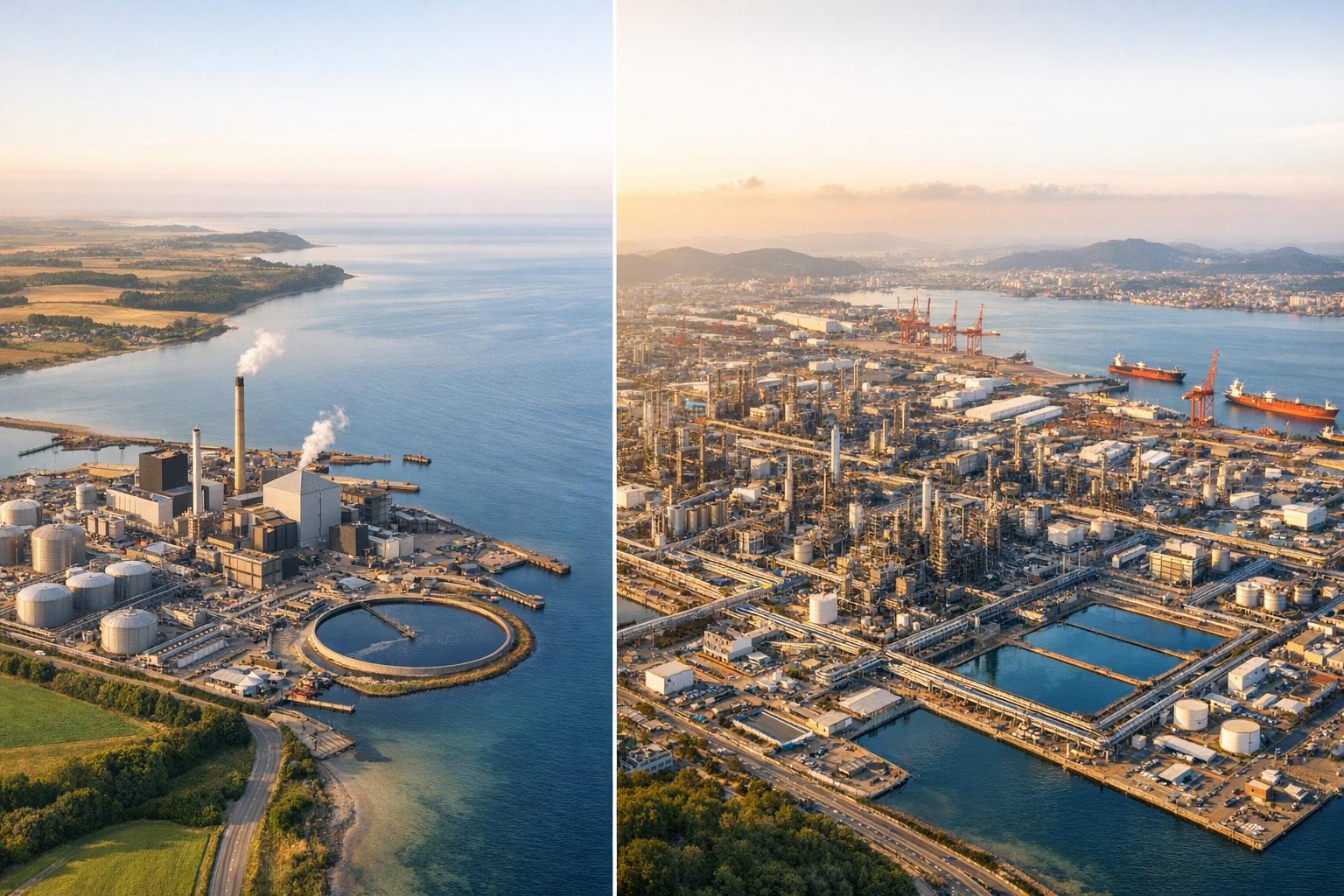
Kalundborg in Denmark and Ulsan in South Korea showcase two distinct paths to transforming industrial waste into valuable resources. While both aim to create circular economies, their approaches differ significantly:
Kalundborg: Developed organically since 1961 through private agreements, driven by mutual economic benefits. It operates a compact, trust-based network of 17 companies, saving $310 million and reusing 95% of the Asnæs Power Station's water supply.
Ulsan: A government-led initiative launched in 2005, involving 596 companies and 235 projects. With $520 million invested, it achieved $554 million in savings, reduced CO₂ emissions by 665,712 tons, and improved waste efficiency by 35%.
Quick Comparison
| Feature | Kalundborg | Ulsan |
| --- | --- | --- |
| <strong>Approach</strong> | Bottom-up, private-driven | Top-down, government-led |
| <strong>Network Size</strong> | 17 companies | 596 companies |
| <strong>Savings</strong> | $310 million (total) | $554 million (2015–2016) |
| <strong>Job Creation</strong> | N/A | 975 jobs |
| <strong>Water Reuse</strong> | 792 million gallons annually | 79,357 tons (2015–2016) |
| <strong>CO₂ Reduction</strong> | N/A | 665,712 tons (2015–2016)
| Feature | Kalundborg | Ulsan |
| --- | --- | --- |
| <strong>Approach</strong> | Bottom-up, private-driven | Top-down, government-led |
| <strong>Network Size</strong> | 17 companies | 596 companies |
| <strong>Savings</strong> | $310 million (total) | $554 million (2015–2016) |
| <strong>Job Creation</strong> | N/A | 975 jobs |
| <strong>Water Reuse</strong> | 792 million gallons annually | 79,357 tons (2015–2016) |
| <strong>CO₂ Reduction</strong> | N/A | 665,712 tons (2015–2016)
Both models underscore the importance of aligning economic goals with resource efficiency. Kalundborg thrives on voluntary collaboration, while Ulsan demonstrates the impact of structured planning. Together, they provide insights into scaling circular economies worldwide.
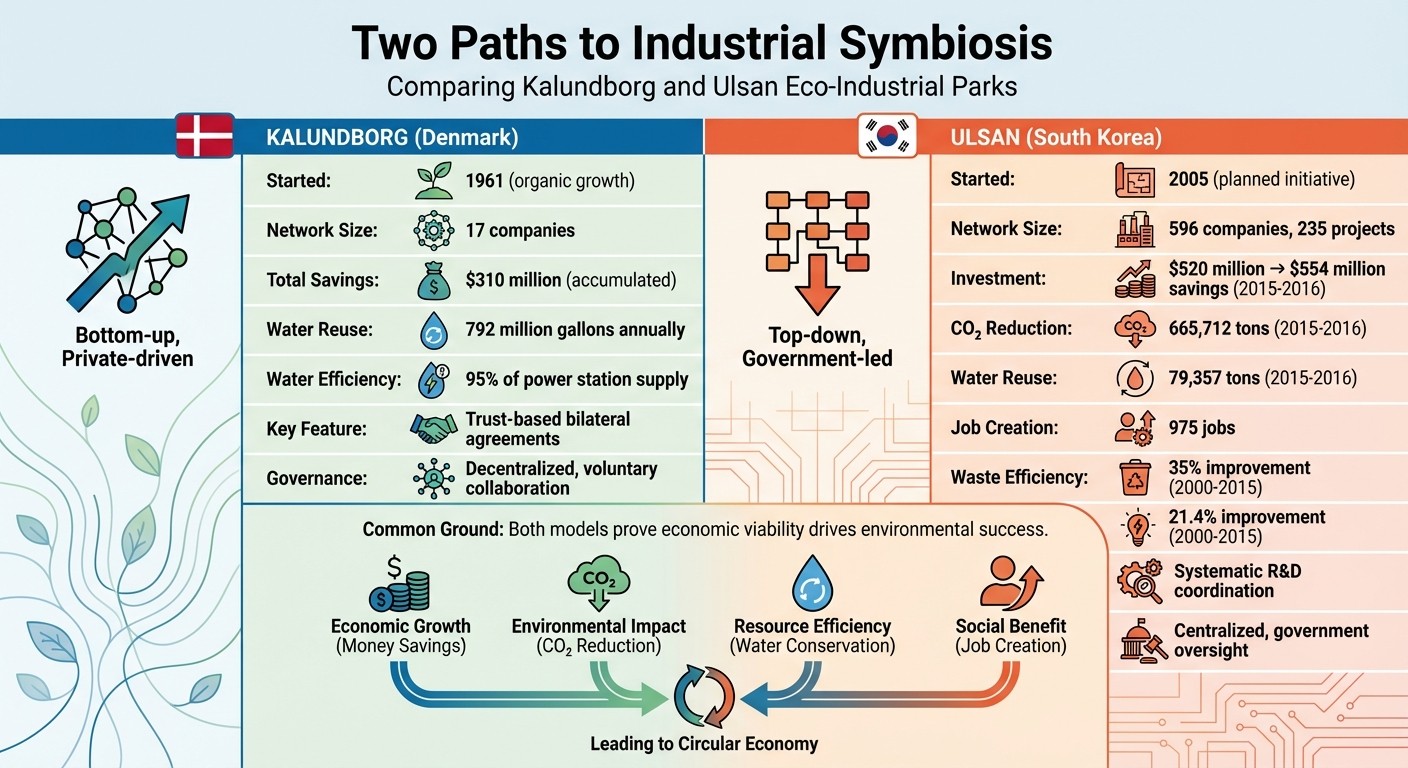
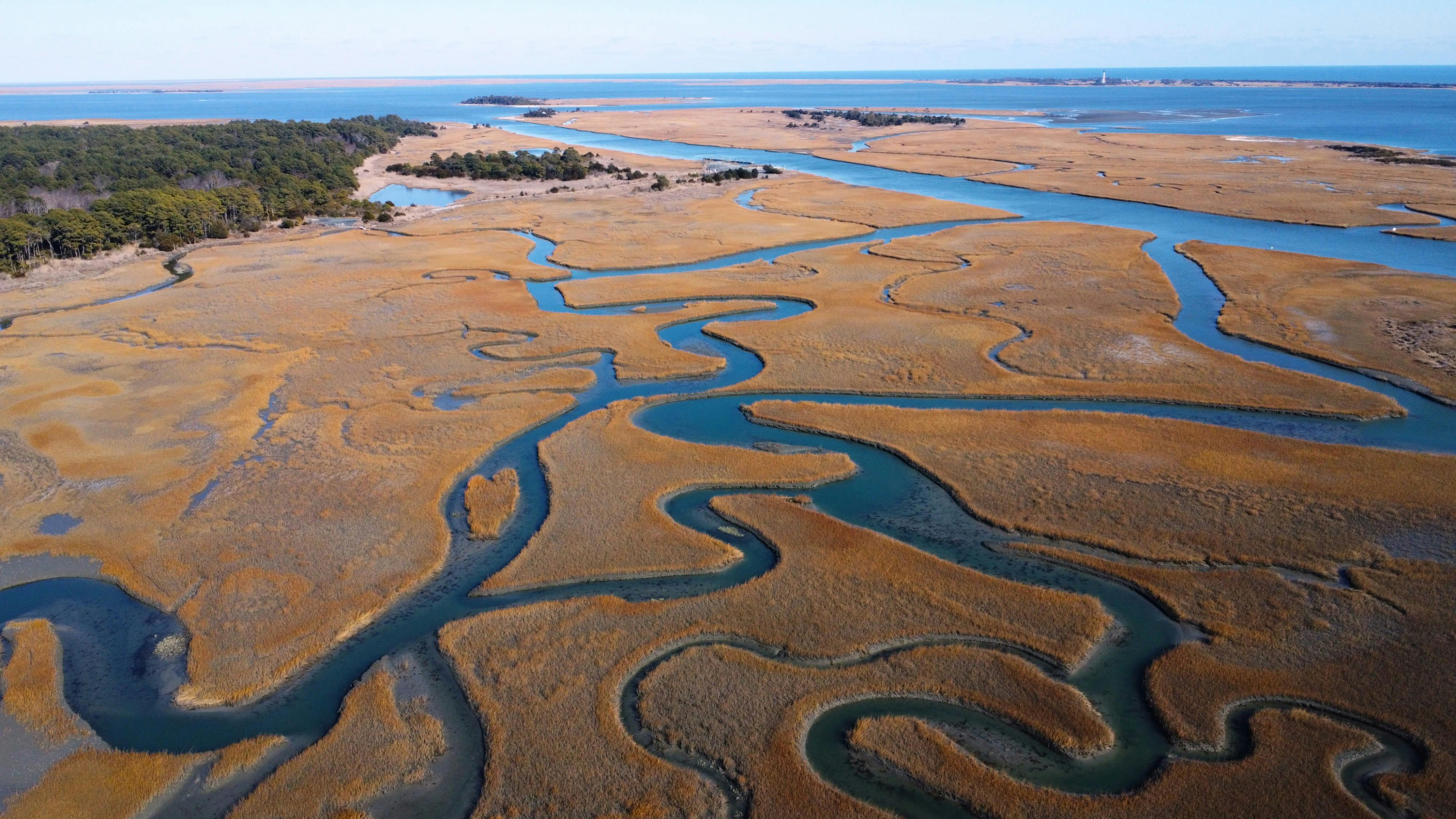
Kalundborg vs Ulsan Eco-Industrial Parks Comparison
Kalundborg Symbiosis: A Bottom-Up Model
History and Evolution
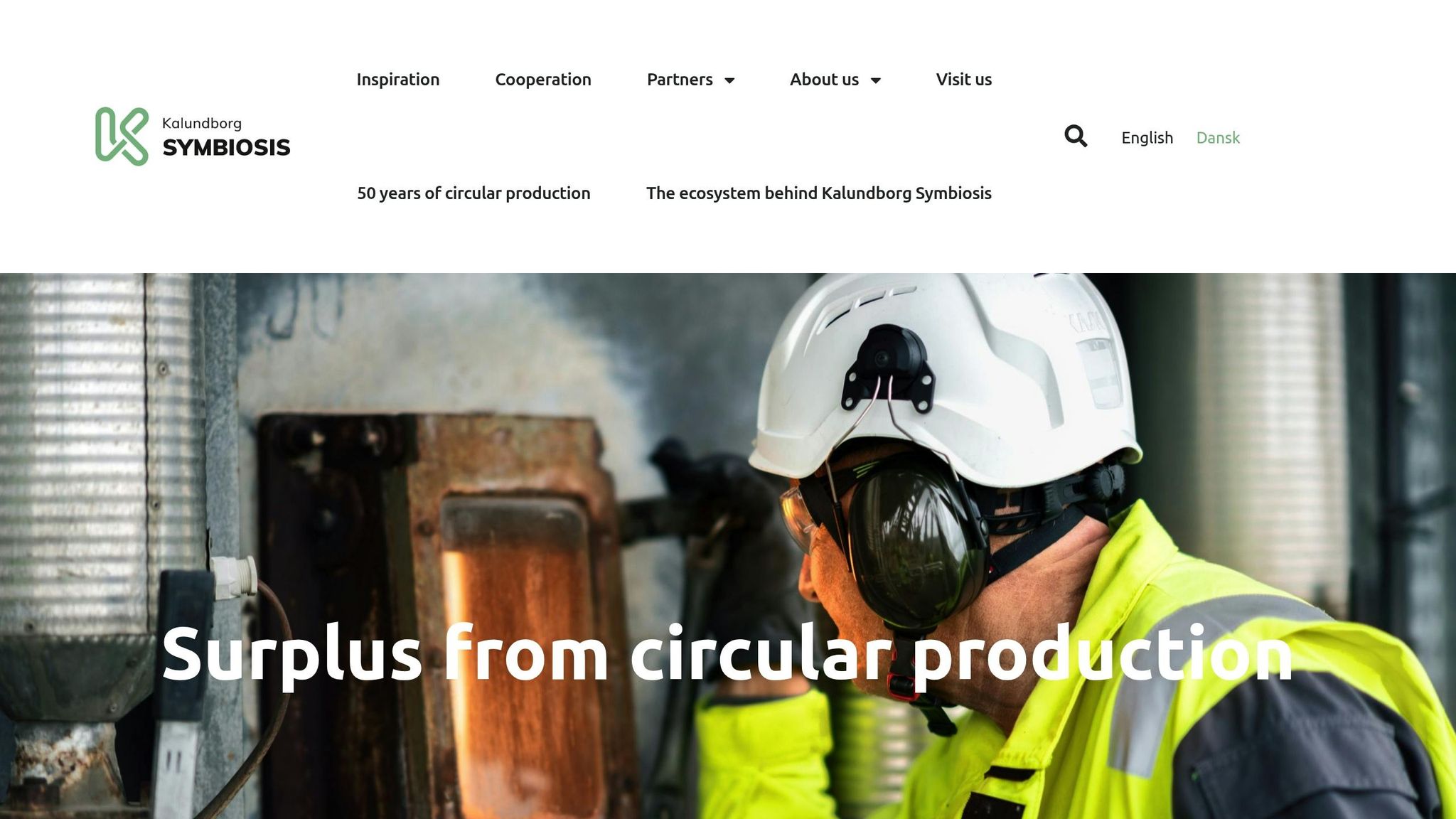
Kalundborg's journey toward industrial symbiosis began organically, without a grand design or government mandate. It all started in 1972 when Gyproc, a plasterboard manufacturer, set up a pipeline to utilize excess refinery gas from Tidewater Oil Company (now Equinor). This arrangement, purely driven by profit, laid the groundwork for what would later become a thriving industrial ecosystem [1].
Over the following years, additional partnerships emerged, all rooted in mutual economic advantage. In 1981, the Kalundborg Municipality developed a district heating network, using waste heat from the Asnæs Power Station to warm 3,500 local homes. This innovation not only cut heating costs but also reduced thermal pollution in the nearby fjord [1]. These arrangements were not dictated by any central authority but instead grew out of trust and collaboration among local managers who saw opportunities to benefit one another [1][2].
This decentralized, trust-based approach became the foundation for the complex web of resource exchanges that define Kalundborg's circular economy today.
Resource Streams and Exchanges
Currently, the Kalundborg network includes over 30 resource streams connecting 17 partner companies. At the heart of this system is the Asnæs Power Station, which supplies 40% of the Equinor refinery's steam needs through a residual steam exchange [1]. In return, the refinery provides 700,000 m³ (about 185 million gallons) of cooling water annually to the power station, which uses it as boiler feed-water. Remarkably, around 95% of the power plant's total water supply comes from these symbiotic exchanges [1].
The power station also repurposes byproducts like gypsum, fly ash, and sludge for use in construction, agriculture, and other industries, significantly reducing reliance on raw materials [1]. For instance, the gypsum produced through flue gas desulfurization fulfills nearly two-thirds of Gyproc's requirements, helping to minimize the need for open-pit mining [1].
Economic and Environmental Results
The Kalundborg network has delivered impressive financial and environmental outcomes. Collectively, the system has generated an estimated $310 million in savings, thanks to reduced raw material costs, lower waste disposal expenses, and improved energy efficiency [1].
The environmental advantages are equally compelling. The district heating system prevents thermal pollution while providing affordable heating to thousands of homes. Recycling gypsum reduces the demand for mining operations, and water reuse dramatically cuts down on freshwater extraction. Each exchange was initially designed to be economically practical, with the environmental benefits naturally following from greater resource efficiency [1][2].
Ulsan Eco-Industrial Park: A Top-Down Model
Origins and Government Involvement
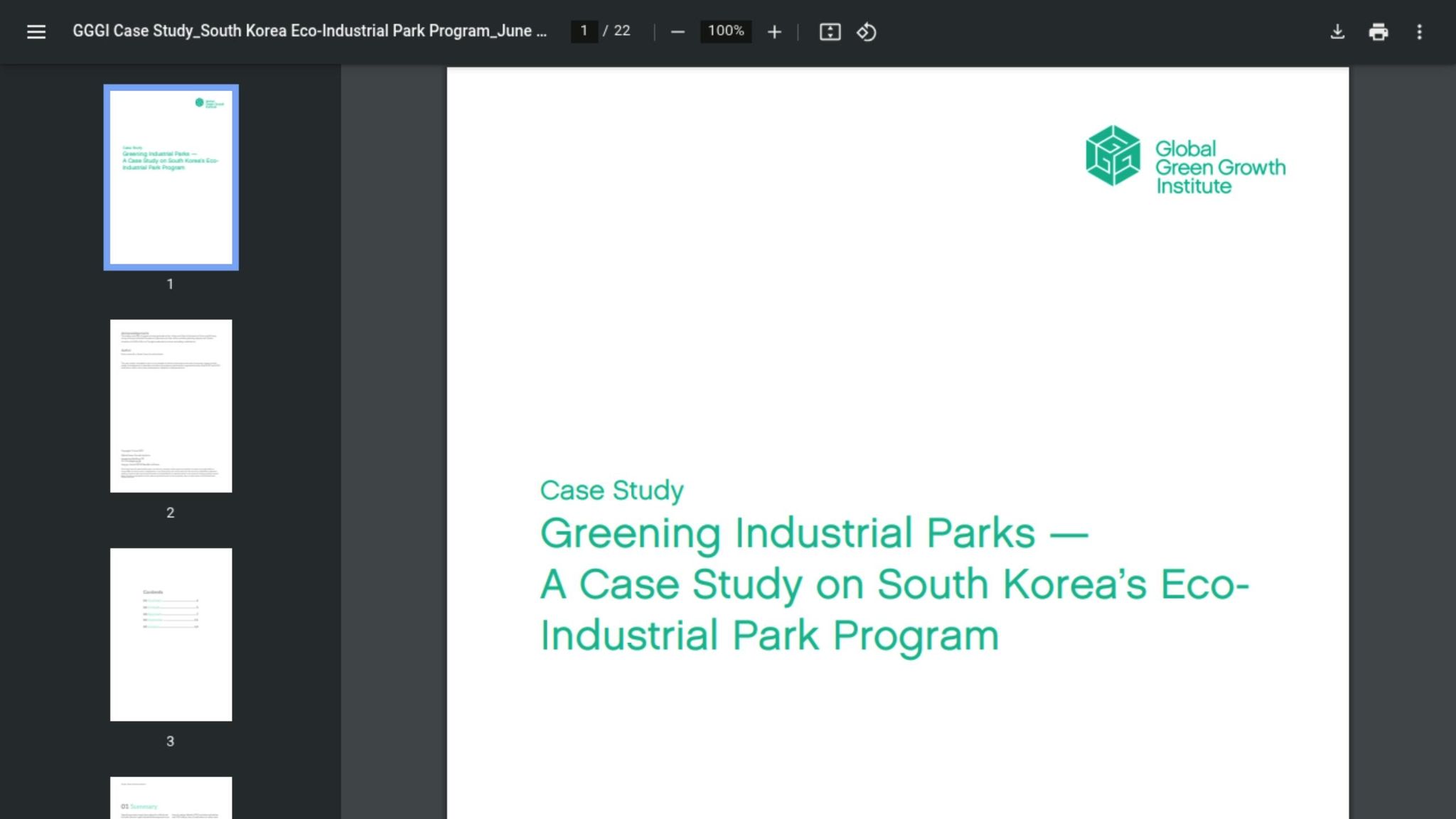
Unlike the organic development seen in Kalundborg, Ulsan's transformation into an Eco-Industrial Park (EIP) was the result of deliberate state intervention. In 2005, South Korea's government initiated a national EIP project, spearheaded by the Ministry of Commerce, Industry and Energy as part of an ambitious 15-year, three-phase master plan [6]. By 2006, the Korea Industrial Complex Corporation (KICOX) was tasked with overseeing the program, coordinating cleaner production efforts, and ensuring its success [6].
This centralized approach marked a shift from informal collaborations to a more structured and systematic model, underpinned by detailed material flow analysis [4]. The Framework Act for Low-Carbon, Green Growth further cemented EIPs as a key component of national policy, focusing on industrial restructuring and reducing greenhouse gas emissions [6]. The government also adopted a "research and development into business" model, which created well-defined opportunities for resource exchanges, attracting significant private investment [5]. This level of planning enabled a methodical and scalable approach to resource optimization.
Resource Utilization Strategies
To identify potential resource-sharing opportunities, the government conducted extensive material mapping across Ulsan, targeting industries such as petrochemicals, nonferrous metals, shipbuilding, and automotive manufacturing. One notable success involved a resource exchange between a local paper mill and a zinc smelter, which improved material efficiency for both facilities [5].
The park also implemented various waste-to-energy projects, including retrofitting landfills to recover gas and converting food waste and sewage sludge into biogas. These initiatives highlight Ulsan's proactive approach to waste management, with government-led efforts identifying and facilitating opportunities for resource valorization. These carefully planned exchanges resulted in both economic and environmental benefits.
Economic and Environmental Results
The results of these efforts are striking. Between 2015 and 2016, companies in Ulsan's Mipo and Onsan EIPs achieved savings of $554 million from a $520 million investment. During the same period, CO₂ emissions were reduced by 665,712 tons, energy consumption dropped by 279,761 tons of oil equivalent, and 79,357 tons of water were reused [7]. From 2000 to 2015, industrial waste generation efficiency improved by 35.0%, while energy efficiency rose by 21.4% [3].
Across the broader program, 235 projects involving 596 companies were commercialized, creating 975 jobs [5]. Between 2005 and 2012, 41 EIP projects directly reduced emissions by 952,281 tons of CO₂ annually, which accounted for 0.48% of South Korea's total industrial sector emissions in 2004 [6]. A government investment of $14.8 million attracted substantial private capital, showcasing how a top-down approach can deliver measurable economic and environmental outcomes [7].
Comparing Kalundborg and Ulsan: Key Metrics
Resource Flows and Network Size
Kalundborg and Ulsan operate on vastly different scales and structures. Kalundborg is a compact network built on bilateral exchanges among a small group of core partners. It focuses on resource streams like steam, gypsum, fly ash, and wastewater. One standout achievement is its annual conservation of 792 million gallons of groundwater through the reuse of treated wastewater [1].
In contrast, Ulsan's eco-industrial program is far more expansive, involving 235 projects and 596 companies, which collectively created 975 jobs [5]. Between 2000 and 2015, Ulsan achieved a 35% improvement in industrial waste efficiency and a 21.4% boost in energy efficiency [3]. Beyond traditional industrial exchanges, Ulsan incorporates urban-industrial resource flows, such as converting municipal waste like sewage sludge and food waste into biogas for industrial applications [5].
| Metric | Kalundborg | Ulsan |
| --- | --- | --- |
| <strong>Network Size</strong> | Small cluster of core partners | 596 companies across 235 projects <a href="https://www.sciencedirect.com/science/article/abs/pii/B9780128182284000241" target="_blank" style="text-decoration: none;" rel="nofollow noopener noreferrer" data-framer-link="Link:{"url":"https://www.sciencedirect.com/science/article/abs/pii/B9780128182284000241","type":"url"}" data-framer-open-in-new-tab=""><sup>[5]</sup></a> |
| <strong>Water Savings</strong> | 792 million gallons annually <a href="https://en.wikipedia.org/wiki/Kalundborg_Eco-industrial_Park" target="_blank" style="text-decoration: none;" rel="nofollow noopener noreferrer" data-framer-link="Link:{"url":"https://en.wikipedia.org/wiki/Kalundborg_Eco-industrial_Park","type":"url"}" data-framer-open-in-new-tab=""><sup>[1]</sup></a> | N/A |
| <strong>Job Creation</strong> | N/A | 975 jobs created <a href="https://www.sciencedirect.com/science/article/abs/pii/B9780128182284000241" target="_blank" style="text-decoration: none;" rel="nofollow noopener noreferrer" data-framer-link="Link:{"url":"https://www.sciencedirect.com/science/article/abs/pii/B9780128182284000241","type":"url"}" data-framer-open-in-new-tab=""><sup>[5]</sup></a> |
| <strong>Total Savings</strong> | $310 million (accumulated) <a href="https://en.wikipedia.org/wiki/Kalundborg_Eco-industrial_Park" target="_blank" style="text-decoration: none;" rel="nofollow noopener noreferrer" data-framer-link="Link:{"url":"https://en.wikipedia.org/wiki/Kalundborg_Eco-industrial_Park","type":"url"}" data-framer-open-in-new-tab=""><sup>[1]</sup></a> | N/A |
| Metric | Kalundborg | Ulsan |
| --- | --- | --- |
| <strong>Network Size</strong> | Small cluster of core partners | 596 companies across 235 projects <a href="https://www.sciencedirect.com/science/article/abs/pii/B9780128182284000241" target="_blank" style="text-decoration: none;" rel="nofollow noopener noreferrer" data-framer-link="Link:{"url":"https://www.sciencedirect.com/science/article/abs/pii/B9780128182284000241","type":"url"}" data-framer-open-in-new-tab=""><sup>[5]</sup></a> |
| <strong>Water Savings</strong> | 792 million gallons annually <a href="https://en.wikipedia.org/wiki/Kalundborg_Eco-industrial_Park" target="_blank" style="text-decoration: none;" rel="nofollow noopener noreferrer" data-framer-link="Link:{"url":"https://en.wikipedia.org/wiki/Kalundborg_Eco-industrial_Park","type":"url"}" data-framer-open-in-new-tab=""><sup>[1]</sup></a> | N/A |
| <strong>Job Creation</strong> | N/A | 975 jobs created <a href="https://www.sciencedirect.com/science/article/abs/pii/B9780128182284000241" target="_blank" style="text-decoration: none;" rel="nofollow noopener noreferrer" data-framer-link="Link:{"url":"https://www.sciencedirect.com/science/article/abs/pii/B9780128182284000241","type":"url"}" data-framer-open-in-new-tab=""><sup>[5]</sup></a> |
| <strong>Total Savings</strong> | $310 million (accumulated) <a href="https://en.wikipedia.org/wiki/Kalundborg_Eco-industrial_Park" target="_blank" style="text-decoration: none;" rel="nofollow noopener noreferrer" data-framer-link="Link:{"url":"https://en.wikipedia.org/wiki/Kalundborg_Eco-industrial_Park","type":"url"}" data-framer-open-in-new-tab=""><sup>[1]</sup></a> | N/A |Governance and Development Approaches
The governance models behind these two systems highlight contrasting approaches to eco-industrial development. Kalundborg's network grew organically, driven by private-sector initiatives and bilateral agreements based on mutual economic benefit and trust [1].
Ulsan, by comparison, follows a top-down strategy. In 2005, the Korean government, through the Ministry of Commerce, Industry and Energy, launched a 15-year master plan under the Framework Act for Low-Carbon, Green Growth [4]. This centralized approach is managed by the Korea National Cleaner Production Centre, which oversees cleaner production initiatives and conducts detailed material mapping to evaluate environmental impacts. This R&D-focused model attracts private investment while maintaining government oversight [5].
Both governance styles offer valuable lessons. Kalundborg's organic growth fosters flexibility and trust, while Ulsan’s structured, government-led approach ensures systematic development and scalability.
Scalability and Replication Potential
Scalability mechanisms differ significantly between the two models. Kalundborg employs its Symbiosis Readiness Level (SRL) tool, which provides a systematic way to replicate its approach internationally. This tool helps assess project maturity, from initial ideas to full implementation, while identifying potential legal, financial, and managerial obstacles [8].
Ulsan's scalability is deeply tied to national economic strategies. The Korean government’s ability to map out potential collaborations among hundreds of companies and provide legislative backing enables rapid expansion. However, this centralized model must carefully balance planned development with the economic incentives that drive organic systems. A critical challenge for Ulsan’s approach lies in maintaining economic sustainability while pursuing environmental objectives as the network grows.
These contrasting strategies offer practical insights for adapting eco-industrial park models to different contexts and scales.
Lessons for Implementation
Best Practices from Both Models
The experiences of Kalundborg and Ulsan underline a crucial principle: economic viability should always be the foundation. Projects must have a solid business case to proceed, and unprofitable exchanges should be abandoned to keep the system robust. Whether adopting Kalundborg's organic evolution or Ulsan's structured method, mutual benefits and clear financial incentives are key drivers of success. For example, Kalundborg's network has achieved total savings of approximately $310 million while requiring investments of only $78.5 million [1].
Ulsan's success lies in its "Research and Development into Business" (R&D2B) framework, which draws private investment while maintaining oversight through organizations like the Korea National Cleaner Production Centre [4]. A standout example is the conversion of municipal waste into biogas, showcasing how urban-industrial collaboration can optimize resource use [5].
Starting with "anchor" tenants - such as power plants or refineries that produce significant resource flows - provides a strong foundation. These early successes demonstrate mutual benefits, paving the way for broader network expansion [1]. Advanced tools like smart meters and energy mapping further enhance opportunities by identifying previously unnoticed resource-sharing possibilities. Ultimately, mutual gains and environmental stewardship are the cornerstones of long-term industrial symbiosis.
Challenges and Considerations
Despite the proven strategies, several obstacles can hinder effective implementation. High initial infrastructure costs and fragmented regulatory landscapes are significant hurdles, requiring coordinated government intervention [9]. The most effective government support focuses on providing essential infrastructure, simplifying permitting processes, and adopting flexible regulatory frameworks. Rather than exercising strict control, governments should act as facilitators, helping to balance planned development with the economic incentives that fuel organic growth.
Local governments, in particular, play a pivotal role. By fostering relationships, offering critical infrastructure, and implementing supportive policies, they can create an environment where industrial symbiosis thrives.
The Role of Partnerships
Strong partnerships are essential for overcoming these challenges. Specialized facilitators serve as crucial connectors, bridging gaps between businesses and addressing regulatory obstacles. Organizations like Council Fire excel in turning strategies into measurable outcomes by employing systems thinking and fostering collaborative efforts. These partnerships focus on actionable solutions, such as decarbonization and stakeholder-centered planning, rather than producing reports that gather dust.
The shift from isolated bilateral agreements to systematic network expansion benefits greatly from neutral third parties. These entities understand both the technical complexities and the business realities, enabling them to align incentives and maintain progress despite challenges [4][5]. This approach reinforces the principles of the circular economy, emphasizing long-term system-wide results over mere ESG compliance. Effective partnerships prioritize building climate resilience and advancing circular economic models, ensuring that the benefits extend far beyond individual projects.
Conclusion: Advancing the Circular Economy
Key Takeaways
The examples of Kalundborg and Ulsan illustrate two distinct approaches to industrial symbiosis, each with its own strengths. Kalundborg's model grew organically over six decades, driven by private agreements and mutual trust. This bottom-up approach achieved direct waste-to-feed exchanges, resulting in approximately $310 million in savings [1]. On the other hand, Ulsan's top-down strategy, led by government initiatives, highlights the power of large-scale coordination. A $520 million investment produced $554 million in savings, generated $91.5 billion in revenues for participating companies, and commercialized 235 projects across 596 firms, creating nearly 1,000 jobs in the process [10] [5].
Kalundborg's success stems from long-term trust and public–private partnerships, while Ulsan's achievements rely on systematic resource mapping and R&D coordination through the Korea National Cleaner Production Centre [4]. Between 2000 and 2015, Ulsan improved industrial waste efficiency by 35% and energy efficiency by 21.4%, showcasing the impact of structured planning [3]. Both cases make it clear that economic viability is essential - exchanges that aren't profitable fail to gain traction, even if they offer environmental benefits.
"Circular and sustainable is the only profitable direction to go in. It's frequently said, there's no such thing as a successful business on a dead planet." - Eva Gladek, CEO, Metabolic [10]
These examples offer a roadmap for combining organic growth with government-led strategies to advance circular economies.
Future Directions
The next steps focus on putting these lessons into practice. One key strategy involves identifying anchor tenants - such as large power plants or refineries - that generate significant resource streams, creating opportunities for smaller businesses to collaborate. Governments play a crucial role by mapping energy, water, and waste flows across industrial clusters to uncover potential synergies [1] [10]. For instance, the Ulsan Mipo and Onsan Industrial Park highlights the impact of such efforts: with $14.8 million in government support, 1,000 companies collectively reduced CO₂ emissions by 665,712 tons and reused 79,357 tons of water in just one year [10].
Organizations like Council Fire are translating these principles into action, using systems thinking and stakeholder-driven planning to promote climate resilience and circular economies. A hybrid approach, blending government infrastructure support with business-driven flexibility, holds the greatest promise. By integrating biorefineries and fostering urban–industrial symbiosis, these efforts aim to establish regenerative systems that benefit both the economy and the environment [11].
Inside the world of industrial symbiosis | The origins of the circular economy
FAQs
Which model is easier to replicate: Kalundborg or Ulsan?
The Ulsan Eco-Industrial Park model stands out as more replicable compared to Kalundborg. Its success can largely be attributed to a combination of legislation, active government involvement, and heightened public awareness. These factors encouraged companies to engage in symbiotic exchanges, particularly after stricter environmental regulations were introduced in 1992. On the other hand, Kalundborg's development relied on private initiatives and organic collaboration, which makes it more challenging to replicate in the absence of similar circumstances. Ulsan's government-led strategy provides a clearer framework for adaptation elsewhere.
What makes an “anchor tenant” important in an eco-industrial park?
An anchor tenant plays a central role in an eco-industrial park, acting as a cornerstone that draws and supports other businesses within the network. These tenants, often large companies such as manufacturers or power plants, provide a reliable base for collaboration by facilitating the sharing of resources and fostering industrial symbiosis. Their presence opens the door to repurposing by-products, advancing circular economy practices, and boosting both the economic viability and environmental resilience of the park.
What policy support helps eco-industrial parks succeed without overregulating?
Effective policy support for eco-industrial parks offers frameworks that promote collaboration and resource sharing while steering clear of excessive regulation. In Ulsan, South Korea, government initiatives shifted from focusing solely on industrial expansion to embracing environmental responsibility and organized symbiosis among industries. Similarly, Kalundborg, Denmark, thrived through private sector cooperation, backed by policies that encouraged innovation and creative solutions. Success in these cases highlights the importance of clear guidance, environmental consciousness, and industry partnerships, creating a balance that supports sustainable practices without imposing restrictive regulations.
Related Blog Posts
Latest Articles
©2025


FAQ
01
What does it really mean to “redefine profit”?
02
What makes Council Fire different?
03
Who does Council Fire you work with?
04
What does working with Council Fire actually look like?
05
How does Council Fire help organizations turn big goals into action?
06
How does Council Fire define and measure success?
Feb 24, 2026
Kalundborg vs. Ulsan: Eco-Industrial Park Models
Sustainability Strategy
In This Article
A side-by-side look at organic vs government-led eco-industrial park models and their impacts on savings, water reuse, jobs, and CO₂ reductions.
Kalundborg vs. Ulsan: Eco-Industrial Park Models
Kalundborg in Denmark and Ulsan in South Korea showcase two distinct paths to transforming industrial waste into valuable resources. While both aim to create circular economies, their approaches differ significantly:
Kalundborg: Developed organically since 1961 through private agreements, driven by mutual economic benefits. It operates a compact, trust-based network of 17 companies, saving $310 million and reusing 95% of the Asnæs Power Station's water supply.
Ulsan: A government-led initiative launched in 2005, involving 596 companies and 235 projects. With $520 million invested, it achieved $554 million in savings, reduced CO₂ emissions by 665,712 tons, and improved waste efficiency by 35%.
Quick Comparison
| Feature | Kalundborg | Ulsan |
| --- | --- | --- |
| <strong>Approach</strong> | Bottom-up, private-driven | Top-down, government-led |
| <strong>Network Size</strong> | 17 companies | 596 companies |
| <strong>Savings</strong> | $310 million (total) | $554 million (2015–2016) |
| <strong>Job Creation</strong> | N/A | 975 jobs |
| <strong>Water Reuse</strong> | 792 million gallons annually | 79,357 tons (2015–2016) |
| <strong>CO₂ Reduction</strong> | N/A | 665,712 tons (2015–2016)
Both models underscore the importance of aligning economic goals with resource efficiency. Kalundborg thrives on voluntary collaboration, while Ulsan demonstrates the impact of structured planning. Together, they provide insights into scaling circular economies worldwide.
Kalundborg vs Ulsan Eco-Industrial Parks Comparison
Kalundborg Symbiosis: A Bottom-Up Model
History and Evolution
Kalundborg's journey toward industrial symbiosis began organically, without a grand design or government mandate. It all started in 1972 when Gyproc, a plasterboard manufacturer, set up a pipeline to utilize excess refinery gas from Tidewater Oil Company (now Equinor). This arrangement, purely driven by profit, laid the groundwork for what would later become a thriving industrial ecosystem [1].
Over the following years, additional partnerships emerged, all rooted in mutual economic advantage. In 1981, the Kalundborg Municipality developed a district heating network, using waste heat from the Asnæs Power Station to warm 3,500 local homes. This innovation not only cut heating costs but also reduced thermal pollution in the nearby fjord [1]. These arrangements were not dictated by any central authority but instead grew out of trust and collaboration among local managers who saw opportunities to benefit one another [1][2].
This decentralized, trust-based approach became the foundation for the complex web of resource exchanges that define Kalundborg's circular economy today.
Resource Streams and Exchanges
Currently, the Kalundborg network includes over 30 resource streams connecting 17 partner companies. At the heart of this system is the Asnæs Power Station, which supplies 40% of the Equinor refinery's steam needs through a residual steam exchange [1]. In return, the refinery provides 700,000 m³ (about 185 million gallons) of cooling water annually to the power station, which uses it as boiler feed-water. Remarkably, around 95% of the power plant's total water supply comes from these symbiotic exchanges [1].
The power station also repurposes byproducts like gypsum, fly ash, and sludge for use in construction, agriculture, and other industries, significantly reducing reliance on raw materials [1]. For instance, the gypsum produced through flue gas desulfurization fulfills nearly two-thirds of Gyproc's requirements, helping to minimize the need for open-pit mining [1].
Economic and Environmental Results
The Kalundborg network has delivered impressive financial and environmental outcomes. Collectively, the system has generated an estimated $310 million in savings, thanks to reduced raw material costs, lower waste disposal expenses, and improved energy efficiency [1].
The environmental advantages are equally compelling. The district heating system prevents thermal pollution while providing affordable heating to thousands of homes. Recycling gypsum reduces the demand for mining operations, and water reuse dramatically cuts down on freshwater extraction. Each exchange was initially designed to be economically practical, with the environmental benefits naturally following from greater resource efficiency [1][2].
Ulsan Eco-Industrial Park: A Top-Down Model
Origins and Government Involvement
Unlike the organic development seen in Kalundborg, Ulsan's transformation into an Eco-Industrial Park (EIP) was the result of deliberate state intervention. In 2005, South Korea's government initiated a national EIP project, spearheaded by the Ministry of Commerce, Industry and Energy as part of an ambitious 15-year, three-phase master plan [6]. By 2006, the Korea Industrial Complex Corporation (KICOX) was tasked with overseeing the program, coordinating cleaner production efforts, and ensuring its success [6].
This centralized approach marked a shift from informal collaborations to a more structured and systematic model, underpinned by detailed material flow analysis [4]. The Framework Act for Low-Carbon, Green Growth further cemented EIPs as a key component of national policy, focusing on industrial restructuring and reducing greenhouse gas emissions [6]. The government also adopted a "research and development into business" model, which created well-defined opportunities for resource exchanges, attracting significant private investment [5]. This level of planning enabled a methodical and scalable approach to resource optimization.
Resource Utilization Strategies
To identify potential resource-sharing opportunities, the government conducted extensive material mapping across Ulsan, targeting industries such as petrochemicals, nonferrous metals, shipbuilding, and automotive manufacturing. One notable success involved a resource exchange between a local paper mill and a zinc smelter, which improved material efficiency for both facilities [5].
The park also implemented various waste-to-energy projects, including retrofitting landfills to recover gas and converting food waste and sewage sludge into biogas. These initiatives highlight Ulsan's proactive approach to waste management, with government-led efforts identifying and facilitating opportunities for resource valorization. These carefully planned exchanges resulted in both economic and environmental benefits.
Economic and Environmental Results
The results of these efforts are striking. Between 2015 and 2016, companies in Ulsan's Mipo and Onsan EIPs achieved savings of $554 million from a $520 million investment. During the same period, CO₂ emissions were reduced by 665,712 tons, energy consumption dropped by 279,761 tons of oil equivalent, and 79,357 tons of water were reused [7]. From 2000 to 2015, industrial waste generation efficiency improved by 35.0%, while energy efficiency rose by 21.4% [3].
Across the broader program, 235 projects involving 596 companies were commercialized, creating 975 jobs [5]. Between 2005 and 2012, 41 EIP projects directly reduced emissions by 952,281 tons of CO₂ annually, which accounted for 0.48% of South Korea's total industrial sector emissions in 2004 [6]. A government investment of $14.8 million attracted substantial private capital, showcasing how a top-down approach can deliver measurable economic and environmental outcomes [7].
Comparing Kalundborg and Ulsan: Key Metrics
Resource Flows and Network Size
Kalundborg and Ulsan operate on vastly different scales and structures. Kalundborg is a compact network built on bilateral exchanges among a small group of core partners. It focuses on resource streams like steam, gypsum, fly ash, and wastewater. One standout achievement is its annual conservation of 792 million gallons of groundwater through the reuse of treated wastewater [1].
In contrast, Ulsan's eco-industrial program is far more expansive, involving 235 projects and 596 companies, which collectively created 975 jobs [5]. Between 2000 and 2015, Ulsan achieved a 35% improvement in industrial waste efficiency and a 21.4% boost in energy efficiency [3]. Beyond traditional industrial exchanges, Ulsan incorporates urban-industrial resource flows, such as converting municipal waste like sewage sludge and food waste into biogas for industrial applications [5].
| Metric | Kalundborg | Ulsan |
| --- | --- | --- |
| <strong>Network Size</strong> | Small cluster of core partners | 596 companies across 235 projects <a href="https://www.sciencedirect.com/science/article/abs/pii/B9780128182284000241" target="_blank" style="text-decoration: none;" rel="nofollow noopener noreferrer" data-framer-link="Link:{"url":"https://www.sciencedirect.com/science/article/abs/pii/B9780128182284000241","type":"url"}" data-framer-open-in-new-tab=""><sup>[5]</sup></a> |
| <strong>Water Savings</strong> | 792 million gallons annually <a href="https://en.wikipedia.org/wiki/Kalundborg_Eco-industrial_Park" target="_blank" style="text-decoration: none;" rel="nofollow noopener noreferrer" data-framer-link="Link:{"url":"https://en.wikipedia.org/wiki/Kalundborg_Eco-industrial_Park","type":"url"}" data-framer-open-in-new-tab=""><sup>[1]</sup></a> | N/A |
| <strong>Job Creation</strong> | N/A | 975 jobs created <a href="https://www.sciencedirect.com/science/article/abs/pii/B9780128182284000241" target="_blank" style="text-decoration: none;" rel="nofollow noopener noreferrer" data-framer-link="Link:{"url":"https://www.sciencedirect.com/science/article/abs/pii/B9780128182284000241","type":"url"}" data-framer-open-in-new-tab=""><sup>[5]</sup></a> |
| <strong>Total Savings</strong> | $310 million (accumulated) <a href="https://en.wikipedia.org/wiki/Kalundborg_Eco-industrial_Park" target="_blank" style="text-decoration: none;" rel="nofollow noopener noreferrer" data-framer-link="Link:{"url":"https://en.wikipedia.org/wiki/Kalundborg_Eco-industrial_Park","type":"url"}" data-framer-open-in-new-tab=""><sup>[1]</sup></a> | N/A |
Governance and Development Approaches
The governance models behind these two systems highlight contrasting approaches to eco-industrial development. Kalundborg's network grew organically, driven by private-sector initiatives and bilateral agreements based on mutual economic benefit and trust [1].
Ulsan, by comparison, follows a top-down strategy. In 2005, the Korean government, through the Ministry of Commerce, Industry and Energy, launched a 15-year master plan under the Framework Act for Low-Carbon, Green Growth [4]. This centralized approach is managed by the Korea National Cleaner Production Centre, which oversees cleaner production initiatives and conducts detailed material mapping to evaluate environmental impacts. This R&D-focused model attracts private investment while maintaining government oversight [5].
Both governance styles offer valuable lessons. Kalundborg's organic growth fosters flexibility and trust, while Ulsan’s structured, government-led approach ensures systematic development and scalability.
Scalability and Replication Potential
Scalability mechanisms differ significantly between the two models. Kalundborg employs its Symbiosis Readiness Level (SRL) tool, which provides a systematic way to replicate its approach internationally. This tool helps assess project maturity, from initial ideas to full implementation, while identifying potential legal, financial, and managerial obstacles [8].
Ulsan's scalability is deeply tied to national economic strategies. The Korean government’s ability to map out potential collaborations among hundreds of companies and provide legislative backing enables rapid expansion. However, this centralized model must carefully balance planned development with the economic incentives that drive organic systems. A critical challenge for Ulsan’s approach lies in maintaining economic sustainability while pursuing environmental objectives as the network grows.
These contrasting strategies offer practical insights for adapting eco-industrial park models to different contexts and scales.
Lessons for Implementation
Best Practices from Both Models
The experiences of Kalundborg and Ulsan underline a crucial principle: economic viability should always be the foundation. Projects must have a solid business case to proceed, and unprofitable exchanges should be abandoned to keep the system robust. Whether adopting Kalundborg's organic evolution or Ulsan's structured method, mutual benefits and clear financial incentives are key drivers of success. For example, Kalundborg's network has achieved total savings of approximately $310 million while requiring investments of only $78.5 million [1].
Ulsan's success lies in its "Research and Development into Business" (R&D2B) framework, which draws private investment while maintaining oversight through organizations like the Korea National Cleaner Production Centre [4]. A standout example is the conversion of municipal waste into biogas, showcasing how urban-industrial collaboration can optimize resource use [5].
Starting with "anchor" tenants - such as power plants or refineries that produce significant resource flows - provides a strong foundation. These early successes demonstrate mutual benefits, paving the way for broader network expansion [1]. Advanced tools like smart meters and energy mapping further enhance opportunities by identifying previously unnoticed resource-sharing possibilities. Ultimately, mutual gains and environmental stewardship are the cornerstones of long-term industrial symbiosis.
Challenges and Considerations
Despite the proven strategies, several obstacles can hinder effective implementation. High initial infrastructure costs and fragmented regulatory landscapes are significant hurdles, requiring coordinated government intervention [9]. The most effective government support focuses on providing essential infrastructure, simplifying permitting processes, and adopting flexible regulatory frameworks. Rather than exercising strict control, governments should act as facilitators, helping to balance planned development with the economic incentives that fuel organic growth.
Local governments, in particular, play a pivotal role. By fostering relationships, offering critical infrastructure, and implementing supportive policies, they can create an environment where industrial symbiosis thrives.
The Role of Partnerships
Strong partnerships are essential for overcoming these challenges. Specialized facilitators serve as crucial connectors, bridging gaps between businesses and addressing regulatory obstacles. Organizations like Council Fire excel in turning strategies into measurable outcomes by employing systems thinking and fostering collaborative efforts. These partnerships focus on actionable solutions, such as decarbonization and stakeholder-centered planning, rather than producing reports that gather dust.
The shift from isolated bilateral agreements to systematic network expansion benefits greatly from neutral third parties. These entities understand both the technical complexities and the business realities, enabling them to align incentives and maintain progress despite challenges [4][5]. This approach reinforces the principles of the circular economy, emphasizing long-term system-wide results over mere ESG compliance. Effective partnerships prioritize building climate resilience and advancing circular economic models, ensuring that the benefits extend far beyond individual projects.
Conclusion: Advancing the Circular Economy
Key Takeaways
The examples of Kalundborg and Ulsan illustrate two distinct approaches to industrial symbiosis, each with its own strengths. Kalundborg's model grew organically over six decades, driven by private agreements and mutual trust. This bottom-up approach achieved direct waste-to-feed exchanges, resulting in approximately $310 million in savings [1]. On the other hand, Ulsan's top-down strategy, led by government initiatives, highlights the power of large-scale coordination. A $520 million investment produced $554 million in savings, generated $91.5 billion in revenues for participating companies, and commercialized 235 projects across 596 firms, creating nearly 1,000 jobs in the process [10] [5].
Kalundborg's success stems from long-term trust and public–private partnerships, while Ulsan's achievements rely on systematic resource mapping and R&D coordination through the Korea National Cleaner Production Centre [4]. Between 2000 and 2015, Ulsan improved industrial waste efficiency by 35% and energy efficiency by 21.4%, showcasing the impact of structured planning [3]. Both cases make it clear that economic viability is essential - exchanges that aren't profitable fail to gain traction, even if they offer environmental benefits.
"Circular and sustainable is the only profitable direction to go in. It's frequently said, there's no such thing as a successful business on a dead planet." - Eva Gladek, CEO, Metabolic [10]
These examples offer a roadmap for combining organic growth with government-led strategies to advance circular economies.
Future Directions
The next steps focus on putting these lessons into practice. One key strategy involves identifying anchor tenants - such as large power plants or refineries - that generate significant resource streams, creating opportunities for smaller businesses to collaborate. Governments play a crucial role by mapping energy, water, and waste flows across industrial clusters to uncover potential synergies [1] [10]. For instance, the Ulsan Mipo and Onsan Industrial Park highlights the impact of such efforts: with $14.8 million in government support, 1,000 companies collectively reduced CO₂ emissions by 665,712 tons and reused 79,357 tons of water in just one year [10].
Organizations like Council Fire are translating these principles into action, using systems thinking and stakeholder-driven planning to promote climate resilience and circular economies. A hybrid approach, blending government infrastructure support with business-driven flexibility, holds the greatest promise. By integrating biorefineries and fostering urban–industrial symbiosis, these efforts aim to establish regenerative systems that benefit both the economy and the environment [11].
Inside the world of industrial symbiosis | The origins of the circular economy
FAQs
Which model is easier to replicate: Kalundborg or Ulsan?
The Ulsan Eco-Industrial Park model stands out as more replicable compared to Kalundborg. Its success can largely be attributed to a combination of legislation, active government involvement, and heightened public awareness. These factors encouraged companies to engage in symbiotic exchanges, particularly after stricter environmental regulations were introduced in 1992. On the other hand, Kalundborg's development relied on private initiatives and organic collaboration, which makes it more challenging to replicate in the absence of similar circumstances. Ulsan's government-led strategy provides a clearer framework for adaptation elsewhere.
What makes an “anchor tenant” important in an eco-industrial park?
An anchor tenant plays a central role in an eco-industrial park, acting as a cornerstone that draws and supports other businesses within the network. These tenants, often large companies such as manufacturers or power plants, provide a reliable base for collaboration by facilitating the sharing of resources and fostering industrial symbiosis. Their presence opens the door to repurposing by-products, advancing circular economy practices, and boosting both the economic viability and environmental resilience of the park.
What policy support helps eco-industrial parks succeed without overregulating?
Effective policy support for eco-industrial parks offers frameworks that promote collaboration and resource sharing while steering clear of excessive regulation. In Ulsan, South Korea, government initiatives shifted from focusing solely on industrial expansion to embracing environmental responsibility and organized symbiosis among industries. Similarly, Kalundborg, Denmark, thrived through private sector cooperation, backed by policies that encouraged innovation and creative solutions. Success in these cases highlights the importance of clear guidance, environmental consciousness, and industry partnerships, creating a balance that supports sustainable practices without imposing restrictive regulations.
Related Blog Posts
FAQ
01
What does it really mean to “redefine profit”?
02
What makes Council Fire different?
03
Who does Council Fire you work with?
04
What does working with Council Fire actually look like?
05
How does Council Fire help organizations turn big goals into action?
06
How does Council Fire define and measure success?
Feb 24, 2026
Kalundborg vs. Ulsan: Eco-Industrial Park Models
Sustainability Strategy
In This Article
A side-by-side look at organic vs government-led eco-industrial park models and their impacts on savings, water reuse, jobs, and CO₂ reductions.
Kalundborg vs. Ulsan: Eco-Industrial Park Models
Kalundborg in Denmark and Ulsan in South Korea showcase two distinct paths to transforming industrial waste into valuable resources. While both aim to create circular economies, their approaches differ significantly:
Kalundborg: Developed organically since 1961 through private agreements, driven by mutual economic benefits. It operates a compact, trust-based network of 17 companies, saving $310 million and reusing 95% of the Asnæs Power Station's water supply.
Ulsan: A government-led initiative launched in 2005, involving 596 companies and 235 projects. With $520 million invested, it achieved $554 million in savings, reduced CO₂ emissions by 665,712 tons, and improved waste efficiency by 35%.
Quick Comparison
| Feature | Kalundborg | Ulsan |
| --- | --- | --- |
| <strong>Approach</strong> | Bottom-up, private-driven | Top-down, government-led |
| <strong>Network Size</strong> | 17 companies | 596 companies |
| <strong>Savings</strong> | $310 million (total) | $554 million (2015–2016) |
| <strong>Job Creation</strong> | N/A | 975 jobs |
| <strong>Water Reuse</strong> | 792 million gallons annually | 79,357 tons (2015–2016) |
| <strong>CO₂ Reduction</strong> | N/A | 665,712 tons (2015–2016)
Both models underscore the importance of aligning economic goals with resource efficiency. Kalundborg thrives on voluntary collaboration, while Ulsan demonstrates the impact of structured planning. Together, they provide insights into scaling circular economies worldwide.
Kalundborg vs Ulsan Eco-Industrial Parks Comparison
Kalundborg Symbiosis: A Bottom-Up Model
History and Evolution
Kalundborg's journey toward industrial symbiosis began organically, without a grand design or government mandate. It all started in 1972 when Gyproc, a plasterboard manufacturer, set up a pipeline to utilize excess refinery gas from Tidewater Oil Company (now Equinor). This arrangement, purely driven by profit, laid the groundwork for what would later become a thriving industrial ecosystem [1].
Over the following years, additional partnerships emerged, all rooted in mutual economic advantage. In 1981, the Kalundborg Municipality developed a district heating network, using waste heat from the Asnæs Power Station to warm 3,500 local homes. This innovation not only cut heating costs but also reduced thermal pollution in the nearby fjord [1]. These arrangements were not dictated by any central authority but instead grew out of trust and collaboration among local managers who saw opportunities to benefit one another [1][2].
This decentralized, trust-based approach became the foundation for the complex web of resource exchanges that define Kalundborg's circular economy today.
Resource Streams and Exchanges
Currently, the Kalundborg network includes over 30 resource streams connecting 17 partner companies. At the heart of this system is the Asnæs Power Station, which supplies 40% of the Equinor refinery's steam needs through a residual steam exchange [1]. In return, the refinery provides 700,000 m³ (about 185 million gallons) of cooling water annually to the power station, which uses it as boiler feed-water. Remarkably, around 95% of the power plant's total water supply comes from these symbiotic exchanges [1].
The power station also repurposes byproducts like gypsum, fly ash, and sludge for use in construction, agriculture, and other industries, significantly reducing reliance on raw materials [1]. For instance, the gypsum produced through flue gas desulfurization fulfills nearly two-thirds of Gyproc's requirements, helping to minimize the need for open-pit mining [1].
Economic and Environmental Results
The Kalundborg network has delivered impressive financial and environmental outcomes. Collectively, the system has generated an estimated $310 million in savings, thanks to reduced raw material costs, lower waste disposal expenses, and improved energy efficiency [1].
The environmental advantages are equally compelling. The district heating system prevents thermal pollution while providing affordable heating to thousands of homes. Recycling gypsum reduces the demand for mining operations, and water reuse dramatically cuts down on freshwater extraction. Each exchange was initially designed to be economically practical, with the environmental benefits naturally following from greater resource efficiency [1][2].
Ulsan Eco-Industrial Park: A Top-Down Model
Origins and Government Involvement
Unlike the organic development seen in Kalundborg, Ulsan's transformation into an Eco-Industrial Park (EIP) was the result of deliberate state intervention. In 2005, South Korea's government initiated a national EIP project, spearheaded by the Ministry of Commerce, Industry and Energy as part of an ambitious 15-year, three-phase master plan [6]. By 2006, the Korea Industrial Complex Corporation (KICOX) was tasked with overseeing the program, coordinating cleaner production efforts, and ensuring its success [6].
This centralized approach marked a shift from informal collaborations to a more structured and systematic model, underpinned by detailed material flow analysis [4]. The Framework Act for Low-Carbon, Green Growth further cemented EIPs as a key component of national policy, focusing on industrial restructuring and reducing greenhouse gas emissions [6]. The government also adopted a "research and development into business" model, which created well-defined opportunities for resource exchanges, attracting significant private investment [5]. This level of planning enabled a methodical and scalable approach to resource optimization.
Resource Utilization Strategies
To identify potential resource-sharing opportunities, the government conducted extensive material mapping across Ulsan, targeting industries such as petrochemicals, nonferrous metals, shipbuilding, and automotive manufacturing. One notable success involved a resource exchange between a local paper mill and a zinc smelter, which improved material efficiency for both facilities [5].
The park also implemented various waste-to-energy projects, including retrofitting landfills to recover gas and converting food waste and sewage sludge into biogas. These initiatives highlight Ulsan's proactive approach to waste management, with government-led efforts identifying and facilitating opportunities for resource valorization. These carefully planned exchanges resulted in both economic and environmental benefits.
Economic and Environmental Results
The results of these efforts are striking. Between 2015 and 2016, companies in Ulsan's Mipo and Onsan EIPs achieved savings of $554 million from a $520 million investment. During the same period, CO₂ emissions were reduced by 665,712 tons, energy consumption dropped by 279,761 tons of oil equivalent, and 79,357 tons of water were reused [7]. From 2000 to 2015, industrial waste generation efficiency improved by 35.0%, while energy efficiency rose by 21.4% [3].
Across the broader program, 235 projects involving 596 companies were commercialized, creating 975 jobs [5]. Between 2005 and 2012, 41 EIP projects directly reduced emissions by 952,281 tons of CO₂ annually, which accounted for 0.48% of South Korea's total industrial sector emissions in 2004 [6]. A government investment of $14.8 million attracted substantial private capital, showcasing how a top-down approach can deliver measurable economic and environmental outcomes [7].
Comparing Kalundborg and Ulsan: Key Metrics
Resource Flows and Network Size
Kalundborg and Ulsan operate on vastly different scales and structures. Kalundborg is a compact network built on bilateral exchanges among a small group of core partners. It focuses on resource streams like steam, gypsum, fly ash, and wastewater. One standout achievement is its annual conservation of 792 million gallons of groundwater through the reuse of treated wastewater [1].
In contrast, Ulsan's eco-industrial program is far more expansive, involving 235 projects and 596 companies, which collectively created 975 jobs [5]. Between 2000 and 2015, Ulsan achieved a 35% improvement in industrial waste efficiency and a 21.4% boost in energy efficiency [3]. Beyond traditional industrial exchanges, Ulsan incorporates urban-industrial resource flows, such as converting municipal waste like sewage sludge and food waste into biogas for industrial applications [5].
| Metric | Kalundborg | Ulsan |
| --- | --- | --- |
| <strong>Network Size</strong> | Small cluster of core partners | 596 companies across 235 projects <a href="https://www.sciencedirect.com/science/article/abs/pii/B9780128182284000241" target="_blank" style="text-decoration: none;" rel="nofollow noopener noreferrer" data-framer-link="Link:{"url":"https://www.sciencedirect.com/science/article/abs/pii/B9780128182284000241","type":"url"}" data-framer-open-in-new-tab=""><sup>[5]</sup></a> |
| <strong>Water Savings</strong> | 792 million gallons annually <a href="https://en.wikipedia.org/wiki/Kalundborg_Eco-industrial_Park" target="_blank" style="text-decoration: none;" rel="nofollow noopener noreferrer" data-framer-link="Link:{"url":"https://en.wikipedia.org/wiki/Kalundborg_Eco-industrial_Park","type":"url"}" data-framer-open-in-new-tab=""><sup>[1]</sup></a> | N/A |
| <strong>Job Creation</strong> | N/A | 975 jobs created <a href="https://www.sciencedirect.com/science/article/abs/pii/B9780128182284000241" target="_blank" style="text-decoration: none;" rel="nofollow noopener noreferrer" data-framer-link="Link:{"url":"https://www.sciencedirect.com/science/article/abs/pii/B9780128182284000241","type":"url"}" data-framer-open-in-new-tab=""><sup>[5]</sup></a> |
| <strong>Total Savings</strong> | $310 million (accumulated) <a href="https://en.wikipedia.org/wiki/Kalundborg_Eco-industrial_Park" target="_blank" style="text-decoration: none;" rel="nofollow noopener noreferrer" data-framer-link="Link:{"url":"https://en.wikipedia.org/wiki/Kalundborg_Eco-industrial_Park","type":"url"}" data-framer-open-in-new-tab=""><sup>[1]</sup></a> | N/A |
Governance and Development Approaches
The governance models behind these two systems highlight contrasting approaches to eco-industrial development. Kalundborg's network grew organically, driven by private-sector initiatives and bilateral agreements based on mutual economic benefit and trust [1].
Ulsan, by comparison, follows a top-down strategy. In 2005, the Korean government, through the Ministry of Commerce, Industry and Energy, launched a 15-year master plan under the Framework Act for Low-Carbon, Green Growth [4]. This centralized approach is managed by the Korea National Cleaner Production Centre, which oversees cleaner production initiatives and conducts detailed material mapping to evaluate environmental impacts. This R&D-focused model attracts private investment while maintaining government oversight [5].
Both governance styles offer valuable lessons. Kalundborg's organic growth fosters flexibility and trust, while Ulsan’s structured, government-led approach ensures systematic development and scalability.
Scalability and Replication Potential
Scalability mechanisms differ significantly between the two models. Kalundborg employs its Symbiosis Readiness Level (SRL) tool, which provides a systematic way to replicate its approach internationally. This tool helps assess project maturity, from initial ideas to full implementation, while identifying potential legal, financial, and managerial obstacles [8].
Ulsan's scalability is deeply tied to national economic strategies. The Korean government’s ability to map out potential collaborations among hundreds of companies and provide legislative backing enables rapid expansion. However, this centralized model must carefully balance planned development with the economic incentives that drive organic systems. A critical challenge for Ulsan’s approach lies in maintaining economic sustainability while pursuing environmental objectives as the network grows.
These contrasting strategies offer practical insights for adapting eco-industrial park models to different contexts and scales.
Lessons for Implementation
Best Practices from Both Models
The experiences of Kalundborg and Ulsan underline a crucial principle: economic viability should always be the foundation. Projects must have a solid business case to proceed, and unprofitable exchanges should be abandoned to keep the system robust. Whether adopting Kalundborg's organic evolution or Ulsan's structured method, mutual benefits and clear financial incentives are key drivers of success. For example, Kalundborg's network has achieved total savings of approximately $310 million while requiring investments of only $78.5 million [1].
Ulsan's success lies in its "Research and Development into Business" (R&D2B) framework, which draws private investment while maintaining oversight through organizations like the Korea National Cleaner Production Centre [4]. A standout example is the conversion of municipal waste into biogas, showcasing how urban-industrial collaboration can optimize resource use [5].
Starting with "anchor" tenants - such as power plants or refineries that produce significant resource flows - provides a strong foundation. These early successes demonstrate mutual benefits, paving the way for broader network expansion [1]. Advanced tools like smart meters and energy mapping further enhance opportunities by identifying previously unnoticed resource-sharing possibilities. Ultimately, mutual gains and environmental stewardship are the cornerstones of long-term industrial symbiosis.
Challenges and Considerations
Despite the proven strategies, several obstacles can hinder effective implementation. High initial infrastructure costs and fragmented regulatory landscapes are significant hurdles, requiring coordinated government intervention [9]. The most effective government support focuses on providing essential infrastructure, simplifying permitting processes, and adopting flexible regulatory frameworks. Rather than exercising strict control, governments should act as facilitators, helping to balance planned development with the economic incentives that fuel organic growth.
Local governments, in particular, play a pivotal role. By fostering relationships, offering critical infrastructure, and implementing supportive policies, they can create an environment where industrial symbiosis thrives.
The Role of Partnerships
Strong partnerships are essential for overcoming these challenges. Specialized facilitators serve as crucial connectors, bridging gaps between businesses and addressing regulatory obstacles. Organizations like Council Fire excel in turning strategies into measurable outcomes by employing systems thinking and fostering collaborative efforts. These partnerships focus on actionable solutions, such as decarbonization and stakeholder-centered planning, rather than producing reports that gather dust.
The shift from isolated bilateral agreements to systematic network expansion benefits greatly from neutral third parties. These entities understand both the technical complexities and the business realities, enabling them to align incentives and maintain progress despite challenges [4][5]. This approach reinforces the principles of the circular economy, emphasizing long-term system-wide results over mere ESG compliance. Effective partnerships prioritize building climate resilience and advancing circular economic models, ensuring that the benefits extend far beyond individual projects.
Conclusion: Advancing the Circular Economy
Key Takeaways
The examples of Kalundborg and Ulsan illustrate two distinct approaches to industrial symbiosis, each with its own strengths. Kalundborg's model grew organically over six decades, driven by private agreements and mutual trust. This bottom-up approach achieved direct waste-to-feed exchanges, resulting in approximately $310 million in savings [1]. On the other hand, Ulsan's top-down strategy, led by government initiatives, highlights the power of large-scale coordination. A $520 million investment produced $554 million in savings, generated $91.5 billion in revenues for participating companies, and commercialized 235 projects across 596 firms, creating nearly 1,000 jobs in the process [10] [5].
Kalundborg's success stems from long-term trust and public–private partnerships, while Ulsan's achievements rely on systematic resource mapping and R&D coordination through the Korea National Cleaner Production Centre [4]. Between 2000 and 2015, Ulsan improved industrial waste efficiency by 35% and energy efficiency by 21.4%, showcasing the impact of structured planning [3]. Both cases make it clear that economic viability is essential - exchanges that aren't profitable fail to gain traction, even if they offer environmental benefits.
"Circular and sustainable is the only profitable direction to go in. It's frequently said, there's no such thing as a successful business on a dead planet." - Eva Gladek, CEO, Metabolic [10]
These examples offer a roadmap for combining organic growth with government-led strategies to advance circular economies.
Future Directions
The next steps focus on putting these lessons into practice. One key strategy involves identifying anchor tenants - such as large power plants or refineries - that generate significant resource streams, creating opportunities for smaller businesses to collaborate. Governments play a crucial role by mapping energy, water, and waste flows across industrial clusters to uncover potential synergies [1] [10]. For instance, the Ulsan Mipo and Onsan Industrial Park highlights the impact of such efforts: with $14.8 million in government support, 1,000 companies collectively reduced CO₂ emissions by 665,712 tons and reused 79,357 tons of water in just one year [10].
Organizations like Council Fire are translating these principles into action, using systems thinking and stakeholder-driven planning to promote climate resilience and circular economies. A hybrid approach, blending government infrastructure support with business-driven flexibility, holds the greatest promise. By integrating biorefineries and fostering urban–industrial symbiosis, these efforts aim to establish regenerative systems that benefit both the economy and the environment [11].
Inside the world of industrial symbiosis | The origins of the circular economy
FAQs
Which model is easier to replicate: Kalundborg or Ulsan?
The Ulsan Eco-Industrial Park model stands out as more replicable compared to Kalundborg. Its success can largely be attributed to a combination of legislation, active government involvement, and heightened public awareness. These factors encouraged companies to engage in symbiotic exchanges, particularly after stricter environmental regulations were introduced in 1992. On the other hand, Kalundborg's development relied on private initiatives and organic collaboration, which makes it more challenging to replicate in the absence of similar circumstances. Ulsan's government-led strategy provides a clearer framework for adaptation elsewhere.
What makes an “anchor tenant” important in an eco-industrial park?
An anchor tenant plays a central role in an eco-industrial park, acting as a cornerstone that draws and supports other businesses within the network. These tenants, often large companies such as manufacturers or power plants, provide a reliable base for collaboration by facilitating the sharing of resources and fostering industrial symbiosis. Their presence opens the door to repurposing by-products, advancing circular economy practices, and boosting both the economic viability and environmental resilience of the park.
What policy support helps eco-industrial parks succeed without overregulating?
Effective policy support for eco-industrial parks offers frameworks that promote collaboration and resource sharing while steering clear of excessive regulation. In Ulsan, South Korea, government initiatives shifted from focusing solely on industrial expansion to embracing environmental responsibility and organized symbiosis among industries. Similarly, Kalundborg, Denmark, thrived through private sector cooperation, backed by policies that encouraged innovation and creative solutions. Success in these cases highlights the importance of clear guidance, environmental consciousness, and industry partnerships, creating a balance that supports sustainable practices without imposing restrictive regulations.
Related Blog Posts
FAQ
What does it really mean to “redefine profit”?
What makes Council Fire different?
Who does Council Fire you work with?
What does working with Council Fire actually look like?
How does Council Fire help organizations turn big goals into action?
How does Council Fire define and measure success?