
Feb 21, 2026
How to Integrate ESG into Core Business Operations for Foundations & Philanthropic Organizations
ESG Strategy
In This Article
Practical guide for foundations to embed ESG across governance, endowments, programs, and reporting with clear frameworks and metrics.
How to Integrate ESG into Core Business Operations for Foundations & Philanthropic Organizations
Philanthropic organizations can achieve greater societal impact by integrating ESG (Environmental, Social, Governance) principles into their operations. This approach aligns their mission with their internal practices, investments, and governance, ensuring resources are used effectively to address pressing global challenges.
Key Takeaways:
ESG Alignment: Incorporate ESG into governance, endowment management, and program design to enhance organizational impact.
Set Priorities: Define clear ESG goals that match your mission, using frameworks like Rockefeller Philanthropy Advisors' Charter, Social Compact, and Operating Model.
Measure and Report: Use tools like IRIS+ or GRI Standards to track progress and share results transparently with stakeholders.
Invest Responsibly: Align endowment strategies with ESG principles to balance financial returns with social and environmental goals.
Build Partnerships: Collaborate with experts and other organizations to expand your reach and address systemic issues.
By embedding ESG principles across all areas of operation, foundations can strengthen trust, improve outcomes, and drive meaningful change. This requires careful planning, clear metrics, and ongoing evaluation.
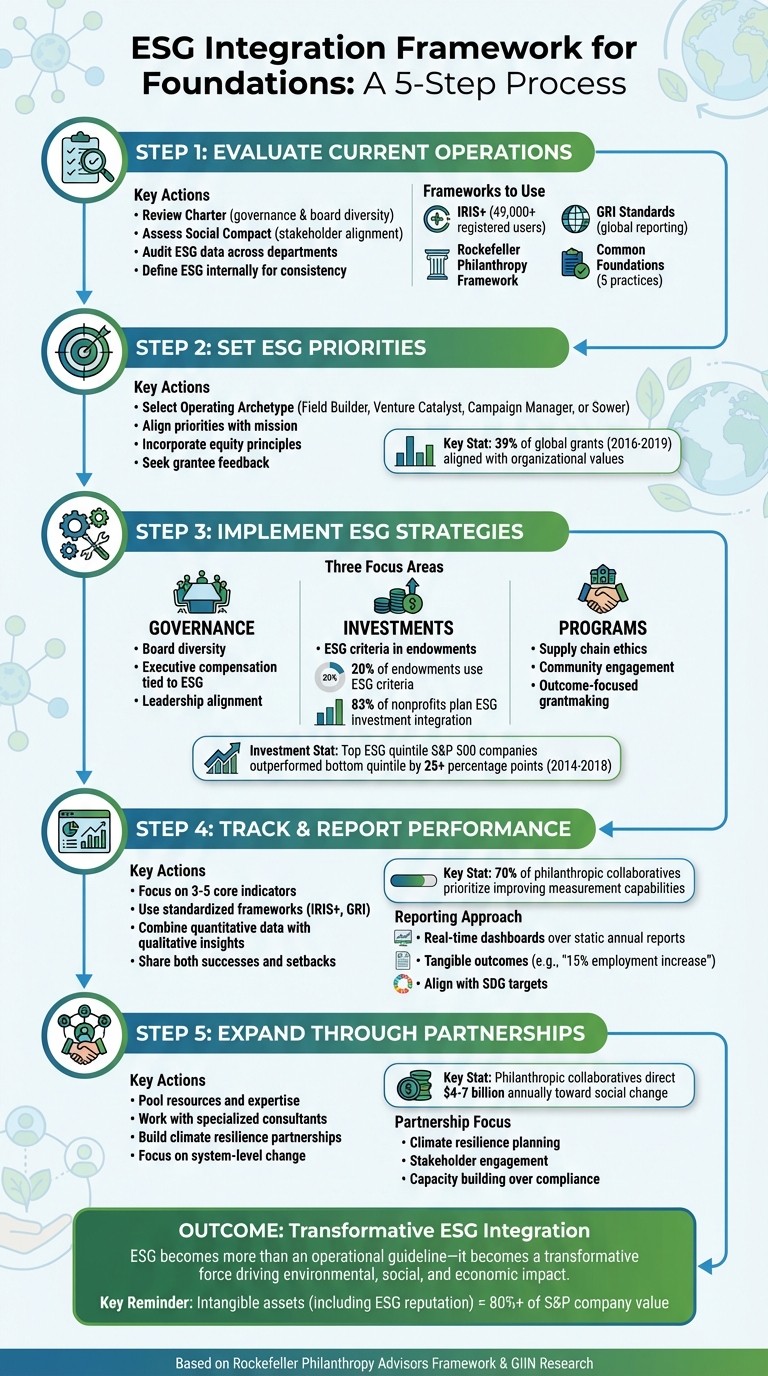
5-Step ESG Integration Framework for Philanthropic Organizations
ESG Investing: Integrating Impact as a Source for Business Value
ESG Principles for Philanthropic Organizations
Philanthropic organizations carry the dual responsibility of acting as stewards of capital and agents of social change. This means applying ESG principles not only to grantmaking but also to how they manage endowments, govern themselves, and deliver societal value. Rockefeller Philanthropy Advisors frames this responsibility as the "Social Compact" - an implicit agreement with society about the value an organization creates [1]. This concept lays the groundwork for establishing clear ESG priorities.
To effectively integrate ESG principles, foundations must focus on three interconnected areas: their Charter (governance and decision-making structures), their Social Compact (how they generate societal value), and their Operating Model (the systems and resources they utilize) [1]. When these elements are in sync, they amplify the foundation’s ability to achieve its mission.
However, putting ESG principles into action is easier said than done. Many foundations struggle with vague sustainability goals instead of adopting focused, climate-aligned investment strategies [5]. Additionally, internal misalignment often emerges as staff capabilities fall short of the demands of ESG-driven operating models [2]. As Olga Tarasov of Rockefeller Philanthropy Advisors explains:
"Being an impactful and responsive funder is not simply dependent on what one does and why. It is equally important to consider how you achieve change and who you employ to implement the work" [2].
Another challenge lies in bridging the gap between portfolio metrics and real-world impact. The NewClimate Institute cautions that "lowering portfolio emissions alone does not drive real-world impact" [5]. Simply divesting from high-emissions sectors may inadvertently hinder progress by abandoning industries critical to decarbonization. To address these issues, foundations must align ESG priorities with their operational models.
Setting ESG Priorities That Match Your Mission
Aligning ESG priorities with an organization’s unique mission strengthens both risk management and impact delivery. The process begins with selecting an Operating Archetype that connects resources and talent to specific goals. Rockefeller Philanthropy Advisors outlines eight archetypes, including Talent Agency, Campaign Manager, Field Builder, and Venture Catalyst [2]. For example:
A Field Builder focuses on strengthening ecosystems and requires specialized expertise.
A Venture Catalyst emphasizes innovation, leveraging convening power and impact investments.
Each archetype demands tailored ESG strategies to achieve its objectives [2].
Mats Marquardt of the NewClimate Institute highlights the fiduciary responsibility of foundations:
"Foundations have both a fiduciary duty and a mission-aligned imperative to integrate climate considerations into their portfolios" [5].
This responsibility stems from the fact that climate and social challenges threaten the long-term economic stability necessary for fulfilling ongoing missions [5]. Instead of narrowly focusing on reducing portfolio emissions, foundations should adopt strategies that promote real-economy decarbonization - for instance, maintaining investments in high-emission sectors to influence their transition [5].
Incorporating equity as a guiding principle is also essential. This involves prioritizing the voices of those most affected by the organization’s work in decision-making [2]. Seeking feedback from grantees ensures ESG priorities address genuine community needs rather than assumptions [2].
Between 2016 and 2019, a study of U.S. foundations revealed a growing trend toward aligning grantmaking with organizational values, covering 39% of global grants [3]. Many foundations now evaluate their policies to ensure their funding does not inadvertently support activities that conflict with their principles [3]. Revisiting founder legacies and long-term goals to address current issues - such as prioritizing historically marginalized communities - demonstrates a commitment to evolving societal needs [2]. Aligning internal capabilities with external commitments transforms ESG into a strategic asset.
Building Stakeholder Trust and Donor Engagement Through ESG
The Aspen Institute describes the evolution of philanthropic organizations as a shift from acting as "community banks" that manage funds to becoming "community assets" that take on civic roles [6]. Achieving this transformation requires aligning operations with mission goals to foster thriving communities.
Trust plays a pivotal role in navigating diverse perspectives and building consensus among funders, grantees, and public sector partners [2]. Different operating models call for different trust-building approaches. For instance:
Campaign Managers rely on adaptability and patience to unite stakeholders.
Sowers focus on reputation and relationship-building, using flexible financial tools.
Genuine engagement stems from structured, ongoing feedback from grantees to ensure strategies achieve their intended outcomes [2]. Building trust not only strengthens stakeholder confidence but also ensures long-term success. This approach appeals to new donors who value modern organizational designs emphasizing diversity in capital and participatory governance [1].
Evaluating Current Operations and Finding Gaps
Before embedding ESG principles into their operations, foundations need a clear picture of their current standing. This involves a thorough review of governance, investments, and programs to establish a baseline for improvement.
Start by analyzing your organization’s Charter, which includes board diversity, decision-making processes, and ethical guidelines. Assess whether your Social Compact aligns stakeholder expectations with your mission [1][7][9]. This initial evaluation helps pinpoint areas for improvement and guides the selection of measurement frameworks tailored to your goals.
A crucial step is defining ESG in terms that resonate with your organization. A shared, internal definition ensures all departments evaluate success consistently [8][9]. Kezia Farnham, Senior Manager at Diligent, explains:
"ESG integration is a process that uses ESG data to inform investment decisions. It's also the practice of embedding ESG into your corporate strategy" [9].
Often, ESG-related data is scattered across departments - HR might track workforce diversity, finance oversees investment portfolios, and facilities monitor energy consumption. Conducting a data audit helps identify these silos and supports integrated reporting [8][10]. Focus on ESG factors that are strategically relevant for reducing risk or enhancing financial performance, moving beyond just managing reputation [8][9]. By consolidating data and clearly defining ESG internally, you create a strong foundation for applying measurement frameworks.
Frameworks for Measuring ESG Readiness
Several established frameworks can help assess how well your current operations align with ESG objectives:
IRIS+ system: Developed by the Global Impact Investing Network (GIIN), this framework provides standardized metrics to measure and manage impact across five dimensions - What, Who, How Much, Contribution, and Risk [12][15][16]. With over 49,000 registered users, IRIS+ is widely regarded as a standard for impact measurement [13].
Common Foundations: This flexible framework is ideal for organizations starting their ESG journey. It emphasizes five practices: Describe change, Use indicators, Collect info, Gauge performance, and Communicate results [14]. It also includes a self-assessment tool to identify areas for improvement.
Rockefeller Philanthropy Framework: This focuses on three core elements - Charter (governance), Social Compact (societal value), and Operating Model (implementation systems) [1][11]. An online self-assessment tool helps analyze organizational design and resource management [11]. Foundations like the Ford Foundation and the Wellcome Trust have used this framework to guide their evolution [11].
Global standards such as the Global Reporting Initiative (GRI), Sustainability Accounting Standards Board (SASB), and Task Force on Climate-Related Financial Disclosures (TCFD) offer benchmarks for assessing ESG reporting readiness [8][9][10]. Notably, IRIS+ metrics align with GRI Standards, the most widely used reporting standards globally [15].
Once your readiness is clear, the next step is to identify specific ESG opportunities across governance, investments, and programs.
Finding ESG Opportunities in Governance, Investments, and Programs
After assessing readiness, foundations can focus on specific opportunities for integrating ESG principles:
Governance: Examine board composition, decision-making transparency, and how executive compensation aligns with ESG performance [7][9]. Leadership alignment is a key indicator of readiness, so ensuring that leaders actively support ESG initiatives is essential [9][10].
Investments: Review your endowment portfolio for climate risk, resource scarcity, and alignment with sustainable investment strategies [8][9]. Between 2014 and June 2018, S&P 500 companies in the top ESG quintile outperformed those in the bottom quintile by over 25 percentage points [9]. High ESG controversy events can negatively impact stock performance for up to two years [9]. These trends underline the fiduciary and mission-driven importance of ESG integration.
Programs: Evaluate supply chain ethics, vendor ESG standards, and community engagement [7][9]. For operational areas, conduct greenhouse gas audits and assess energy and water efficiency [8][10]. The GIIN’s Impact Toolkit offers sector-specific resources and metrics to help identify relevant opportunities [13].
| Assessment Area | Practical Methods for Finding Gaps |
| --- | --- |
| <strong>Governance</strong> | Assess board diversity, link executive compensation to ESG goals, and evaluate leadership commitment <a href="https://sharevault.com/blog/thought-leadership/integrating-esg-strategies-into-your-business-operations" target="_blank" style="text-decoration: none;" rel="nofollow noopener noreferrer" data-framer-link="Link:{"url":"https://sharevault.com/blog/thought-leadership/integrating-esg-strategies-into-your-business-operations","type":"url"}" data-framer-open-in-new-tab=""><sup>[7]</sup></a><a href="https://www.diligent.com/resources/blog/integration" target="_blank" style="text-decoration: none;" rel="nofollow noopener noreferrer" data-framer-link="Link:{"url":"https://www.diligent.com/resources/blog/integration","type":"url"}" data-framer-open-in-new-tab=""><sup>[9]</sup></a><a href="https://www.trustcloud.ai/grc/unlock-success-powerful-strategies-for-integrating-esg-into-grc-for-sustainable-compliance" target="_blank" style="text-decoration: none;" rel="nofollow noopener noreferrer" data-framer-link="Link:{"url":"https://www.trustcloud.ai/grc/unlock-success-powerful-strategies-for-integrating-esg-into-grc-for-sustainable-compliance","type":"url"}" data-framer-open-in-new-tab=""><sup>[10]</sup></a>. |
| <strong>Investments</strong> | Analyze portfolios for climate risk, resource scarcity, and sustainable strategies <a href="https://www.breatheesg.com/resources/esg-integration-strategy" target="_blank" style="text-decoration: none;" rel="nofollow noopener noreferrer" data-framer-link="Link:{"url":"https://www.breatheesg.com/resources/esg-integration-strategy","type":"url"}" data-framer-open-in-new-tab=""><sup>[8]</sup></a><a href="https://www.diligent.com/resources/blog/integration" target="_blank" style="text-decoration: none;" rel="nofollow noopener noreferrer" data-framer-link="Link:{"url":"https://www.diligent.com/resources/blog/integration","type":"url"}" data-framer-open-in-new-tab=""><sup>[9]</sup></a>. |
| <strong>Programs</strong> | Review supply chain ethics, vendor standards, and community engagement <a href="https://sharevault.com/blog/thought-leadership/integrating-esg-strategies-into-your-business-operations" target="_blank" style="text-decoration: none;" rel="nofollow noopener noreferrer" data-framer-link="Link:{"url":"https://sharevault.com/blog/thought-leadership/integrating-esg-strategies-into-your-business-operations","type":"url"}" data-framer-open-in-new-tab=""><sup>[7]</sup></a><a href="https://www.diligent.com/resources/blog/integration" target="_blank" style="text-decoration: none;" rel="nofollow noopener noreferrer" data-framer-link="Link:{"url":"https://www.diligent.com/resources/blog/integration","type":"url"}" data-framer-open-in-new-tab=""><sup>[9]</sup></a>. |
| <strong>Operations</strong> | Conduct greenhouse gas audits and evaluate energy/water efficiency <a href="https://www.breatheesg.com/resources/esg-integration-strategy" target="_blank" style="text-decoration: none;" rel="nofollow noopener noreferrer" data-framer-link="Link:{"url":"https://www.breatheesg.com/resources/esg-integration-strategy","type":"url"}" data-framer-open-in-new-tab=""><sup>[8]</sup></a><a href="https://www.trustcloud.ai/grc/unlock-success-powerful-strategies-for-integrating-esg-into-grc-for-sustainable-compliance" target="_blank" style="text-decoration: none;" rel="nofollow noopener noreferrer" data-framer-link="Link:{"url":"https://www.trustcloud.ai/grc/unlock-success-powerful-strategies-for-integrating-esg-into-grc-for-sustainable-compliance","type":"url"}" data-framer-open-in-new-tab=""><sup>[10]</sup></a>. |
| Assessment Area | Practical Methods for Finding Gaps |
| --- | --- |
| <strong>Governance</strong> | Assess board diversity, link executive compensation to ESG goals, and evaluate leadership commitment <a href="https://sharevault.com/blog/thought-leadership/integrating-esg-strategies-into-your-business-operations" target="_blank" style="text-decoration: none;" rel="nofollow noopener noreferrer" data-framer-link="Link:{"url":"https://sharevault.com/blog/thought-leadership/integrating-esg-strategies-into-your-business-operations","type":"url"}" data-framer-open-in-new-tab=""><sup>[7]</sup></a><a href="https://www.diligent.com/resources/blog/integration" target="_blank" style="text-decoration: none;" rel="nofollow noopener noreferrer" data-framer-link="Link:{"url":"https://www.diligent.com/resources/blog/integration","type":"url"}" data-framer-open-in-new-tab=""><sup>[9]</sup></a><a href="https://www.trustcloud.ai/grc/unlock-success-powerful-strategies-for-integrating-esg-into-grc-for-sustainable-compliance" target="_blank" style="text-decoration: none;" rel="nofollow noopener noreferrer" data-framer-link="Link:{"url":"https://www.trustcloud.ai/grc/unlock-success-powerful-strategies-for-integrating-esg-into-grc-for-sustainable-compliance","type":"url"}" data-framer-open-in-new-tab=""><sup>[10]</sup></a>. |
| <strong>Investments</strong> | Analyze portfolios for climate risk, resource scarcity, and sustainable strategies <a href="https://www.breatheesg.com/resources/esg-integration-strategy" target="_blank" style="text-decoration: none;" rel="nofollow noopener noreferrer" data-framer-link="Link:{"url":"https://www.breatheesg.com/resources/esg-integration-strategy","type":"url"}" data-framer-open-in-new-tab=""><sup>[8]</sup></a><a href="https://www.diligent.com/resources/blog/integration" target="_blank" style="text-decoration: none;" rel="nofollow noopener noreferrer" data-framer-link="Link:{"url":"https://www.diligent.com/resources/blog/integration","type":"url"}" data-framer-open-in-new-tab=""><sup>[9]</sup></a>. |
| <strong>Programs</strong> | Review supply chain ethics, vendor standards, and community engagement <a href="https://sharevault.com/blog/thought-leadership/integrating-esg-strategies-into-your-business-operations" target="_blank" style="text-decoration: none;" rel="nofollow noopener noreferrer" data-framer-link="Link:{"url":"https://sharevault.com/blog/thought-leadership/integrating-esg-strategies-into-your-business-operations","type":"url"}" data-framer-open-in-new-tab=""><sup>[7]</sup></a><a href="https://www.diligent.com/resources/blog/integration" target="_blank" style="text-decoration: none;" rel="nofollow noopener noreferrer" data-framer-link="Link:{"url":"https://www.diligent.com/resources/blog/integration","type":"url"}" data-framer-open-in-new-tab=""><sup>[9]</sup></a>. |
| <strong>Operations</strong> | Conduct greenhouse gas audits and evaluate energy/water efficiency <a href="https://www.breatheesg.com/resources/esg-integration-strategy" target="_blank" style="text-decoration: none;" rel="nofollow noopener noreferrer" data-framer-link="Link:{"url":"https://www.breatheesg.com/resources/esg-integration-strategy","type":"url"}" data-framer-open-in-new-tab=""><sup>[8]</sup></a><a href="https://www.trustcloud.ai/grc/unlock-success-powerful-strategies-for-integrating-esg-into-grc-for-sustainable-compliance" target="_blank" style="text-decoration: none;" rel="nofollow noopener noreferrer" data-framer-link="Link:{"url":"https://www.trustcloud.ai/grc/unlock-success-powerful-strategies-for-integrating-esg-into-grc-for-sustainable-compliance","type":"url"}" data-framer-open-in-new-tab=""><sup>[10]</sup></a>. |Intangible assets, such as brand reputation tied to ESG performance, now account for over 80% of a company’s S&P asset value [9]. This shift underscores the need for foundations to expand their assessments beyond traditional financial metrics, capturing the full scope of ESG risks and opportunities. By doing so, they can align operations with broader societal goals while enhancing long-term impact.
Creating and Implementing ESG Strategies
Effectively embedding ESG principles into your foundation’s operations means addressing gaps and weaving these principles into governance, investments, and programs. This requires moving away from isolated efforts and embracing a more integrated approach that connects all areas of your work. A key step is to ground your strategy in systems thinking while ensuring that everyone involved - from board members to grantee partners - understands how ESG principles align with your foundation’s core mission and values. This alignment not only strengthens strategy but also helps establish lasting ESG practices.
To keep pace with evolving ESG priorities, consider revisiting your Charter and Social Compact regularly. This iterative process involves consistently monitoring financial performance alongside mission alignment [1][18]. As Heather Grady, Vice President at Rockefeller Philanthropy Advisors, highlights:
"Tackling problems at their roots, and grounding work with grantee partners in equity, carry the promise of greater, enduring impact and lasting change" [17].
Using Systems Thinking to Design ESG Strategies
Systems thinking offers a way to approach social and environmental challenges as interconnected rather than treating them as standalone issues. It highlights how climate, equity, and governance are deeply linked [17]. The Rockefeller Philanthropy Advisors’ Shifting Systems Initiative, launched in 2016, exemplifies this approach. Over seven years, they conducted research and convened global discussions across multiple continents. In 2023, they released Facilitating Equitable Systems Change, a resource aimed at helping foundation boards integrate equity and systems thinking into their priorities [17].
The Philanthropy Framework, developed with input from over 50 foundation partners, serves as a guide to refine governance, societal, and operational strategies [1]. This framework is particularly useful for identifying and addressing funding practices that may unintentionally reinforce inequities or limit systemic impact [17]. Success in applying these principles depends on fostering consensus among stakeholders and asking challenging questions to break away from entrenched practices [17]. This broader perspective naturally influences investment and program decisions.
Applying ESG Criteria to Endowment Investments
Incorporating ESG standards into investment practices not only aligns with a foundation’s mission but also ensures long-term financial stability. Fiduciaries must recognize that ESG integration, in line with the Prudent Investor Rule, uncovers material risks that traditional financial metrics might overlook [23]. Currently, about 20% of endowments incorporate ESG criteria, and globally, 83% of not-for-profit organizations either already use ESG standards in investment decisions or plan to do so within the year [19][21].
Examples of ESG integration in endowments are growing. In July 2019, the University of New Hampshire allocated 16% of its investable assets - around $37 million - into ESG-qualified investments. Similarly, UNC Asheville’s Board of Trustees approved ESG criteria for 10% of its endowment, partnering with Walden Asset Management to divest from fossil fuels [22]. By August 2023, the Rockefeller Brothers Fund reported that 19.9% of its endowment was in impact investments, with 14.7% aligned with 16 of the 17 UN Sustainable Development Goals [20].
Implementing ESG-aligned investments typically follows a five-step roadmap:
Educate yourself on sustainable investing.
Build fiduciary consensus by gathering anonymous feedback on ESG priorities.
Formalize ESG commitments in a written Investment Policy Statement.
Evaluate how well your current portfolio aligns with your mission.
Adjust the endowment using targeted screening strategies [18].
Organizations can adopt varying levels of ESG integration across investments, analytics, and governance, tailoring their approach based on specific needs [19]. Geraldine Watson, Vice President for Finance and Operations at Rockefeller Brothers Fund, explains:
"The RBF's mission-aligned investment strategy mandates that all our investments meet market-rate return and risk attributes, supporting the idea that what is good for people and planet can also be good for the bottom line" [20].
Adding ESG Metrics to Program Design and Delivery
Incorporating ESG metrics into program design helps foundations measure their impact while driving mission-aligned change. This shift requires moving from activity-based to outcome-focused grantmaking [24]. Aligning your Operating Model - which includes resources, structures, and systems - with ESG strategies ensures that program performance is evaluated holistically, not just at the individual grant level [1][25].
As foundations expand their efforts to include impact investing, advocacy, and coalition-building, they must also consider leveraging non-financial assets like reputation, networks, and expertise [1]. Melissa A. Berman, CEO of Rockefeller Philanthropy Advisors, underscores this shift:
"Emerging models of philanthropy in the last 20 years have transformed the traditional ways in which funders - whether they're individuals, families, corporations or foundations - accomplish their goals, approach organizational design, and manage key resources" [25].
The Philanthropy Framework’s online self-assessment tool can help identify areas where resources might not fully align with your goals. Before introducing new program metrics, ensure that trustees, board members, and staff share a unified understanding of ESG principles. This alignment is essential for conducting comprehensive evaluations of your organization’s overall impact [1][25].
Tracking and Reporting ESG Performance
Once ESG strategies are in place, tracking progress and sharing results are essential to sustain momentum and build trust with stakeholders [28]. Without clear tracking systems and transparent reporting, even well-designed ESG initiatives can fall short of their goals or fail to gain the support needed for lasting impact.
The first step in effective ESG tracking is deciding what you want to learn. Focus on a few key questions that will help refine your strategy and allocate resources wisely [28]. Keep it simple - track three to five core indicators that align closely with your mission. As Laura Mills, Senior Director of Quality and Evaluation at A Place Called Home, wisely notes:
"If everything is important, nothing is important" [28].
Transparency is just as critical as accuracy. Sharing both setbacks and successes builds credibility [30]. In fact, nearly 70% of philanthropic collaboratives place a high priority on improving measurement and learning capabilities to strengthen organizational capacity [29]. This reflects a growing trend across the sector toward more rigorous and open reporting practices.
Tools for Measuring ESG Performance
A range of standardized frameworks can simplify ESG tracking and reporting. IRIS+, created by the Global Impact Investing Network, is a widely used system offering standardized metrics tailored to various sectors. Over 49,000 users have registered to access its resources [13]. Similarly, the GRI Standards provide a modular framework for reporting economic, social, and environmental impacts. The updated GRI Universal Standards, effective since January 1, 2023, continue to push toward streamlined reporting practices [26].
For organizations new to ESG measurement, the Common Foundations framework provides a straightforward starting point. It outlines five key practices: defining intended outcomes, using indicators, gathering meaningful data, evaluating performance, and sharing results [14]. These steps create a structured yet flexible approach to ESG measurement.
When working toward long-term goals like policy reform or community resilience, interim measures can help track progress. For instance, Upstream USA, a nonprofit focused on contraceptive care, monitors "practice change" in health centers - such as whether a full range of services is offered during a single visit - using electronic health record data. This allows them to gauge progress toward broader goals without waiting years for final outcomes [28].
With the right tools and frameworks in place, the next step is to communicate these results effectively to stakeholders.
Sharing ESG Results with Stakeholders
Turning measurement into impact requires clear and compelling reporting. Focus on tangible outcomes like "employment rates increased by 15%" or "carbon emissions reduced by 2,500 metric tons" rather than listing activities [30].
To ensure consistency and reliability, standardize how data is aggregated across programs. The Common Framework helps organize diverse metrics into key indicators by grouping them by theme, harmonizing units (e.g., dollars, hours, or emissions), and documenting any assumptions or exclusions [27]. This approach makes it easier to combine data from multiple sources while maintaining transparency about how results were calculated.
Quantitative data should be paired with qualitative insights, such as stakeholder feedback, participant stories, and staff reflections, to provide context and explain the "why" behind the numbers [28][30]. This mix of hard data and personal narratives fosters trust and helps donors understand not just what changed but why it matters. Aligning with industry norms like the Impact Performance Reporting Norms or Sustainable Development Goals (SDG) targets can also enhance comparability across the sector [31].
Many organizations are moving away from static annual reports in favor of real-time dashboards that update as new data becomes available [30]. This dynamic reporting approach allows for timely adjustments, turning measurement into a tool for continuous learning and strategy refinement. By embracing this feedback loop, organizations can demonstrate a commitment to mission-driven impact that evolves and improves over time.
Expanding ESG Through Partnerships
To effectively align ESG priorities across operations, partnerships play a crucial role in broadening a foundation's reach and amplifying its influence. By pooling resources, expertise, and networks, strategic collaborations achieve outcomes that would be unattainable by individual organizations. Each year, philanthropic collaboratives direct between $4 billion and $7 billion toward driving social change, underscoring the growing acknowledgment that meaningful progress in ESG requires collective effort [29].
The focus of philanthropy is evolving - from generalized generosity to more targeted, business-aligned initiatives aimed at addressing inequities [4]. Heather Grady, Vice President at Rockefeller Philanthropy Advisors, highlights this shift:
"Philanthropy has a critical role in driving a more equitable and just society. However, it also has a responsibility to transform many of the existing funding practices that perpetuate inequities and stymie systemic impact." [17]
For partnerships to succeed, they must be intentionally designed. Data indicates that most collaboratives assess their impact on three levels: individual, system-wide, and donor-specific [29]. This structured approach naturally transitions into strategies that promote climate resilience and strengthen ESG practices.
Partnering for Climate Resilience and Social Impact
Collaboration becomes truly effective when technical expertise is combined with mission-driven objectives. Achieving system-level change requires partnerships that can translate sustainability ambitions into actionable results. Organizations like Council Fire excel in transforming ESG compliance into measurable progress. From climate resilience planning that safeguards critical infrastructure to stakeholder engagement initiatives that foster trust and collective action, these partnerships generate enduring environmental, social, and economic benefits.
Strong collaborations align technical know-how with purpose-driven goals. Whether it's developing circular supply chains, conducting carbon footprint assessments, or creating regenerative infrastructure, the right partner uses data-driven insights and systems thinking to turn bold sustainability commitments into tangible actions.
Working with Consultants to Implement ESG Strategies
Specialized consultants can play a pivotal role in embedding ESG principles into operations, particularly for organizations grappling with complex technical demands or stakeholder dynamics. These experts bridge gaps in expertise, helping foundations navigate challenges and accelerate the implementation of their ESG strategies. By offering tailored frameworks, consultants enable organizations to measure ESG readiness, engage stakeholders effectively, and transform sustainability plans into concrete outcomes.
The most impactful consultants focus on building an organization’s internal capacity rather than simply ensuring compliance. They design measurement systems that empower teams and grantees to enhance their work, rather than just meeting reporting requirements [29]. Look for partners who provide customized solutions tailored to your specific needs - whether those involve managing natural resources, modernizing energy and water infrastructure, improving transportation systems, or fostering community development. A productive consulting partnership does more than deliver reports; it creates systems and builds skills that continue to deliver value long after the engagement concludes.
Conclusion
Incorporating ESG principles into the core operations of your foundation isn’t just about meeting requirements - it’s about aligning your mission with your actions to ensure your endowment supports the same objectives as your grantmaking [5]. Foundations that succeed in this integration weave ESG into every layer of their structure, from governance (Charter) to societal impact (Social Compact) to daily operations (Operating Model), creating a framework for meaningful and lasting change.
To begin this journey, conducting a gap analysis is essential. This helps you identify where your foundation currently stands compared to where it aims to be. Clarifying your operating archetype - whether as a Venture Catalyst, Campaign Manager, Field Builder, or Sower - helps focus your efforts and ensures resources, talent, and relationships are deployed effectively. This approach minimizes internal friction by aligning ambitions with capabilities.
Transitioning from traditional grantmaking to a more dynamic approach - one that includes impact investing, advocacy, and coalition-building - requires updating both skills and systems. Moving beyond static ESG screening toward an integrated model means embedding ESG considerations into every decision, from program design to managing your endowment. With intangible assets like reputation now accounting for over 80% of an S&P company’s value, ESG stewardship is no longer optional but critical for long-term resilience [9].
Olga Tarasov of Rockefeller Philanthropy Advisors emphasizes this shift:
"Being an impactful and responsive funder is not simply dependent on what one does and why. It is equally important to consider how you achieve change and who you employ to implement the work" [2].
This underscores the importance of building internal expertise, maintaining open communication with grantees and communities, and regularly reassessing your social compact to ensure your foundation delivers genuine societal value. Partnering strategically with others can amplify these efforts and broaden the reach of your ESG initiatives.
When facing complex challenges or navigating stakeholder dynamics, seeking expert advice can make all the difference. Consultants can help pinpoint capability gaps, design effective measurement systems, and equip your team with the skills needed to turn commitments into tangible actions. With this support, ESG becomes more than an operational guideline - it becomes a transformative force that drives your foundation’s environmental, social, and economic impact forward.
FAQs
Where should we start if our foundation has limited ESG staff capacity?
If your foundation operates with a small ESG team, consider beginning with a stakeholder risk assessment. This approach helps pinpoint key areas of impact and potential risks. Pay close attention to major stakeholders such as investments, grantmaking activities, personnel, vendors, regulatory bodies, and the board. By focusing on these critical areas, you can prioritize efforts effectively and address essential ESG factors. This method allows for meaningful integration of ESG principles without the need for a large staff.
How do we choose 3–5 ESG metrics that prove real-world impact, not just portfolio results?
To identify 3–5 ESG metrics that truly reflect meaningful impact, prioritize indicators closely tied to your organization's mission and specific goals. Focus on metrics that evaluate outcomes - like improvements in community well-being or reductions in environmental harm - rather than simply tracking outputs, such as the number of activities completed. Leverage established frameworks and tools to ensure these metrics are measurable, relevant, and reliable, enabling you to showcase authentic progress that extends beyond financial performance.
How can we align our endowment with ESG without hurting returns or mission flexibility?
To integrate ESG principles into your endowment strategy without compromising returns or mission adaptability, consider a step-by-step approach that aligns financial objectives with your broader goals. Start by outlining specific ESG priorities within your investment policy statement. Establish dedicated investment pools focused on ESG criteria, and collaborate with seasoned managers who emphasize responsible investing. Numerous foundations have adopted these methods, demonstrating that it's possible to achieve solid financial outcomes while advancing mission-aligned initiatives.
Related Blog Posts
Latest Articles
©2025



FAQ
01
What does it really mean to “redefine profit”?
02
What makes Council Fire different?
03
Who does Council Fire you work with?
04
What does working with Council Fire actually look like?
05
How does Council Fire help organizations turn big goals into action?
06
How does Council Fire define and measure success?
Feb 21, 2026
How to Integrate ESG into Core Business Operations for Foundations & Philanthropic Organizations
ESG Strategy
In This Article
Practical guide for foundations to embed ESG across governance, endowments, programs, and reporting with clear frameworks and metrics.
How to Integrate ESG into Core Business Operations for Foundations & Philanthropic Organizations
Philanthropic organizations can achieve greater societal impact by integrating ESG (Environmental, Social, Governance) principles into their operations. This approach aligns their mission with their internal practices, investments, and governance, ensuring resources are used effectively to address pressing global challenges.
Key Takeaways:
ESG Alignment: Incorporate ESG into governance, endowment management, and program design to enhance organizational impact.
Set Priorities: Define clear ESG goals that match your mission, using frameworks like Rockefeller Philanthropy Advisors' Charter, Social Compact, and Operating Model.
Measure and Report: Use tools like IRIS+ or GRI Standards to track progress and share results transparently with stakeholders.
Invest Responsibly: Align endowment strategies with ESG principles to balance financial returns with social and environmental goals.
Build Partnerships: Collaborate with experts and other organizations to expand your reach and address systemic issues.
By embedding ESG principles across all areas of operation, foundations can strengthen trust, improve outcomes, and drive meaningful change. This requires careful planning, clear metrics, and ongoing evaluation.
5-Step ESG Integration Framework for Philanthropic Organizations
ESG Investing: Integrating Impact as a Source for Business Value
ESG Principles for Philanthropic Organizations
Philanthropic organizations carry the dual responsibility of acting as stewards of capital and agents of social change. This means applying ESG principles not only to grantmaking but also to how they manage endowments, govern themselves, and deliver societal value. Rockefeller Philanthropy Advisors frames this responsibility as the "Social Compact" - an implicit agreement with society about the value an organization creates [1]. This concept lays the groundwork for establishing clear ESG priorities.
To effectively integrate ESG principles, foundations must focus on three interconnected areas: their Charter (governance and decision-making structures), their Social Compact (how they generate societal value), and their Operating Model (the systems and resources they utilize) [1]. When these elements are in sync, they amplify the foundation’s ability to achieve its mission.
However, putting ESG principles into action is easier said than done. Many foundations struggle with vague sustainability goals instead of adopting focused, climate-aligned investment strategies [5]. Additionally, internal misalignment often emerges as staff capabilities fall short of the demands of ESG-driven operating models [2]. As Olga Tarasov of Rockefeller Philanthropy Advisors explains:
"Being an impactful and responsive funder is not simply dependent on what one does and why. It is equally important to consider how you achieve change and who you employ to implement the work" [2].
Another challenge lies in bridging the gap between portfolio metrics and real-world impact. The NewClimate Institute cautions that "lowering portfolio emissions alone does not drive real-world impact" [5]. Simply divesting from high-emissions sectors may inadvertently hinder progress by abandoning industries critical to decarbonization. To address these issues, foundations must align ESG priorities with their operational models.
Setting ESG Priorities That Match Your Mission
Aligning ESG priorities with an organization’s unique mission strengthens both risk management and impact delivery. The process begins with selecting an Operating Archetype that connects resources and talent to specific goals. Rockefeller Philanthropy Advisors outlines eight archetypes, including Talent Agency, Campaign Manager, Field Builder, and Venture Catalyst [2]. For example:
A Field Builder focuses on strengthening ecosystems and requires specialized expertise.
A Venture Catalyst emphasizes innovation, leveraging convening power and impact investments.
Each archetype demands tailored ESG strategies to achieve its objectives [2].
Mats Marquardt of the NewClimate Institute highlights the fiduciary responsibility of foundations:
"Foundations have both a fiduciary duty and a mission-aligned imperative to integrate climate considerations into their portfolios" [5].
This responsibility stems from the fact that climate and social challenges threaten the long-term economic stability necessary for fulfilling ongoing missions [5]. Instead of narrowly focusing on reducing portfolio emissions, foundations should adopt strategies that promote real-economy decarbonization - for instance, maintaining investments in high-emission sectors to influence their transition [5].
Incorporating equity as a guiding principle is also essential. This involves prioritizing the voices of those most affected by the organization’s work in decision-making [2]. Seeking feedback from grantees ensures ESG priorities address genuine community needs rather than assumptions [2].
Between 2016 and 2019, a study of U.S. foundations revealed a growing trend toward aligning grantmaking with organizational values, covering 39% of global grants [3]. Many foundations now evaluate their policies to ensure their funding does not inadvertently support activities that conflict with their principles [3]. Revisiting founder legacies and long-term goals to address current issues - such as prioritizing historically marginalized communities - demonstrates a commitment to evolving societal needs [2]. Aligning internal capabilities with external commitments transforms ESG into a strategic asset.
Building Stakeholder Trust and Donor Engagement Through ESG
The Aspen Institute describes the evolution of philanthropic organizations as a shift from acting as "community banks" that manage funds to becoming "community assets" that take on civic roles [6]. Achieving this transformation requires aligning operations with mission goals to foster thriving communities.
Trust plays a pivotal role in navigating diverse perspectives and building consensus among funders, grantees, and public sector partners [2]. Different operating models call for different trust-building approaches. For instance:
Campaign Managers rely on adaptability and patience to unite stakeholders.
Sowers focus on reputation and relationship-building, using flexible financial tools.
Genuine engagement stems from structured, ongoing feedback from grantees to ensure strategies achieve their intended outcomes [2]. Building trust not only strengthens stakeholder confidence but also ensures long-term success. This approach appeals to new donors who value modern organizational designs emphasizing diversity in capital and participatory governance [1].
Evaluating Current Operations and Finding Gaps
Before embedding ESG principles into their operations, foundations need a clear picture of their current standing. This involves a thorough review of governance, investments, and programs to establish a baseline for improvement.
Start by analyzing your organization’s Charter, which includes board diversity, decision-making processes, and ethical guidelines. Assess whether your Social Compact aligns stakeholder expectations with your mission [1][7][9]. This initial evaluation helps pinpoint areas for improvement and guides the selection of measurement frameworks tailored to your goals.
A crucial step is defining ESG in terms that resonate with your organization. A shared, internal definition ensures all departments evaluate success consistently [8][9]. Kezia Farnham, Senior Manager at Diligent, explains:
"ESG integration is a process that uses ESG data to inform investment decisions. It's also the practice of embedding ESG into your corporate strategy" [9].
Often, ESG-related data is scattered across departments - HR might track workforce diversity, finance oversees investment portfolios, and facilities monitor energy consumption. Conducting a data audit helps identify these silos and supports integrated reporting [8][10]. Focus on ESG factors that are strategically relevant for reducing risk or enhancing financial performance, moving beyond just managing reputation [8][9]. By consolidating data and clearly defining ESG internally, you create a strong foundation for applying measurement frameworks.
Frameworks for Measuring ESG Readiness
Several established frameworks can help assess how well your current operations align with ESG objectives:
IRIS+ system: Developed by the Global Impact Investing Network (GIIN), this framework provides standardized metrics to measure and manage impact across five dimensions - What, Who, How Much, Contribution, and Risk [12][15][16]. With over 49,000 registered users, IRIS+ is widely regarded as a standard for impact measurement [13].
Common Foundations: This flexible framework is ideal for organizations starting their ESG journey. It emphasizes five practices: Describe change, Use indicators, Collect info, Gauge performance, and Communicate results [14]. It also includes a self-assessment tool to identify areas for improvement.
Rockefeller Philanthropy Framework: This focuses on three core elements - Charter (governance), Social Compact (societal value), and Operating Model (implementation systems) [1][11]. An online self-assessment tool helps analyze organizational design and resource management [11]. Foundations like the Ford Foundation and the Wellcome Trust have used this framework to guide their evolution [11].
Global standards such as the Global Reporting Initiative (GRI), Sustainability Accounting Standards Board (SASB), and Task Force on Climate-Related Financial Disclosures (TCFD) offer benchmarks for assessing ESG reporting readiness [8][9][10]. Notably, IRIS+ metrics align with GRI Standards, the most widely used reporting standards globally [15].
Once your readiness is clear, the next step is to identify specific ESG opportunities across governance, investments, and programs.
Finding ESG Opportunities in Governance, Investments, and Programs
After assessing readiness, foundations can focus on specific opportunities for integrating ESG principles:
Governance: Examine board composition, decision-making transparency, and how executive compensation aligns with ESG performance [7][9]. Leadership alignment is a key indicator of readiness, so ensuring that leaders actively support ESG initiatives is essential [9][10].
Investments: Review your endowment portfolio for climate risk, resource scarcity, and alignment with sustainable investment strategies [8][9]. Between 2014 and June 2018, S&P 500 companies in the top ESG quintile outperformed those in the bottom quintile by over 25 percentage points [9]. High ESG controversy events can negatively impact stock performance for up to two years [9]. These trends underline the fiduciary and mission-driven importance of ESG integration.
Programs: Evaluate supply chain ethics, vendor ESG standards, and community engagement [7][9]. For operational areas, conduct greenhouse gas audits and assess energy and water efficiency [8][10]. The GIIN’s Impact Toolkit offers sector-specific resources and metrics to help identify relevant opportunities [13].
| Assessment Area | Practical Methods for Finding Gaps |
| --- | --- |
| <strong>Governance</strong> | Assess board diversity, link executive compensation to ESG goals, and evaluate leadership commitment <a href="https://sharevault.com/blog/thought-leadership/integrating-esg-strategies-into-your-business-operations" target="_blank" style="text-decoration: none;" rel="nofollow noopener noreferrer" data-framer-link="Link:{"url":"https://sharevault.com/blog/thought-leadership/integrating-esg-strategies-into-your-business-operations","type":"url"}" data-framer-open-in-new-tab=""><sup>[7]</sup></a><a href="https://www.diligent.com/resources/blog/integration" target="_blank" style="text-decoration: none;" rel="nofollow noopener noreferrer" data-framer-link="Link:{"url":"https://www.diligent.com/resources/blog/integration","type":"url"}" data-framer-open-in-new-tab=""><sup>[9]</sup></a><a href="https://www.trustcloud.ai/grc/unlock-success-powerful-strategies-for-integrating-esg-into-grc-for-sustainable-compliance" target="_blank" style="text-decoration: none;" rel="nofollow noopener noreferrer" data-framer-link="Link:{"url":"https://www.trustcloud.ai/grc/unlock-success-powerful-strategies-for-integrating-esg-into-grc-for-sustainable-compliance","type":"url"}" data-framer-open-in-new-tab=""><sup>[10]</sup></a>. |
| <strong>Investments</strong> | Analyze portfolios for climate risk, resource scarcity, and sustainable strategies <a href="https://www.breatheesg.com/resources/esg-integration-strategy" target="_blank" style="text-decoration: none;" rel="nofollow noopener noreferrer" data-framer-link="Link:{"url":"https://www.breatheesg.com/resources/esg-integration-strategy","type":"url"}" data-framer-open-in-new-tab=""><sup>[8]</sup></a><a href="https://www.diligent.com/resources/blog/integration" target="_blank" style="text-decoration: none;" rel="nofollow noopener noreferrer" data-framer-link="Link:{"url":"https://www.diligent.com/resources/blog/integration","type":"url"}" data-framer-open-in-new-tab=""><sup>[9]</sup></a>. |
| <strong>Programs</strong> | Review supply chain ethics, vendor standards, and community engagement <a href="https://sharevault.com/blog/thought-leadership/integrating-esg-strategies-into-your-business-operations" target="_blank" style="text-decoration: none;" rel="nofollow noopener noreferrer" data-framer-link="Link:{"url":"https://sharevault.com/blog/thought-leadership/integrating-esg-strategies-into-your-business-operations","type":"url"}" data-framer-open-in-new-tab=""><sup>[7]</sup></a><a href="https://www.diligent.com/resources/blog/integration" target="_blank" style="text-decoration: none;" rel="nofollow noopener noreferrer" data-framer-link="Link:{"url":"https://www.diligent.com/resources/blog/integration","type":"url"}" data-framer-open-in-new-tab=""><sup>[9]</sup></a>. |
| <strong>Operations</strong> | Conduct greenhouse gas audits and evaluate energy/water efficiency <a href="https://www.breatheesg.com/resources/esg-integration-strategy" target="_blank" style="text-decoration: none;" rel="nofollow noopener noreferrer" data-framer-link="Link:{"url":"https://www.breatheesg.com/resources/esg-integration-strategy","type":"url"}" data-framer-open-in-new-tab=""><sup>[8]</sup></a><a href="https://www.trustcloud.ai/grc/unlock-success-powerful-strategies-for-integrating-esg-into-grc-for-sustainable-compliance" target="_blank" style="text-decoration: none;" rel="nofollow noopener noreferrer" data-framer-link="Link:{"url":"https://www.trustcloud.ai/grc/unlock-success-powerful-strategies-for-integrating-esg-into-grc-for-sustainable-compliance","type":"url"}" data-framer-open-in-new-tab=""><sup>[10]</sup></a>. |
Intangible assets, such as brand reputation tied to ESG performance, now account for over 80% of a company’s S&P asset value [9]. This shift underscores the need for foundations to expand their assessments beyond traditional financial metrics, capturing the full scope of ESG risks and opportunities. By doing so, they can align operations with broader societal goals while enhancing long-term impact.
Creating and Implementing ESG Strategies
Effectively embedding ESG principles into your foundation’s operations means addressing gaps and weaving these principles into governance, investments, and programs. This requires moving away from isolated efforts and embracing a more integrated approach that connects all areas of your work. A key step is to ground your strategy in systems thinking while ensuring that everyone involved - from board members to grantee partners - understands how ESG principles align with your foundation’s core mission and values. This alignment not only strengthens strategy but also helps establish lasting ESG practices.
To keep pace with evolving ESG priorities, consider revisiting your Charter and Social Compact regularly. This iterative process involves consistently monitoring financial performance alongside mission alignment [1][18]. As Heather Grady, Vice President at Rockefeller Philanthropy Advisors, highlights:
"Tackling problems at their roots, and grounding work with grantee partners in equity, carry the promise of greater, enduring impact and lasting change" [17].
Using Systems Thinking to Design ESG Strategies
Systems thinking offers a way to approach social and environmental challenges as interconnected rather than treating them as standalone issues. It highlights how climate, equity, and governance are deeply linked [17]. The Rockefeller Philanthropy Advisors’ Shifting Systems Initiative, launched in 2016, exemplifies this approach. Over seven years, they conducted research and convened global discussions across multiple continents. In 2023, they released Facilitating Equitable Systems Change, a resource aimed at helping foundation boards integrate equity and systems thinking into their priorities [17].
The Philanthropy Framework, developed with input from over 50 foundation partners, serves as a guide to refine governance, societal, and operational strategies [1]. This framework is particularly useful for identifying and addressing funding practices that may unintentionally reinforce inequities or limit systemic impact [17]. Success in applying these principles depends on fostering consensus among stakeholders and asking challenging questions to break away from entrenched practices [17]. This broader perspective naturally influences investment and program decisions.
Applying ESG Criteria to Endowment Investments
Incorporating ESG standards into investment practices not only aligns with a foundation’s mission but also ensures long-term financial stability. Fiduciaries must recognize that ESG integration, in line with the Prudent Investor Rule, uncovers material risks that traditional financial metrics might overlook [23]. Currently, about 20% of endowments incorporate ESG criteria, and globally, 83% of not-for-profit organizations either already use ESG standards in investment decisions or plan to do so within the year [19][21].
Examples of ESG integration in endowments are growing. In July 2019, the University of New Hampshire allocated 16% of its investable assets - around $37 million - into ESG-qualified investments. Similarly, UNC Asheville’s Board of Trustees approved ESG criteria for 10% of its endowment, partnering with Walden Asset Management to divest from fossil fuels [22]. By August 2023, the Rockefeller Brothers Fund reported that 19.9% of its endowment was in impact investments, with 14.7% aligned with 16 of the 17 UN Sustainable Development Goals [20].
Implementing ESG-aligned investments typically follows a five-step roadmap:
Educate yourself on sustainable investing.
Build fiduciary consensus by gathering anonymous feedback on ESG priorities.
Formalize ESG commitments in a written Investment Policy Statement.
Evaluate how well your current portfolio aligns with your mission.
Adjust the endowment using targeted screening strategies [18].
Organizations can adopt varying levels of ESG integration across investments, analytics, and governance, tailoring their approach based on specific needs [19]. Geraldine Watson, Vice President for Finance and Operations at Rockefeller Brothers Fund, explains:
"The RBF's mission-aligned investment strategy mandates that all our investments meet market-rate return and risk attributes, supporting the idea that what is good for people and planet can also be good for the bottom line" [20].
Adding ESG Metrics to Program Design and Delivery
Incorporating ESG metrics into program design helps foundations measure their impact while driving mission-aligned change. This shift requires moving from activity-based to outcome-focused grantmaking [24]. Aligning your Operating Model - which includes resources, structures, and systems - with ESG strategies ensures that program performance is evaluated holistically, not just at the individual grant level [1][25].
As foundations expand their efforts to include impact investing, advocacy, and coalition-building, they must also consider leveraging non-financial assets like reputation, networks, and expertise [1]. Melissa A. Berman, CEO of Rockefeller Philanthropy Advisors, underscores this shift:
"Emerging models of philanthropy in the last 20 years have transformed the traditional ways in which funders - whether they're individuals, families, corporations or foundations - accomplish their goals, approach organizational design, and manage key resources" [25].
The Philanthropy Framework’s online self-assessment tool can help identify areas where resources might not fully align with your goals. Before introducing new program metrics, ensure that trustees, board members, and staff share a unified understanding of ESG principles. This alignment is essential for conducting comprehensive evaluations of your organization’s overall impact [1][25].
Tracking and Reporting ESG Performance
Once ESG strategies are in place, tracking progress and sharing results are essential to sustain momentum and build trust with stakeholders [28]. Without clear tracking systems and transparent reporting, even well-designed ESG initiatives can fall short of their goals or fail to gain the support needed for lasting impact.
The first step in effective ESG tracking is deciding what you want to learn. Focus on a few key questions that will help refine your strategy and allocate resources wisely [28]. Keep it simple - track three to five core indicators that align closely with your mission. As Laura Mills, Senior Director of Quality and Evaluation at A Place Called Home, wisely notes:
"If everything is important, nothing is important" [28].
Transparency is just as critical as accuracy. Sharing both setbacks and successes builds credibility [30]. In fact, nearly 70% of philanthropic collaboratives place a high priority on improving measurement and learning capabilities to strengthen organizational capacity [29]. This reflects a growing trend across the sector toward more rigorous and open reporting practices.
Tools for Measuring ESG Performance
A range of standardized frameworks can simplify ESG tracking and reporting. IRIS+, created by the Global Impact Investing Network, is a widely used system offering standardized metrics tailored to various sectors. Over 49,000 users have registered to access its resources [13]. Similarly, the GRI Standards provide a modular framework for reporting economic, social, and environmental impacts. The updated GRI Universal Standards, effective since January 1, 2023, continue to push toward streamlined reporting practices [26].
For organizations new to ESG measurement, the Common Foundations framework provides a straightforward starting point. It outlines five key practices: defining intended outcomes, using indicators, gathering meaningful data, evaluating performance, and sharing results [14]. These steps create a structured yet flexible approach to ESG measurement.
When working toward long-term goals like policy reform or community resilience, interim measures can help track progress. For instance, Upstream USA, a nonprofit focused on contraceptive care, monitors "practice change" in health centers - such as whether a full range of services is offered during a single visit - using electronic health record data. This allows them to gauge progress toward broader goals without waiting years for final outcomes [28].
With the right tools and frameworks in place, the next step is to communicate these results effectively to stakeholders.
Sharing ESG Results with Stakeholders
Turning measurement into impact requires clear and compelling reporting. Focus on tangible outcomes like "employment rates increased by 15%" or "carbon emissions reduced by 2,500 metric tons" rather than listing activities [30].
To ensure consistency and reliability, standardize how data is aggregated across programs. The Common Framework helps organize diverse metrics into key indicators by grouping them by theme, harmonizing units (e.g., dollars, hours, or emissions), and documenting any assumptions or exclusions [27]. This approach makes it easier to combine data from multiple sources while maintaining transparency about how results were calculated.
Quantitative data should be paired with qualitative insights, such as stakeholder feedback, participant stories, and staff reflections, to provide context and explain the "why" behind the numbers [28][30]. This mix of hard data and personal narratives fosters trust and helps donors understand not just what changed but why it matters. Aligning with industry norms like the Impact Performance Reporting Norms or Sustainable Development Goals (SDG) targets can also enhance comparability across the sector [31].
Many organizations are moving away from static annual reports in favor of real-time dashboards that update as new data becomes available [30]. This dynamic reporting approach allows for timely adjustments, turning measurement into a tool for continuous learning and strategy refinement. By embracing this feedback loop, organizations can demonstrate a commitment to mission-driven impact that evolves and improves over time.
Expanding ESG Through Partnerships
To effectively align ESG priorities across operations, partnerships play a crucial role in broadening a foundation's reach and amplifying its influence. By pooling resources, expertise, and networks, strategic collaborations achieve outcomes that would be unattainable by individual organizations. Each year, philanthropic collaboratives direct between $4 billion and $7 billion toward driving social change, underscoring the growing acknowledgment that meaningful progress in ESG requires collective effort [29].
The focus of philanthropy is evolving - from generalized generosity to more targeted, business-aligned initiatives aimed at addressing inequities [4]. Heather Grady, Vice President at Rockefeller Philanthropy Advisors, highlights this shift:
"Philanthropy has a critical role in driving a more equitable and just society. However, it also has a responsibility to transform many of the existing funding practices that perpetuate inequities and stymie systemic impact." [17]
For partnerships to succeed, they must be intentionally designed. Data indicates that most collaboratives assess their impact on three levels: individual, system-wide, and donor-specific [29]. This structured approach naturally transitions into strategies that promote climate resilience and strengthen ESG practices.
Partnering for Climate Resilience and Social Impact
Collaboration becomes truly effective when technical expertise is combined with mission-driven objectives. Achieving system-level change requires partnerships that can translate sustainability ambitions into actionable results. Organizations like Council Fire excel in transforming ESG compliance into measurable progress. From climate resilience planning that safeguards critical infrastructure to stakeholder engagement initiatives that foster trust and collective action, these partnerships generate enduring environmental, social, and economic benefits.
Strong collaborations align technical know-how with purpose-driven goals. Whether it's developing circular supply chains, conducting carbon footprint assessments, or creating regenerative infrastructure, the right partner uses data-driven insights and systems thinking to turn bold sustainability commitments into tangible actions.
Working with Consultants to Implement ESG Strategies
Specialized consultants can play a pivotal role in embedding ESG principles into operations, particularly for organizations grappling with complex technical demands or stakeholder dynamics. These experts bridge gaps in expertise, helping foundations navigate challenges and accelerate the implementation of their ESG strategies. By offering tailored frameworks, consultants enable organizations to measure ESG readiness, engage stakeholders effectively, and transform sustainability plans into concrete outcomes.
The most impactful consultants focus on building an organization’s internal capacity rather than simply ensuring compliance. They design measurement systems that empower teams and grantees to enhance their work, rather than just meeting reporting requirements [29]. Look for partners who provide customized solutions tailored to your specific needs - whether those involve managing natural resources, modernizing energy and water infrastructure, improving transportation systems, or fostering community development. A productive consulting partnership does more than deliver reports; it creates systems and builds skills that continue to deliver value long after the engagement concludes.
Conclusion
Incorporating ESG principles into the core operations of your foundation isn’t just about meeting requirements - it’s about aligning your mission with your actions to ensure your endowment supports the same objectives as your grantmaking [5]. Foundations that succeed in this integration weave ESG into every layer of their structure, from governance (Charter) to societal impact (Social Compact) to daily operations (Operating Model), creating a framework for meaningful and lasting change.
To begin this journey, conducting a gap analysis is essential. This helps you identify where your foundation currently stands compared to where it aims to be. Clarifying your operating archetype - whether as a Venture Catalyst, Campaign Manager, Field Builder, or Sower - helps focus your efforts and ensures resources, talent, and relationships are deployed effectively. This approach minimizes internal friction by aligning ambitions with capabilities.
Transitioning from traditional grantmaking to a more dynamic approach - one that includes impact investing, advocacy, and coalition-building - requires updating both skills and systems. Moving beyond static ESG screening toward an integrated model means embedding ESG considerations into every decision, from program design to managing your endowment. With intangible assets like reputation now accounting for over 80% of an S&P company’s value, ESG stewardship is no longer optional but critical for long-term resilience [9].
Olga Tarasov of Rockefeller Philanthropy Advisors emphasizes this shift:
"Being an impactful and responsive funder is not simply dependent on what one does and why. It is equally important to consider how you achieve change and who you employ to implement the work" [2].
This underscores the importance of building internal expertise, maintaining open communication with grantees and communities, and regularly reassessing your social compact to ensure your foundation delivers genuine societal value. Partnering strategically with others can amplify these efforts and broaden the reach of your ESG initiatives.
When facing complex challenges or navigating stakeholder dynamics, seeking expert advice can make all the difference. Consultants can help pinpoint capability gaps, design effective measurement systems, and equip your team with the skills needed to turn commitments into tangible actions. With this support, ESG becomes more than an operational guideline - it becomes a transformative force that drives your foundation’s environmental, social, and economic impact forward.
FAQs
Where should we start if our foundation has limited ESG staff capacity?
If your foundation operates with a small ESG team, consider beginning with a stakeholder risk assessment. This approach helps pinpoint key areas of impact and potential risks. Pay close attention to major stakeholders such as investments, grantmaking activities, personnel, vendors, regulatory bodies, and the board. By focusing on these critical areas, you can prioritize efforts effectively and address essential ESG factors. This method allows for meaningful integration of ESG principles without the need for a large staff.
How do we choose 3–5 ESG metrics that prove real-world impact, not just portfolio results?
To identify 3–5 ESG metrics that truly reflect meaningful impact, prioritize indicators closely tied to your organization's mission and specific goals. Focus on metrics that evaluate outcomes - like improvements in community well-being or reductions in environmental harm - rather than simply tracking outputs, such as the number of activities completed. Leverage established frameworks and tools to ensure these metrics are measurable, relevant, and reliable, enabling you to showcase authentic progress that extends beyond financial performance.
How can we align our endowment with ESG without hurting returns or mission flexibility?
To integrate ESG principles into your endowment strategy without compromising returns or mission adaptability, consider a step-by-step approach that aligns financial objectives with your broader goals. Start by outlining specific ESG priorities within your investment policy statement. Establish dedicated investment pools focused on ESG criteria, and collaborate with seasoned managers who emphasize responsible investing. Numerous foundations have adopted these methods, demonstrating that it's possible to achieve solid financial outcomes while advancing mission-aligned initiatives.
Related Blog Posts
FAQ
01
What does it really mean to “redefine profit”?
02
What makes Council Fire different?
03
Who does Council Fire you work with?
04
What does working with Council Fire actually look like?
05
How does Council Fire help organizations turn big goals into action?
06
How does Council Fire define and measure success?
Feb 21, 2026
How to Integrate ESG into Core Business Operations for Foundations & Philanthropic Organizations
ESG Strategy
In This Article
Practical guide for foundations to embed ESG across governance, endowments, programs, and reporting with clear frameworks and metrics.
How to Integrate ESG into Core Business Operations for Foundations & Philanthropic Organizations
Philanthropic organizations can achieve greater societal impact by integrating ESG (Environmental, Social, Governance) principles into their operations. This approach aligns their mission with their internal practices, investments, and governance, ensuring resources are used effectively to address pressing global challenges.
Key Takeaways:
ESG Alignment: Incorporate ESG into governance, endowment management, and program design to enhance organizational impact.
Set Priorities: Define clear ESG goals that match your mission, using frameworks like Rockefeller Philanthropy Advisors' Charter, Social Compact, and Operating Model.
Measure and Report: Use tools like IRIS+ or GRI Standards to track progress and share results transparently with stakeholders.
Invest Responsibly: Align endowment strategies with ESG principles to balance financial returns with social and environmental goals.
Build Partnerships: Collaborate with experts and other organizations to expand your reach and address systemic issues.
By embedding ESG principles across all areas of operation, foundations can strengthen trust, improve outcomes, and drive meaningful change. This requires careful planning, clear metrics, and ongoing evaluation.
5-Step ESG Integration Framework for Philanthropic Organizations
ESG Investing: Integrating Impact as a Source for Business Value
ESG Principles for Philanthropic Organizations
Philanthropic organizations carry the dual responsibility of acting as stewards of capital and agents of social change. This means applying ESG principles not only to grantmaking but also to how they manage endowments, govern themselves, and deliver societal value. Rockefeller Philanthropy Advisors frames this responsibility as the "Social Compact" - an implicit agreement with society about the value an organization creates [1]. This concept lays the groundwork for establishing clear ESG priorities.
To effectively integrate ESG principles, foundations must focus on three interconnected areas: their Charter (governance and decision-making structures), their Social Compact (how they generate societal value), and their Operating Model (the systems and resources they utilize) [1]. When these elements are in sync, they amplify the foundation’s ability to achieve its mission.
However, putting ESG principles into action is easier said than done. Many foundations struggle with vague sustainability goals instead of adopting focused, climate-aligned investment strategies [5]. Additionally, internal misalignment often emerges as staff capabilities fall short of the demands of ESG-driven operating models [2]. As Olga Tarasov of Rockefeller Philanthropy Advisors explains:
"Being an impactful and responsive funder is not simply dependent on what one does and why. It is equally important to consider how you achieve change and who you employ to implement the work" [2].
Another challenge lies in bridging the gap between portfolio metrics and real-world impact. The NewClimate Institute cautions that "lowering portfolio emissions alone does not drive real-world impact" [5]. Simply divesting from high-emissions sectors may inadvertently hinder progress by abandoning industries critical to decarbonization. To address these issues, foundations must align ESG priorities with their operational models.
Setting ESG Priorities That Match Your Mission
Aligning ESG priorities with an organization’s unique mission strengthens both risk management and impact delivery. The process begins with selecting an Operating Archetype that connects resources and talent to specific goals. Rockefeller Philanthropy Advisors outlines eight archetypes, including Talent Agency, Campaign Manager, Field Builder, and Venture Catalyst [2]. For example:
A Field Builder focuses on strengthening ecosystems and requires specialized expertise.
A Venture Catalyst emphasizes innovation, leveraging convening power and impact investments.
Each archetype demands tailored ESG strategies to achieve its objectives [2].
Mats Marquardt of the NewClimate Institute highlights the fiduciary responsibility of foundations:
"Foundations have both a fiduciary duty and a mission-aligned imperative to integrate climate considerations into their portfolios" [5].
This responsibility stems from the fact that climate and social challenges threaten the long-term economic stability necessary for fulfilling ongoing missions [5]. Instead of narrowly focusing on reducing portfolio emissions, foundations should adopt strategies that promote real-economy decarbonization - for instance, maintaining investments in high-emission sectors to influence their transition [5].
Incorporating equity as a guiding principle is also essential. This involves prioritizing the voices of those most affected by the organization’s work in decision-making [2]. Seeking feedback from grantees ensures ESG priorities address genuine community needs rather than assumptions [2].
Between 2016 and 2019, a study of U.S. foundations revealed a growing trend toward aligning grantmaking with organizational values, covering 39% of global grants [3]. Many foundations now evaluate their policies to ensure their funding does not inadvertently support activities that conflict with their principles [3]. Revisiting founder legacies and long-term goals to address current issues - such as prioritizing historically marginalized communities - demonstrates a commitment to evolving societal needs [2]. Aligning internal capabilities with external commitments transforms ESG into a strategic asset.
Building Stakeholder Trust and Donor Engagement Through ESG
The Aspen Institute describes the evolution of philanthropic organizations as a shift from acting as "community banks" that manage funds to becoming "community assets" that take on civic roles [6]. Achieving this transformation requires aligning operations with mission goals to foster thriving communities.
Trust plays a pivotal role in navigating diverse perspectives and building consensus among funders, grantees, and public sector partners [2]. Different operating models call for different trust-building approaches. For instance:
Campaign Managers rely on adaptability and patience to unite stakeholders.
Sowers focus on reputation and relationship-building, using flexible financial tools.
Genuine engagement stems from structured, ongoing feedback from grantees to ensure strategies achieve their intended outcomes [2]. Building trust not only strengthens stakeholder confidence but also ensures long-term success. This approach appeals to new donors who value modern organizational designs emphasizing diversity in capital and participatory governance [1].
Evaluating Current Operations and Finding Gaps
Before embedding ESG principles into their operations, foundations need a clear picture of their current standing. This involves a thorough review of governance, investments, and programs to establish a baseline for improvement.
Start by analyzing your organization’s Charter, which includes board diversity, decision-making processes, and ethical guidelines. Assess whether your Social Compact aligns stakeholder expectations with your mission [1][7][9]. This initial evaluation helps pinpoint areas for improvement and guides the selection of measurement frameworks tailored to your goals.
A crucial step is defining ESG in terms that resonate with your organization. A shared, internal definition ensures all departments evaluate success consistently [8][9]. Kezia Farnham, Senior Manager at Diligent, explains:
"ESG integration is a process that uses ESG data to inform investment decisions. It's also the practice of embedding ESG into your corporate strategy" [9].
Often, ESG-related data is scattered across departments - HR might track workforce diversity, finance oversees investment portfolios, and facilities monitor energy consumption. Conducting a data audit helps identify these silos and supports integrated reporting [8][10]. Focus on ESG factors that are strategically relevant for reducing risk or enhancing financial performance, moving beyond just managing reputation [8][9]. By consolidating data and clearly defining ESG internally, you create a strong foundation for applying measurement frameworks.
Frameworks for Measuring ESG Readiness
Several established frameworks can help assess how well your current operations align with ESG objectives:
IRIS+ system: Developed by the Global Impact Investing Network (GIIN), this framework provides standardized metrics to measure and manage impact across five dimensions - What, Who, How Much, Contribution, and Risk [12][15][16]. With over 49,000 registered users, IRIS+ is widely regarded as a standard for impact measurement [13].
Common Foundations: This flexible framework is ideal for organizations starting their ESG journey. It emphasizes five practices: Describe change, Use indicators, Collect info, Gauge performance, and Communicate results [14]. It also includes a self-assessment tool to identify areas for improvement.
Rockefeller Philanthropy Framework: This focuses on three core elements - Charter (governance), Social Compact (societal value), and Operating Model (implementation systems) [1][11]. An online self-assessment tool helps analyze organizational design and resource management [11]. Foundations like the Ford Foundation and the Wellcome Trust have used this framework to guide their evolution [11].
Global standards such as the Global Reporting Initiative (GRI), Sustainability Accounting Standards Board (SASB), and Task Force on Climate-Related Financial Disclosures (TCFD) offer benchmarks for assessing ESG reporting readiness [8][9][10]. Notably, IRIS+ metrics align with GRI Standards, the most widely used reporting standards globally [15].
Once your readiness is clear, the next step is to identify specific ESG opportunities across governance, investments, and programs.
Finding ESG Opportunities in Governance, Investments, and Programs
After assessing readiness, foundations can focus on specific opportunities for integrating ESG principles:
Governance: Examine board composition, decision-making transparency, and how executive compensation aligns with ESG performance [7][9]. Leadership alignment is a key indicator of readiness, so ensuring that leaders actively support ESG initiatives is essential [9][10].
Investments: Review your endowment portfolio for climate risk, resource scarcity, and alignment with sustainable investment strategies [8][9]. Between 2014 and June 2018, S&P 500 companies in the top ESG quintile outperformed those in the bottom quintile by over 25 percentage points [9]. High ESG controversy events can negatively impact stock performance for up to two years [9]. These trends underline the fiduciary and mission-driven importance of ESG integration.
Programs: Evaluate supply chain ethics, vendor ESG standards, and community engagement [7][9]. For operational areas, conduct greenhouse gas audits and assess energy and water efficiency [8][10]. The GIIN’s Impact Toolkit offers sector-specific resources and metrics to help identify relevant opportunities [13].
| Assessment Area | Practical Methods for Finding Gaps |
| --- | --- |
| <strong>Governance</strong> | Assess board diversity, link executive compensation to ESG goals, and evaluate leadership commitment <a href="https://sharevault.com/blog/thought-leadership/integrating-esg-strategies-into-your-business-operations" target="_blank" style="text-decoration: none;" rel="nofollow noopener noreferrer" data-framer-link="Link:{"url":"https://sharevault.com/blog/thought-leadership/integrating-esg-strategies-into-your-business-operations","type":"url"}" data-framer-open-in-new-tab=""><sup>[7]</sup></a><a href="https://www.diligent.com/resources/blog/integration" target="_blank" style="text-decoration: none;" rel="nofollow noopener noreferrer" data-framer-link="Link:{"url":"https://www.diligent.com/resources/blog/integration","type":"url"}" data-framer-open-in-new-tab=""><sup>[9]</sup></a><a href="https://www.trustcloud.ai/grc/unlock-success-powerful-strategies-for-integrating-esg-into-grc-for-sustainable-compliance" target="_blank" style="text-decoration: none;" rel="nofollow noopener noreferrer" data-framer-link="Link:{"url":"https://www.trustcloud.ai/grc/unlock-success-powerful-strategies-for-integrating-esg-into-grc-for-sustainable-compliance","type":"url"}" data-framer-open-in-new-tab=""><sup>[10]</sup></a>. |
| <strong>Investments</strong> | Analyze portfolios for climate risk, resource scarcity, and sustainable strategies <a href="https://www.breatheesg.com/resources/esg-integration-strategy" target="_blank" style="text-decoration: none;" rel="nofollow noopener noreferrer" data-framer-link="Link:{"url":"https://www.breatheesg.com/resources/esg-integration-strategy","type":"url"}" data-framer-open-in-new-tab=""><sup>[8]</sup></a><a href="https://www.diligent.com/resources/blog/integration" target="_blank" style="text-decoration: none;" rel="nofollow noopener noreferrer" data-framer-link="Link:{"url":"https://www.diligent.com/resources/blog/integration","type":"url"}" data-framer-open-in-new-tab=""><sup>[9]</sup></a>. |
| <strong>Programs</strong> | Review supply chain ethics, vendor standards, and community engagement <a href="https://sharevault.com/blog/thought-leadership/integrating-esg-strategies-into-your-business-operations" target="_blank" style="text-decoration: none;" rel="nofollow noopener noreferrer" data-framer-link="Link:{"url":"https://sharevault.com/blog/thought-leadership/integrating-esg-strategies-into-your-business-operations","type":"url"}" data-framer-open-in-new-tab=""><sup>[7]</sup></a><a href="https://www.diligent.com/resources/blog/integration" target="_blank" style="text-decoration: none;" rel="nofollow noopener noreferrer" data-framer-link="Link:{"url":"https://www.diligent.com/resources/blog/integration","type":"url"}" data-framer-open-in-new-tab=""><sup>[9]</sup></a>. |
| <strong>Operations</strong> | Conduct greenhouse gas audits and evaluate energy/water efficiency <a href="https://www.breatheesg.com/resources/esg-integration-strategy" target="_blank" style="text-decoration: none;" rel="nofollow noopener noreferrer" data-framer-link="Link:{"url":"https://www.breatheesg.com/resources/esg-integration-strategy","type":"url"}" data-framer-open-in-new-tab=""><sup>[8]</sup></a><a href="https://www.trustcloud.ai/grc/unlock-success-powerful-strategies-for-integrating-esg-into-grc-for-sustainable-compliance" target="_blank" style="text-decoration: none;" rel="nofollow noopener noreferrer" data-framer-link="Link:{"url":"https://www.trustcloud.ai/grc/unlock-success-powerful-strategies-for-integrating-esg-into-grc-for-sustainable-compliance","type":"url"}" data-framer-open-in-new-tab=""><sup>[10]</sup></a>. |
Intangible assets, such as brand reputation tied to ESG performance, now account for over 80% of a company’s S&P asset value [9]. This shift underscores the need for foundations to expand their assessments beyond traditional financial metrics, capturing the full scope of ESG risks and opportunities. By doing so, they can align operations with broader societal goals while enhancing long-term impact.
Creating and Implementing ESG Strategies
Effectively embedding ESG principles into your foundation’s operations means addressing gaps and weaving these principles into governance, investments, and programs. This requires moving away from isolated efforts and embracing a more integrated approach that connects all areas of your work. A key step is to ground your strategy in systems thinking while ensuring that everyone involved - from board members to grantee partners - understands how ESG principles align with your foundation’s core mission and values. This alignment not only strengthens strategy but also helps establish lasting ESG practices.
To keep pace with evolving ESG priorities, consider revisiting your Charter and Social Compact regularly. This iterative process involves consistently monitoring financial performance alongside mission alignment [1][18]. As Heather Grady, Vice President at Rockefeller Philanthropy Advisors, highlights:
"Tackling problems at their roots, and grounding work with grantee partners in equity, carry the promise of greater, enduring impact and lasting change" [17].
Using Systems Thinking to Design ESG Strategies
Systems thinking offers a way to approach social and environmental challenges as interconnected rather than treating them as standalone issues. It highlights how climate, equity, and governance are deeply linked [17]. The Rockefeller Philanthropy Advisors’ Shifting Systems Initiative, launched in 2016, exemplifies this approach. Over seven years, they conducted research and convened global discussions across multiple continents. In 2023, they released Facilitating Equitable Systems Change, a resource aimed at helping foundation boards integrate equity and systems thinking into their priorities [17].
The Philanthropy Framework, developed with input from over 50 foundation partners, serves as a guide to refine governance, societal, and operational strategies [1]. This framework is particularly useful for identifying and addressing funding practices that may unintentionally reinforce inequities or limit systemic impact [17]. Success in applying these principles depends on fostering consensus among stakeholders and asking challenging questions to break away from entrenched practices [17]. This broader perspective naturally influences investment and program decisions.
Applying ESG Criteria to Endowment Investments
Incorporating ESG standards into investment practices not only aligns with a foundation’s mission but also ensures long-term financial stability. Fiduciaries must recognize that ESG integration, in line with the Prudent Investor Rule, uncovers material risks that traditional financial metrics might overlook [23]. Currently, about 20% of endowments incorporate ESG criteria, and globally, 83% of not-for-profit organizations either already use ESG standards in investment decisions or plan to do so within the year [19][21].
Examples of ESG integration in endowments are growing. In July 2019, the University of New Hampshire allocated 16% of its investable assets - around $37 million - into ESG-qualified investments. Similarly, UNC Asheville’s Board of Trustees approved ESG criteria for 10% of its endowment, partnering with Walden Asset Management to divest from fossil fuels [22]. By August 2023, the Rockefeller Brothers Fund reported that 19.9% of its endowment was in impact investments, with 14.7% aligned with 16 of the 17 UN Sustainable Development Goals [20].
Implementing ESG-aligned investments typically follows a five-step roadmap:
Educate yourself on sustainable investing.
Build fiduciary consensus by gathering anonymous feedback on ESG priorities.
Formalize ESG commitments in a written Investment Policy Statement.
Evaluate how well your current portfolio aligns with your mission.
Adjust the endowment using targeted screening strategies [18].
Organizations can adopt varying levels of ESG integration across investments, analytics, and governance, tailoring their approach based on specific needs [19]. Geraldine Watson, Vice President for Finance and Operations at Rockefeller Brothers Fund, explains:
"The RBF's mission-aligned investment strategy mandates that all our investments meet market-rate return and risk attributes, supporting the idea that what is good for people and planet can also be good for the bottom line" [20].
Adding ESG Metrics to Program Design and Delivery
Incorporating ESG metrics into program design helps foundations measure their impact while driving mission-aligned change. This shift requires moving from activity-based to outcome-focused grantmaking [24]. Aligning your Operating Model - which includes resources, structures, and systems - with ESG strategies ensures that program performance is evaluated holistically, not just at the individual grant level [1][25].
As foundations expand their efforts to include impact investing, advocacy, and coalition-building, they must also consider leveraging non-financial assets like reputation, networks, and expertise [1]. Melissa A. Berman, CEO of Rockefeller Philanthropy Advisors, underscores this shift:
"Emerging models of philanthropy in the last 20 years have transformed the traditional ways in which funders - whether they're individuals, families, corporations or foundations - accomplish their goals, approach organizational design, and manage key resources" [25].
The Philanthropy Framework’s online self-assessment tool can help identify areas where resources might not fully align with your goals. Before introducing new program metrics, ensure that trustees, board members, and staff share a unified understanding of ESG principles. This alignment is essential for conducting comprehensive evaluations of your organization’s overall impact [1][25].
Tracking and Reporting ESG Performance
Once ESG strategies are in place, tracking progress and sharing results are essential to sustain momentum and build trust with stakeholders [28]. Without clear tracking systems and transparent reporting, even well-designed ESG initiatives can fall short of their goals or fail to gain the support needed for lasting impact.
The first step in effective ESG tracking is deciding what you want to learn. Focus on a few key questions that will help refine your strategy and allocate resources wisely [28]. Keep it simple - track three to five core indicators that align closely with your mission. As Laura Mills, Senior Director of Quality and Evaluation at A Place Called Home, wisely notes:
"If everything is important, nothing is important" [28].
Transparency is just as critical as accuracy. Sharing both setbacks and successes builds credibility [30]. In fact, nearly 70% of philanthropic collaboratives place a high priority on improving measurement and learning capabilities to strengthen organizational capacity [29]. This reflects a growing trend across the sector toward more rigorous and open reporting practices.
Tools for Measuring ESG Performance
A range of standardized frameworks can simplify ESG tracking and reporting. IRIS+, created by the Global Impact Investing Network, is a widely used system offering standardized metrics tailored to various sectors. Over 49,000 users have registered to access its resources [13]. Similarly, the GRI Standards provide a modular framework for reporting economic, social, and environmental impacts. The updated GRI Universal Standards, effective since January 1, 2023, continue to push toward streamlined reporting practices [26].
For organizations new to ESG measurement, the Common Foundations framework provides a straightforward starting point. It outlines five key practices: defining intended outcomes, using indicators, gathering meaningful data, evaluating performance, and sharing results [14]. These steps create a structured yet flexible approach to ESG measurement.
When working toward long-term goals like policy reform or community resilience, interim measures can help track progress. For instance, Upstream USA, a nonprofit focused on contraceptive care, monitors "practice change" in health centers - such as whether a full range of services is offered during a single visit - using electronic health record data. This allows them to gauge progress toward broader goals without waiting years for final outcomes [28].
With the right tools and frameworks in place, the next step is to communicate these results effectively to stakeholders.
Sharing ESG Results with Stakeholders
Turning measurement into impact requires clear and compelling reporting. Focus on tangible outcomes like "employment rates increased by 15%" or "carbon emissions reduced by 2,500 metric tons" rather than listing activities [30].
To ensure consistency and reliability, standardize how data is aggregated across programs. The Common Framework helps organize diverse metrics into key indicators by grouping them by theme, harmonizing units (e.g., dollars, hours, or emissions), and documenting any assumptions or exclusions [27]. This approach makes it easier to combine data from multiple sources while maintaining transparency about how results were calculated.
Quantitative data should be paired with qualitative insights, such as stakeholder feedback, participant stories, and staff reflections, to provide context and explain the "why" behind the numbers [28][30]. This mix of hard data and personal narratives fosters trust and helps donors understand not just what changed but why it matters. Aligning with industry norms like the Impact Performance Reporting Norms or Sustainable Development Goals (SDG) targets can also enhance comparability across the sector [31].
Many organizations are moving away from static annual reports in favor of real-time dashboards that update as new data becomes available [30]. This dynamic reporting approach allows for timely adjustments, turning measurement into a tool for continuous learning and strategy refinement. By embracing this feedback loop, organizations can demonstrate a commitment to mission-driven impact that evolves and improves over time.
Expanding ESG Through Partnerships
To effectively align ESG priorities across operations, partnerships play a crucial role in broadening a foundation's reach and amplifying its influence. By pooling resources, expertise, and networks, strategic collaborations achieve outcomes that would be unattainable by individual organizations. Each year, philanthropic collaboratives direct between $4 billion and $7 billion toward driving social change, underscoring the growing acknowledgment that meaningful progress in ESG requires collective effort [29].
The focus of philanthropy is evolving - from generalized generosity to more targeted, business-aligned initiatives aimed at addressing inequities [4]. Heather Grady, Vice President at Rockefeller Philanthropy Advisors, highlights this shift:
"Philanthropy has a critical role in driving a more equitable and just society. However, it also has a responsibility to transform many of the existing funding practices that perpetuate inequities and stymie systemic impact." [17]
For partnerships to succeed, they must be intentionally designed. Data indicates that most collaboratives assess their impact on three levels: individual, system-wide, and donor-specific [29]. This structured approach naturally transitions into strategies that promote climate resilience and strengthen ESG practices.
Partnering for Climate Resilience and Social Impact
Collaboration becomes truly effective when technical expertise is combined with mission-driven objectives. Achieving system-level change requires partnerships that can translate sustainability ambitions into actionable results. Organizations like Council Fire excel in transforming ESG compliance into measurable progress. From climate resilience planning that safeguards critical infrastructure to stakeholder engagement initiatives that foster trust and collective action, these partnerships generate enduring environmental, social, and economic benefits.
Strong collaborations align technical know-how with purpose-driven goals. Whether it's developing circular supply chains, conducting carbon footprint assessments, or creating regenerative infrastructure, the right partner uses data-driven insights and systems thinking to turn bold sustainability commitments into tangible actions.
Working with Consultants to Implement ESG Strategies
Specialized consultants can play a pivotal role in embedding ESG principles into operations, particularly for organizations grappling with complex technical demands or stakeholder dynamics. These experts bridge gaps in expertise, helping foundations navigate challenges and accelerate the implementation of their ESG strategies. By offering tailored frameworks, consultants enable organizations to measure ESG readiness, engage stakeholders effectively, and transform sustainability plans into concrete outcomes.
The most impactful consultants focus on building an organization’s internal capacity rather than simply ensuring compliance. They design measurement systems that empower teams and grantees to enhance their work, rather than just meeting reporting requirements [29]. Look for partners who provide customized solutions tailored to your specific needs - whether those involve managing natural resources, modernizing energy and water infrastructure, improving transportation systems, or fostering community development. A productive consulting partnership does more than deliver reports; it creates systems and builds skills that continue to deliver value long after the engagement concludes.
Conclusion
Incorporating ESG principles into the core operations of your foundation isn’t just about meeting requirements - it’s about aligning your mission with your actions to ensure your endowment supports the same objectives as your grantmaking [5]. Foundations that succeed in this integration weave ESG into every layer of their structure, from governance (Charter) to societal impact (Social Compact) to daily operations (Operating Model), creating a framework for meaningful and lasting change.
To begin this journey, conducting a gap analysis is essential. This helps you identify where your foundation currently stands compared to where it aims to be. Clarifying your operating archetype - whether as a Venture Catalyst, Campaign Manager, Field Builder, or Sower - helps focus your efforts and ensures resources, talent, and relationships are deployed effectively. This approach minimizes internal friction by aligning ambitions with capabilities.
Transitioning from traditional grantmaking to a more dynamic approach - one that includes impact investing, advocacy, and coalition-building - requires updating both skills and systems. Moving beyond static ESG screening toward an integrated model means embedding ESG considerations into every decision, from program design to managing your endowment. With intangible assets like reputation now accounting for over 80% of an S&P company’s value, ESG stewardship is no longer optional but critical for long-term resilience [9].
Olga Tarasov of Rockefeller Philanthropy Advisors emphasizes this shift:
"Being an impactful and responsive funder is not simply dependent on what one does and why. It is equally important to consider how you achieve change and who you employ to implement the work" [2].
This underscores the importance of building internal expertise, maintaining open communication with grantees and communities, and regularly reassessing your social compact to ensure your foundation delivers genuine societal value. Partnering strategically with others can amplify these efforts and broaden the reach of your ESG initiatives.
When facing complex challenges or navigating stakeholder dynamics, seeking expert advice can make all the difference. Consultants can help pinpoint capability gaps, design effective measurement systems, and equip your team with the skills needed to turn commitments into tangible actions. With this support, ESG becomes more than an operational guideline - it becomes a transformative force that drives your foundation’s environmental, social, and economic impact forward.
FAQs
Where should we start if our foundation has limited ESG staff capacity?
If your foundation operates with a small ESG team, consider beginning with a stakeholder risk assessment. This approach helps pinpoint key areas of impact and potential risks. Pay close attention to major stakeholders such as investments, grantmaking activities, personnel, vendors, regulatory bodies, and the board. By focusing on these critical areas, you can prioritize efforts effectively and address essential ESG factors. This method allows for meaningful integration of ESG principles without the need for a large staff.
How do we choose 3–5 ESG metrics that prove real-world impact, not just portfolio results?
To identify 3–5 ESG metrics that truly reflect meaningful impact, prioritize indicators closely tied to your organization's mission and specific goals. Focus on metrics that evaluate outcomes - like improvements in community well-being or reductions in environmental harm - rather than simply tracking outputs, such as the number of activities completed. Leverage established frameworks and tools to ensure these metrics are measurable, relevant, and reliable, enabling you to showcase authentic progress that extends beyond financial performance.
How can we align our endowment with ESG without hurting returns or mission flexibility?
To integrate ESG principles into your endowment strategy without compromising returns or mission adaptability, consider a step-by-step approach that aligns financial objectives with your broader goals. Start by outlining specific ESG priorities within your investment policy statement. Establish dedicated investment pools focused on ESG criteria, and collaborate with seasoned managers who emphasize responsible investing. Numerous foundations have adopted these methods, demonstrating that it's possible to achieve solid financial outcomes while advancing mission-aligned initiatives.
Related Blog Posts
FAQ
What does it really mean to “redefine profit”?
What makes Council Fire different?
Who does Council Fire you work with?
What does working with Council Fire actually look like?
How does Council Fire help organizations turn big goals into action?
How does Council Fire define and measure success?