Mar 3, 2026
Study: Impact of Community Projects on Sustainability
Sustainability Strategy
In This Article
Community-led projects deliver cost-effective conservation, carbon reductions, and social benefits—scalable with strong local governance and data-driven measurement.
Study: Impact of Community Projects on Sustainability
Community-led projects are proving to be highly effective in addressing environmental and social challenges. Unlike top-down methods, these initiatives leverage local knowledge, participation, and stewardship to achieve measurable results. Key findings from the article include:
Local Impact: Indigenous communities, managing 28% of Earth's surface, demonstrate the power of grassroots conservation. For example, Brazil's Juruá River communities increased wild fish populations by 425% from 2002 to 2025 while extending protection to areas 86 times larger than their direct zones.
Cost Efficiency: Community-based conservation in the Amazon costs just $0.95 per acre annually, far less than traditional methods.
Carbon Reduction: U.S. and Canadian grassroots strategies could cut 1–8 million metric tons of CO₂ by 2030 at less than $1 per ton.
Case Studies: Examples like urban gardens in Pennsylvania (3,600 pounds of food harvested) and Kenya's Mirema Forest restoration (70% tree survival rate) show how these efforts create lasting value.
The research highlights that success depends on early local involvement, effective governance, and integrating social, environmental, and economic goals. Scaling these efforts requires replicating successful models, rewarding conservation efforts, and aligning local actions with broader objectives.
Case Studies: Community Projects That Achieved Results
Urban Gardening Programs
Urban gardening programs have proven to enhance both food security and community connections. In Oakbrook, Pennsylvania, the 18th Wonder Improvement Association managed a 2,000-square-foot garden that supported 82 families from April 2021 to November 2024. This initiative yielded over 3,600 pounds of fresh produce, hosted 24 educational sessions with an average of 15 participants each, and logged 1,700 volunteer hours contributed by families, students, and retirees. To ensure accessibility, the project included wheelchair-friendly planters [6].
"Community gardens serve as a cornerstone of our outreach, offering a green space for residents to cultivate fresh produce and connect with nature." - Tanya Melendez, Director of Community Outreach and Programs, 18th Wonder [6]
In California's Central Coast, studies revealed that a single garden bed produced an average of 4.40 pounds of food weekly during the summer, saving families between $16 and $30 per week [8]. Similarly, Winnipeg's Rainbow Community Garden helped 279 newcomer families save at least $100 per month on produce from mid-June to October, while also fostering cultural exchange [7]. In Indiana, the Bedford Garden Park transformed a three-acre donated plot into a thriving community space between 2017 and 2019. This project, which raised $30,900 through crowdfunding (matched by the state), added 72 active plots, eight raised beds, a 40x80-foot greenhouse, and a shared tool shed [9].
Reforestation and Habitat Restoration
Reforestation efforts led by communities often outperform traditional approaches. In Kenya, the Mirema Community Forest Association restored 1,000 acres of the Mirema Forest between 2018 and 2022 by planting 300,000 trees with a 70% survival rate, significantly higher than the 50% typical of government-led projects. This initiative, supported by the Kenya Forest Service, effectively reduced chronic flooding that had displaced families and damaged crops [11].
"The community owns this drive, and they are zealously guarding the forest against any possible threats, and this is helping a lot." - Ronald Aloo, KFS Ranger [11]
In Montana, the Story Mill Community Park project revitalized a one-mile riparian zone and doubled the area of on-site wetlands by summer 2019. This 60-acre park, designed by Design Workshop for the City of Bozeman, sequesters an estimated 1.6 tons of atmospheric carbon annually through the preservation of 132 trees. The park attracts 11,600 weekly visitors during summer and spurred the construction of 31 below-market-rate homes within a five-minute walk. Properties near the park generated over $580,000 in tax revenue in 2022, nearly tripling the pre-construction figures from 2018 [13].
In Canada, the Siksika Nation Community Shelterbelt Program planted 130,760 young trees in May 2024 to create a 46-kilometer shelterbelt. Funded by an Alberta Ecotrust Foundation grant, this project used native species like saskatoon berry and silver buffaloberry to stabilize soil, reduce wind speeds, and improve winter road safety by preventing snow drifts [14].
Infrastructure Planning Projects
Infrastructure projects that integrate community needs with environmental goals have delivered impressive results. In Carmel, Indiana, the Monon Boulevard and Midtown Plaza project, completed in July 2019, transformed an industrial site into a multi-modal corridor. Spearheaded by the Carmel Redevelopment Commission and Rundell Ernstberger Associates, this $23 million project incorporated 1.06 acres of permeable pavement and a 380,000-gallon underground water storage tank. These features reduced peak stormwater runoff by 58% during 10-year storm events and 72% during 100-year events [15].
The project also spurred $167 million in private investment and increased tax increment financing (TIF) revenue by 66% between 2020 and 2021. Trail usage by pedestrians and cyclists surged by 118%, growing from 341,574 to 742,830 visitors annually. Nearby properties saw a 26% rise in assessed value, and the project sequesters 289,076 pounds of CO₂ each year [15].
In Oregon, the Bronson Creek Greenway project began in 2013 and restored 36 acres of floodplain through a collaboration between Clean Water Services and the Tualatin Hills Park & Recreation District. The initiative achieved a 45% reduction in invasive species and a 53% increase in native herbaceous cover, while adding a four-mile boardwalk that enhanced walkability in the surrounding neighborhoods [12].
Project Name | Location | Key Outcome | Community Impact |
|---|---|---|---|
18th Wonder Garden | Oakbrook, PA | 3,600 lbs food harvested | 1,700 volunteer hours; 24 educational sessions [6] |
Mirema Forest | Kenya | 300,000 trees planted | 70% survival rate; flood reduction [11] |
Story Mill Park | Bozeman, MT | 1 mile riparian restored | 11,600 weekly visitors; $580,000 tax revenue [13] |
Monon Boulevard | Carmel, IN | 58% stormwater reduction | 118% increase in trail use; $167M private investment [15] |
The BIG Environmental Impact of This Sustainable Community Food Project
Measuring Project Effectiveness: Analysis and Comparison
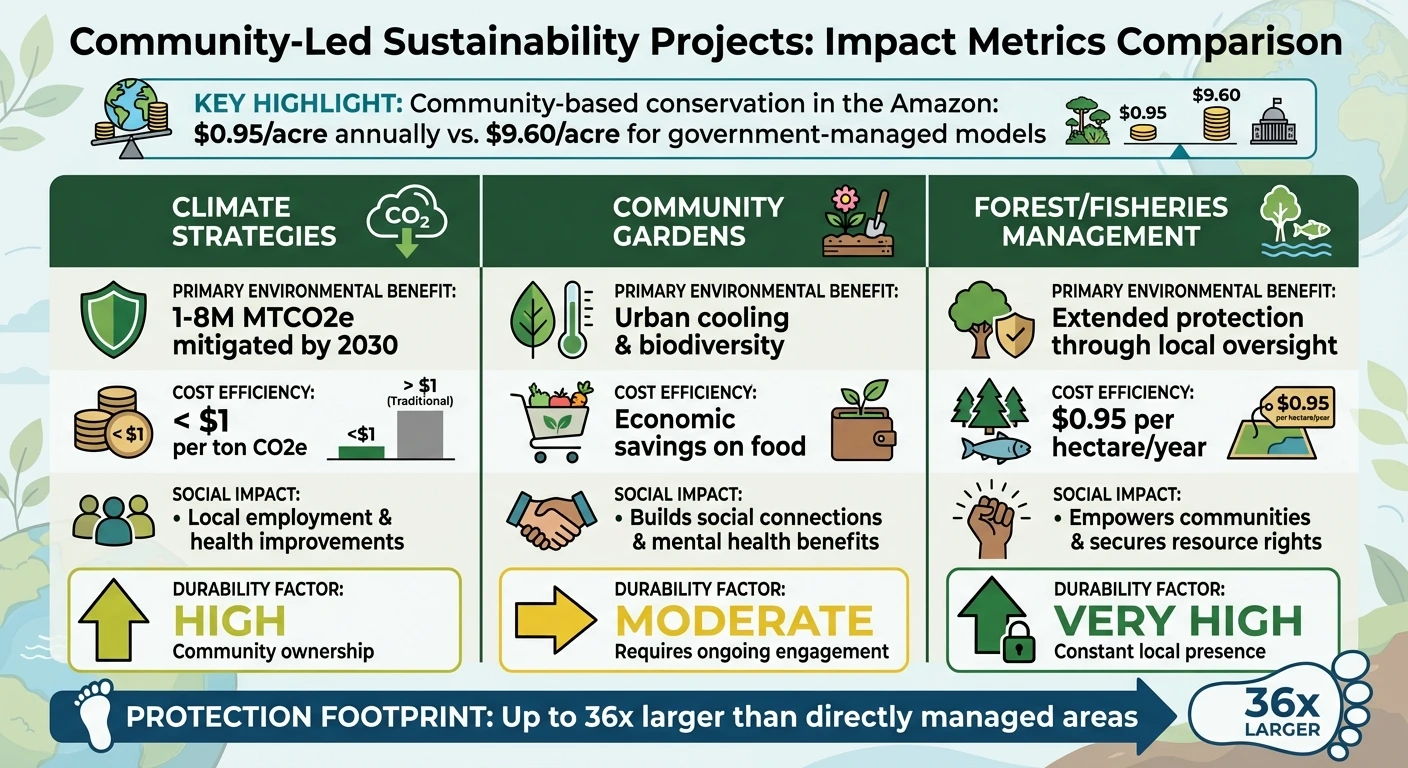
Community-Led Sustainability Projects: Impact Metrics and Cost Efficiency Comparison
Success Metrics
Community-led initiatives consistently demonstrate measurable outcomes across environmental, financial, and social dimensions. A key metric for many projects is carbon mitigation, often quantified in metric tons of carbon dioxide equivalent (MTCO2e). By 2030, some efforts are projected to mitigate between 1 and 8 million MTCO2e [5]. Impressively, these reductions are often achieved at a cost of less than $1 per MTCO2e of philanthropic investment [5]. This highlights the cost-effectiveness of such initiatives, as evidenced by projects like the 18th Wonder Garden and Mirema Forest [5].
Beyond carbon reduction, these projects contribute to employment opportunities, enhance public health, and extend conservation areas. For example, community-led Amazonian fisheries achieve protection footprints up to 36 times larger than the directly managed areas, all while maintaining a cost of just $0.95 per hectare annually - significantly lower than the ~$9.60 per hectare typical of government-managed models [1].
Common Success Factors
The most impactful community projects share several defining traits: direct local ownership, participatory decision-making, and holistic approaches. When communities have a vested interest - whether through job creation, improved health outcomes, or greater equity - they are more likely to sustain and protect the initiatives [5]. A compelling example comes from the Netherlands, where renewable energy cooperatives saw smoother planning processes and fewer legal disputes by involving local residents early on and offering financial participation [4].
"Community-based strategies yield meaningful, scalable, and durable results for reducing greenhouse gas emissions. When communities have a direct stake in an effort, they stand up to protect it." – Redstone Strategy Group [5]
Projects that integrate multiple benefits - such as combining food security programs with energy efficiency or linking habitat restoration to community well-being - tend to achieve longer-lasting success compared to single-focus efforts [16]. A standout example is the Juruá River pirarucu co-management project in the Brazilian Amazon. Since its inception in 1995, 177 families have conducted continuous surveillance across 96 oxbow lakes, resulting in a 425% increase in wild pirarucu populations and extending protection to an area 86 times larger than the monitored zones [1].
The table below provides a comparison of various project types, emphasizing their environmental benefits, cost efficiency, social impacts, and long-term durability.
Project Comparison Table
Project Type | Primary Environmental Benefit | Cost Efficiency | Social Impact | Durability Factor |
|---|---|---|---|---|
Climate Strategies | 1–8M MTCO2e mitigated by 2030 [5] | <$1 per ton CO2e [5] | Local employment & health improvements [5] | High - community ownership [5] |
Community Gardens | Urban cooling & biodiversity [10] | Economic savings on food [10] | Builds social connections & mental health benefits [10] [16] | Moderate - requires ongoing engagement |
Forest/Fisheries Management | Extended protection through local oversight [1] | $0.95 per hectare/year [1] | Empowers communities & secures resource rights [3] | Very high - constant local presence [1] |
Council Fire's Support for Community Sustainability Projects
Building Partnerships for Local Action
Council Fire brings together governments, nonprofits, and businesses to develop collaborative solutions that focus on local priorities and long-term outcomes. Instead of imposing top-down directives, they emphasize shared decision-making, ensuring that communities remain in charge from the very beginning. By blending local knowledge with technical expertise, Council Fire strengthens community ownership and builds resilience over time. This approach helps align diverse project goals effectively.
Balancing Financial, Social, and Environmental Goals
Through its consulting services, Council Fire helps organizations integrate financial success with environmental and social progress. Their strategic planning not only drives environmental improvements but also creates jobs, boosts public health, and enhances local capacity for enduring success. These outcomes are supported by performance tracking grounded in data, ensuring goals are met across all areas.
Using Data to Measure Impact
Council Fire leverages data-driven insights to assess and improve the sustainability of projects over the long term. Their impact analysis employs rigorous metrics to showcase measurable results across environmental, financial, and social dimensions. This empowers local stakeholders with the tools and knowledge they need to maintain meaningful outcomes over time.
Conclusion: Key Findings and Recommendations
Main Findings
Community-led sustainability initiatives consistently achieve durable outcomes when local stakeholders take direct ownership. Research underscores that these efforts not only yield notable environmental gains but also prove to be highly cost-efficient. For instance, community-based climate strategies have been shown to mitigate carbon emissions at costs below $1 per metric ton of CO2 equivalent through 2030 [5]. A striking example is the co-management of pirarucu fisheries along Brazil's Juruá River, which led to a 425% increase in wild fish populations between 1995 and 2025, while safeguarding areas up to 36 times larger than the immediate management zones [1]. Key factors driving success include robust local governance, effective leadership, and strong social cohesion [3]. Beyond environmental benefits, these projects enhance democratic processes by fostering civic participation and strengthening local institutions. These findings offer a roadmap for expanding and refining community-based approaches.
Strategies for Scaling Projects
Effective scaling of community-driven projects relies on three interconnected approaches. Scaling deep focuses on transforming community values and revitalizing traditional knowledge to create enduring impact [2]. Scaling out involves replicating successful strategies in similar regions or social settings, while scaling up targets changes in policy and institutional frameworks at broader levels [2]. Practical steps to achieve this include:
Implementing Payment for Environmental Services (PES) programs to reward communities for their conservation efforts.
Prioritizing governance improvements over demographic-specific interventions.
Employing systems thinking to align local efforts with broader conservation objectives [1][17].
An example of this in action is the Plastic Bank initiative in Haiti. By offering cash or goods as incentives for local plastic collection, the program removed over 1 million pounds of ocean-bound plastic in its first year. It has since expanded globally, collecting the equivalent of more than 10 billion plastic bottles [17].
Next Steps
To successfully scale these approaches, organizations must partner with experts who can balance environmental, social, and financial outcomes. Council Fire specializes in providing the technical expertise, collaborative frameworks, and data-driven tools needed to navigate regulatory complexities while empowering communities. Their methods ensure measurable success across all dimensions while building local capacity for sustained impact. Reach out to Council Fire to learn how your organization can contribute to or initiate community-led projects that drive meaningful and lasting change.
FAQs
How do you measure the real impact of a community-led project?
Measuring the outcomes of a community-led project requires a balanced approach that blends numbers with narratives. By using both qualitative and quantitative methods, it's possible to evaluate tangible results like reduced carbon emissions and less quantifiable outcomes such as enhanced well-being or greater resilience.
To ensure credibility and relevance, clear communication with stakeholders, real-time data collection, and independent third-party validation play a critical role. Tools like surveys and statistical analyses provide measurable insights, while feedback from community members helps ensure the project stays aligned with broader goals and local priorities. This combination not only tracks progress but also builds trust and accountability.
What makes community-led conservation more cost-effective than top-down programs?
Community-led conservation offers an economical approach to protecting natural areas. Local communities, with their intimate knowledge and consistent presence, can safeguard extensive regions - such as forests and wildlife habitats - at a fraction of the cost, often spending less than $1 per hectare. Their active participation and on-the-ground vigilance significantly cut down the reliance on costly external interventions, making these efforts both practical and enduring.
How can successful community projects be scaled without losing local ownership?
To expand community projects without compromising local ownership, it's essential to adopt a community-driven approach. This means prioritizing the voices, leadership, and priorities of the people directly impacted. Moving away from top-down models, the focus should be on empowering communities to take the lead, fostering relationships, and supporting them in achieving their own objectives. Strategies such as strengthening social connections, respecting local traditions, and incorporating local expertise are key to maintaining trust and ensuring that scaled efforts stay aligned with the community's needs and remain effective over time.
Related Blog Posts
Why Local Governments Must Lead the Climate Fight - With or Without Federal Support
How to Develop a Nature-Based Solutions Strategy for Municipalities & Government Agencies
How to Develop a Nature-Based Solutions Strategy for NGOs & Nonprofits
How to Develop a Nature-Based Solutions Strategy for Foundations & Philanthropic Organizations
Latest Articles
©2026

Narrative Change and Power Building: The Missing Half of Advocacy
Narrative change is the process of disrupting dominant narratives that normalize inequity and advancing new narratives from historically marginalized communities.
Funding Resilience Without Federal Grants
BRIC is unreliable and FEMA is shrinking. Here's how cities fund climate resilience with dedicated revenue, blended finance, and a coordinating authority.

The ESG Blind Spot: How AI Is Finding Risks in Companies Nobody Else Is Watching
Norway's sovereign wealth fund uses AI to screen 7,200 portfolio companies for forced labor and corruption within 24 hours. The real story is the emerging-market coverage gap that traditional ESG data vendors miss — and what it means for any company with a global supply chain.
Narrative Change and Power Building: The Missing Half of Advocacy
Narrative change is the process of disrupting dominant narratives that normalize inequity and advancing new narratives from historically marginalized communities.
Funding Resilience Without Federal Grants
BRIC is unreliable and FEMA is shrinking. Here's how cities fund climate resilience with dedicated revenue, blended finance, and a coordinating authority.
The ESG Blind Spot: How AI Is Finding Risks in Companies Nobody Else Is Watching
Norway's sovereign wealth fund uses AI to screen 7,200 portfolio companies for forced labor and corruption within 24 hours. The real story is the emerging-market coverage gap that traditional ESG data vendors miss — and what it means for any company with a global supply chain.
FAQ
01
What does it really mean to “redefine profit”?
02
What makes Council Fire different?
03
Who does Council Fire work with?
04
What does working with Council Fire actually look like?
05
How does Council Fire help organizations turn big goals into action?
06
How does Council Fire define and measure success?
07
How does technology fit into Council Fire’s work?
Mar 3, 2026
Study: Impact of Community Projects on Sustainability
Sustainability Strategy
In This Article
Community-led projects deliver cost-effective conservation, carbon reductions, and social benefits—scalable with strong local governance and data-driven measurement.
Study: Impact of Community Projects on Sustainability
Community-led projects are proving to be highly effective in addressing environmental and social challenges. Unlike top-down methods, these initiatives leverage local knowledge, participation, and stewardship to achieve measurable results. Key findings from the article include:
Local Impact: Indigenous communities, managing 28% of Earth's surface, demonstrate the power of grassroots conservation. For example, Brazil's Juruá River communities increased wild fish populations by 425% from 2002 to 2025 while extending protection to areas 86 times larger than their direct zones.
Cost Efficiency: Community-based conservation in the Amazon costs just $0.95 per acre annually, far less than traditional methods.
Carbon Reduction: U.S. and Canadian grassroots strategies could cut 1–8 million metric tons of CO₂ by 2030 at less than $1 per ton.
Case Studies: Examples like urban gardens in Pennsylvania (3,600 pounds of food harvested) and Kenya's Mirema Forest restoration (70% tree survival rate) show how these efforts create lasting value.
The research highlights that success depends on early local involvement, effective governance, and integrating social, environmental, and economic goals. Scaling these efforts requires replicating successful models, rewarding conservation efforts, and aligning local actions with broader objectives.
Case Studies: Community Projects That Achieved Results
Urban Gardening Programs
Urban gardening programs have proven to enhance both food security and community connections. In Oakbrook, Pennsylvania, the 18th Wonder Improvement Association managed a 2,000-square-foot garden that supported 82 families from April 2021 to November 2024. This initiative yielded over 3,600 pounds of fresh produce, hosted 24 educational sessions with an average of 15 participants each, and logged 1,700 volunteer hours contributed by families, students, and retirees. To ensure accessibility, the project included wheelchair-friendly planters [6].
"Community gardens serve as a cornerstone of our outreach, offering a green space for residents to cultivate fresh produce and connect with nature." - Tanya Melendez, Director of Community Outreach and Programs, 18th Wonder [6]
In California's Central Coast, studies revealed that a single garden bed produced an average of 4.40 pounds of food weekly during the summer, saving families between $16 and $30 per week [8]. Similarly, Winnipeg's Rainbow Community Garden helped 279 newcomer families save at least $100 per month on produce from mid-June to October, while also fostering cultural exchange [7]. In Indiana, the Bedford Garden Park transformed a three-acre donated plot into a thriving community space between 2017 and 2019. This project, which raised $30,900 through crowdfunding (matched by the state), added 72 active plots, eight raised beds, a 40x80-foot greenhouse, and a shared tool shed [9].
Reforestation and Habitat Restoration
Reforestation efforts led by communities often outperform traditional approaches. In Kenya, the Mirema Community Forest Association restored 1,000 acres of the Mirema Forest between 2018 and 2022 by planting 300,000 trees with a 70% survival rate, significantly higher than the 50% typical of government-led projects. This initiative, supported by the Kenya Forest Service, effectively reduced chronic flooding that had displaced families and damaged crops [11].
"The community owns this drive, and they are zealously guarding the forest against any possible threats, and this is helping a lot." - Ronald Aloo, KFS Ranger [11]
In Montana, the Story Mill Community Park project revitalized a one-mile riparian zone and doubled the area of on-site wetlands by summer 2019. This 60-acre park, designed by Design Workshop for the City of Bozeman, sequesters an estimated 1.6 tons of atmospheric carbon annually through the preservation of 132 trees. The park attracts 11,600 weekly visitors during summer and spurred the construction of 31 below-market-rate homes within a five-minute walk. Properties near the park generated over $580,000 in tax revenue in 2022, nearly tripling the pre-construction figures from 2018 [13].
In Canada, the Siksika Nation Community Shelterbelt Program planted 130,760 young trees in May 2024 to create a 46-kilometer shelterbelt. Funded by an Alberta Ecotrust Foundation grant, this project used native species like saskatoon berry and silver buffaloberry to stabilize soil, reduce wind speeds, and improve winter road safety by preventing snow drifts [14].
Infrastructure Planning Projects
Infrastructure projects that integrate community needs with environmental goals have delivered impressive results. In Carmel, Indiana, the Monon Boulevard and Midtown Plaza project, completed in July 2019, transformed an industrial site into a multi-modal corridor. Spearheaded by the Carmel Redevelopment Commission and Rundell Ernstberger Associates, this $23 million project incorporated 1.06 acres of permeable pavement and a 380,000-gallon underground water storage tank. These features reduced peak stormwater runoff by 58% during 10-year storm events and 72% during 100-year events [15].
The project also spurred $167 million in private investment and increased tax increment financing (TIF) revenue by 66% between 2020 and 2021. Trail usage by pedestrians and cyclists surged by 118%, growing from 341,574 to 742,830 visitors annually. Nearby properties saw a 26% rise in assessed value, and the project sequesters 289,076 pounds of CO₂ each year [15].
In Oregon, the Bronson Creek Greenway project began in 2013 and restored 36 acres of floodplain through a collaboration between Clean Water Services and the Tualatin Hills Park & Recreation District. The initiative achieved a 45% reduction in invasive species and a 53% increase in native herbaceous cover, while adding a four-mile boardwalk that enhanced walkability in the surrounding neighborhoods [12].
Project Name | Location | Key Outcome | Community Impact |
|---|---|---|---|
18th Wonder Garden | Oakbrook, PA | 3,600 lbs food harvested | 1,700 volunteer hours; 24 educational sessions [6] |
Mirema Forest | Kenya | 300,000 trees planted | 70% survival rate; flood reduction [11] |
Story Mill Park | Bozeman, MT | 1 mile riparian restored | 11,600 weekly visitors; $580,000 tax revenue [13] |
Monon Boulevard | Carmel, IN | 58% stormwater reduction | 118% increase in trail use; $167M private investment [15] |
The BIG Environmental Impact of This Sustainable Community Food Project
Measuring Project Effectiveness: Analysis and Comparison
Community-Led Sustainability Projects: Impact Metrics and Cost Efficiency Comparison
Success Metrics
Community-led initiatives consistently demonstrate measurable outcomes across environmental, financial, and social dimensions. A key metric for many projects is carbon mitigation, often quantified in metric tons of carbon dioxide equivalent (MTCO2e). By 2030, some efforts are projected to mitigate between 1 and 8 million MTCO2e [5]. Impressively, these reductions are often achieved at a cost of less than $1 per MTCO2e of philanthropic investment [5]. This highlights the cost-effectiveness of such initiatives, as evidenced by projects like the 18th Wonder Garden and Mirema Forest [5].
Beyond carbon reduction, these projects contribute to employment opportunities, enhance public health, and extend conservation areas. For example, community-led Amazonian fisheries achieve protection footprints up to 36 times larger than the directly managed areas, all while maintaining a cost of just $0.95 per hectare annually - significantly lower than the ~$9.60 per hectare typical of government-managed models [1].
Common Success Factors
The most impactful community projects share several defining traits: direct local ownership, participatory decision-making, and holistic approaches. When communities have a vested interest - whether through job creation, improved health outcomes, or greater equity - they are more likely to sustain and protect the initiatives [5]. A compelling example comes from the Netherlands, where renewable energy cooperatives saw smoother planning processes and fewer legal disputes by involving local residents early on and offering financial participation [4].
"Community-based strategies yield meaningful, scalable, and durable results for reducing greenhouse gas emissions. When communities have a direct stake in an effort, they stand up to protect it." – Redstone Strategy Group [5]
Projects that integrate multiple benefits - such as combining food security programs with energy efficiency or linking habitat restoration to community well-being - tend to achieve longer-lasting success compared to single-focus efforts [16]. A standout example is the Juruá River pirarucu co-management project in the Brazilian Amazon. Since its inception in 1995, 177 families have conducted continuous surveillance across 96 oxbow lakes, resulting in a 425% increase in wild pirarucu populations and extending protection to an area 86 times larger than the monitored zones [1].
The table below provides a comparison of various project types, emphasizing their environmental benefits, cost efficiency, social impacts, and long-term durability.
Project Comparison Table
Project Type | Primary Environmental Benefit | Cost Efficiency | Social Impact | Durability Factor |
|---|---|---|---|---|
Climate Strategies | 1–8M MTCO2e mitigated by 2030 [5] | <$1 per ton CO2e [5] | Local employment & health improvements [5] | High - community ownership [5] |
Community Gardens | Urban cooling & biodiversity [10] | Economic savings on food [10] | Builds social connections & mental health benefits [10] [16] | Moderate - requires ongoing engagement |
Forest/Fisheries Management | Extended protection through local oversight [1] | $0.95 per hectare/year [1] | Empowers communities & secures resource rights [3] | Very high - constant local presence [1] |
Council Fire's Support for Community Sustainability Projects
Building Partnerships for Local Action
Council Fire brings together governments, nonprofits, and businesses to develop collaborative solutions that focus on local priorities and long-term outcomes. Instead of imposing top-down directives, they emphasize shared decision-making, ensuring that communities remain in charge from the very beginning. By blending local knowledge with technical expertise, Council Fire strengthens community ownership and builds resilience over time. This approach helps align diverse project goals effectively.
Balancing Financial, Social, and Environmental Goals
Through its consulting services, Council Fire helps organizations integrate financial success with environmental and social progress. Their strategic planning not only drives environmental improvements but also creates jobs, boosts public health, and enhances local capacity for enduring success. These outcomes are supported by performance tracking grounded in data, ensuring goals are met across all areas.
Using Data to Measure Impact
Council Fire leverages data-driven insights to assess and improve the sustainability of projects over the long term. Their impact analysis employs rigorous metrics to showcase measurable results across environmental, financial, and social dimensions. This empowers local stakeholders with the tools and knowledge they need to maintain meaningful outcomes over time.
Conclusion: Key Findings and Recommendations
Main Findings
Community-led sustainability initiatives consistently achieve durable outcomes when local stakeholders take direct ownership. Research underscores that these efforts not only yield notable environmental gains but also prove to be highly cost-efficient. For instance, community-based climate strategies have been shown to mitigate carbon emissions at costs below $1 per metric ton of CO2 equivalent through 2030 [5]. A striking example is the co-management of pirarucu fisheries along Brazil's Juruá River, which led to a 425% increase in wild fish populations between 1995 and 2025, while safeguarding areas up to 36 times larger than the immediate management zones [1]. Key factors driving success include robust local governance, effective leadership, and strong social cohesion [3]. Beyond environmental benefits, these projects enhance democratic processes by fostering civic participation and strengthening local institutions. These findings offer a roadmap for expanding and refining community-based approaches.
Strategies for Scaling Projects
Effective scaling of community-driven projects relies on three interconnected approaches. Scaling deep focuses on transforming community values and revitalizing traditional knowledge to create enduring impact [2]. Scaling out involves replicating successful strategies in similar regions or social settings, while scaling up targets changes in policy and institutional frameworks at broader levels [2]. Practical steps to achieve this include:
Implementing Payment for Environmental Services (PES) programs to reward communities for their conservation efforts.
Prioritizing governance improvements over demographic-specific interventions.
Employing systems thinking to align local efforts with broader conservation objectives [1][17].
An example of this in action is the Plastic Bank initiative in Haiti. By offering cash or goods as incentives for local plastic collection, the program removed over 1 million pounds of ocean-bound plastic in its first year. It has since expanded globally, collecting the equivalent of more than 10 billion plastic bottles [17].
Next Steps
To successfully scale these approaches, organizations must partner with experts who can balance environmental, social, and financial outcomes. Council Fire specializes in providing the technical expertise, collaborative frameworks, and data-driven tools needed to navigate regulatory complexities while empowering communities. Their methods ensure measurable success across all dimensions while building local capacity for sustained impact. Reach out to Council Fire to learn how your organization can contribute to or initiate community-led projects that drive meaningful and lasting change.
FAQs
How do you measure the real impact of a community-led project?
Measuring the outcomes of a community-led project requires a balanced approach that blends numbers with narratives. By using both qualitative and quantitative methods, it's possible to evaluate tangible results like reduced carbon emissions and less quantifiable outcomes such as enhanced well-being or greater resilience.
To ensure credibility and relevance, clear communication with stakeholders, real-time data collection, and independent third-party validation play a critical role. Tools like surveys and statistical analyses provide measurable insights, while feedback from community members helps ensure the project stays aligned with broader goals and local priorities. This combination not only tracks progress but also builds trust and accountability.
What makes community-led conservation more cost-effective than top-down programs?
Community-led conservation offers an economical approach to protecting natural areas. Local communities, with their intimate knowledge and consistent presence, can safeguard extensive regions - such as forests and wildlife habitats - at a fraction of the cost, often spending less than $1 per hectare. Their active participation and on-the-ground vigilance significantly cut down the reliance on costly external interventions, making these efforts both practical and enduring.
How can successful community projects be scaled without losing local ownership?
To expand community projects without compromising local ownership, it's essential to adopt a community-driven approach. This means prioritizing the voices, leadership, and priorities of the people directly impacted. Moving away from top-down models, the focus should be on empowering communities to take the lead, fostering relationships, and supporting them in achieving their own objectives. Strategies such as strengthening social connections, respecting local traditions, and incorporating local expertise are key to maintaining trust and ensuring that scaled efforts stay aligned with the community's needs and remain effective over time.
Related Blog Posts
Why Local Governments Must Lead the Climate Fight - With or Without Federal Support
How to Develop a Nature-Based Solutions Strategy for Municipalities & Government Agencies
How to Develop a Nature-Based Solutions Strategy for NGOs & Nonprofits
How to Develop a Nature-Based Solutions Strategy for Foundations & Philanthropic Organizations
Latest Articles
©2026
Narrative Change and Power Building: The Missing Half of Advocacy
Narrative change is the process of disrupting dominant narratives that normalize inequity and advancing new narratives from historically marginalized communities.
Funding Resilience Without Federal Grants
BRIC is unreliable and FEMA is shrinking. Here's how cities fund climate resilience with dedicated revenue, blended finance, and a coordinating authority.
The ESG Blind Spot: How AI Is Finding Risks in Companies Nobody Else Is Watching
Norway's sovereign wealth fund uses AI to screen 7,200 portfolio companies for forced labor and corruption within 24 hours. The real story is the emerging-market coverage gap that traditional ESG data vendors miss — and what it means for any company with a global supply chain.
FAQ
01
What does it really mean to “redefine profit”?
02
What makes Council Fire different?
03
Who does Council Fire work with?
04
What does working with Council Fire actually look like?
05
How does Council Fire help organizations turn big goals into action?
06
How does Council Fire define and measure success?
07
How does technology fit into Council Fire’s work?
Mar 3, 2026
Study: Impact of Community Projects on Sustainability
Sustainability Strategy
In This Article
Community-led projects deliver cost-effective conservation, carbon reductions, and social benefits—scalable with strong local governance and data-driven measurement.
Study: Impact of Community Projects on Sustainability
Community-led projects are proving to be highly effective in addressing environmental and social challenges. Unlike top-down methods, these initiatives leverage local knowledge, participation, and stewardship to achieve measurable results. Key findings from the article include:
Local Impact: Indigenous communities, managing 28% of Earth's surface, demonstrate the power of grassroots conservation. For example, Brazil's Juruá River communities increased wild fish populations by 425% from 2002 to 2025 while extending protection to areas 86 times larger than their direct zones.
Cost Efficiency: Community-based conservation in the Amazon costs just $0.95 per acre annually, far less than traditional methods.
Carbon Reduction: U.S. and Canadian grassroots strategies could cut 1–8 million metric tons of CO₂ by 2030 at less than $1 per ton.
Case Studies: Examples like urban gardens in Pennsylvania (3,600 pounds of food harvested) and Kenya's Mirema Forest restoration (70% tree survival rate) show how these efforts create lasting value.
The research highlights that success depends on early local involvement, effective governance, and integrating social, environmental, and economic goals. Scaling these efforts requires replicating successful models, rewarding conservation efforts, and aligning local actions with broader objectives.
Case Studies: Community Projects That Achieved Results
Urban Gardening Programs
Urban gardening programs have proven to enhance both food security and community connections. In Oakbrook, Pennsylvania, the 18th Wonder Improvement Association managed a 2,000-square-foot garden that supported 82 families from April 2021 to November 2024. This initiative yielded over 3,600 pounds of fresh produce, hosted 24 educational sessions with an average of 15 participants each, and logged 1,700 volunteer hours contributed by families, students, and retirees. To ensure accessibility, the project included wheelchair-friendly planters [6].
"Community gardens serve as a cornerstone of our outreach, offering a green space for residents to cultivate fresh produce and connect with nature." - Tanya Melendez, Director of Community Outreach and Programs, 18th Wonder [6]
In California's Central Coast, studies revealed that a single garden bed produced an average of 4.40 pounds of food weekly during the summer, saving families between $16 and $30 per week [8]. Similarly, Winnipeg's Rainbow Community Garden helped 279 newcomer families save at least $100 per month on produce from mid-June to October, while also fostering cultural exchange [7]. In Indiana, the Bedford Garden Park transformed a three-acre donated plot into a thriving community space between 2017 and 2019. This project, which raised $30,900 through crowdfunding (matched by the state), added 72 active plots, eight raised beds, a 40x80-foot greenhouse, and a shared tool shed [9].
Reforestation and Habitat Restoration
Reforestation efforts led by communities often outperform traditional approaches. In Kenya, the Mirema Community Forest Association restored 1,000 acres of the Mirema Forest between 2018 and 2022 by planting 300,000 trees with a 70% survival rate, significantly higher than the 50% typical of government-led projects. This initiative, supported by the Kenya Forest Service, effectively reduced chronic flooding that had displaced families and damaged crops [11].
"The community owns this drive, and they are zealously guarding the forest against any possible threats, and this is helping a lot." - Ronald Aloo, KFS Ranger [11]
In Montana, the Story Mill Community Park project revitalized a one-mile riparian zone and doubled the area of on-site wetlands by summer 2019. This 60-acre park, designed by Design Workshop for the City of Bozeman, sequesters an estimated 1.6 tons of atmospheric carbon annually through the preservation of 132 trees. The park attracts 11,600 weekly visitors during summer and spurred the construction of 31 below-market-rate homes within a five-minute walk. Properties near the park generated over $580,000 in tax revenue in 2022, nearly tripling the pre-construction figures from 2018 [13].
In Canada, the Siksika Nation Community Shelterbelt Program planted 130,760 young trees in May 2024 to create a 46-kilometer shelterbelt. Funded by an Alberta Ecotrust Foundation grant, this project used native species like saskatoon berry and silver buffaloberry to stabilize soil, reduce wind speeds, and improve winter road safety by preventing snow drifts [14].
Infrastructure Planning Projects
Infrastructure projects that integrate community needs with environmental goals have delivered impressive results. In Carmel, Indiana, the Monon Boulevard and Midtown Plaza project, completed in July 2019, transformed an industrial site into a multi-modal corridor. Spearheaded by the Carmel Redevelopment Commission and Rundell Ernstberger Associates, this $23 million project incorporated 1.06 acres of permeable pavement and a 380,000-gallon underground water storage tank. These features reduced peak stormwater runoff by 58% during 10-year storm events and 72% during 100-year events [15].
The project also spurred $167 million in private investment and increased tax increment financing (TIF) revenue by 66% between 2020 and 2021. Trail usage by pedestrians and cyclists surged by 118%, growing from 341,574 to 742,830 visitors annually. Nearby properties saw a 26% rise in assessed value, and the project sequesters 289,076 pounds of CO₂ each year [15].
In Oregon, the Bronson Creek Greenway project began in 2013 and restored 36 acres of floodplain through a collaboration between Clean Water Services and the Tualatin Hills Park & Recreation District. The initiative achieved a 45% reduction in invasive species and a 53% increase in native herbaceous cover, while adding a four-mile boardwalk that enhanced walkability in the surrounding neighborhoods [12].
Project Name | Location | Key Outcome | Community Impact |
|---|---|---|---|
18th Wonder Garden | Oakbrook, PA | 3,600 lbs food harvested | 1,700 volunteer hours; 24 educational sessions [6] |
Mirema Forest | Kenya | 300,000 trees planted | 70% survival rate; flood reduction [11] |
Story Mill Park | Bozeman, MT | 1 mile riparian restored | 11,600 weekly visitors; $580,000 tax revenue [13] |
Monon Boulevard | Carmel, IN | 58% stormwater reduction | 118% increase in trail use; $167M private investment [15] |
The BIG Environmental Impact of This Sustainable Community Food Project
Measuring Project Effectiveness: Analysis and Comparison
Community-Led Sustainability Projects: Impact Metrics and Cost Efficiency Comparison
Success Metrics
Community-led initiatives consistently demonstrate measurable outcomes across environmental, financial, and social dimensions. A key metric for many projects is carbon mitigation, often quantified in metric tons of carbon dioxide equivalent (MTCO2e). By 2030, some efforts are projected to mitigate between 1 and 8 million MTCO2e [5]. Impressively, these reductions are often achieved at a cost of less than $1 per MTCO2e of philanthropic investment [5]. This highlights the cost-effectiveness of such initiatives, as evidenced by projects like the 18th Wonder Garden and Mirema Forest [5].
Beyond carbon reduction, these projects contribute to employment opportunities, enhance public health, and extend conservation areas. For example, community-led Amazonian fisheries achieve protection footprints up to 36 times larger than the directly managed areas, all while maintaining a cost of just $0.95 per hectare annually - significantly lower than the ~$9.60 per hectare typical of government-managed models [1].
Common Success Factors
The most impactful community projects share several defining traits: direct local ownership, participatory decision-making, and holistic approaches. When communities have a vested interest - whether through job creation, improved health outcomes, or greater equity - they are more likely to sustain and protect the initiatives [5]. A compelling example comes from the Netherlands, where renewable energy cooperatives saw smoother planning processes and fewer legal disputes by involving local residents early on and offering financial participation [4].
"Community-based strategies yield meaningful, scalable, and durable results for reducing greenhouse gas emissions. When communities have a direct stake in an effort, they stand up to protect it." – Redstone Strategy Group [5]
Projects that integrate multiple benefits - such as combining food security programs with energy efficiency or linking habitat restoration to community well-being - tend to achieve longer-lasting success compared to single-focus efforts [16]. A standout example is the Juruá River pirarucu co-management project in the Brazilian Amazon. Since its inception in 1995, 177 families have conducted continuous surveillance across 96 oxbow lakes, resulting in a 425% increase in wild pirarucu populations and extending protection to an area 86 times larger than the monitored zones [1].
The table below provides a comparison of various project types, emphasizing their environmental benefits, cost efficiency, social impacts, and long-term durability.
Project Comparison Table
Project Type | Primary Environmental Benefit | Cost Efficiency | Social Impact | Durability Factor |
|---|---|---|---|---|
Climate Strategies | 1–8M MTCO2e mitigated by 2030 [5] | <$1 per ton CO2e [5] | Local employment & health improvements [5] | High - community ownership [5] |
Community Gardens | Urban cooling & biodiversity [10] | Economic savings on food [10] | Builds social connections & mental health benefits [10] [16] | Moderate - requires ongoing engagement |
Forest/Fisheries Management | Extended protection through local oversight [1] | $0.95 per hectare/year [1] | Empowers communities & secures resource rights [3] | Very high - constant local presence [1] |
Council Fire's Support for Community Sustainability Projects
Building Partnerships for Local Action
Council Fire brings together governments, nonprofits, and businesses to develop collaborative solutions that focus on local priorities and long-term outcomes. Instead of imposing top-down directives, they emphasize shared decision-making, ensuring that communities remain in charge from the very beginning. By blending local knowledge with technical expertise, Council Fire strengthens community ownership and builds resilience over time. This approach helps align diverse project goals effectively.
Balancing Financial, Social, and Environmental Goals
Through its consulting services, Council Fire helps organizations integrate financial success with environmental and social progress. Their strategic planning not only drives environmental improvements but also creates jobs, boosts public health, and enhances local capacity for enduring success. These outcomes are supported by performance tracking grounded in data, ensuring goals are met across all areas.
Using Data to Measure Impact
Council Fire leverages data-driven insights to assess and improve the sustainability of projects over the long term. Their impact analysis employs rigorous metrics to showcase measurable results across environmental, financial, and social dimensions. This empowers local stakeholders with the tools and knowledge they need to maintain meaningful outcomes over time.
Conclusion: Key Findings and Recommendations
Main Findings
Community-led sustainability initiatives consistently achieve durable outcomes when local stakeholders take direct ownership. Research underscores that these efforts not only yield notable environmental gains but also prove to be highly cost-efficient. For instance, community-based climate strategies have been shown to mitigate carbon emissions at costs below $1 per metric ton of CO2 equivalent through 2030 [5]. A striking example is the co-management of pirarucu fisheries along Brazil's Juruá River, which led to a 425% increase in wild fish populations between 1995 and 2025, while safeguarding areas up to 36 times larger than the immediate management zones [1]. Key factors driving success include robust local governance, effective leadership, and strong social cohesion [3]. Beyond environmental benefits, these projects enhance democratic processes by fostering civic participation and strengthening local institutions. These findings offer a roadmap for expanding and refining community-based approaches.
Strategies for Scaling Projects
Effective scaling of community-driven projects relies on three interconnected approaches. Scaling deep focuses on transforming community values and revitalizing traditional knowledge to create enduring impact [2]. Scaling out involves replicating successful strategies in similar regions or social settings, while scaling up targets changes in policy and institutional frameworks at broader levels [2]. Practical steps to achieve this include:
Implementing Payment for Environmental Services (PES) programs to reward communities for their conservation efforts.
Prioritizing governance improvements over demographic-specific interventions.
Employing systems thinking to align local efforts with broader conservation objectives [1][17].
An example of this in action is the Plastic Bank initiative in Haiti. By offering cash or goods as incentives for local plastic collection, the program removed over 1 million pounds of ocean-bound plastic in its first year. It has since expanded globally, collecting the equivalent of more than 10 billion plastic bottles [17].
Next Steps
To successfully scale these approaches, organizations must partner with experts who can balance environmental, social, and financial outcomes. Council Fire specializes in providing the technical expertise, collaborative frameworks, and data-driven tools needed to navigate regulatory complexities while empowering communities. Their methods ensure measurable success across all dimensions while building local capacity for sustained impact. Reach out to Council Fire to learn how your organization can contribute to or initiate community-led projects that drive meaningful and lasting change.
FAQs
How do you measure the real impact of a community-led project?
Measuring the outcomes of a community-led project requires a balanced approach that blends numbers with narratives. By using both qualitative and quantitative methods, it's possible to evaluate tangible results like reduced carbon emissions and less quantifiable outcomes such as enhanced well-being or greater resilience.
To ensure credibility and relevance, clear communication with stakeholders, real-time data collection, and independent third-party validation play a critical role. Tools like surveys and statistical analyses provide measurable insights, while feedback from community members helps ensure the project stays aligned with broader goals and local priorities. This combination not only tracks progress but also builds trust and accountability.
What makes community-led conservation more cost-effective than top-down programs?
Community-led conservation offers an economical approach to protecting natural areas. Local communities, with their intimate knowledge and consistent presence, can safeguard extensive regions - such as forests and wildlife habitats - at a fraction of the cost, often spending less than $1 per hectare. Their active participation and on-the-ground vigilance significantly cut down the reliance on costly external interventions, making these efforts both practical and enduring.
How can successful community projects be scaled without losing local ownership?
To expand community projects without compromising local ownership, it's essential to adopt a community-driven approach. This means prioritizing the voices, leadership, and priorities of the people directly impacted. Moving away from top-down models, the focus should be on empowering communities to take the lead, fostering relationships, and supporting them in achieving their own objectives. Strategies such as strengthening social connections, respecting local traditions, and incorporating local expertise are key to maintaining trust and ensuring that scaled efforts stay aligned with the community's needs and remain effective over time.
Related Blog Posts
Why Local Governments Must Lead the Climate Fight - With or Without Federal Support
How to Develop a Nature-Based Solutions Strategy for Municipalities & Government Agencies
How to Develop a Nature-Based Solutions Strategy for NGOs & Nonprofits
How to Develop a Nature-Based Solutions Strategy for Foundations & Philanthropic Organizations
Latest Articles
©2026
Narrative Change and Power Building: The Missing Half of Advocacy
Narrative change is the process of disrupting dominant narratives that normalize inequity and advancing new narratives from historically marginalized communities.
Funding Resilience Without Federal Grants
BRIC is unreliable and FEMA is shrinking. Here's how cities fund climate resilience with dedicated revenue, blended finance, and a coordinating authority.
The ESG Blind Spot: How AI Is Finding Risks in Companies Nobody Else Is Watching
Norway's sovereign wealth fund uses AI to screen 7,200 portfolio companies for forced labor and corruption within 24 hours. The real story is the emerging-market coverage gap that traditional ESG data vendors miss — and what it means for any company with a global supply chain.
FAQ
What does it really mean to “redefine profit”?
What makes Council Fire different?
Who does Council Fire work with?
What does working with Council Fire actually look like?
How does Council Fire help organizations turn big goals into action?
How does Council Fire define and measure success?
How does technology fit into Council Fire’s work?